Details Of London Overground Night Services Released
The title of this post is the same as that of this article in Global Rail News.
This is said.
Overground trains will run 24 hours a day on Fridays and Saturdays between New Cross Gate and Dalston Junction. There are plans to extend the service to Highbury & Islington next year.
Although, I live near Dalston Junction station, I doubt I’ll use the service much. Unless of course, I get a girl-friend in New Cross.
London Overground have done their sums, but I suspect the Night Orange could generate more passengers than predicted.
The East London Line Is Step-Free
All of the stations in the route of the Night Orange are step-free, which can’t be said of the Underground.
Will this have an effect on ridership?
I remember C and myself living in London with three young children. Reliable baby-sitters were difficult, we didn’t have a car and getting around late at night could be difficult.
A step-free line on Friday and Saturday night would have been most welcome.
Transport for London are spending a lot of money on step-free access, so it must be needed.
New Cross Gate, Canada Water, Whitechapel, Dalston Junction and Highbury & Islington Stations Are Good Interchanges
All these stations have several night buses and some have connections with other Night Tube lines.
A lot of difficult journeys will have become simpler.
Crossrail
There is speculation that some parts of Crossrail will operate a night service.
This would have a very useful interchange at Whitechapel.
Other Transport for London Services
The Wikipedia entry for the Night Tube, says this about other Transport for London services.
The Bakerloo, Waterloo & City and sub-surface lines have yet to be upgraded and re-signalled, but it is expected that when these works are completed on these lines, they will also have 24-hour services. Other services such as London Overground and Docklands Light Railway will have overnight services in the near future to connect with Night Tube services. On the sub-surface lines, night tube services are planned to be introduced on the Metropolitan between Aldgate and Harrow-on-the-Hill, District line between Barking and Wimbledon, and on the Hammersmith & City line between Hammersmith & Tower Hill.
One of these predictions has already happened, in that I’m writing about the East London Line of the London Overground.
Surely connecting to the Docklands Light Railway at Shadwell and the sub-surface lines at Whitechapel will generte a lot of traffic.
Surely, running a Night DLR would be one of the easiest to implement.
The City Of London And Canary Wharf
Increasingly, and especially post-Brexit, the jobs in the Financial Sector will become more-and-more-24/7.
Predicting, how this will affect passenger traffic on the Night Tube in general and the East London Line in particular will be extremely difficult.
But the increasing availability of the Night Tube in the financil districts must encourage some jobs like software testing to use the night time creatively.
So the only thing I’ll say about TfL’s forecast for traffic on the Night Tube at Shoreditch High Street station, is that it will be very wide of the mark.
What Next For The Night Orange?
I couldn’t finish these thoughts without speculating, which of the other London Overground lines will be running a night service in the next few years.
It must be mathematically correct to say that as increasing numbers of stations across London have services on Friday and Saturday nights, that a higher percentage of late night journeys across the capital will be possible by public transport. So we could see an increase in passengers, every time new lines and stations are added.
Currently, there is one big gap in the Night Tube and that is that the Bank Branch of the Northern Line has no service. This is due to the ongoing work at Bank station to reconstruct the branch. When this line is inevitably added in a few years time, it will be interesting to see how traffic on the Night Tube changes.
So which of the various Overground lines will get a Night service?
East London Line
The Night Orange on the East London Line, that starts in a few weeks only serves a short part of the line.
Will the service be extended?
I suspect that after the proposed service has bedded in, an assessment will be made, as to whether the service should be extended.
Gospel Oak To Barking Line
It is my view that this will be the surprise line to get a Night Orange service.
- It curves in a convenient arc across North and East London.
- The line is only shared with freight services.
- Barking station will probably be getting Night Tube services in the next few years on the District or Hammersmith and City Lines.
- It has reasonable connections to other Night Tube services.
But as it has just been electrified and relaid, and was re-signalled a few years ago, I suspect that the work has been done, so that a Night Orange service is not impossible.
Liverpool Street Services
The three Overground services out of Liverpool Street to Cheshunt, Chingford and Enfield Town have the following characteristics.
- All the stations they serve are managed by Transport for London.
- The lines are pretty much self-contained.
- Liverpool Street could have several Night Tube services and Crossrail in a few years.
- Will there be large late night events at White Hart Lane?
- The platforms at Liverpool Street used by the services are a separate group at one side of the station.
Incidentally, I went through Liverpool Street station at one in the morning recently and it was heaving.
I would put a high chance on this group of lines having a Night Orange service. Although services may not go the full length of the lines.
Romford To Upminster Line
The Romford to Upminster Line will probably only run a Night Orange service, if Crossrail serves Romford station and the District Line serves Upminster station with Night Tube services.
I think though it is unlikely to be run. Although, it is Essex!
South London Line
I suspect this will be under review and based on the success or failure of the Night Orange on the East London Line, decisions will be taken.
Watford DC Line
This line is closely linked with the Bakerloo Line and I would suspect a Night Orange on this line would be carefully planned with a similar saervice on the Bakerloo Line.
West London Line
If the Night Orange works in the East, why not run it in the West between Clapham Junction and Willesden Junction. Especially, when Old Oak Common station opens for HS2 in 2025.
One factor that could affect this service is the Gibb Report recommendation, that Southern’s East Croydon to Milton Keynes service be transferred to the London Overground.
I wrote about this service in Gibb Report – East Croydon – Milton Keynes Route Should Be Transferred To London Overground.
How far would a Night Orange service go?
North London Line
This would be the big one, so I’ve left it to last.
Stratford is already served by Night Tube services, so would be an obvious Eastern terminal.
It could prove a valuable link across North London, especially after big events at Stratford or the O2.
But how far will it go?
Trains could be turned back at Highbury and Islington, Camden Road, Gospel Oak, Willesden Junction, South Acton and Richmond on the North London Line. Or they could go to Clapham Junction on the West London Line.
There are a lot of possibilities.
Conclusion
The Overground could be starting a Night Orange Revolution.
Will The New Class 710 Trains Use Selective Door Opening At Gospel Oak Station?
These two pictures were taken of a Class 172 train in Platform 3 of Gospel Oak station.
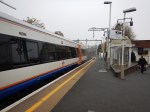
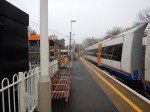
The two-car Class 172 trains are just over 47 metres long.
In The Aventra Car Length Puzzle, I said that the Class 710 trains for the Overground would have twenty metre long cars, which is similar to the 20.4 metres of the Class 378 trains.
For information other four-car electric units, that Aventras are likely to replace have the following car-lengths
- Class 315 trains – 19.80 metres
- Class 317 trains – 19.83 metres
- Class 319/769 trains – 19.83 or 19.92 metres
- Class 321 trains – 19.95 trains
- Class 455 trains 19.83 trains.
So it looks like the Class 710 train, has been sized as a direct replacement foe much of the Mark 3-based electric multiple units.
This would mean, that no platform lengthening work needs to be done, when the many older units are replaced with new Aventras.
It would also mean that as I talked about in Musical Trains On The Overground, that Aventras could share routes with Class 378 trains without too much trouble on the North and West London Lines.
So will a four-car Class 710 train, which will be about eighty metres long fit Platform 3 at Gospel Oak station?
This Google Map shows the station.
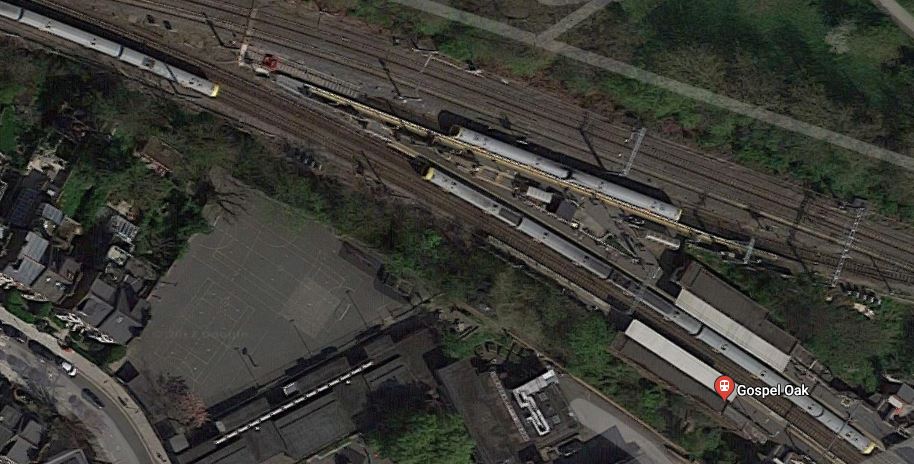
Note that a Class 172 train is in Platform 3 and in Platform 2 there is a five-car Class 378 train.
The length of Platform 3 can be ascertained and it looks like that Platform 3 is already long enough for an eighty metre train.
If it isn’t Bombardier certainly have fitted Selective Door Opening to the new trains.
Do A Lot Of Other Cities Need An Overground?
This article on the MayprWatch web site is entitled London Overground Celebrates Ten Years Of Transforming Rail Travel In The Capital.
The principles behind the Overground are simple.
- Bring run-down suburban railways under local control.
- Clean everything like crazy.
- Run four trains per hour on all routes.
- Introduce contactless ticketing with Oyster and bank cards.
- Have lots of visible well-trained staff.
- Upgrade stations and step-free access, when money allows.
- Increase train length to match passenger numbers.
- Allow disabled passengers to just turn up and get the assistance they need.
- Add lots of passenger information.
The principles certainly appear to have worked. This is from the MayorWatch article.
This investment, which started under Mr Livingstone and was continued by his successor Boris Johnson, has helped the London Overground become one of the UK’s most successful rail services, with independently measured passenger satisfaction scores routinely above 80%.
Since launch, more than a billion passenger journeys have been made on the network which now serves 23 of the Capital’s boroughs as well as southern Hertfordshire.
The investment is continuing.
- In 2018, new Class 710 trains will replace the thirty-year-old Class 315 trains on West Anglia routes to Cheshunt, Chingford and Enfield Town.
- In 2018, the newly-electrified Gospel Oak to Barking Line will change over to four-car Class 710 trains to double capacity.
- In 2018, Friday and Saturday night services will start on the East London Line.
- By 2020, service frequencies on the circular North, East, South and West London Lines will have increased to decrease the overcrowding.
- In 2021, the Gospel Oak to Barking Line Extension to Barking Riverside will open to serve ten thousand new homes.
- In 2026, the North London Line will join the big party at Old Oak Common station, when HS2 opens.
- Could the West London Orbital be the next project?
- Transport for London would love to get their hands on the Northern City Line. This proposal is supported by many Londoners, polticians and rail professionals like Chris Gibb.
So long as passengers turn up, we will see increasing amounts of orange on London’s Rail and Tube Map.
Celebrating Ten Years
To celebrate ten years, London Overground have released a map showing attractions that are accessible from the Overground.
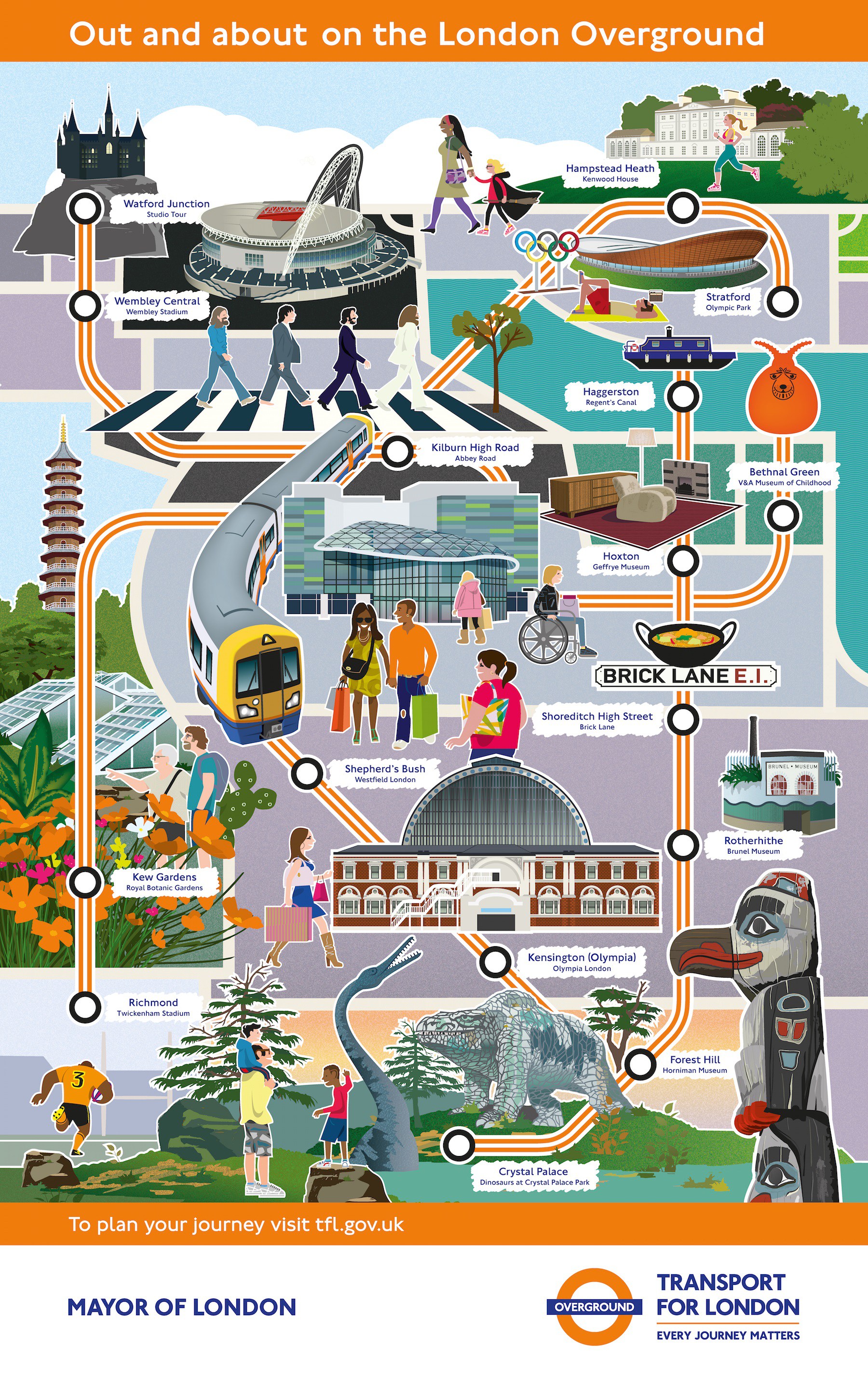
The Overground could become a tourist attraction in its own right.
- No special ticket required – Just touch in and out!
- Many of the attractions served by the Overground are affordable or free.
- Trains have a frequency of at least four trains per hour.
- Stations generally have good directions to local attractions.
In addition, Overground trains have better views from the windows than Underground trains.
The Overground Has Certainly Been A Success
When I moved to Dalston in 2010, the Overground had just opened to four station within walking distance; Canonbury, Dalston Junction, Dalston Kingsland and Haggerston.
New three-car Class 378 trains ran to Clapham Junction, Crystal Palace, New Cross, Richmond, Stratford and West Croydon, every fifteen or so minutes.
Now the trains have grown to five-cars and there is an extra route across South London to Clapham Junction to complete the circlke around Central London.
Passenger numbers have grown with the capacity and the railways have transformed Hackney and Dalston in particular.
Other Overgrounds In The UK
Several cities in the UK have their own local rail networks that are heavily used for commuting, leisure, shopping and tourism.
I’ve rode on systems in Birm,ingham, Glasgow and Liverpool, but none of these railways is as easy to use and as travel information-rich as the London Overground.
Not one of the UK’s local networks for instance, allow ticketing by using a contactless bank or credit card.
But then, with only a couple of exceptions, European networks are no better than the abysmal norm!
Contactless Ticketing
I believe that every local rail or Metro network, should support ticketing using contactless bank or credit cards.
- There is no need to buy a ticket or a special electronic travel card.
- A maximum daily, weekly or monthly cap can be applied.
- \Entry and exit at stations is quick and easy.
I also feel that cities that don’t go this route will lose out, as tourists will go elsewhere.
Network Maps
New Metros in Europe and the rest of the world, shameslessly copy the features of London’s iconic Tube map for one of their networks. But often for various reasons, they position them high-up and make it that you need to be over six foot tall to read them.
Every network, should have a large map, that is at least the size of London’s with the stations laid out in an easy-to-read format, that can be read by anybody from an eleven-year-old child to an eighty-yrear-old with failing eyesight, sitting in a wheelchair.
London’s maps aren’t perfect, but they are a good start!
Merseyrail
I know the Merseyrail network well and it probably comes closest to the London Overground in terms of operation.
But, in terms of Marketing, I don’t think it does is best to sell itself to visitors.
Birmingham
Is a big change about to happen in Birmingham?
This article in the Railway Gazette is entitled West Midlands Trains Announces London Northwestern Brand.
This is also said about services in Birmingham.
Services operating around Birmingham are to use the West Midlands Combined Authority’s West Midlands Railway branding, with a view to facilitating the possible future devolution of responsibility for these services from the national Department for Transport to the authority.
So will Birmingham improve its local rail offering?
It’s certainly going to have new trains and an expanded service, so will they add the following.
- Contasctless bank card ticketing.
- A route pattern and map, that is understandable to non-Brummies.
- Dedicated local platforms at New Street station.
- More visible staff on the platforms.
- More information.
The bare bones are there, but they need a lot more flesh!
Conclusion
The world needs to develop more Overground networks as London has done!
Four Trains Per Hour Between Dalston Junction And Battersea Park Stations
Normally, there is only one train per day in both directions between Dalston Junction and Battersea Park stations.
Wikipedia says this about the service.
Until December 2012, Southern operated a twice-hourly service from London Victoria to London Bridge via Denmark Hill. This ceased when London Overground’s Clapham Junction to Dalston Junction service commenced at that time. However, since December 2012, a skeleton London Overground service has run to/from Battersea Park (instead of Clapham Junction) at the extreme ends of the day to retain a “parliamentary service” between Battersea Park and Clapham High Street.
But today, London Overground were running four trains per hour between Dalston Junction and Battersea Park stations, as there was a track fault, which meant trains couldn’t get between Wandsworth Road and Clapham Junction stations.
I took these pictures on my journey.


It certainly looked, like London Overground weren’t having much trouble, in running four trains per hour between Dalston Junction and Battersea Park stations.
Musical Trains On The Overground
The November 2017 Edition of Modern Railways (MR) has a news item entitled Nine More Class 710s Planned.
This is the first paragraph.
Transport for London is proposing the acquisition of nine additional Class 710 EMUs from Bombardier to support the London Overground rxtension to Barking Riverside and an enhanced service on the East London Line.
Transport for London (TfL) are ordering six five-car and three four-car Class 710 trains.
This article on London Reconnections (LR) is entitled More Trains for London Overground: A Bargain Never to be Repeated.
The title gives a clue as to the first part of the article and it talks about how it may be necessary for TfL to get their order in now to get the best terms and price for the trains.
Putting the two articles together, some interesting train use could be happening on the various lines of the Overground.
The East London Line
Certain improvements have been planned for the East London Line.
The Class 378 Trains
The current fleet of 57 Class 378 trains are now five cars in length, after starting at just three cars.
Many of the stations on the East London Line could accept six-car trains and the other could be worked using selective door opening.
So TfL probably have an option to increase capacity on the East London Line by twenty percent, by adding an extra car to the Class 378 trains on the line.
The Class 378 trains are also certified for working the Thames Tunnel, whereas the Class 710 trains don’t appear they will be.
The Night Overground
A 24-hour service on Friday and Saturday nights, between New Cross and Dalston Junction/Highbury and Islington stations.
Crossrail And The East London Line
This will happen in December 2018, when Stage 3 of Crossrail opens between Abbey Wood and Paddington stations, with a connection to the East London Line at Whitechapel station.
When you consider that Whitechapel will be served by 12 x nine-car Crossrail trains per hour (tph) from December 2018 and 24 x nine-car tph from May 2019, you do wonder if the East London Line’s sixteen x five-car tph will cope with the extra passengwe.
Increased Frequencies
TfL have said they will increase the core frequency of the East London Line from sixteen tph to twenty in 2021.
I wrote about this two years ago in Increased Frequencies On The East London Line, so the plan is an old one, even if it has slipped a bit.
The original plan envisaged the following extra trains on the East London Line.
- Two tph – Dalston Junction to Crystal Palace in 2018
- Two tph – Dalston Junction to Clapham Junction in 2019
It would need the following.
- More Class 378 trains, as the Class 710 trains are not certified for the Thames Tunnel.
- Improved digital signalling in the core, which would eventually enable twenty-four tph.
The LR article suggests that there may be capacity problems at Clapham Junction station and two tph to Battersea Park station is suggested as an alternative.
Battersea Park Station
Battersea Park station is already served by the Overground, with this service, which is detailed in Wikipedia.
1 train per day to Highbury & Islington / 1 train per day from Dalston Junction.
Wikipedia adds this comment.
Until December 2012, Southern operated a twice-hourly service from London Victoria to London Bridge via Denmark Hill. This ceased when London Overground’s Clapham Junction to Dalston Junction service commenced at that time. However, since December 2012, a skeleton London Overground service has run to/from Battersea Park (instead of Clapham Junction) at the extreme ends of the day to retain a “parliamentary service” between Battersea Park and Clapham High Street.
This map from carto.metro.free.fr shows the track layout at Battersea Park station.
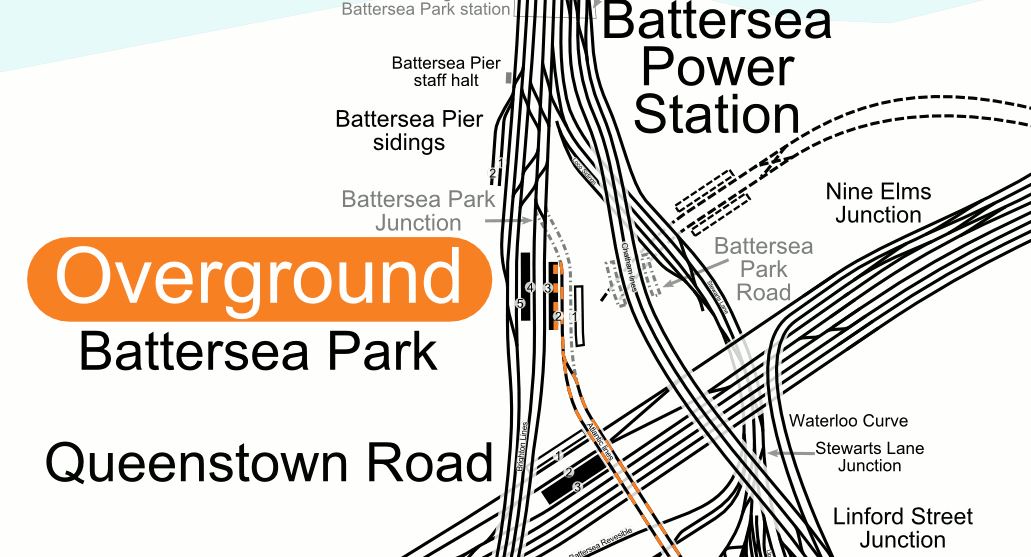
Note.
- The single track going in to Platform 2.
- Platform 1 at Battersea Park station is disused.
- The close proximity of the station to the new Battersea Power Station station, that opens in a few years.
These are some selected pictures of Battersea Park station.
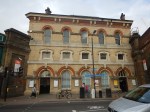
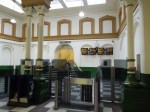
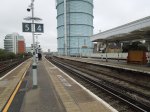
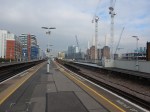
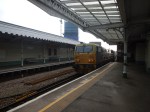
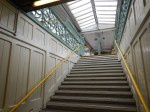
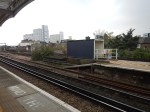
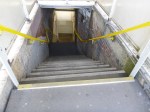
I think it is true to say, that it is a Victorian station, that wasn’t designed for the modern age.
- The station is Grade II Listed.
- The booking hall is a tidy Victorian example.
- There is a lot of excellent Victorian detailing.
- Platform 2 and 3 is wide with sensible stairs.
- Platform 2 is a well laid out terminal platform.
- Platform 4 and 5 is narrow with terrible stairs.
- Plstforms 3 and 4 seem to be long enough for ten-car trains.
It could be turned into what Roy Brooks would have called something better than a ruin. For those of you born since 1960, check the link to a memory of one of the world’s late great honest estate agents.
I’m sure Londoners used to buy the Sunday Times, just to read his adverts.
I can remember my late wife sitting on the sofa, laughing loudly, as she read aloud an advert about a flat, that wouldn’t suit an owner with a cat,.
Battersea Park station and a two tph service from Dalston Junction across South London have a lot going for them.
- I’m sure a budding Lord Foster or Zaha Hadid could come up with a scheme to fix the platform access and make the station passenger friendly and their name.
- The station is a short walk from Battersea Power Station station and must open up routes across London.
- Battersea Park station could easily handle two tph on a single platform.
- In A New Station For Battersea, I talked about a proposal to create a station at Battersea that linked the new tube station to the Southeastern lines into Victoria.
- In Four Trains Per Hour Between Dalston Junction And Battersea Park Stations, I write about how on the 6th November 2017, because of a track fault, London Overground ran a four tph shuttle between the two terminals.
Will all of this be tied together?
Train Requirements On The East London Line
Doing a quick calculation, I think that each of the four branches need the following number of trains for four tph.
- Dalston Junction to Clapham Junction – 8 trains
- Highbury and Islington to Crystal Palace- 8 trains
- Dalston Junction to New Cross – 2 trains
- Highbury and Islington to West Croydon – 8 trains
Which gives a total requirement of 26 trains.
Up the frequency to six tph on each branch or one train every 2½ minutes, which would be 24 tph through the Thames Tunnel and you get the following.
- Dalston Junction to Clapham Junction – 12 trains
- Highbury and Islington to Crystal Palace- 12 trains
- Dalston Junction to New Cross – 3 trains
- Highbury and Islington to West Croydon – 12 trains
Which gives a total requirement of 39 trains.
If you just have an increase to six tph on just the Clapham Junction and Crystal Palace routes as London Overground are proposing for 2020, you get the following.
- Dalston Junction to Clapham Junction – 12 trains
- Highbury and Islington to Crystal Palace- 12 trains
- Dalston Junction to New Cross – 2 trains
- Highbury and Islington to West Croydon – 8 trains
Which gives a total requirement of 34 trains, providing a service of one train every 3 minutes, which would be 20 tph through the Thames Tunnel.
This is eight more trains than at the present time.
It’s all rather impressive for the Thames Tunnel, which was built between 1825 and 1843, by the Brunels.
The Ultimate Capacity Of The East London Line
If we look perhaps ten years into the future, the following will have happened.
- Signalling will have improved.
- Crossrail will be running more than 24 tph through Whitechapel.
- Automatic Train Operation (ATO) will be driving the trains, with the driver keeping a vigilant watch, just as happens on the Victoria Line now!
- Passenger information and management will have improved and passengers will be able to handle the increased frequency of trains easily.
So if Dear Old Vicky can manage thirty-six tph in a 1960’s tunnel, will the East London Line be able to manage the same frequency in an 1840’s tunnel?
The Brunels would have made sure it happened and if it is needed, so will their engineering successors!
Let’s cut it back a bit and aim for 32 tph through the Thames Tunnel, as that was the sort of target engineers were looking at, for the Victoria Line in the 2000s, when the East London Line was being proposed.
How many trains will be needed to run the eight tph on the four routes, that would comprise thirty-two tph through the Thames Tunnel?
- Dalston Junction to Clapham Junction – 16 trains
- Highbury and Islington to Crystal Palace- 16 trains
- Dalston Junction to New Cross – 4 trains
- Highbury and Islington to West Croydon – 16 trains
Which gives a total requirement of 52 trains.
The London Overground has fifty-seven Class 378 trains. I can’t believe that the original fleet was sized on eight tph in operation through the tunnel and a few as hot spares and in maintenance!
But surely eight tph is impossible, as turning the trains at the terminal platforms would be too much!
Think again!
- The Victoria Line at Brixton and Walthamstow Central stations handles 36 tph using two platforms or 18 tph per platform.
- The Northern Line is targeting 36 tph on both lines, when it has been split into two.
With ATO, I’m sure each terminal platform can handle more than eight tph.
More Trains On The East London Line
According to the LR article, the planned new services on the East London Line will require another eight trains. This fits with my calculation.
- These trains have to be Class 378 trains, due to evacuation issues in the Thames Tunnel.
- These trains have to be able to work on lines with third-rail electrification.
London Overground has ordered six five-car Class 710 trains and they will be run on the North London Line and West London Line, where they will displace some five-car Class 378 trains for running on the East London Line.
Some five-car Class 378 trains on the Watford DC Line will also be replaced by four-car Class 710 trains.
So it would look like the East London Line will get some of the eight Class 378 trains that it needs.
Improvements To The North London Line/West London Line
The LR article says this.
London Overground have a long-held desire to increase the frequency on the WLL from 4tph to 6tph. They also aspire to another 2tph (at least) from Clapham Junction continuing to Stratford, to further increase the frequency on the North London Line (NLL). This would enable 10tph on eastern end of the North London line. This is due to be implemented with with main order of the new Class 710 stock.
The article also suspects that London Overground want to run the following services.
- 6 tph – Stratford to Richmond
- 6 tph – Stratford to Clapham Junction
This would deliver a twelve tph service between Stratford and Willesden Junction.
Living about halfway between those two stations, I’m not complaining.
But the article concludes, that London Overground’s objective can’t be achieved until some freight is moved to the Gospel Oak to Barking Line after the electrification of that line is completed.
As I said earlier, the pair of lines will get six extra five-car Class 710 trains and displace some Class 378 trains to the East London Line.
So will London Overground stick with a mixed fleet on these lines? Or will they perhaps run one class on each route?
I have no idea, but there are quite a few Class 378 trains, that could be displaced by new Class 710 trains to allow the East London Line frequency to be increased.
The Watford DC Line
Currently the Watford DC Line has a three tph service and I suspect that this needs six five-car Class 378 trains to run it.
The LR article says that London Overground want to run four tph on this line and I calculate this will need eight four-car Class 710 trains.
The new trains will probably be a few minutes faster and they will offer an hourly capacity increase of six percent.
But they will release six five-car Class 378 trains to strengthen services on the North, East and West London Lines.
Step-Free Access
Step-free access from platform to train is not good on the Watford DC Line.
You step up into a Class 378 train and step down into a Bakerloo Line 1972 Stock train.
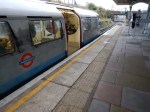
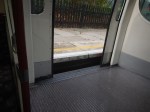
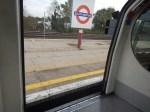
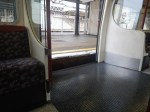
These pictures show the problem with the Class 1972 trains. When I got off one of these trains at Willesden today it was a jump.
It is some of the worst step-free access on the Underground.
On my short trip on the Bakerloo Line today, I deliberately sat in the last carriage. On most stations the the last carriage was aligned with the end of the platform, which leads me to the conclusion, that most stations are about as long as the trains, which are over 110 metres long.
Can a step-free platform be designed, that will work with the following trains?
- The current Class 378 trains
- The future Class 710 trains
- The current Underground 1972 Stock.
- Any future deep-level Underground trains
The latter could make design more difficult, if the train is built for Unattended Train Operation (UTO) and if platform edge doors are needed at all stations with UTO.
The only solution I can think of, is one that is used in Karlsruhe in Germany and is now being used at Rotherham Central station to accommodate main line trains and Class 399 tram-trains.
The platform is long enough to have two sections, with different platform heights.
- A high section is used with the main line trains.
- A low section is used with the Underground trains.
- Platform edge doors could be fitted to the low section.
- A gentle slope would connect the two sections.
- Entry to the combined platform could be near where the two sections join.
Also, consider the following.
- Given that the length of a Class 710 train is around 80 metres and that of a 1972 stock is in excess of 110 metres, it will be a long platform.
- Selective door opening will be installed on all trains.
- I do wonder, if the new trains for the Watford DC Line are only four cars to ease the problem of step-free access. The reduced length could knock twenty metres off every platform.
- Could we even see the new Underground trains built to a shorter length?
I’m sure that a workable platform design is possible.
The Bakerloo Line And The Watford DC Line
The Bakerloo Line is being extended to the South, but nothing has been said about how it will be changed in the North.
Possibilities for Northern terminals for the line could include.
- Queen’s Park
- Stonebridge Park
- Harrow and Wealdstone
- Watford Junction
It’s also complicated because the depot is at Stonebridge Patk.
I wouldn’t rule out extending the of the Bakerloo Line to Watford Junction, as is talked about in Wikipedia under Re-extension to Watford Junction.
What would be the consequences, if the following were to be done?
- An extended Bakerloo Line has an increased frequency of at least twenty tph between Watford Junction and Lewisham.
- The new trains for the Bakerloo Line are faster.
- The new Bakerloo Line trains had a capacity increase from the current 700, so they carried about the same as the five-car Class 378 trains.
The increased frequency of Bakerloo Line service, would probably result in London Overground’s Euston to Watford service to be discontinued.
The benefits would be as follows.
- Stations from Queen’s Park to Watford Junction would get a more frequent service, of possibly a train every three minutes.
- The problems of step-free access and platform-edge doors would be solved, as all trains would be on the Bakerloo Line.
- London Overground would not need any platforms at Euston, which could help in the rebuilding of Euston for HS2.
It would also mean that London Underground got another high-frequency Underground Line without any junctions, that could be run very efficiently.
But it would mean Kilburn High Road and South Hampstead stations would lose their connection to Euston.
A Willesden Junction To Stratford Via Kilburn High Road, South Hampstead and Primrose Hill Service
Reopening Primrose Hill station has been mooted in the past. This is said in the Wikipedia entry for the station.
It has been proposed to re-open Primrose Hill station by bringing the short stretch of line between South Hampstead and Camden Road stations back into the regular passenger service by incorporating it into the London Overground network.
A reopened Primrose Hill station, would only be a short walk to Chalk Farm station.
At Willesden junction station, there is even a convenient South-facing bay platform, that is numbered 2 and could handle four tph.
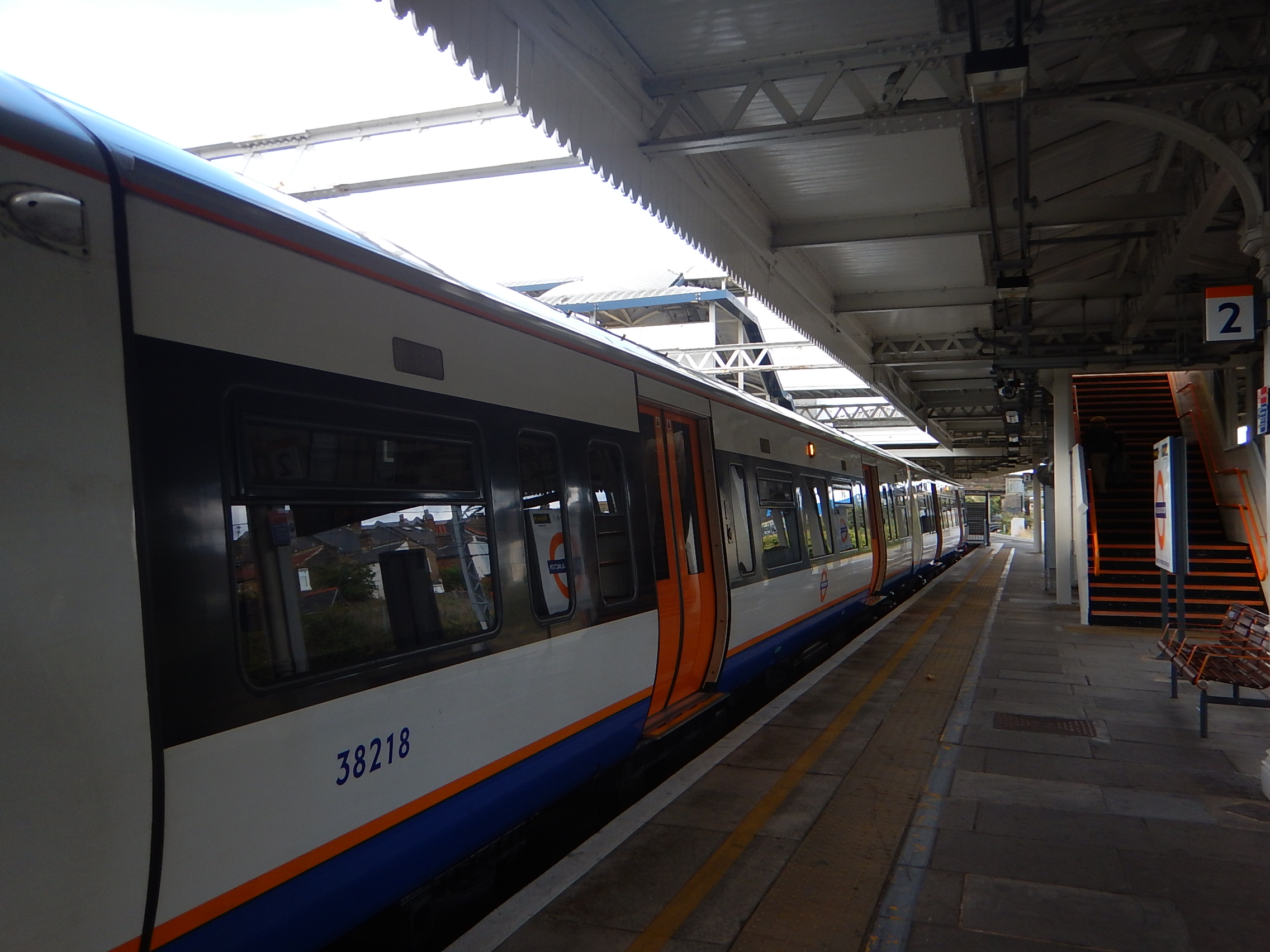
The picture shows a Class 378 train in Platform 2 at Willesden Junction station, was taken on Sunday, the 2nd of October 2016, during engineering works, when a Rail Replacement Train was run between Willesden Junction and Stratford stations.
But there are problems.
- Where would you terminate the service at its Eastern end? Highbury and Islington, Stratford or somewhere else, like perhaps a reopened Maiden Lane station?
- Kilburn High Road and South Hampstead stations sill lose their srtvoce to Euston and they would have to change at Highbury and Islington.
- Organising the time-table might be difficult.
- I also think, it would mean that Kensal Green station would be very difficult to make step-free, if it had to be served by both Overground and Bakerloo Line trains.
On the other hand, Queen’s Park station is an excellent example of a step-free cross-platform interchange between the two types of trains and Willesden Junction station could be equally good.
Crossrail, The Bakerloo Line And The Watford DC Line
All these three lines either serve Watford Junction or it has been suggested that they do.
- Plans to extend Crossrail up the West Coast Main Line would probably include a stop at Watford Junction, if they materialise.
- Extending the Bakerloo to Watford Junction is suggested from time-to-time.
- The Watford DC Line already serves Watford Junction station.
Given that a high-frequency efficient extended Bakerloo Line running between Watford Junction and Lewisham would serve the smaller stations on the way to Watford very capably, I suspect that whatever happens to Crossrail and the Watford DC services, the Bakerloo Line will be extended to Watford Junction.
The extended Bakerloo Line would have the following characteristics.
- Probably all trains running between Watford Junction and Lewisham.
- A frequency of upwards of 20 tph
- No junctions and end-to-end running like the Victoria and Jubilee Lines.
- Full step-free access at all stations.
- New faster, walk-through trains with wi-fi and 4G.
- An efficient connection to Crossrail at Paddington will be opened in December 2018.
- National Rail connections at Charing Cross, Elephant and Castle, Lreisham, Marylebone, Paddington, Waterloo and Watford Junction
It may be London’s forgotten line, but once extended, it could be a new star. Especially, if it gets to be linked directly into Old Oak Common station for all the services including HS2, that will be available there.
The Watford DC Line doesn’t connect to Crossrail, which makes me feel, that when everything gets decided about the extended Bakerloo Line and the new station at Old Oak Common, then the Watford DC Line could miss out.
Through Running Between North And East London Lines
I seem to remember reading in Modern Railways about ten years ago, that there was an ambition in TfL to extend some East London Line trains to Willesden Junction.
Look at this map from carto.metro.free.fr, which shows the lines at Highbury and Islington station.
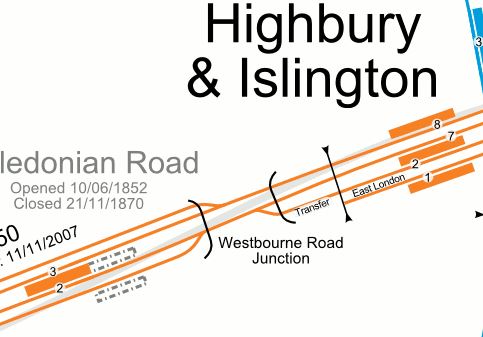
Note the single line labelled Transfer, that connects Platform 2 at Highbury and Islington station to the Westbound North London Line, that runs through Platform 7.
I think it would be possible to make Platform 2 into a bi-directional through platform.
- All Westbound trains on the Westbound North London Line would leave from the island platform between platforms 2 and 7.
- Voltage changeover between 750 VDC and 25 KVAC would take place in Platform 2.
- A four tph service in both directions would mean a train every 7-8 minutes.
- The four-track section of the North London Line between Highbury and Islington and Camden Road stations, includes two reversible lines.
Was this all future-proofing to allow services to run between the North London and East London Lines?
It is interesting to note, that Platform 2 is used for services to and from West Croydon station.
These services take around 51-55 minutes and currently need eight trains for a four tph service.
This screen capture shows the train timetable, when I rode between Highbury and Islington and Willesden Junction stations.
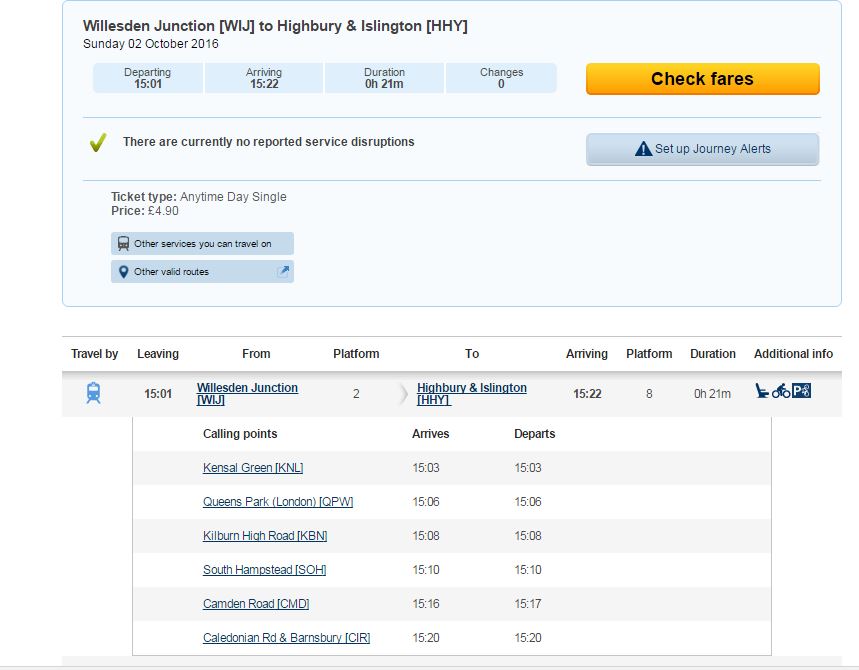
Note that the journey takes 22 minutes.
I am led to the conclusion, that it would be possible to run a service between West Croydon and Willesden Junction stations.
The service would run via Kilburn High Road, South Hampstead and and a reopened Primrose Hill stations.
It would have a frequency of four tph.
Trains would change voltage at Highbury and Islington station.
I would certainly like the service for these reasons.
- I regularly travel along the North London Line from the West to Dalston Junction station. The change between the North and East London Lines at Highbury and Islington can be very busy.
- Going West along the North London Line from Dalston Junction can involve a lot of walking up and down at Highbury and Islington station.
- Using Dalston Kingsland station to go East can be difficult, as there are masses of passengers changing between rge two Dalston stations.
- I like to go to Primrose Hill and London Zoo.
- Could the service also ease the pressure on Camden Town station, until the upgrade is complete?
I have no idea if London Overground would do this, but if there was a vote, I’d say yes!
The Gospel Oak To Barking Line
I have never seen a detailed analysis of running trains on the Gospel Oak to Barking Line (GOBLin).
Currently, eight Class 172 trains provide the four tph service. Consider this round trip.
- Leave Gospel Oak station at 09:05
- Arrive Barking station at 09:42
- Leave Barking station at 10.03
- Arrive Gospel Oak station at 10.45
Note.
- It is a very generous timetable.
- There is a twenty minute turn-round time at both ends of the route, which is good for recovering the timetable after a delay.
- The Class 710 trains could save time at every one of the ten stops, as they accelerate faster, have smooth regenerative braking and should have a better platform-train interface.
This leads me to the conclusion, that the Class 710 trains could run a faster service on the line.
Extending Services To Barking Riverside
Barking Riverside station will only be a short distance from Barking station and I suspect, it would only add ten minutes at most to the end-to-end journey time.
As there is a twenty minute turn-round time, I suspect that a train will be able to go from Gospel Oak to Barking Riverside and back again in under two hours.
This would mean that the current service of four tph could be possible on the extended route, with the same fleet of eight trains.
This is said in the MR article about the Class 710 trains.
The remaining two additional four-car units would support the extension of Gospel Oak to Barking services to Barking Riverside.
This leads me to one of these conclusions.
- The service is going to be extended somewhere else.
- The frequency on the route is going to be increased to five tph.
The next few sections deal with the various options.
Extending To The West Along The North London Line From Gospel Oak
I sometimes change between the GOBLin and the North London Line, as I can get a convenient bus from my house to Harringay Green Lanes station.
Allowing GOBLin services to continue along the North London Line would need extensive and expensive remodelling of Gospel Oak station to create an Eastbound plstform for the GOBLin.
The tracks to the West of the station, would probably need to remodelled to allow efficient operation.
The GOBLin trains would also be four-car trains, as opposed to the five-car trains on the North London Line.
Extending To The North Along The Midland Main Line
By using the Carlton Road Junction after Upper Holloway station, GOBLin trains could access the Thameslink tracks and go North to a convenient station.
Unfortunately, the track layout is such, that crossing to the Dudding Hill Line is difficult.
But continuing to the proposed Brent Cross Thameslink station is surely a possibility.
Although, I can’t see anything happening until plans for the West London Orbital Railway are agreed and Brent Cross Thameslink station is opened.
So it can probably be discounted for a few years yet!
Extending Across The Thames From Barking Riverside
Barking Riverside station is being built so that an extension under the Thames is possible.
But as a tunnel would be involved, I can’t see this extension being started or even planned fully for several years.
Five tph On The GOBLin
If two extra trains are added to the GOBLin fleet, this would mean that there are ten trains, which would be enough to run a five tph service between Gospel Oak and Barking Riverside stations.
I think this will be the most likely use of the two extra trains on the GOBlin.
Romford To Upminster
The Romford To Upminster Line is slated to get a brand-new Class 710 train to work the two tph shuttle.
The DR article says that it is possible that this line could be served by a Class 315 train, held back from the scrapyard.
This would mean a new Class 710 train could be deployed elsewhere, where its performance and comfort levels would be more needed.
Surely, this would be enough capacity for the line and a lot cheaper than a new Class 710 train! Provided of course, that it was reliable, comfortable and could maintain the current two tph service.
I discuss this in detail in A Heritage Class 315 Train For The Romford-Upminster Line.
Conclusion
It looks like Transport for London are planning for a large increase in services on the East London Line.
Is This The Hippest Train Status Displays?
In Technology Doesn’t Have To Be Complex, I described how Transport for London were using the suspension to assess how crowded trains are on the London Overground.
In my post, I suggested that the information could be used in modern station displays to show the train loading.
Yesterday, this article in the Standard, had a picture of such a display, at Shoreditch High Street station.
So today, I took one of my own.
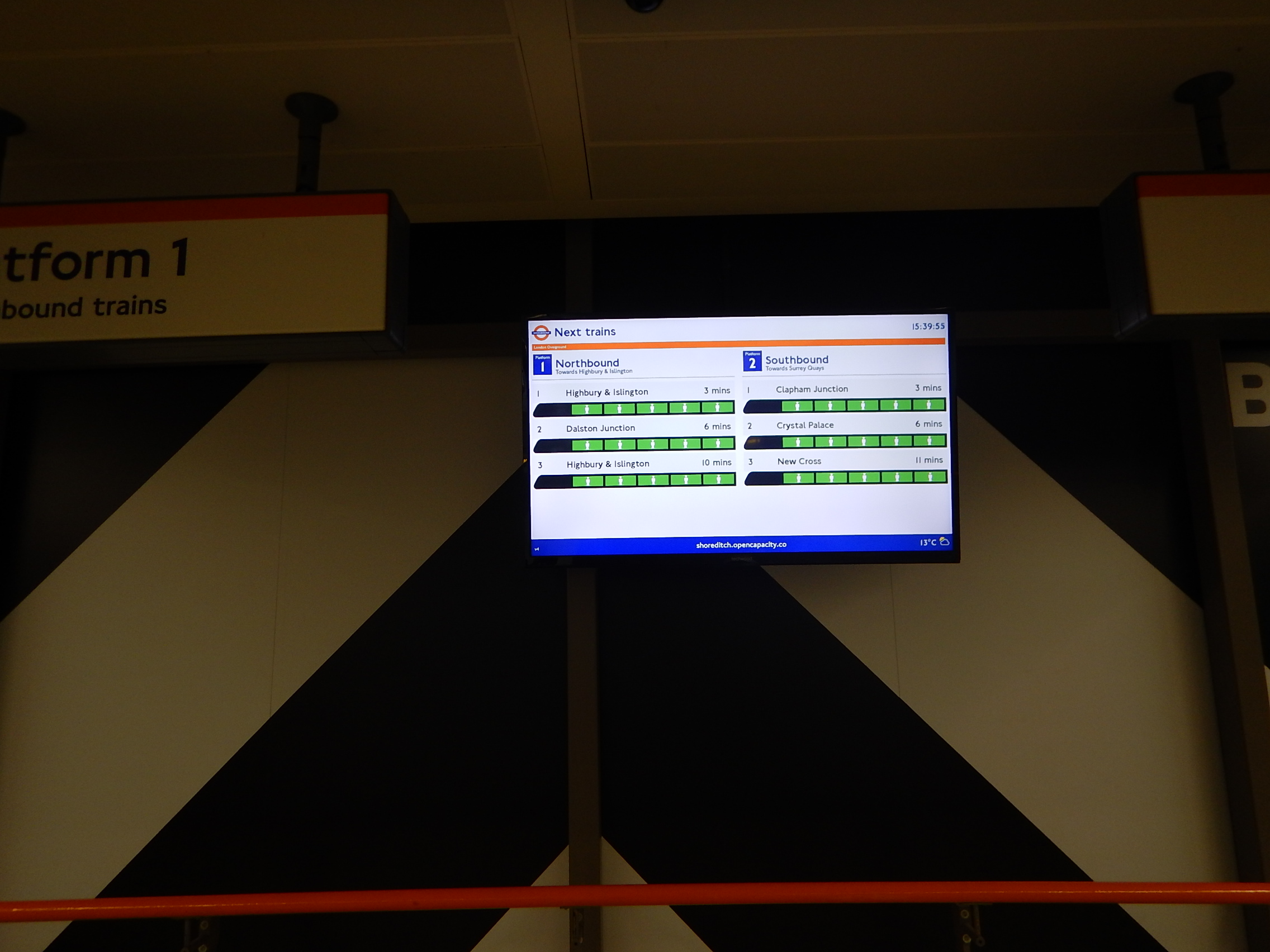
According to the Standard, passengers like the display.
It should be born in mind, that this is only the first version and I’m certain the information captured from the train suspension will find be used in several innovative ways.
Could A Lea Valley Metro Be Created?
Crossrail 2 envisages these developments and level of service North along the Lea Valley.
- A four-track West Anglia Main Line between Tottenham Hale and Broxbourne stations.
- Step-free stations
- A service running between Tottenham Hale and Broxbourne stations.
- 10-15 trains per hour (tph)
Crossrail 2 also envisages that at Tottenham Hale station, the line will enter a tunnel for Central and South West London.
But there is an unused alternative terminal, that could handle perhaps 16 tph with modern signalling.
Look at this map from carto.metro.free.fr of the lines at Stratford.
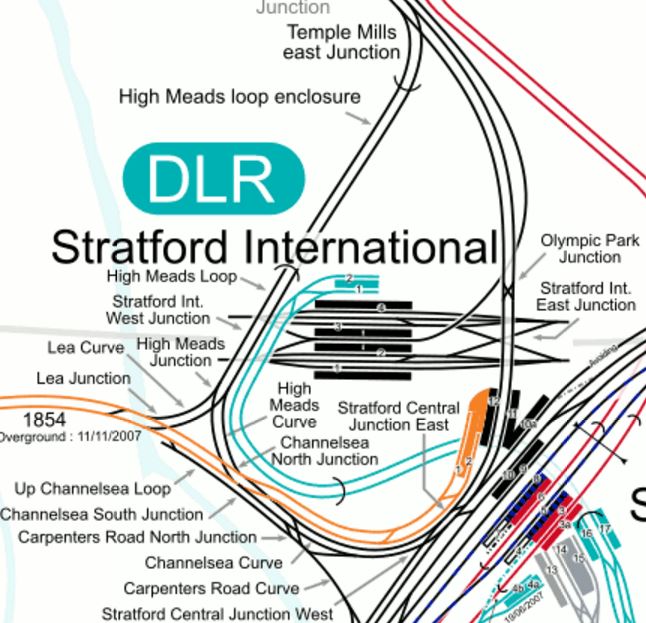
Note the double-track loop that encircles Stratford International station and goes through Platforms 11 and 12 at Stratford station.
Consider.
- Loops like this can easily handle 12 tph, as they do in Liverpool with the Wirral Line.
- Stratford is well-connected to the Central, Great Eastern Main, Jubilee and North London Lines, Crossrail and the Docklands Light Railway.
- The Loop could be connected to Stratford International station for Southeastern Highspeed services.
- There’s probably enough capacity to allow a couple of Stansted services to terminate in the loop.
- There is a massive development going on at Meridian Water, where a new station is being built.
- Liverpool Street station lacks capacity.
I can’t believe that a viable 12 tph service is not possible.
The major works would be as follows.
- Four-tracking the West Anglia Main Line into two fast and two slow lines.
- Making all stations step-free.
- Removing the level crossings.
- Creating a flyover at Coppermill Junction to connect the fast lines to Liverpool Street and prepare for Crossrail 2.
If Crossrail 2 is built in the future, the Metro service would be diverted into the central tunnel at Tottenham Hale station.
Integration With The London Overground
The Chingford, Cheshunt and Enfield Town services of the London Overground will not only offer alternative routes during the four-tracking of the West Anglia Main Line, but they could be better connected to a Lea Valley Metro.
- Tne Class 710 trains could enable four tph on each branch.
- The Class 710 trains will enable faster services on each branch.
- A reinstated Hall Farm Curve would connect Chingford and Walthamstow to Stratford.
- Creation of a step-free Cheshunt station would ease transfer between the London Overground and the Lea Valley Metro.
The new trains will be key and may open up more possibilities.
Note too, that moving services to Stratford from Liverpool Street will release capacity at Liverpool Street, that will be well-used by Greater Anglia and London Overground.
Dear Old Vicky
She’s always there when you need her and engineers keep coming up with ways to keep the Victoria Line giving more.
Currently, the frequency of trains between Walthamstow Central and Brixton is 36 tph.
I can’t believe that the engineers working on the line, don’t want to squeeze another four tph out of her, to achieve the fabulous forty.
This might be possible with the trains, tracks and signalling, but the problem is the capacity of some of the 1960s-built stations.
- Many stations have an empty space, where a third escalator could be.
- Lifts are few and far between.
- Some stations don’t have ceilings in the platform tunnels.
These stations could be improved.
Walthamstow Central Station
Walthamstow Central station gets desperate in the Peak, but it could be given a third escalator, a second entrance at the other end of the platforms and a much better step-free connection to the Chingford Branch of the Overground.
Blackhorse Road Station
Blackhorse Road station could be finished and given a third escalator to cope with the extra passengers that will transfer to and from an electrified Gospel Oak to Barking Line.
Tottenham Hale Station
Tottenham Hale station is being rebuilt to increase capacity. Will it get the missing third escalator and ceilings?
Seven Sisters Station
Seven Sisters station will be a Crossrail 2 station and will need updating to cope with an expected eight tph on the Overground. Expect a major project here.
Finsbury Park Station
Finsbury Park station is one of London’s stations designed by Topsy. Improvements are underway to cope with the extra passengers from Thameslink and an upgraded Northern City Line.
Highbury and Islington Station
Highbury and Islington station suffered worst at the hands of the Nazis and 1960s cost cutting, when the Victoria Line was built. This made it one of London’s worst stations.
However help is at hand.
- Plans are being prepared for a second entrance to the station on the other side of the Holloway Road.
- The frequency on the Northern City Line is being upgraded to twelve tph with new larger capacity Class 717 trains.
- There is space for a third escalator to be added to connect the Overgriound with the deep-level Victoria and Northern City Lines.
It should be born in mind, that Highbury and Islington station is busier than either Manchester Piccadilly or Edinburgh Waverley stations.
But with an upgrade, because it has cross-platform interchange between the Victoria and Northern City Lines, it could be an upgrade that increases the passenger capacity of the Victoria Line.
Euston Station
Euston station will be upgrqaded for HS2.
Oxford Circus Station
Oxford Circus station is desperately in need of more capacity, especially as there will be an upgrade to the Bakerloo Line in the future.
The opportunity at Oxford Circus is that some of the buildings around the junction are tired and some probably need to be replaced.
So will we see a development like Bloomberg Place, that will create a new entrance to Bank station, at Oxford Circus?
Could it also have an subterranean connection to Crossrail’s Hanover Square entrance for Bond Street station?
Victoria Station
Victoria station is in the process of being upgraded.
It certainly appears to be a case of so far so good!
South Of The River
Vauxhall and Brixton stations have rather undeveloped interchanges with the National Rail lines and these could surely be improved.
Under Possible Future Projects in the Wikipedia entry for the Victoria Line, this is said.
For many years there have been proposals to extend the line one stop southwards from Brixton to Herne Hill. Herne Hill station would be on a large reversing loop with one platform. This would remove a critical capacity restriction by eliminating the need for trains to reverse at Brixton. The Mayor of London’s 2020 Vision, published in 2013, proposed extending the Victoria line “out beyond Brixton” by 2030.
This would surely be the last upgrade to squeeze even more out of Dear Old Vicky.
Conclusion
A Lea Valley Metro can be created and eventually, it can be the Northern leg of Crossrail 2, when and if that line is built.
Before Crossrail 2 is completed, it will have great help in the following ways.
- In North East London from the London Overground.
- Across London from the Victoria Line.
Don’t underestimate how Crossrail and an updated Northern City Line will also contribute.
Mathematics Of The Lea Valley Lines
The mixture of Class 315 and Class 317 trains on the Lea Valley Lines are being replaced by new Class 710 trains.
Train For Train Replacement
London Overground currently has the following fleet, which work the Lea Valley Lines.
- 17 x Class 315 trains – 75 mph
- 8 x Class 317/7 trains – 100 mph
- 6 x Class 317/8 trains – 100 mph
All these trains are being replaced by thirty-one Class 710 trains, which are 100 mph trains with a shorter dwell time at stations.
Time savings of over a minute, are claimed for each station stop, by other train manufacturers for their new generation of trains.
As one train is used on the Romford to Upminster Line, that leaves thirty trains to work from Liverpool Street to Cheshunt, Chingford and Enfield Town stations.
The Current Lea Valley Services
The current Lea Valley services can be considered to be two separate four trains per hour (tph) services to the following destinations.
- Chingford
- Edmonton Green with 2 tph extended to each of Cheshunt and Enfield Town.
Journey times are as follows from Liverpool Street.
- Cheshunt – 39 minutes
- Chingford – 27 minutes
- Ednonton Green – 31 minutes
- Enfield Town – 34 minutes
As an illustration of the slowness of some of these times, the fastest Cheshunt services take around twenty-five minutes, but they use the West Anglia Main Line, which has a higher speed limit.
Improving Journey Times
So how can journey times be improved?
The following factors will apply.
The Aventra Advantage
The Aventra and other modern trains will have the following advantages.
- 100 mph operating speed.
- Powerful acceleration and smooth regenerative braking.
- Driver assistance systems to optimise train speed.
- Level access from train to platform.
The last three factors will minimise the dwell time, when stopping at a station. Savings of up to three minutes have been claimed by some train manufacturers.
All Passenger Trains On The Routes Will Be Aventras
How much time this will save will probably be decided in practice.
Track, Station And Signalling Improvements
The operating speed of the routes is 40-75 mph , which could surely be improved.
Obvious problems include.
- Level crossings at Bush Hill Park, Highams Park and Theobalds Grove.
- Platform-train interface.
- Provision of Harrington Humps.
A detailed analysis will probably be done to iron out any small time delays in running the routes.
Rewrite The Timetables For Aventras
Currently, the timetables are written so that they can be reliably run by the 75 mph Class 315 trains and also to allow for their possible presence on the routes.
How Much Can Be Saved?
This is a bit like asking how long is a piece of string, but assuming savings of a minute a station gives the following times.
- Cheshunt – 24 minutes
- Chingford – 20 minutes
- Ednonton Green – 20 minutes
- Enfield Town – 21 minutes
I would not be surprised if substantial time savings could be saved,
Liverpool Street Station
The pair of four tph services will mean that there will be a train arriving in Liverpool Street station every seven and a half minutes.
This should be no problem on two platforms, especially as all trains will be identical and designed for a fast turn-round.
Will they arrive and depart from a pair of platforms at Liverpool Street stations, like 2/3 or 4/5, so that passengers would know that their Lea Valley Line train always left from the same gates at the station?
This would surely make it easier for the train presentation teams!
Hopefully, by analysing the turning of trains, minutes can be saved.
Each Route In Detail
I shall now look at each individual route.
Liverpool Street To Edmonton Green
North of Hackney Downs station, in the Off Peak, the only trains on the route will be the following services.
- Two tph between Liverpool Street and Cheshunt
- Two tph between Liverpool Street and Enfield Town
These will be augmented in the Peak by some Greater Anglia limited-stop services stopping at Edmonton Green, Seven Sisters and Hackney Downs stations.
Current timings on this route are.
- London Overground – 31 minutes with eleven stops using a 75 mph Class 315 train.
- Greater Anglia – 23 minutes with two stops using a 100 mph Class 317 train.
As the distance between Liverpool Street and Edmonton Green stations is 8.6 miles, these timings give speeds of 16.6 and 22.4 mph respectively.
The following will speed up services on this route.
- All trains on the route will be 100 mph Aventras.
- The performance of the Aventras
- Track, station and signalling improvements.
- Driver assistance systems.
I suspect that my initial crude estimate of twenty minutes between Liverpool Street and Edmonton Green will be high.
Cheshunt Services
North of Edmonton Green station, the only service on the route will be the two tph service between Liverpool Street and Cheshunt.
As the route between Edmonton Green and Cheshunt is only 5.5 miles long, with just three stops, I wonder if when combined with the time between Liverpool Street and Edmonton Green, that the round trip time could be reduced to under an hour, including the turn-round at both ends.
The current two tph service takes a few minutes over an hour-and-a half for a round trip from Liverpool Street, so three trains will be needed to run the service.
But if it could be done in an hour, then only two trains would be needed.
This level of speed improvement may seem ambitious, but the next generation of trains appear to be being built with it in mind.
Chingford Services
If the Chingford trains can do the trip reliably in twenty minutes, this would mean that a train could do a round trip from Liverpool Street to Chingford in under an hour, whereas now they take nearly an hour-and-a-half.
This means that four tph from Liverpool Street to Chingford needs either of the following trains.
- 4 x Class 710 trains
- 6 x Class 315/317 trains.
I doubt London Overground will park the spare trains in a siding.
It might even be possible to increase the frequency between Liverpool Street and Chingford. But this would probably need the removal of the level crossing at Highams Park station.
Enfield Town Services
North of Edmonton Green station, the only service on the route will be the two tph service between Liverpool Street and Enfield Town.
This is likely to be a route, where the return trip to Liverpool Street could be under an hour.
This means that two tph from Liverpool Street to Enfield Town needs the following trains.
- 2 x Class 710 trains
- 3 x Class 315/317 trains.
Conclusion
It does appear that on a rough look, the number of trains required to provide the current service will be less.
I think the three routes will need the following numbers of Class 710 trains to provide current services.
- Cheshunt – 2 trains
- Chingford – 4 trains
- Enfield – 2 trains
As each train is usually eight-cars, then sixteen trains could be a minimum number to provide the current service.
But to do this, trains on each route must be able to do an out-and-back trip within an hour.
I think this could be possible and the extra trains will obviously be used to provide extra services.
London Over/Underground And New York Subway Compared
This article on Business Insider, is entitled I rode London’s famous Underground system for a week — and I saw why New York’s subway will never catch up.
It is good read.
Reflections At Seventy
I completed by seventh decade this morning at about three, if I remember what my mother told me about the time of my birth correctly.
Dreams Of A Shared Retirement With Celia
Perhaps twelve years ago, my wife;Celia and I made a decision and that was to sell everything in Suffolk, after she retired from the law in perhaps 2015 or so and retire to a much smaller house in somewhere like Hampstead in London.
I remember too, that we discussed retirement in detail on my sixtieth birthday holiday in Majorca.
But of course, things didn’t work out as planned.
Two Deaths And A Stroke
Celia died of a squamous cell carcinoma of the heart on December 11th, 2007.
Then three years later, our youngest son died of pancreatic cancer.
Whether, these two deaths had anything to do with my stroke, I shall never know!
Moving To Dalston
Why would anybody in their right mind move to Dalston in 2010?
It is my spiritual home, with my maternal grandmother being born opposite Dalston Junction station,my father being being born just up the road at the Angel and grandfathers and their ancestors clustered together in Clerkenwell and Shoreditch. My Dalstonian grandmother was from a posh Devonian family called Upcott and I suspect she bequeathed me some of my stubbornness. My other grandmother was a Spencer from Peterborough and she could be difficult too! But that could be because she was widowed at forty-nine!
Celia and I had tried to move to De Beauvoir Town in the 1970s, but couldn’t get a mortgage for a house that cost £7,500, which would now be worth around two million.
So when I gave up driving because the stroke had damaged my eyesight, Dalston and De Beauvoir Town were towards the top of places, where I would move.
I would be following a plan of which Celia would have approved and possibly we would have done, had she lived.
But the clincher was the London Overground, as Dalston was to become the junction between the North London and East London Lines. Surely, if I could find a suitable property in the area, it wouldn’t lose value.
But I didn’t forsee the rise of Dalston!
Taking Control Of My Recovery
I do feel that if I’d been allowed to do what I wanted by my GP, which was to go on Warfarin and test my own INR, I’d have got away with just the first very small stroke I had in about 2009.
In about 2011, one of the world’s top cardiologists told me, that if I got the Warfarin right, I wouldn’t have another stroke.
As a Control Engineer, with all the survival instincts of my genes that have been honed in London, Liverpool and Suffolk, I have now progressed to the drug regime, I wanted after that first small stroke.
I still seem to be keeping the Devil at bay.
Conclusion
I’m ready to fight the next ten years.
 The Anonymous Widower