Echoes Of The Past At South Kensington Tube Station
South Kensington Tube Station has been through many changes, since it opened in 1868.
This map from carto.metro.free.fr shows the layout of the lines at the two stations.
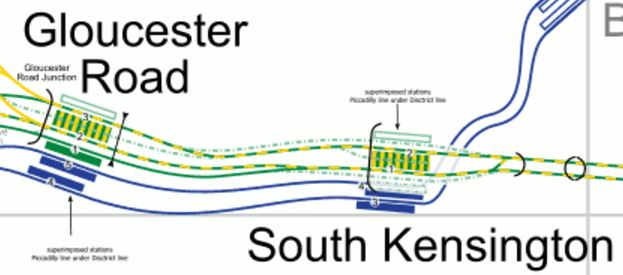
Unusually for the Circle/District Lines, both these stations are island platforms. But note how there used to be platforms on the outside of the lines we see today.
These are some pictures I took today.

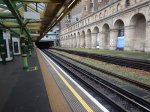
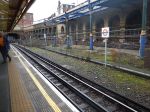
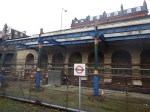
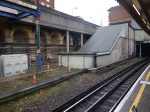
There certainly quite a bit of space and abandoned infrastructure in the station.
In the Wikipedia entry for the station, under Future Proposals, failed plans for developing above the station are detailed.
It’s certainly puzzling, why the space isn’t used better, as it is a site of 0.77 hectares.
It might also be a space large enough to put in an extra platform, if that were needed.
Where The Northern Line Extension Spoil Is Going
This article in Your Thurrock, is entitled London Tube tunnelling project set to benefit arable land in East Tilbury.
It gives a good overview of the tunnelling for the Northern Line Extension and states that the tunnel spoil will be taken by barge to Goshems Farm in East Tilbury.
This Google Map shows the North Bank of the Thames from Tilbury Fort to East Tilbury.
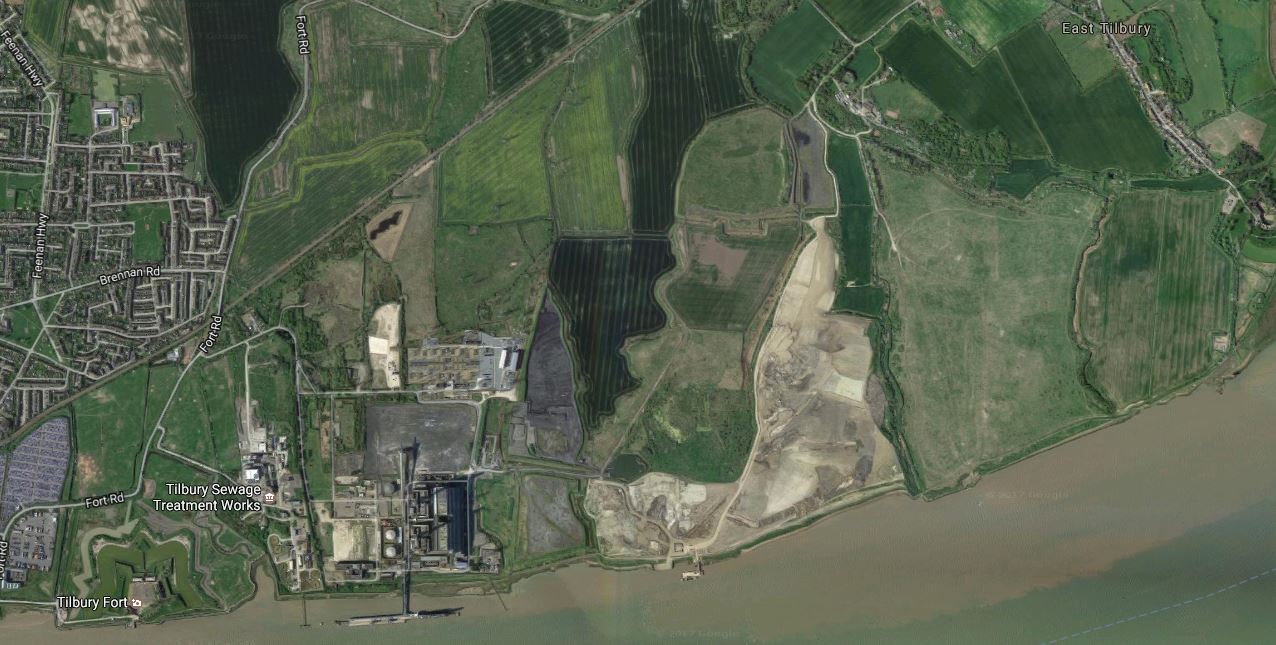
Tilbury Fort is in the South West corner of the map, by the river and East Tilbury is in the North East corner.
This is a more detailed map of the area of Goshems Farm.
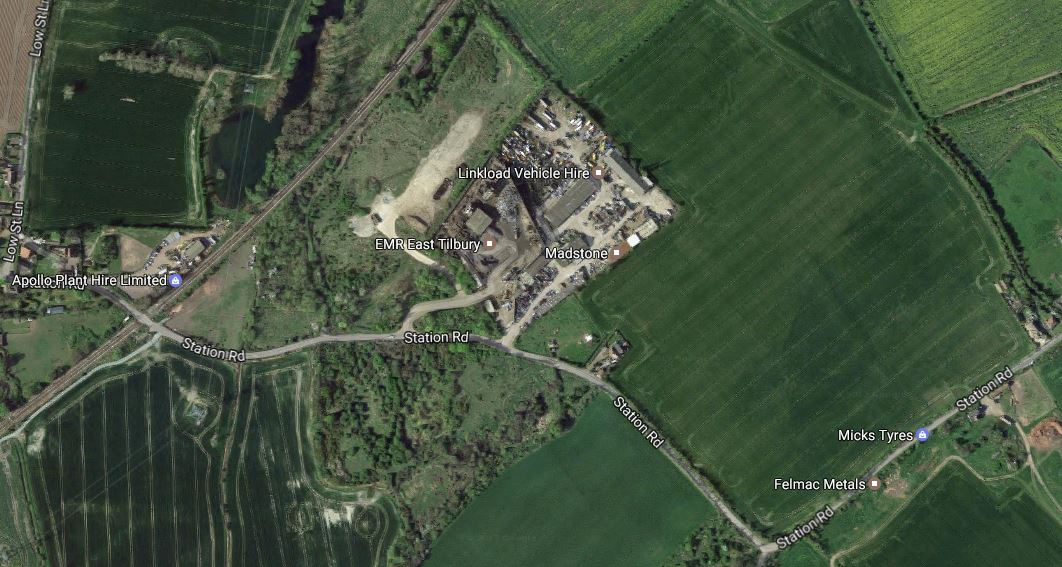
Goshems Farm is in the area of Felmac Metals and Micks Tyres, which from their names are typical businesses, you find in areas like these all over the UK.
Note Station Road leading up to the disused Low Street station, which was on the London, Tilbury and Southend Railway, which is now served by c2c.
I suspect that the spoil will go into the light-coloured land between this area and the Thames, which could be something like an old landfill site.
It’ll certainly be a lot more use as arable land.
The Start Of Change At Victoria Tube Station
On the early-evening BBC London News last night, the BBC showed preview pictures of the new entrance to Victoria tube station, which they indicated is on Brettenham Place.
The station certainly needs more capacity, as this extract from Wikipedia indicates.
Victoria is currently the fourth busiest station on the London Underground, after Waterloo, Oxford Circus and King’s Cross St. Pancras, with nearly 85 million using the station (not including interchanging passengers) in 2013, of which around 60 million (including interchanges) use the Victoria line platforms. The station was not built for this number of passengers, which results in severe overcrowding. To prevent any dangerous situations like crowds pushing people off the platforms onto the track, crowd control measures are in place at the busiest times. This effectively means closing all the entrances to the Underground platforms and operating as an exit-only station until the overcrowding is relieved. These measures can last anywhere between a couple of minutes (when minor delays are occurring) up to several hours (during major incidents).
As to the layout of lines through the station, Victoria tube station is fairly simple, as this map from carto.metro.free.fr shows.

Note.
- The Circle and District Lines have a typical Victorian layout, with two platforms on the outside of the tracks.
- The 1960s designers of the Victoria Line at least left a lot of space between the two tracks.
- The Victoria Line also incorporates two full sidings, numbered 22 and 23 between the tracks.
As nearly all trains throughout the day run run between Walthamstow Central and Brixton, the use of these sidings must only be for purposes like overnight stabling and parking failied trains.
According to Wikipedia, currently each set of lines have their own ticket offices on different levels and built over a hundred years apart.
Walking between the Circle/District Lines and the main line station is not for the faint-hearted or those with need for step-free access. The 1960s designers at least made walking between the Victoria Line and the main line station a bit easier, but there is still a flight of steps to be overcome.
If I go to Victoria station with a wheeled bag, which is not often, I take the easy route of a 38 or N38 bus from around the corner, direct from around the corner from my house.
So what is happening over this weekend?
This Google Map shows the area to the North of the station.
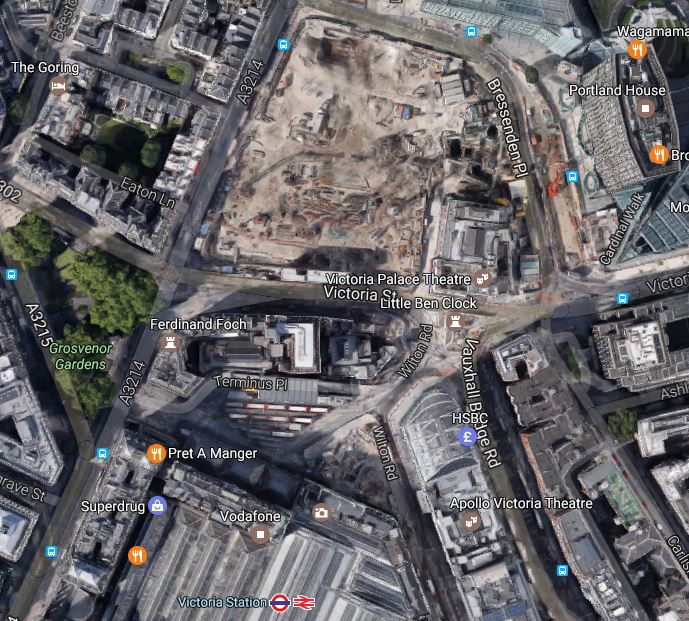
Note.
- North of Victoria Street is a massive building site.
- The rows of white-roofed red buses on the station forecourt..
Wikipedia says this about the current upgrade.
To provide a lasting solution to this problem preparatory building work has begun on major upgrade of the station. This will include a new northern exit/entrance on the north-west corner of Victoria Street which will be accessible via a new additional ticket office under Bressenden Place that will lead to both the Victoria line and the Circle and District line platforms.
I will go and do some more digging.
The Victoria Line Platforms
Currently, the Victoria Line platforms have two sets of escalators.
- The original set of three, that so up into the Victoria Line ticket hall under the bus station.
- A second set of three, that go from the platforms into a series of passages underneath the Circle and District Line platforms, to which they connect with short sets of stairs.
These pictures show the Victoria Line platforms, various passages and works.
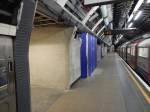
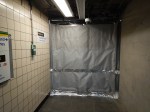


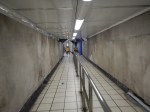
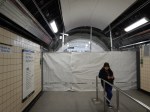
It looks like there are two new sets of works.
One set could just be an extension of the current lobby at the bottom of the original escalators. This would increase the capacity between the Victoria Line and the main line station.
Judging by the sign saying Cardinal Place on the other works at the Northern End of the platforms, it would appear that these works are a new entrance from Cardinal Place.
The Cardinal Place Entrance
On the surface, the Cardinal Place Entrance is clearly visible, outside the Cardinal Place development.
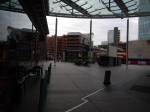
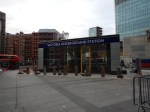

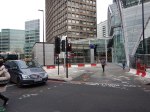
According to a personable member of the station staff, The new entrance will open sometime after ten on Monday morning.
At Cardinal Place, the overall design would appear to be simple, where an escalator shaft has been dug between the Northern end of the Victoria Line platforms and a new entrance hall beneath Bressenden Place, which then has the simple pop-up entrance shown in my pictures
The constructure, appears to have been carried out, without massive closures of the Victoria Line platforms.
The surface building also looks very similar in concept to the new standalone glass and steel entrances at Kings Cross St. Pancras and Tottenham Court Road stations.
So I wonder how many new entrances can be created at existing stations, by using a similar design and building method.
Walthamstow Central Station
Walthamstow Central station suffers very bad overcrowding , with only two escalators and no lifts having to cope with the passengers from over 40 trains per hour.
This map from carto.metro.free,fr shows the layout of platforms at the station.
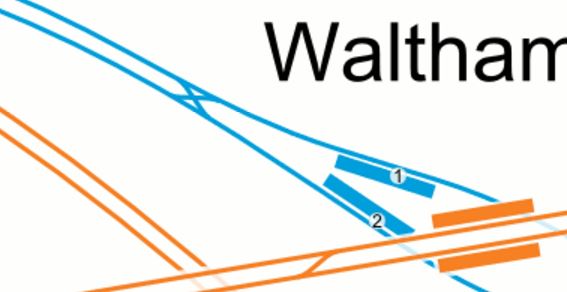
Note how there is a wide lobby at the Eastern end of the platforms underneath the Overground lines, which is used to accommodate the escalators and the waiting queues of passengers.
The crossover to the West of the station was installed in August 2015 and I suspect that this work didn’t compromise any of Transport for London’s thoughts of improving capacity at Walthamstow Central.
It could be tight to dig a shaft for three escalators into this area, but at least the area on top is mainly grass, market stalls and not the best of buildings, with the exception of the Library.
If you look at the length of the current escalators at the station, they indicate that the Victoria Line is not deep. So that would help.
I suspect we could see a very innovative and simple solution to create a new Western entrance at Walthamstow Central station.
I would also be possible to build the entrance without any disruption to either existing train services or passengers in the existing station.
The Refurbishment Of Holland Park Tube Station
I stopped off at Holland Park tube station this morning, to take a look at the refurbishment.
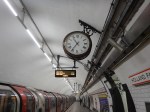
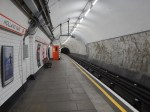
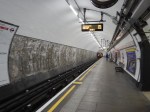
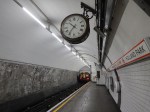
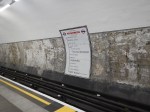
The clocks would also seem to have had a makeover.
But there still seems some work to do!
The Refurbished Tottenham Court Road Tube Station
I took these pictures of the Central Line platforms at Tottenham Court Road tube station.
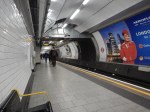
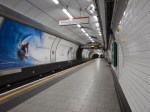
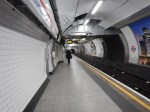
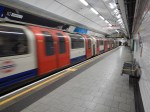
It does seem to me that it’s wider than it used to be.
Thoughts On The Train Strikes
These strikes have all the qualities of an irresistible force meeting an immovable object.
The latest headline on an article on the BBC is Southern rail strike enters second day as Acas talks start.
I doubt the talks will be very productive.
Here are my thoughts about various issues.
London
I have been running around in driver-only-operated (DOO) trains for quite a few decades now. Especially, as I have always travelled frequently on the London Underground.
Wikipedia has a comprehensive section on One Man Operation in London.
This is said about the Underground.
All trains on the London Underground are single-manned.Conversion to one-man operation began in 1984 and was completed in 2000.
In some ways though the Underground, is not full DOO, in that on nearly all stations, there are staff on the station, who assist the driver to safely dispatch the trains.
Assistance From Staff
The staff on the platform are also there to assist passengers, who need help. This page on the Transport for London web site describes the role of staff.
This is said under Assistance To And From Trains.
On the Tube, TfL Rail and Overground, station staff will also accompany you to the train and help you on board and, if needed, can arrange for you to be met at your destination. Anyone can use this service, but it is particularly used by blind and visually impaired passengers and people using boarding ramps onto trains.
If you would like to use this service, ask a member of staff when you arrive at the station.
That is very much turn-up-and-go for everybody!
So what happens on Southern?
This page on the Southern web site gives full details of what they offer.
This is said.
When should I ask for help?
If you want to book ‘help’ try to call us at least one day before you travel.
That is not acceptable.
So there’s one job for the redundant guards on Southern – They could help on the platform, as they do on the London Underground and Overground.
The Gospel Oak To Barking Line
London hasn’t been without trouble though, as this from Wikipedia shows.
TFL now operates 100% of its overground network as driver-only trains. The latest conversion was announced in July 2013 on the Gospel Oak to Barking Line. The National Union of Rail, Maritime and Transport Workers (RMT) challenged the move, claiming passenger safety would be compromised. Transport for London replied that at the time the East London Line, already one-man operated, has one door-related incident for every 7 million passengers, while the section of the network which currently uses conductors has one door-related incident for every 4 million passengers.[10] On 16 August 2013, the RMT called a 48-hour strike over the August Bank holiday weekend. According to the RMT, the proposal set forth by Transport for London would imply Driver Only Operations on the whole of the London Overground network and make 130 guards redundant London Overground Rail Operations stated in response that they had given “the RMT assurances on employing conductors in alternative customer service roles and offering a generous voluntary redundancy package to those who want it.” According to RMT, the proposals to implement driver only operations are in response to the 12.5% reduction in Transport for London’s funding announced in Chancellor of the Exchequer George Osborne’s Comprehensive Spending Review
I certainly don’t remember that strike. So it must have been really significant!
Overground And Underground
You should always remember that when the Overground started, every train had a second man, but gradually they have been moved to the platforms.
The Overground works a different system to the Underground on doors in that the driver enables the doors for opening and they are actually opened by the passengers individually. On the Underground, the driver just opens and closes all doors.
Crossrail
It will be interesting to see, what system the new Class 345 trains for Crossrail use.
It’s an Overground train in the outer reaches and an Underground train in the centre.
The Class 345 trains also appear to be very hi-tech with various innovative features.
Automatic Train Operation
The Victoria Line in London has always run with automatic train operation (ATO). The Wikipedia entry has two entries about London.
On the London Underground, the Central, Northern, Jubilee, and Victoria lines run with ATO.
ATO was introduced on the London Underground’s Northern line in 2013 and will be introduced on the Circle, District, Hammersmith & City, and Metropolitan lines by 2022. Although ATO will be used on Crossrail and Thameslink, it has not yet been implemented on UK mainline railways
Lines like the Victoria Line, Crossrail and Thameslink, will not be completely automatic, but the driver will be an intelligent monitor to what the train is doing. It could be compared to auto-land on an aircraft, where the plane is actually controlled, by the autopilot and the pilots monitor.
As a Control Engineer, I believe we’ll be seeing large increases in the use of ATO in the UK in the next few years. Many intensively used lines could probably handle more trains, with a controlling ATO system.
Will the Unions object to ATO?
They haven’t seemed to yet, as ATO generally seems to see an increase in the number of trains, which means more staff.
More Automation On Trains
This is happening, but then this is only following the lead of more automation in planes and road vehicles.
Crossrail trains will set a new standard in automation.
This is a snippet from the an article in the Derby Telegraph
Unlike today’s commuter trains, Aventra can shut down fully at night and can be “woken up” by remote control before the driver arrives for the first shift.
I described this to a driver for Northern and a big smile came over his face.
Perhaps more contentious is the autoreverse system fitted to Crossrail trains, that I wrote about and explained fully in Crossrail Trains Will Have Auto-Reverse.
The system will work at a Crossrail terminal like Paddington or Abbey Wood.
- The driver selects auto-reverse in the terminal platform.
- The train then drives itself into the reversing siding.
- The driver starts to walk back through the train towards the other cab.
- When the train reaches the end of the reversing siding, it reverses back into the return platform.
- By the time the driver has walked the length of the train and installed himself in the cab, the train will have arrived in the platform and will be ready to depart.
I suspect that there will be a high-level of safety systems, with the driver probably carrying a dead man’s handle, that connects to the train by radio.
It will be interesting to see how the Unions react to such a system.
- One of the reasons for the auto-reverse is that it is needed to get 30 trains per hour, through the tunnel.
- Drivers will avoid a 200 metre walk.
- No passengers will be on the train, when the driver is out of the cab.
But it will mean more staff being employed, to drive and service the extra trains and handle the extra passengers.
Conclusion
I am drawn to the conclusion, that lots of automation and driver aids are coming to the railways.
DOO is the first of many issues, where there will be a fight.
If the Unions don’t like it, they will reap the wrath of the passengers, train companies and most politicians.
Platform Height Issues On The Watford DC Line
At Queen’s Park station, the Bakerloo and Watford DC Lines join as they go towards Watford Junction station.
This map from carto.metro.free.fr shows the lines at Queen’s Park station.
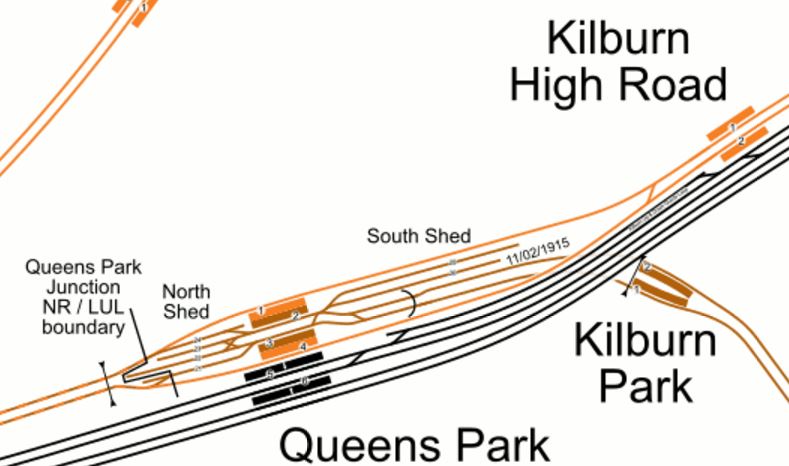
Lines Through Queen’s Park Station
Note how there is a cross-platform interchange between the two pairs of lines.
Northwards from Queen’s Park station, the platform height is a compromise, with a step down into an Underground 1972 Stock train and a step up into Class 378 train.
- It is not level access by any means and very difficult for wheel-chair users or those pushing buggies or heavy wheeled cases.
- I suspect that at some point it could even be illegal under disability regulations.
- With a more intense service, loading and unloading trains may become a seriouscause of delay.
It is not just a would-like, but a must-have.
Queens Park station though, is totally level.
The current five-car Class 378 trains are 100 metres long, which compares with the 113 metre length of the 1972 Stock train.
One way to solve the platform height issue, would be to have a dual height platform with one end of the platform level access for the 1972 Stock and the other for the Class 378 train.
This would probably need a platform of the order of 215 metres.
But London Overground have ordered a set of four-car Class 710 trains for the Watford DC Line. These trains will be perhaps 80 metres long, as the type will be shared with the shorter platforms of the Gospel Oak to Barking Line.
This shorter length train should make the design of a dual-height platform acceptable to all users a lot easier.
Currently Off Peak services through Willesden Junction are as follows.
- 3 trains per hour (tph) from Euston to Watford Junction – London Overground
- 9 tph on the Bakerloo Line.
Some sources mention that there are ambitions to run 27 tph on the Bakerloo Line. So even if all the trains went through to Watford Junction, that would only mean 30 tph stopping at stations on the line.
Currently, 2 tph on the Bakerloo Line turnback at Queen’s Park station, so it looks like with good deual-height platform design, the current schedule of three tph on the Overground, stopping at South Hampstead and Kilburn High Road can be continued and supplemented with perhaps 18-20 tph on the Bakerloo Line North of Queen’s Park station.
Platforms could be about 180-200 metres long, with a height to fit the Bakerloo Line trains. At one end they would have an 80 metre section of platform to suit the Class 710 trains.
The Class 710 trains would obviously be wheelchair friendly, like the current Class 378 trains, but they would be designed to fit a typical station on the Watford DC and Gospel Oak to Barking Lines.
If Class 378 trains were also providing services on the line, they would use their selective door opening to use the four-car raised section of the platform.
So, if the stations were to be given lifts to fit the new dual-height platforms, the service would have the following characteristics.
- Totally step-free and level access at all stations for all trains.
- South Hampstead and Kilburn High Road stations would keep their current service.
- Most stations would have an increased service.
- 27 tph through the central section of the Bakerloo Line would be enabled.
The biggest problem would be walking or pushing to the right end of the platform for your train, at stations served by both size of train.
Why the Piccadilly Line is Struggling
Many Londoners and quite a few visitors have found problems with the servcice on the Piccadilly Line recently.
This article in the Standard is entitled Piccadilly line ‘should be shut down and Night Tube launch delayed until train shortage fixed’.
This is the first paragraph.
Rail union bosses have called for the Piccadilly line to be temporarily shut down and its Night Tube launch delayed until an ongoing “shortage of trains” is resolved.
That is drastic.
I have just found this article on the London Reconnections web site, which is entitled Wear and Lathing in Northfields: Why the Piccadilly Line is Struggling.
The article may not offer a solution, but it does offer the reasons for the shortage of trains.
Read it!
Redbridge Station
Whilst visiting Newbury Park station, I took the opportunity to visit the below-grounmd parts of Redbridge station.
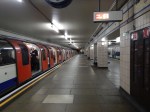
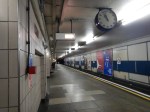
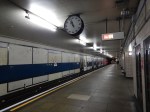
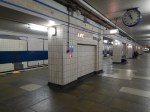
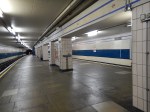
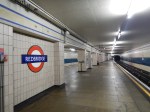
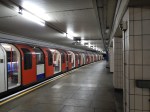
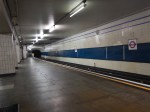
The station is unusual for the Underground in that there is effectively a very wide island platform between the two tracks.
Many stations, like those on the Northern reaches of the Piccadilly Line, that I know so well, do have this layout, but this must be a station with some of the widest platforms.
Wikipedia says this about the station.
Redbridge is often described as the shallowest deep level (as opposed to cut and cover) station on the network, as it is only 5.2 metres (17 ft) beneath the surface. However, this is misleading as the station tunnel was constructed by the cut and cover method, with the running lines descending into genuine tube tunnels at either end of the platforms – similar to the Central line platforms at Mile End.
I also get the impression, that the station could be designed, so that as at Stratford, trains rise up into the station, thus turning kinetic energy into potential energy to slow the train. This energy is released to accelerate the train out of the station.
Newbury Park Station
According to this article in the Ilford Recorder, Newbury Park station is going to be one of the first in the latest batch of stations to be given step-free access.
So I went for a look.
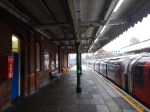
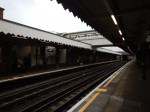


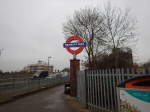
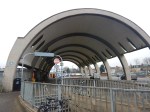
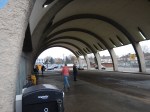


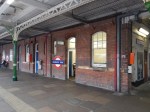
Note.
- Lifts can probably be added easily to the existing bridge.
- Lifts are certainly needed, ss I saw a couple of mothers struggling with buggies.
- The station buildings on the platforms have potential for making really nice.
- The barrel roof is not to my taste, and I would rejoice if it had to be demolished for health and safety reasons.
- The station is a Grade II Listed building.
It is certainly an unusual station.

