Should New Routemasters Be Named?
I know they’re not called New Routemasters officially, but will they ever be called anything else?
I think all of the buses should be individually named, perhaps in series to reflect the area they run through.
After all, there a lot of Londoners to name them after.
If we take the 38 route, famous people with strong Hackney connections who would be suitable might include.
I would like the list to be quirky and slightly educational and without any trace of politicians or jobsworths.
They could also be named indirectly. So for instance Edmond Halley might be commemorated by a bus named Halley’s Comet or Jessica Tandy, who was born in Clapton, by one called Miss Daisy. And then what about The Italian Job for Michael Caine, after all one of the stars was a coach.
Local heroes would be allowed, like the named after Dave Gardner.
Take a New Routemaster to Romantic Clapton Pond on the 20th of February 2012
I’d thought that the new Routemaster was going to be introduced on the route 38 between Victoria and Clapton Pond and today it was confirmed that they’ll start on the 20th of February. Initially, they’ll just be eight of them.
I went to a presentation on the bus some months ago and I think it will be a good addition to London’s bus fleet.
The choice of route 38 is an interesting one. But in my view a correct one.
At the southern end, it starts at Victoria, which is a major transport interchange, where lots of visitors arrive. I hope that they make sure that the route keeps its prime stop in front of the station. I doubt anybody with any marketing nouse would do anything, except make it more obvious.
It then goes straight through the West End, past or close to, some of London’s most important places and landmarks, like Buck House, Green Park, Piccadilly Circus, many of the theatres on Shaftesbury Avenue, and the British Museum. The route in this area, is only a short walk from places like Soho, Covent Garden, Bloomsbury, and Leicester and Trafalgar Squares. So I think, if they get the hop-on/hop-off right in this section, I think it will be a very valuable addition to the transport landscape of this part of London. As I have experienced several times, getting a bus in this area at times is often a long wait because of all the traffic that shouldn’t be there. But at least with a hop-on/hop-off bus, you won’t have to wait for the stop. But even when it is working as a normal bus, it’ll have an extra door, which will mean that it unloads and loads quicker.
After Bloomsbury, the route does its more mundane work, through Clerkenwell, Islington and down the Essex Road to Dalston and on to Hackney and eventually to Clapton Pond. This is where I use the route a lot as none of the Underground or Overground lines, really get you from Hackney to Islington or on to the West End. Having seen the inside of the mock-up, I feel that the bus will suit this part of the route well, as passengers often have large amounts of shopping and cases and I have a feeling that New Routemasters might be better at handling, this type of passenger, as they have three entrances and two staircases, which will enable the more mobile and unencumbered passengers to get quickly and easily upstairs and out of the way.
As an aside here, it will be interesting to see if two staircases, raise the average loading on the top deck.
Hackney and Clapton are not really leisure destinations in London. But could putting New Routemasters on the major route to the area, help in that direction. Clapton Pond, may not sound romantic, but if you were say walking the Lea Valley, it is one place to start. Uniquely, the 38 bus terminus at Clapton is in the middle of a roundabout, which means it is easy to turn the buses back to Victoria.
If I was Hackney Council, I’d put a very small amount of work into the roundabout, as the arrival of the buses, will attract bus anoraks from all over the world, if the scrum in Trafalgar Square last night is anything to go by. Note the link is from the Belfast Telegraph.
Looking For Maiden Lane Station
After reaching York Way, I carried on going north, with the intention of seeing, if I could find any trace of the old Maiden Lane station on the North London line.
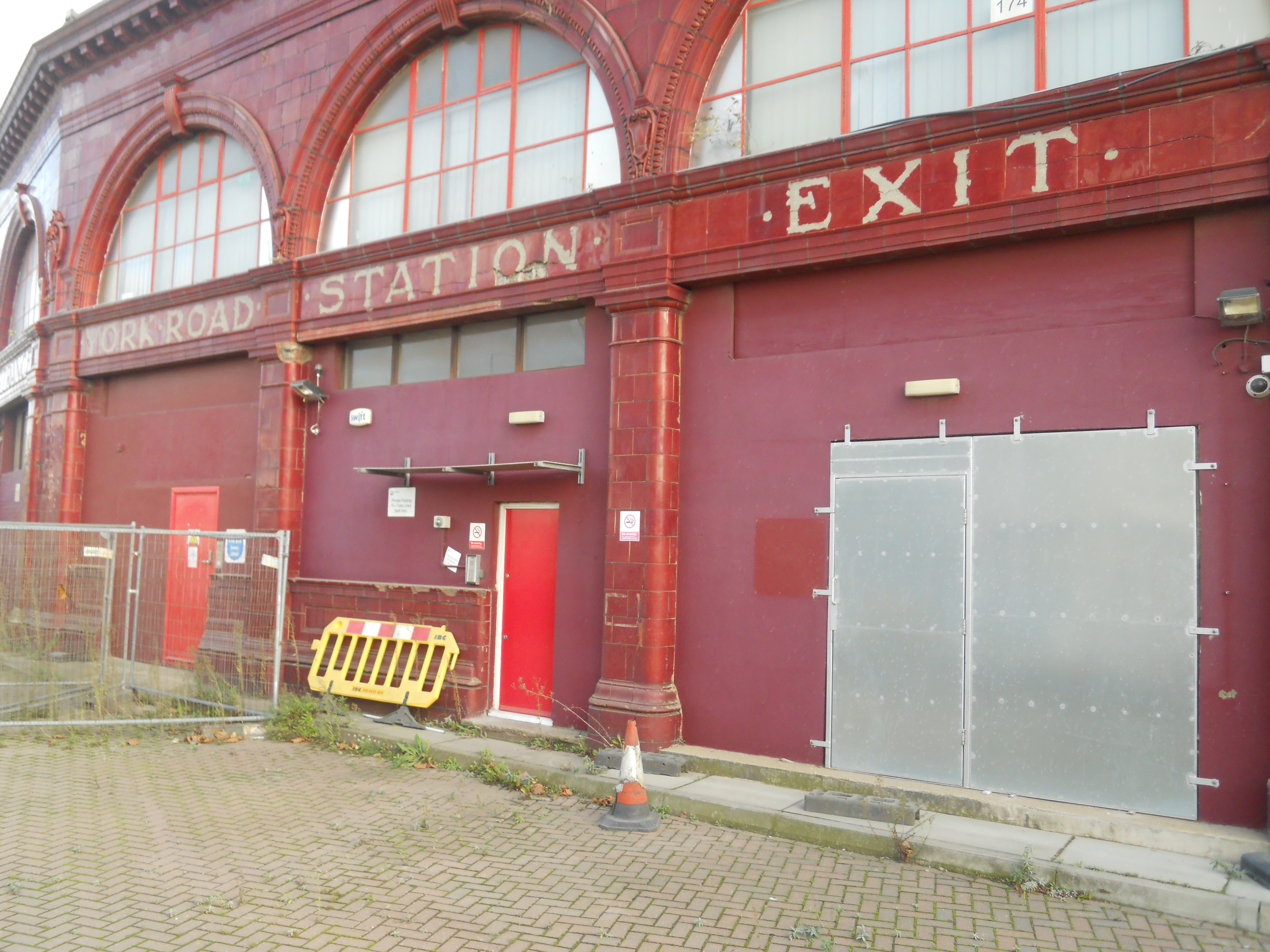
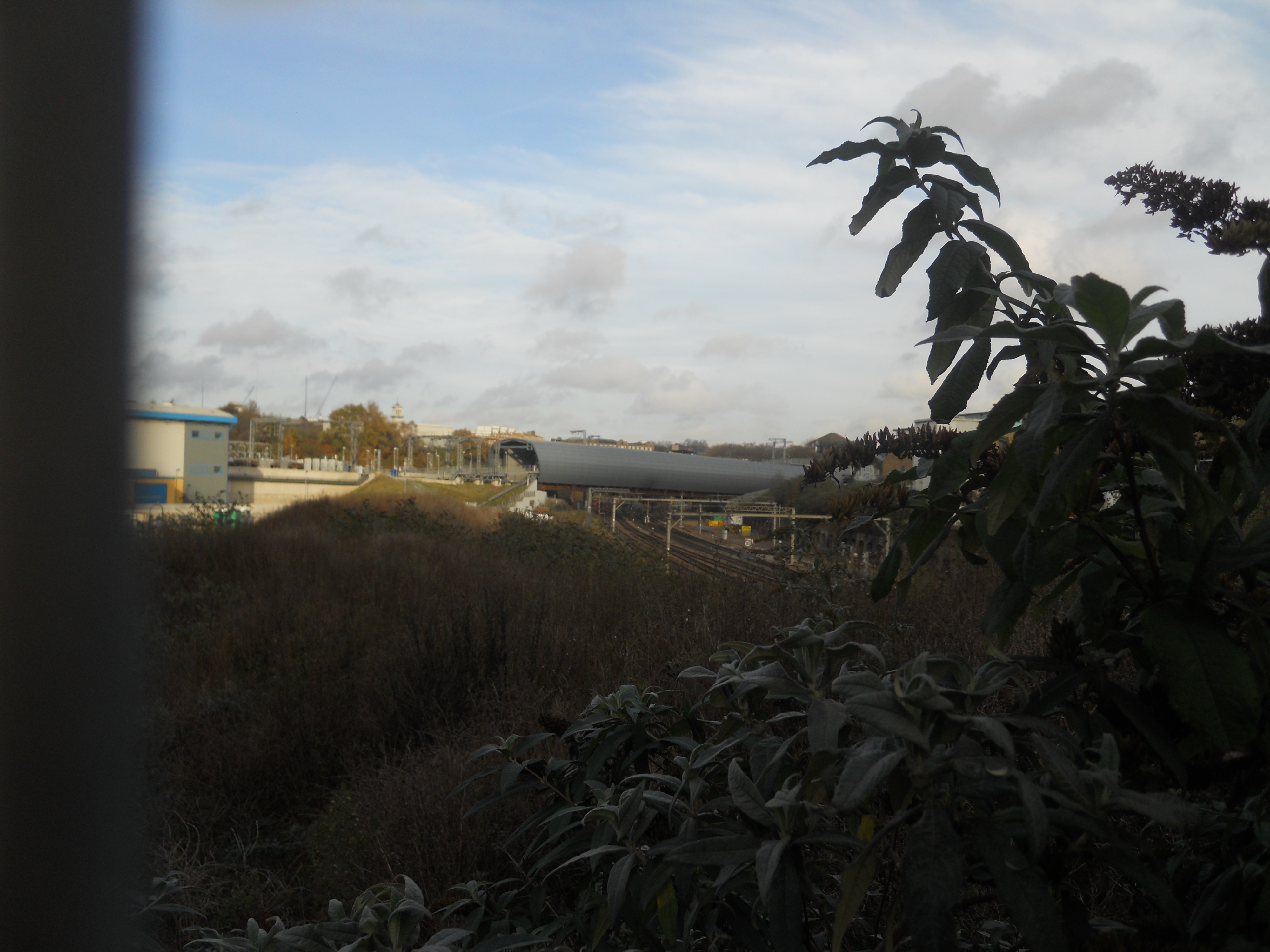
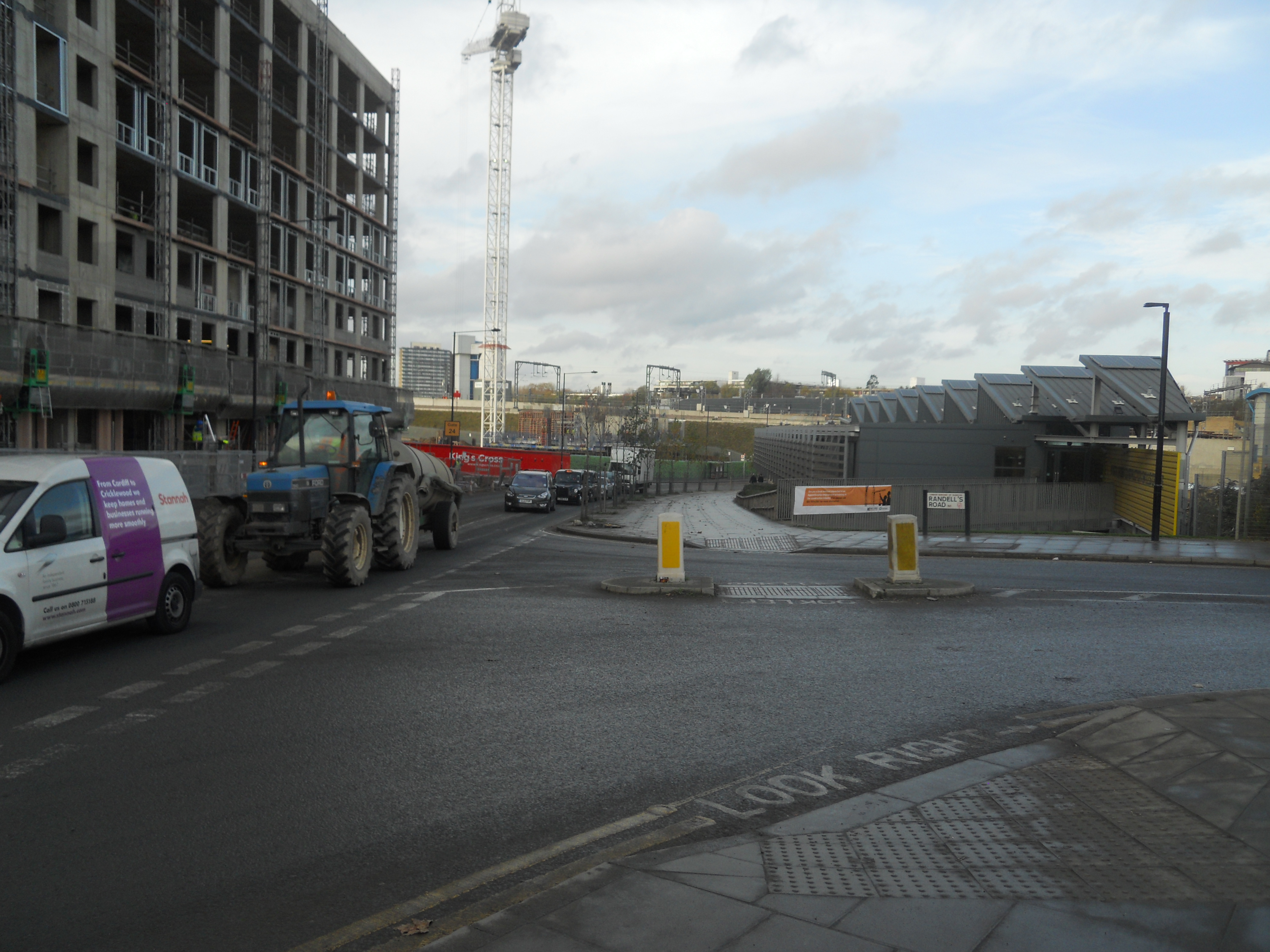
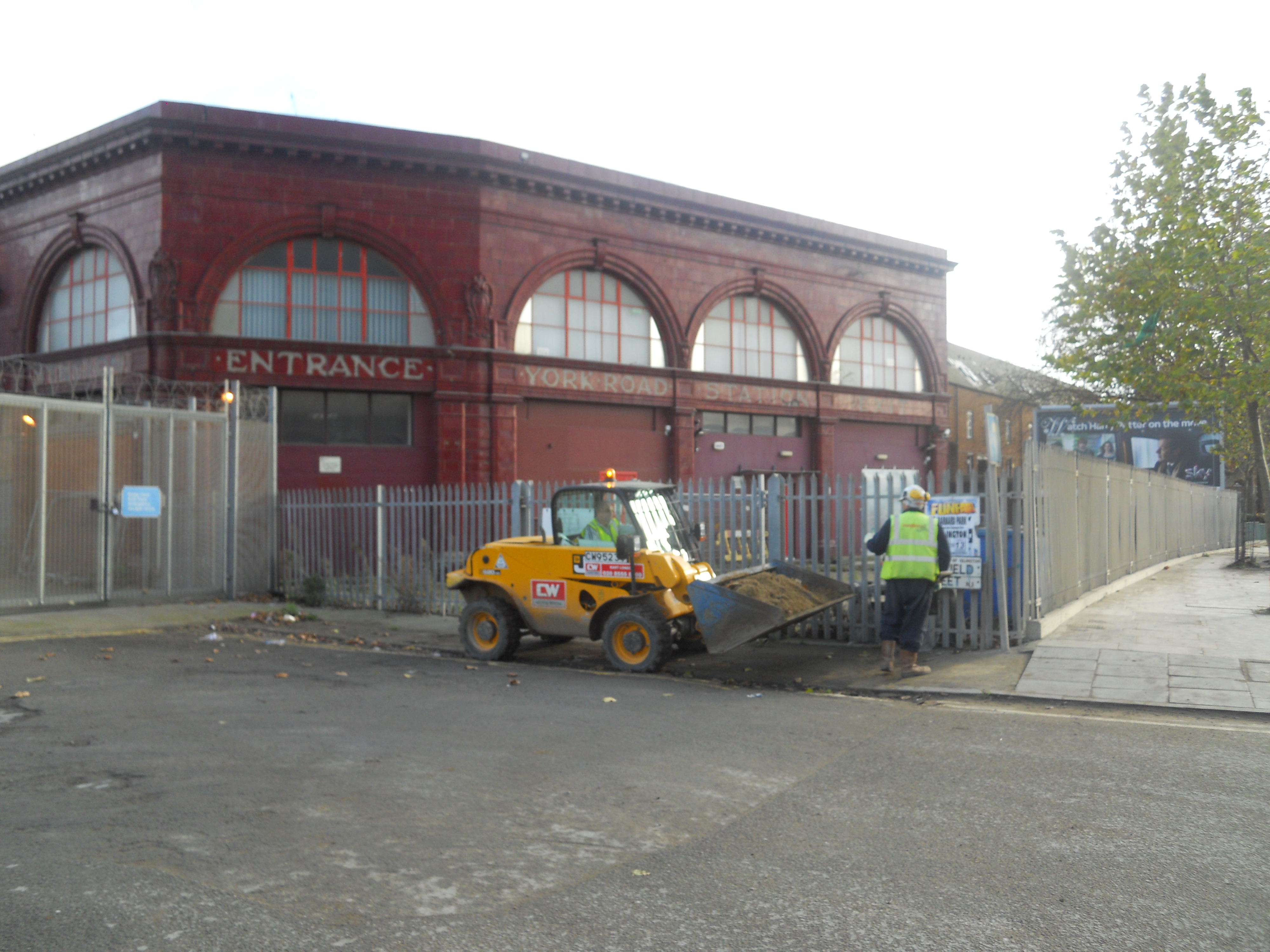
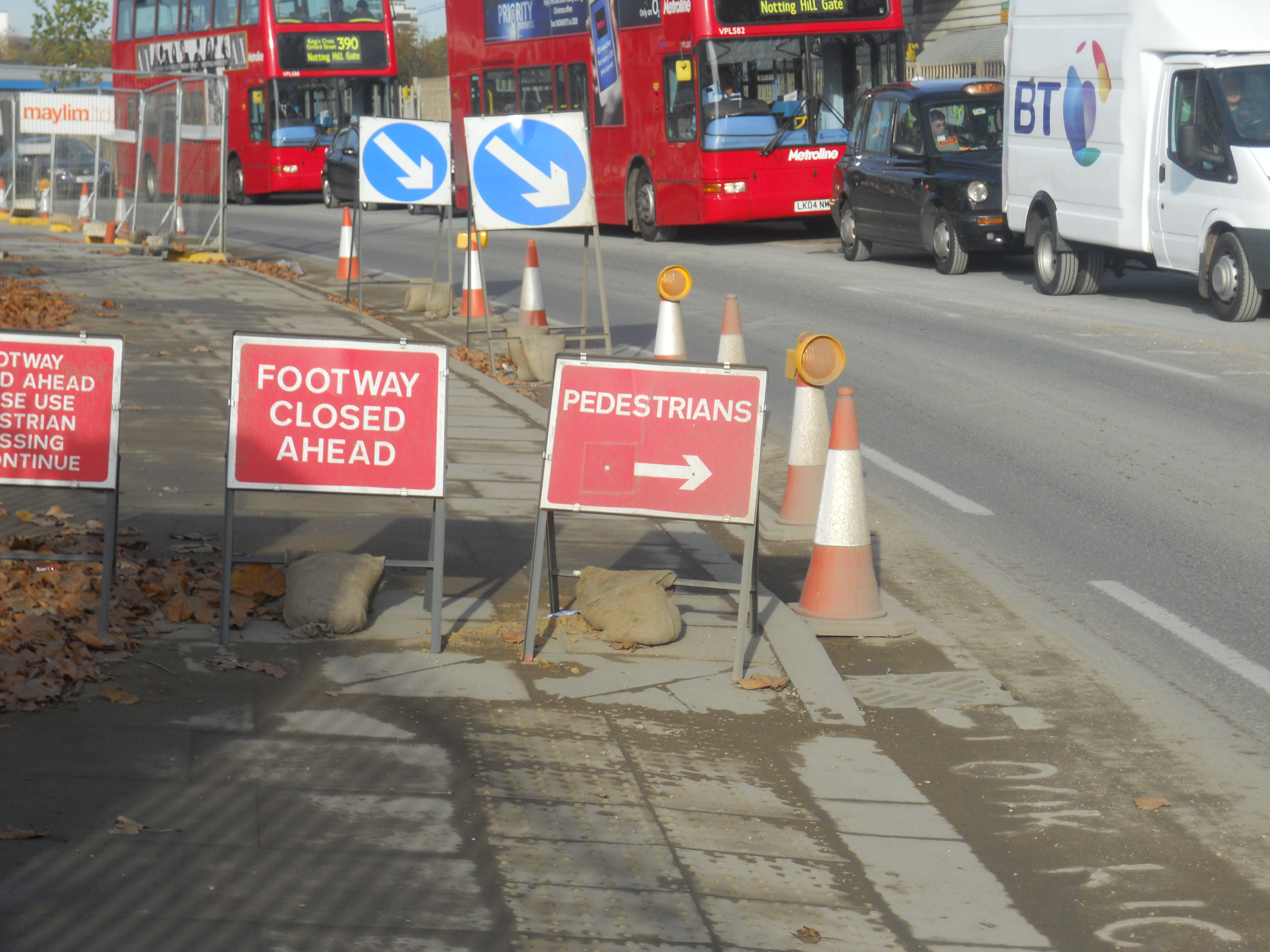
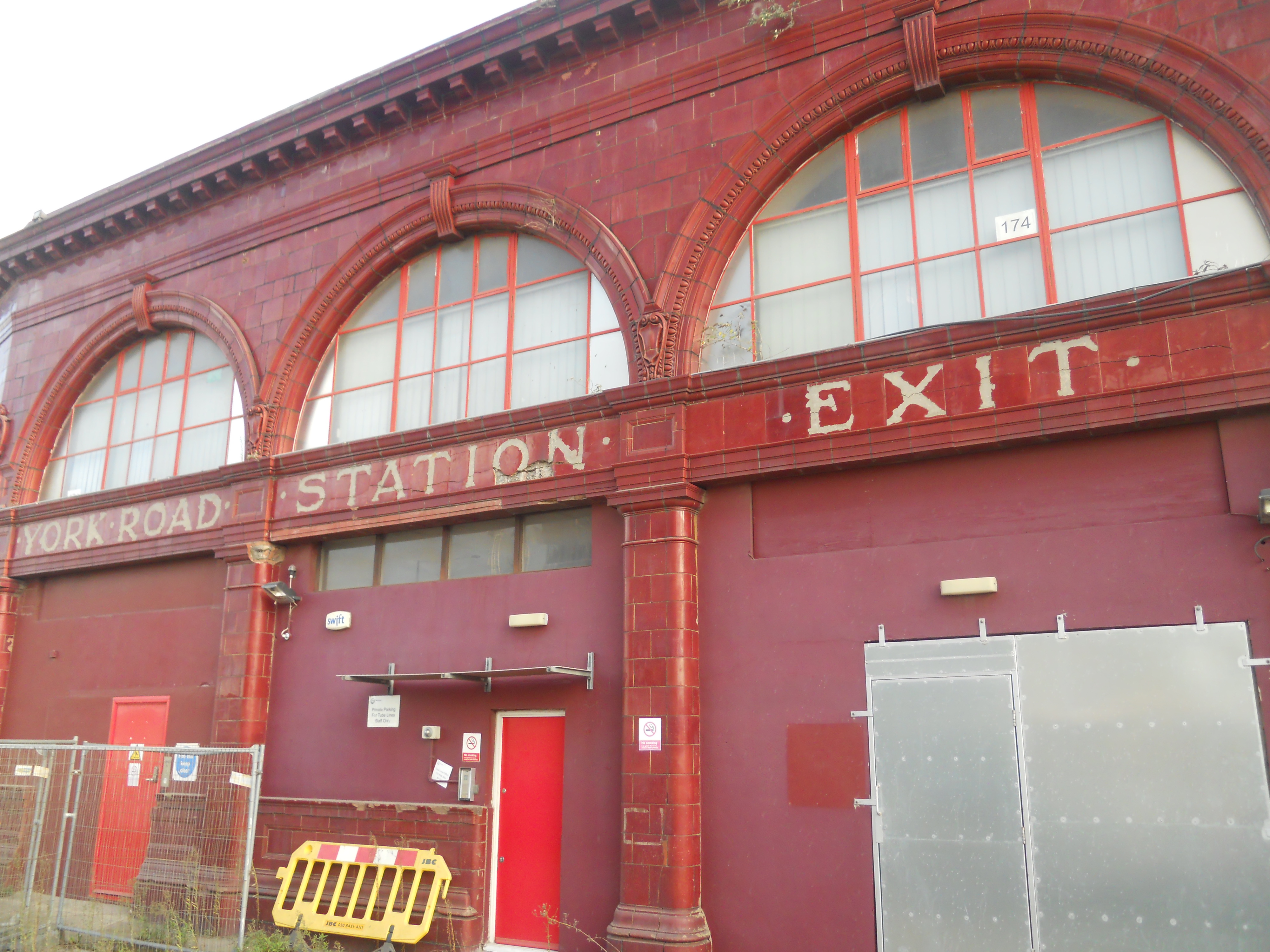
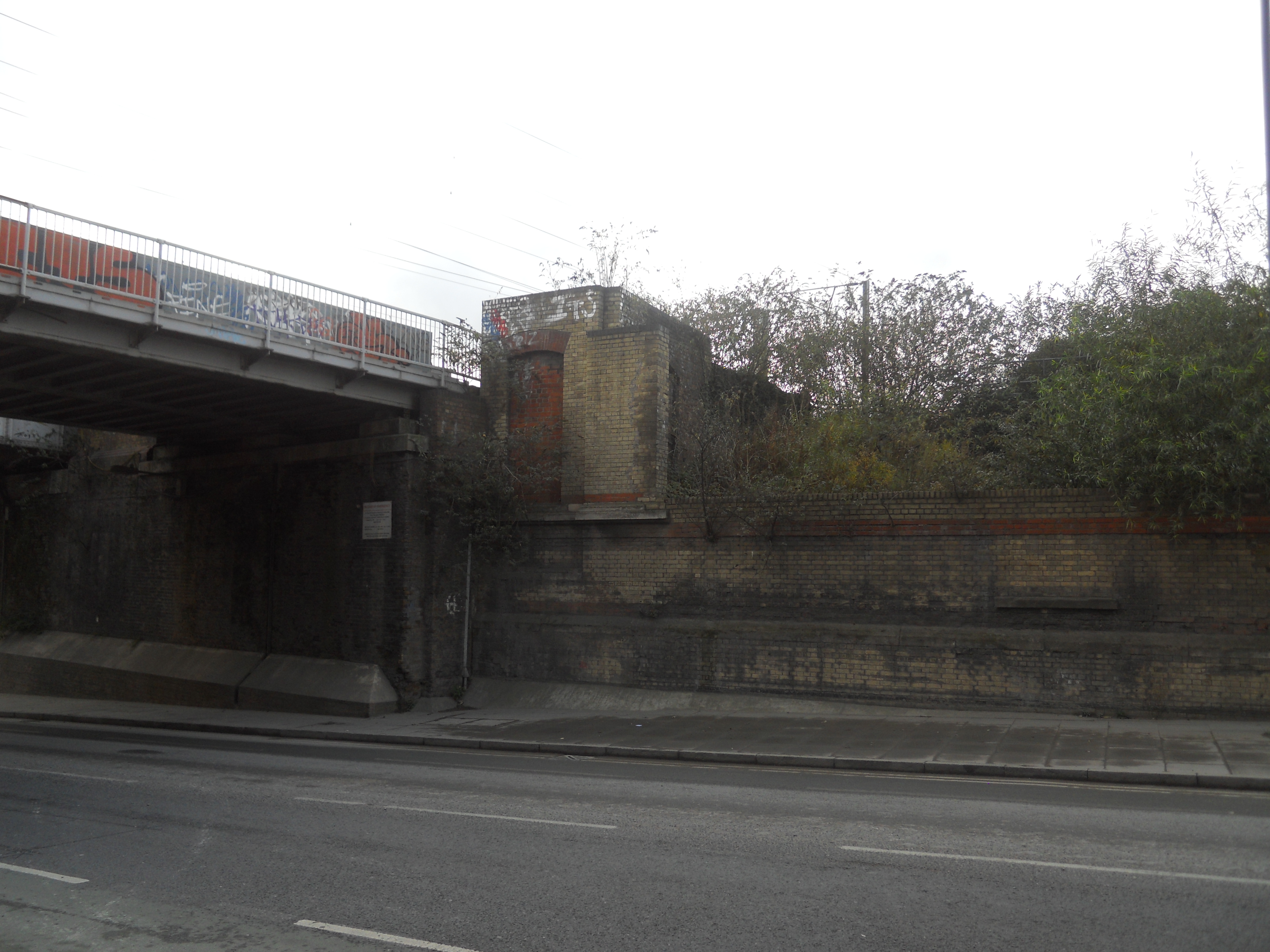
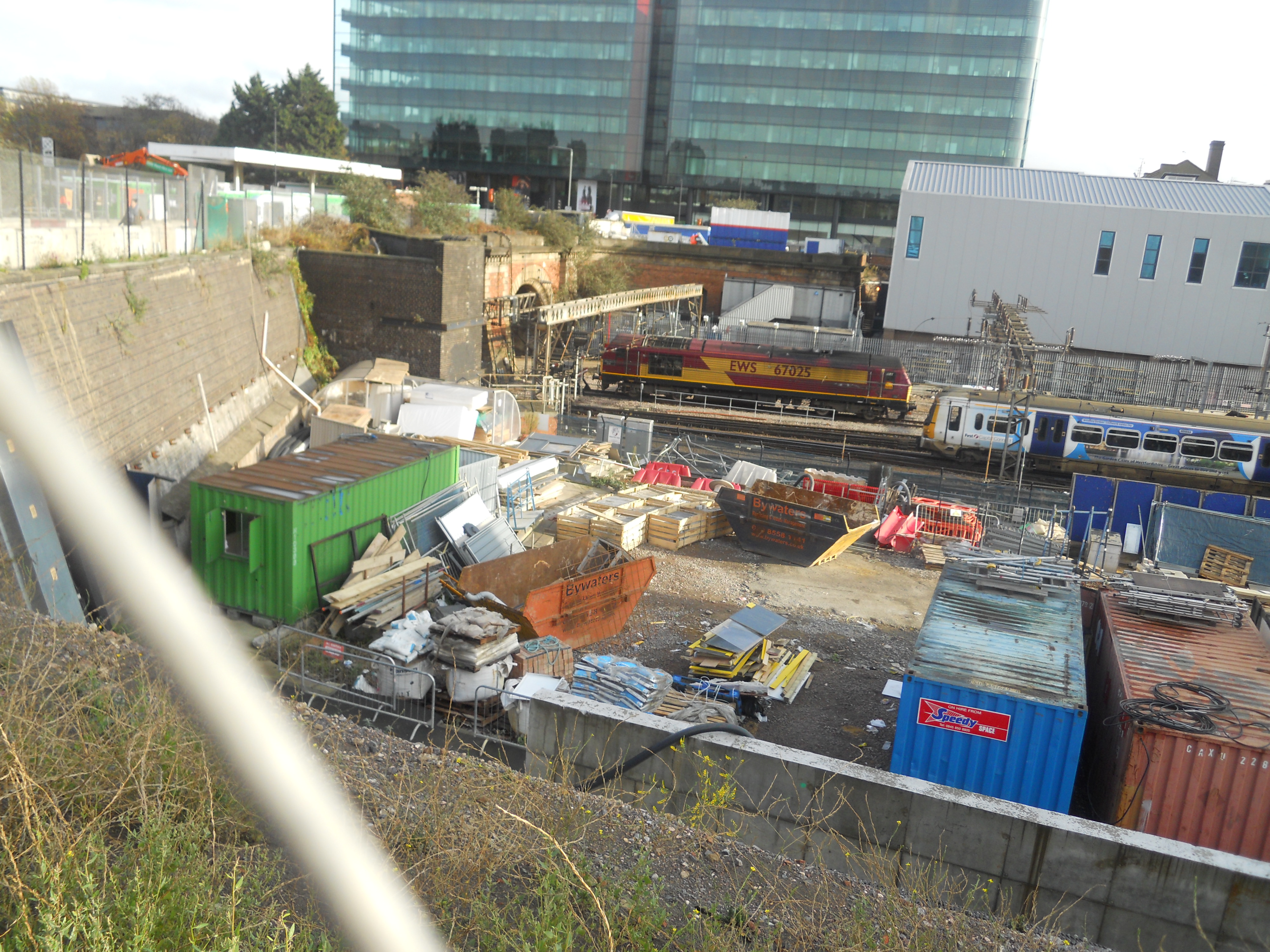
It was quite a walk and I think those who are proposing that the station be reopened to serve Kings Cross Central are mistaken. On the other hand reopening York Road Underground station, shown in the pictures, might be a possibility.
So did I find any trace of Maiden Lane station? There’s just a little of it left by a railway bridge. After I took these pictures, I took the North London line past the spot and couldn’t see anything by the track-side.
King’s Boulevard
These pictures show the new King’s Boulevard which leads from King’s Cross station to the Central St. Martins College of Art and Design.
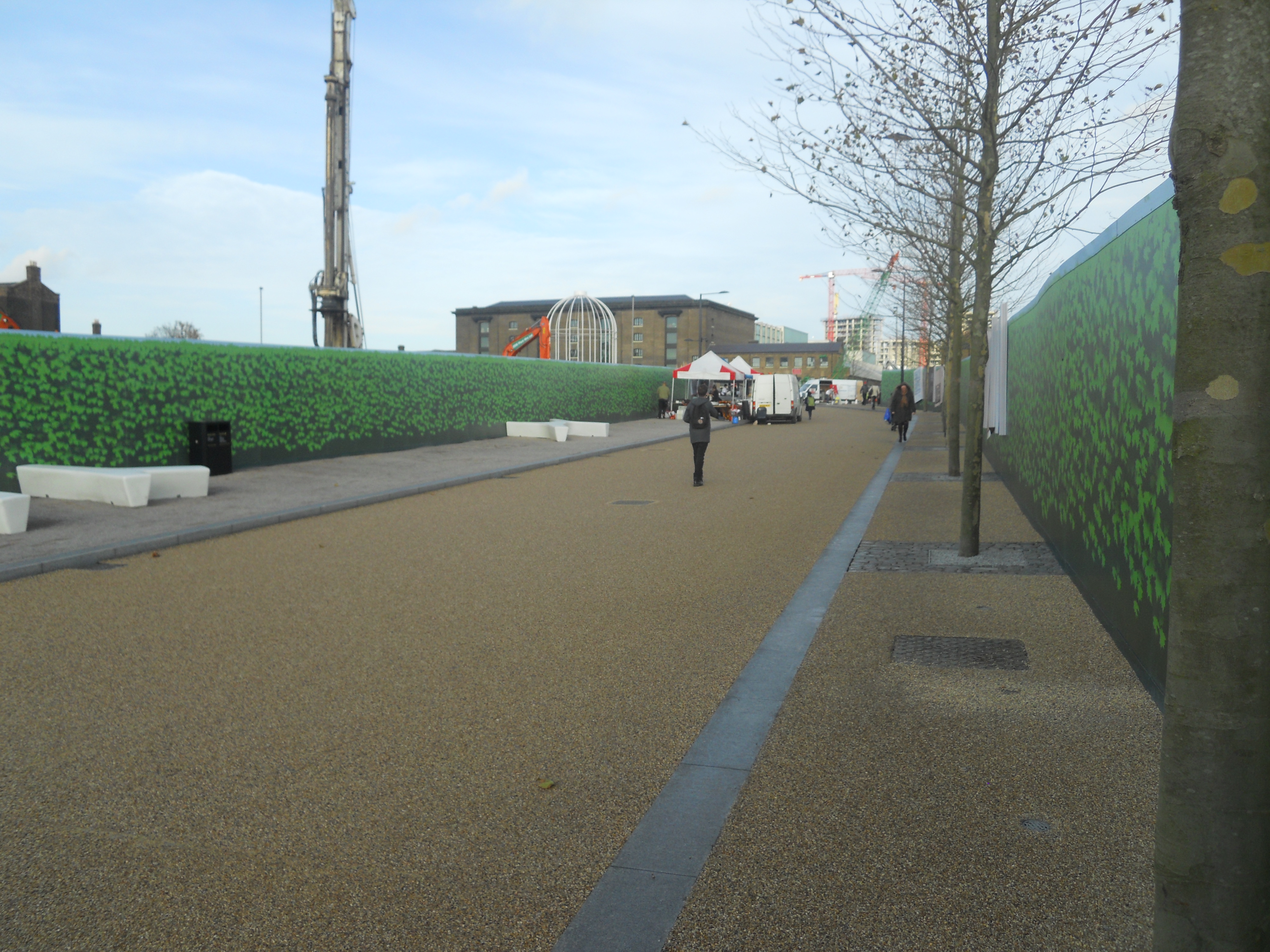
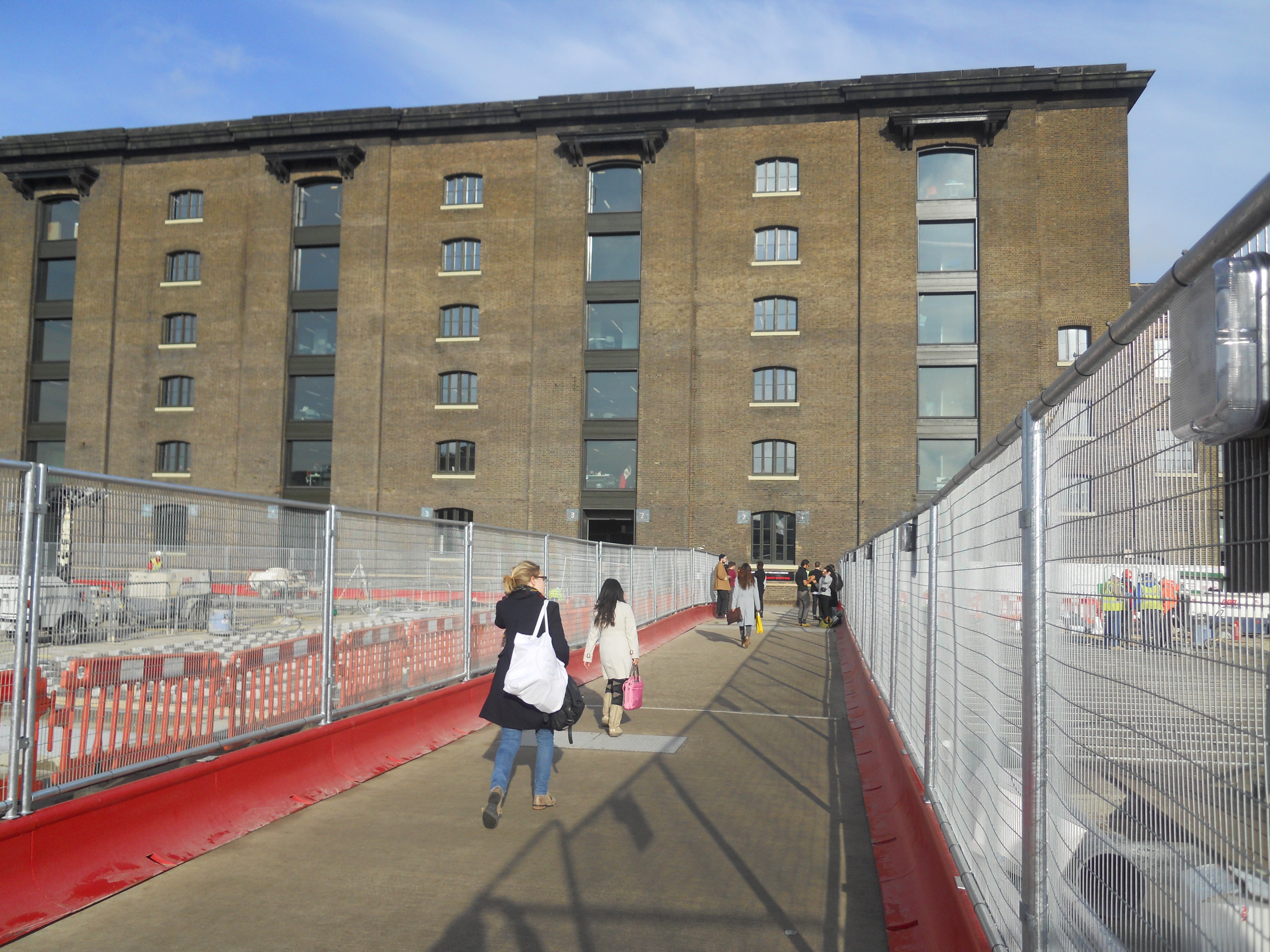
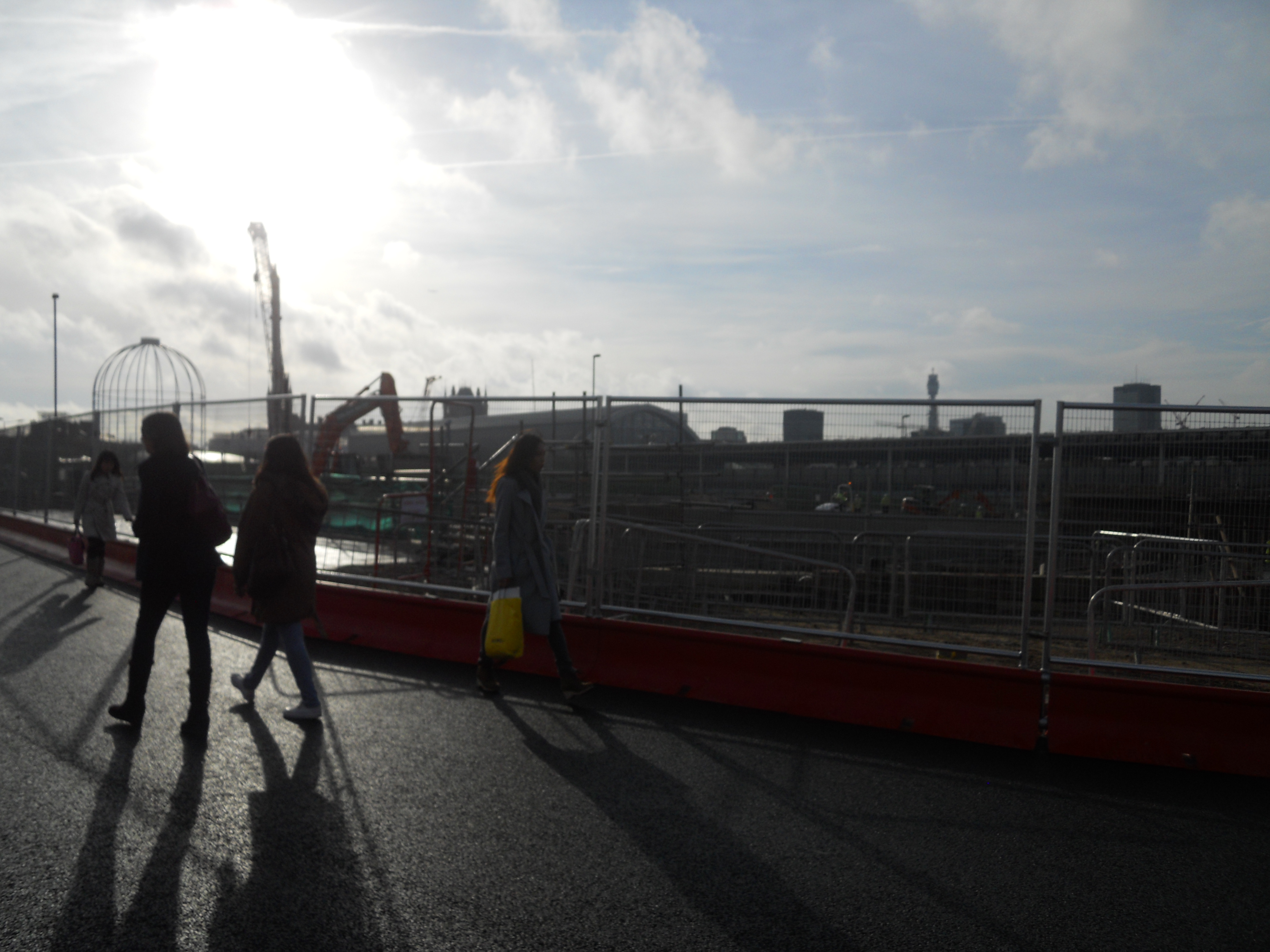
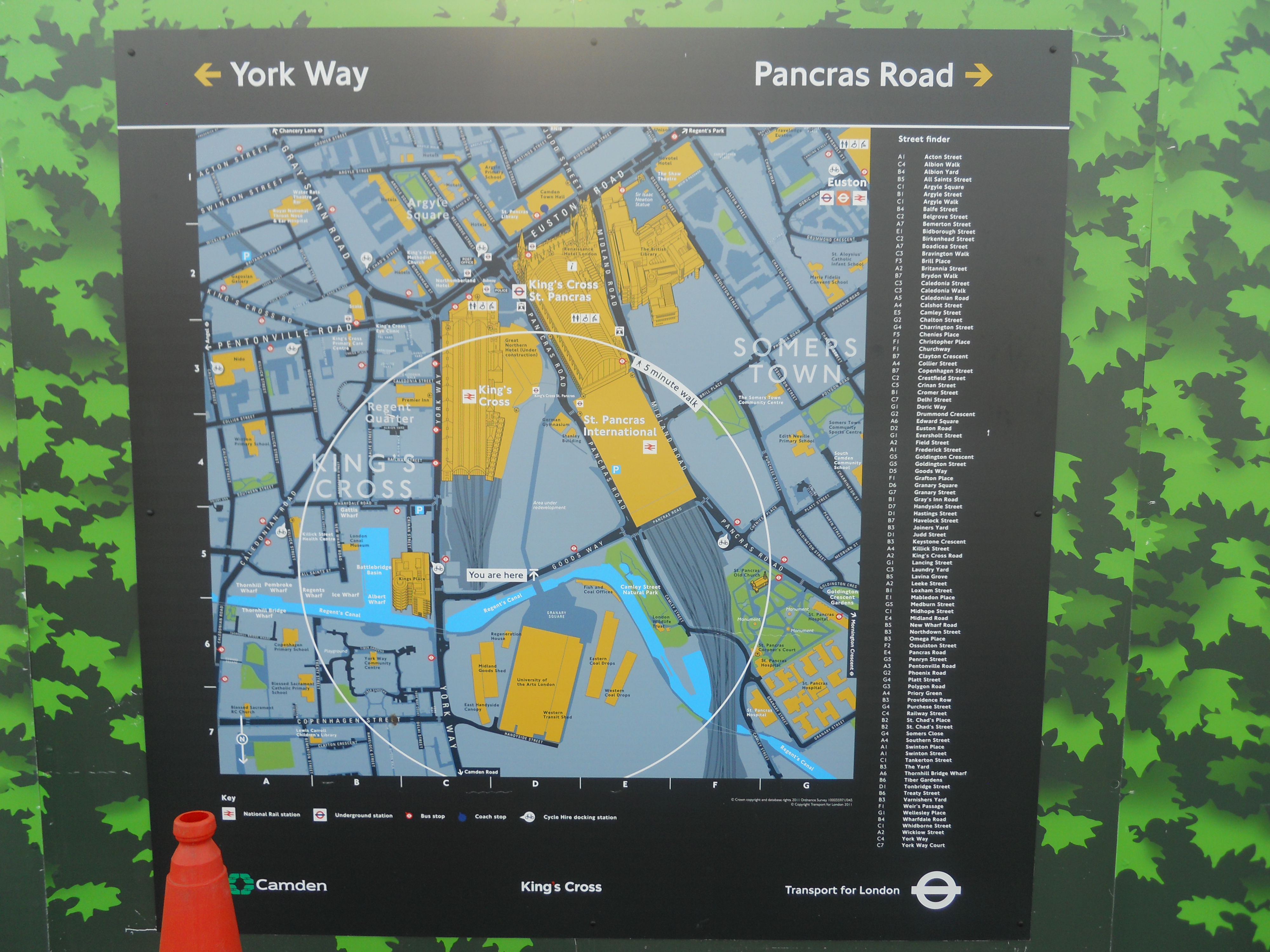
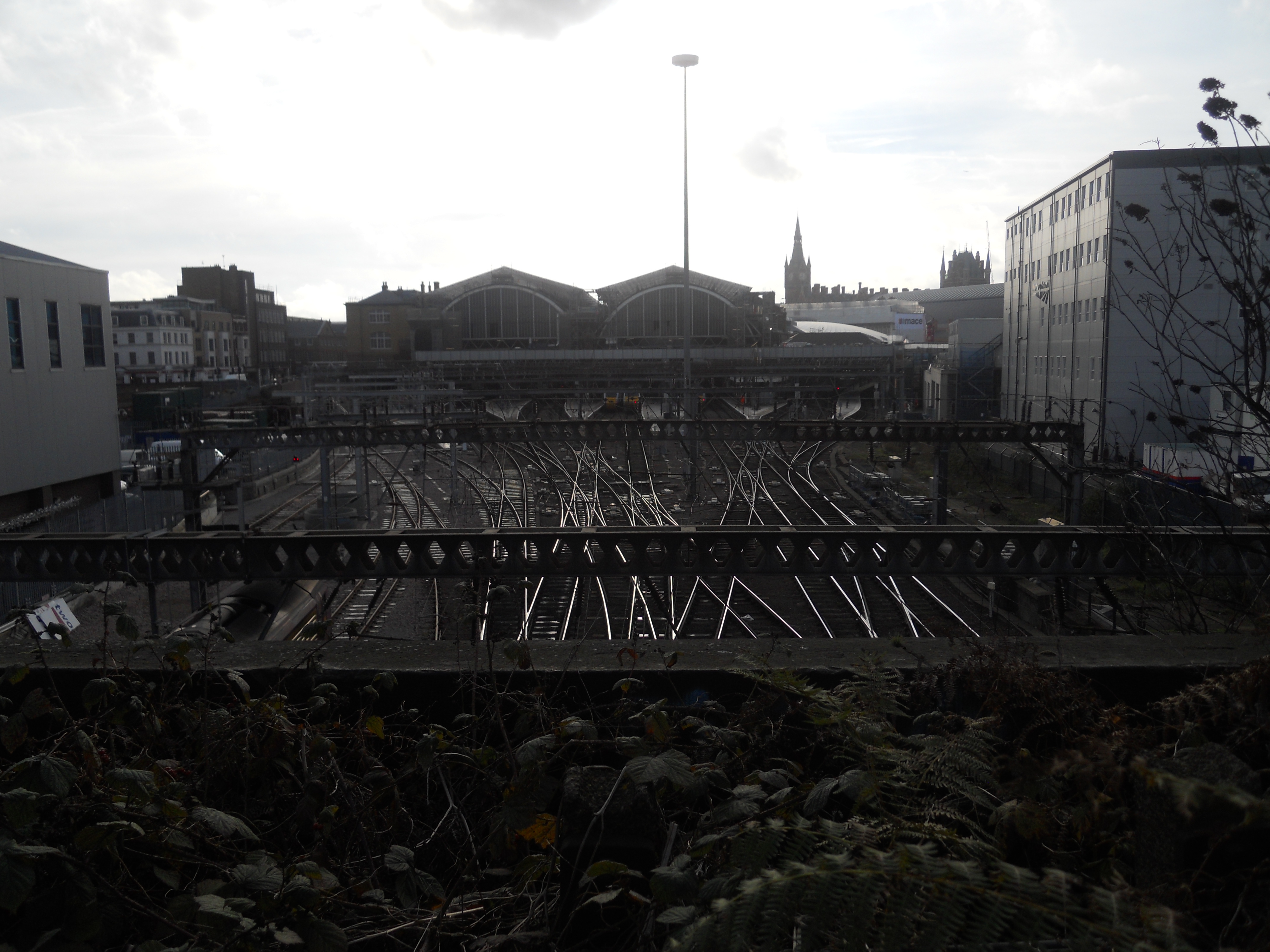
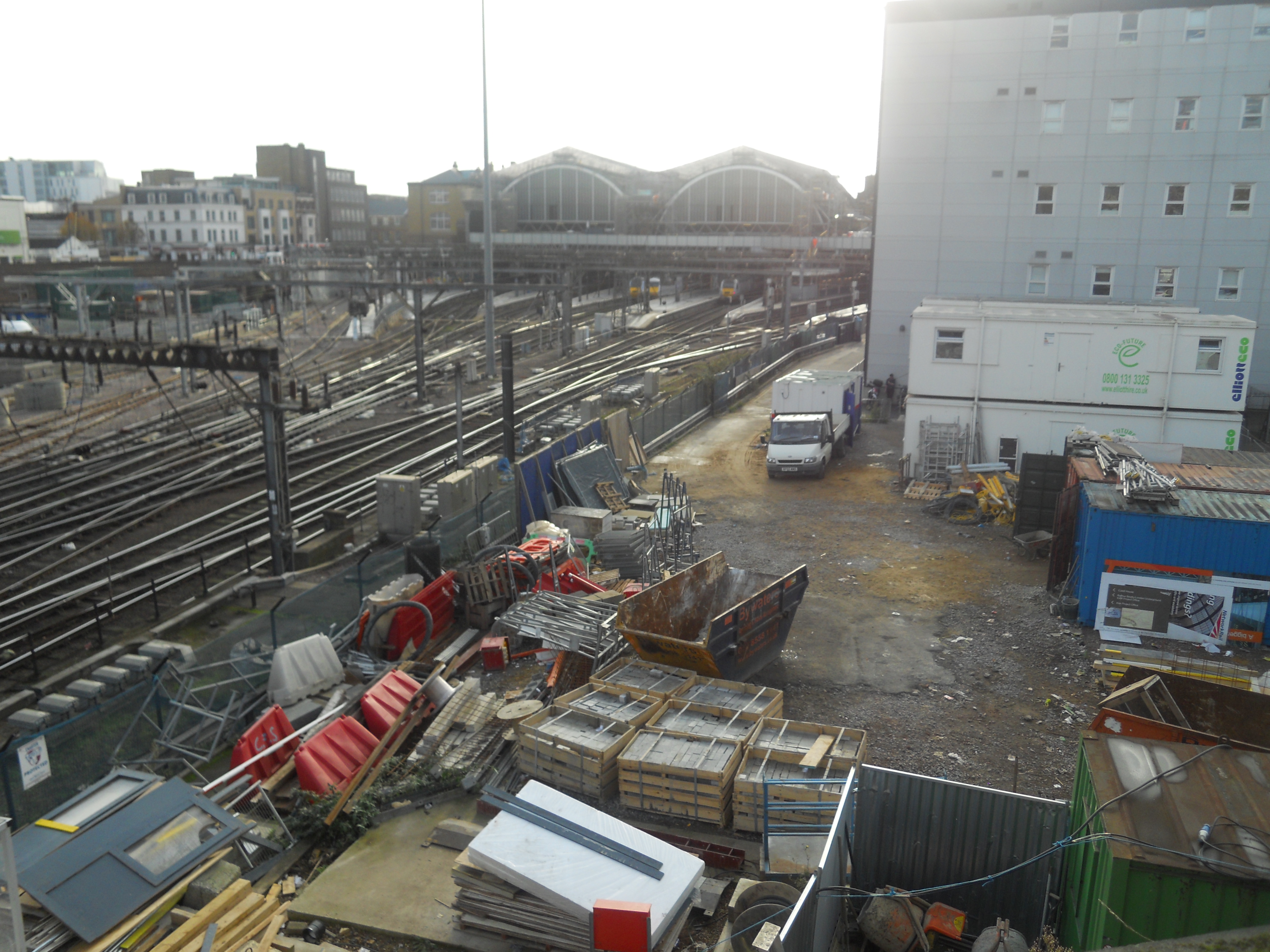
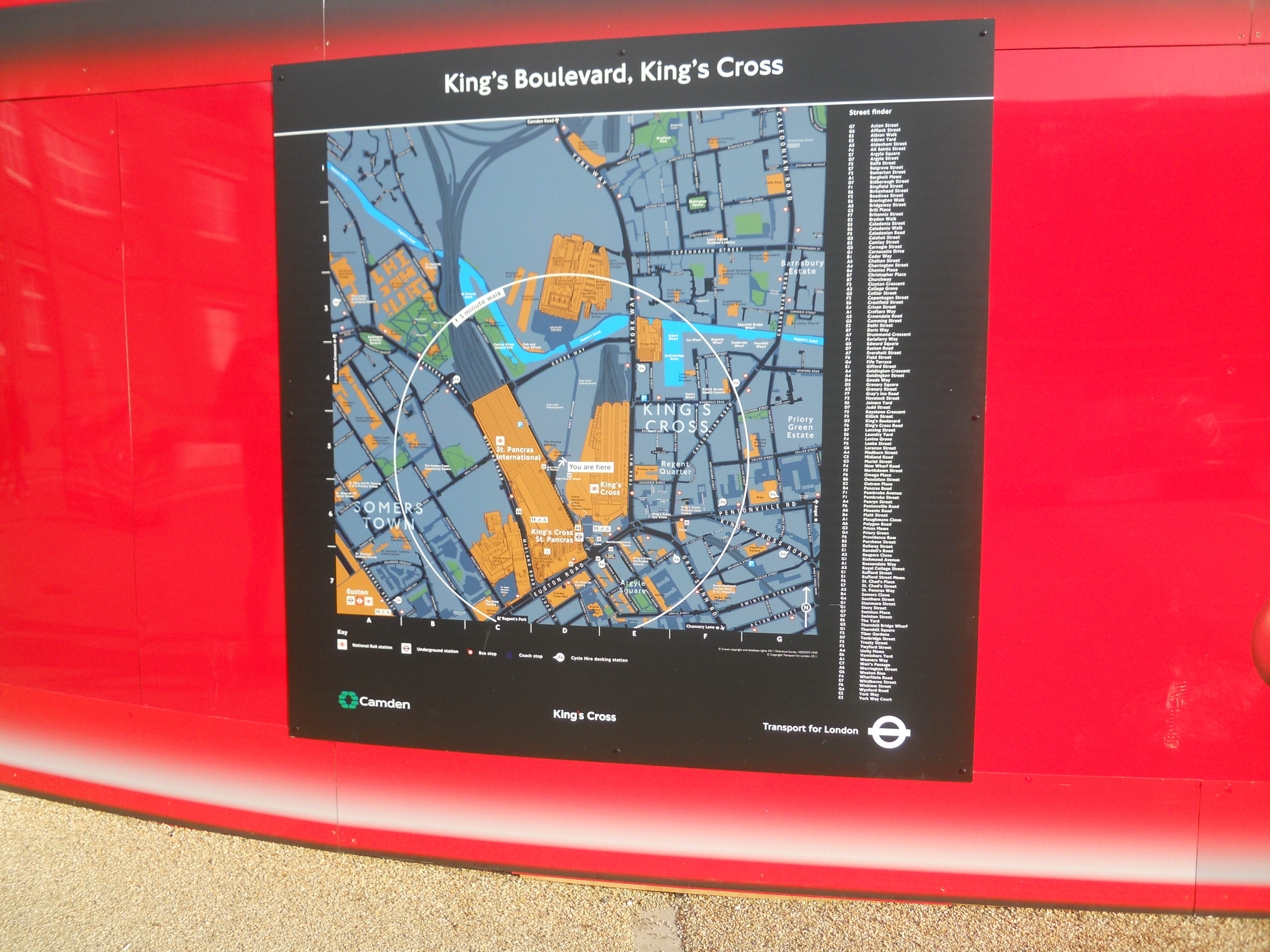
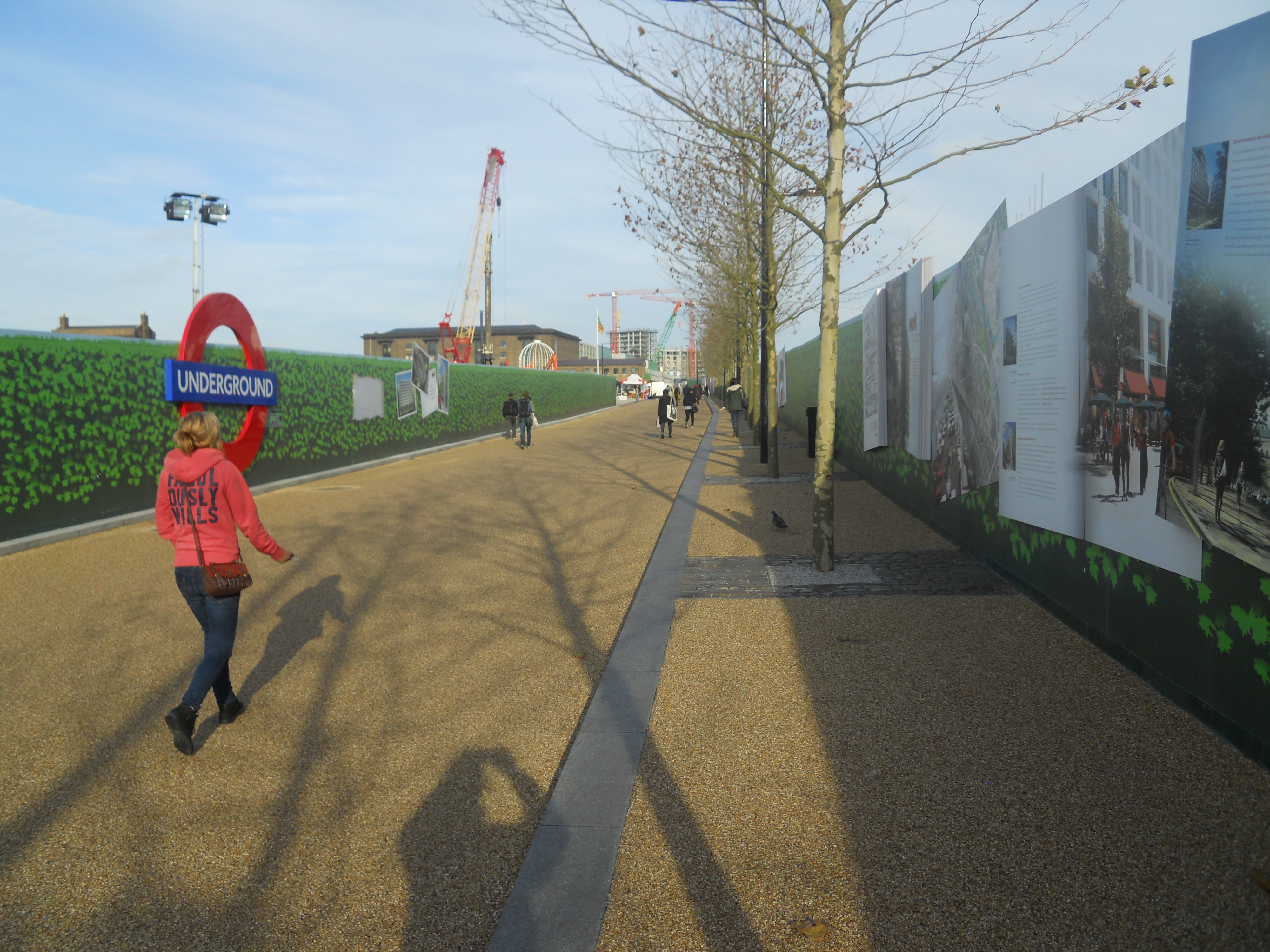
It is the first part of the development at Kings Cross Central to be completed. Note the maps, which set a whole new standard.
A Very Unhappy Bunny
Whilst travelling from Crewe to Lancaster on Day 21 on the very overcrowded Glasgow train, I came across a very unhappy bunny. She had booked the previous Glasgow train, but had then missed it because of a tube journey that took twenty minutes longer than it should. So to get to Glasgow, she’d had to buy a new ticket at £130 and stand all the way. She was saying she wouldn’t use the train again and would fly next time. But what would have happened if she’d turned up late for her flight?
The trouble is that many expect that when they use a train, they just turn up, buy a ticket at a good price and go. If I’ve bought a cheap ticket, I always make sure I get it, although in a couple of trips, I’ve bought a new ticket to get home early. It has cost me, but I’ve got to bed a couple of hours early.
I have read that a lot of people get to the station early for their trains. The trouble is that most stations don’t cater for those, who do and then have a coffee, buy a paper and have a read. It’s why you get so many people standing in front of the departure boards at stations, blocking the path for those hurrying to get on a train. So as more people travel by train, it just means that stations will get more and more congested.
I do wonder whether this congestion, meant that the unhappy bunny, deliberately delayed until the last minute to avoid the crush.
I’m lucky in that I’m a 30 minute or under bus ride from Liverpool Street, Kings Cross, St. Pancras, London Bridge and Euston, so if I watch the buses on-line through the Countdown system, I can usually have a better experience than most. It also means, I can catch the very early morning trains before six in the morning, when everything is less crowded. But if you live more than 30 minutes from the main station and there is no all-night bus, this isn’t possible in London. that it is like in Manchester or Birmingham say, I do not know.
But to return to my unhappy bunny. She was at fault for missing the train. But in her support, getting to stations early, is often not the best experience.
My Local Bus Stop
My local stop is just around the corner and has buses that go everywhere, as this picture shows.
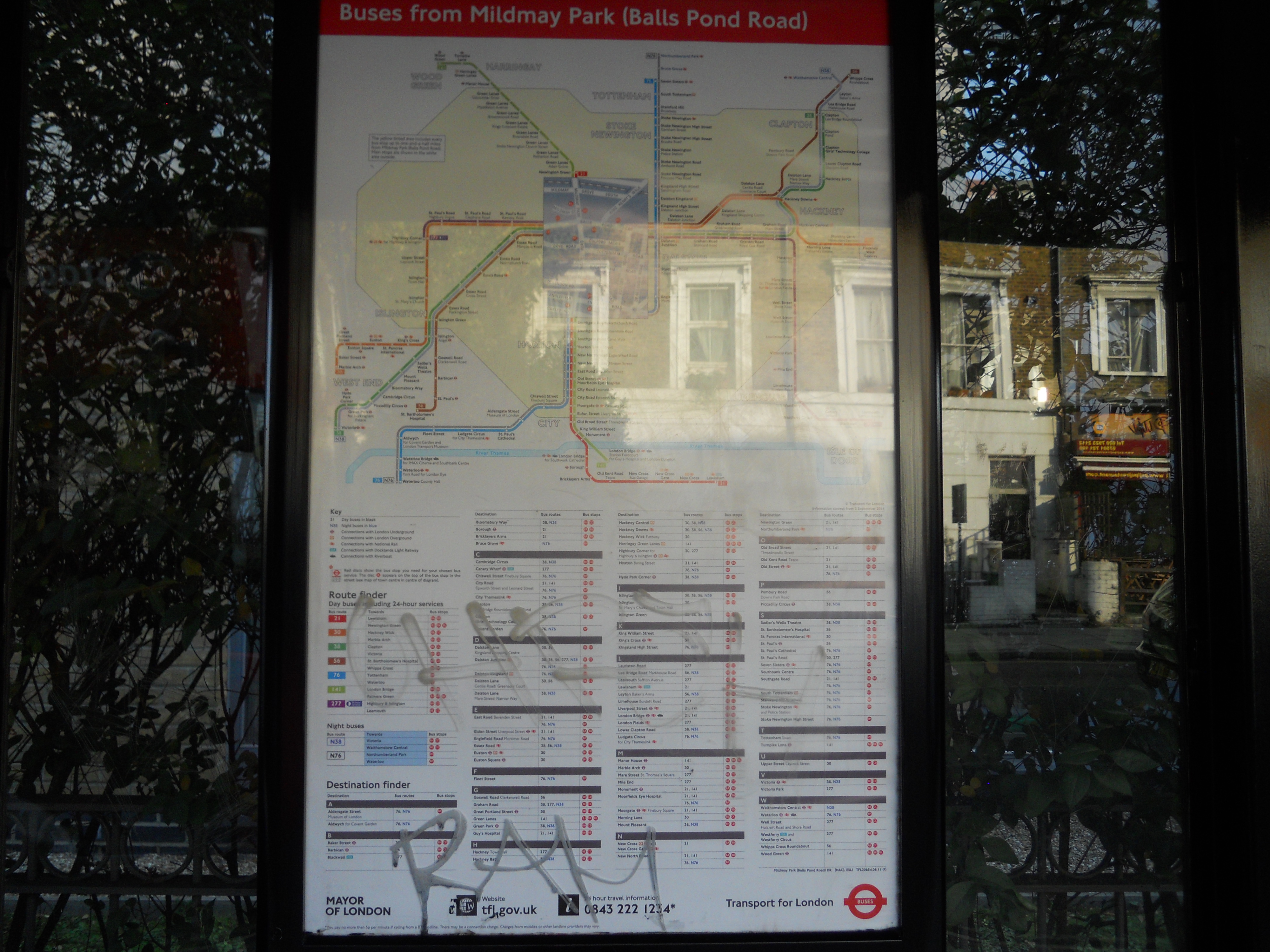
Mildmay Park (Balls Pond Road) Spider Map
Note that the actual spider maps, like this one have more information than their equivalent on the web.
The stop also has a Next Bus Information Number.
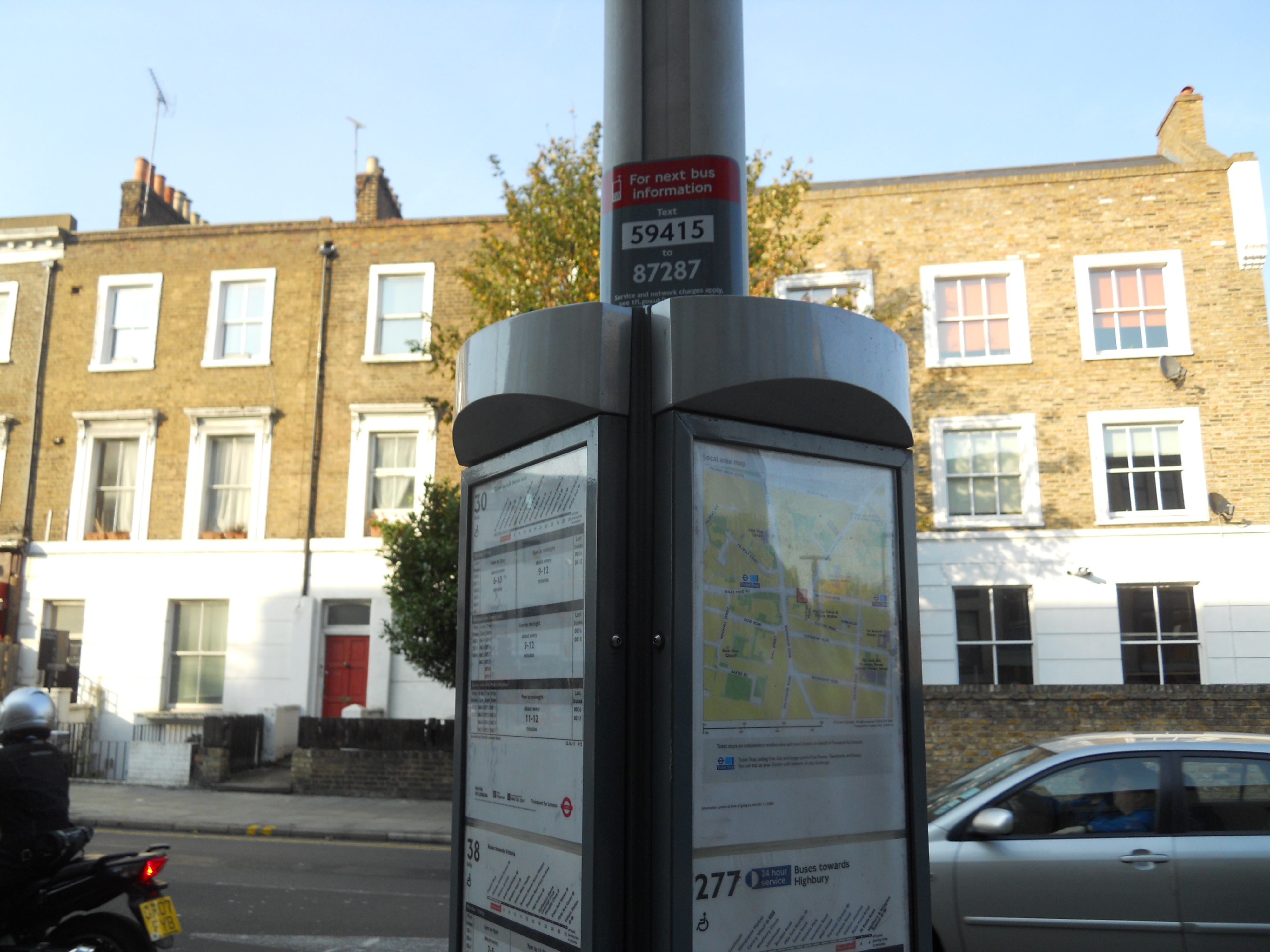
Next Bus Information Number
Note in the picture, the local street map.
The stop also has a Next Bus Display.
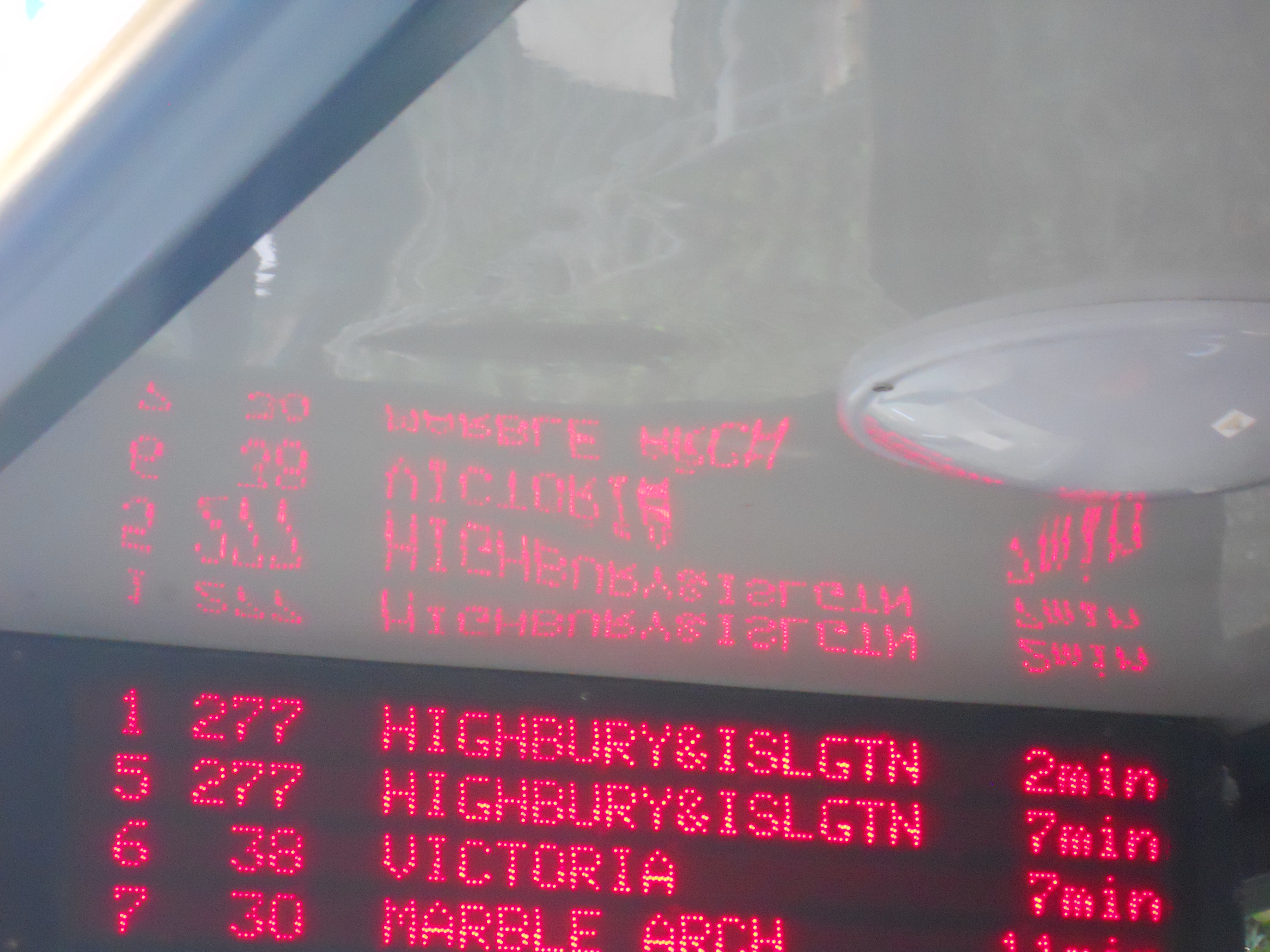
Next Bus Display
I wonder how long we’ll keep it though, as for many people the text message system will be better.
It is too much to expect all stops to be to this standard, but all important ones should have all the information, travellers might need.
I’m using the system in several ways now.
- I often check before I leave home when the next bus is due, to avoid waiting in the cold, say when I have an early train out of Kings Cross.
- If I’m expecting a visitor, I often ask them to text from say The Angel and then I can be at the appropriate stop to meet them.
- If a suitable bus doesn’t appear imminent, then I might change plan and say walk to Daldston Junction.
The only prediction is that these systems will get better and better. You might for instance text the number with say Euston attached to find the quickest way to get to that station. And I still haven’t brought up the subject of a smart phone. But then who needs one, for this purpose, if you have a smart text messaging system.
Suppose to find your way home in London, all you needed to do was text the stop code like 59415, followed by your post code to 87287. You would then be sent instructions on which bus to catch and where to change to get home.
As children, my friends and myself would wander all over London on Red Rovers. Children probably don’t do that now! But it was great fun. Being able to text to get you to your home, could make it safer.
Should We Londonise All Buses?
I know I’m a Londoner and live in the finest city in Europe, let alone the UK or England, but in my travels around the country, I have come to the conclusion, that most bus services outside the capital are very second-rate.
To start with, I should say that in most places it isn’t mainly the buses themselves, as towns and cities like Leeds, Manchester, Bristol and several others have buses that on a quick look to be on average to be the same condition and age, as those in London.
But there are three major differences.
- Most London buses are front entrance and centre exit, which effectively means that they pick up and set down passengers a lot quicker. It also means in London’s case, that a wheelchair passenger has an easier route to get on and off, as he or she uses the middle door. Because of the smaller dwell time at stops, two door buses actually travel faster and carry more people more efficiently. Whether this means the capital cost per passenger journey is lower, I don’t know. But it may well be so!
- London buses also announce the next stop both visually and audibly. Many visitors to my house are very surprised, when I say something like take the 141 to Balls Pond Road and get off there. The system also announces route changes and can be used by the driver to send a selection of common messages to the passengers.
- But the biggest difference is that all London buses are touch on, either with an Oyster card or a concession like my Freedom Pass. If you have a paper ticket, you show it to the driver and they tell you to get on. There is no timewasting mucking about with paper tickets, that London obviously deems to be just litter.
- From next summer, you will be able to touch in on your bus journey with any credit card, as Oyster is being augmented for the Olympics.
But it is the field of information that London buses are streets ahead of every other bus system in the UK.
- As a child, you were always told, that every tube station had a street map of the local area. So if you got lost, just go to the Underground station. So now, like many Londoners, when you are going somewhere foreign like Croydon for a North Londoner or Wembley for a South Londoner, you never carry a map and rely on the map at the destination station. It usually works. Now this street map system has been extended to the buses and most bus stops have a local street map. Only last night, whilst walking back from the pub, I used a map on a stop to show a tourist from Germany, how to walk to the pub where he was meeting a friend.
- These street maps are paired with spider maps, which show all the routes in the area, where they go and at which stop you catch the bus. Frank Pick and Harry Beck would be proud of this idea from their successors. Spider maps work well and if I’m lost after a walk, I just find the nearest bus and work out how to get home. Incidentally, Transport for London call them bus route diagrams, but you can’t argue with umpteen million Londoners, who call them spider maps and that term is now the one generally used by all.
- London has recently introduced text messaging at stops to find out how long you have to wait for the next bus. Other cities have this and it should be the norm everywhere.
- Important London bus stops have displays showing how long you’ll have to wait for the next bus. But as people are starting to use the text system more and more, I suspect, the number of these displays will decrease.
- You can also see when buses will arrive at a stop either through the web or from a phone app. I don’t have a smartphone, but my dumb Nokia 6310i is perfectly capable of telling me if a 30 bus, which is my preferred route home, is due ten minutes out of Kings Cross or Euston.
So how do some of the places I’ve visited compare to London in various areas?
Two Door Buses
You see the odd ones about, but not many.
On-Bus Information Systems
I’ve never seen one, but I’m told Colchester has them.
Maps at Bus Stops
Very few and most that I’ve seen have been very inferior and totally useless for visitors.
Text Information
This is a typical London next bus information notice.

London Sign For Bus Information By Text Message
And here’s one from Leeds.

Leeds Sign For Bus Information By Text Message
No prizes for guessing, which is the simpler system.
Not only is London, just a five digit number but the sign is easily read and is as low as they can put it, so that everybody from say eight to eighty can read it with ease. I can’t believe that there are over 45 million bus stops in Yorkshire! The london sign has the great advantage that it is small and just strapped to the post. So perhaps it could even be used on a temporary bus stop at road works.
I’ll let Frank Pick have the last word on this.
The test of the goodness of a thing is its fitness for use. If it fails on this first test, no amount of ornamentation or finish will make it any better; it will only make it more expensive, more foolish.
And he was born before the age of modern technology. He would have had a field day, if he was still alive and in charge of transport for the whole of the UK.
So to answer my original question, the answer must be an undoubted yes! London has proven that good, frequent and understandable bus services attract more riders, so the sooner we Londonise all buses the better.
People will go on about cost, but the first thing to do is get the maps at stops in place and get sensible text messaging systems working. And then we just have to make all new buses to the London standard! Remember too, that London retires quite a few buses each year. Many of these with a bit of refurbishment would be very suitable for lighter use in the provinces. Certainly, many of the older ones in London are much better, than the disabled-unfriendly old banger, I got back to the centre from Elland Road.
I think too, that we will underestimate the benefits of having the same bus information systems all over the country.
As an example, how much of my time and effort have I wasted trying to find out where to catch a bus on my challenge? And how much money have I wasted on unnecessary taxis?
So if it made travel easier and cheaper, would it make it easier for people to travel to work in the next town or perhaps have a day with Aunt Edna in Felixstowe?
We need any economic stimuli however small.
Remember too, that if we need new buses, that these are generally built in the UK, so much of the capital cost of new buses stays here. So if that is the case, why did Red Ken betray British workers, by buying a load of useless bendy buses? Few liked them, except perhaps fare dodgers.
Texting For Your Bus
Linked to Countdown is London’s new system for locating buses by text.
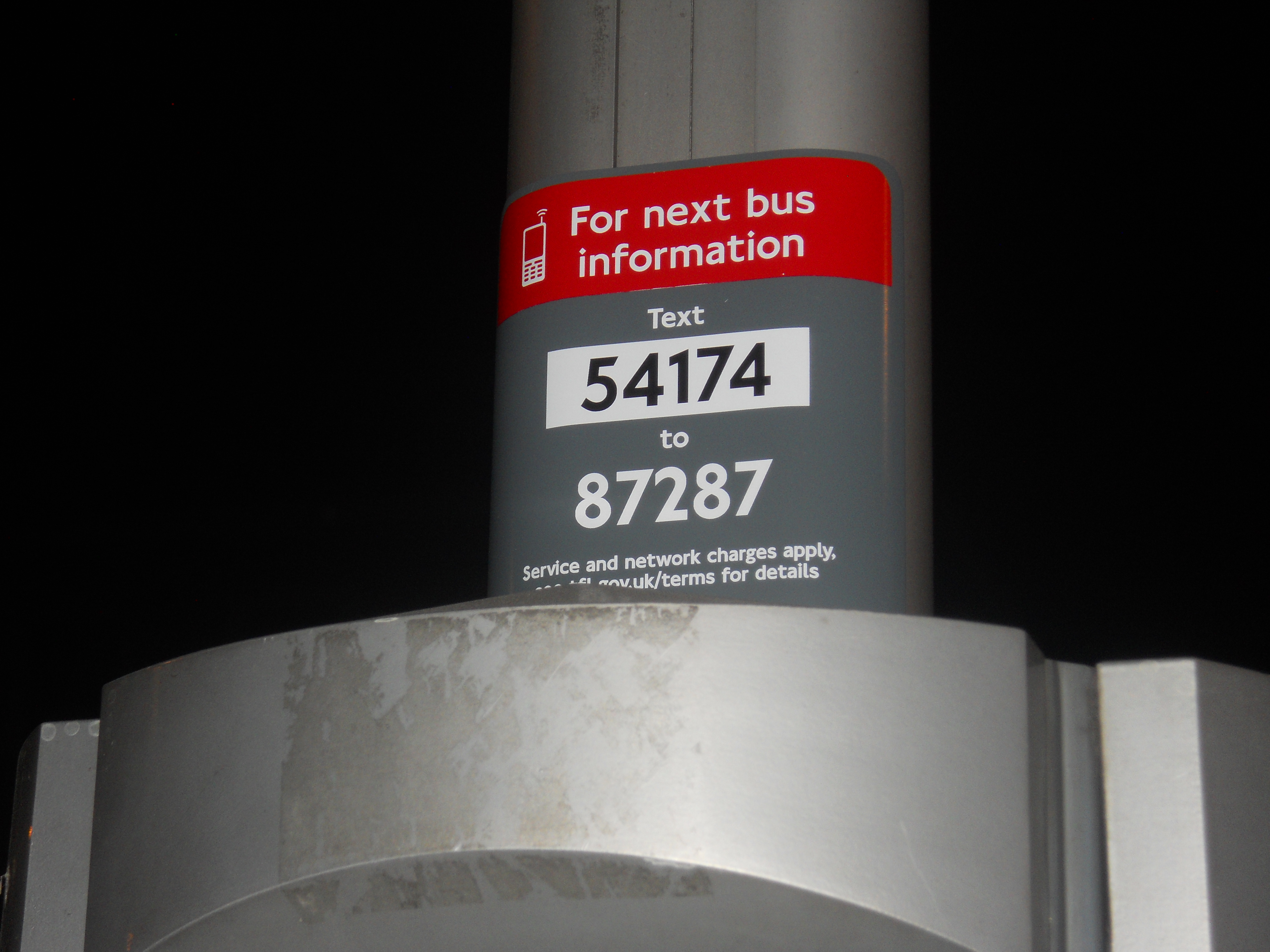
Text For Your London Bus
This picture shows one of the signs that are starting to appear on stops. Each stop has a unique number.
The Solution’s Behind You
The BBC were interviewing Ed Balls today at the Labour Party conference in Liverpool. He was pontificating on the solutions, that he would do to could Britain out of the financial mess, that largely his party got us in.
Who is right or wrong on the solution is a matter for the future.
Butb I think, that the solution to our problems was behind Ed Balls in his BBC interview. But then politicians never look behind themselves, except to see where the knife is coming from.
Over the last twenty years or so, Liverpool has been transformed, from a basket case, to one of the most vibrant cities in the world, by developing the city in a professional and quality manner. Liverpudlians will point to the European City of Culture in 2008, as a catalyst for a lot of the change, but in some cases it just gave developers a reason and possibly an excuse to invest.
London too, is changing and has been greatly improved over the last few decades. The development of Docklands started it and now the Olympics is pushing the city to new heights.
You could also argue, that Manchester got a kick start from the 2002 Commonwealth Games, but just as with Liverpool and London, the process was going to happen anyway and perhaps these events were just advertising for the place on a wider scale. Wikipedia says a lot about how the Games got Manchester moving after the 1996 IRA bombing. One might even say now that Manchester’s driving force is football.
Liverpool is getting a lot of publicity over the next couple of days, and how many will think about going there for a weekend break? When I was there last, I met a plumber who had come to the city for the day to ride his bicycle along the Mersey. Liverpool is almost becoming a seaside resort!
These three cities have benefited from a process that could best be described as Infrastructure for All.
I could also add how Newcastle has benefited from the waterfront developments along the Tyne. Other cities, like Leeds and Birminghamhave also been improved to everybody’s benefit.
I should also ask, if Glasgow is seeing the benefit for the 2014 commonwealth Games yet.
We must do this more in our run-down cities and districts.
Even on a local basis, Dalston has improved a bit in the year I’ve been here, mainly because of the opening of two new railways, that got built early because of the Olympics. But even if the Olympics hadn’t happened, they would have still gone ahead.
So we should look at all the infrastructure projects on the stocks and do those that are most valuable as soon as finances allow.
Priorities should obviusly go to those that give the greatest benefit. I would start with.
Housing, which would provide homes for our ever increasing population. It should be energy efficient and hopefully built, so that people who live there, don’t need to own one car per person, as we must wean ourselves off our own personal travelling spaces, they cost everyone else dear.
Selective rail projects, to remove bottlenecks and level crossings, improve stations and add a few new ones. In Suffolk, they are adding a new loop at Beccles so that more trains can run from Ipswich to Lowestoft. How many more Beccles-like problems are there out there, that need urgent removal. Many of these projects would have positive knock-on effects in other areas. Some level crossings, like the one in the centre of Lincoln, would have enormous benefits to road traffic, if they were removed.
Rail freight projects, which remove trucks from the roads. This would mean a few more interchanges such as Radlett, but the benefit to roads like the A14 and M1 would be high.
Personally, I would add a better bus network, with much better ticketing and disabled-friendly, information rich two-door buses, like you have in London. I have a free pass for buses, so why do I have to be issued with a ticket when I use a bus in Cambridge. It should be just touch in on all buses.
And of course, it’s important that we create interesting places for people to go. Some sports clubs have been trying to build new grounds for years and this process should be speeded up. And we don’t want any more stadia, like Coventry, Scunthorpe and the Rose Bowl designed solely to be driven to. They should be built near the transport hubs., which in itself would probably make them more financially viable.
You will notice, I’ve missed out new roads.
In many ways they are not infrastructure for all.
Some may need to be built or widened, but our priority should be to get unnecessary traffic off the roads.
I believe that we are seeing a drop in the number of trucks from the roads, as more and more container traffic is diverted to the trains. But this process needs some selective action at rail junctions, and it also needs more rail-based distribution centres near large conurbations. But the Nimbys don’t like these. Some also object to freight trains passing through at night.
There has been talk for years about taxing foreign lorries in this country, just as the Swiss do. The last time I drove the southern part of the M25, it was full of trucks registered aboard. We have the Channel Tunnel and goods to and from Europe should go through it on container trains, just like most of the freight goes in and out of the ports at Southampton, Felixstowe and Liverpool.
Every truck removed, is an increase in road capacity.
We also need better interface between the roads and rail. How many cities build large car parks in the centre, when perhaps building them on the outskirts and providing a tram or rail link to the centre? Cambridge was very much derided by doing this with a guided busway, by many including myself, but they now seem to be making a success of it.
The Arcelor Mittal Orbit Is Taller Still!
The ArcelorMittal Orbit is getting towards its full height.
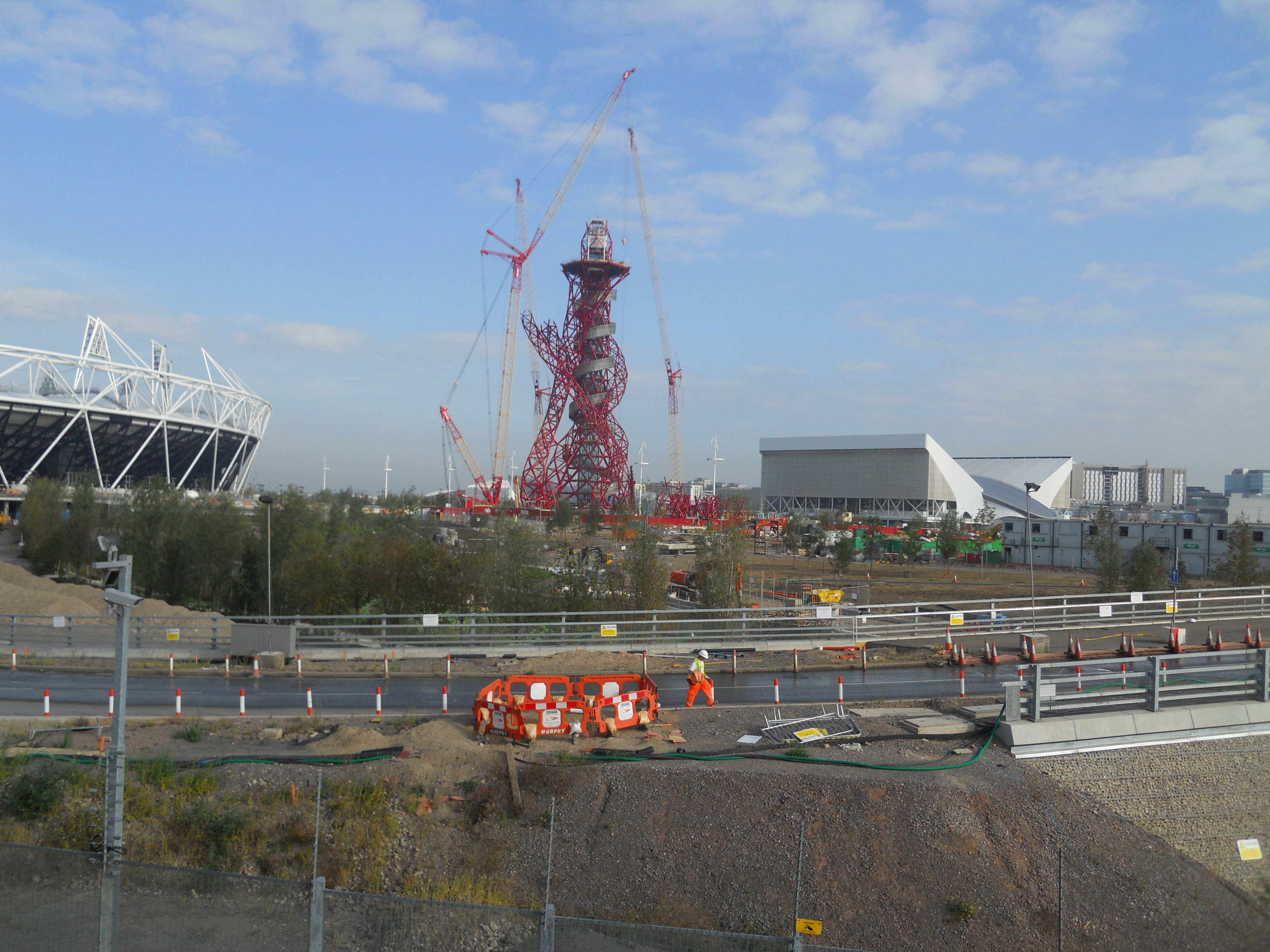
The ArcelorMittal Orbit on September 24th, 2011
Note that the trees have been planted in front.

