More Train Services Between Leeds, Huddersfield And Manchester
This article on the Huddersfield Daily Examiner is entitled Important Timetable Changes For Huddersfield Rail Passengers Heading To Manchester.
It is a good explanation of the major changes that will take place to TransPennine Express services after the 20th of May.
- There will be four fast trains between Leeds, Huddersfield and Manchester Victoria station
- There will be two slow trains between Leeds, Huddersfield and Manchester Piccadilly station
- But nothing is said about Northern services.
I suspect, it will be sorted by the time the service starts.
I would check before you travel.
Hopefully, if you want to go to Piccadilly and get on a train that only goes to Victoria, it will be a same platform interchange to continue, your journey if your ticket is marked Manchester Stastions.
I would assume that you won’t be able to touch in with a contactless card on this short journey as is becoming the norm in a lot of the World.
Ticketing in the North is so Nineteenth Century.
Could Platform 13 And 14 At Manchester Piccadilly Station Be Improved?
I took this picture on the island platform 13 /14, at Manchester Piccadilly station on my trip to the North last week.
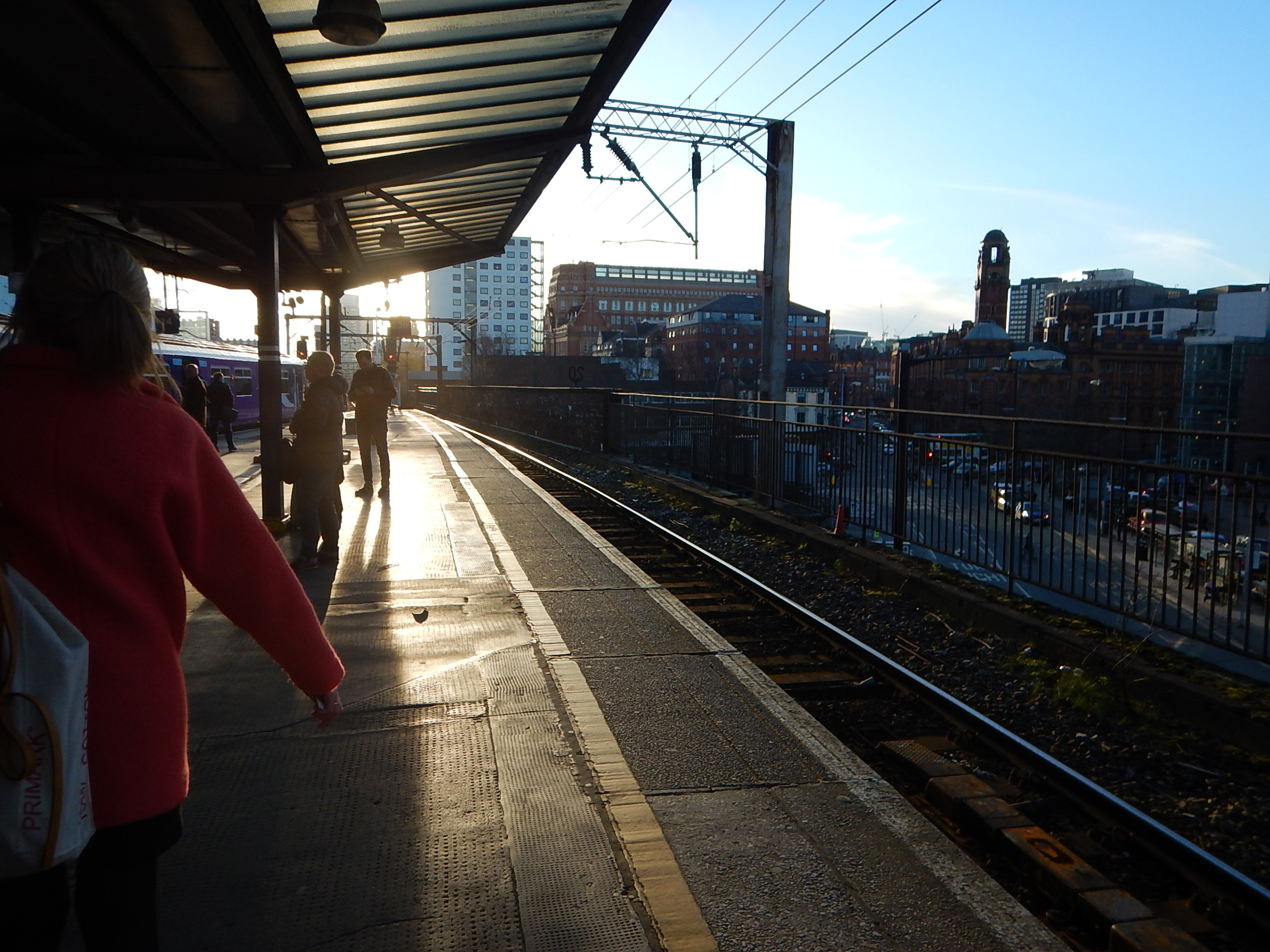
I actually took the picture, as I wanted to check if the lines were electrified, which can be seen.
Services Through Manchester Victoria, Manchester Piccadilly and Salford Crescent Stations
After the current works on the Ordsall Chord has been completed, Manchester Victoria, Manchester Piccadilly and Salford Crescent stations will form a triangle of lines and stations, through which services passing through Manchester will travel. This map from Wikipedia shows the lines in a simplified form.
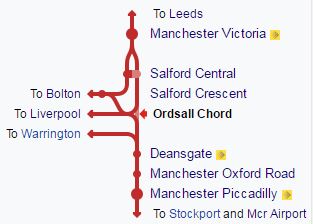
Note the lines to Leeds, Bolton, Liverpool, Warrington, Stockport. It is a real Crossrails of the North.
The only similar intensive set of railway junctions in a city with multiple terminal stations is be the tangle of lines across the South Bank of the Thames in London encompassing London Bridge, Cannon Street, Blackfriars, Waterloo East and Charing Cross stations. This map from Wikipedia shows the lines in a simplified form.
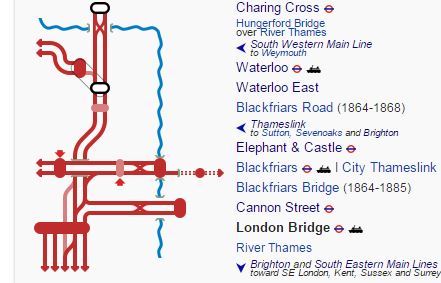
Simple it is not!
As an aside it should be noted that Thameslink is planned to run twenty-four trains per hour (tph), through the central core tunnel, of which sixteen tph stop at both Blackfriars and London Bridge stations. Add in the 14 tph terminating at Charing Cross and the 16 tph terminating at Cannon Street, all of which stop at London Bridge and you get a measure of the capability of modern signalling.
Northern Electric Services To Manchester Airport
As I write this, Northern Electrics trains from Liverpool Lime Street, Edinburgh via Wigan North Western and Blackpool North via Bolton are all scheduled to call in Platforms 13 at Manchester Piccadilly station within the next hour on their way to Manchester Airport. Only the Liverpool service is run by an electric train, which is one of the 100 mph Class 319 trains.
But after the Manchester to Preston Line via Bolton and the Blackpool Branch Lines are electrified and the Ordsall Chord is opened, which will hopefully happen late in 2017, there could be more Northern |Electrics services through these platforms going to Manchester Airport from these and other stations.
- Barrow-in-Furness – Flex
- Blackpool North
- Bolton
- Blackburn – Flex
- Huddersfield – Flex
- Liverpool Lime Street
- Manchester Victoria
- Preston
- Stalybridge – Flex
- Warrington Central – Flex
- Windermere – Flex
Stations marked with Flex will be run by Class 319 Flex trains, but as they will be running on the overhead wires through these platforms to and from the Airport, they can be considered to be the same as the electric Class 319 trains.
If you look at the current service between Manchester Oxford Road and Manchester Airport stations, the frequency is something like eight trains per hour.
So there will be a large number of electric trains going through Platforms 13/14 at Piccadilly! And the trains will be getting longer, with the minimum train size being four-cars and surely eight-cars are possible on some routes.
All of these services will bring passengers to and from Platforms 13 /14 at Piccadilly.
Manchester’s New Urban Link
Across the South Bank of London most people take the Jubilee Line!
But I don’t!
Between say London Bridge and Charing Cross, I will use Southeastern’s 14 tph service between the two stations, as it’s quicker, the views are better and there’s less walking in tunnels underground.
And according to some of their Customer Service people, I’m not the only one.
Manchester will also be getting a new similar high capacity urban link from Manchester Piccadilly station across the city, that will serve.
- Manchester Oxford Road
- Deansgate
Before splitting into two branches.
- Salford Crescent via the Windsor Link
- Salford Central and Manchester Victoria via the new Ordsall Chord
As there is also a line that joins Salford Crescent to Manchester Victoria via Salford Crescent, train planners will have a lot of scope for improving services.
- Liverpool and Manchester services have a choice of Manchester terminals and a variety of routes.
- A service linking Edinburgh, Newcastle, York, Leeds, Huddersfield, Manchester Victoria, Manchester Piccadilly and Manchester Airport would be possible. Current services go via the West Coast Main Line.
- Inwards to Manchester, an improved Salford Crescent station could be a cross-platform interchange with Salford Central/Victoria services on one platform face and Deansgate/Oxford Road/Piccadilly/Airport services on the other.
- Similarly, outwards from Manchester, Salford Crescent station could be a cross platform interchange between services.
I think that this could lead to the Metrolink being connected to one or both of the two Salford stations.
To sum everything up, there will be lots of trains going through the three stations of Manchester Victoria, Manchester Piccadilly and Salford Crescent.
And all those trains using the Windsor Link and the Ordsall Chord will be coming through Platform 13 or Platform 14 at Manchester Piccadlly station.
Overcrowding At Platform 13 and 14 At Manchester Piccadilly Station
Overcrowding at these two platforms is bad enough already and it’s going to get worse if more and longer trains are running through the platforms.
Looking at the picture, the platforms are not overly-wide either.
But at least there are solutions, as I’ll discuss now.
The Alternative Route
Londoners are world-champions at ducking-and diving and will find the route that is quickest after a few weeks of a new rail line or bus route opening. It’s probably one of the reasons that Transport for London, placed the forecast for the passenger usage on the London Overground on the low side.
I don’t know how Mancunians will react to the Ordsall Chord and the new Northern Electrics services, but if they quickly suss-out the best route for their personal journey, this may mean that passengers avoid using Platforms 13/14 at Piccadilly.
There are a quite a few interchange stations on the Piccadilly-Salford Crescent and Piccadilly-Victoria routes through the City.
Better Access To The Island Platform 13/14
Access to the island platform is not good and perhaps more escalators and lifts will help.
Whatever is done to improve the through route, improvement of the access will be on the list of projects to perform.
A Bigger Island Platform 13/14
Looking at the picture in this post, I wonder if the island platform could be made bigger.
If it was wider, this would need the tracks to be moved apart and if this is possible another metre on the platform width would help.
I was on Platform A at St. Pancras Thameslink station this morning and it is very long platform, with the trains stopping vaguely in the middle, thus leaving spare platform space at each end.
So if the platform could be lengthened would this help with the overcrowding?
This Google Map shows the Western end of Platform 13/14.
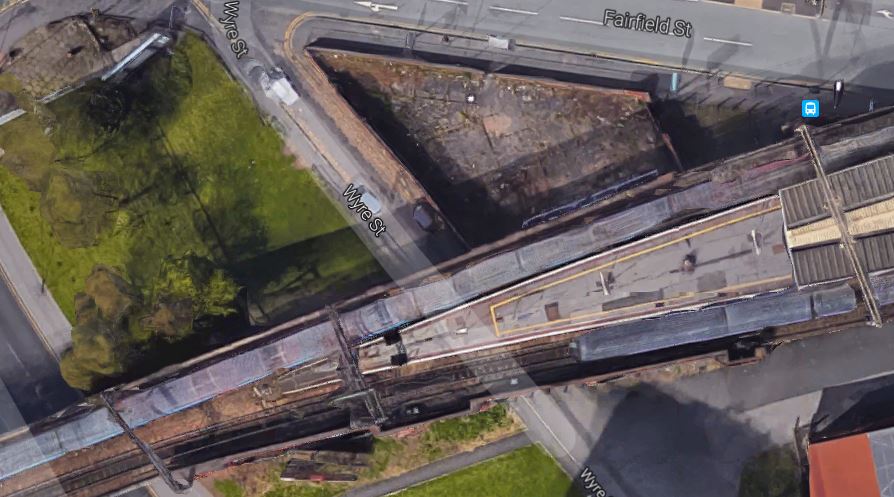
Platform 13/14 is the pointy one in the middle.
And this one the Eastern end.
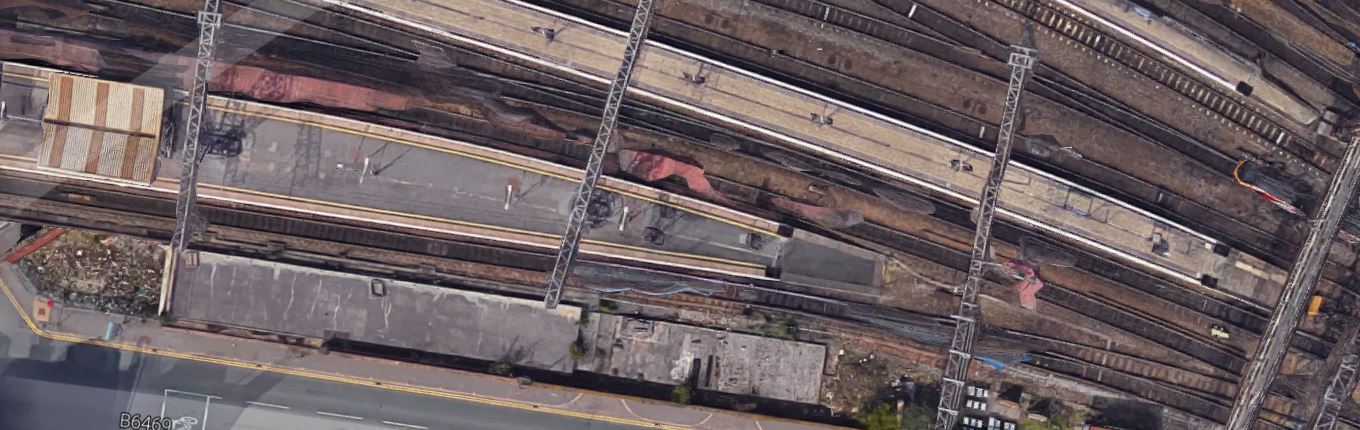
Again Platform 13/14 is the one in the middle.
It’s all very tight and I estimate Platform 13/14 isn’t much more then ten metres wide at any point.
Access to Platforms 13/14 From Below
I don’t know whether this is possible, but the platforms sit on a large viaduct and in many stations like this escalators and lifts are used to access the platforms from below.
This picture shows the Platforms on the viaduct.
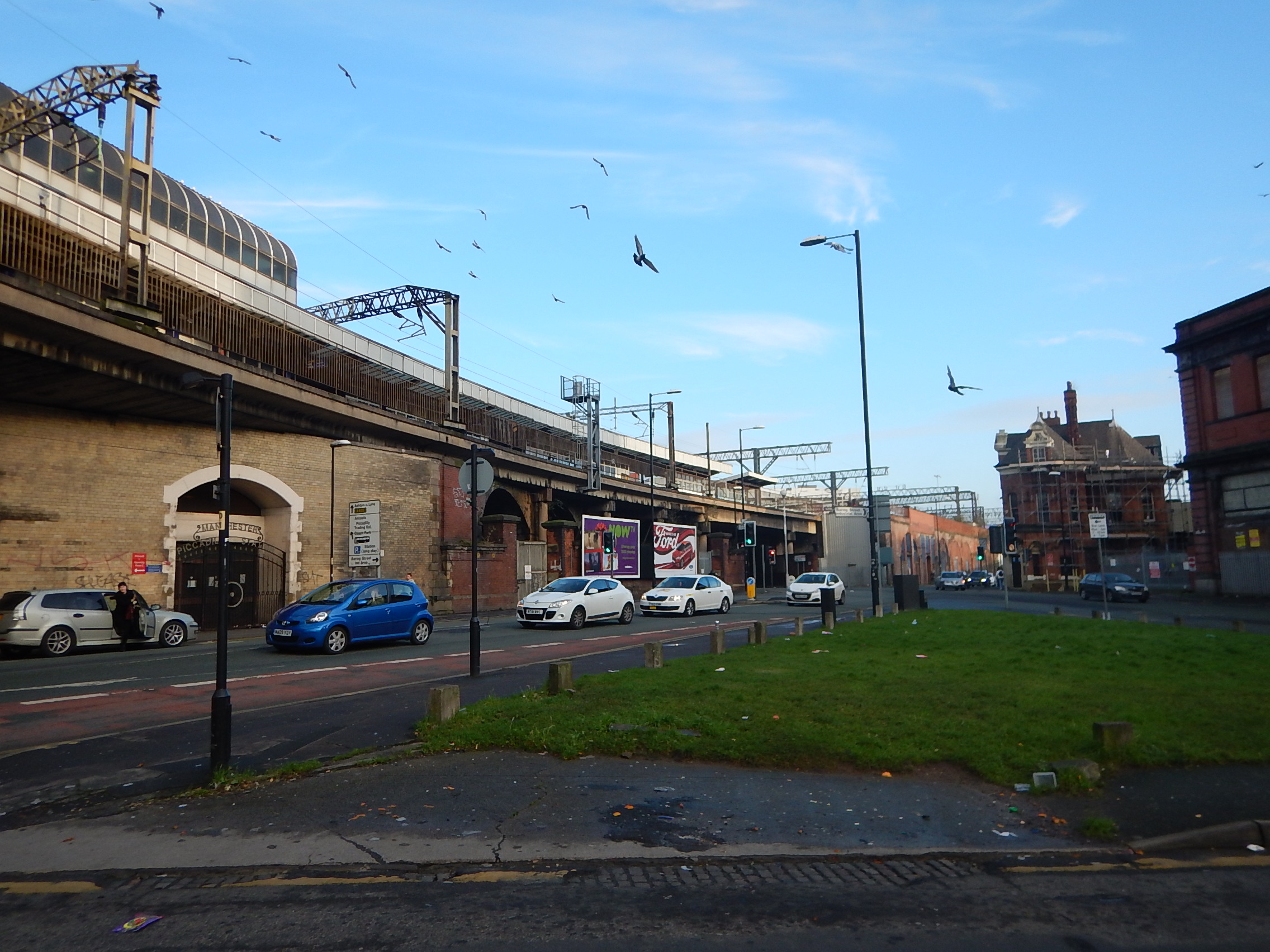
Platform 14 is closest to the camera.
I think that with imagination, access might be possible from this side.
A New Bridge To Platforms 13/14
This Google Map shows the London end of the platforms at Piccadilly.
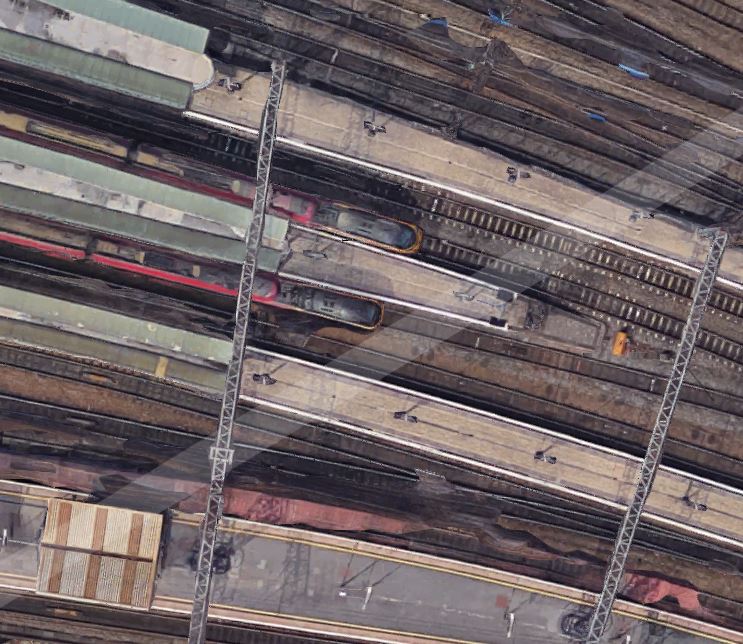
Platform 13/14 is at the bottom of the picture.
I think there is space to put a second bridge over the platforms here and it could reach all the way to the new HS2 platforms on the other side of the station.
Platforms 15 And 16 At Manchester Piccadilly Station
Building two new platforms 15 and 16 has been touted as a solution.
I think that the key to whether four through platforms is needed, is how many trains will be going through.
In a few years time the two track cross-London lines; Crossrail aqnd Thameslink will be handling 24 tph, with a third; the East London Line handling 20 tph.
Also at London Bridge, 54 tph in both directions are handled by nine platforms, which means that an average of 12 tph go through each platform.
If you look at the Y-shaped line through Manchester, Thameslink could be overlaid on the top.
- Blackfriars would be Platforms 13/14 at Piccadilly.
- St. Pancras Thameslink would be Deansgate.
- West Hampstead Thameslink would be Salford Crescent.
- Finsbury Park would be Victoria.
Other conditions would be needed for a throughput approaching that of Thameslink.
- All trains must be modern electric trains, capable of making quick stops.
- All trains must be fitted with modern signalling.
- No trains terminating at Manchester Oxford Road
- Some services from the North linked back-to-back with services to the South to free up platform space at Victoria and Piccadilly.
Thameslink is aiming for 24 tph and currently runs 14 tph.
I can’t see, if everything is done correctly, that Platform 13/14 at Piccadilly can’t handle somewhere between 14-24 tph.
And as Thameslink manages 14 tph with a proportion of Class 319 trains, I would be very surprised if this figure is not attainable.
Under Proposal in the Wikipedia entry for the Ordsall Chord, this is said.
The Ordsall Chord will provide a direct link between Piccadilly and Victoria stations, allowing trains from Manchester Victoria and the east to continue to Piccadilly. On completion the chord will allow four trains per hour to travel between Manchester Airport/Manchester Piccadilly and Manchester Victoria in each direction, eight trains per hour from Manchester Victoria towards the west via Chat Moss, and six trains per hour from Manchester Piccadilly towards either Chat Moss or Bolton and Preston. Other trains will travel from Manchester Piccadilly via Warrington.
This appears to say that only the following trains would use Platform 13/14 at Piccadilly.
- 4 tph Manchester Airport/Piccadilly to Victoria
- 6 tph Piccadilly to Chat Moss or Bolton/Preston
So that is just 10 tph.
Currently, in the Peak, it appears that the frequency of trains between Oxford Road and Piccadilly is 10 tph.
I have a feeling that with a bit of reorganisation of services, the rather difficut problem of building Platforms 15/16 can be delayed for ten years or more, if not for ever.
Manchester Airport From The South
How would people from Birmingham, London and the South get to Manchester Airport?
There are two routes.
- Change at Manchester Picaadilly to any of the several tph to Manchester Airport
- Change at Crewe to the Crewe-Manchester Line.
I would use the second option as it’s fifteen minutes quicker and avoids Platform 13/14 at Piccadilly.
I suspect that the train companies will reorganise their services from Crewe to Manchester via the Airport to take advantage of the Ordsall curve and the new electrification North of Manchester.
HS2 Arrives At Crewe
HS2 will have various effects, when it arrives at Crewe in 2027!
One interesting idea, borrowed from the French, would be to split and join, shorter HS2 trains at Crewe. So perhaps two or even three shorter units would work as a larger unit between London and Crewe.
The advantage of this is that anywhere that is electrified and has a platform long enough could get a high-speed service to London and the South, if the market was there.
According to this page in the Guardian, Crewe will be just 58 minutes from London, instead of the fastest time of 97 minutes today.
Currently Crewe to Manchester Airport takes thirty minutes in a Class 323 train. If as I suspect HS2 trains can run efficiently on classic lines, the following times might be possible using the 110 mph Crewe-Manchester Line to complete the journey.
- Manchester Piccadilly – 88 minutes instead of the current 127 minutes.
- Manchester Airport – possibly 78 minutes instead of 144 minutes.
- Stockport – 76 minutes instead of 115 minutes
No services would need any changes.
But a train might leave London, do a quick stop at Crewe, where it divided with one portion going to Manchester Airport and the other to Stockport and Manchester Piccadilly.
The operator would be able to run short HS2 trains on the classic lines to the North and East of Manchester using the lines now being electrified.
Currently, Huddersfield to Manchester Piccadilly takes 33 minutes, so a modern electric train must be able to do the journey in 20 minutes.
On my estimate of 88 minutes to Piccadilly using HS2, on the electrified existing tracks Huddersfield could be reached without a change in 108 minutes.
The current fastest time is 175 minutes with a change at York.
Running HS2 trains through platforms 13/14 at Piccadilly would have no effect on the design of the platforms, as the HS2 trains will be designed to run to any electrified platform, that is long enough.
The interesting destination of a portion of a train would be Blackburn, if the electrification was extended to the town.
I estimate it could be done in 133 minutes without a change as opposed to 162 minutes today with a change at Preston.
Until 1964, the Ribble Valley Line used to host a Manchester-Glasgow express and now I believe it could have a HS2 service to and from London.
Conclusion
Manchester and its environs will get a much better rail system.
But I suspect it will be some years before Piccadilly gets Platforms 15/16
Up The Buxton Line
I took these pictures as my train went between Manchester Piccadilly and Buxton.


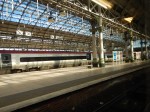







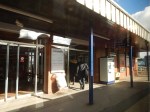



















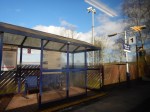

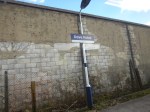


It was a hard climb for a poor clapped-out Class 150 train.
Is There Anywhere A Class 319 Flex Train Can’t Go?
I have just seen an early copy of Porterbrook’s brochure for their new Class 319 Flex train.
This is an extract.
Porterbrook determined that the most arduous route would be Manchester Piccadilly to Buxton, which has a steep gradient and multiple stops along its 25 mile route 9(8 miles of which is electrified). This anlysis was included to give confidence that the Class 319 Flex would be comparable to existing Diesel Multiple Unit (DMU) technology across a range of different routes, stopping patterns and gradients.
So I took a quick look at the Buxton Line on Wikipedia.
This is said.
Due to steep gradients on this line, Class 142 and Class 153 DMUs are banned from the section of line between Hazel Grove and Buxton. Therefore, services to Buxton are worked by Class 150 and Class 156 DMUs. Also Class 158 DMUs were once blocked from operating on the line to Buxton due to the possibility of the large roof-mounted air vents striking low bridges on the route.
Note the two extracts both say “to Buxton”, as obviously, the trains can use the free power boost of gravity on the way down.
To back this up, trains are currently timed to take 37 minutes to climb from Hazel Grove station to Buxton and 33 minutes for the gravity-assisted return.
A driver once told me, that the brakes on a Class 319 train are up there with the best. So there’s little chance of runaway train syndrome.
Train Services To And From Buxton And Hazel Grove
Under Services in the Wikipedia entry for Buxton, this is said.
There is generally an hourly service daily (including Sundays) between Buxton and Manchester Piccadilly, taking about one hour. The service frequency is enhanced to about half-hourly in the morning and evening peaks. A limited number of trains (currently seven on weekdays in total) work through beyond Manchester, with one train each of to/from Blackpool North, Clitheroe, Barrow-in-Furness, Wigan North Western, Wigan Wallgate, Preston and Bolton.
Note.
- Of these destinations, several are not likely to be electrified in the near future, but could be reached by a Class 319 Flex.
- Some would also allow the trains to stretch their legs under the wires of the West Coast Main Line or the Manchester to Preston Line.
- As the Buxton Line is double-tracked would a more powerful train enable more frequent trains?
- Buxton station may have had improvements to ease turning trains.
- At present, Northern don’t seem to run any trains further than between Manchester Piccadilly and Buxton stations, but with the opening of the Ordsall Chord at the end of 2017, running trains past Piccadilly could ease the load on one of Manchester’s main stations.
- Despite Manchester Piccadilly to Hazel Grove being electrified, at present, no electric trains serve the route.
- ,Clitheroe station is probably the most interesting destination, as like the Buxton Line, the Ribble Valley Line needs trains with some qualities common in mountain goats.
It looks like Buxton is going to get a much improved train service.
It should also be noted, that once the Manchester to Preston line is electrified, all services from Hazel Grove to Manchester and Preston could be run by Class 319 trains, whether they are the Electric or Flex variant.
Can and will the service between Manchester and Hazel Grove via Stockport be a Turn-Up-And-Go four tph electric service from the December 2017 Timetable change?
Range On A Full Tank Of Diesel
Or that might be two tanks, as is there one in each driver car for each engine?
The brochure says.
The Class 319 Flex unit would have the capacity to make five return trips per day for two days before refuelling is required.
That surely is more than adequate.
Could The Buxton Line Be Electrified?
It would be assumed that the Germans, French or Italians would electrify a line like the Buxton Line.
But this is not always the case and I’ve used lines in Germany to reach towns the size of Buxton and the lines are not all electrified.
Electric trains on an electrified line have the advantage of bags of grunt and would handle the route with ease.
But it would cost and it wouldn’t be the easiest of engineering projects. I suspect too, that there would be objections to gantries marching sall over the Peak District
I think with modern technology there might be a better and more affordable way.
The Class 319 Flex is just a first solution.
Comparison With The New Class 195 Trains
I suspect it is unlikely that the new Class 195 trains ordered by Northern will be unable to reach Buxton, but they won’t be in service for a few years.
Comparing the two train types, it would appear.
- Installed power is about the same.
- But what about the weight?
- The Class 319 Flex has 12 First Class seats and 255 Standard Class seats in the brochure, as against 204 seats in a three-car Class 195 train.
- The Class 319 Flex is a bi-mode that can use electric power, between Manchester and Hazel Grove.
It will be an fascinating comparison: A thirty-year-old British Rail-built train with a bi-mode upgrade against a new Spanish-built diesel multiple unit.
Along The Hope Valley Line To Sheffield
The Hope Valley Line between Manchester and Sheffield has two electrified links at the Manchester end to Piccadilly.
- Via Hazel Grove and Stockport, where electrification reaches to Hazel Grove
- Via Guide Bridge, where electrification reaches almost to Hyde North, to serve the electrified Glossop Line.
Theis important route between Manchester and Sheffield has been marked down for new Class 195 trains, but I suspect that the distance is within range of a Class 319 Flex.
The Manchester end of this route could be a fertile area for using Class 319 Flex trains. As a simple example, they could be used to bridge the gap between the electrification on the Glossop Line and Rose Hill Marple station.
Conclusion
Manchester Piccadilly and Buxton may be a tough route, but if a train can can climb to Buxton crush loaded with passengers, there are a lot of benefits to the operator.
- Electric trains between Manchester Piccadilly and Hazel Grove.
- Releasing of platform space in Piccadilly when the Ordsall Chord opens.
- Back-to back services between Buxton and Blackpool, Barrow, Clitheroe and Wigan. I suspect there’s a lot more.
- A possible two trains per hour to Buxton.
- Two electric trains per hour to Rose Hill Marple.
And that’s just for starters!
Will Platforms 15 And 16 At Manchester Piccadilly Ever Be Built?
I ask this question, as I have read this article on the Manchester Evening News, which is entitled Doubts cast over plans for two new platforms at Manchester Piccadilly train station.
This is said.
A shadow of doubt is looming over plans to expand Manchester Piccadilly after Network Rail’s boss admitted they are looking at the ‘cost-benefit ratio’.
The words of Mark Carne, chief executive at Network Rail, will raise fears of delay – or even cancellation – of the building of platforms 15 and 16.
For myself, I dread when I see my train is leaving or arriving at the current Platforms 13 or 14 at Manchester Piccadilly station.
The architect who designed this mess was a total idiot.
- Access is terrible.
- There needs to be escalator and lift access between the platforms and the street below.
- The platform is not wide enough for safety.
I just wonder if there could be an interim solution to Platforms 15 and 16 at Manchester Piccadilly.
- Rebuild Platforms 13 and 14 to a modern safe standard.
- Provide a second access route to the platforms from the main station.
- Provide direct access to the platforms from the street.
- Provide direct escalator access to the trams.
- Future-proof Platforms 13 and 14 for decent access from the proposed HS2 platforms.
Obviously, a design would be used, that can be expanded to add Platforms 15 and 16.
To be fair, since the platforms were built in 1960, station and railway design has moved on.
In London, we have Thameslink, that will handle 24 main line trains per hour (tph) at four stations in Central London. Soon, Thameslink will be joined by Crossrail, which will handle the same frequency of trains on an East-West axis across London.
I’ve stood on that crowded island platform at Manchester Piccadilly, many times and certainly the frequency of trains is nowhere near 24 tph and perhaps just half that figure.
If they can do it on Thameslink and Crossrail, then surely they can do it on Platforms 13 and 14 at Manchester Piccadilly.
To accommodate, an increased number of trains would require.
- Rebuilding of Platforms 13 and 14 to a modern standard with better access to the main station, the street and the Metrolink.
- Updating of Oxford Road and Deansgate stations to safely handle the increased number of trains and passengers.
- Installation of Automatic Train Control (ATO) as on Thameslink and Crossrail, through Piccadilly, Oxford Road and Deansgate.
Get it right and it could bring more than just the obvious benefits of more capacity, less cost, earlier implementation and future-proofing.
Could Platforms 13 And 14 Become A Separate Station?
I ask this question, as Platforms 13 and 14 have a similar relationship to the main Piccadilly station, as Waterloo East station has to Waterloo station.
Waterloo East station is certainly nor perfect, but after the installation of the balcony at Waterloo and a better bridge between the two stations, it is getting there.
In my view Waterloo East still needs.
- Direct access to and from street level.
- Better access to Waterloo tube station.
Perhaps it could all be funded by sympathetic development on top of a new station.
I can’t see why a similar approach couldn’t be taken at Platform 13 and 14 at Manchester Piccadilly.
The new station would have.
- Walk-in access from the street.
- Easy access from the Metrolink.
- A ticket hall.
- Step-free access to the platforms.
- Appropriate oversite development,like perhaps a hotel, offices and housing.
I shall call it Manchester Piccadilly South in the rest of this post.
I think that making the station separate could be the best way to go. Especially, if the developer of the oversite development could be persuaded to contribute to the station.
A Station For Manchester Airport
Most of the current nine trains per hour ( tph) to and from Manchester Airport use Platforms 13 and 14.
So if a Manchester Piccadilly South station is created, this would make it easier for travellers using the train to get to the airport.
It would also be more convenient if all Manchester Airport services called at these platforms.
Through Trains Only
Some trains appear to start from Platform 13B at Manchester Piccadilly..
If services were reorganised, surely this will stop, as you don’t use through platforms to terminate services.
Could The Development Of Platforms 13 and 14 Be Done Without Halting Train Services?
I suspect, that Network Rail’s contractors have a lot of experience of rebuilding platforms like these, whilst keeping the trains running.
Conclusion
I can certainly understand Network Rail’s thinking on perhaps cancelling Platforms 15 and 16.
Walking Between Manchester Piccadilly And Deansgate Stations
I took these pictures as I walked between Manchester Piccadilly and Deansgate stations.
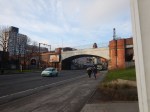


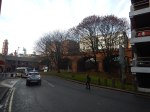
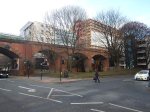
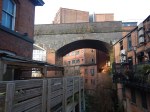
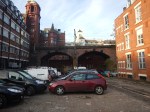
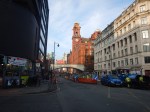


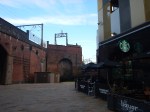

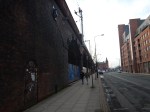

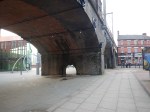
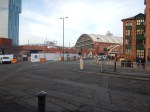


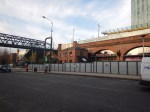
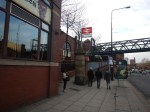
The viaduct is certainly substantial.
I find walking difficult in Manchester, as there are virtually no maps. In London there are walking maps everywhere; on bus stops, at tube and rail stations and free standing.
One of the strange things, is that in all the pictures I took on this walk, there is no evidence of Oxford Road station, which is between Piccadilly and Deansgate. There were so signs either.
Perhaps, it’s been knocked down, since I visited a few weeks ago?
Others would say that I should use the map on my phone, but that is not easy, as my left hand is dodgy and to use a phone, I prefer to lay it flat somewhere and use it with my right hand.
I still think that the reason London is so well-mapped, is that because it is so large, the average Londoner find themselves in a strange area quite often and need immediate help. But in smaller cities, the city is small enough for all the locals to memorise the city, so they object if sums of money are spent on maps.
The only other city in the UK with good maps is Glasgow, which in terms of area is the second largest.
With this walk from Piccadilly to Deansgate, I just followed the viaduct. But it wasn’t easy at times, as there were various dead-ends, too much unnecessary traffic and parked vehicles and difficult road crossings.
Perhaps Manchester needs some combined Cycling and Walking Superhighways! And perhaps a Congestion Charge, to discourage people from bringing cars into the centre, as it did in London.
I wonder if anybody, has done an analysis of the number of visitors and tourists a city gets against the usability of its public transport and walking routes. My personal scores out of five for various UK cities would be.
- Birmingham – 3
- Brighton – 4
- Bristol – 2
- Cardiff – 4
- Edinburgh – 3
- Glasgow – 4
- Leeds – 3
- Liverpool – 4
- Manchester – 2
- Newcastle – 3
- Nottingham – 4
- Sheffield – 3
This is all very personal, as obviously I know Liverpool well. But in fairness you can give brief instructions on how to spend a day or two in Liverpool, as the centre is extensively pedestrianised and this gives the visitor a linear focus on which to explore the City.
Brighton has the seafront and once you know how to get back to the station, on foot or by bus, it has this focus on which to base your visit.
Does Manchester City Centre have a linear focus?
Manchester doesn’t draw you in with a welcoming station, as do Liverpool, Sheffield or Newcastle, and I suspect, it doesn’t make the most of casual visitors passing through.
The Back Side Of Manchester Piccadilly Station
These pictures show the back side of Manchester Piccadilly station.
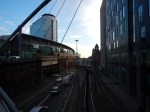
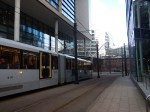
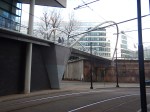
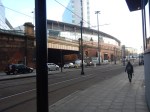

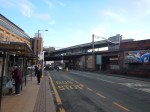
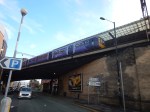

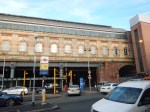
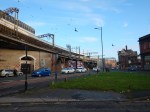
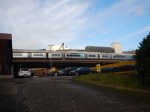
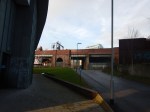
Note.
- It wasn’t easy to get out to that side of the station.
- The two platforms outside the station on the viaduct are the dreaded Platforms 13 and 14, with their serious overcrowding, lack of facilities and lots of draughts and cold.
- Platforms 13 and 14 must be the worst pair of platforms in the UK.
- I nearly got run over three times trying to cross the road.
I doubt that I’ll ever see Manchester Piccadilly station improved.
The New And Updated Platforms 13 to 16 At Manchester Piccadilly
I have been looking to see if I can find anything more about what is happening to update platforms 13/14 and create new platforms 15/16 at Manchester Piccadilly station.
I found this image on the Network Rail web site.
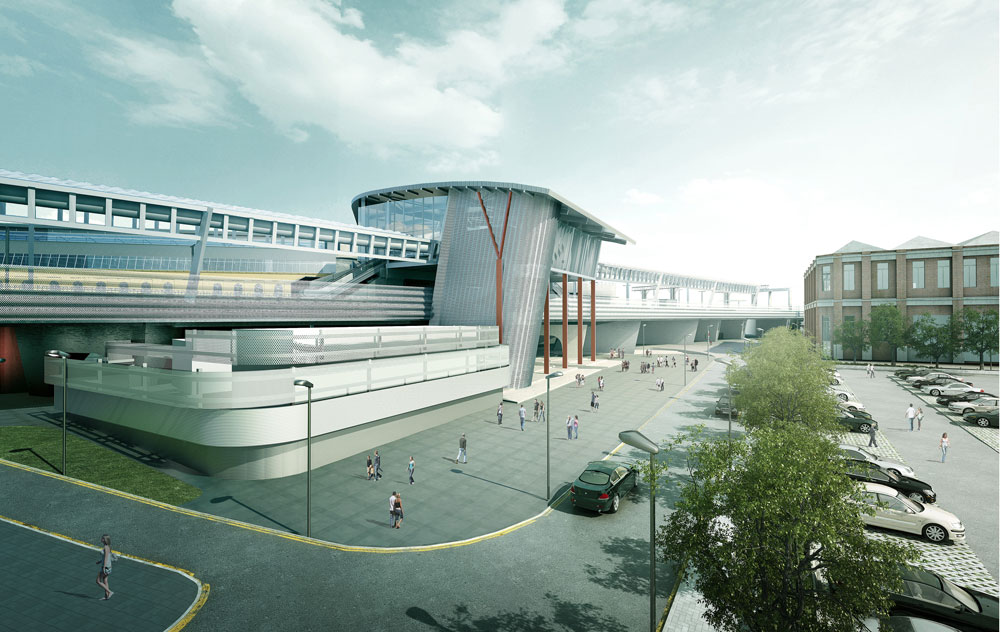
Proposed Platforms 13-16 At Manchester Piccadilly Station
I think it shows the way that Network Rail are thinking.
- A second entrance to the station.
- Does the entrance lead underneath all of the platforms?
- Lots of escalators.
- A proper gateway station for Manchester, opening on to an open space.
- Is that a public space like a restaurant on top of the tower?
The picture does show that there are possibilities to create a very good building to serve platforms 13 to 16.
Expanding Manchester Piccadilly Station
This announcement on the Government web site is entitled Put HS3 at the heart of a High Speed North – Adonis.
This is an extract.
Recommendation six: Proposals for the redevelopment of Manchester Piccadilly station should be prepared jointly by TfN, Transport for Greater Manchester, Manchester City Council, Network Rail, DfT and HS2 Ltd.
These organisations should work to together to deliver:
a) Detailed plans for the new east-west platforms 15/16 to facilitate delivery early in Control Period 6 and unlock the development potential of the Mayfield site;
b) A masterplan for the longer-term development of Manchester Piccadilly station as a whole, incorporating capacity for HS2 services and options for the delivery and timing of platform capacity for HS3; and
c) Proposals for funding and financing the station redevelopment, including for private sector and local contributions.
I know Manchester Piccadilly station well and it has multiple space problems. These pictures illustrate some of the problems on the North side of the station.

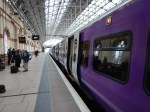


You have lots of short trains and long platforms, which means the following.
- Passengers have to walk long distances.
- There is confusion of which train to take with more than one in the platform.
- It must be a nightmare for train operators and their staff.
Surely some reorganisation could improve this mess, that was probably designed by Topsy.
On the South side of the station, there are two of the most crowded platforms in the UK. Platforms 13/14 need a serious sorting out.
Currently, services from Platform 13 seem to go to the following.
- Huddersfield
- Leeds
- Manchester Airport
- Norwich
- Scarborough
- Sheffield
- York
And from Platform 14 to the following.
- Blackpool
- Edinburgh
- Liverpool
- Southport
Most of the services seem to be provided by TransPennine Express and I think it is true to say, that when and if the Ordsall Chord is opened, there will be a sorting out of services on these two platforms.
But I do feel that the solution is Network Rail’s preferred one of adding platforms 15/16. They can’t be built soon enough, to ease the overcrowding.
This Google Map shows the layout of Manchester Piccadilly station.

Manchester Piccadilly Station
The current Platforms 13/14 are along the bottom of the station, connected to the main station by the two small bridges. I would assume that the two new platforms will go on the south side of 13/14.
Wikipedia gives more details of developments related to the Northern Hub and HS2.
It is going to be a tight fit to get all the lines and platforms into the area.
The more I look at the station, the more I tend to think that the Picc-Vic Tunnel might have been a good solution.
It makes me wonder if it would be more efficient for HS2 and HS3 to share a route through Manchester from the Airport to Victoria and on to Huddersfield and Leeds. It would need to be mainly in tunnel and could go right under the city with underground stations. I wrote about it in Rethinking HS2 And HS3.
Surely, if two high speed lines are to go through Manchester, they should share a route?
I have also received this image from a reader; Ben.
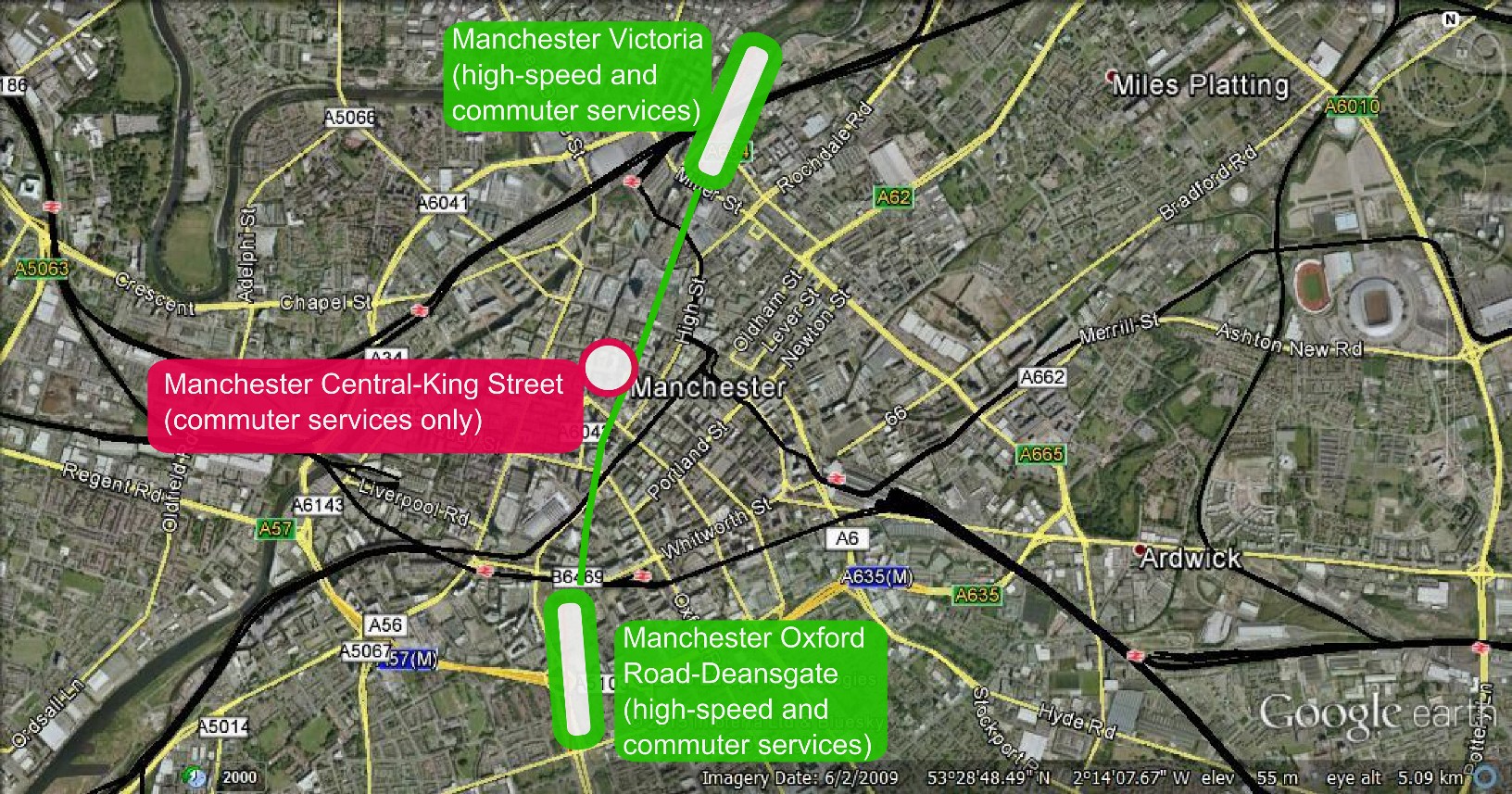
An Alternative Cross-Manchester Tunnel
Ben’s plan illustrates some advantages of a cross-city tunnel, which probably include.
- Less demolition at stations served by HS2.
- HS2 and HS3 could probably share platforms.
- Release of platforms at Piccadilly.
- A station in the centre of the city.
- Better links to the trams and local train services
- Ability to continue in tunnel towards Huddersfield and Leeds.
Remember that we’ve improved our tunnelling capability by a large amount in recent years.
Crossrail in London has also developed station designs and layouts, that could be used in Manchester.
- Massive double-ended stations to effectively serve two separate locations.
- Lines and station layouts to ease and encourage same platform interchange.
- Moving walkways and inclined lifts, where necessary to ease passenger movement.
- Island platforms to ease interchange between directions and branches, as at Whitechapel.
So could the most passenger friendly station, just called Manchester, be built under the city?
I don’t think that the current plans for Piccadilly, which are just so much conservative dross will be realised, as someone will come up with something much better. But then recommendation six encourages that!
High Speed North Barely Mentions Technology
The National Infrastructure Commission has published its report entitled High Speed North.
Technology and in particular new technology is hardly mentioned in the report.
This is the only mention with respect of improved technology in rail applications.
Ticketing, and in particular the absence of smart ticketing technology.
Design gets a few more mentions, but only one is meaningful.
It is very much a grey report produced by yesterday’s grey men.
The North has serious connectivity problems and it needs them to be solved now!
As I said in Adonis Promises Milk And Honey In The Future, But The North Needs Unblocking Now!, I can’t see much improvement until 2022.
All High Speed North does is confirm my suspicions of yesterday’s grey men conning the country out of fees.
To solve the North’s problems we must break out of the box! And how!
As an example of the report’s lack of ambition, the report says that Manchester Piccadilly station needs to add Platforms 15/16 in Control Period 6 or between 2019 and 2024.
That could be eight years and given the crowding you get on Platforms 13/14, those two extra platforms are needed now.
You need to do a lot better, Lord Adonis. But as a failed New Labour accolyte, we didn’t expect much more.
 The Anonymous Widower