Driver Only Operation Of Trains
There was a wonderful demonstration of the benefit of DOO or Driver Only Operation, when I got my train at Horwich Parkway station.
The four car Class 150 train pulled in and stopped and about thirty or forty souls stood by the train doors in the rain, for perhaps two minutes, whilst the conductor, whose duty it is to release the doors, got to a point to press the appropriate button. He was probably delayed as the train was crowded.
Surely, the driver, could have pressed an appropriate button, when he had ascertained the train was safely halted.
As it was, passengers got wet before they boarded a dry train and moaned about it all.
It’s so crazy that when the Class 319 trains were cascaded from Thameslink, where they work under DOO rules, extra buttons were fitted for the conductors.
DOO operation doesn’t have to mean a crew of one, as on some of the services I rode, the conductor was also issuing tickets.
I do wonder if in some ways it’s traditional. In the 1960s in London on buses, everyone could push the button to tell the driver to stop at a particular stop. When I arrived in Liverpool, I did this on a Liverpool bus and was told off in no uncertain terms by the conductor, that it was his job.
Welcome to the weird, wonderful and wet world of Northern Rail.
If this article from Rail Technology, entitled Liverpool council joins campaign opposing driver-only operation, is anything to go by this daft method of working is going to continue.
Staff shouldn’t be on trains with little to do but on platforms and in stations helped passengers. Transport for London’s policy is laid out in Help From Staff on their web site. This is said about assistance in rail stations.
On the Tube, TfL Rail and Overground, station staff will also accompany you to the train and help you on board and, if needed, can arrange for you to be met at your destination. Anyone can use this service, but it is particularly used by blind and visually impaired passengers and people using boarding ramps onto trains.
If you would like to use this service, ask a member of staff when you arrive at the station.
It seems to work very well and should be UK law and mandated on all station operators.
Manchester’s Nineteenth Century Ticketing
On Wednesday from my hotel by the Reebok Stadium at Horwich Parkway I had to get three tickets to get to Manchester Piccadilly station.
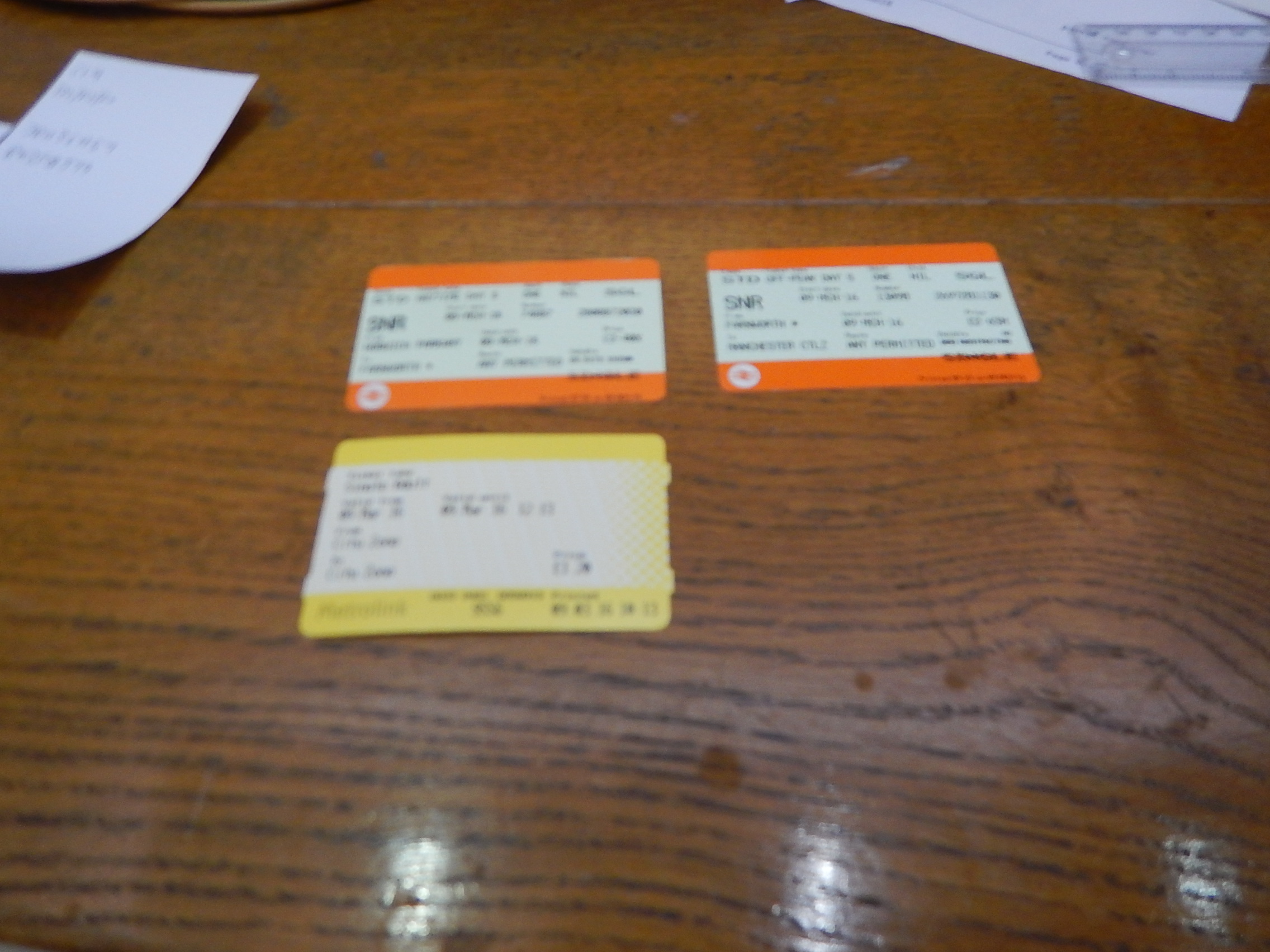
Three Tickets To Ride
The first took me from Horwich Parkway to Farnworth with a change at Bolton.
The second then took me from Farnworth to Manchester Victoria
The third was the tram ticket across the city.
As there were not even any ticket machines at Horwich Parkway and Farnworth, I had to use the Ticket Office.
It’s all so very nineteen-century!
At Farnworth, I got talking to a couple of fellow passengers, who were local and probably over ten years older than I am.
One had just visited his granddaughter in Bromley and said he’d been impressed with using his bank card as a ticket in London.
Mancunians seem to understand London’s simple ticketing concept, so why haven’t the transport authorities embraced contactless ticketing?
It might encourage a few more visitors and commercial activity, if all the great cities of the North allowed contactless ticketing with bank cards.
It will happen, if only because American Express, AndroidPay, ApplePay, Mastercard and Visa will insist it does for their own commercial interests.
Could Virgin Run A Double Shuttle?
Coming back from Manchester today, I didn’t book a ticket, but then I never do when returning to London.
Suppose I’m going to a football match or a meting at a place like Huddersfield, which is a single change at Manchester Piccadilly or Liverpool Lime treet station.
Going North, I’ll choose a train that gives me about an extra hour to get me to the stadium in time for the match. This means that if the trains are running to time, I will have time to buy a gluten-free lunch at Carluccio’s in Piccadilly station or Liverpool before doing the second leg to the destination.
I might book a First Class Advance, but usually on a Saturday, I’ll book an Off Peak ticket in Standard Class and pay the Upgrade on the train.
Coming home, I’ll always use an Off Peak ticket, as from many places, you can never guarantee to be able to get to the station to catch a booked train. Especially, if it’s a wekend and there are Rail Replacement Buses.
I use similar booking tactics to places like Birmingham, Cardiff, Leeds, Liverpool, Sheffield and York.
It is a tactic that works well and I’ve never needed to buy a new ticket to get home, because I’ve missed a booked train.
Today got me thinking, as I came home from Manchester.
Would it be more profitable, if Virgin ran the service between London and Manchester as a turn-up-and-go Shuttle?
- Passengers would be able to book the trains in the normal manner.
- It would also be possible to turn up at Euston or Manchester and just by touching in and touching out with contactless technology at your destination to get on the train.
- Perhaps it could all be done on a simple terminal where you choose your class and destination, paying for the ticket with contactless technology using ApplePay, AndroidPay or a bank card.
- At Manchester Piccadilly, I had plenty of time today, so taking ten minutes to buy a ticket wasn’t a problem.
- Surely, the quicker you can buy a ticket, the more passengers will travel.
- Three trains an hour would run in both directions always starting from the same platforms.
It could get very interesting, if it was made into a double shuttle, with Euston to Liverpool services.
I suspect there’s a pattern, that perhaps has six trains an hour to Crewe, with some trains going to Manchester and others to Liverpool.
A Design Crime – Manchester’s Totally Crap MiGuide
When I see things like this, it really gets my anger up.
All I want in a City Centre, is a map that will show me where to go, not some indecipherable device, that I probably can’t work, as I have the sort of fingers that don’t work well with touch screens. I don’t want to be bombarded with advertising.
If I need information, like the nearest gluten-free restaurant, I’ll search Google.
Give me maps on liths like Ipswich, Glasgow, Preston, Bristol, Birmingham, Southampton and Sheffield! Or big ones with seats like Krakow!
Manchester used to have some nice maps, but they seem to have been removed.
Perhaps they’;re kept with the Ed Stone?
These devices are total crap, that should be consigned to the dustbin of the future.
They’re certainly a Design Crime.
An Early Sunday Start From Burnley To Manchester
I started early and took the 08:39 train from Burnley Manchester Road station to Manchester Victoria station.
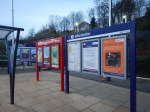
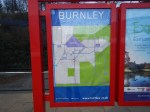
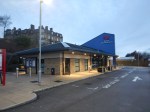
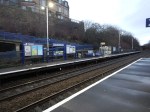




It is a picturesque ride around the Todmorden Curve, over valleys on high viaducts and through traditional stone-built villages and towns, with the hills of the Pennines in the background and quite a bit of water alongside the rail line.
The line has improved greatly in the last few years and there are lots of tidy stations, with seats, shelters and information boards. The only larger ones are Burnley Manchester Road, Todmorden and Rochdale.
Despite the early hour on a Sunday, there were quite a few passengers and the train was about three-quarters full at Manchester Victoria.
Thinking back to my first time by train to Burnley in 2011, the rail link has improved dramatically.
- A smart new station has been built.
- The Todmorden Curve has been opened to provide a direct train service to Manchester.
- An hourly service links Burnley and Manchester Victoria via the curve.
From reports, I’ve read, the line is well-used.
This question has to be asked – Could the line be electrified?
Look at some of the pictures and they show the challenging nature of electrifying the line.
- From Burnley to Todmorden, there are a number of well-built Victorian stone over-bridges.
- Also on this stretch there are at least two high stone viaducts.
- There are several tunnels, includin the Summit Tunnel, which is 2.6 km. long and has been in continuous use since the 1840s.
- Many stations have been upgraded or rebuilt recently.
- Also in this area, some new bridges across the line for new roads and the Metrolink, seem to appear to be rather low.
Also, look as this section of the line between Burnley and Todmorden.

Between Burnley And Todmorden
Note how the rail line curves between the hills and the houses, using tunnels and viaducts to get go on its way.
It’s one of those lines, where you’d try to find an alternative to traditional electrification. If it’s not space, it’s heritage issues and there would be lots of bridges, viaducts and tunels to rebuild.
Go west from Burnley and the line has a couple of high viaducts and a couple of tunnels, but the East Lancashire Line seems to get easier west of Blackburn station, with a line over mainly flat countryside with plenty of space on either side. At Preston it connects to the electrified West Coast Main Line.
Electrifying from Preston to Blackburn, would open up several routes to the use of IPEMU trains.
- Blackpool South to Colne – A substantial part of the route of the fifty mile route from Blackpool South to Colne would be electrified and from the performance figures I’ve seen, this route would be an easy one for something like an IPEMU-variant of a four-car Class 387 train.
- Burnley to Manchester – The service I rode from Burnley to Manchester starts at Blackburn and finishes in a fully electrified Manchester Victoria. So to answer my original question about whether the route could be electrified, there is actually no need to electrify, as IPEMUs could easily link two electrified terminals over that distance.
- Manchester to Clitheroe – Look at the Ribble Valley Line on Wikipedia and there are five viaducts and three tunnels listed, in a line of around thirty miles. However, the good news is three-fold. The line has been well looked after, it’s promoted as a tourist attraction and soon, it will be electrified from Manchester as far as Bolton. I can’t see why with a small top-up at Blackburn, that this route couldn’t be run by an IPEMU.
- Blackpool North to Settle – This route is run as a tourist train called DalesRail on Sundays in the Summer, when it goes all the way to Carlisle. An IPEMU could certainly run a service between Blackpool North and Settle, but I doubt it could stretch all the way to Carlisle along the Settle-Carlisle Line, as there are some massive gradients on that line.
- Blackpool North to Leeds – This route along the Calder Valley Line via Hebden Bridge, Halifax and Bradford would be totally within range of an IPEMU, once Blackburn to Preston is electrified. If necessary, Leeds to Bradford could be electrified as well. A train fit for the Northern Powerhouse, powered by batteries and built in Derby!
This all illustrates how an IPEMU can benefit from even short sections of electrification. Blackburn to Preston would be under twenty miles of electrification without troublesome viaducts and tunnels across fairly flat country and it opens up several routes to new electric trains.
It’s funny, but if you are going to use IPEMU trains, you electrify all the lines, that you can electrify and maintain with ease and leave all the difficult bits to the battery feature in the trains.
Reaction In The North To Rail Franchise Awards
I have been browsing the local papers in the North, to see the area’s reaction to the award of the new Northern and TransPennine franchises.
This article in the Liverpool Echo is entitled 4,000 more seats in £1.2bn boost for North West trains, which seems a very positive headline. This is the first paragraph.
Nearly 4,000 more seats on Liverpool and Manchester services during the morning peak and a new, direct Liverpool to Glasgow service were among the promised benefits of a trains package announced today.
They use a lot of positive language and only have a slight worry about what it will mean for fares.
This extract from another article, may be a bit parochial, but it is proud of Liverpool’s involvement in formulating the winning bids.
Merseytravel – who were involved in drawing up the specifications for the bidders – said there was a commitment to four fast services an hour between Lime Street and Manchester and two per hour between Liverpool, Leeds and York, as well as more services to Preston.
There will also be an early Northern service from Lime Street to Manchester Airport (arriving no later than 4.45am), and daily services to Manchester Airport via both Newton-le-Willows and Warrington Central.
It is also positive and just as I found in the city, when they introduced the Class 319s electric to Manchester Victoria, Merseysiders seem to be looking forward to better services.
Coverage on the Manchester Evening News, like this article entitled Hundreds of new carriages promised as Arriva and FirstGroup win Greater Manchester rail franchises, seems to be more cynical and snipes at Arriva for other issues. It doesn’t have the practical tone of the Liverpool reporting.
For instance, the Liverpool reporting stresses the much better service to Glasgow, Edinburgh and Newcastle, but despite Manchester will get a doubling of Scottish services, it isn’t given the same prominence.
Across in Leeds, the Yorkshire Post has an article entitled December 10: New age of the train – or not? This said.
Unlike previous deals which did not foresee the untapped potential of this region’s railways, Transport Secretary Patrick McLoughlin has used this opportunity to insist that the new franchise-holders invest in new rolling stock to help ease overcrowding on rush-hour trains. Yet it remains to be seen whether these operators, and their partners, can deliver the “world class rail service” envisaged by Mr McLoughlin and which is so integral to the much-vaunted Northern Powerhouse which aims to improve connectivity between major cities.
It looks to me that the Yorkshire character is shining through.
So on this quick look Liverpool is more positive and Manchester and Leeds are a tad negative.
Could it be that of the three cities, Liverpool is very proud of its locally-managed franchise, Merseyrail and are those in the area bigger train users than people to the East?
I also suspect, that at present, Liverpool with the electric trains to Manchester, has benefited most from rail dvelopment in the last few years.
Two Ticketing Stories
This story on Rail News is entitled Metrolink offers Get me there app and this story on Rail News is entitled Contactless payment to Gatwick Airport.
The stories illustrate the difference in philosophy between Manchester and London.
I don’t use financial apps, as they are a security risk to my bank and credit card details, so in Manchester I’ll still have to buy a ticket, as they haven’t embraced the modern technology of contactless cards.
Also why can’t I buy a Plus Tram ticket when I book a Virgin for Manchester?
For Gatwick now, I won’t have to buy a ticket, as I’ll use a contactless card between East Croydon and Gatwick.
Significant Documents
When I wrote Increased Frequencies On The East London Line, I relied on this document from Transport for London (TfL) entitled London Overground and Docklands Light Railway Growth.
The document was significant because of its openness and the way it laid out how the London Overground and the Docklands Light Railway will cope with growth.
I think the document also shows how a properly planned public transport project attracts users, that are a precursor to the growth.
After all, in the last few months, I’ve seen the extension of the Nottingham Express Transit and the opening of the Borders Railway, neither of which have attracted substantial amounts of negative comment.
So perhaps we’re now getting rather good at planning these types of projects.
Over the last few months, I’ve read some significant documents, that look to the future.
- Transport for London’s London Infrastructure Plan for 2050
- Liverpool City Region Long Term Rail Strategy
- Greater Manchester Rail Policy
All are quality documents and are superb starting points for the development of railways in their area.
Is Liverpool Planning To Invade Manchester By Train?
There is no love lost between the two North-Western cities of Liverpool and Manchester.
I must admit, that I do use the correct feelings towards Manchester, when I’m in Liverpool, as Liverpudlians like it!
In the October 2015 edition of Modern Railways, there is an article about Merseytravel looking for a new fleet of trains for their 750V DC network, which is entitled New Trains For Liverpool. This is said.
Merseytravel has indicated that it will be seeking ‘innovative proposals’ from manufacturers, with considerable emphasis being placed on the overall cost of operating the fleet rather than just the basic cost of the trains themselves. Options such as regenerative braking and onboard systems to store energy under braking to be used for acceleration will attract particular interest. The independently-powered EMU (IPEMU or battery train) concept evaluated earlier this year on a modified Class 379 in East Anglia ,might see an application here.
It does appear on a quick look, that a version of the new Aventra train, which comes with an IPEMU capability as standard might be suitable for Merseyrail, as the size and speed of the current Class 507 and 508 trains, don’t seem to be unusual like some trains of their age.
The trains would need to be dual voltage, so they could work on both electrical systems on Merseyside. But then Bombardier can handle that!
Surely, if the trains were IPEMUs, I can’t believe that Merseyrail would not use their capabilities to provide extra services to new destinations.
Ormskirk to Preston
In my meanderings yesterday, I twice passed the bay platform at Preston, which is the terminus of the Ormskirk Branch. This branch is about twenty miles long and is a monument to the British Rail Crap Design School and is detailed in the line’s History section in Wikipedia. This picture shows how I once changed trains at Ormskirk a couple of years ago.
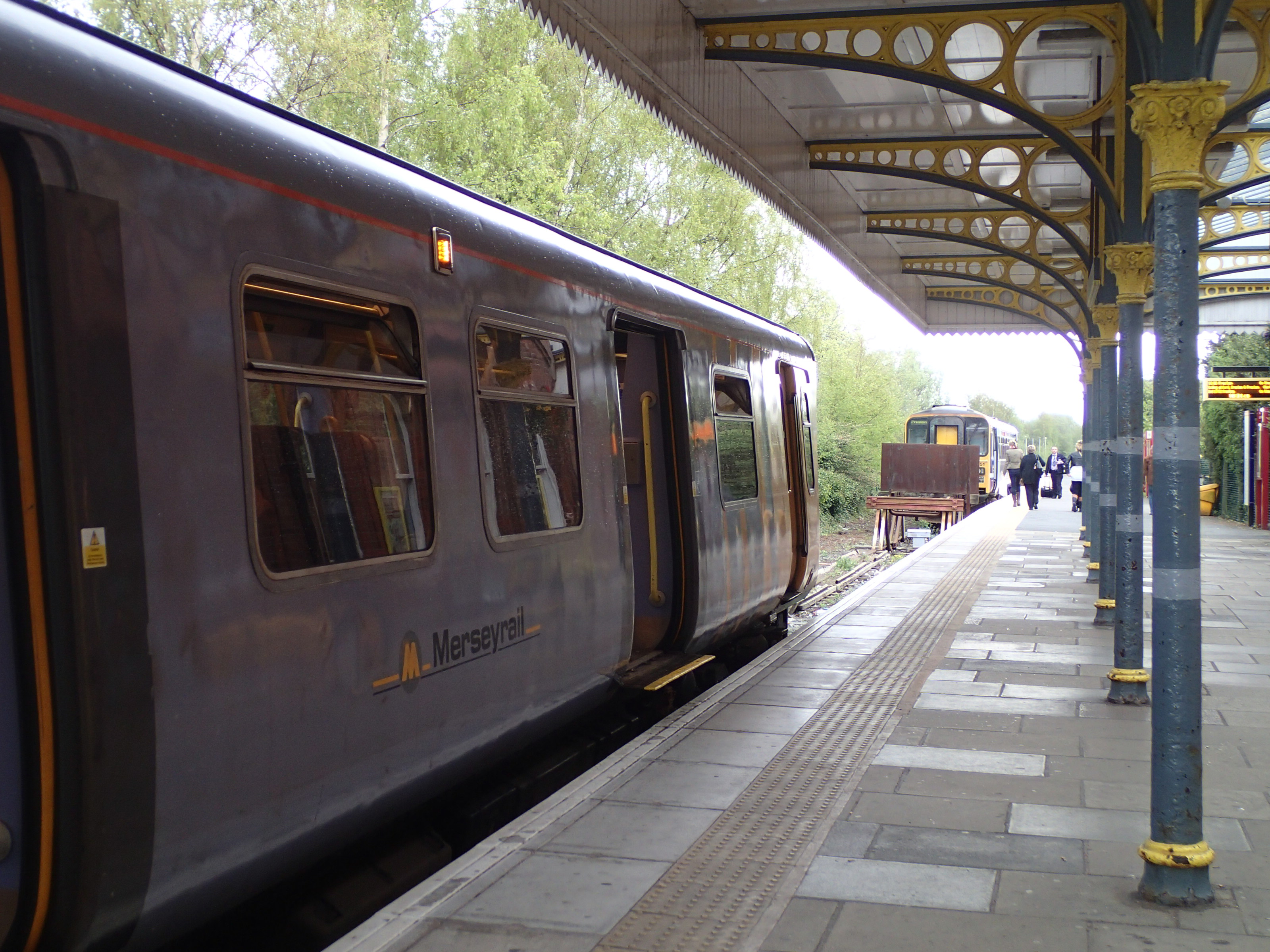
Changing Trains At Ormskirk
Note the barrier between the two trains.
If Merseytravel’s new trains, were IPEMUs, they would be able to provide a continuous Liverpool to Preston service via Ormskirk.
Dual voltage trains would be needed so they could use the different power systems at the two ends of the line.
Kirkby to Wigan, Bolton and Manchester
The British Rail Crap Design School were not satisfied with one bad interchange, but they did the same at Kirkby station, thus cutting the Manchester to Liverpool route via Kirkby in half and necessitating a change of train for anybody going this way.
Just as at Ormskirk, where IPEMUs can extend the Ormskirk branch of the Northern Line to Preston, dual-voltage IPEMUs could be used to create an extension of the Kirkby branch to Wigan, Bolton and Manchester.
IPEMUs would also enable the construction of a new station at Headbolt Lane between Kirkby and Rainsford, which is an aspiration of Merseytravel.
So IPEMUs would enable Liverpool to have another direct service to Manchester for invasion.
New Services to the North
Which services from Ormskirk and Kirkby get developed, would all be down to the traffic statistics.
But the engineering wouldn’t be much, that a competent small station builder couldn’t handle.
I’ve done the change at Ormskirk a couple of times, where in both cases I waited over thirty minutes.
In this modern age, that is as acceptable as piles!
New Services to the South
At its Southern End, the Northern Line joins the City Line at Hunts Cross station., so IPEMUs could travel to Manchester via Warrington Central, if that was what Merseytravel felt they should do.
I do feel that having another terminus like Warrington Central or even Chester might be worthwhile to increase capacity in the tunnel under Liverpool, where trains have to turn back at Liverpool Central.
But IPEMUs would be very helpful in this area, as apart from the line to Crewe, nothing is electrified.
Expanding the Wirral Line
There are various lines that are not electrified that connect to Merseyrail’s Wirral Line. The operation of IPEMUs has been proposed on one line; the Borderlands Line to improve connectivity between Wrexham and Liverpool. In a Proposed Battery Train section in the Wikipedia entry for the Borderlands Line, this is said.
A trial of an overhead-wire and battery powered converted Electrostar train was undertaken in January and February 2015 on the Mayflower Line. The train can travel up to 60 miles on energy stored in the batteries and also recharges the batteries via the overhead-wires when on electrified track, at stations and via brake regeneration. A month later in March 2015, the introduction of battery powered trains was proposed for the Borderlands Line by Network Rail.
The document suggested that consideration had been given to electrification and to running services further into Birkenhead ceasing termination at Bidston for greater connectivity. However these options were expressed as offering low value for money. They proposed that using battery powered rolling stock precluding full electrification of the line, providing a cheaper method of increasing connectivity into the electrified Birkenhead and Liverpool sections of the Wirral Line.
So if Merseytravel decides not to invade Manchester, they can always invade Wales.
Conclusions
I would feel that Merseytravel have got some planned uses for IPEMUs in mind.
I suspect that some of the uses will be rather surprising, but then the concept of an IPEMU does give transport planners a lot of flexibility and a go-anywhere capability.
This document on the Merseytravel web site is their plan of what they would like to do.
There’s certainly a lot of scope for IPEMUs, tram-trains, clever architects and capable construction companies to give Liverpool a world-class local railway network. For a start, they’re looking at stations in all these places.
Anfield
Beechwood
Carr Mill
Chester-Crewe Line
Deeside Industrial Park
Ditton
Edge Lane
Headbolt Lane
Ledsham
Maghull North
Skelmersdale
St James
Tarbock Interchange (or Halewood South)
Town Meadow
Tuebrook
Vauxhall
Warrington West
Woodchurch
That is a large number of stations for only a small part of the UK.
It’s when I read documents like the Merseytravel report, that I think that local areas, should have more control of their transport infrastructure, as local people and their politicians often know the best way to spend the money.
Also when a new station or line is built in an area and most people are in favour, they think of it as their infrastructure and use it!
Is Northern Electrification Going To Use Battery Trains?
This report on the BBC is entitled Network Rail to restart electrification of train lines. This is said.
The electrification of two railway lines is to be restarted after the projects were halted so a review could be carried out, the government says.
Work on the TransPennine Express Railway – between Manchester and York – and Midland Mainline – from London to Sheffield – was paused in June.
Sir Peter Hendy, chair of Network Rail, said the “temporary pause” had “given us the space to develop a better plan”
The Aventra IPEMU
Looking at the electrification of the two lines in posts over the previous few days, I have come to the conclusion that properly engineered battery trains built by Bombardier in Derby called Aventra IPEMUs (Independently Powered Electrical Multiple Units) could charge their batteries on existing sections of electrification and jump the gaps at speeds of up to at least 110 mph and possibly 125 mph, by running on batteries.
If that sounds like something that is too good to be true, I don’t believe it is! I was impressed when as a paying passenger, I rode the prototype train between Manningtree and Harwich.
For those who think that a battery train is just so-much Mickey Mouse-technology, note that the battery supplier; Valence is linked to Tessla; the electric vehicle manufacturer. A review of their latest car is on Autocar. The biggest problem with the car is not the power, range and performance, but the time it takes to charge the car from a typical supply. In addition to the overhead wire or third rail of the railway, an Aventra IPEMU has to charge the battery, the train will also charge the batteries using the regenerative braking system.
The TransPennine Line
On the TransPennine Line from Liverpool to Newcastle, the only gap in the electrification is the forty-three miles between Leeds and Manchester.
Aventra IPEMUs have a range of sixty miles, so Liverpool to Newcastle would be electric all the way and could be faster by up to thirty minutes on the current three hour journey.
Read Jumping The Electrification Gap Between Leeds And Manchester for full details on what it would entail.
The Midland Main Line
On the Midland Main Line, the electrification reaches from St. Pancras to Bedford.
As Corby, Kettering and Leicester are all within an Aventra IPEMU’s range from Bedford, these places could be served by these trains, once a certain amount of track and station work had been completed.
Read Thoughts On Midland Main Line Electrification for full details.
Delivering The Projects
The BBC article says this about the schedule.
The TransPennine upgrade is expected to provide capacity for six “fast or semi-fast trains” per hour between Manchester, Leeds and York , reducing journey times by up to 15 minutes.
The Manchester to York section of the work is now planned to be completed by 2022.
Once completed, the whole line from Liverpool to Newcastle will be fully electrified, the Department for Transport added.
The electrification of Midland Mainline north of Bedford to Kettering and Corby will now be completed by 2019, and the line north of Kettering to Leicester, Derby, Nottingham and to Sheffield will finish by 2023.
My project management knowledge and observations of Network Rail, say that to get electric trains to Kettering and Corby by 2019, would be a very tight schedule to perform on a working railway using conventional electrification!
But if it were needed to replace the current Class 222 trains with Aventra IPEMUs, it would just be a matter of certifying the line for the new Aventra IPEMUs and training the drivers and other staff.
There would be little or no work outside in the elements and all of the electrification would effectively be done in a comfortable warm factory at Derby!
I also feel that if say Network Rail said that the projects would be delivered on a particular date, that the risk of non-delivery would be very small.
Aventra IPEMUs can’t be delivered earlier, as the Derby factory will be jammed solid with production of Aventras for Crossrail.
On the other hand to prove the concept, would Bombardier modify a Class 387 train to create an IPEMU variant to run in passenger service between St.Pancras and Corby. Note that there have already been rumours of Class 387 IPEMU variants for Great Western Railway.
I wouldn’t be surprised if such a train is created, as it would be a superb way to identify any problems, train staff, prove the credibility of battery trains to a sceptical public and even deliver electric trains earlier.
A Cunning Plan
There are twenty seven Class 387 trains running on the Thameslink route at the moment, that will be replaced by Class 700 trains between 2016 and 2018.
As the Great Western Main Line won’t be electrified to Newbury, Swindon and Oxford until 2019 or whatever, there does seem to be the possibility of some very new Class 387 trains going into storage.
But as they are very similar to the Class 379 that was used for the IPEMU demonstrator, I do wonder if those clever engineers at Bombardier could convert some of these 110 mph trains into an IPEMU variant that could be used on services on TransPennine and the Midland Main Line.
If there were any spare Class 379 trains, I’m sure that other train companies would find a use for them! Especially, if Bombardier developed a plug-in battery system for the trains, so they could be used to prove if IPEMUs improved the lot of passengers on secondary lines.
You have to make your assets sweat.
Conclusion
I may be wrong, but I can’t see any other way to meet the schedule that has been published, unless some form of IPEMU is used to bridge the gaps in electrification..
It could be said that the North needs fast electric trains now and George Osborne needs them by 2020, as he has an election to win!
It might not matter much to most people if the trains didn’t run until say August 2020, but George Osborne would be unlikely to win an election in May 2020, if the trains were not delivered and running smoothly.
 The Anonymous Widower