Are Train Coaches Making A Comeback In The UK?
There were two stories yesterday, where new coaches to be built by Spanish company CAF.
- In TransPennine Express Buys Spanish Trains, I wrote about the new trains for TransPennine Express, which include thirteen five-car rakes of coaches pulled by Class 68 locomotives.
- In Expanding The Scottish Sleeper, I wrote about how new coaches could transform the Caledonian Sleeper.
Both sets of coaches probably use the same basic bodyshell, running gear and electrical and heating services, so once CAF designed the sleeper trains, they probably have developed a vehicle that could be used for any profitable purpose.
At present the Caledonian Sleeper uses two types of coach; a sleeping car and a lounge/seated sleeper car and these are being replaced with an identical number of coaches.
But little has been said about the design and make-up of the new coaches.
I suspect, that we will see lounge cars with large windows, so that the Scottish countryside can be enjoyed in style, if the weather permits.
The new coaches will be compared to British Rail’s legendary Mark 3 coach.
- I’m also sure that CAF have set out to design a coach, that rides better.
- The new coach must also be capable of running at 200 kph., as Mark 3s do every day in large numbers.
- Will the coaches pass the cement lorry test, as a Mark 3-derived multiple unit did at Oxshott?
The 1960s design of the Mark 3 has set a very high bar.
Even less has been said about the five car rakes of coaches for TransPennine Express.
But in common with the other rakes of coaches in mainline service in the UK on Chiltern and the East Coast Main Line, and in East Anglia, they would need some means of driving the train from the other end, which is currently done with a driving van trailer.
A DVT is very much a solution of the 1970s, although it does have advantages in that the empty space can be used for bicycles, surfboards and other large luggage. Hence, the van in the name.
If you look at CAF’s Civity train, it is very much a stylish modular design and I’m sure CAF, have the expertise to build a stylish driving cab into some of the new coaches they are building.
I therefore think we will be seeing these five-car rakes of coaches for TransPennine Express, with a driving cab at one end.
One of the big advantages of this approach is that trains can be pulled and pushed by any suitable and available locomotive.
- Class 68 diesel locomotives could provide reliable go-anywhere diesel power.
- Class 88 electro-diesel locomotives could provide electrical power from overhead lines and diesel power elsewhere.
- Class 73 electro-diesel locomotives could provide electrical power from third rail and diesel power elsewhere.
- Class 90 electric locomotives could be used with overhead lines
- A 200 kph-capable electric locomotive could be used on high-speed electrified lines.
Operators wouldn’t be tied to one particular power unit, so as more electrification is installed, they could change to something more suitable.
You also have the possibility of designing the coach with the driving cab as perhaps a buffet/observation car or using it for First Class, so that the other coaches are very much a standard interior.
The approach also has the advantage that if you need a longer train, you just couple another coach into the rake.
I’m sure that CAF have designed a rake of coaches that has impressed TransPennine Express, otherwise they wouldn’t have ordered the coaches.
Some people might think that going back to coaches is a retrograde step.
Consider.
- Chiltern run an excellent service with coaches.
- Deutsche Bahn still uses lots of rakes of coaches.
- Rakes of coaches are more flexible than fixed-length multiple units.
- The most appropriate locomotive can be used.
- Some passengers might think, that coaches give a better ride than multiple units.
But I suspect the biggest factor in the revival of coaches, is that a rake of stylish new coaches and a Class 68 locomotive are more affordable than a new Class 800 train. They are also available earlier.
Imagine going across the Pennines from Liverpool to York in the buffet/restaurant/observation/driving car of one of these new trains, enjoying a Great Western Pullman Dining experience, as the countryside goes by.
If it is done, it would set a high standard for other train operators.
More Electric Multiple Unit Refurbishment
I am not a great fan of the Class 321 electric multiple units, that I seem to use, when I travel all over Essex and Suffolk.
On my regular trips to Ipswich, I much prefer to take the trains formed of a rake of Mark 3 coaches hauled by a Class 90 electric locomotive.
However like many of the UKs electric multiple units, the Class 321 are based on the smooth-riding Mark 3 coach.
As in recent years, a some of these like the Class 319 and 455 have been refurbished, it is no surprise that Eversholt Leasing has decided to update its fleet of thirty Class 321 trains, to make them more attractive to train operating companies.
This article in the Railway Gazette describes the project to upgrade these trains, into a new variant called the Class 321 Renatus.
It would appear to me, that these 100 mph trains will find gainful employment all over the UK Rail network, as more lines are electrified.
Travelling By Pretendelino
Greater Anglia have hired Virgin’s back-up train or Pretendolino, which is a locomotive-hauled rake of Mark 3 coaches. I travelled to the Ipswich on this train today.
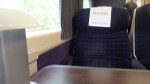
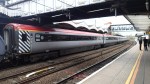
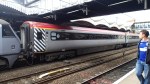
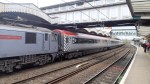
The red roofs are a give-away.
One thing you notice is that the quality is a lot better than most of Greater Anglia’s coaches.
New Trains From Old
In my view, when they write the history of railways in perhaps two or three hundred years time, when they talk about long-dead diesel trains, one iconic train will still hold the speed record for a diesel train and that will be praised as the ultimate diesel train.
The train is the InterCity 125 or High Speed Train, whose one blot on its copybook is the marketing association with the odious Jimmy Saville in the 1970s.
I have a soft spot for these trains, as I’ve had so many good journeys in them to the North East, Scotland, Wales and the West Country, including one memorable trip from Edinburgh to Inverness in the cab and another whilst enjoying the best gluten-free meal on a train anywhere.
I suspect that removing the InterCity 125 from front-line service, will be almost impossible, as both passengers and train companies have a strong affection for the train. Even now, Abellio ScotRail has plans for High Speed Trains in its new franchise. Wikipedia says this.
It will also introduce 27 refurbished (Likely British Rail Class 43 leased from Angel trains)H igh Speed Trains by December 2018 on longer distance services between Edinburgh, Glasgow, Aberdeen and Inverness.
They are also committed to providing ‘Great Scottish Scenic Railway’ trains on the West Highland, Far North, Kyle, Borders Railway and Glasgow South Western lines, so could this need some more High Speed Trains? Perhaps the trains would be shortened, but with the seating returned to the 1970s original layout of four seats round a table at each window in the Mark 3 coaches.
Imagine services on the scenic Inverness to Kyle of Lochalsh Line being run by say two or three, five-car-plus-buffet High Speed Trains, that replaced the totally inadequate service I rode some years ago. Those big windows would come into their own and I think the only problem they would have would be the same as that of the London Overground, where demand keeps exceeding supply. Even the power cars, with their big luggage space would come into their own for bicycles and large cases. Terry Miller and all of the team that designed this iconic train must be laughing like drains wherever they are, at the success of their stop-gap creation.
Usually old trains, cars and buses have a maintenance problem, but it is generally believed that as the High Speed Trains are so well known by the engineers, they can be kept in front line services until 2035. I think that will be pessimistic, especially if instead of thundering up and down the East Coast Main Line with eight coaches at 125 mph, they are running at lower speeds in shortened form on less demanding lines at slower speed.
I doubt for instance, that we’ll ever see them eliminated from Devon and Cornwall, as just as in Scotland, they could become part of the experience for visitors.
But could we see them on other routes like Liverpool and Manchester to East Anglia and on scenic routes in Wales?
Remember that there are nearly a hundred of the trains, which means there could be enough for all worthwhile ideas.
The Mark 3 Coach
The Class 43 power cars of the High Speed Train get all of the attention, but in some ways the real stars of the train are the 1960s-designed Mark 3 coaches in the middle.
Today most of the Mark 3 coaches on the UK rail network have been fitted with high-density seating, but on Chiltern Railways Main Line service between London and Birmingham, the coaches have been refurbished with four seats to a table by the window and automatic sliding doors.
Will remaining High Speed Trains get a similar treatment?
If they did because of their ultra-smooth air-suspended ride, they would become an unrivalled passenger experience, that met all modern safety and accessibility standards.
The Mark 3 coach is no lightweight aluminium vehicle, but is built out of steel. There were worries about the structural integrity, so a prestigious university was asked to do a full finite-element analysis of a Mark 3 coach. The findings showed that despite being designed in the 1960s without any computer help, that the structure would last a few more decades with the correct maintenance.
A Class 455 train, which is based on Mark 3 coaches, was involved in a unique incident, that tested the structural integrity of the Mark 3 coach to the limit. In the Oxshott incident, a fully-loaded cement mixer lorry weighing 24 tonnes fell onto a Class 455. There was injuries but no-one was killed.
I wouldn’t like to be in a modern aluminium train, when someone drops a similar weight on top of it.
Chiltern, Greater Anglia And Charter Operators
These days rakes of Mark 3 coaches are only used in three places on the UK rail network.
1. Chiltern Railways use them on their Main Line Service between London and Birmingham.
2. Greater Anglia use them on the Great Eastern Main Line between London, Ipswich and Norwich.
3. Some charter operators use them to provide services.
It is likely that within ten or twenty years, both Chiltern and Greater Anglia will convert to electrical multiple units to create faster services.
The Chiltern Line will need electrification and Greater Anglia will need to replace their Class 90 locomotives anyway.
But no plans have been made and no orders have been placed.
I think it is likely that in a few years, the only use for Mark 3 coaches will be in High Speed Trains and by charter operators.
Multiple Units Based On Mark 3 Coaches
Many of the successful classes of both diesel and electric multiple units are based on the Mark 3 coach design, as was the Class 319 that I rodeyesterday.
These will now be looked at in detail.
Class 150 Diesel Multiple Unit
The Class 150 train, is the only one of the Mark 3 coach-based diesel multiple units, that was produced in large numbers.
Their quality is a bit variable and I’ve ridden some immaculate ones like this one on the St. Ives branch and some terrible ones elsewhere.
The one yesterday in Liverpool, that I rode after a refurbished Class 319, could have benefited from the same sort of upgrading that the electric train had received.
I suspect that many of the hundred and thirty or so in this class could do with a good maintenance, a repaint, new seat covers and an uprated information display. They’d certainly be a lot better than Pacers.
Class 317 Electric Multiple Unit
There are seventy-two Class 317 trains working various lines around East London and some are in pretty good condition like this one I encountered between Romford and Upminster.
There is a plan to upgrade these trains described here in Wikipedia. The upgrade could cover a range of options from new efficient traction equipment and regenerative braking to new interiors.
Some may be available for cascade to other operators, as both London Overground and Thameslink could be buying replacement trains in the next few years.
Class 318 Electric Multiple Unit
The Class 318 trains are Glasgow’s version of London’s Class 317 trains.
These trains are undergoing an upgrade, which is described here in Wikipedia.
Class 319 Electric Multiple Unit
There are eighty-six Class 319 trains, that were originally built for Thameslink.
Twenty of these are being refurbished for use on the North West electrified lines and I rode one yesterday. The train had scrubbed up well!
Others may be moved to the Great Western Main Line to work electrified services to Oxford and Newbury.
Class 320 Electric Multiple Unit
There are twenty-two Class 320 trains, which are a Scottish version of the Class 321 trains.
All have had an upgrade, which is described here in Wikipedia.
Class 321 Electric Multiple Unit
There are a hundred and seventeen Class 321 trains, which are fairly numerous on the lines out of Liverpool Street.
Greater Anglia are developing a demonstrator, which is described like this in Wikipedia.
Abellio Greater Anglia in conjunction with Eversholt Rail Group has refitted a 321/4 as a demonstrator to show what Abellio planned to do with their Class 321 fleet. The unit number is 321448, which features a new paint job, completely re-fitted interior including two examples of sitting arrangements including 2+2 and 2+3 and a new First Class area. The demonstrator also features air conditioning, previously unseen on Class 321 trains, fixed panel windows to replace opening windows and an overhauled traction system. The ultimate plan is to introduce other Class 321 trains in a similar configuration rather than replace them, to save money on purchasing brand new trains.
This demonstrator illustrates that refurbished old trains could be a better and more cost-effective solution than new trains.
They would certainly be welcomed by me, as the current interiors are rather tired. Especially, when compared to the Class 319 yesterday.
Class 322 Electric Multiple Unit
The five Class 322 trains are another variant of the Class 321 trains, which were built for the Stansted Express and are now running in the Leeds area.
No plans for an upgrade are mentioned in Wikipedia.
Class 442 Electric Multiple Unit
There are twenty-four Class 442 trains, that currently work the Gatwick Express, although they are being replaced on this task.
They are probably a bit surplus to requirements and will need to be converted to overhead electrics to find any further use.
But at least as they are Mark 3 coach-derived, there is a lot of solutions available from other members of the family.
Class 455 Electric Multiple Unit
There are a hundred and thirty-seven Class 455 trains, which generally work the suburban lines into Waterloo.
They have all been given a high quality upgrade, which is detailed here.
Conclusion
We’ll be seeing Mark 3-derived trains on the UK rail network for some years and because there are so many techniques and tricks available to the train companies, builders and remanufacturers, they will all be of a high quality.
The Trains Going North
Today, I went from East Croydon to Luton and then on to Bedford in two Class 319 electric trains.
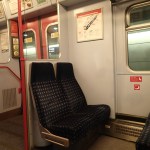
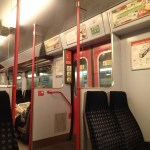
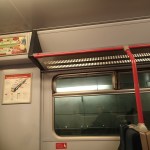
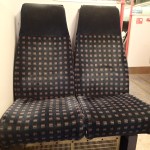
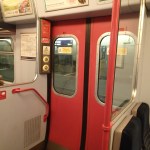

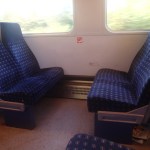
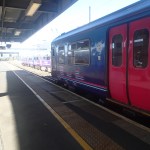

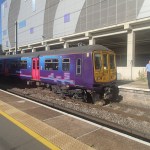
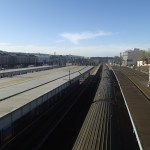
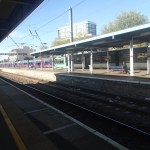
They were originally going to be fully refurbished, but now according to Wikipedia, the refurbishment will be more basic.
The cascaded trains will get a more basic refurbishment than previously proposed, which will include a new Passenger Information system, LED lighting, new seat covers and an internal and external repaint.
It will be interesting to see the trains in Lancashire. Certainly, the ones I rode today had a poor passenger information system and too much awful pink paint.
But the plus point is like all Mark 3-derived trains, they rode smoothly and quickly through the countryside, at speeds approaching their maximum of 100 mph.
What Have The Train Leasing Companies Done For Us?
I found this page on the web site of one of the train leasing compabies; Eversholt Rail Group.
It shows how they and one of the train refurbishment companies; Wabtec, are creating a demonstrator for an upgrade of the Class 321 trains which are a mainstay of services to East Anglia.
GreaterAnglia will then run the train in service and actively canvas the opinion of the travelling public.
Isn’t this a sensible way to provide better rolling stock for train services, at a more affordable price.
Passengers won’t get new trains, but they will look and feel like them!
In some ways this story is a tribute to the legendary Mark 3 Coach, on which the Class 321 is based.
But then the bit we sit in, on a train, isn’t the sexy bit.
Greater Anglia Get It Together
I travel to Ipswich regularly to see Ipswich Town play.
My last two tickets cost me £34.95 and that was made up by buying a Senior ticket from the Zone 6 boundary (Harold Wood) to Ipswich and then upgrading it to First.
Yesterday’s ticket was much simpler in that it was a Senior First Class ticket all the way and back for £32.60.
I’ve just looked it up the 19th of October, when Ipswich play Burnley and I can now buy one on-line for £32.60.
it also looks like that for a Tuesday night match, I can get an Off-Peak First Return to Ipswich for the same price, provided I leave before 16:30. I don’t remember that being possible before. i could of course be wrong. The only returns to Ipswich I can find in my credit card statements are £34.95.
It looks like the price has got down for me and I’ll now be able to avoid the queues at Liverpool Street station on a Saturday morning, by buying my ticket on-line. I’ll also have time for a proper lunch before I travel.
That’s progress.
I’ve never found any fault with the staff on the trains to Ipswich, but today they seemed to have gone up a gear in cheeriness. The steward was also offering more than the usual single complimentary drink with your First Class ticket.
I have no complaints and let’s hope it all gets even better.
For instance, it is known that Herculean efforts are sometimes needed to keep the Class 90 locomotives on top form. As passengers generally like the smooth riding Mark 3 coaches, could a small injection of the new Class 88 locomotives, allow some Norwich services to be extended to Great Yarmouth, as they used to be in the past. Would they also enable proper trains to be run to Bury St. Edmunds and Lowestoft?
Merrily We Roll Along
I came back from Walthamstow on Friday on one of Greater Anglia‘s ubiquitous Class 317 trains.
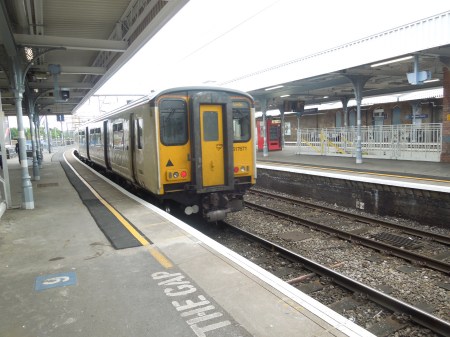
A Greater Anglia Class 317 Train
They may look to be scrapheap-ready trains from the 1980s, ripe for replacement with shiny new expensive trains. Incidentally, the train in the picture is one of the last ones built in 1987, so it’s a comparative youngster compared to some.
But underneath the tired paintwork and uncomfortable seating, there is a legendary Mark 3 coach struggling to get out. These coaches used in the InterCity 125 and in many other trains, were made as early as the 1970s and most are still running in 2013.
The Class 317 is closely related to the Class 455, some of which have been refurbished by South West Trains to a very high standard. I talked about them here.
It looks like these 317s are going to get their own version of the Class 455 refurbishment. it is reported here in Wikipedia. Work is ongoing to create a prototype with new and more efficient traction equipment and a new interior to test passenger reaction.
So yet again, it looks like more Mark 3 coaches will be emerging from their chrysalis. The Wikipedia article talks of increasing the life of the trains by twenty years. Not bad considering that many of them are over thirty years old now!
The InterCity 125 is well-known as a design classic of Kenneth Grange. But who’d have thought that the humble coaches in the middle, would still be having a laugh at everybody’s expense nearly fifty years after they were designed.
The Future of Very Long Distance Trains in the UK
We may be a small island, but it is possible to do some of the longer train journeys in Europe in the UK, where you don’t have to change trains. The longest trip I did in Europe was Nice to Lille.
We have several major long distance routes starting or finishing in London. Some include.
- London (Kings Cross) to Inverness via Edinburgh
- London (Kings Cross) to Aberdeen via Edinburgh
- London (Euston) to Holyhead
- London (Paddington) to Fishguard
- London (Paddington) to Penzance
I should note that the longest route is actually Penzance to Aberdeen.
At present all of the routes use IC125s or other diesel trains, but for a lot of the journey some will be under wires used by high speed electric trains. It is probably for this reason that when civil servants specified the replacement for the incomparable IC125, they came up with the idea of a bi-mode train, that was electric, but hauled a diesel around for where there was no power supply. Just as with people obesity is not to be tolerated as it wastes fuel, causes more carbon dioxide to be emitted and probably causes all sorts of track problems because of the weight. As an engineer, I just don’t like it! But that’s my prejudice and what do I know about trains?
However, Ian Walmsley, a man who does know about trains, has proposed in the August edition of Modern Railways, that the ageing Class 90 electric locomotives and Mark 3 coaches on the London to Norwich line be replaced with Bombasrdier TRAXX electric locomotives, refurbished and modern styled Mark 3 coaches and perhaps a new set of driving van trailers. The article showed some impressive interiors proposed by a company called Dg8.
Would this concept work on say London to Inverness? I’ve travelled the northermost part of this line in the driver’s cab and it is a truly spectacular line, but it is unlikely that it will ever be able to be electrified further than Stirling. But there are diesel versions of TRAXX, so could an engine change be performed before the electricity runs out. If Bombardier has the engineering correct, which I suspect they do, I doubt that an engine change would take more than a few minutes. It would certainly be less hassle for the passengers than a train change.
As you are running engine facing London as trains do on the northern routes out of Kings Cross, there would be no need for any special operating procedures in London, but you would need to provide for perhaps a small amount of track work at the engine changeover. This point would have to be chosen with respect to driver availability, so perhaps on services via Edinburgh, this might be the point. But of course it would be a simple matter for the train company to work out the best place for the changeover.
In his article, Ian proposed new driving van trailers. When I went to Inverness on the IC125, the driver had no access to train services, so he had to disembark to use the toilet. So should the DVTs be provided with various facilities for the driver?
It should also be noted that the current trains on the route have no room for heavy luggage, so could they be used for such items as bicycles, surfboards for Cornwall and large cases.
If these long routes have more than just distance in common; many passengers will want an at-seat meal and many will be leisure passengers who would want to admire the view.
So should in some ways a retrograde step be taken and make sure everyone has a full table and that seats align with windows, just like they originally did when the Mark 3 coaches were built. In some ways all of the routes are premium routes, where many will book well in advance for a holiday or an event, so the extra cost of the trains would probably be affordable.
An idea I thought of was an observation car, but although it might be possible, it might make train operation difficult. But surely someone like Dg8 could come up with a Cafe Bar Car with large windows that sat in the middle of the train.
As the journey length could be up to about nine hours, it would probably need innovative entertainment systems. How about a front and back camera to show views.
I may be talking out of my backside. But as John Lennon said. Imagine!
 The Anonymous Widower