Do Sickly Children Make Successful Adults?
I ask this question because of a post on the UK-Coeliac list from a mother, who was worried that her coeliac child might have problems because of days off sick during his GCSEs.
I was always off sick at school, but I got to Grammar School and obtained good O and A levels, went to a good university and by all accounts I have been very successful since. I often wish that I’d been diagnosed with coeliac disease, when my parents and GP, were looking into my childhood health problems, but you can’t change the past.
Was it because of my many days off school, that my father took me to his printing works so often and my mother taught me household skills from cooking to making clothes? Or was it because I was the boy and was favoured by my parents and especially my grandmother, who lived with us?
I also became very reliant on my own company and this served me well, when I was programming, as that can be a very lonely experience.
Now is that self-reliance is my strongest defence against the trials of my life?
A Walk Down Memory Lane
Or more correctly between Turnpike Lane and Wood Green stations on the Piccadilly Line.
I’d taken a 141 bus to Turnpike Lane from the end of my road and alighted opposite the station.
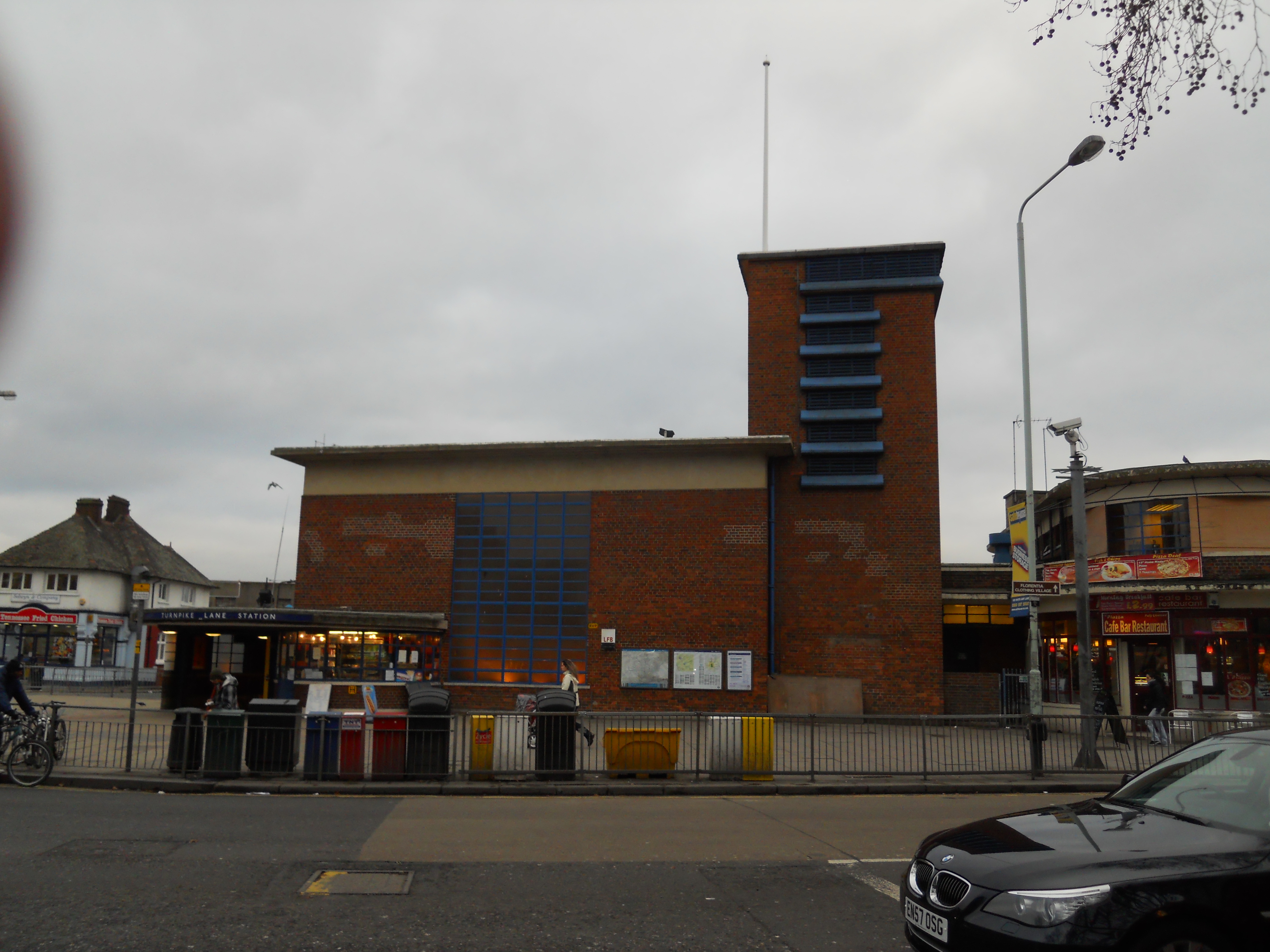
Turnpike Lane Tube Station
Or should I put the local name underneath which sounded like Turnpicky Larny. I wonder if it’s still used.
I walked down the west side of Wood Green High Road and the first place I remembered was the Marks and Spencer on the other side.
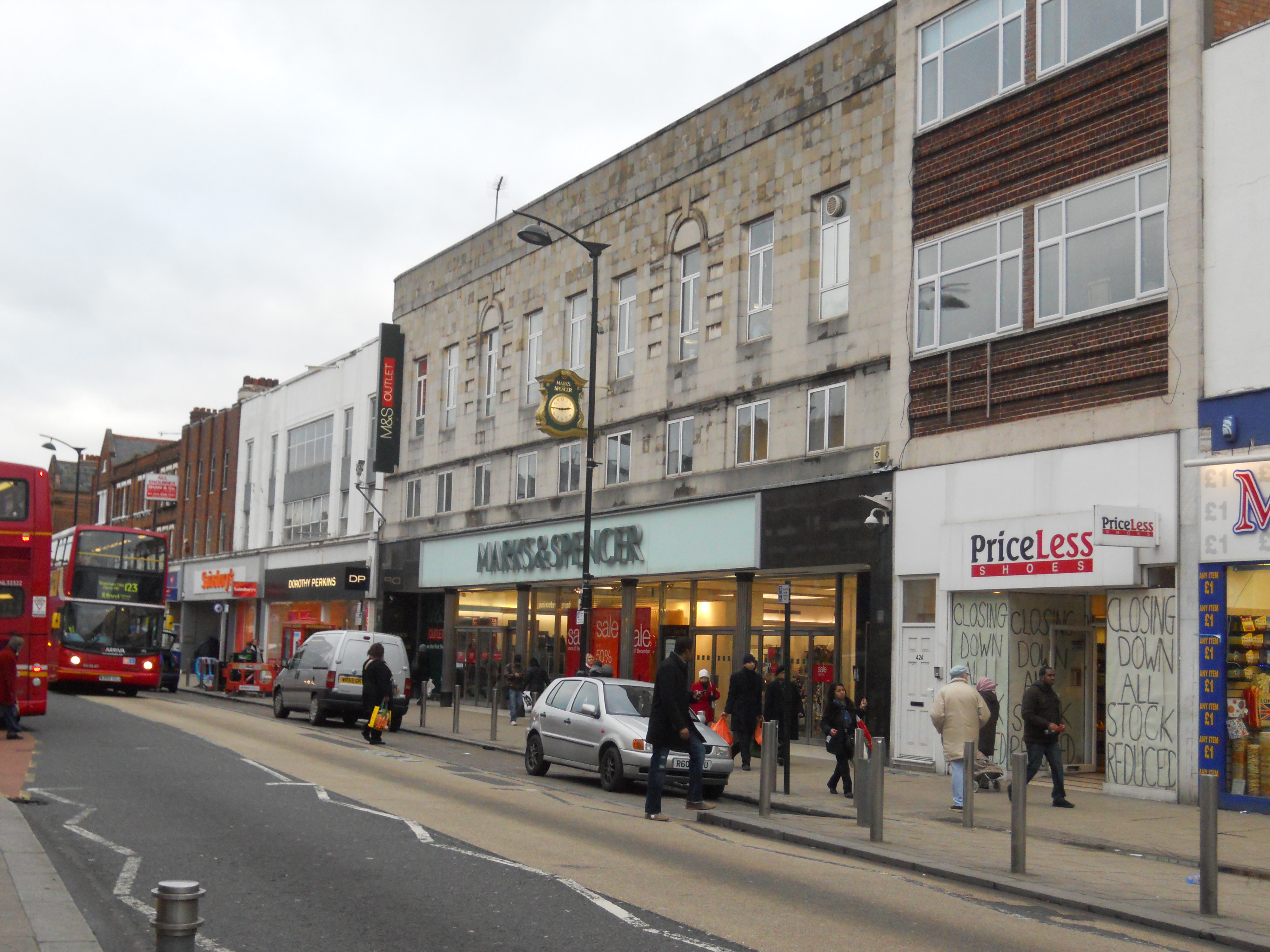
Marks and Spencer at Wood Green
I didn’t go in, but it certainly looked to be in a worse state than how I remember it from the 1960s, when it was one of their flagship stores. I visited it many times, as a bag carrier for my mother, when she used to do the food shopping, when she was working with my father in Wood Green.
Further up you can still see the remains of the old Wood Green Empire above the Halifax.
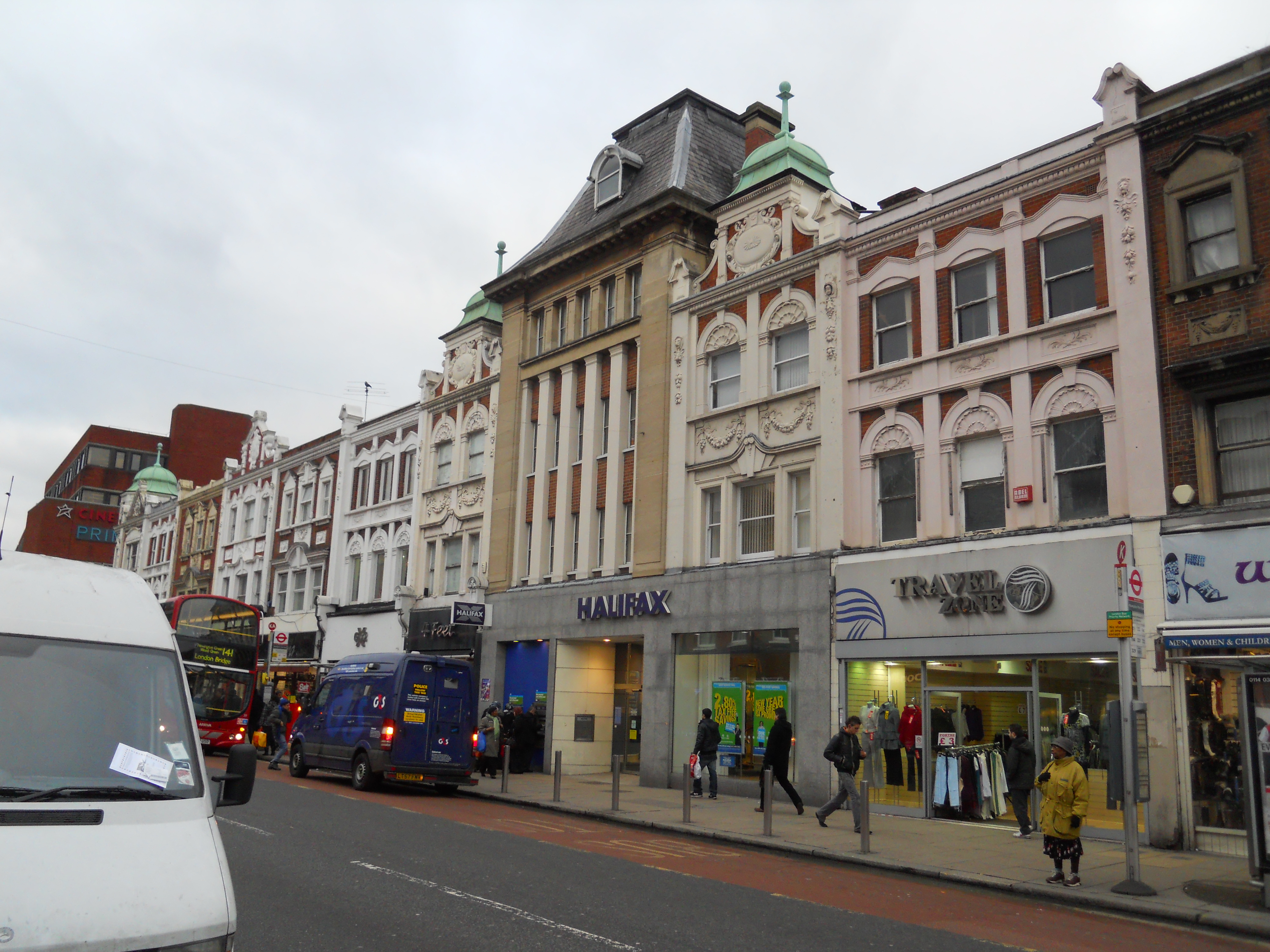
The Remains of the Wood Green Empire
I can remember going there once to see the pantomime. It may have been Babes in the Wood, with Ted Ray, but even if I hadn’t had the stroke, I wouldn’t be sure.
My father also claimed that he’d appeared on the stage there in a variety show. But at one time, I know he did print the programs and posters for the theatre, so perhaps he did a deal. Knowing him, that could have been possible.
The centre of Wood Green High Road used to be crossed by a railway bridge that carried the Palace Gates railway line to Palace Gates from Seven Sisters. At one time there was a station in the area called Noel Park and Wood Green, but although I can remember the bridge and trains running on the line, I can’t remember the station. To the south of the bridge there used to be a pub called the Alexandra, which was pulled down in the 1960s or just before to build Wood Green’s first supermarket. Now the whole area has been redeveloped as Wood Green Shopping City.
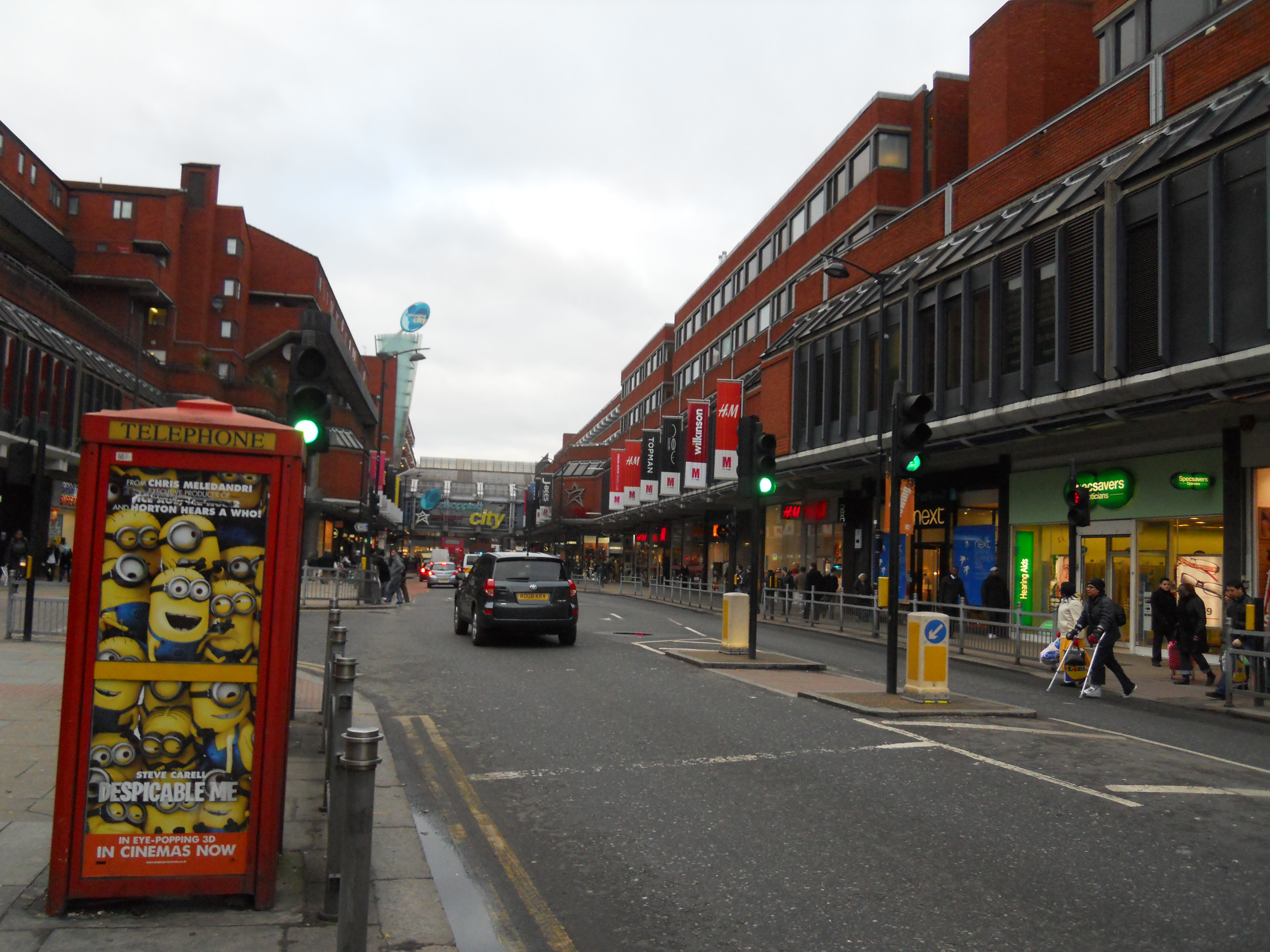
Wood Green Shopping City
Moving along towards Wood Green tube station, I passed what some refer to correctly as the Broadway, but I just remember it as the place where you caught the trolley buses. On the left there used to be a restaurant called the QS for Quick Service and one of the first burger bars. I can remember visiting both quite a few times with my mother. I can still remember and smell, the chef, Ally, turning the greasy burgers as he fried them.
On the corner opposite the tube station, there is a pub which is now called the Goose.
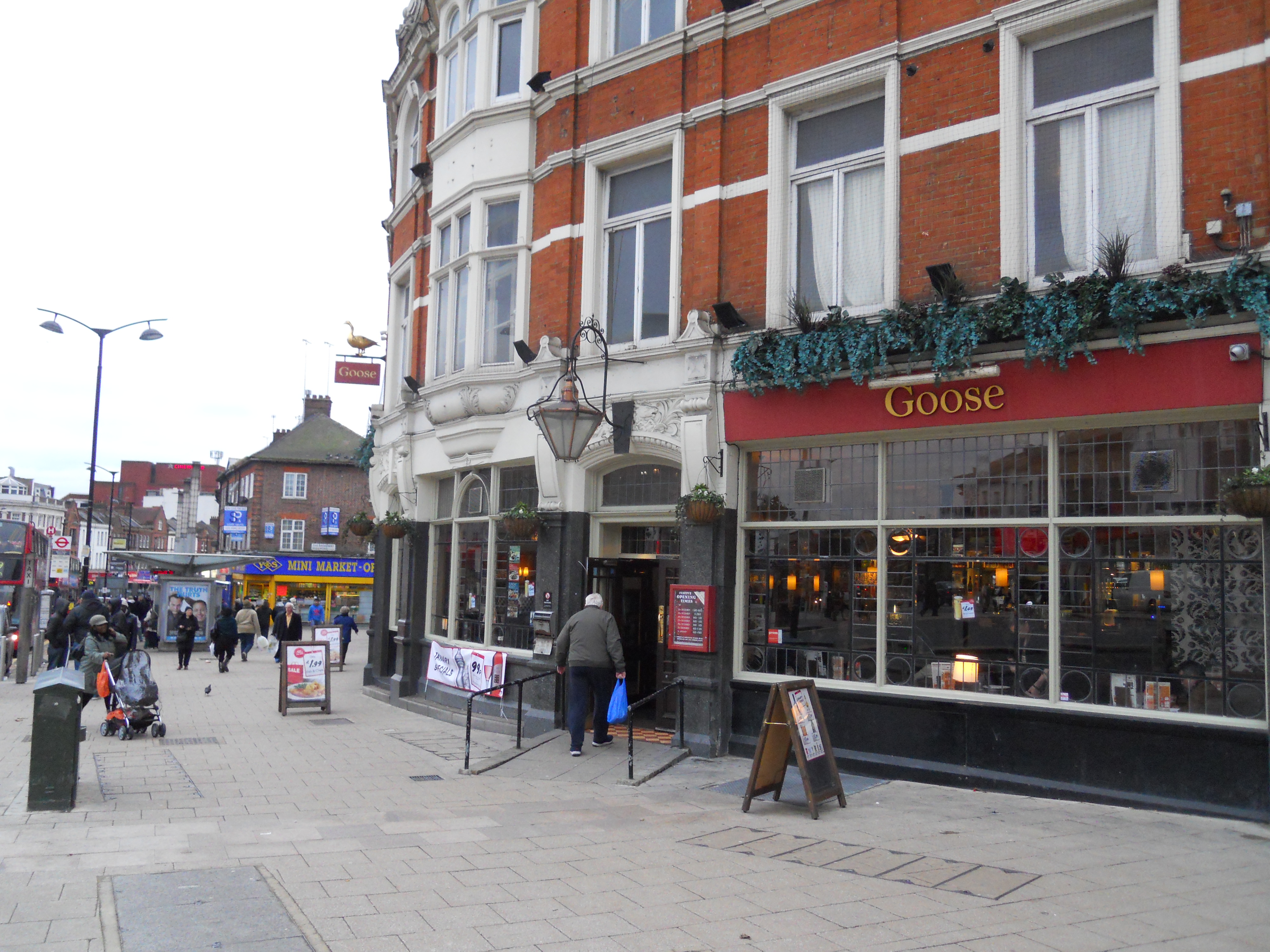
The Goose, Wood Green
I think the pub used to be called the Nag’s Head and it is part of a family tale. My father used to live with his mother over the print works in Station Road, which is just around the corner. One Sunday morning her dog, who was a renowned thief, arrived back with a large cooked joint of beef in his jaws. My grandmother, immediately washed such a prize present off and that was the family’s Sunday lunch. My father surmised that the chef in the Nag’s Head had put the cooked joint on the window sill of the kitchen at the back of the pub to cool down a bit and the dog just couldn’t resist.
I then crossed the road by the tube station to catch a 141 bus back home from where the trolley buses stopped.
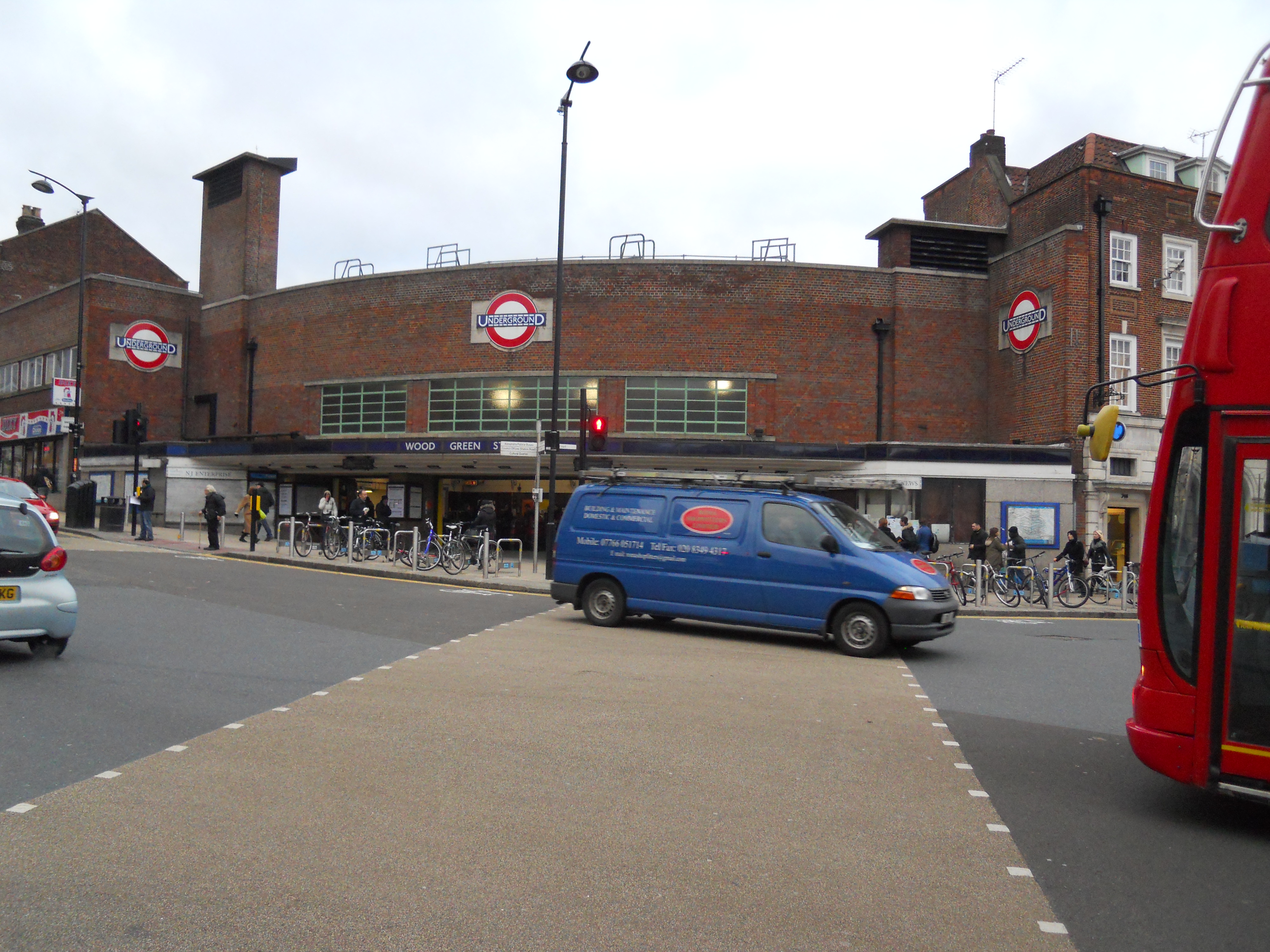
Wood Green Tube Station
All of these stations from Cockfosters to Turnpike Lane are very much part of my childhood and I remember them all with affection.
Hail the Humble Hand Drill
The walls in my new house are probably very typical of modern houses, in that with one exception they are all plasterboard sandwiching air. So to put pictures up, the averahe picture nail is not the best and a plug and screw is better especially, if the picture is a bit weighty.
Given the fact, that my hands are a not the best, I’ve fund that a humble hand drill is the best way to drill the walls, as I have so much more control.
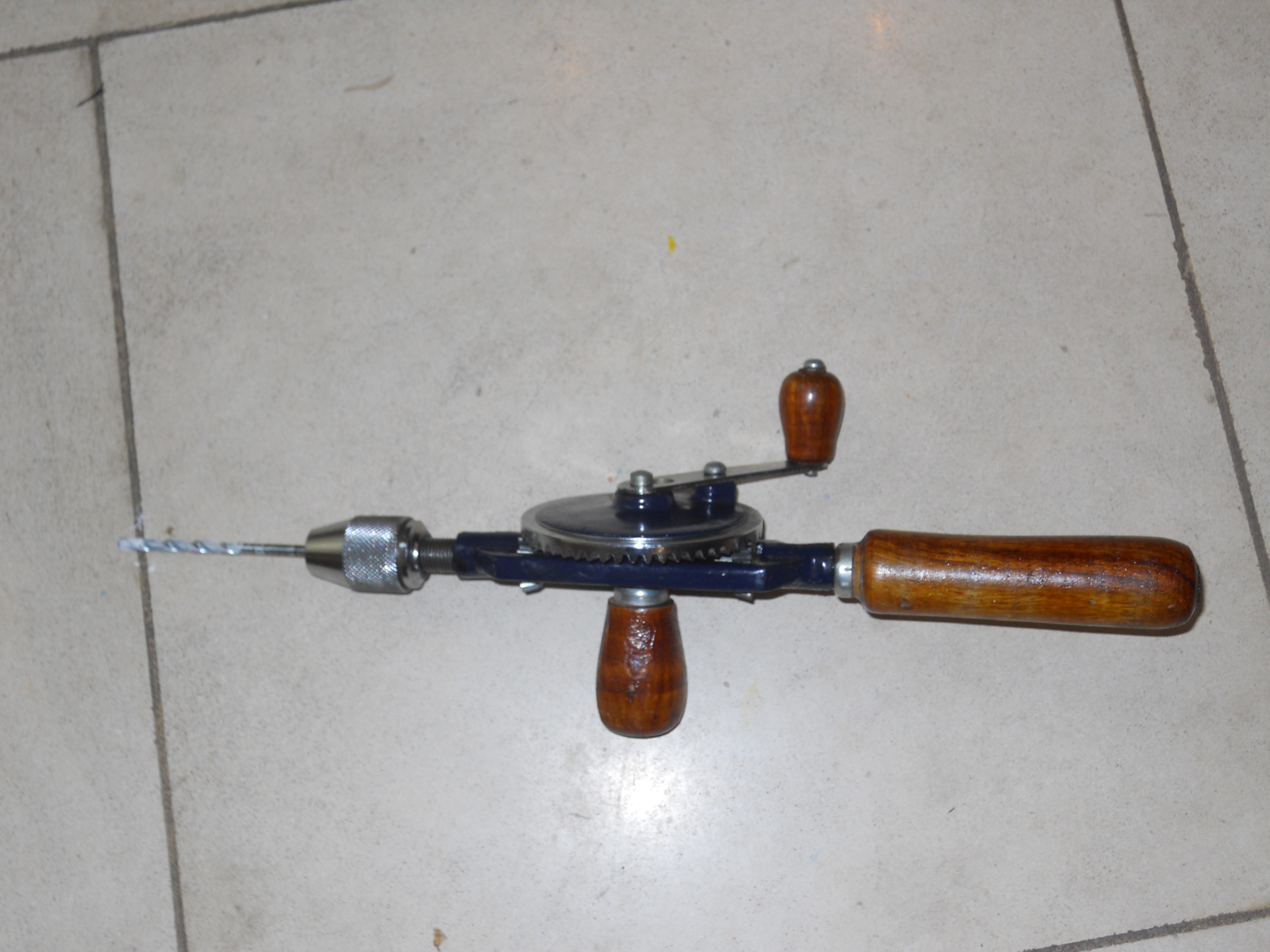
A Humble Hand Drill
My father had a couple of very smart hand drills, which you’d never see today. He also had a drill chuck, with just a T-handle on it, which was ideal for making holes in delicate materials. It was always in demand in the autumn for drilling holes in conkers.
Lawrence of Afghanistan
The Times today has an article about T. E. Lawrence, who as well as his efforts in Arabia, served in the RAF as Aircraftman Shaw in Afghanistan. We should listen to what he said.
Here is an extract from the article.
With the help of Hollywood, he would become a legend, Lawrence of Arabia, but today he might more aptly be termed Lawrence of Afghanistan: he understood more clearly than any of his contemporaries (and many of our own) the futility of trying to bomb an insurgency into peace; he put into action the tactics of modern guerrilla warfare; and he pioneered the improvised explosive device (IED), the most important weapon of the wars in Iraq and Afghanistan.
In Britain Lawrence is revered as a figure of romance, the camel-mounted scholar-warrior in flowing robes, but his reputation comes tinged with a distinctly British embarrassment. Lawrence was stupendously strange: a diminutive, ruthless, obsessive, sexually repressed oddity, who spent his life striving for attention, and then rejected it.
What is too often forgotten in the mythologising (and debunking) of Lawrence is his enduring legacy as a military strategist of genius and cold-eyed guerrilla leader.
I like one particular statement.
Lawrence believed that “winning hearts and minds” (a term that would have made him snort) could only be achieved by education or cash, and never by coercion. “The printing press is the greatest weapon in the armoury of the modern commander,” he wrote. The Arab rebellion was fought with new British tactics, and bought with new British gold.
The trouble is the Americans used to think that the only good Indian was a dead one and their thinking hasn’t changed much to reflect the modern age.
Every politician and military man, from the highest general to the lowest private, should read Ben MacIntyre’s article and then be tested on it.
My father was a printer and one of the most interesting things I saw in Belarus was this battlefield printing press from the Second World War.
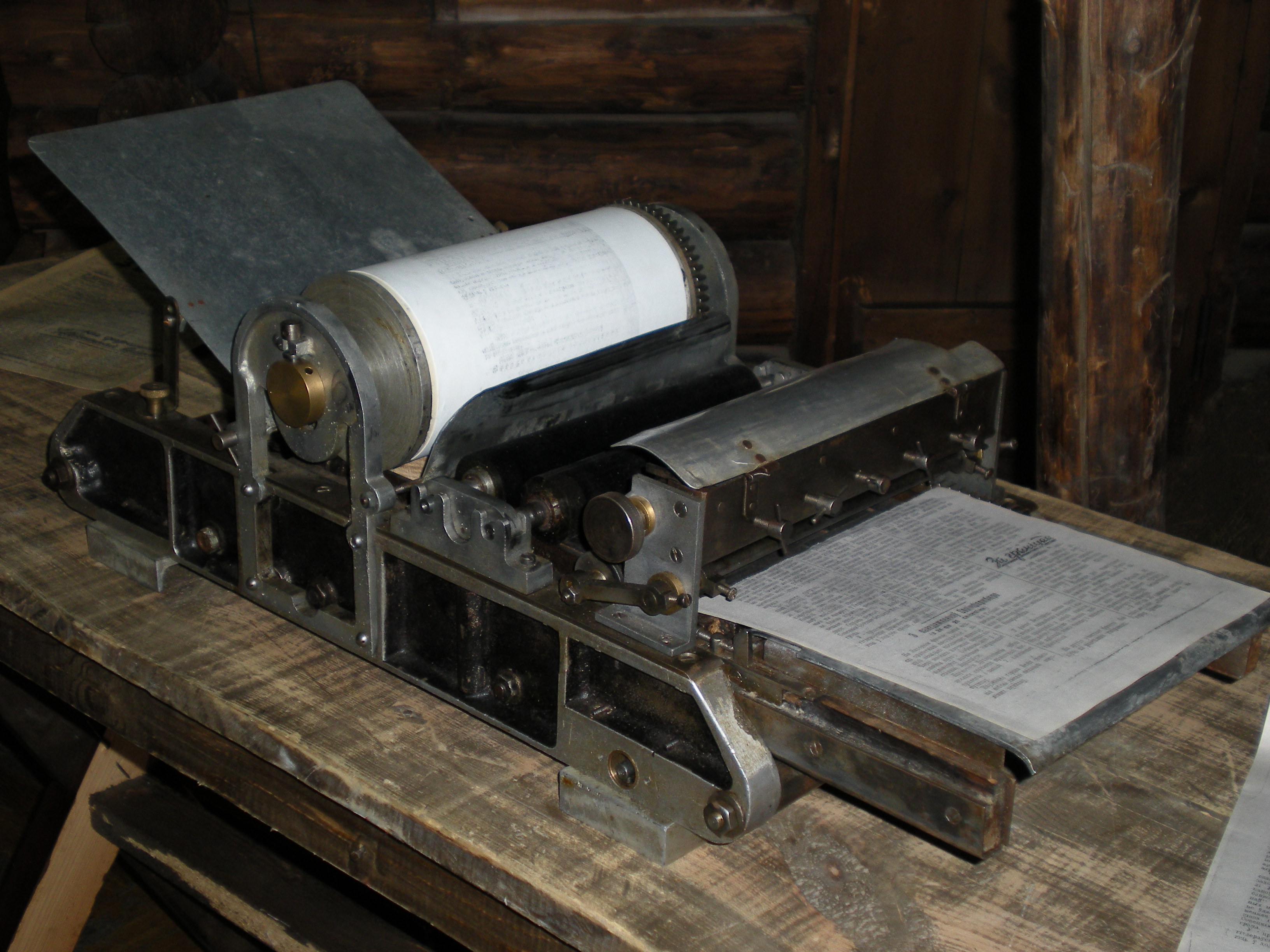
Battlefield Printing Press, Minsk
The Russians and Belarussians obviously know their T. E. Lawrence and it served them well, when they turned the Nazis in 1941.
I share two things with Lawrence;stature and birthday.
The Intelligent Decorator
My father was no mean wielder of a paintbrush, not in an artistic sense, but as a decorator. As he used to drive me to his print works in Wood Green, he’d sometimes tell how when they built the houses in Waterfall Road in Southgate in the 1930s, he had a contract to paint them for just a few pounds a house. He did teach me, but I’ve never been very good at it, although I used to be able to hang wallpaper. My hands probably aren’t good enough now!
My late father-in-law was also a professional painter and decorator in Barnet, working for a firm called Curtis. He would tell tales about how in the richer parts of the area, such as Hadley Wood, how sometimes he’d wallpaper the same house, as many as three times, because the lady of the house or the cat didn’t like the new colour scheme. C used to say he had endless patience, which was why he was in so much demand.
And then there was Terry. He used to do the decorating for us at Debach and when we moved to West Suffolk, we still continued to use him. He was neat and tidy, never smoked and sometimes you never even knew he was in the house. In one case, we’d asked him to paint a bedroom and C phoned him up to ask when he was coming. But he’d already done it!
Sadly Terry died of cancer a couple of years ago. The funeral was one of the best attended, I’ve ever seen, such was the respect he was held in the town of Ipswich.
So when I see good decorators I know what I’m looking at.
My new house was in a terrible state, as the previous owner had rented it to tenants. There were rather hideous constructions in some of the wardrobes, television wires everywhere and all sorts of damage. The builders had also not built some of the details properly either and the house had never been desnagged, as it should have been under its guarantee.
I arrived yesterday about nine and found that the decorator, one Mark from Harlow, had really cracked on and was doing a good job.

My New Living Room Takes Shape
The picture shows the main living area of the house. The walls are being painted ivory and the original specification said that the steel beams were to be black. But the first thing Mark said was that the beams just needed a good clean and the original chocolate colour would be much better. How very Great Western, as it’s almost chocolate and cream!
By the way, notice the blinds in the photo, they may be rather broken, but that was because they’re the wrong size in the first place.
But to return to the colour scheme. I agreed with Mark on the colour of the beams and they will be left, at least for a few years.
Terry, my father and my father-in-law may be long gone, but it seems I’ve found another inteligent decorator.
Book Burning
It is being reported that a fifteen-year-old girl has been arrested for burning a copy of the Koran.
My father was a printer and bookbinder and to me, all books are to be treasured and not defaced or burnt in any way. Perhaps, when a book has been fully read, it should be passed on, but only in the last resort, should it be burned and then to do something positive like generate heat.
So the girl was wrong in what she did and arresting her for what was probably a childish act, will only encourage others to do similar things.
We need a lot more tolerance and common-sense.
Especially in these days, where we have had the Sunningdale and Milton Keynes murders and the Derby sex attacks to keep the Police busy, with more much serious problems that could be considered to a racial dimension.
Memories of Some Late Goals
On the coach to Ipswich today, we were thinking that no-one could ever remember Ipswich scoring any late goals. They certainly could have done with a couple today!
In the 1960’s I used to cycle from my home in Sussex Way, Cockfosters to White Hart Lane, parking my bike in a garage near to the ground, that charged a half-crown. My father always said that he went to Spurs before the First World War with his father and they used to give a kid, a shilling to hold the horse’s head for the duration of the match. It seems that nothing has changed except the price and parking costs near Portman Road is now about a fiver.
I think that on the day of my tale, I must have gone to see Spurs entertain Manchester United on the bike as I got back fairly quickly and the alternative of the train from White Hart Lane to Enfield Town and a 107 bus, always got me in quite a bit later.
In this match, which according to this page, most probably was on the 10th September 1966, I was home reasonably early and met my next door neighbour, a Mr. Gibbon, who had been to the same match, but had driven in his car. Note that I never had a lift.
He was a Mancunian, who supported United, although he had season tickets at both Spurs and Arsenal, and went to each when they were at home. They alternated home matches in those days, so you could do this.
He said that it had been a great match especially as United had won by the only goal. I also knew that he always left with about ten minutes to go, so I said that I thought it had been a good game too, especially as Spurs had won 2-1 with two goals by Greaves and Gilzean in the last few minutes. He obviously missed them and as he didn’t have a radio in his car, it was myself, who had given him the news.
How Can They Get it So Wrong?
This is another story, that would make my father turn in his grave. There is no excuse these days for publishing a book with so many mistakes, as HarperCollins has done for Jonathan Franzen.
A Sensible Approach To Health and Safety
It is reported today that Lord Young is close to delivering his report on the health and excessive culture in the UK.
Some of the stories I’ve read lately are so silly it’s not true.
I should say that I grew up in my father’s print works, with lots of printing machines, guillotines, paper drillers and noxious substances like printing ink, solvents and of course lead-based type. My father gave me a lot of guidance, but I suspect many of the things I did, would never be allowed now!
Did I have any accidents at the time?
Yes!
I was using a wood-turning lathe at school and got a splinter in my eye, which meant I had to go to Highlands hospital to have it removed. I should have been wearing goggles, but there weren’t any! That was typical of schools at the time! Nowadays, I would never do something like that without protective goggles.
But it was only when I worked in industry that I got any training. At Enfield Rolling Mills it was minimal and was basically a walk round the factory, pointing out what was dangerous. It may seem silly to say that you learned on the job, but then they expected you to observe what you saw and take appropriate precautions to avoid trouble.
At ICI in 1969, I went on a safety course, but the most valuable lesson, I had was a walk round a BCF plant with the foreman, Charlie Akers. To illustrate the dangers of HF dust, he took a speck and placed it on my thumb. It burned, so after that I made sure that I didn’t touch any. I still climb industrial staircases without putting my hands on the top, as that is where all the noxious substances are!
In my view Health and Safety training should begin in schools, as what you need to instill is a simple threat recognition and avoidance culture into children, that they will carry with them all of their lives. How many children have broken arms at five or six in simple situations like getting off a slide or a swing? A researcher into accidents once told me, that he felt there was now a common child accident, where kids were trained to get into their house quickly for their protection and had all sorts of problems, when the car wasn’t parked outside the house, so they ran across the road to get to safety. I once drove up from Cornwall and was suprised to see so many overloaded 4x4s in accidents, because their idiot drivers had not properly understood the problems of excess speed and weight. A proper health and safety education and a bit more practical understanding of Newton’s Laws would have alerted them to the problem before they set out.
The report on Lord Young makes some interesting points.
Launching the review in December, Mr Cameron cited cases of children being told to wear goggles to play conkers, restaurants being banned from handing out toothpicks and trainee hairdressers being banned from using scissors as examples of silly practice.
The Young report says local authorities, in future, should explain their decisions to ban events on health and safety grounds in writing.
The public should be able to refer decisions to an ombudsman and, if deemed to be unfair, they should be overturned within two weeks.
The idea of an ombudsman seems very sensible, especially, as they would affectively lay down good practice.
Lord Young also says flaws in existing legislation have fuelled the number of personal injury lawsuits and pushed up the fees charged by lawyers.
The growth of claims management firms – which are paid referral fees by solicitors to assess whether there are grounds for a claim – has led to a glut of advertising, he says, and resulted in a market in fees where claimants are directed to firms which pay the most not those which are most suitable.
“Many adverts entice potential claimants with promises of an instant cheque as a non-refundable bonus once their claim is accepted – a high pressure inducement to bring a claim if ever there was one,” his report argues.
A culture has developed in which businesses, the public sector and voluntary organisations “fear litigation for the smallest of accidents and manage risk in accordance with this fear,” he adds.
When I was in Middlesborough, there were adverts everywhere for solicitors, who would make a claim for you. In my view where there’s a greedy and unscrupulous lawyer, there’s a claim. I’d ban all forms of advertising by lawyers. You always get the best lawyers by talking to a good friend or someone who really knows what to do, not by phoning a company which then have a vested interest in your claim.
He also is suggesting a Good Samaritan law.
His report also suggests that a “good samaritan” law may be necessary to make it clear that people will not be sued for voluntary actions – such as clearing snow from a driveway – which may inadvertently contribute to accidents.
This is another good idea! But in the driveway example, we should remember good common sense, when we do things like that. In a related example, if we see a loose paving-slab outside our house, which we feel could be dangerous to some people, then coucils must have a reporting system that gets it fixed.
Health and Safety is just one area, where we must rescue our country from the barmy, scientifically-incorrect excesses of Nulabor.
Since my strokes, it is not stretching things to say that my Health and Safety training has been one of the things that has helped me get around and get my life back on track.
My Father Would Turn in His Grave, if He Had One!
I had a good day yesterday, in that I made a video of the Tour of Britain at Clare and successfuly posted it on this blog. But my arm is starting to work a bit better and I’m in less pain. Perhaps, my brain is winning in its battle with my nerves and is understanding them better! If it can’t understand them, the brain says pain!
My computer told me today, that I must get ready for my Warfarin test on Monday. I do it a couple of days early, so that I can find the form that I must take.
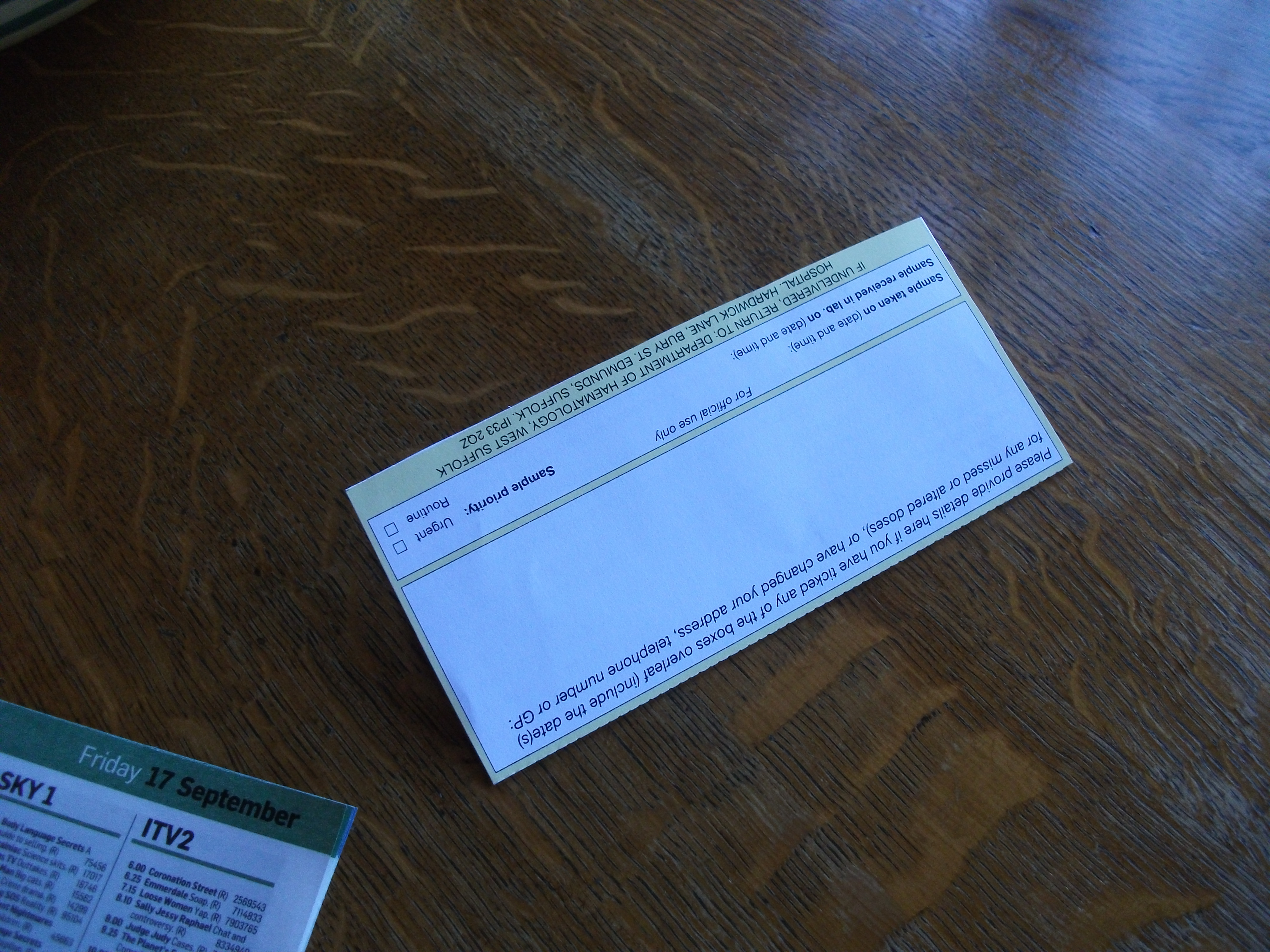
The Dreaded Hospital Form/Letter
These letters are a disgrace and the man, who designed them should be dismissed from all his jobs immediately. I would suggest capital punishment, but even for design crimes as heinous as this, I will not ease my stance on the evil death penalty.
So why do I hate these letters so much?
For a start, they are so difficult to open, even for someone like me with only a good right hand! And one that can efficiently wield a pair of scissors. Suppose you were more decrepit than me, with perhaps severe arthritis or a missing hand. You wouldn’t stand a chance of opening the letter without damaging it, so much that it became unreadable.
Then when you have opened it, it refuses to lay flat, so it is not an easy thing to store and retrieve. I usually pin it to a notice board, but as it doesn’t do flat very well, it sometimes manages to force itself to the floor.
Perhaps, the main reason, I hate these letters so much, is that they are in many ways unnecessary. If you need to change your dose, the hospital phones you! If you forget the form, when you have a blood test, then the nurse knows the questions to ask!
But as I said in a previous post, why can’t you be informed by SMS message or e-mail?
So why would my father be spinning? He was a printer, who made a lot of money by designing paper systems that worked. He would have known how to do this form/letter better.
If I had my way, if a letter needs to be sent, then I would send a postcard. I know to some this wouldn’t be confidential, but it certainly doesn’t matter to me, that the world knows my Warfarin dose is 5 mg. a day!
 The Anonymous Widower