Ørsted ‘First’ To Use Giant Autonomous Drones to Transport Cargo To Wind Turbines
The title of this post, is the same as that of this article on offshoreWIND.biz.
This is the sub-heading.
Ørsted says it is the first offshore wind company in the world to use giant autonomous drones to transport cargo to wind turbines
These three paragraphs outline the use of drones.
The Danish offshore wind giant is testing the drones to transport cargo from vessels to its 1.2 GW Hornsea One project in the UK.
Building on its previous experience using smaller drones in other countries, the company is now trialling the 58-kilogram drones with a wingspan of 2.6 metres to transport cargo of up to 68 kilograms.
The drones are operated from existing crew transfer vessels (CVTs) and service operating vessels (SOVs) which are already on site, said Ørsted.
Using drones appears to save cost and time, reduce risk and even allows the deliveries with the turbine working.
With a payload of 68 kilograms, someone my size could even take a lift.
TenneT Installs Artificial Reefs At Hollandse Kust West Alpha Offshore Netherlands
The title of this post, is the same as that of this article on offshoreWIND.biz.
This is the sub-heading.
The Dutch-German transmission system operator (TSO), TenneT, has placed several artificial reefs at the Hollandse Kust West Alpha offshore transformer platform in the Dutch North Sea.
These three paragraphs explain the project and the purpose of the reefs.
The platform will connect the Ecowende consortium (Shell/Eneco) wind farm to the high-voltage grid.
In collaboration with Equans/Smulders, TenneT placed two types of artificial reefs near the offshore substation jacket to find out which form works best.
The artificial reefs are part of a series of ecological measures by TenneT to monitor and encourage nature around offshore wind farms.
There is also an excellent picture in the article. All it needs now is fishes swimming through the holes.
Singapore Nods To 1.2 GW Of Low-Carbon Electricity Imports From Vietnam
The title of this post, is the same as that of this article on offshoreWIND.biz.
This is the sub-heading.
Singapore’s Energy Market Authority (EMA) has granted conditional approval to Sembcorp Utilities (SCU), a wholly-owned subsidiary of Sembcorp Industries, to import 1.2 GW of low-carbon electricity, including offshore wind power, from Vietnam
This is the first paragraph.
The conditional approval means the project by SCU has been preliminarily assessed to be technically and commercially viable. The approval facilitates the process of obtaining necessary regulatory nods and licences for the project.
So now the real planning can begin.
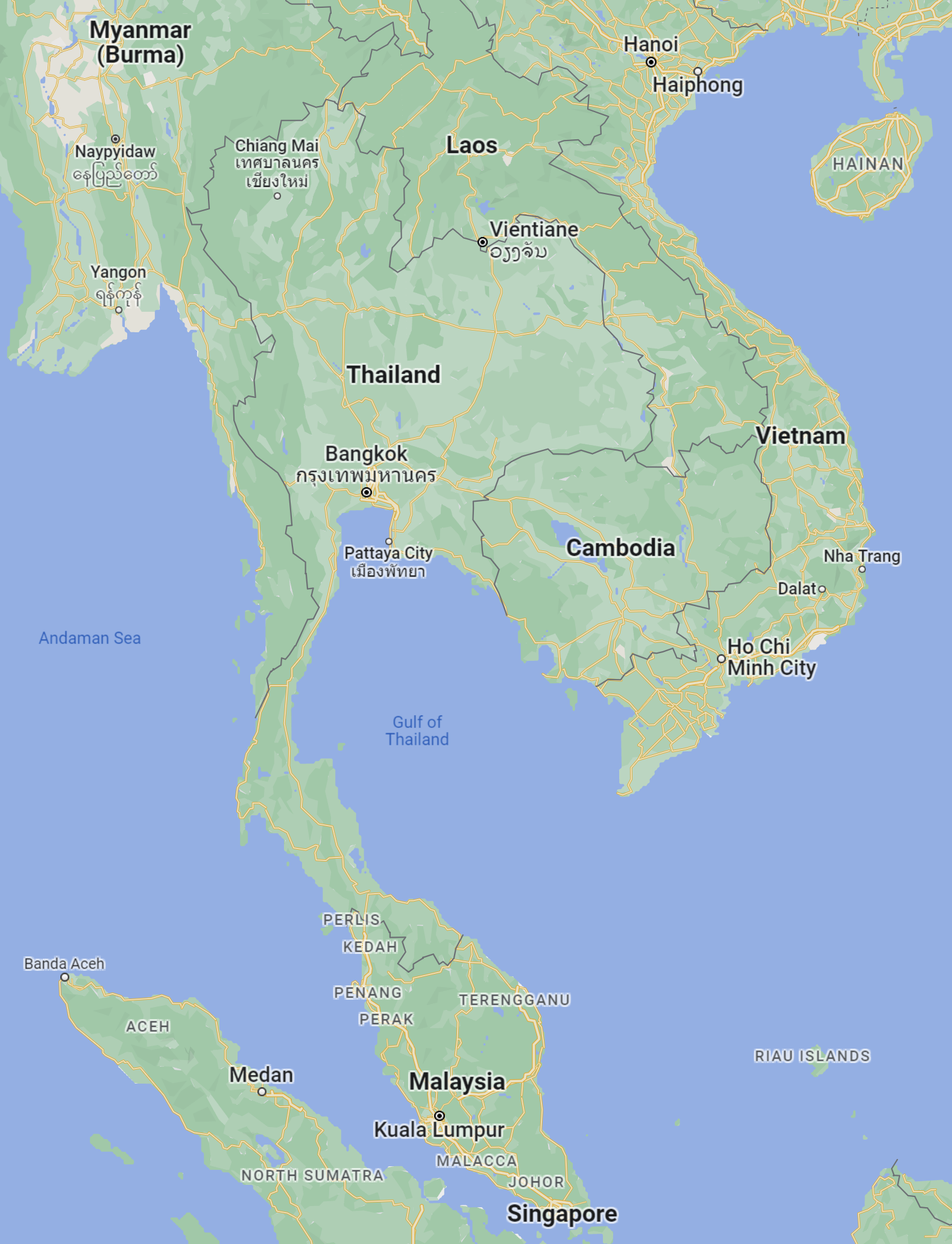
This map shows Singapore and Vietnam.
The article says this about the electricity connection.
The low-carbon electricity is planned to be transmitted from Vietnam to Singapore via new subsea cables that will span a distance of around 1,000 kilometres.
My only worry about this project, is will China object to wind farms in the South China Sea, which they seem to increasingly regard as solely belonging to them.
I have a few thoughts.
Singapore’s Energy Import Policy
These last two paragraphs of the article describe Singapore’s energy import policy.
In 2021, Singapore unveiled its plans to import up to 4 GW of low-carbon electricity by 2035.
To date, EMA has granted conditional approvals to projects from various sources, comprising 2 GW from Indonesia, 1 GW from Cambodia, and 1.2 GW from Vietnam.
Note.
- 4.2 GW of interconnectors will be available from Indonesia, Cambodia and Vietnam.
- In 2022, Singapore’s total electricity consumption was 54.9 TWh, according to the Singapore government.
- 54.9 TWh averaged out over the year is 6.3 GW.
- According to Wikipedia, 95 % of their electricity is generated by gas.
It looks like Singapore will will be needing to import more energy.
Will Developing Countries Benefit From Energy Exports?
Singapore is purchasing electricity from its neighbours in this example.
I believe that there are many countries around the world, who will be able to develop energy exports based on renewable energy.
Conclusion
We will see lots more projects like this.
Balmoral Launches New Scour Protection System For Jacket Foundations
The title of this post, is the same as that of this article on offshoreWIND.biz.
This is the sub-heading.
Following the launch of its HexDefence scour protection solution for monopile foundations earlier this year, Balmoral has now launched a HexDefence system specifically designed for offshore wind jacket foundations.
This is the first paragraph.
At the beginning of this year, the Scottish engineering company introduced HexDefence for monopile structures, which integrates seabed protection and flow reduction to minimise operational costs and prevent cable failure. Balmoral said the solution could potentially cut costs by up to 70 per cent when compared to the conventional method of rock dumping.
Balmoral have now developed the system, so it can be used for jacket foundations.
Check out Balmoral’s web site and the HexDefence web site.
1 GW Wind Farm Proposed Offshore Jersey
The title of this post, is the same as that of this article on offshoreWIND.biz.
This is the sub-heading.
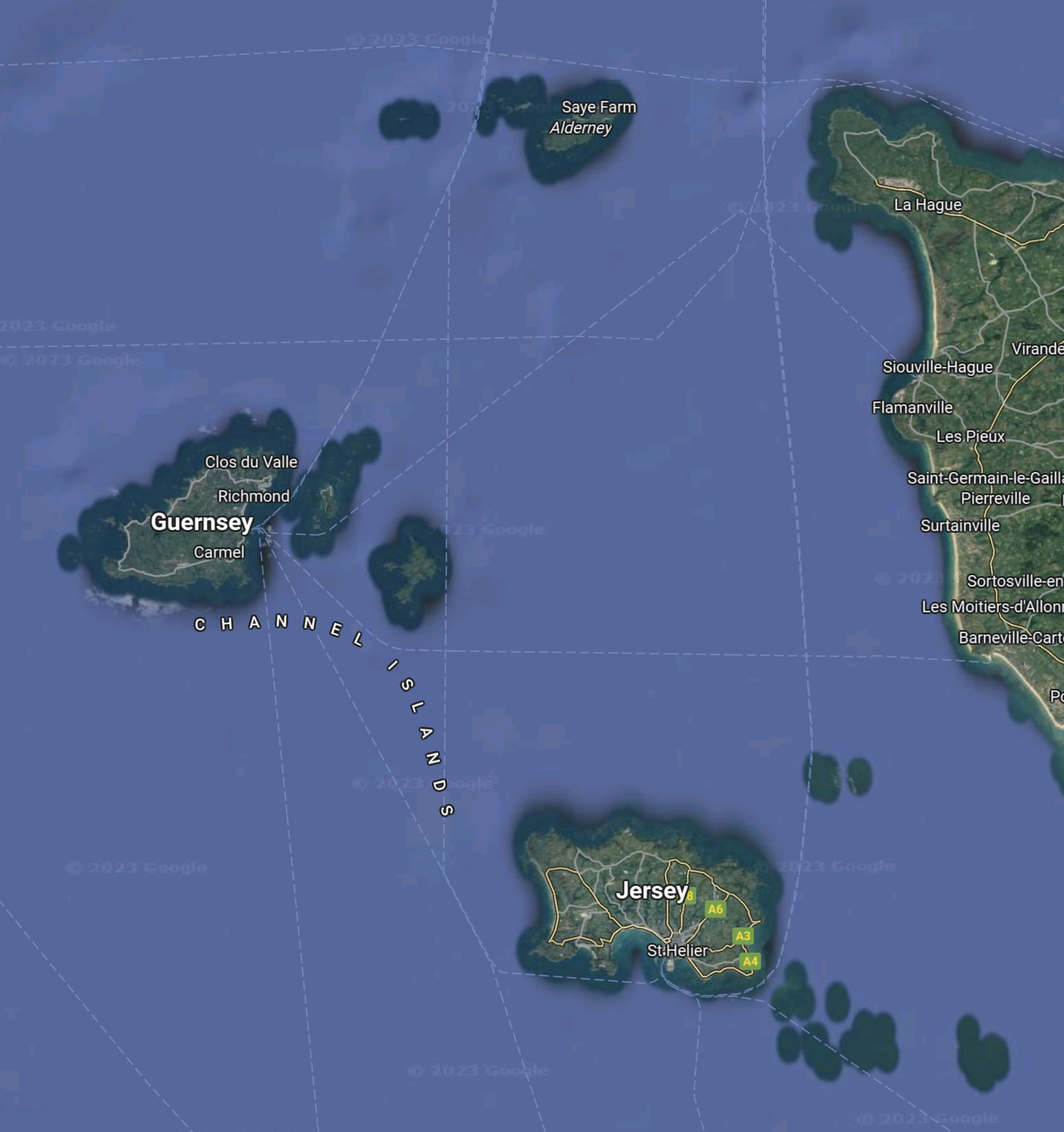
Jersey’s Council of Ministers has proposed to build a 1 GW offshore wind farm in the southwest of the island’s territorial waters that would produce enough electricity to meet its needs, with the remainder to be exported.
This first paragraph gives more details.
It is proposed that the offshore wind farm should be privately funded and designed, and delivered by a consortium with substantial experience of similar development elsewhere, according to the government.
I would have thought that Jersey would have been one of those places, that would have been too conservative for offshore wind.
But then, this is the last paragraph of the article.
In a 2019 Island Plan consultation, 85 per cent of respondents agreed or strongly agreed the plan should continue to encourage the development of offshore wind and tidal energy, according to the government.
But as the wind farm will export the surplus surplus, it could be a nice little earner.
This Google Map shows the Channel Islands.
This article on the BBC is entitled Islands Could Work Together On Wind Farm Plans.
These three bullet points sum up the article.
-
Guernsey and Jersey may work together to create a wind farm
-
Both States are hoping to create the wind farm off Jersey’s south-west coast
-
It could generate enough energy for both islands.
This looks like a sound way to reap the wind!
Self-Orienting Floating Wind Turbine Completes Offshore Tests
The title of this post, is the same as that of this article on offshoreWIND.biz.
This is the sub-heading.
The PivotBuoy Project, developed by X1 Wind in collaboration with nine industry and R&D partners, has finalized its offshore demonstration in Spain with what the partners describe as ”excellent results that promise to revolutionize the floating wind industry”.
This is the first paragraph.
The Spanish firm’s X30 platform was tested in full operational conditions at PLOCAN offshore the Canary Islands from October 2022 to May 2023.
It is accompanied by a picture of this rather different way of mounting a wind turbine.
I discussed how how the concept works in X1 Wind – Disrupting Offshore Wind.
It’s certainly a technology to watch.
Scotland’s Largest Offshore Wind Farm Is Now Operational
The title of this post, is the same as that of this press release from Seagreen Wind Energy.
These three bullet points, act as sub-headings.
-
First Minister Humza Yousaf says Seagreen milestone takes Scotland a step closer to net zero
-
UK’s newest offshore wind farm is generating enough renewable energy to power almost 1.6m homes annually
-
Seagreen is now Scotland’s largest and the world’s deepest fixed-bottom offshore wind farm
These two paragraphs outline the current state of the project.
SSE Renewables, part of SSE plc, and its partner TotalEnergies have announced all 114 Vestas V164-10.0 MW turbines at the 1.1GW Seagreen Offshore Wind Farm off the coast of Scotland are now fully operational and are generating clean, renewable energy to Britain’s power grid.
Situated 27km off the Angus coast in the North Sea’s Firth of Forth, Seagreen is now Scotland’s largest wind farm as well as the world’s deepest fixed-bottom offshore wind farm, with its deepest foundation installed at a record 58.7 metres below sea level^. Seagreen is operated from a dedicated onshore Operations and Maintenance Base at Montrose Port.
Note.
- The capacity of the wind farm is 1,075MW.
- First power was in August 2022.
- It looks like that the original completion date was in 2024, but it was moved forward to October 2023, which has been met.
It seems that the project management was planned well.
ABP To Explore Opportunities For Offshore Wind Port In Scotland
The title of this post, is the same as that of this article on offshoreWIND.biz.
This is the sub-heading.
Associated British Ports (ABP) has signed an agreement to investigate an area for the development of infrastructure to support offshore wind manufacturing, assembly, and marshalling and green energy on the Cromarty Firth in Scotland, within the Inverness Cromarty Firth Green Freeport.
This first paragraph gives a bit more information including the possible location.
The area, located within the proposed Nigg and Pitcalzean area of the Green Freeport, could support both fixed-bottom and floating offshore wind projects and play a major role in the development of current and future ScotWind leasing rounds, said ABP.
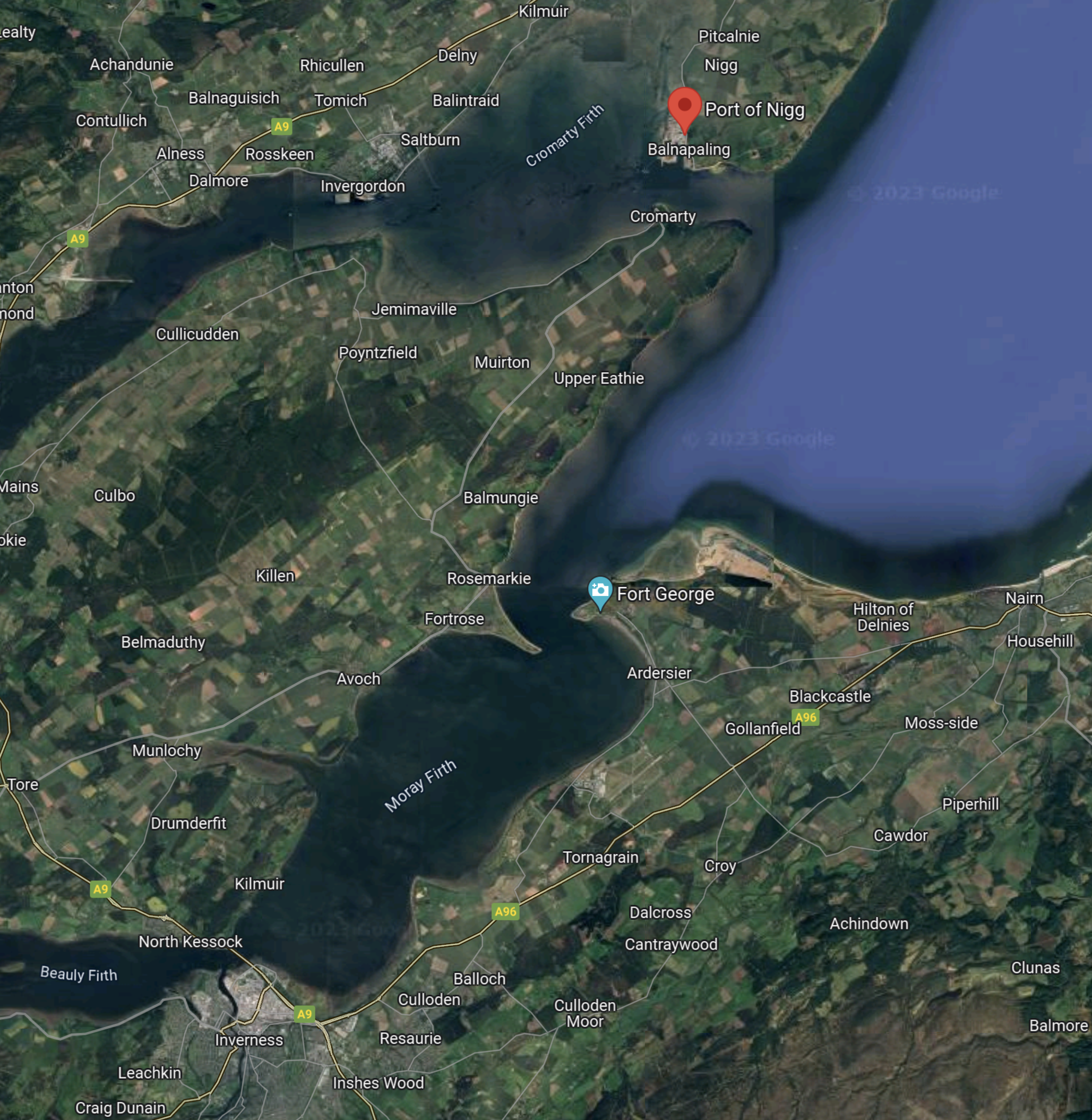
This Google Map shows the location of the Port of Nigg.
Note.
- The Moray Firth with Inverness at its Southern end is the large body of water in the centre of the Southern half of the map.
- The Port of Nigg is on Cromarty Firth and marked by a red arrow.
- Nigg and Pitcalzean are to the North of the port.
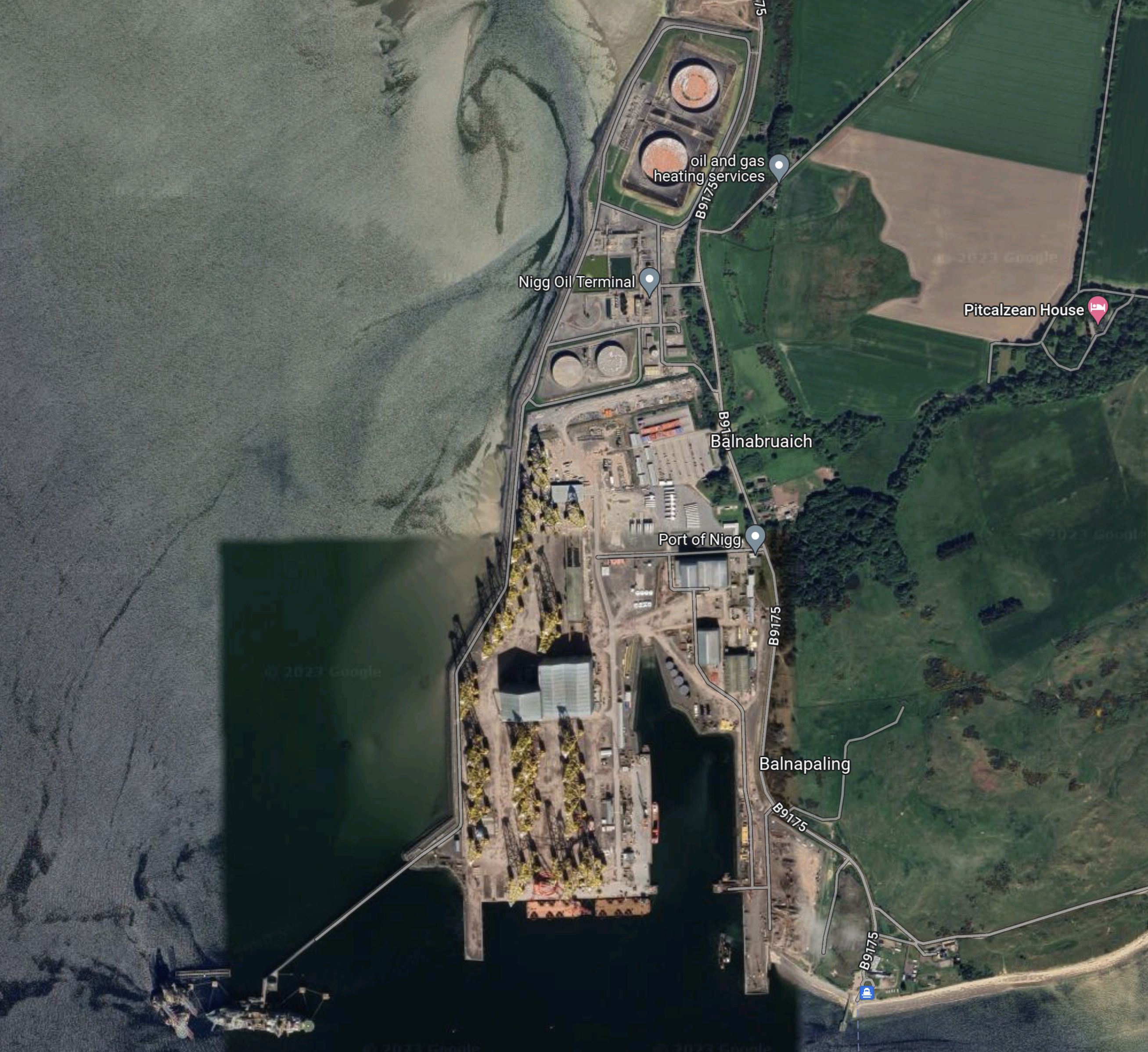
This second Google Map shows an enlarged view of the port.
Note.
- Pitcalzean House is in the North-East corner of the map.
- The Port of Nigg is in the centre of the map.
- The water to the West and South of the port is Cromarty Firth.
- The yellow structures in the port are fixed-bottom foundations for wind farms.
Inverness & Cromarty Firth Green Freeport has a web site.
A Quote From Henrik Pedersen
Henrik Pedersen is CEO of ABP and the article quotes him as saying this.
We’re excited to explore the potential of Nigg, applying our experience across the UK, including at our Ports of Grimsby, Hull, Lowestoft and Barrow which already host significant offshore wind activity and at Port Talbot, where we are developing a Floating Offshore Wind port project. We look forward to working with key local partners, the community, and public sector stakeholders.
The article also has this final paragraph.
The Floating Offshore Wind Taskforce’s recently published “Industry Roadmap 2040”, estimated that planed floating offshore wind projects in Scottish waters alone will require three to five integration ports.
There is certainly going to be a significant number of ports, that will be supporting offshore wind activity.
World’s Largest Offshore Wind Farm Produces Power For The First Time
The title of this post, is the same as that of this press release from SSE.
These bullet points sum up the press release.
- UK Prime Minister Rishi Sunak hails Dogger Bank’s role in bolstering energy security, creating jobs, lowering costs, and achieving Net Zero
- First power achieved at UK’s Dogger Bank as the first of 277 turbines installed 130km from UK coast
- Dogger Bank is now connected via HVDC technology to Britain’s national grid and providing renewable power to homes and businesses
- Each rotation of the first turbine’s 107m long Haliade-X blades can produce enough clean energy to power an average home for two days
- When complete Dogger Bank will deliver clean energy to six million homes annually
I will repeat a highlight of important paragraphs from the press release.
The Size Of The Dogger Bank Wind Farms
When fully complete, Dogger Bank’s world-record-beating 3.6GW capacity will comprise 277 giant offshore turbines capable of producing enough clean energy to power the equivalent of six million homes annually and deliver yearly CO2 savings equivalent to removing 1.5 million cars from the road.
Note.
- The first 1.2 GW section is scheduled for completion in the next few months.
- Two more sections of the Dogger Bank wind farm will eventually raise the capacity to 6 GW.
This cluster of wind farms certainly shows what can be achieved with British offshore wind power.
Innovative HVDC Technology
Dogger Bank also marks the first use of HVDC transmission technology to connect a British wind farm to National Grid’s UK energy network. This includes the installation of the world’s first unmanned offshore HVDC substation platform at the site, as well as first use of Hitachi Energy’s HVDC Light® transmission system which was successfully executed in record time of 38 months with the highest safety and quality standards.
Note.
- HVDC technology appears to be a more efficient way of transmitting energy under the sea and is now generally used for interconnectors.
- This page on the Hitachi Energy web site is entitled Dogger Bank HVDC Connection and gives a good description of the connection and its advantages.
The HVDC Technology and its installation looks like a real achievement, that can be applied to lots of other offshore wind farms.
XLCC seem to be doing the right thing in building an HVDC cable factory in Scotland. Check out their web site.
INEOS Inovyn Becomes Europe’s First Green Hydrogen ISCC PLUS Fully Certificated Producer
The title of this post, is the same as that of this press release from INEOS.
These two bullet points, act as sub-headings.
- INEOS Inovyn’s Antwerp hydrogen production, has been certified under the ISCC (International Sustainability & Carbon Certification) PLUS scheme.
- We become the first European company to have our renewable hydrogen fully audited with greenhouse gas data certification.
This paragraph describes how the hydrogen is produced.
Our Antwerp site produces hydrogen through Chlor-Alkali electrolysis – the electrolysis of brine producing chlorine, caustic soda/potash, sodium hypochlorite and hydrogen. The electricity used to produce this hydrogen comes directly from wind turbines off Belgium’s North Coast.
The Castner-Kellner process, that I worked on at ICI in the 1960s produced similar products.

