All T-Pylons Fully Wired Up In Major Milestone For Hinkley Connection Project
The title of this post is the same as that of this press release from National Grid.
These three bullet points are sub-headings.
- Hinkley Connection Project’s 116 T-pylons now ‘strung’ with overhead conductors
- Final conductors fixed into place on a row of T-pylons near Yatton, North Somerset
- 460km and 1,288 tonnes of power line have been installed between project’s T-pylons
Seven paragraphs of the press release go into great detail about how the cables were attached.
But I find this image from the press release, is the most interesting part.
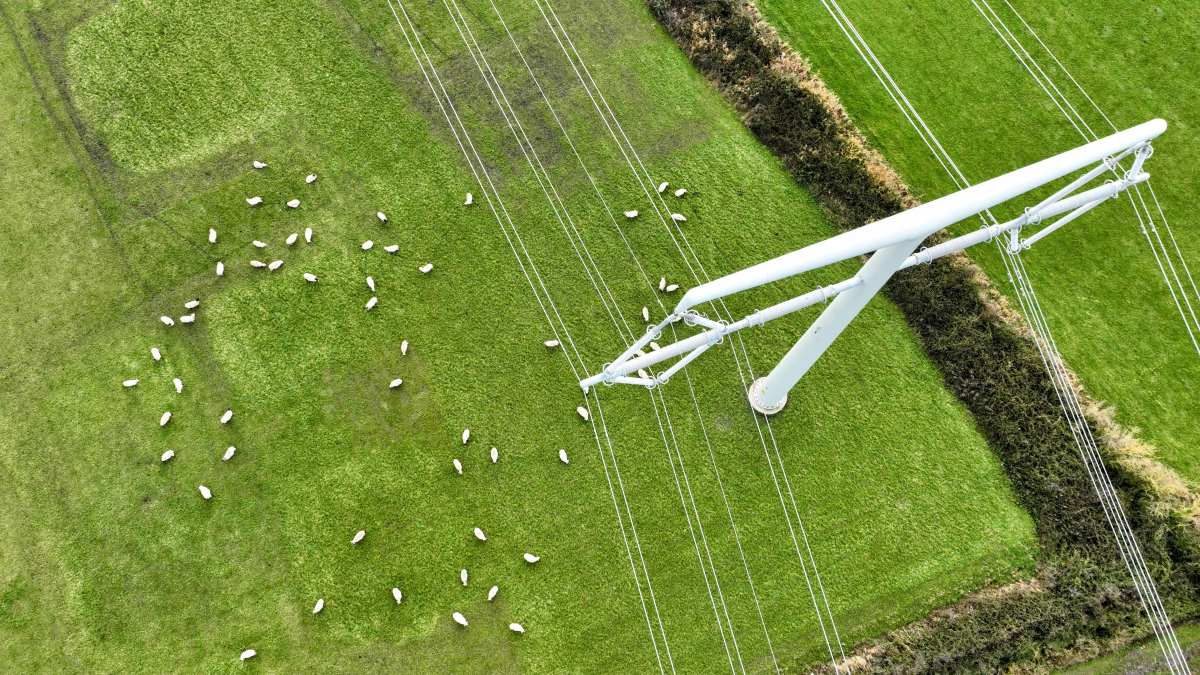
Note.
- There are six cables on each diamond earring-shaped insulator.
- There appears to be a second cross-bar between the insulators.
- The pylon has a small footprint on the ground.
- The white dots on the ground look like sheep.
- The base of the pylon, will make a good scratching post for animals, like sheep, cattle and horses.
This second picture is a profile, that I took at Yatton from a passing train.
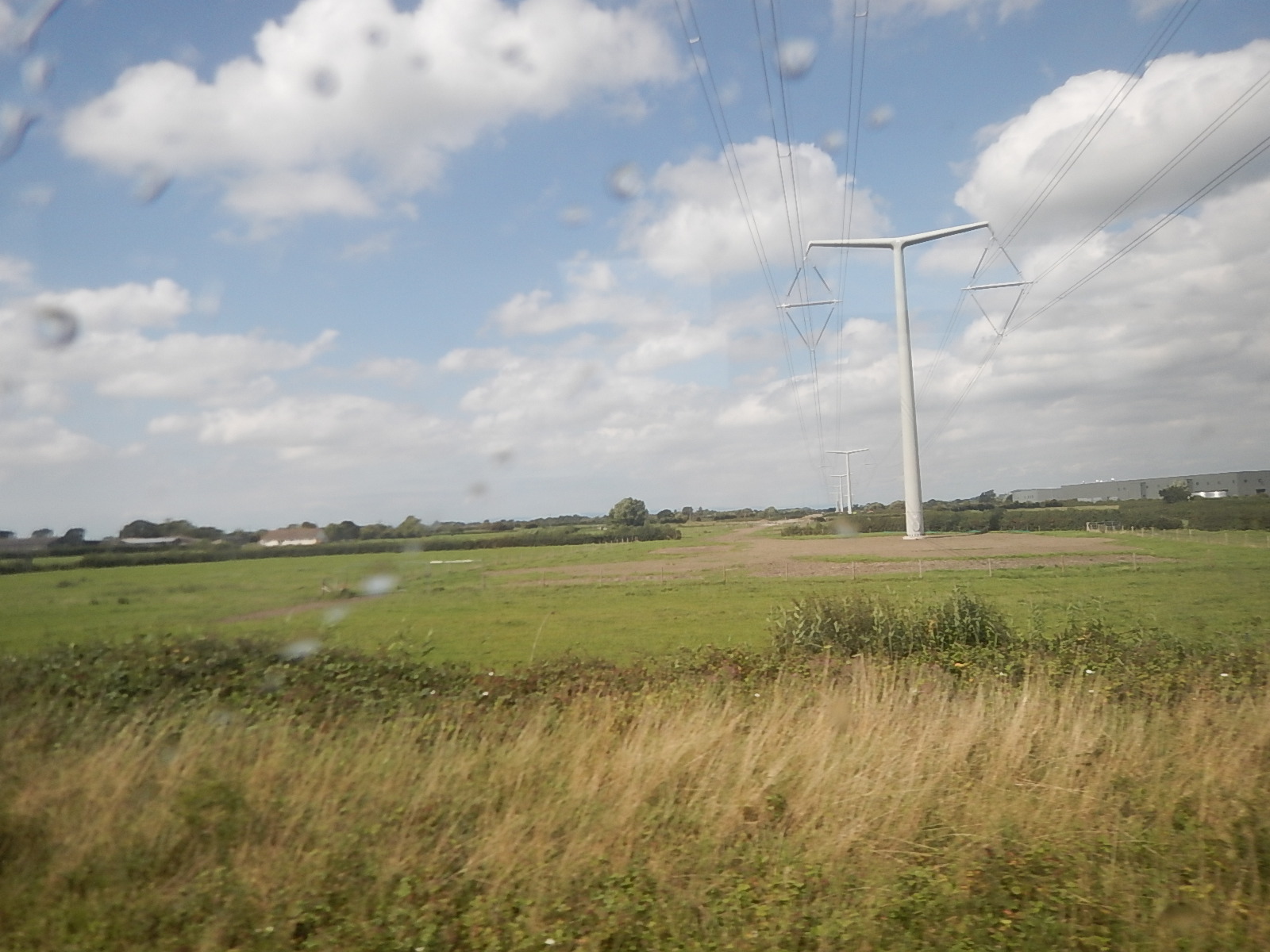
Note that the second cross-bar is not there. Is it to steady the insulators during the installation of the cables?
This picture shows some of the traditional pylons used to connect the Sizewell site to the National Grid.
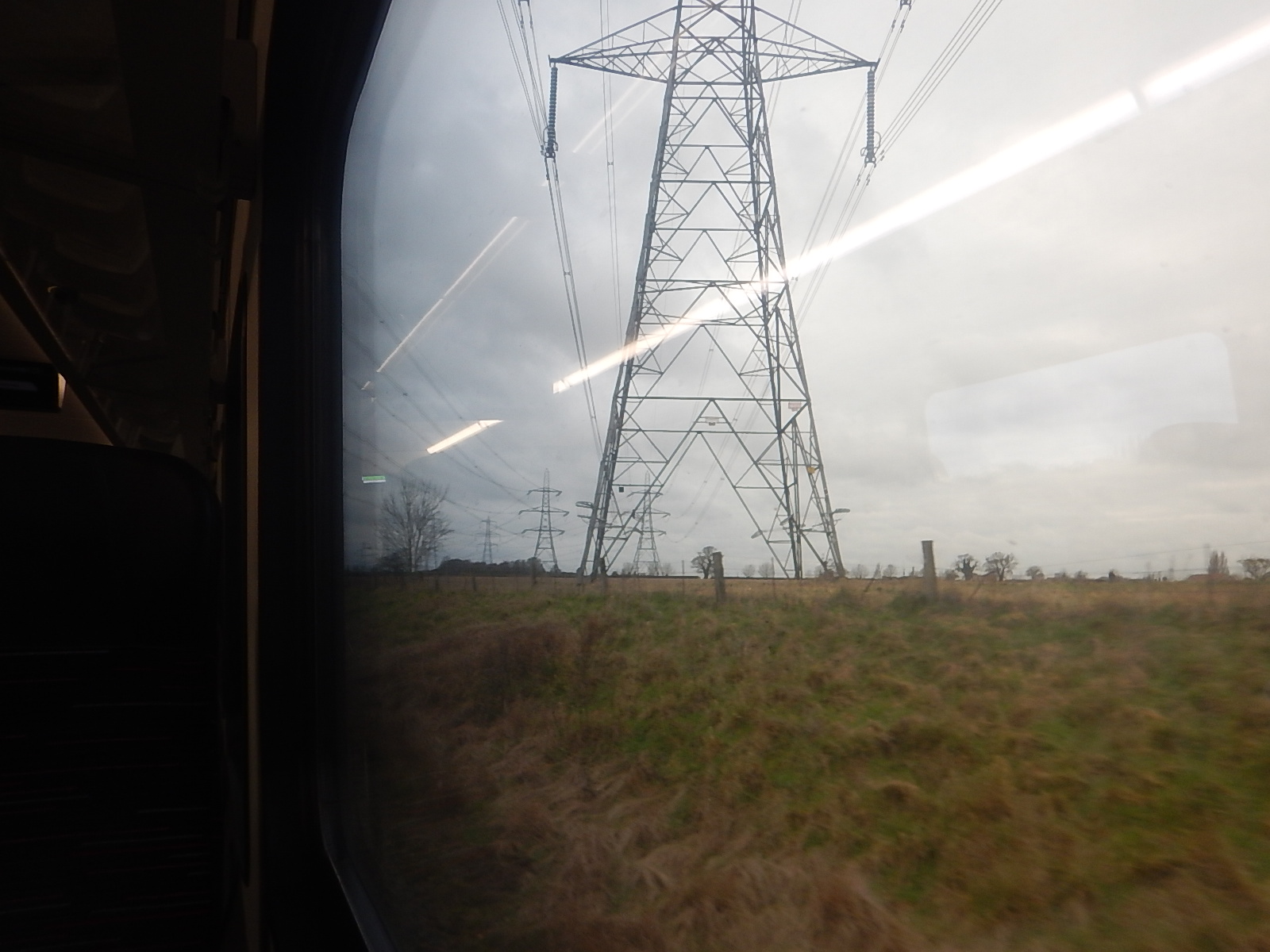
I know which ones I prefer.
Opportunity For Communities To Have Their Say On National Grid Proposals For Norwich To Tilbury Project
The title of this post is the same as that of this press release from National Grid.
These three bullet points are sub-headings.
- National Grid is consulting communities for 10 weeks, between Wednesday 10 April to Tuesday 18 June, on its infrastructure proposals to connect new clean energy sources into the East Anglian electricity network.
- Norwich to Tilbury will enable National Grid to connect the sources of power generated from offshore wind to homes and businesses across Britain, helping to reduce our reliance on fossil fuels and bring the cost of energy bills down.
- The project will help the UK achieve its aim of generating 50GW of energy from offshore wind by 2030 and reach net zero by 2050.
This page on the National Grid web site has an interactive map of the route.

This paragraph invites people to comment.
National Grid is encouraging communities in East Anglia to comment on proposals to upgrade the high voltage power network in England as part of a 10-week consultation process which runs between Wednesday 10 April and Tuesday 18 June.
National Grid have also announced dates of when public information events are being held.
- Wednesday 24 April 2024 – 12pm – 5pm – Towngate Theatre, St Martin’s Square, Basildon, Essex SS14 1DL
- Thursday 25 April 2024 – 2pm – 7pm – The Brentwood Centre, Doddinghurst Road, Pilgrims Hatch, Brentwood, CM15 9NN
- Saturday 27 April 202 – 11am – 4pm – Chelmsford City Racecourse, Chelmsford, CM3 1QP
- Tuesday 30 April 2024 – 12pm – 5pm – Gislingham Village Hall, Mill Street, Gislingham, IP23 8JT
- Wednesday 1 May 2024 – 11am – 4pm – Copdock Village Hall, Old London Road, Copdock, IP8 3JN
- Friday 3 May 2024 – 1pm – 6pm – Needham Market Community Centre, School St, Needham Market, Ipswich IP6 8BB
- Saturday 4 May 2024 – 11am – 4pm – Lawford Venture Centre 2000, Bromley Road, Lawford, Manningtree CO11 2JE
- Wednesday 8 May 2024 – 4pm – 7pm – The Civic Hall, Blackshots Lane, Grays, RM16 2JU
- Thursday 9 May 2024 – 1pm – 6pm- Thorpe Hall, Ashwell Thorpe and Fundenhall Community Centre, Muskett Road, Ashwellthorpe, NR16 1FD
- Friday 10 May 2024 – 1pm – 6pm – Tibenham Community Hall, Pristow Green Lane, Tibenham, Norwich NR16 1PX
- Tuesday 14 May 2024 – 11am – 4pm – Witham Public Hall, Collingwood Road, Witham, CM8 2DY
- Wednesday 15 May 2024 – pm – 6pm – Diss Town Football Club, Diss, IP22 4QP
- Thursday 16 May 2024 – 2pm – 7pm – Langham Community Centre, School Road, Langham, Colchester, CO4 5PA
- Friday 17 May 2024 – 1pm – 6pm – Great Bromley Village Hall, Parsons Hill, Great Bromley, Colchester, CO7 7JA
I shall be going to the Brentwood and Needham Market meetings.
I have some thoughts.
T-Pylons
There is a chance that this route will not use conventional pylons.
These pictures show the T-pylons, that have been used in Somerset to connect Hinckley Point C power station to the National Grid.


Note.
- They are a Danish design.
- They are shorter than current pylons.
- They have a smaller footprint on the ground.
- The design won a National Grid-RIBA design competition.
- We will probably see them around the country in the next few years.
They are certainly better than the standard ones that connect the Sizewell site to the National Grid, that passed by my first house in Suffolk.
UK Energy Grid Needs £60bn Upgrade To Hit Green Target, Plan Says
The title of this post, is the same as that of this article on the BBC.
This is the sub-heading.
The UK’s electricity network needs almost a further £60bn of upgrades to hit government decarbonisation targets by 2035, according to a new plan.
These five paragraphs explain the plan.
About 4,000 miles of undersea cables and 1,000 miles of onshore power lines are needed, said the National Grid’s Electricity Systems Operator (ESO).
The investment would add between £20 to £30 a year to customer bills, it said.
The government said the ESO’s plans were preliminary and yet to pass a “robust planning process”.
The plans were written up by the ESO, the organisation which runs the electricity network and would run the updated system it is calling for too. It is currently owned by National Grid but will transfer into government ownership later this year.
Its latest £58bn estimate is for work needed between 2030 and 2035 and comes on top of a previous £54bn estimate for work taking place between now and 2030.
These are my thoughts.
The Amount Of Undersea Cable
Edinburgh and London are roughly 400 miles apart as the train runs, so it looks like there could be the equivalent of ten underwater cables between the North of Scotland and England.
In Contracts Signed For Eastern Green Link 2 Cable And Converter Stations, I talked about the proposed 2 GW link between Peterhead in Scotland and Drax in England, which will be a double cable. So there’s the first two of these long cables.
It looks to me, that National Grid are proposing to use underwater cables wherever they can, so they avoid large expensive planning rows stirred up by Nimbies.
Monitoring The Undersea Cables
Last week Ofgem gave National Grid a £400,000 grant to develop new innovative technologies, which I wrote about in £400k For National Grid Innovation Projects As Part Of Ofgem Fund To Help Shape Britain’s Net Zero Transition.
One of the project is called HIRE – Hybrid-Network Improvement & Reliability Enhancement and will be used to check all these cables are performing as they should.
My electrical engineering experience tells me, that there must be some cunning way, that will detect that something is happening to the cable. The involvement of a technology company called Monitra in the project is a bit of a giveaway.
How Much Will It Cost Me?
Currently, UK consumers pay about £30 per year to have electricity delivered, so this will rise to between £50 and £60 per year.
That is just over a pound a week. I would pay about the same for a resident’s parking permit outside my house for an electric car and probably three times more for a petrol or diesel car.
Do We Have Enough Cable?
Two undersea cable factories are under development in Scotland and I suspect the 4,000 miles of undersea cables will be delivered on schedule and covered in saltires.
What About T-Pylons?
The latest onshore electricity transmission line between Hinckley Point C and Bristol, doesn’t use traditional pylons.
It uses T-pylons like these to connect the 3.26 GW nuclear power station.
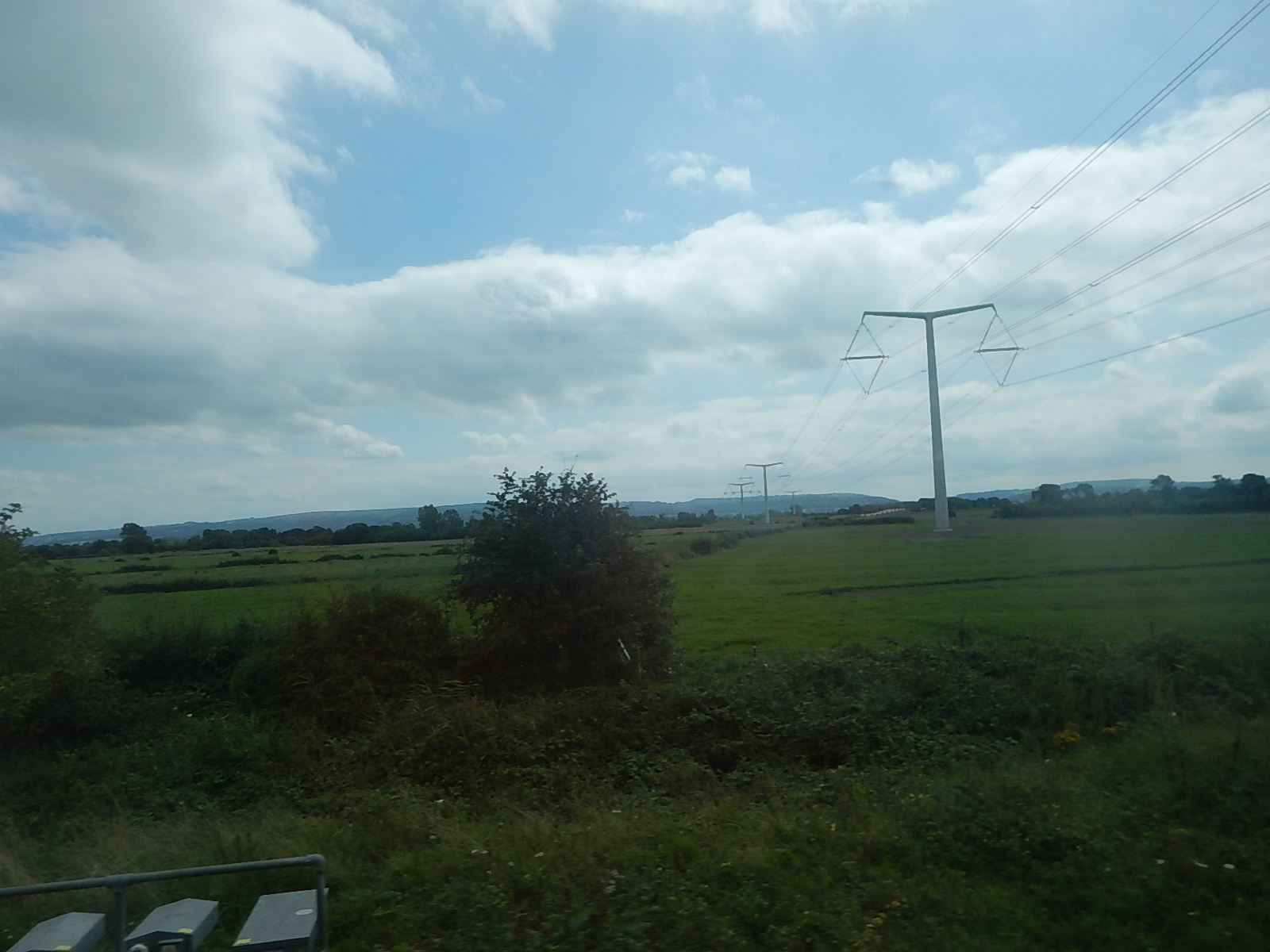
Note that they are shorter, designed to be less intrusive, have a smaller footprint and are made from only ten parts.
I suspect they will cost less to install and maintain.
There is more on T-pylons in National Grid Energise World’s First T-Pylons.
I wouldn’t be surprised that some of the oldest traditional pylons will be replaced by T-pylons.
I am surprised that T-pylons are not mentioned in the BBC article.
I like T-pylons. How do you feel about them?
Eastern Green Link 2
This press release from National Grid, describes Eastern Green Link 2 like this.
Eastern Green Link 2 (EGL2) is a 525kV, 2GW high voltage direct current (HVDC) subsea transmission cable from Peterhead in Scotland to Drax in England delivered as a joint venture by National Grid and SSEN Transmission.
This map from National Grid, shows the route of the Eastern Green Link 2.

The Northern landfall is at Sandford Bay and the Southern landfall is at Wilsthorpe Beach.
This Google Map shows Sandford Bay and Peterhead power station.
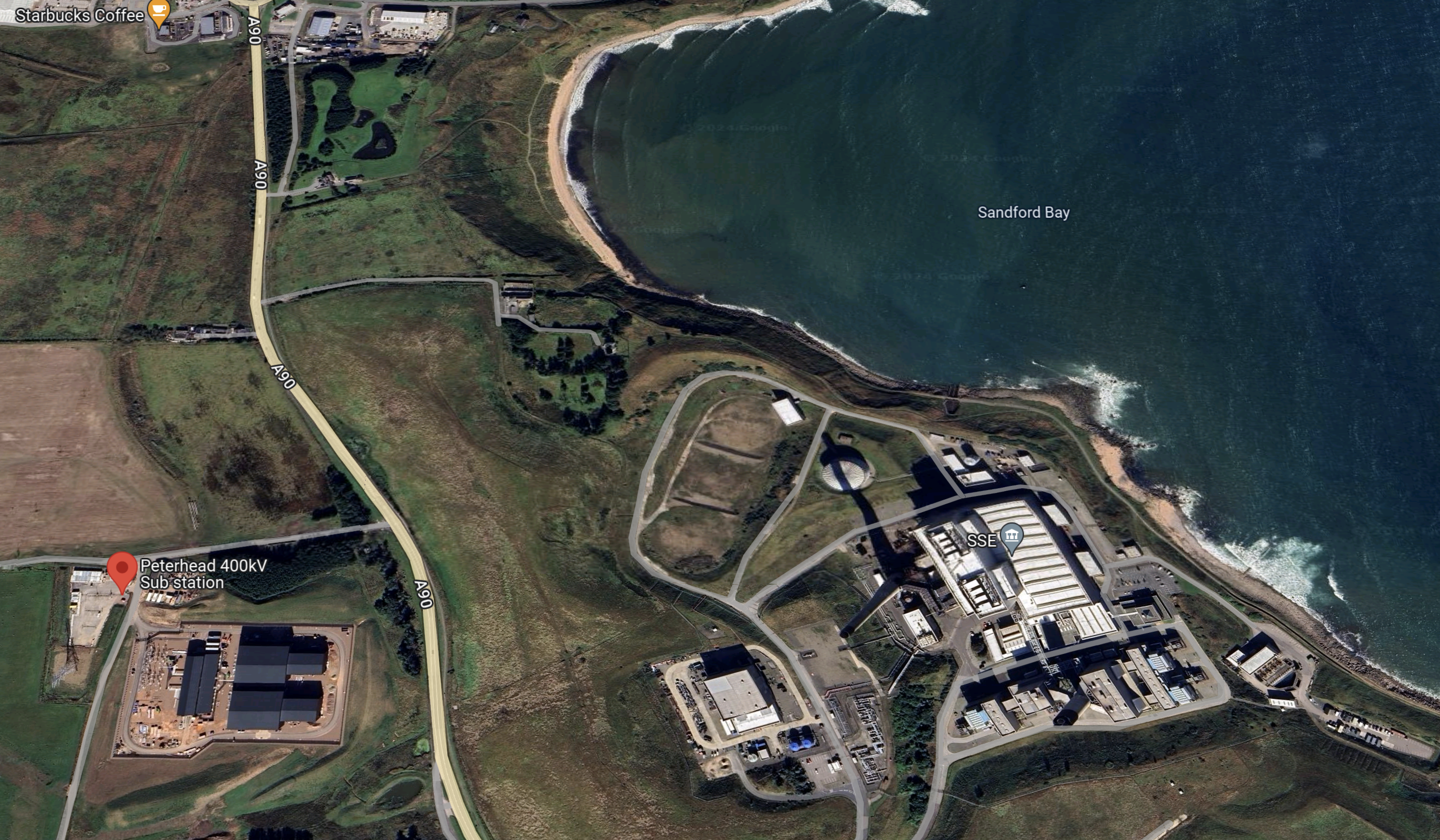
Note.
- Sandford Bay occupies the North-East corner of the map.
- The red arrow indicates the main 400kV sub-station at Peterhead.
- The 2177 MW gas-fired Peterhead power station is to the East of the sub-station marked as SSE.
This second Google Map shows the onshore route of the cable from Wilsthorpe to Drax.

Note.
- Flamborough Head is in the North-East corner of the map.
- Wilsthorpe Beach is at Bridlington a couple of miles South of Flamborough Head.
- The red arrow indicates Drax Power station.
- An onshore underground cable will be installed from landfall in Wilsthorpe to a new onshore converter station built in Drax.
The EGL2 HVDC cable connection from Scotland to England consists of 436km of submarine cable and 69km of onshore cable.
Both converter stations will be on existing power station sites and the major onshore works will be the underground cable between Wilsthorpe and Drax.
Where Does Drax Go From Here?
Currently, Drax power station is a 2595 MW biomass-fired power station.
There are now other large power sources that could replace some or all of the output of Drax power station.
- 2GW of Scottish wind power coming to Drax on Eastern Green Link 2.
- 6 GW of offshore wind is being developed at the Hornsea wind farms.
- 8 GW of offshore wind is being developed at the Dogger Bank wind farms.
- 2.5 GW from the three gas-fired power stations at Keadby, two of which are likely to be fitted with carbon capture.
- 1.8 GW from the proposed hydrogen-fired Keadby Hydrogen power station.
Given the bad feelings many have about Drax burning biomass, with 20.3 GW of electricity, you might think that shutting down Drax would be a simple solution.
But, according to Drax’s Wikipedia entry, it has a unique property.
Despite this intent for baseload operation, it was designed with a reasonable ability for load-following, being able to ramp up or down by 5% of full power per minute within the range of 50–100% of full power.
So Drax could be very useful in balancing the grid, by ramping up and down to fill the gap between production and need.
In addition, there is good biomass. This is from the Wikipedia entry.
A 100,000 tonne pa capacity straw pelletization facility was constructed at Capitol Park, Goole in 2008.
Drax are also promoting BECCS or Bioenergy carbon-capture and storage.
There is a Wikipedia entry for Bioenergy With Carbon Capture And Storage, of which this is the first couple of sentences.
Bioenergy with carbon capture and storage (BECCS) is the process of extracting bioenergy from biomass and capturing and storing the carbon, thereby removing it from the atmosphere. BECCS can theoretically be a “negative emissions technology” (NET).
I do feel that carbon capture and storage is a bit like sweeping the dust under the carpet, when you sweep the floor around it.
But carbon capture and use could be another matter.
This Google Map shows the Drax site.

Note how it is surrounded by agricultural land.
Could the power station be the source of pure carbon dioxide to be fed in greenhouses to flowers, herbs, salad vegetables, tomatoes and other plants?
I suspect there’s productive life left in Drax power station yet!
LionLink
LionLink, that is being developed by National Grid is a new type of interconnector, called a multi-purpose interconnector, that will connect Suffolk and The Netherlands via any convenient wind farms on the way. This means that the electricity generated can go where it is needed most.
I wrote about LionLink in World’s Largest-Of-Its-Kind Power Line To Deliver Clean Power To 1.8m UK Homes And Boost Energy Security.
Other Multi-Purpose Interconnectors
I can see other multi-purpose interconnectors like LionLink being built around the UK.
- There could be one across the Dogger Bank to link out 8 GW of Dogger Bank wind farms with those of the Dutch, Danes and Germans on their section of the bank.
- NorthConnect could be built between Scotland and Norway via some of the wind farms being developed to the North-East of Scotland.
- Could wind farms to the North of Ireland use a multi-purpose interconnector between Scotland and Northern Ireland.
- I can also see one or possibly two, being built across the Celtic Sea to link Devon, South Wales and Southern Ireland via the wind farms being developed in the area.
- Will we also see a Channel multi-purpose interconnector to transfer electricity along the South Coast of England?
Some of these multi-purpose interconnectors could be key to creating a revenue stream, by exporting electricity, to countries in Europe, that have a pressing need for it.
Conclusion
National Grid’s excellent plan will lead to the end of the practice of shutting down wind turbines. The spare electricity will be exported to Europe, which will surely create a good cash-flow for the UK. This in turn will encourage developers to create more wind farms in the seas around the UK’s coasts.
LionLink: Proposed Windfarm Cabling Sites In Suffolk Are Revealed
The title of this post, is the same as that of this article on the BBC.
This is the sub-heading.
National Grid has revealed where it wants to build energy infrastructure for cabling between the UK and the Netherlands.
These four paragraphs describe the project.
The power line, called LionLink, would connect offshore wind farms in the North Sea.
The energy company wants the cables to reach land at either Walberswick or Southwold, both in Suffolk.
A converter station would be built on the outskirts of nearby Saxmundham and could cover a six-hectare area.
That would then connect to a substation being built at the village of Friston, also in Suffolk, as part of the offshore wind plans.
But the plans have brought the Nimbies out in force.
This Google Map shows the Suffolk Coast, to the South of Southwold.
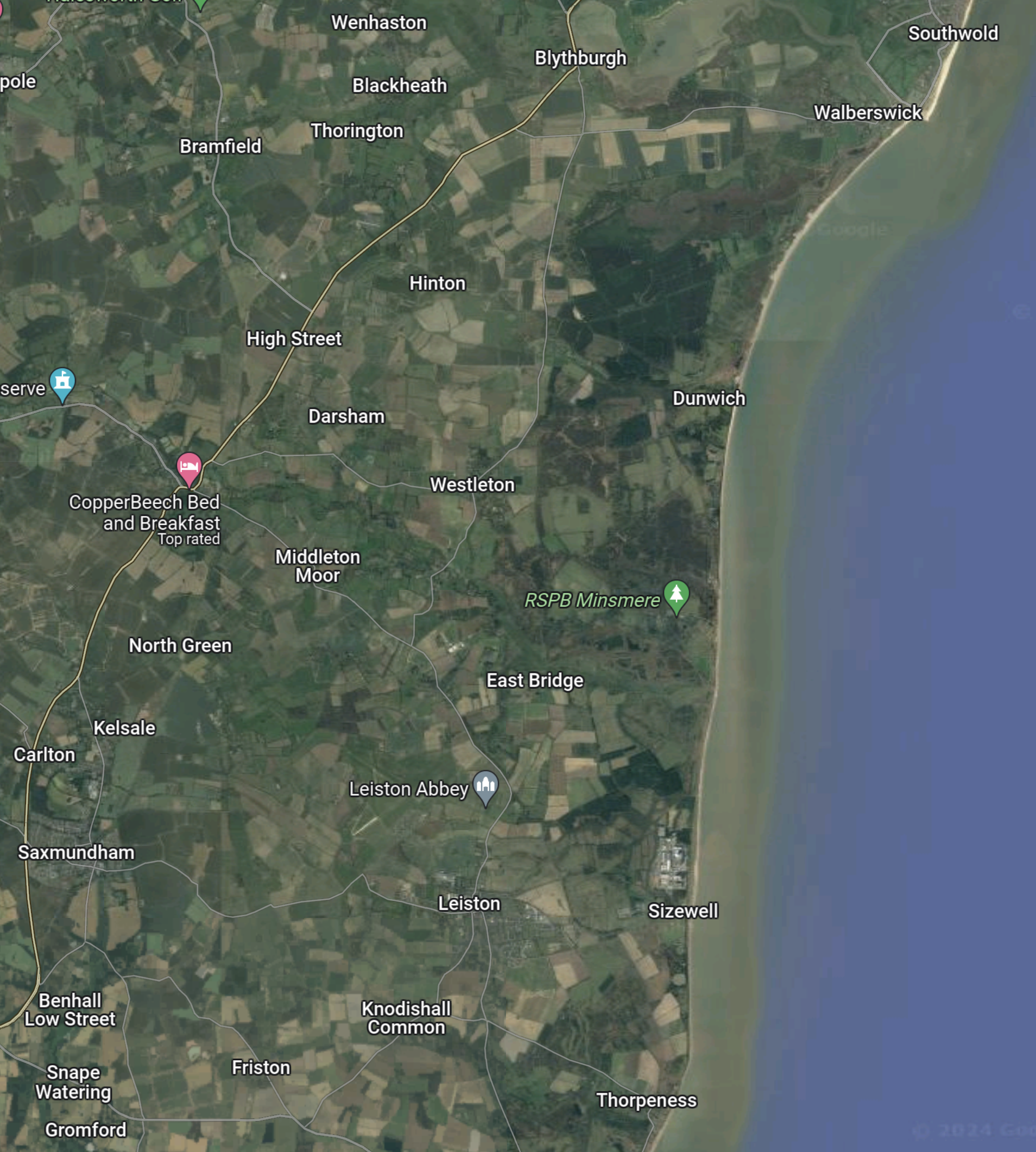
Note.
- Southwold and Walberswick in the North-East corner of the map.
- Saxmundham is just up from the South-West corner of the map, with Friston to its East.
- Sizewell with the 1.2 GW Sizewell B nuclear power station is on the coast directly East of Saxmundham.
- Sizewell B is planned to be joined by the 3.2 GW Sizewell C nuclear power station.
- LionLink is likely to have a capacity of 2 GW.
- I also believe that at least another GW of offshore wind power will be squeezed in along this section of coast.
The Sizewell site is connected to the National Grid at Bullen Lane substation to the West of Ipswich.
These pictures show the pylons that were built in the 1960s to connect Sizewell A to the National Grid.





I doubt, they would be allowed to be erected today.
One alternative would be to use T-pylons, like these built to connect Hinckley Point C to the National Grid.

There is more on T-pylons in this press release from National Grid, which is entitled National Grid Energise World’s First T-Pylons.
This Google Map shows the area between Ipswich and the coast.
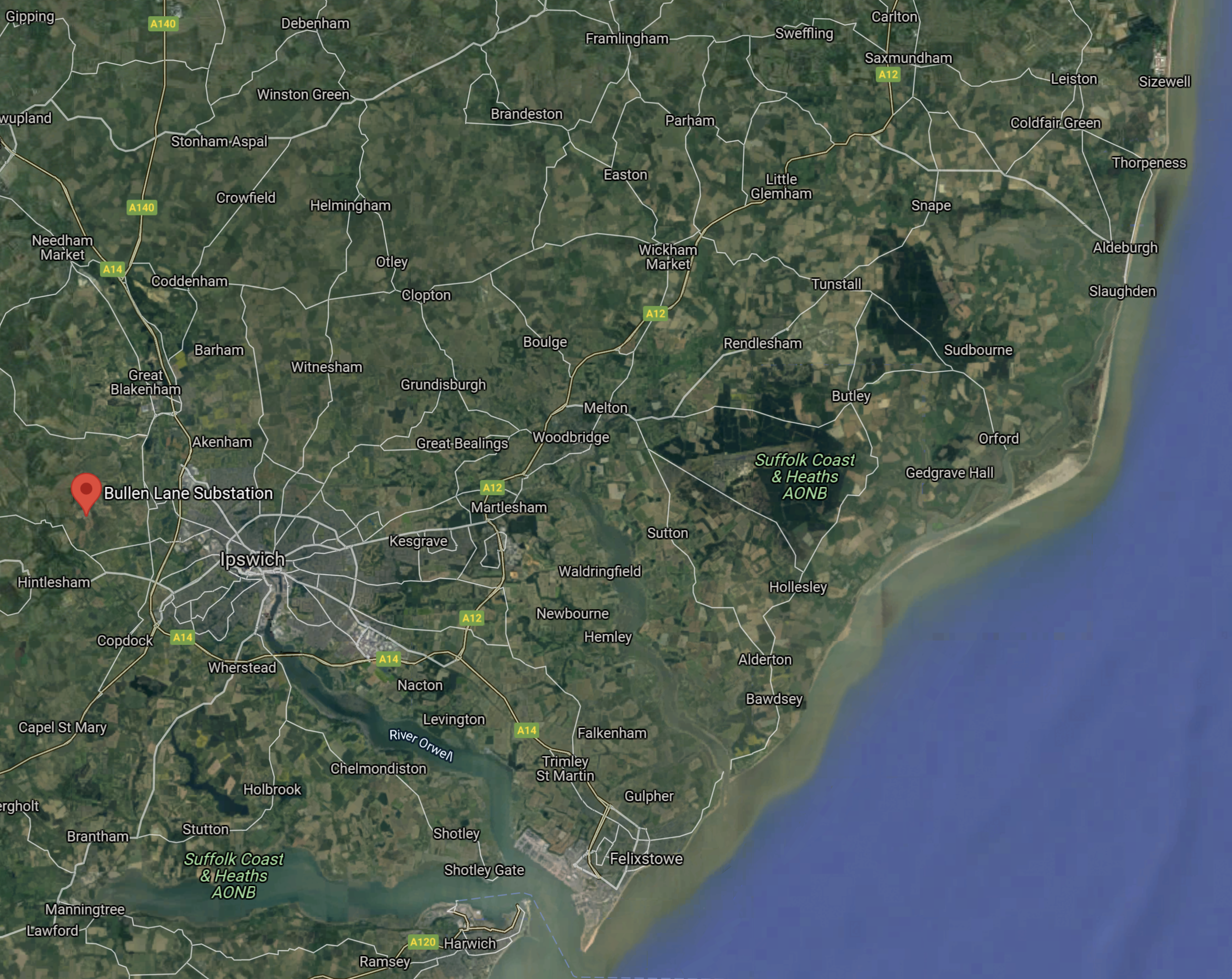
Note.
- Sizewell is in the North-East corner of the map.
- Felixstowe, Harwich and Freeport East are at the mouth of the rivers Orwell and Stour.
- The Bullen Lane substation is to the West of Ipswich and shown by the red arrow.
Looking at maximum power flows in Suffolk and Somerset, we get.
- North-East Suffolk to the National Grid at Bullen Lane – 7.4 GW.
- Hinckley Point C to the National Grid – 3.26 GW.
I am led to the conclusion, that there need to be a doubling of the pylons between North-East Suffolk and Bullens Lane.
I can understand why the Nimbies have been aroused.
I believe that National Grid will have to take the undersea route along the coast of Essex and Suffolk, to get the electricity to its markets.
T-Pylons To The West Of Yatton Station
I talked about National Grid’s first T-pylons in National Grid Energise World’s First T-Pylons.
Today, I went and had a look for them and found where they cross the Bristol-Exeter Line between Yatton and Worle stations.
I took these pictures.











Note.
- The first nine pictures were taken going West between Yatton and Worle and the last eleven were taken going East.
- Some of the mature trees seem to hide the pylons, as the train passes.
T-pylons are deliberately smaller than traditional pylons, as these pictures show.




It is certainly a good attempt at producing a less noticeable electricity transmission line.
It’s T-time! All T-Pylons Now Erected On Hinkley Connection Project
The title of this post, is the same as that as this press release from National Grid.
These are the three bullet points.
- All 116 world-first T-structures now complete as part of the Hinkley Connection Project
- Last of 232 diamond ‘earrings’ lifted onto a T-pylon between Yatton and Kenn in North Somerset
- 36 of the new T-pylons between Woolavington and Loxton were energised in March
This is the first paragraph.
National Grid’s Hinkley Connection Project reached another milestone with the completion of all 116 of its iconic new T-pylons, which will connect six million homes and businesses in the South West to home grown, low-carbon energy.
There is a video in the press release, which is well worth a view.
National Grid Energise World’s First T-Pylons
The title of this post, is the same as that of this press release from National Grid.
These are the four bullet points.
- Electricity is flowing to homes and businesses through the first new pylon design in the UK for nearly 100 years.
- Major milestone in National Grid’s Hinkley Connection project to connect 6 million homes and businesses in the South West to home grown, low carbon energy.
- The T-design, with a single pole and cross shaped arms, is around a third shorter than the traditional design with a smaller ground footprint.
- The T-pylons, along with a new substation and underground cabling, are now incorporated into National Grid’s electricity transmission network delivering electricity in Somerset and across England and Wales.
This is the first paragraph.
National Grid has successfully energised 36 of the world’s first T-pylons between Bridgwater and Loxton in Somerset. The new shaped pylons have been constructed as part of the £900 million Hinkley Connection Project, a new 57 km high-voltage electricity line that will connect six million homes and businesses to new sources of home grown, low carbon energy and help the UK to meet its net zero by 2050 target.
There is a video in the press release, which is well worth a view.
- The size of the pylons certainly reduces their visibility.
- It appears there are seven cables on either side.
These pictures show the transmission lines to the Sizewell power station site.
Note.
- The lower height is very noticeable.
- There seem’s to be a lot more wires.
- I would assume, that the reduced number of components, reduces the cost of installation and maintenance.
The installation proved that even in the most mundane of applications, innovation can bring positive results.
The T-pylons are a design by Danish company; Bystrup.
This is the specification from their comprehensive web-page.
- Power – 2 x 400 kV
- Height – 35 metres / 114 feet
- Units/km – 3 (5 units/mile)
- Material – Hot-dip galvanised steel, painted
- Assembly – On-site and quick – less than 10 parts
- Installation – Simple monopile foundation
- Production possible anywhere in the world
- Developed – 2011-2014
They’ve also won several awards.
- 1st prize in int. competition for RIBA
- Nominated for the IET Innovation Award 2014
- Gold Prize, CIGRE Seoul 2017
- Award winner, UK Steel Awards (SSDA) 2017
I would hope to see more in the UK.
Berwick Bank Wind Farm Could Provide Multi-Billion Pound Boost To Scottish Economy And Generate Thousands Of Jobs
The title of this post, is the same as that of this press release from SSE.
This press release is all about numbers.
- 307 turbines
- 4.1 GW nameplate capacity
- 5 million homes will be powered
- 8 million tonnes of carbon dioxide avoided
- Up to £8.3 billion to the UK economy
- 4650 potential jobs in Scotland
- 9300 potential jobs in the UK
These are all large figures.
This map from SSE shows the location of the wind farm.
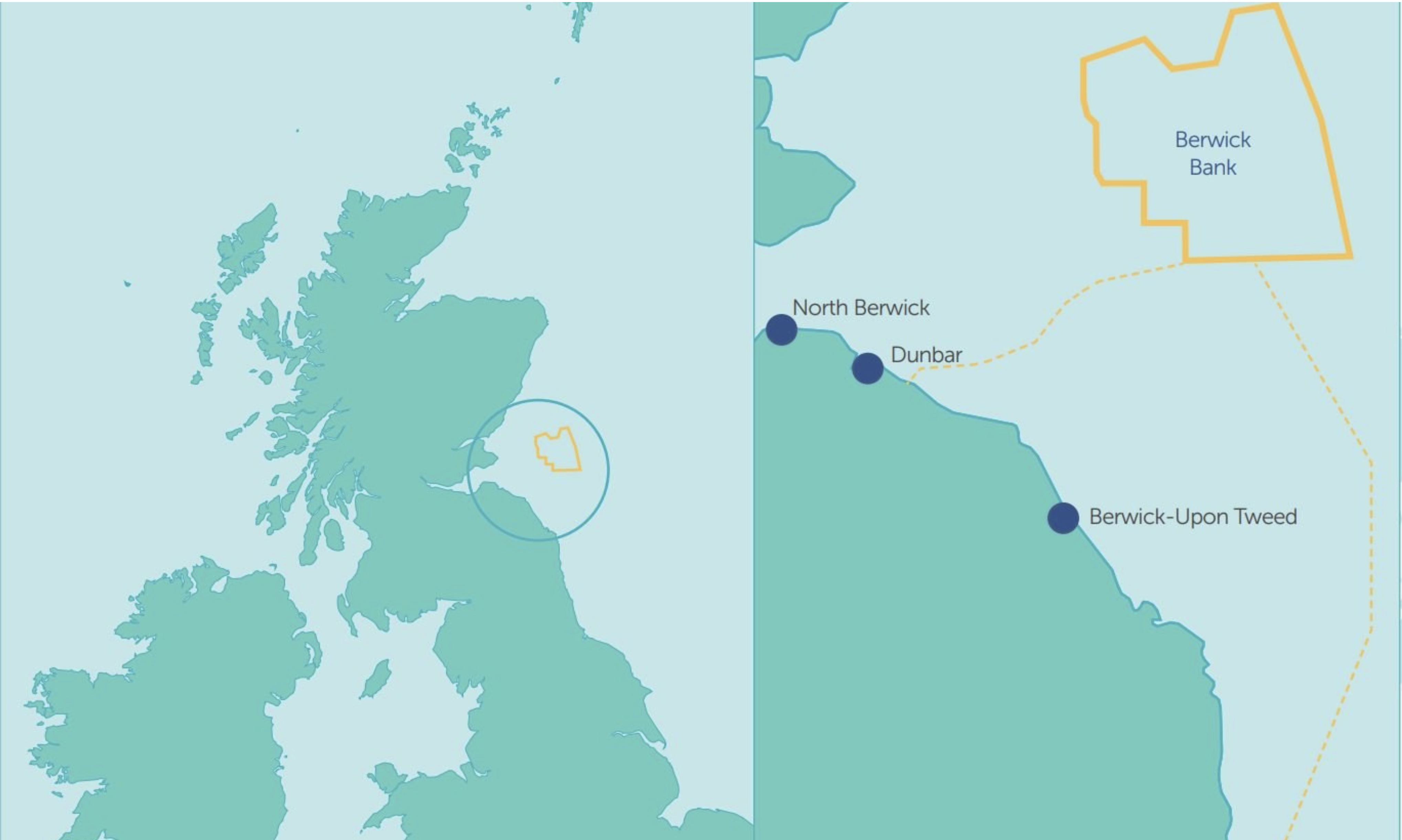
The press release says this about connections to the grid.
Berwick Bank has secured a grid connection at Branxton, near Torness, in East Lothian. A second grid connection will be required for the project, which has been determined as Blyth, Northumberland.
Note, that Torness is the site of Torness nuclear power station.
- It has a nameplate capacity of 1.29 GW.
- It is scheduled to be shutdown in 2028.
This Google Map shows the coast between Dunbar and Torness nuclear power station.
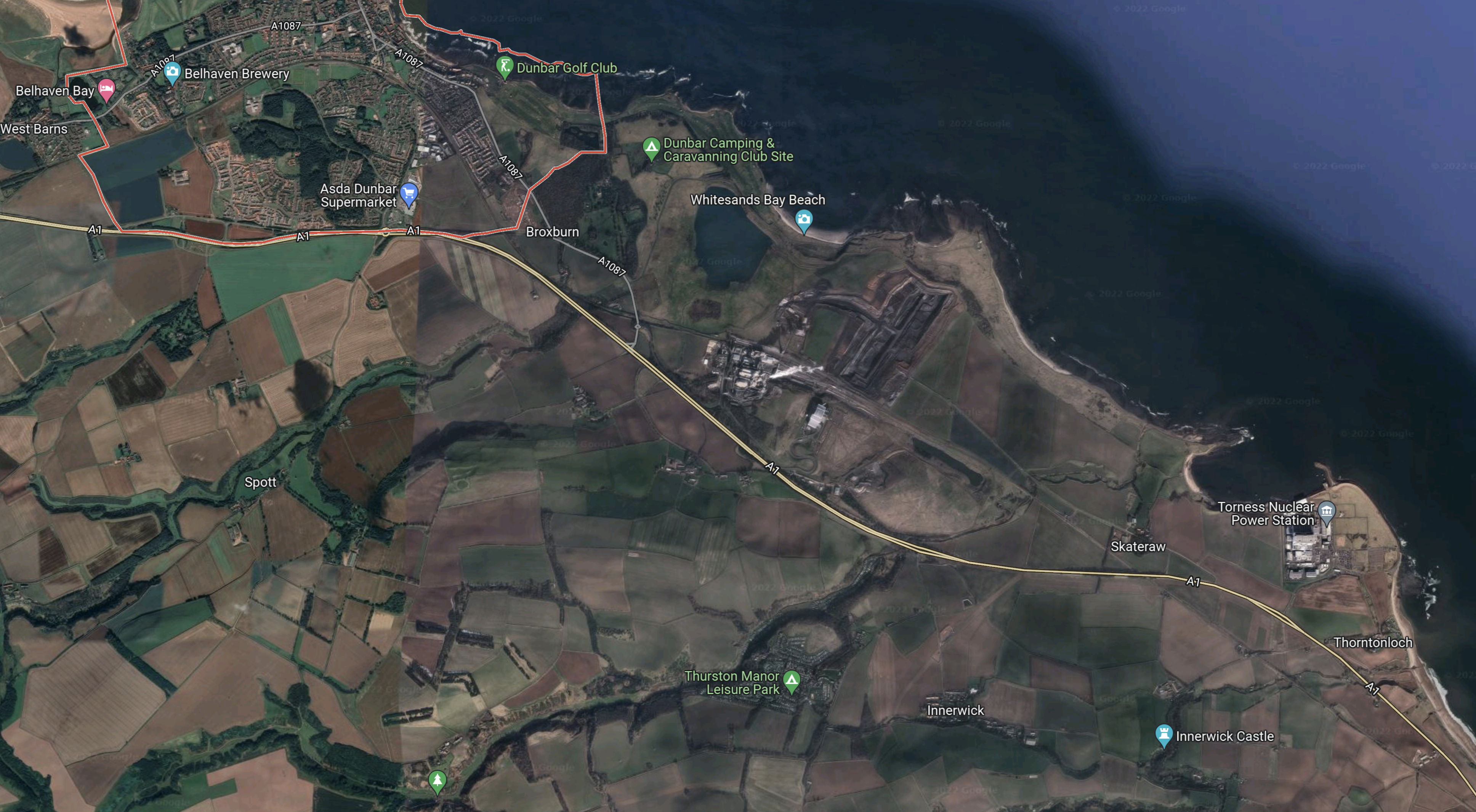
Note.
- The town of Dunbar is outlined in red.
- The yellow line running diagonally across the map is the A1 road.
- Torness nuclear power station is in the South-East corner of the map to the North of the A1.
This second Google Map shoes an enlargement of the South-East corner of the map.
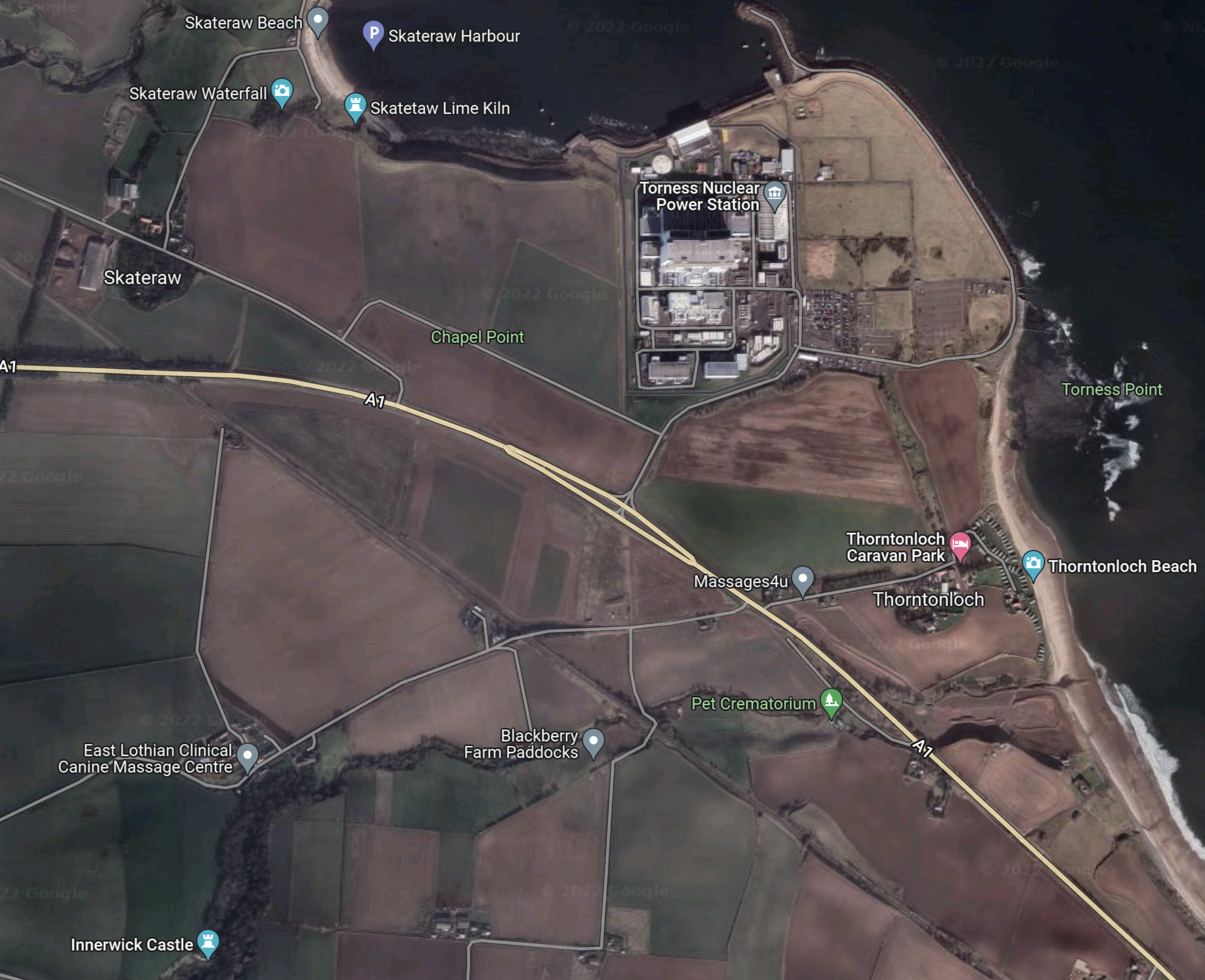
Note.
- Torness nuclear power station at the top of the map.
- The A1 road running across the map.
- The East Coast Main Line to the South of the A1.
- Innerwick Castle in the South-West corner of the map.
This Google Map shows the location of Branxton substation in relation to Innerwick Castle.
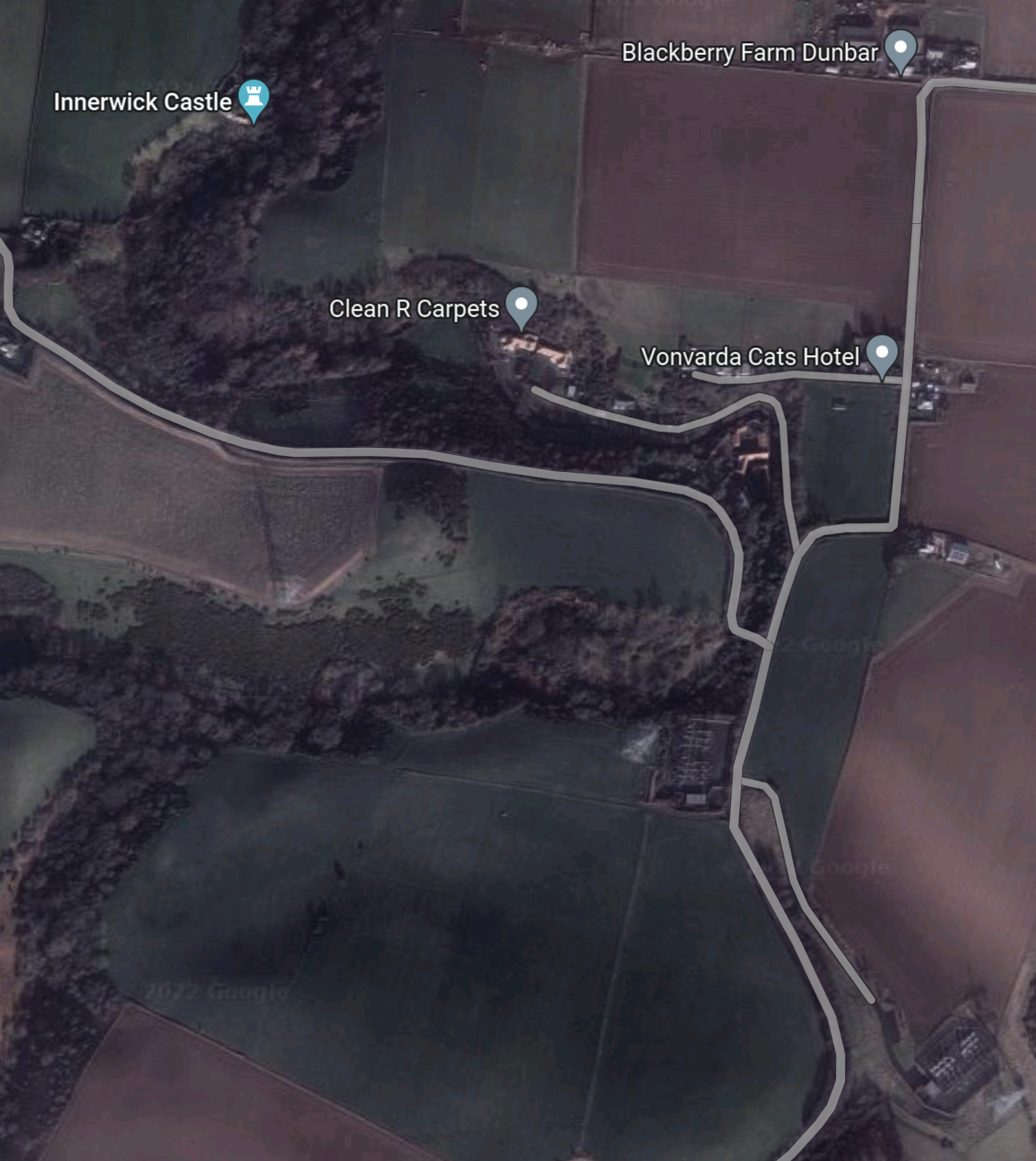
Note.
- Innerwick Castle is in the North-West corner of the map.
- Branxton substation is in the South-East corner of the map.
I estimate that the distance between Torness nuclear power station and Branxton substation is about five kilometres. The cable appears to be underground.
I have some thoughts.
Will The Connection Between Berwick Bank Wind Farm And Branxton Substation Be Underground?
If SSE follows the precedent of Torness nuclear power station, it will be underground.
Or will they use T-pylons?
This page on the National Grid web site is entitled What’s A T-Pylon And How Do We Build Them?.
From an engineering point of view, I suspect T-pylons could be used, but aesthetics and local preference may mean the cable is underground.
It should be noted that Torness nuclear power station will be shutdown in 2028. So will the current underground cable for the nuclear power station be repurposed after shutdown for the Berwick Bank wind farm?
This would mean, that the Southern connection cable to Blyth could be built first to support the first turbines erected in the wind farm.
When Will Berwick Bank Wind Farm Be Commissioned?
This page on the Berwick Bank wind farm web site is a briefing pack on the project.
The page gives construction and commission dates of 2026-2030.
Will There Be A Battery At Torness?
As we are talking about the latter half of the current decade for completion of the Berwick Bank wind farm, I believe that a substantial battery could be installed at Torness to smooth the output of the wind farm, when the wins isn’t blowing at full power.
One of Highview Power’s 2.5 GW/30 GWh CRYOBatteries could be about the right size if it has been successfully developed, but I am sure that other batteries will be of a suitable size.
If there is a case for a battery at Torness, there must surely be a case for a battery at Blyth.
Will Berwick Bank Wind Farm Be A Replacement For Torness Nuclear Power Station?
Consider.
- Torness nuclear power station is shutting down in 2028.
- Berwick Bank wind farm will be fully operational by 2030.
- Berwick Bank wind farm could use a repurposed connection to Branxton substation, if the nuclear power station no longer needs it.
- There is space on the Torness site for a large battery.
, it looks like Torness nuclear power station could be replaced by the larger wind farm.
 The Anonymous Widower