Will Crossrail And Its Class 345 Trains Set Mobile Connection Standards For The UK?
Search for “Class 345 trains 4G” or “Class 345 trains wi-fi” and you find reports like this on London Reconnections about the Class 345 train.
This or something like it, is said in several of these reports.
According to the accompanying press notes both free wifi and 4G services will be delivered on board, as will multiple wheelchair and luggage spaces.
It would be very embarrassing for London’s flagship multi-billion pound project, if it wasn’t correct.
So it would appear that I could board a Class 345 train at Shenfield and watch a video all the way to Heathrow or Reading.
But where does this leave Thameslink?
Their Class 700 trains have been designed without wi-fi, 4G and power-sockets as I said in By Class 700 Train To Brighton And Back.
But at least Siemens felt that the Department for Transport, who ordered the trains, were out of step with reality and appear to have made provision to at least fit wi-fi.
This article on Rail Engineer is entitled Class 707 Breaks Cover and it describes the Class 707 train, which is a sister train to the Class 700. This is said about the two trains and wi-fi and toilets.
Thameslink (or the Department for Transport which ordered the trains) decided not to include Wi-Fi in the Class 700s, a questionable decision that has now apparently been reversed. Fortunately, Siemens had included the technology framework in the design so, hopefully, the upgrade will not require too much effort. Suffice it to say that South West Trains has included Wi-Fi in its specification for Class 707s.
Reversing the story, Thameslink Class 700s are all fitted with toilets. However, South West Trains has decided not to include toilets in its Class 707 specification given that the longest journey time is less than one hour and their inclusion would reduce the overall capacity of the trains.
So it appears that Siemens may have future-proofed the trains.
This article on the Railway Gazette describes the third fleet of the Siemens trains; the Class 717 trains for Moorgate services. This is said.
Plans for the installation of wi-fi are being discussed with the Department for Transport as part of a wider programme for the GTR fleet.
So at least something is happening.
But how close will mobile data services get to the ideal that customers want.
- 4G everywhere from the moment you enter a station until you leave the railway at your destination station.
- Seamless wi-fi, so you log in once and your login is valid until you leave the railway.
It will be tough ask to achieve, as it must be valid on the following services.
- Crossrail
- Thameslink
- London Overground
- London Underground
- All train services terminating in London.
And why not all buses, trams and taxis?
On a related topic, I believe that for safety and information reasons, all bus and tram stops and railway stations must have a quality mobile signal and if it is possible wi-fi.
One life saved would make it all worthwhile.
My Links To Thameslink
Thameslink is a railway, I don’t use much these days, as getting to stations is not that easy, since London Bridge was taken off the route, by the rebuilding.
St. Pancras is an absolute pain of a station to use, as the station was designed by a sadist with long tunnels from the deep-level Underground lines.
Farringdon is a better interchange going South, as it is step-free from the Westbound Metropolitan Line, which I take from Whitechapel after using the East London Line from Dalston Junction. But going North coming home from Farringdon is not easy.
City Thameslink is a bit of a walk from the 56 bus, which stops by my house.
Blackfriars is not the easiest station to get to from my area.
These are my thoughts about using Thameslink after about 2018, when the Great Northern Metro is open with its new Class 717 trains.
My Link To Thameslink Going North
Living where I do approximately midway between Highbury and Islington, Dalston Junction and Essex Road stations, getting to some major rail termini can be difficult and if I was taking a case with me, I would have to use a bus or taxi.
I tend to avoid Highbury and Islington station going out, as the station and its environs is in desperate need of a rebuild and to get say to the Victoria Line for Kings Cross is a long and difficult walk from the bus stop and through the maze of roads and tunnels to the platform.
But with Essex Road station having a frequent bus service from the stop nearest my house and a 10 tph connection to Finsbury Park, that will be my route to get to Thameslink going North to Cambridge or Peterborough.
I don’t think I’ll be alone, in using the Great Northern Metro to get access to Thameslink to go North.
My Link To Thameslink Going South
I have a choice of routes to go South on Thameslink.
- I could take the same route as for going North, but the interchange at Finsbury Park is a dreaded down and upper.
- I can take a 141 or 21 bus to London Bridge station. I regularly use this route coming home, but going South is dreadfully slow through Bank.
- I can take a 38/56 bus to the Angel and get the Northern Line to London Bridge.
- I can take a 56 bus to St. Bartholomews Hospital and walk downhill to Farringdon station.
- I can take a train from Dalston Junction to Canada Water and then use the Jubilee Line.
- Don’t suggest the Victoria Line to St. Pancras as the walk in the depressing tunnel at Kings Cross is to be avoided at all costs.
- Don’t suggest a 30 bus to St. Pancras, as it requires a long walk through the busy Shopping Centre at St. Pancras because Thameslink doesn’t have a much needed Southern entrance.
- I could always go via Essex Road and Finsbury Park.
I actually would like to take a train from Dalston Junction to say New Cross Gate for East Croydon and get Thameslink or the myriad Southbound services from there.
But the new proposed timetable for 2018, would seem to make that an more difficult dream, unless I wanted to wait for a long time on say Norwood Junction station.
Conclusion
Going North is easy, but as they don’t serve the \greater East London, GTR treat us with contempt and make it difficult for us to use Thameslink easily, if we’re going South.
Sittingbourne Station
Sittingbourne station is the next major station after Rainham station, as you go East on the Chatham Main line.
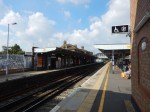
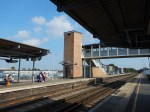
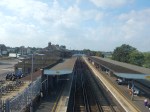
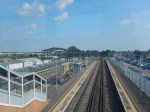
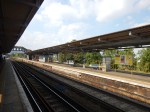
It doesn’t want for much more, as it has three long platforms, a step-free footbridge and most of the things a good station needs.
It is the station that connects the Sheerness Line to the Chatham Main Line.
So would it be a better idea to run the Thameslink service to Sittingbourne instead of Rainham?
The trains could even co-ordinate with the shuttle train to Sheerness.
It is a possibility, but Sittingbourne has five trains per hour (tph) going into London and they all pass over the bottleneck of the the level crossing at Rainham station.
I discuss this more in What Do You Do With A Problem Like Sheppey?
Through The Medway Towns
If you look at the services through the Medway Towns, you will have the following services in 2018.
- 2 trains per hour (tph) Highspeed services between St. Pancras and Faversham.
- 2 tph Thameslink services between Luton and Rainham.
- 3 tph services between Victoria and the Kent Coast.
- 2 tph services between Charing Cross and Gillingham
Note.
- It is a service with frequencies of between five and seven tph in both directions.
- The smallest trains serving the route are six-car Class 395 trains, with most at least eight-cars.
- The service reaches from Abbey Wood, Dartford, Greenhithe and Swanley in the West. to Sittingbourne, Faversham and the Kent Coast in the East.
- The fare supplement for Highspeed services is only paid West of Gravesend, so from that station to the East, normal fares are paid and the trains just contribute seats to the service.
Conclusion
It is a turn-up-and-go metro par excellence run with quality trains.
The possibilities for improvement are good too!
Related Posts
A Design Crime – Ebbsfleet International Station
Between Abbey Wood And Belvedere Stations
Connecting North Kent And The Medway Towns To Ebbsfleet International Station
Extending Crossrail To Gravesend
What Do You Do With A Problem Like Sheppey?
Thameslink To Rainham
Modern Railways in August 2016, said that Thameslink would be running a two trains per hour (tph) service between Luton and Rainham via Greenwich and Dartford.
GTR’s Proposals
This document on their web site gives these outline proposals for Kent Thameslink services.
This is the opening paragraph.
Proposed new all-day Monday to Friday, Saturday and Sunday Thameslink service on the North Kent line via Greenwich, Dartford and Medway Towns.
They describe it in more detail later.
New cross-London journey opportunities providing multiple connectivity opportunities will be created between Luton – St Albans City – West Hampstead Thameslink – Central London (via London Bridge) – Greenwich – Abbey Wood – Dartford – Rochester – Rainham. This new route will provide multiple new connections with the new east to west Elizabeth Line (formally Crossrail) at Abbey Wood. The route can also be operated by 8 or 12 car trains.
I will now add a few comments.
The Eastern Terminal
In Rainham (Kent) Station, I took a look at the proposed terminal.
- Rainham station is Thameslink-ready with a bay platform 0 of sufficient length for a twelve-car Class 700 train.
- Rainham station can probably handle the two trains per hour (tph) from Luton without undue fuss.
- Rainham as a terminal means the string of important stations in the Medway towns, which includes Gravesend, Strood, Rochester, Chatham and Gillingham, could all be served by Thameslink.
- The only other station beyond Gravesend with a bay platform is Rochester.
- Terminating at Rainham doesn’t increase the train frequency over the busy level crossing.
- Terminating at Rainham gives 5 tph from Gravesend to Rainham and 7 tph between Rochester and Rainham, which creates a high-capacity frequent route through the Medway Towns.
It would appear to be the sort of choice, that is difficult to fault.
Should The Thameslink Service Stop At More Stations?
Coming back from Rainham today, I took a Highspeed service to Gravesend, from where I caught a Gillingham to Charing Cross service that was following a few minutes behind.
As there are several stopping services on the line, perhaps stopping at a few important stations will be sufficient.
- Greenhithe for the shopping at Bluewater.
- Dartford for all the connectivity.
- Abbey Wood for Crossrail.
- Greenwich for the culture and the Docklands Light Railway.
Stopping patterns could be altered to fit traffic patterns, passengers requirements and new property developments
Eight-Or Twelve-Car Trains
It would all depend on the traffic, but there doesn’t seem to be any reason why either train size can’t be used between Luton and Rainham.
Related Posts
A Design Crime – Ebbsfleet International Station
Between Abbey Wood And Belvedere Stations
Connecting North Kent And The Medway Towns To Ebbsfleet International Station
Extending Crossrail To Gravesend
What Do You Do With A Problem Like Sheppey?
A Twelve-Car Ready Railway
On my trip to Rainham station in Kent, I went through numerous stations.
I took this picture.

A Twelve-Car Ready Railway
Note the blue 10-12 sign, which indicates the stopping point for trains between ten and twelve cars.
I’m pretty certain that all stations between London Bridge and Rainham can accommodate trains of this length, as there were blue twelves everywhere.
To the East of Rainham, a good proportion of the services are run by six-car Class 395 trains. As these can run in 12-car formations, I suspect that most platforms have been made long enough.
This railway is probably future-proofed with regards to train length.
It will certainly accept.
- Crossrail’s Class 345 trains.
- Highspeed’s Class 395 trains running as a twelve-car.
- Thameslink’s Class 700 trains, running as eight-car or twelve-car.
- Electrostars in various lengths.
Sadly, not all rail lines in the UK have been built with long enough platforms and extending some will be difficult.
Related Posts
A Design Crime – Ebbsfleet International Station
Between Abbey Wood And Belvedere Stations
Connecting North Kent And The Medway Towns To Ebbsfleet International Station
Rainham (Kent) Station
There are two stations with the same name and this Rainham station is the one in Kent, which is to the East of Gillingham on the Chatham Main Line.
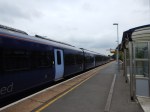
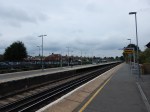

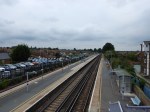
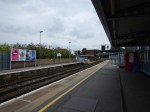


It is a busy station, which has these typical off-peak services.
- 2 trains per hour (tph) to London St Pancras via Chatham and Ebbsfleet International
- 3 tph to London Victoria via Chatham and Bromley South (1ph calling at Denmark Hill)
- 1 tph to Sittingbourne and Faversham only
- 2 tph to Dover Priory via Canterbury East
- 2 tph to Ramsgate via Margate
Adding them up gives 5 tph in both directions, with a choice of Highspeed or traditional services to and from two London termini.
The station has benefited from the East Kent Resignalling Project. This is said in Wikipedia.
Rainham has a new bay platform off the up-line, which can accommodate a 12-car train, labelled Platform 0. It is now being used as a Terminus for a couple of evening rush hour trains.
It would appear to be an extra platform, that has been fitted well into the layout of the station.
If Thameslink does run a service from Rainham to Luton from 2018, the platform would have no difficulty turning the two trains per hour.
This will give a 2 tph service to three London termini; London Bridge, Blackfriars and St. Pancras on its way to Luton.
The level crossing at the station, probably limits the number of trains through Rainham station, despite the fact that some may be timed to pass in the station, which reduces the number of times it closes to road traffic.
So using the bay platform 0 for Thameslink, increases the frequency to the West of the station to 7 tph, but leaves that through the crossing at 5 tph.
It seems to be a sensible way to increase train frequencies without choking road traffic too much.
I very much like the thinking behind the design.
Related Posts
A Design Crime – Ebbsfleet International Station
Between Abbey Wood And Belvedere Stations
Connecting North Kent And The Medway Towns To Ebbsfleet International Station
Extending Crossrail To Gravesend
What Do You Do With A Problem Like Sheppey?
The Great Northern Metro
Govia Thameslink Railway have just announced their proposals to create a Great Northern Metro.
This was something I speculated about in A North London Metro.
GTR’s Proposals
This document on their web site gives these outline proposals.
- 2018 timetable will provide new connections and increase capacity.
- More frequent trains to provide a ‘true’ metro service.
- New air-conditioned trains from 2018.
It looks like I got those right
These are other proposals.
14 Trains Per Hour To/From Moorgate in The High Peak
Currently, a maximum of 12 trains per hour (tph) can get in and out from Moorgate station in the High Peak.
Raising it by two to 14 tph surprised me, but it says that they have found a way with the new trains to save time possibly by using better technology to change the voltage quicker at Drayton Park.
Effectively, the headway between trains is being reduced from five minutes to four and a half minutes.
One big advantage for people like me, who live close to a Southern station on the line, as I do with Essex Road station, is that going North in the morning rush and South in the evening rush, will be easy.
Services To/From Moorgate in The Off Peak
This is a summary of the changes in the Off Peak.
- 6 tph to Hertford North – Up from 3 tph
- 4 tph to Welwyn Garden City – Up from 3 tph
- 2 tph to Stevenage – Up from 1 tph
- Sunday services are 4 tph to both branches and 2 tph to Stevenage.
On the other hand, it appears there will now be no direct trains between Moorgate and Letchworth Garden City.
My local station is Essex Road and I regularly use the line to go North and South between Moorgate and Alexandra Palace.
Instead of a measly six tph, I’ll now be getting 10 tph all day, with 8 tph on Sundays.
I thought it would be four tph to Hertford North and Welwyn Garden City, so they’re actually going to do better than I thought they would.
An Eastward Shift In Services
The two branches used to be treated fairly equally with 3 tph on each.
But now it appears that Hertford North gets preference.
But then the East Coast Main Line will be getting Thameslink services.
- 6 tph stopping at Finsbury Park
- 0 tph stopping at Alexandra Palace
- 2 tph stopping at Potters Bar
- 2 tph stopping at Welwyn Garden City
- 6 tph stopping at Stevenage
Note that these are very much a summary.
Problem! – Will Thameslink Stop At Alexandra Palace?
,I do hope that Thameslink services not stopping at Alexandra Palace, when they stop at places like Oakleigh Park is a typo.
Consider.
- Alexandra Palace is the last station before the Hertford Loop Line splits from the East Coast Main Line.
- Alexandra Palace has an attraction that passengers might want to visit.
- Alexandra Palace station may well be served by Crossrail 2.
But most importantly, Alexandra Palace could have a cross-platform and/or same-platform interchange between Great Northern Metro services on both routes and Thameslink.
So it would be a good interchange for eighty-year-old Aunt Mabel going from Enfield Chase to Gatwick Airport with her suitacse full of presents for her grandchildren.
My Link To Thameslink Going North
I laid this out in My Links to Thameslink and I suspect from 2018, I’ll take bus to Essex Road station and then take the Great Northern Metro to Finsbury Park.
I don’t think I’ll be alone, in using the Great Northern Metro to get access to Thameslink to go North.
My Link To Thameslink Going South
I laid this out in My Links to Thameslink and I suspect from 2018, I accept what GTR offer or take the Essex Road and Finsbury Park route.
- Highbury And Islington Station
But what would help everybody within a couple of miles or so of Highbury and Islington station, is to upgrade the station to the Twentieth Century.
- Provide a second entrance on the North side of Highbury Corner roundabout, where there is a disused station entrance.
- Provide a better connection between the Northbound and Southbound deep-level platforms.
- Provide full step-free access to the deep-level platforms.
- Improve the lighting and ambience in the deep-level platforms.
Talking to someone who works in the station and is obviously familiar with the tunnels, he felt, as I do, that there are fairly simple solutions to sorting out the deep-level platforms.
I would do the following.
- Open up the second entrance.
- Create a subway under Holloway Road.
- Improve the walking routes and access to buses outside the station.
- Put lift access from the new entrance to a passage that would cross all four deep-level lines.
- Provide step-free access from the cross-passage to the four deep-level lines.
- Replace the stairs connecting the two Southbound platforms
Unfortunately, I suspect that the new road bridge over the railway in front of the station has probably been built without leaving space for the subway.
The Link To Crossrail
In Liverpool Street Crossrail Station Disentangled, I showed that changing between Crossrail and the Northern City Line at Moorgate could be easy.
Now that the service into Moorgate will be 10 tph all day, with 8 tph on Sundays, the line will become an important link to Crossrail for a large area of North London.
Consider.
- The Piccadlly Line has no connection with Crossrail, so changing at Finsbury Park for Moorgate might be the quickest way to get to the new line.
- The Victoria Line has no connection with Crossrail, but there is cross-platform interchange at Highbury and Islington with the Great Northern Metro.
- The North London Line connects to the Great Northern Metro at Highbury and Islington.
Taken together, the Piccadilly Line, Victoria Line and the Great Northern Metro, with help from more local transport methods like bikes and buses, will certainly improve the link to Crossrail for a large area of Enfield, Hackney, Haringey, Islington and Waltham Forest.
My only worry, is that as the Great Northern Metro gives such good access to Crossrail for such a wide area of London and South Hertfordshire, that the planned 10 tph into Moorgate all day, with 8 tph on Sundays, will be too low.
At least the improvements to the service are coming in around 2018, which would be before Crossrail opens in 2019.
Once Crossrail opens, I suspect, it will give me a better link to Thameslink, especially when I need to go South.
Conclusions
The service is a great improvement on the current one. But I predicted that!
The service is going to meet what I suspect, GTR hope it will.
As an average punter on the Northern City route from Essex Road, I will get a lot more trains.
I shall certainly use Essex Road and Finsbury Park to get to Cambridge.
It’s a pity it doesn’t help to use Thameslink in the difficult direction to the South.
Related Posts
GTR’s 2018 Timetable Consultation
Liverpool Street Crossrail Station Disentangled
Along The North Kent Line
The North Kent Line has seen some changes in the last few years and could see some more in the next few.
Starting from the terminal in London Bridge, which itself is going through a massive upgrade, these improvements have been done or will happen.
Woolwich Arsenal
Woolwich Arsenal station has from 2009 provided a direct link to the Docklands Light Railway, giving a direct connection to London City Airport and Bank.
In 2019, Woolwich station on Crossrail will open, which will be two hundred metres away from Woolwich Arsenal station. This will probably not have a direct effect on Woolwich Arsenal station, but two stations will certainly stimulate development in the area.
I doubt many will use this station to interchange between the North Kent Line and Crossrail, as it looks like the connection at Abbey Wood station could be easier.
Abbey Wood
Abbey Wood station is being rebuilt and in December 2018, Crossrail will start services at the station to Paddington via Canary Wharf and the central tunnel.
Wikipedia says this about Crossrail services at Abbey Wood station.
Abbey Wood is the terminus of one of two eastern branches of Crossrail and will offer cross-platform interchange between terminating Crossrail services (at 12 trains per hour on new line) and existing Southeastern services (along existing tracks)
Plans are always being talked about to link Abbey Wood station to the North Bank of the Thames at either Gallions Reach or Barking Riverside.
I doubt it will happen in the next ten years.
Dartford
Dartford station has from the beginning of this year been one of London’s contactless ticketing stations, as is reported in Oyster and Contactless Bank Cards, under the station’s Wikipedia entry.
Don’t be surprised if this creeps outwards from London.
Greenhithe
Greenhithe station was rebuilt in 2008 and is the station for Bluewater.
Because of the Shopping Centre, Greenhithe will probably be a station that could benefit from contactless ticketing.
Northfleet
Northfleet station is the closest to Ebbsfleet International and we could see an improved link between the two stations.
As Northfleet could have upwards of four trains per hour (tph) stopping in both directions, a frequent shuttle bus, could be an affordable option.
Smaller Stations
There are several smaller stations between London Bridge and Gravesend.
I’m obviously not sure, but on a quick look all of them seem ready to accept the long trains, that will be used by both Thameslink and Crossrail.
Gravesend
Gravesend station was remodelled in 2013 and now has two long through platforms and a bay platform.
Crossrail to Gravesend
Under Future in the Wikipedia for Gravesend station, this is said.
In December 2008, the local authority for Gravesend (Gravesham Council), was formally requested by Crossrail and the Department for Transport, to sanction the revised Crossrail Safeguarding. This safeguarding provides for a potential service extension, from the current south of Thames terminus at Abbey Wood, to continue via the North Kent Line to Gravesend station. The Crossrail route extension from Abbey Wood to Gravesend and Hoo Junction, remains on statute. With current services from Gravesend to London Bridge, Waterloo East and London Charing Cross being supplemented by highspeed trains from the end of 2009 to St Pancras, the potential in having Crossrail services from central London, London Heathrow, Maidenhead and/or Reading, terminating at Gravesend, would not only raise the station to hub status but greatly contribute towards the town’s regeneration.
At present, Gravesend station has the following services.
Typical off-peak services are:
- 2 tph Highspeed services in each direction between London St. Pancras, Ebbsfleet intewrnation and Faversham and the East.
- 2 tph Southeastern services between London Charing Cross and Gillingham.
- 4 tph Southeastern services between London Charing Cross and Gravesend.
From 2019, Thameslink are saying that they will be running two tph between Rainham and Luton via Dartford and Greenwich.
This will mean that eight tph in each direction will go between Gravesend and Dartford, with another two tph going between Gravesend and Ebbsfleet International.
Because of the new Thameslink service, the train frequency between Gravesend and Gillingham will increase from the current four tph to six tph.
I think that although Gravesend will be the nominated terninal for Crossrail, the trains will actually reverse direction at Hoo Junction, so there will no need to use any platform space at Gravesend to prepare the train for its return journey.
At present, Wikipedia is saying this will be the Morning Peak service from Abbey Wood station.
- 4 tph to Heathrow Terminal 4
- 6 tph to Paddington
- 2 tph to West Drayton
With this Off Peak service.
- 4 tph to Heathrow Terminal 4
- 4 tph to Paddington
What the current North Kent Line can handle would probably determine how many Croosrail trains went to Gravesend and Hoo Junction.
But Crossrail won’t be short of seats to really provide a superb service to and from the Medway Towns.
I have a feeling that once Crossrail is running successfully, the traffic will define, if, when and how any extension to Gravesend is built.
But the creation of the extension to Gravesend and Hoo Junction will not be a massive undertaking.
- The depot and other facilities at Hoo Junction will have to be built.
- Could the depot at Hoo Junction be without electrification? If the Class 345 trains have sufficient onboard energy storage, which I believe could be the case and I wrote about in Bombardier’s Plug-and-Play Train, then this is a serious possibility, which would save money and time in building the depot.
- All platforms are probably long enough for the Class 345 trains.
- The Crossrail train specification says that trains must have the potential to be converted for third rail operation. The similar Class 710 trains will have this capability.
- Judging by my observations in Between Abbey Wood And Belvedere Stations, I feel that Abbey Wood station is probably capable of handling the same number of trains going further down the line.
- The signalling would have to be adjusted for the new service pattern.
But there would be no tunnelling and no major electrification on the North Kent Line.
Perhaps, the only major expenses would be.
- Building the depot/reversing sidings and facilities at Hoo Junction.
- Any extra trains needed.
- The cost of any rail link into Ebbsfleet International station.
So I doubt, we’ll be talking large numbers of billions.
Class 395 Trains
The Class 395 trains are normally six-car trains, but they can work in pairs as twelve-cars.
This probably means that any station, where the Highspeed service calls can handle a twelve-car train.
Strood
Strood station was updated in 2009 for the Highspeed service. Ready for Crossrail/Thameslink.
Rochester
Rochester station was rebuilt in 2016. Ready for Crossrail/Thameslink.
Chatham
Chatham station accepts twelve-car trains. Ready for Crossrail/Thameslink.
Gillingham
Ready for Crossrail/Thameslink.
Gillingham station is an interchange with two long platforms and a bay platform.
Five tph including two Highspeed services pass through the station and two tph go to and from London Charing Cross.
From 2019, there will be another two Thameslink tph between Luton and Rainham stopping at the station.
All this adds up to comprehensive service which stretches out to several London termini and the Kent Coast.
London Bridge, Abbey Wood and Gravesend all have at least four tph from Gillingham.
Rainham
Ready for Crossrail/Thameslink.
Rainham station has been updated in the last couple of years. An Update section in the Wikipedia entry, says this.
As part of the rebuild of Rochester Station, a new Up Bay Platform has been added.
Trains are now able to use this new platform as the East Kent Resignalling Project has been completed. At present, only a couple of trains use it in the evening rush hour.
The East Kent Resignalling Project is described on this page of the Southeastern web site.
These improvements are noted.
- New £26 million station at Rochester
- 250 new signals to replace old signalling equipment
- Disabled access at Strood station
- New bay platform at Rainham
- Safer level crossings fitted with obstacle detection technology at Aylesford, Yalding, Beltring, Wateringbury, East Farleigh, Cuxton and Snodland
- Centralisation of signalling control to Gillingham and the decommissioning of several signal boxes.
It would appear that a updated railway and a short series of good stations through the Medway Towns has been created, that can handle the increased frequencies.
Thameslink To Rainham
Modern Railways in August 2016, said that Thameslink would be running a two tph service between Luton and Rainham via Greenwich and Dartford.
The new bay platform at Rainham would be ideal for this service.
Onward From Rainham
There doesn’t seem to be many changes to what services are run now.
Conclusions
Everything seems to fit together rather well.
- Twelve-car platforms seem universal or at least where needed.
- The signalling is up to scratch.
- The new bay platform at Rainham makes the new two tph Thameslink service to Luton deliverable.
- To extend Crossrail to Gravesend probably just needs the new depot at Hoo Junction.
- Dartford to Rainham gets at least a four tph service with six car or longer trains.
The only area, where nothing has been published, is how to incorporate Ebbsfleet International station into the network.
I think it could suffer from London Overground Syndrome. This is my definition of the disease.
This disease, which is probably a modern version of the Victorian railway mania, was first identified in East London in 2011, when it was found that the newly-refurbished East London Line and North London Line were inadequate due to high passenger satisfaction and much increased usage. It has now spread across other parts of the capital and across the UK, despite various eradication programs.
It is usually solved by adding more capacity.
Related Posts
A Design Crime – Ebbsfleet International Station
Between Abbey Wood And Belvedere Stations
Connecting North Kent And The Medway Towns To Ebbsfleet International Station
Extending Crossrail To Gravesend
What Do You Do With A Problem Like Sheppey?
Could A Reversing Siding Be Built At Alexandra Palace?
I have recently suggested two new or uprated services.
- In Could Passenger Services Be Run On The Canonbury Curve?, I talked how a Finsbury Park to East Croydon service could be a valuable part of London’s rail infrastructure.
- In A North London Metro, I talked about how Northern City Line services out of Moorgate station could be developed into a high-capacity link to Crossrail.
Both of these services could benefit with the ability to turn trains before the Hertford Loop Line splits from the East Coast Main Line.
A Reversing Siding At Alexandra Palace
One possibility is to create a reversing siding at Alexandra Palace station, which would allow the station to be used as a terminus from services from the South.
This map from carto.metro.free.fr shows the lines at the station.
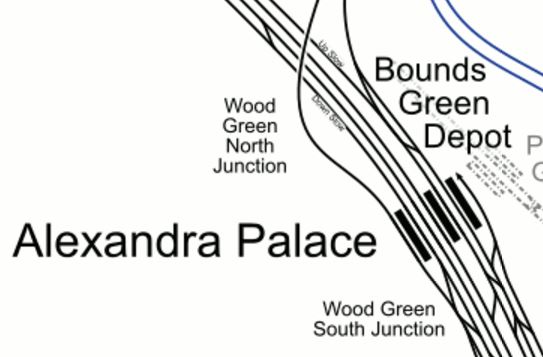
Alexandra Palace Station
Note.
- The fast lines of the East Coast Main Line run through the middle of the station, with the main slow lines on either side.
- The two widely separated tracks going North are the Hertford Loop Line.
- Ignore the blue line, which is the Piccadilly Line.
- The platforms are numbered from East to West and there are four usable faces.
- The most Westerly face is numbered 4 and serves trains going to the Hertford Loop Line.
- Sharing the island with platform 4, is platform 3, which handles direct stopping trains to Welwyn Garden City and the North.
- The layout of platforms 3 an 4 means that there is a step-across interchangebetween trains going on the different routes.
- Platforms 1 and 2 are on the Eastern side of the station and most of the trains from both go to Moorgate.
- Thameslink services will probably use platform 3 going North and one of platform 1 or 2 going South.
- There are a large number of crossovers South of the station to sort the trains between various combinations of routes and platforms.
It is an simple and efficient layout, which keeps local services away from the fast lines in the middle.
But look at this Google Map, which shows Wood Green North Junction, where the East Coast Main Line and the Hertford Loop Line split.
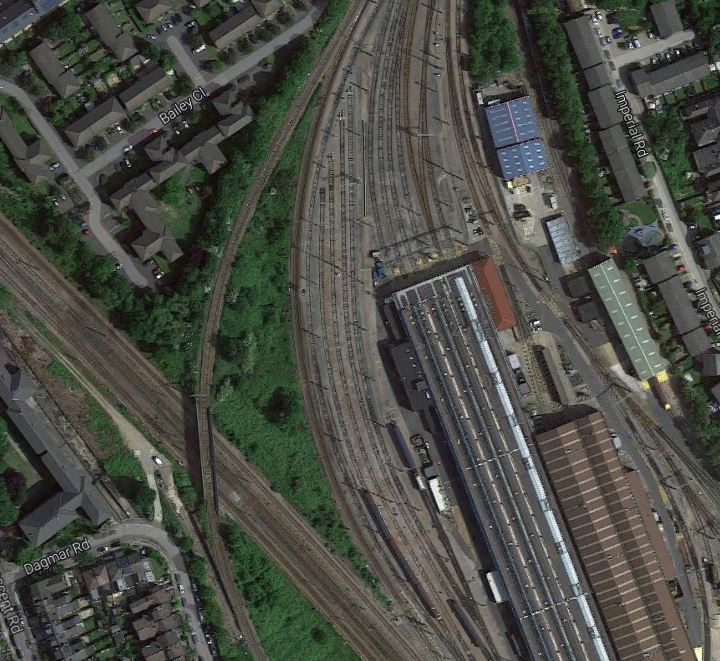
Word Green North Junction
After the down line of the Hertford Loop Line crosses over the East Coast Main Line on a viaduct, it runs through an area of green, with the up line on the other side. Surely, it would be possible to shoe-horn one or even two reversing sidings into this plot, that could at least take six-car trains.
These are some pictures of the area




Probably only the resident wildlife find it attractive.
So a train reversing at Alexandra Palace station would go through the following procedure.
- The train would arrive in the down Hertford Loop Line platform 4 at Alexandra Palace.
- Any passengers still left, would leave the station or catch another train.
- The train would then proceed to the reversing siding between the two lines of the Hertford Loop Line.
- The train would then start its return journey in the up Hertford Loop Line platform 1 or 2 at Alexandra Palace.
Note.
- The train would have been able to reverse without affecting traffic on the fast lines.
- As a maximum of perhaps six trains per hour will be using the Hertford Loop line, there is plenty of spare capacity for extra trains.
- Reversing sidings are always useful when there are problems like failed trains or blockades.
- If it could take an eight-car Class 700 train, it might have uses for Thameslink.
It is one of those small lengths of railway, that if it were properly designed could have a lot more uses than is obvious.
I am also very surprised that as the space is there between the tracks of the Hertford Loop Line, that it hasn’t been used for something productive before.
The Existing Reversing Siding At Bowes Park Station
Bowes Park station is the first station on the Hertford Loop Line. This is said in the Wikipedia entry for the station.
To the north of the station is a single siding in between the two running tracks which is occasionally used to turn around East Coast InterCity 225 and 125 trains heading for Bounds Green Depot just north of Alexandra Palace..
There is a good image on the Railway Herald web site, of an InterCity 125 using the Bowes Park Reversing Siding from August 2016.
Looking at the picture, I wonder if there is space for more than one reversing siding.
The Future Of Bowes Park Station
Bowes Park station is a long wide island platform with rather rudimentary buildings in the middle and stairs up to a bridge over the line.
It must be due a rebuilding to at least add step-free access to the station.
But as it is a valid out-of-station interchange to the Piccadilly Line at Bounds Green station and it has a reversing platform to the North, could this station be in for something more substantial?
Conclusion
I would suspect that Network Rail and the various train operators, are looking at a comprehensive solution in this area that is to everyone’s satisfaction.
At least they start from a good base.
- Alexandra Palace station has a good layout of platforms.
- Interchange between all down services at Alexandra Palace station, uses a single island platform with two faces.
- Up services have two platforms. connected by a bridge.
- There is already a long reversing siding at Bowes Park.
- Trains for the Hertford Loop from the South cross the East Coast Main Line on a flyover.
But above all there is no shortage of space
Related Posts
A Numerical Analysis Of Great Northern’s Class 717 Trains
Could A Reversing Siding Be Built At Alexandra Palace?
Could A Reversing Siding Be Built At Alexandra Palace?
Liverpool Street Crossrail Station Disentangled

