Up To £3 Billion For Crossrail To Ebbsfleet
The title of this post, is the same as that of an article in the July 2019 Edition of Modern Railways.
This is an extract.
Current estimates gave a cost range of between £1.3 billion and £3 billion, which Mr. Williams said depended on whether services shared tracks with existing Southeastern services east of Abbey Wood or had their own segregated tracks.
Mr. Williams is Transport for London’s Direct of City Planning; Alex Williams.
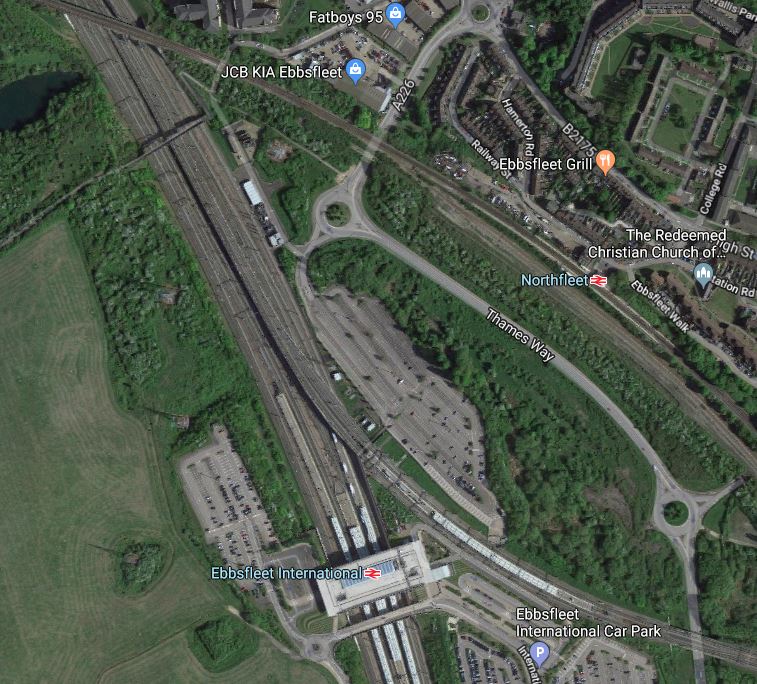
This Google Map shows Northfleet and Ebbsfleet stations.
Note.
- The large Ebbsfleet International station towards the bottom of the map.
- Northfleet station on the North Kent Line in the North East corner of the map.
- The two stations are about five hundred metres apart as the crow flies.
There has been a lot of pressure in the past to build a pedestrian link between the two stations, as reported by the Wikipedia entry for Northfleet station.
The station is very close to Ebbsfleet International station (the NNE entrance is only 334 yards (305 m) from Northfleet’s station), but passengers (using public transport) will find it far easier to access Ebbsfleet International from Gravesend or Greenhithe, as these stations are more accessible and offer easy access to Fastrack bus services. The walking route between the two stations is 0.6 miles (1 km) or 0.8 miles (1.3 km) and a suitable pedestrian link has not been built because of funding issues and objections from Land Securities.
Why when Ebbsfleet International station was built in the early 2000s for opening in 2007, was a pedestrian link not built between the two stations?
How much did omitting the link save?
Luton Airport are building the Luton DART, which is a people mover to connect Luton Airport Parkway station with the airport.
- It is 1.4 miles long.
- It is fully automated.
- It might have an extra station serving the mid-stay parking.
- It appears to be taking three years to build.
All of this very comprehensive system appears to be costing around £200 million.
I doubt that a simple pedestrian link, like a bridge with travelators, would have cost more than a few tens of million pounds.
To me, it is one of the great mysteries of the building of the Channel Tunnel Rail Link, that this pedestrian link wasn’t built.
I think, in future, we could come to regret that it wasn’t built along with the rest of Ebbsfleet International station in the early 2000s.
The extension of Crossrail to Ebbsfleet is about the following.
- Creating a high-frequency railway to serve all the new housing developments in the Thames Gateway and along the South Bank of the Thames.
- Connecting Ebbsfleet International station and other developments around the station to Crossrail.
In some ways, these two objectives are incompatible.
- To serve the housing developments along the river, the Crossrail extension needs to run roughly along the route of the North Kent Line.
- To serve Ebbsfleet International station, the route needs to be further inland.
Choosing either route is going to annoy people who live on the other.
For this reason, I feel we need a good old-fashioned British compromise or some very-radical thinking.
Current Services Along The North Kent Line
I shall start by looking at current services on the North Kent Line.
Thameslink – Luton And Rainham (Kent)
A Thameslink service
- Two trains per hour (tph)
- South of the Thames, the service calls at London Bridge, Deptford, Greenwich, Maze Hill, Whatcombe Park, Charlton, Woolwich Arsenal, Plumstead, Abbey Wood, Slade Green, Dartford, Stone Crossing, Greenhithe for Bluewater, Swanscombe, Northfleet, Gravesend, Higham, Strood, Rochester, Chatham and Gillingham.
- Eight-car Class 700 trains work the route, which have a 100 mph operating speed.
- The service calls at Northfleet for a possible interchange with services running from Ebbsfleet International station
- The service calls at Abbey Wood for interchange with Crossrail.
If there needed to be more capacity on this service, I suspect Thameslink could run twelve-car trains.
Southeastern – London Charing Cross And Gravesend
A Southeastern Metro service.
- Two tph
- Calls at Waterloo East, London Bridge, New Eltham, Sidcup, Bexley, Crayford, Dartford, Stone Crossing, Greenhithe for Bluewater, Swanscombe and Northfleet
- The service calls at Northfleet for a possible interchange with services running from Ebbsfleet International station.
- The service calls at Gravesend for interchange with Southeastern HighSpeed services between St. Pancras International station and North-East Kent, East Kent and soon-to-be East Sussex.
- Class 465 trains work the route, which have a 75 mph operating speed.
This picture shows a train for Gravesend in London Bridge station.
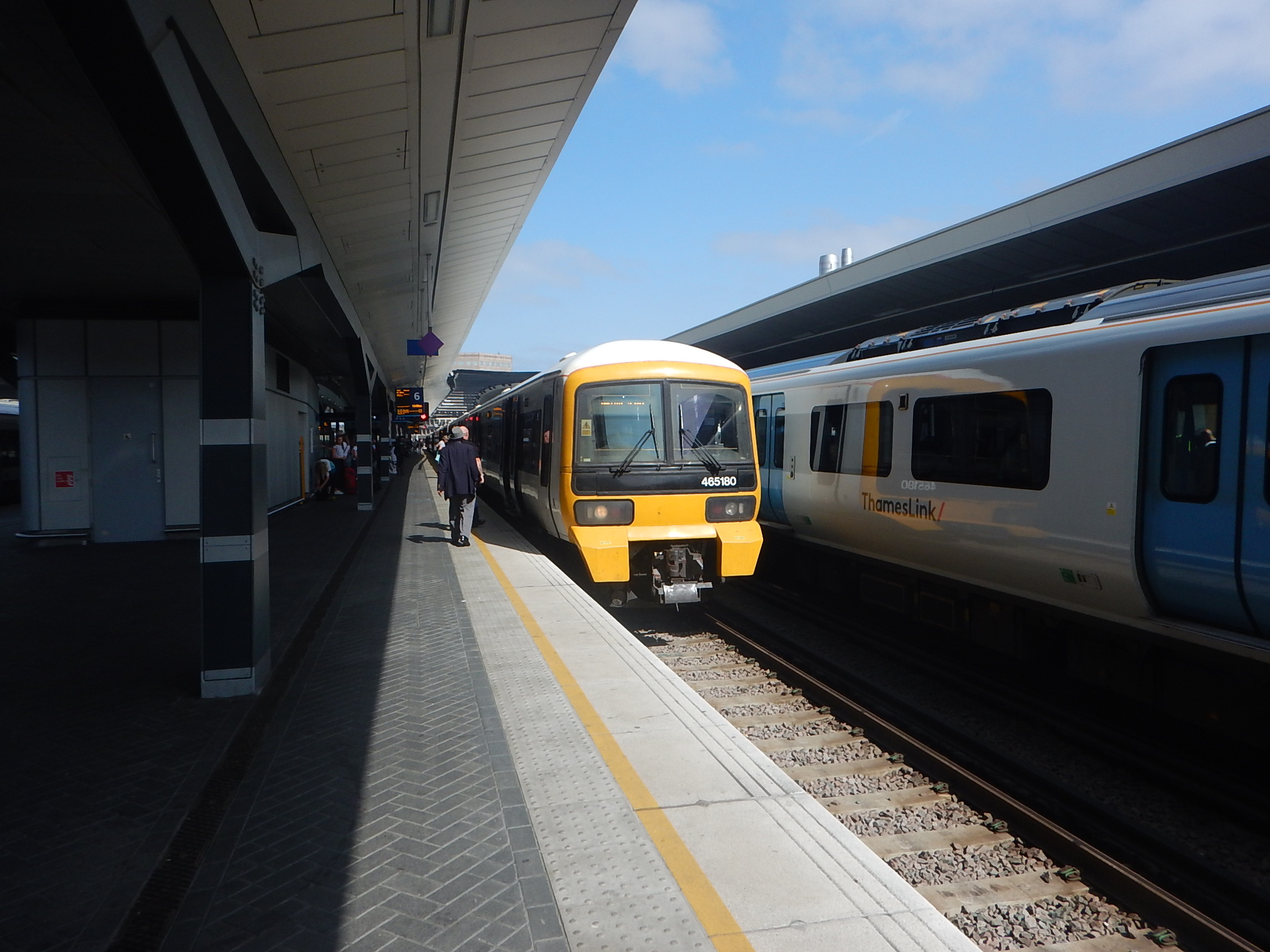
My feeling, is that the service would be improved by modern 100 mph trains, as these antique slow-coaches must restrict the speed of faster trains.
Southeastern – London Cannon Street And Dartford Loop Line
A Southeastern Metro service.
- Four tph in both directions.
- Calls at London Bridge, Deptford, Greenwich, Maze Hill, Westcombe Park, Charlton, Woolwich Dockyard, Woolwich Arsenal, Plumstead, Abbey Wood, Belvedere, Erith and Slade Green.
- Two tph return to Cannon Street via Crayford and Sidcup and two tph return to Cannon Street via Barnehurst and Bexleyheath.
- The service calls at Abbey Wood for a planned interchange with Crossrail.
- Class 465 trains work the route.
As I said with the previous service, these 75 mph trains need replacing with 100 mph trains.
Southeastern – London Charing Cross And Dartford
A Southeastern Metro service.
- Two tph
- Calls at Waterloo East, London Bridge, Lewisham, Blackheath, Charlton, Woolwich Dockyard, Woolwich Arsenal, Plumstead, Abbey Wood, Belvedere, Erith and Slade Green.
- The service calls at Abbey Wood for a planned interchange with Crossrail.
- Class 465 trains work the route.
As I said with the two previous services, these 75 mph trains need replacing with 100 mph trains.
Southeastern – London Victoria And Dover
A Southeastern Mainline service.
- Two tph
- Calls on the North Kent Line at Rochester, Chatham, Gillingham and Rainham.
- Class 465 trains work the route.
As I said with previous services, these 75 mph trains need replacing with 100 mph trains.
Southeastern – London Victoria And Ramsgate
A Southeastern Mainline service.
- One tph
- Calls on the North Kent Line at Rochester, Chatham, Gillingham and Rainham.
- Class 465 trains work the route.
As I said with previous services, these 75 mph trains need replacing with 100 mph trains.
Southeastern – London St. Pancras And Faversham
A Southeastern HighSpeed service.
- One tph
- Calls at Stratford International, Ebbsfleet International, Gravesend, Strood, Rochester, Chatham, Gillingham, Rainham and Sittingbourne.
- The service calls at Ebbsfleet International for an interchange with Continental services.
- Class 395 trains work the route, which have a 100 mph operating speed on lines electrified using a third-rail.
This picture shows a Class 395 train at Gravesend station.
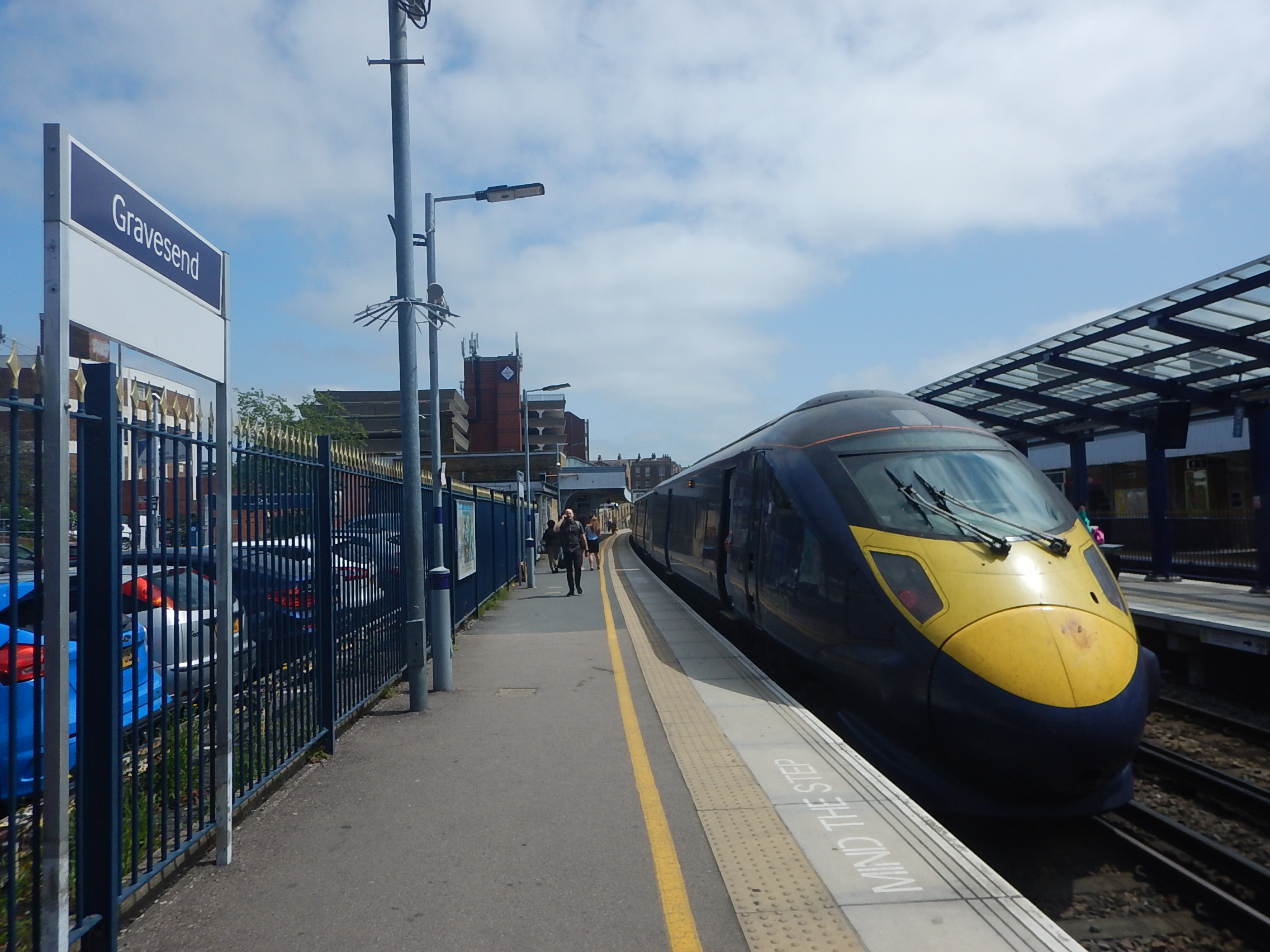
East of Ebbsfleet International, this service can be considered a 100 mph local train, that gets slowed by the 75 mph services.
Southeastern – London St Pancras International Loop Service
A Southeastern HighSpeed service.
- One tph
- Calls at Stratford International, Ebbsfleet International, Gravesend, Strood, Rochester, Chatham, Gillingham, Rainham, Sittingbourne, Faversham, Whitstable, Herne Bay, Birchington-on-Sea, Margate, Broadstairs, Ramsgate, Sandwich, Deal, Walmer, Martin Mill, Dover Priory, Folkestone Central, Folkestone West, Ashord International, Ebbsfleet International and Stratford International.
- The service calls at Ebbsfleet International and Ashford International for an interchange with Continental services.
- Class 395 trains work the route.
East of Ebbslfleet International, this service can be considered a 100 mph local train, that gets slowed by the 75 mph services.
Southeastern – London St Pancras International And Ramsgate
A Southeastern HighSpeed service.
- One tph
- Calls at Stratford International, Ebbsfleet International, Ashford International, Canterbury West, Ramsgate and Broadstairs
- The service calls at Ebbsfleet International and Ashford International for an interchange with Continental services.
- Class 395 trains work the route.
East of Ashford International, this service can be considered a 100 mph local train, that gets slowed by the 75 mph services.
A Summary Of Services By Station
I will look at the current number of trains at stations between London Bridge and Faversham.
- Deptford – 6 tph
- Greenwich – 6 tph
- Maze Hill – 6 tph
- Westcombe Park – 6 tph
- Charlton – 8 tph
- Woolwich Dockyard – 6 tph
- Woolwich Arsenal – 8 tph
- Plumstead – 8 tph
- Abbey Wood – 8 tph
- Belvedere – 6 tph
- Erith – 6 tph
- Slade Green – 6 tph
- Dartford – 12 tph to London and 6 tph to the East
- Stone Crossing – 4 tph
- Greenhithe for Bluewater – 6 tph
- Swanscombe – 4 tph
- Northfleet – 4 tph
- Gravesend – 6 tph to London and 5 tph to the East
- Higham – 2 tph
- Strood – 4 tph
- Rochester – 7 tph
- Chatham – 7 tph
- Gillingham – 7 tph
- Rainham – 7 tph to London and 5 tph to the East
- Sittingbourne – 5 tph
- Faversham – 5 tph
This is almost a train every ten minutes all the way from London to Faversham.
In addition Ebbsfleet International has four tph to and from London St. Pancras International.
Could Extra Services Be Run Along The North Kent Line?
Consider.
- Six tph is not a high frequency for a relatively simple route like this.
- The East London Line, which has about the same level of complication easily handles sixteen tph and it is planned to go to twenty tph in the next couple of years.
- Digital signalling and Automatic Train Control will handle twenty-four tph on Crossrail and Thameslink.
- Freight trains do not run at a high frequency on the route.
I wouldn’t be surprised to see another eight-ten tph added to the route.
How Many Trains Should Terminate At Ebbsfleet?
Currently, Crossrail has six fully-planned and built terminals.
- Abbey Wood will handle twelve tph in the Peak and ten tph in the Off Peak
- Heathrow Terminal 4 will handle four tph all day
- Heathrow Terminal 5 will handle two tph all day
- Maidenhead will handle two tph all day.
- Reading will handle four tph in the Peak and two tph in the Off Peak
- Shenfield will handle twelve tph in the Peak and ten tph in the Off Peak
It would appear that most terminals only handle between two and four tph.
I very much suspect, that research will show that four tph to and from Ebbsfleet will be sufficient.
It certainly meets the requirement for a Turn-Up-And-Go service, as used by London Overground and Merseyrail.
Possible Terminals For Crossrail In Kent
Wikipedia gives services to Abbey Wood station under Services as follows.
- Peak – Twelve tph
- Off Peak – Ten tph
There are several possible terminals for Crossail in Kent
Gravesend Station
When Crossrail was planned, the route was safeguarded to Gravesend station, with a depot at Hoo Junction to the East.
This section in Wikipedia, which is entitled To Gravesend And Hoo Junction, gives more details. This is the first sentence.
The route to Gravesend has been safeguarded by the Department for Transport, although it was made clear that as at February 2008 there was no plan to extend Crossrail beyond the then-current scheme.
These pictures show Gravesend station.
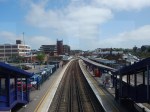
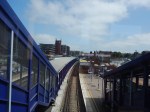
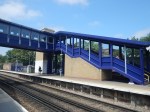
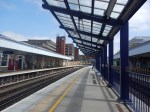
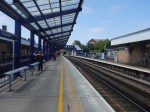
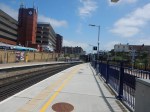
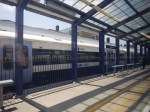
The station is well-appointed and has good services.
- The station is close to the Town Centre.
- It is step-free.
- There is a West-facing bay platform, which is currently used for a two tph service to Charing Cross.
- The platforms are very long.
- HighSpeed commuter services and Thameslink call at the station.
Crossrail services could either terminate in the bay platform or run through the station to a turnback siding at Hoo Junction.
Either way, I’m sure four tph could be easily handled.
Ebbsfleet International Station
Ebbsfleet International station is named in the title of this post and many are expecting that Crossrail will be extended to the station.
This Google Map shows this station.
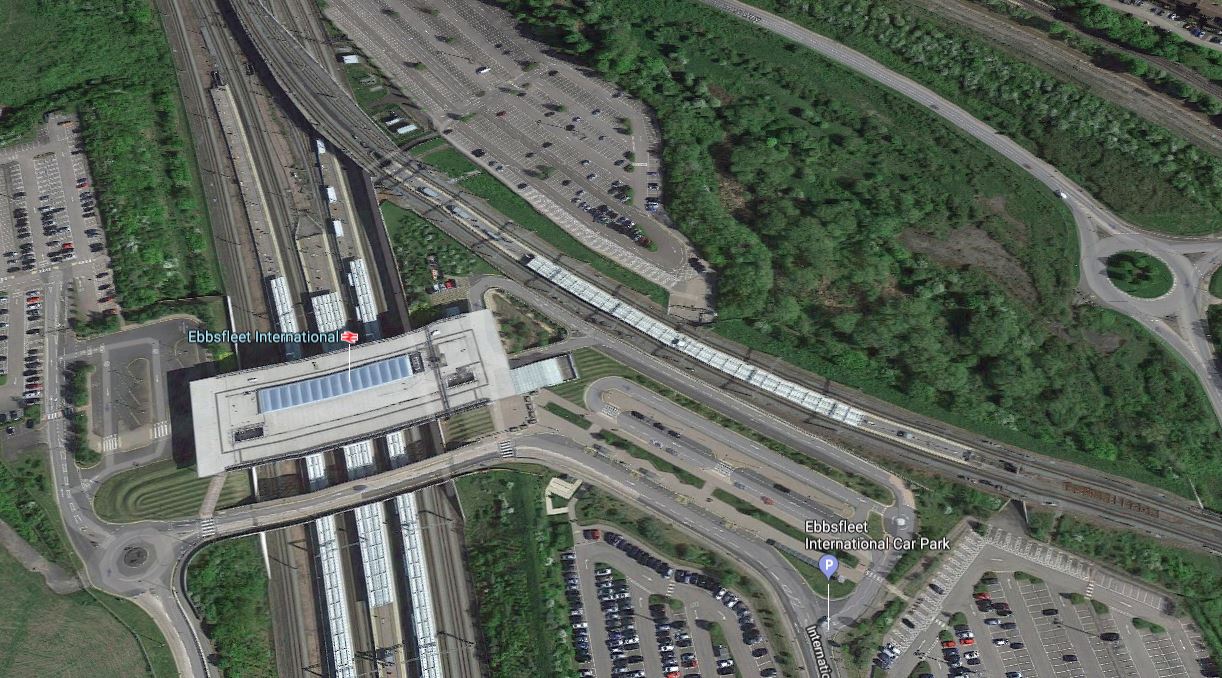
Note.
- The High Speed platforms 1 to 4, for St. Pancras, Ashford International and the Continent are to the left.
- The two separate platforms 5 and 6 for high-speed services to and from North Kent.
- The large amount of car parking around the station.
It’s not obvious, where a platform or two for Crossrail could fit in.
The Wikipedia entry for Ebbsfleet International station, says this about Crossrail.
It was formerly planned that Crossrail would terminate at a separate station between Northfleet and Ebbsfleet International but under the current plan, Abbey Wood further west will be the eastern terminus. However, a Crossrail extension from Abbey Wood to Gravesend (Hoo Junction) remains safeguarded
Perhaps, Crossrail platforms could be on the Northfleet side of the station, to the North of platforms 5 and 6.
If two platforms are good enough for Abbey Wood station, then surely, two platforms would be sufficient at Ebbsfleet International station.
This Google Map shows where the North Kent Line rrosses the Channel Tunnel Rail Link about five hundred metres North of Ebbsfleet station.
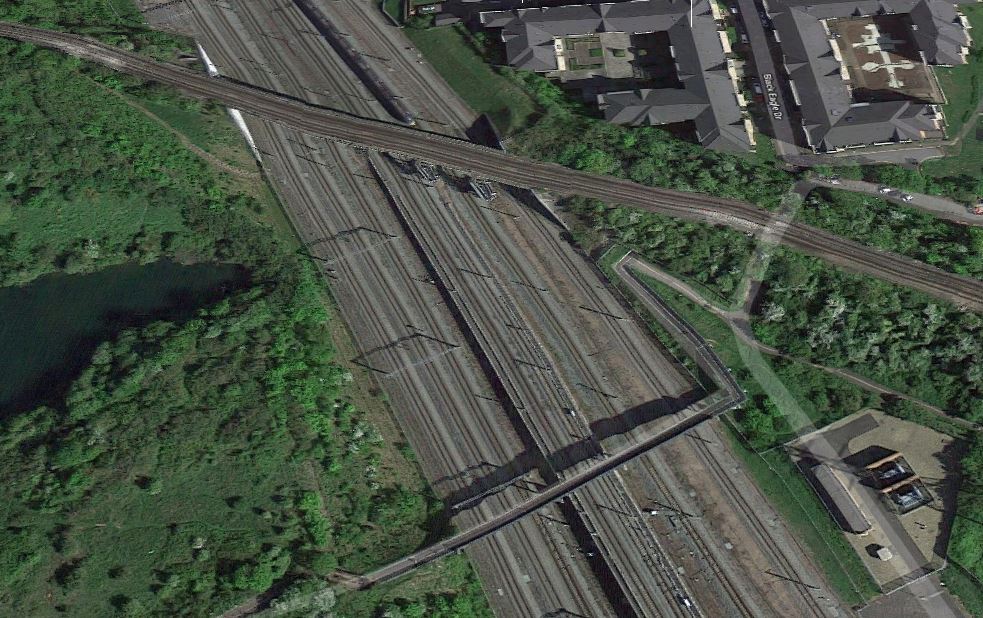
Could a flyover or dive-under be created to create a spur from the North Kent Line, that would allow Crossrail trains to sneak down the Eastern side of the high speed lines to platforms, alongside the current Platforms 5 and 6?
This picture was taken from a train on the bridge that carries the North Kent Line over the high speed lines.
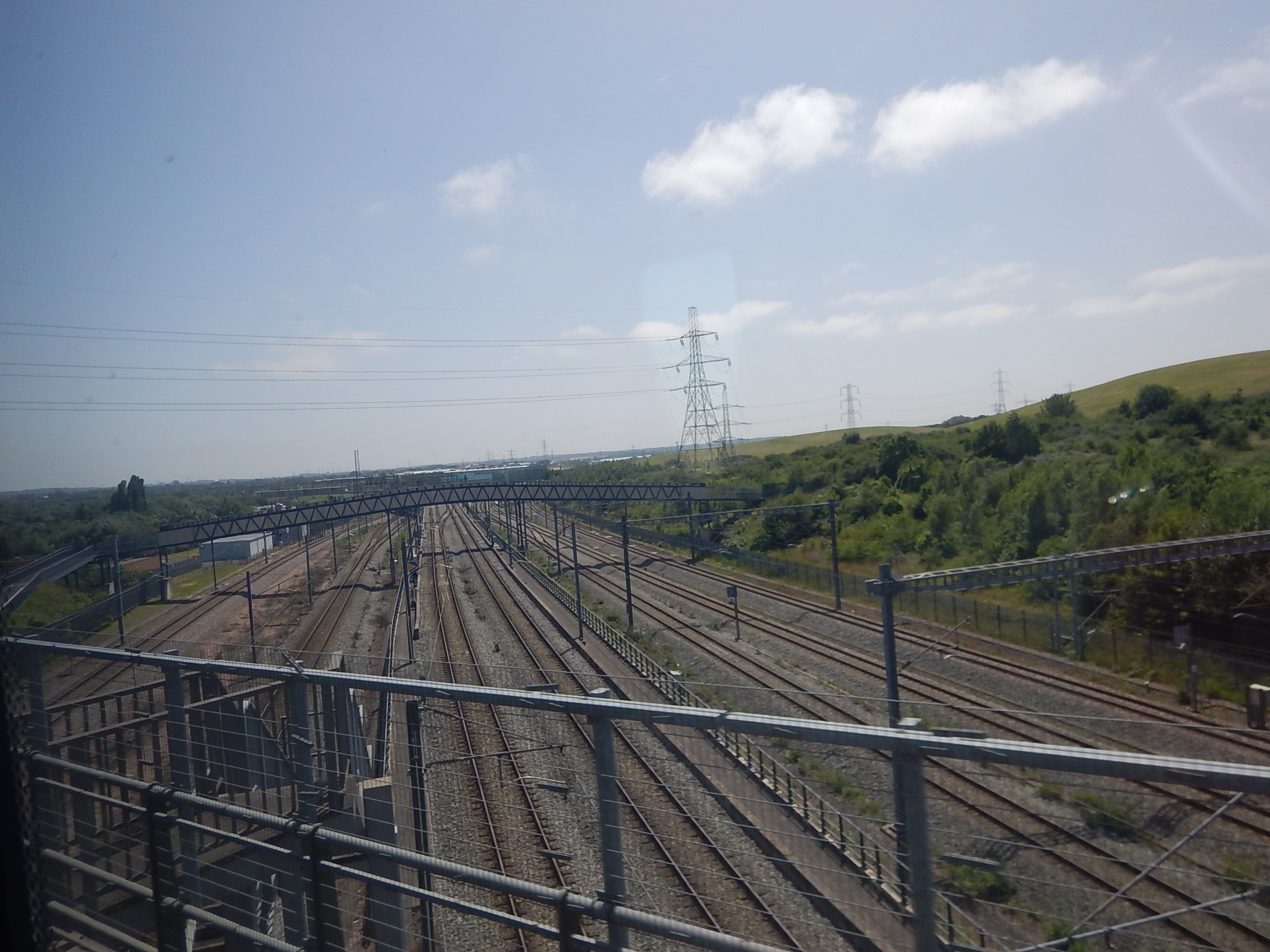
I suspect there is a solution in there somewhere.
One interesting possibility could be for the Crossrail trains to share Platforms 5 and 6 at Ebbsfleet International station with the HighSpeed commuter services to North Kent.
This picture shows the flying junction, where the tracks through Platforms 5 and 6, join the North Kent Line between Northfleet and Gravesend stations.
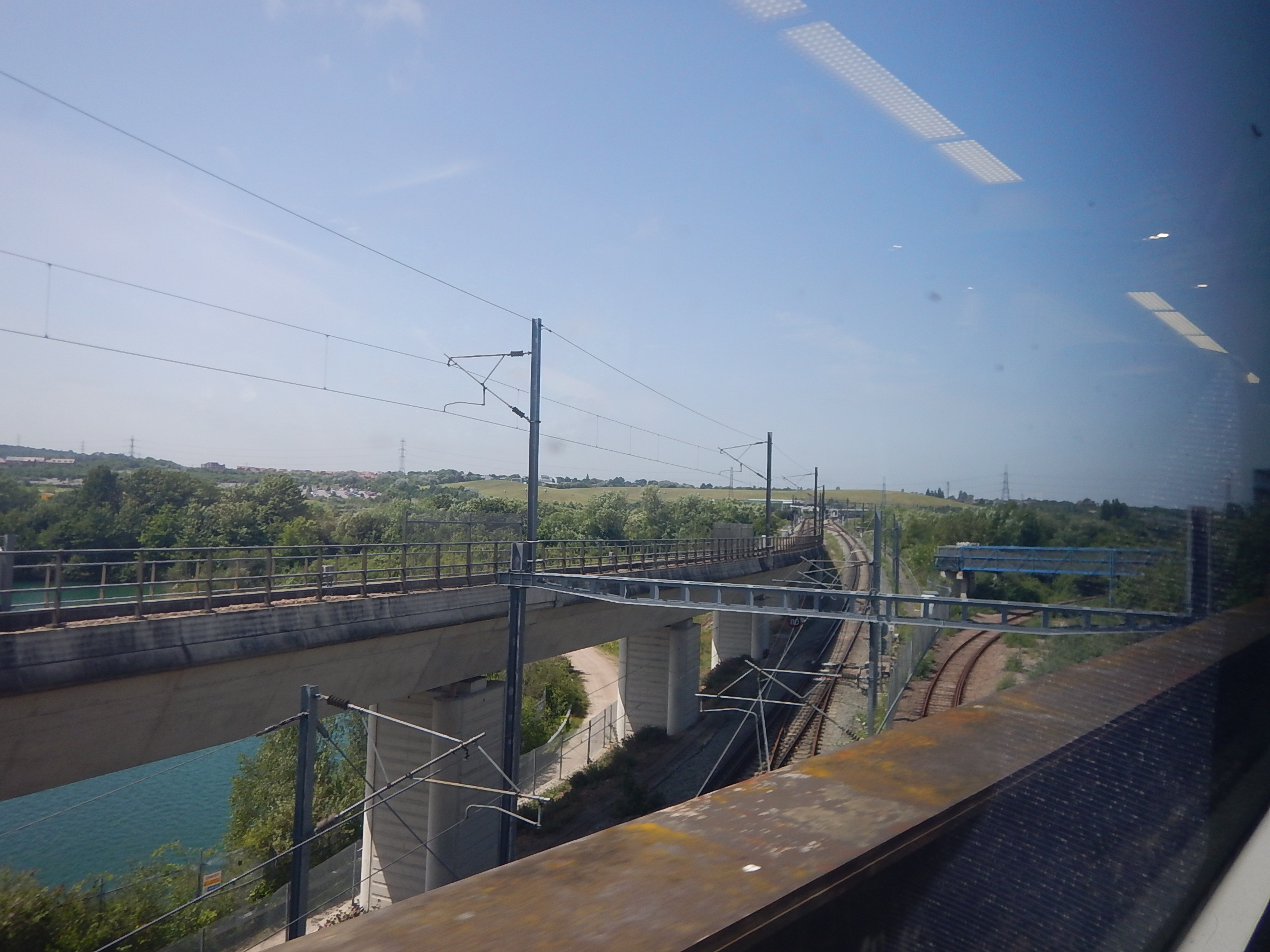
As currently, only two tph use the link, surely, Crossrail services of four tph could share, if they were to go through Ebbsfleet International and terminate at Gravesend?
I’m not an expert on designing bridges, but to my untrained eye, a flyover to connect the Ebbsfleet loop to the North Kent Line to the West of the station, wouldn’t be much more complicated, than the flyover to the East.
I think, a loop to serve Ebbsfleet would have other advantages.
- Crossrail would have access to a much-needed Park-and-Ride site.
- The interchange between Crossrail and Continental services would be a short walk.
- Probably only minimal improvements would be needed to Ebbsfleet International station.
- There would be a same-platform interchange between Crossrail and HighSpeed commuter services to and from St. Pancras.
- Construction would be more affordable and less disruptive.
Perhaps, it’s a better idea, than I originally thought?
Abbey Wood
Abbey Wood station has been designed to handle twelve tph.

The picture shows the four platforms at Abbey Wood station with a Class 345 train in one of the two Crossrail platforms.
- Two platforms can handle twelve tph.
- A turnback facility that has been built at the station to handle more trains or service recovery.
- There are three bridges, two escalators and at least two lifts to facilitate transfer between Crossrail and other services.
- Platforms are spacious.
- There is a wide gate line controlling entry to the station.
- The station is well-served by buses, but car parking is limited.
It is one of the better new stations and would certainly have no problems handling the eight tph, it would need to in the Peak, if four tph, carried on to terminate at Ebbsfleet.
Dartford Station
Dartford station probably has claims to be terminal for Crossrail.
It is a large town, clustered around the station.
There is a lot of new housing close to the station.
It has regularly services to several London terminals, by a variety of routes.
But it appears to be a very cramped station with narrow platforms, as some of these pictures shows.


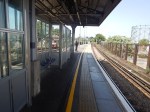
Services at the station include.
- Eight tph – Charing Cross
- Two tph – Victoria
- Four tph – Gravesend
Thameslink also run two tph between Luton and Rainham.
It is much-more a station where travellers change trains, than one where services terminate..
But even for that it needs improvement.
My Preferred Crossrail Option
I would extend Crossrail to Ebbsfleet in a simple manner, that was capable of being expanded, as traffic needs changed in the future.
Four tph Would Continue Through Abbey Wood Station
I feel that a Turn-Up-And-Go service between Abbey Wood and Ebbsfleet, of four tph would be sufficient, especially if other services on the route, were to be increased in frequency and capacity.
Services Would Terminate At Gravesend Station
The original safeguarded plan for Crossrail to be extended to Gravesend, with a depot at Hoo Junction, is in my mind a good plan.
- Gravesend station is probably Crossrail-ready.
- Gravesend station could handle the turnround of Crossrail running at a frequency of four tph.
- There is plenty of space for a depot at Hoo Junction.
But perhaps most importantly,, it is the original plan suggested in the original design of Crossrail.
Have decisions been made by the various councils on the extended route, based on this plan?
Crossrail Services Would Use The North Kent Line
The extended Crossrail service would call at Belvedere, Erith, Slade Green, Dartford, Stone Crossing, Greenhithe for Bluewater, Swanscombe and Northfleet.
Frequencies of trains at the stations between Abbey Wood and Gravesend would be.
- Belvedere – 10 tph
- Erith – 10 tph
- Slade Green – 10 tph
- Dartford – 16 tph to London via a variety of routes and 10 tph to the East
- Stone Crossing – 8 tph
- Greenhithe for Bluewater – 10 tph
- Swanscombe – 8 tph
- Northfleet – 4 tph
In addition, Gravesend would have ten tph to and from London.
Handling these frequencies on a modern double-track railway shouldn’t be a problem.
Will Digital Signalling Be Needed?
Crossrail and Thameslink are both digitally signalled and will use a degree of Automatic Train Control, to handle up to twenty-four tph.
I could see advantages in applying similar systems to the Crossrail extension to Ebbsfleet.
Merging Of Services Between Abbey Wood And Belvedere Stations
Services through both these stations would include.
- 4 tph – Crossrail between London and Ebbsfleet/Gravesend
- 2 tph – Thameslink between Luton and Rainham, which don’t stop at Belvedere.
- 4 tph – Southeastern which are the Dartford Loop service to and from Cannon Street.
- 2 tph – Southeastern between Charing Cross and Dartford
The current track layout appears to allow Crossrail trains to access the North Kent Line, but Class 345 trains are not fitted with shoes for third-rail elecrification.
This Google Map shows the Western end of Belvedere station.
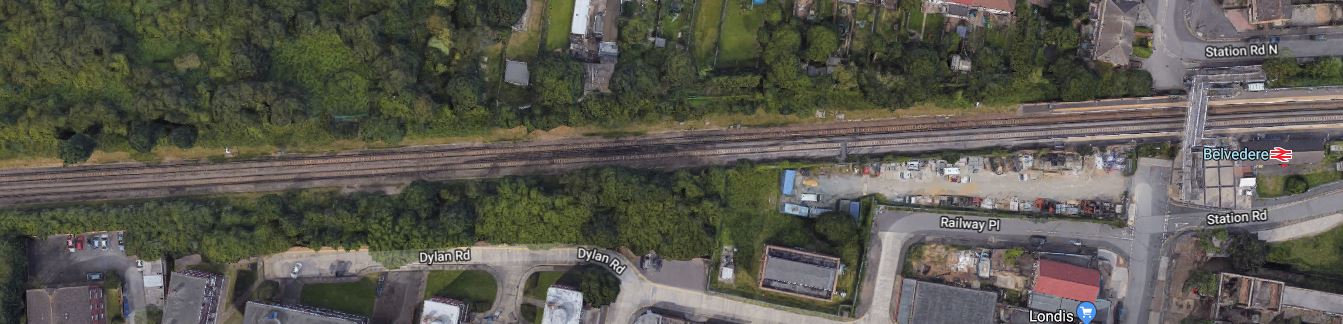
Note how there appears to be space on either side of the double track, which continues as far as Abbey Wood station.
I suspect that a track layout can be designed between the two stations, so that trains can merge and diverge efficiently between the four tracks at Abbey Wood and the two tracks at Belvedere.
Digital signalling would make it easier.
Station Improvement Between Abbey Wood and Grsvesend Stations
As I indicated earlier, Dartford station would need improvement.
On the other hand Abbey Wood, Greenhithe for Bluewater and Gravesend will need very little modification.
I also suspect, Dartford would not be the only station, that will need improvement.
All stations would be made step-free.
A Loop For Ebbsfleet International Station
I feel that the best way to give access to Ebbsfleet International station would be to create a loop from the North Kent Line and use the current island platform 5 and 6 at the station for Crossrail as well.
The Eastern end of the loop has already been built to a high standard and it would only need a Western connection to be designed and constructed.
I’ll repeat the advantanges of this scheme, I listed earlier.
- Crossrail would have access to a much-needed Park-and-Ride site.
- The interchange between Crossrail and Continental services would be a short walk.
- Probably only minimal improvements would be needed to Ebbsfleet International station.
- There would be a same-platform interchange between Crossrail and HighSpeed commuter services to St. Pancras.
- Construction would be more affordable and less disruptive.
Each side of the he island platform 5 and 6 would handle.
- Two tph – HighSpeed commuter services.
- Four tph – Crossrail services.
They may even be able to handle more trains in the future.
Will Crossrail’s Class 345 Trains Fleet Need Upgrading?
Crossrail’s Class 345 trains have a 90 mph operating speed, as opposed to the 100 mph operating speed of Thameslink’s Class 700 trains.
Southeastern Class 465 trains are even slower at 75 mph.
If all trains working the North Kent Line were 100 mph trains, it would surely make a robust timetable easier to create and operate.
I would expect that in a few years time, all trains working between London and Kent will be capable of at least 100 mph.
Where Will Gravesend and Ebbsfleet International Services Terminate In The West?
The obvious terminal would surely be Heathrow, as this would give a useful service Heathrow and Continental rail services, without the need to change trains.
Wikipedia is quoting 52 minutes between Heathrow and Abbey Wood on Crossrail and current times give twenty-three minutes between Abbey Wood and Gravesend stations, with perhaps four minutes less to Ebbsfleet in the future.
So timings could be as follows.
- Heathrow and Ebbsfleet – 75 minutes
- Heathrow and Gravesend – 79 minutes
Surely, this will be better than struggling around a crowded M25.
Southeastern HighSpeed Commuter Service Improvements
The Southeastern franchise may change later in the year and speculation has started on what this will mean for services and the trains used.
A Revamped HighSpeed Service
In an article in the July 2017 Edition of Modern Railways, which is entitled Kent On The Cusp Of Change, some well-founded speculation is made about the future of the HighSpeed commuter service.
- More Class 395 trains or similar need to be procured.
- A new service between St. Pancras and Hastings is planned.
- An all-day service between St. Pancras and Maidstone West via Gravesend.
- An extra two tph between St. Pancras and Ebbsfleet International.
- A second London terminal may be opened at possibly Waterloo or even Victoria.
Only the Maidstone West service would pass through platforms 5 and 6 at Ebbsfleet International station and would add a third hourly HighSpeed service.
In some ways, it might be better for HighSpeed services to run at four tph between Gravesend and St. Pancras via Ebbsfleet International and Stratford International, as this would fit much better with a four tph Crossrail service.
Improvements To Stratford International Station
Pedestrian routes between the various services and the Olympic Park at Stratford International station are not good.
- If HighSpeed services are going to be expanded, then it is only right that Stratford International station is improved, to a good modern connectivity standard.
- If Stansted Airport and Cambridge services serve Stratford in the future, then there must be an easy pedestrian route between the two services.
- Connectivity between HighSpeed and Great Eastern Main Line and Crossrail services is particularly poor.
- The HighSpeed platforms at Stratford International station are bleak and draughty and need improvement.
It’s almost as if, the whole station complex was designed for the Eastfield Shopping Centre.
A Summary Of Services By Station
I will look at the current number of trains at stations between Abbey Wood and Faversham, after adding in two extra HighSpeed sevices.
- St. Pancras and Maidstone West via Strood.
- St Pancras and Faversham.
These would give.
- Belvedere – 10 tph
- Erith – 10 tph
- Slade Green – 10 tph
- Dartford – 16 tph to London via a variety of routes and 10 tph to the East
- Stone Crossing – 8 tph
- Greenhithe for Bluewater – 10 tph
- Swanscombe – 8 tph
- Northfleet – 4 tph
- Gravesend – 8 tph to London and 7 tph to the East
- Higham – 2 tph
- Strood – 6 tph
- Rochester – 8 tph
- Chatham – 8 tph
- Gillingham – 8 tph
- Rainham – 8 tph to London and 6 tph to the East
- Sittingbourne – 6 tph
Thameslink Improvements
My only thought about Thamesink, is that if Crossrail and Southeastern’s HighSpeed services run at a frequency of four tph, through Gravesend, then surely Thameslink should run at the same frequency Between St. Pancras and Rainham.
I say St. Pancras rather than Luton, as it would probably be sensible to send the extra two tph up the East Coast Main Line to either Welwyn Garden City, Peterborough or Cambridge.
A Summary Of Services By Station
I will look at the current number of trains at stations between Abbey Wood and Faversham, after adding in two extra Thameslink sevices.
These would give.
- Belvedere – 12 tph
- Erith – 12 tph
- Slade Green – 12 tph
- Dartford – 18 tph to London via a variety of routes and 12 tph to the East
- Stone Crossing – 10 tph
- Greenhithe for Bluewater – 12 tph
- Swanscombe – 10 tph
- Northfleet – 6 tph
- Gravesend – 10 tph to London and 9 tph to the East
- Higham – 4 tph
- Strood – 8 tph
- Rochester – 10 tph
- Chatham – 10 tph
- Gillingham – 10 tph
- Rainham – 10 tph to London and 6 tph to the East
- Sittingbourne – 6 tph
When you consider that these frequencies are obtained by trains running at 100 mph on a railway, that was most;ly built in the mid-nineteenth century and electrified with 750 VDC third rail before the Second World War.
Southeastern Improvements
Both Southeastern’s Metro services to and from Dartford and Chatham and their main line services to East Kent will probably be improved under the new franchise holder
- New or refurbished 100 mph trains will replace the 75 mph Class 465 trains.
- Dover and Ramsgate will get increased frequencies from Victoria.
- Metro services to and from Dartford and Chatham will be at least a Turn-Up-And-Go four tph.
- The enhanced performance of the new trains would enable faster services and more stops to be made without degrading the timetable.
I feel that it would not be impossible to see every station between London Bridge and Rainham having twelve tph.
The Pedestrian Link Between Northfleet And Ebbsfleet International Stations
I am not saying a pedestrian link between Northfleet and Ebbsfleet International station shouldn’t be built, but consider that the loop through Ebbsfleet International station gives two routes between Swancombe and Gravesend.; one via Northfleet and the other via Ebbsfleet International.
A lot depends on how many passengers will actually want to travel between the two stations.
- Those from the West could change at a station like Dartford or Greenhithe for Bluewater to a train going to their required destination.
- Those from the East could change at Gravesend to a train going to their required destination.
All changes would be same-platform changes and the best stations could be encouraged by coffee kiosks and comfortable waiting rooms.
For passengers starting from Northfleet the following rules would apply.
- Passengers going East would take the first train and change if required at Bravesend, Rochester or their preferred station.
- Passengers going West would take the first train and change if required.
- Passengers going to Ebbsfleet International would probably catch the first train for a single stop and then cross-over to the other platform for a train to Ebbsfleet International.
If there were upwards of six tph on both routes and step-free access at all stations, these procedures would not be unduly tiresome.
Similar rules would apply for those starting their journeys at Ebbsfleet International.
Note that, as more trains ran on both routes between Swanscombe and Gravesend, the time to get between the two stations would decrease.
If as seems to be planned, a lot of housing is built on the undeveloped land between the two stations, I wouldn’t be surprised to see a progressively-minded developer build a pleasant tree-lined pedestrian and cycling route between the two stations.
This would be mainly to give easy access to the development to the two stations, but it would also link them together.
Conclusion
Everything, I have written in this post is based on sound facts and is possible with today’s technology.
- 100 mph suburban electric trains have been around for several decades.
- Digital signalling has been successfully running on Thameslink in the UK and other places in the world for a couple of years.
- The construction methods to build a loop at Ebbsfleet station are nothing out-of-the-ordinary.
What I have outlined would be much more of a £1.3 billion project than a £3 billion one!
I also believe everything can be achieved without massive disruption or inconvenience to passengers and probably delivered in full by 2025.
It should be noted that North Kent will be reaping the benefit of three major new cross-London high-capacity railways.
- The Chanel Tunnel Rail Link between Ebbsfleet International and St. Pancras via Stratford International.
- Crossrail between Abbey Wood and West London via Canary Wharf, the City and West End of London, Paddington and Old Oak Common.
- Thameslink between Kent and North of London via London Bridge, Blackfriars and St. Pancras.
As cross-London routes continue to develop in future decades, other commuter routes will benefit from similar strategies.
A Toilet On A London Underground Train
On my short journey between City Thameslink, and London Bridge stations, I sat next to one of the toilets.
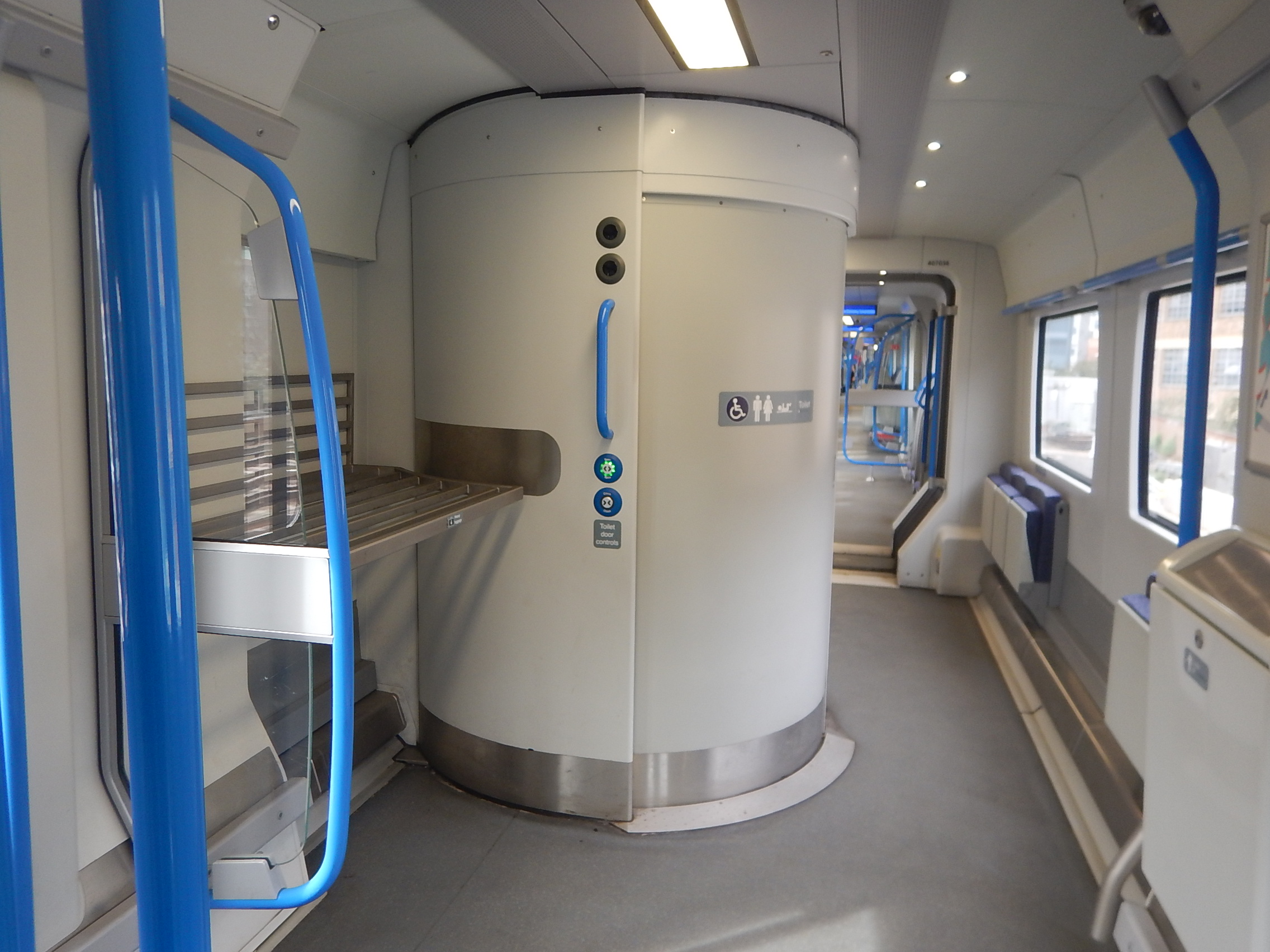
I also made use of the facility.
As there is a lot of pressure to show Thameslink on the Tube Map, will these trains become the only trains on the Underground to have toilets?
As modern controlled emission toilets, don’t throw anything on the tracks, they can be safely used anywhere.
Automatic Door Opening On Thameslink
This morning I used Thameslink between City Thameslink and London Bridge stations.
On the three stations on this short route, the doors opened automatically, without passengers having to push any buttons.
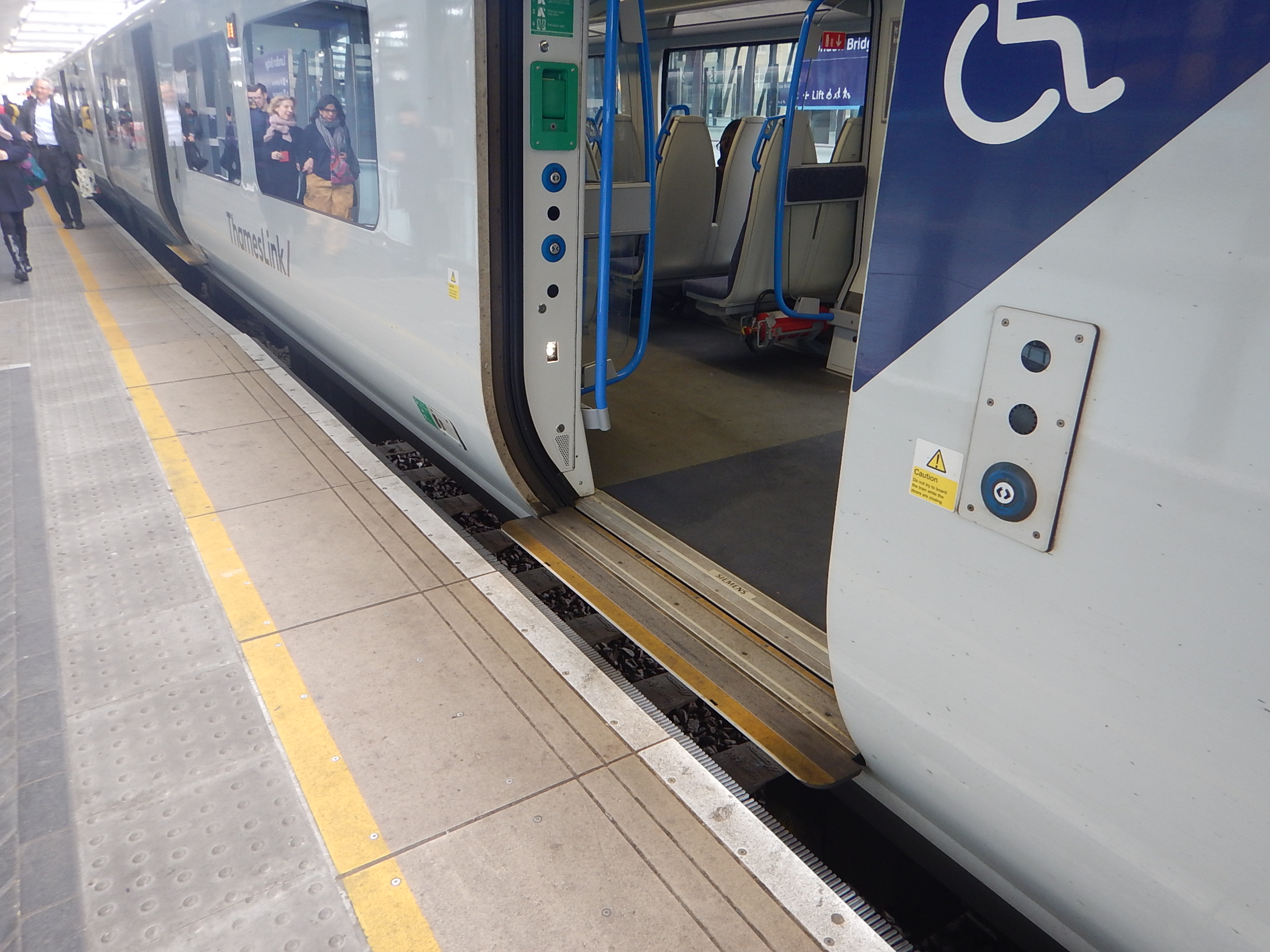
This is normal London Underground practice and will it be used on the tunnel stations on Crossrail.
But it struck me, as I got on the train at City Thameslink station, where there is a large gap for passengers to fall into, that automatic opening may well be safer, as passengers don’t have to lean across.
The Shape Of Things To Come
Yesterday, I needed to go between Moorgate and Tottenham Hale stations.
It was just before the evening Peak and I took the escalators down to the Northern City Line platforms, where a new Class 717 train was waiting.
The increased capacity meant I got a seat and I took the train three stops to Highbury & Islington station.
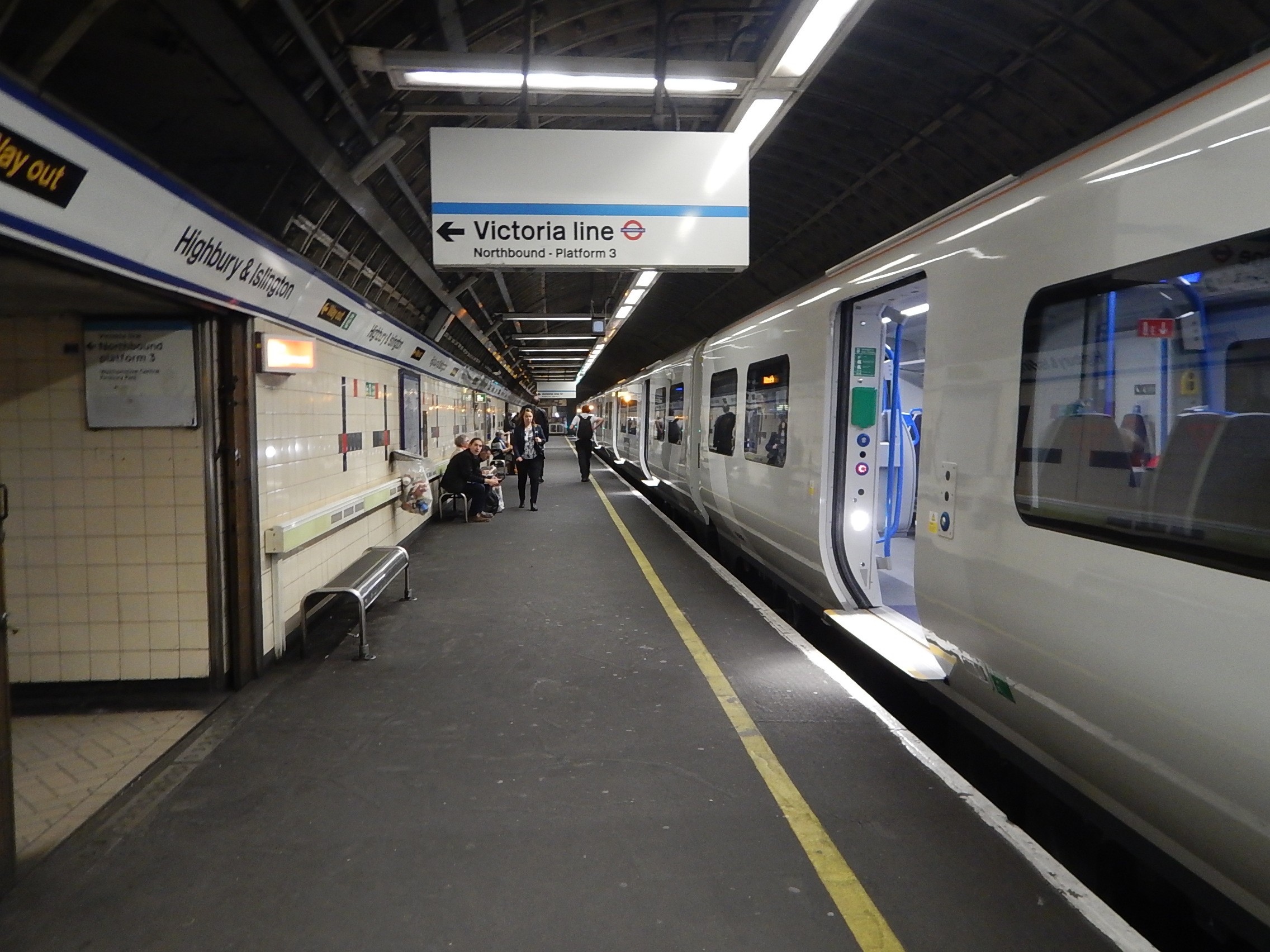
It was then just a walk through a very short tunnel to the Victoria Line and a train to Tottenham Hale.
It was so much more relaxed than squeezing into a crowded and very elderly Class 313 train.
After the timetable change in May, there will be eight trains per hour (tph), as there is now, but given the number of trains in the new fleet and signalling improvements in the pipeline, I feel that this frequency will be increased.
It should also be noted that in the Peak there are twelve tph, which in the future could be used all day.
But in the interim, trains with extra capacity will be very welcome.
From An Ugly Ducking To A Swan
These developments are either underway or planned for the next few years.
- Improved signalling on the Northern City Line.
- Full step-free interchange at Finsbury Park between Moorgate services and Thameslink, Piccadilly and Victoria Lines.
- Higher frequencies on Thameslink and the Piccadilly Line through Finsbury Park
- Full step-free access to the Northern City and Victoria Lines at Highbury & Islington station.
- Full step-free access at Old Street station.
- Hopefully, Essex Road station will be cleaned.
- Crossrail will finally arrive at Moorgate station.
North London’s ugly ducking, which has caused passengers, British Rail and London Underground, so much trouble, will finally have turned into a swan.
I always wonder if the City of London’s transport planners, wish that the Victorians had built the planned extension to a new Lothbury station, close to Bank.
What Will Be The Ultimate Frequency?
Currently the frequency between Alexandra Palace and Moorgate stations in the Peak is twelve tph.
Compare this with the following frequencies.
- Crossrail will be initially 24 tph.
- The East London Line is planned to go to 20 tph
- The Piccadilly Line is currently at 24 tph between Arnos Grove and Acton Town stations in the Peak.
- Thameslink will soon be at 24 tph
- The Victoria Line is currently at 36 tph.
I don’t think it unreasonable that a frequency of at least sixteen and possibly twenty tph between Alexandra Palace and Moorgate stations is achievable.
- Digital signalling and Automatic Train Control will be possible.
- If Dear Old Vicky can turn 36 tph at Brixton and Walthamstow Central stations, with two platforms, then surely 20 tph at Moorgate is possible, once there is better access for passengers to the platforms.
- Alexandra Palace to Moorgate is a double-track railway, that is almost exclusively used by Moorgate services.
- 16-20 tph would make the cross-platform interchange with the Victoria Line at Highbury & Islington station very efficient.
- There are two branches North of Alexandra Palace station. I’m sure each could handle 8-10 tph.
- The Hertford Loop Branch has three terminal stations; Gordon Hill, Hertford North and Stevenage stations.
- The East Coast Main Line has two terminal platforms at Welwyn Garden City station.
I could see the following frequencies.
- Moorgate and Gordon Hill – four tph
- Moorgate and Hertford North – four tph
- Moorgate and Stevenage – four tph
- Moorgate and Welwyn Garden City – four to eight tph
It will be a very high-capacity Metro into Moorgate. There could be a need for a few more trains.
But with increased speed.
Should The Northern City Line Be Shown On The Tube Map?
Increasingly, passengers will use the high-frequency Southern section of the Northern City Line between Alexandra Palace and Moorgate stations, as a new tube line.
So like Thameslink, the arguments will start as to whether this line should be on the Tube Map.
If Crossrail is to be shown, it is my view that nThameslink and the Northern City Line should be shown too!
Funding For Homes And A New Railway Station In North London
The title of this post is the same as that of this article on Ian Visits.
The government has said, that two major housing developments will be built in London beside new railway stations.
Brent Cross Thameslink
The development and the funding for Brent Cross West station is introduced by this paragraph.
The larger investment will see £320 million being spent on a new Brent Cross West Thameslink station which will lead to a new community of 7,500 properties being built. This is in addition to the £97m grant awarded in the 2016 budget bringing total government investment £416.5 million.
Other points about the development include.
- The development is on the site of the Cricklewood depot.
- The station could be asn interchange with the West London Orbital Railway.
- A contractor should be appointed this year, with opeing in 2022.
- Services could be eight trains per hour (tph) in the Peak and four tph in the Off Peak.
- A public bridge over the railway will be included.
- There will be new offices.
- The Brent Cross Shopping Centre will be extended.
- The £320 million investment will be repaid from business rates from the commercial development.
It all seems to me, that there could be a lot of winners here.
Old Oak Common
The development and the funding for Old Oak Common station is described by this paragraph.
The government will also be providing £250 million so up to 13,000 new homes can be built close to the new HS2 railway station at Old Oak Common.
This scheme provides more properties, but it doesn’t as yet include the commercial development.
Conclusion
London seems to be building more housing, that at any time in my life.
A Central Londoner’s View Of Thameslink
The Thameslink route, which runs North-South across London is used by different purposes, by different passengers.
- To many, who live close to its outer reaches it is a commuter railway into London.
- It serves two airports at Gatwick and Luton.
- Londoners use it to explore the delights of the South Coast of England.
But to those who live in Central London like me, it is a useful rail line.
Kings Cross And London Bridge
I regularly use Thameslink for this route, as compared to the Northern Line.
- The trains are more spacious and are generally less crowded.
- It is less walking at Kings Cross.
- The trains are air-conditioned.
- The trains have toilets.
- I have a convenient bus or taxi home from both end stations.
I suspect, I use this route a couple of times a week.
Access To Tate Modern
I like the Tate Modern and the gluten-free egg sandwiches are good.
There is also restaurants in the area; Leon and Carluccio’s for a start, that are good places for lunch or dinner.
So sometimes, I’ll use Thameslink to Blackfriars to visit the Tate Modern and then after my visit, I’ll walk over the Wobbly Bridge and take a bus home.
Thameslink is also an easy way to visit St. Paul’s and in a few years, the new Museum of London will be accessed from Farringdon station.
Access to Gatwick And Luton Airports
I haven’t used Luton Airport in years, as getting there by train is a bit tedious.
But I regularly use Gatwick Airport, usually by getting a bus to and from London Bridge station and then using Thameslink.
West Hampstead Thameslink
West Hampstead station on the Overground has recently been rebuilt and regularly I come home by changing between Thameslink and the Overground.
There is also a Marks & Spencer by the station, which helps too.
The area is becoming a major interchange and if the West London Orbital Railway is created, the Overground will be taking over or adding a platform at West Hampstead Thameslink station.
Does Thameslink Cater For All Passengers?
I say this deliberately, as I think that Thameslink concentrates more on the longer distance and airport passengers, rather than those, who use it as another North-South line across London.
Thameslink Will Run At Rapid Transit Frequencies
In the central core section between Blackfriars and St. Pancras International stations, the trains will run at a frequency of 24 trains per hour (tph) or a train every two and a half minutes.
Trains will run automatically at a frequency, that is higher than many rapid transit systems in the world.
Thameslink Is Part Of London’s Oyster/Contactless Ticketing Zone
From Gatwick Airport in the South to Elstree & Borehamwood and Hadley Wood in the North, Thameslink is part of London’s Oyster/Contactless Ticketing Zone.
In Oyster Card Scheme Extension Agreed, I wrote about how the zone is being extended to Luton Airport Parkway and Welwyn Garden City.
So increasingly, Thameslink will be covered by London’s ticketing, that is increasingly used by residents, commuters and visitors.
Thameslink Has Interchanges With The Underground And Overground
Thameslink has several interchange stations with the Overground and Underground.
These include.
- Blackfriars
- Denmark Hill
- Elephant & Castle
- Farringdon
- Finsbury Park
- Kentish Town
- London Bridge
- Peckham Rye
- St. Pancras Thameslink
- West Hampstead Thameslink
- Wimbledon
In addition East Croydon, Mitcham Junction and Wimbledon are interchanges with Tramlink and Blackfriars and London Bridge are interchanges with the river buses.
Thameslink Is Not On The Tube Map
This is a bone of contention with many! Including myself!
According to the Wikipedia entry for the Tube Map, Thameslink was shown on the map between 1977 and 1998.
So why was it removed?
Some Thameslink Stations Don’t Have Tube Maps On The Platforms
I was on the platform at City Thameslink station and needed a Tube Map.
There wasn’t one!
Why not?
Conclusion
Thameslink is very much part of London’s rail network.
It should be treated as such, by doing the following.
- Extending Oyster/Contactless ticketing to all Thameslink stations.
- Adding all or part of Thameslink to the Tube Map.
- Putting a Tube Map on all station platforms in the London area.
But this mess has existed for twenty years, since Thameslink was removed from the Tube Map.
Thoughts On The West London Orbital Railway At West Hampstead Thameslink Station
I passed through West Hampstead Thameslink station today and took some pictures of the two tracks that run through the station on the South side of the four tracks of the Midland Main Line.
This map from carto.metro.free.fr shows the lines through the various stations at West Hampstead.
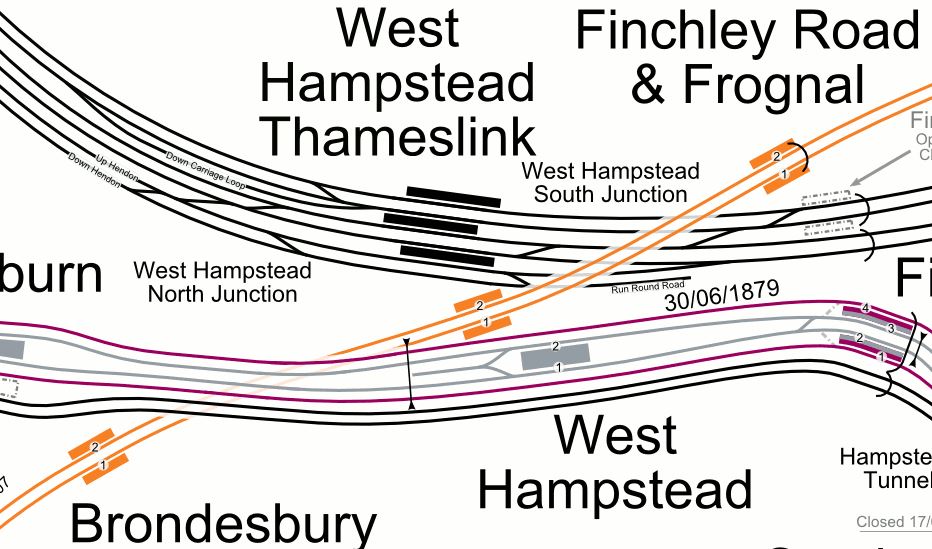
Note.
- The six tracks shown in black through West Hampstead Thameslink station.
- The Northernmost four tracks are those of the Midland Main Line.
- The Southernmost pair are labelled Up Hendon and Down Hendon and lead to the the Dudding Hill Line. via Cricklewood station.
- There is also a short track which is labelled Run Round Road, which could be useful to reverse trains on the West London Orbital Railway.
- The six tracks are crossed by the North London Line, which is shown in orange.
This picture shows the two Hendon Lines looking away from London from the footbridge of the station.
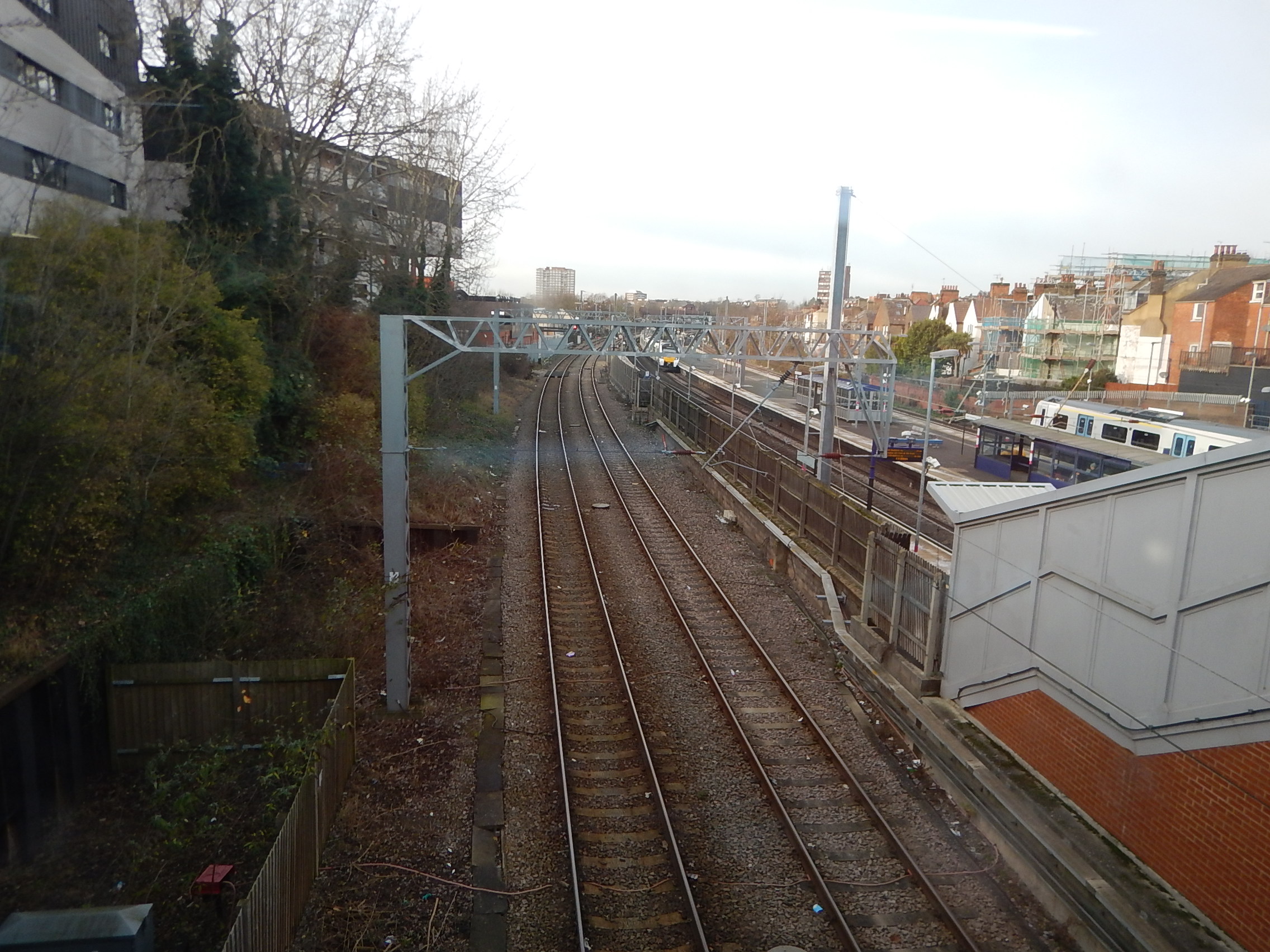
Note.
- The Down Hendon is on the left, with the Up Hendon on the right.
- Both tracks have 25 KVAC overhead electrification.
- The bridge, from which I took the picture, is step-free.
As there are numerous crossovers on the approach to the station, I feel that it would be possible to build a platform on the Up Hendon line.
- The platform would share an island and access with the existing Platform 4.
- It would be fully step-free.
- Electrification in the platform could recharge an electric train, that was using batteries.
- A single platform could handle the required four trains per hour (tph)
This picture shows the two Hendon Lines looking towards London from the footbridge of the station.
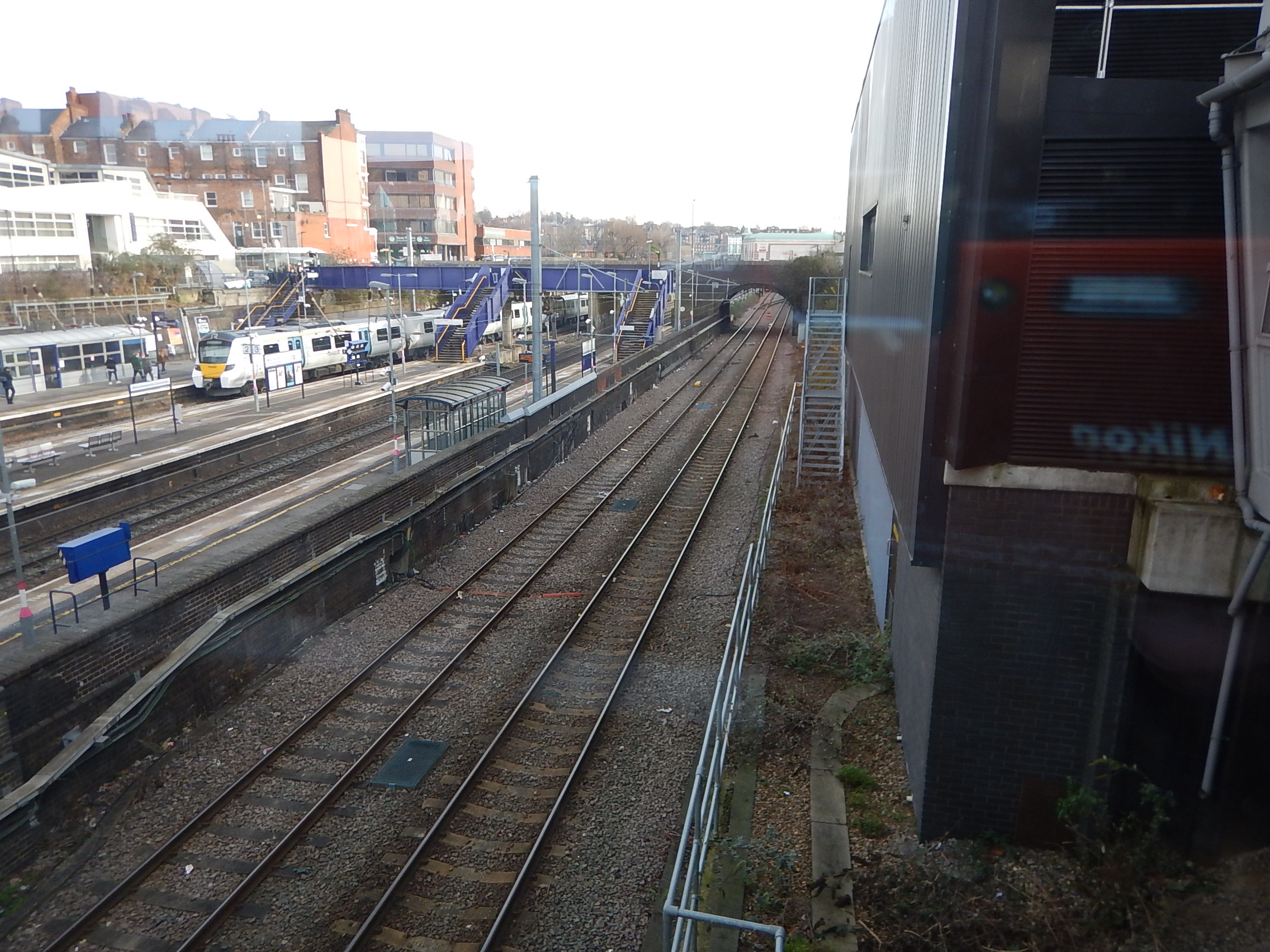
It would appear that if required the platform could be made long enough for an eight-car train or built on the Down Hendon line.
There are certainly possibilities to make the interchange between Thameslink and the West London Orbital Railway a very easy one, that is totally step-free.
Will The West London Orbital Railway Take Passengers From The North London Line?
I suspect that there are passengers, who will swap from the the North London Line to the West London Orbital Railway.
They will do it because the new route will be more convenient.
This will be no bad thing, as the North London Line can get crowded at times. And it will only get more so in the future!
Bollard Advertising
I took these pictures at London Bridge station.





The adverts wrapped around the steel security bollards are for Thameslink.
A Detailed Look At The Space Between Farringdon Station And The New Museum Of London Site
I took these pictures as I walked up Charterhouse Street beside the new site of the Museum of London.




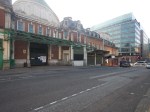



Note.
- The buildings to be used for the museum need a lot of work.
- The two buildings which could both be cold stores on the railway side of Charterhouse Street wouldn’t appear to have much architectural merit.
- Once Crossrail works are finished, there will be two big gaps leading to the railway lines and Farringdon station.
This picture from Crossrail says it is the Chaterhouse Street ticket hall.
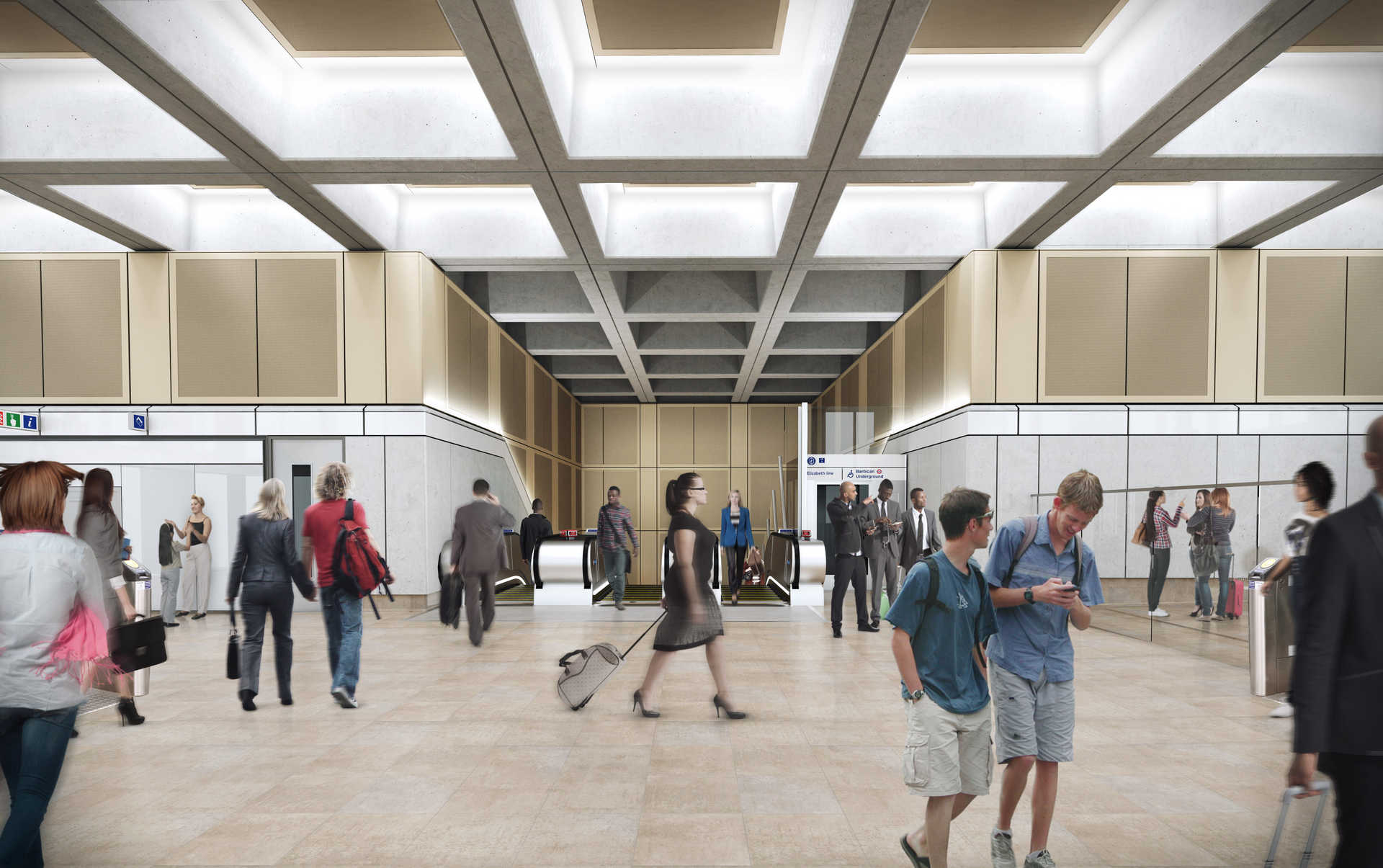
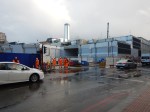
So it looks like that box in the third picture is an entrance to the station and it’s bang opposite the museum.
This Google Map shows the space on the railway side of Charterhouse Street.
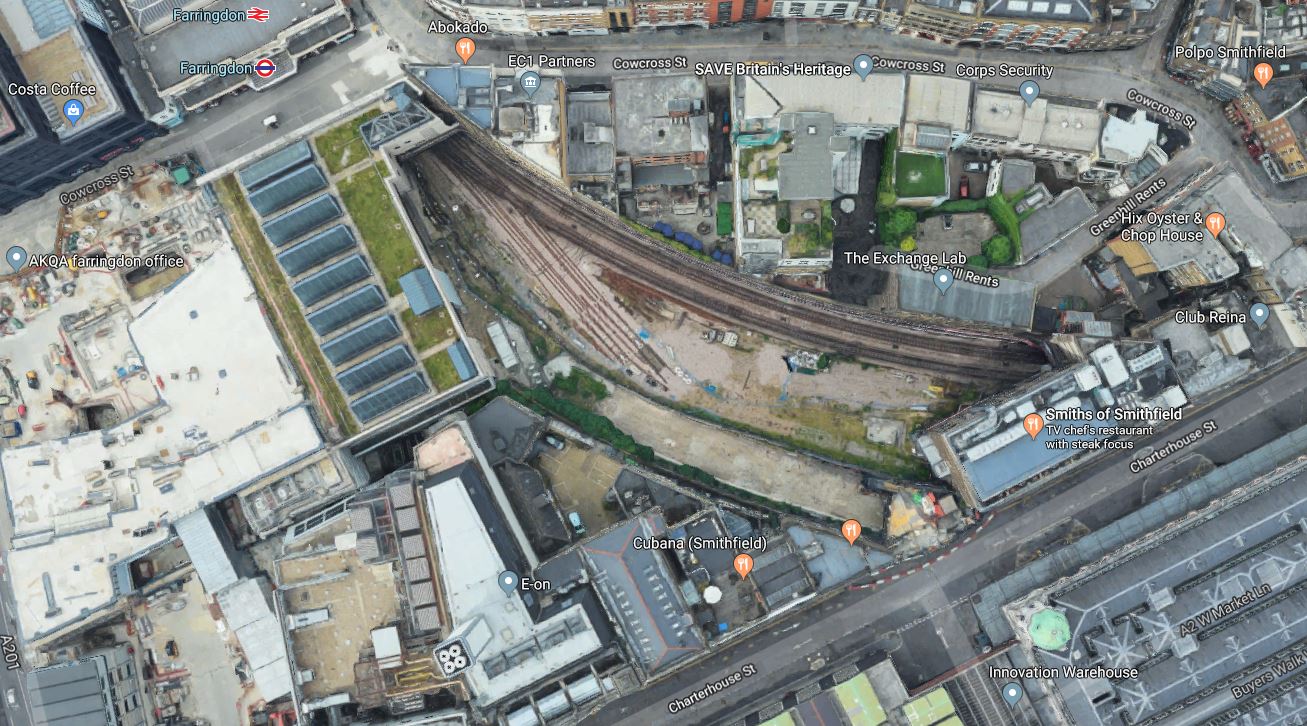
Note.
- Farringdon station at the top of the map towards the left.
- To the left of the station is the site I talked about in TfL Gives Go Ahead To Build Above Farringdon Station.
- Below that site, is another site on the corner of Charterhouse Street and Farringdon Road, that could either be developed in conjunction with the site above it or on its own.
- The Circle, Hammersmith & City and Metropolitan Lines curving between Farringdon and Barbican stations.
- What appear to be a couple of sidings are the remains of the Widened Lines, which used to lead to Moorgate.
- There is also a large curved space, which used to be which was used by services between Bedford and Moorgate, before Thameslink was created.
There’s a lot of space in the area to create a building or series of buildings that provide.
- A worthwhile amount of office space.
- A landmark hotel on one of the best-connected sites in London.
- The right amount of retail space, bars, cafes and restaurants.
But above all a short and pleasant walking route between Farringdon station and the new Museum of London could be designed.
TfL Gives Go Ahead To Build Above Farringdon Station
The title of this post is the same as this article on New Civil Engineer.
These are the first two paragraphs.
Transport for London (TfL) has signed an agreement with developer HB Reavis to build an oversite development above the new Farringdon Elizabeth Line station.
TfL said the new seven-storey, mixed use building was part of a huge programme of Elizabeth Line property development which could raise £500M to be reinvested into improving transport in London.
The article then goes on to add more detail about this development and a dozen or so others under development or construction.
I took these pictures at Farringdon station this morning.


This Google Map shows the site.

The site is between the station and Farringdon Road.
I feel that the site will be a very well-connected one.
- There is a direct rail connection to Gatwick, Heathrow and Luton Airports.
- Eurostar is one stop away on Thameslink.
- There is a direct rail connection to Euston, Kings Cross, Liverpool Street, London Bridge, Paddington and St. Pancras stations.
- Many of London’s Central attractions are easy to access.
Could it become an up-market hotel?
 The Anonymous Widower