Centrica Plan Green Energy Hub At Former Gas Power Plant
The title of this post, is the same as that of this news item from Centrica.
These three paragraphs outline the project.
A former gas fired power plant in North Yorkshire is to be turned in to a green energy hub under ambitious plans by Centrica.
The energy company has acquired the four-acre former Knapton Generating Station from Third Energy and plans to develop a 28MW battery on the site.
In addition, Centrica is exploring how Knapton could be used for off-grid hydrogen production, as well as the possibility for solar energy in the surrounding area.
Over the last few months, I’ve written about other small projects from Centrica.
- Centrica Business Solutions Begins Work On 20MW Hydrogen-Ready Peaker In Redditch
- Centrica And HiiROC To Inject Hydrogen At Brigg Gas-Fired Power Station In UK First Project
The company has also announced links with other companies.
- Centrica Announces Hydrogen Ready Combined Heat And Power Partnership With 2G
- Lhyfe And Centrica To Develop Offshore Renewable Green Hydrogen In The UK
- Centrica And Ryze Agree To Develop Hydrogen Pathway
Note, that the first concerns generators and the others concern hydrogen.
The Centrica news item about the Knapton generating station has this fourth paragraph.
The multi-million pound deal is part of Centrica Business Solutions strategic plan to create a 900MW portfolio of solar and battery assets by 2026.
It seems obvious to me that the Brigg, Knapton and Redditch projects fit this Centrica Business Solutions strategic plan, with sizes as follows.
- Brigg – 49 MW
- Knapton – 41.5 MW
- Redditch – 20 MW
I would expect to see Centrica behind several more of these smaller energy projects.
For that reason I have tagged all articles dealing with these projects as Centrica Small Energy Projects.
These are my thoughts about the Knapton generating station.
Third Energy
Third energy’s web site defines Third Energy as an unusual fossil energy company.
- The History page says that Knapton Generating Station was producing electricity using gas from the Vale of Pickering for over 25 years.
- The Net Zero Rise page describes their involvement in the Net Zero RISE consortium with Durham, Leicester and Oxford Universities.
- The Plug & Abandon and Geothermal pages are very much worth a read.
According to the Centrica news item, Third Energy will retain the ownership of the 12 well-sites and associated gas pipeline network.
I shall be watching this company and their developing relationship with Centrica.
The Net Zero RISE Consortium
The Net Zero RISE Consortium has a home page on the Newcastle University web site.
The page has this sub-heading.
Research Infrastructure for Subsurface Energy: an academic-industry partnership to deliver the UK’s first deep test sites.
This is said under a heading of Our Ambition.
This is the most cost-effective way of developing the UK’s first deep test site onshore.
Repurposing wells leverages previous capital investment. Using an onshore site with existing wells and geophysical data:
- eliminates the major cost of drilling and engineering
- reduces uncertainty by drawing on knowledge of the well and surrounding geological conditions
- is safer and easier access than offshore locations
We propose developing three test sites: CO2 storage; H2 storage and geothermal.
This seems to be a very sensible research collaboration and I wouldn’t be surprised to see more companies and universities join.
The Battery
The Centrica news item says this about the battery.
The first project at the site near Malton will be a 56MWh battery which will utilise some of the 41.5MW export capability of the existing grid connection. It’s anticipated the battery would be able to power around 14,000 homes for two hours.
This paragraph would indicate that the battery is supplying just 2 kWh per hour.
A common figure on the Internet is that the average house uses 8 kWh per day, which is 0.33 kWh per hour.
I have a feeling that the figures need correcting somewhere.
Solar Power
The third paragraph of the Centrica news item mentions solar energy.
In addition, Centrica is exploring how Knapton could be used for off-grid hydrogen production, as well as the possibility for solar energy in the surrounding area.
This Google Map shows the site.
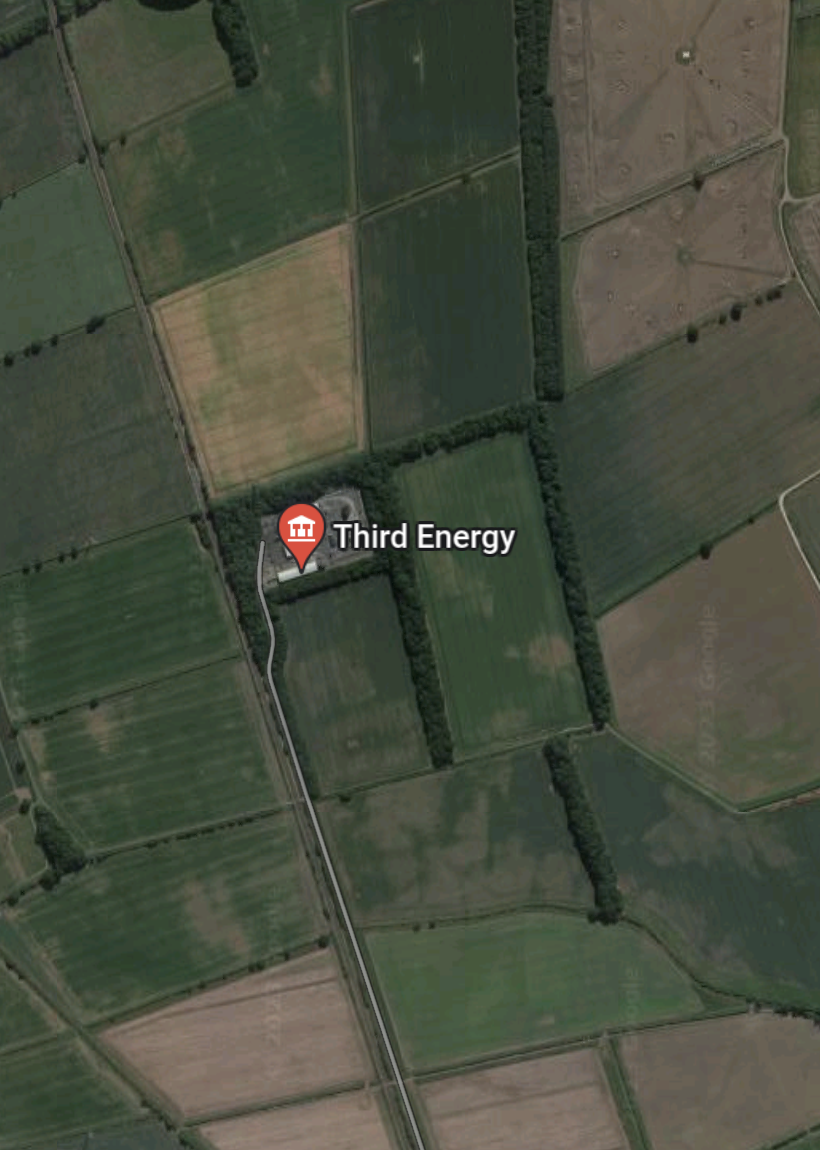
It appears to be several hundred metres to the nearest house.
I have read a very simple rule, that says a hectare, which is about the size of a full-size football pitch can accommodate a MW of panels. Obviously Centrica will have accurate calculations.
Off-Grid Hydrogen Production
The third paragraph of the Centrica news item mentions off-grid hydrogen production.
In addition, Centrica is exploring how Knapton could be used for off-grid hydrogen production, as well as the possibility for solar energy in the surrounding area.
Consider these points about the Knapton site.
- It has been handling gas for at least twenty-five years.
- It is connected to the electricity and gas grids.
- It has connections to a dozen gas wells.
- There would be space for a smaller electrolyser.
- Hydrogen could be exported from the site, by blending into the natural gas grid.
If Third Energy and the Net Zero RISE Consortium develop Knapton as a site for their H2 Storage test well, Centrica and an off-grid hydrogen production facility would be ideal partners.
Centrica could even use the site to try out new ideas.
This appears to be one of those engineering projects, that has been thought through whilst drinking several pints of real ale in a welcoming hostelry nearby.
Geothermal Engineering
This site could be used for experiments with geothermal engineering, but there doesn’t seem many places nearby, that would need a good supply of hot water.
Conclusion
There’s more to this deal, than meets the eye.
First Ever Gravity Green Energy Storage System Set For North Yorkshire Town
The title of this post, is the same as that of this article on the Yorkshire Post.
These paragraphs give an outline of the project.
Plans to create the UK’s first below ground gravity energy storage system have been unveiled in North Yorkshire.
Scottish energy storage firm Gravitricity is to apply to Ryedale District Council with its plan for a facility at East Knapton in Ryedale on the site of the former Knapton gas generator.
If completed, it could store up to four megawatt hours (4MWhs) of electricity – sufficient to power more than 9,000 homes for an hour.
It looks like the system will have an output of 4 MW.
This Google Map shows the two villages of West and East Knapton.
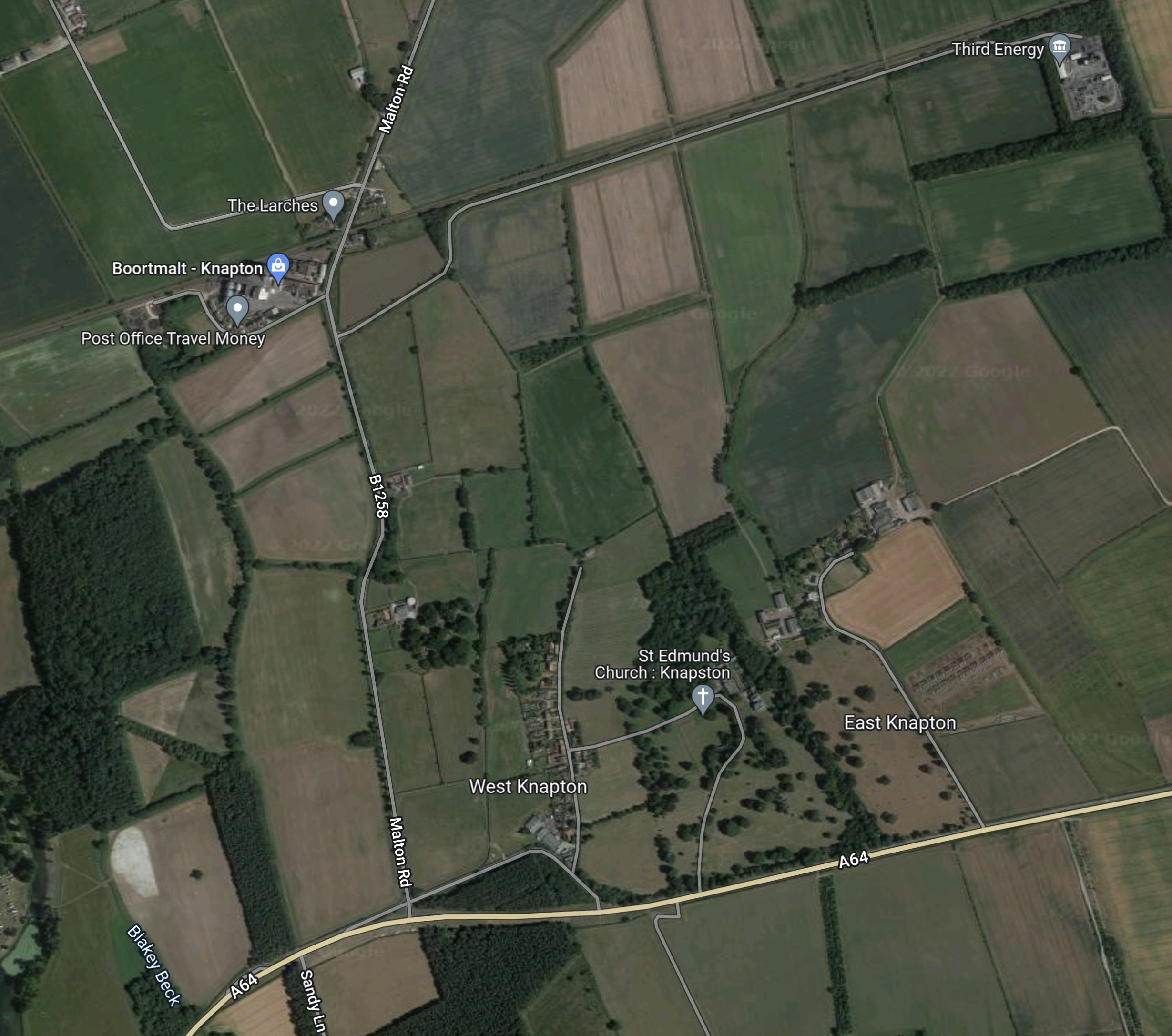
Note.
- The A64 road between Malton and Scarborough going across the map.
- Scarborough and the coast is about fifteen miles to the East.
- The Third Energy site in the North-East corner of the map.
This second Google Map shows the Third Energy site in more detail.
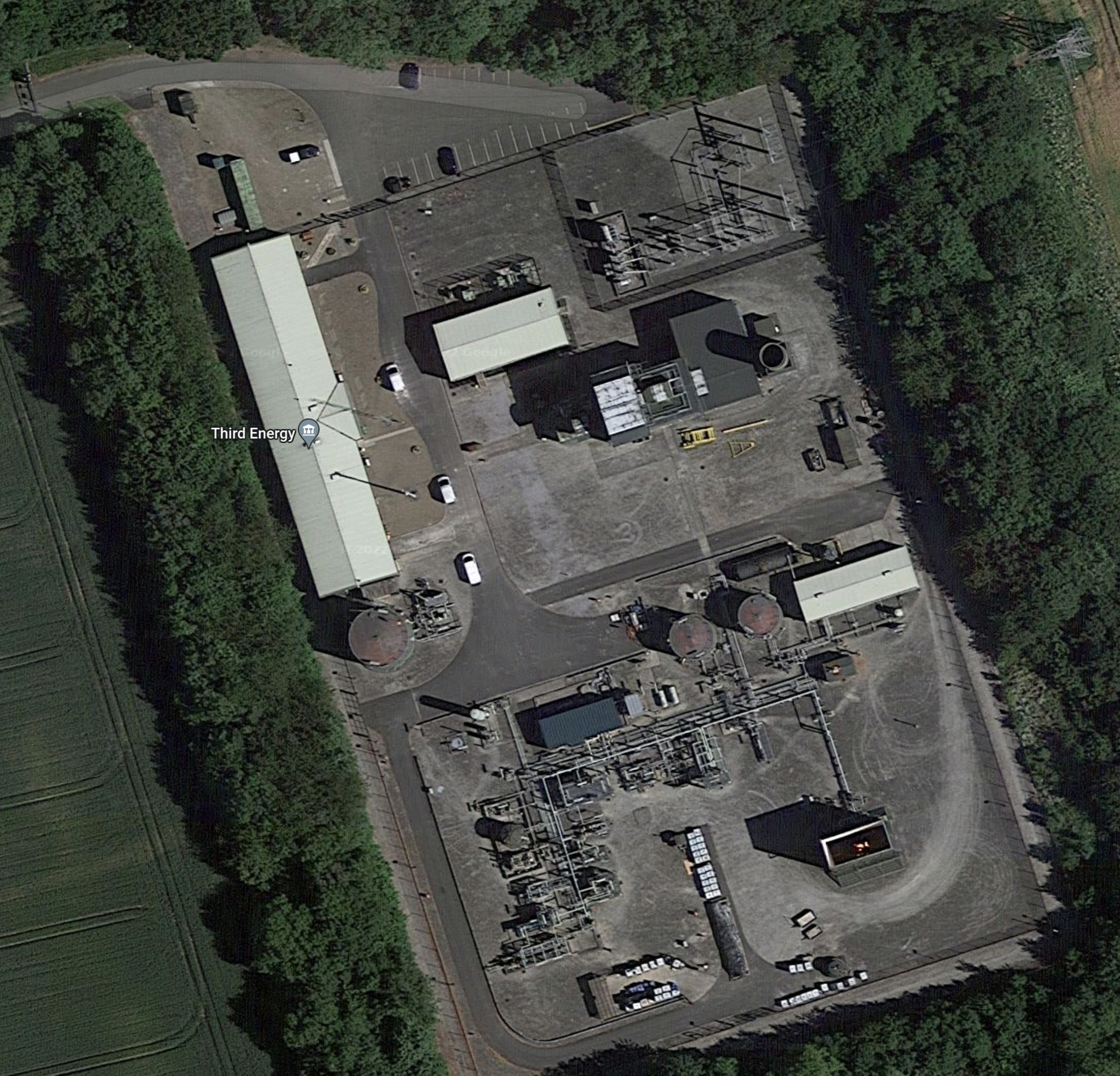
Note.
- The substation and a power line in the North-East corner of the map.
- The 42 MW Knapton Generating Station used to be on this site and it was powered by local gas wells.
Third Energy have now called the site Knapton Energy Park and it now has a web page, which has this mission statement.
Third Energy is developing the former Knapton Generating Station into the Knapton Energy Park. The energy park will house multiple sources of power generation and energy storage. The aim of the project is to pay a part in the development and generation of renewable energy systems in North Yorkshire, and contribute to making the UK Net Zero by 2050.
This paragraph talks about weights.
One of our technology partners has also received government funding to conduct feasibility studies for a pilot project at Knapton which would utilise suspended weights to store energy as an alternative to the traditional battery storage technologies. This project will be developed through 2022 onwards.
It looks like Gravitricity has planted an acorn in Yorkshire.
The Third Energy web site is worth an explore. This is the mission statement on the home page.
At Third Energy our aim is to be at the forefront of North Yorkshire’s transition from fossil fuels to sustainable energy. Our team are proactively playing a part in innovative energy solutions and energy development; transforming our facilities into a multi-purpose energy park and research centre.
I particularly like this page, which is entitled Plug & Abandon.
This is the outline of their P % A philosophy on the page.
As wells near the end of their life cycle they must be decommissioned and the land returned to its original state. Unfortunately, the current P&A practices of the oil and gas industry are cost prohibitive, resulting in delays to abandonment (as companies attempt to avoid the high cost), and poor abandonment practices that may be harmful to the environment.
Fortunately, there are solutions to this problem. Our ambition is to use new and innovative technologies to P&A the wells in a more effective and sustainable manner, and first to extend the period our wells may service the community by re-purposing them for geothermal energy.
Can they really convert abandoned gas wells into geothermal energy sources?
 The Anonymous Widower