Pessimistic Rail Passenger Forecasts
This article in Rail Magazine is entitled Campaigners Hit Out At “Pessimistic” Forecasts.
The campaigners are complaining about the passenger forecasts for reopening the Levenmouth rail Link from north Thornton Junction to Methil.
Rail passenger forecasts are notoriously bad. So much so, that I call it London Overground Syndrome, in honour of the local East London and North London Lines, where they started with three-car trains and are now five years later, running trains of five-cars.
Outbreaks have occurred around Leeds, on the Nottingham Express Tramway and the Borders Railway.
Any competent mathematician could come up with a valid way to adjust the forecasts.
The trouble is, this might mean the new line gets opened, which means more money from Government and more work for Network Rail.
A First Ride In A Class 700 Train
Today, I caught the 10:48 between East Croydon and London Bridge stations,. I took that train as this service was mentioned as the first one to be served by a new Class 700 train, in this article on Global Rail News.
As the pictures show it was one of the new twelve-car Siemens trains.
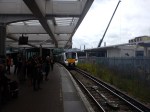

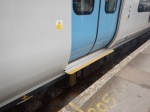
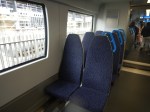
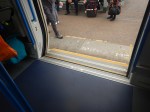

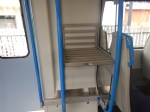
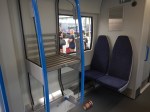
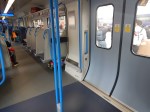
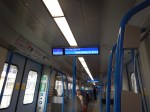

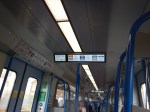
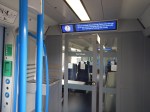
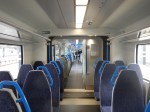


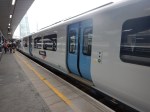
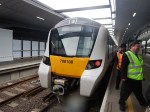
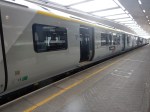
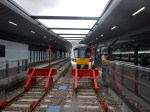
If I would give it a complement it would be competent, as most new trains seem to be these days.
The design features I like include.
- The spacious lobbies.
- The walk-through train.
- 2 x 2 seating.
- The comprehensive information system.
- The extra luggage racks, in addition to the usual racks above the seats.
- The simple colour scheme.
- The trains would work with platform-edge doors.
- Putting First Class at both ends of the train.
Passengers might complain about the following.
- The lack of audible messages. – I liked the quiet, but I’m not blind.
- The lack of tables in Standard Class compared with say the Class 387 trains, that currently work the line.
- The length of the train at 242.6m., if they get in the wrong carriage.
- The high step up into the train.
The last one is possibly to be compatible with other trains and is being addressed at East Croydon station, by raising the platforms. I didn’t go to Gatwick, but imagine large numbers of heavy cases being loaded and unloaded.
It will certainly be interesting to compare the Class 700 train, with Crossrail’s new Class 345 train, that is being built by Bombardier and could be testing later this year, with introduction in May 2017.
The length of the Class 700 and Class 345 trains at 242.6 and 200 metres respectively will certainly fuel the old chestnut about whether double-deck trains would have been better.
As I found with my short trip on a Class 700 train, walking from the back to the front could be a challenge for some. But commuters will develop strategies to make the journey easier.
So some may argue that double deck-trains might be easier on passengers.
But Thameslink and Crossrail have not been built for double-deck trains and certainly the older tunnels couldn’t accommodate them, without complete closure for a couple of years, so they could be rebored.
Both lines serve airports and stations, where passengers are likely to be bringing heavy baggage. This makes loading especially difficult on a double-deck train and delays the service.
Both trains have been designed with large lobbies and the Class 345 trains have three sets of doors on either side of each carriage. But they’ll need this space and doors as the longest trains carry upwards of 1,500 passengers.
These two fleets of massive trains will certainly change London. But I see problems in some areas, that must be addressed on Thameslink.
Stations
To realise the full potential of the Class 700 trains on Thameslink, some stations may need improvements.
Brighton could make for a lot of walking up and down the platform. Travelators?
I also think that Brighton needs a high-capacity East-West transport system to cope with the large number of passengers. Could the East Coastway and West Coastway Lines be connected together by a tunnel or a bridge over the station, which incorporated two connecting platforms?
East Croydon needs more improvements.
A dedicated island platform for Thameslink, as Crossrail has at Whitechapel, would knit all the branches together, so that journeys between any two branches were made easier and station footfall was reduced?
Gatwick is getting improvements, with a new concourse..
St. Pancras only has one big entrance in the middle. Does it need an extra Southern entrance? Or will passengers use stations like Farringdon, Finsbury Park and London Bridge to avoid the badly-designed station.
I certainly will avoid joining Thameslink at St. Pancras like the plague.
Step-Free And Disabled Access
The stations may be step-free, but the train-platform interface is not. However this is said in this document on the Thsmeslink Programme web site.
Platform humps at central London stations will provide level access for swift boarding by wheelchairs and people with buggies or heavy luggage – meaning no more ramps at the busiest central London stations.
I would assume humps would also be provided at stations like Gatwick and Brighton, if it were to be found they were needed.
I suspect, that in the end, humps will be provided at all stations served by Thameslink, as it will ease the logistics of running the system.
Platform Edge Doors
I don’t like platform edge doors as a passenger, but as an engineer, they make loading and unloading trains more efficient.
The Central Tunnel
The big problem with Thameslink, is that we are aiming to get twenty-four trains per hour under London.
Trains will have a schedule and must be driven exactly to those times. As the time between trains is just one hundred and fifty seconds.
So supposing, there was a problem with loading at say Purley and the train was delayed by five minutes, you have a serious problem, that would knock on for some time.
Every possible cause of delay should be eliminated.
- All stations must have humps for wheelchair users.
- Central stations may get platform edge doors.
- Stations must be improved so that passenger flows are not impeded.
- Train reliability must be as close to a hundred percent as possible.
As a Control Engineer, I strongly believe that all trains should be driven automatically.
An illustration of the problem was provided this morning at East Croydon, whilst I was waiting for my Class 700 train..
There were late trains all over the place, due to various problems including power supply, signalling and staff sickness.
, The Thameslink service is going to need all the help it can to get all the trains lined up and on time to go through the central tunnel.
What About Crossrail?
Crossrail has big advantages over Thameslink.
- ; All of the central stations have new platforms, which have been designed to fit the new trains.
- The branches to the four terminals, run for nearly all of their routes on dedicated tracks without other trains.
- The central stations have platform edge doors for safety, which may improve time-keeping on the service.
Overall though, Crossrail is a much simpler design than Thameslink.
Making Crossrail work will be a lot easier than making Thameslink work!
Glasgow Queen Street Station – 18th June 2016
I took these pictures of Glasgow Queen Street station.
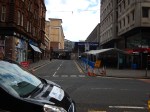
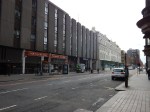
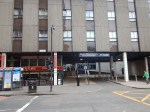
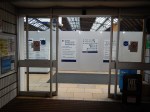
I suspect that when they have finished the station it will be rather different.
Are More Class 387 Trains On The Way?
In Sorting Out The Great Western Electrification, I said this, based on what I had read in the June 2016 Edition of Modern Railways, in an article entitled GWR To Order More ‘387s’.
So GWR have snapped up the other fourteen ordered by Porterbrook and supplemented this with an order for fifteen new build units.
This means they have got their required 29 trains to go with the eight they ordered some time ago.
Unfortunately, building more Class 387 trains, which would probably help the rolling stock shortage caused by the non-working Class 700 trains, especially as it appears Bombardier has spare capacity, is not on, as changes to crashworthiness regulations mean that these trains can’t be produced after September 2016.
So it’s probably very lucky, that the Great Western doesn’t have much working electrification.
In the July 2016 Edition of Modern Railways there is an article entitled GWR Confirms Order For More ‘387s’.
This confirms that GWR are taking Porterbrook’s fourteen trains and another twenty-three not fifteen trains.
Fleet Details in the Wikipedia entry for Class 387 trains confirms these numbers.
But the July 2016 article in Modern Railways also has this sentence.;
Previous concerns that the ‘387’ design could not be produced after September this year have proved to be unfounded, so Bombardier is not required to cease manufacturing the units after that time.
So does this mean we will be seeing more Class 387 trains coming off the production line at Derby?
Consider.
- Bombardier are building the new Aventras on a new production line at Derby.
- An airport version of the Class 387 train is available.
- The trains can run in four-, eight- and twelve-car formations.
- An IPEMU version of the train should be possible.
- How would the price on a Class 387 train compare to other trains of a similar capacity?
- Over fifty trains are in service on both lines with overhead or third-rail electrification.
- Many of the trains run under DOO rules.
So how could various operators use Class 387 trains.
GWR already have forty-five Class 387 trains on order for suburban services out of Paddington.
- If Bombardier get IPEMU technology to work, there are several places around the GWR network, where it might be possible to be used.
- GWR are thinking of obtaining more AT300 trains for Oxford services, but if wires could be erected or the IPEMU version could be used on battery power from Didcot, Class 387 trains could handle the route. Surely, more Class 387 trains would be preferable, as this would give a one-class suburban fleet.
- An airport version of a Class 387 train fitted with an IPEMU capability could handle the Reading to Gatwick route.
- The Marlow Branch and other routes away from the main line, could be handled by a Class 387 train with an IPEMU capability.
- Are there any other services in Wales and the West for which Class 387 trains would be ideal, once electrification gets to Bristol, Cardiff and Swansea.
c2c are an operator of seventy-four Class 357 trains, which are Electrostars like the Class 387s.
- c2c are taking six Class 387 trains before placing an order for sixty-eight new carriages to be delivered in 2019.
The new East Anglia Franchise will be awarded this month and requires a lot of changes to the rolling stock. Some are urgent.
- Three Class 387 trains running as a twelve-car unit with a high-class interior would probably be faster, more comfortable and spacious with an increased capacity compared to the ageing Class 90 locomotives and rakes of Mark 3 coaches. Would the Class 90/Mk 3 trains, be able to do Norwich in 90?
- Class 387 trains with an IPEMU capability could work various routes around East Anglia connecting Cambridge, Colchester, Ely, Great Yarmouth, Ipswich, Lowestoft, Norwich and Peterborough.
- There are several branch lines in East Anglia without electrification,which could be worked by Class 387 trains with an IPEMU capability.
- The Class 379 fleet working to Cambridge and Stansted Airport, may need expansion, due to the opening of Cambridge North station.
- According to Wikipedia, the invitation to tender for the france include this ” extra points will be awarded to bidders who include plans to trial new technologies in rolling stock”
Although some of the uses of Class 387 trains could obviously be filled by Aventras and other trains, as there is little development involved to build more Class 387 trains, I wouldn’t be surprised if more of these trains were built.
After all, if you are the CEO of a train operating company, currently running Electrostars, at speeds of up to 110 mph and you are offered the latest Class 387 train to your specification, with a sensible delivery date and at a price that is affordable, you must seriously consider signing the order.
You also have the example of the Class 387/2 trains that were built to an airport specification for Gatwick Express.
I wouldn’t underestimate the involvement of Porterbrook-Rent-A-Train in all this. Some of the franchises will need more rolling stock, as soon as possible.
After The Pop-Up Shop, Here’s The Pop-Up Depot
We’re all very familiar these days with pop-up shops.
I found this article on the web entitled DB Cargo UK and CEMEX introduce ‘pop-up’ rail depot.
It may not be for the general public, but this is said.
DB Cargo UK and CEMEX have opened a ‘pop up’ rail depot to serve the growing North West construction market and reduce the number of HGVs transporting materials from the picturesque High Peak countryside.
The ‘pop-up’ depot was installed in weeks on land adjacent to the West Coast Mainline using a ready-made weighbridge and office.
The temporary site, based in Warrington, Cheshire, will handle around 125,000 tonnes of aggregates each year.
I think we’ll see the concept used more often to get those truck-loads of heavy construction materials off the roads and onto the railways.
A Design Crime – Milk In Plastic Tubes
i got my morning cup of tea on the Caledonia sleeper, with milk in plastic tubes.

A Design Crime – Milk In Plastic Tubes
I hope the young man, who first designed this abberation, is truly sorry for what he created.
I say young man, as nobody over fifty starting to feel the aches and pains of life would have created this design.
It was certainly a man, as any woman, who had worn nail polish, would probably have discarded the idea.
Years ago, when I chewed my nails, I certainly wouldn’t have been able to open these awful containers.
They should be consigned to the dustbin of history and I declare them a design crime.
Carlisle To Glasgow By The Scenic Route
One of the reasons for my trip to Carlisle station, that I wrote about in Carlisle Station Gets A Makeover, was to explore the Glasgow South Western Line, which was the only line in the Borderlands, that I hadn’t explored.
These pictures tell the story.
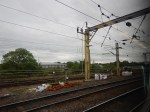
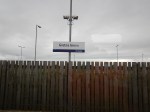
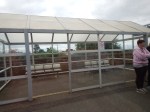



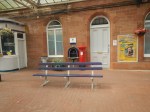
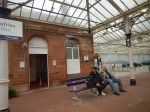
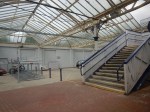
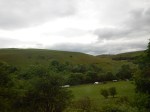






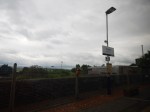
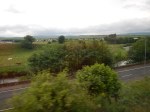
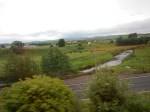
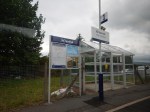
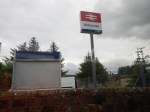

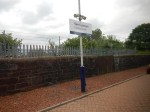


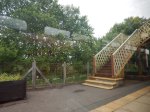
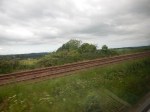
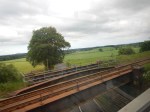


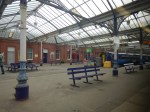
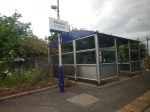
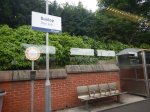
My first reaction to the line is that, the well-maintained stations need more services.
I’ll put my thoughts in the following section.
More Services
Abellio Scotrail have ordered new electric Class 385 trains from Hitachi, which comprise eighty train sets, that total 192 carriages.
These can’t run on the Glasgow South Western Line, but will replace several modern diesel multiple units for service all over Scotland.
I suspect that if the Borders Railway gets four car trains, then there would be some lengthening and increase of frequency on this route.
Incidentally, the conductor on the train I took, said that more services will certainly come.
An Improved Diversion Route
What is more likely to drive improvements is the need for a diversion or alternative route for the West Coast Main Line between Glasgow and Carlisle.
Reasons could include.
- The West Coast Main Line is very busy.
- Diversions because of blockades or bad weather.
- There is a need for more Anglo-Scottish freight services.
- Freight services will be increasingly hauled by electric or bi-mode locomotives.
Unlike many diversion routes, the Glasgow South Western Line is an 80 mph line with sections of double-track and 100 mph maximum speed
Electrification
Electrification of the diversion route, would probably be essential, as most traffic on the West Coast Main Line uses electric traction.
The conductor I spoke to, was surprised that British Rail hadn’t electrified the line in the 1970s, at the same time of the major West Coast Electrification.
As schemes go, it wouldn’t be the most expensive of schemes., as the line appeared to go through fairly easy countryside, with not many bridges and tunnels.
But the biggest advantage is that at both ends of the line, there are electrified lines, that can be used to provide power for the line at both ends.
Look at this Google Map of Gretna Green station‘s position with relation to the West Coast Main Line..
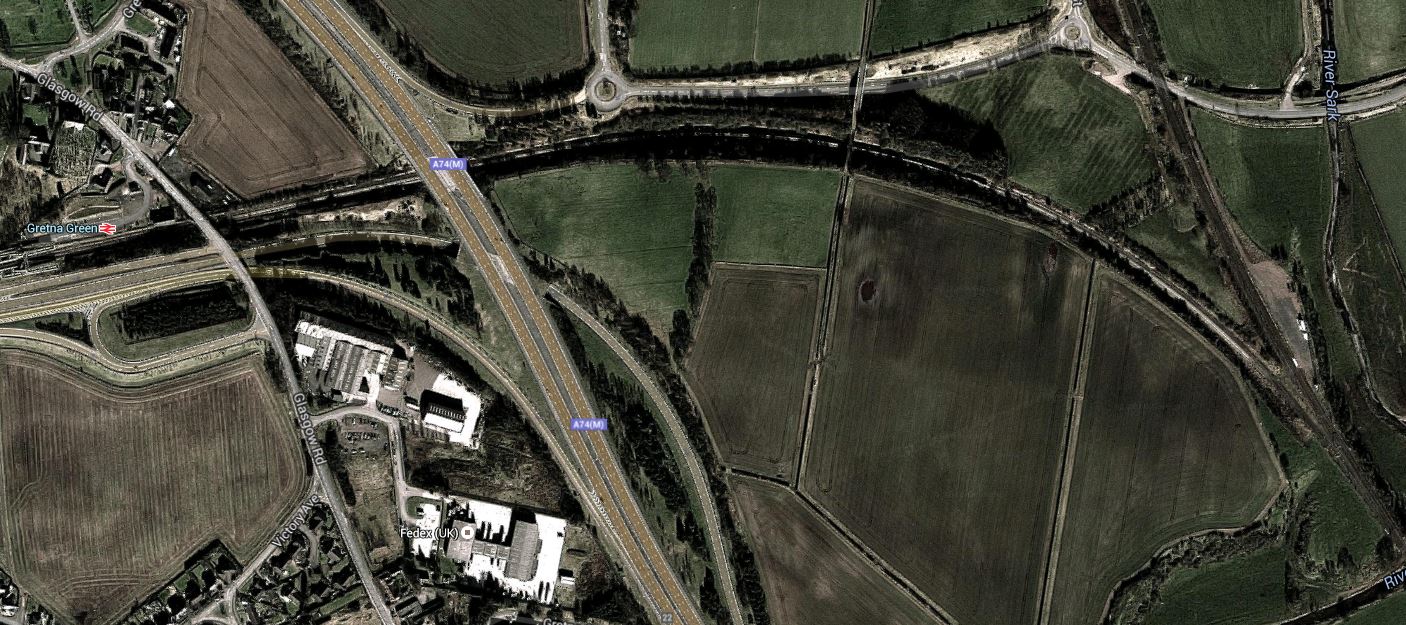
Gretna Green Station And The West Coast Main Line
At the Northern end of the line, there is masses of electrification in and around Glasgow.
Electrification of the route must have other advantages.
- Services could be provided by Class 385 trains.
- Kilmarnock gets an electric train service.
But surely, the biggest, is that modern electric trains would speed up the service considerably.
It’s Not April The First
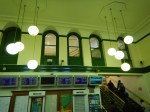
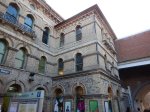
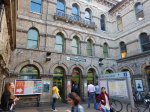
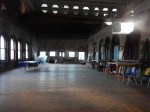
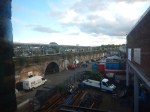
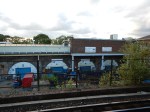
This story could be titled Architect Benedict O’Looney Discovers Lost Victorian Waiting Room In Peckham.
But in their article the BBC has used Peckham Rye station’s ‘lost’ waiting room to re-open after 50 years.
This is said.
It was once considered to be one of the grandest station waiting rooms in South London, but for decades the space at Peckham Rye railway station was bricked up and forgotten about.

The Platform For The Future
The June 2016 Edition of Modern Railways has a section about The Railway Industry Innovation Awards 2016.
One is labelled the Platform for the Future.
That probably sounds rather boring, but I’m a great believer in disruptive technology and using new and innovative methods to replace something that is rather dull, with something that is better, quicker to be installed and get working and more affordable.
This is said.
Abellio Greater Anglia and Dura have pioneered the use of a composite platform at Needham Market station in Suffolk, which was installed in just 36 hours.
This installation might be considered surprising as Needham Market station is a Grade II Listed building. So it can’t look like.
A monstrous carbuncle on the face of a much-loved and elegant friend.
But the product comes with these advantages.
- The design life is sixty years.
- A financial saving of 25% is reported.
- As the platforms are built in a factory, the quality should be tip-top.
- Other features like Harrington Humps could be built-in.
Hopefully, this would dissuade even the most determined member of the Heritage Taliban from objecting.
There’s more here on the Dura website. There’s also this video, of the platform being installed at Needham Market station.
This is a picture I took from a p[passing train.
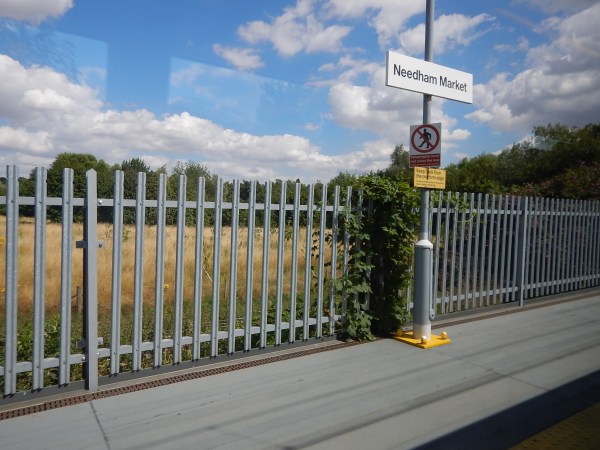
It looks good and who would think it was long-life hard-wearing plastic.
Only members of the Taliban tendency of the Green and Heritage lobbies would probably object!
I think that this product could find lots of applications, in traditional heavy rail, light rail and tramways. Certainly, it could be used to create some of the needed extensions to platforms on the Gospel Oak to Barking Line.
Look at these pictures taken at Harringay Green Lanes station.
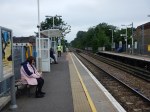
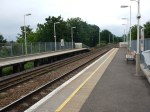

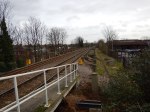
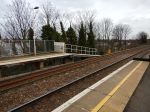
Would composite platforms make extending these platforms an easier process?
The company might also have the solution to the dual-height platforms, that some people feel are needed for tram-trains. The Germans certainly use stepped platforms so that different types of tram-trains have step-free access.
In fact, why restrict it to rail applications?
It could be used to provide a disabled viewing platform at somewhere like a horse racecourse or other sporting venue.
Or how about helping to create step-free bus stops, that I wrote about in One Of London’s Step-Free Bus Stops?
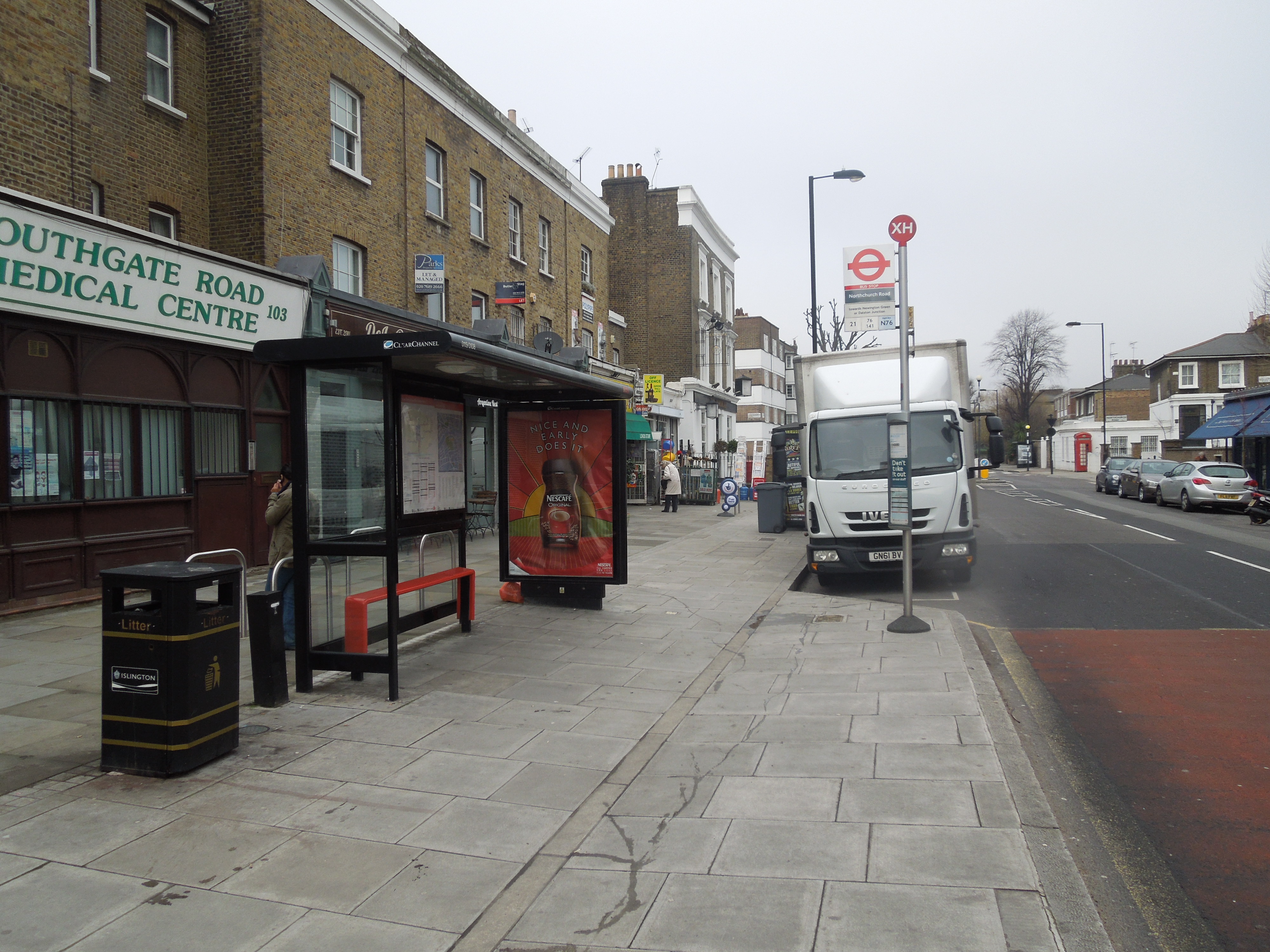
One Of London’s Step-Free Bus Stops
It’s certainly a very good innovation.
What Will Be The Service On The Great Northern Lines After Thameslink Opens?
When I did the short trip from Essex Road station on the Northern City Line, that I wrote about in Never On Sunday, I was surprised to see that the frequency of the service was Transport for London’s turn-up-and-go frequency of 4 trains per hour (tph), with 2 tph to going to Hertford North, with 1 tph extended to Stevenage and 2 tph to Welwyn Garden City.
The services at Essex Road station in the Off Peak include these trains.
- 6tph to London Moorgate
- 3tph to Welwyn Garden City via Potters Bar
- 3tph to Hertford North (1tph extended to Letchworth Garden City)
It is interesting to note that between 0800 and 0900 on a weekday morning, thirteen trains arrive at Moorgate.
From 2018, the new Class 717 trains will start to run on the Northern City Line. The number of passengers on this line will surely grow as the Southern terminus of Moorgate station will be on Crossrail from December 2018.
Assuming these six-car Class 717 trains can carry about half that of a 12-car Class 700 train, then in that hour they could bring 4,329 passengers into Moorgate station.
Will the low-level platforms at Moorgate station be able to cope?
Probably easily, if there is a direct tunnel and escalator access to Crossrail.
This map from carto.metro.free.fr shows the various lines at Moorgate.
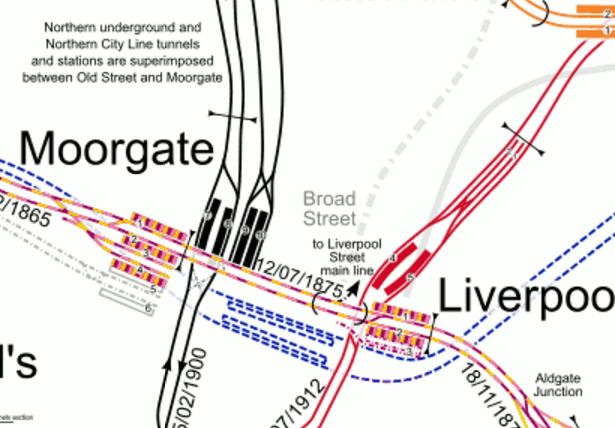
Note.
- The Northern City Line is superimposed on top of the Northern Line at Moorgate station.
- The 200 m. long Crossrail platforms almost stretch between Moorgate and Liverpool Street stations.
- Interchange between the Northern Line at Moorgate and the Central Line will probably be a three hundred metre walk.
- Crossrail should mean that all Liverpool Street to Moorgate interchanges will be desert dry in the wettest weather.
If this massive interchange doesn’t create a need for more capacity on the Northern City Line, I’ll be very surprised.
As there have been improvements to the lines on the Great Northern Route, between Finsbury Park and Alexandra Palace stations, I wouldn’t be surprised that when Crossrail opens, this Cinderella line, that nobody wanted is running eight, ten or even more tph between Moorgate and Finsbury Park stations and further up the route.
The services on the Great Northern Route are intense, but despite that, the route has some of the most crowded trains in the UK..
Thameslink is coming and that will change everything dramatically.
At present Cambridge has 4 tph to Kings Cross in the Off Peak, of which two tph are non-stop Cambridge Cruisers.
When Thameslink connects to Cambridge, the provisional timetable says it will add 4 tph semi-fast trains between St. Pancras Thameslink and Cambridge.
Thameslink haven’t said what services they will retain between Kings Cross and Cambridge, but I did read somewhere that they want to hold on to the Class 387 trains to run the Cambridge Cruisers.
At present, Peterborough has 2 tph Great Northern services to Kings Cross, in addition to several non-stop expresses.
As with Cambridge, Peterborough will get an additional 4 tph, when Thameslink opens.
I think the outcome will be lots of direct services between Cambridge or Peterborough in the North and Kings Cross or St. Pancras Thameslink in the South.
If you are prepared to change just once, you’ll be able to travel between any station North of Finsbury Park to any of the three London terminals; Kings Cross, Moorgate and St. Pancras Thameslink.
I believe that because Thameslink has such a large number of stations and connections, that many passengers will have a wide choice of route.
There is also the performance and quality of the various trains on the routes to consider.
- The current Class 365 trains are 100 mph trains built in the 1990s. They are starting to look dated as I wrote in The Class 365 Trains Are Looking Dated.
- The Class 387 trains are 110 mph trains built in the last few years. They are a quality long-distance commuter train.
- The Class 700 trains are 100 mph trains, that are being delivered at the present time.
- The Class 717 trains could have a similar performance to the Class 700 trains. I will be very surprised if they are not 100 mph trains.
A succession of 100 mph plus trains speeding up and down the Great Northern Route won’t be a slower service than is currently offered.
There would probably be four semi-fast trains to and from both Northern destinsations, stopping at all major stations, with well-connected stopping trains serving the intermediate stations.
There might even be service patterns like say four tph between Moorgate and Welwyn Garden City stopping at all stations, which have a same platform interchange with four tph stopping services to Cambridge and Peterborough. So from say Foxton to New Barnet, you’d always change at Welwyn Garden City.
As an example of how the new improved Thanmeslink will help passengers, look at the routes from my home to Cambridge.
I could.
- Take a 277 bus to Highbury and Islington station and get a Victoria Line train to St. Pancras for a Thameslink train to Cambridge.
- Take a 38 bus or walk to Essex Road station and get a Northern City Line train to Finsbury Park for a Thameslink train to Cambridge.
- Take a 141 bus to Moorgate station and get a Northern City Line train to Finsbury Park for a Thameslink train to Cambridge.
- Take a 277 bus or walk to Highbury and Islington station and get a Northern City Line train to Finsbury Park for a Thameslink train to Cambridge.
- Take a 30 bus to Kings Cross station and get a Cambridge Cruiser to Cambridge.
The possibilities will be endless.
I wouldn’t take the first option, as St. Pancras is A Fur Coat And No Knicker Station, with a long walk between the Victoria Line and Thameslink.
My choice of route, will probably be decided by the first bus that arrives and the quality of the smile on the driver’s face.
 The Anonymous Widower