The Midland Metro Is Set For Expansion
This article in Rail News is entitled .Major Midland Metro expansion plans unveiled. It lays out how after a devolution deal for the West Midlands there is going to be new lines on the Midland Metro. The article says this.
A new ‘HS2 connectivity package’ will include new tram lines from the HS2 station at Birmingham Curzon Street to Birmingham Airport via Bordesley Green and Chelmsley Wood, and between Wednesbury and Brierley Hill — a destination which was an aspiration of local Metro planners even before the first section opened in 1999 between Snow Hill and Wolverhampton St George’s.
It is certainly a substantial expansion.
Birmingham Curzon Street to Birmingham Airport
The history of the proposed Line Two linking to Birmingham Curzon Street station for HS2 and Birmingham Airport, is given in Line Two East Side Extension of the Wikipedia entry for the Midland Metro.
There would appear to be no mention of Bordesley Green and Chelmsley Wood, so I would assume that the route has been changed.
Wikipedia also mentions serving Coventry station, but the Rail News article doesn’t. I suspect that as Coventry is part of the devolution plans, that Line Two will go to the city!
Wednesbury To Brierley Hill
This proposal for this line, which links both Birmingham and Wolverhampton to the Merry Hill Shopping Centre, is better developed and some details are given in this section of the Wikipedia entry for the Midland Metro.
The proposal utilises the disused South Staffordshire Line, which to complicate matters Network Rail want to open for freight.
In January I published Will Dudley Get A National Very Light Rail Innovation Centre?, which also throws some extra factors into the knitting.
In the Midland Metro entry for this line, this is said.
Centro has stated that the WBHE would provide 10 trams per hour, alternately serving Wolverhampton and Birmingham. Journey time from Brierley Hill to West Bromwich was stated as 31 minutes.
So if it is intended that this line runs trams to both Birmingham and Wolverhampton and it will also carry freight, then it seems to me, that by using something like Class 399 tram-trains, you can be all things to all stakeholders.
If you look at the South Staffordshire Line north of the proposed junction with the Midland Metro, it is a mass of working and disused railway lines, that ultimately terminate on the West Coast Main Line at Lichfield Trent Valley station.
Given that the article in Rail News talks of improvements to the West Coast Main Line, I can’t believe that in the future the South Staffordshire Line is not developed as a cross city line from Lichfield to Stourbridge.
Conclusion
The West Midlands is going to see a lot of rail and tram development in the next few years.
Councillor David Lawrence, who chair of the West Midlands Integrated Transport Authority, is quoted as saying this about the schemes.
The agreement will see Whitehall make an annual contribution of £40 million for 30 years to support investment worth £8 billion, which it claimed will support the creation of more than half a million jobs.
Will the Brummies go for it?
Sudbury To Cambridge – D-Train, IPEMU Or Tram-Train?
In D-Trains For East Anglia? I reported on how possible Anglia franchisees, were looking at using Vivarail D-Trains between Marks Tey and Sudbury on the Gainsborough Line.
So as someone, who lived by the disused line from Sudbury to Cambridge Line via Haverhill for nearly twenty years, I have views on whether this route should be opened.
The Case For Reopening
After my stroke, for a year, I lived just North of Haverhill, in the middle of nowhere. The only way to get to say Cambridge, Ipswich or London, was to get a taxi to either Newmarket and get a train or Haverhill and get a bus.
As with many people, a station in Haverhill would have given me an alternative route, using a cheaper taxi!
But for many who live along the Stour Valley getting to Cambridge and its employment opportunities means the car or a bus.
Haverhill is now a town of 30,000 souls and when the line closed, the population was under a quarter of that figure.
So although the case for closure of the Stour Valley Railway in 1967, was strong, there is probably just as strong a case to provide a high-quality public transport system between Sudbury and Cambridge via Cavendish, Clare and Haverhill.
The Route Today
Much of the route is still there, although in places it has been built upon.
But I believe, as do others, that a single-track railway with passing places could be built between the West Anglia Main Line, just South of Shelford station to Sudbury station on the Gainsborough Line thst connects to the Great Eastern Main Line at Marks Tey station.
If the line is built mainly single-track, this would be more appropriate for an area of outstanding natural beauty and it would make it easier to squeeze the line into difficult places like the station at Sudbury, which is shown in this Google Map.
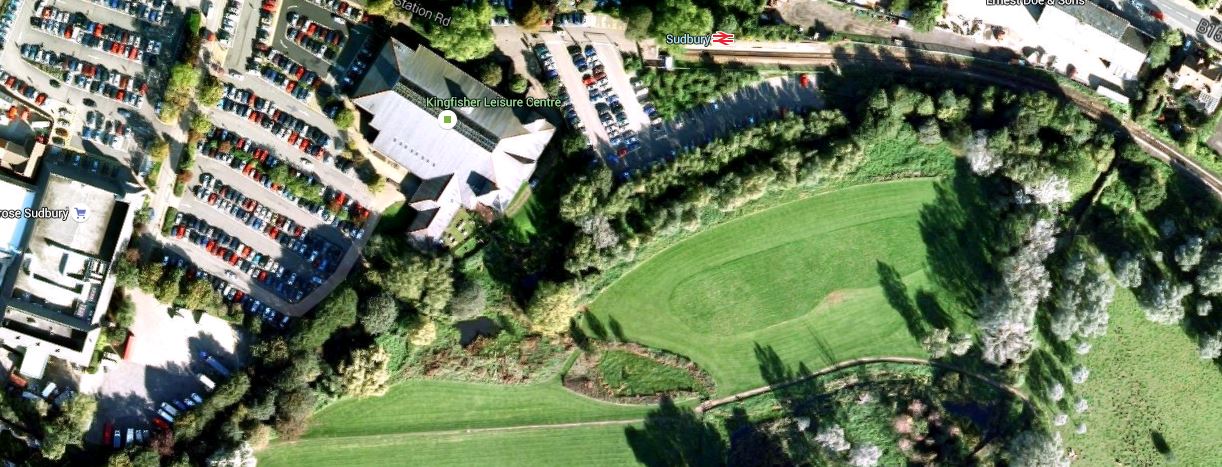
Sudbury Station
The route of the overgrown disused rail line, goes out towards the South-West.
The route of the line is still visible in the other major town on the line; Haverhill. It is shown on this Google Map.
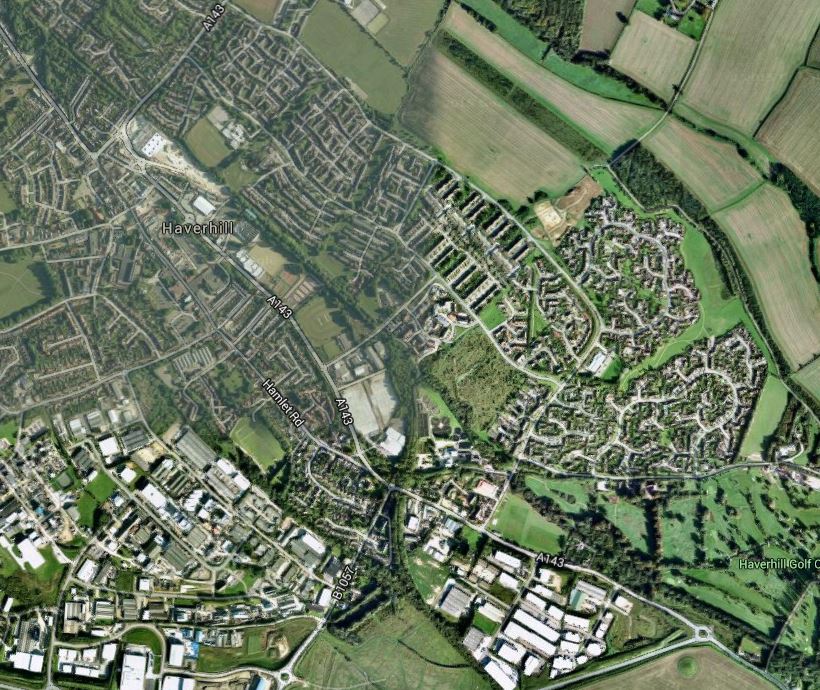
The Railway Through Haverhill
The railway goes across the town from North-West to South-East. It does split with one branch going South over a massive brick viaduct and the other going East towards Clare, Cavendish and Long Melford.
Much of the line now is a footpath through the town, which I suspect could share the route with a single-track railway or tramway. Tesco’s probably wouldn’t mind if the station was just to the North of their massive car-park.
I suspect that all stations would be designed to be as simple as possible.
Several of those on the new Borders Railway like Eskbank, Galashiels, Gorebridge and Newtongrange are well-designed single platforms and some have no means to cross the railway.
Stations like these would be practical and unobtrusive.
Possible Rolling Stock
Because of the limited nature of the track, which as I pointed out could possibly be mainly single track, I think that some types of rolling stock can be ruled out.
If say, the line was to be run using something like two or three-car Class 168 trains, there could be capacity, vibration and noise problems.
So I think we’re left with the following.
- D-train or Class 230 trains
- IPEMUs
- Class 399 tram-trains
I shall now look at each in detail.
Class 230 Trains
Class 230 trains or D-trains have been talked about as possibilities for the Gainsborough Line and these conversions from London Underground D78 Stock could certainly travel easily between Marks Tey and Shelford, before going on to Cambridge.
Other than possible hostility to their origin and second-hand provenance, I can see other problems with these trains.
- When running between Shelford and Cambridge, would they get in the way of faster trains to and from London and Stansted.
- Would they have a noise and vibration problem, as they trundled through quiet villages?
- Extending the service at either end to perhaps Colchester and Cambridge North might be difficult.
- They would have a shorter life-span than the other options.
But we haven’t seen a Class 230 train in service yet.
IPEMUs
IPEMUs or battery-powered trains have only been seen briefly on UK railways and that was at Manningtree, where Bombardier and Network Rail ran the prototype in a successful trial in public service.
They are full size four-car electric trains and could run from Marks Tey to Shelford on batteries, charging up on the electrified main lines.
In addition they would have the following other advantages.
- They have a high-capacity, with all the facilities that all types of passengers could want or need.
- There could be no need to put up any overhead wires between Marks Tey and Shelford.
- They would probably have a very low intrusion factor into the environment.
- When they are on the main lines, they become normal trains, so there would be no disruption to other traffic.
- They could also extend the service to between say Colchester and Cambridge North.
Perhaps the only disadvantage of IPEMUs, is that being full-sized trains, the railway might have to be fully-protected with fences.
Class 399 Tram-Trains
Class 399 tram-trains are the unusual one of the three. But in some ways they are the most versatile.
They are a three-car high-capacity 100% low-floor tram, very similar to those you see in Blackpool, Birmingham, Croydon or Nottingham. But in addition to being able to run using a tram 750 VDC overhead supply, they can also run as a train using the standard 25kVAC supply of the main line railway.
They combine the best characteristics of both means of transport.
In the next couple of years they will be trialled in Sheffield on an extension of the Sheffield Supertram to Rotherham.
For those that worry about the technology, several German cities have large systems of mixed trams, trains and tram-trains, so it is not by any means untried. Especially, as a Class 399 tram-train is a German standard tram-train, modified for our overhead voltage, which incidentally is much more standard, than the German’s 15kVAC.
The tram-train would start at Cambridge or Cambridge North stations and run as a tram to Shelford station, where it would become a tram running on the route of the Stour Valley Railway all the way to Sudbury, where it would continue along the Gainsborough Line to Marks Tey, where it could use the overhead wiring to go to Colchester if required.
A Class 399 tram-train would have advantages and disadvantages compared to say the IPEMU.
I’ll deal with the disadvantages first.
- It is a three-car tram of slightly smaller capacity than the four-car IPEMU.
- It would need to have a track electrified to 750 VDC using a simple overhead catenary.
- They have tram interiors and no toilets.
- They are slightly slower on train sections, than the IPEMU.
But it does have advantages too.
- They are 100% low-floor vehicles, so have comprehensive step-free access.
- Stops can be a very simple design without any expensive foot-bridges, lifts or long disabled ramps. Just like Croydon for example!
- They are good sight-seeing vehicles for a beautiful part of the country
- When the line allows it, they can get up to speeds of nearly 70 mph on a main line railway.
- Tram-trains have all the flexibility and manoeuvrability of trams, so they can go off for a meander rather than a direct route, if necessary.
- If used between Cambridge and Marks Tey,instead of going direct from Cambridge to Shelford, they could take a loop around the Addenbrooke’s site.
- Or perhaps if they turned at Cambridge North, they could perhaps do a tour of the Science Park rather than a simple reverse.
It is a terrible pity that the Cambridge Guided Busway was designed before tram-trains became a viable alternative.
Conclusions
It is very much a case of who pays the money makes the choice.
- The Class 230 train is a remanufactured train that doesn’t need any expensive electrification, but may have noise, vibration and performance issues.
- The IPEMU is a brand-new train that doesn’t need any expensive electrification and has all the performance, comfort and facilities of any modern full-size electric train.
- The Class 399 tram-train is also brand new, needs only simple electrification and infrastructure and has all the performance and flexibility of a tram coupled with many features of a full-size electric train.
If the choice was down to me, I would discount the Class 230 train, but only because the other two solutions are new and not remanufactured old ones, which will have to be replaced at some time.
So why not have the new IPEMUs or Class 399 tram-trains, both of which would probably give first-class service for a large number of years?
Both the new trains are types of trains, that will be common on the UK rail network, so as the knowledge base increases we’ll probably find ways of using them both to create very high-class public transport systems.
Choosing between the two new solutions is extremely difficult.
As neither has run in extended service on the UK rail network, I feel that for the moment I’ll duck that difficult choice.
As an aside, this analysis has proved to me, that the Cambridge Guided Busway may have been a good decision at the time based on the knowledge available, but with the arrival of IPEMUs and tram-trains, it is very much a technology that few will choose in the future.
Better East-West Train Services Across Suffolk
The east-west train service across Suffolk is better than it was, but I’ve just read in a Network Rail study entitled Improving Connectivity, about a radical proposal to greatly improve services.
At present at Ipswich station, in addition to the main line services, there are hourly services to Cambridge, Felixstowe and Lowestoft, with a two-hourly service to Peterborough.
From a passenger point of view it is not good at times. In the past I have been irked by.
- Trying to get between Newmarket and Felixstowe, which often means a not very short wait on Ipswich station.
- The lack of a late night train back to Newmarket from Ipswich.
- Bad connectivity between London services and the various branches.
It may be better now and some of the proposals in the latest franchise documents will certainly help.
One document I’ve read, talked about direct services between London and Lowestoft. When I moved to Suffolk in the 1970s, this route was served a couple of times a day.
But one proposal in the Network Rail study must be taken seriously.
The study proposes creating an island platform at an updated Newmarket station and running a direct service between Newmarket and Peterborough via Ely. The study describes the proposal like this.
To solve this dilemma, The direct Ipswich to Peterborough service is replaced by a Newmarket to Peterborough service, running via a reinstated Warren Hill Junction – Snailwell Junction chord, as shown in Figure 3.2. A semi-fast Ipswich to Cambridge train connects into this service with a cross-platform connection at a reconstructed Newmarket station.
No services are duplicated and connections at Ipswich are simplified: the East Suffolk line arrival need only connect with the Cambridge train. This method of operation combines two markets on one train, achieving a 35 per cent reduction in train miles and halving the number of passenger train paths required on this busy freight corridor. In addition, Newmarket gains a direct service to Peterborough.
So one new short chord and a reconstructed Newmarket station, dramatically improve the passenger train services across Suffolk, whilst giving more much-needed space in the schedules for freight trains.
This map shows the area between Newmarket station and Warren Hill – Snailwell.

Newmarket’s Railways, Racecourses and Training Grounds
Note that the line through Newmarket station goes in a tunnel under the training grounds of Warren Hill before turning to the East to connect to Bury St. Edmunds and Ipswich. The new chord would connect between the Newmarket to Bury Line and the Ely to Bury Line.
Hopefully, Network Rail has safeguarded the route and hasn’t sold the land to some, who would oppose the plan.
If I read Network Rail’s proposal correctly, there would be an hourly Newmarket to Peterborough service, which would provide a cross-platform interchange with an hourly semi-fast Ipswich to Cambridge service.
Given that Abellio Greater Anglia were part of the IPEMU tests between Manningtree and Harwich, I suspect that both the Peterborough to Newmarket and Ipswich to Cambridge services would be run with four-car IPEMUs.
In my view it is a very good starting plan, but it does raise a few questions and interesting possibilities.
- IPEMUs would be faster than the current diesel trains and would also offer an increase in capacity.
- Would IPEMUs take over the Cambridge to Norwich, Ipswich to Lowestoft and Ipswich to Felixstowe services?
- Newmarket racecourse is an incredibly popular venue and the current Newmarket station has inadequate capacity for racegoers. More four-car IPEMU trains from Cambridge, Ipswich, Ely and Peterborough calling at the station can only increase total capacity.
- As now, I suspect a shuttle bus will be provided, between station and racecourse.
- A simple one-platform Newmarket Racecourse station could even be built on land owned by the Jockey Club on the single-line section of line to the West of the town, which would be about a kilometre walk from both racecourses.
- Cambridgeshire County Council have had plans for a long time to reopen Soham station. This would be on the hourly Newmarket to Peterborough service, which would men that with one change you could be in Cambridge or Ipswich.
- If Soham is worth reopening, why not reopen Fordham station.
- How would the new station at Cambridge North fit in and affect services in the area?
I think that when and if the full proposals arrive, they will have some extra features.
An uprated service from Cambridge to Ipswich will require some reorganisation at Ipswich.
Over the last few years, freight traffic through Ipswich station has eased due to ther opening of the Bacon Factory Chord which allows diesel-hauled freight trains to go directly between the Felixstowe branch and the Midlands and North via Stowmarket.
The Newmarket reorganisation will also release extra paths through Ely and Peterborough and there could be scope for improving the efficiency of Ipswich station.
Given that services will arrive from and leave to Cambridge, Lowestoft and Felixstowe, every hour. Surely, a platform layout could be found, so that they all used the same part of the station and passengers just walked across.
Imagine the benefits to passengers if say you were going between Beccles and Peterborough and you just walked across between trains at Ipswich and Newmarket.
I suspect that Network Rail and Abellio have an excellent idea for Ipswich station, filed under Cunning Plans.
Would it also be worth improving patterns at Ely?
This Google Map is from Railways in Ely in Wikpedia.
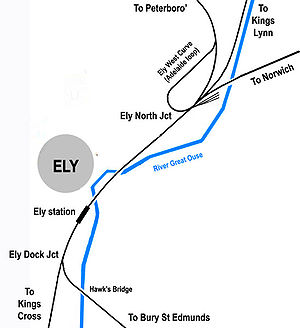
Ely Lines
It is complicated. These are my thoughts.
- The layout would appear to work quite well now,but will it cope with Cambridge North station?
- Cambridge North station will probably generate a lot of traffic and with some reorganisation, passengers might even be able to walk across or just wait for the next train at Cambridge or Ely, to be on their way.
- But in some cases, changing will mean climbing over the bridge at Cambridge or using the subway at Ely.
- Ely station should cope with any extra services on the lines to Ely and Norwich.
- There is also the issue of a possible Wisbech branch at March.
So will we see changes to the track layout at Ely?
I think the answer is yes!
But upgrading Ely does throw up one important question.
When the Cambridge Guided Busway was built, I didn’t think it was the best solution, but I had no real idea what would have been best.
I now wonder, if the ideal transport system for the route of the Cambridge Busway has arrived in the form of the tram-train!
If you look at the route from Huntingdon through Cambridge to Addenbrookes, it’s very much linked to the railway lines through the city. Most of the extensions proposed for the busway could be performed by tram-trains in tram mode. One proposal from Huntingdon to Peterborough, is typical of many systems, I’ve seen in Germany.
But it is too late now to change that decision.
One thing though that surprises me, is the amount of undeveloped land there is on either side of the railway line, where the Cambridge North station is being built. It could be possible to create a a tram line to connect Cambridge North station to the Cambridge to Ipswich Line. Thus tram-trains could go from both Cambridge North and Cambridge stations to Newmarket and then on past Fordham and Soham to Ely, where with a short chord they could turn south to the Cambridge stations.
Obviously, a real route would be based on the proposed developments and passenger traffic, but there are a lot of possibilities to use tram-trains to serve the towns and villages around Cambridge from the existing heavy rail lines.
At the Southern end, how about Shelford to Haverhill and onto Sudbury to then take the Gainsborough Line to Marks Tey?
I suspect that a single-track tram with passing places could handle tram-trains on a route not far removed from the route of the old Stour Valley Railway.
A lot of serious thinking can be done!
Breakfast By The Don
The Meadowhall Shoppin Centre in Shefield sums up what is right and wrong about shopping centres.
To like it has a big Marks and Spencer by the train station, so I can can get gluten-free snacks and sandwiches on my travels. It also has a Carluccio’s for something a bit bigger and like today, I can walk out by the River Don to have my breakfast.

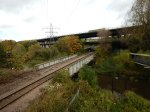


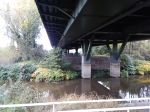


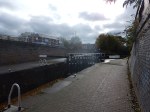
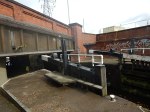

As this is the site of the Tinsley Chord, which is supposed to be built by 2017, there didn’t seem much going on. This article on the BBC says everything is starting to run late.
Other than that there are no maps, so that once they get you inside the doors, you get lost and hopefully for them, you buy something you don’t need.
It just makes me angry and I hate the place with a vengeance.
But then the only reason, I go there is to get fed! Or change trains or between a tram and a train!
Is This A Platform For Future Tram-Trains?
Whilst I waited for my train to Grantham, I had a quick look at the Northernmost Platform at Nottingham station. Platform 1 is a through platform and it looks like there could be access from both sides in the future.


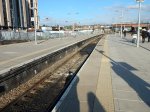
The redesigned Nottingham station certainly has all sorts of possibilities for future development. This Google Map shows the layout.
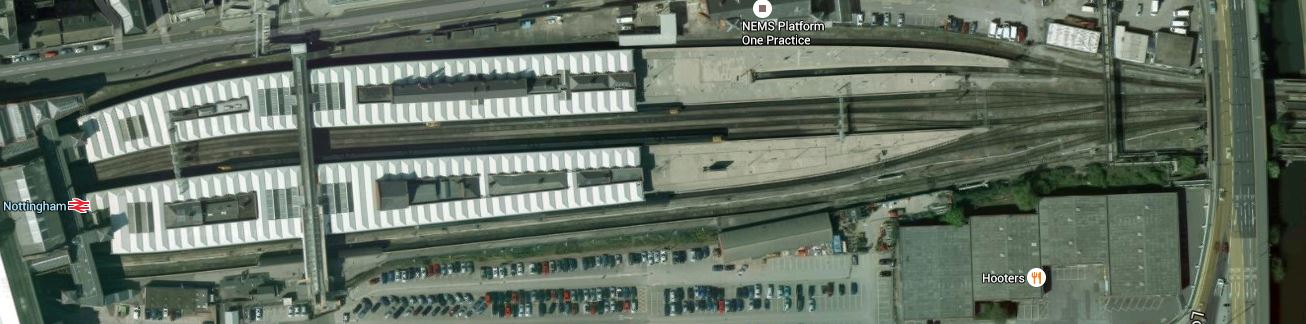
Nottingham Station Layout
Platform 1 is at the top, with the East-facing bay plstform 2 clearly visible.
It would appear that tram-trains could use the outer platforms and then be connected to wherever, as the station sits on a large site with space to the North and South.
The section called Railway Platforms in the Wikipedia entry for Nottingham station, says this.
Finally the southern side platform is numbered 7, and can accommodate a thirteen coach train. Sufficient space exists to the south of this platform to add a second platform face, effectively converting this side platform into an island platform, if traffic increases to justify it.
When you compare Nottingham to other places like Birmingham, Manchester or Leeds, the city is truly lucky to have a station with so many possibilities.
There also are not many places in the UK , where you could run the main tram line at right-angles over the main station. But it is a very good way of connecting the two modes of transport.
To the East of the station, there is also an enormous site with these derelict buildings.
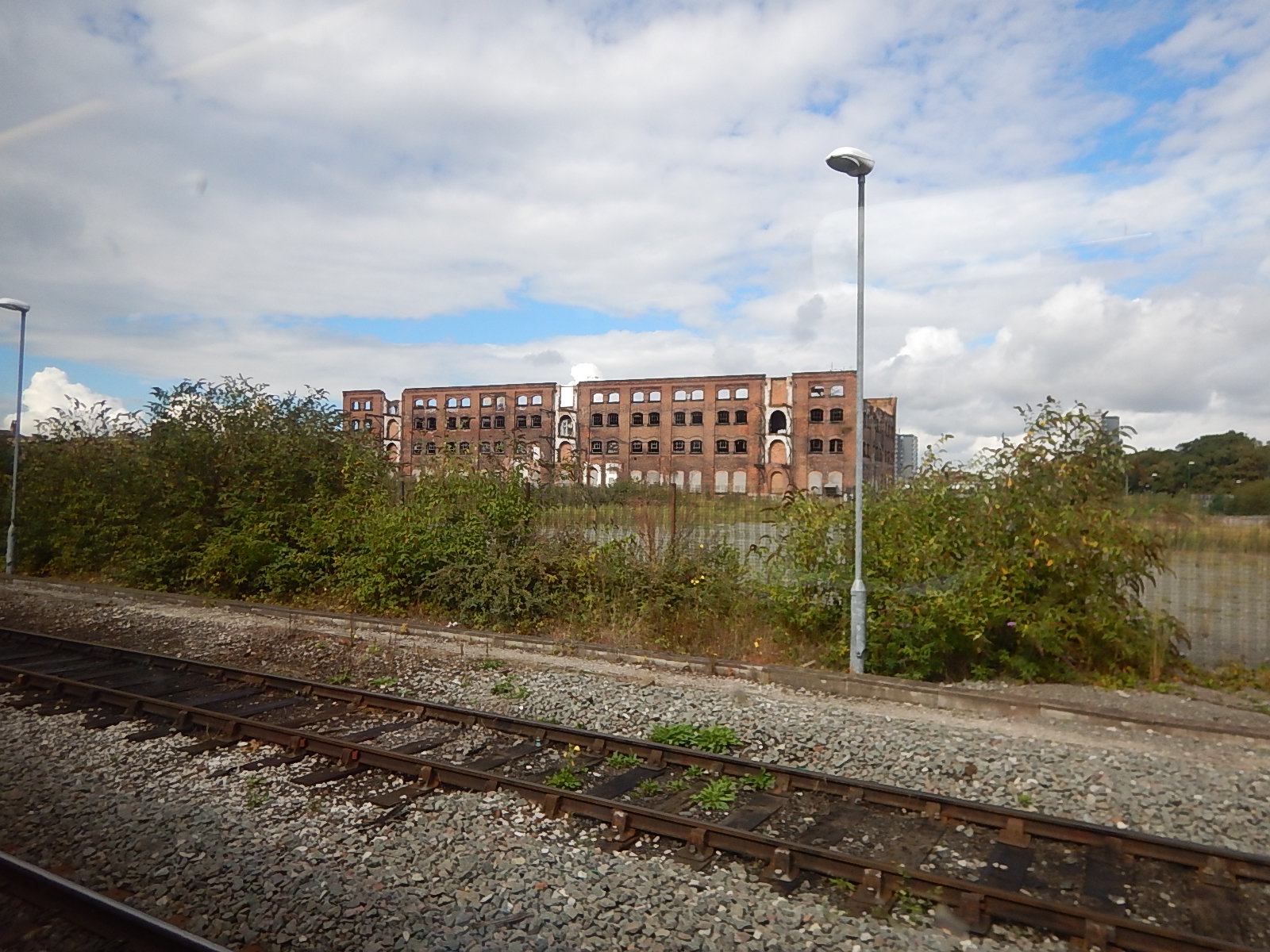
A Derelict Site To The East Of Nottingham Station
The city must have plans for these.
But then Nottingham is very much saying that the City has an exciting and prosperous future.
Hucknall On The Nottingham Express Transit
I took these pictures as I rode to Hucknall on the Nottingham Express Transit.
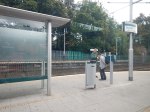
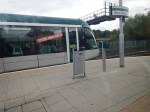
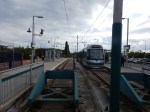
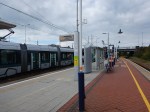
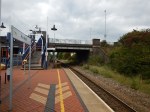
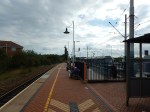
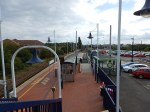
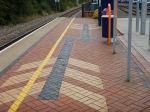
They show how the Robin Hood Line runs alongside the tram and it is just a simple walk-across to exchange between the tram and the train. This Google Map shows the layout.
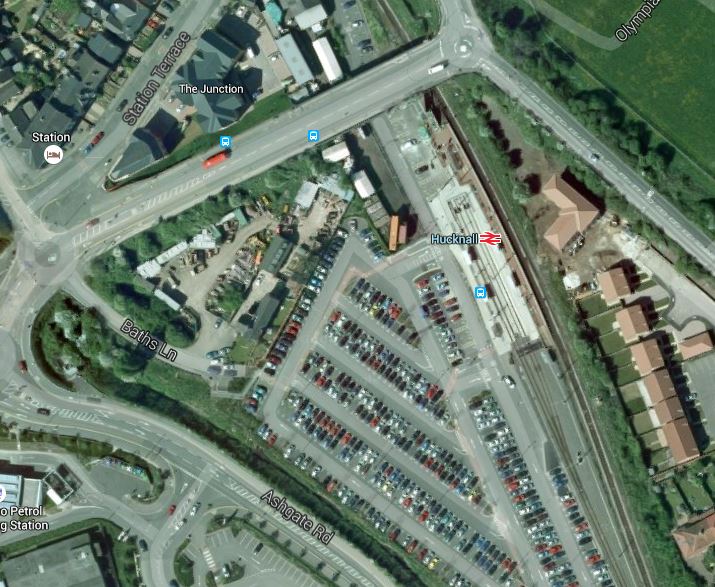
Hucknall Station
Hucknall station appears to be a remarkably simple interchange between tram, train and car. It is also surrounded by bus stops.
Passengers just walk between the trams and the single train platform on the level. So it is a truly step-free interchange!
The tram stop opened in 2004, which probably means that it was designed too early to have used tram-train technology.
But of all the places in the UK, this would probably have been the easiest to have built a tram-train interface, where trams could continue running on an electrified Robin Hood Line.
But that is all in the past and it’s too late now to build the line for tram-trains.
Is Waverley Station Good Enough For Edinburgh?
If you arrive in London Kings Cross station, the experience has been transformed over the last few years. Instead of entering a dark concourse crowded with tired retail outlets in a wood and asbestos shed designed in the 1960s, you now have two choices. You can walk to the front of the train, through the barriers and doors and into a large square with seats, buses and entrances to the Underground. Or if the weather isn’t good, you can take an escalator or a lift to the footbridge that spans all of the platforms and enter the covered Western concourse to make your way to onward transport or to one of many cafes, most of which are upmarket.
Other stations that I know well, like Birmingham New Street, Liverpool Lime Street, Manchester Victoria, Newcastle Central and Nottingham have also been transformed into impressive gateways for their cities. Next in line for substantial upgrading are London Euston and Waterloo, Glasgow Queen Street and Cardiff.
Edinburgh Waverley station has had a bit of a tidy up and it now has a set of escalators to get you up to Princes Street, but it is still a dark, cramped station, with no quality cafes in the station.
If I was to give Kings Cross five stars, Newcastle and Nottingham would get four and Waverley scarcely deserves one.
So to answer my original question. The answer is a definite No!
Waverley And The New Borders Railway
In some ways the new Borders Railway is going to make matters worse, as if it is successful, there will be pressure for more services on the line and there may not be enough terminating platforms at the East end of the station. But at least according to the Layout section in the station’s Wikipedia entry, things are being reorganised. This is said.
Former Platforms 8 and 9, which were substantially shortened for use as a Motorail terminus, the infilled area becoming a car park; since the demise of Motorail services these platforms are used only for locomotive stabling, although the numbers 5/6 were reserved for them in the 2006 renumbering. These are to be extended as full length platforms to accommodate terminating CrossCountry and Virgin Trains East Coast services with the taxi rank closed in June 2014 to make way for these works.
On the other hand, the Borders Railway has removed the need to use one of the worst train/bus connections in the UK.
Currently, if you arrive on a train from London and want to get an express bus to the South or the Borders, this necessitates a climb up flights of steps onto the North Bridge, which with heavy bags is impossible, unless you’re stronger and fitter than most.
Now you walk to the bay platform at the East end of the station and get one of the half-hourly trains to Galahiels, where there is a short walk to the bus station to get a convenient bus to all over the Borders and even to Carlisle.
But it is still a long walk from the bay platforms at the East (3 to 6) to the platforms that go West (12 to 18). And the tram is even further to walk.
Buses And Trams At Waverley
Like many main stations in the UK, no thought has been given at Edinburgh to how to efficiently organise the interface between trains and the buses.
I would have thought that when Edinburgh trams were built that they would have reorganised public transport in the city, so that the trams served the station properly. After all in Manchester, Croydon, Sheffield, Nottingham, Liverpool and Newcastle, local light rail, underground or trams serve the main train stations. Only in Blackpool is a walk needed, but that is being remedied.
In my view there are three places for tram stops at Waverley station.
- At the top of the escalators that take you between the station and Princes Street. But would this get in the way of the posh cars taking people to and from the Balmoral Hotel?
- On Waverley Bridge in front of the station. But where would the tourist buses go to clog up next?
- There also could be a Nottingham-style solution, where the trams cross over the station on a bridge at right angles to the train lines. But this would probably be an impossibly difficult project to design and implement.
The trams do serve Haymarket station and I wonder how many visitors to Edinburgh, use that station instead.
Waverley And Princes Street Gardens
After my trip to the Borders Railway, my friend and I went for lunch in a restaurant by the Royal Scottish Academy facing out onto Princes Street Gardens.
It was not an easy walk from the station as once we’d climbed up the escalators, it took several minutes to get across the busy Waverley Bridge in front of the station to get into the civility of the Gardens. This Google Map shows where we walked.
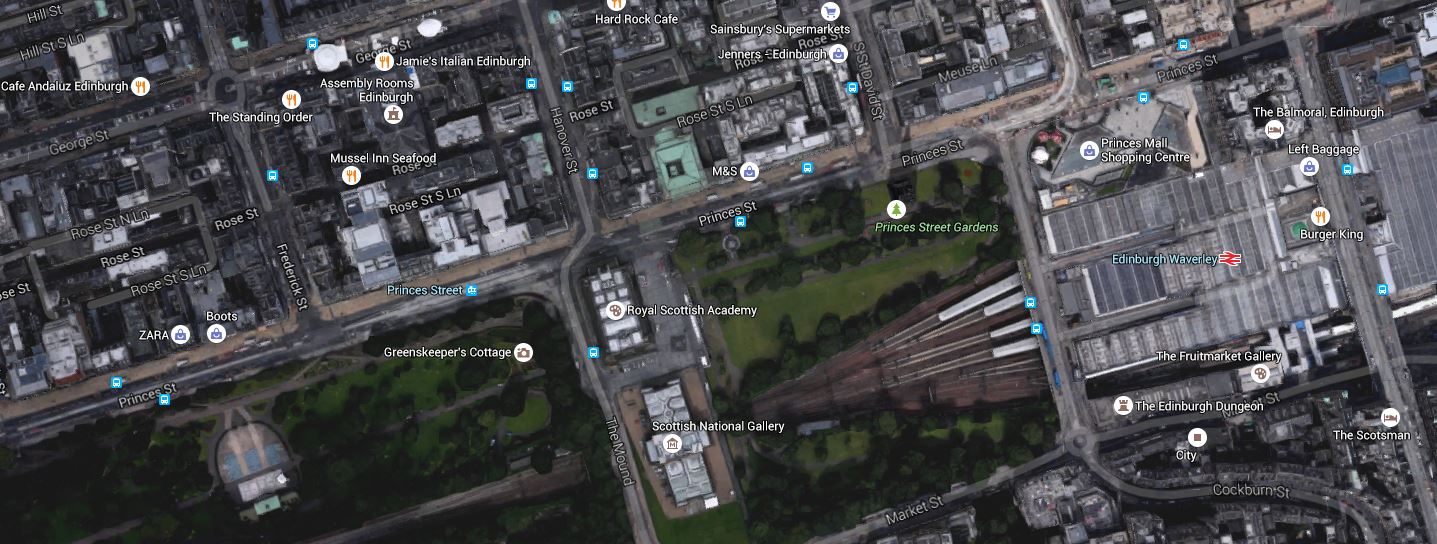
Waverley Station And Princes Street Gardens
Over lunch, I asked my friend, who’d lived in Edinburgh nearly all her life, , why there wasn’t a subway between the gardens and the station. She didn’t know and said there never had been! So as I walked back to the station, I took some pictures.



They show no evidence of a subway that might have been closed.
But they do show that if a subway could be built, then Edinburgh could have a World Class meeting place for when the weather was good.
Sorting The Trams
Seeing the map of Waverley station and the Princes Street Gardens, I have a feeling that if they were designing the Edinburgh trams now, they would be very different.
The difference is that in the last few years, tram-trains have come into general use in Germany. The Germans are getting enthusiastic about their use and large systems are being developed in cities like Karlsruhe, Kassel and Chemnitz.
In the UK, a test line is being added to the Sheffield Supertram, but how could tram-trains help solve the problems of Waverley station?
Trams coming from Edinburgh Airport and the West stop at Murrayfield Stadium tram stop and then move onto the street to call at Haymarket before going down Princes Street. New Class 399 tram-trains, as will be used in Sheffield, would follow the same route as the trams until Murrayfield. Passengers would find the only real difference would be that they had somewhere else on the destination board.
But at Murrayfield they would join the main railway lines and running as trains, they would call at Haymarket and Waverley stations.
The tram-trains could end their journey at Waverley or they could pass through the station and perhaps go on to further destinations like Dunbar or North Berwick. There would be no infrastructure modifications needed East of Waverley station, as the tram-trains would just appear to everything to be just another type of electric train.
If you look at the map in the Proposals for the Edinburgh tram network in Wikipedia, you’ll see this map.
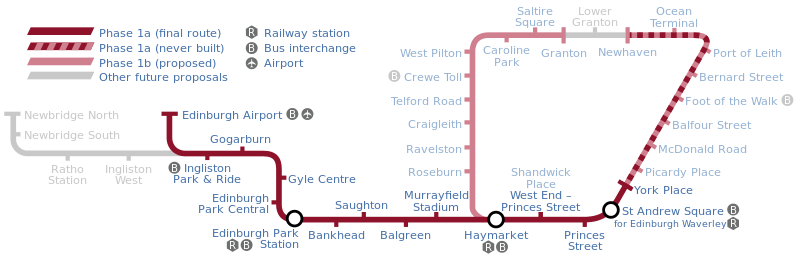
Edinburgh Tram Map
Note there is another Western destinations in addition to the airport and a loop to Newhaven and the Port of Leith. All come together at Haymarket. So services from the West could be run by trams or tram-trains as appropriate and those on the loop would probably be run by trams.
It should also be said, that the tram-trains could go anywhere to the East or West of the City, where there are electrified lines. Even Glasgow!
Edinburgh could have a lot of fun, without digging up the streets too much. Although, they’d probably need to do this, if they were going to extend the tram to Newhaven and the Port of Leith.
Walking Around Nottingham Station
When I arrived in Nottingham, the weather was still good, despite rain being forecast, so I went for a walk right around the train station to see if there was space for the junctions to connect tram-trains coming in as trains from points East and West to access the tram line that crosses the station in a North South direction with a tram stop above the station. This Google Map shows the area, where I walked.
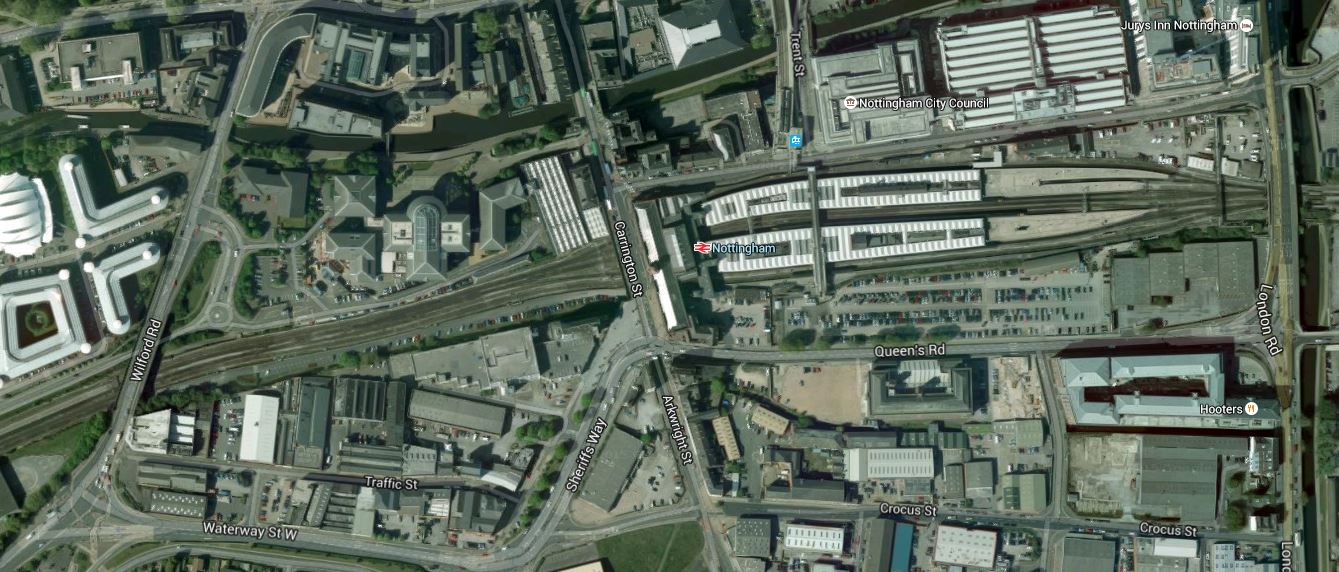
Around Nottingham Station
Note that this map was created before the tram line over the station and the multi-coloured multi-story car park were built, but the old tram-stop on Station Street is clearly marked. The foot bridge over the station, which is a public footpath that also allows pedestrians to access the trains is the only bridge across the station.
These are pictures I took as I walked around the station

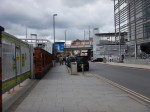

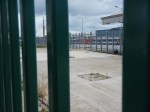


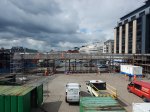
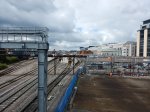
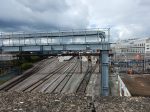
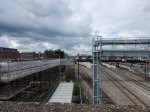

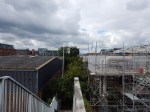
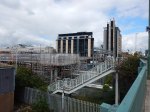
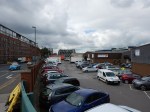



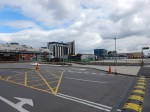

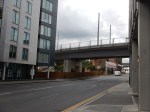

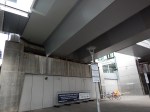
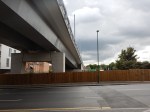
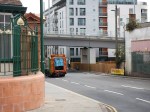

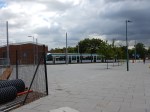


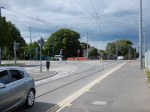
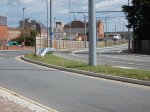
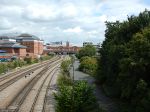
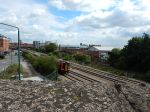

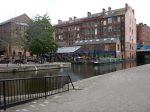

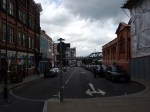

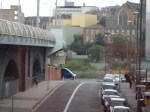

I started by walking East along Station Street that runs along the North side of the station, then crossed the rail lines on the road bridge before walking back to the station along Queen’s Road.
After a brief pit stop in the station, I crossed South and followed the tram route intending to pick it up at the next stop to go to Toton Lane. But it was a long walk, so I crossed back North across the railway and walked back to the station along the canal, from ewhere I caught the tram South.
Currently Wikipedia lists three possible tram-trains routes from Nottingham to expand the NET. Two are in the East; Gedling and Bingham and one is in the West; Ilkeston.
I think there is plenty of space around the station to accommodate these routes.
I suspect too, that as the routes have been discussed since the mid-2000s, any current or future development has been or is being built, so that it doesn’t compromise any possible tram-train connections.
Tram-Trains To East Midlands Airport
I have a Google Alert looking for tram-trains and it found this article on the Nottingham Post entitled Could tram-trains link Nottingham to East Midlands Airport?
It’s a thought!
The article talks about a proposal to create a link between East Midlands Airport and the Midland Main Line, that would allow tram-trains to connect the airport to cities like Nottingham, Derby and Leicester and the proposed HS2 station at Toton.
This is a Google Map of the area between the Airport and the Midland Main Line.
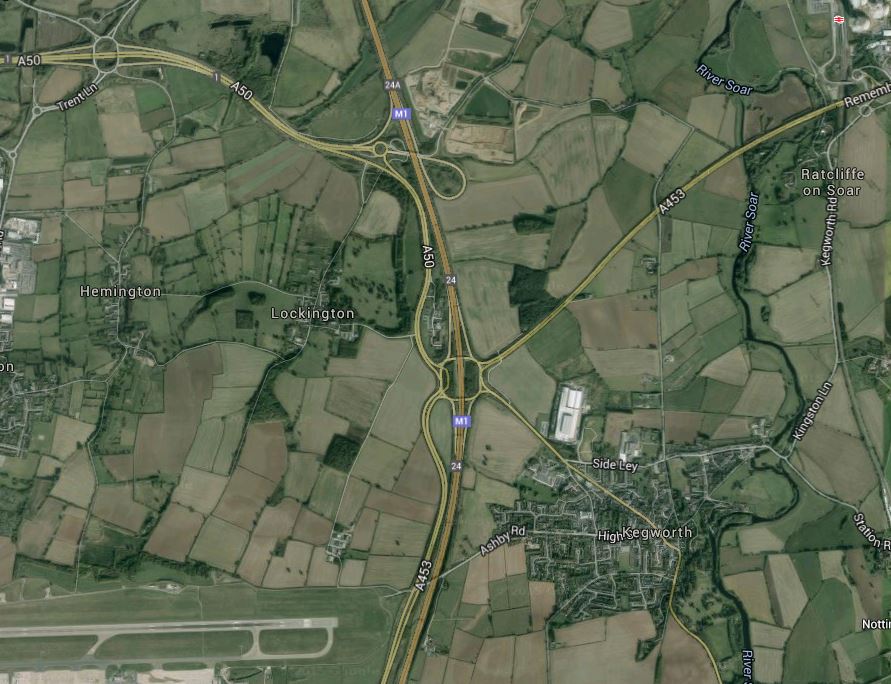
East Midlands Airport, the M1 And The Midland Main Line
East Midlands Parkway station is at the top right of the map.
I think that properly designed this idea could have legs.
A few points.
- Some doubt the South East will ever get a new runway, so improving connections to East Midlands Airport would surely mean more passengers flew from their local airport, rather than a congested Heathrow.
- It would improve links between the major cities and population centres of the East Midlands and they probably need an improved turn-up-and-go four trains per hour service between each.
- There are a number of intermediate stations to the various destinations, which probably need better connections.
- The tram-line would also cross the M1. So would a pick-up/drop-off tram stop ease travel in the area?
- Once the tram-train technology is proven and approved and the Midland Main Line is electrified, I doubt that creating the link would be a difficult planning or engineering project.
I will be very surprised if at some point in the future, some form of light or heavy rail line doesn’t reach East Midlands Airport.
But then I think tram-trains would be best.
Conclusions On Phase 2 Of The Nottingham Express Transit
Phase 2 Of The Nottingham Express Transit seems to have opened without a hitch and from what I saw, the reactions of the passengers seemed to be very positive, as they travelled around with smiles on their faces.
These were some of many comments I heard from fellow passengers.
- I can get to the hospital easier, by parking at the Park-and-Ride by using the tram.
- My grandchildren love the tram.
- I’ll use it instead of driving in a lot of the time.
- A student didn’t realise the tram went to the University until I told him and he was pleased.
These comments lead me to the conclusion that I doubt, they’ll be scratching around for passengers.
I do have some reservations on the system, which is otherwise well-designed.
Contactless Ticketing With Ban/Credit Cards
One of the many Customer Service Representatives at Nottingham station, told me that she had already been asked by a traveller from London, if contactless ticketing with a band or credit card was allowed.
Hopefully, as their Mango card is a touch-in and out system, they will be able to incorporate this later.
In my view contactless ticketing with a bank or credit card is something that any transport system should allow as it is so visitor-friendly.
Maps And Information
Maps at tram stops do exist, but they are only small and should be bigger, with perhaps showing walking routes to local attractions. For instance, the stop at Meadows Embankment should show visitors how to walk through the gardens and along the river to the major sports grounds.
There is also a need for a display at the Nottingham station tram stop, showing departures and arrivals in the main station below.
London Overground Syndrome
But my biggest conclusion is that now the NET is a real system, rather than a line to just the north of the city, is that it will suffer from London Overground Syndrome.
The London Overground was designed and opened in 2009, with just enough three-car Class 378 trains, with platforms to fit these trains.
These have now been augmented with additional trains in 2011 and progressively lengthened to five carriages, which has necessitated lengthening the platforms.
NET doesn’t have the platform lengthening problem, but I do feel they will have to beg, borrow or steal some extra trams. At least the track and signalling seems to be able to cope with two different tram types, so if say more trams came from a new supplier, there would probably not be a problem. After all, Edinburgh, Sheffield and the Midland Metro are the only tram systems in the UK with one type of tram. Soon Sheffield will have two.
Just before I left, I talked with one of NET’s Customer Service Representatives. Except that he was a Senior Manager checking things out and getting feedback. Good for him!
Tram-Trains
I suggested to him that after what I’d seen in Germany an especially at Nottingham’s twin city of Karlruhe, that the city is crying out for tram-trains.
His demeanour had Watch This Space written all over it!
So do I think that we’ll see tram-trains in Nottingham?
Wikipedia says this in the section on further routes for the system.
A document raised the possibility of tram-train lines from Nottingham to Gedling and/or Bingham, and to Ilkeston.
Obviously tram-trains will have to prove their worth in Sheffield first.
Gedling, Bingham and Ilkeston, all are on or close to railway lines radiating from Nottingham, although Bingham on the line to Grantham, is the only one with a station.
A couple of points about tram-trains and Nottingham.
If tram-trains had been proven and certified for the UK, when the NET was designed and the Robin Hood Line was reopened in 1998, they would have could been used to create a continuous tram-train route between Nottingham to Worksop.
Tram-trains release platform space at central stations, as they go straight through the station and on to the destinations where people really want to go. Nottingham station is very crowded with split platforms and other techniques being used to get the number of trains through the station.
Tram-Trains To The East Of Nottingham
Look at this Google Map of Central Nottingham.
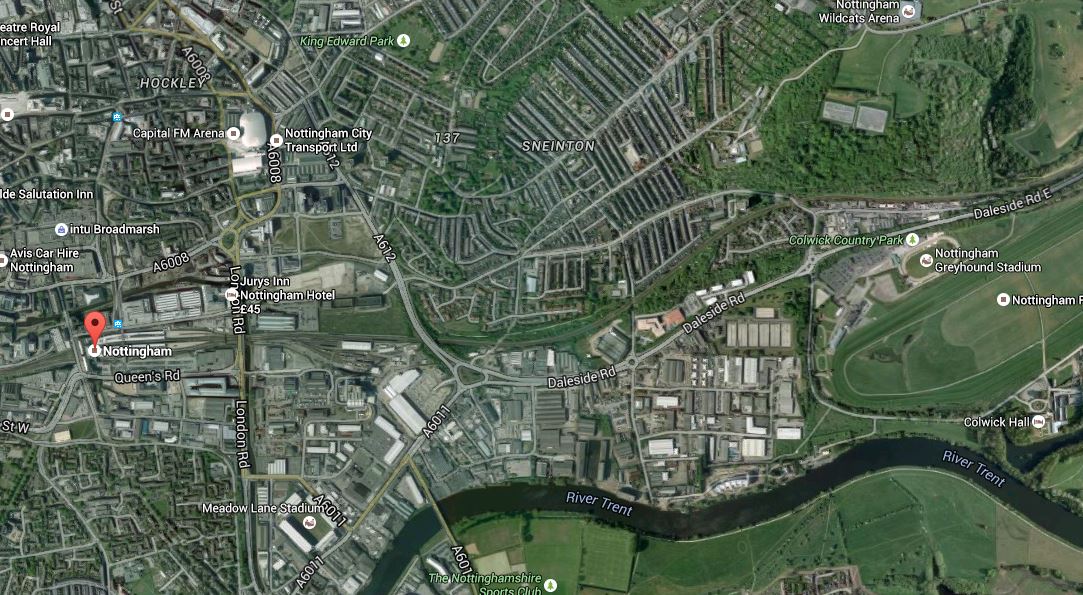
Central Nottingham
The main station is indicated by the red arrow and note how the railway lines to the East pass to the North of the racecourse in a green corridor from the city centre.
To the edge of this map, the lines split into two with the northernmost one going to Carlton station in the Borough of Gedling and then on the Nottingham to Lincoln Line to Newark and Lincoln, whilst the southernmost one goes to Bingham station on the Nottingham to Grantham Line to Grantham.
Both lines have a generally hourly service, which given the population density is probably not enough, especially in the more densely populated areas closer to Nottingham.
So running tram-trains from Nottingham to a convenient intermediate station would be a means of upping the frequency closer to Nottingham, if you could find a way of getting the tram-trains onto the tram network to finish their journeys.
Tram-Trains To The West Of Nottingham
Ilkeston is to the west and a new Ilkeston station is being built at the town. It will be the first station out of Nottingham on a line that goes through the western suburbs of the city, which also passes through some sizeable communities.
Tram-Trains On The Robin Hood Line
I said earlier that if tram-trains had been certified for the UK, when the NET was designed and the Robin Hood Line was reopened in 1998, that tram-trains would have most likely been used between Nottingham and Mansfield and Worksop.
Nottinghamshire County Council is looking to extend the Robin Hood Line to Shirebrook, Warsop and Edwinstowe on an old freight route.
If this extension is done properly, I can’t see tram-trains not being involved. Especially, as an extension like this, would probably be cheaper to build if it was built to tram standards rather than heavy rail.
What difference would it make to passengers from say Mansfield or Worksop, if instead of having a direct train service into Nottingham station, they had a tram-train service going direct to Nottingham city centre and the Nottingham station tram stop.
- New Class 399 tram-trains would probably be used on the route and these would be faster and offer more capacity than the current trains used.
- There are numerous stops on the route and electric trains save a minute or so at each stop because of their better acceleration.
- The current frequency is generally two trains per hour to/from Mansfield and one to/from Worksop. Three or four trains per hour should be possible.
- Train times from Mansfield to Nottingham station would probably be about the same, even though the tram section from Nottingham station to Bulwell takes twenty four minutes, as opposed to ten.
- There would be no reason, why trains still couldn’t use the direct route into Nottingham station.
- A present, many passengers going to Nottingham city centre probably now change at Hucknall or Bulwell onto the tram. With tram-tains, they would do the journey without a change.
- With perhaps extra steps and escalators between Nottingham station and Nottingham station tram stop, interchange between Robin Hood Line and other services might be easier.
Obviously, whether this project goes ahed, would be determined by the traffic patterns and needs of travellers.
A subsidiary factor would be the amount of freight on the line. Electric tram-trains would not interfere with freight any more than the current diesel units, but if the line was electrified to main line standards, more efficient electric locomotives could be used.
Getting Tram-Trains On The NET At Nottingham Station
I think connecting tram-trains to the northern branches of the NET might be difficult, but as Nottingham is a station on a spacious site, connection to the lines going south might be easier. But what do I know?
I only know Nottingham as a visitor and don’t know the demographics and routes of travellers, but it strikes me that it would be possible to use tram-trains running between the southern branches of the NET and the lines to Newark, Lincoln, Grantham and Ilkeston, creating stops or stations at important centres on the routes.
As the rail routes already exist, outside of the Nottingham station area, there would be little disruptive construction needed, other than creating the stations and stops.
In designing the connection at Nottingham station, remember that trams and tram-trains running as trams are much more manoeuvrable than trains and can go round very tight corners, so can reach places trains cannot reach.
As Nottingham station has been through a big remodelling in recent years, I would suspect that the work was future-proofed for any tram-train connection. As tram-train proposals for Nottingham were talked about in this report on the Nottingham Post website in 2009, one has to assume that the connection is at least on an engineering fag-packet in Network Rail’s bottom drawer.
Some external factors and projects will complicate or simplify any development of tram-train routes around Nottingham,
When and if, the Midland Main Line is electrified, will have the biggest effect, as it will bring a number of electrified routes into the city. Some of these may be suitable for tram-train operation alongside main line services.
To the east of the city, there is the need to sort out the flat junction at Newark, where the Nottingham to Lincoln Line crosses the East Coast Main Line. It strikes me that if this line was an electric route from Nottingham to the East Coast Main Line, this might open up other possibilities.
 The Anonymous Widower