The Karlsruhe Tunnel Is Still Not Finished
The main reason to go to Karlsruhe was to see if the contractors had completed the Stadtbahn tunnel under the city.



The pictures, show that they haven’t!
Tunnelling Complete On Northern Line Extension
The title of this post is the same as that of this article on Global Rail News.
This is said in the Wikipedia entry for the Northern Line Extension To Battersea.
The main tunnelling started in April 2017.
So as it’s now November 2017, the tunnellers have performed like a Jack Russell after a rabbit.
I do think that this excellent performance might give Transport for London ideas for some new passenger or train tunnels under London.
Electrifying Tunnels For Bi-Mode Trains
In TransPennine Electrification And Piccadilly Upgrade Now Also In Doubt, I came across two long tunnels, that would need to be wired, if the Huddersfield Line were to be electrified.
So here’s a list of long railway tunnels that aren’t electrified.
- Totley Tunnel – 5,700 metres
- Standedge Tunnel – 4,883 metres
- Chipping Sodbury Tunnel – 4,064 metres
- Disley Tunnel – 3,535 metres
- Bramhope Tunnel – 3,439 metres
- Cowburn Tunnel – 3,385 metres
- Morley Tunnel – 3,081 metres
- Summit Tunnel – 2,638 metres
- Blea Moor Tunnel – 2,404 metres
Note.
- Standedge and Morley are both on the Huddersfield Line.
- Totley, Disley and Cowburn are all on the Hope Valley Line.
Over the last few years, we have electrified or designed the electrification for several long tunnels including those for Crossrail and the Severn and Box Tunnels.
Consider.
- Crossrail and the Severn Tunnel use a rail attached to the roof of the tunnel.
- Overhead rail is becoming an increasingly common way to electrify a tunnel with 25 KVAC overhead.
- Crossrail developed a specialist machine to install the brackets for the overhead rails.
- Bi-mode trains like the Class 800, Class 755 and Class 769 train, have sophisticated GPS-controlled pantographs, that can go up and down automatically.
- Bi-mode trains will increasingly have energy storage.
- A train travelling at 160 kph (100 mph) will take forty-five seconds to pass through a 2,000 metres tunnel.
- No-one is going to object to the visual intrusion of electrification in a tunnel.
As some of these long tunnels will need refurbishment in the next few years, would it be worthwhile to fit them with at least the mountings for an overhead rail during the refurbishment.
I wouldn’t think it would be unreasonable to have a four-car bi-mode train with energy storage that gave a range of perhaps fifteen miles.
I don’t think it is unreasonable to suspect that both Hitachi and Bombardier have such a train in the Design Office.
Suppose one was shuttling between Manchester Piccadilly and Sheffield along the Hope Valley Line.
- The route is electrified from Piccadilly to Guide Bridge
- The two tunnels; Totley and Cowburn are a total of 5.6 miles long.
- Both tunnels are on a gradient, so electrification might speed up services.
- If Totley were electrified, it would fully charge the train, as it passed through.
I am pretty certain, that if the tunnels were electrified, Manchester to Sheffield would have a fully electric route.
Where The Northern Line Extension Spoil Is Going
This article in Your Thurrock, is entitled London Tube tunnelling project set to benefit arable land in East Tilbury.
It gives a good overview of the tunnelling for the Northern Line Extension and states that the tunnel spoil will be taken by barge to Goshems Farm in East Tilbury.
This Google Map shows the North Bank of the Thames from Tilbury Fort to East Tilbury.
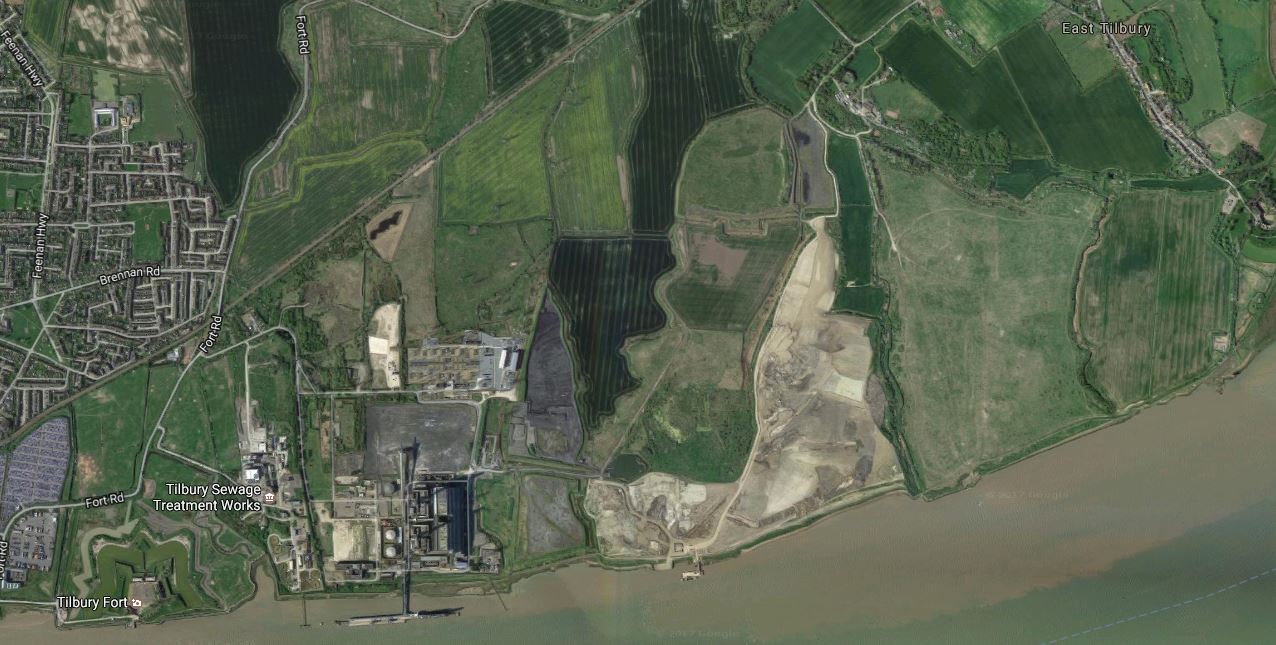
Tilbury Fort is in the South West corner of the map, by the river and East Tilbury is in the North East corner.
This is a more detailed map of the area of Goshems Farm.
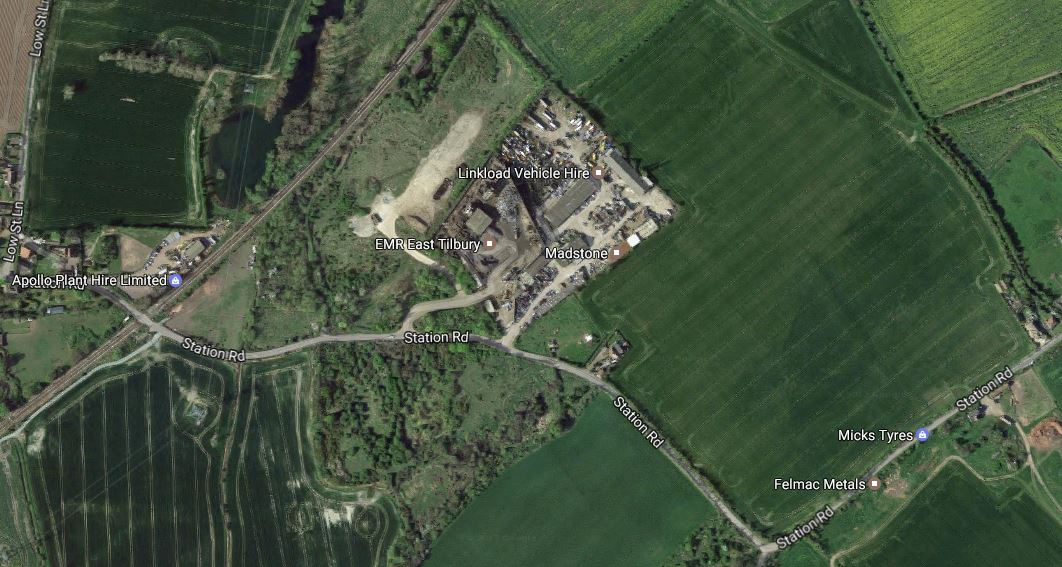
Goshems Farm is in the area of Felmac Metals and Micks Tyres, which from their names are typical businesses, you find in areas like these all over the UK.
Note Station Road leading up to the disused Low Street station, which was on the London, Tilbury and Southend Railway, which is now served by c2c.
I suspect that the spoil will go into the light-coloured land between this area and the Thames, which could be something like an old landfill site.
It’ll certainly be a lot more use as arable land.
How Will They Build The Bakerloo Line Extension?
I ask this question, as my trip yesterday to Redbridge station, got me thinking.
Wanstead, Redbridge and Gants Hill stations share several characteristics.
- They are built under a main road.
- They are architecturally significant, with two being designed by Charles Holden.
During the Second World War, they were part of an underground factory for Plessey.
It strikes me that as the route of the Bakerloo Line Extension, will for some way, lie under the Old Kent Road, with two stations currently called; Old Kent Road 1 and Old Kent Road 2, that the section of line could be similar in nature to the Redbridge stretch of the Central Line.
This map shows a route.

Bakerloo Line Extension Map
I’m sure, that they’ll come up with better names, on their initial route to Lewisham, via New Cross Gate.
This Google Map, shows the route of the Old Kent Road from Bricklayers Arms to New Cross Gate station.
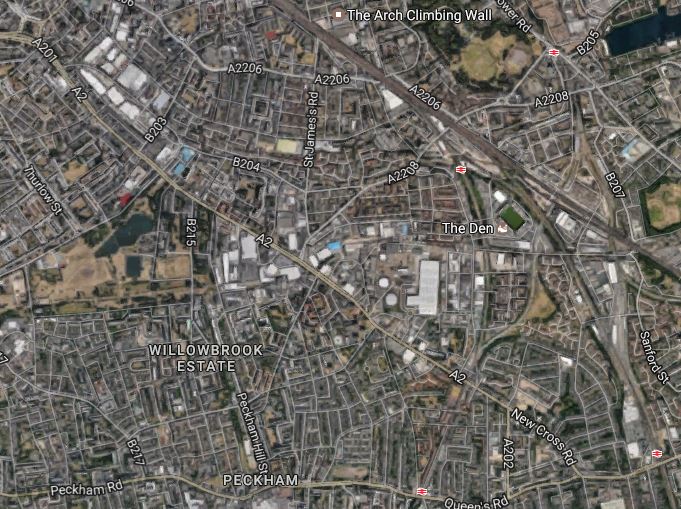
Bricklayers Arms To New Cross Gate
Bricklayers Arms is at the North-West corner of the map and New Cross Gate station is the South-East.
To my naive mind, the route would be one that an experienced Tunnelling Engineer would find attractive.
- Elephant and Castle station is not far to the West of Bricklayers Arms.
- The current Bakerloo Line station at Elephant and Castle points vaguely East, so could probably be connected to under Bricklayers Arms.
- The tunnels could go under the Old Kent Road between Bricklayers Arms and New Cross Gate.
- The tunnels could go under the railway between New Cross Gate and Lewisham stations.
- The Extension could terminate in two deep-level platforms under the current Lewisham station.
- The Old Kent Road is lined with supermarkets and large out-of-town stores like Asda, B & Q, Sainsburys and Toys R Us.
But possibly above all, the extension could probably be built without causing too much disruption to existing infrastructure.
I’ll look at a few issues in a bit more detail.
Cut And Cover Or Bored Construction
Some European nations would build the extension using cut and cover methods, but then we’re the tunnel kings!
As there has also been improvement in the tunnel boring machines over the last twenty years, I would expect that a big hole will be dug somewhere and then the main tunnels will be bored out, as is being done on the Northern Line Extension.
The choice of the main tunneling site will depend on several factors.
- Sufficient space.
- Good road or rail access to get heavy equipment to the site.
- Away from sensitive areas for noise.
Probably the most difficult problem, is getting the tunnel spoil out.
Although there are plenty of large sites along the Old Kent Road, look at this Google Map of New Cross Gate station.
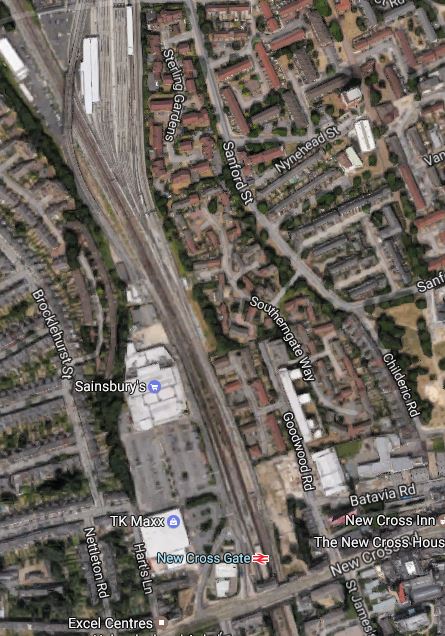
New Cross Gate Station
Note that next to the station is a large Sainsburys. The supermarket group has form in co-operating with large rail infrastructure projects, in that their Whitechapel superstore was virtually rebuilt to make space and access for Crossrail.
So could we see the same co-operation here?
New Cross Gate Station
New Cross Gate station is the middle interchange on the Bakerloo Line Extension.
If as I speculated above, Sainsburys co-operate, I think we could see a rebuilt superstore growing into a more important shopping centre with good rail and tube access.
Consider.
- Trains between London Bridge and Surrey call.
- East London Line trains call.
- Thameslink trains will soon be passing through at speed.
- Around a dozen bus routes pass the station.
- There would probably be space for housing above the development.
So could we see New Cross Gate station growing into a major transport interchange?
Yes! Especially, if Thameslink called at the station!
Lewisham Station
Lewisham station has been proposed as the terminus of the Extension.
This map from carto.metro.free.fr shows the lines in through the station.
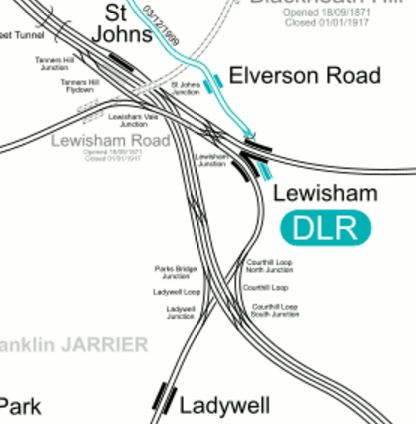
Lines Through Lewisham
Lewisham station has one of those layouts designed by Topsy.
Perhaps for now, the best solution would be to just add a couple of deep-level platforms to create a new terminus for the Bakerloo Line.
Consider.
- Transport for London are planning at least 36 trains per hour (tph) between two underground two platform terminals on the Victoria Line.
- Battersea Power Station station is being built like this.
- I doubt the extension will need a depot South of Elephant and Castle station.
Lewisham station would be rebuilt to provide a high capacity interchange between all services at the station.
The Bakerloo Line Train Frequency
Wikipedia says this in the Current And Future Infrastructure section of the Bakerloo Line.
Transport for London proposes to upgrade the line eventually, but not until other deep-level lines have been dealt with. This will include new signalling and new trains, enabling a maximum frequency of 27 trains per hour. TfL currently expects these to be in place by 2033.
So when the Extension is built, it would seem logical that the line could be rebuilt for 27 tph.
The Northern Section Of The Bakerloo Line
If the Bakerloo Line is extended to the South, then it would seem logical that the Northern end should be improved to take the increased number of trains, which share a lot of the line to Watford Junction with London Overground.
Platform Height Issues
At some station on the Northern section to get in to and out of the Bakerloo Line 1972 Stock trains, is quite a step and it would be difficult in a wheel-chair.
I have covered this in Platform Height Issues On The Watford DC Line and feel that dual-height platforms could be used.
Onward From Lewisham
Most proposals for the extension of the Bakerloo Line, envisage the line taking over one or both of the terminals on the Hayes Line.
Wikipedia has a section on the current proposal.
This is said.
In December 2015, Transport for London announced that the Old Kent Road option was indeed its preferred route, and proposed taking the line as far as Lewisham, which it said could be running by 2030. Proposals for a further extension beyond Lewisham, such as to Hayes and Beckenham or Bromley, would now be considered in a separate phase in the more distant future.
But I do wonder, if extensions to Hayes and Beckenham Junction could be less necessary than they were a few years ago.
- The construction of a Camberwell station on Thameslink is being considered.
- Good design at New Cross Gate and Lewisham could improve connections for passengers on the Hayes Line.
- The extra capacity across the South Bank and through London Bridge, must benefit passengers from the Hayes Line.
- Elmers End station is getting an improved Tramlink service.
Bear in mind too, that Transport for London now have much better statistics from which to plan new connections and lines.
How would the following smaller projects on various wish-lists affect services South from Lewisham?
- Better links connecting to Abbey Wood station in addition to Crossrail.
- A decent connection between Catford and Catford Bridge stations.
- Interchanges at Brockley and Penge on the East London Line.
Could they even kick extension of the Bakerloo Line in the Hayes direction into at least the 2040s?
The Issue Of Bakerloo And National Rail Trains Sharing Tracks
If the Bakerloo Line is to be extended past Lewisham on the Hayes Line to Hayes and Beckenham Junction, you have the problem of two types of train with different characteristics.
- First Class is not available on the Underground.
- Platform height can be matched to the train, to give level access.
Restricting the Bakerloo Line Extension to deep-level platforms at New Cross Gate and Lewisham, avoids the sharing issues, by keeping the two sizes of train separate.
- Bakerloo Line trains terminate at Lewisham.
- Good interchange must be provided between the Bakerloo Line and National Rail trains.
Obviously, by the correct design of the deep-level platforms at Lewisham, extension of the Bakerloo Line to somewhere suitable in the future is not ruled out.
The Northern And Bakerloo Line Extensions Are Similar
The similarity between the two extensions is very strong.
- The Northern Extension adds two stations and the Bakerloo adds only four.
- Both extensions are reasonably short.
- Both extensions start at an existing station.
- Both extensions could end in similar underground two-platform terminals.
- Both extensions might be extended further.
So could the Bakerloo Line Extension be an ideal follow on project for the Northern Line Extension?
And after that, there are other follow-on projects, where provision for extension has been left.
- Extending the Northern Line Extension from Battersea Power Station to Clapham Junction.
- Extending the Bakerloo Line Extension to wherever is needed.
- Extending the Jubilee Line from North Greenwich and Charing Cross.
- Extending the DLR from Bank
- Extending the Victoria Line to Herne Hill.
Could the relative success in getting such a good start on the Northern Line Extension, with hardly any controversy or disruption have influenced Transport for London to bring forward the Bakerloo Line Extension.
Perhaps with even the same team!
Conclusion
I feel that the Bakerloo Line extension will be built in a very similar way to the Northern Line Extension.
The more I dig, the more I like the plan for the extension and think it is right for project management reasons to bring it forward.
A Walk Between Kennington And Oval Tube Stations
I walked this morning between Kennington and Oval tube stations.




Note.
- The aim was to see if I could find any sign of the construction of the Northern Line Extension.
- I walked along Kennington Park Road and then cut into Kennington Park.
The work site at Kenngton Park, was not difficult to spot on the Kennington Park Place side of Kennington Park.
- Many of the sites for Crossrail are very cramped, but at least this one seems to surrounded by grass, that can be very easily restored.
- All the noise-generating equipment is encased in a large acoustic enclosure, as twenty-four hour working is envisaged.
The park also contains the Prince Consort Lodge, which looks to be an interesting Victorian architectural experiment.
This Google Map shows the two stations and Kennington Park.
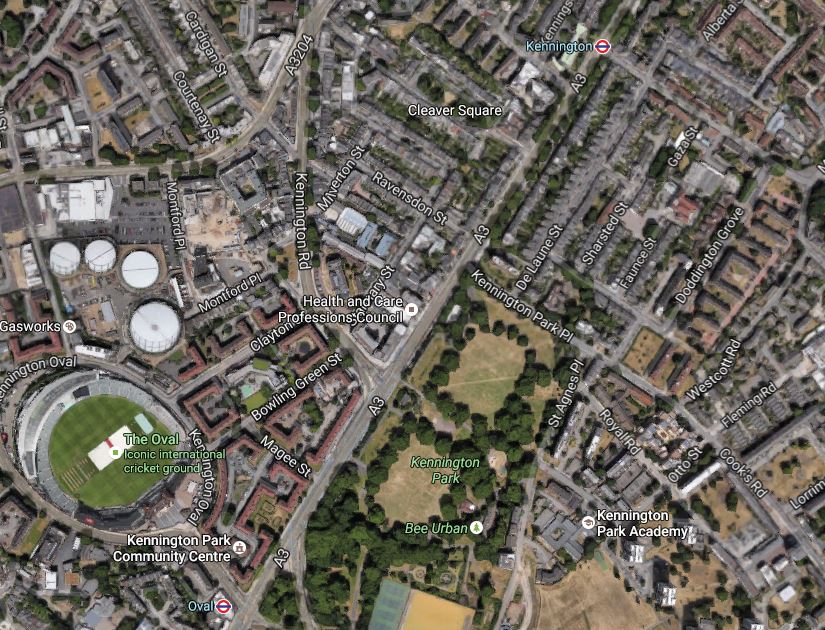
Kennington And Oval Tube Stations And Kennington Park
This Google Map is an enlarged one showing both the work sites at Kennington Park and Kennington Green.
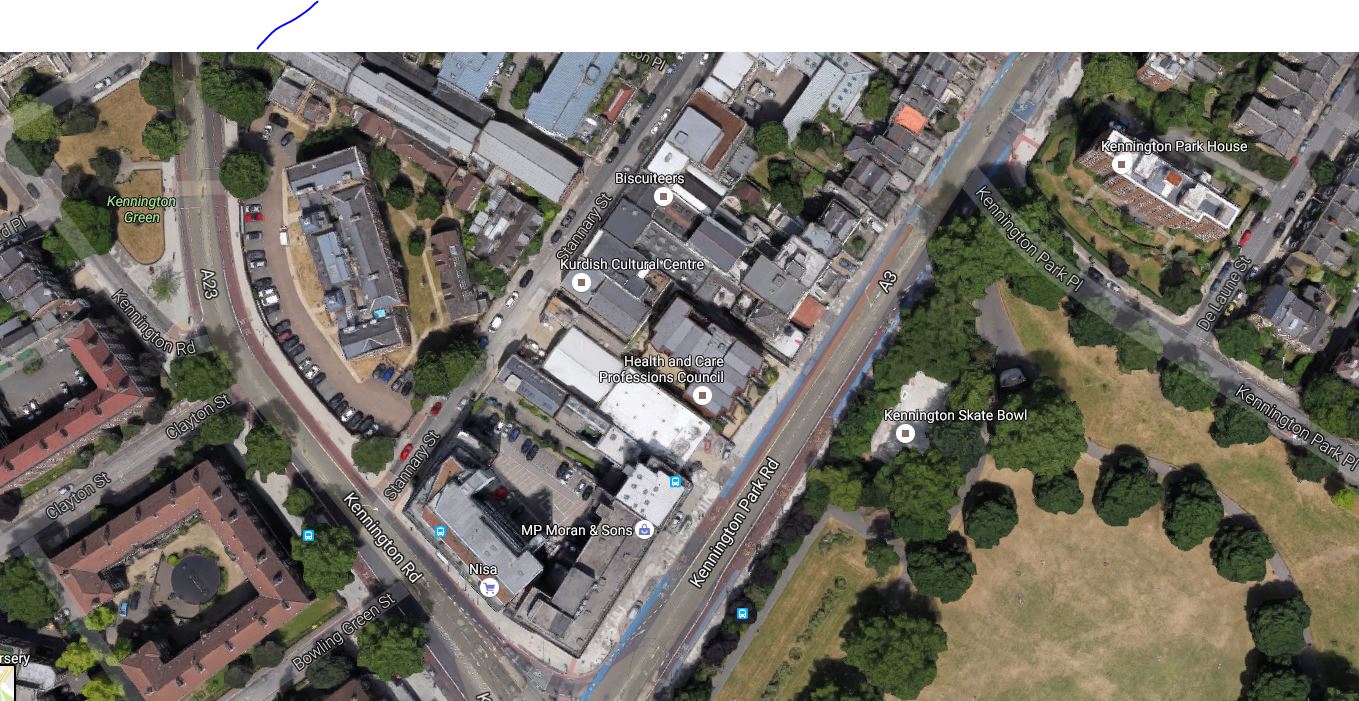
Kennington Green And Kennington Park Work Sites
This map from carto.metro.free.fr, shows the Northern Line through the area.

Lines Through Kennington And Oval Tube Stations
Note.
- The Northern Line was probably dug under Kennington Park Road, which is labelled as the A3.
- Kennington Park is on the Eastern side of Kennington Park Road.
- It looks like the Kennington Loop crosses Kennington Park Road very close to Kennington Park Place.
- Extrapolating being the two maps and reality, should give you the position of the shaft, with respect yo Kennington station.
- There’s more on what is happening here on this web page on the TfL web site.
Reading the documents on the TfL web site, it is now clear how the tunnels will be dug.
- Tunneling will start from Battersea and the tunnel boring machines will be lifted out at the two work sites; Kennington Green and Kennington Park.
- The running tunnel between the Kennington Green shaft will be 211 m. long and should be complete in December 2016.
- The running tunnel between the Kennington Park shaft will be 75 m. long and should be complete in October 2016.
- Both these short tunnels will be dug by traditional methods and lined with sprayed concrete.
At least Google doesn’t seem to be able to find any recent complaints.
Pictures Of The Kennington Green Site
A couple of days later, I went to the Kennington Green site and took these pictures.



It’s just an anonymous and very professional large green acoustic screen.
After One Tunnel Finishes In London, Another One Starts
Crossrail’s massive tunnel under London is now in the fitting out stage and some of the capitals human moles, are probably now working on the Thames Tideway Scheme to create a super sewer under London.
But according to this article in Global Rail News, others have moved on to Kennington and have started to dig their way to Battersea for the Northern Line Extension.
This though is one of London’s traditional smaller-bore tube tunnels and the tunnellers are stating in a traditional way. This is said.
The article also has this map of the line.
Although TBMs will be used to construct much of the extension, tracked excavators supplied by Schaeff are being used initially to excavate the tunnels around the Kennington loop, where the new line meets the existing railway.
This map from carto.metro.free.fr, shows the layout of the lines at Kennington station.

Track Layout At Kennington
Note.
- The map can’t show it, but the platforms at Kennington are on two levels.
- There is also a reversing siding between the two tracks going South.
- Charing Cross Branch trains use the loop and Bank Branch trains use the siding to reverse.
- The extension to Battersea is shown in dotted lines.
It was very good of the engineers, who extended the Northern Line in 1926, to future-proof it with a loop, that looks like it makes the extension to Battersea, easier to build!
The Mayor’s Plans For East London River Crossings
This article on the BBC is entitled Mayor accused of ‘betrayal’ over Silvertown river tunnel.
I made my feeling clear about the tunnel in No To Silvertown Tunnel . I started by saying this.
My personal feelings about the Silvertown Tunnel are that it is irrelevant to me, except that it might help some trucks bring goods that I buy online or at a local shop. Although as a sixty-eight year-old-widower living alone, I don’t think my transport needs through the tunnel will be high.
I don’t drive after my stroke and I like that lifestyle, except when last night it takes me three trains, a coach and a taxi to get back from watching football at Ipswich. But that tortuous late night journey was caused because NuLabor spent my tax money on pointless wars that will haunt us for generations, rather than in extending and renewing our rail system, that will nurture and enrich our future.
I don’t think, that I’ve changed my views much.
The Mayor is actually proposing five river crossings.

Five New Thames Crossings
Here my thoughts on each
Rotherhithe – Canary Wharf Bridge
This is detailed in Wkipedia as the Rotherhithe Crossing or Brunel Bridge.
Wikipedia says this about the location.
The preferred location for the bridge identified in the feasibility study would be between the Impound Lock close to Cascades Tower on the northern (Canary Wharf) bank, and at Durand’s Wharf park on the southern (Rotherhithe) bank.[2]
There is currently a Thames Clippers ferry shuttle between these two points. The Jubilee line parallels the route of the proposed bridge, with the nearest stations at Canada Water and Canary Wharf.
I took these pictures of the current ferry from Canary Wharf pier.
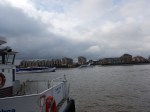
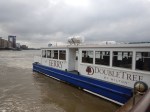
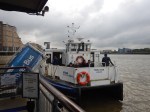
The bridge has its own web site, with a dramatic picture on the home page.
The visualisations show a bridge, that I think few would dislike. I certainly don’t!
- It’s dramatic.
- It would be open to pedestrians and cyclists.
- It would be the longest bascule opening bridge in the world.
- It would allow tall ships to pass through.
But above all I suspect that Marc and Isambard would have approved.
Canary Wharf – North Greenwich Ferry
If Canary Wharf to Rotherhithe can sustain a ferry, then surely a ferry at the other side of Canary Wharf connecting to North Greenwich with the O2, must be viable.
This Google Map shows the Thames between Canary Wharf and North Greenwich.

Canary Wharf And North Greenwich
It is not the longest ferry link, but there are questions to be answered.
- Does the ferry go right into the heart of Canary Wharf or only as far as the bank of the Thames?
- Does the ferry go all round the O2 to North Greenwich Pier or call at a new pier on the west side of the Greenwich Peninsular?
- Will the ferry be fully accessible?
- Will the ferry accommodate bicycles?
- Will the ferry be free, as is the current Woolwich Ferries?
- How many boats will be used?
I think that there could be an opportunity to design an integrated ferry and pier, that would be all things to all users.
It certainly shouldn’t be boring and if possible it should call at the heart of Canary Wharf.
Silvertown Tunnel
In my view the Silvertown Tunnel is just another route for some travellers and possibly their goods to take between the two banks of the Thames.
Categories of traffic across the river through a new Silvertown Tunnel would include.
- Individuals, groups and families, who don’t necessarily need a vehicle. But sometimes choose to take one.
- Individuals, groups and families, who absolutely need to take a vehicle.
- Vans and trucks collecting or delivering goods.
- Buses and coaches
- Taxis, mini-cabs and private hire vehicles.
One thing that has been said about the Silvertown Tunnel is that it will be funded by a toll and some reports have said that the Blackwall and Rotherhithe Tunnels will be tolled as well.
London already has a congestion charging system for areas in the centre and I suspect that this could be updated to charge for the cross-river tunnels.
We’ve never had a toll to get across the Thames in London, with even the Woolwich Ferry being free, so I suspect that a toll would reduce cross-river vehicular traffic.
Remember that, when tunnels were built under the Thames in Central London, there was few quality alternatives with the exception of the Northern and Victoria Lines and the original undeveloped Thameslink.
But over the last few years, cross-river and other public transport has been getting better. And it still is!
Consider.
- In the last year, a lot has been disclosed about Crossrail and its enormous Class 345 trains.
- We’ve also seen the opening of the new London Bridge station and can see the improvements taking place in South London.
- We’ve also seen the arrival of the Night Tube.
- Capacity is being increased on the cross-river East London Line and the Jubilee, Northern and Victoria Lines.
- We have Night Thameslink, so will we see a Night Crossrail?
Other developments will follow.
The only certainty is that we will be seeing a large increase in quality public transport, over, under and on the Thames.
I think for the first time in my life, there could be two competing ways of getting across the Thames; driving through a tunnel or using public transport.
Cost, convenience, needs and possibly an all-singing-and-dancing computer or phone app will tell you where to go.
As I said earlier, if the Silvertown Tunnel is built, it will be just another route for travellers, with perhaps a higher, but fixed cost.
If it is built, I think there should be conditions.
- The Blackwall, Rotherhithe and Silvertown Tunnels should all have tolls.
- Crossrail and Thameslink should have a great deal more Park-and-Ride capacity.
- All buses, coaches, mini-cabs, taxis and trucks in Central London should be low emission.
I also think that large areas of Central London, like the City and Oxford Street should be pedestrianised and some are on track for this to happen.
Much of the decision about the Silvertown Tunnel revolves around politics.
Sadiq Khan, has said he’s in favour of the tunnel with conditions, but he is up against a formidable movement that don’t want the tunnel built at any price.
I also find it interesting, that Ken Livingstone was in favour of the Silvertown Tunnel. But Ken brought in congestion charging.
I wouldn’t be surprised, if there’s some researchhanging aroiund in TfL, that says that a tolled road crossing will cut traffic. But it’s the sort of research no-one would believe.
So perhaps a tolled Silvertown Tunnel with conditions will be a good idea.
But only because there are now alternatives!
Gallions Reach DLR
The BBC article says this about this proposal.
A DLR crossing at Gallions Reach, helping support the development of around 17,000 new homes across Newham and the Royal Borough of Greenwich
It is different to the original proposal of a Docklands Light Railway extension to Dagenham Dock, which stayed on the North bank of the Thames.
This map shows the area of London from Gallions Reach to Abbey Wood.
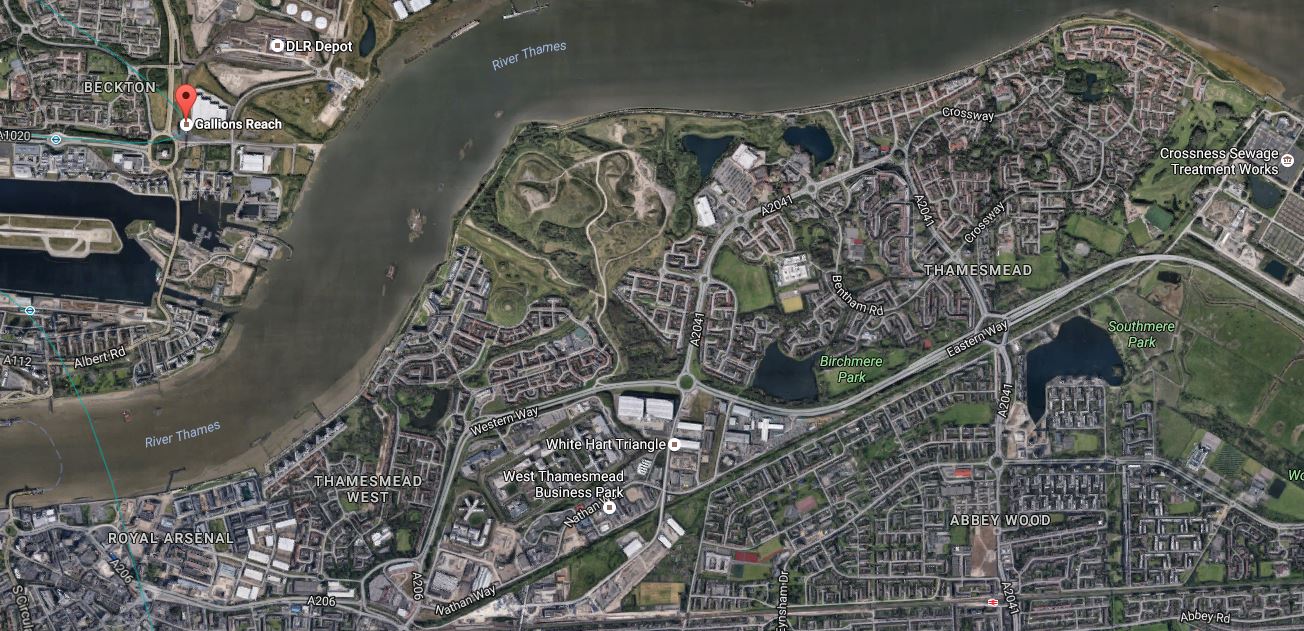
Gallions Reach To Abbey Wood
Note.
- Gallions Reach DLR station is marked with the red arrow.
- Just to the North of Gallions Reach station is the main DLR depot, which would probably be an excellent site to start a tunnel.
- The tunnel would probably emerge on the South bank of the Thames to the West of Thamesmead.
- It could then weave its way along the side of the main road.
- The North Kent Line with Abbey Wood and Belvedere stations runs along the bottom of the map.
- Crossrail could be extended to Gravesend.
- Crossrail should also be extended Ebbsfleet International for European rail services.
If the DLR extension went from Gallions Reach DLR station to Abbey Wood station it will be a loop on Crossrail serving a lot of areas ripe for quality housing and commercial development.
It certainly looks a feasible area to think about taking the DLR.
Barking Riverside Overground Extension
When I first heard about the Thamesmead Extension of the Gospel Oak to Barking Line, I thought it was a good idea.
As it is mentioned in the Mayor’s plans, I suspect that building the extension is getting nearer to reality.
Certainly provision has been made in the design of the Barking Riverside Overground Extension to extend the line under the river if required.
Joined Up Connections
If you take out the Silvertown Tunnel, which is the only one of the five crossings for which you need a vehicle, you get a route along the Thames from Canada Water To Barking.
- Walk from Canada Water to the Rotherhithe – Canary Wharf Bridge
- Cross the Rotherhithe – Canary Wharf Bridge
- Walk to the Canary Wharf – North Greenwich Ferry
- Take the Canary Wharf – North Greenwich Ferry to North Greenwich
- Take the Emirates Air-Line to Royal Victoria
- Take the DLR to Gallions Reach and on to Thamesmead
- Take the Gospel Oak to Barking Line to Barking
It’s an interesting route using various means of transport.
A Level Crossing That Should Be Closed
One of my Google Alerts found this article in the Bicester Advertiser, which is entitled Tunnel could be dug under Bicester London Road railway line to keep route open.
So I found a Google Map of the crossing and Bicester Village station.
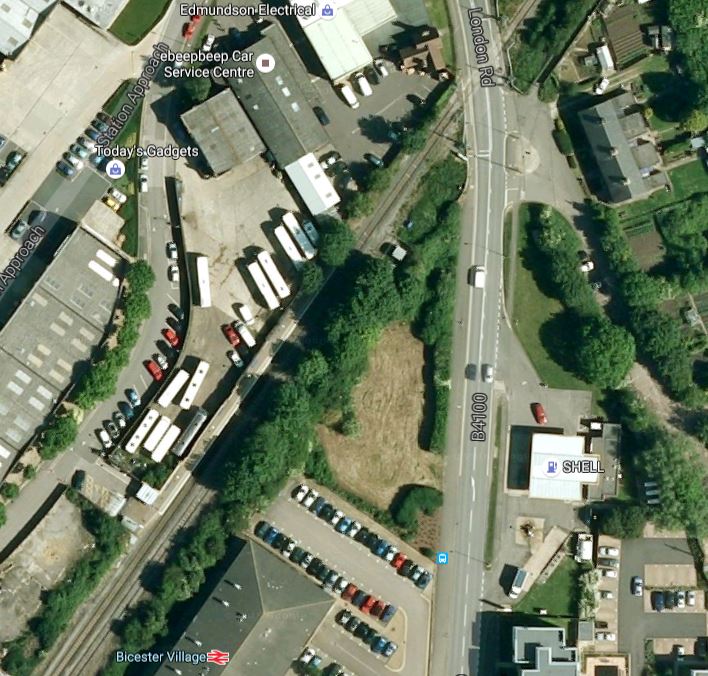
Bicester Village Station And The London Road Level Crossing
If you consider that when the next phase of the East West Rail Link opens in a few years time, the following passenger trains will be going through the station.
- 2 trains per hour (tph) from London Marylebone to Oxford
- 2 tph from Oxford to London Marylebone
- 2 tph from Reading to Bedford/Milton Keynes
- 2 tph from Bedford/Milton Keynes to Reading
That is 8 tph for a start and when you add in a few long freight trains, it is surely a good idea to close the level crossing and dig a road tunnel under the rail line.
Slow Progress On The Gospel Oak To Barking Line
I have observed the electrification of the Gospel Oak to Barking Line since December 2015 and to say it has been painfully slow would be an understatement.
In the September 2016 edition of Modern Railways, there is a long article called Wiring The Goblin.
It talks of a lot of problems, which are resulting in a lot of lowering and rebuilding of the track bed.
Reading between the lines, I suspect that some parts of the line weren’t designed and built very well in the first place and that decades of neglect haven’t helped.
The Victorian builders of lines like these were good at some things, but they were probably driven more by getting a line open to carry goods and passengers, than by creating infrastructure, that would last a couple of hundred years.
But it does seem that the engineers are doing their best to rebuild the line in an affordable manner. This extract gives an overview of the track lowering.
Early plans for the electrification envisaged 10 track lowering sites along the route, but value engineering has seen this reduced to four main sites.
The term value engineering is used more than once in the article.
The nature of some of the work is illustrated by this description.
But the most challengin section, and the one which drives the requirement for engineering access, is a 1,750-metre stretch between Blackhorse Road station and Yunus Khan Close (a short distance south of Walthamstow Queens Road station). In just over a mile there are 17 over-line structures, with track lowering reqired by as much as 500mm. at some locations.
The Bridges of Walthamstow describes a walk I took along the route a few months ago.
To some working on the project, it must feel like digging a tunnel close to or on the surface, through the foundations of Victorian houses.
Intriguingly, my Google Alerts on the line, don’t seem to have dug up any complaints in Walthamstow, unlike they did at the Gospel Oak end of the line.
Make what you want of that!
Slab track is used selectively, but not as much as originally envisaged. I do wonder, if slab track has improved in recent years as more difficult projects like the Borders Railway and the tunnels at Glasgow Queen Street station seem to use it.
I particularly like the care that has gone into the planning of the work, which has been deliberately organised so that one track is always open for engineering trains.
The system, also used 4D modelling to avoid conflicts and get everything right. Strangely, this is the first instance of using this relatively new technique on a heavy rail project in the UK.
Little is said about the electrification, except that it is the same as used on the Northern Hub project between Liverpool and Manchester.
I have been unable to find out, if the overhead electrification can accept the return currents for the regenerative braking on the Class 710 trains.
However, in Will London Overground Fit On-board Energy Storage To Class 378 Trains?, I asked the question of the title after finding an article, where Bombardier stated that Class 378 trains could be fitted with onboard energy storage Some of the third rail lines used by these trains can probably handle regenerative braking, so I have to assume that .lines with overhead wires like the North London Line can’t.
The following must be taken into account.
- As the North London Line and the GOBlin are linked at Gospel Oak, it makes me think there is a strong possibility, that the GOBlin will not be wired to accept the return currents from regenerative braking.
- Only be the Class 710 trains that could use regenerative braking on the GOBlin, as there are few electric locomotives in the UK with regenerative braking. Only the Class 88 and Class 92 locomotives have it fitted.
- The Class 710 trains for the GOBlin are dual-voltage trains. I suspect, so that services can be extended into third-rail territory if needed.
- The AC-only Class 710 trains will run on lines like Romford to Upminster and the Chingford Branch, where it is unlikely that the wiring can work with regenerative braking.
Whether the Class 710 trains have onboard energy storage actually fitted, will be one for the accountants.
In the last section of the article, the extension to Barking Riverside is discussed. The following is said.
- The extension will be slab track throughout.
- Construction could begin in late 2017.
- Services could start in 2021.
I discussed this extension in In The Land Of The Giants.
There is a very challenging viaduct, that will thread the line through the area, and the slab track would make accurate positioning to avoid the masses of high-voltage electricity cables and the other obstacles in the area a lot simpler. The viaduct with its slab track could also be built in pieces in a factory and assembled on site, to give a better finish and quality to the work.
Perhaps too, if the 2.2 km. length of new railway, were to be built on single track viaducts, without electrification, it would reduce complexity, visual impact, noise, construction time and cost.
But this would require the Class 710 trains to be fitted with onboard energy storage.
Intriguingly, TfL’s main online document about the Barking Riverside Extension appears to have been carefully written and only mention overhead wires once, talking consistently about four car electric trains and a fully-electrified line.
As contracts for the extension must be awarded soon for a late 2017 construction start, I think we’ll see a design for the extension, that could be with or without wires.
No mention is made in the article about extending the line four kilometres under the Thames to Thamesmead and Abbey Wood.
The Google Map shows the route from Barking Riverside to Abbey Wood.
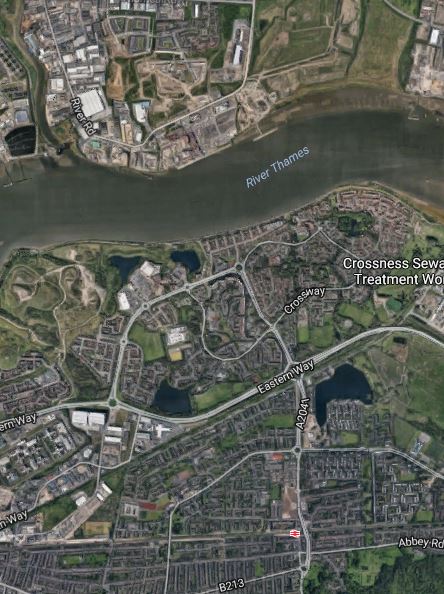
Barking Riverside To Abbey Wood
Barking Riverside station will be built in the South-West corner of the largest green space at the top of the map, above the word Thames.
Abbey Wood station is virtually due South from there towards the bottom of the map.
If this tunnel is ever built could it be in tunnels or even just a single tunnel without wires?
One problem with an extension to Abbey Wood could be somewhere suitable to put the station.
The traditional solution would be a blind tunnel or tunnels as on the Victoria Line, but could the line end in a loop extra stations at Thamesmead and the incomparable Crossness.
What better way is there to attract visitors to the area, than to put Bazalgette’s Cathedral of Sewage on the London rail map?
The GOBlin extension to Abbey Wood is certainly a rail route, where good engineering could be mixed with large doses of imagination.
 The Anonymous Widower