Should The NHS Adopt A Whack-A-Coeliac Policy?
The Wikipedia entry for Whac-a-Mole, says this about the colloquial use of the name of an arcade game.
In late June 2020, Boris Johnson based the UK’s COVID-19 strategy on the game.
Because of the high number of diagnosed coeliacs in the Cambridge area, I believe that I was diagnosed to be coeliac, by possible use of a Whack-a-Coeliac policy at Addenbrookes Hospital in Cambridge, in the last years of the Twentieth Century.
- I was suffering from low B12 levels and my GP sent me to the hospital to see a consultant.
- It was only a quick visit and all I remember, is the speed with which the nurse took my blood.
- A couple of days later, I received a letter from the hospital, saying it was likely I was a coeliac and it would be confirmed by an endoscopy.
- A point to note, is that I had my endoscopy with just a throat spray and this must have increased the efficiency and throughput and reduced the cost of the procedure.
The only way, I could have been diagnosed so quickly would have been through an analysis of my genes and blood. But I was never told, what method was used.
I have a few further thoughts.
My Health Since Diagnosis
It has undoubtedly improved.
Cancer And Diagnosed Coeliacs On A Gluten-Free Diet
Joe West of Nottingham University has shown, that diagnosed coeliacs on a gluten-free diet have a 25% lower risk of cancer compared to the general population.
That is certainly a collateral benefit of being a coeliac. But is it being a coeliac or the diet?
I’m no medic, but could the reason be, that diagnosed coeliacs on a gluten-free diet have a strong immune system?
Coeliac Disease Is A Many-Headed Hydra
I have heard a doctor describe coeliac disease or gluten-sensitivity as a many-headed hydra, as it can turn up in so many other illnesses.
Type “coeliac disease many-headed hydra” into Google and this article on the NCBI , which is entitled Gluten Sensitivity: A Many Headed Hydra, is the first of many.
This is the sub-title of the article.
Heightened responsiveness to gluten is not confined to the gut
My son; George was an undiagnosed coeliac, who had a poor diet consisting mostly of Subways, cigarettes and high-strength cannabis. He died at just thirty-seven of pancreatic cancer.
Did George have a poor immune system, which was useless at fighting the cancer?
Undiagnosed Coeliac Disease In The Over-Sixty-Fives
In A Thought On Deaths Of The Elderly From Covid-19, I used data from Age UK and Coeliac UK to estimate the number of coeliacs in the UK over the age of sixty-five. I said this.
Age UK has a figure of twelve million who are over 65 in the UK. If 1-in-100 in the UK are coeliac, that is 120,000 coeliacs over 65.
But some research shows that the number of coeliacs can be as high as 1-in-50.
If that 120,000 were all diagnosed, I would have several coeliacs amongst my over-65 friends. I have just one and she is self-diagnosed.
Are all these undiagnosed coeliacs out there, easy targets for diseases like cancer and COVID-19?
The Ease Of Testing For Coeliac Disease
I was worried that my granddaughter was coeliac and I asked my GP, how difficult a test is to perform.
He said, that a genetic test is usually quick and correct and only a few borderline cases need to be referred to a consultant.
Diagnosis has moved on a lot in twenty years.
Cambridge, Oxford and Covid-19
Six weeks ago I wrote Oxford And Cambridge Compared On COVID-19, to try to find out why the number of Covid-19 cases are so much lower in Cambridge than Oxford.
Checking today, the rate of lab-confirmed cases of COVID-19 per 100,000 residents is as follows.
- Cambridge 336.6
- Oxford 449
So why the difference?
In the related post, this was my explanation.
Is the large number of diagnosed coeliacs around Cambridge, the reason the area has a lower COVID-19 rate than Oxford?
It sounds a long shot, but it could be a vindication of a possible Whack-a-Coeliac policy at Addenbrooke’s in the last years of the Twentieth Century.
Or were the hospital testing the genetic test for coeliac disease? Perhaps, in conjunction with Cambridge University and/or the Sanger Centre.
Conclusion
I believe the NHS should seriously look at a Whack-a-Coeliac policy!
- The health of a large number of people would improve.
- There would be less cancer in the UK.
- A better combined National Immune System might help in our fight against the next virus to follow COVID-19.
It would be a very simple testing program, that would be mainly in the hands of the GPs, their nurses and the testing laboratories.
A Thought On Deaths Of The Elderly From Covid-19
It has been shown, that a lot of the deaths from Covid-19 are over seventy.
I am seventy-two and a coeliac, which was diagnosed when I was fifty.
As my GP practice nurse said at the time of my diagnosis, as we read my doctors notes together, the signs are there of coeliac disease in a lot of my visits to a doctor.
So why wasn’t I diagnosed earlier?
- There wasn’t a test for young children until 1960, so my early bad health couldn’t be diagnosed.
- No clue as to my problems was obtained until an elderly but extremely competent locum decided that my blood should be analysed as a fiftieth birthday present. I had no B12 and was running on empty.
- Eventually, I was sent to Addenbrooke’s and I was diagnosed by a blood test. I suspect it was a trial of a new genetic test, as I got the result by post in two days.
How many undiagnosed coeliacs are there in those over seventy, who because they are coeliacs, have a compromised immune system?
I would be undiagnosed but for that elderly locum!
How many other coeliacs are there in the UK population?
- Age UK has a figure of twelve million who are over 65 in the UK.
- If 1-in-100, as stated by Coeliac UK, in the UK are coeliac, that is 120,000 coeliacs over 65.
Note that as of today 177,388 have been diagnosed with Covid-19.
Conclusion
Many of those 120,000 coeliacs will have been born before 1960 and have a high probably of not having been diagnosed. for the simple reason, that a childhood test for coeliac disease didn’t exist.
Will these undiagnosed coeliacs have a compromised immune system, that makes them more susceptible to Covid-19?
It has been said, that a good immune system helps you fight Covid-19!
My Strange Skin
As a coeliac, a stroke survivor on Warfarin and a lab rat for a medical research centre, I’ve had my blood taken many times in the last ten years. I also have several injections a year for vitamin B12 and a yearly one for flu.
I never need a plaster, as despite being on Warfarin, once the needle is taken out, the skin seems to shut the hole tight.
On the other hand on a typical night, I’ll lose just over a kilo in weight, whilst I sleep. I once spoke to a sleep expert on the radio and they said that was normal.
But the funniest thing that happened, was one day not unlike today for weather with rain about and not cold, I fell asleep on the living room floor in my underwear.
About half-an-hour later, I awoke and thought for a moment, that I’d gone blind, as I couldn’t see a thing.
I then realised that the room was full of water vapour, as if I’d left the kettle on the stove. But I have an automatic kettle and there was nothing on the stove.
So where had all the water vapour come from?
There was only one place! It had leaked from my skin and the temperature and pressure, were just right for the fog to form.
My skin is often very dry and I usually start the day with a deep bath, when I put my head under the water and irrigate my dry eyes, which an eye surgeon, once described as the driest he’d seen.
Twice-Yearly Jab Could Replace Statins For Millions
This is an article in today’s Times.
As I have four B12 injections year, that would fit well with my health care.
The Curse On My Family
Something has dripped through the genes and behaviour in my family, that could well explain, factors that contributed to the early death of my paternal grandfather and my youngest son; George.
I have known six of my relatives well; my father and mother, my father’s mother and my three sons.
I will ignore my mother and grandmother, as both lived to their eighties, which is probably good by any standards.
I shall also ignore my eldest son, as I am not in contact with him.
I believe that my coeliac disease, which must be inherited, came from my father and both my late wife and myself believed that if any of our three children were coeliac, it would have been George. But neither my father or George were ever properly tested.
As a child, I was sickly and I was always being taken to the doctor and I had endless tonics and potions.
It only gradually improved when I got to about ten or so and why it did has never been successfully explained. But I can remember being off-school for large parts of the Spring term several times.
I can remember a couple of times in summers, when I was about eight or so, suddenly giving up playing with friends and going home to watch television or play with my Meccano. I think I just found it too hot or perhaps my eyes didn’t like the sun.
In some ways, I was just following my father’s behaviour, which generally involved tinkering with his car in the garage or working in his print works. He would occasionally sit in the sun to smoke his pipe, but I never ever saw him strip off on a beach say.
From about seven, he always took me to work at the weekend and I enjoyed myself doing real jobs, like setting type, collating paper and pulling proofs.
If it left me with any psychological traits, it was that hard work is good for you!
But it kept me out of the sun.
I got married to C at twenty-one and within four years we had three sons. In some ways this got me out in the sun more and perhaps in my late twenties, when we were living in the Barbican, I started to experience better health. I was probably getting more sun, as in those days, I tended to cycle across to Great Portland Street regularly. But C used to drag me out in the sun.
Over the next thirty years or so, my health often tended to deteriorate in the winter, but I think it is true to say, it improved marginally, when the boys grew up, as we started to take more holidays in the sun.
Then in 1997, when I was fifty, I had a particularly bad winter and a very elderly locum decided I needed a blood test to see if I lacked anything. It was the first time my blood had been tested and I was found to be totally lacking in vitamin B12.
I struggled on, with nurses injecting me with B12 every month or so, until my GP sent me to Addenbrooke’s. After another set of blood tests, they said, I was probably coeliac and this was confirmed by endoscopy.
I certainly felt a lot better on a gluten-free diet.
I was also now able to walk and work in the sun and sunbathe without getting burnt. Although, avoiding the sun was still burned into my behaviour, so I often retreated under an umbrella.
Another change was that whereas before going gluten-free I was always bitten and C never was, after going gluten-free, the reverse was true.
I only remember one bad winter from that period and that was when C had breast cancer in 2003-2004, which I think was a sunless winter. We didn’t have our long winter holiday in the sun and I paid the consequence with plantar faciitis, which some reports claim is linked to vitamin D deficiency.
After she died, my problems to a certain extent returned and my GP actually suggested I wasn’t getting enough sun. So in all weathers, I drove around in my Lotus Elan with the top down, to make sure that I got the sun.
I felt a lot better.
If I look at George, he also had my father’s and my behaviour of avoiding the sun. As he smoked heavily, whilst he wrote his music in the dark, was it any wonder he got the pancreatic cancer that killed him?
The curse on my family is of course coeliac disease, which before diagnosis, seems to make us avoid the sun. My father and George certainly did and I would have done before diagnosis without C’s constant persuasion. Now though as I showed in An Excursion To Lokrum, I have no problems in the sun and rarely use any sun screen.
We’ve had some miserably weather over the last few months in London and I come to the conclusion, that I just haven’t got enough vitamin D.
I’ve also only recently found out, that gluten-free foods are not fortified, as regular ones are. So I don’t get any vitamin D through my food.
An Excursion To Lokrum
As I’d missed all of the full day trips, I took the boat to Lokrum and had a walk round for three hours or so.






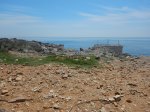
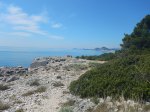




Before I was diagnosed as a coeliac and went gluten-free, I couldn’t have done a walk like this.
It was almost, as if my blood couldn’t move the heat away fast enough from my skin and it all overheated. But once, gluten-free and with blood full of B12, the heat transfer was better.
I used to burn badly some years ago, but I don’t now. After Lokrum my face was just a healthy colour.
Intriguingly, my father, who was probably an undiagnosed coeliac, rarely went in the sun and was very much a man for wasting time in his garage or shed.
My son who died, appeared to me to be the most likely to be coeliac and he was always hidden away working on his music.
Dementia Has Stabilised
According to this report on the BBC web site, research from the University of Cambridge has shown that dementia levels are stabilising.
A few years ago, Oxford University proved a link between having low B12 levels at 50 and dementia, if you had dementia in your family.
Could it be, that GPs, who now check out bloods regularly are having an effect?
When first tested at 50, my B12 levels were non-existent. Now at 68, they’re spot on!
And what is one way to help your B12 levels? – Go gluten free!
As other studies at other world-class universities, like Nottingham, have shown that a gluten-free lifestyle lowers your changes of getting cancer, I think that going gluten-free because of my coeliac disease, wasn’t one of the worst lifestyle decisions I made.
INR Results Of A Coeliac Using Warfarin And Taking Terbinafine
This graph shows my INR a period between the 20th of May and the 25th of June.

I should say that I have a degree in Control Engineering from Liverpool University.
My aim here is to keep my INR between two and three, with a target value of 2.5.
Since starting to self test, I normally take around 4 mg. a day of Warfarin, but I have found that five is a better dose for when I’m taking Terbinafine, which has been prescribed by my GP for a fungal infection. The drug is well-known to affect the action of the Warfarin.
So now I take 5 mg. unless the INR is 2.8 or more. In which case I reduce the dose from five to four. On the other hand, if the level is 2.2 or below, I increase it to six.
The average INR value for the period shown was 2.6 with a standard variation of 0.2.
The peak at the beginning of June may have been caused by a B12 injection or hot weather. Both of which seem to raise my INR.
You will notice that the INR went up around the beginning of June. I can’t be sure, as I don’t have the dates, but this may have been caused by having a B12 injection.
Not Getting Pregnant
It is reported today, that the Government is changing the IVF rules. But they should also change a few other things, based on my experience.
I have recently traced my family tree back to the 1820s. What is rare, is that in my father’s line, few of the women have given birth. My sister didn’t for a start.
Ten years ago, I was diagnosed as a coeliac, which showed itself in a severe lack of B12. I now moderate a list on the Internet for coeliacs and have come across several examples of female coeliacs, who have been unable to conceive, because of this lack of B12. A few were diagnosed early enough and after going on a gluten-free diet, they conceived and gave birth successfully.
Remember that coeliacs make up one in a hundred of the population. The incidence is higher in the Irish, Askenazi Jews, Italians and some from West Africa. Some have said that coeliac disease is linked genetically to sickle cell anaemia.
Hay Fever and B12
I’m not sure if there’s a link, but last night I had some superb liver at Carluccio’s and my hay fever seems a lot better today, despite the high pollen levels. Searching for “hay fever B12” does bring some results.

