Development North Of Kew Bridge Station
This Google Map shows the large site to the North of Kew Bridge station.
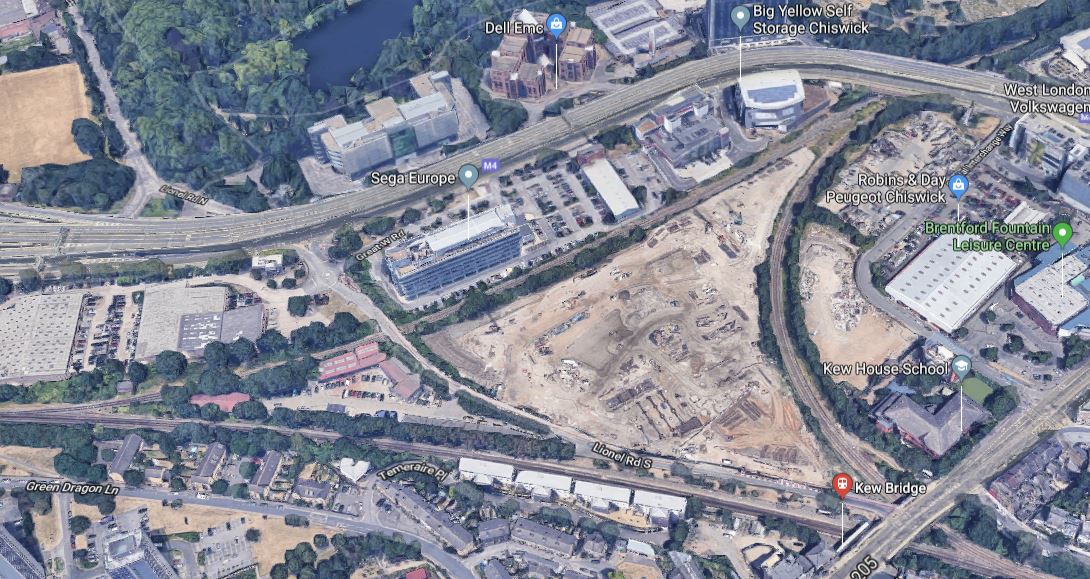
Note.
- Kew Bridge station in the South-East corner of the map.
- The M4 passing around the North of the site.
- The triangle of railway lines going to Hounslow in the West, South Acton in the North and Barnes and Waterloo in the East.
Some of the plans for the site have been disclosed.
Brentford’s New Stadium
I took these pictures from a train, as I passed through yesterday.
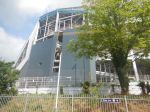

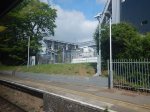
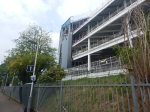

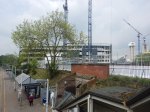
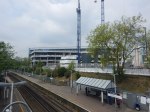
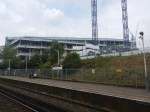
Brentford Community Stadium is planned to open in Summer 2020.
Step-Free Access At Kew Bridge Station
Currently, Kew Bridge station is not step-free.
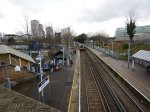
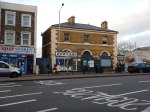
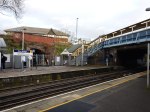
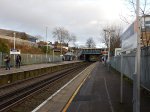
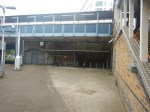

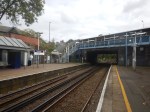
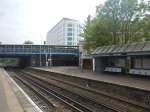
Searching the Internet, I found this document on the Hounslow Borough Council web site, which is dated April the 15th 2019 and entitled Step-Free Access To Many Of Hounslow’s Stations Proceeding At Pace!
This is an extract.
Kew Bridge is also set to benefit from accessibility improvements when the new Brentford stadium opens. The London-bound platform is to be made step free and the council is working with SWR and NR to explore how step-free access from the country-bound platform to the street can also be delivered. A feasibility study is due to progress later this year.
This map from carto.metro.free.fr shows the lines at Kew Bridge station.
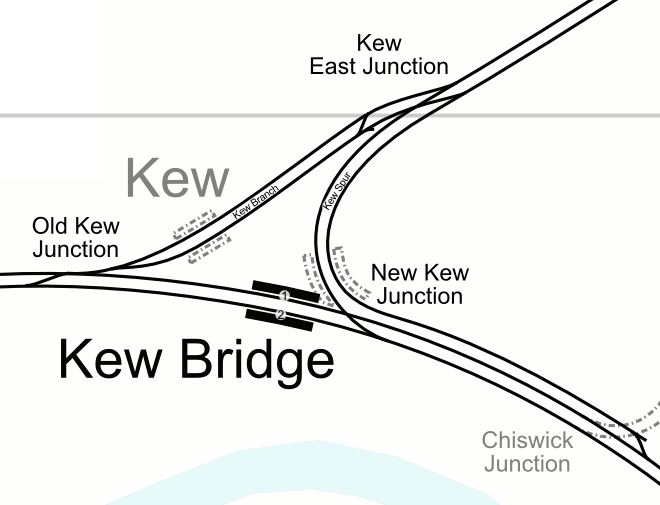
The two lines, through the disused platforms at Kew Bridge station could be used as a terminus, by the proposed West London Orbital Railway.
I’m sure Brentford FC wouldn’t object to more trains serving their new ground.
Preparations For The West London Orbital
This picture was taken as I looked through the short tunnel, that connects the current Platform 1 to the disused platform shown on the map of the lines.
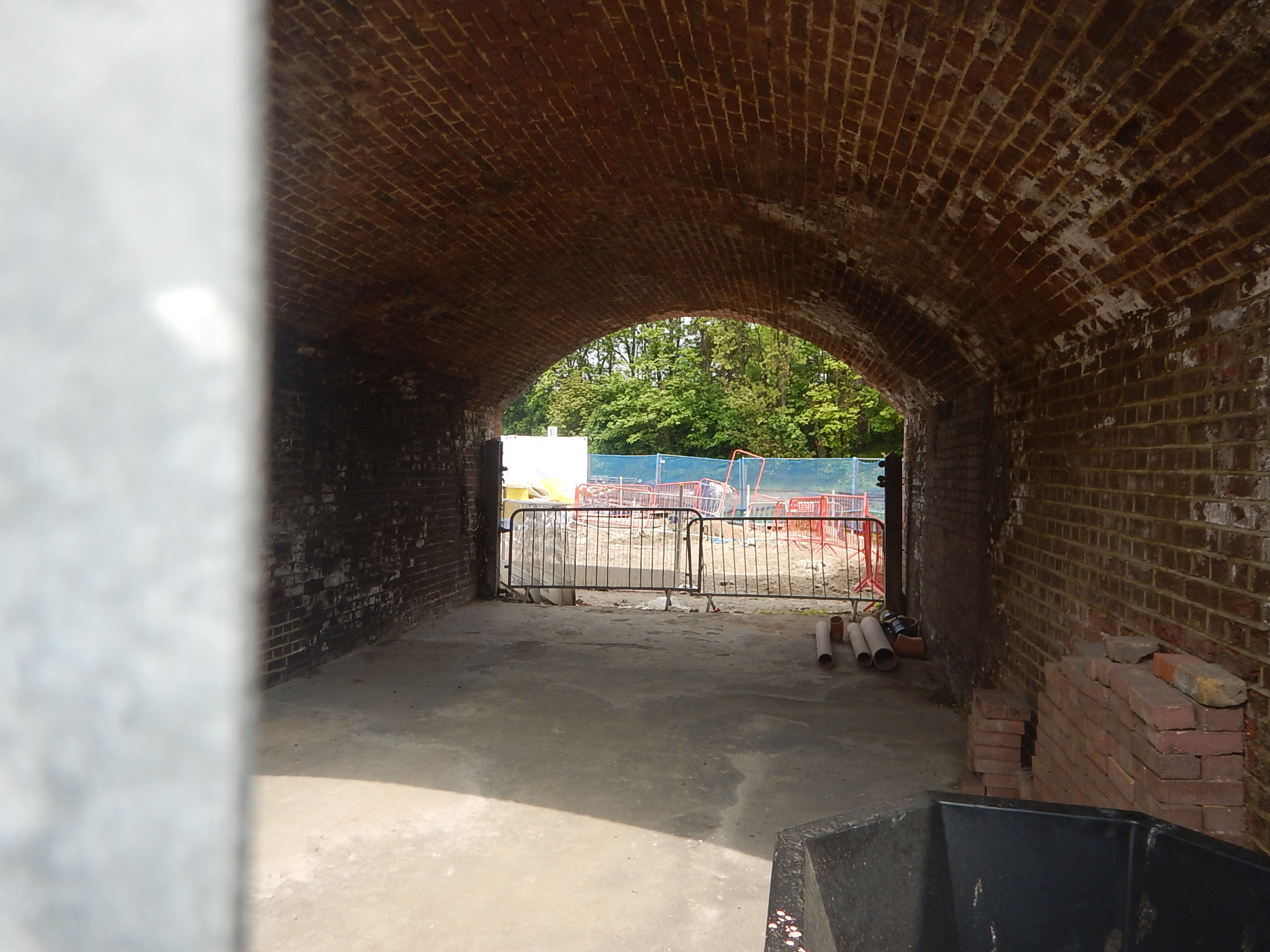
It appears that the rubbish and shrubbery of many decades is being cleared.
Could it be in connection with making the London-bound platform step-free?
It would also allow surveyors to assess how much work is needed to get the platform back into use for the West London Orbital Railway.
Development To The South Of The Station
This picture shows a large site behind the station building and the country-bound platform

The location of the site can be seen behind the Express Tavern on this Google Map.
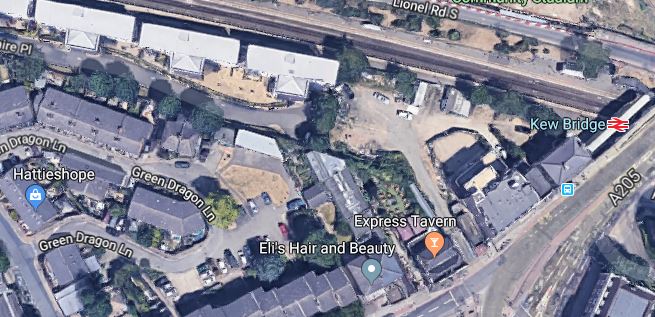
The map also shows how the flats developed on the South side of the tracks have limited the ability to put a second footbridge over the tracks to whisk passengers from London to the stadium.
I wonder, if a route could be built, through the developments, to deliver step-free access to the country-bound platform.
But it would be the wrong side for the stadium!
A step-free bridge is needed at Kew Bridge station.
The Cafe At Kew Bridge Station
Whilst at the station, I had a welcoming coffee.


It’s certainly better than your average chain coffee shop.
I could also wait watching a Departures display.
Syon Lane Station To Go Step-Free
I came back from Brentford using Syon Lane station.
These pictures show the station.


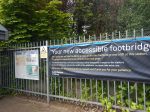


What surprised me, is the number of posters up saying that the station is to be made step-free.
Searching the Internet, I found this document on the Hounslow Borough Council web site, which is dated April the 15th 2019 and entitled Step-Free Access To Many Of Hounslow’s Stations Proceeding At Pace!
This is an extract.
Plans to improve accessibility at Syon Lane Station were given the green light this week as Hounslow Council confirmed securing the necessary funding for the £2.4m programme to proceed. Improvements to the station, which sits on the South West Rail (SWR) network, will include a new footbridge, providing an additional exit point and lift from the west bound platform, delivering step-free access to the street from this platform, as well as easing congestion. A new (wider) staircase and bridge deck is proposed for the London-bound platform which should also reduce congestion at peak times. Step-free access from this platform to the street will be enabled by improvements to the footpath leading to Rothbury Gardens. Works will commence at the end of April and are due to complete by the end of the summer.
The scheme is being financed by a cocktail of funding streams including; Sky, Community Infrastructure Levy (CIL), Transport for London (TfL) and a contribution from SWR themselves. The total cost is c£2.4m including contingency.
It looks to be a comprehensive well-thought out scheme.
Judging by the presence of a Portacabin and what appeared to be vegetation clearance, where a bridge might go, it appears that everybody is at least starting at pace. Finish by the end of the summer could be a possibility, although I think it is a tough ask!
Reading some of the posters at the station, more than usual details were given about the way the footbridge and step-free access will be added.
These are the phases.
Footpath Improvement Works
Footpath via Rothbury Gardens is closed. Access to Platform 1 is through the Syon Lane entrance (stairs)
Lift And Bridge Sub-Structure And Foundation Works
Installation of lift shaft and footbridge steelwork structure.
Installation of lift equipment.
Removal of existing Platform 1 staircase.
Installation of linkspan to new footbridge.
Staircase from Syon Lane is closed. Access to Platform 1 is via Rothbury Gardens (step-free footpath)
Platform Finishes And Footbridge Commissioning
Following commissioning new footbridge linkspan will be opened.
Oyster readers will be moved to new final locations.
The West London Orbital Railway
The West London Orbital Railway may or may not be built in the next few years.
This would double the number of trains through Syon Lane station from four trains per hour (tph) to eight tph.
As this would be a train every 7-8 minutes, for safe operation, step-free access would be essential.
Stations on the Hounslow Loop Line, that will be used by the proposed West London Orbital Railway are.
- Hounslow – As this will be a terminus, step-free access will be essential.
- Isleworth – Planned to be step-free. See Isleworth Station To Go Step-Free for more details.
- Syon Lane – Going step-free
- Brentford – Already step-free
- Kew Bridge – As this will be a terminus, step-free access will be essential.
Except for the two terminals, all stations needed for the West London Orbital Railway are planned to be step-free.
Good project planning would probably mean, that the joint stations were prepared for eight tph as early as possible to stop these works delaying the project.
Could Rail Access To Heathrow Be Formed Of The Best Bits Of Various Schemes, But Discounting HS4Air And Windsor Link Railway?
This post is an updated version of Could Rail Access To Heathrow Be Formed Of The Best Bits Of Various Schemes?, which has been written to fit with the situation as it exists in April 2019.
- HS4Air has not been accepted.
- Windsor Link Railway has not been accepted.
- The scheme is Heathrow-only.
Various schemes have been proposed to improve rail access to Heathrow.
- Heathrow Southern Railway
- HS4Air – Now not accepted!
- Western Rail Approach to Heathrow
- Windsor Link Railway – Now not accepted!
There are also two schemes in progress, that will improve rail access to Heathrow.
- Crossrail, which will open to Heathrow in 2019.
- Piccadilly Line Upgrade, which will be complete in 2025.
I also believe that if the West London Orbital Railway is created, then this could have a positive affect on travelling to and from Heathrow.
Heathrow In The Future
Heathrow are disclosing a master plan, for rebuilding a lot of the airport to make it more efficient and up with the best.
- There will be two main terminals; Heathrow West and Heathrow East with satellites in between handling the actual planes.
- These two terminals and the satellites will be between the two existing runways, with a passenger and baggage transport system beneath.
- Terminal Five will become Heathrow West.
- An extended Terminal Two will become Heathrow East.
- Crossrail, Heathrow Express and the Underground will serve both main terminals.
I believe that this rebuilding will happen, whether or not a third runway is built and it could start in the next few years.
Heathrow’s Pollution Footprint
Heathrow is a big polluter, but it is not so much the planes, as the diesel cars, buses and trucks serving the airport.
Heathrow’s Third Runway
Heathrow’s third runway and another terminal could be built North of the current two runways.
These factors would effect the chance of it being built and the eventual opening date.
- The development of extra services on High Speed One.
- The opening of High Speed Two.
- The building of a second runway at Gatwick.
- Extra capacity at other London airports, like City, Luton, Southend and Stansted.
- Politics, as many possible leaders of the Conservative and Labour parties don’t want it built.
I have a feeling that Heathrow’s Third Runway could be a back-burner project for decades.
I do think though, that the space underneath the third runway could be used as a rail terminal.
Uses For Improved Rail Access
There are several uses for improved rail access to Heathrow.
Passengers
Many passengers feel they must drive to and from Heathrow.
Next year, Crossrail will connect Heathrow directly to the City of London, Canary Wharf, the West End and to the heart of London’s Underground, Overground and National Rail system.
An example journey will be Bond Street to Heathrow Central in twenty-six minutes.
New trains on the Piccadilly Line are planned to enter service in 2023 and will offer more capacity and more pleasant journeys.
Currently, Piccadlly Circus to Heathrow Central takes fifty-two minutes and I would hope that this time is reduced to perhaps 40-45 minutes.
I think, these two upgrades will change the way many in Central, North East, East and South East London access the airport.
- Trains will be more comfortable.
- Trains will be frequent.
- Crossrail will be completely step-free.
- The Piccadilly Line will have more step-free stations.
- The Crossrail trains will have masses of space.
- Trains will take passengers to all the terminals
But Crossrail and the Piccxadilly Line upgrade, will do little for those in North West and South West London and those living to the West of the airport.
Workers
Workers at Heathrow, range from highly-paid pilots down to lowly-paid cleaners, with a full spectrum in between.
Many though have a problem, in that they need to get to and from the airport at times, that are inconvenient for public transport.
A station guy at Staines said that getting between there and Heathrow for an early start or after a late finish is difficult.
The lower-paid workers also need good links to areas of lower-cost housing.
In an ideal world, Crossrail and Piccadilly Line services, should run on a twenty-four hour basis, with appropriate frequencies.
Supplies For The Airport And The Aircraft
I wonder what percentage of the supplies for Heathrow is brought in by diesel truck.
In the Heathrow of the Future, surely many supplies could be loaded onto smart trolleys and taken on electric freight trains to delivery points under the airport.
Air Cargo
Heathrow is an important air cargo terminal, but as with supplies, surely the cargo can be collected outside of the airport and delivered by electric shuttle trains.
Could Heathrow Go Diesel-Free?
I believe that if a well-designed rail-terminal was built under a new third runway, the extra rail capacity could enable, Heathrow to go substantially zero-carbon on the ground!
- All vehicles bringing passengers to the Airport would have to be zero-carbon powered.
- Hybrid vehicles would have to use battery power within a few miles of the Airport.
- Air cargo and airport supplies would be shuttled into the Airport by electric train to the rail terminal under the third runway.
- All vehicles serving the planes would be zero-carbon powered.
- Even giant aircraft tugs for Boeing 747s and Airbus A380s can be battery-powered.
- We are probably talking several years before a third runway would open! So why not?
It is disruptive innovation on a grand scale!
Airports built to these principles and there will be several before 2030, will have a massive marketing advantage.
The Best Bits Of The Various Actual And Proposed Rail Routes Into Heathrow
Crossrail
- Connectivity to large parts of London and the East.
- Connectivity to lower-cost housing areas in East and West London.
- High capacity.
- Frequent trains
- Modern trains
- All terminals served
- Extra trains could be added.
The capability for 24 hour operation has hopefully been built in.
Heathrow Southern Railway
- Connectivity to Waterloo, Clapham Junction, South and South West London
- Extends Heathrow Express to Woking and Basingstoke
- Adds a new route for commuters into Paddington.
- Extends Crossrail from Heathrow to Staines.
- It will be built alongside the M25 with a tunnel to Terminal Five.
- All terminals served
- Provides a freight route into the airport from the South West.
- Privately funded.
Heathrow Southern Railway would also be able to serve any future rail terminal under a new third runway.
Piccadilly Line Upgrade
- Connectivity to West and North London
- Connectivity to lower-cost housing areas in West London
- Frequent trains
- All terminals served.
- No new infrastructure
The Piccadilly Line probably needs 24 hour operation.
Western Rail Approach To Heathrow
- Connectivity to Slough and Reading and further West with a change.
- All terminals served.
- Provides a freight route into the airport from the West.
- Network Rail’s proposed scheme.
- Government funded (?)
As with the Heathrow Southern Railway, Western Rail Approach To Heathrow would also be able to serve any future rail terminal under a new third runway.
West London Orbital Railway
- Connectivity to North West London with a change at Old Oak Common.
- Connectivity to low-cost hosting areas in West London.
- Created as part of the Overground.
- Eight trains per hour (tph) through Old Oak Common.
- Connectivity for high-value passengers in affluent parts of North London.
- Connectivity for important workers in less-affluent parts of North West London.
- Probably, Transport for London funded.
- No difficult construction.
The West London Orbital Railway should go ahead, because it connects so much of West London to Crossrail, Old Oak Common and High Speed Two.
Conclusions
I have seen railway stations and airports all over Europe.
Many airport stations are cramped, as they have been built as an afterthought.
But some like Schipol and Frankfurt have a comprehensive station, where you can get trains to a very long list of places without a change.
Heathrow Connectivity
Heathrow needs a very high level of connectivity, for passengers, workers and freight.
The two major schemes, that are left, provide that.
- Heathrow Southern Railway, which extends Heathrow Express to the South West and provides links to Waterloo and Greater South London.
- Western Rail Approach To Heathrow does what it says in the name.
Both schemes would share the same Western access route to Terminal 5 station and this could be extended to also serve a new rail terminal under the proposed third runway.
What About The Workers?
Heathrow’s other big need is rail access for the increasing numbers of people, who work at the airport and live locally.
- Heathrow Southern Railway links the airport to South West London.
- Western Rail Approach To Heathrow links the airport to Reading and Slough.
- Crossrail links the airport to Old Oak Common with its housing developments and rail connections with High Speed 2 and the London Overground.
- West London Orbital Railway will bring more workers and passengers to Old Oak Common from all over North West and South West London.
Old Oak Common will be important for many working at the airport.
Pollution Solution
As the airport develops, Heathrow Southern Railway and Western Rail Approach To Heathrow could together make a substantial reduction in the pollution emitted by the airport.
Old Oak Common station
Old Oak Common station will become an important interchange for workers and passengers travelling to and from Heathrow.
- It must be totally step-free.
- Some of the long interchange walks on current plans should be augmented by travelators.
- Crossrail is planning six tph between Old Oak Common and Heathrow. Is that enough?
Get Old Oak Common right and all those needing to go to and from Heathrow will benefit.
Heathrow And Gatwick
The connection between Heathrow and Gatwick Airports is tortuous at present.
- It will get better, as Crossrail and Thameslink improve.
- As the airports grow, with a third runway at Heathrow and a second one at Gatwick, how many people will want to travel quickly between the two airports, as increasingly, both airports will offer services to more destinations?
- As a Londoner, I also believe that we will see more split flights, where passengers stopover in London for a night or two, when they are going halfway around the world.
Terminal London will be the best airport transfer terminal in the world.
Heathrow And High Speed One
I will be very surprised if many travellers need to go quickly between Heathrow and High Speed One.
For those that need to do it, using an extended Crossrail between Heathrow and Ebbsfleet will probably be good enough.
Heathrow And High Speed Two
For all sorts of reasons Heathrow needs good connectivity to High Speed Two.
With the elimination of direct access to the airport by High Speed Two, a short journey between Heathrow Airport and Old Oak Common stations will have to be acceptable.
Isleworth Station To Go Step-Free
This document on the Government web site is entitled Access for All: 73 Stations Set To Benefit From Additional Funding.
Isleworth station is on the list.
These pictures show the station.

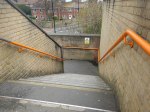
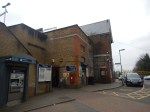
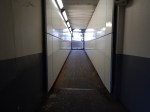
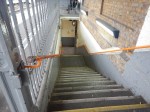
It is a double track station on a viaduct with the platforms on either side.
Currently, services are four trains per hour (tph) in both directions. The trains, that I rode to and from the station were ten cars.
If the West London Orbital Railway should be created, then this would add another four tph in both directions.
With the extra services, step-free access could be important, as the West London Orbital Railway will link this station to both Crossrail and High Speed Two.
Installing The Lifts
Space is tight and Isleworth station is one without ticket barriers.
It should be possible to install Subway-to-Platform lifts, but if they can’t be fitted, then as the station doesn’t have barriers, outside lifts might be a solution.
Thoughts On Kentish Town Station
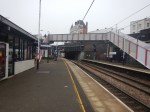
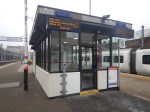
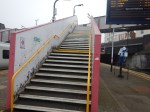
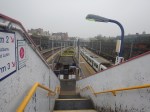
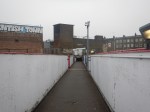
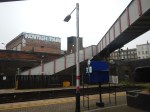
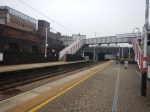
Kentish Town station is not step-free, as these pictures show.

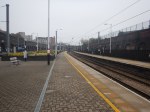
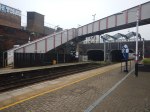
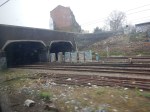
This Google Map shows the layout of the station.
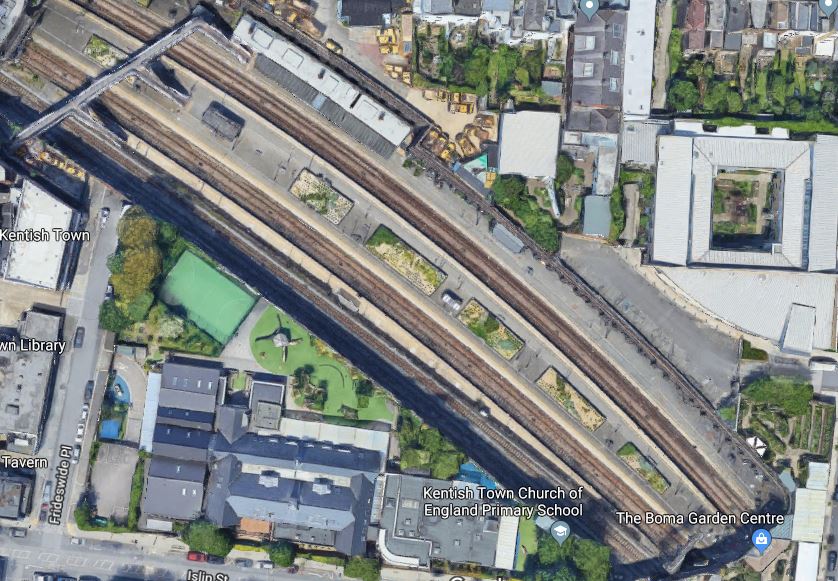
Note the four platforms and two extra tracks on the Southern side.
But I do believe it is a station with potential.
An All-Electric Railway
In perhaps 2022 or a couple of years later, when the new bi-mode trains are delivered, between Kentish Town and St. Pancras stations will be an all-electric railway.
The Station Is In A Cutting
The station is in a cutting and given the price of land in the area and the demand for housing, I wouldn’t be surprised to see the whole station roofed over at some time in the future.
This couldn’t be done until the railway was all-electric.
Step-Free Access To National Rail Platforms
If the station was covered by development, I’m sure it would be possible to provide step-free access between the surface and the National Rail platforms.
Step-Free Access To Underground Platforms
This map from carto.metro.free.fr shows the lines at Kentish Town station.
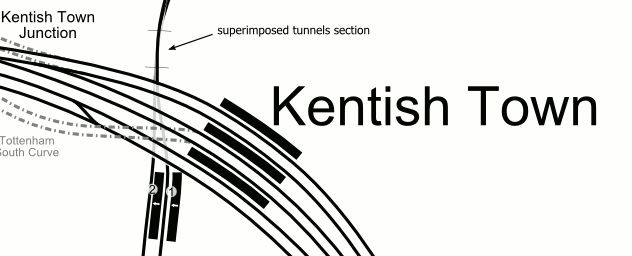
Note how the Northern Line is at almost right angles to the Midland Main Line.
Providing step-free access might be easier from the area to the North of the current Undegrround station, which could be within any new development.
Some of the new techniques used on Crossrail might make a connection possible.
Kentish Town And West Hampstead Thameslink Stations
The next station to the North of Kentish Town is West Hampstead Thameslink.
Both stations have six tracks, but only four platforms.
It would probably be very advantageous if there were six tracks on the Midland Main Line along this very busy railway.
But this is impossible as the tunnels that lie between the two stations only have a total of four tracks.
I suspect that Network Rail’s engineers sometimes muse about what might have been, if the Victorians had built the extra tracks.
- Thameslink services could have their own separate tracks.
- Express services could be roaring through at 200 kph.
- The West London Orbital Railway could terminate at Kentish Town station.
But short of rebuilding the Midland Main Line between the two station and digging a lot of extra tunnels, these are impossible ideas.
Cricklewood Station To Go Step-Free
This document on the Government web site is entitled Access for All: 73 Stations Set To Benefit From Additional Funding.
Cricklewood station is on the list.
This Google Map shows the platforms at Cricklewood station.
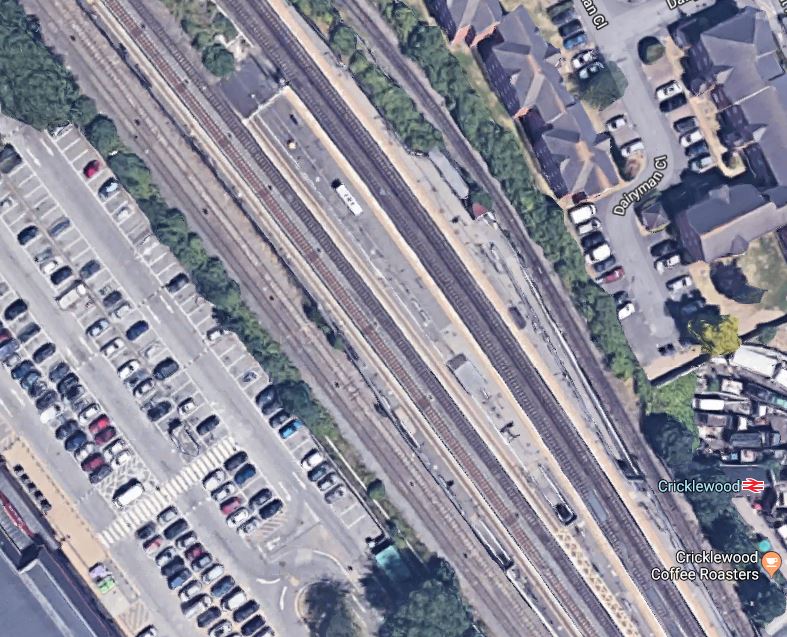
Note.
- There are three island platforms with two faces. Not all are used.
- Each island platform has a set of stairs to a subway.
- Two pairs of lines pass between the platforms.
- The fast lines are are the Western pair and the slow lines are the Eastern ones.
- Platforms are numbeeds from right to left.
- To the West of the Western platform, there are two freight lines, which might also be used for the West London Orbital Railway.
This map from carto.metro.free.fr shows the lines in detail.
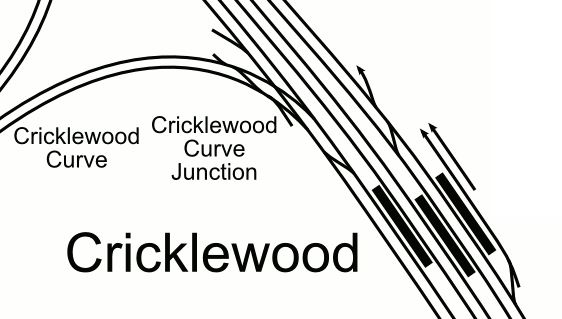
Note how the freight lines are directly connected to the Dudding Hill Line, that goes off to the West, via the Cricklewood Curve.
These are a few pictures of the station.
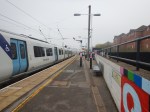
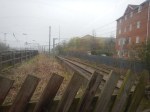
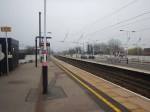
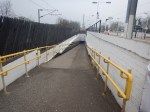
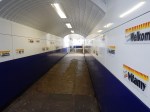


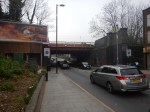
Note that the subway and the station entrance appear to be iin good condition.
Installing Step-Free Access
This type of station with a subway under a series of platforms isn’t as common in the UK, as it is on the Continent.
But there are several examples in the UK, where this type of station has had Subway-to-Platform lifts installed. Examples can be seen at Finsbury Park and Stratford stations.
The West London Orbital Railway
The West London Orbital Railway may be built in the next few years.
One route could connect West Hampstead Thameslink and Hounslow stations and could have a stop at Cricklewood station.
This might mean that up to two extra platform faces would be needed at Cricklewood station, in which case provision must be made to extend the subway and add lifts to any new platforms.
An alternative could be to use bi-directional working between Cricklewood and West Hampstead stations.
- Only four trains per hour (tp[h) are planned to use the route.
- The distance between the two stations is only around a mile.
- Spare faces of existing platforms could be used at both stations.
- four tph can easily be handled in a terminal platform.
- No extra tracks would need to be laid.
It would certainly reduce the cost.
Conclusion
This is a relatively easy station to make step-free and it could also be made ready for the West London Orbital at the same time.
Wouldn’t it be wonderful if to build, the West London Orbital, just needed the following.
- Finish step-free access at Cricklewood and Isleworth stations.
- Refurbish and update the track, signalling and points and crossings.
- Build a platform at West Hampstead Thameslink station.
- Build a platform at Houslow station.
- Open an initial service using battery-electric trains between West Hampstead Thameslink and Hounslow stations calling at Cricklewood, Acton Central, South Acton, Brentford, Syon Lane and Isleworth.
- Build the new intermediate stations.
Too often Network Rail’s project management is strung out over a long period, because they play far too safe and attempt not to spend any money!
Here boldness is possible, as there are no large sub-projects, except building the new stations, so they can be done afterwards by developers, who would like to build large numbers of flats with a station in the basement.
I believe that as the railway is there and working, once it has been refurbished and three important platforms have been added, battery-electric trains could start a service.
What better advertisement for your development, than to see the trains to the important hubs at Old Oak Common and West Hampstead, already running through the building site!
London needs more new rail services, more new and refurbished fully-accessible stations and a lot more housing!
So why not do them all as a partnership?
By Overground To High Speed Two
The North London Line will be my route to High Speed Two when it opens in 2026.
This map from Wikipedia, shows how the lines connect.
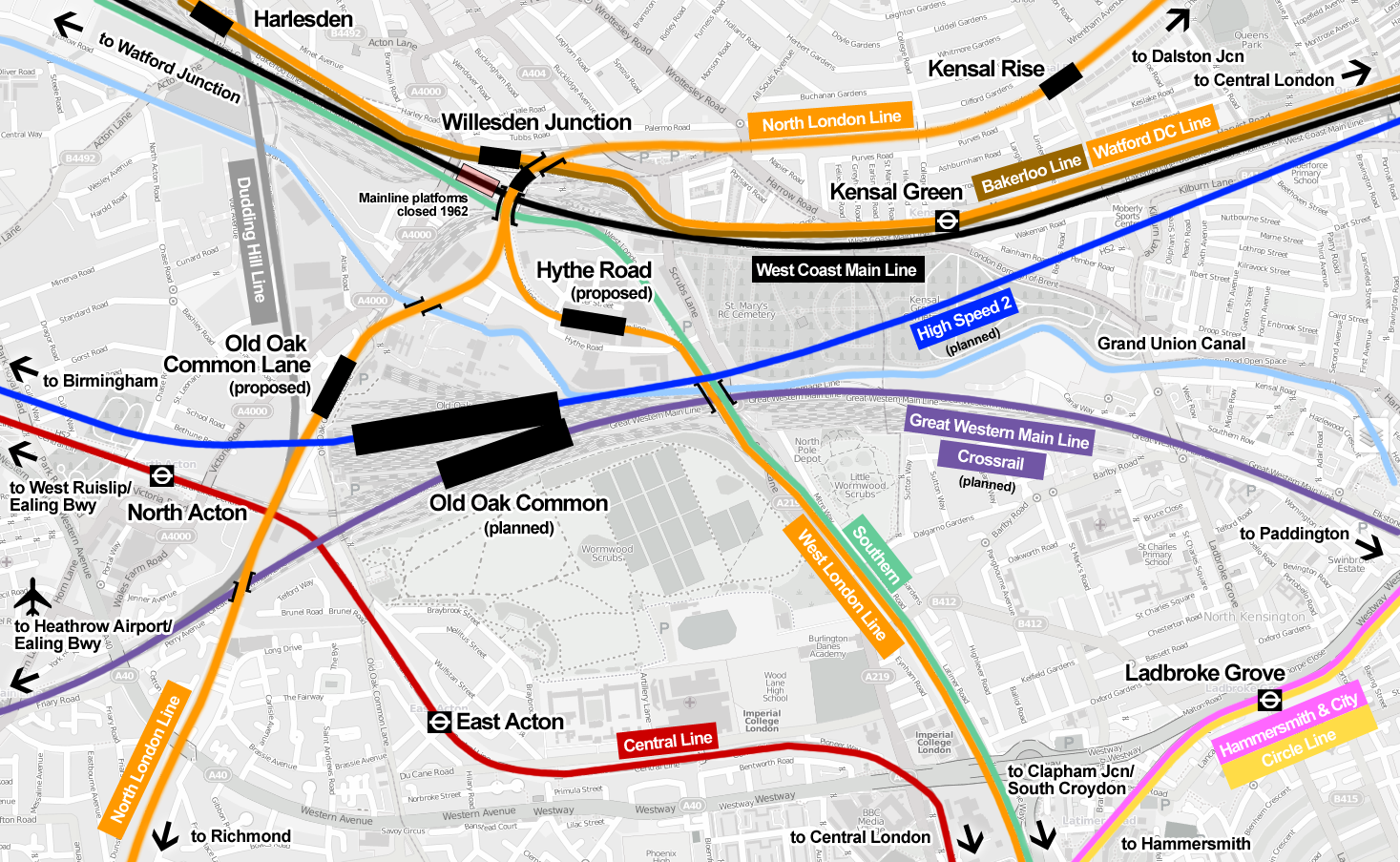
I will actually have two Overground stations, that I will be able to use.
- Old Oak Common Lane station on the North London Line between Stratford and Richmond stations.
- Hythe Road station on the West London Line between Stratford and Clapham Junction stations.
Note.
- Wikipedia says that both stations should open in 2026, which is the same date as High Speed Two.
- Hythe Road station is 700 metres from the High Speed Two station.
- Old Oak Common Lane station is 350 metres from the High Speed Two station.
Currently, both lines have a four trains per hour (tph) service.
- The Class 378 trains are five cars, which can get very busy in the Peak.
- It would need an additional five trains to increase the frequency to five tph on both routes.
- Six new five-car Class 710 trains are on order for North and West London Line services.
- I feel the higher frequency could be in operation by the opening of High Speed Two.
- Most stations between Stratford and Willesden Junction would appear to be able to accept six-car trains, if selective door opening were to be used.
I think by 2026, there will be a more than adequate service between Stratford and High Speed Two.
- There will be at least ten tph to Stratford, with services split equally between Hythe Road and Old Oak Common Lane stations.
- Richmond and Clapham Junction stations will get at least five tph.
- Step-free access is not currently available at Brondesbury Park, Brondesbury, Finchley Road & Frognal, Kentish Town West and Dalston Kingsland stations.
But what other developments will or might happen?
Highbury & Islington Station
Highbury & Islington station is the thirteenth busiest station in the UK and it is in need of a major upgrade to bring the deep level platforms and their access up to the standard of the four London Overground platforms, which all have lifts.
I also think that the track layout at the station could be modified to allow trains on the East London Line to continue further to the West. This was mentioned, when the Oveground was created, but is seldom talked about these days.
Step-Free Access On The North And West London Lines
These two lines which form a Y-shaped railway that splits at Willesden Junction, will provide these services from High Speed Two to major interchange stations.
The only thing that is needed is to complete step free access at all stations on the North and West London Lines.
The Maximum Frequency Across North London
Five tph on both the North and West London Line would give the following turnback frequencies at the four terminals.
- Clapham Junction – 5 tph
- Richmond – 5 tph
- Stratford – 10 tph
This chart from TfL shows planned improvements on the London Overground
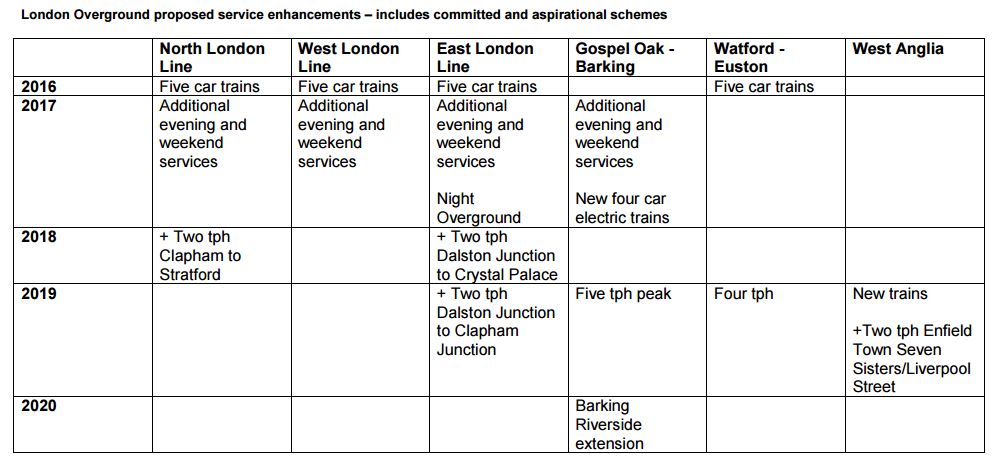
Note that it clearly shows that it is possible to run a six tph service between two single platform stations.
I think it likely that it would be possible to run six tph on both routes, provided that the route and the signalling could handle the increased frequency.
Twelve tph between Stratford and Willesden Junction stations would probably be the maximum frequency.
But would the number of freight trains allow this frequency?
A Reduction In Freight Services
Currently, the North London Line carries a lot of freight trains, going between Barking, Felixstowe and London Gateway in the East to virtually everywhere West of London.
- Noises from the East West Rail Consortium are hinting that services to and to and from Bristol, Liverpool, Manchester, South Wales, Southampton and the West Midlands might use their new route between Oxford and Cambridge.
- Could more freight use ports like Liverpool and Teesport in the North of England, which would reduce the traffic through the ports in the South?
Whatever happens, the current succession of diesel-hauled freight trains across London is not environmentally-friendly and it will raise increasing numbers of protests.
I think it is inevitable that the number of freight services will reduce, thus allowing more paths for passenger trains.
Digital Signalling
To handle the increasing traffic on the North and West London Lines, I can see digital signalling being installed. There could even be a degree of Automic Train Control.
Six-Car Trains
Only a few stations can handle six-car trains without selective door opening and even the rebuilt West Hampstead station still has platforms for five-cars.
Selective door opening would allow six-car trains to use the five-car platforms and passengers have in London have shown they can cope with moving forward to get out at certain stations. Especially, as the walk-through design of the train, makes this a lot easier.
A Round-The-Corner Service
I can remember reading in Modern Railways, that one of the reasons for the East and North London Lines running parallel through Canonbury to Highbury & Islington was to possibly enable extension of the East London Line to perhaps Willesden Junction, where there is a handy bay platform.
This has not happened and I doubt we’ll ever see something like a New Cross to Willesden Junction service, as Crossrail will effectively provide a faster frequent service between Whitechapel and Old Oak Common stations.
West London Orbital Railway
The proposed West London Orbital Railway will have two routes.
- West Hampstead Thameslink and Hounslow
- Brent Cross Thameslink and Kew Bridge
Both routes will have four tph and have a connection to Crossrail, High Speed Two and the North London Line at Old Oak Common station.
The only possible problem would be the eight extra tph through Acton Central station and level crossing and South Acton station.
But it would become an important feeder route to Crossrail, Heathrow Airport and High Speed Two.
Conclusion
The North and West London Line route between Stratford and Willesden has the ability to handle a lot more traffic than it currently does.
Dgital signalling and six-car trains could add over another fifty per cent capacity to the route.
I very much feel that digital signalling will be absolutely necessary.
Funding For Homes And A New Railway Station In North London
The title of this post is the same as that of this article on Ian Visits.
The government has said, that two major housing developments will be built in London beside new railway stations.
Brent Cross Thameslink
The development and the funding for Brent Cross West station is introduced by this paragraph.
The larger investment will see £320 million being spent on a new Brent Cross West Thameslink station which will lead to a new community of 7,500 properties being built. This is in addition to the £97m grant awarded in the 2016 budget bringing total government investment £416.5 million.
Other points about the development include.
- The development is on the site of the Cricklewood depot.
- The station could be asn interchange with the West London Orbital Railway.
- A contractor should be appointed this year, with opeing in 2022.
- Services could be eight trains per hour (tph) in the Peak and four tph in the Off Peak.
- A public bridge over the railway will be included.
- There will be new offices.
- The Brent Cross Shopping Centre will be extended.
- The £320 million investment will be repaid from business rates from the commercial development.
It all seems to me, that there could be a lot of winners here.
Old Oak Common
The development and the funding for Old Oak Common station is described by this paragraph.
The government will also be providing £250 million so up to 13,000 new homes can be built close to the new HS2 railway station at Old Oak Common.
This scheme provides more properties, but it doesn’t as yet include the commercial development.
Conclusion
London seems to be building more housing, that at any time in my life.
A406 North Circular Road ‘Most Congested’ In The UK
The title of this post is the same as that of this article on the BBC.
This is the first paragraph.
Motorists on the UK’s most congested road spend an average of two and a half days a year sitting in traffic.
The section of the A406 between the Hangar Lane Gyratory and Chiswick Roundabout has always been a dreadful road to drive on, as long as I can remember.
These pictures show typical traffic around eleven o’clock in the morning.
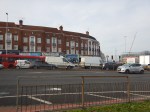

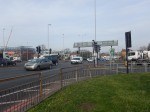

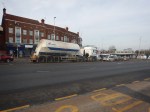


There does seem to be rather a lot of private cars and small commercial vehicles, with only a few HGVs and buses.
I would love to see an analysis of where these journeys start and finish.
Converting the road to a multi-lane dual carriageway wouldn’t be possible, as much of it is lined with private houses and even if it could be built it would just attract more traffic and would need to be widened even more.
There are circular routes further out of London like the M25 and the A412, but this road is an intractable problem.
Perhaps, it needs to be in a Congestion Charge Zone?
But is a solution at hand?
Crossrail
Crossrail, if and when it opens, will not be a direct solution, as it goes East-West and not North-South like the A406 through the area.
But it will give better access to Heathrow, which is a large traffic generator in West London.
Crossrail will link the following to the Airport.
- Canary Wharf
- The City of London
- East London and Essex
- South-East London and Kent
- West End and Paddington
It will do little to help those in North and South London to travel to and from the Airport.
Old Oak Common Station And High Speed Two
The connection of High Speed two and Crossrail could make a difference.
- Passengers using High Speed Two travelling to and from Heathrow, would have an easy route.
- North and North-East Londoners will be able to use the North London Line with a change at Old Oak Common.
- South Londoners will be able to use the West London Line with changes at Old Oak Common and Clapham Junction stations.
But Old Oak Common station won’t open under 2026 at the earliest.
It is needed now.
It also does nothing for those travellers in wide swathes of North-West London.
The West London Orbital Railway
If there is a trusty knight on an immaculate white charger, coming to the rescue, it could be the West London Orbital Railway, although as it would be stitched together from parts of existing and underused infrastructure, it has more of the Dirty Dozen about it.
There would be two routes.
- West Hampstead Thameslink and Hounslow via Cricklewood, Gldstone Park, Neasden, Harlesden, Old Oak Common, Acton Central, South Acton, Brentford, Syon Lane and Isleworth.
- Hendon and Kew Bridge via Brent Cross West, Gldstone Park, Neasden, Harlesden, Old Oak Common, Acton Central and South Acton.
The project has various advantages.
- No substantial amount of new track will be needed.
- It could be run using battery-powered trains.
- Costs would be well under half a billion pounds.
- It would connect to Thameslink and Bakerloo, Jubilee and North London Lines.
When Old Oak Common and High Speed Two open, it would have a direct connection.
I wrote about this railway in detail in New Railway Line For West London Proposed.
North Acton Station
As stated under Development in the Wikipedia entry for North Acton station, there may be reasons to rebuild the station to create a connection between the North London and Central Lines.
This Google Map shows the area around North Acton station.
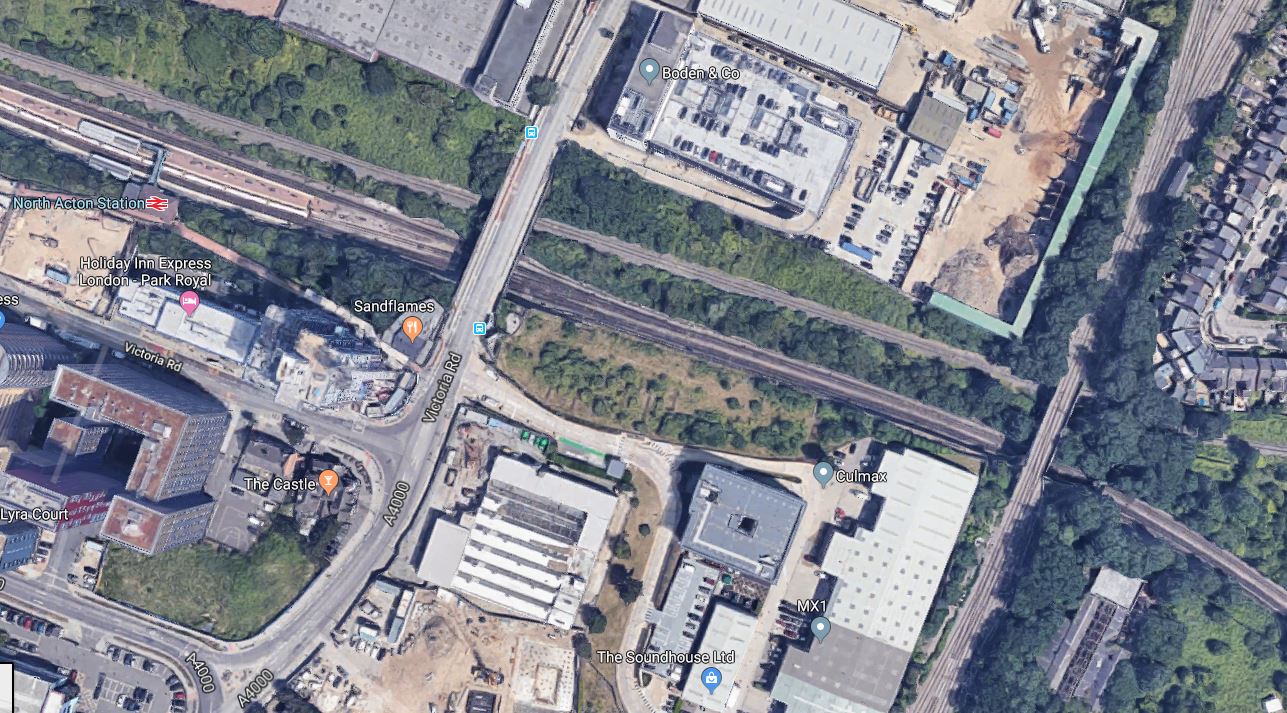
Note.
- North Acton station in the North-West corner of the map.
- The North London Line running North-South to the right of the map.
- The Dudding Hill Line branches off the North London Line at the top of the map.
- The Central Line running East-West through North Acton station and under the North London Line.
- Threading its way through North of the Central Line is the Acton-Northolt Line.
- The Acton-Northolt Line could be developed by Chiltern Railways to give access to a second London terminal at Old Oak Common.
To develop a successful station at North Acton, that tied everything together would be a hard ask.
- The bridge carrying the North London Line is very high.
- The height would make step-free access expensive.
- The frequency of trains on both the North London and Central Lines could be twelve trains per hour (tph).
- At least, there does appear to be plenty of space from the map.
On the other hand, an architect with vision might be able to create a station that was affordable and provided high benefits for passengers.
Conclusion
There’s certainly potential in West London to improve the rail routes, although I’m not sure whether rebuilding North Acton station would be viable.
But, we should start building the West London Orbital Railway immediately.
Thoughts On The West London Orbital Railway At West Hampstead Thameslink Station
I passed through West Hampstead Thameslink station today and took some pictures of the two tracks that run through the station on the South side of the four tracks of the Midland Main Line.
This map from carto.metro.free.fr shows the lines through the various stations at West Hampstead.
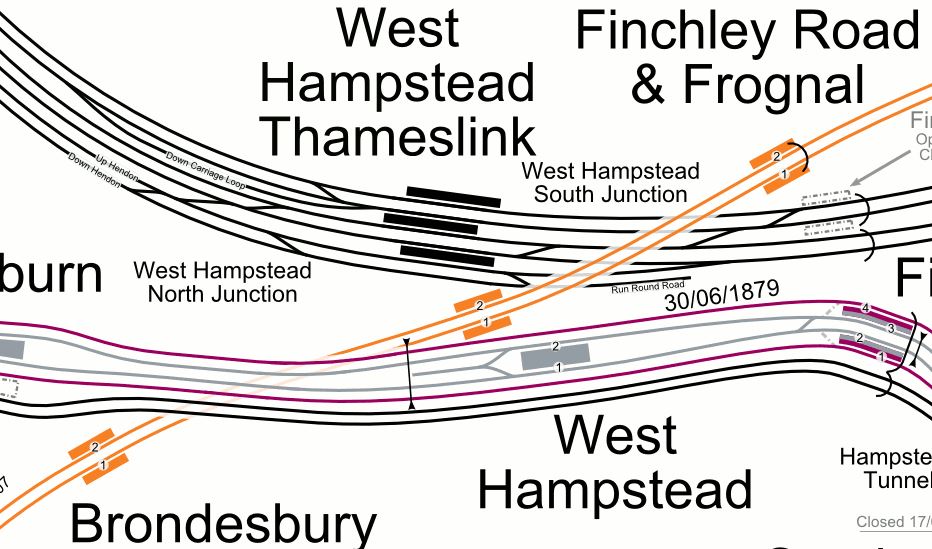
Note.
- The six tracks shown in black through West Hampstead Thameslink station.
- The Northernmost four tracks are those of the Midland Main Line.
- The Southernmost pair are labelled Up Hendon and Down Hendon and lead to the the Dudding Hill Line. via Cricklewood station.
- There is also a short track which is labelled Run Round Road, which could be useful to reverse trains on the West London Orbital Railway.
- The six tracks are crossed by the North London Line, which is shown in orange.
This picture shows the two Hendon Lines looking away from London from the footbridge of the station.
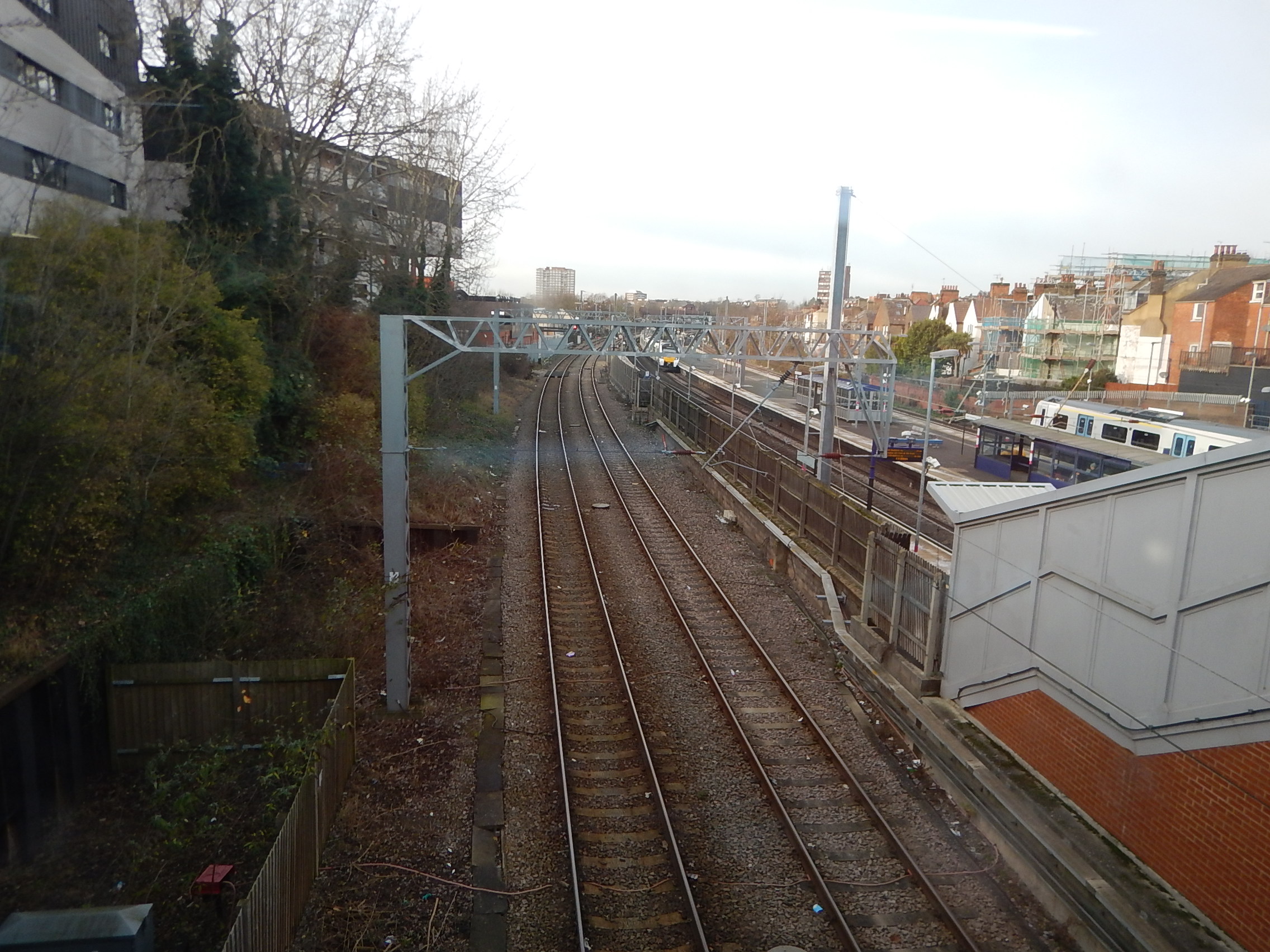
Note.
- The Down Hendon is on the left, with the Up Hendon on the right.
- Both tracks have 25 KVAC overhead electrification.
- The bridge, from which I took the picture, is step-free.
As there are numerous crossovers on the approach to the station, I feel that it would be possible to build a platform on the Up Hendon line.
- The platform would share an island and access with the existing Platform 4.
- It would be fully step-free.
- Electrification in the platform could recharge an electric train, that was using batteries.
- A single platform could handle the required four trains per hour (tph)
This picture shows the two Hendon Lines looking towards London from the footbridge of the station.
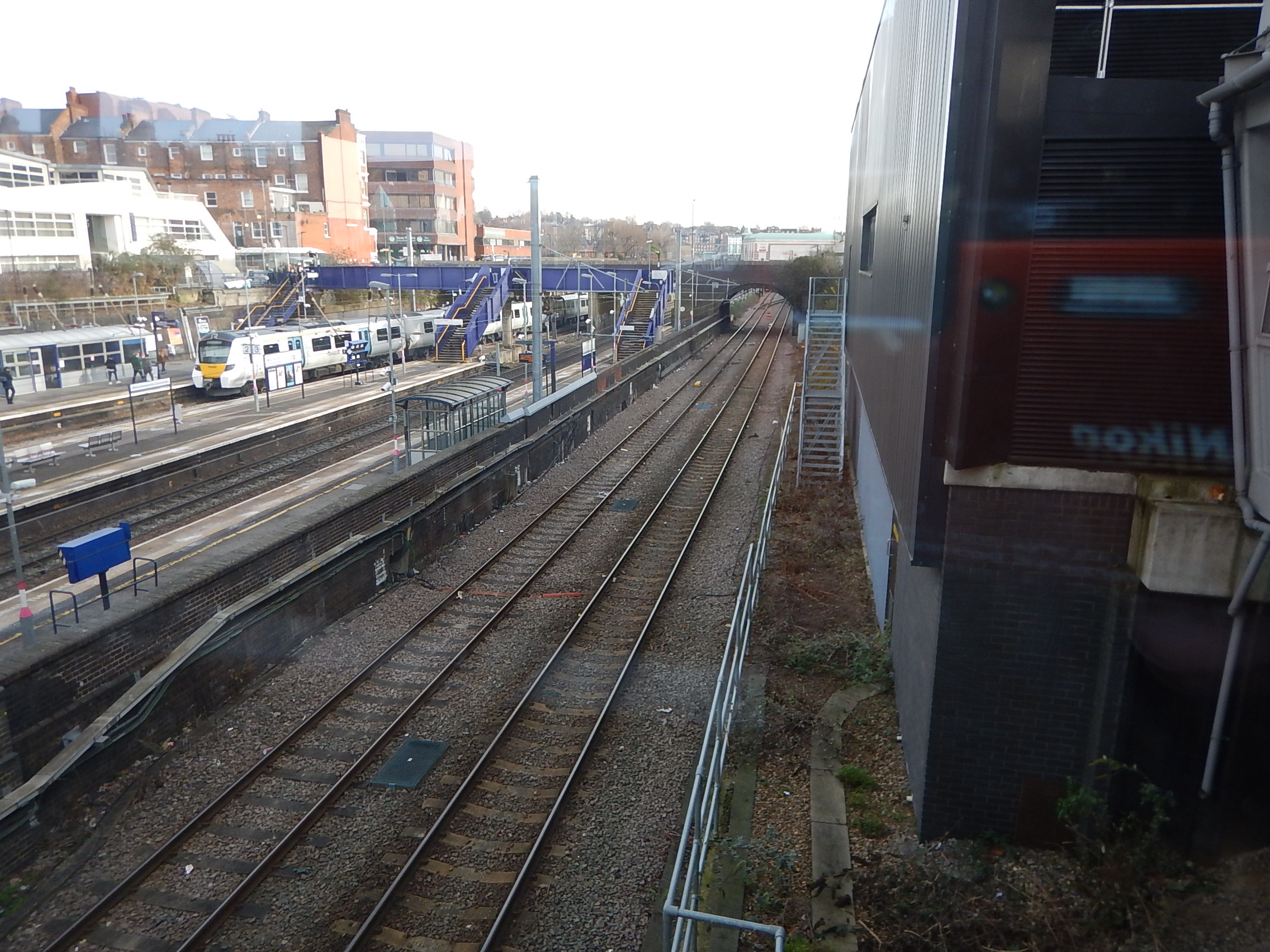
It would appear that if required the platform could be made long enough for an eight-car train or built on the Down Hendon line.
There are certainly possibilities to make the interchange between Thameslink and the West London Orbital Railway a very easy one, that is totally step-free.
Will The West London Orbital Railway Take Passengers From The North London Line?
I suspect that there are passengers, who will swap from the the North London Line to the West London Orbital Railway.
They will do it because the new route will be more convenient.
This will be no bad thing, as the North London Line can get crowded at times. And it will only get more so in the future!
 The Anonymous Widower