Silvertown Tunnel Works – 26th June 2023
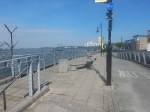
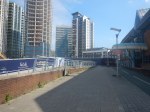
I took these pictures of the Silvertown Tunnel works on the North Bank of the Thames today.
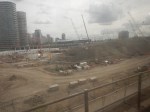
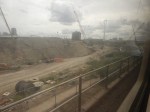
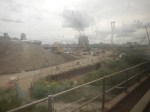
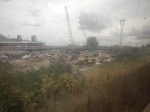
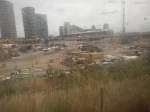
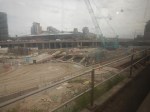
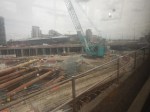
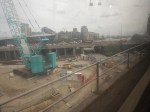
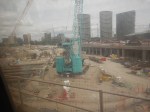
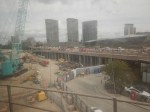
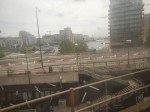
I went on to Woolwich, did some shopping and then took the Elizabeth Line to Whitechapel to come home.
Extending The Elizabeth Line – A Branch To The Isle Of Grain
In Elizabeth Line To Ebbsfleet Extension Could Cost £3.2 Billion, I talked about extending the Elizabeth Line to Ebbsfleet International and Gravesend stations.
In Gibb Report – Hoo Junction Depot, I talked about how Chris Gibb proposed using the former Hoo branch to create a depot for Thameslink trains.
I am a great believer in the idea, that modern railways are a great way of levelling up an area.
I have watched as Dalston and Hackney have risen as the London Overground has developed more and more frequent services through the area.
So when I wrote about the Ebbsfleet Extension to the Elizabeth Line, I asked this question.
Could The Elizabeth Line Be Extended To The Proposed Hoo Station?
The Hundred of Hoo Railway, leaves the North Kent Line about three miles to the East of Gravesend and runs across the Isle of Grain.
I wrote about the proposed reopening of the Hundred of Hoo Railway or the Hoo Branch as it is commonly known in Effort To Contain Costs For Hoo Reopening.
I then put various proposals and facts together.
It is proposed that the Elizabeth Line runs a four trains per hour (tph) service to Gravesend station.
- Gravesend station is a not very suitable station to turn nine-car Class 345 trains, that are over two hundred metres long, as it is on a cramped site.
- Government money has been pledged to build a station on the Isle of Grain to support the new housing on the island.
- According to Chris Gibb, there is space to build a depot.
So why not build a terminal station for the Elizabeth Line on the Isle of Grain?
I had these thoughts on the proposed Hoo station.
- It would be under ten kilometres from Hoo Junction, where the North Kent Line is electrified.
- A single platform could handle 4 tph, but provision for two platforms would be prudent.
- A couple of sidings could provide stabling.
- Services would join the North Kent Line at Hoo Junction.
- Services would use battery power between Hoo Junction and Hoo station.
- If charging were needed at Hoo station a short length of 25 KVAC overhead electrification would be needed.
- There is plenty of power available locally to power any electrification.
The only problem is that there would be a need for battery-electric Class 345 trains, but as Aventra trains were designed and built with battery operation in mind, this shouldn’t be too challenging.
I have a few other thoughts.
Housing By An Elizabeth Line Station
Woolwich station was built to serve a housing development and the developers even built the station box, which I wrote about in Exploring The Woolwich Station Box.
So I don’t think the developers of the housing on the Isle of Grain will be against the Elizabeth Line station.
What Would Be The Frequency To Hoo Station?
As I said, the proposed Hoo branch, could easily have a capacity of four tph.
But services to Heathrow Terminal 4, Heathrow Terminal 5, Maidenhead and Reading are all two tph. Only Abbey Wood, Paddington and Shenfield have a higher frequency.
I suspect that two tph maximises the number of passengers, as they are prepared to wait thirty minutes.
Conclusion
I can see the branch to Hoo station on the Isle of Grain, being one of these options.
- A branch to turn trains running to Gravesend.
- A short branch to level-up the Isle of Grain.
- A short branch to provide transport for new housing.
Or perhaps a mixture of some or all options.
Could we see other branches like Hoo?
Step-Free Provision On Elizabeth Line West Of Paddington
The stations may be step-free between street and platform, but West of Paddington, there does not appear to be step-free access between the platform and the train.
These pictures show a selection of stops.
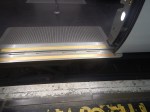
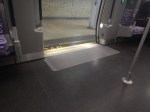

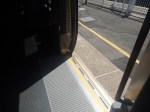
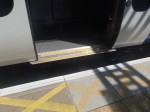
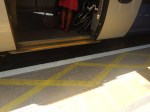

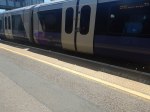
Compare these steps of a few inches, with those I showed in Step-Free Access Between Train And Platform On The Elizabeth Line.


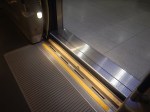
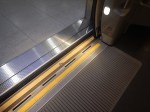
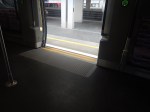

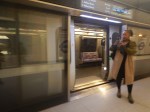
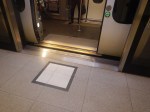
These pictures were taken between Woolwich and Paddington stations and show first class step-free access between train and platform.
The step-free access on the Western branch of the Elizabeth Line does not appear to be up to the standard expected of a world class railway.
Is The Current Arrangement Only Temporary?
I took these pictures at Padding Station today of a Class 345 train alongside Platform 10.
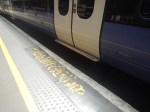
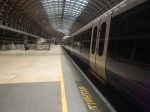
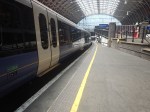
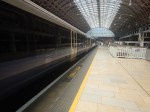
Note.
- There are large gaps.
- I had a chat with a station guy, who’d just unloaded two wheelchair passengers from the train using a ramp.
- He felt things could be improved.
- I feel that level access for the Elizabeth Line at Paddington is important.
But when the Elizabeth Line is fully connected, it will be connected to a series of Central London stations, including Paddington, that will have full step-free access between the train and the platform.
So the current arrangement will be improved dramatically in a few months.
The Visitor To London In A Wheel-Chair
The Central London section of the Elizabeth Line between Paddington and Whitechapel or Woolwich stations is step-free between street and train.
So a visitor to London in a wheel-chair might choose to stay in a hotel on this easy section of the Elizabeth Line to make the most of their stay.
But because of the lack of step-free access between train and platform outside of the Central London section, would they have trouble visiting places like Windsor, which would require a change of trains at Slough?
Would It Be Possible To Separate Elizabeth Line and Great Western Railway Services?
Consider.
- Great Western Railway services between Paddington and Didcot Parkway use the Elizabeth Line platforms at Ealing Broadway, Hayes and Harlington, West Drayton, Slough, Maidenhead, Twyford and Reading.
- In addition, some express trains stop at Slough and Ealing Broadway.
- There are also freight trains passing through.
It might be sensible to move the Paddington and Didcot Parkway service to the Elizabeth Line and adjust platform heights appropriately.
A Walk Around Woolwich – 15th June 2022
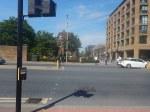
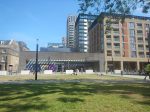
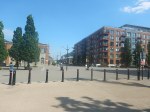
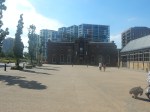
I went to Woolwich station on the Elizabeth Line today and had a walk around.
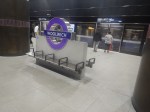

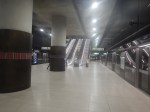
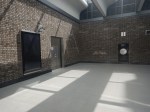

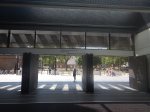








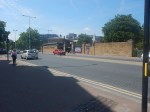









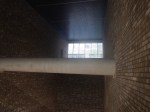
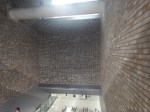
Note.
- Woolwich station is a simple station with only three escalators at one end direct to the platforms, which are in a tunnel.
- Both platforms have platform edge doors and a similar decor to some platforms on the Jubilee Line Extension.
- The escalator shaft and the booking hall are lined in brick.
- Next to the station is a large Marks & Spencer Simply Food store.
- Outside the station is large green with a pub on one side.
- Over the top of the station are a lot of flats.
Is this the way that modern housing developments should be designed? It’s certainly better than some I’ve seen.
It’s certainly come on a lot, since I wrote Exploring The Woolwich Station Box, which has a gallery of what the station looked like in February 2013.
The Woolwich Foot Tunnel
My walk continued under the Thames, through the Woolwich foot tunnel.
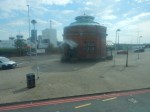
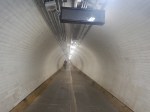

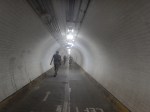
It was the first time I’d used this tunnel.
On the other side, I got a bus to London City Airport, from where I got the Docklands Light Railway back to Woolwich Arsenal and then walked back to the Elizabeth Line station to come home.
I Doubt I’ll Use The Marks & Spencer At Woolwich Much!
The store was not designed in a way I liked.
- Many of the goods, were behind glass doors, which meant I needed three hands to put items in my basket.
- There weren’t many staff in the store.
- It was difficult finding the goods I needed.
- It was all self-service tills of the type I didn’t like.
These may be only personal preferences, but then there must be many like me who have a gammy hand for some reason.
It’s a pity really, as it is such a convenient location for a store. The only other M & S store close to the Elizabeth Line is the one at Paddington, which I use regularly.
How Would Opening Crossrail Affect The Covids In London?
There seems to be very little on the Internet about this, that I can find, Partly because if you search for Crossrail and Covid-19 you get lots of articles about how the virus is delaying construction.
These are a few of my thoughts.
The Class 345 Trains
Crossrail’s Class 345 trains are 205 metres long and can hold 1500 passengers.
- The passenger density is 7.3 passengers per metre, but the trains have three doors per car, as opposed to others like the Class 700 trains, which have a similar passenger density and only two doors.
- Would the space and the wide doors, make social-distancing easier at all times?
- I’ve ridden these trains several times during the pandemic and their full air-conditioning for the tunnels, would surely be ideal to help keep the trains free of the virus, by changing the air regularly.
- The trains are walk-through, which means you can walk-away from someone who looks dodgy.
There will probably be some better trains to reduce the spreading of the virus, but I doubt there will be that many.
The Stations
I’ve only been in two Crossrail stations.
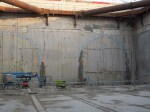
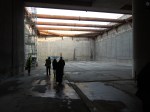
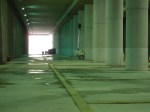
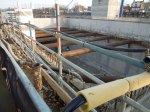
These are pictures taken in the Woolwich station box.



And these pictures were taken inside the Canary Wharf station box
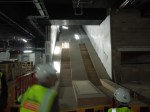
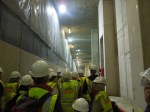


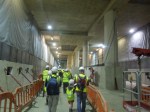


Note.
- I think we can assume that the platforms and associated station tunnels are not small.
- All underground platforms will have platform edge doors.
- The stations will be fully air-conditioned.
- Both picture sets were taken in 2013.
Will passengers be safer and less likely to contract the virus compared to the cramped stations of the Central Line?
Crossrail Will Increase Capacity On London’s Rail System
Crossrail will add nearly twenty per cent of extra capacity to London’s East-West rail network.
That will have two major effects.
- More passengers will use rail transport, rather, than buses or their own cars.
- There will be more space, that will make social-distancing easier on rail journeys.
I can’t see either increasing the spread of the covids.
Will Passengers Who Can, Swap To Crossrail From Other Lines?
Consider.
- The Central Line will have interchanges with Crossrail at Stratford, Tottenham Court Road, Bond Street and Ealing Broadway.
- Stratford and Ealing Broadway currently takes 52 minutes on the Central Line and will take 27 minutes on Crossrail.
- The Hammersmith and City Line will have interchanges with Crossrail at Whitechapel, Liverpool Street and Paddington.
- Whitechapel and Paddington currently takes 40 minutes on the Hammersmith and City Line and will take 13 minutes on Crossrail.
- The Jubilee Line will have interchanges with Crossrail at Canary Wharf, Stratford and Bond Street.
- Stratford and Ealing Broadway currently takes 32 minutes on the Jubilee Line and will take 15 minutes on Crossrail.
Looking at speed alone, there will be good reasons to change to Crossrail for many.
But there will also be journeys that currently require a change will be direct because of Crossrail.
- Slough and Liverpool Street or Canary Wharf
- Woolwich and Heathrow
- Gidea Park and Paddington,
And there will be round-the corner journeys with a cross-platform interchange at Whitechapel.
Ilford and Canary Wharf currently takes 33 minutes and will take 17 minutes after Crossrail opens.
I am absolutely sure, that after Crossrail opens, passengers will use the route for a faster journey and one because of more spacious trains and stations, a more socially-distanced one.
An Air-Conditioned Journey
The proportion of time on a typical journey in London, spent in an air-conditioned train or station will increase.
This can only be a good thing for fighting the covids.
Conclusion
It looks to my eye, that Crossrail will not increase the spread of the covids and it could be a powerful weapon to reduce the levels of the virus across London.
I think it should be opened as soon as possible.
Could Crossrail Be Opened In Sections?
Unlike some of London’s Underground lines, which were provided with below-ground turnbacks, there appears to be no turnback on Crossrail between Whitechapel and Paddington.
Compare that with the Piccadilly Line, which has turnbacks at Wood Green and Hyde Park Corner, which are near the end of the central tunnel.
Crossrail does have crossovers at Custom House, Whitechapel and between Farringdon and Tottenham Court Road, so could any of these be used to improvise a turnback.
What effects would there be if say a four trains per hour (tph) preview service were to be run between Abbey Wood and Whitechapel?
- It would allow Crossrail to test systems.
- It would improve connections to Canary Wharf.
- It would give Londoners and others a small cup of much-needed cheer.
I also doubt, it would increase the number of cases of the covids in London, if everybody behaved themselves.
It would need Abbey Wood, Woolwich, Custom House, Canary Wharf and Whitechapel stations to be certified safe to open.
- Abbey Wood station is already open for National Rail services and could surely be easy to finish and certify.
- Woolwich, Custom House and Canary Wharf are more or less independent buildings and again should be easy to open.
- Only Whitechapel looks difficult with a lot of work to do.
Perhaps the preview service should terminate at Custom House? But that doesn’t include the important Canary Wharf!
- Could trains just pass through Whitechapel station and still use the turnback? The platform edge doors would ensure safety.
- Could trains even use an improvised turnback on the Western side of Farringdon, where there is a crossover?
- As stations at Liverpool Street and Farringdon became available, they could be added to the route.
I’m sure that there’s a solution in there, that could allow Crossrail to open gradually, rather than as a big bang.
I hope Crossrail are looking at it, as the design and architecture of this railway could be a weapon in the fight against covids.
Legal & General Has Acquired One Of The Last Major Crossrail Development Sites
The title of this post, is the same as that of this article on City AM.
There have been several stories like this is recent months and I think it shows how Crossrail will generate new housing an business developments across London.
Development At The Royal Arsenal
The historic Royal Arsenal site at Woolwich is being developed.
Wikipedia gives a good summary of present day developments.
This is the summary.
The sprawling Arsenal site is now one of the focal points for redevelopment in the Thames Gateway zone, but the links to its historic past are not lost. Many notable buildings in the historic original (West) site are being retained in the redevelopment; the site includes Firepower – The Royal Artillery Museum telling the story of the Royal Artillery, and Greenwich Heritage Centre which tells the story of Woolwich, including the Royal Arsenal. Parts of the Royal Arsenal have been used to build residential and commercial buildings. One of the earliest developments was Royal Artillery Quays, a series of glass towers rising along the riverside built by Barratt Homes in 2003.
Underneath the latest developments is the new Woolwich station for Crossrail.
These are some pictures I took.
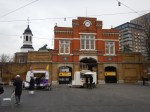
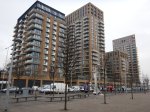





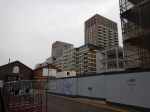

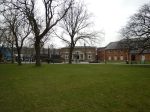
According to Wikipedia it is one of the biggest concentrations of Grade I and Grade II listed buildings converted for residential use.
This aerial picture shows the site from the South East.
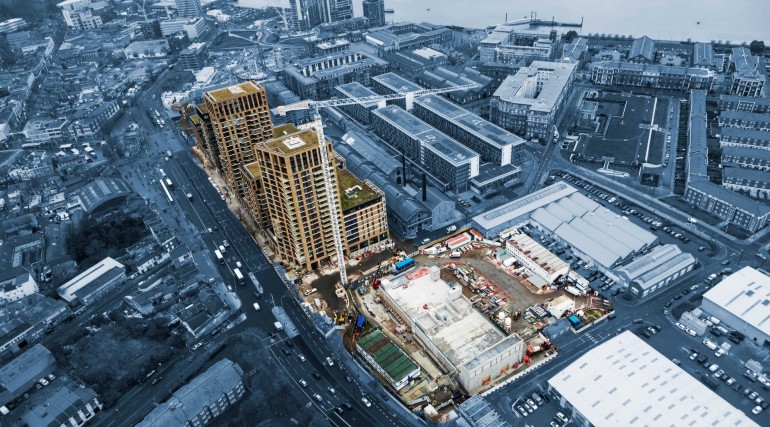
The station is behind the towers along the main road.
Woolwich Station As An Interchange
Woolwich station has not been designed as an intended interchange, but it is only a short walk away from Woolwich Arsenal station, which has connections to Southeastern and DLR services.
As the walking connection passes several useful shops including a large Marks and Spencer food store, who knows how people will use the interchange?
Exploring The Woolwich Station Box
Berkeley Homes had the excellent idea of having an open day to show those that wanted the inside of the new Crossrail station box at Woolwich.

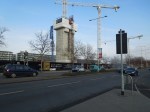




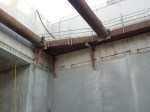


It was a very professionally organised visit and we had met in the Dial Arch pub and then walked down into where in a few years, trains will be either rushing through at up to 100 kph or stopping to drop off and pick up passengers.
I have called the two ends of the box, London and Kent. The former is the western end and the next station is Canary Wharf, whereas the other is the eastern end that leads to Abbey Wood.
There are going to be some stunning pictures here, when the tunneling machines break through on their way from Plumstead to Canary Wharf.
 The Anonymous Widower