Is A Secondary Effect Of London’s Air Pollution Making Me Ill?
There is no doubt, that i am suffering from a vitamin D deficiency, as it has been measured and I have several of the classic symptoms. Several of my friends seem to be suffering too!
As a coeliac, I get no or little vitamin D from my food, as vitamin D is not added to gluten-free food, so I rely on the sun for my vitamin D.
And there has been very little of that over the last few years in London and the South East of England.
I take vitamin D supplements and these help, but if say I get half an hour in strong sunlight, I feel a lift and a lot better.
I got to wondering, if London’s pollution is cutting out the UVB radiation that I need to generate vitamin D in my skin.
I can’t find any scientific paper, which shows the effect of airpollution on UVB radiation.
Now my health has got worse over the l;ast decade or so, which is a time that corresponds to more diesel cars polluting the atmosphere.
I may be talking sabsolute claptrap, but if I could find a scientific paper, I might be able to be proven wrong.
But I can’t get iot out of my head, that all these diesels are producing pollution, that is cutting the UVB radiation. As my health was appalling in the 1950s, during the legendary London smogs, I wonder if there is a connection.
Unfortunately, to many UVB radiation is an evil as it causes skin cancer. So anything that cuts UVB radiation levels is to be welcomed.
Crossrail In The Home Straight
Crossrail’s opening dates are only just over a couple of years in the future and this article in Rail Engineer, which is entitle Crossrail – The Deadline Is looming, describes what is happening on the Eastern branch to Shenfield.
The article is a must-read and details how the project is organised, to make sure it is delivered on time and on budget. The last paragraph sums up the project.
In engineering terms, this project couldn’t be described as ‘cutting edge’ but, in railway engineering terms, it would be hard to find a more complex environment to work in with potential challenges at every step. Costain has reached almost two million man-hours on the project, and the team is confident that all of the deadlines will be met and train testing will be underway after November 2016 as planned.
East London and East Anglia have fed on scraps for decades and I think that meeting the target of November 2016, so trains can be tested, is highly likely.
Is This How To Do Small Business?
Opposite Ed’s Shed in De Beauvoir Town is an old factory block of indeterminate age, with little architectural merit.


So what is happening?
It is being turned into a series of units for small businesses called the De Beauvoir Block.
Surely, we need more initiatives like this?
I should say, that although De Beauvoir Town is mainly residential, tucked into lots of the nooks and crannies , there are small business units.
Like the De Beauvoir Block, many have been created by the landowner, the Benyon Estate.
The estate are not distant, like many of the owners of large parts of our cities, but seem to want to create a vibrant and prosperous community.
After all, modern economics says they would make more money by flattering the block and building tower blocks of buy-to-leave flats.
The biggest tragedy of the area is that parts of De Beauvoir Town were demolished in the 1960s to build anonymous local authority housing, some of which has already been rebuilt.
The good thing though, is that there are still more nooks, crannies and factories to do some more creative development.
Ed’s Shed
This house is in the heart of De Beauvoir Town, which is the area of London, where I live on the Northern edge.
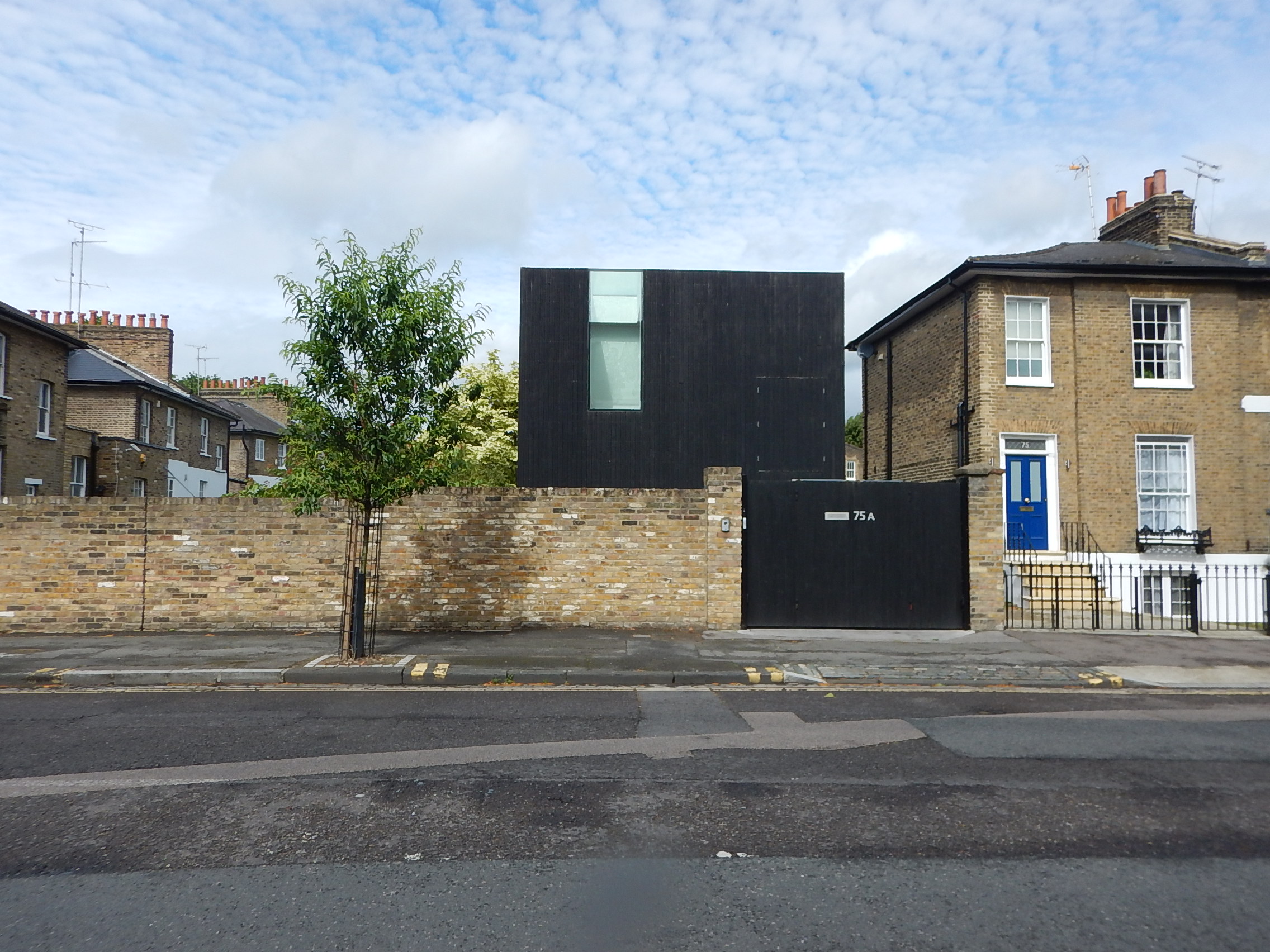
Ed’s Shed
It is an unusual modern house to sit amongst all the Georgian ones. It is not the only one in the Conservation Area.
It’s called Ed’s Shed and there is a web site.
I like it!
Why don’t we get more adventurous modern houses? Architects are creating the future and we don’t want uniformity!
Community Toilets In The City Of London
I saw this sign on the door of a pub near Liverpool Street station in the City of London.
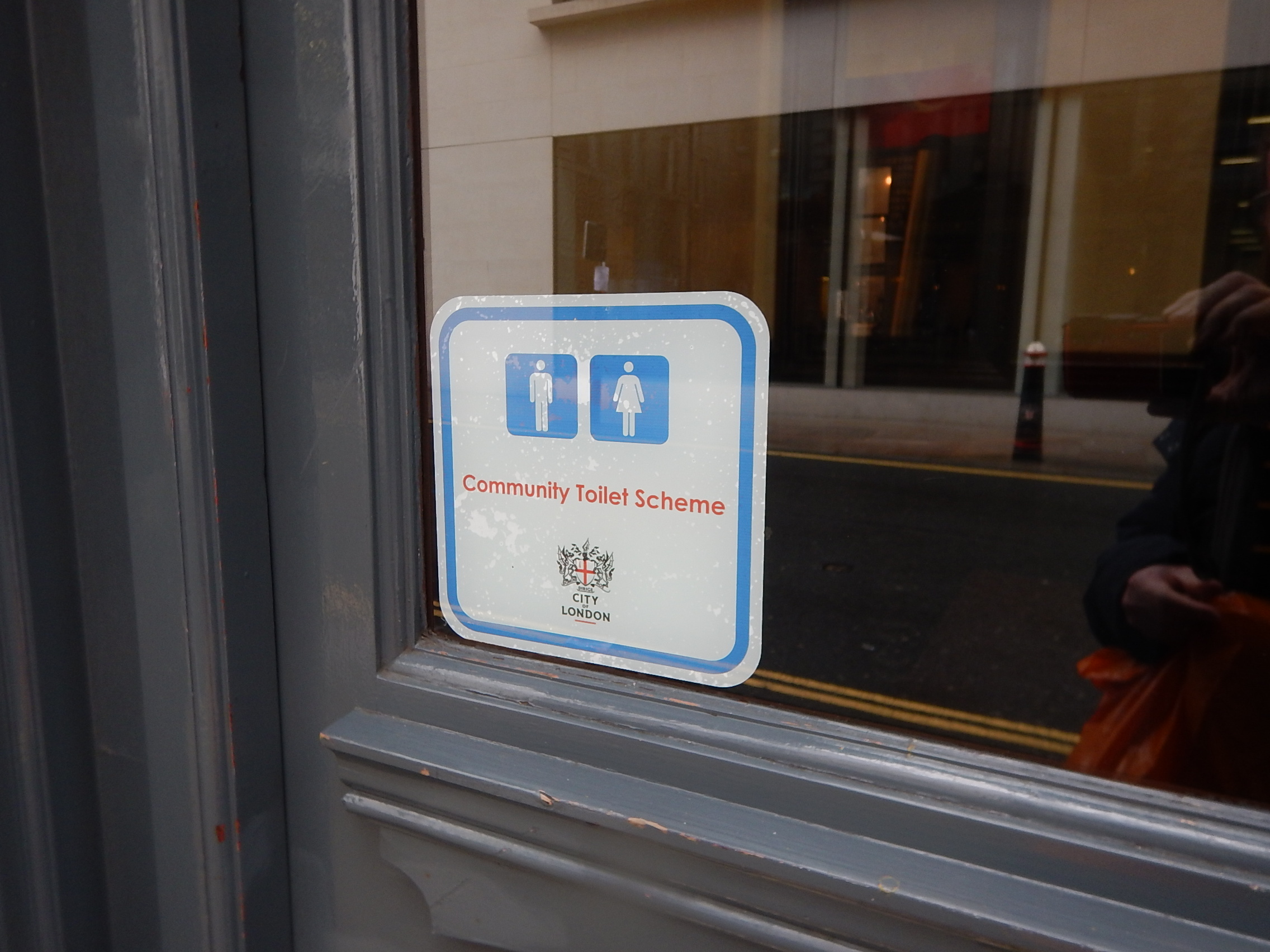
Community Toilets In The City Of London
Read more about it on this page on the City of London web site.
If you look at the page, you’ll see something rare on a web site – The author of the page is credited.
Does your council have community toilets?
The web page does say, that there is a payment from the council for providing the service.
An Illustration Of East Anglia’s Rail Problems
This article in Rail Magazine is entitled More capacity for Anglia with second locomotive hauled set.
It describes how Abellio Greater Anglia is hiring in two Class 68 locomotives and a rake of three Mark 2 coaches, to maintain services after one of its Class 170 diesel multiple units, was badly damaged in a crash with a tractor at a level crossing in April. There are more details of this in this story on ITV, which is entitled Train carrying 135 passengers crashes at level crossing.
The hiring in of two-brand new locomotives can’t be a very affordable option, but it just illustrates that there is no spare stock available. If say a major bus company needs extra capacity for a big event, contingency plans probably mean a fleet is rustled up from somewhere.
So why isn’t there a pool of say refurbished diesel multiple units available? Most old diesel multiple units are probably only fit for scrap, when they are retired and I doubt any Government since railway nationialisation in 1948, would have allowed train companioes to have a central pool for emergencies.
But the real cause of this particular problem, is the old East Anglian one of level crossings. And a lot of those in East Anglia have trains passing at over 75 mph.
Intriguingly, in The New Trains Arriving In East Anglia, if I got it right that the Breckland Line between Cambridge and Norwich is going to run four- or even eight-car 100 mph electric trains with an IPEMU capability, then something must be done about these level crossings. The infrastructure has already been updated with new signalling and track improvements, but obviously this private level crossing was still being used.
 The Anonymous Widower