West Ealing Station – 12th October 2016
I took these pictures at West Ealing station.

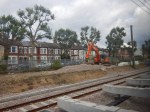

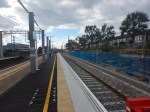

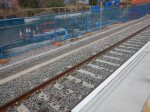


It looks like the new bay platform 5 is ready, but little progress seems to have made on the new station building.
There’s still no information, as to when the service on the Greenford Branch, becomes a four trains per hour (tph) shuttle.
What we do know is that this page on the Crossrail web site has some nice images of the station, that will rise behind the hoardings.
Wikpedia says that initial services on Crossrail will be.
- 4tph Abbey Wood to Heathrow Terminal 4
- 2tph Shenfield to Reading
- 2tph Shenfield to Maidenhead
There will also be another 2 tph running between Abbey Wood and West Drayton in the Peak.
All this in addition to other Great Western Railway services running to and from Paddington.
Services On The Greenford Branch
Passengers on the Greenford Branch will have to change to get to and from Paddington and I suspect some will moan.
But for many passengers from Greenford to the West End, the City or Canary Wharf, they will have an easier journey with just one change at West Ealing.
Consider.
- The Greenford Branch shuttle frequency of 4 tph fits well with the Crossrail and Paddington services.
- I suspect that every shuttle arriving from Greenford will arrive so that passengers for London can just walk across the platform and get a train to Central London.
- The maximum wait for a Crossrail train to Liverpool Street will be seven and a half minutes all day.
- If passengers need to cross between the shuttle platform and the Westbound Crossrail platform there will be a bridge with stairs and a lift.
These are the timings before and after Crossrail opens between Greenford and Liverpool Street.
- Currently, using the Metropolitan Line across Central London – 66 minutes
- Crossrail and the shuttle – 31 minutes plus how long it takes to change trains at West Ealing.
Greenford to Canary Wharf gives these timings.
- Currently, changing to the Underground at Paddington – 75 minutes
- Crossrail and the shuttle – 37 minutes plus how long it takes to change trains at West Ealing.
And these timings apply between Greenford and Heathrow Terminal 4.
- Currently, changing at Ealing Broadway – 54 minutes
- Crossrail and the shuttle – 28 minutes plus how long it takes to change trains at West Ealing.
I suspect that each 4 tph shuttle will be timed to arrive at West Ealing, so that someone with a child in a buggy and a heavy case has time to cross the line using the bridge and the lifts.
Trains On The Greenford Branch
The Greenford Branch is not electrified and there seem to be no plans to electify the whole line.
But if you look at the pictures, that I took yesterday, you’ll see the foundations for the gantries are there to electrify the bay platform 5 .
Initially, the shuttle will have to be run by something like the current Class 165 trains.
Simple mathematics says that to provide a four tph shuttle two trains will be needed.
There would be no major infrastructure changes, as the line is mainly double-track, so the trains could probably pass easily. But there might need to be an additional crossover to allow trains to run on the correct line.
But these trains have their problems, which were illustrated yesterday, when a fit young lady with a toddler in a buggy didn’t board the train as fast as she would have done at a typical Overground station with a modern Class 378 train.
As Crossrail will be run to a tight schedule, I doubt that TfL want serious loading delays with wheelchairs, buggies and heavy luggage.
So this means that modern trains must be provided on the Greenford Branch.
There has been a lot of speculation on the Internet, that the Greenford Branch, like the Romford to Upminster Line in the East of the capital, should become part of the London Overground.
This might be a sensible idea, especially as London Overground from 2018 will have some spare modern weheelchair-friendly Class 172 trains,, once the Gospel Oak to Barking Line is fully electrified and running new electric Class 710 trains.
On the other hand, the fleet of eight Class 172 trains, will probably be very much in demand by other train operating companies, as with a change of seats, they’d be ideal for many routes outside of London.
As Baldrick would say, there is a cunning plan, that could be enabled.
The platforms at West Ealing station are all being made step-free for the two types of trains that will use them; Crossrail’s 345s and GWR’s 387s.
This applies to all of the Western Crossrail stations and looking at the bay platform 5 at West Ealing, that has been built to the standard height.
So this would mean that GWR’s 387s would be able to use the platform, once it is electrified, which looks like is happening.
But these trains wouldn’t be able to use the branch, unless it was electrified.
However, London Overground’s new Class 710 trains, would also fit the bay platform.
The Class 710 train, like Crossrail’s 345 are members of Bombardier’s new Aventra family of trains.
As Bombardier demonstrated battery trains in public service nearly two years ago, there has been speculation that Aventras will have a battery capability to do journeys away from the overhead wires.
This is the best information so far!
This article in Global Rail News from 2011, which is entitled Bombardier’s AVENTRA – A new era in train performance, gives some details of the Aventra’s electrical systems. This is said.
AVENTRA can run on both 25kV AC and 750V DC power – the high-efficiency transformers being another area where a heavier component was chosen because, in the long term, it’s cheaper to run. Pairs of cars will run off a common power bus with a converter on one car powering both. The other car can be fitted with power storage devices such as super-capacitors or Lithium-Iron batteries if required.
Bombardier have confirmed the wiring for onboard power storage to me.
Consider use of Class 710 .
- The length of the Greenford Branch is just 4.3 km., so out and back from West Ealing should be within the typical 50 km. range quoted for battery trains.
- The batteries could be used to handle regenerative braking at the various stops to save electricity.
- There would be no need to put up any overhead wires on the branch.
- The Class 710 trains are four-car trains, so would be sufficient capacity for the medium future.
- The Class 710 trains are optimised to call at stations in the shortest time possible. So could we see a faster service on the branch?
- The Class 710 trains are friendly to wheelchairs, buggies and heavy luggage.
- The Class 710 train would just look like a mini-Crossrail train.
- Bombardier would love to have a live demonstration of their battery technology on a line close to Heathrow Airport.
I wouldn’t be surprised to see London Overground taking over the Greenford Branch and using Class 710 trains running on batteries on the route.
Now There’s A Thing!
I made a mistake in an Internet search and found there’s an actor called Donald Tripe.
He must be having an interesting time in the run-up to the US Presidential Election
Austrian Railways To Run More Sleeper Trains
This article on Global Rail News is entitled ÖBB to expand night train services.
This is said.
Austria’s ÖBB is working with Deutsche Bahn (DB) to take over several night train routes following the German operator’s decision to drop the services.
From December 11, ÖBB will add six routes to its Nightjet network, including services with car and motorbike transport.
I do find it rather surprising that little Austria is prepared to provide a service that the mighty Germany won’t!
I’ve never travelled on a long distance Austrian train, but perhaps like the Swiss, they try to give the passengers what they want, rather than as Deutsche Bahn do and give the passengers the minimum they can get away with.
The Austrians will take over six routes and spend €45million on new coaches.
The route I like is Venice to Munich, as it might be a sensible way to come back from Venice and save a night in a hotel in Venice.
This will be a move to watch.
If it is successful, I think that there’ll be other night services.
A Big Step For Rail Baltica
This article on Railway Gazette is entitled Rail Baltica procurement agreement signed.
Rail Baltica is a large project to create a standard gauge railway from Tallinn in Estonia to Bialiystok in Poland via Riga in Latvia and Kaunus in Lithuania.
One extra part of the plan is to build a rail tunnel between Helsinki and Tallinn, to connect Finland to the European railway network.
This Google Map shows the Gulf of Finland.

The Gulf Of Finland
Helsinki and Taillinn are in the West on the North and South coasts respectively, with St. Petersburg in the East.
I would think, that a Taillinn to Helsinki Tunnel, would be feasible, but at probably sixty kilometres it would be the longest undersea tunnel in the world.
Now that the various parties have agreed to proceed, we might see some progress on building the main route from Tailinn to Bialystok, which hopefully will be finished in 2025.
Brexit – Signalling Implications For The UK
The title of this post is that of an article on Rail Engineer.
It looks at how rail signalling will be affected by Brexit.
It is an article worth reading.
Remember that signalling is the instructions that keeps a railway functioning, just like the operating system does on your computer.
The article starts like this.
With Britain on a course to leave the EU, how might the plans for signalling (control and communications) be affected? In short, nobody really knows, but a number of factors might now change the policy that had existed hitherto. Not having to comply with EU rules on interoperability, the non-inclusion of TEN routes and the advertising of large contracts in the European Journal might all lead to a different (or modified) approach.
So will it lead to different approach?
I don’t know either, but if you read the article we have gone a long way to creating a signalling system, that is some way along the path to meeting the ultimate EU aims.
ERTMS
The article says this about ERTMS or \European Rail Transport Management System.
ERTMS, and its constituent parts of ETCS and GSM-R, has been a corner stone of European signalling policy for over two decades. Both have taken far too long to come to maturity, with ETCS Level 2 just about at a stable level and GSM-R, whilst rolled out throughout the UK, facing an obsolescence crisis within the next ten years.
ETCS or European Train Control System is not fully deployed, but in the UK, we have made some progress.
- The Cambrian Line has been equipped as a learning exercise.
- Significant testing has been performed on the Hertford Loop Line
- ETCS is being installed and has been tested in the central core of Thameslink.
- Crossrail will be using ETCS.
- ETCS is being implemented on the Southern part of the East Coast Main Line.
GSM-R is the communication system from train to signallers.
Looking at this , shows that although the UK fully implemented a GSM-R network by January 2016, not many countries have got as far as the UK.
Surely, you need decent communications to run an efficient and safe railway.
I think it is true to say we’ve not been idle.
The article talks about alternatives and shows a few cases where an alternative approach has been taken.
- Norwich-Ely and Crewe-Shrewsbury have been resignalled using a modular system.
- Scotland has decided to go its own way in the Far North.
- The article talks about CBTC or Commuincations-Based Train Control, which is used on several systems around the world including London’s Jubilee and Northern Lines.
The article also says this about CBTC
The endless committees to discuss and agree how the standards will be implemented do not get in the way. Whilst not suitable for main line usage (at least in the foreseeable future), there could be suburban routes around cities (for example Merseyrail) that could benefit from CBTC deployment.
Could CBTC be a practical system without the bureaucracy?
But these alternatives all smell of pragmatism, where the best system is chosen for a particular line.
But we have one great advantage in that we have imnplemented a comprehensive digital network covering the whole network.
This is no Internet of Things, but an Internet of Trains.
Software
As a computer programmer, I couldn’t leave this out of the signalling recipe.
You can bet your house, that somewhere there are programmers devising solutions to get round our problems.
And they will!
Conclusion
I can’t believe that other industries are not giving the same opportunities to the disruptive innovators of the UK.
Brexit might be good for us, in a surprising way!
Nothing to do with politics or immigration and all to do with innovation!
Inverness Airport To Get A Railway Station
This article on Global Rail News is entitled Planning application submitted for Inverness Airport station.
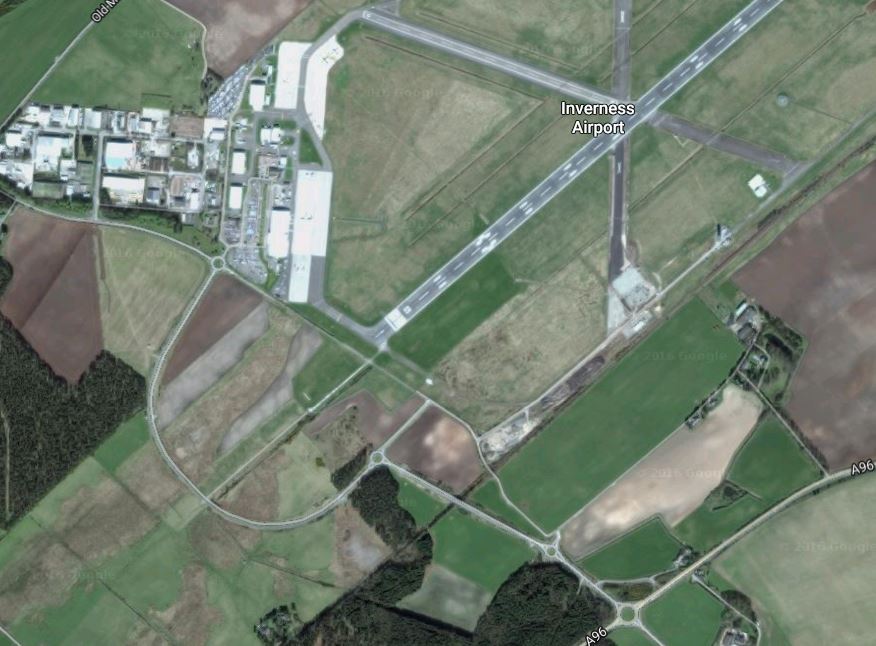
This Google Map shows Inverness Airport.
Inverness Airport
Cutting across the map, to the South-East of the Airport and parallel to the main runway is the Aberdeen to Inverness Line.
The station would be a replacement for the closed Dalcross station and Wikipedia has a section on the Proposed New Station. This is said.
In June 2006 a proposal was announced to open a new station at Dalcross, which would serve Inverness Airport and also provide park-and-ride facilities for commuters to Inverness, relieving road congestion to the east of Inverness,[9] and so helping to reduce carbon dioxide emissions. The proposal was still open in 2010, and it was specified that the station could have one platform on the north side of the line, 150 metres (490 ft) long, enough for a six-car Class 170 train.
The Aberdeen Press and Journal also has the story and says this.
The proposed location of the development is adjacent to the C1017 airport access road, between the first and second roundabouts after leaving the existing A96, at the southern corner of the airfield.
The platform will be capable of accommodating high-speed trains with five carriages and two engine cars, as proposed by operators Abellio.
So it would seem that the go-ahead has been given.
Will Crossrail And Its Class 345 Trains Set Mobile Connection Standards For The UK?
Search for “Class 345 trains 4G” or “Class 345 trains wi-fi” and you find reports like this on London Reconnections about the Class 345 train.
This or something like it, is said in several of these reports.
According to the accompanying press notes both free wifi and 4G services will be delivered on board, as will multiple wheelchair and luggage spaces.
It would be very embarrassing for London’s flagship multi-billion pound project, if it wasn’t correct.
So it would appear that I could board a Class 345 train at Shenfield and watch a video all the way to Heathrow or Reading.
But where does this leave Thameslink?
Their Class 700 trains have been designed without wi-fi, 4G and power-sockets as I said in By Class 700 Train To Brighton And Back.
But at least Siemens felt that the Department for Transport, who ordered the trains, were out of step with reality and appear to have made provision to at least fit wi-fi.
This article on Rail Engineer is entitled Class 707 Breaks Cover and it describes the Class 707 train, which is a sister train to the Class 700. This is said about the two trains and wi-fi and toilets.
Thameslink (or the Department for Transport which ordered the trains) decided not to include Wi-Fi in the Class 700s, a questionable decision that has now apparently been reversed. Fortunately, Siemens had included the technology framework in the design so, hopefully, the upgrade will not require too much effort. Suffice it to say that South West Trains has included Wi-Fi in its specification for Class 707s.
Reversing the story, Thameslink Class 700s are all fitted with toilets. However, South West Trains has decided not to include toilets in its Class 707 specification given that the longest journey time is less than one hour and their inclusion would reduce the overall capacity of the trains.
So it appears that Siemens may have future-proofed the trains.
This article on the Railway Gazette describes the third fleet of the Siemens trains; the Class 717 trains for Moorgate services. This is said.
Plans for the installation of wi-fi are being discussed with the Department for Transport as part of a wider programme for the GTR fleet.
So at least something is happening.
But how close will mobile data services get to the ideal that customers want.
- 4G everywhere from the moment you enter a station until you leave the railway at your destination station.
- Seamless wi-fi, so you log in once and your login is valid until you leave the railway.
It will be tough ask to achieve, as it must be valid on the following services.
- Crossrail
- Thameslink
- London Overground
- London Underground
- All train services terminating in London.
And why not all buses, trams and taxis?
On a related topic, I believe that for safety and information reasons, all bus and tram stops and railway stations must have a quality mobile signal and if it is possible wi-fi.
One life saved would make it all worthwhile.
By Class 700 Train To Brighton And Back
Today, I went to Brighton for lunch and a walk on the promenade to get some October sun.
I hadn’t intended to go to Brighton, but just to take the short route across London from St. Pancras to East Croydon, to see if any Class 700 trains were working the route.
However a Brighton-bound Class 700 turned up and just before East Croydon station, the conductor turned up and he offered to sell me an extension ticket to Brighton for £9.95.
So why not? As the day was sunny, I accepted his offer and as he didn’t have the right change of 5p for a tenner, he gave me 10p. in change.
Perhaps, Govia Thameslink Railway’s conductors are doing a PR job to enhance their reputation.
These pictures detail the journey.
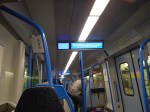



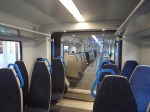
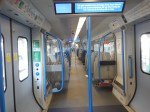


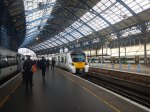
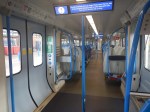
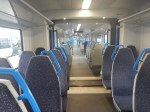
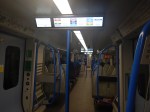

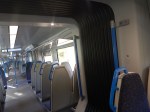

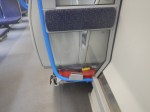




Because the journeys were deep in the Off Peak, the trains weren’t that busy.
I would describe the trains as adequate for the core route from East Croydon to West Hampstead and Finsbury Park, but they do have limitations for long-distance commuters.
- There are no tables or even anywhere to put a drink.
- There is no wi-fi.
- There are no power sockets to charge a laptop or phone.
The new Class 345 trains for Crossrail, don’t have tables either, but they do have wi-fi. But these are short-distance trains and unlike the Class 700 trains, which are taking over from Class 387 trains with tables, most of previous stock that worked from Reading to Shenfield didn’t have tables, wi-fi or power sockets.
Govia Thameslink Railway must be really pleased to get a set of trains, without some of the features their passengers demand.
To be fair it’s not their fault, as these trains were designed to fit a Passenger Focus report which can be found on the Internet, that was written in the dying days of the last Labour Government.
Read the document and draw your own conclusions.
However, all is nor lost!
This article on Rail Engineer is entitled Class 707 Breaks Cover and it describes the Class 707 train, which is a sister train to the Class 700. This is said about the two trains and wi-fi and toilets.
Thameslink (or the Department for Transport which ordered the trains) decided not to include Wi-Fi in the Class 700s, a questionable decision that has now apparently been reversed. Fortunately, Siemens had included the technology framework in the design so, hopefully, the upgrade will not require too much effort. Suffice it to say that South West Trains has included Wi-Fi in its specification for Class 707s.
Reversing the story, Thameslink Class 700s are all fitted with toilets. However, South West Trains has decided not to include toilets in its Class 707 specification given that the longest journey time is less than one hour and their inclusion would reduce the overall capacity of the trains.
So it appears that Siemens may have future-proofed the trains. To this end, when they certify the Class 707 train, they’ll certify the train for overhead electrification as well.
Looking at the way the seats are cantilevered from the side of the train, I suspect that Siemens might also have a table design in their box of delights.
I think you might have a very different usage of the trains throughout the day.
Obviously, in the Peak, the trains will be very full, but during the Off Peak, where there are obviously less passengers, perhaps a couple of tables per car, might prove to be a nice marketing feature to encourage travel.
We shall see what happens, but I can certainly see some improvement carried out to these trains in the next few years.
How To Annoy Customers
I just sent this message to John Lewis Card Services.
I shall be cancelling my card at the earliest possible opportunity.
I have a problem with my left arm, due to it being broken by the school bully and a stroke which didn’t help.
So for convenience, i don’t use any web sites that use the shift keys in passwords.
Why do people do this?
Passwords should always be able to be typed with one hand.
For instance, why couldn’t I use say “donald=13”?
No-one would guess that!
Does Brexit Mean We Need More Runways?
I ask this question, as after I wrote Changing Sides, I’ve had some thoughtful comments.
In 2015, there were seven airports that handled over ten million passengers.
- London Heathrow – 74,985,748
- London Gatwick – 40,269,087
- Manchester – 23,136,047
- London Stansted – 22,519,178
- London Luton – 12,263,505
- Edinburgh – 11,114,587
- Birmingham – 10,187,122
In addition, there are airports like Bristol, Cardiff, East Midlands, Glasgow, Leeds-Bradford, Liverpool and Newcastle, that can take a significant portion of regional traffic.
I can add these comments.
- Manchester is taking traffic from other airports in the North and Scotland.
- In a decade or so, a very high speed rail link could enable Liverpool to provide extra runway capacity for Manchester.
- Birmingham will be on HS2 within a decade.
- Manchester will get HS2 within two decades.
- Six of the top seven airports are getting improved rail links.
- Glasgow is just off the list in eighth, but does Scotland need two airports in the Central Belt?
- Cardiff is not the busiest airport and was in fact 20th.
The Airports Commission said we need another runway in the South East, but will Brexit change matters?
I have this feeling that, Brexit could mean that we actually see more air-routes opening up.
Consider.
- The British will always love their holidays in the sun.
- The UK will always be a destination for tourists and a low pound courtesy of Brexit will help.
- If the regions of the UK get more independence from London, they’ll probably look to attract more visitors.
- On past form, the City of London will survive Brexit, just as it did the Great Fire and the Blitz.
- Brexit could be an excuse for building more runway capacity.
- People love setting up airlines to lose their fortune and those of others.
- Infrastructure like railways and trams will make some airports, easier and more affordable to use.
- Travellers will get more savvy.
On the other hand, the low-cost airlines seem to be saying that traffic to and from the UK will be a lot lower and they are moving aircraft out of the UK.
I have no idea what will actually happen, but we may see some surprising things. I said this earlier.
In a decade or so, a very high speed rail link could enable Liverpool to provide extra runway capacity for Manchester.
Consider.
- The Shanghai Maglev Train has a top speed of over 400 kmh and a length of 30 km.
- Liverpool and Manchester airports are 50 km. apart.
- Liverpool Airport is alongside the Mersey.
Even if this doesn’t happen, we’ll certainly see many airports expand and be easier to use.
The debate on where the South-East gets extra runway capacity has been enlivened by Gatwick saying that if Heathrow is chosen, then they’ll build a second runway anyway.
Consider.
- Building a new runway at Heathrow will need extensive works to the M25
- Gatwick has the space for a second runway and has already shown possible runway, terminal and rail railway station designs.
- Gatwick is already a well-connected rail-hub.
- Both airports will be connected to Farringdon by modern high-capacity rail links.
- Cameron promised no third runway at Heathrow and his election still defines the make-up of Parliament.
- Most Londoners don’t like Heathrow.
- Heathrow probably couldn’t build a third runway, if Gatwick got the Government’s blessing.
We could see the Government give Heathrow their blessing, but Gatwick builds a new runway as well.
Surely two world-class airports for London, would show that a post-Brexit Britain was open for business.
I think many London residents like me, living away from Heathrow, would accept an enlargement at both airports.
You can envisage these scenarios.
Heathrow Gets A Third Runway And A Sixth Terminal
If this was the decision, the following would or could happen.
- The opposition would be vocal and possibly violent.
- Every legal experts in the field would keep the Courts going for decades.
- The moving of the M25 would paralyse the traffic to the West of London for at least a decade. Remember Terminal 5!
- All of the hassle would frighten investors away from a post-Brexit UK
Gatwick would build a second runway anyway.
Heathrow Hub
Heathrow Hub is the independent proposal shortlisted by the Airports Commission. Wikipedia describes it like this.
Heathrow Hub proposes extending both of the existing runways up to a total length of about 7,000 metres and dividing them into four so that they each provide two, full length, runways, allowing simultaneous take-offs and landings. The aim is to complete the construction within five years and with 100% private funds.
Available capacity would be doubled while keeping a percentage of the slots unused in order to alter noise levels. In addition, early morning flights could land much further west along the extended runways so reducing the noise footprint for a large area of west London.[5] Other noise mitigation techniques include using two-stage approaches, and steeper, curved climb-outs.
The Heathrow Hub concept includes a new multimodal air, rail and road interchange located approximately two miles north of Heathrow’s Terminal 5 to accommodate passenger growth. This includes a new terminal, a new railway station connecting Heathrow to the West Coast Mainline and Crossrail and direct access to the M25 motorway.
This image from the Heathrow Hub web site shows the layout with just the Northern runway extended.
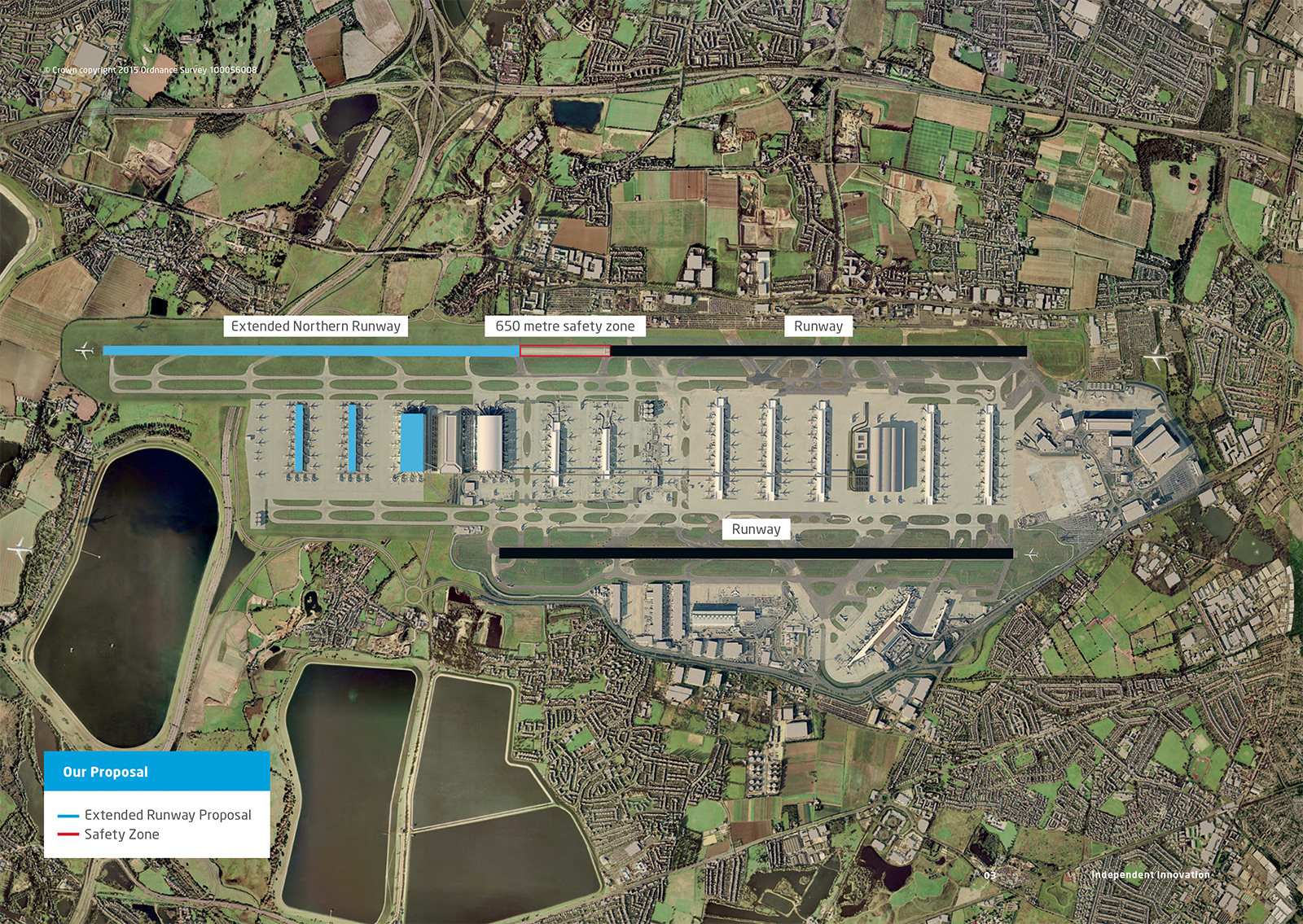
Heathrow Hub Runway Proposal
Note.
- The M25 would just needed to be put in a tunnel, as has been done at Schipol.
- The Southern runway could be expanded later to provide even more runway capacity.
- As aircraft will get smarter and be able to fly more precise paths, more noise will be kept within the larger airport boundary.
With my project management hat on, I believe that the building of the rNorthern Runway extension, a new terminal and all the connecting infrastructure could be built without disrupting the operation of the current Airport.
Heathrow Hub is the joker in the pack and it could be the surprise choice.
But I doubt it.
- The opposition would still be vocal and possibly violent.
- Every legal experts in the field would keep the Courts going for decades.
- Heathrow Airport wouldn’t like it, as they didn’t think of it.
Although, in a post-Brexit world, it could make sense.
Gatwick Gets A Second Runway
In some ways this is the option with the least amount of hassle.
- The opposition at Gatwick would be much less, than choosing Heathrow.
- There would be no traffic disruprion at Heathrow.
But Heathrow would probably fight the decision in the Courts.
I also think, that Heathrow will never give up on expansion, as there is just too much investment in the airport.
Both Airports Get An Extra Runway
This could be the Judgement of Theresa!
- Heathrow would extend the Northern runway, as detailed in the Heathrow Hub proposal, with perhaps another rail-connected terminal between the runways.
- Gatwick builds a second runway and appropriate terminals.
Consider.
- The current two-airport strategy works for London.
- Heathrow and Gatwick will soon have much-improved rail connections with an interchange in Central London.
- Both rail journeys to Central London will be around thirty minutes.
- Both runways could be built without disrupting the existing airports.
- Once the M25 is covered, Heathrow can extend the runway and gets the space for more terminals.
- Few properties would be demolished at either Heathrow and Gatwick.
- Those living around Heathrow would suffer less noise.
- A second runway fits Gatwick’s plans.
- Airlines can choose their best location as capacity increases.
- At least two runways at both airports, surely increases safety.
But the reason, I like this option best, is that it future-proofs, the airports in the South-East for a very long time.
It also creates true competition between the two airports and that can only be to the benefit of the airlines and their passengers.
This article in the Independent is entitled If Gatwick and Heathrow both build extra runways, it could mean the UK becomes future-proofed.
Add future-proofing to my list.
Conclusion
I said we should be prepared for surprises about airports.
I stand by that!
 The Anonymous Widower