Bridlington – March 13th 2019
I’d never been to Bridlington before and when I passed through on the train, I took these pictures after walking to the sea-front.
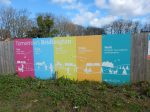
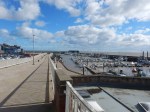


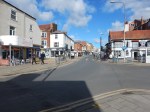


It very much reminded me of Felixstowe in the 1960s, although it does have an attractive harbour.
Victorian seaside resorts have been suffering lately, but all seem to have travel problems. Too often, visitors need to drive to the towns and the cars they use to get there are choking up the towns.
I don’t know what the situation is in Bridlington, but there were certainly lots of cars on a sunny, but very breezy day in March.
It has been proposed by the East West Rail Consortium, that my childhood haunt of Felixstowe, be connected to Ipswich by a four trains per hour service using innovative tram-trains. I wrote about the proposal in Roaming Around East Anglia – Could A Tram/Train Run Through Felixstowe?.
So if this type of system is good enough for sleepy Suffolk, surely it is good enough for East Yorkshire to give a similar link between Bridlington and Hull. In Could Hull Become A Tram-Train Terminal?, I laid out how tram-trains could terminate in a loop in Hull City Centre and then serve all the outlying towns.
- Running Between Hull and Bridlington in a tram-train, would take the same time as the current trains.
- As with the current trains, they would stop at all intermediate stations.
- Technologial developments mean that the tram-trains would be electric and would use both overhead wires and battery power.
- At Bridlington, the tram-trains might go walkabout to serve the Town Centre and sea-front directly.
Tram-trains are a technology, that will make transparencies on several branch lines in the UK.
Sunday On The Gospel Oak To Barking Line With Three Trains
I went to have a look this morning to see how many passengers were braving the cold and limited service on the Gospel Oak to Barking Line.
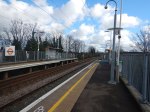
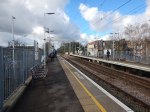
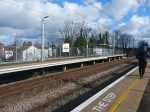
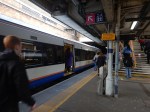
The pictures show, that there weren’t too many punters about.
I used the train all the way from Gospel Oak to Barking and by the time it reached the destination, there was perhaps a dozen empty seats.
Incidentally, there were few long faces and no-one seemed to be complaining about the lack of trains.
It will probably be different in tomorrow’s Peak.
Is this good news, that I have clipped from the on-line timetable?
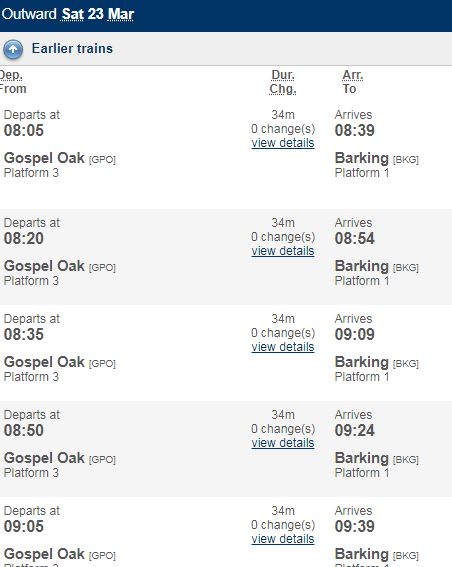
Let’s hope so!
Could Hull Become A Tram-Train Terminal?
Hull Paragon station is a station on the edge of the City Centre.
On Wednesday, I arrived at the station on a train from Bridlington and was very hungry. I also needed a drink, so that I could take my medication.
Like most of the East Cost of England from Newcastle to Felixstowe, there is a shortage of gluten-free food in the stations.
So Hull joins a big club including Clacton, Felixstowe, Great Yarmouth, Ipswich, Lowestoft and Middlesbrough.
Asking in the station, I found there was a Marks and Spencer in the City Centre, that was about a twenty minute walk.
So I walked it and luckily got the last gluten-free egg sandwich in East Yorkshire.
This map shows the City Centre of Hull and its relationship to the station.
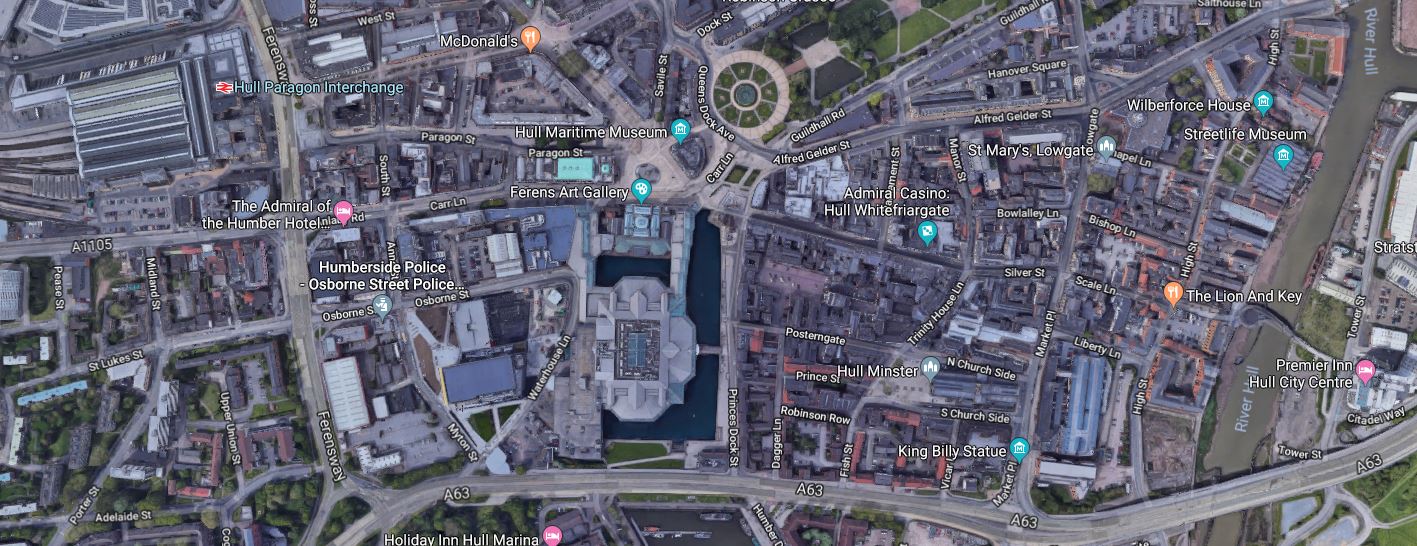
The station is in the top-left hand corner and most of the shops, galleries and other buildings are in the middle.
You will also notice, that there is no small amount of space and quite a bit of water.
These pictures show the City Centre.



From what I have seen in other cities on the Continent, I think that a tram loop could be created in the city.
Tram-trains would be used, as they would need to run on both a tram network and National Rail tracks.
- Tram-trains would arrive at an inbound platform in Hull station from the West and North.
- They would stop in the station, so that passengers could change to and from buses and long distance trains.
- They would then go through the station and take to a loop around the City Centre.
- After stopping at perhaps half-a-dozen places, the tram-trains would reenter the station and stop in the outbound platform, before leaving the station.
I don’t know Hull or the travel habits of Hullensians, that well but these are a few thoughts.
The Tram-Trains
These would probably be similar to the Cardiff variant of the Class 399 tram-trains used in Sheffield’s tram-train extension to Rotherham.
The Cardiff tram-trains will be fitted with batteries to allow for a certain amount of catenary-free street running.
I’m sure battery power would cope with the steepest hills in Hull City Centre.
The City Centre Loop
Loops like this are not very common in the UK, but there are two successful examples.
- The Wirral Line Loop under Liverpool
- The Heathrow Loop on the Piccadilly Line.
There were also numerous loops for merry-go-round trains, that used to deliver coal; to power stations.
This Google Map shows the enormous Drax power station, which has a capacity of nearly 4 GW.
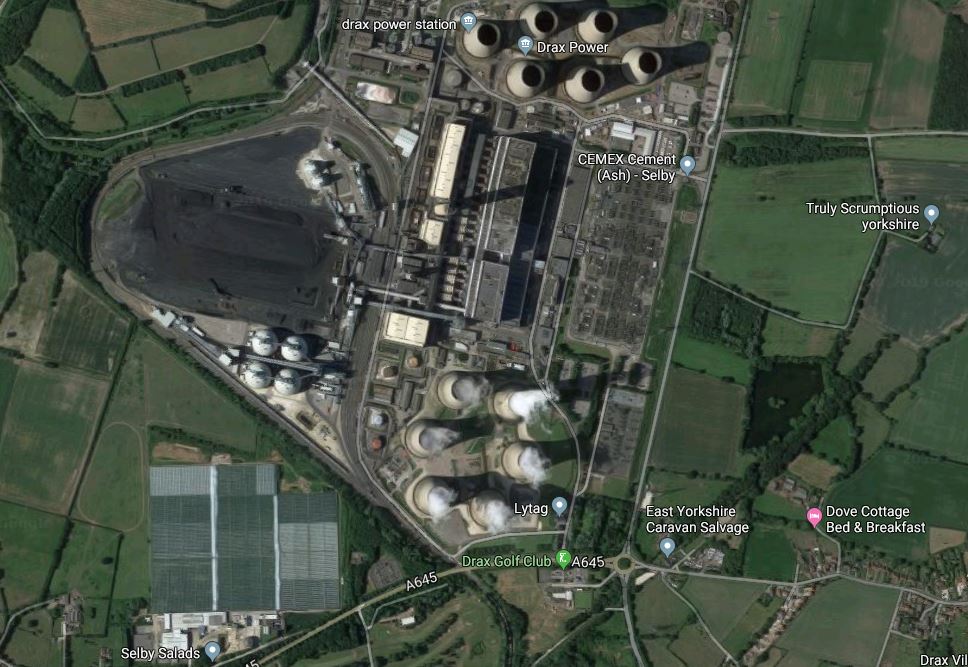
Note.
- The loop on the West side, which trains use to deliver the biomass, that is now the main fuel for the station.
- Below the loop , there are extensive greenhouses, which use waste heat and carbon dioxide from the power station to grow salads.
- There is also a plant that makes building blocks from the waste ash on the site.
Power station do a lot more than just generate electricity.
Loops have several advantages.
- The track needs is very simple and often single-track.
- Signalling only needs to work in one direction.
- They can handle a large number of trains.
Loops are particularly suited to trams, as they can have tight turning circles.
Main Line Electrification
Hull needs an economic boost and I believe that i the next ten years, the route between Hull and the East Coast Main Line will at least be partially-electrified.
Consider.
- The distance between Hull and Selby by rail is thirty-one miles.
- It is double-track.
- It runs across fairly flat country.
- The main problem would be the historic Selby swing bridge.
- From my hrlicopter, it doesn’t look to be the most difficult line to electrify.
Partial-electrification with dead sections on the swing bridge and under any low bridges would be a solution. But it would need trains to be bi-mode or have battery power to jump the gaps.
Hull Trains and First TransPennine wouldn’t object.
Where Will The Tram Trains Go From Hull?
The largest tram-train network in the world is the the Karlruhe Stadtbahn.
The longest route is S4, which goes all the way to Öhringen, which is a distance of over fifty miles from Karlsruhe.
The lines are electrified, but technology moves on and ranges of fifty miles on batteries are being predicted by those who are designing trains, trams and tram-trains.
Distances and times from Hull include.
- Beverley – 9 miles – 13 minutes
- Bridlington – 32 miles – 50 minutes
- Brough – 11 miles – 11 minutes
- Doncaster – 42 miles – 68 minutes
- Goole – 25 miles – 35 minutes
- Scarborough – 53 miles – 87 minutes
- Selby – 31 miles – 35 minutes
- Sheffield – 60 miles – 113 minutes
- York – 40 miles – 71 minutes
Note how slow the services are. Are they timed for Pacers?
I could see a two route strategy being developed.
This Google Map shows the KCOM Stadium which is about a mile out of Hull station.
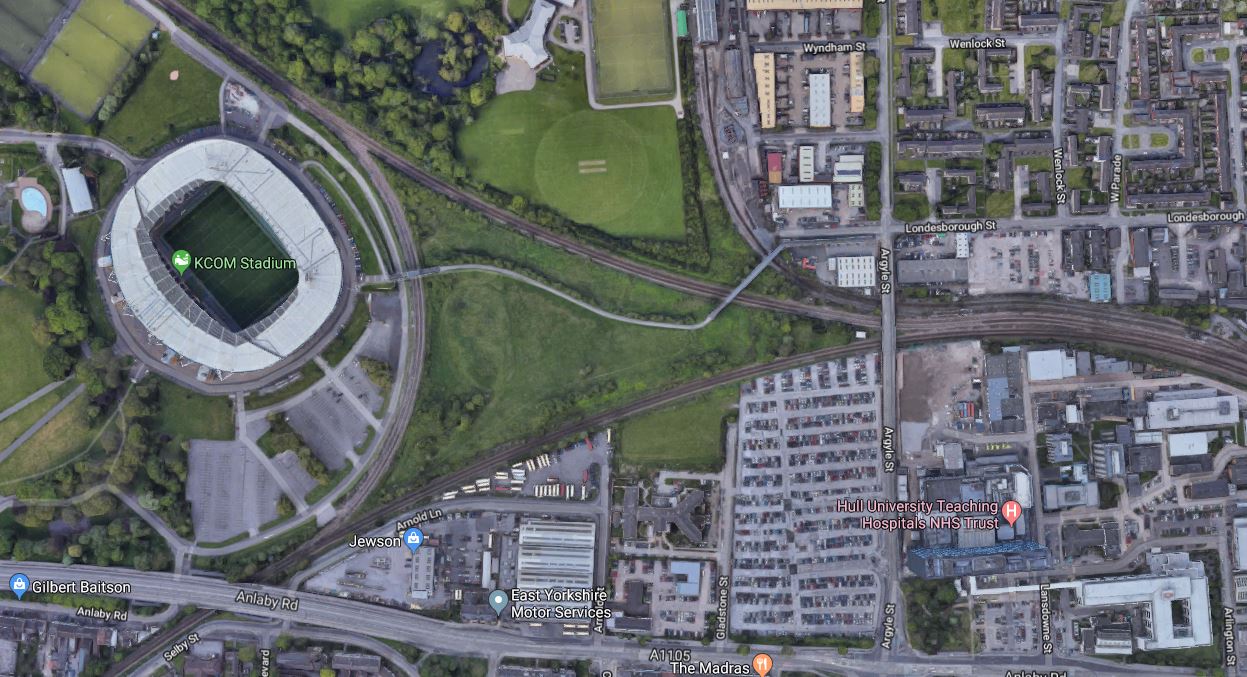
The rail lines are as follows.
- The line going North West goes to Beverley, Bridlington and Scarborough.
- The line going South West goes to Brough, Goole, Selby and Doncaster.
- The line going East goes to Hull station.
It should also be noted that in the South East corner of the map, part of Hull Hospital can be seen.
My initial plan would start by electrification of the line between Hull and Selby.
This would enable.the following.
- Hull Trains to run their Class 802 trains between London and Hull on electric power. Desel power would still be needed between Hull and Beverley for one train per day in each direction.
- First TransPennine to run their Class 802 trains between Liverpool and Hull on electric power. Diesel power would still be needed between Manchester and Selby.
- Class 399 tram/trains could operate on the electrification between Hull and Selby.
- Class 399 tram/trains could replenish their batteries using the electrification.
Fully-charged battery tram-trains would then have free-reign to explore, on any suitable track.
- They could go walkabout in Hull City Centre to set down and pick up passengers.
- They could run a second service to Beverley or Driffield on battery power.
- They could run a third service to Goole on battery power from Gilberdyck.
Extra stops could be added at important locations, like the Hull Hospital and the KC Stadium.
Could there be a network with three routes.
- Hull and Brough via Hull Hospital, KCom Stadium, Hessle and Ferriby
- Hull and Beverley via Hull Hospital, KCom Stadium and Cottingham
- Hull and Goole via Hull Hospital, KCom Stadium, Hessle, Ferriby, Brough, Broomfleet, Gilberdyke and Saltmashe
Some things ease getting a good route structure.
- Known traffic patterns might show where to add extra stops.
- There are two disused platforms at Brough station.
- Brodlington has a convenient bay platform.
Others don’t.
- There are no closed stations between Hull and Berverley, Brough and Goole.
- Beverley and Goole stations don’t look to be good terminals.
I’m sure a good route structure can be created.
Service Frequency
Ideally all branches should have four trains per hour (tph) for a Turn-Up-And-Go service.
A reasonable two tram-trains per hour to Beverley, Brough and Goole, would produce the following services.
- A six tph frequency through the City Centre.
- Hull station, Hull Hospital and the KCom Stadium would have six tph service in both directions.
- Because two routes go via Brough, all stations to Brough, would have a four tph service both directions.
- All stations to Beverley or Bridlington would have a two tph service in both directions.
All services would be augmented by limited stop services from Hull to Doncaster, Leeds, London, Scarborough, Sheffield and York.
Construction Needed
The following works would need to be done.
- Electrify Hull to Selby with 25 KVAC overhead wires.
- Build the tram-train loop in Hull City Centre.
- Adjust platforms, so that they can provide at least good access between all tram-trains, trains and platforms.
Hopefully, this will be enough to allow the tram-trains to start operating.
How Many Tram-Trains Would Be Needed?
My rough calculations show that a full service could be provided by between eight and ten tram-trains. The variation is because, the performance of the tram-trains will affect the numbers required.
Conclusion
I have only roughly sketched how a tram-train network based on a loop round Hull City Centre could be developed.
In my view for it to be viable, the first thing, that needs to be done is to electrify between Hull and Selby.
The Orchestra Pit At Waterloo Station – 14th March 2019
These pictures show the area nicknamed the orchestra pit at Waterloo station.

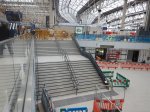
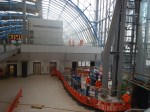
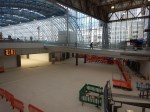

It looks like it could be open soon!
Although Network Rail and their pandering to the terrible tastes of the average rail traveller, this are will probably filled with gluten-rich junk food.
I’d like to see a Leon added to Waterloo, as they already have two Marks and Spencers and a Carluccio’s.
Bicycles And Class 800 Trains
I was at Paddington station this morning, having breakfast in Leon.
Afterwards, I noticed that Great Western Railway were using a nine-car Class 800 train on the 10:52 to Oxford.
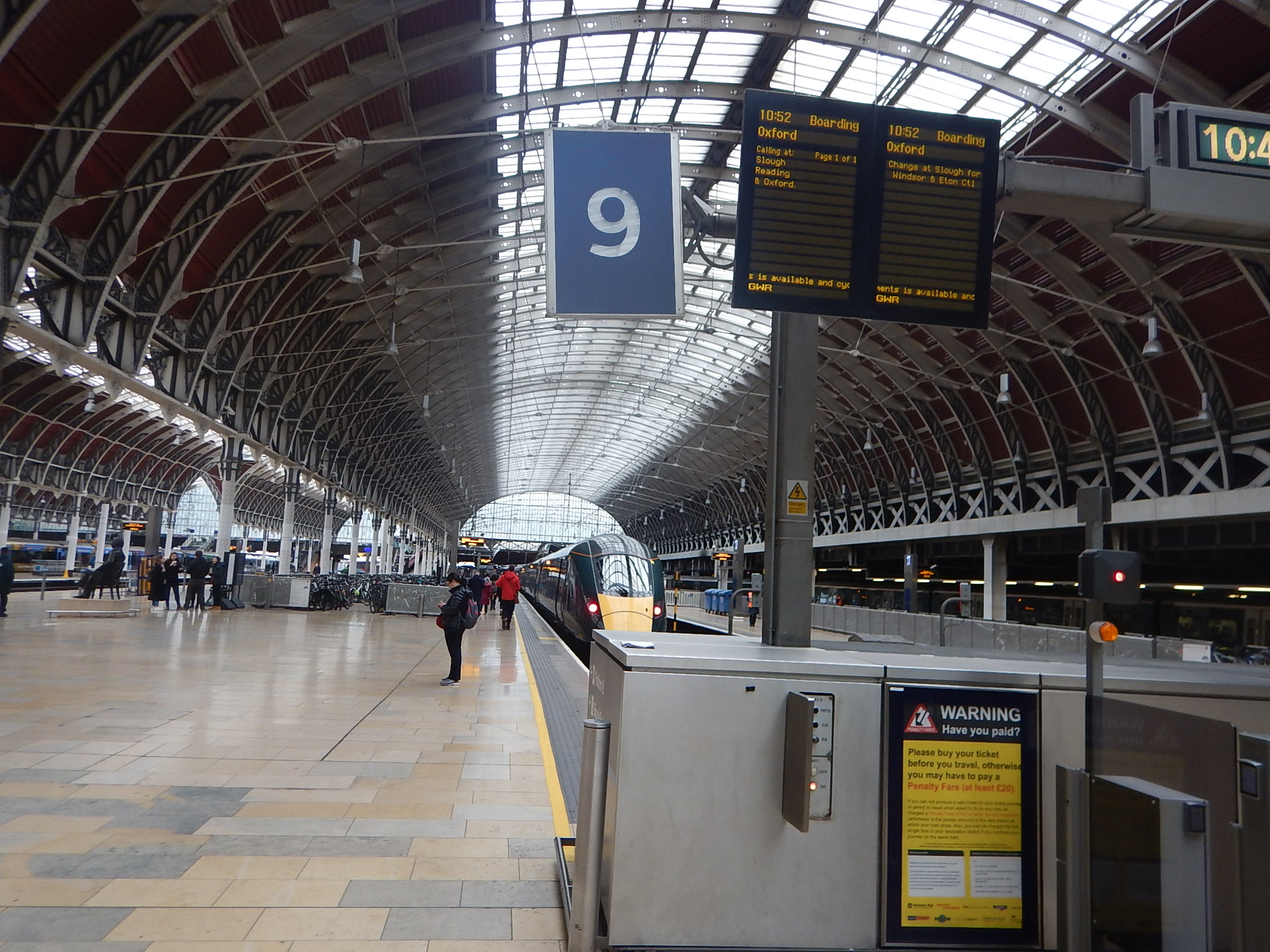
I also noticed from the information displays, that all bicycles needed to be booked. That is a bit different from the days of the InterCity 125s, which had lots of space in the back of the locomotive.
On one trip to Plymouth, I saw several surfboards swallowed by the locomotive.
I got in a conversation with a station guy about bicycles and surfboards and from the knowing look on his face, I suspect it is a bit of a pain.
With the growing popularity of cycling, surely a turn up and go regime is needed.
Heat From HS2 Trains Will Warm 500 New Homes
The title of this post is the same as that of an article in today’s copy of The Times.
This is the third paragraph.
HS2 Ltd, the company building the £56 billion high-speed line, has produced plans to recycle waste heat from the electric motors and brakes of trains approaching and departing from a £1 billion “super hub” station at Old Oak Common, near Willesden, North West London.
Other points from the article include.
- Five air source heat pumps will be used.
- , Each heat pump costs around £11,400.
- The carbon footprint of each house could be reduced by a fifth.
- Plans are at an early stage, but the technology is proven.
- Similar technology could be applied to tunnels on the Northern routes to Leeds and Manchester.
I can only see one problem with the idea.
The companies bidding to make the trains for HS2, will design trains with the following features.
- Highly-efficient aerodynamics of both trains and tunnels, to reduce energy losses and power required to move the train.
- Regenerative braking to onboard electricity storage.
- Train systems like air-conditioning, lighting and toilets that use smaller amounts of electricity.
HS2 will also draw heavily on proven innovative ideas from similar projects, to reduce the energy used by the trains, whether in the tunnels or the open.
But, I would also suspect that HS2’s proposal is based on a good assessment of the energy dissipated by the trains.
Algorithm Could Cut High Speed Rail Energy Use
The title of this post is the same as that of this article on the Railway Gazette.
This is the first paragraph.
Researchers at Xi’an Jiaotong-Liverpool University’s Suzhou campus have developed an algorithm intended to optimise the storage and reuse of braking energy.
Regenerative braking energy is stored on the trainand reused, rather than returned to the grid.
Ten percent savings are claimed.
I’ve always thought this was possible.
Integration Of High-Speed And Commuter Services Out Of Paddington Station
The following appears to be happening to the Great Western Main Line (GWML)
- All srvices to Oxford and Bedwyn, which have been run by slow diesels for years, will soon be run by 125 mph Class 800 trains, so they can join the herds of high-speed services on the dash using the fast lines between Reading and Paddington stations.
- All slower passenger trains between Paddington and Reading, will use the slow lines. Most will be Crossrail services and freight trains.
- ,Heathrow Express services, which will be four tph and run by upgraded 110 mph Class 387 trains, will use the fast lines between Paddington and Stockley Junction.
Some Class 800 trains achieve the thirty-six miles between Paddinghton and Reading in twenty-five minutes. This is a start-stop average speed of nearly ninety mph.
Frequency Between Reading And Paddington
I wonder what frequency of Class 800 trains can be achieved between Paddington and Reading.,
- Most will run non-stop.
- Up to 125 mph running could be possible between Stockley Junction (for Heathrow) and Reading, as all trains will be 125 mph Class 800 trains.
- Up to 110 mph running xould be possible between Paddington and Stockley Junction, as some trains will be 100 mph Class 387 trains.
- Digital signalling and possible automatic train control, could run the all trains to a precise timetable.
- Class 800 trains that stop at Slough, could do this in a very fast time.
I wouldn’t be surprised to see at least sixteen tph. Currently, the frequency is under ten tph.
If this frequency is achievable or even bettered, then this would be an impressive high-capacity service.
Class 387 Trains
Currently,, Great Western Railway has forty-five Class 387 trains.
Twelve are being modified, so they can run the Heathrow Express services.
But what happens to the other thirty-three trains?
Currently, some run a stopping service between Paddington and Didcot Parkway station, which stops West of Reading at Tilehurst, Pangbourne, Goring & Streatley and Cholsey stations, to give these stations a two tph service to Paddington.
The service between Reading and Paddington may be replaced by Crossrail in the near future offering four tph in the Peak and two tph in the Off Peak.
It strikes me that the following ways could be
Appleford, Culham and Radley.
Conclusion
It looks like the dropping of electrification to Oxford and Bedwyn, which resulted in Great Western Railway ordering more Class 802 trains to replace the slower Class 387 trains has resulted in a simpler and faster operating philosophy for the trains between Reading and Paddington.
- All GWR services will be Class 800/801/802 trains, using the fast lines.
- All Crossrail services will be Class 345 trains, using the slow lines.
- All freight services will use the slow lines.
- Heathrow Express services will use the fast lines, which they will leave ande join at Stockley Junction.
- All fast line services will be non-stop.
- All passenger trains will be using the electrification on the route.
It appears to be an efficient system, that keeps high-speed and stopping commuter services separate, whilst allowing 125 mph commuter services to be handled as high-speed services.
If I’m right, that there may be extra capacity for more high-speed services into Paddington, it will allow GWR to run extra services.
I like what’s happening.
 The Anonymous Widower