Integration Of High-Speed And Commuter Services Out Of Kings Cross Station
The East Coast Main Line ECML) has the following services on the Southern section between Kings Cross and Peterborough.
- Express services capable of at least 125 mph running from LNER , Grand Central, Hull Trains and other Open Access operators.
- Great Northern services capable of 110 mph running between Kings Cross and Cambridge and Ely.
- Great Northern services to Peterborough appear to have been discontinued.
- Thameslink services capable of 100 mph running between Kings Cross and Cambridge and Peterborough.
It would appear that the slower Great Northern and Thameslink services will get in the way of the faster trains, if they need to use the fast lines.
The Digswell Viaduct
A particular problem will be the double-track section of line through Welwyn North station and over the Digswell Viaduct.
There are two Great Northern and six Thameslink services in each hour, that are not capable of operating at 125 mph on the double-track section.
Following the logic of Oxford and Bedwyn services out of Paddington, which are now run by 125 mph Class 802 trains, I feel that timetabling would be easier on the ECML, if there were 125 mph trains running Great Northern and Thameslink services to Cambridge, Ely and Peterborough.
I explored 125 mph services to Kings Lynn in Call For ETCS On King’s Lynn Route, after reading about a proposal in Rail Magazine. They certainly look like they’d give advantages.
Some idiot decided that Thameslink services were fine with a 100 mph top speed. They should have been 110 mph or even faster trains, so that they could cross the Digswell Viaduct without slowing high speed services.
Digital Signalling
Digital signalling will be installed on the Southern section of the East Coast Main Line
This could ease the problem of the double-track section, as all trains should eventually be timed more precisely.
More Use Of The Hertford Loop
Perhaps some or all of the six 100 mph Thameslink services, could use an upgraded Hertford Loop Line, which will be fitted with digital signalling.
125 mph Trains
In a last resort, it would surely be more affordable to run 125 mph commuter trains to Cambridge, Ely and Peterborough, than put put two extra tracks on the Digswell Viaduct.
Vivarail Unveils Fast Charging System For Class 230 Battery Trains
The title of this post is the same as that of this article on Railway Technology.
A few points from the article.
- Class 230 trains running on battery power have a range of sixty miles.
- Fully charging the train takes seven minutes.
- Short lengths of third and fourth-rail are used.
- Power is provided from a battery bank, which is trickle charged.
I feel this paragraph describes the key feature.
The automatic technique utilises a carbon ceramic shoe, which is capable of withstanding the significant amount of heat generated during the process.
The article finishes with a quote from Vivarail CEO Adrian Shooter.
I know how important it is to the public and the industry as a whole to phase out diesel units and our battery train is paving the way for that to take place today not tomorrow.
Consider.
- Alstom, Bombardier, Siemens and Stadler have built or are building third-rail powered trains for the UK.
- Bombardier, Porterbrook and Stadler are developing battery-powered trains for the UK.
- Trickle-charging of the secondary batteries could be performed by mains power or a local renewable source like wind or solar.
- Control electronics can make this a very safe system, with low risk of anybody being hurt from the electrical systems.
I’ve said it before, but I think that Vivarail may have some very important technology here.
If I have a worry, it is that unscrupulous companies and countries will probably find a way round any patent.
Whitehaven Deep Coal Mine Plan Moves Step Closer
The title of this post is the same as that of this article on the BBC.
This is the first three paragraphs.
The first new deep coal mine in the UK for decades has moved a step closer after councillors unanimously backed the plans.
The West Cumbria Mining Company wants to mine next to the site of the former colliery in Whitehaven that shut three decades ago.
The Woodhouse Colliery could create 500 jobs, but objectors have said mining will contribute to global warming.
I am not normally a friend or supporter of coal, but there might be a different agenda behind this mine.
The coal that will be mined at Woodchurch Mine, will not be burnt in a power station or steam engine, as it is being mined for a different purpose. It is high-quality metallurgical coal, Wikipedia says this about metallurgical coal.
Metallurgical coal is a grade of low-ash, low-sulfur and low-phosphorus coal that can be used to produce high grade coke. Coke is an essential fuel and reactant in the blast furnace process for primary steelmaking. The demand for metallurgical coal is highly coupled to the demand for steel. Primary steelmaking companies will often have a division that produces coal for coking, to ensure stable and low-cost supply
Currently, there is a shortage of this product and Europe import several million tonnes a year.
It also appears that the Cumbrian metallurgical coal is of a high quality and low in impurities.
In Wikipedia, there is an entry for the HIsarna ironmaking process.
This process is being developed by the Ultra-Low Carbon Dioxide Steelmaking (ULCOS) consortium, which includes Tata Steel and the Rio Tinto Group. Reduction in carbon-dioxide produced by the process compared to traditional steel-making are claimed to be as high as fifty percent.
This figure does not include carbon-capture to reduce the carbon-dioxide still further.
However, looking at descriptions of the process, I feel that applying carbon-capture to the HIsarna steelmaking process might be a lot easier, than with traditional steelmaking.
If you are producing high quality steel by a process like HIsarna, you want to make sure that you don’t add any impurities from the coal, so you have a premium product.
So is Cumbrian metallurgical coal important to the HIsarna process?
I obviously don’t know and it is not even certain that HIsarna will eventually become a mainstream way of producing high-quality steel.
But you can be assured that there are other companies trying to find the Holy Grail of producing high quality steel with low impurities and without creating masses of carbon-dioxide.
The company or organisation, who cracks this one will make a fortune ethically, as we’ll always need lots of high quality steel.
Conclusion
Mining coal in Cumbria may seem a retrograde step, but it could be central to cutting carbon-dioxide emissions in high-quality steel-making.
I’ll be watching this development with interest.
Platforms Have Been Renumbered At Tottenham Hale Station
Tottenham Hale station is currently a two-platform station, with a third platform due to open in May to provide extra services to Meridian Water station.
I took this picture as I passed through on Monday.
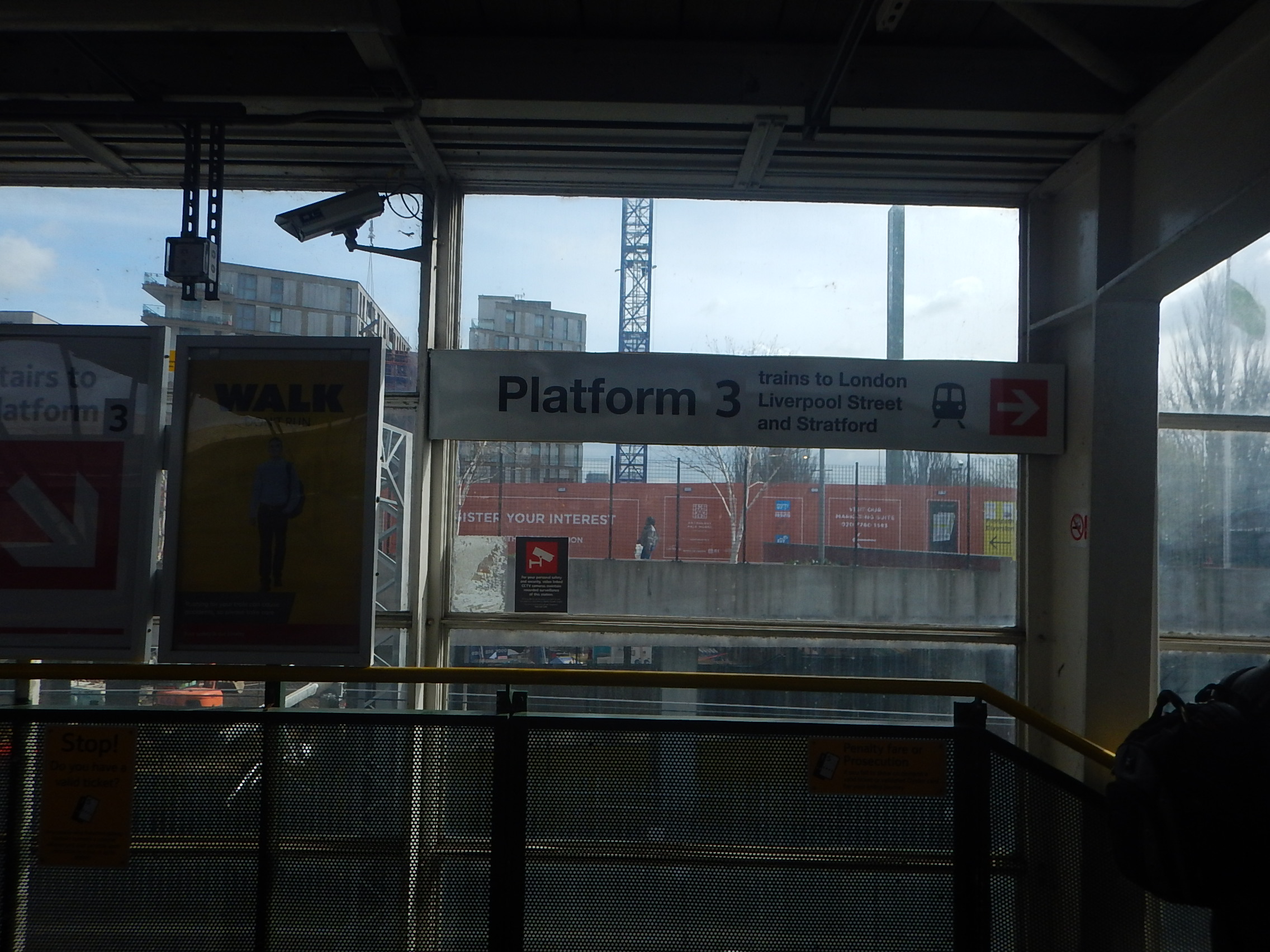
So now, the two platforms are numbered 3 and 4.
I suppose the new platform will be numbered 2, with platform 1 reserved for when they four-track the West Anglia Main Line.
Using Platform 12 At Stratford Station
Normally, if you take a train between Tottenham Hale and Stratford station, it terminates in Platform 11.
However, on Monday, I ended up in Platform 12.
Note there was no staff or information anywhere to be seen. Passengers were roaming aimlessly looking for the next train to the North.
I was not inconvenienced, as I was going to Marks and Spencer in Eastfield to get some food.
On enquiring at the London Overground Information Desk, it appeared there had been some signal problems, so they had swapped platforms.
Ashington Blyth and Tyne Line Reopening Mulled Over In Six ‘Quick Win’ Rail Projects For Northern Transport
The title of this post is the same as that of this article on Rail Technology Magazine.
This is the first paragraph.
A series of ‘quick wins’ have been identified to fix the “current crisis” in the north’s transport network in a report by the IPPR.
What are the quick wins?
This page on the IPPR website gives access to the report which is entitled Quick Wins For The North’s Transport Network.
These quick wins are given in the report.
Reopening Of The Ashington, Blyth And Tyne Railway Or Northumberland Line For Passenger Services
This summary is given.
North of Newcastle, and along the North East coast, there is an area with great potential but numerous challenges. This area contains several small and medium-sized towns: Blyth (population 37,000) and Ashington (population 28,000) are the largest (Centre for Towns 2017). The public sector dominates in terms of employment (education, health and public administration provide one-quarter of jobs), and the areas’ private sector is largely in the ‘everyday economy’ of retail (5,900 jobs) and food and beverage services (4,130 jobs) (ONS 2018c). The Port of Blyth handles 2 million tonnes of freight each year, and there are some significant development sites for renewable energy in the area (Port of Blyth 2018).
The history of the area is a vital consideration for its transport infrastructure. The area boomed during the industrial revolution as coal mining and port towns grew – Ashington was once considered the world’s largest coal-mining village (Whitfield 2018). The Ashington-Blyth and Tyne railway line once connected a number of Northumberland settlements between Ashington and Newcastle – it was not a single route, but a small network, built in 1840 to link the collieries to the River Tyne, and was opened up to passengers in 1841 (NCC 2015). But in 1964, passenger services were withdrawn under the ‘Beeching Axe’,although it has remained open for freight.
This idea has been talked about for years and I wrote about it in Northumberland Unveils £3.5m Rail Project To Bring Back Passenger Services.
This is a project, where it is probably time to stop talking and get the planning started, before updating the railways.
Surely, if it can be done for £3.5m, it must be good value. I suspect it will cost more, but not as much as Network Rail’s estimate of £191m.
Leeds/Bradford Airport Parkway Rail Station
Consider.
- Leeds Bradford Airport handles four million passengers per year.
- It has no direct rail access.
- It has direct services to airports like New York.
- It connects via hub airports like Heathrow and Schipol to a wide number of destinations.
- It could capture more of the localo air passengers with better connections.
The proposal is to build a Parkway station the Harrogate Line, between Horsforth station and Bramhope Tunnel.
- It would be a 1.3 kilometre drive in a shuttle bus to the Airport.
- The station would serve as a Park-and-Ride station for Leeds, Harrogate and other destinations.
This Google Map shows the area.
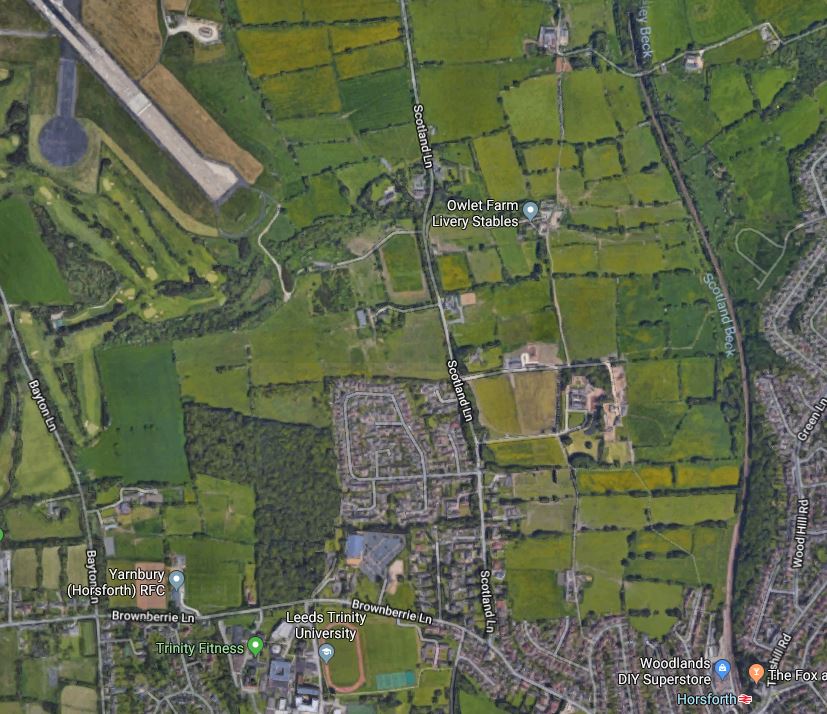
Note.
- The Airport is in the North-West corner.
- Horsforth station is in the South-East corner.
- The Harrogate Line runs North South from Horsforth station.
The new Park-and-Ride station could be built on any convenient location near to the Airport.
It looks to be a simple plan, that has been costed at £23m.
Consider these points about the Harrogate Line.
- It is only thirty-six miles.
- Services take around seventy minutes between Leeds and York via Harrogate
- It appears to be double-track
- The operating speed is sixty mph between Leeds and Harrogate.
- It doesn’t appear to be very busy.
I suspect it would be a good idea to iimprove this line, so that Northern’s Class 170 trains can stretch their legs.
If there was a Park-and-Ride station at Leeds Bradford Airport would First TransPennine want to run a service to the Airport?
I can see this plan, stimulating a lot of rail improvements between Leeds and York.
Supporting The Development Of Hydrogen Trains
The IPPR report says this.
Transport for the North plans to work toward the roll-out of hydrogen trains.
Consider.
- The North has a lot of routes, where hydrogen-powered trains could be used.
- Alstom are converting trains to hydrogen-power at Widnes in the North-West.
- Hydrogen is or can be produced by petro-chemical companies in the North.
I feel that increasingly, the North will have another big problem, for which hydrogen could be a solution.
Currently, there is a massive expansion of offshore windpower, which will produce a lot of electricity at awkward and random times, when it won’t have an obvious use.
So it will need to be stored!
One sensible method energy storage is to use the electricity to electrolyse water or brine to produce hydrogen and other gases. The hydrogen is then stored and can be burnt or used in a fuel cell to generate heat and/or electricity.
I can see a lot of innovation being employed to create hydrogen filling stations for users, such as companies with large fleets of smaller vehicles, railway companies, emergency power sup lies and other applications.
Unlike the production of hydrogen using steam-reforming of methane, electrolysis using renewable energy doesn’t produce any carbon dioxide.
Tees Valley Rail Interventions
The report talks of these interventions.
- Darlington station upgrade.
- Middlesbrough station upgrade.
- Teesport To Northallerton gauge clearance.
One of the main reasons for doing this, is that it will improve access to Teesport, which will bring wide benefits to the North.
Integration Of Traffic Management To Improve Air Quality
This is from the report.
Air quality is a major health problem across the world – especially in major cities. Vehicle emissions are the major contributor to this problem – particulate matter and nitrogen oxides cause numerous health problems, including asthma and lung cancer. Road transport accounts for at least 50 per cent of these emissions – and this is likely to be an underestimate (Cox and Goggins 2018). Clearly the volume of traffic is the principal cause, but so is the ‘stop/start’ of traffic flows, which tends to further increase emissions (O’Brien et al 2014). Exhaust fumes aren’t the only source – 60 per cent of particulate matter emissions come from the tyres and brakes.
Suggestions to reduce emissions include.
- Freight priority schemes
- Bus or cycle priority at signals to encourage transport modal change.
- Change signal timings to improve air quality
- Inform the public to change travel plans when air quality is poor.
- Low emission zones
Some of these measures will go down like a lead balloon.
Tees Crossing
This is from the report.
Roads are essential for the internal operation of Tees Valley’s economy and in order to connect it to the wider North. Passenger rail connectivity remains poor and light rail is non-existent. The economy’s residential and employment centres are highly dispersed across its geography. A modern bus network might relieve pressure, but the deregulated and underfunded network has seen passenger numbers fall and services cut (Brown 2018). The level of freight activity in Teesport and Hartlepool mean that these ports are highly dependent on the road network as well as rail.
The proposed solution js to build another road bridge across the Tees.
Conclusion
It seems a package of sensible measures, but opposition to some may ean they are not implemented.
The Design Of The Class 378 Trains Keeps The Gospel Oak To Barking Line Running
In some ways, London Overground’s Class 378 trains are the ultimate Electrostars.
These ten-year-old trains are no high-performance trains, but they are people carriers par excellence.
Wikipedia describes their interiors like this.
The design is similar to the Class 376 trains used by Southeastern, featuring the same wider metro-style sliding pocket doors for more efficient boarding and alighting. However, it also has significant differences from the Class 376, such as fully longitudinal seating similar to that used on London Underground rolling stock to give more standing and less seating capacity and reduce overcrowding, suitable for the high-volume metro-style services on London Overground.
This picture shows a view through the five cars of a standard-length train.
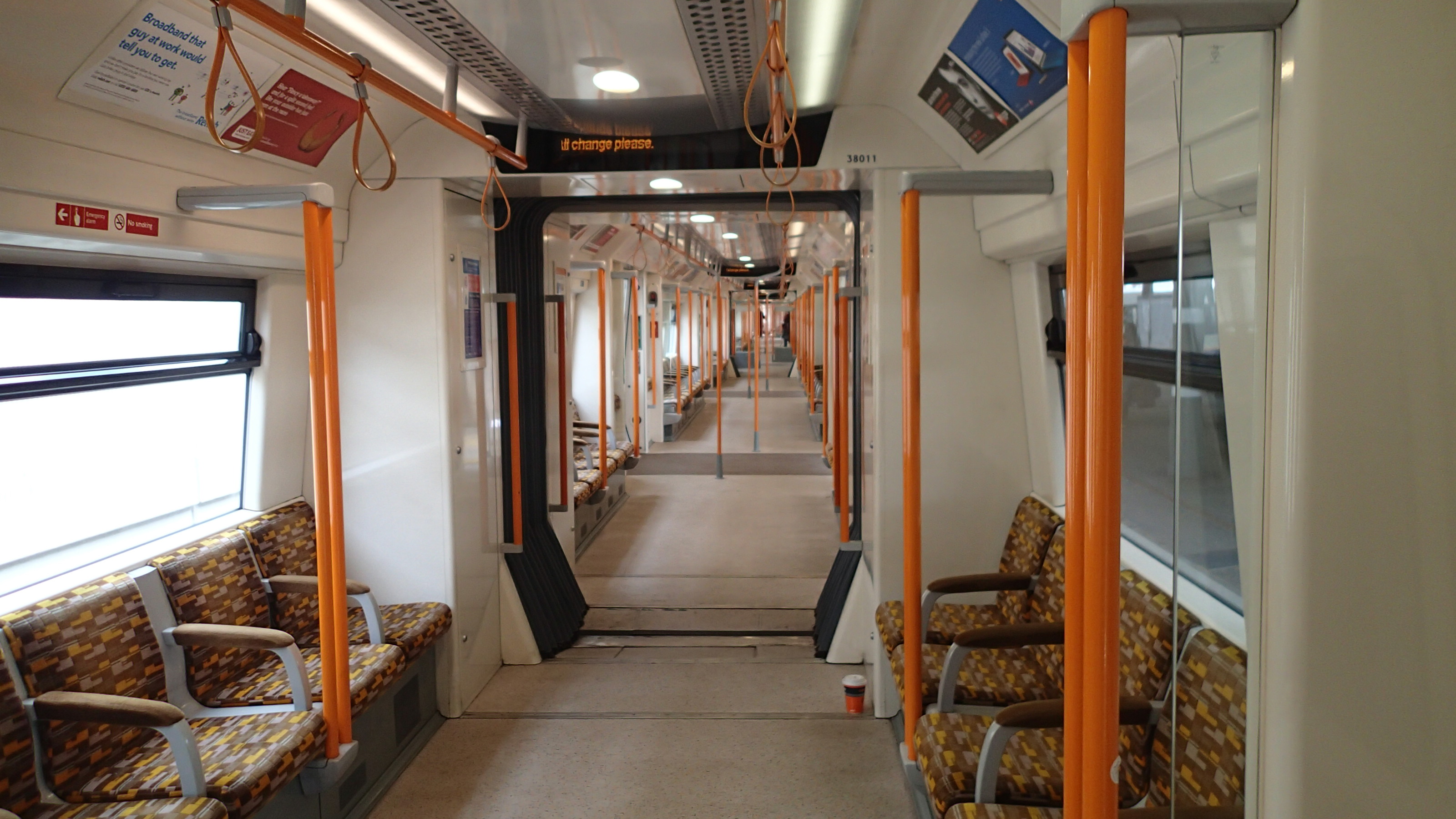
At the present time they are the only heavy rail train with this seating layout. Although London Overground will soon be running some Class 710 trains with a similar layout.
- The seats are reasonably comfortable.
- All passengers get at least one arm-rest.
- Passengers can walk between cars to find a seat or more space.
- The aisle between the seats is wide enough for passengers to stretch their legs and others to walk through, when all seats are taken.
- There’s plenty of space for standees and lots of handholds.
- In less busy times, everybody gets at least one seat.
There are also wide lobbies and doors for easy embarking and alighting.
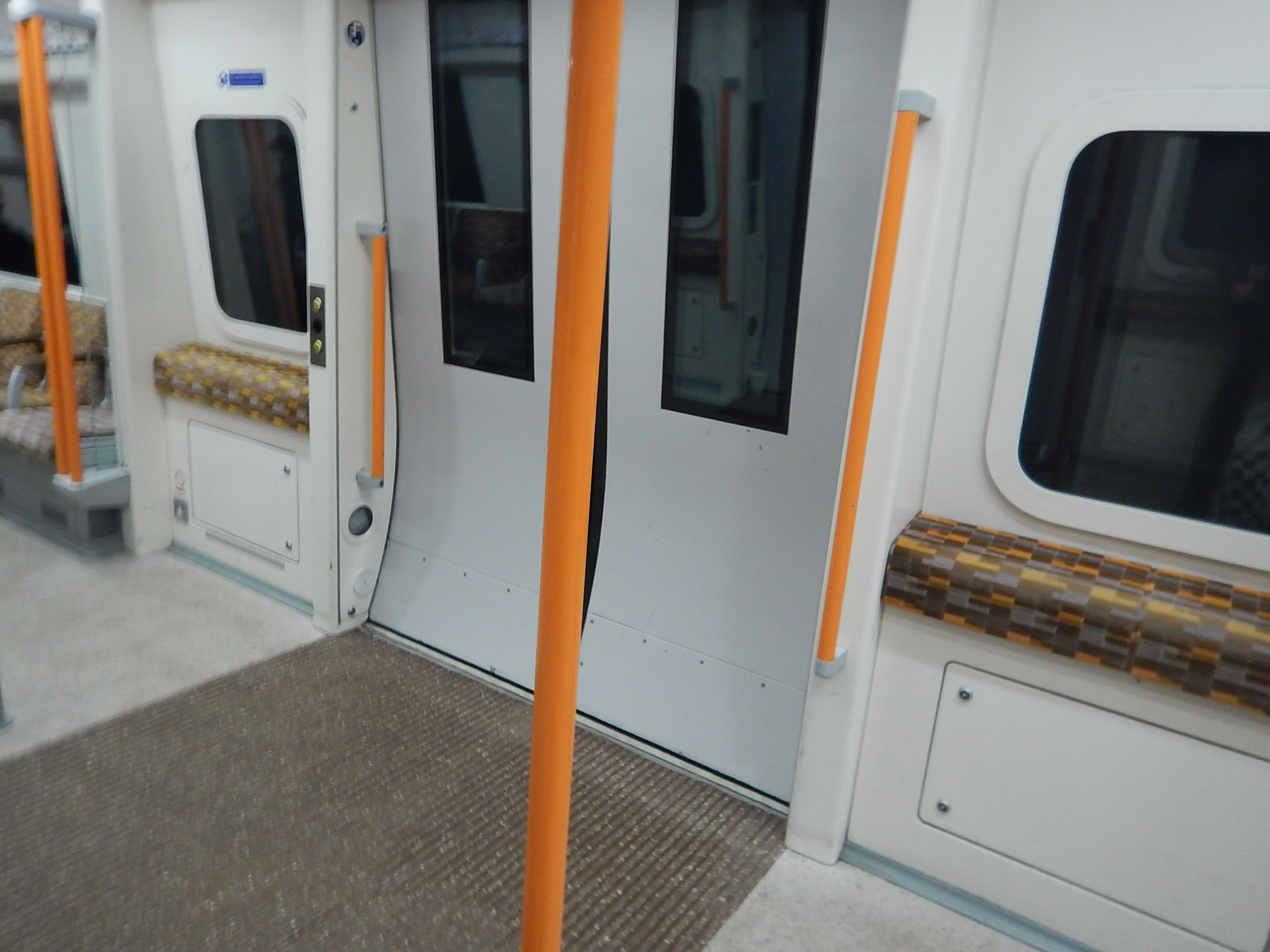
Note the perches either side of the door and the numerous handholds.
In my travels across Europe, I’ve never found a better inner-city commuter train.
To run a four trains per hour (tph) service on the Gospel Oak to Barking Line, ideally eight trains are needed; six to run the service, one in maintenance and a spare.
But all London Overground can scrape together is three Class 378 trains shortened to four-cars.
- This limited number of trains can only run a two tph service.
- The four-car Class 378 trains have 152 seats (including tip-up seats) and thirty-two double perch seats.
- The two-car Class 172 trains have 124 seats.
This gives these seats per hour for the two services.
- Class 172 trains – four tph – 496
- Class 378 trains – two tph – 432
The Class 378 trains may offer less seats, but each four-car train can hold a lot of standees.
This article on Railway Gazette is entitled London Overground Class 378 Ready To Enter Service, says that four-car versions of Class 378 trains can hold up to 700 passengers.
If you’ve ever travelled on the East and North London Lines around Dalston in the Peak, you’ll know how many people these trains can hold at a push!
Since the two tph service started yesterday I’ve done several trips on the Gospel Oak to Baring Line over two days.
- 09:20 – Gospel Oak to Barking
- 10:33 – Barking to Blackhorse Road
- 14:27 – Harringay Green Lanes to Gospel Oak
- 14:50 – Gospel Oak to Barking
- 15:33 – Barking to Gospel Oak
- 07:33 – Barking to Gospel Oak
Only the last trip can really be considered to be in the Peak.
I have the following observations on the Off Peak trips.
- There were typically at least twenty per cent of seats available.
- No-one was ever forced to stand, although some were.
- A proportion of passengers were doing short trips of one or two stops.
- Some stops like Crouch Hill, Blackhorse Road and Leyton Midland Road seemed to have more passenger traffic than others.
- The trains had more passengers towards the Barking end of the route.
- I asked a few passengers, if they’d had to wait long and all said, they’d read the timetable and arrived accordingly.
- The usual accessories like dogs, buggies and baggage were carried by a proportion of passengers.
- Two station staff said passengers were only complaining about the frequency.
It appears to me, that Off Peak journeys on the route will be adequate if not as frequent as passengers want.
I have the following observations for the single Peak journey at 07:33 this morning.
- Nearly all seats were taken for the whole route.
- Dwell times were slowed at certain stations, due to the numbers wanting to enter and alight.
- All standees had a decent hand-hold.
- Some passengers were still doing short trips of one or two stops.
- Blackhorse Road with its connection to the Victoria Line was busy.
- A staff member told me, that it all gets less busy after eight o’clock.
I should also say, that one passenger was complaining hard, as he had to stand for his short journey from Crouch Hill to Gospel Oak. But then he was dressed like he would pay for a First Class seat.
On arrival at Gospel Oak, I took a North London Line train to Hampstead Heath and that was carrying more passengers per car.. This added a perspective to the trip.
But then, in my part of London, at times, there are more overcrowded trains that I use regularly.
- The Central, Victoria and Northern Lines on the Underground.
- The North and East London Lines of the Overground.
- The Northern City Line into Moorgate station.
Today’s Peak trip was no worse, than some I’ve experienced in the North of England.
Conclusion
The three gallant Class 378 trains are coping well and if they don’t suffer any failures, I suspect they can hold the line, until reinforcements arrive.
My trip today, illustrated the strengths of the train design as a large number of passengers were transported in a half-hour journey across North London.
Bombardier must also be pleased that it is three of their ten year-old-trains, that have been quickly reconfigured and have made up for their software shortcomings, that are causing late delivery of the Class 710 trains.
Changing Trains At Scarborough – March 13th, 2019
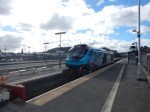
I took these pictures, whilst changing from the York to Scarborough train to one going to Hull.
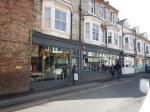

There used to be a cafe in the Stephen Joseph Theatre, but they pointed me to the Eat Me Cafe in the road behind.
I visited the cafe at the wrong time of day. Otherwise, I would have had lunch, as they had gluten-free options.
Bridlington Station – 13th March 2019
I took these pictures as I passed through Bridlington station.
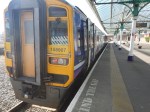
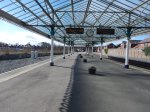
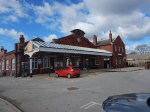
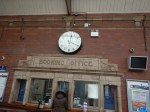
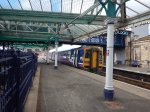
There is an interesting comparison to be made with Felixstowe station, that I know well.
- Felixstowe only has one operational platform to Bridlington’s three.
- Bridlington has twice the service and twice the passengers than Felixstowe.
- Both are a walk of ten minutes or so from the actual town centre.
- Both are Grade II Listed
- The towns are of a similar population.
In Bridlington – March 13th 2019, I discussed how Felixstowe could be getting a four trains per hour tram-train service from Ipswich and how a similar service could benefit lots of towns, including Bridlington.
 The Anonymous Widower