Hull Trains Are Mounting A Big Advertising Campaign
The adverts, unlike some, are not annoying, but Hull Trains are certainly paying for a lot of adverts to be shown in web sites like The Times.
I know from my post entitled Hull Trains Is Back And Stronger Than Ever, that they are feeling bullish about the future, but I can’t remember a train company advertising on the web as much as this.
Reopening the Stoke – Leek Line
On October 27th this Beeching Reversal Project was given £50,000 to build a case for reopening.
These are my thoughts.
The State Of The Line Today
This sentence describes the Stoke Leek Line in Wikipedia.
The Stoke to Leek line is a mothballed railway route, which up until 1988 was used by BR freight trains to reach the quarries at both Cauldon Lowe and Oakamoor.
This map was also clipped from Wikipedia.

Note.
- Leek is at the top of the map.
- Leek is a town of 21,000 people.
- The distance between Stoke-on-Trent and Leek is about eleven miles by road.
- The Waterhouses branch Line leads to the quarries.
- The Churnet Valley Line is a heritage line.
I have flown by virtual helicopter along the line and you can see a single-track railway amongst the weeds.
Leek
This Google Map shows Leek.
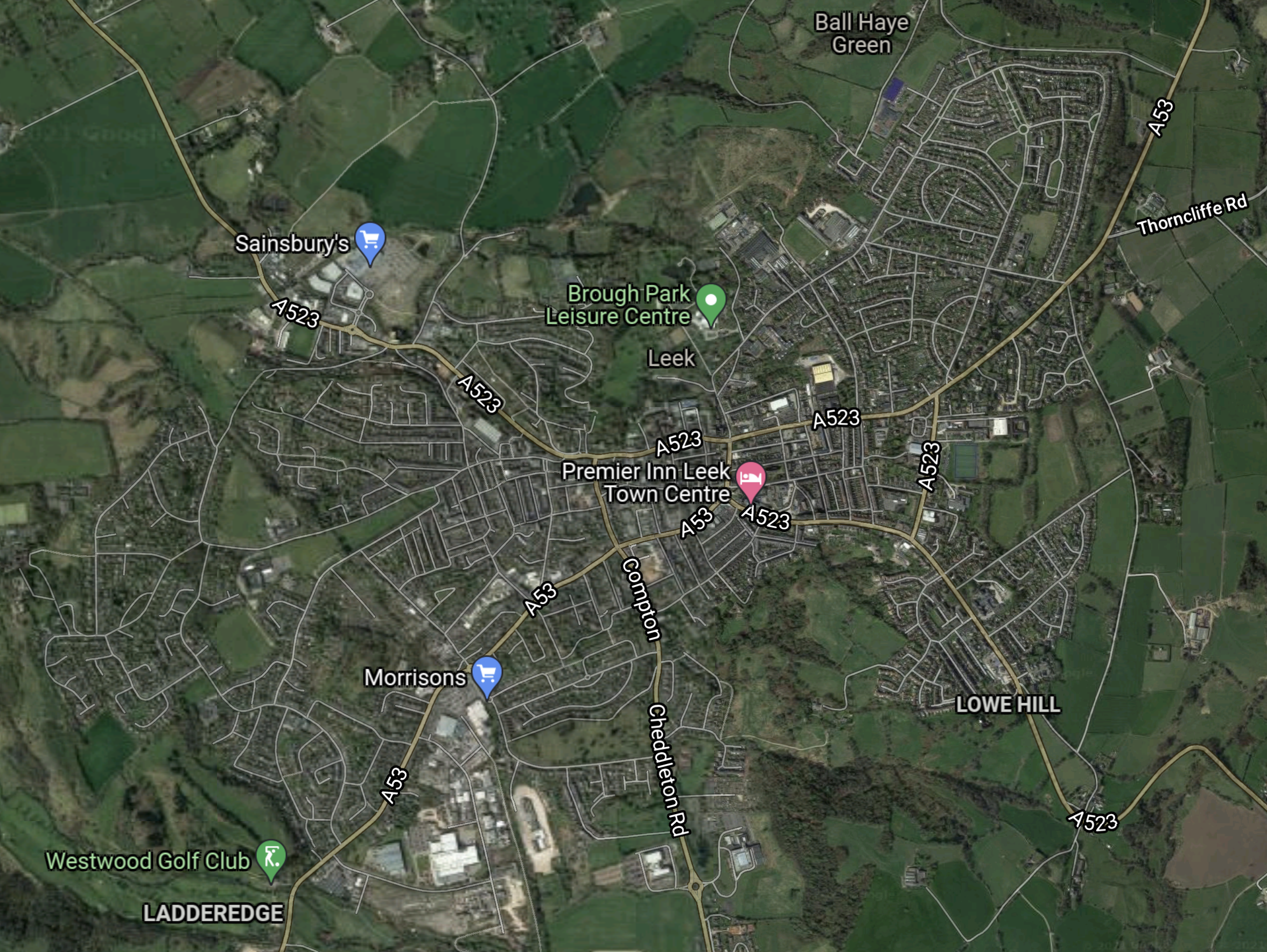
The original station was demolished to make way for the Morrisons supermarket.
I suspect that there is sufficient space close to the supermarket to fit in a simple single-platform station for the single-track from Stoke-on-Trent.
Rolling Stock
I suspect this line would best be served by battery-electric trains.
- It’s no more than a dozen miles.
- There is electrification at Stoke-on-Trent station.
- Leek has the lower altitude by 220 ft.
I suspect a charging system would be needed at Leek.
Vivarail’s Class 230 trains could be ideal for this line.
Freight
Reading about the line, it appears that there are plans that propose reopening the line for traffic from the quarries.
It would need to be decided, if freight were to be allowed on the line.
Conclusion
This could be a useful passenger line, with a freight capability, if that were needed.
Reopening The Oswestry – Gobowen Line
On October 27th this Beeching Reversal Project was given £50,000 to build a case for reopening.
These are my thoughts.
Gobowen Station
Gobowen station appears to be a fine station.
- It is Grade II Listed.
- It has two platforms.
- It is on the Shrewsbury-Chester Line.
- Transport for Wales run trains to Birmingham New Street, Cardiff Central, Chester, Holyhead and Shrewsbury.
- Avanti West Coast will start running services to and from London Euston via Wrexham in December 2022.
Wikipedia says this about the future of the station.
Gobowen station may become the northern terminus of the proposed Cambrian Heritage Railways line to Llynclys, Pant and Blodwel via Oswestry. Shropshire Council was to acquire the coal yard at Gobowen for railway-related uses, including car parking for the station. If the plans are fully realised, the station would have three platforms, one of which would be for the Heritage Railway.
It does look as if, Shropshire Council have got the money for a full study.
This Google Map shows Gobowen station.

Note.
- The two tracks of the Chester-Shrewsbury Line each have a platform.
- Step-free access is by the level crossing, which is at the North end of the station.
- It looks like it would be space to convert the Northbound platform into an island platform, where the Western platform face would be for the heritage trains.
This second Google Map shows the tracks at the South end of Gobowen station.
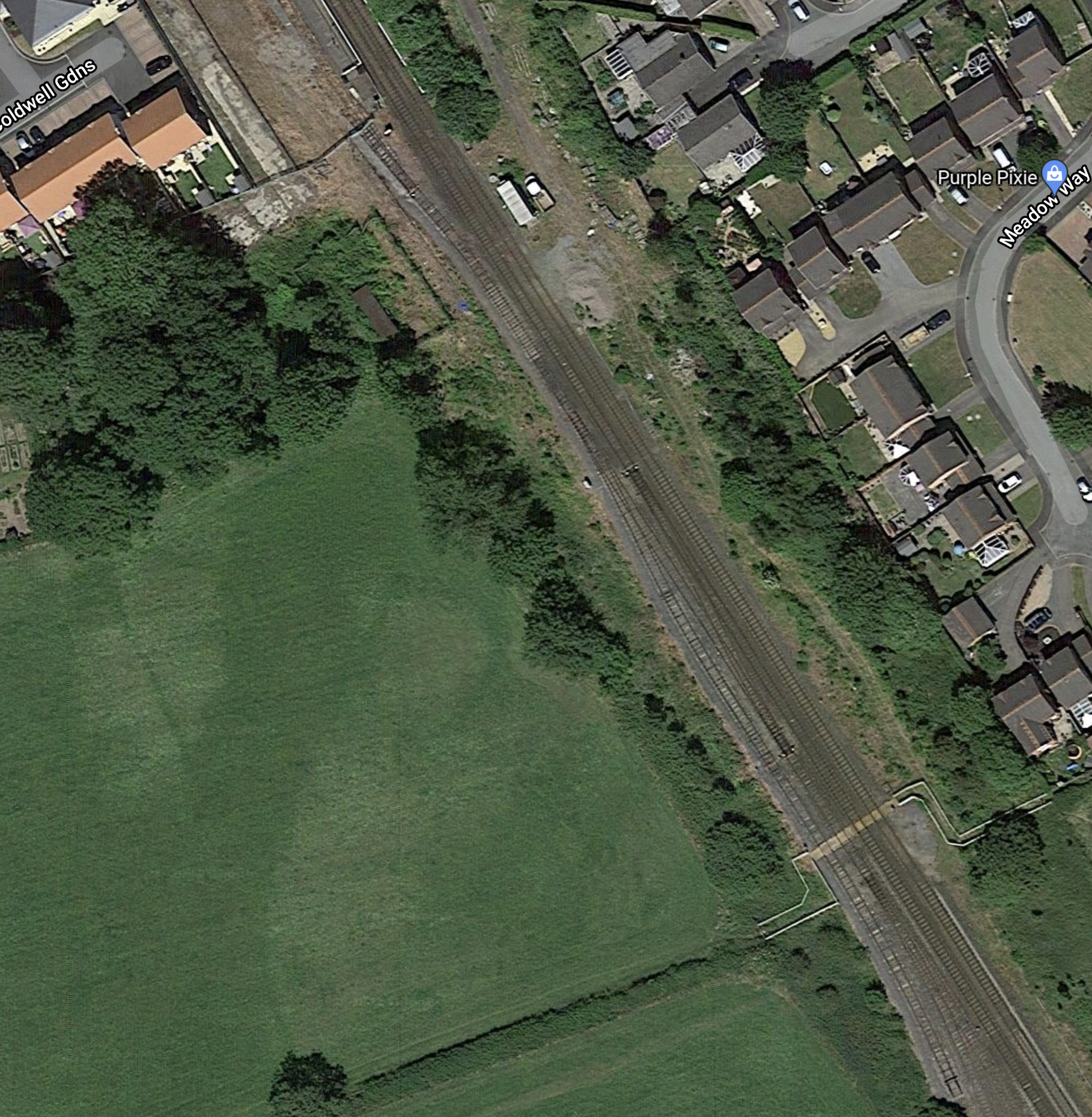
Note.
There is a set of points to allow trains to access a third platform at Gobowen station.
The single-track line to Oswestry branches off to the West at the bottom of the map.
It would appear that a bay platform at Gobowen station can be created to handle trains to Oswestry.
Oswestry Station
Oswestry station appears to be another fine station.
- It is also Grade II Listed.
- It has just a single platform.
- It appears to be owned by the local authority.
This Google Map shows the station.

Note.
- The station is the large building with the chimneys in the South-East corner of the map.
- The single platform is behind it.
- The platform is long enough to take a 1200 metre long train.
This station would make an ideal terminus.
The Track Between Oswestry And Gobowen
The track is single-track with a couple of foot crossings, so I don’t think it will need much to bring it up to a modern standard.
A Shuttle Service Between Oswestry And Gobowen
I suspect a two-car shuttle train between the two stations would suffice for most of the day.
Transport for Wales have some Class 230 trains and these would be ideal. They could even be battery-electric trains if a battery charging system were to be installed at one station.
Could Avanti West Coast Run A Service To London?
It looks like Avanti West Coast’s Class 805 trains could run along the line between Gobowen and Oswestry.
So could Avanti’s planned service to Gobowen terminate at Oswestry instead?
It would all depend on the passenger forecasts and actual numbers
Could Avanti West Coast Run A Battery-Electric Service To London?
Consider.
- Oswestry is a town of 17,500 people, so probably has a reasonable electricity supply, especially if it were to be backed up by a battery.
- The amount of renewable electricity produced over the border in Wales is only going to grow.
- There is plenty of space at Oswestry to put in a charging system to replace the batteries.
Distances are as follows.
- Crewe and Chester – 21.1 miles
- Chester and Gobowen – 24.6 miles
- Gobowen and Oswestry – 3.3 miles
This is a total distance of 49 miles.
Avanti West Coast have ordered thirteen bi-mode Class 805 trains, which will replace the diesel Class 221 trains currently working between London Euston and Chester. Holyhead and Shrewsbury.
- They will run at 125 mph between Euston and Crewe using electric power.
- If full in-cab digital signalling were to be installed on the electrified portion of the route, they may be able to run at 140 mph in places under the wires.
- They will use diesel power on the North Wales Coast Line to reach places like Chester, Holyhead and Wrexham.
- According to an article in Modern Railways, the Class 805 trains could be fitted with batteries.
I wouldn’t be surprised that when they are delivered, they are a version of the Hitachi’s Intercity Tri-Mode Battery Train, the specification of which is shown in this Hitachi infographic.

Note.
- I suspect that the batteries will be used to handle regenerative braking on lines without electrification, which will save diesel fuel and carbon emissions.
- The trains accelerate faster, than those they replace.
- The claimed fuel and carbon saving is twenty percent.
- It is intended that these trains will be introduced next year.
But Hitachi have not given any predictions of the range of these trains on battery power alone.
However, they do claim a battery range of 56 miles for the Hitachi Regional Battery Train, which is based on similar technology.
I believe it would be possible to run a zero-carbon London Euston and Oswestry service.
- The trains would be Class 805 trains fitted with batteries.
- Trains could stop at Milton Keynes Central, Lichfield Trent Valley, Stafford, Crewe, Chester, Wrexham General and Gobowen.
- Trains would use electrification between London Euston and Crewe.
- Trains would recharge their batteries South of Crewe and at Oswestry.
I doubt that a battery-electric zero-carbon train serving Cheshire, Shropshire and North-East Wales would have a negative effect on the area.
Just as Hull and Lincoln seem to be moving towards a frequency of one train per two hours from London, I wonder if this service could ever attain the same frequency.
Onward From Oswestry
Cambrian Heritage Railways are planning to run services past Oswestry on their heritage railway.
Will this be a good idea?
Where Now For First Group?
First Group are a shareholder in Avanti West Coast.
They also own Lumo, who last week launched their open-access service between London and Edinburgh. Their marketing is all about being green and sustainable.
I just wonder if a battery-electric service to Gobowen is successful, they will apply this model all over the group.
Hull Trains service between London and Hull is an obvious possibility for a battery-electric zero-carbon service.
Conclusion
It looks to me, that reopening of the Oswestry – Gobowen Line opens up other possibilities.
Reinstating The Line Between Tavistock And Bere Alston And Providing New Services To And From Plymouth
On October 27th this Beeching Reversal Project was given £50,000 to build a case for reinstating.
This project finally seems to be getting going.
The complete reinstatement between Exeter and Plymouth seems to be developing into a three-phase project.
- Phase 1 – Exeter and Okehampton – This is now complete and trains are test running, with services due to start on the 20th November.
- Phase 2 – Tavistock And Bere Alston – This section is being planned and if approved could be the next section to be opened.
- Phase 3 – Tavistock and Okehampton – This would complete the reinstatement of the route between Exeter and Plymouth.
These are my thoughts.
The Completion Of Phase 1
Trains are now test running to between Exeter and Okehampton.
The full service starts on the 20th November.
- On that day, there will be eight trains per day (tpd) in both directions.
- Trains will leave Exeter at 06:32, 08:41, 10:36, 12:37, 14:38, 16:36, 18:48 and 21:00.
- Trains will leave Okehampton at 07:39, 09:45, 11:39, 13:39, 15:39, 17:46, 19:51 and 22:34.
- Trains are times to take around forty minutes for each trip.
- The service is pathed as a Class 150/153/155/156 DMU
- The service is planned for a maximum speed of 75 mph.
Note.
- This is approximately one train per two hours (tp2h).
- It looks like the service could be worked by a single train shuttling all day.
The Wikipedia entry for Okehampton station says this.
The service will increase to hourly towards the end of 2022.
It has been a very smooth restoration of service.
Okehampton Parkway Station
Okehampton Parkway station is to be built to the East of Okehampton at Stockley Hamlet.
- It will be close to a junction with the A30 dual-carriageway, which links London and Penzance.
- The A30 connects to the Cornish Main Line in Cornwall at Bodmin, Redruth and Penzance.
It looks like it could be a very useful Park-and-Ride station for Exeter and Okehampton.
Could The Okehampton Stations Be Used To By-Pass Dawlish?
In 2014, the sea breached the sea wall and the railway at Dawlish, on the Great Western Main Line between Exeter and Plymouth. Trains couldn’t run past Exeter.
I very much feel that with global warming and seemingly increasingly bad weather that we can’t say that a breach won’t happen again.
Could it be possible to use the one of the Okehampton stations, as a terminal for a Rail Replacement service that connected to Plymouth and Cornwall?
The Gap Between Okehampton And Bere Alston
This Google Map shows the gap between Okehampton and Bere Alston stations.
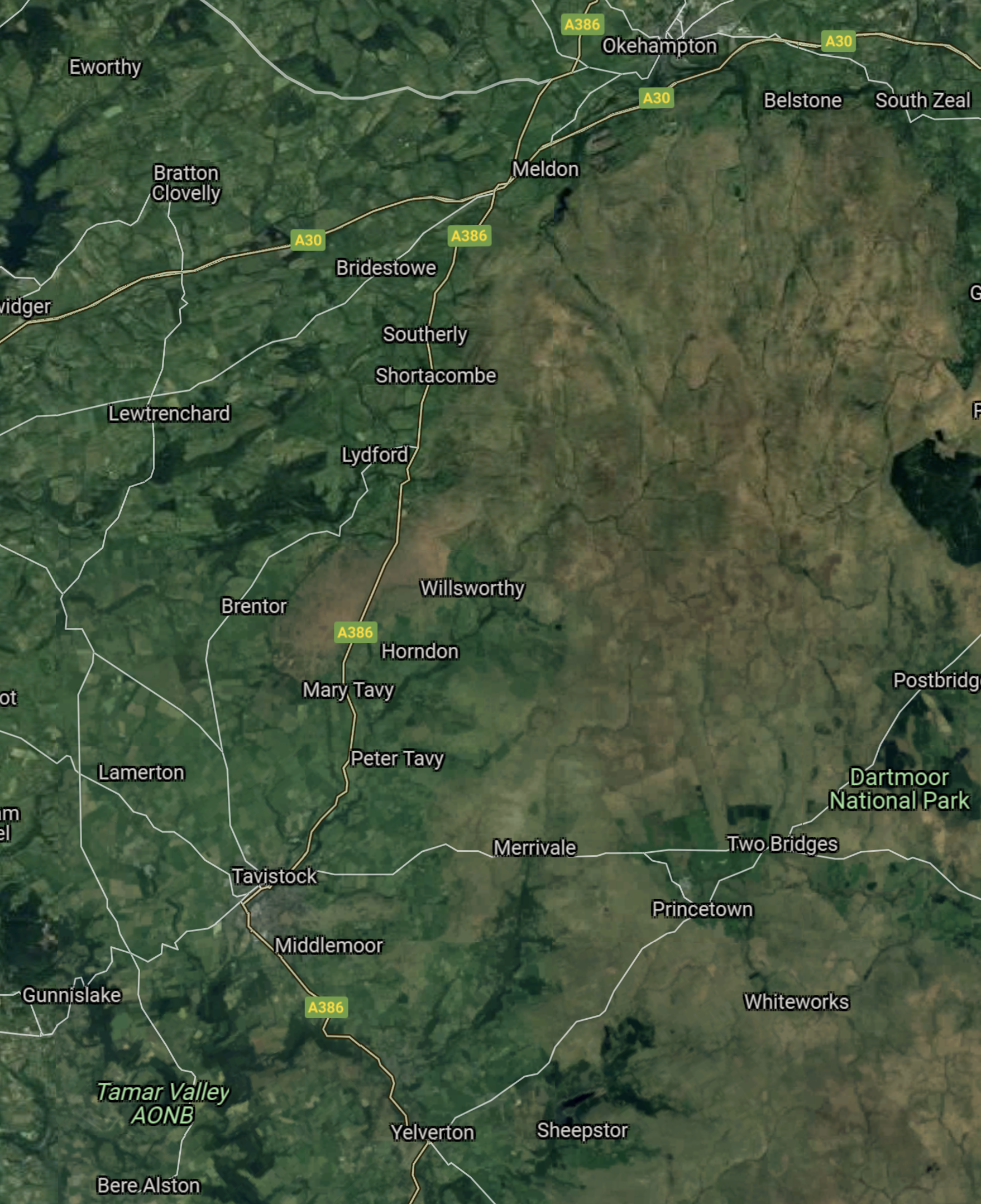
Note.
- Okehampton is at the top of the map between the three green rectangles which mark the main roads.
- Bere Alston is in the South-West corner of the map.
- Tavistock is North of Bere Alston.
- The three places are connected by the A 386 road.
Is there a bus between Okehampton and Bere Alston, that serves Tavistock and the major villages?
Phase 2 – Tavistock And Bere Alston
This Google Map shows between Tavistock and Beer Alston station.

Note.
- Tavistock is in the North-East corner of the map.
- Bere Alston is in the South-West corner of the map.
- I estimate that about six miles of new track will have to be laid.
This Google Map shows Bere Alston station, which is to the North-West of the village.
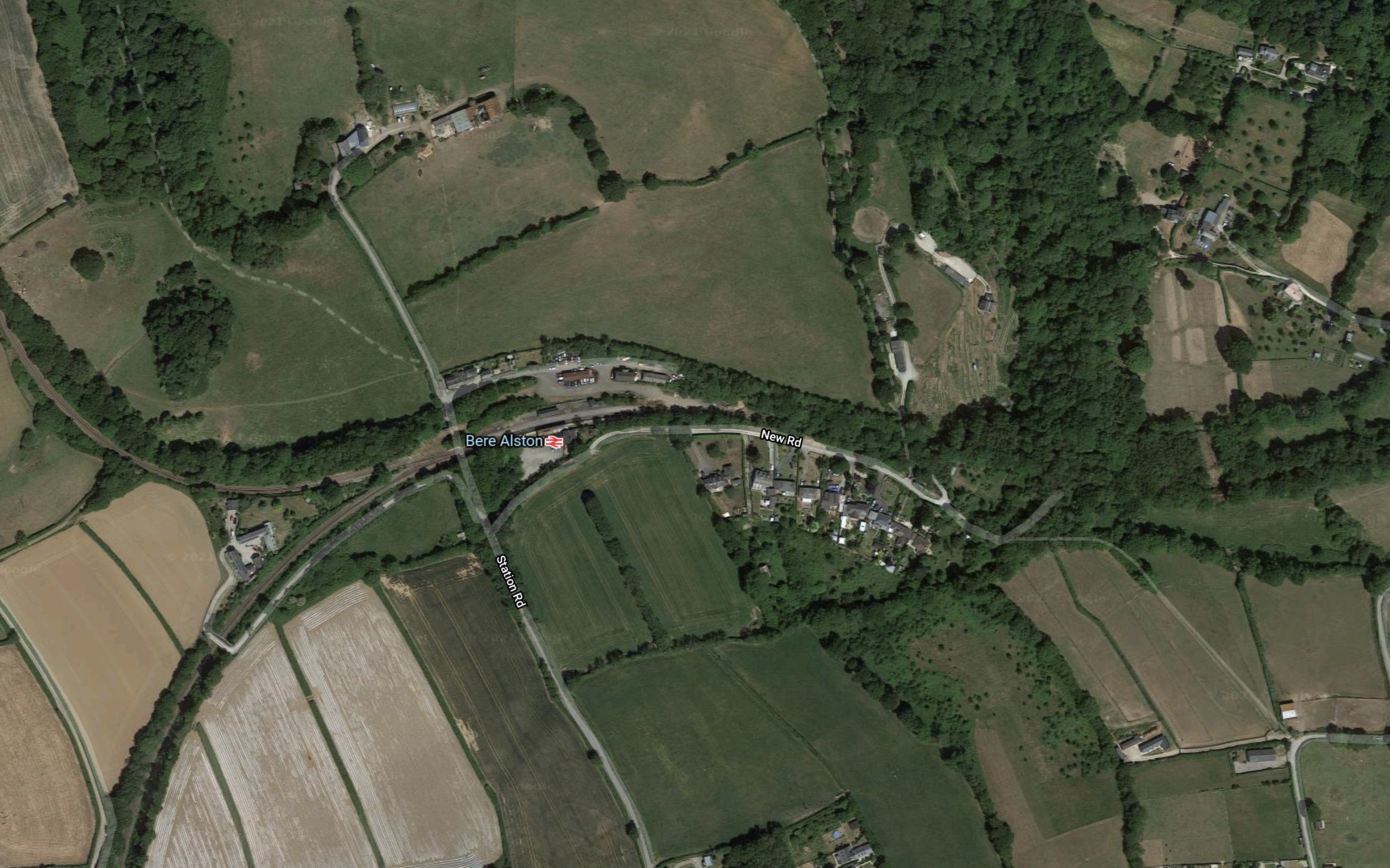
Note.
- Bere Alston station is on the Tamar Valley Line.
- The Tamar Valley Line is all single-track.
- Trains to and from Gunnislake station use the Northbound track at the junction to the West of the station.
- Trains to and from Plymouth use the Southbound track at the junction to the West of the station.
- Trains between Gunnislake and Plymouth reverse at Bere Alston station.
It would appear that the route to Tavistock continued to the East.
This Google Map clearly shows the route of the disused railway as it runs North-East from Bere Alston station.

Note.
Bere Alston station is the South-West corner of the map.
The dark green line of the railway runs to the North-East corner of the map.
As all the railways in the area seem to have been single-track, I would suspect that any rebuilt railway on this route will be single track.
I have followed the dark green line through to Tavistock which is shown in this Google Map.

As the Department of Transport are prepared to finance a study for reinstatement of the route, I would suspect that there is a feasible route between Bere Alston and Tavistock.
- There would appear to be no bridges or viaducts between Bere Alston and the outskirts of Tavistock.
- Before closure, there no stations between Bere Alston and Tavistock North stations.
- Bere Alston station would need to be rebuilt.
The Wikipedia entry for Tavistock North station, says this about the condition of the line.
The station building has been restored and converted into three self-catering cottages. The stationmaster’s house is being restored as a private dwelling, while the goods yard, now known as Kilworthy Park, houses the offices of West Devon Borough Council. The track bed for about one mile (1.6 km) south of Tavistock North station is open to the public as a footpath and nature reserve, and it is possible to walk across the viaducts that overlook the town.
The rest of the track bed south of Tavistock is almost intact to Bere Alston, where it joins the present-day Tamar Valley Line. There has been discussion regarding the re-opening of a rail link for a number of years. Engineering assessment has shown that the track bed, and structures such as bridges and tunnels, are in sound condition.
I can foresee some problems, in what might not be one of the most challenging of projects.
- Claiming back the railway from the walkers and cyclists.
- The ownership of the stationmaster’s house.
Unlike Scotland, England didn’t make sure that rail routes could be converted back to railways if needed.
My project management knowledge leads me to agree with what appears to be a decision to do this part of the route next.
Phase 3 – Okehampton And Tavistock
The title of this project as given in the Railway Gazette article is as follows.
Reinstating The Line Between Tavistock And Bere Alston And Providing New Services To And From Plymouth
If you read this literally, it doesn’t mention anything about connecting to Okehampton and Exeter.
- Looking at maps and reading up on the line, it does appear that the route may be more challenging.
- The route also contains the Meldon Viaduct, which is a scheduled monument.
Until a viable plan is developed, it might be better and more affordable to run zero-carbon buses between Tavistock and Okehampton.
Reopening Stonehouse Bristol Road Station
On October 27th this Beeching Reversal Project was given £50,000 to build a case for reopening.
Stonehouse is a town in Gloucestershire.
It has a population of just under 8,000.
Stonehouse station has direct connections to Cheltenham Spa, Gloucester, London and Swindon.
Stonehouse Bristol Road station used to be a station in the town on the Cross Country Route, with direct connections to Birmingham. Bristol, Cheltenham Spa and Gloucester.
This Google Map shows the town, the current station and the proposed station.
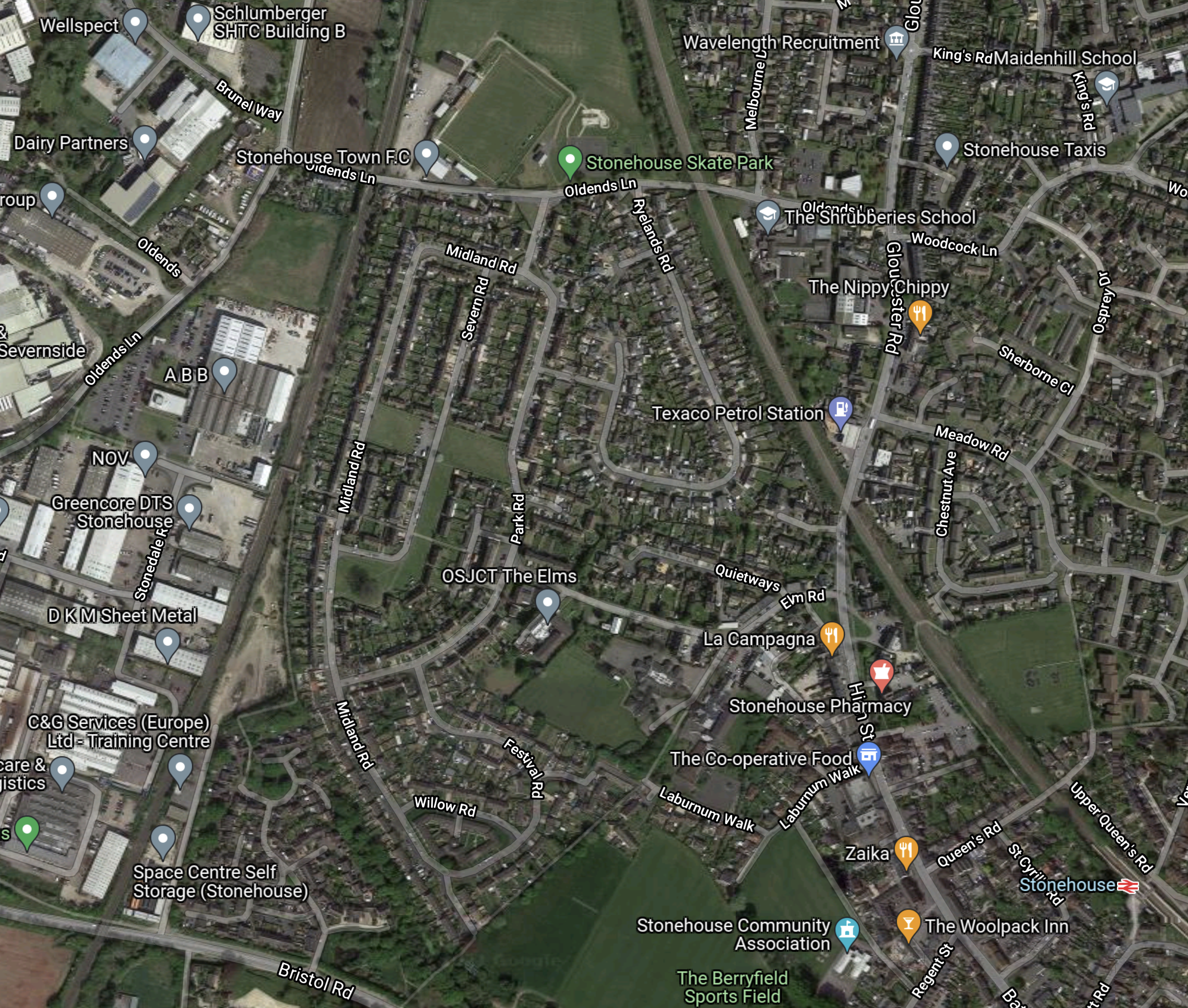
Note.
- The Golden Valley Line between Gloucester and Swindon runs vaguely down the East side of the map.
- Stonehouse station is in the South-East corner of the map on the Golden Valley Line.
- The Cross Country Route between Gloucester and Bristol runs vaguely down the West side of the map.
- Stonehouse Bristol Road station will probably be in the South-West corner of the map, where the Cross-Country route crosses Bristol Road.
- The two railway lines join North of Stonehouse and go to Gloucester.
This second Google Map shows the site of Stonehouse Bristol Road station to a larger scale.
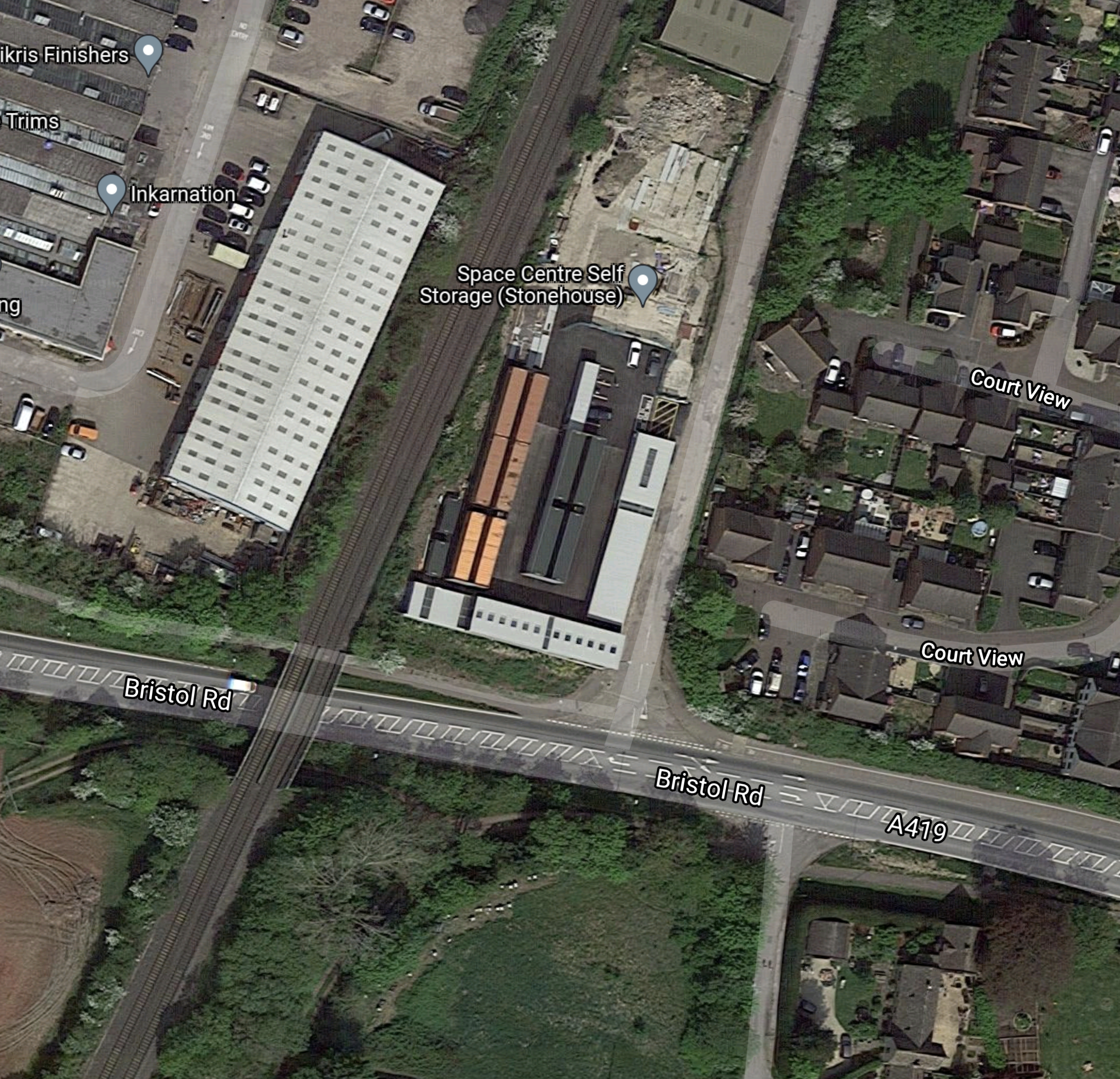
It shouldn’t be too much of a problem to fit a station where the railway crosses Bristol Road.
These are my other thoughts,
Services
The next station towards Bristol is Cam & Dursley and this station has an hourly service between Bristol and Gloucester.
Cross Country trains pass but don’t stop, but would they stop at a new station?
Car Parking
Will there be enough space for car parking bear the station?
New Housing
Wikipedia mentions that three thousand new houses may be built in Stonehouse.
This would surely be a reason for a new station.
Conclusion
It does look like the new housing is the main reason to reopen this station.
Reopening Corsham Station
On October 27th this Beeching Reversal Project was given £50,000 to build a case for reopening.
Corsham is a town in Wiltshire.
- It has a population of 13,000
- It is very much a military town, with numerous defence establishments, some of which are deep underground in former bath stone quarries.
- Corsham station closed in 1965.
As this Google Map shows the Great Western Railway passing through the town.
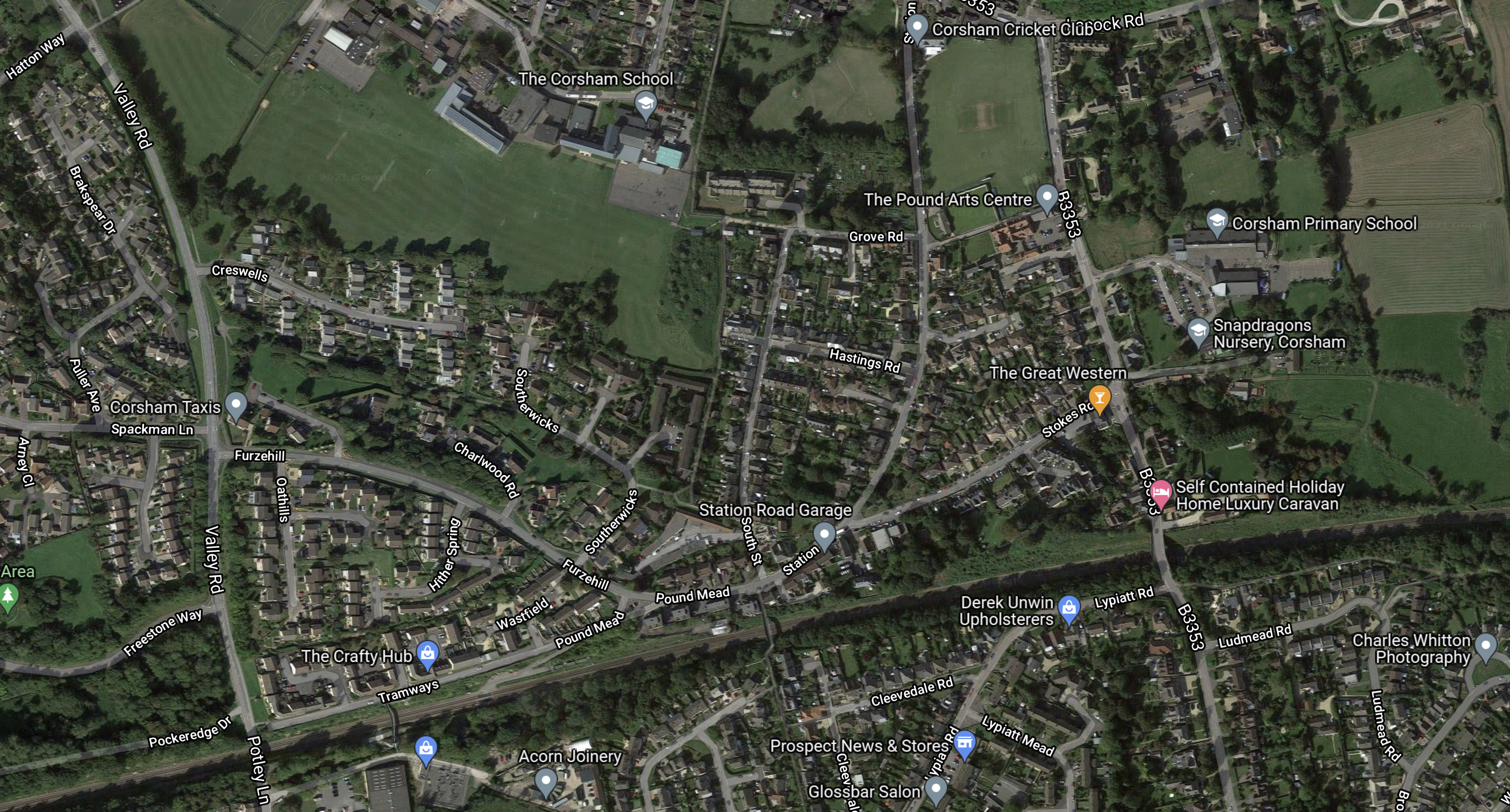
The dark scar of the railway across the map towards the bottom is clearly visible.
This second Google Map shows the site of the former station.
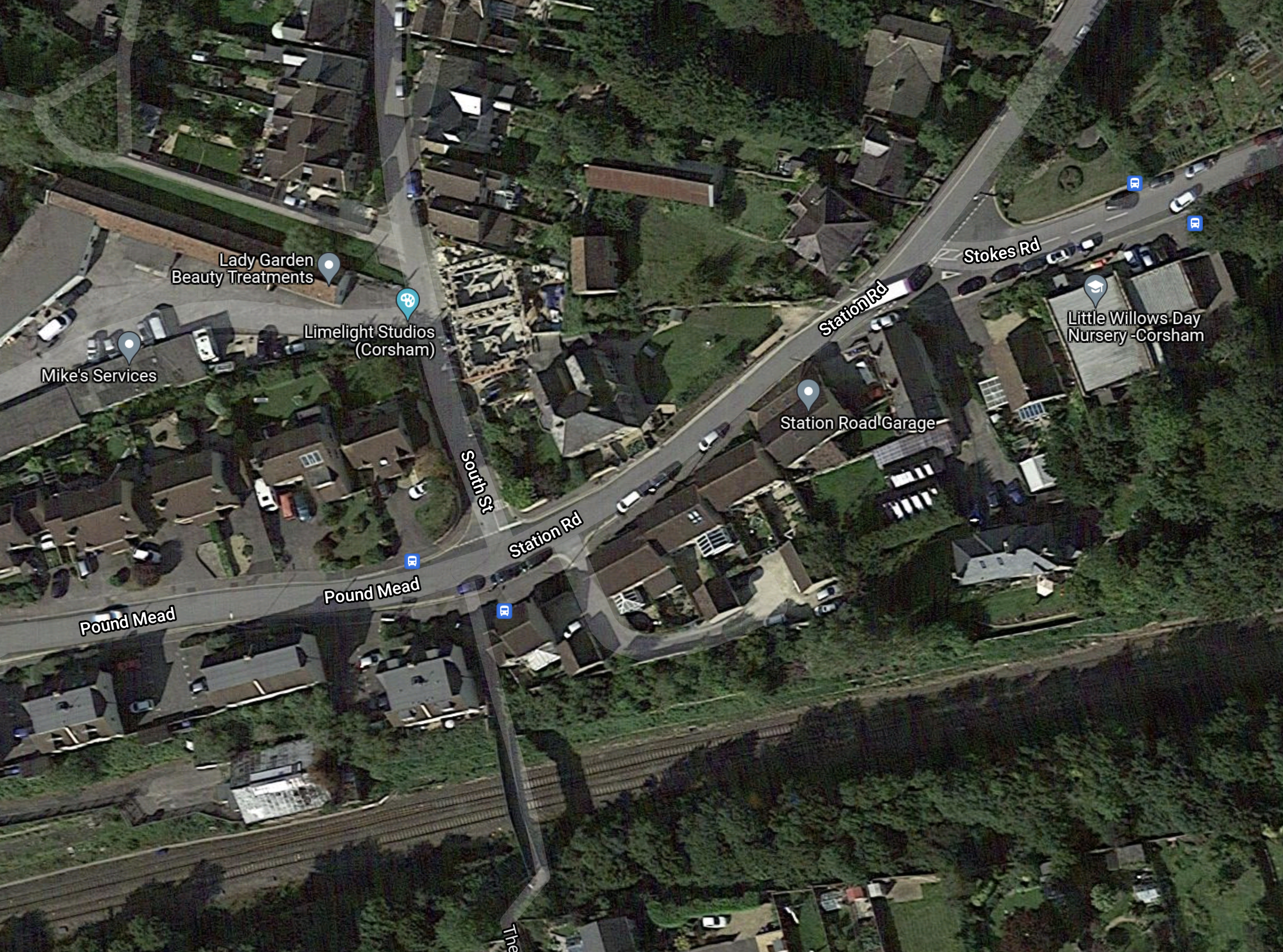
Note.
- Station Road is a bit of a giveaway.
- There is a footbridge over the double-track railway. Note the shadow.
- The railway is not electrified, but could be in the future.
- Chippenham station is to the East and Bath Spa station is to the West.
- The station was in a deep cutting on the approach to Box Tunnel, which is to the West.
I doubt that designing and building a new Corsham station will be a challenging project.
These are my thoughts on other issues.
Military Issues
The Wikipedia entry for Corsham has a section called Defence, which lists well over half-a-dozen defence sites.
Could these be a reason for the new station?
- Just like many other businesses and families, does the Ministry of Defence feel it should decarbonise?
- Are large numbers of employees and visitors driving in from Swindon and Bristol?
How many new stations would cut the country’s carbon footprint?
Services
Currently, it appears the only services going through Corsham are the Paddington and Bristol Temple Meads service
- There are two trains per hour (tph)
- The trains call at Reading, Didcot Parkway, Swindon, Chippenham and Bath Spa.
- Between Chippenham and Paddington is fully-electrified
- Trains run between Bristol Temple Meads and Chippenham, which is a distance of 24.4 miles on diesel.
These trains could stop, but would that slow the services?
Perhaps alternate services would stop at only one of Corsham and Chippenham. But that would mean the train couldn’t be used between those two stations.
An alternative philosophy would be to electrify between Chippenham and Bath Spa, so that the stops would be faster , as acceleration would be under electric power.
- Box Tunnel has been prepared for electrification.
- This would be thirteen miles of new electrification.
- Trains would run between Bristol Temple Meads and Bath Spa, which is a distance of 11.5 miles on diesel.
But the good citizens of Bath, might object to electrification through Sydney Gardens and the City Centre.
If they do object, an alternative would be to electrify between Bathampton junction and Chippenham.
- As before Box Tunnel would be electrified.
- This would be eleven miles of new electrification.
- Trains would run between Bristol Temple Meads and Bathampton junction, which is a distance of 13.7 miles on diesel.
Bath would not be despoiled by electrification.
Battery-Electric Trains
I touched on electrification in the previous section and I believe it would be reasonably easy to electrify between Chippenham station and Bathampton junction.
This would mean that there would be just 13.7 miles for the train to power itself between Bristol Temple Meads and Bathampton junction.
As it is 27.4 miles in total with perhaps a twenty minute wait in Bristol Temple Meads station, I believe this would be within the battery range of a Hitachi Intercity Tri-Mode Battery Train, which is described in this Hitachi infographic.
Note.
- Hitachi haven’t disclosed the range of the train on battery power alone.
- Twenty minutes in Temple Meads station is enough to fully charge the battery.
If the train could be recharged at Temple Meads station, the battery range needed would be just fifteen miles.
Conclusion
All stakeholders would appear to benefit from this new station.
Speak Up And Help Beat COVID-19
The title of this post, is the name of a research project, which is described on this page of the government web site.
This is the first paragraph.
We are seeking volunteers to take part in a study at the forefront of new and emerging science and technology.
Basically, you’re asked to record a few sounds including a cough and then AI attempts to decide, whether you have the dreaded covids or not. As you are invited to take this test soon after a full test for the covids, it’s quite easy for any intelligent computer, as she will look you up in the database.
The idea, is to see whether diagnosis is possible from a cough.
But then doctors have been asking Army recruits to cough since Wellington’s time.
Do they ask ladies to cough or is that now considered transphobic?
Commercial Hydrogen Planes Will Be Flying By 2024
The title of this post, is the same as that of this article on Hydrogen Fuel News.
There is also this sub-heading.
ZeroAvia plans to start flying passenger flights between the United Kingdom and the Netherlands.
I am not as sure as the author of this article, but I do feel we’ll see some viable hydrogen aircraft.
- Airbus have gone from first flight to in service in eighteen months, but not with hydrogen.
- Turboprop and turbofans can be modified to run on hydrogen.
- Hydrogen storage is getting better at a fast rate.
Never underestimate engineers with ambition!
Reopening The Darlington – Weardale Line To Passenger Services
On October 27th this Beeching Reversal Project was given £50,000 to build a case for reopening.
The current Weardale Railway is a heritage line, that extends the current National Rail service between Darlington and Bishop Auckland stations further up Weardale.
- It is a single track railway.
- The current operational length is 18 miles between Bishop Auckland West and Stanhope stations.
- The line could be extended a few miles to the site of the former Wearhead station.
- Thre is a station at the village of Stanhope which i has a castle, a community hospital and a population of 1,600.
- There is a station at the village of Frosterley which has a population of 700.
- There is a station at the village of Witton-le-Wear which has a population of 700.
- There seem to be lots of caravan parks along the river.
- From my virtual helicopter, the track looks in reasonable condition.
- There appear to be a couple of passing loops.
- There don’t appear to be any tunnels.
- The Weardale Railway has several bridges over the River Wear.
- I suspect the scenery is not bad.
To my untrained eye, this section of railway would appear to have possibilities for reopening, without any serious engineering problems.
These are a few of my thoughts.
The Connection To National Rail
This Google Map shows Bishop Auckland station, where the Weardale Railway connects to the National Rail network.
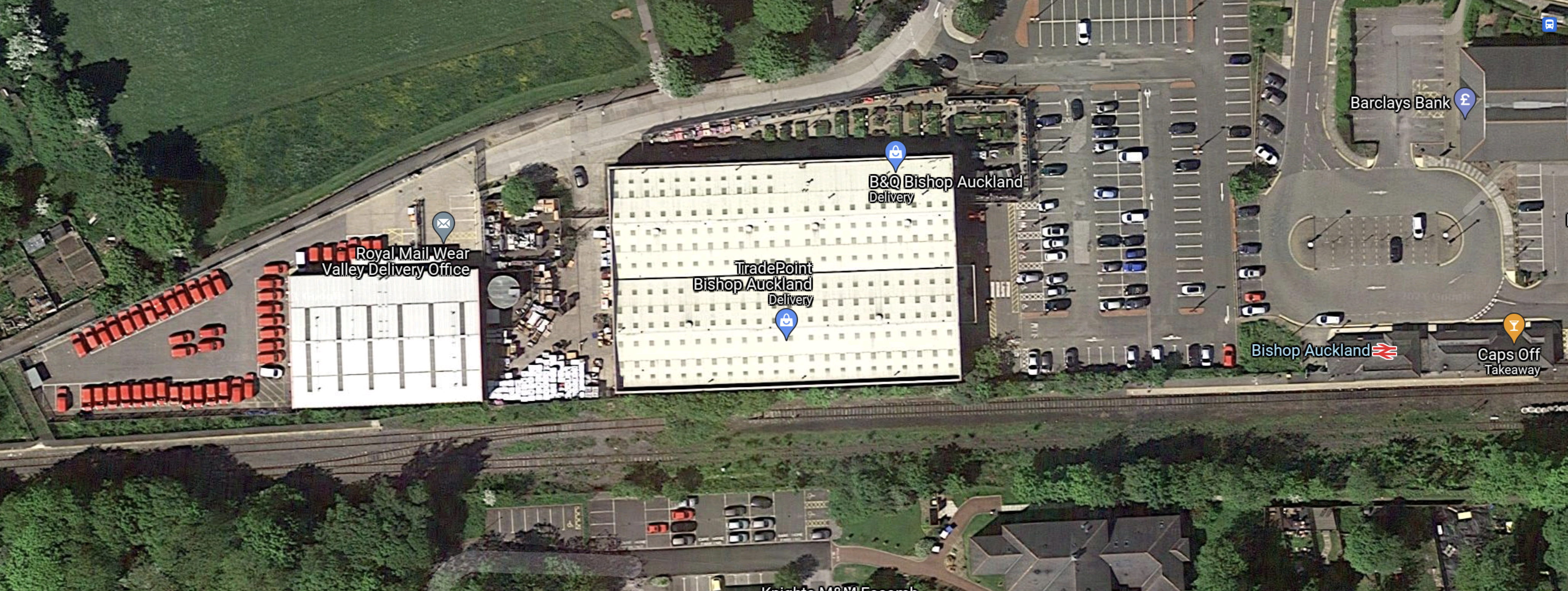
Note.
- The station appears to be well-placed in the town.
- There is plenty of space for tracks connecting the two systems.
I suspect that building a combined through and terminal station that would satisfy the needs of all stakeholders would not be the most challenging of tasks.
Could The Extended Line Have A Japanese Fairy Godmother?
Consider.
- Hitachi’s train factory at Newton Aycliffe is five miles to the South of Bishop Auckland.
- Hitachi have stated that they are developing battery-electric trains for lines without electrification.
- Developers of modern trains with complicated computer systems seem to go through many software versions.
I have to ask the question, if Hitachi would like to have a twenty-mile test track on their doorstep?
If they were testing trains that were agnostic about their power supply, the Weardale Railway would not need to be electrified, although there could be a couple of charging systems.
Would Access To The Quarries At Wearhead Be Needed?
The original Weardale Railway was built to access the quarries at Wearhead, but they switched to road transport some years ago.
This Google Map shows the Wearhead area.
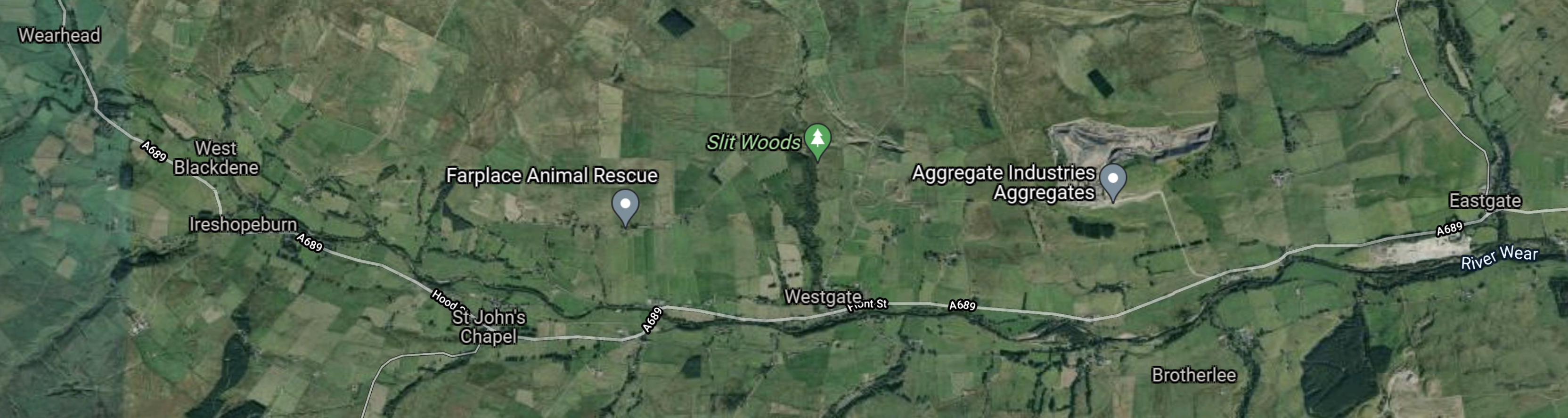
Note.
- Wearhead is in the North-West corner of the map.
- There is a quarry and there used to be a fluorspar mine.
- The white scar at the East of the map was a cement works.
Is there something, that could possibly be mined in this area, that could be taken out by train.
I think it should be born in mind, that mining and quarrying used to be a very dirty and carbon-intensive industry, but big mining companies are now embracing zero-carbon technology.
Could A Holiday Company Like Center Parcs Develop A Site In The Wear Valley?
I noticed a lot of caravans and chalets, as I examined the line.
Could a big operator like Center Parcs develop one of their holiday centres?
It could even be developed with a station.
Is New Housing Needed?
Does the local authority want to develop housing along the line?
What Rolling Stock Will Be Used?
There is no point in extending the line in these days of global warming without providing zero-carbon trains.
The Tees Valley Combined Authority is keen on hydrogen and there are good reasons.
- There is hydrogen available from chemical plants on Teesside.
- Hydrogen will give the trains a long range.
- The trains would probably only need refuelling once a day.
- In addition, Alstom are looking for an order for their Class 600 train, which is a conversion of a Class 321 train.
But I have my doubts about Alstom’s trains and Hitachi have doubts about hydrogen.
Consider.
- Do you really want to run hydrogen trains on a line where steam trains run?
- Darlington station is fully-electrified and it is also to be remodelled for more capacity and High Speed Two.
- Bishop Auckland and Darlington is just twelve miles.
- Darlington and Saltburn is just thirty miles.
With charging systems at Bishop Auckland, Saltburn and Stanhope, I am fairly sure Hitachi could develop an electric train for Teesside’s railways.
Conclusion
Hitachi could be key to the design of the reopening of the Darlington and Weardale Line.
Alison’s Last Mountain
I’m putting this BBC video up on the blog, for various reasons.
One of which is that it going to be deleted soon.
It is the story of the death of Alison Hargreaves on K2 and the trip by her family back to the mountain.
 The Anonymous Widower