The Eviation Alice nine-seat aircraft may on the face of it, not have many applications in the UK.
But consider the following.
The Eviation Alice Could Be A Very Good Neighbour
Consider.
- The three electric motors could be reasonably quiet.
- The propellers are positioned in the vortexes created by the wing-tips and the fuselage.
- The specification of the plane states that the propellers can be adjusted for pitch and rpm to reduce noise.
Imagine a single runway airport for electric planes only.
It would be likely, that the noise footprint would be very small!
As the Eviation Alice, is replacing Cessna 401 aircraft at Cape-Air, I suspect that the Alice is designed to be able to use similar runways to the Cessna 401, which can easily land and take-off in a seven hundred metre runway.
This could mean that new runways could be built in places that would currently be rejected.
Would this open up these possibilities?
New airports being created to serve towns with difficult road and rail links.
New runways close to major airports for electric low-noise aircraft only.
The Eviation Alice Doesn’t Have To Fly High
Typically airliners fly high and getting up and down takes a long time. But they don’t always have to fly that way!
A couple of years ago, I flew from Schipol to Southend. It was a clear day and the pilot flew directly across the North Sea at about three thousand feet and then straight in to Southend Airport.
We arrived very early.
I wonder, if as small quiet electric airliners get more common, that Air Traffic Control will develop ways of using their capabilities and quietness to create new routes.
Imagine flying from Norwich to Edinburgh, which is about 260 nautical miles in an Eviation Alice.
- I have flown Ipswich to Edinburgh many times and it is uncluttered airspace.
- You have to cross an airway at Hull
- You can even follow the coast.
Flying lower could save time!
Electric Planes Will Get Bigger
To my mind, nine seats is not enough, but twenty would be useful on routes like the following.
- Edinburgh And Wick
- Glasgow and Derry
- London and Derry
- London and New Quay
- Manchester and Derry
- Norwich and Aberdeen
- Norwich and Manchester
In some cases they could replace a more expensive full-size airliner.
I suspect that Eviation have the figures.
But suppose, you wee creating a bigger thirty-seat version of the Alice!
- It would have another twenty-one passengers.
- With baggage at 90 Kg a person, this would add a weight of under two tonnes.
- The plane would need a larger volume, but the composite structure would mean only a small increase in weight.
- The plane would probably have about a forty-percent increase in take-off weight.
- So it would probably need a similar increase in battery capacity.
If battery energy density increases at three percent per annum, this would mean it would take about ten years.
The Eviation Alice Should Be Cheaper To Run Than A Thirty-Seat Aircraft
This could mean that the Eviation Alice could replace larger aircraft on thin routes.
The Eviation Alice Could Replace A Britten-Norman Islander On Some Routes
Some routes like the internal Orkney services probably aren’t suitable for an Eviation Alice, but I suspect others are.
The Eviation Alice Probably Needs A Proper Runway
I suspect that Eviation Alice aircraft need a runway with a firm surface, like concrete or asphalt, although some grass runways might be acceptable.
Feeder Services To Large International Airports
In England, there are not many of these routes, as there are usually trains or good roads.
But in Scotland, there are numerous services from the Far North and the Islands to Edinburgh and Glasgow.
Conclusion
If the Eviation Alice is a success, expect to see them or similar electric aircraft in the UK.
Flying in one of these is on my bucket list!
June 19, 2019
Posted by AnonW |
Transport/Travel | Electric Aircraft, Eviation Alice, Flying |
Leave a comment
The title of this post is the same as that of this article in The Times.
The Eviation Alice is a composite battery-electric aircraft, that has just been ordered by Cape-Air, who are based in Barnstaple, Massachusetts..
Currently, Cape-Air flies the following fleet of aircraft.
In addition, a hundred Tecnam P2012 Traveller are on order, which seat nine passengers.They will replace the Cessnas.
The specification of the Tecnam P2012 Traveller, was developed with input from Cape-Air,
- Two Avco Lycoming piston engines.
- 190 knot cruising speed.
- Range of 950 nautical miles
- Full certification.
- Large passenger door.
- Suitable for commuter, air taxi, medevac, troop transport and air cargo roles.
- iSingle-pilot operations, a modern cockpit, an unpressurised cabin and a metal air-frame.
- High -wing for visibility
- Fixed landing gear for operation from rough landing strips.
It appears the Italians have designed a modern Islander.
This leads me to the impression, that the commuter airline operator are experienced, conservative and know what they want.
On the other hand, Cape-Air have just ordered ten Eviation Alice aircraft for air-taxi operations.
- Nine passengers and two crew
- Three 260 kW electric motors
- 900 kWh Li-ion battery
- 260 knot cruising speed.
- Range of 565 nautical miles.
- 95% composite air-frame.
- Fly-by-wire control
- Unpressurised cabin.
- Retractable landing gear.
- Automatic landing.
It is not a conventional aircraft.
If you want to learn more, this article on Aviation International News, which is entitled Eviation’s Alice To Fly This Year, gives a lot more details.
These are a few points.
Aerodynamic Design
It is to be expected, that the composite structure has created a very aserodynamic design.
Battery Weight
The battery comprises sixty per cent of the weight of the aircraft.
Battery Charging
The Aviation International News article says this about charging.
The battery system on the Alice will be fully rechargeable in one hour and 10 minutes, using a half-megawatt charger on a mobile “bowser” truck that itself is charged up by plugging into the local electrical grid. This avoids having to build charging stations at airports, he said. Not all routes will require a full charge—the basic ratio is a half hour of charging time per hour of flight.
Given the 1:2 ratio between charging time and flight time, I suspect that Eviation are using similar tricks to those used by Vivarail with battery trains, that I wrote about in Vivarail Unveils Fast Charging System For Class 230 Battery Trains.
Landing Gear
Once the passengers and their luggage are on board, the weight of an electric plane will not change until the passengers disembark.
I suspect this gives advantages in the design of the landing gear, as it probably cycles through a narrower range of stresses, than the gear on a conventionally-powered plane.
Engine Failure
Engine failure in a twin-engined aircraft is every pilot’s nightmare and speaking from experience, there is no better moment in a flight in a piston-engined twin, than when the gear is raised and the plane is safely in the climb.
The Aviation International News article says this about controlling engine failures.
If power is lost in one wingtip-motor, the opposite motor will reduce power to prevent asymmetric thrust from causing a loss of control, while the rear motor can provide enough power to keep the Alice flying. In fact, Alice can continue a takeoff with loss of both tip thrusters at V2, according to Bar-Yohay.
This is how computer control should be used.
Take-Off And Landing Distance
The specification foe the Eiviation Alice, does not give the take-off and landing distances, but it does give the approach speed as 100 knots.
The Eiviation Alice is replacing Cessna 401 aircraft at Cape-Air, so it must have a better performance.
The figures for the Cessna are.
Until, I’m told otherwise, I suspect that the Eviation Alice could use most seven-hundred metre runways, with a good surface.
Take Off Accidents
A lot of air accidents happen on take-off, when the plane is fully loaded with passengers and fuel and the engines are giving out maximum power. If the plane should crash, there is usually a large fire.
There have been fires in lithium=ion batteries in the past, but you don’t hear of hundreds of electric cars going up in smoke.
I would certainly like to see what Eviation are saying about the performance of Alice aircraft in an abandoned take-off, or one where an aircraft hits something large, that shouldn’t be there, on the runway,. Thankfully, the latter doesn’t happen often, but read about the Tenerife Airport Disaster in 1977.
Fly-By-Wire
Fly-by-wire would not normally be expected on an aircraft of this size. But the Aviation Internation News article says the following.
- The propellers can be managed using pitch and rpm to reduce noise.
- Turbulence can be smoothed out.
- Differential thrust can be applied to the two wing engines for crosswind landings.
- The battery system can be fully controlled in sixteen strands to bring a high level of redundancy.
- Autoland can be added.
This is a commuter aircraft with all the flight control features of a full size airliner, that has been designed to be flown by a dumb well-programmed computer.
Those that have designed advanced fighter aircraft would certainly approve.
Happy Landings
In the Wikpedia entry for the Eviation Alice, this is said.
It will be built with existing technology, including a composite airframe, distributed propulsion with Siemens electric engines and Honeywell flight control systems, including automatic landing.
The approach speed is also stated on the plane’s specification to be a very reasonable and pilot-friendly; 100 knots.
Once, I flew an approach in a Piper Arrow into Dublin Airport faster than 100 knots as Air Traffic Control, said there was a Jumbo on my tail and could I hurry up! They then asked if I could clear the runway fast, which I did, to be greeted by “We’ll give you ten out of ten for that!” The Irish are gloriously different!
Under Fly-By-Wire, I said this was possible.
Differential thrust can be applied to the two wing engines for crosswind landings.
This I like, as I was not good at crosswind landings.
Once, I landed my Cessna 340 in very heavy rain and strong crosswinds at Cardiff Airport. I landed safely, but it was lucky I was wearing appropriately-coloured underwear.
Cost Of Ownership And Operation
The Aviation International News article gives full details.
The Future
The one thing that can be said about the design of electric planes, is that the batteries will hold more power for a given weight in a few years.
In addition.
- Composite structures will get lighter and stronger.
- Aerodynamics of the air-frame and the propellers will get better and more efficient.
- Fly-by-wire will use better algorithms and add more features.
Range and/or payload will increase.
I also think that, if they can be almost silent, then they could fly very different routes and perhaps even use runways reserved for electric aircraft.
Conclusion
This project might appear to be a total fantasy, but having flown over a thousand hours in a small twin-engined aircraft, I can see where Eviation are coming from.
- They have also convinced Cape-Air, top class suppliers like BendixKing, Hartzell, Honeywell and Siemens to be part of the project.
- If nothing else, Eviation have proven, that they can design and build a nine-seat commuter aircraft.
I feel, I can look forward one day to flying in an electric aircraft. Even if it is not the Eviation Alice.
Aircraft like Alice will revolutionise aviation, for distances up to perhaps two thousand miles.
June 19, 2019
Posted by AnonW |
Energy Storage, Transport/Travel | Electric Aircraft, Eviation Alice, Flying |
4 Comments
The title of this post is the same as that of this article in The Scotsman.
These reasons are given for the electrification, of the Borders Railway.
- Electric trains would shorten journey times.
- New Class 385 trains would be more reliable than the current elderly diesel trains.
- It would be an easy line to electrify, as the line was built so that overhead electrification could be added without any gauge enhancement.
I would add a few reasons of my own.
- The route is already electrified as far as Newcraighall station. This would probably ease the grid connection to the new electrification.
- I believe that electrification of a new railway, where everything is known an well-documented has a higher change of being delivered on time and on budget.
- Running Class 385 trains may also produce operating and maintenance savings.
- The Class 385 trains are serviced at the convenient Millerhill Depot.
- Electrification might help running trains across Edinburgh.
If and when the Borders Railway is extended to Carlisle, there could be very good reasons to electrify the whole route.
I will answer a few questions.
How Much Time Would a Class 385 Train Save?
Currently, trains between Edinburgh and Tweedbank currently take fifty-five minutes with seven stops.
The Class 385 trains will probably save a few minutes at each stop, so this will make the journey time a bit shorter and turnround at each end of the route will be more relaxed.
How Long Is The Section Without Electrification Of The Borders Railway?
The distance between Newcraighall and Tweedbank stations is 30.75 miles.
How Challenging Is The Borders Railway?
It is not the easiest of routes, but it is not the most difficult either. It also has a high summit.
The current diesel trains don’t seem to be working that hard, when I’ve used the railway.
Would Electrification Be Difficult?
If I look at electrification projects over the last few years in the UK, they have been delayed and suffered cost increases because of the following.
- Difficulty of raising bridges over the route.
- Connecting to the electricity grid.
- Surprises like unexpected sewers and mine workings, when installing the electrification.
Hopefully, as the Borders Railway is new railway, that is already partially electrified, this will not be a difficult electrification.
Could the Current Route Be Served By A Battery-Electric Train?
This is the big question, as it were possible, then the current Borders Railway may not need to be electrified.
In Hitachi Plans To Run ScotRail Class 385 EMUs Beyond The Wires, I talked about Class 385 trains with batteries, that #Hitachi are proposing.
Hitachi have said this.
- It would be straightforward to add batteries to give a range of twenty miles on batteries.
- Sixty miles would be possible but more difficult.
I believe that a safety-first way to run a battery-electric Class 385 train on the Borders Railway would be to do the following.
- Procure a sin-fleet of Class 385 trains, with a range of forty miles on onboard batteries.
- The trains would handle regenerative braking to the onboard batteries.
- A charging station would be provided at Tweedbank station.
The only new infrastructure would be the charging station, which I believe should be based on Vivarail’s design, which I wrote about in Vivarail Unveils Fast Charging System For Class 230 Battery Trains
- Currently, trains take just under ten minutes to turn round at Tweedbank station, which would be time enough to charge the battery.
- Vivarail’s system is fully automatic, after the driver stops the train over a length of third-rail electrified track, which is only live, when a train is connected.
Hitachi would need to fit third-rail shoes to the trains, but then they could use the design from their Class 395 trains.
Conclusion
There is currently no need to electrify the Borders Railway, if Hitachi can do the following.
- Fit batteries to a Class 385 train, to give a range of forty miles.
- Design a fast charging system and install it at Tweedbank station.
I also believe that if and when the Borders Railway is extended to Carlisle, that there could be a strong case for electrification of the whole route.
Running battery-electric Class 385 trains on the Borders Railway would be a project with a lot of winners.
- Hitachi would have a scenic demonstration route, close to a major well-connected international city.
- The Borders would get a better and more environmentally – friendly train service to Edinburgh.
- Scotrail would have a higher proportion of one class of electric trains.
But the biggest advantage could be the possibility of terminating Borders Railway services on the other side of Edinburgh, at perhaps Stirling or Dunblane.
June 19, 2019
Posted by AnonW |
Transport/Travel | Battery-Electric Trains, Borders Railway, Class 385 Battery |
1 Comment
This article on Renew Energy is entitled Gannawarra Battery-Integrated Solar Farm – Australia’s Largest – Officially Opened.
These are the first two paragraphs.
The Gannawarra solar and energy storage project near Kerang in western Victoria has had its official launch on Friday, to mark the largest pairing of a solar farm and a grid-scale battery system in Australia.
State energy minister Lily D’Ambrosio officially anointed the landmark project, which has combined 60MW of PV panels and a 25MW/50MWh battery system – Tesla’s second-biggest battery in the country so far.
Form the video in the areticle, it appears that there are 120 hectares of solar panels and the farm provides enough electricity for 25,000 homes.
It is an interesting concept and I’m sure it will be repeated around the world.
Ausralia has lots of sun, but there is no reason, why a similar system can’t be developed with tidal, wave or wind power.
June 18, 2019
Posted by AnonW |
Energy, Energy Storage | Australia, Solar Power, Tidal Power, Wave Power, Wind Power |
Leave a comment
The title of this post is the same as that of this article on Global Railway Review.
This is the first paragraph.
The British railway regulatory authority, the Office of Rail and Road (ORR), has granted Stadler approval for the 24 four-car bimodal FLIRT (BMU) for Greater Anglia. For Stadler, this is an important milestone in the project. It is the first FLIRT in the UK to receive an authorisation for placing the train into service (APIS). The test runs with the train for use in the UK only began at the beginning of 2019. Thanks to the excellent cooperation between Greater Anglia, Abellio, Rock Rail, Stadler and the authorities, the approval was obtained in record time.
It does make a change for a train to be able to enter service without too much trouble.
I do think that Stadler, Abellio and Greater Anglia have had a few advantages.
- These are the second fleet of Stadler bi-more FLIRTs, but could be the first to enter service.
- The electrified route between Norwich and Diss has been able to be used as a dedicated 100 mph test rtrack during the night, when no scheduled services are running.
- The trains are based at Crown Point depot, close to the Northern end of the test route.
- Abellio run fleets of FLIRTs in The Netherlands.
There also doesn’t appear to have been any major problems to delay the testing.
From reports in the local daily newspapers, it also appears that staff are fully behind these new trains and enthusiastic about their arrival.
June 18, 2019
Posted by AnonW |
Transport/Travel | Abellio, Class 755 Train, Greater Anglia, Stadler |
1 Comment
The title of this post is the same as that of this article on the BBC.
These are the introductory paragraphs.
A village heavily affected by the decision to scrap the planned M4 relief road is bidding for help to build a £7m railway station there.
Residents of Magor in Monmouthshire have the mainline rail service to London running through the village, but no station.
They want to create a “walkway” station – one with no car parking that travellers will walk or cycle to.
The original Magor station was shut in the Beeching cuts.
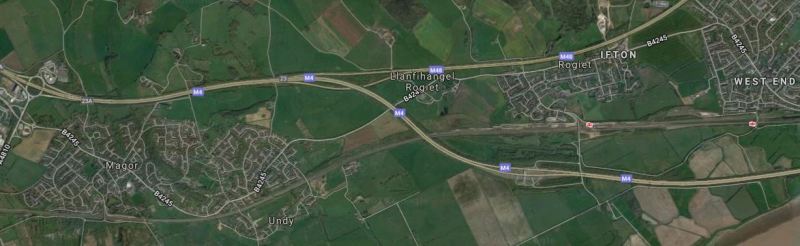
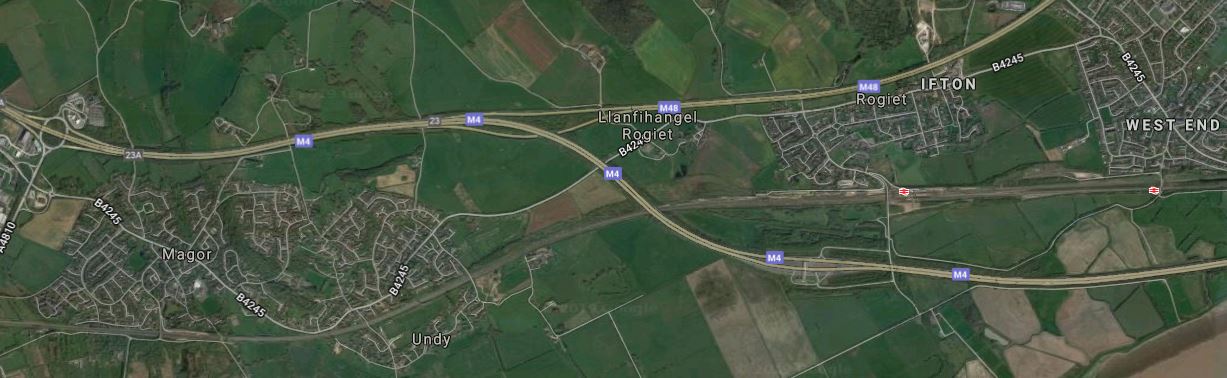
This Google Map shows the location of the villages of Magor and Undy.
Note.
- Newport is to the West.
- Magor is at the Western end of the map, with to its South-East.
- The M4 and M50motorways joining to the North of the villages.
- Severn Tunnel Junxction and Caldicot stations indicate the South Wales Main Line.
I have also flown my helicopter from Severn Tunnel Junction station and Magor village and it is a quadruple track railway with lots of space on either side.
I certainly think, that a station could be built and a stopping train with a frequency of four trains per hour (tph), could probably be incorporated into the timetable.
- But would a station without car parking be viable?
- Perhaps the area needs a few electric shuttle buses?
But the station if it is built needs to be linked in with the South Wales Metro.
In an ideal world, there probably needs to be a Turn-Up-And-Go four tph stopping train from Caldicot all the way to Fishguard and Swansea.
June 18, 2019
Posted by AnonW |
Transport/Travel | Magor Station, South Wales Metro |
1 Comment
The title of this post is the same as that of this article on the Guardian.
The article makes a powerful case forvthe building of the Heathrow Southern Railway.
It is a must read.
I can never understand, why the government hasn’t backed this scheme.
- It creates a four trains per hour service between Heathrow and Waterloo via Staines and Clapham Junction
- It creates an extension of Heathrow Express to Basingstoke, Guildford and Woking.
- The extended Hethrow Express creates a much needed commuter route into Paddington.
- Few properties would be affected by the new railway.
But above all, it will be built with private money.
June 17, 2019
Posted by AnonW |
Transport/Travel | Heathrow Airport, Heathrow Southern Railway |
5 Comments
Many years ago before GMail existed, I started using Chrome and opened a Google account, so that I could run Google Alerts on subjects in which I’m interested.
I’ve had my e-mail for getting on for thirty years and I can’t see any reason to change it.
On my mobile phone, I have created a new Google and GMail account, so that, when I travel I have access to e-mail, as well aw text.
Everything works fine on the phone, but how do I log in to my GMail on my laptop.
I’m always asked to create a new GMail address, when I try. But I already have one.
How do I sort this mess out?
June 17, 2019
Posted by AnonW |
Computing | GMail, Google, Internet |
2 Comments
This morning, I rode between Essex Toad and Moorgate stations in a very graffitied Class 313 trains. Apparently, there are only a few of the new Class 717 trains in service.
It also appears that there are only two new Class 710 trains running on the Gospel Oak To Barking Line.
Surely, now software and signalling issues have been sorted on these trains, a few more should have entered service.
Or is it problems of mileage accumulation or a lack of trained drivers?
June 17, 2019
Posted by AnonW |
Transport/Travel | Class 313 Train, Class 710 Train, Class 717 Train, Gospel Oak And Barking Line, Moorgate Station |
4 Comments
I had this message read out on BBC’s Wake Up To Money this morning.
I have been involved in the programming of several first-of-their-kind computer systems dating back to 1969. They are always late ad usually need a couple of goes to get it right! Boeing didn’t do enough testing.
Although, I’ve been mainly involved in programming user systems and I’ve never controlled anything by a computer program, I have worked with a lot of people who have. One team, I worked alongside, programmed the world’s first computer to fully control a large chemical plant.
But even, when I was writing something as big and complicated as Artemis, you had to take into account, that not everybody using the system, thought the way you did.
Those that fly aircraft differ in one area, that has nothing to do with sex, racial type or religion. Their experience of flying aircraft varies from a couple of thousand hours upwards.
It is no surprise to me, that some of the great aircraft stories of safe landings in difficult circumstances have been done by very experiences pilots, often with years of flying less reliable military aircraft.
They have used their experience to get themselves and their passengers out of trouble
It should be noted that the pilots of both the Indonesian and the Ethiopian planes, had several thousands hours of experience.
- On the whole, human beings are generally risk averse and pilots are no different to the rest of us.
- We also don’t like surprises.
How many times have you installed a new copy of a popular software system to find that it is radically different and it takes you several weeks to get used to it?
When I was writing Artemis, I made sure, that, I didn’t create any surprises for customers all over the world. The software was also tested to destruction.
Getting a calculation wrong in Artemis, would be unlikely to have had fatal consequences.
Conclusion
Have Boeing with their MCAS computer software fix to cure the inadequacies of an obsolete air frame, made two big mistakes?
- They have created an airliner, that goes against pilot experience?
- They didn’t do enough testing.
I will not fly in any 737 until the day I die!
June 17, 2019
Posted by AnonW |
Computing, Transport/Travel | Artemis, Boeing 737 MAX, Flying, Software |
2 Comments
 The Anonymous Widower