Struggling With GMail
Many years ago before GMail existed, I started using Chrome and opened a Google account, so that I could run Google Alerts on subjects in which I’m interested.
I’ve had my e-mail for getting on for thirty years and I can’t see any reason to change it.
On my mobile phone, I have created a new Google and GMail account, so that, when I travel I have access to e-mail, as well aw text.
Everything works fine on the phone, but how do I log in to my GMail on my laptop.
I’m always asked to create a new GMail address, when I try. But I already have one.
How do I sort this mess out?
Speculation Increases Over Use Of HSTs
The title of this post, is the same as that of this article on Rail Magazine
This is the second paragraph.
GWR and ScotRail are both introducing modified four and five-coach HSTs on various duties, with GWR’s operating regional services and ScotRail’s Inter7City sets to be used on its core inter-city routes.
I’ve yet to take a ride in either of the GWR oe Scotrail version of the trains and I shall be looking forward to riding both, later in the year.
I’ve only seem one close-up once at Dundee.
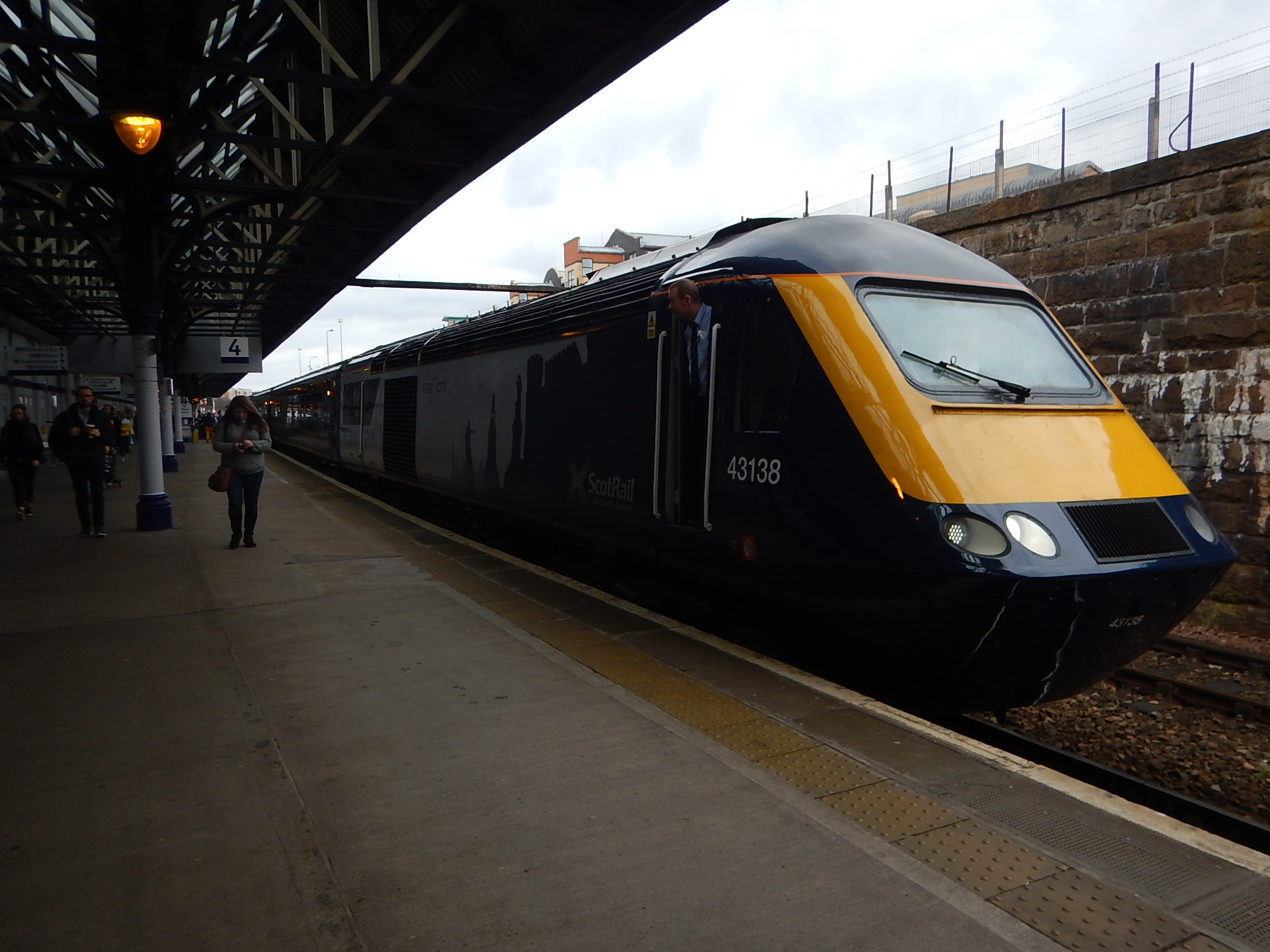
But they seem to be very slow in coming in to service.
Abellio Scotrail’s Proposed Fleet
Abellio Scotrail seem to have 54 Class 43 locomotives and 121 Mark 3 coaches, which according to Wikipedia, will be formed into 26 sets: 17 five-car and 9 four-car trains.
Routes include connecting Scotland’s seven cities.
GWR’s Proposed Fleet
Great Western Railway seem to have retained 24 Class 43 locomotives and 48 Mark 3 coaches, which will be formed into 11 four-car trains.
Routes include between Cardiff and Penzance.
Will These Short HSTs Be Successful?
A number of factors will come into play.
- The trains are liked by passengers and drivers.
- They are an ideal size for a lot of routes.
- They have an excellent ride.
- They have a lot of capacity for oversized baggage, like bicycles, surf boards, sporting equipment and even some urgent or perishable freight.
Only time will tell, but it is my view, they have a good chance of being a success.
Do Short HSTs Have Any Problems?
The two big problems are their age and that they are diesel-powered I wouldn’t be surprised to see some of the new franchises in the next few years, deciding to go all electric, with only a small number of diesel or hybrid trains.
Would Short HSTs be able to get an exception on heritage grounds?
The technology now is at a level, that by 2030, the UK railways could be diesel-free, with all trains electric, battery or zero-carbon hybrid.
Are There Any Other Routes Where Short HSTs Could Be Used?
I will break them down by franchis, in this incomplete list.
East Midlands Railway – Norwich And Derby
This new route for East Midlands Railway will be created by splitting the current service between Norwich and Liverpool Lime Street stations.
- The route is 152 miles long.
- I estimate that current trains will take three hours.
- The service needs four-car trains at certain times.
Would it be possible for Short HSTs to do a Norwich and Derby round trip in six hours?
GWR – Cardiff And Portsmouth
If the Castles can work Cardiff and Penzance, could they work Cardiff and Portsmouth?
Scotrail – Far North Line
What has surprised me is that Abellio Scotrail are not going to use their Inter7City trains between Inverness and Wick stations on the Far North Line.
- The distance is 174 miles
- The current trip takes four and a quarter hours
- The round trip is nine hours.
So could a short HST do the round trip in eight hours?
A single train could then run to the following schedule.
- Leave Inverness at 0600.
- Return from Wick at 1000.
- Leave Inverness at 1400
- Return from Wick at 1800
The train would arrive back in Inverness at 2200.
In Is This The Most Unusual Idea For A New Railway Service in The UK?, I wrote about a proposal to introduce Class 230 trains between Wick and Thurso at the far north of Scotland.
This Far North Metro, would sit well with a two train per day service to Inverness.
- Mark 3 carriages have large windows for sightseeing.
- A buffet and small bar could be provided.
- The trains have space for parcels, urgent and perishable freight.
- The service could link with the ferries to the Orkneys.
A subsidiary objective would be to bring some prosperity to a remote region.
Scotrail – Kyle Of Lochalsh Line
If Short HSTs can work their magic on the Far North Line, I just wonder if they could provide services on the Kyle Of Lochalsh Line.
- The distance is 83 miles
- The current trip takes two hours and forty minutes.
So could a short HST do the round trip in six hours?
As with the Far North Line, there would be a much improved service for both those that live along the line and the many visitors.
Transport for Wales – Cardiff And Holyhead
Transport for Wales run a two-hourly service between Cardiff and Holyhead stations. The rolling stock for some services will be a rake of four Mark 4 carriages, a Class 67 locomotive and a driving van trailer.
Isn’t this in effect a train with a similar purpose to a Short HST?
Obviously, Transport for Wales have got good reasons for not running Short HSTs on this route, but the choice of rolling stock does show similar thinking that led to the creation of the Short HST.
Transport for Wales – Heart Of Wales Line
The Heart Of Wales Line runs between Llanelli in West Wales and Craven Arms in England.
- It is around 150 miles long.
- Trains take a few minutes over four hours between Swansea and Shrewsbury stations.
It is one of those rail lines, that could be a serious tourism asset.
Would Short HSTs add to the experience?
Transport for Wales -North Wales Main Line
The North Wales Main Line is another line, where iconic Short HSTs might attract passengers.
Conclusion On Routes
There are certainly several places where Short HSTs could be gainfully employed.
Could Any Other Trains Be Used?
The specification could be something like this.
- Four or five carriages.
- Diesel, diesel bi-mode or hydrogen bi-mode.
- Quality interior
- 100, 110 or 125 mph top-speed.
Trains could be either new build or a rebuilt and/or refurbished older train.
Class 802 Train
Hitachi’s Class 802 train is in service.
- It meets the specification.
- It can seat somewhere between 326-342 passengers.
- It can use electrification if it exists.
It would do a good job.
Class 755 Train
Stadler’s Class 755 train will soon be in service.
- It meets the specification.
- It is only a 100 mph train, but I suspect it can be uprated to 125 mph, as the electric version can handle this speed.
- A four-car train can seat 227 passengers.
- It can use electrification if it exists.
It should do a good job.
Could HSTs Have Any Parcel Or Freight Applications?
This is always being suggested, but anything concerning freight or parcels must have the following characteristics.
- They must be reliable.
- They must be able to stick to a timetable.
- They must have a hard-wearing interior, as they will have a hard life.
- The small single doors would need to be replaced.
- They must be able to accept standard freight pallets.
- They must be quick and easy to load.
My biggest worry would be over the last two points. Would the trains just need three much modification to make them suitable for freight and parcels.
Could HSTs Have Heritage Applications?
Already a rake of Mark 3 coaches is going to be used with the 60163 steam locomotive.
But could HSTs in their own right find use in the heritage sector?
I think, that there could be space in the market for a few HSTs, which may have the sort of appeal to the younger generation, that steam trains had to my generation.
After all, I’ve had some of the best meals in my life in an HST.
Conclusion
They may be applications, but each will only use small numbers of trains.
So I’m afraid that some of these trains will go to scrap.
But then no-one can say, that they haven’t done well!
Green Mini-Trains To Reverse Beeching’s Cuts
The title of this post is the same as an article in Saturday’s copy of The Times.
This is a paragraph.
The government is funding trials of an “ultra-light”, environmentally friendly train powered by gas from organic waste in place of a conventional diesel engine.
Members of the consortium developing the concept include Birmingham City University and Parry People Movers.
I wrote about the Parry People Mover in Stourbridge And The Parry People Mover.

It did the shuttling of people between Stourbridge Junction and Stourbridge Town stations in a professional manner and it can’t have done much wrong, as it still is.
The technology that drives the train is based on a flywheel and is innovative to say the least. This section in the Wikipedia entry for Parry People Movers is called Technology.
This is the first two paragraphs of the section.
PPMs utilise a rotating flywheel as a store of kinetic energy which is then used to power the vehicle. A typical PPM flywheel is made from steel laminates, approximately 1 m (39 in) in diameter and 500 kg (1,100 lb) in mass, designed to rotate at a maximum speed of 2,500 rpm.[8] The flywheel is mounted horizontally at the centre of the unit, beneath the seating area. The flywheel is driven by an internal combustion engine or an electric motor. The flywheel is connected to the rail wheels via a hydrostatic variable transmission system.
The flywheel allows the direct capture of brake energy (when slowing down or descending gradients) and its re-use for acceleration (called regenerative braking). When the vehicle brakes, the hydrostatic transmission feeds the energy back into the flywheel. Since the short-term power demand for acceleration is provided by the energy stored in the flywheel, there is no need for a large engine. A variety of small engine types can be used including LPG, diesel or electric traction.
I have done a calculation of the kinetic energy in the flywheel and it is surprisingly low at 0.6 kWh if it is a disc and 1.2 kWh if it is a ring.
A capacitor of the same mass would hold about the same amount of energy, but would probably need a more complicated transmission.
Heathrow Plans Runway Over M25 In 30-Year Expansion
The title of this post, is the same as that of an article in Saturday’s copy of The Times.
This picture, which I downloaded from this page on the Heathrow web site, shows the proposed expansion.
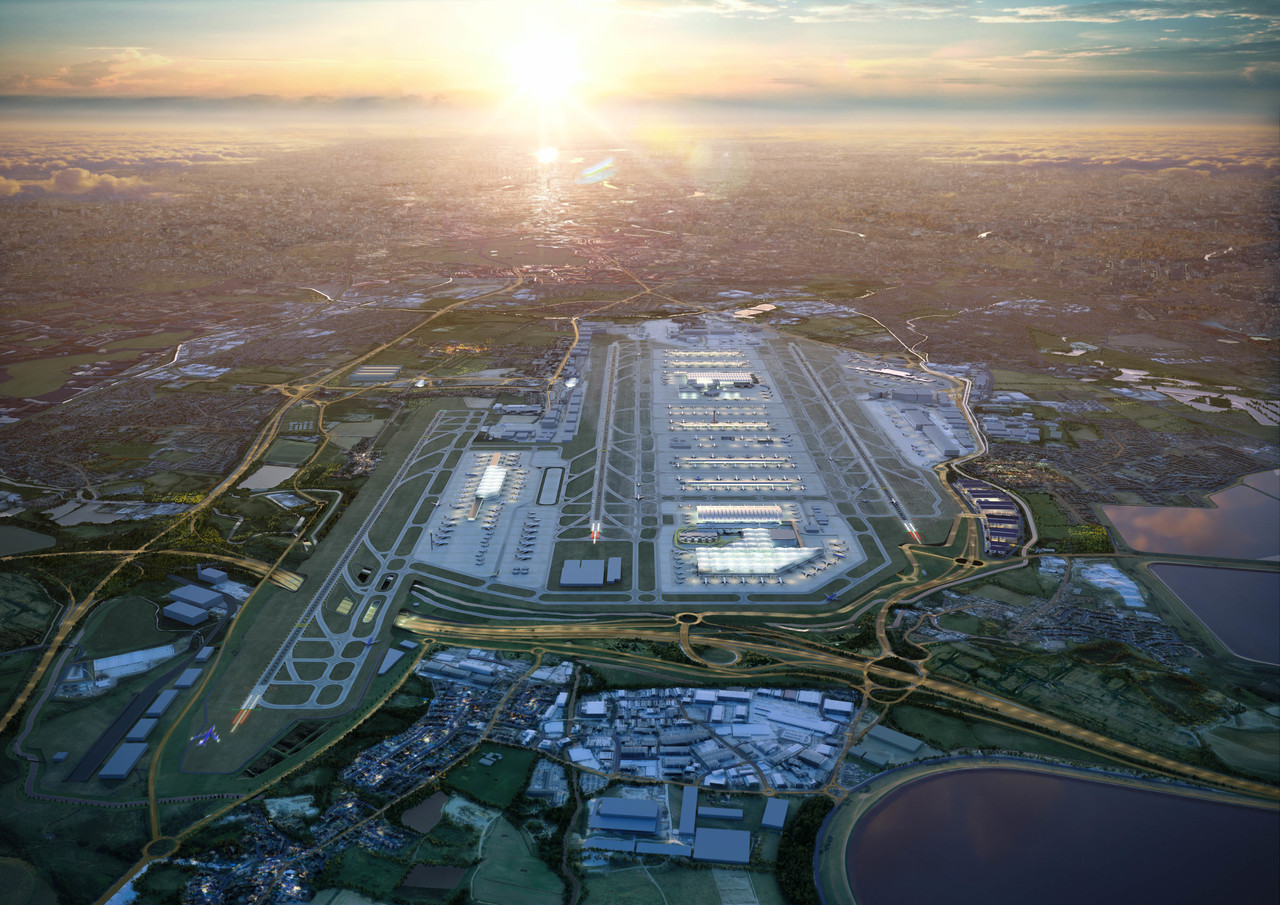
For comparison this Google Map shows the Airport recently.

These are some of my thoughts.
The Position Of The Third Runway
As can be seen, the new third runway is to the North-West of the North Runway.
- It will extend all the way to the M25.
- The M25 will be lowered and the new runway and two parallel taxiways will cross the road on a series of bridges.
This enlargement from the first image shows the crossing of the M25 and two other roads.
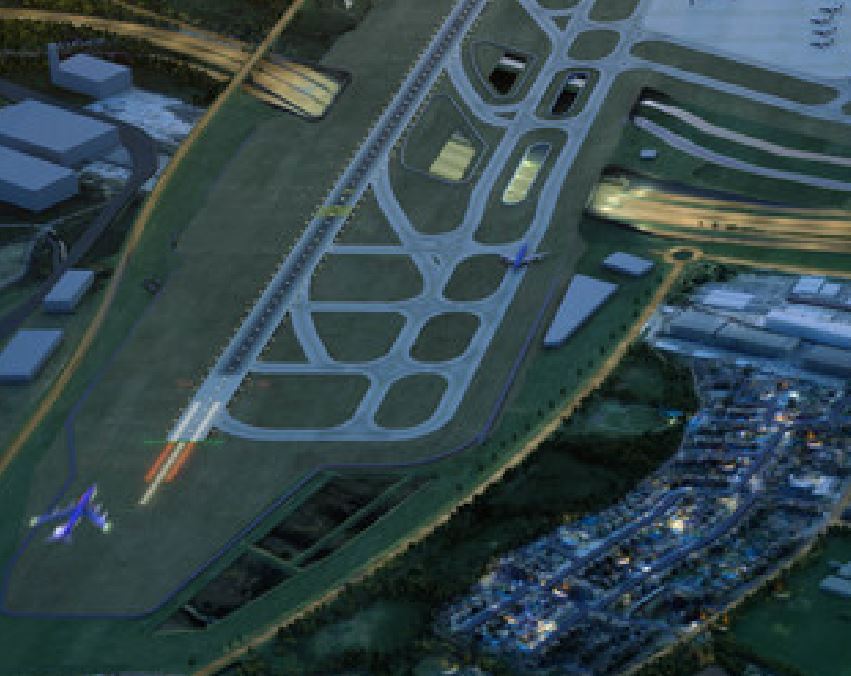
Note.
- The runway is on the left, which increases the spacing with the North Runway
- How openings between the runway and the taxiways will allow natural light onto the motorway.
- In the picture you can see five angled taxiways joining the runway from the two taxiways. Does this design mean that aircraft spend a minimum of time queuing for take-off? Similar but not so extreme layouts can also be seen on the two existing runways.
What intrigues me, is what looks to be a hole in front of the ends of the taxiways.
Could it be rail or road access to the airport?
This map from Network Rail shows the route of the proposed Western Rail Approach To Heathrow.
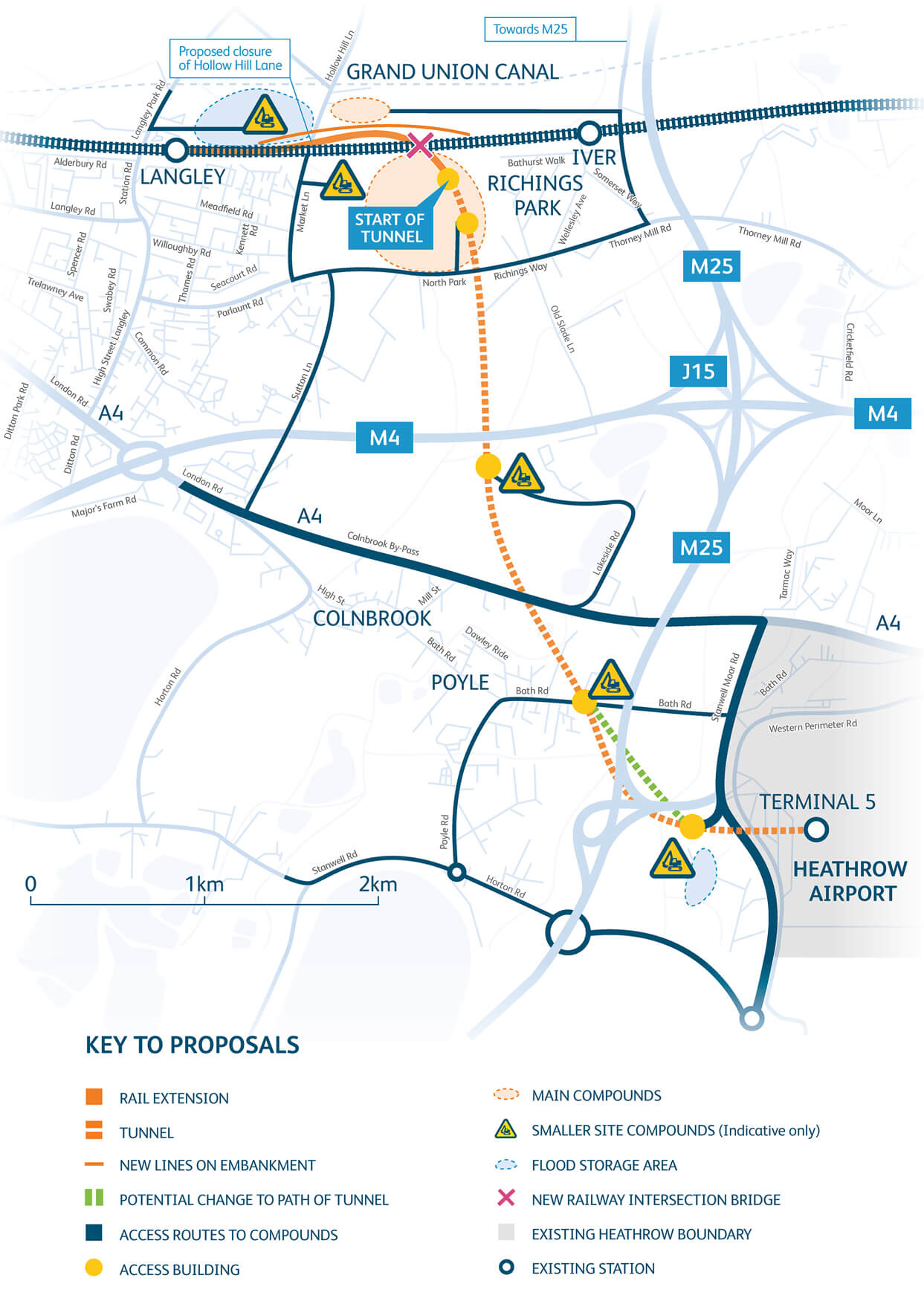
It looks like the dark holes could be the railway, between Langley and Terminal 5.
This section of the rail link is supposed to be in tunnel, but I wonder if costs could be saved if it is in a buttressed cutting, designed in cooperation between Heathrow and Network Rail.
Obviously, it will need to be in tunnel to cross under the M25.
I think that rather cleverly, the runway has been slotted in with the best use of the limited land available.
A Phased Construction Program
The Times says this about the construction program.
Only the runway would be built by the opening date of early 2026.
Other facilities such as new terminals, car parks, hotels and transit systems would open from 2030, with an expansion of Terminal 5 the priority
This means that the extra runway capacity can be used initially to better accommodate the same number of flights.
If Heathrow get it right passengers. should see the following.
- They would suffer less from construction.
- Fewer taxi delays on the ground.
- Less long fuel-burning taxiing between gate and runway.
- More flights leaving on time.
It might also enable air traffic controllers to allocate aircraft noise in a fairer manner.
Car Psrking
Two huge new car parks are to be built North and South of the Airport, which in conjunction with new hotels would be connected to the terminals by an underground transit system.
This article on International Airport Review is entitled Heathrow To Launch First Airport Ultra Low Emission Zone.
So doesn’t the building of large car parks contradict this policy.
It would unless, the car parks are designed for the future.
- Electric cars only.
- Intelligent chargers for every parking space.
- Whilst the cars are parked and connected, they would be a massive energy storage battery for the National Grid.
When you arrived back to your car after a week in Greece, there would be enough power in the battery for your next journey.
By 2030, there will be a substantial need for parking for electric cars at railway stations and airports. Parking solutions like this will help reduce the carbon footprint of airports.
Conclusion
2030 is ten years away and Heathrow will have to work hard to build an airport fit for those times.
Why Are Replacement Buses Being Used To Syon Lane Station On July 20-21?
If you look at the on-line rail time timetable from Waterloo to Syon Lane station for Saturday, the 20th and Sunday, the 21st of July, there are no trains and a bus replacement service operates.
I have checked as far as I can in the future and there are no other weekend closures on the route.
In Nothing Seems To Be Happening At Syon Lane Station, I speculated that either the project to erect a step-free bridge at the station, was to be delayed or something very different will be happening.
The two day weekend closure leads me to think that Network Rail are going to install a bridge in two days.
In Winner Announced In The Network Rail Footbridge Design Ideas Competition, I wrote how the competition was won by this bridge.
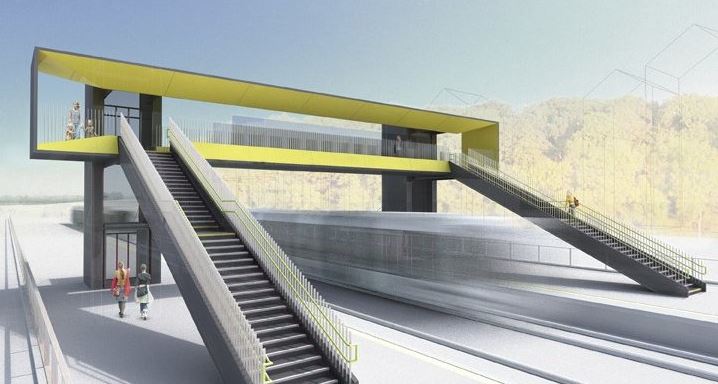
I believe that if the components were brought in by train, that this sort of bridge could be erected in two days.
This is real engineering, which is not normally seen except in war or times of great emergency like earthquake, fire or floods.
Conclusion
My speculation must be all wrong!
What sane company would attempt to build a footbridge in two days, without the assistance of Anneka Rice or that guy from DIY SOS?
Will Sadiq Khan Be A One-Term Mayor?
This article on the BBC is entitled Donald Trump Hits Out Again At Sadiq Khan Over London Violence.
I don’t like Trump or many of his policies one bit and if in the unlikely chance, I was invited to meet him, I would decline.
But I’ve met many people, who think we need someone like Trump to stand-up for the man on the Clapham Omnibus.
I have two personal criticisms of Sadiq.
The Unaffordable Fare Freeze
The fare freeze he proposed, that must have impressed a large number of voters, has not been something that London can afford.
Now important projects like the rebuilding of Camden Town and Holborn station have been delayed.
He’s A South London Mayor
To my mind, Sadiq seems to favour his home territory over the North.
- In the North, we seem to have suffered more from cuts in bus frequencies.
- He was very slow to act on the problems with the Gospel Oak to Barking Line.
- Knife crime and violence seems to be worse in the North, so is it Mayoral neglect?
It is probably understandable, as his mates in the South have more chances to bend his ears and you don’t annoy your friends.
I wonder if Ken favoured the North!
I do think though that various effects are working against his reelection.
The ULEZ Effect
The London ULEZ currently only applies to the Congestion one, but from 2021, it will apply to all areas inside the North and South Circular Roads.
How many voters, who will be affected by the ULEZ extension, will vote for Sadiq?
The Brexit Effect
Sadiq has nailed his colours to Remain and is regularly interviewed about Brexit.
Most right-of-centre Brexiteers wouldn’t probably vote for him, but some traditional Labour boroughs voted to Leave, so could his support for Remain cost votes.
On the other hand, if Brexit has happened and going badly, will Sadiq gain votes?
The Next Prime Minister Effect
If Boris becomes Prime Minister, this would be an imponderable. It might help or hinder Sadiq’s reelection.
The Crossrail Effect
The late delivery of Crossrail, is not Sadiq’s fault, but it will have four effects.
- The late delivery will ffect London’s transport budget and give the Mayor less money for projects.
- Some people will view his oversight of the project as incompetent.
- He won’t be able to bathe in the glow of a successful Crossrail.
- It is a ready-made millstone to hang around his neck.
There will also be many Londoners, for whom, the late delivery of Crossrail caused a financial loss and they will vote accordingly.
The Trump Effect
I would expect, Trump to keep up his criticism of Sadiq.
Who’s to say, whether it will affect Sadiq’s vote, but there are quite a few people, who would support Trump.
Conclusion
There are a lot of questions to answer, but I feel given the state of British politics, that we could be in for a surprise.
Could we see a Brexit, Green or Lib Dem Mayor?
Puzzled By New Fleets For TransPennine Express
TransPennine Express (TPE) are replacing all their trains, but their choice of three different new fleets puzzles me.
The new fleets and their routes are as follows.
Nova1
This is a fleet of nineteen five-car bi-mode Class 802 trains.
According to Wikipedia, they will work the following routes, with probably a frequency of one tph
Liverpool Lime Street and Edinburgh via Newcastle, which I estimate will take 4:15 hours
Manchester Airport and Newcastle, which takes around 2:45 hours
These two services would probably need nine for the Edinburgh service and six for the Manchester Airport service.
This means that there are four extra trains.
If there is a spare or one in maintenance, that means that two trains are available to boost capacity on busy services if needed, by running a ten-car train.
I doubt that ten-car services to Manchester Airport could be run through the Castlefield Corridor due to the inadequate stations, but Liverpool and Edinburgh might be a route for longer trains.
I have some observations on Nova1.
- The trains are 125 mph trains, that can be upgraded to 140 mph with in-cab signalling.
- The trains will share the East Coast Main Line with LNER’s Azumas, which are other members of te same family of Hitachi trains.
The trains have been authorised to start running services.
Nova2
This is a fleet of twelve electric Class 397 trains.
According to Wikipedia, they will work the following routes,
- Manchester Airport and Glasgow Central, which takes around 3:30 hours.
- Manchester Airport and Edinburgh, which takes around 3:15 hours.
- New route – Liverpool Lime Street and Glasgow Central, which could take around 3:30 hours.
Currently, the two existing routes run at a frequency of one train per two hours, which would probably need at least seven trains.
This probably means that there will be four trains left for the service between Liverpool and Glasgow, if it assumed there is one train spare or in maintenance.
As a round trip between the two cities, would probably take eight hours, it looks like the frequency will be one train per two hours.
This would give the following services, all with a frequency of one train per two hours.
- Manchester Airport and Glasgow Central via Manchester Piccadilly
- Manchester Airport and Edinburgh via Manchester Piccadilly
- Liverpool Lime Street and Glasgow Central
Passengers wanting to go between Liverpool Lime Street and Edinburgh should keep reading.
I have some observations on Nova2.
- They are 125 mph trains that are replacing the 110 mph Class 350 trains.
- In the next few years, these 125 mph trains will be sharing the West Coast Main Line with faster trains like Class 390 trains and the trains of High Speed Two, both of which should be capable of 140 mph, when running using in-cab signalling.
- I would assume that the trains can be similarly upgraded, otherwise they will have to be replaced.
- There was an option for more trains, but I suspect the success of Class 802 trains on the Great Western Railway led to it not being taken up.,
The trains should come into service later this year.
Nova3
This is a fleet of five-car rakes of Mark 5A coaches, hauled by a Class 68 diesel locomotive.
There are fourteen locomotives and driving van trailers, with enough coaches for thirteen rakes.
I would suspect that TPE are aiming to have twelve trains available for service.
According to Wikipedia, they will work the following routes, which both have a frequency of one train per hour (tph)
- Liverpool Lime Street and Scarborough via Manchester Victoria, which takes around 2:45 hours.
- Manchester Airport and Middlesbrough, which takes around 2:45 hours.
So with turnround at both ends, I suspect that a six hour round trip is possible. So to provide the two hourly services across the Pennines, TPE will need six trains for each route.
This explains a fleet size of twelve operational trains.
I have two observations on Nova3.
- They are diesel-powered and will be running at times on electrified lines. But I suspect the diesel Class 68 locomotive could be replaced in the future with an electro-diesel Class 88 locomotive.
- Questions have been raised about the speed of exit and entry from the coaches through single end doors of the coaches.
- They have an operating speed of only 100 mph, but opportunities for higher speeds on the routes are limited to perhaps thirty to forty miles on the East Coast Main Line.
At least they should be in service within a couple of months.
Why Didn’t TPE Order A Unified Fleet?
To summarise TPE have ordered the following trains.
- Nova1 – Nineteen Class 802 trains
- Nova2 – Twelve Class 397 trains.
- Nova3 – Thirteen trains consisting of four coaches topped and tailed by a a Class 68 locomotive and driving van trailer.
All forty-four trains are five cars.
Surely, it would have been easier for TPE to have a fleet, where all the trains were the same.
I suspect that all routes can be run using Class 802 trains, so it as not as if there are any special requirements for the trains.
So why didn’t TPE order a fleet of Class 802 trains?
I can only think of these reasons.
- Hitachi couldn’t supply the required number of trains in the appropriate time-scale.
- ,CAF made an offer that TPE couldn’t refuse.
It should also be born in mind that Great Western Railway and Hull Trains, which like TPE are First Group companies, went down the Class 802 route.
The Future
There are various issues, that will arise in the future.
Nova2 And West Coast Main Line Operating Speed
The new Nova trains are running on TPE’s Northern and Scottish routes and as I indicated earlier, the Nova2 trains might not be fast enough in a few years time for the West Coast Main Line, which will have Class 390 trains running at 140 mph using in-cab signalling.
High Speed Two will surely make this incompatibility worse, unless CAF can upgrade the Nova2 trains for 140 mph running.
Replacing the Nova2 trains with Class 802 trains, which are being built for 140 mph running, would solve the problem.
Nova3 And Class 68 Locomotives
There are powerful reasons to replace diesel locomotives on the UK’s railways, with noise, pollution and carbon emissions at the top of the list.
As Northern Powerhouse Rail is created, there will be more electrification between Manchester and York, adding to the pressure to change the traction.
- There could be a change of locomotives to Class 88 or Class 93 locomotives, which would run using the overhead electrification, where it exists.
- The trains could be changed to Class 802 trains.
The Class 68 locomotive is increasingly looking like an interim solution. At least, it’s a less polluting locomotive, than the dreaded and ubiquitous Class 66 locomotive.
Class 185 Replacement
TPE will still have a fleet of diesel three-car Class 185 trains.
- They are running on routes between Manchester and Hull and Cleethorpes via Huddersfield, Leeds and Sheffield.
- These are best described as just-about-adequate trains and are one of The Treasury’s boob-buys.
- As Northern Powerhouse Rail is created, they will be increasingly running under wires.
- Could it be likely that more capacity will be needed on routes run by these trains?
- The capacity of a Class 185 train is 169 seats, as opposed to the 342 seats of a five-car Class 802 train.
I think it could be very likely that instead of running pairs of Class 185 trains, TPE will replace them with five-car Class 802 trains.
Conclusion
I very much feel, that over the next few years, TPE’s fleet will change further in the direction of a one-unified fleet!
Damned If They Did: A Defence Of Crossrail
The title of this post, is the same as that of this article on Global Co9nstruction Review.
It is a must-read!
 The Anonymous Widower