A Design Crime – Class 395 Train Platform Interface
I took these pictures of the step you need to ascend to get into a Class 395 Train.
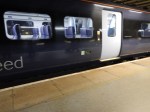
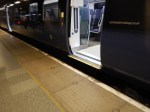
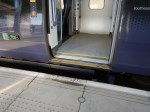
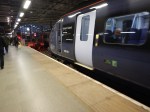
All of these pictures, were taken on platforms that were specifically built for the trains and no other train type calls at these station.
Perhaps my biggest gripe with these terrible doors, is that there is no wide door, which you would need for a large wheelchair.
These trains may have a high top speed, but they’re not designed for quick safe stops.
The Class 395 trains were built in Japan around 2009 and the Class 378 trains for the Overground were built around the same time.
Compare these pictures taken on the Overground with those above.
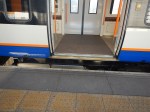
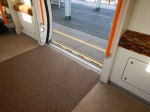
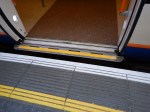
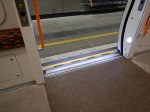
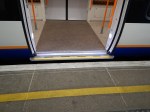
Note that the first two pictures were taken in a platform used by other train, so the access isn’t quite as good.
Perhaps Japanese railways don’t allow people in wheelchairs to use trains.
If they do, how come we get trains as wheelchair-unfriendly as the Class 395 train, which need a ramp to get the wheelchair on and off the train.
Why All The Hypocrisy About The Deaths Of George Michael And Carrie Fisher?
Not one celebrity has raised the questionable lifestyle of these two stars.
On BBC Breakfast this morning they are highlighting a story that eighty percent of us are overweight.
You only have one chance of life and good health!
So don’t do anything to comproimise it!
Walking From Hampton Court To Kingston
I hadn’t intended to walk, but when I saw the distance was 3.5 miles and it was sunny, I thought why not!
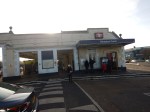

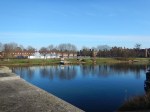






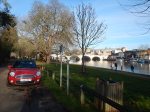

It took me twenty minutes over the hour and I had lunch in Bill’s by the river before taking the train home.
Will We Be Seeing More Railway Stations?
I didn’t put any qualification like UK or London in the title of this post, as it is a question that applies to all railways.
The post was prompted by an article in the January 2017 Edition of Modern Railways, which is entitled Funding Buds For New South Wales Stations.
The article talks of two possible stations.
- A Cardiff Parkway station near St. Mellions.
- A Magor Walkway station between Newport and Severn Tunnel Junction stations.
Cardiff Parkway station seems the more conventional of the two and is proposed to support a proposed new business park, with car parking and a bus station,
This article on Wales Online is entitled Plans revealed for huge new development and train station in Cardiff that could create 15,000 jobs, gives more details.
On the other hand, according to The Magor And Undy Walkway Station Website, the second station at Magor Walkway appears to be less conventional.
But the two stations do illustrate two common reasons for developing new stations.
A New Station To Support Development
Cardiff Parkway station falls into this category and there are several for this reason in the pipeline.
- Barking Riverside
- Battersea Power Station
- Beaulieu
- Brent Cross Thameslink
- Meridian Water
- Old Oak Common
- Woolwich
We will see a lot more, as having a station at a new development, has many positive effects on the project.
A New Station To Provide Better Transport Opportunities
Magor Walkway station falls into this category and others include.
- Brinsford Parkway
- Camberwell
- Cambridge North
- Edinburgh Gateway
- Watford Vicarage Road
- Worcestershire Parkway
There are also schemes for airport links to Glasgow, Liverpool, Leeds and Luton.
Why New Stations Don’t Get Built
Obviously, some stations don’t get built for reasons of practicality and cost.
The traffic may be there, but the proposed site is difficult, so a new station might be impossible to fit the space available.
When a re-opened station like Lea Bridge is reported to cost £11million, without car parking, new stations don’t come cheap.
So new stations need a good financial case to get built.
Another factor that is often ignored by campaigners for new stations, is the knock-on effects they will have on services through the station.
Stopping trains at a station on a single or double-track line will effectively block the line, thus slowing other traffic in the area.
But Innovation Is Making It Easier To Build New Stations
In the following sections, I shall detail some of the ideas and innovations that will make the building of stations easier.
The Rise Of The Single-Platform Station
Single-platform stations are not that common in the UK, and the first new one of this type I saw was James Cook station, which I wrote about in James Cook Station – The Reinvention Of The Halt .
Other recently built stations in this category include.
Note there is a parkway station on the list and Galashiels is a major train-bus interchange.
A good proportion of the list are also on newly opened lines.
Consider the advantages of a single-platform station.
- There is no need for an expensive footbridge., that is part of the station.
- Only one set of shelters, ticket machines and information displays are needed.
- Single platform stations can be easily made long enough for the largest trains that will call.
- Interchange to cars, buses and taxis is quick and easy.
- Modern signalling makes bi-directional operation safe.
There may also be advantages in fitting a station into a restricted space, like shopping centres, airports, sports grounds or an historic town centre.
I think we’ll see a lot more single platform stations in the future.
The Express Stop Train
Next time, you’re on a train, notice how long it takes to perform a stop at a typical station.
It is often not a quick process.
- Passengers have to lift children, buggies, bicycles and heavy cases over the step up or down between train and platform.
- Passengers coming on get in the way of passengers getting off.
- On a crowded train, that is not working under driver-only-operation (DOO) rules, the guard often has to struggle to get in position to open the doors.
- Older trains without information systems, often mean that passengers aren’t ready to get off, so cause delays at the stop.
But look at the new trains for Merseyrail, I wrote about in Thoughts On Merseyrail’s New Trains.
- They are designed to eliminate the gap between station and train and for passengers to step or roll across quickly.
- They will have wide doors and probably ample lobbies, to ease entry and exit.
- They will be information-rich trains, as are all modern trains.
- They will be DOO, which avoids guard delays on crowded trains.
- They will have high performance with respect to braking and acceleration.
I also wonder if braking and acceleration will be automated, so that they are fast, smooth and very safe in all weather and track conditions.
On Merseyrail, this will result in faster trains and a saving of nine minutes between Southport and Hunts Cross is quoted.
New trains on Greater Anglia, will also give substantial help in enabling a headline-grabbing Norwich in 90 and Ipswich in 60 service for all trains.
I suspect that as new trains improve their stop times, it will make it easier for a new station to be fitted into an intense schedule on a main line with extensive services.
Stations Without Electrification
Often electriofying stations is an expensive business, in planning, execution and in operation.
With the development of bi-mode and battery trains and especially ones that can switch mode automatically, I think we’ll see a lot more stations left without electrification, thus eliminating health and safety and heritage issues, whilst reducing costs.
The Station On A Train
Merseyrail’s new trains will be DOO and from the reports, it appears that all the CCTV needed for safe operation will be on the train, rather than the station.
So will this allow Merseyrail to simplify their stations, with the only CCTV needed on stations being only that for passenger and station security.
I wonder if the driver will have access to a station’s CCTV as he approaches. Being able to assess crowd density in a station on approach must be to the driver’s advantage.
Ticket Machines On A Train
Operators might even put a card-only ticket machine on the train, so the number of machines in stations can be cut to save costs.
I have seen this is in several places in Europe, but never in the UK.
Tram Style Operation Of Local Trains
There are two basic types of through platforms in the UK, served by local or regional passenger trains.
- Platforms where some freight and passenger trains pass through without stopping.
- Platforms where all trains stop.
Merseyrail’s Northern Line and some of the branches of the Wirral Line would be examples of the second.
What would be the implications for station design, if say a branch line worked exclusively by one type of train ran to say a tram speed limit and the visual rules a tram driver would obey in the centre of Birmingham, Manchester or Nottingham.
Could we see new two platform stations built like say this station on the Croydon Tramlink?
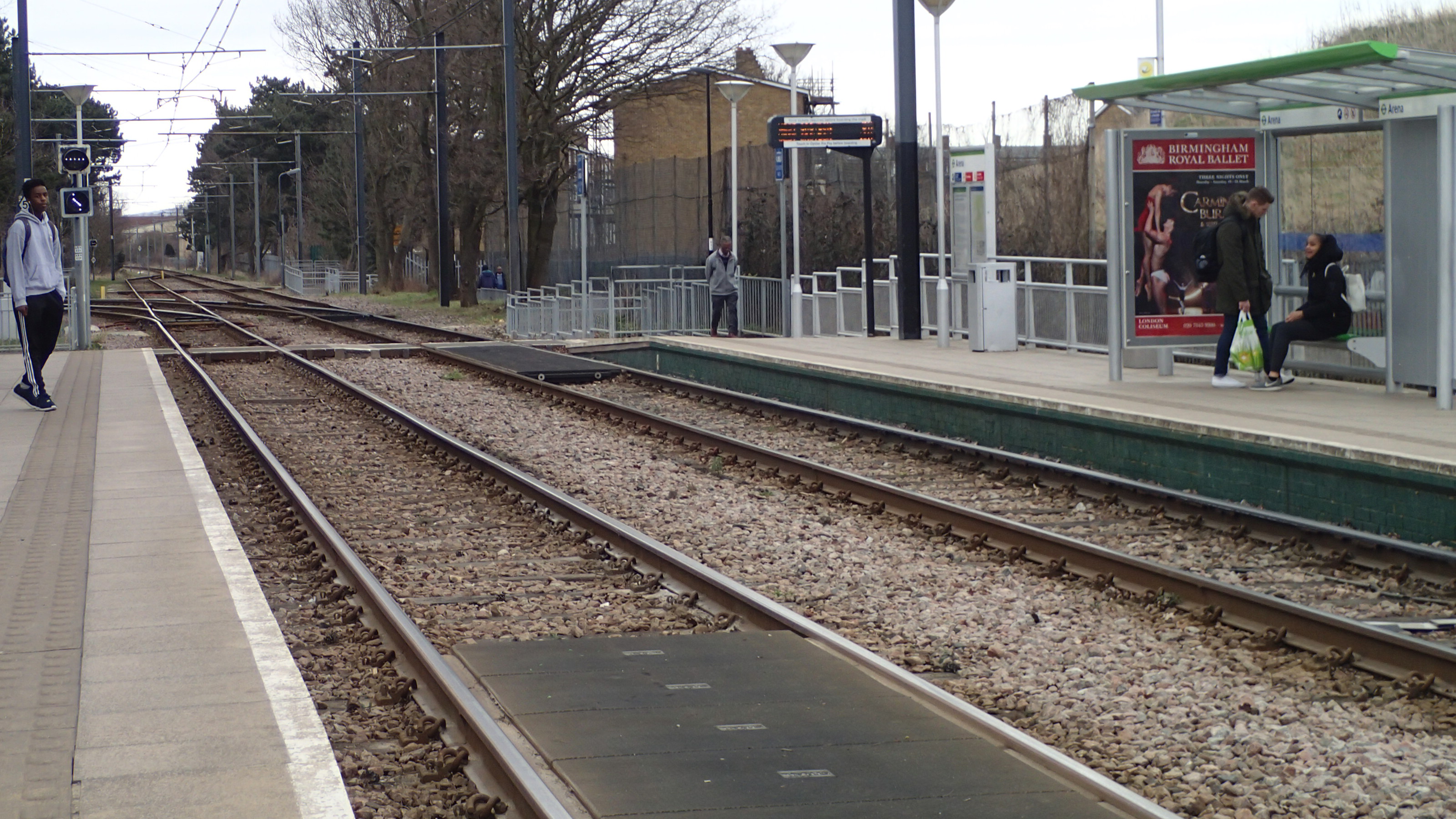
Passengers would just walk across the tracks to get to the other side.
I believe that Merseyrail’s new trains could work in this way.
Consider.
- Stadler have enormous experience of trams and tram-trains.
- Merseyrail’s new trains can be fitted with batteries, so for perhaps fifty metres either side of the station, the third rail can be removed.
- The new trains look like trams, although they are trains.
- There will always be a driver in the front of the train with a big horn, as the train enters the station.
- Trains would be restricted to tram speeds in the station area.
Imagine a station on a network like Merseyrail or perhaps a branch line like the Walton-on-the-Naze Branch of the Sunshine Coast Line.
A train stopping at the station would go through the following procedure.
- A safe distance from the station, after ascertaining, that the line in the station is clear, the driver initiates the automatic stop procedure or halts the train.
- The train slows automatically from line speed to the tram speed perhaps fifty metres from the station.
- The train proceeds automatically to the station at tram speed using onboard stored energy, as there is no electrification.
- The driver would open the doors, so that passengers and their belongings can be unloaded and loaded.
- Once everything is ready, the driver closes the doors and initiates the automatic leave sequence.
- The train leaves the station at tram speed.
- Once electrification starts and the train is connected, the train automatically accelerates back to line speed.
Note.
- The train is not at line speed anywhere near the station.
- The driver can take control at any time.
- The procedure is not very far removed from that used on the Victoria Line since 1967!
Effectively the operation of the train through the station is train-tram-train.
I wonder if Merseyrail have been thinking this way to create a tram-train link to Liverpool Airport.
Conclusion
Various innovations will mean that stations will cost less.
- Simpler design.
- Step-free without footbridges.
- Less expensive features.
- Equipment moved from station to train.
In addition, trains will find it easier to fit stops into busy timetables.
This will mean that the available station budget will go further and more stations will be built.
|Aberthaw Resumes Cement Dispatch
This is the title of another article in the January 2017 Edition of Modern Railways.
I wasn’t sure where Aberthaw was, so I looked it up on the Internet and this Google Map shows Aberthaw Cement Works, Cardiff International Airport and the Vale of Glamorgan Railway, that links Cardiff Central station in the East to Bridgend in the West.
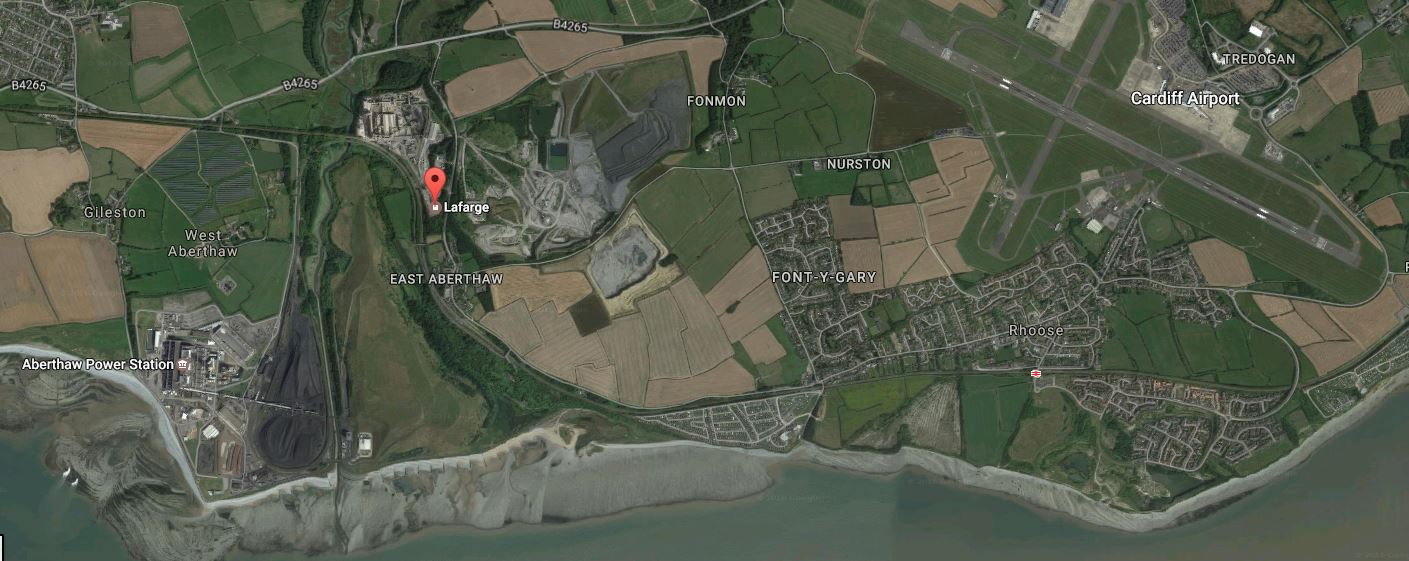
Note.
- The red arrow indicates the cement works.
- The Airport terminal is on the North side of the long runway,.
- Rhoose Cardiff International Airport railway station is on the other side of the runway and connected to the Airport by a sguttle bus.
- The line was closed by Beeching to passenger traffic in 1964, but was reopened in 2005.
Could Cardiff Airport benefit from the same sort of train-train link, that has been proposed for Glasgow that I wrote about in The Glasgow Airport Rail Link Will Be A Tram-Train?
But the map does illustrate the benefit of rail access to the cement works.
- The works is close the Vale of Glamorgan Line.
- Trains from the cement works can go East to places that need the product, including surprisingly, the South West of England.
- The rail link could cut the number of truck movements by 25%.
This would seem to be an ideal use for rail freight.
Are we doing enough to develop similar links, from other large factories all over the UK?
As the line is supposed to be electrified in a few years, could it be that a proper review of the line should be done first, to see whether any other projects should be done at the same time.
The reason I say this, is that the history of the line is much the same as that of the Grand Old Duke of York and his soldiers.
Both Sides Of The Bermondsey Dive-Under – Before Christmas 2016
The Bermondsey Dive-Under is on track to be completed by Spring 2017. This page on Thameslink gives more details and the latest progress.
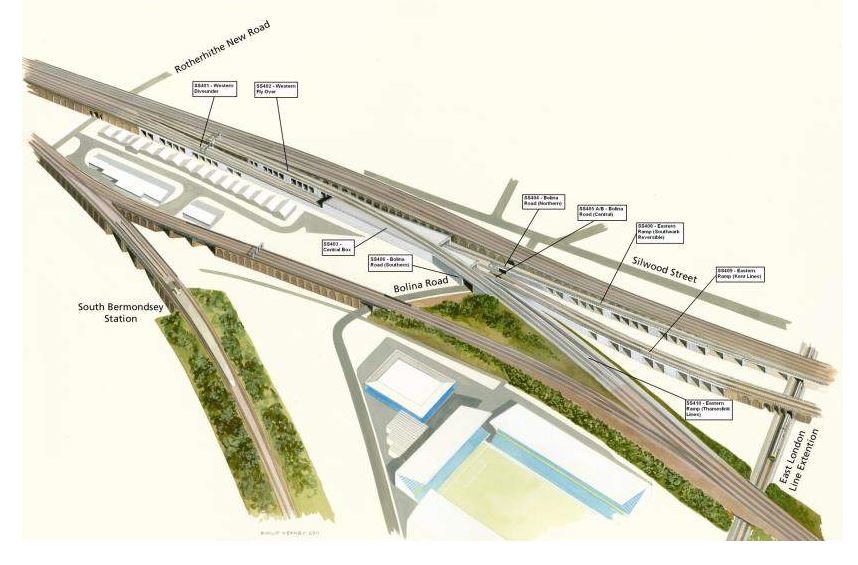
Bermondsey Dive-Under
These pictures were taken on the 20th of December, from a train going between London Bridge and East Croydon stations.


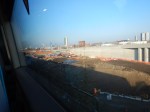

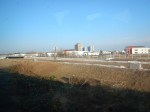

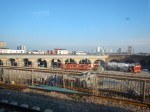
And these pictures were taken on the 24th of December, from a train going between Deptford and Cannon Street stations.
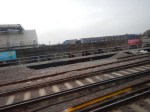

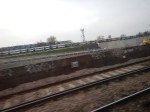
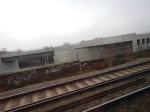
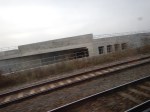
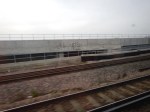
Compare them with those in Both Sides Of The Bermondsey Dive-Under – 26th August 2016
In Praise Of Ancient And Modern
I last visited Deptford station nearly three years ago and wrote about the station in Deptford Station Is Almost Finished.
Today, it certainly was finished, as the pictures show.
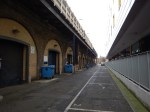
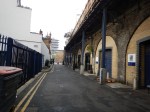

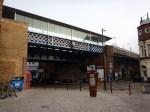
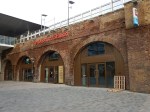
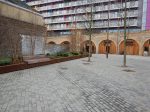

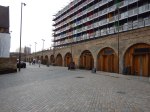
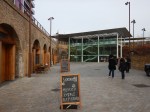
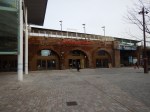
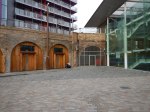
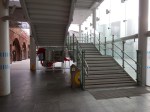
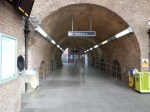
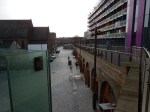
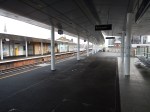

It certainly is a good mix of Ancient (Actually 1836!) and Modern!
I wouldn’t be surprised if White Hart Lane and Hackney Central stations amongst others,develop the arches in the same way.
I suspect a few decades ago, British Rail used to despair at the number of brick arches and bridges they were responsible for.
Now, they have realised that they are an asset to exploit!
Why I’m In Favour Of Cycling Superhighways
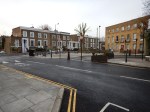
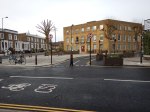
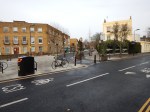
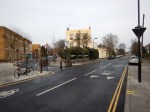
Near me there is a junction, which drivers access, like Lewis Hamilton going into the pits at Silverstone.
It means they can get through to the City quicker.
But over the last few weeks, the number of drivers taking the bend quickly and putting pedestrians in danger has dropped significantly. I’ve also seen drivers go hurtling off doiwn the road only to come back a couple of minutes later, with faces like thunder.
I just give them a knowing look!
So why has a dangerous junction become a lot safer?
Cycling Superhighway 1, goes across the rat-run and it has been used to choke off the rats, as the pictures show.
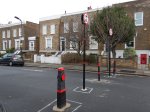
I’m now very much in favour of the Cycling Superhughways despite being told by every taxi-driver I use, that they are a complete pain!
But then I don’t drive!
Will DOO Mean DOO on Thameslink?
On Thursday I took a Thameslink Class 700 train from St. Pancras to Blackfriars.
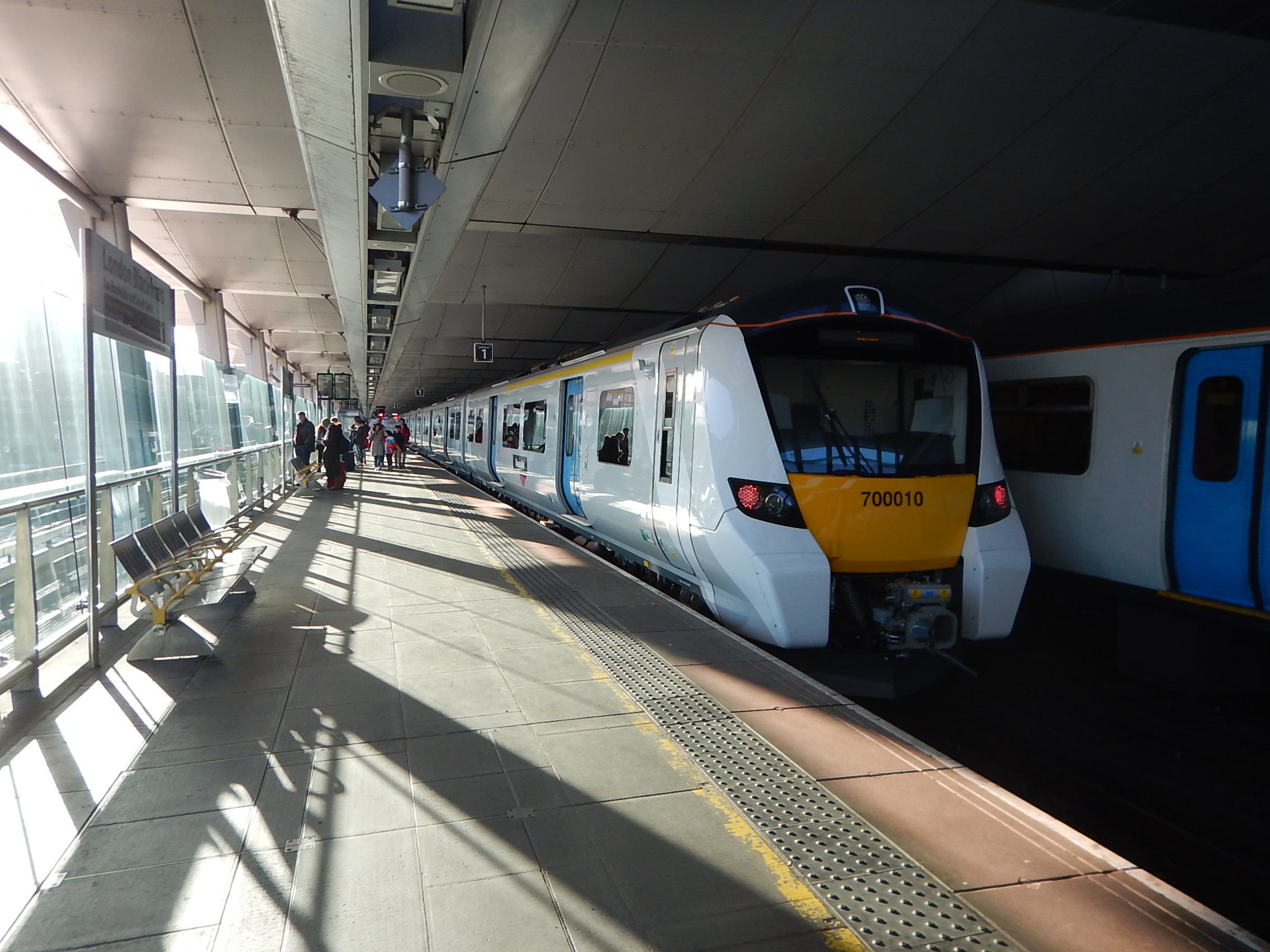
A Class 700 At Blackfriars
At Blackfriars an announcement said that the doors would open automatically.
Which they did without any of the usual intervention from passengers after the driver had released the doors.
This is how DOO works on the London Underground.
It is surely better, especially if you are getting off and your hands are otherwise engaged.
 The Anonymous Widower