What A Plonker!
Of all the stupid road accidents that happen every year, yesterday’s one in Kent must rank as the most stupid.
This article on the BBC, which is entitled M20 motorway shut after lorry crash causes bridge collapse, gives full details.
There will be a lot of questions asked about this digger and as Dellboy would say, its right plonker of a driver.
- Why didn’t the truck and the digger have a specialist escort?
- Did the driver understand metres and/or feet and inches?
- What is the name of the company responsible, so that I can sue for a ruined holiday, spent camping on the M20?
At least the driver didn’t kill or serious hurt anybody, although it must have been a close run think for the motorcyclist.
A couple of weeks ago, I was seriously delayed because of another plonker, who crashed with a train on a level crossing at Waterbeach.
I think we could bring in a law, which meant that everybody, who is delayed by anything like this incident can contact a central insurance number or web site, where you can easily add your claim to the pile.
After all if my train is late, I can get a refund and have been able to for years. Recently, I was travelling on a Cheap Day Single ticket from Manchester to London, which arrived in London about two hours late, due to an unspecified problem. I filled in a form on the Virgin web site, when I got home and I had my compensation in a week or so.
The insurance companies have the power to knock some sense firmly into the minds of these idiots, who endanger everyone’s lives.
A Second New Stations Fund Is Launched
This article in the European Railway Review is entitled £20m fund for new railway stations across England and Wales.
The twenty million pounds is the second New Stations Fund, which provides up to seventy-five percent of the cost of a new or reopened station.
The first fund was used to help fund the following stations.
- Ilkeston in Derbyshire – New station – Opening in Autumn 2016
- Kenilworth near Coventry – New station – Opening in Summer 2017
- Lea Bridge in London – Reopened station – Opened in May 2016
- Newcourt in Devon – New station – Opened in June 2015
- Pye Corner, Newport – New station – Opened in December 2014.
Note that all stations are on existing railway lines.
Incidentally, I use Lea Bridge station about three or four times a month, as I have a direct bus connection to the station to connect to trains along the Lea Valley.
Which stations in Wikipedia’s lkist of possible proposed stations, do I think will be funded by the next New Station Fund?
These are a few that I think could be possible.
- Aldridge in Walsall
- Ashton Gate in Bristol
- Caerleon in Newport
- Castle Bromwich in Birmingham
- Charfield in Gloucestershire
- Chipping Sodbury in Gloucestershire
- Cottam in Preston
- Corsham in Wiltshire
- Cwm in Monmouthshire
- Egginswell in Devon
- Finningley in South Yorkshire
- Haxby in York
- Henbury in Bristol
- Horfield in Bristol
- Leiston in Suffolk
- Long Ashton in Somerset
- Marsh Barton in Devon
- North Filton in Bristol
- Park Farm in Kent
- Portishead in Bristol
- Soham in Cambridgeshire
- Town Meadow in Wirral
- Wisbech in Cambridgeshire
- Wootton Bassett in Wiltshire
Note.
- Bristol seems to have a lot of possibilities, but that is because they are creating MetroWest.
- I have rejected several schemes as they are rather large and I reckpon, there is a practical limit of a station costing say five million pounds.
- I have also rejected stations, where a whole line like the Camp Hill Line or the Wealden Line is proposed to be reopened.
- Leiston, Soham and Wisbech are additions of my own, based on my thoughts in Making Sense Of The New East Anglia Franchise.
- There are no new Welsh proposals outside South-East Wales, which got Pye Corner in the first New Stations Fund.
I suspect that now the fund has been announced, some good proposals will be put forward.
Out of interest, these are the numbers of new and reopened stations of the last few years.
- 2013 – 1
- 2014 – 3
- 2015 – 12
- 2016 – 4
I think that 2015 has the highest total, due to the reopening of the Borders Railway.
An Illustration That Ipswich In Sixty Is Possible
I went to football at Ipswich today.
The match was a bit mediocre, but the result was the right one and Grant Ward scored a delightful goal.
Usually, after a three o’oclock kick-off, I try to get the fast 17:09 train back to Liverpool Street, where it is scheduled to arrive at 18:19 after two stops at Manningtree and Colchester. I can’t ever remember this train ever being later than more than a couple of minutes.
Today, instead of the usual rake of Mark 3 coaches pulled by a Class 90 locomotive, the train was a Class 321 electric multiple unit. I suspect the change of train was due to engineering works on the line North of Ipswich and the fact that London-Norwich services were being run as two separate services; London-Ipswich and Ipswich-Norwich.
From Colchester, which was left on time, after a stop of perhaps three minutes, the train ran non-stop to London, probably at about an average speed of 100 mph or nearly so.
I didn’t notice any slackening of speed at Shenfield, and after just 59 minutes, the train was passing through Stratford.
We eventually stopped outside Liverpool Street to wait for a platform at 64 minutes and finally stopped in platform 10 at Liverpool Street station at 67 minutes, three minutes ahead of schedule.
This article in the East Anglian Daily Times, is entitled Faster trains to Ipswich as part of new franchise.
This is said.
Rail journeys between Ipswich and London will take, on average, 64 minutes from the introduction of the new timetable in 2019 once new “Stadler Flirt” InterCity trains are introduced on trains to the capital. At present the average journey time is 73 minutes.
That is more than the stated aim of the Great Eastern rail campaign to have services running to Ipswich in 60 minutes – but Abellio Greater Anglia managing director Jamie Burles said the last four minutes could only be shaved off journey times once Network Rail has carried out improvement work to the line.
So it looks like Abellio aren’t that far from 64 minutes with a nearly thirty-year-old British Rail designed and built Class 321 train.
- Judging by the smooth ride all the way, I suspect that most of the track and overhead wires is now to a good standard.
- Perhaps a minute or so can be saved in each of the two stops, by the better acceleration, braking and door systems of the new Stadler Flirts.
- Better signalling and control of trains at Liverpool Street would surely save a couple of minutes.
Having seen a full station at Ipswich, when I arrived for the match, I suspect that work needs to be done at that station, to create more capacity for Cambridge, Felixstowe, Lowestoft and Peterborough trains, so that London-Norwich services are not slowed by full platforms at Ipswich.
But overall, I’m led to the conclusion, that Jamie Burles statement is substantially correct.
I suspect that once all of the trains on the line are 100 mph trains, with a fast 100-0-100 mph profile for stops, that we’ll be approaching that 64 minute average for trains between Ipswich and London.
I suspect for the magic 60 minutes to be obtained consistently by all trains, that the following will have to be done.
- Enough extra platform space is created at Ipswich so that London-Norwich and London-Lowestoft services have exclusive use of the current platforms 2 and 3.
- All electrification on the Great Eastern Main Line needs to be of a high standard and capable of handling regenerative braking.
- Crossrail needs to be fully integrated with longer distance East Anglian Services.
- The Southend to Shenfield Line needs to be updated, so it can reliably present and accept trains to fit the schedule at Shenfield
- All trains are either Stadler Flirts or ombardier Aventras, with perhaps a few 100 mph trains awaiting replacement.
- Liverpool Street station has enough platforms for the longer trains.
I suspect too, that Network Rail will have to do some smaller work, like lengthening some platforms, adjusting the signalling and adding a crossover.
With some work North of Ipswich, I suspect that Norwich in Ninety will be implemented at the same time as Ipswich in Sixty.
Walking Routes Around London Bridge Station
The walking routes around London Bridge station have been revealed.
They are shown in this plan.

London Bridge Concourse
It would appear that the new concourse is all at street level and that lifts, stairs and escalators take you to the fifteen platforms that run across the top.
It all sounds very simple and passenger friendly.
In some ways the key will be information, in that say you want to go to Purley, you will need to be directed there without fuss.
I have a feeling that the best way to work the station, is as you approach to call up http://www.nationalrail.co.uk on your mobile phone, choose Live Departure Boards and then type in London Bridge and your destination. As this information is generally available fifteen minutes before the train leaves, this should give you enough time to walk to the platform.
I’ve done it so many times on my phone, I just type “nat” to get started.
I would hope that the visual information system is just as quick.
Both Sides Of The Bermondsey Dive-Under – 26th August 2016
The Bermondsey Dive-Under is on track to be completed by Spring 2017.
This is a visualisation of the completed structure.
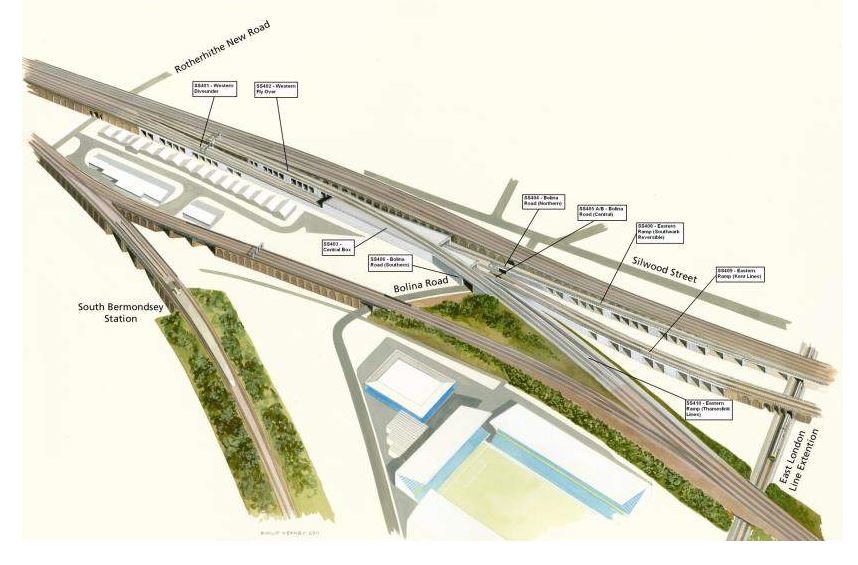
Bermondsey Dive-Under
These pictures show the dive-under from a train, running from London Bridge to Caterham on the line between the Millwall FC ground and the structure.

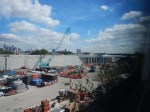
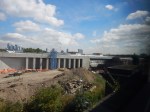
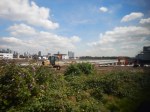

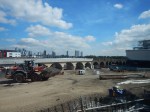
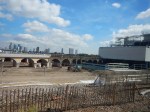
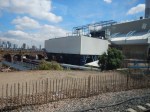
It’s now getting to look a lot like the official visualisation.
These pictures were taken from a train running into London Bridge from New Cross, on the other side of the structure.
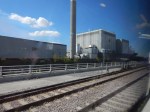
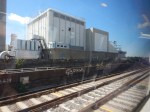
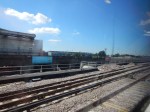
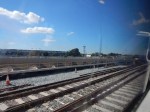
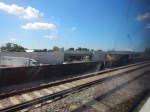
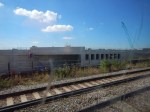
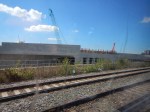
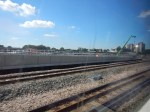
Crossrail may be the more spectacular and expensive project, but it has no intricate blend of old and new like the Bermondsey Dive-Under.
Thinking about the dive-under and when it is complete.
- Will there be walking routes through the structures and in the green spaces?
- How many extra small business units will be created underneath and around the arches?
- Will the area be integrated into the surrounding community?
Judging on other Network Rail sites, I don’t think the space will be wasted.
I do think that railway arches are a unique city resource, that can create jobs and increase economic activity and also improve the local environment.
Network Rail ought to sponsor an award for the Best New Railway Arch Business every year.
Cambridge North Station
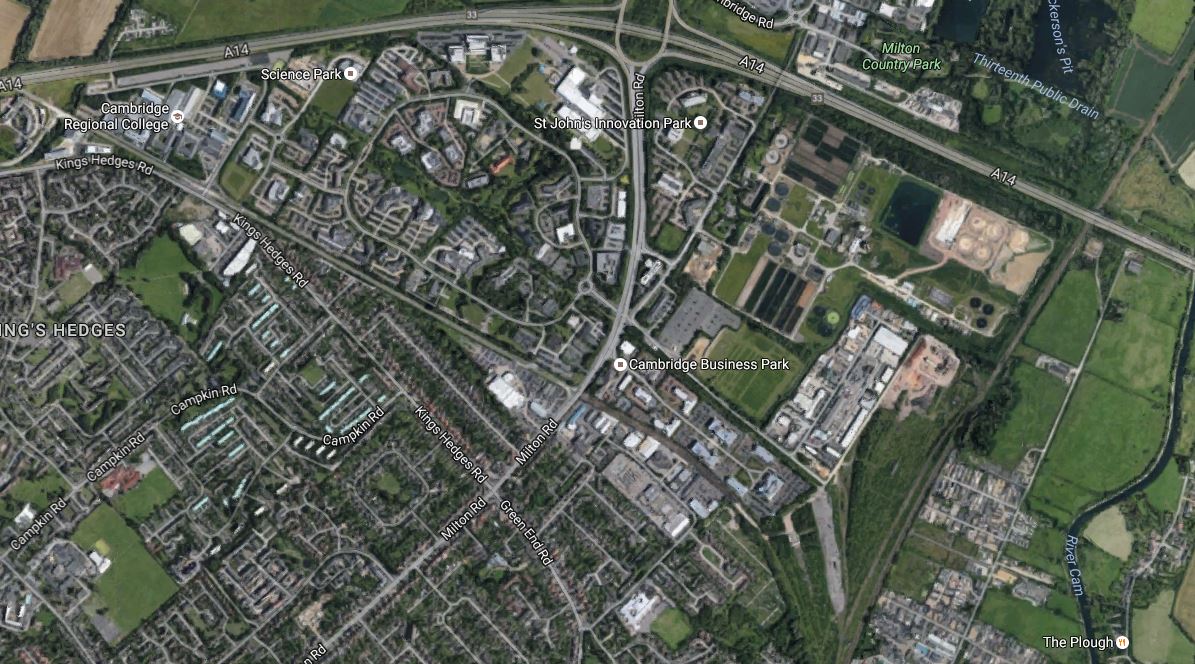
Cambridge North station is being built to serve the North of the city and especially, Cambridge Science Park and other developments in the area.
This Google Map shows the area.
Cambridge Science Park And Cambridge North Station
Note the Breckland Line between Cambridge and Ely, which cuts across the Eastern side of the map, at a right-angle to the main A14 dual carriageway. The rail line appears to split with a loop on the North West side by a green space. The station will go in this area.
These are pictures, I took from passing trains going to and from Ely.

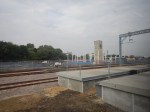


From the pictures, the following seems to be apparent.
A long island platform is being built to the North West side of the tracks.
There is a lift tower by the car and cycle parks outside of all tracks.
There is a double-track loop that by-passes the platforms.
This is the only plan I can find on the Internet.
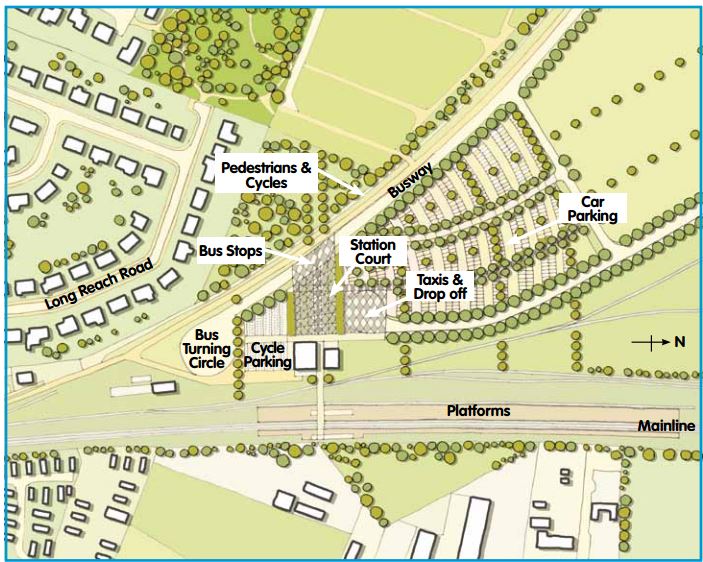
Cambridge North Station Pan
I know this about the station.
- It is proposed to have three platforms according to Wikipedia.
- Thameslink will terminate two trains per hour at the station.
- Most other services will stop at the station as they pass through.
The plan shows the main line going between the platforms, so will the double-platform in the pictures be used as a through platform for Cambridge to Ely trains and the far side as a terminating platform?
Unfortunately, when I returned to Cambridge, there were no seats on the other side of the train.
This article in European Railway Review is entitled New Cambridge North railway station taking shape – set for 2017 launch, has two pictures, which clearly show the second through platform on the South-East side of the tracks.
A few observations.
- It would appear that to go between the car or cycle park and the trains, you always need to use the bridge.
- My pictures show that the platforms are very long and will certainly handle the twelve-car Class 700 trains.
- Passengers from Thameslink needing to go to say Kings Lynn or Norwich, will just walk across the platform to get their onward train.
- Passengers from Kings Lynn and Norwich wanting to go South on Thameslink would probably change at Cambridge to avoid using the bridge.
- On the current service pattern the station would only have a one train per hour service to Peterborough.
- The station has no direct connection to Ipswich or Bury St. Edmunds.
I wonder if there are plans to allow Cambridge North station to act as a terminus for trains from the Ely direction.
Under the new East Anglian Franchise, Abellio are extending their Peterborough to Ipswich service to Colchester and making it hourly.
It is a pity, that this service can’t easily serve Cambridge North station.
This Google Map shows Ely station and the lines going South towards Cambridge.
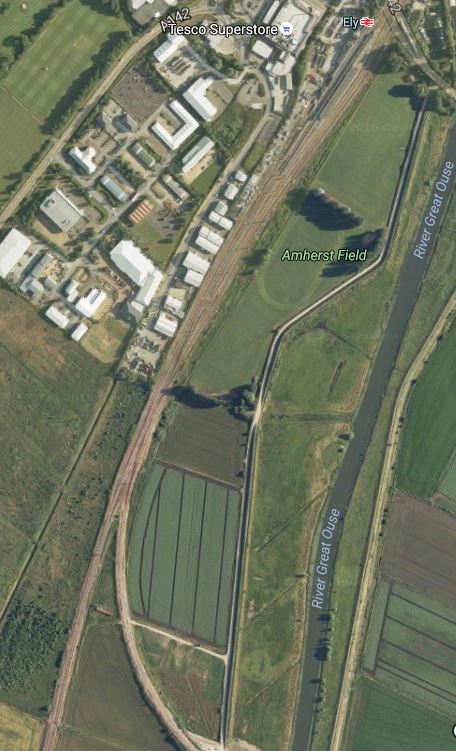
Ely Station And The Lines To Cambridge And Ipswich
Note how the line to Bury St. Edmunds and Ipswich branches off to the South-East.
If a chord were to be built allowing trains to go between Cambridge and Bury St. Edmunds, this would do the following.
- Allow the Peterborough-Ipswich service to call at Cambridge North, with just a reverse at Cambridge North.
- Give Cambridge North station a second train in an hour to and from Peterborough.
- Create a direct hourly service between Cambridge North station and Bury St. Edmunds, Ipswich and Colchester.
- When the East-West Rail Link opens, it would allow freight trains to go between that line and Felixstowe without using the single-tack Ipswich-Cambridge route.
Strangely, it doesn’t appear that this chord has ever existed.
But, I do think it will be seriously considered in the future, with the main reason being the freight route from Felixstowe to the Great Western Railway at Reading.
London Gets A New Attraction On Monday
One of my Google Alerts found this article on the Network Rail web site, which is entitled New London Bridge station concourse to open this Bank Holiday.
I’m surprised that the new concourse is actually opening on the Bank Holiday, but I’ll be going with my camera.
It’s been a long time coming and I hope the new station lives up to its billing!
The Voters Can Spot A Bullshitter A Mile Away.
According to today’s Standard, this was said by Michael Dugher, MP about Jeremy Corbyn.
He may have said it, but it is a statement that underestimates the intelligence of the average voter. They can spot a bullshitter from a lot further than a mile.
An Article On Driverless Trains That Hardly Mentions Unions
This article on Rail Engineer is entitled Subway Revival – Glasgow to introduce UTO.
In this instance UTO stands for Unattended Train Operation.
In the article, there is only one mention of a trade union. This is said.
Getting the workforce’s commitment to new working practices was an essential first step of the modernisation programme. SPT achieved this in 2012 with an agreement between UNITE and SPT for more flexible working and establishment reduction with no compulsory redundancies.
The dreaded word RMT does not appear.
Having read the whole article, it does look like, when the new trains start running in a few years time, Glasgow will have one of the best Underground lines in the world.
I particularly liked this paragraph on the procurement of the new trains.
Charlie Hoskins explained that SPT did not procure its trains on the basis of a prescriptive technical specification as this might rule out a worthwhile technology. Instead, prospective suppliers were given a concept of operation that covered general requirements such as the number of people to be carried and how SPT wished to operate the trains. A competitive dialogue then followed to develop the technical solution that offered best value. This approach was supported by Glasgow-based consultant Racon and by Systra which, with SPT key staff, formed the client’s technical, commercial and procurement team.
It looks like Glasgow said they wanted to move so many passengers and the consortium came up with a solution.
How practical! And the dreaded word Treasury wasn’t mentioned.
Also just as they are involved in East Anglia, the Swiss company; Stadler is very much involved here. They seem to be s[specialising in niches.
Is Ilkeston Station A Typical Infrastructure Project In The UK?
The construction of the much-delayed Ilkeston station, seems to finally be proceeding, as this article on the BBC, which is entitled Ilkeston bridge work on newt delay railway station, discuses. This the opening paragraphs.
Work has started on a footbridge at the site of a £10m railway station where construction efforts stalled due to concerns over rare great crested newts.
Ilkeston in Derbyshire is one of the largest towns in the UK without a rail station after its previous one closed in 1967, due to Dr Beeching’s cuts.
However, the project suffered several delays, notably because of newts that had to be trapped and relocated.
The station, off Millership Way, is due to open later this year.
I do hope that, one of our Universities is doing a serious study about the effects of the new railway station and the restored train services have on the town of Ilkeston and the surrounding area.
I will be very surprised, if there isn’t some positive effects.
I also hope they’ll come up with recommendations to avert the delays to important small infrastructure projects like this.
 The Anonymous Widower