West Of England To Weymouth
This is the headline on an article in the May 2016 Edition of Modern Railways about the May 15th timetable changes. This is said.
On summer Saturdays and bank holidays from 21 May to 3 September the 07:50 Waterloo to Salisbury service is to be extended to Weymouth via Yeovil Junction, with a corresponding return service leaving the resort at 16:56. On arrival at Weymouth the service will rerurn to Yeovil Junction before providing a shuttle service between Junction and Pen Mill stations and then returning to the resort in time to form the working back to London
This sounds like an innovative way to provide a service that used to run in the summer between 2008-2010 using Mark 2 coaches and diesel locomotives.
Incidentally, the train would be used in Yeovil to replace a bus service.
As this Yeovil Metro is not in the Oracle yet, I assume that South West Trains are still refining their ideas.
Cardiff To Southampton By Electric Train
When I was waiting on Bath Spa station to return to London, a Class 158 train from Cardiff stopped at the station, on its way to Brighton via Southampton.
The train travels the full length of the Wessex Main Line from Bristol Temple Meads to Southampton, using the soon-to-be-electrified South Wales Main Line and the electrified West Coastway Line to complete the full route.
I wondered how much of the route will be electrified, once Cardiff to Bristol is hopefully electrified in the next few years. The current date for wires to Cardiff is December 2018.
I would estimate the length of the non-electrified section between Southampton and Bath is about sixty to sixty-five miles.
So it would appear that, the line could be within range for a Class 387 train or a new Aventra, with an IPEMU capability.
Obviously, Great Western Railway could also run a five-car Class 800 train on the route, using the on-board diesels to bridge the gap.
One way or other by 2020, Cardiff to Southampton will be run by electric trains, with a much increased capacity.
The Engineers Have Been Busy
When I went to Bath about a month ago, I wrote Electrification At Didcot Parkway – 29th March 2016.
Today, as I went through the area on my way to Bristol, most of the masts appeared to have been erected, with about half the wires over the slow lines and even some going up over the fast lines.
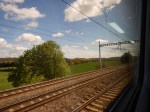
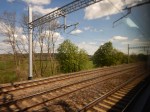
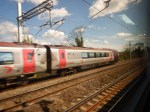





Past Didcot, there are now rows of piles on both sides of the railway, with some almost as far West as Chippenham.
There is still a lot to do, but I think it has been a good month for the engineers.
What A Lot Of Minis!
I photographed this train with the inevitable noisy Class 66 locomotive on the front at Didcot Parkway station.
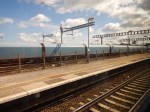
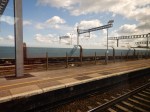
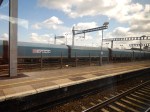

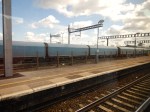
I assume it was taking Minis for export.
Hayes Shuttles To Start
This is the headline on an article in the May 2016 Edition of Modern Railways about the May 15th timetable changes. This is said.
Great Western Railway had planned a launch of electric services using Class 387/1 EMUs transferred from Govia Thameslink Railway with the start of the new timetable on 15 May. The operator was to use the ‘387s’ on a series of peak hour shuttles between Paddington and Hayes and Harlington, but delays to the introduction of Class 700s on Thameslink services mean the cascade of ‘387s ‘ has also been delayed.
I have searched the Oracle (National Rail’s Journey Planner) and can find just one extra train from Paddington, which is a new service at 07:15 going to Hayes and Harlington.
The Oracle also shows that the first two services of the day on the Greenford Branch only go as far as West Ealing after May the 15th.
How many people from the Greenford branch will be complaining about the loss of their early morning trains to Paddington?
The Modern Railways article also suggests, that as Bombardier have been making good progress on the building of the eight extra Class 387 trains, that these might be delivered in the summer, to enable GWR to run more services. As some of the Porterbrook trains have been promised to c2c before the end of the year, that means that GWR’s extra trains will be delivered before December 2016, as they are first in the queue.
The article says that a full service can’t be run until infrastructure works at the East of Hayes and Harlington station is completed.
I think we’ll see a gradual improvement of electric services between Paddington and Hates and Harlington over the rest of this year.
These questions will certainly be answered.
- When will the bay platform at West Ealing station for Greenford Branch Line trains be opened?
- Will the bay platform at West Ealing station be electrified?
- Will the eight extra Class 387 trains have an IPEMU-capability, as had been rumoured in Modern Railways?
- How much acrimony is being heaped on Siemens about the non-delivery of the Class 700 trains?
- Are the bosses of Great Western Railway and Govia Thameslink Railway still talking?
- Will Porterbrook add to their order of twenty extra Class 387 trains?
It does seem to me, that the big winners out of this mess, could well be Bombardier and Porterbrook.
I also feel that there will be some surprises between now and the end of the year.
I will keep most of my predictions to myself!
However, it would appear that if there was a plan to create an IPEMU variant of the Class 387 trains, the non-delivery of the Class 700 trains, has effectively made this plan difficult and late.
A Little Chord Goes A Long Way
This article in Rail Magazine is entitled Halton Curve Gets The Green Light.
I wrote about the Halton Curve in Could Tram-Trains Be Used To Advantage In Liverpool? I said this in a section entitled Upgrading The Halton Curve
Funds have been made available to upgrade the Halton Curve, so that trains can reach Chester from Liverpool South Parkway via Runcorn.
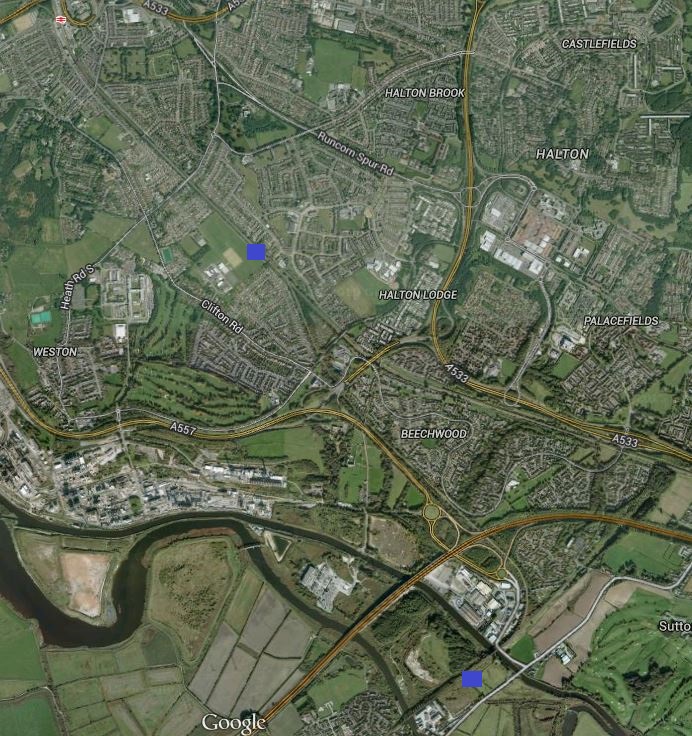
The Halton Curve
The two blue squares indicate the two ends of the current single-track curve. The top one is where the curve leaves the Liverpool branch of the West Coast Main Line south of Runcorn station and the bottom one is where it joins the Chester to Manchester Line east of Frodsham.
The main reason for doing this would be to allow trains from Chester and North Wales better access to Liverpool Lime Street and South Parkway stations, and the John Lennon Airport.
As the Tier Two and Three electrification plans for the North as they effect Merseyside, includes full electrification of the lines around Chester, this would mean that an upgraded curve would be electrified.
There are probably good reasons to add an extra track to the curve, which would make it possible for Chester to be a new southern destination of the Northern Line.
The Rail Magazine article says this.
The Liverpool City Combined Authority has approved a range of projects aimed at improving travel across Merseyside, including reinstatement of the Halton Curve.
Also endorsed by the Welsh Government and by Cheshire West and Chester Council, bringing the line back into full use will entail an hourly direct service between Liverpool and Chester, and the extension of some services into Wales.
So just as the Todmorden Curve helped with the rail system around Burnley and the Ipswich Chord helped in Suffolk, will the Halton Curve help to develop the railways on Merseyside?
What is interesting about this decision, is that this appears to be a Liverpool decision, not one from Central Government.
Should more infrastructure decisions be devolved?
I think it’s very much a big yes!
–
Where Are The Battery Trains? – Part 2
My Trip To Corby today got me thinking more about the reasons for the non-appearance of IPEMUs, that I wrote about in Where Are The Battery Trains?
I have released several software products in my time and I’ve made certain that when I do this, that the product is fully tested and up to the job.
I suspect that Bombardier are no different, except they are probably a lot more thorough!
Testing The IPEMU And The Batteries
This article in Rail Technology Magazine is entitled Bombardier enters key analysis phase of IPEMU and it goes on to describe the sort of work being done. This is said.
Engineers in Mannheim are comparing four battery types, including the Valence batteries used on the demonstrator.
“What we’ve seen from the trial is that there is some work that we’ve still to finish on understanding the number of batteries that we apply for a particular performance,” he said. “We are looking at the packaging design in terms of how we pack the batteries together and how we monitor the overall temperature of the batteries for service. This is all to do with closing the triangle.”
I suspect most of this battery testing is being done on an off-train test rig, as if you have at least one rig for each battery type, testing can be done in parallel.
These rigs would be fairly simple affairs, where a computer with the route profile cycles the batteries through what they’d go through on an actual train, again and again.
I wouldn’t be surprised if this testing has widened, as obviously they are looking for a battery system with these characteristics.
- Very high reliability.
- The ability to hold as much energy as possible.
- A size and weight, that would enable a complete battery to be under the floor of a train.
- An acceptable cost.
Bombardier have not said, whose batteries they are testing, except that the ones they used in the prototype from Valence are on the list.
But supposing a reputable company, came to Bombardier and said, they could modify the batteries they’ve used successfully in such-and-such an application, do you think Bombardier would dismiss them out of hand?
Of course they wouldn’t!
I think that if the IPEMU gets introduced into service, that there could be a surprise in the type and manufacturer of the batteries.
Battery Choice Before Manufacture
Some battery types would inevitably be better than others and the testing would obtain a packaging design, range and cost for each design.
The big problem for the trains, is that until you decide on the type of battery to use, you can’t finalise the design of the battery pack and start manufacture.
This testing could throw also up strengths as well as problems.
The Problem Of Range
Range on batteries, is very important, as the longer it is, the more routes become possible for an IPEMU.
I was told on the Class 379 demonstrator, that a range of sixty miles was possible with that train. In this document on the Bombardier web site, this is stated about the objectives for the IPEMU.
The target is to operate a 185 tons four-car BOMBARDIER* ELECTROSTAR* train on battery up to 120 km/h for a distance of up to 50 km, which requires battery capacity in the range of up to 500 kWh. The design solution charges the batteries with the existing line converter equipment and connects the motor converters to the batteries when the 25 kVAC overhead line is not available. The lithium-ion batteries weigh less and can charge more quickly than industrial-form batteries, such as those used in automobiles.
Hard evidence of the actual range is difficult to find, although the figure of sixty miles is quoted in this section in Wikipedia.
I will now look at four longer routes, where the IPEMU may be the solution.
1. St. Pancras to Corby and Oakham
In my trip today to Corby, I saw how Network Rail are creating a fast route to the town, which it looks like will be double-track all the way to Oakham, This would include the route over the Welland Viaduct, which would be the sort of electrification, that would be difficult for engineering, aesthetic and heritage reasons.
Given that North Northamptonshire and the surrounding area, is going to see the development of several thousand houses, it would seem to me that an ideal IPEMU should be able to reach at least Oakham from St. Pancras. As Corby is about thirty-two miles and Oakham is forty-six miles from Bedford, this would mean that to provide a service would need a IPEMU with a range of sixty-four miles to reach Corby and ninety-two to reach Oakham, respectively.
So on the face of it, Corby and Oakham would be out of the range of a train fitted with the original Valence battery pack with its range of sixty miles, unless there was some electrification onwards from Bedford.
Yesterday, I saw that the piles for the electrification were going in North of Bedford. A rough calculation shows that for a sixty mile range IPEMU to reach Corby would need tjust a few miles of electrification North from Bedford. Oakham would need nearly twenty.
2. Liverpool Street to Lowestoft
Another route talking about as an IPEMU prospect is the East Suffolk Line between Ipswich and Lowestoft. This would need a train with a range of ninety-eight miles.
But as from Bedford, there could be a section of electrification at the Southern end of the line near Ipswich and perhaps some method of charging the train at Lowestoft.
3. Paddington to Bedwyn, Newbury and Oxford
Ever since I wrote Rumours Of Battery Powered Trains, which was based on an article in the September 2015 edition of Modern Railways, which was entitled Class 387s Could Be Battery Powered, I have believed that the Thames Valley could see several service run by IPEMUs.
I wrote this in a letter to a railway magazine in a letter entitled Class 387 IPEMUs to Oxford.
This sounds like an impossible dream, but if you were running Great Western Railway, you need some crumb of comfort, to cope with the arrival of Chiltern Railways at Oxford station in December 2016.
In September 2015, there was an article in Modern Railways with the headline of Class 387s Could Be Battery Powered, that described how GWR were thinking of creating some Class 387 IPEMUs.
In April 2016 the same magazine stated that electrification to Maidenhead could be ready before the end of 2016.
So that would enable Class 387 IPEMUs to reach Reading, Henley and Marlow, by doing the last few miles on batteries.
Also min the same issue of the magazine, Roger Ford also reported that the Reading to Didcot test track could be electrified by the end of the year.
As Didcot to Oxford and back, should be within the range of a Class 387 IPEMU running on batteries, I wouldn’t be surprised to see an electric service to Oxford before 2017.
I think it is true to say that this scenario is helped by every small extra morcel of range.
4. Basingstoke to Exeter
This section of the West of England Main Line is always being touted as needing electrification, but this section at nearly a hundred and thirty-five miles is certainly too long for a first-generation IPEMU.
On the other hand, selective short section of third-rail electrification, might make this route possible.
Note.
- These four routes would give significant advantages to operators, with faster electric services to London and in the case of Oakham and Exeter, they would release high-quality diesel multiple units to provide other services.
- As all of these routes are over sixty miles, it shows how, advances in battery design, which might bring increased capacity could increase the places where IPEMUs could provide an electric train service.
So are Bombardier’s engineers working on battery designs, that will handle as many routes as possible, that would be worthwhile to run with IPEMUs?
Other Technology
I am of the opinion that other technologies will stretch the range and applications of IPEMUs.
- Automatic control of the pantograph up and down at line speed would surely be important.
- Short sections of electrification in stations, where the trains stop.
- Various aids would probably help the driver make the most of the battery capacity.
- Improved signalling and track.
I am strongly of the opinion, that we’ll see a constant improvement in the range of an IPEMU.
Conclusion
I have only talked about medium length routes in the range of upwards of sixty miles.
If you add in all of short distance uses on branch lines, I think we’ll be seeing a lot of IPEMU-equipped trains in the future.
Their current non-appearance, may just be that Bombardier want to get the train absolutely right.
If they do that and the financial case stacks up, then Bombardier could see orders for a lot of new trains.
A Trip To Corby
I’d never been to Corby station before, but had planned it for some time.
I went this morning to both have a look at one of Network Rail’s new stations and see the work going on in the area.
These are pictures I took.
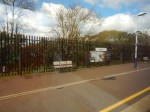


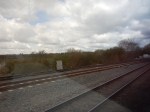

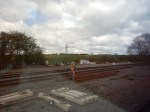


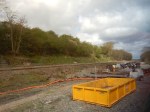


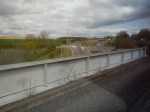


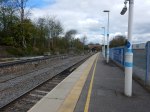
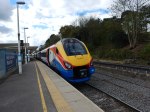

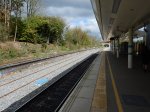


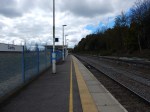
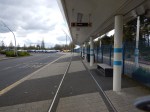


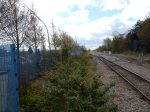



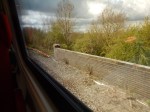


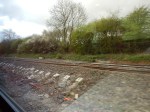

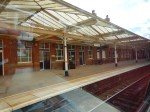


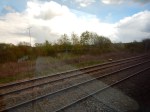

Note.
- I don’t think I saw one tricky bridge to electrify North of Bedford.
- A lot of the second track to Corby is in place.
- It would appear that the works at Corby will create a double track railway through the station to Oakham.
- I was told at Corby station, that there is to be a closure of the station later in the year, to finish the works.
- I saw no sign of any electrification North of Kettering.
- Piles with batty yellow covers, for electrification had started from Bedford.
But one thing that surprised me, was how the line constantly moved changed from four tracks to three and back again and that it was surrounded by lots of space.
Electrifying from Bedford to Kettering wouldn’t be the most difficult of jobs.
Only the stations would be tricky.
But I do have this feeling from what I saw at Horwich Parkway station and wrote about in Are The Electrification Gantries Going In The Middle At Horwich Parkway Station?, that Network rail have some better and non-traditional ways of dealing with the electrification of stations in their tool-box these days.
I also think, that they could phase the work in places, as the lines are often in separate pairs.
From Bromley-by-Bow To Mile End Park
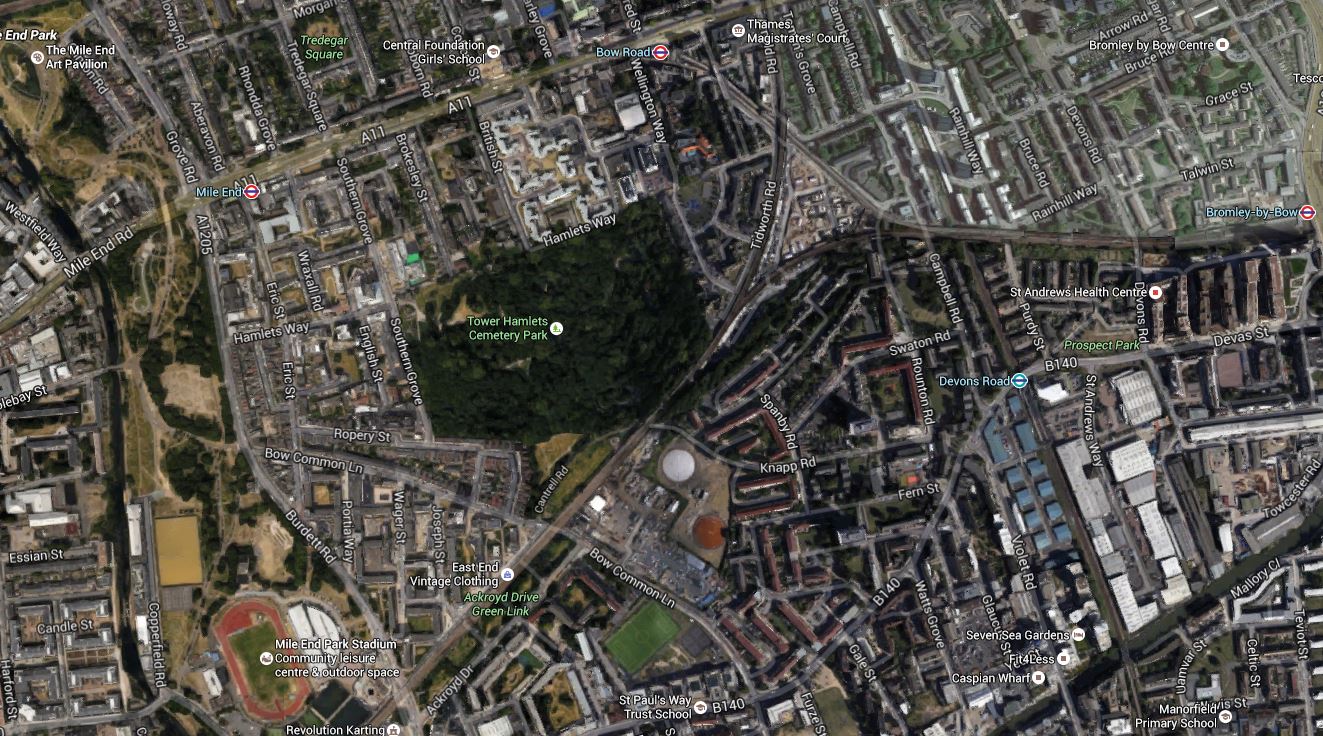
This Google map shows the c2c railway line from where it passes through Bromley-by-Bow station in the East to where it crosses Mile End Park in the West
From Bromley-by-Bow To Mile End Park
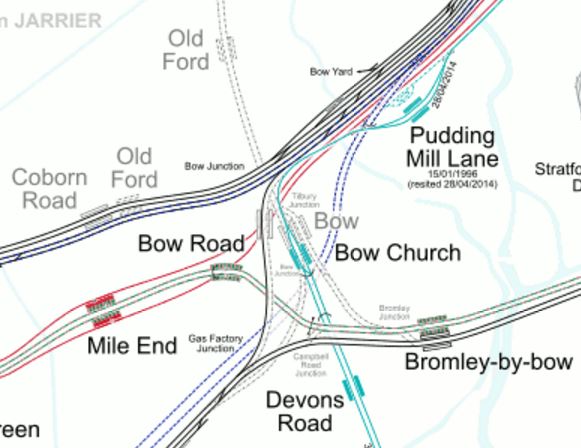
This map from carto.metro.free.fr shows the railway lines around the triangular junction towards the top of the map and to the East of Tower Hamlets Cemetery Park.
Lines Around Eleanor Street
The map certainly shows, there has been a lot of building of railways in the area. This Wikpedia entry for the former Bow station gives some of the history.
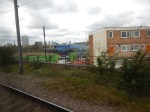
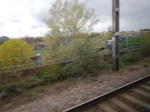
These pictures show the route taken from a c2c train going towards London.




Note.
- The Crossrail ventilation and evacuation shaft at Eleanor Street is at the point of the triangle, where the Underground lines go Northwards and the c2c lines go Southward.
- The travellers site is in the middle of the triangular junction.
- The single-track chord for Stratford, links the c2c lines into Fenchurch Street to the Great Eastern Main Line.
- This chord is clearly visible on the map of the Lines around Eleanor Street.
- Tower Hamlets Cemetery Park, which is worth a visit and I wrote about in Around Tower Hamlets Cemetery Park.
- The Crossrail ventilation and evacuation shaft at Mile End Park, which is in the South East corner of the Park by the railway.
In The Ventilation Shafts For Crossrail, there is more details on the shafts and some pictures from April 2015.
A Tribute To Victorian Engineering
These pictures of the Berrmondsey Dive-Under, were taken from a train going between London Bridge and East Croydon stations and eventually on to Uckfield.


I think we are seeing the creation of a piece of superb railway engineering, that although the Victorians did brick arches and interwoven viaducts all the time, creating them now is all too rare.
It doesn’t appear to be a simple struct. But then Wikipedia says this about it.
With the completion of Borough Market Viaduct to the west of London Bridge, Thameslink trains will use the pair of tracks to the north, and Charing Cross trains will use the new pair of tracks to the south. At present, northbound Thameslink trains arrive into London Bridge to the south of the Kent lines. Construction work will be undertaken to the east of London Bridge so that Thameslink trains from the Brighton Main Line can use a grade-separated crossover to avoid impeding trains from Kent bound for Charing Cross.
Services to Charing Cross on the Kent lines will be diverted slightly south in the vicinity of Trundleys Road onto the route of the former branch line to Bricklayers’ Arms. They will then slope up alongside the Brighton Main Line just north of South Bermondsey station. Thameslink trains in both directions will cross over the Kent lines on a new bridge, meeting the existing alignment just north of Jarrow Road.
Simple it isn’t!
I am pleased to see that it looks like they are building some new arches under the lines. Look at the last four pictures!
 The Anonymous Widower