Narrow Pavements In Dalston
I’m not a lover of this development in Kingsland High Street, but now that it is nearing completion, one problem stands out!
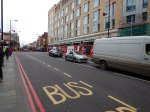


The pavements are so very narrow.
Will two double-buggy pushers be able to pass?
Government “not pursuing” HS1-HS2 Rail Link
This is the title of an article on Global Rail News.
The report entitled High Speed Two: East and West The next steps to Crewe and beyond considers it is just too difficult.
Section twelve of the report entitled Connecting to High Speed 1, goes into details.
They suggest an enhanced pedestrian link and say this for rail.
For rail, we considered a range of direct link options. It was, however, not possible to identify a viable rail option capable of meeting the strategic aspirations whilst successfully addressing stakeholder concerns. This was because the options were complex and expensive to construct and would have delivered infrequent, less attractive train services for HS2 passenger travelling to European destinations. As a result we do not intend to take forward proposals for a direct rail between HS2 and HS1 or include active or passive provision to support the construction of such a link in the future.
In my view, the only direct rail link possible, without demolishing half of Camden, would be a totally tunnelled double-tracked route from a few miles north of Euston to somewhere like Barking to connect with the Channel Tunnel Rail Link. It could also be used to get freight trains between the West Coast Main Line and the Channel Tunnel and the ports in the South East.
But it would have a cost of almost the level of the tunnels for Crossrail or Crossrail 2. Have we got a spare ten billion pounds?
The Pedestrian Link
From drawings of Euston station after HS2 is opened, it would appear that the HS2 platforms are on the western side of the station.
Does this make the pedestrian link difficult?
The Crossrail Alternative
When HS2 opens in2026, it will stop at Old Oak Common station, where it will interface with a myriad of lines including Crossrail.
Crossrail at present only goes as far as Abbey Wood, but the route is safeguarded to Gravesend. As I showed in Crossrail Extension To Gravesend, extending Crossrail to Ebbsfleet International station, would not be a multi-billion pound project.
As the HS2 station at Old Oak Common is not finalised yet, I do hope when it is, that it is simple interchange between HS2 and Crossrail.
With a simple interchange between Crossrail and HS1, the link between HS1 and HS2 via Crossrail would not be as simple as a direct link, but it could have other advantages, when you look at the using Crossrail as a preferred link.
Convenience For Passengers
If Crossrail served Ebbsfleet International, this would mean that passengers from many more places would have a direct or one-change link to Continental services.
But the biggest winners would be those wanting to go between Heathrow and the Continent. What the direct frequency would be between Heathrow and Ebbsfleet International would be up to the planners, but I can’t expect there would be less than four trains per hour
I live close to Dalston Junction and might prefer to use Crossrail from Whitechapel to Ebbsfleet, at certain times of the day, when my routes to St. Pancras are extremely busy!
I believe that Crossrail should go be exected to Ebbsfleet International as soon as is feasible!
St. Pancras Is Too Small
I believe that in a few years time, London to Paris and London to Brussels will be turn-up-and-go services.
Given too, that plans exist for direct services to Amsterdam/Rotterdam, Marseilles and Cologne, it strikes me that a four-platform St. Pancras station will be too small in perhaps ten years.
Also, what would happen if say easyRail or RyanRail wanted to run low-cost services to Europe, which is or will be allowed by European Union competition rules?
With Crossrail linked to Ebbsfleet International, where there is plenty of space for more platforms, it would be possible that services could terminate there and use Crossrail to and from Central London.
Customs And Immigration
Once Crossrail is a feasible route to Continental services and the travel statistics start to be reliable, it might be possible so sort out our archaic customs and immigration arrangements.
When I travel between say Brussels and Frankfurt, I just have to have a valid ticket, but how long before I need to show my passport and have my baggage scanned on a journey like this?
Incidentally, if you travel on some long-distance trains in Spain, your baggage is scanned.
I think that with all the problems of terrorism and illegal immigration, that cross-border trains within the Schengen area, will come under tighter security rules in the near future.
Will regulations like this mean, when I am travelling from say Cologne to London, that I would undergo the same checks as another passenger going from Cologne to Brussels?
I certainly hope so!
Modern Ticketing
Surely with e-passports and contactless bank cards, we should be able to do something a lot better than exists today.
Imagine turning up at any major station on either side of the Channel, where you can board a train for the other side.
You put your e-passport on the turn-up-and-go terminal, which checks you against the passport. You just indicate on a screen where you want to go, choose your train and, pay for it and then walk through to the waiting area.
If you have already bought your ticket, the terminal would recognise you and after checking the bar code on your ticket or your bank card, you would also be let through.
The only thing to do before boarding, who be the personal and baggage scan.
All the technology to create a ticketing system like this is available today.
On the other hand, I would hate to see a system that was so slow, that you had to spend an hour in a station before travelling.
Thoughts On The Camden HS1-HS2 Link
After writing the previous sections and reading this section on Wikipedia about the link, I had the following thoughts.
- Trains between the Continent and HS2 would not stop in Central London. This might cause logistical problems for groups of travellers.
- To call at St. Pancras, trains would need to reverse at St. Pancras. Would there be enough platforms?
- Would Customs and Immigration services have to be provided at every HS2 station?
I suspect others have had the same and other thoughts and have thus decided that a pedestrian route is the best way to change between Euston and St. Pancras.
Journey Times
I wouldn’t use Ebbsfleet if the total journey time was a lot longer.
The following assumptions and facts can be considered.
- Ticketing, boarding or disembarking at St. Pancras or Ebbsfleet shouldn’t take different times.
- From Eurostar’s timetable St. Pancras to Ebbsfleet takes twenty minutes.
- From Eurostar’s timetable St. Pancras to Paris by the fastest train takes two hours sixteen minutes.
- From Eurostar’s timetable Ebbsfleet to Paris by the fastest train takes two hours five minutes.
- From Crossrail’s predictions, Old Oak Common to Abbey Wood will take thirty two minutes.
- I estimate that Abbey Wood to Ebbsfleet International would take perhaps fifteen minutes.
- I estimate that Old Oak Common to |St. Pancras via a direct HS1-HS2 link would take perhaps fifteen minutes or a bit more, if the train had to reverse at St. Pancras.
This would give the following estimated times.
- Old Oak Common to Paris via St. Pancras would take two hours thirty-one minutes.
- Old Oak Common to Paris via Crossrail would take two hours fifty-two minutes.
So not building a direct link means that passengers using HS2 to get to Paris take another twenty-one minutes.
On the other hand, how many would book separate trains with a generous connection time and whilst crossing central London would have a relaxing meal?
Conclusion
I think that to save twenty-one minutes in a journey from HS2 to Paris, but completely rebuild the lines North of Euston and St. Pancras is a trade-off not worth making.
Fun At The Elephant And Castle
When I was driving, I used to find the Elephant and Castle roundabout confusing, especially as being a North Londoner, you don’t cross the Great Sewer unless you’re accompanied by a posse. (Make sure, they’re not Ipswich supporters, as they get lost at Liverpool Street!)
The Underground Station
In some ways Elephant and Castle tube station can be confusing and is almost two separate stations connected by long, dark tunnels under the roundabout.
- The Northern entrance is directly over the Bakerloo Line platforms
- The Southern entrance seems to give better access to the Northern Line platforms.
There are no escalators, but the Southern entrance is likely to be rebuilt. Wikipedia says this.
A major upgrade is being planned by Transport for London to bring improvements to the station; these include a new Northern line ticket hall, three new escalators and additional lifts to provide step-free access to the Northern line platforms. This will be done in conjunction with the major transformation in the Elephant & Castle area to create thousands of new homes and potential for new retail development to provide growth potential in the area.
That would be a great improvement.
The New Road Layout
Things look like they’re going to get a lot more fun for drivers at the Elephant and Castle judging by this traffic scheme that will start on Sunday.
This Tfl web page shows the scheme and this TfL map shows the final layout.
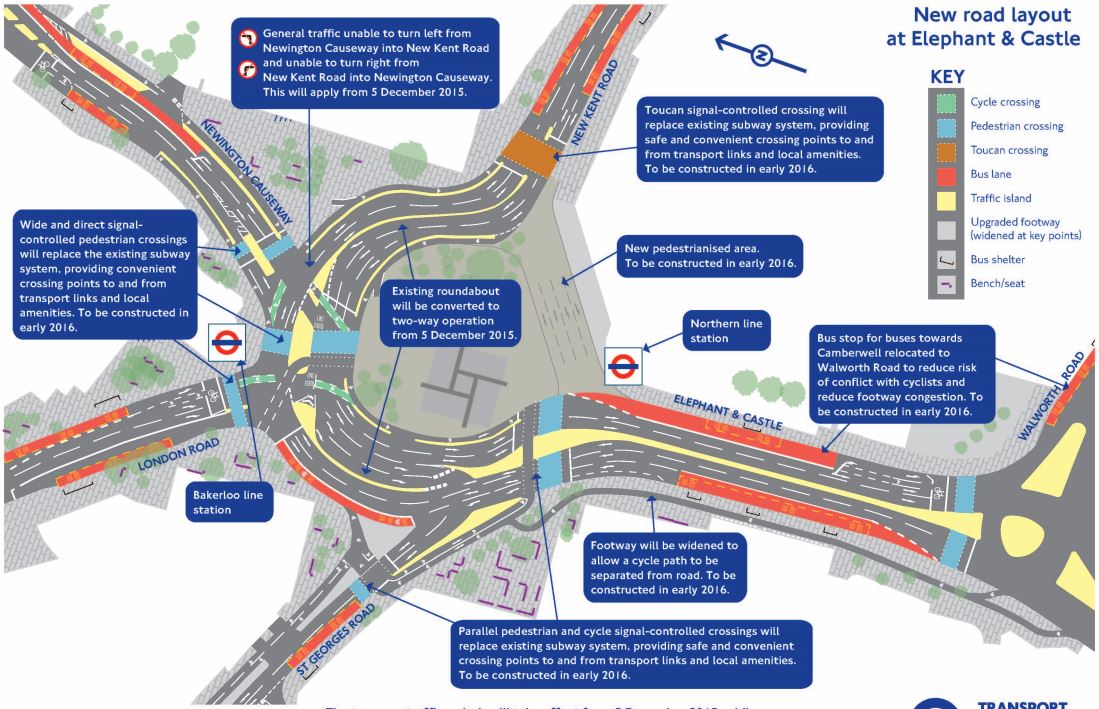
Elephant And Castle Roundabout
It’s even got its own web-site.
For comparison, this is a Google Map of the area before any roadworks.
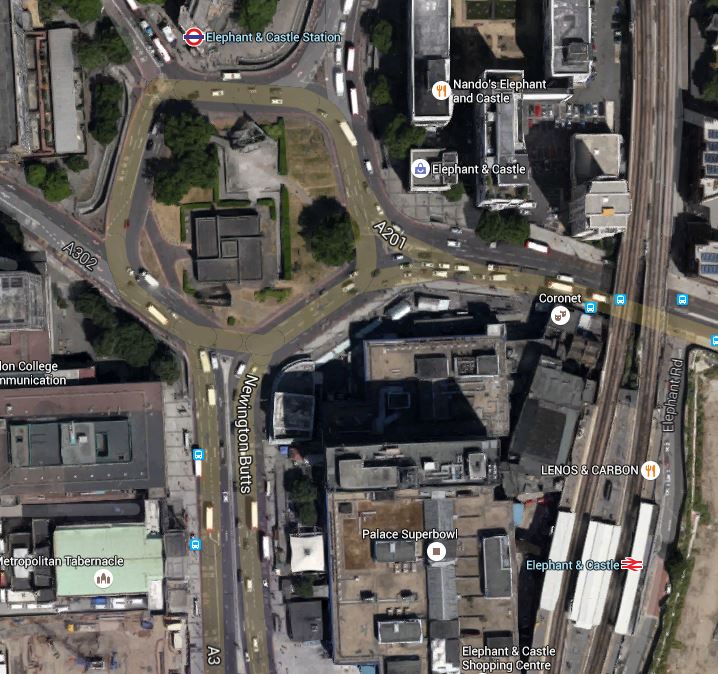
Elephant And Castle Northern Roundabout
Note.
- The drawing of the new scheme has North to the left.
- The Bakerloo Line entrance is on the North Side of the old roundabout, with the Northern Line entrance at the South
- A quick look could say that the road space will be wider, but shorter after reconstruction.
It could well be a lot easier for pedestrians like me!
December 3rd, 2015
These are pictures taken on Thursday the third.








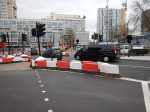






The traffic seemed pretty dense even at ten in the morning.
December 5th, 2015
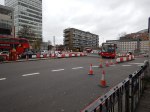
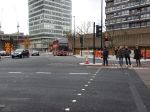
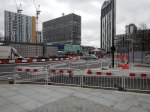
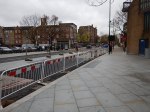
These pictures were taken about the same time on Sunday the 5th.










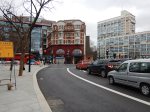
Note that I walked a similar route on the third.
The Pedestrian Routes Are Emerging
The main difference between the two sets of pictures, is that on the North, West and East sides of the roundabout, traffic is now two-bay with a traffic island between the two carriageways.
The South side is no longer used for traffic and will be pedestrianised early in 2016.
It is now possible to see how when the scheme is complete, that the centre of the old roundabout will be joined to the South Side. This will mean that to walk from the Northern Line station to the Bakerloo line station, will require only one road crossing at the North Side of the old roundabout.
I have some questions.
- Will the middle be landscaped? Obviously!
- Will there be a cafe in the middle? Hopefully?
- Will the preferred route to the Bakerloo Line trains from the surface, always be to enter the Bakerloo Line entrance and then descend in the lifts there, which take you directly to the platforms? It might be a shorter and more pleasant walk, than a long one in a tunnel!
After my visit today, I think I can see a purpose to the new design.
December 7th, 2015
This was the first working day at the same time as the previous sets of pictures.









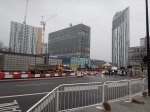

I did see a picture, which showed a cafe and I think that if they can do the same at Old Street, which seems to be the next roundabout removal I’ll be pleased.
Although there is this article on the BBC, which is entitled Elephant and Castle: Two-way traffic redesign causes chaos. This is said.
The removal of the Elephant and Castle roundabout has been causing chaos for commuters, with motorists complaining of queues of more than an hour.
But then good news doesn’t draw viewers to the web site.
I’ll come back and watch this one in the future.
Great Western Railway Launches Lobster Class
Great Western Railway serves the best food on a British scheduled train, but this article on Rail News entitled Lobsters ‘take the train’ to London is not a piece of fun. This is an extract.
Live lobsters are now being transported by rail from Cornwall to top London restaurants.
Sending produce by rail will be faster than road, ensuring the lobsters are fresher when they arrive. It will also help to lower carbon emissions by reducing road freight.
Great Western Railways and InterCity RailFreight Ltd will be delivering the lobsters daily on the 1739 Penzance to London Paddington service. WEGO Carbon Neutral Couriers will then take them to their final destination.
It’s good to see innovative uses of resources.
Tottenham Court Road Station Gains A Giant Fosterito
The second new entrance to Tottenham Court Road station opened today.















The entrance under the shadow of Centre Point, is a giant British version of the fosteritos on the Bilbao Metro.
Tottenham Court Road station, is probably one of first stations to be designed since London adopted contactless ticketing.
In my view, the design has certainly benefited, with its vast ticket hall, wide gate line and uncluttered area, where people can pass through quickly.
Simple is certainly efficient!
Crossrail Extension To Gravesend
A possible Crossrail Extension to Gravesend has been safeguarded, although because Crossrail doesn’t call at St. Pancras for Eurostar, I feel that extending Crossrail to Ebbsfleet International station to catch Continental trains there, would be part of any extension to Gravesend.
This Google Map shows both Ebbsfleet International and Gravesend stations.

Ebbsfleet International And Gravesend Stations
Ebbsfleet International is to the West and Gravesend is to the East.
There would have to be some major construction work, but it would probably be feasible.
However this Google Map of Gravesend Station shows a serious problem.
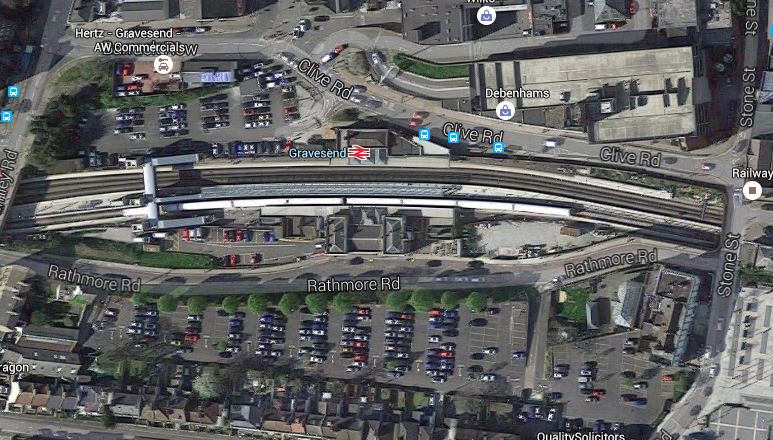
Gravesend Station
As can be seen, it is a very cramped site. These pictures show the station.


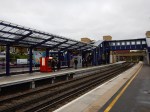


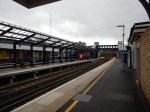
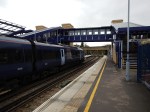
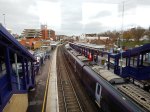
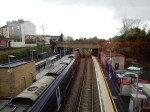
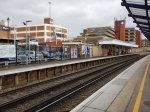

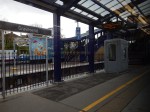
I doubt any extension to Gravesend will terminate at Gravesend station.
There is a page on the Crossrail web site, which is entitled Safeguarding. This is said.
An additional extension from Abbey Wood to Gravesend and Hoo Junction, has been safeguarded however there are no current plans to extend the railway beyond the route currently identified.
This is a Google Map of the Hoo Junction area to the East of Gravesend.

Hoo Junction
Currently, it is occupied by a freight yard. It certainly could be used as the terminus, but it is about ten kilometres East of Ebbsfleet International station.
So could a train on the North Kent Line that runs from the current Crossrail terminus at Abbey Wood to Gravesend, do a detour to Ebbsfleet International?
This Google Map shows the lines in the Ebbsfleet International area.
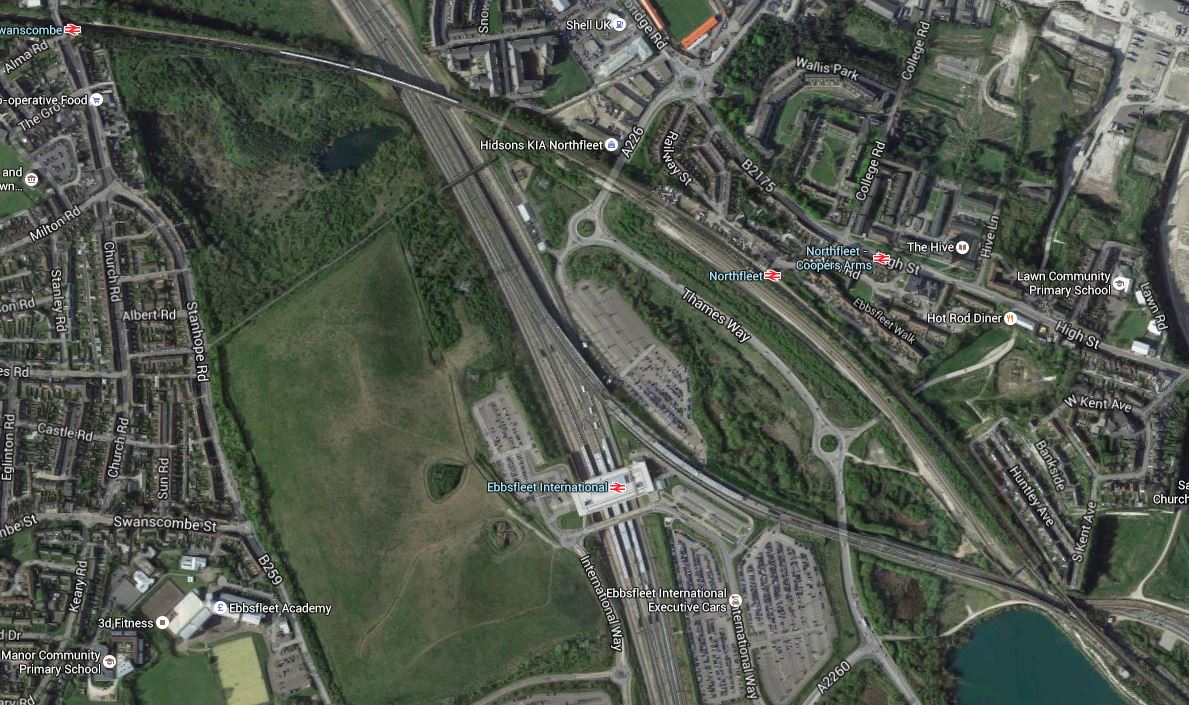
Lines Around Ebbsfleet
The North Kent Line starts in the top left at Swanscombe station, crosses over the lines into Ebbsfleet International. It then goes through Northfleet station, before going off in a South-Easterly direction to Gravesend.
A connection could surely be built so that after passing Swanscombe station, the trains on the North Kent Line could pass through Ebbsfleet International, rather than through Northfleet station.
An alternative would be to provide a proper connection perhaps using a travelator between Northfleet and Ebbsfleet International stations.
One problem to sort out would be the level of services through Abbey Wood, that continue on to Ebbsfleet International and Gravesend.
More Thoughts On Dalston Junction To Hayes
In February this year, I wrote Should Trains Run From Dalston Junction To Hayes?
I finished the post like this.
So is New Cross the least used direct southern destination on the East London Line? Also, was it only included in the East London Line for historic reasons, as it had been a Metropolitan Line destination?
If so, it might be an idea to see if extension of the four trains per hour services terminating at the station is possible. Perhaps two could go Hayes and two to Orpington, which would double the frequency to both places from New Cross.
I could also have said in the summing up, that this would give four trains per hour from Dalston Junction to Lewisham, with all its connections to South East London and Kent.
This morning, I was reading an article on London Reconnections about extending the Bakerloo Line, entitled Death, Taxes and Lewisham: Extending the Bakerloo.
So it got me thinking!
I returned to my original article and had the following blasphemous thought.
Is Transport for London, so obsessed with using the supposed spare capacity on the Bakerloo Line, that it doesn’t think straight about what to do with this line?
Consider the following points.
- Passengers like the Overground model and many rate it higher than the Underground.
- When Crossrail and Thameslink and the East London Lines are up to capacity of twenty-four trains per hour, the increase in capacity will change London’s transport system dramatically, as there will be an H-shaped network with interchanges at Farringdon, Whitechapel and possibly some other places.
- Most trains going to Kent and South East London start from Victoria, which is not well placed for some of the important parts of Central London. Would extra connections to a twenty-four trains per hour East London Line at Penge and Brockley be a better route for many passengers?
- I feel that there would be a backlash, if the Hayes Line became part of the Bakerloo Line, just like there was when Thameslink wanted to stop all Sutton Loop Line trains at Blackfriars! If you’ve been commuting for years in First Class from Hayes into Cannon Street for the City, I don’t think you’d be happy if your train was a smaller one-class, crowded Underground train. But you might accept an Overground train to Canada Water for the Jubilee Line or Whitechapel for Crossrail and the Metropolitan/Circle/District Lines.
- Thameslink together with the Bakerloo Line and an upgraded Jubilee Line will create a resilient North-West to East routing, that could withstand the occasional serious failure. The East London Line provides that resilient link in the East.
- Thameslink doesn’t connect with the Central Line, but the East London Line could at Shoreditch High Street.
I’m coming more to the conclusion that there is no way that a long extension to the Bakerloo Line would be needed. Perhaps it should be extended in a loop down the Old Kent Road to Camberwell, to get high-quality rail services into that area.
Should East London Line Services To New Cross Go Further?
Four services per hour on the East London Line have their Southern terminus at New Cross station and could these venture further into South London?
At the moment these services terminate in a bay Platform D, which is just a walk across from the trains going South. But when coming North, you have to go over the step-free bridge to get from Platform A to Platform D.
In the next few years, various developments will happen, that will affect travel in the area bordered by New Cross, Cannon Street and Whitechapel.
- London Bridge and Thameslink will be improved, so interchange between Cannon Street services and Thameslink will be much easier.
- Hopefully, access to the Underground at London Bridge will be eased by the redevelopment of the station.
- Will the Thameslink improvements increase the capacity into Cannon Street?
- Crossrail will open.
- The Metropolitan/District and Circle Lines will have been fully upgraded with bigger trains and new signalling.
- The Jubilee Line will have been upgraded.
- Bank station will have been upgraded.
- There will be large numbers of office developments around the City, increasing the numbers of needed final destinations.
I believe that the increasing flexibility will mean passengers will be less likely to use the same route.
I also believe that passengers will switch between London Bridge/CannonStreet and the East London Line destinations of Canada Water, Whitechapel and Shoreditch High Street.
Many more will want to change at New Cross!
If the East London Line services started South of New Cross and just called at Platform A on their way North, just as London Bridge/Cannon Street services do, this would this give a simple change for Northbound passengers.
If you were on a Tunbridge Wells to Cannon Street train and wanted to go to Whitechapel for Crossrail, you would get off at New Cross and wait for an East London Line train on the same Platform A.
This interchangeability of Northern destinations, is unlocked by sending East London Line trains past New Cross.
Can East London Line Services To New Cross Go Further?
After Crossrail and an upgraded Thameslink opens, it will take some time for passenger numbers to stabilise.
These figures will decide if it is worthwhile to extend the services past New Cross.
The other constraint will be whether paths are available to continue to Lewisham and beyond.
The simplest plan would be to run the four trains per hour to Lewisham and then run two trains to both of Orpington and Hayes.
Extra Interfaces On The East London Line
I would also build the following interchanges on the East London Line.
- Central Line at Shoreditch High Street. This can’t be done until Crossrail opens.
- A New Penge station to connect to the Chatham Main Line
- A high-level Brockley station to link to the Nunhead to Lewisham Line.
There may also be scope for linking the East London Line to Thameslink. It is probably a pity, that the East London Line serves West Croydon rather than East Croydon, as the latter station has so much better connectivity.
Today, I visited South East London and I can make these observations.
New Cross Station
I wrote Changing At New Cross, when I looked at New Cross station.
I can’t see any obvious reason, why East London Line trains have to terminate at New Cross. I suspect, that it’s only for historic reasons, as that’s what the Metropolitan Line did many years ago.
St. Johns Station
I wrote Investigating St. Johns Station, when I looked at St. Johns station.
My only feeling about this station is that if it were to be upgraded to the standard passengers expect, it could be a valuable step-free interchange station between an extended East London Line and the services into and out of Cannon Street.
Lewisham Station
I wrote Changing At Lewisham, when I visited Lewisham station
If it were to be served by four trains per hour on the East London Line, with two trains per hour going to Hayes and the other two to Orpington, Lewisham would be an important interchange to increase the connectivity between South East and North East London.
Catford and Catford Bridge Stations
I wrote An Opportunity At Catford, when I looked at the twin stations of Catford and Catford Bridge and can say this.
- Currently, all trains through Catford Bridge station are going to and from Hayes.
- All trains through Catford are Thameslink ones between Blackfriars and Sevenoaks.
- Track exists to send trains between Catford Bridge to and from Orpington.
If cross-platform interchange could somehow be provided between the two northbound and the two southbound lines at Catford/Catford Bridge, this would give passengers from Hayes and Orpington a big choice of Northern destinations.
Effect On Dalston Junction
If the four trains per hour shuttle service between Dalston Junction and New Cross was replaced by two trains per hour to each of Orpington or Hayes, it probably wouldn’t have much overall effect on the Dalston Junction to New Cross section of the line, but what would the timings look like?
Currently trains leave Dalston Junction in the Off Peak at 04, 19, 34 and 49 past the hour taking twenty-two minutes to get to New Cross. They then return at 07, 22, 37 and 52.
So the 04 train gets to New Cross at 26, returns at 37 and gets back to Dalston Junction at 59, which means it waits eleven minutes at New Cross and six at Dalston Junction.
New Cross to Hayes takes thirty minutes, so that would be fifty two minutes from Dalston Junction to Hayes.
Would that be fast enough for each train to do one trip each hour?
I suspect that one of Transport for London’s timetabling experts could devise a pattern.
More Trains Through The Thames Tunnel
At present there are sixteen trains per hour through the Thames Tunnel.
- 4 – Dalston Junction to New Cross
- 4 – Dalston Junction to West Croydon
- 4 – Highbury and Islington to Crystal Palace
- 4 – Highbury and Islington to Clapham Junction
Which means that as there is a theoretical limit of twenty-four trains per hour, there are another eight paths available.
In Increased Frequencies On The East London Line, I wrote that London Overground have plans to introduce the following extra services.
- From 2018, there will be an extra two trains per hour between Dalston Junction and Crystal Palace.
- From 2019, there will be two additional trains between Dalston Junction and Clapham Junction.
So that would mean that there are still possibly another four paths available.
I would assume that the extra trains would be accommodated at the Northern end by just tightening the turn-round times.
I can’t believe that it won’t be long before Transport for London come up with ways of using the remaining four paths.
If they are planning to turn back two extra trains from Crystal Palace and two from Clapham Junction at Highbury and Islington, I can’t believe that they couldn’t turn back another four services at Dalston Junction. Assuming the extra trains to Crystal Palace and Clapham Junction, this would give the following frequencies.
- 12 tph between Highbury and Islington and Dalston Junction.
- 24 tph between Dalston Junction and Surrey Quays.
The core section of the East London Line will interface in 2020 with the following lines.
- Crossrail at Whitechapel will be 24 tph
- The Jubilee Line at Canada Water will be 36 tph
- The Victoria Line at Highbury and Islington will be 36 tph by 2016.
Father and son, Marc and Isambard Brunel, will be spinning in their graves, to see what their Nineteenth Century engineering curiosity-turned-marvel has become.
The Emergence Of Overground Transport Hubs
More trains on the East London Line between Dalston and Clapham Junctions is to be welcomed.
I use the well-connected Clapham Junction, if say I’m going to Southampton, Portsmouth or many other places, as it means I can avoid the difficulty of getting to Waterloo or Victoria.
The one problem with Clapham Junction in my view is that Thameslink or the Gatwick Express doesn’t call at the station.
Even so, Clapham Junction, Dalston Junction and Stratord are evolving as the major hubs on the Overground Network.
In the next few years, the following stations will become major hubs.
- Whitechapel because of its important location on Crossrail
- Old Oak Common because of its connections to Crossrail and HS2
- Hackney Interchange (Central plus Downs) because it joins the North London Line to the West Anglia Lines.
Will Lewisham, Crystal Palace or other stations join this elite group?
Southeastern
Southeastern is the train operating company that operates most of the train services to South-East London. Kent and East Sussex.
The company has three sub brands.
- Highspeed operates high-speed service on the Channel Tunnel Rail Link using Class 395 trains.
- Mainline operates traditional long distance services to Kent and East Sussex.
- Metro runs services to South East and South London.
London Overground makes to secret of the fact that it would like to bring the Metro services under its control.
I would very much welcome this takeover for the following reasons.
- As a North Londoner, who grew up in the North, South London trains are very much a mystery to me and Southeastern’s information could be substantially improved.
- The East London Line and Southeastern services could be properly co-ordinated.
- When the Overground took over the West Anglia Lines, there was a definite improvement in stations and customer service.
- The whole of Southeastern’s Metro and Mainline network needs to be brought into Transport for London’s Oyster and contactless bank card ticketing.
Hopefully, the takeover will happen, when the franchise is up for renewal in 2018.
Crossrail Extension To Ebbsfleet International And Gravesend
I wrote Crossrail Extension to Gravesend after a visit to the area and I feel that it would be possible to extend Crossrail, so that it served both Ebbsfleet International and Gravesend stations.
This would enable a direct link between Heathrow Airport and Continental trains and you’d only need to change once if you were going to Gatwick, Luton or Stansted Airports.
Conclusions
On a brief look, there is a lot of potential to extend the New Cross branch of the East London Line to Lewisham, Hayes, Orpington and perhaps some more places.
Get it right and it might not be the best thing to have a long extension of the Bakerloo Line.
Changing At Lewisham
Lewisham station is a major station in South East London, where several routes meet. The Docklands Light Railway also serves the area.
This Google Map shows the lines in the area.
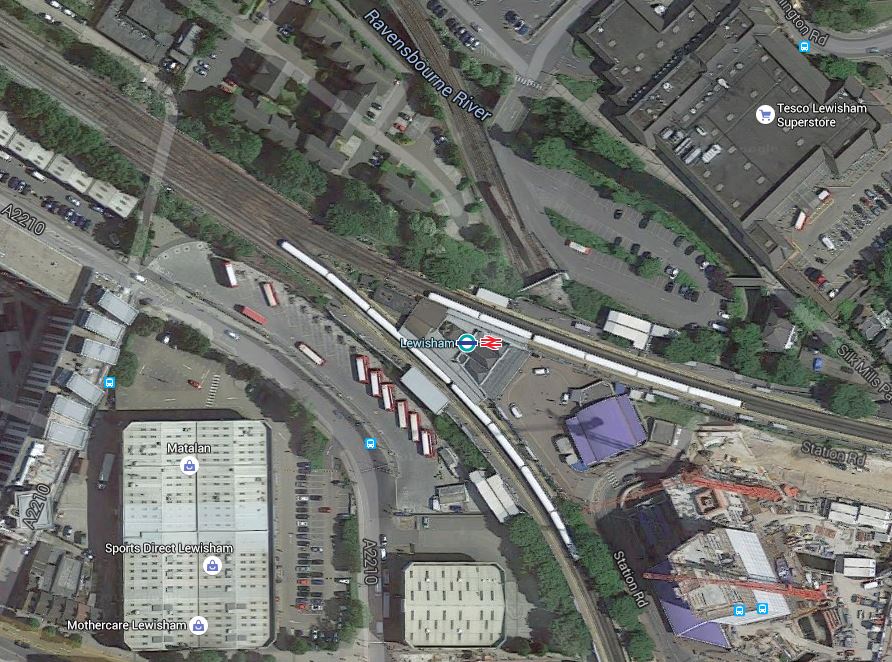
Lewisham Station
Note how there are two pairs of platforms, with one pair going off top the East towards Kent and another pair going South towards Beckenham and Hayes. These are pictures of the station.
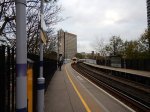
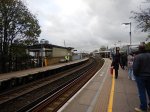
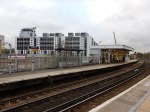


According to a section called Services in the Wikipedia entry for the station, there are typical off-peak service in trains per hour.
- 4 to London Charing Cross
- 8 to London Cannon Street
- 2 to London Victoria
- 2 to Orpington
- 4 to London Cannon Street via Sidcup or via Bexleyheath both returning via Greenwich
- 2 to Hayes
- 4 to Dartford via Bexleyheath
- 2 to Gillingham via Woolwich Arsenal
In addition there are twelve services on the Docklands Light Railway to Bank
Some of these services come via New Cross.
It would seem to me, that if Transport for London achieve their aim of taking over some or all of Southeastern’s services, there could be scope for simplification, or even a simple extension of the historic New Cross service to Lewisham.
But if you look at the Google Map of the station, I think it would be very difficult to create a terminal platform.
So it would seem easier for services to go past Lewisham to stations like Hayes and Orpington.
Wandsworth Common Station
This was the destination of my walk today, where I took pictures for Crossrail 2 Consultation – Wandworth Common Shaft
It is a strange station with two fast and two slow lines, that probably hasn’t been looked at by an architect since the 1920s.
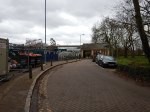
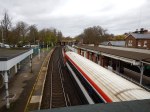
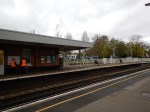


As you can see, it’s not a station for those who need step-free access and it also had one of the lsargest platform-train gaps I’ve seen in the UK.
Crossrail 2 Consultation – Wandsworth Common Shaft
This Crossrail document is entitled Wimbledon to Clapham Junction.
If contains a small section about a proposed shaft that will be built at Wandsworth Common. It says this about the two shafts between Clapham Junction and Wimbledon.
Between Wimbledon and Balham stations – one shaft in the Weir Road site and another within the Springfield Hospital development
Between Balham and Clapham Junction stations – one shaft on the eastern edge of Wandsworth Common, at the end of Honeywell Road.
A single worksite would be required to build each shaft and a typical shaft would take approximately five years to complete. Activity on site would fluctuate during this period. Once the site has been cleared and prepared, the major construction work to dig out the shaft would usually be complete within two years
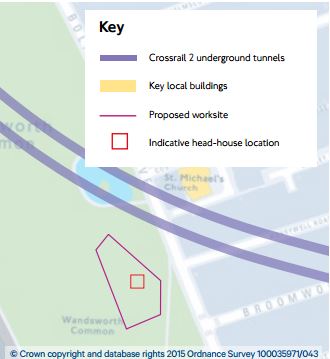
This map from the Crossrail 2 document shows the position of the shaft at Wandsworth Common.
Wandsworth Common Shaft Site
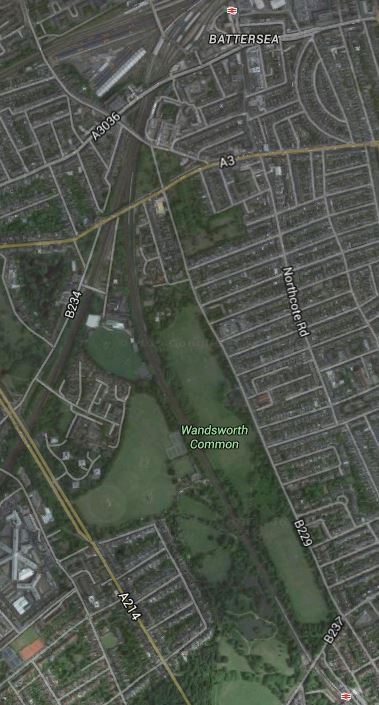
This is a map of the rail lines as they pass the site.
Between Clapham Junction And Wandsworth Common Stations
The shaft will be at the position, where the Google Map has the Wandsworth Common legend. The Crossrail 2 document says this.
The shaft would be on the eastern edge of Wandsworth Common, at the end of Honeywell Road (off Bolingbroke Grove). Our current preferred site has been selected because it is the only non-residential piece of land in the area which is large enough to allow construction of a shaft.
This morning I walked from Clapham Junction station at the top of the map to Wandsworth Common station at the bottom and took these pictures.
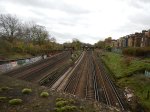









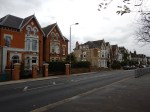








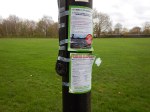
Most of my thoughts are in the comments for the pictures, but I would also add the following.
- The site of the shaft seems to have been chosen with care, so that no mature trees are affected. It’s all flat grass.
- I have a feeling that for Health and Safety reasons the designers like shafts in large open spaces. Crossrail trains hold 1,500 passengers. Evacuating them into Wandsworth Common or Mile End Park would be easier than say bringing them up in the City.
- Information appears to be very preliminary at the moment. That at Wimbledon is more detailed and I would expect more detail on Wandsworth Common in the future.
- I’d never been to Wandsworth Common before and what surprised me most, was that it appeared to be on top of a hill. I have a feeling that this could make the routing of the tunnel less complicated and it could be deeper under all the buildings.
The Head House
People worry, that they’ll get some awful head house on the shaft, like those for the Channel Tunnel Rail Link, which look like they were used as defences against Napoleon.
This shows the head house, that Crossrail is building in Mile End Park.
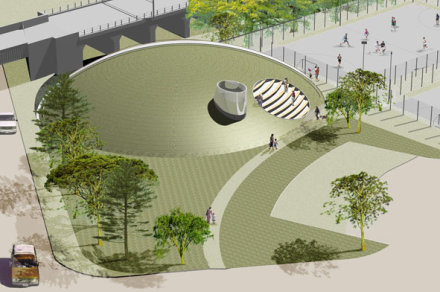
In fact the Mile End Park shaft, with an appropriate head house, would probably be closest to what is proposed to be built at Wandsworth Common.
- It will be a similar size underground.
- As head houses will be here for virtually ever, lots of care is taken in their design.
- They are both in large open spaces.
- They both have good road access on wide roads.
The shaft at Mile End Park was one of several designed by Fereday Pollard. Not all were actually built, as Crossrail cut a few out in the detailed design phase.
Construction
The biggest worry for many is the construction of the shafts.
This Google Map shows the site of the Mile End Park shaft under construction.
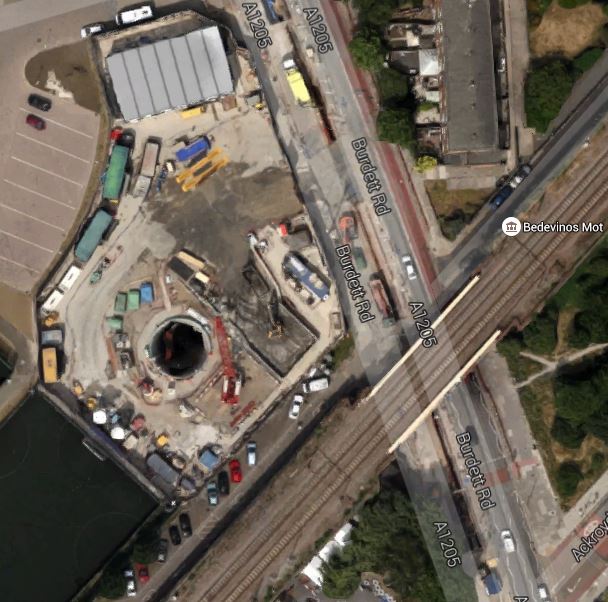
Mile End Park Shaft Site
I estimate the work site is around fifty metres across and has been deliberately positioned alongside the road.
The black hole is the actual shaft.
When I wrote How Will Crossrail 2 Affect De Beauvoir Town?, about how Crossrail 2 will affect where I live, I said this.
I’m pretty certain, that the digging of the southern shaft at Site A will be the only major part of the construction, that will affect De Beauvoir Town, as I suspect they’ll have to remove the spoil in a succession of trucks. I estimate there will be about 10,000 cubic metres of spoil to remove to create the hole for the shaft.
As the shaft at Wandsworth Common is probably the same size as that at Dalston, it would mean about a thousand truck loads, spread over the time that the shaft was being dug. Unless, they decide to use conveyors to move the spoil across the Common to the railway. I’m not sure what they did at Mile End, but I haven’t heard of any complaints.
The big difference between Wandsworth Common and a lot of the other sites, is that there will be no demolition.
It is a perfect green field site. I doubt there’s any gas mains or power cables across the site.
Conclusions
I think that everybody who lives in South London, will get lots more hassle from the large construction project at Wimbledon, where according to current plans, the station will be completely rebuilt for Crossrail 2.
If I lived near Wandsworth Common, I would start to think now, what would be appropriate for a head house to the shaft, as if cards are played right, then Crossrail 2 will provide it.
Wandsworth might like a temple in a garden.
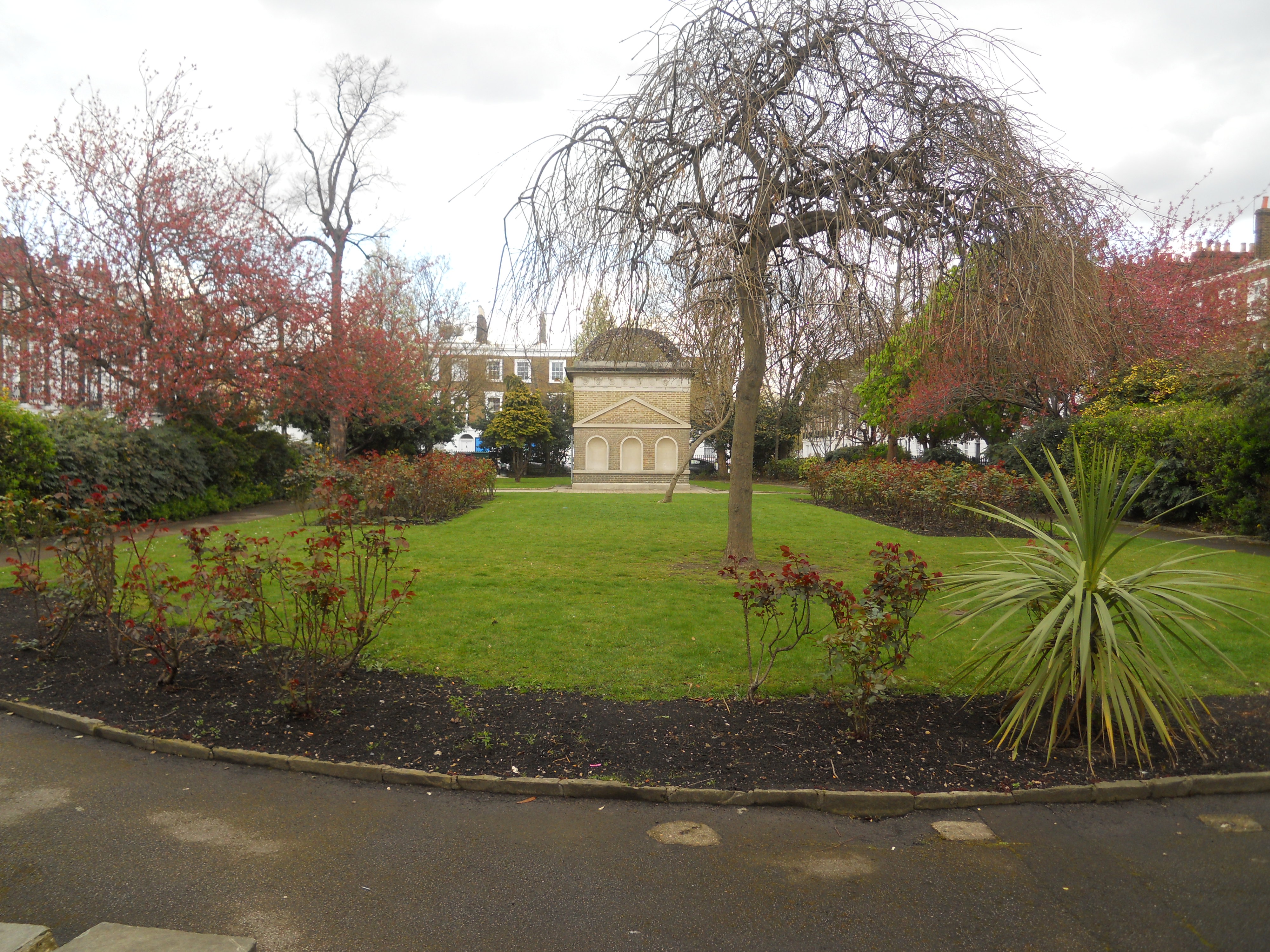
This was actually built in the 1960s as the head house of a ventilation shaft for the Victoria Line in Gibson Square, Islington.
We need more whimsey!
 The Anonymous Widower