York Station
York station is a busy station as both the East Coast Main Line and Cross Country services pass through. It is also quite large with eleven platforms.
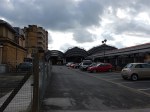


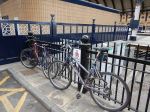
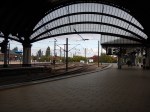
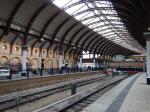
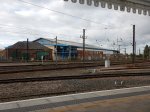
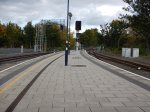
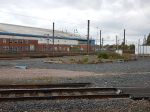
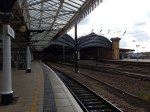
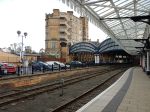
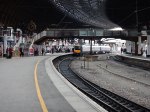
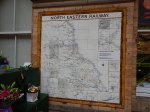
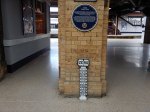
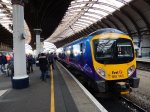

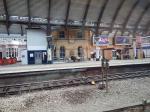
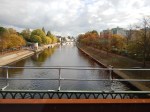

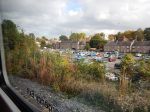
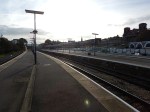
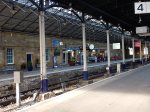
The pictures show how you can look out along the Scarborough Bridge and the bay platform 2, where trains from Scarborough can be turned back.
The last shot is the car park where the three mobile cranes were positioned to lift the bridge into place in Dancing With Cranes And A Bridge With Help From Lego.
It is worth taking a look at this Google Map of the station.
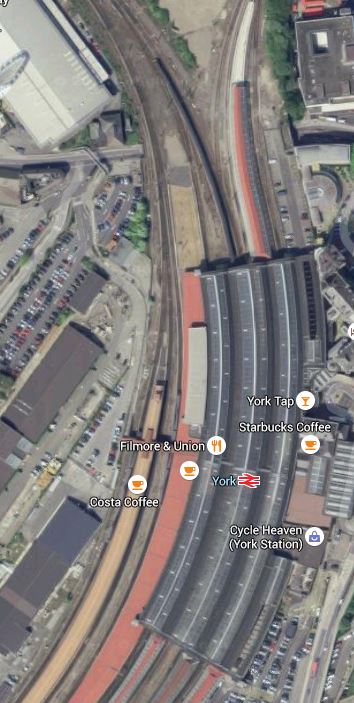
York Station
Note the island platform poking out from under the roof at the top, with Platform 4 on the left and Bay Platform 2 on the right.
There is another simple Bay Platform 1 at the southern end, which serves the line to Hull.
Both platforms 1 and 2 could be electrified, if it was decided to run IPEMU trains to Hull and Scarborough respectively. I think that East Yorkshire services could be electrified in this manner using the power at York, Doncaster and Leeds, with perhaps some form of top-up at Hull and Scarborough.
Scarborough
I’d never been to Scarborough before so I took the opportunity to visit on my way from York to Hull.
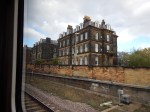
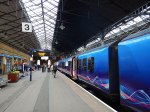

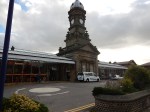
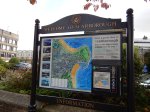
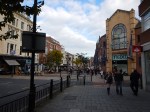
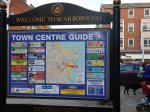
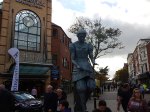

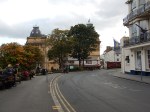


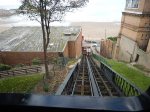
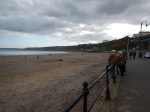
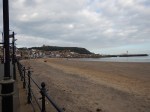
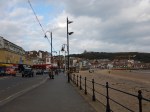
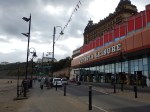
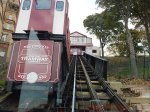
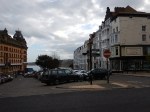


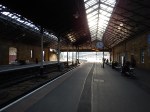
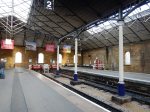

Looking back from a few days away, I think that Scarborough, would be a better place to stay than Hull.
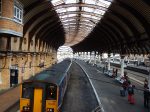
I came to Scarborough station on one a Class 185 train and left in a Class 158 train, so I didn’t have to experience a Pacer. According to Wikipedia the Hull to Scarborough Line is usually worked by the very acceptable Class 158 trains, sometimes coupled to something else for more capacity. This is said.
Services are usually worked by Class 158 DMUs. Summer weekends see services operated by a Class 158 coupled to a Class 153 or extra Class 158 providing a 3/4-car unit for additional capacity. Sundays also see a variety of traction traversing the line to retain crew knowledge; this can include Class 153, Class 150, Class 142 and Class 144.
You do wonder how much traffic this route could generate if it was electrified and run by a new four-car electric train.
It would be very expensive to electrify, as until Hull is electrified, it would be a stand-alone system for about forty miles, that was a long way from any other electrification.
But if some means were to be provided to charge the trains at Scarborough and Hull, I suspect that IPEMUs could provide services between Scarborough and Hull and Scarborough and York with ease, given the easy nature of the lines.
This would also allow the TransPennine services from Scarborough to Manchester and Liverpool to be run by high-speed IPEMUs, which could bridge the electrifdication gap between Leeds and Manchester.
In an ideal world, a service should be provided between Scarborough and Whitby, which if there was an improved service around Scarborough would probably be needed to serve the tourism industry.
That area of East Yorkshire needs to be developed with respect to the leisure and tourism opportunities it offers.
A Circular Walk Through York
At York station, I took a circular walk to the City Centre and back to get some lunch.







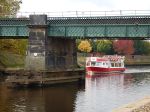
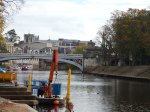
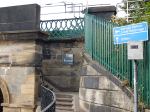
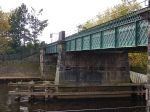




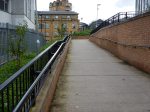
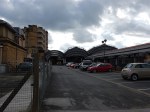
The return route from the centre was as follows.
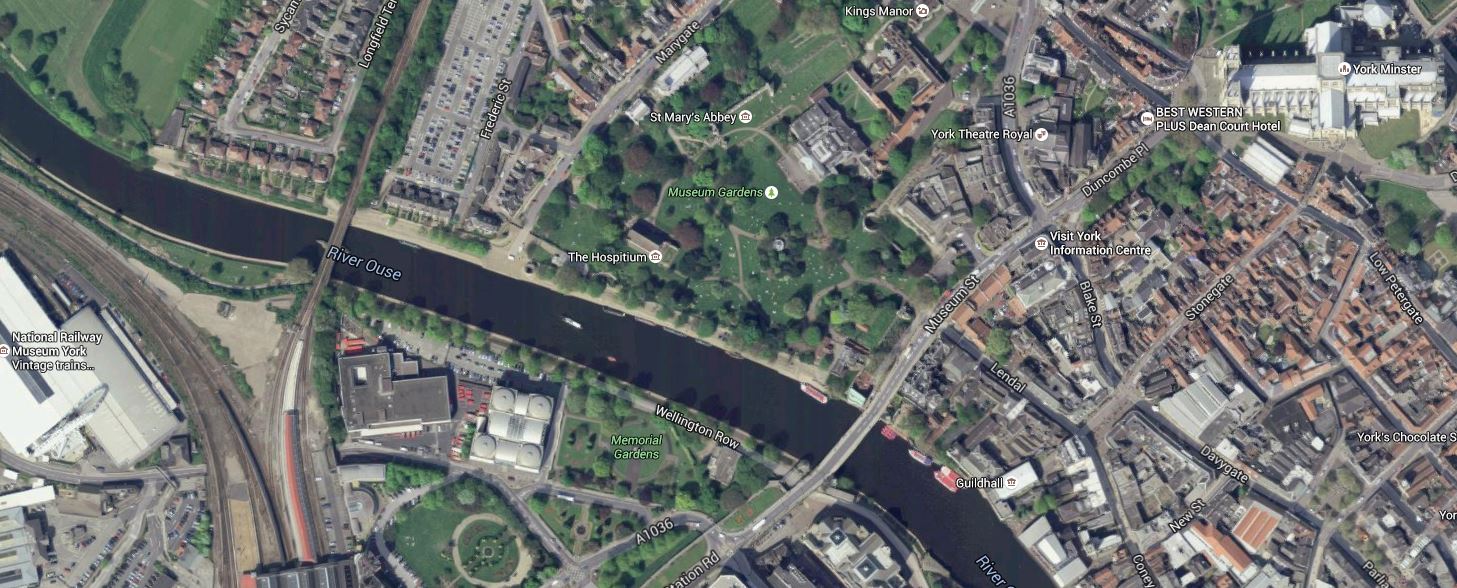
- Through the Museum Gardens
- Along the River Ouse.
- Across the Pedestrian Bridge by the York to Scarborough Line
- Directly into the station through the cycle parking.
The installation of the new bridge was talked about in Dancing With Cranes And A Bridge With Help From Lego.
My return route along the river and over the new bridge was a lot easier, as you’re away from the traffic on pavements that are better.
This map shows the area where I walked back to the station.
York Minster To York Station
The Scarborough Bridge is the most westerly one over the River Ouse.
I would also think it’s easier to go this way between the National Railway Museum and York Minster and the City Centre.
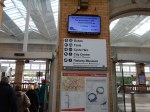
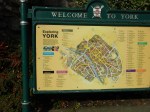
For a city that relies on tourism, it is not blessed with decent and numerous, maps and information.
Of the major cities in Yorkshire that I’ve visited only Sheffield seems to have a large number of decent maps. None are up to the standard of Glasgow, Krakow and Preston.
The Flat Crossing At Newark
I took these pictures as we crossed over the Nottingham to Lincoln Line on the flat crossing North of Newark North Gate station.

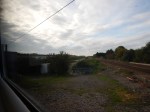
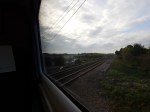
A few months ago, I took pictures from the other line
All Wired Up And Ready To Go?
I took these pictures of the Canal Tunnels as we left Kings Cross for York.
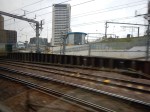
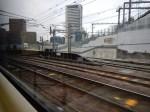
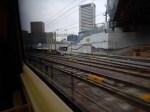
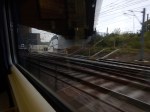
As the title implies the Canal Tunnels look almost ready.
I wonder when the first trains will go through the tunnels. Wikipedia says that the Class 700 trains will enter service between 2016 and 2018.
More On The Camden Town Station Upgrade
This document on TfL’s web site gives more details of the proposed capacity upgrade at Camden Town station. This schematic of the tunnels, platforms and walkways shows how the station could look in a few years time.
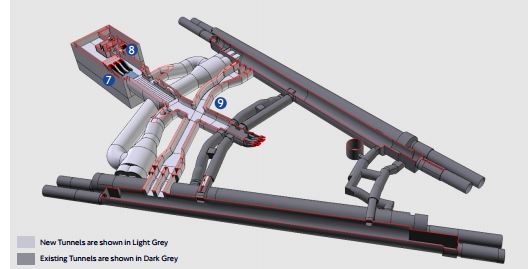
Camden Town Station Schematic
Note the following.
- The Northbound platforms are above the South ones.
- The triple escalators (7) and double lifts (8) at the left, leading down the the circulation space (9), which is shared with two escalators of the existing station.
- There is a new cross passage between the two Northbound platforms, which means that the interchange between the Northbound High Barnet and Edgware branches is a simple walk across, as it is now in the current station.
- The cross passage between the two Southbound platforms, is a bit more complicated, as the platforms are beneath the level of the circulation space. Judging by the large ends of the passage in the schematic, I suspect that as at Angel short escalators will give access to the platform.
- These short escalators would also help those passengers, who’ve gone the wrong way, as we all done from time to time, change direction.
- Would the current cross-platform connections with their steps down to the Southbound platforms just be refurbished or would they be changed to give a direct step free connection between the two Southbound platforms?
- The current emergency stairs are shown and I suspect that a bit of remodelling in this area, could improve cross-platform connections.
At a first look I see two problems with the design.
Obviously, the route between the two Northbound platforms and to the circulation space and the lifts is step-free, but I can’t see how this is the case for the Southbound platforms. It could be that lifts will be provided to access the platforms from the circulation space, or the main lifts will go down another level to what appears to be a a second cross passage, which appears to connect the two Southbound platforms and by-pass the stair or escalators to the circulation space.
I also can’t see how the station could be connected to Camden Road station. Unless the route from say escalators and lifts down from the London Overground station feed into a tunnel, which is an extension Northwards from the lift lobby.
An uncovered walking route between the two Camden stations, is not a solution that is acceptable, in the present and passengers in the future will demand something a lot better.
I shall be going to the exhibition in the next couple of days and all will probably be clear.
The Bermondsey Dive-Under
For some time I’ve been looking for a good article about the Bermondsey dive-under. This article on Ramboll’s web site is a good one. But then I think it was written by one of the designers of the scheme that is currently being built.
Walking Between Surrey Quays And Queen’s Road Peckham Stations
My walk this morning was between Surrey Quay station and Queen’s Road Peckham station along the South London Line.
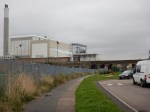
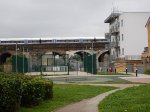
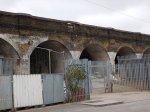
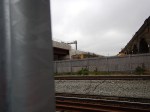
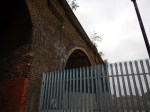
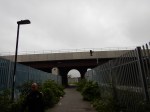

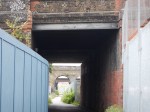
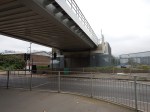
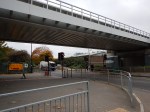
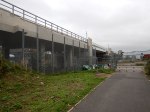

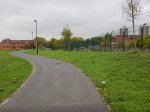
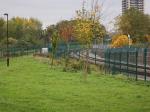

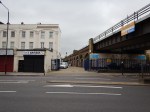
I wanted to look at progress on the Bermondsey dive-under and also the New Bermondsey station site.
Nothing was happening at the station site and this Network Rail video makes a bit of sense of the work at the dive-under.
I would appear that the long concrete ramp has now been completed and there has been some demolition of the brick viaducts in the site.
Thoughts On Credit Cards
I have recently been trying to buy something on IKEA using my John Lewis Partnership Card, which is managed by HSBC.
Twice it has gone through IKEA’s site, but then HSBC have deemed the transaction to be fraudulent and have cancelled it. In one case I waited in all day for a non-existent delivery.
My other preferred on-line card is American Express, which seems to have developed a clever way of card checking. They ask if they can look up your location using your connection, as obviously, if that corresponds to the card and delivery addresses, there is a high chance that the transaction is genuine.
But IKEA doesn’t take Amex and as I don’t use my Visa card on-line because of the dreaded Verified-by-Visa waste of time and space, I was a bit stumped on how to order the next phase of my kitchen.
Then this morning, I tried the Visa and guess what? The Verified-by-Visa didn’t kick in. So perhaps, Nationwide and IKEA have come to my conclusion, that it is a hindrance to business against their joint interest.
Let’s hope the delivery gets through this time!
Project Management Says No, But Politicians Say Yes
There is a puzzle over rail electrification all over the country.
Take this article in Rail Technology Magazine entitled NR reopens one of final Manchester-Preston electrification bridges four months late.
The headline says it all and there are problems like this all over the United Kingdom. Some are down to incompetence, some are due to poor ground conditions, some are because new equipment is failing to work and some are just because of a shortage of trained staff.
So we are left with the great dilemma, that why is it that electrification in the North and West is in trouble and Crossrail, which is a much more expensive project is supposedly on time and budget?
In my view it’s like comparing apples with oranges.
Crossrail is a mostly new railway built in virgin ground. Most of the reused bits like the lines to Shenfield, Reading and Heathrow have been rebuilt and electrified in the past. Some things need to be beefed-up and brought up to modern standards, but these tend to be a series of small projects like updating most of the stations or a few big construction projects like building Canary Wharf and the other central stations.
On the other hand electrifying existing lines, of which much of the infrastructure hasn’t been touched for years, is a much more difficult business. Especially when you come across places like the bridges in Bolton, Chat Moss and the Farnworth Tunnel.
How many of us have despaired as the bills have come in as we are doing up an old houise and sworn on our father’s grave, that we’ll never buy another old property? I certainly have and now live in a twelve-year-old house, that although it was badly built is easily fixed.
I have heard engineers say that the Victorians Gerry-built a lot of our railways. That may or may not be true! But certainly, it’s not an easy job to electrify Britain’s railways.
So when I read this article on the BBC entitled Network Rail to restart electrification of train lines, which says this.
The electrification of two railway lines is to be restarted after the projects were halted so a review could be carried out, the government says.
Work on the TransPennine Express Railway – between Manchester and York – and Midland Mainline – from London to Sheffield – was paused in June.
Sir Peter Hendy, Network Rail chairman, said the “temporary pause” had “given us the space to develop a better plan”.
How do I square it with reality?
Obviously, Peter Hendy must be off his trolley, as if you put the wires up for electrification, you’ll have problems.
But at Blackpool and Rugeley, which are two part-completed electrification schemes, where everything appears ready for the wires to go up, I think I saw the germs of the new plan. The sites were all tidy, with no evidence of electrification or the detritus that Network Rail commonly leave behind. All the bridges were finished and where needed platforms seemed to have been extended for the new longer trains. Balfour Beatty have even walked away from the electrification contract at Blackpool.
Other clues have been published in the media.
- Northern Rail split their Liverpool to Blackpool service to at least use electric trains to Preston and diesels thereafter.
- First Great Western were rumoured to be buying battery-powered trains or IPEMUs for their services along the Thames Valley
- Hull Trains are also rumoured to be buying electro-diesel trains.
- But I missed the biggest clue. The only section between Liverpool and Newcastle, that is not electrified is the 34 miles between Leeds and Manchester. This had been announced deliberately as being unpaused. An IPEMU would bridge the gap with ease.
- All the Midland Main Line electrification announced as unpaused can be implemented by IPEMUs.
- A study has been anounced into the creation of a second main line to Brighton, which is an ideal route for running using IPEMUs in prime Tory territory. It would also release a number of modern diesel multiple units for use elsewhere.
- In today’s Sunday Times, there is talk of some of the new Class 801 electric trains being built as Class 800 electro-diesel trains for the Great Western. This doesn’t matter in the long-term, as it just means you remove the diesel engines to convert the 801s to 800s, when the wires are working.
Every day seems to bring more and more clues.
I’m getting more and more convinced that this technology that I rode in Essex in 2014, is going to be the solution. IPEMUs as they are now called have a range of about sixty miles on batteries and if the trains are properly engineered with regenerative braking and intelligent control systems, they might even manage further.
I may be totally wrong, but then I can see no other way that electrification can be delivered, in the desired time-scale, than by going for a mixture of Class 800 electro-diesel and IPEMU trains.
The Class 800 electro-diesel can be summarised as follows.
- Proven Hitachi technology with on-board diesel engines for non-electrified sections.
- Built in Japan and Newton Aycliffe in the North East.
- Ideal for main lines, which are not fully electrified.
- 200-plus kph capability
- Highly automated
- Can be converted to a Class 801 electric train by removing the diesel engines.
The Aventra and the IPEMU-variant can be summarised as follows.
- Proven Bombardier electric train technology coming together in a modern lightweight shape.
- Built in Derby.
- Just under 200 kph capability, if required. Normally probably 160 kph.
- Most Aventra trains can be fitted with batteries to work in IPEMU mode.
- Battery technology has been proven in public trial.
- Range is IPEMU mode is sixty plus miles.
- IPEMU trains have regenerative braking, so they are actually more efficient than many trains.
- Highly automated
The approach does have other advantages.
- Many lines can be served by new electric trains with only minimal upgrading.
- Those who object to unsightly overhead electrification, have nothing to complain about.
- Lines can be electrified as fast as new trains can be delivered, provided there is enough electrified route to charge the IPEMUs.
- Depots don’t need to be fully electrified.
- The approach gets round the shortage of overhead electrification engineers.
- If a line like Gospel Oak to Barking is going to be electrified for other purposes like freight, there could be much less disruption to passenger services.
As an Electrical Engineer, who specialised in control systems, at Liverpool University, I do feel a touch of admiration.
I believe that although it doesn’t look feasibly from a project management basis to electrify lines to the stated time-scale, engineers in Japan and Derby have given the politicians their dream.
I shall be watching every word of George Osborne’s Autumn Statement on Wrdnesday, November the twenty-fifth.
 The Anonymous Widower