Phone Call Cuts Hospital Readmissions
The title of this post is the same as that of an article on page 18 of today’s copy of The Times.
This is the first paragraph.
A single phone call to an older patient who has been discharged from hospital can almost halve the odds of readmission, research suggests.
I have mined health-care data in the past several times and often something simple drops out from a simple analysis.
Some analyses produce the obvious like you gets lots of leg injuries on Saturday afternoons, due to football being played.
I also believe that analysis of health data in an area could pick up more sinister links.
This could be picked up by artificial intelligence scanning the various databases, but until such systems are fully developed, a lot can be picked up by analysts using simple tools. Even Excel can find a lot of problems, if used properly.
Will 5G Be Another Way To Rip Off The Poor?
My late wife was a barrister, who specialised in family matters, like divorce, custody of children, adoption and money.
She had this career for about thirty years before she died in 2007.
As the years progressed, she’d talk about the latest expensive must-haves of her clients.
- First it was video recorders and then it was mobile phones.
- Various game consoles arrived! Whatever they are? I’ve never played a computer game in my life!
- Then came Sky Television and large screen televisions.
- Every child had to have the latest phone.
And now we have 5G, which promises to be the next unaffordable addiction, to go along with alcohol, drugs, pay-day loans, junk food, on-lne subscriptions and gambling!
It will drive the poor and low-paid even further into poverty.
On the train recently, I was talking to a guy with nine children.
As he was going to Court to get custody of one of the nine, and from other things he had said, I felt that the nine weren’t of the same mother.
He was living on benefits and caring for one disabled child.
How will he be able to afford nine 5G phones?
It’ll all end in tears!
Stop It! Phone App Cries Out To Deter Japan Subway Gropers
The title of this post, is the same as that of an article on page 31 of today’s Times.
An app has been developed and deployed in Japan, where if a lady being groped on the Subway if she presses a button on the app, it displays an appropriate message on her phone.
If the groper persists, then another button, shouts out a message.
As a regular traveller on crowded London Underground and Overground trains, I know groping goes on, but I have never seen it happen, except between obviously consenting couples, who arrived and left together.
Although, you do get the odd bumping at times, but usually smiles and a sorry, say it is a genuine accident.
And Finally!
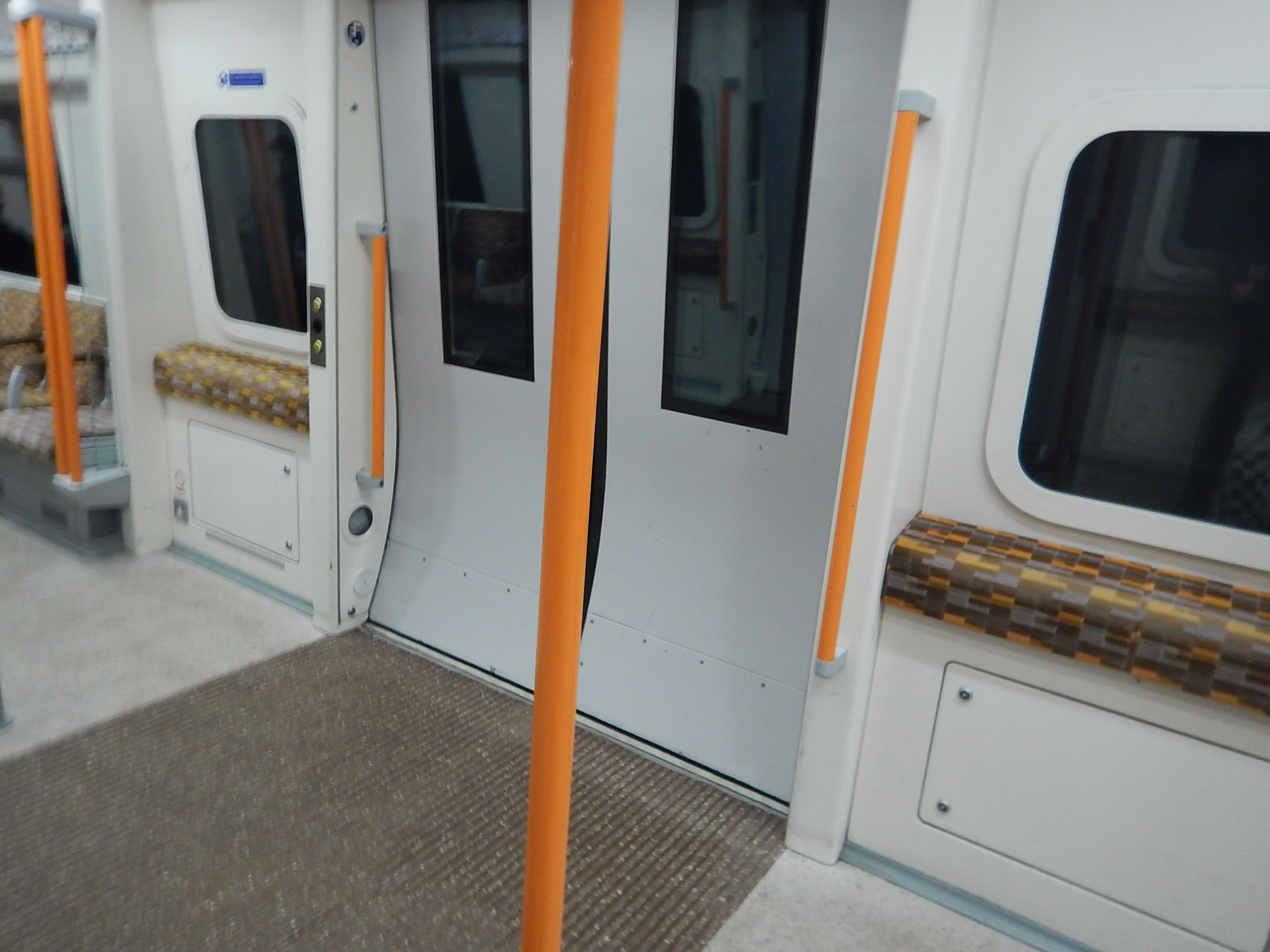
They have been a long time coming, but today two Class 710 trains, started running on the Gospel Oak to Barking Line.
I took these pictures.
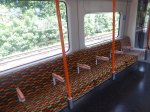
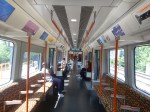
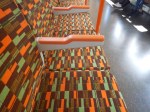
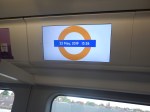

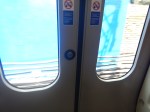
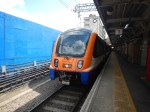
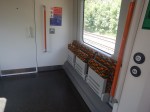
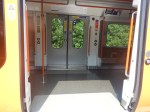
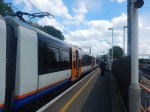
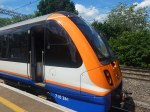
They certainly stand out with their large orange noses.
A few thoughts on various topics.
Doors And Controls
The doors are all double and wide as they should be for easy entry.
There are also full door controls on each side of the door and a door opening button in the door itself.
So on a crowded train, there won’t be the problem, you get on some trains, that the buttons are blocked by a large person standing in the way.
Information Displays
They are clear and very much follow the style of the displays on the Crossrail trains.
Although, they do have a clock, that seemed to be liked by other passengers and myself.
I also suspect the displays can be used advertising.
Noise
Like the Class 345 trains, they are quiet inside.
Seats
The longitudinal seats are as comfortable as those of their elder siblings; the Class 378 trains.
There are also lots of armrests.
As on those trains, passengers find their own place to put their legs and the passage up the middle of the train seems to stay free.
There are also no perches either side of the door, as in the Class 378 trains. It this to cut out canoodling?
USB Sockets
There isn’t a large number and they are only accessible from a few seats.
This picture shows the sockets on a Vivarail Class 230 train.
I think each armrest should have one.
Wi-Fi
I tested it and it worked
The Train Software
If I was designing something like a train, a tram, a bus or a car, the vehicle would have a backbone, that was compatible with the Internet.
The train software, that seems to have caused the delay could even be an operating system, like the one on your computer or phone.
In my experience, operating systems are very difficult to write, but once they are working, the following is possible.
- They work for all compatible computers, phones or trains.
- They can analyse the hardware to see what they’ve got connected.
- A large team of programmers can write compatible additions, just like thousands write apps for mobile devices.
I also believe that testing operating systems work as they should is one of the most difficult things to do in computing.
I don’t believe that the delay to the Class 710 trains because of software problems has been overly long in my experience.
Complex systems just take an awful long time to get write.
The good news though, is that if Bombardier have got their design right, they may well have cracked the computer systems for all other Aventras.
Conclusion
They tick a lot of boxes and I like the design.
I also feel that if Bombardier have solved the software problems, then Aventras could be delivered in a steady stream.
Wi-fi On A Train In A Deep Tunnel Under London
I’ve just been using wi-fi on a Class 717 train between Essex Road and Moorgate stations.
Is this the first railway line deep underneath the surface of London to have wi-fi installed?
I shall be interested to see, if I use the line more, as an alternative way to get to Moorgate from my house.
Does Outlook 256 Have A Mind Of Its Own? It’s Just Appeared From My Computer
Outlook 256 must be one of the biggest piles of doo-dah I’ve ever found.
Firstly, it locked up, so that it wouldn’t respond to any of my commands.
So then I rebooted my computer, as one does.
It is now no longer on the task bar and I can’t find out where it is in the computer’s menu.
Allthe other programs in Office 256 seem to be working.
The Design Of The Class 378 Trains Keeps The Gospel Oak To Barking Line Running
In some ways, London Overground’s Class 378 trains are the ultimate Electrostars.
These ten-year-old trains are no high-performance trains, but they are people carriers par excellence.
Wikipedia describes their interiors like this.
The design is similar to the Class 376 trains used by Southeastern, featuring the same wider metro-style sliding pocket doors for more efficient boarding and alighting. However, it also has significant differences from the Class 376, such as fully longitudinal seating similar to that used on London Underground rolling stock to give more standing and less seating capacity and reduce overcrowding, suitable for the high-volume metro-style services on London Overground.
This picture shows a view through the five cars of a standard-length train.
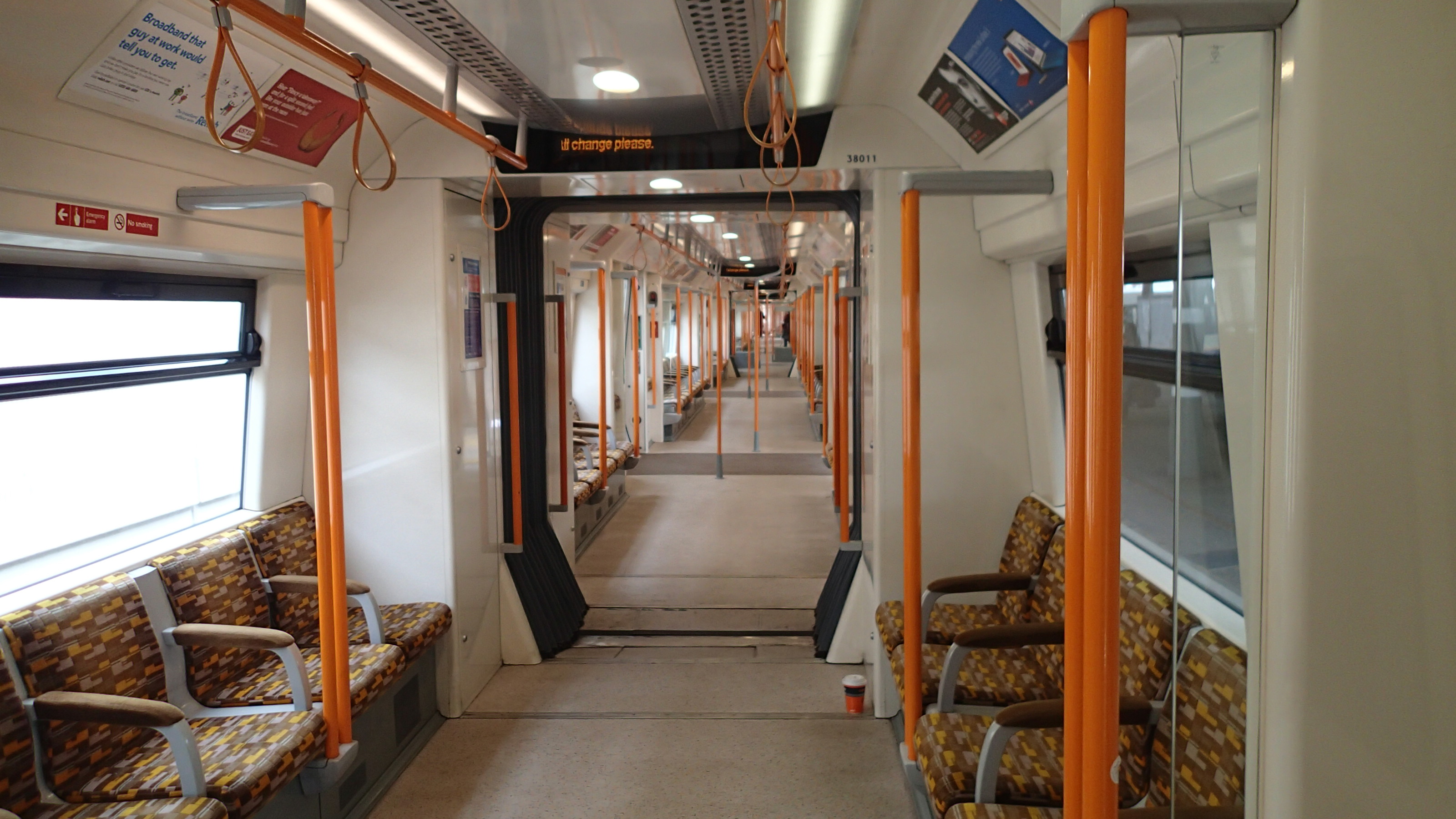
At the present time they are the only heavy rail train with this seating layout. Although London Overground will soon be running some Class 710 trains with a similar layout.
- The seats are reasonably comfortable.
- All passengers get at least one arm-rest.
- Passengers can walk between cars to find a seat or more space.
- The aisle between the seats is wide enough for passengers to stretch their legs and others to walk through, when all seats are taken.
- There’s plenty of space for standees and lots of handholds.
- In less busy times, everybody gets at least one seat.
There are also wide lobbies and doors for easy embarking and alighting.
Note the perches either side of the door and the numerous handholds.
In my travels across Europe, I’ve never found a better inner-city commuter train.
To run a four trains per hour (tph) service on the Gospel Oak to Barking Line, ideally eight trains are needed; six to run the service, one in maintenance and a spare.
But all London Overground can scrape together is three Class 378 trains shortened to four-cars.
- This limited number of trains can only run a two tph service.
- The four-car Class 378 trains have 152 seats (including tip-up seats) and thirty-two double perch seats.
- The two-car Class 172 trains have 124 seats.
This gives these seats per hour for the two services.
- Class 172 trains – four tph – 496
- Class 378 trains – two tph – 432
The Class 378 trains may offer less seats, but each four-car train can hold a lot of standees.
This article on Railway Gazette is entitled London Overground Class 378 Ready To Enter Service, says that four-car versions of Class 378 trains can hold up to 700 passengers.
If you’ve ever travelled on the East and North London Lines around Dalston in the Peak, you’ll know how many people these trains can hold at a push!
Since the two tph service started yesterday I’ve done several trips on the Gospel Oak to Baring Line over two days.
- 09:20 – Gospel Oak to Barking
- 10:33 – Barking to Blackhorse Road
- 14:27 – Harringay Green Lanes to Gospel Oak
- 14:50 – Gospel Oak to Barking
- 15:33 – Barking to Gospel Oak
- 07:33 – Barking to Gospel Oak
Only the last trip can really be considered to be in the Peak.
I have the following observations on the Off Peak trips.
- There were typically at least twenty per cent of seats available.
- No-one was ever forced to stand, although some were.
- A proportion of passengers were doing short trips of one or two stops.
- Some stops like Crouch Hill, Blackhorse Road and Leyton Midland Road seemed to have more passenger traffic than others.
- The trains had more passengers towards the Barking end of the route.
- I asked a few passengers, if they’d had to wait long and all said, they’d read the timetable and arrived accordingly.
- The usual accessories like dogs, buggies and baggage were carried by a proportion of passengers.
- Two station staff said passengers were only complaining about the frequency.
It appears to me, that Off Peak journeys on the route will be adequate if not as frequent as passengers want.
I have the following observations for the single Peak journey at 07:33 this morning.
- Nearly all seats were taken for the whole route.
- Dwell times were slowed at certain stations, due to the numbers wanting to enter and alight.
- All standees had a decent hand-hold.
- Some passengers were still doing short trips of one or two stops.
- Blackhorse Road with its connection to the Victoria Line was busy.
- A staff member told me, that it all gets less busy after eight o’clock.
I should also say, that one passenger was complaining hard, as he had to stand for his short journey from Crouch Hill to Gospel Oak. But then he was dressed like he would pay for a First Class seat.
On arrival at Gospel Oak, I took a North London Line train to Hampstead Heath and that was carrying more passengers per car.. This added a perspective to the trip.
But then, in my part of London, at times, there are more overcrowded trains that I use regularly.
- The Central, Victoria and Northern Lines on the Underground.
- The North and East London Lines of the Overground.
- The Northern City Line into Moorgate station.
Today’s Peak trip was no worse, than some I’ve experienced in the North of England.
Conclusion
The three gallant Class 378 trains are coping well and if they don’t suffer any failures, I suspect they can hold the line, until reinforcements arrive.
My trip today, illustrated the strengths of the train design as a large number of passengers were transported in a half-hour journey across North London.
Bombardier must also be pleased that it is three of their ten year-old-trains, that have been quickly reconfigured and have made up for their software shortcomings, that are causing late delivery of the Class 710 trains.
Annoying Advertising Pop-Ups In The Bottom Right Corner Of The Screen
These started a couple of months ago!
Many are from a site called Your Money, but one was selling me cannabis.
How do I stop them?
I use Chrome as a browser and don’t use Facebook or other social media of that type.
Thanks in advance!

