Width And Height Of A Stadler Regio Shuttle RS1 Compared To UK Multiple Units
I am building this table, so that I can get a feel for where Stadler RS ZERO trains can go on the UK network.
Height Of The Regio Shuttle RS1
This is given as 3.70 metres in Wikipedia.
Other figures given in Wikipedia are.
- Class 150 – 3.774 metres
- Class 156 – 3.805 metres
- Class 158 – 3.73 metres
- Class 165 – 3.79 metres
- Class 185 – 3.71 metres
- Class 195 – 3.85 metres
- Class 378 – 3.774 metres
- Class 345 – 3.760 metres
- Class 399 – 3.720 metres
- Class 710 – 3.760 metres
- Class 745 – 3.915 metres
- Class 755 – 3.915 metres
Surprisingly, the Regio Shuttle RS1 is the shortest train!
But this means, that if the Regio Shuttle RS1 can get under all the bridges on a route, then all the other trains can.
Width Of The Regio Shuttle RS1
This is given as 2.90 metres in Wikipedia.
Other figures given in Wikipedia are.
- Class 150 – 2.816 metres
- Class 156 – 2.730 metres
- Class 158 – 2.700 metres
- Class 165 – 2.810 metres
- Class 185 – 2.673 metres
- Class 195 – 2.772 metres
- Class 378 – 2.800 metres
- Class 345 – 2.772 metres
- Class 399 – 2.650 metres
- Class 710 – 2.772 metres
- Class 745 – 3.720 metres
- Class 755 – 3.720 metres
Surprisingly, the Regio Shuttle RS1 is the widest train!
But this means, that if the Regio Shuttle RS1 can squeeze between the narrowest infrastructure on a route, then all the other trains can.
Conclusion
Does this mean, that once a Regio Shuttle RS1 can run on a route, lots of other trains can?
Itb looks to me, like a clever example of cunning Swiss engineering.
Could Stadler RS ZERO Be Used For The West London Orbital Railway?
In Stadler Presents A World First In Berlin, I talked about the launch of the Stadler RS ZERO.
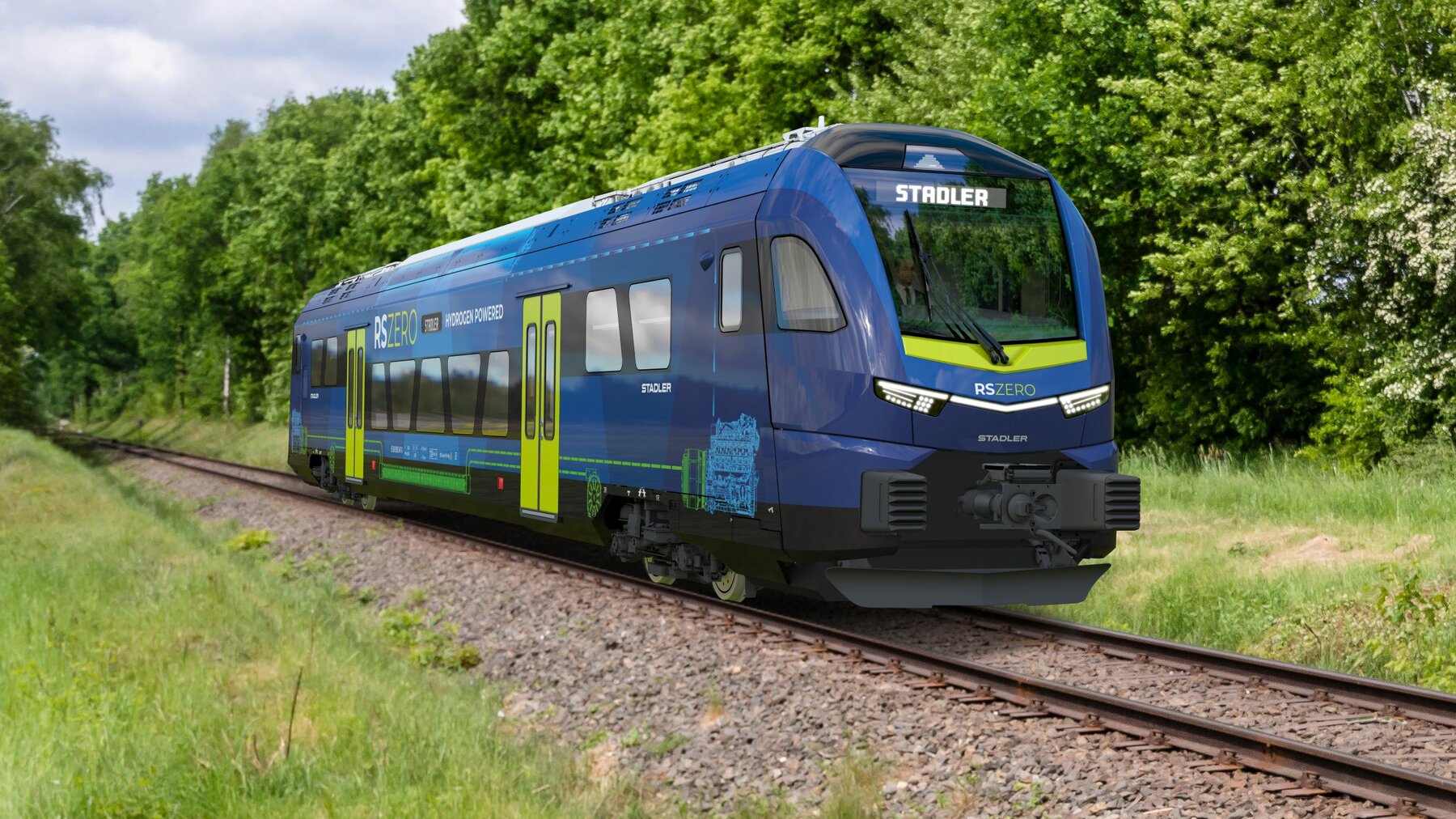
I wonder, if these newly-launched trains, would be ideal for the West London Orbital Railway?
- They will be zero-carbon and will not be emitting fumes or carbon dioxide.
- Stadler could size the trains to UK platform height, just as they did the Flirts for Greater Anglia.
- The two routes are only eleven miles long with 25 KVAC electrification at the Midland Main Line end, so the battery-electric version could be ideal.
- They are likely to be extremely quiet, as battery-electric trains always seem to be.
This picture of the earlier Stadler Regio-Shuttle RS1 from Chemnitz, shows that it should be possible to have almost level boarding.
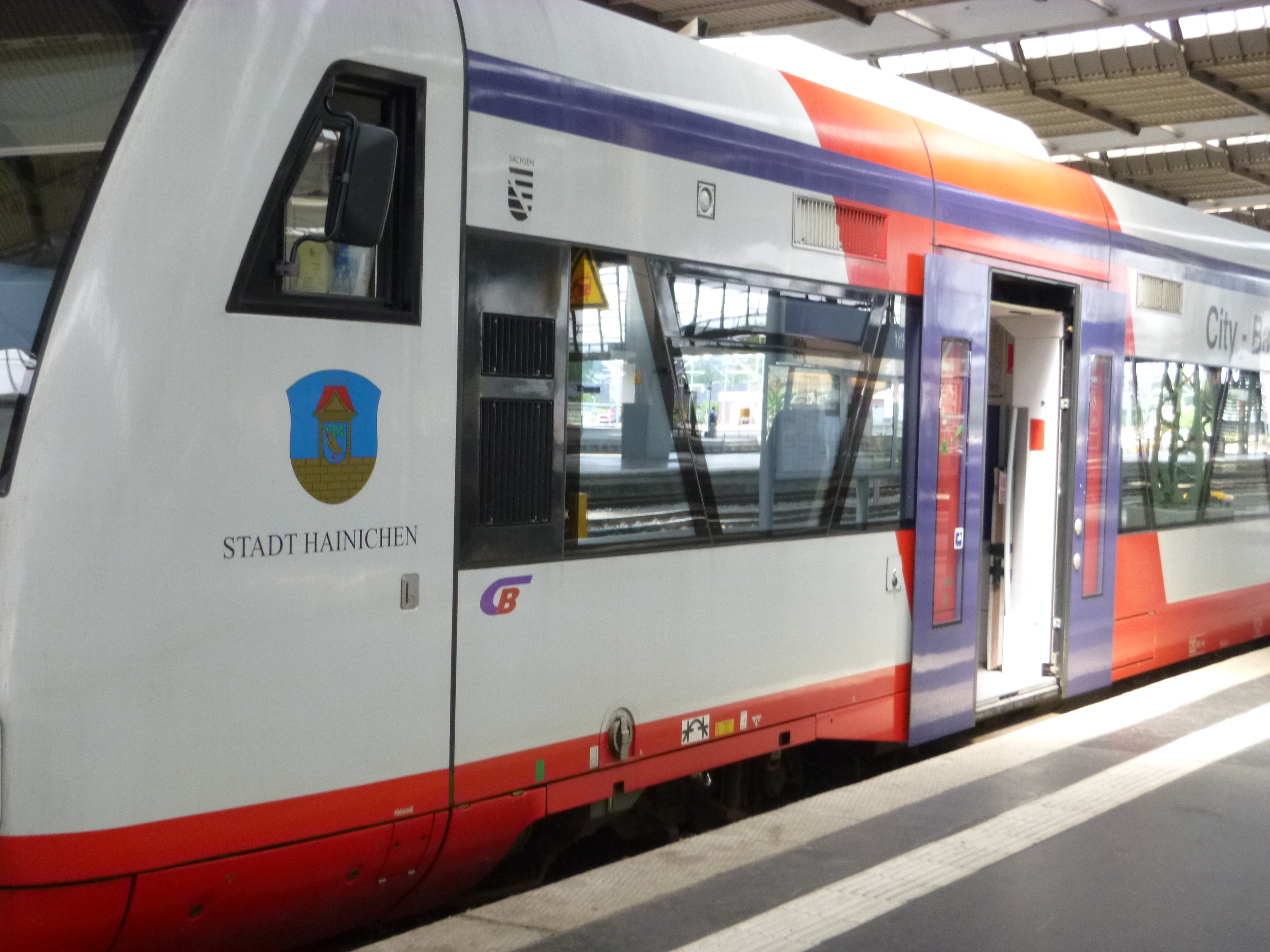
At least at new stations, where the platform height could be built for the RS ZERO.
The new stations along the Dudding Hill Line could be very simple indeed.
Conclusion
I feel that a fleet of RS ZEROs could convert the Dudding Hill Line into an efficient, step-fee and frequent addition to London’s passenger railways.
Mammoet Launches ‘World’s Strongest’ Land-Based Crane That Can Handle Large Offshore Wind Turbine Components
The title of this post, is the same as that of this article on offshoreWIND.biz.
This is the sub-heading.
Mammoet has launched the SK6000 ring crane, said to be the world’s strongest land-based crane, at its Westdorpe facility in the Netherlands. According to the company, the new crane supports the continued constructability of next-generation offshore wind turbines and foundations.
This is the first paragraph.
The new crane has a maximum capacity of 6,000 tonnes and can lift components of up to 3,000 tonnes to a height of 220 metres, and builds on the design philosophy of Mammoet’s SK190 and SK350 series, which are proven in the market, the company said.
In the early decades of North Sea Oil and Gas, I remember a project management consultant telling me how larger cranes were improving productivity.
It appears history is repeating itself.
The crane can also be transported in standard shipping containers, as this sentence details.
The crane design uses containerization techniques for ease of deployment and can be transported using shipping containers to any location worldwide.
Let’s hope wind farms can be erected faster.
Spotlight On The IVECO E-WAY H2: Less Weight, 15% More Passenger Capacity
The title of this post, is the same as that of this article on Sustainable Bus.
This is the sub-heading.
Up to seven time less batteries than a BEV bus (one module instead of 7), with 15% more passengers. These are the specifications mostly stressed by IVECO BUS when outlining the features of IVECO BUS E-WAY H2, presented at Busworld 2023 in Brussels. The bus model derives directly from the E-WAY BEV bus model
Note.
- The hydrogen fuel cell technology is from Hyundai.
- The bus is designed to be lighter in weight, which increases passenger capacity from 93 to 111 and gives an enhanced range.
- The driveline is from Accelera by Cummins, with a Siemens electric motor.
- IVECO provide the front axle and ZF the rear.
- Surprisingly, the bus is assembled from stainless steel panels, onto a steel floor.
It strikes me, that if the late great Colin Chapman had designed a bus, it would follow some of IVECO’s design.
Conclusion
This bus could set the standard for hydrogen-powered buses.
I particularly liked the saving in lithium compared to an electric bus.
UK Company Unveils Mooring Solution For Floating Offshore Wind
The title of this post, is the same as that of this article on offshoreWIND.biz.
This is the sub-heading.
UK-based Blackfish Engineering has unveiled a mooring system, called C-Dart, which eliminates the direct handling of heavy mooring lines by operational personnel. The system is designed to rapidly connect various floating structures and assets, including wave and tidal energy converters, offshore wind, floating solar platforms, aquaculture, and more, according to the company.
These three paragraphs give a few details.
By utilising the principles of gravity, buoyancy, and rope tension, the C-Dart system facilitates a contact-free, automated connection process that secures equipment securely and swiftly, Blackfish said.
The system’s rapid connect and disconnect capability is said to cut down the time typically required for offshore operations which is vital in reducing the overall operational costs and downtime, particularly in the high-stakes environment of renewable energy projects.
Constructed from high-tensile, corrosion-resistant materials, the C-Dart system could withstand harsh oceanic environments, extending its service life while minimising maintenance requirements.
There is also this excellent video.
These are my thoughts.
The Companies Involved
The companies, organisations involved are listed on the C-Dart product page.
Skua Marine Ltd, Morek Ltd, Flowave, Underwater Trials Centre, Offshore Simulation Centre, National Decommissioning Centre, Bureau Veritas, Queen Mary University, The Waves Group, KML, Alex Alliston, Arnbjorn Joensen
Note.
- Blackfish Engineering are in Bristol.
- Bureau Veritas is a French company specialized in testing, inspection and certification founded in 1828.
- Queen Mary University is in London.
- The Underwater Trials Centre is in Fort William.
- The National Decommissioning Centre is in Aberdeen.
- The Offshore Simulation Centre, is in Norway.
Funding came from the Scottish Government.
Good Design And Improved Safety
It does look in this product that good design and improved safety go together.
Conclusion
This peoduct could be a real winner.
Liberty Lines Commissions First High-Speed Ferry With mtu Hybrid System From Rolls-Royce
The title of this post, is the same as that of this press release from Rolls-Royce.
These two bullet points act as sub-headings.
- “Vittorio Morace” the world’s first hybrid high-speed ferry to IMO HSC standard with a length of almost 40 metres is fast at sea and emission-free in harbour
- A further 8 Liberty Lines ferries with mtu hybrid systems will enter into service in Italy, Slovenia and Croatia
This picture shows the first of the fleet.

This is the first paragraph.
On 27 June 2024, the Italian shipping company Liberty Lines ceremonially launched the world’s first hybrid fast ferry of this category and size in Trapani, Sicily, powered by an mtu hybrid propulsion system from Rolls-Royce. The 39.5 meter long ship has a capacity of 251 passengers, reaches a speed of over 30 knots and will significantly reduce the impact of ship operations on the environment. The “Vittorio Morace”, built by the Spanish shipyard Astilleros Armon and designed by Incat Crowther, is the world’s first IMO HSC (High-Speed Craft) hybrid fast ferry of this size and has been classified as a “Green Plus” ship by the Italian classification society RINA.
This ferry can truly be considered to be a Ship-of-the-World, with a design from an Australian-headquartered International company and German engines, that has been built in Spain.
This paragraph describes the power-train.
The battery-electric part of the drive is used for locally emission-free driving in the harbour area and as a booster. CO2 emissions are reduced by the particularly efficient mtu Series 4000 diesel engines which can also run on the renewable diesel (HVO, hydrotreated vegetable oil). Its use can lower the CO2 footprint by up to 90 per cent. Furthermore, the comparatively low overall weight of both the engines and the hybrid drive system contributes to high vessel propulsion efficiency, thereby reducing fuel consumption and emissions.
Over the last thirty years, I’ve been to several of the places served by Liberty Lines, so some excellent journeys, will be made faster, quieter and better.
Naked Football
My house was designed by an architect, but built by the worst form of cost-cutting builder. As the house has a lot of windows facing South, I suspect the architect specified air-conditioning. But the builder left it out!
I fitted a single unit, which helped keep the temperatures fairly good.
Then it failed and the rip-off firm who fitted it couldn’t fix it. They told me, they’d never seen a system like it, when they came for the service. They took my money and now it sits there like a folly in my living room.
Last week, I finally got my TV aerial system fixed and for the first time in about two years I can get a good signal in my bedroom, as well as my living room and the downstairs bathroom.
My bedroom is at times, the only reasonably cool room in hot weather in the house.
So now, by getting naked, I can watch the football in comfort.
Where’s The Windows Calculator Gone?
My current computer runs Windows 10.
I used to run the calculator by searching for it.
But it suddenly isn’t available.
How can M$ , do this to me, as I use a simple calculator all the time?
Rule one of software design, is never give customers any surprises.
They might just go elsewhere and never return.
At least the one in my phone seems to be still working!
Is This The World’s Smallest Hydrogen Car?
I typed “World’s smallest hydrogen car” into Google and found this web page.
This is the first paragraph of the product description.
The smallest hydrogen fuel-cell car ever commercialized. A small-scale model of a hydrogen fuel-cell application. A funny didactical toy for kids and… adults too!
But it only costs € 99 with the VAT included.
For something more useful, this web page details a ride-on hydrogen fuel-cell lawnmower.
When I find products, like these that can be bought on-line, it strengthens my belief, that at some time in the next few years, someone will demonstrate an Issigonis Mini-sized car that will run on hydrogen.
We must all remember, that engineering is the science of the possible, whereas politics is dreams of the impossible.
OWLC Selling Rights To Gravity Tripod Offshore Wind Foundation
The title of this post, is the same as that of this article on offshoreWIND.biz.
This is the sub-heading.
The rights to the gravity tripod offshore wind foundation developed by the UK company Offshore Wind Logistics and Construction (OWLC) have been put up for sale following an appointment of administrators who initiated an accelerated sale of the business.
These two paragraphs give full details.
OWLC says its gravity tripod foundation can deliver a solution to the offshore wind industry that is quicker, cheaper and more environmentally friendly than monopiles or jackets.
The foundation, which uses concrete instead of steel, is said to reduce levelised cost of energy (LCOE) between 11 and 12 per cent, according to information on OWLC’s website, which cites BVG Associate’s study from 2020 that also found the gravity tripod to be 51 per cent cheaper than a jacket substructure and 36 per cent cheaper than a monopile to install.
The home page of the OWLC web site gives full details of their Gravity Tripod.
This is the company’s outline description of the foundation.
The Gravity Tripod™, globally patented, is an offshore subsea foundation structure designed to deliver up to 11.7% project cost reduction, to reduce project delivery times by up to 1/3 and create almost zero environmental impact.
The Gravity Tripod™ is a component base structure that benefits from the best aspects of other foundation concepts. It is a hydro-dynamic transparent structure which doesn’t require piling, is manufactured from low-cost tubular sections in a rapid assembly process and is installed with minimal seabed intervention.
The Gravity Tripod™ has two distinctive components that act together to ensure the structure has an extremely long design life (up to 100+ years) and is insensitive to turbine loads with a capacity of up to 25MWs. In addition, the structure has a low bearing pressure on the seabed and so is capable of accommodation a huge range of sediment types, with less seabed preparation required than other gravity-based designs.
Other points include.
- A design life of 100 + years.
- Biodiversity net gain.
- Sheaper to install.
- Designed for water depths of 20-75 metres.
- Easier to install
- No piling.
- Noiseless construction.
- Reduced embedded carbon
I like it and I hope someone buys it and turns it into a success.
 The Anonymous Widower