‘Phantom’ Power Projects Are Holding Back The UK’s Energy Security – Centrica Report
The title of this post, is the same as that of this press release from Centrica.
These are the three bullet points.
- New report shows queue for new energy projects is blocked by developers that may not even have land rights and haven’t applied for planning consents
- Estimated size of these power projects in the queue is 62GW, roughly one fifth of all power in the queue
- Centrica CEO argues such ‘phantom’ projects should have Construction Agreements terminated if developers miss key milestones – and urges Ofgem to give National Grid ESO the power to remove projects from the existing grid queue
This is the first two paragraphs.
A new independent report, commissioned by Centrica, has revealed the extent of the power projects holding back the UK’s energy security and creating risk around hitting net zero.
The report examined the UK’s existing queue for Transmission Entry Capacity (TEC) – the queue for connecting new projects to the transmission grid – and discovered that it is up to four times oversubscribed. Not only that, but this oversubscription has become significantly worse in the last few years.
The report found these three totals.
- There are currently 371GW of projects in the queue, enough to significantly improve the UK’s energy security.
- Around 114GW worth of projects have listed their connection date as before 2029.
- But around 62GW of these projects are only in the scoping phase and developers may not even have secured land rights or applied for planning consent.
This is both good and bad news!
Here Is The Good News!
Currently, the UK is using 37 GW of electricity, of which 32 GW are generated in the UK, 5 GW is being imported through interconnectors and around 6 GW are coming from renewables.
So this means that when we build all the 371 GW in the queue, we’ll have around eleven times the electricity we are using today.
Of the 114 GW of projects listed for connection before 2029, it looks like 62 GW won’t be delivered, as they haven’t secured land rights or applied for planning consent.
But that still means that as much as 52 GW could be delivered by 2029.
Even this reduced level of new projects still increases the amount of electricity that can be generated by nearly 150 %.
If I’m being ultra pessimistic, I would say that the average capacity factor of the extra capacity was 50 %, so we’d only be adding 26 GW, so the electricity, that can be generated would only rise by around 70 %.
I suspect all in the UK can live with these paltry increases.
Here Is The Bad News!
This is a paragraph from the report.
The report suggests that the oversubscribed queue, and longer wait for connections. has a damaging effect on the investments that could drive the UK’s energy transition and energy security.
Developers and investors will decamp to countries, where they be sure of getting a return on their time and money.
Think of having two supermarkets close to you live, where one is professional and one is chaotic. Where would you shop?
The congestion caused by phantom projects must be solved.
Ofgem’s Solution
This is the solution in the press release.
Ofgem is exploring rule changes (CMP376) to address queue issues and is expected to decide these before 10 November. These rule changes would grant the ESO the ability to remove projects from the queue if they miss key milestones. Ofgem is currently considering whether to apply this rule change to just new projects entering the queue, or whether the rule change should also be applied to projects already in the queue.
They can probably come up with a solution.
An Alternative Method From My Past
In 1969, I worked for ICI, where one of my jobs was building specialist instruments for chemical plants.
Most instruments, that were designed by the group I belonged to, included a chassis on which the components and electronics were mounted. So we had a workshop and about seven or eight staff at our disposal to build the chassis and the parts outside of our skills. As they were used by several groups in the building, where we were all based, the workshop was very busy and everything was delivered late.
Eventually, a manager decided to get a grip on the situation.
He insisted, that the workshop would not do what you wanted if your delivery date was as soon as possible, rather than a date agreed by both parties.
The results were amazing and everything was delivered on the agreed date.
With the renewable energy connection queue, I am sure, that if a procedure was developed, that only allowed fully-planned projects with an agreed completion date to enter the queue, then the problems of phantom projects would be solved.
It might also reduce the cost of developing these renewable projects.
Singapore Nods To 1.2 GW Of Low-Carbon Electricity Imports From Vietnam
The title of this post, is the same as that of this article on offshoreWIND.biz.
This is the sub-heading.
Singapore’s Energy Market Authority (EMA) has granted conditional approval to Sembcorp Utilities (SCU), a wholly-owned subsidiary of Sembcorp Industries, to import 1.2 GW of low-carbon electricity, including offshore wind power, from Vietnam
This is the first paragraph.
The conditional approval means the project by SCU has been preliminarily assessed to be technically and commercially viable. The approval facilitates the process of obtaining necessary regulatory nods and licences for the project.
So now the real planning can begin.
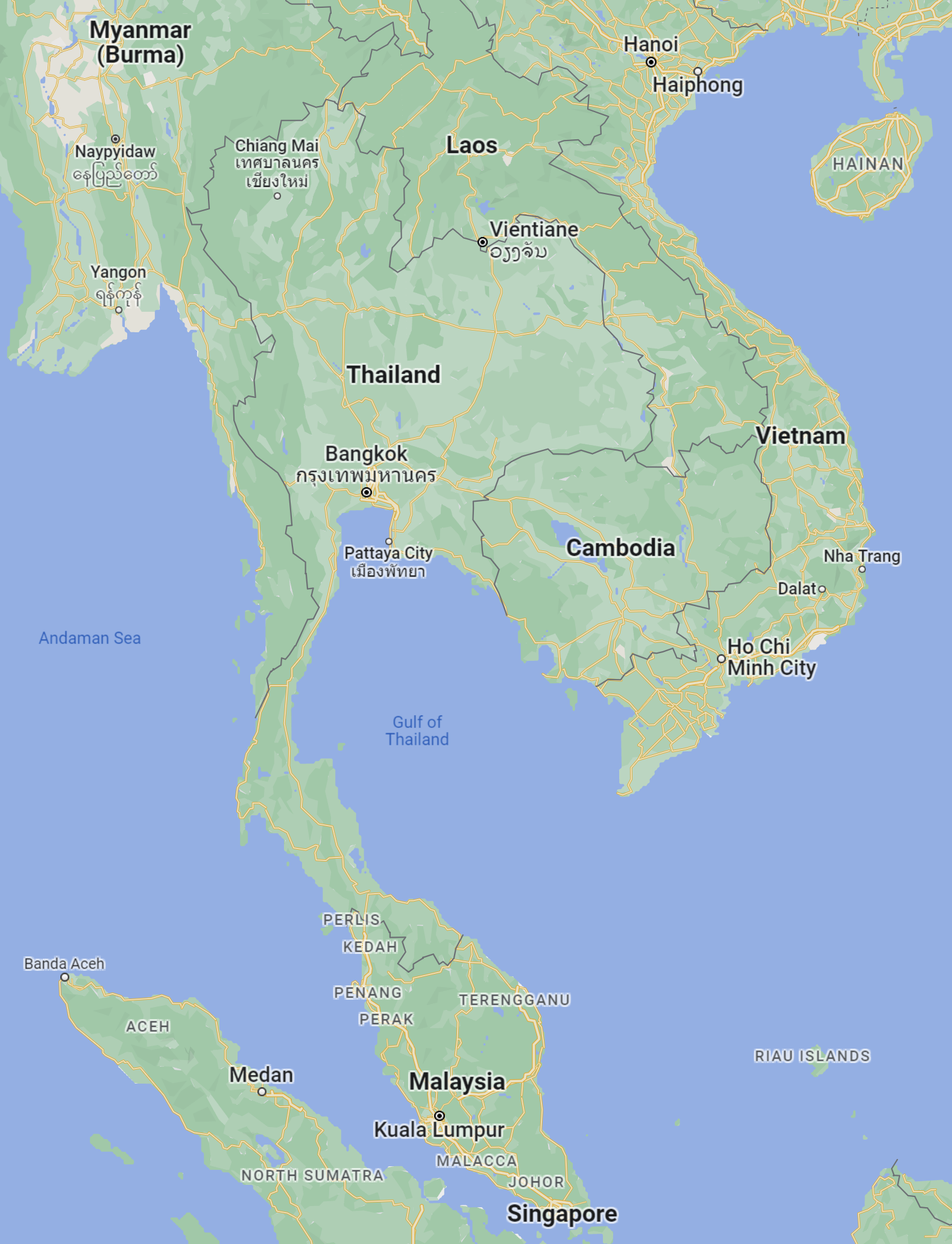
This map shows Singapore and Vietnam.
The article says this about the electricity connection.
The low-carbon electricity is planned to be transmitted from Vietnam to Singapore via new subsea cables that will span a distance of around 1,000 kilometres.
My only worry about this project, is will China object to wind farms in the South China Sea, which they seem to increasingly regard as solely belonging to them.
I have a few thoughts.
Singapore’s Energy Import Policy
These last two paragraphs of the article describe Singapore’s energy import policy.
In 2021, Singapore unveiled its plans to import up to 4 GW of low-carbon electricity by 2035.
To date, EMA has granted conditional approvals to projects from various sources, comprising 2 GW from Indonesia, 1 GW from Cambodia, and 1.2 GW from Vietnam.
Note.
- 4.2 GW of interconnectors will be available from Indonesia, Cambodia and Vietnam.
- In 2022, Singapore’s total electricity consumption was 54.9 TWh, according to the Singapore government.
- 54.9 TWh averaged out over the year is 6.3 GW.
- According to Wikipedia, 95 % of their electricity is generated by gas.
It looks like Singapore will will be needing to import more energy.
Will Developing Countries Benefit From Energy Exports?
Singapore is purchasing electricity from its neighbours in this example.
I believe that there are many countries around the world, who will be able to develop energy exports based on renewable energy.
Conclusion
We will see lots more projects like this.
1 GW Wind Farm Proposed Offshore Jersey
The title of this post, is the same as that of this article on offshoreWIND.biz.
This is the sub-heading.
Jersey’s Council of Ministers has proposed to build a 1 GW offshore wind farm in the southwest of the island’s territorial waters that would produce enough electricity to meet its needs, with the remainder to be exported.
This first paragraph gives more details.
It is proposed that the offshore wind farm should be privately funded and designed, and delivered by a consortium with substantial experience of similar development elsewhere, according to the government.
I would have thought that Jersey would have been one of those places, that would have been too conservative for offshore wind.
But then, this is the last paragraph of the article.
In a 2019 Island Plan consultation, 85 per cent of respondents agreed or strongly agreed the plan should continue to encourage the development of offshore wind and tidal energy, according to the government.
But as the wind farm will export the surplus surplus, it could be a nice little earner.
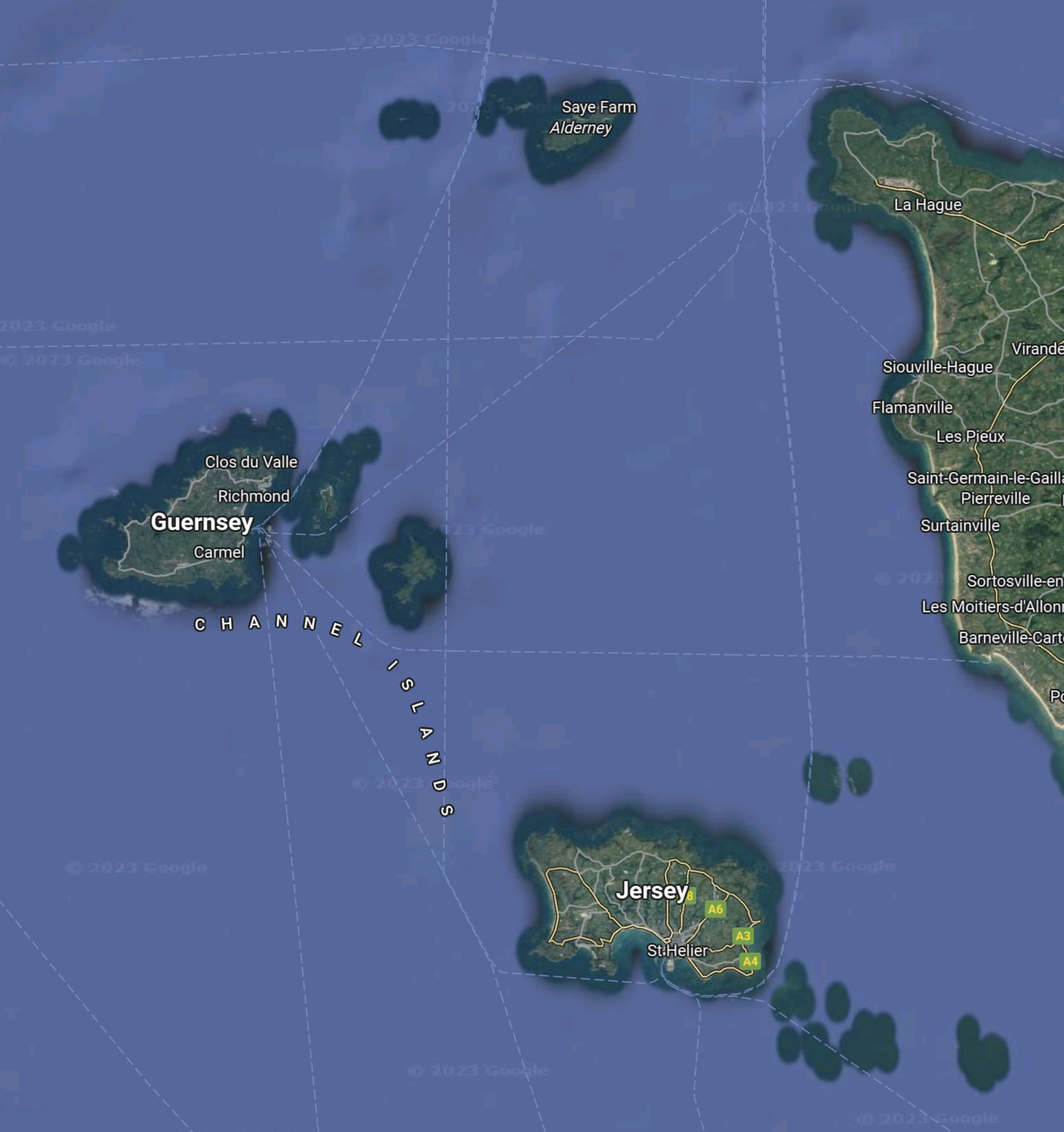
This Google Map shows the Channel Islands.
This article on the BBC is entitled Islands Could Work Together On Wind Farm Plans.
These three bullet points sum up the article.
-
Guernsey and Jersey may work together to create a wind farm
-
Both States are hoping to create the wind farm off Jersey’s south-west coast
-
It could generate enough energy for both islands.
This looks like a sound way to reap the wind!
Self-Orienting Floating Wind Turbine Completes Offshore Tests
The title of this post, is the same as that of this article on offshoreWIND.biz.
This is the sub-heading.
The PivotBuoy Project, developed by X1 Wind in collaboration with nine industry and R&D partners, has finalized its offshore demonstration in Spain with what the partners describe as ”excellent results that promise to revolutionize the floating wind industry”.
This is the first paragraph.
The Spanish firm’s X30 platform was tested in full operational conditions at PLOCAN offshore the Canary Islands from October 2022 to May 2023.
It is accompanied by a picture of this rather different way of mounting a wind turbine.
I discussed how how the concept works in X1 Wind – Disrupting Offshore Wind.
It’s certainly a technology to watch.
Plus Power Raises USD 1.8bn For Energy Storage In Texas, Arizona
The title of this post, is the same as that of this article on Renewables Now.
These two paragraphs outline the story.
Houston-based battery systems developer Plus Power LLC unveiled on Tuesday the completion of USD 1.8 billion (EUR 1.7bn) in new financing for the construction and operation of five standalone energy storage projects in Texas and Arizona.
The financing commitments, arranged in the form of construction and term financings, letters of credit, and tax equity investments, are dedicated to five projects with a combined capacity of 1,040 MW/2,760 MWh.
Note.
- This financing indicates how those banks and financial institutions with masses of money are prepared to put that money into energy storage.
- It is also good to see, that the journalist who wrote the story has given both the output of these batteries and their storage capacity.
- I can see many deals like this being done in the next few years.
But when will we see a financing deal like this for some of the other methods of storage that are being developed?
Scotland’s Largest Offshore Wind Farm Is Now Operational
The title of this post, is the same as that of this press release from Seagreen Wind Energy.
These three bullet points, act as sub-headings.
-
First Minister Humza Yousaf says Seagreen milestone takes Scotland a step closer to net zero
-
UK’s newest offshore wind farm is generating enough renewable energy to power almost 1.6m homes annually
-
Seagreen is now Scotland’s largest and the world’s deepest fixed-bottom offshore wind farm
These two paragraphs outline the current state of the project.
SSE Renewables, part of SSE plc, and its partner TotalEnergies have announced all 114 Vestas V164-10.0 MW turbines at the 1.1GW Seagreen Offshore Wind Farm off the coast of Scotland are now fully operational and are generating clean, renewable energy to Britain’s power grid.
Situated 27km off the Angus coast in the North Sea’s Firth of Forth, Seagreen is now Scotland’s largest wind farm as well as the world’s deepest fixed-bottom offshore wind farm, with its deepest foundation installed at a record 58.7 metres below sea level^. Seagreen is operated from a dedicated onshore Operations and Maintenance Base at Montrose Port.
Note.
- The capacity of the wind farm is 1,075MW.
- First power was in August 2022.
- It looks like that the original completion date was in 2024, but it was moved forward to October 2023, which has been met.
It seems that the project management was planned well.
ABP To Explore Opportunities For Offshore Wind Port In Scotland
The title of this post, is the same as that of this article on offshoreWIND.biz.
This is the sub-heading.
Associated British Ports (ABP) has signed an agreement to investigate an area for the development of infrastructure to support offshore wind manufacturing, assembly, and marshalling and green energy on the Cromarty Firth in Scotland, within the Inverness Cromarty Firth Green Freeport.
This first paragraph gives a bit more information including the possible location.
The area, located within the proposed Nigg and Pitcalzean area of the Green Freeport, could support both fixed-bottom and floating offshore wind projects and play a major role in the development of current and future ScotWind leasing rounds, said ABP.
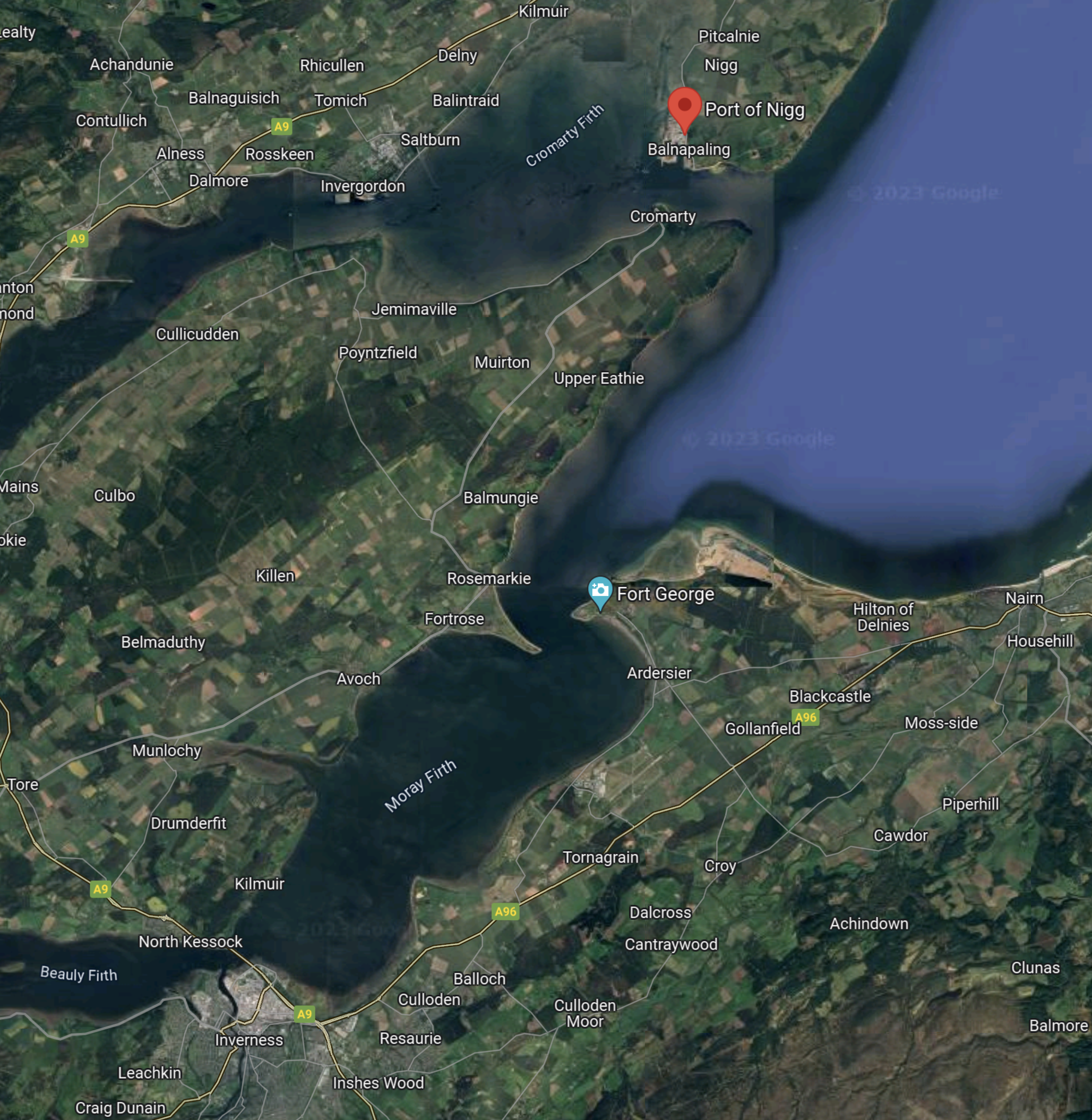
This Google Map shows the location of the Port of Nigg.
Note.
- The Moray Firth with Inverness at its Southern end is the large body of water in the centre of the Southern half of the map.
- The Port of Nigg is on Cromarty Firth and marked by a red arrow.
- Nigg and Pitcalzean are to the North of the port.
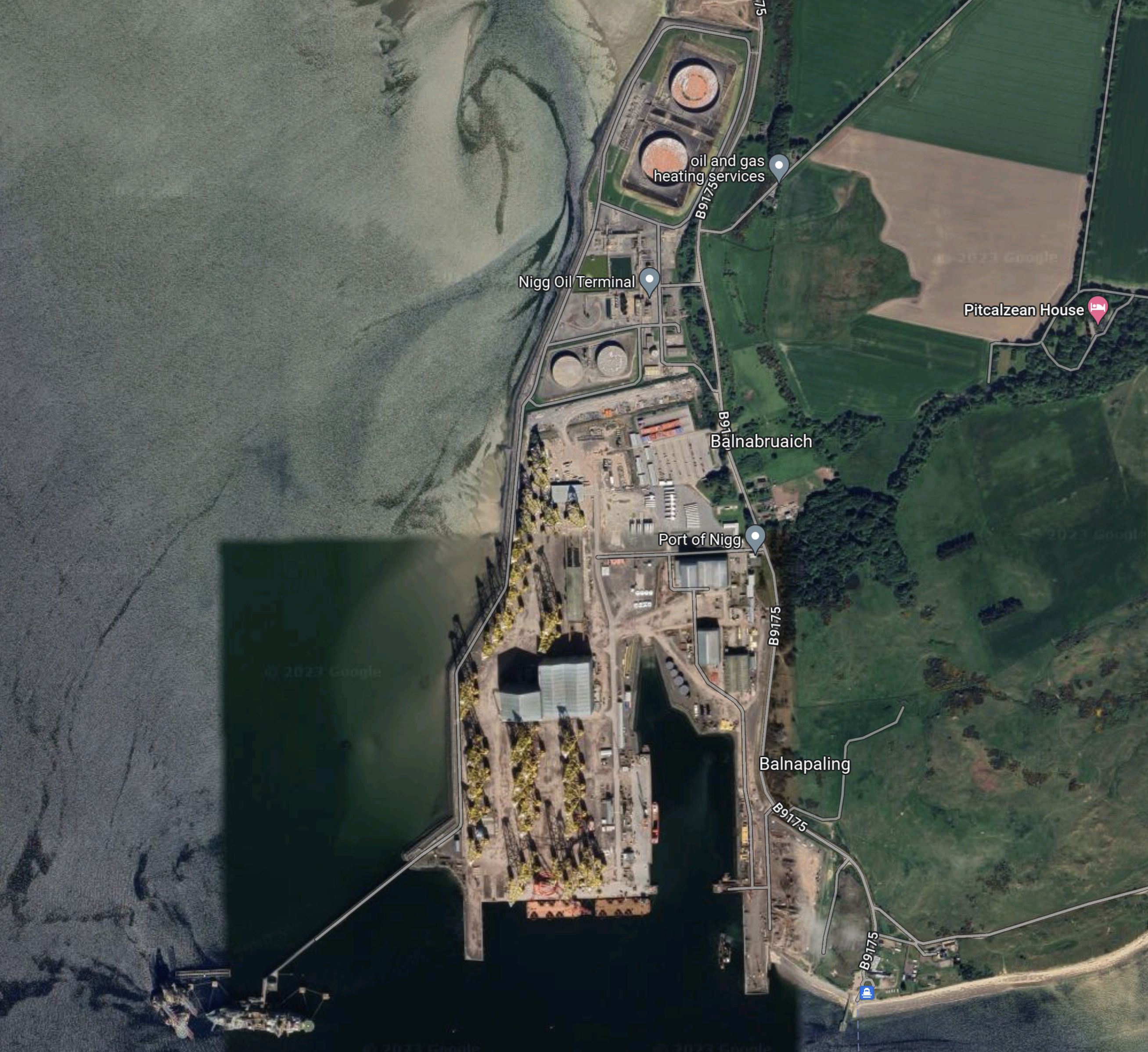
This second Google Map shows an enlarged view of the port.
Note.
- Pitcalzean House is in the North-East corner of the map.
- The Port of Nigg is in the centre of the map.
- The water to the West and South of the port is Cromarty Firth.
- The yellow structures in the port are fixed-bottom foundations for wind farms.
Inverness & Cromarty Firth Green Freeport has a web site.
A Quote From Henrik Pedersen
Henrik Pedersen is CEO of ABP and the article quotes him as saying this.
We’re excited to explore the potential of Nigg, applying our experience across the UK, including at our Ports of Grimsby, Hull, Lowestoft and Barrow which already host significant offshore wind activity and at Port Talbot, where we are developing a Floating Offshore Wind port project. We look forward to working with key local partners, the community, and public sector stakeholders.
The article also has this final paragraph.
The Floating Offshore Wind Taskforce’s recently published “Industry Roadmap 2040”, estimated that planed floating offshore wind projects in Scottish waters alone will require three to five integration ports.
There is certainly going to be a significant number of ports, that will be supporting offshore wind activity.
UK’s Nuclear Fusion Site Ends Experiments After 40 Years
The title of this post, is the same as that of this article on the BBC.
I have followed fusion research since ZETA at Harwell was started up in 1957.
These first few paragraphs from the BBC article, sum up up fusion research.
For the next four decades, the European project pursued nuclear fusion and the promise of near-limitless clean energy.
But on Saturday the world’s most successful reactor will end its last test.
Nuclear fusion was “discovered” in the 1920s and the subsequent years of research focused on developing fusion for nuclear weapons.
In 1958, when the United States’ war research on fusion was declassified, it sent Russia, UK, Europe, Japan and the US on a race to develop fusion reactions for energy provision.
Fusion is considered the holy grail of energy production as it releases a lot of energy without any greenhouse gas emissions.
It is the process that powers the Sun and other stars. It works by taking pairs of light atoms and forcing them together – the opposite of nuclear fission, where heavy atoms are split apart.
Four decades of research, loads of money and some of the best brains in the world have produced very little, except about knowing what doesn’t work.
It doesn’t seem that anybody is getting any value from fusion research any more.
It’s almost as if, we’ve hit a brick wall and we can’t go any farther.
It must be terribly demoralising for everybody involved.
Would the scientists and engineers be better employed on other research?
I wouldn’t totally abandon fusion research, but put it more on a watching brief, so that if anything positive happens elsewhere, the UK might be able to take advantage.
Could we even do what we have recently done with High Speed Two and scrap it, before using the money on other energy projects?
My priorities would be.
Floating Wind Research
Because we are surrounded by sea, offshore floating wind is likely to be our major energy source by the end of the decade.
Energy Network Control Research
Our energy network will be getting more complex and we need better algorithms to control it.
Storage Research
We need lots of energy storage, that is affordable to install, that can be placed everywhere in the UK.
Project Management Research
I believe that some of the energy ideas will need advanced project management techniques, that may or may not have been invented yet.
Small Modular Reactor Research
SMRs are one way to go, but is the backup research in place?
Tidal Research
Places in the UK have high tidal ranges and we should exploit them.
The Government And Research
The government is funding a lot of energy research.
Much of the funding is going for short term projects, which is good in that we have an urgent need for improvement in our energy performance, but is bad in that it ignores the future.
Diamond 2
The Diamond Light Source has been an unqualified success. I am convinced that we need Diamond 2 in the North, which I wrote about in Blackpool Needs A Diamond.
Arup and ILF Join Forces To Enhance Pumped Storage Projects In The UK
The title of this post, is the same as that of this of article on Water Power And Dam Construction.
These are the first two paragraphs.
Global sustainable development consultancy Arup and ILF Consulting Engineers have recently signed a Memorandum of Understanding (MOU) aimed at strengthening pumped storage projects in the UK. These projects include Coire Glas, Glenmuckloch, and up to 13 additional schemes in the pipeline.
This partnership marks a significant development in the hydropower sector in the UK, bringing both capacity and valuable experience to support the country’s net-zero energy transition.
Fifteen schemes could be a lot of energy storage.
These are a few useful web sites with information to back up the article.
As most of the work appears to be in Scotland, this would appear to be a second large installment of Power From The Glens. Perhaps it should be named Storage In The Glens.
National Grid’s London Power Tunnels Breakthrough Completes £1 Billion Project’s Tunnelling Activity
The title of this post, is the same as that of this press release from National Grid.
These bullet points sum up the press release.
- Landmark moment for London Power Tunnels project as 140-tonne boring machine emerges at Eltham site following final subterranean journey
- Breakthrough marks the completion of 32.5km of tunnelling at depths of up to 60m under seven South London boroughs
- Due for completion in 2026, the project is rewiring the capital’s electricity network to boost resilience and future-proof supplies as demand grows
This is the seventh major tunnel in London in recent years to be completed.
- Elstree and St. John’s Wood Cable Tunnel – Electricity – 12 miles – 2005
- Lower Lea Valley Cable Tunnels – Electricity – 3.7 miles – 2008
- Lee Tunnel – Sewage – 4.3 miles – 2016
- New Cross and Finsbury Market Cable Tunnel – Electricity – 3.5 miles – 2017
- Northern Line Extension To Battersea – Rail – 2 miles – 2021
- Elizabeth Line – Rail – 26 miles – 2022
- Silvertown Tunnel – Road – 1 mile – Under Construction
- Thames Tideway Tunnel – Sewage – 16 miles – Under Construction
- Euston Tunnel – Rail – 4.5 miles – Under Construction
Note.
- It is likely that there will be CrossRail 2 and an extension to the Bakerloo Line.
- It certainly seems to have been a prudent decision to create Tunneling and Underground Construction Academy or TUCA to train more tunnellers, before the Elizabeth Line was built.
But I don’t believe that will be all the large tunnels that will be built in the capital.
 The Anonymous Widower