German Firm Plans To Build Britain’s Biggest Solar Farm
The title of this post, is the same as that as this article on The Times.
These three paragraphs outline the project.
The developers behind a controversial solar power project in Oxfordshire have submitted a planning application for what is thought will be the largest such scheme in western Europe.
The site in Botley West is being developed by Photovolt, a German company, and could generate 840 megawatts (MW) of electricity, enough to power about 330,000 homes.
However, the project has sparked a backlash among some local residents, who argue the scheme will blight the landscape.
A map shows the site and it is certainly a large one.
- The Botley West site will cover a total of about 3,200 acres.
- It will pass through 15 villages.
- About 1,235 acres will not be covered with solar panels.
- It has a web site, which gives more information.
- There is also a Stop Botley West web site.
I can certainly understand the opposition.
These are my thoughts.
I Would Add A Battery To The Panels
An added battery would undoubtedly smooth the output of the solar panels. Especially, when the sun is not out to play!
A total capacity of 840 MW is planned for Botley West and in my opinion as a Control Engineer, a sizeable battery is needed.
I would not use a Battery Energy Storage System or BESS based on lithium-ion batteries, as I believe that Highview Power’s liquid air batteries and others offer cost and environmental advantages. But that is one for the accountants and the environmentalists!
I Might Add A Few Appropriately-Sized Wind Turbines To The Farm
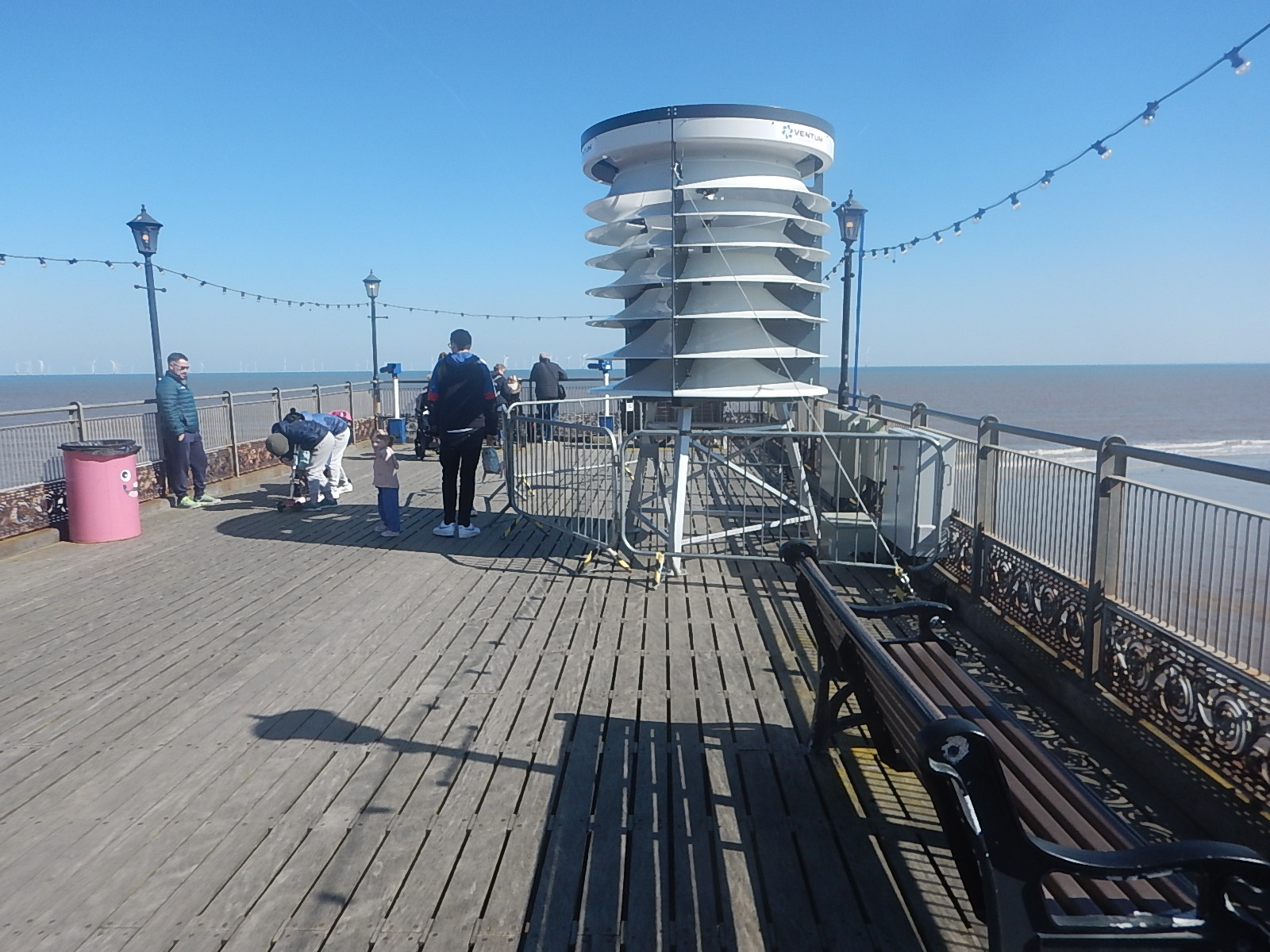
In Skegness Wind Turbine Trial To Light Up Pier In UK First, I discuss using small, vertical wind turbines from a Norwegian company called Ventum Dynamics.
This picture shows a Ventum Dynamics turbine on Skegness Pier.
On the Ventum Dynamics web site, there are several pictures of buildings with flat roofs, that have several turbines on each.
Surely, if you’re installing a comprehensive electrical network, then it should be used to collect all the electricity it can.
I believe that Ventum’s turbines could be alternated in a line with trees, so that they merged more into the countryside. Some experiments need to be done.
I Would Also Fit Solar Roofs To Suitable Buildings
Every little helps!
Conclusion
When mixing solar panels and wind turbines into the countryside, you need to be bold and discard preconceived ideas.
England’s First Onshore Wind Farm Of A New Generation
This document from the Department of Business, Industry and Industrial Strategy lists all the Contracts for Difference Allocation Round 6 results for the supply of zero-carbon electricity.
There is only one English onshore wind farm listed in the document and it is the 8 MW Alaska Wind Farm in Dorset.
It has its own web site and this is the sub heading.
Alaska is a wind energy project comprising 4 wind turbines that are currently under construction at Masters Quarry in East Stoke, near Wareham, Purbeck. This website aims to update you on progress and provide ways to get in touch with the project team.
This is the introductory paragraph.
Alaska Wind Farm is the first of its kind in the county. Dorset has a limited potential for large-scale onshore wind development due to a variety of environmental and technical constraints, such as landscape designations and grid connection opportunities. Extensive technical assessments undertaken during the planning process have demonstrated that the quarry off Puddletown Road makes an excellent site for a wind farm. At present, all four wind turbines have been installed and the team is working on connecting them to the local electricity network. Grid connection is taking longer than anticipated, but the project team are working with the Distribution Network Operator, SSE Networks, to get the wind farm connected over the summer. Once operational, the amount of green electricity generated is expected to meet the annual demand of up to 5,200 average UK households every year*.
This Google Map shows the site on Puddletown Road.
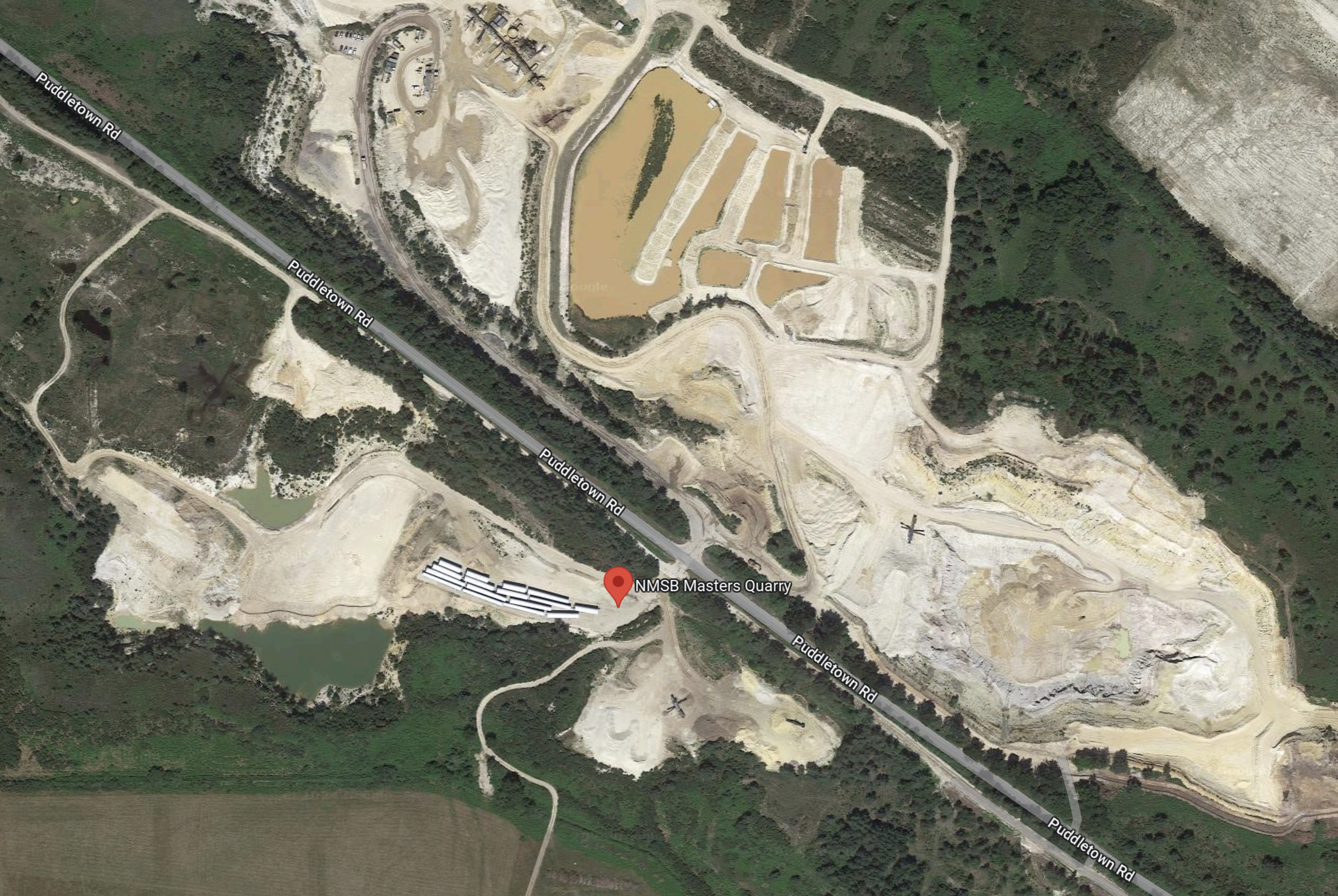
This second Google Map shows an enlargement of part of the site.
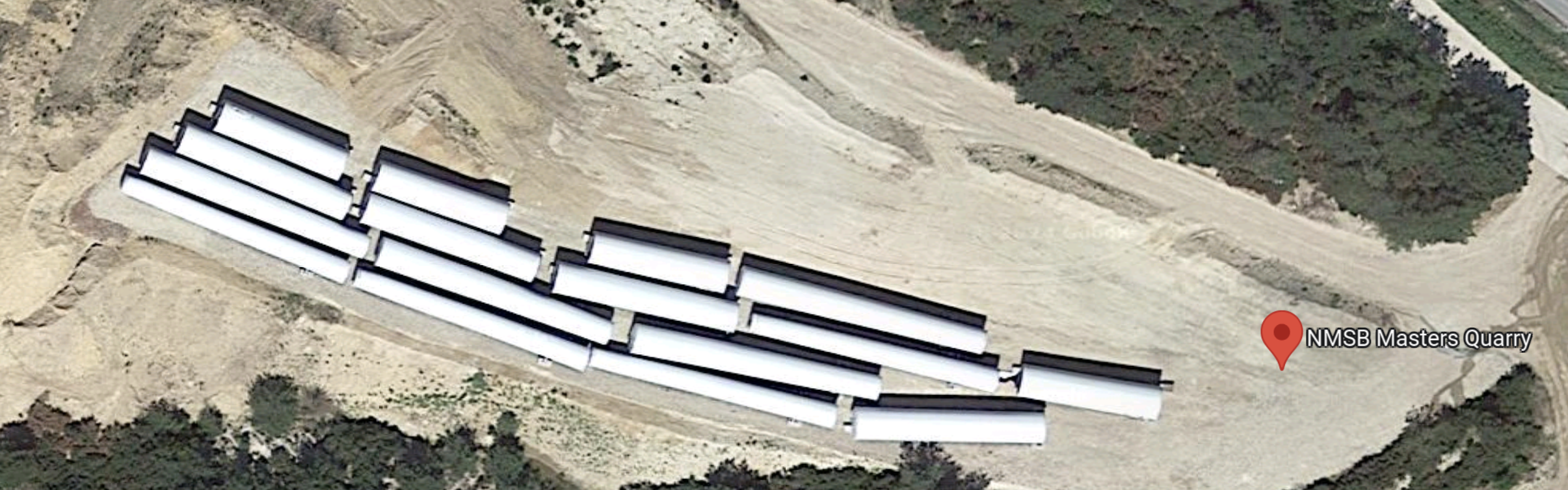
Note that are sixteen segments of wind turbine towers.
This article on the Swanage News is entitled Twenty Year Battle To Build Purbeck Wind Farm Is Finally Over.
It gives full details of the history of the wind farm.
The wind farm and a solar farm, will be surrounded by a new heath.
I particularly like this paragraph.
The new heath is expected to be home to all of Britain’s reptiles, including rare smooth snakes and sand lizards among other animals, as well as threatened butterflies, birds, bats and plants.
Renewable energy doesn’t have to wreck the countryside.I shall be watching how this project develops.
AI Tech Tracking Seabirds At Aberdeen Bay Offshore Wind Farm
The title of this post, is the same as that of this article on offshoreWIND.biz.
This is the sub-heading.
Vattenfall, Norwegian AI technology start-up Spoor, and British Trust for Ornithology have teamed up on a project that will test AI technology in tracking 3D flight paths of seabirds flying near the wind turbine blades at the Aberdeen Bay Offshore Wind Farm in Scotland.
This is the first paragraph.
The project has already started, with four cameras already installed and collecting data on birds’ 3D flight paths throughout the wind farm and in the immediate vicinity of the turbine blades. Data on seabird movements has already started coming in and validation trials have been completed both offshore, with an observer present, and onshore, with a drone, according to Vattenfall.
This looks like a very neat piece of technology, that hopefully will solve how birds interact with wind turbines.
From my experience of landing and taking off light aircraft at the old Ipswich Airport, where there were a lot of seabirds, my money would be on that birds will learn to use their AI (Avian Intelligence) to avoid the blades of wind turbines.
Dutch Stop Offshore Wind Turbines To Protect Migratory Birds In ‘International First’
The title of this post, is the same as that of this article on offshoreWIND.biz.
This is the sub-heading.
The wind turbines at Borssele and Egmond aan Zee offshore wind farms were stopped for four hours on 13 May, to help migrating birds pass by safely.
These three paragraphs outline the measures taken to protect the migrating birds.
According to the Dutch Government, this is the first time such a measure has been applied and is in line with the approach of the government and participating companies to increasingly focus on ecology and biodiversity in offshore wind farms.
The wind turbines’ speed will be reduced to a maximum of two rotations per minute during the predicted night-time peak migration to give the birds a safe passage.
The shutdown was part of a pilot phase, which could become standard this autumn and will also include wind farms that are still being built or will be constructed in the future.
I wonder how this Dutch action fits with research from Vattenfall, that I wrote about in Unique Study: Birds Avoid Wind Turbine Blades.
Unique Study: Birds Avoid Wind Turbine Blades
The title of this post, is the same as that of this media report from Vattenfall.
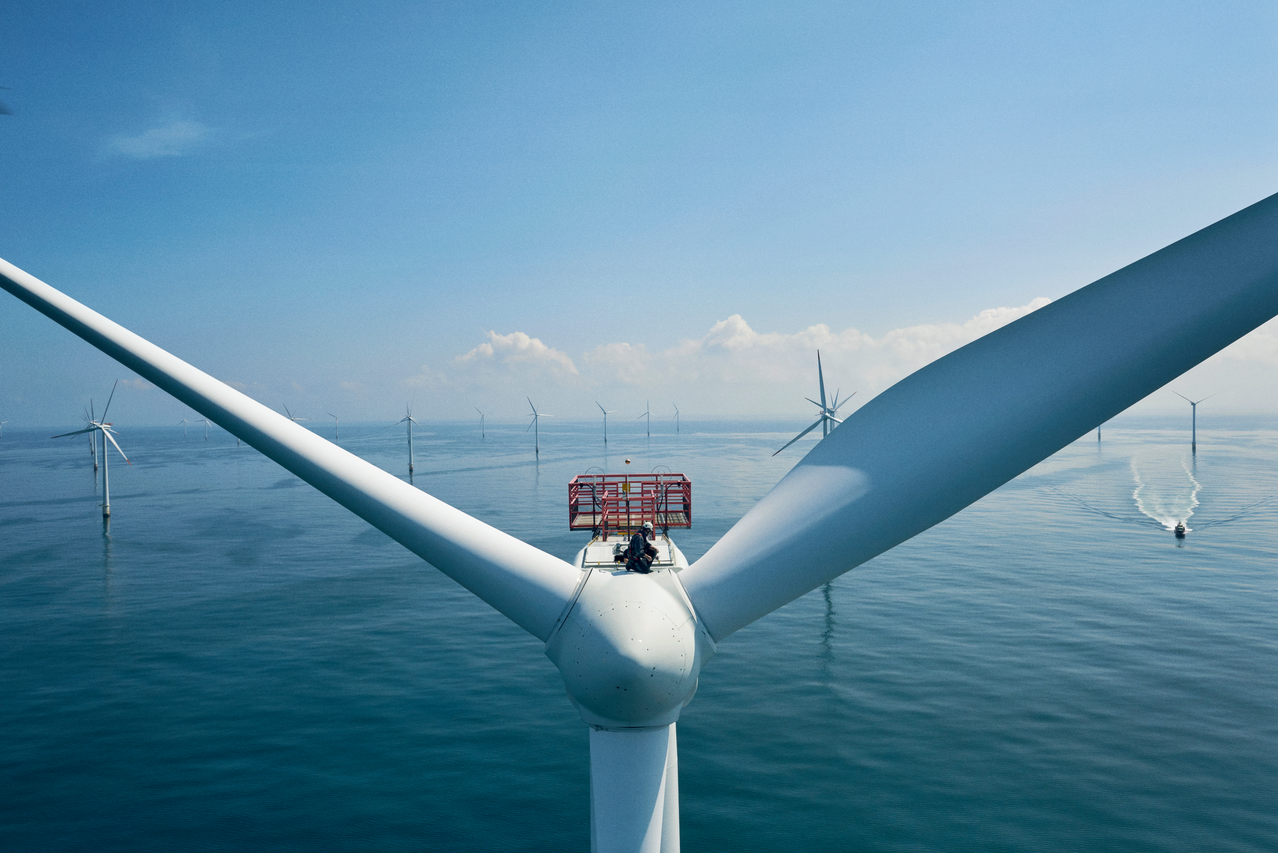
This is the sub-heading.
Seabirds deliberately avoid wind turbine rotor blades offshore – that is the main finding of a new study that mapped the flightpaths of thousands of birds around wind turbines in the North Sea. Most importantly, during two years of monitoring using cameras and radar, not a single bird was recorded colliding with a rotor blade.
I must admit I’m not surprised, as I’ve landed a light aircraft many times with birds flying above the runway and I can’t remember ever hitting one. But I have seen several dive out of the way.
The report is a fascinating read.
Birds And Offshore Renewable Energy
I have worried about this for some time, as die-hard wind farm opponents use birds being scythed to pieces in wind farms as an emotional reason for not building wind farms.
I searched the Internet and found this academic report from the University of Rhode Island, which is entitled How Are Birds Affected by the Block Island Wind Farm and How Do They Interact With the Wind Turbines?.
Note.
- Block Island Wind Farm is a mildly controversial 30 MW wind farm off the coast of Rhode Island.
- Block Island wind farm is the first commercial offshore wind farm in the United States.
The report gives three ways about how birds interact with wind farms.
Birds Fly Out Of The Way
First, many birds do not experience any interaction with the turbines at all as they fly either at a higher altitude or closer to the shore than the turbines’ locations.
Wind Farms Become A Food Source
The second interaction between birds and offshore wind turbines is a positive one that has been documented throughout Europe; but, with only the Block Island Wind Farm, it is too early to document in the United States. Researchers have found that the base of a wind turbine can create artificial reefs that act as an attractive site to both fish and shellfish. These artificial reefs provide a feeding ground for certain species of birds as the turbines essentially become a central habitat for many bird species’ prey.
Displacement Of The Birds
The final interaction that birds have with offshore wind turbines is displacement. This primary negative effect is experienced when wind turbines are constructed in areas that birds would naturally like to be; but, due to the structures, no longer have access to. To put it simply, he says, “if you put the turbines where the birds want to be, you take away these areas from the birds”.
Conclusion
It appears to me, that if you are putting up wind farms, whether they are offshore or onshore, that it is essential you do your research.
As in this case, experts from the local university are often a good resource to call upon.
Birdstrike On An Electric Locomotive
It would appear that whatever bird this Class 90 hit, didn’t have much of a chance.
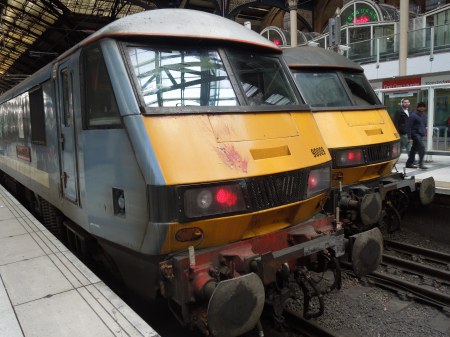
Birdstrike On A Class 90
But then none of us would, if hit by 84.5 tonnes of electric locomotive.
Where Have the Birds Gone?
I was on Newmarket Heath yesterday, with a racehorse trainer, who like me is a countryman.
Newmarket Heath has not changed much environmentally in centuries. The link gives a history on the racecourse website. The grass is mown fairly short and it is not fertilised with anything artificial. The wildflowers are of a bigger variety than normal and there are hares (big bunnies) in abundance. It’s importance as a wild life area is recognised in that it is a Site of Special Scientific Interest.
We wondered, if when everything is so constant, have a lot of the birds and especially the songbirds disappeared in recent years.
As someone, who has been on the Heath for over twenty years and knows it well, the trainer put it down to one thing – sparrowhawks.
Now the site of birds of prey is wonderful. But so is the site of all the smaller birds that sing and give us so much pleasure! It’s a tricky dilemma, but then if they’ve gone on Newmarket Heath, where conditions haven’t changed in centuries, it can’t be down to bad farming practices in that instance.
In my garden, I used to have lots of yellow hammers, swallows and pied wagtails. They have become a lot less common in recent years.
 The Anonymous Widower