London To Thurso Direct
According to Edition 863 of Rail Magazine, LNER are thinking of doing a demonstration run on this route to show off their new trains.
But is it such a daft idea?
In Rail Sleeper Plan Between Caithness And Edinburgh, I talked about a plan to operate a sleeper service on the route between Edinburgh and Thurso, which currently takes nine hours.
This journey time is definitely territory for those rail enthusiasts, who ride across America, Australia, Europe and Russia, but it is not for me.
But doing the route in day-long segments with a stop in a good hotel, in say Edinburgh and Inverness could open up an iconic tourism route to the Orkney Islands for an increasing number of intrepid travellers, many of whom, like me are past retirement age.
Travel on the Caledonian Sleeper to Inverness and you meet lots of foreign tourists from all over the globe.
On all days except Saturday, there are two services between Inverness and London; a day train to and from Kings Cross and a sleeper to and from Euston.
To go North on Day 1, you take eight hours on a direct train to Inverness, with after an overnight rest, you take four hours to Thurso.
Route Proving For The New Class 800 Trains
So if nothing else it is route proving for Class 800 trains on the service between Kings Cross and Inverness, which because it serves so many places on the Highland Main Line, is an important route to the area.
From the current schedule, it looks like the train will take twelve hours, so there will surely be a lot of driver training possibilities.
It surely, will be a good marketing exercise.
Highland Main Line Improvements
This archived document was produced by Transport Scotland.
This is the first paragraph.
Upgrading the Highland Main Line is one of the Scottish Government’s key priorities. The long-term goal of the project seeks to achieve a fastest journey time of 2 hours 45 minutes between Inverness and the Central Belt with an average journey time of 3 hours and an hourly service by 2025.
A time of three hours between Edinburgh and Inverness could be possible with electrification to Perth.
Far North Line Improvements
The Far North Line between Inverness and Thurso doesn’t appear to be built for speed, as it takes a train about four hours to do the journey.
- It is 167 miles from Inverness to Thurso.
- It is mainly single-track with passing places.
- There are twelve services on the line most days, with fewer on Sundays.
It should also be said, that Caledonian Sleeper are thinking of running a service between Thurso and Edinburgh and/or Glasgow, as I reported in
In the Wikipedia entry for the Far North Line, there is a section called Future Expansion, where this is said.
For many years there have been proposals to bypass the Lairg loop[note with a line across the Dornoch Firth, linking Tain (via Dornoch, more directly with Golspie. British Rail attempted to get funding for this when the road bridge was built, but the government declined.
Now this project would involve building a new bridge over the Firth, or making dual-purpose the bridge which now carries just the A9. Discussions have been held concerning the shortening of the Far North Line involving a bridge over the Dornoch Firth and the possible use of the trackbed of the former light railway. Nothing has yet come of these ideas.
If an hour could be knocked off the journey time, I suspect it would be very beneficial, to both the local population and visitors.
What Time Could Be Achieved?
I wouldn’t be surprised to see the time between London and Inverness reduced by the Class 800 trains in a couple of years, as the new trains will be able to use electricity South of Stirling and possibly Perth.
With the improvements to the Highland Main Line and better signalling on the East Coast Main Line, I could see a time between London and Inverness of under seven hours.
This would enable a civilised departure from London at say eight in the morning and still be in your castle, hotel or holiday cottage in time for dinner and a wee dram or several.
If improvements were made to the Far North Line, it might be possible to go from London to Thurso in ten hours.
Could The Class 800 Train Continue To Thurso?
A Class 800 train could continue to Thurso and LNER’s test run will probably prove whether it can or not!
It could arrive in Thurso, in time for the evening ferry to the Orkneys.
I think though, that the London service would not be extended to Thurso.
- The train would have to be fully-replenished at Thurso for the trip South.
- A nine-car train needed between London and Inverness would be too much capacity for the Inverness to Thurso section.
- The current Inverness to London service starts at eight in the morning and passengers wouldn’t be happy to leave Thurso at three to go straight through to London.
But I can see the reduced journey time between London and Inverness attracting more passengers to the route.
Enter The Shortened High Speed Train
This article on Rail Magazine is entitled ScotRail HSTs Enter Traffic On October 15.
This is the second paragraph.
Branded Inter7City as they will serve Scotland’s seven cities, the refurbished HST will run initially between Aberdeen and Edinburgh. More routes will follow as more sets arrive from refurbishment.
It also says that the refurbished HSTs will offer.
- More seats,
- Increased luggage space.
- At seat power sockets.
- Hospitality.
I would also expect wi-fi, comfortable seats, tables and big windows.
With their four or five Mark 3 coaches and two Class 43 power cars each with a diesel engine of around 2,200 bhp, these trains must have superb acceleration.
I estimate that a fully loaded four-car train carrying 250 passengers, will weigh about three hundred tonnes. This gives a power to weight ratio of 11.2 kW/tonne
By comparison, the the original 2+8 sets of the InterCity 125s have a power to weight ratio of 7.3 kW/tonne.
I will also add some other power to weight ratios.
- New Routemaster bus weighing twenty tonnes with 137 kW – 6.85 kW/tonne.
- Hummer H2 weighing 2.9 tonnes with 293 kW – 101 kW/tonne.
- Mini One weighing 1.2 tonnes with 75 kW – 62.5 kW/tonne
Incidentally, my Lotus Elan weighed about 1050 Kg when I was driving and had power of 121 kW. This gives a power to weight ration of 115 kW/tonne.
In Edinburgh to Inverness in the Cab of an HST, I described a memorable ride.
One thing I noticed, was that the driver controlled the two engines with considerable precision, to make sure, the train was on time on what must be a challenging route, as it climbed, descended and twisted through the Highlands.
With the same amount of power in a train only half the length and weight, I suspect these trains could save time effortlessly, as a good driver in a sports car can on a twisting road.
Also, don’t underestimate the contribution, the replacement of the 1970s-style slam-doors with modern powered units, will contribute at every stop.
I looked at the actual times yesterday of the 12:00 between Kings Cross and Inverness and compared to my journey in the cab, there are less stops. So services are being speeded up and I suspect ScotRail’s trains stop more often.
Transport Scotland talked about a fastest time of two hour forty-five minutes between the Central Belt and Inverness.
When the route between Inverness and Perth has been fully modernised with passing loops, I have a feeling that times will be faster.
They will not only be an iconic forty-year-old train, but a tourist attraction in their own right, like Scottish mountains, tartan food and whisky.
Get Up In London And Go To Bed In The Orkneys
If LNER have an objective in testing London to Thurso with a Class 800 train,, it must be finding a civilised way, to be able to get between London and the Orkneys, by train and ship in both directions within a single day.
Consider.
- The first train from Kings Cross to Edinburgh leaves just after 06:00.
- There has been an aim to run services between the two capitals in under four hours for as long as I can remember.
- Modern in-cab signalling is being rolled out on the East Coast Main Line to enable 140 mph running.
- The last ferry to the Orkneys leaves from Scrabster near Thurso at 19:00
With the improvements to the Highland Main Line and electrification to Perth, three hours between Edinburgh and Inverness should be possible in a Class 800 train or a well-driven shortened HST.
This would give LNER options to get to Inverness at a reasonable hour of the day.
Run An Early Train From London To Inverness
This could be timed to leave London at 06:00 and it could be in Inverness at 13:00.
This would give a fast train on the Far North Line six hours, including transfer to move passengers between Inverness and Scrabster.
It looks that ScotRail have the train for the job, in the shape of the shortened HST.
They could also serve an early Scottish dinner, to prepare tourists, for what could be a breezy crossing.
Run A Pair Of Class 800 trains To Both Aberdeen And Inverness
LNER’s Class 800 trains come in two sizes; five-cars and nine-cars.
Two five-cars can run as a ten-car train, that can split and join as required, in under two minutes in a suitable station.
So could we see a pair of five-car Class 800 trains leave Kings Cross and run together to Edinburgh, where one train went to Dundee, Montrose, Stonehaven and Aberdeen and the other went to Stirling, Perth and Inverness.
Consider.
- The first train from Kings Cross to Aberdeen leaves at 07:00 in the morning.
- The journey takes six hours.
- There are three trains per day between London and Aberdeen.
- The last direct train that is not a sleeper service leaves just before 15:00.
- As with the route to Inverness, the route to Aberdeen is not electrified.
I think this option has advantages
There would be an early morning service to Edinburgh and many of the large towns and cities in Eastern Scotland.
The service only uses one path on the East Coast Main Line between London and Edinburgh.
If traffic patterns and passenger numbers are favourable, other Aberdeen services could split and join.
Running a five-car train to Inverness earlier in the day, before the main train of the day, may be a way to provide an economic service to Thurso.
- A five-car train would probably be more affordable to run.
- The train would be stabled at Thurso overnight.
- It would leave for Inverness, Edinburgh and london about 10:00.
- At Edinburgh, it could join up with an Aberdeen train at around 16:00.
Time-tabled properly, it could result in Inverness and Aberdeen getting an extra train to and from London every day.
Change At Edinburgh
Plans by various rail companies for services include.
- LNER will continue to run two trains per hour (tph) between Edinburgh and England.
- LNER would like to run services between London and Edinburgh in under four hours.
- TransPennine Express will run more services to Edinburgh.
- ScotRail will run hourly services between the seven major cities in Scotland.
- Edinburgh to Inverness and Inverness to Thurso should both to become three hour journeys.
Edinburgh will become a very well-connected city.
If Edinburgh to Thurso could be achieved in six hours, then any service leaving Edinburgh after about 14:00 would catch the last ferry at Scrabster for the Orkneys.
When trains between London and Edinburgh, are regularly achieving the four-hour journey, there will be several trains, that will give a change in Edinburgh suitable for passengers individual preferences.
A single change at Edinburgh could be the preferable route for many.
Conclusion
Because LNER, ScotRail and other train companies now have a large fleet of very capable trains on order, there are several possibilities to create a world-class train service to connect Scotland fully both internally on the mainland and to important destinations in the islands and England.
The renaissance of the HST as a train to provide high-quality services has been astounding.
- ScotRail are creating twenty-six shortened HSTs for use within Scotland.
- GWR are creating eleven similar trains for use between Penzance and Cardiff.
I would be very surprised, if more HSTs are not refurbished to modern standards.
Germany may have the Volkwagen Beetle, but we have the High Speed Train.
Could we see them on the following routes?
- Oxford and Cambridge
- Waterloo and Exeter
- North Wales Coast Line
- Some Cross-Country services
There’s probably enough power-cars and coaches to make another fifty shortened HSTs, so if ScotRail’s trains are a success, I suspect we’ll see some imitation.
I suspect too, that just as engineers have found solutions to the problems in the coaches like the doors and the toilets, they will find a solution, that replaces the diesel engine in each power with some form of more eco-friendly hybrid power pack.
Consider.
- MTU, which is a subsidiary of Rolls-Royce, are developing hybrid power packs for diesel multiple units.
- There is a lot of space in the engine compartment of the power car.
- On most routes, 90-100 mph running will be sufficient.
Hitachi converted a power-car to work in this way ten years ago.
New Safety Issue Emerges: LNER Azumas Put On Hold
The title of this post, is the same as that of an article in Edition 863 of Rail Magazine.
One reason is that when running North of York, there is electro-magnetic interference with the signalling in electric mode.
But the other is that the inter-vehicle connectors could be used to climb on the roof. Apparently a man.of very little brain was killed, when he climbed on the roof of a Class 390 train at Manchester Piccadilly using that trains similar connectors.
Perhaps everybody who goes within fifty metres of a railway should have to see a psychiatrist first and be given a certificate. And that would be necessary for driving across a level crossing!
Travelling Light
I’m off to Hamburg today and I’m tavelling Ultra Light, unlike some people, who seem to travel with most of their wardrobe and half of their library.
Travellers should follow the advice of the famous BBC reporter; the late great James Cameron, who recommended arranging everything you thought you would need in two piles, with half of everything in each. Then you packed them in two cases and only take one. He also suggested adding up all the money you are likely to need and then double it. I always travel with enough spare credit on my cards for all eventualities.
I even saw one guy this morning with four four-wheel cases struggling to keep them in check. He should have brought a bright collie to round them up!
Still, I had a good laugh at security, as I was through in a couple of minutes.
As you are obviously tracked through security, the airport or train station could give a bonus to all fast travellers. That would certainly speed things up.
The Silent Transport Revolution
Today, I rode in two battery-powered modes of transport.
Returning from Kings Cross, I was a passenger in one of London’s new black cabs; the LEVC TX.
Earlier in the day, I’d ridden in a battery-powered version of the Class 230 train.
Both vehicles are quieter than diesel-powered versions, as is to be expected.
But what surprised me about the Class 230 train today, is that you can have a normal conversation in the train without raising your voice. The D78 trains from which the Class 230 train has been developed, weren’t that quiet.
The Class 379 BEMU, that I rode in three years ago, was also quiet.
I came back from Scotland in a Standard Class Mark 4 Coach, which was also quiet, but it is a trailer without motors and probably plenty of sound-proofing.
Does the design of a battery-electric vehicle with regenerative braking reduce the noise and vibration emitted?
The Class 230 train has an electrical system based on DC batteries and AC traction motors. So there must be aone very clever heavy electronics to manage the power. So there is orobably little in the electrical system to make the clatter one typically hears on a train. The train obviously has a mechanical brake for emergencies and to bring the train to a funal halt, but that was not used in anger on our short trip.
Battery Class 230 Train Demonstration At Bo’ness And Kinneil Railway
I went to Vivarail‘s demonstration of battery version of the Class 230 train, which was given at the Bo’ness and Kinneil Railway.
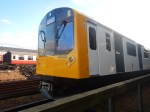

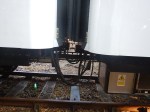
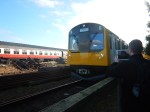
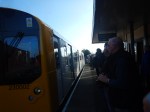
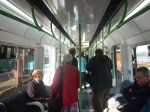

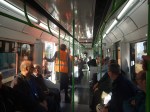


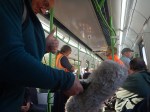
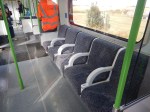
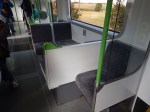
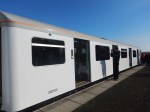

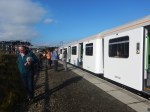
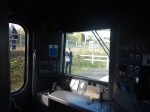

For some pictures of the original D78 Stock see Raw Material For A New Train.
So what did I think of the train?
Build Quality
From what I saw, the build quality was certainly better than that of a Pacer, which these trains could replace on some routes.
Doors
The single-leaf doors are unusual, as most London Underground stock, only has these at the ends of the cars.
But they worked successfully for nearly forty years of heavy service on the District Line, so they are probably up to the lesser rigours of service outside the Capital.
London Underground Legacy
I talked with one of the Vivarail engineers and he said, that the trains had been retired with a lot of new parts and he pointed out the quality f the floors, some of which go back decades.
It certainly seemed, that the trains could be described as having One Careful Owner.
Noise Levels
Noise levels were low, but then they were in the Class 379 BEMU, that I rode in January 2015.
Intriguingly, both trains have the same batteries, but that has nothing to do with it.
Ride
The quality of the ride was good and very much up to the standard of the S Stock that replaced the D78 Stock on the District Line.
Seats
As the pictures show, the seats of the Class 230 train are based on those of those in the D78 Stock.
The seats in the new train weren’t hard and seemed to my memory to be about the same standard as those in the older train.
So perhaps they were!
Vivarail are offering the train with different interiors, so I suspect those that pay, will get what they want.
Toilets
This train was not fitted with a toilet, but Vivarail will be fitting them to some trains.
USB Ports
There is a USB port between the seats and I was able to charge my phone, as one picture shows.
Conclusion
I think it is true to say, that this battery Class 230 train was a good start.
With more new components like seats, tables and toilets they could be impressive.
I’m At The Vivarail Demonstration
Vivarail are demonstrating the battery version of their Ckass 230 train on the Bo’ness and Kinneil Railway at 11:00, 13:00 and 15:00 today.
Will The East London Line Ever Get Six-Car Trains?
On the East London Line yesterday, I was in the front car and it was noticeable how passengers moved backwards and forwards along the train so they could find a seat and also get in and out easily at the stations with short platforms.
It got me thinking, about whether six-car trains could be run on the East London Line.
Before I discuss this, I’ll give a few facts. Some are history and some are future plans.
The Original Line
I can remember taking the London Underground era line between New Cross Gate and Whitechapel stations, to get between Haywards Heath and Mile End stations. I had a client at the former and my youngest son, used to live by the latter.
The trains were four-car A60/62 Stock with a length of just 65 metres!
There were five intermediate stations, which coming North were as follows.
- Surray Quays
- Canada Water
- Rotherhithe
- Wapping
- Shadwell
The platforms and those at Whitechapel, were probably not much longer than the original trains.
The platforms have been improved in recent years.
- When the Jubilee Line was built, Canada Water station was rebuilt, but the platforms on the East London Line were not substantially lengthened.
- When the Overground was created in the early part of this century, the platforms ended up at their current length of around eighty metres.
- Recently, to create a better interchange for Crossrail, the platforms at Whitechapel station have been lengthened to around a hundred metres.
So there is now four short platforms on the East London Line.
The Class 378 Trains
The Class 378 trains were originally ordered as three-car trains, which were about sixty metres long.
Was this short length to fit the short platforms or was it because it was felt that these trains would be adequate for the route?
By the time, the trains entered service in 2010, the trains had all been extended to four-cars.
But this was still inadequate and in 2013 an order was placed to lengthen all trains to five cars, which was completed in January 2016.
Fitting Five-Car Trains Into Four-Car Platforms
Travel in the last coach of a train between Shadwell and Canada Water stations and when a station stop is made, you are left in the tunnel.
Some or all the doors don’t open and a announcement tells you, that if you want to get out, you should move forward in the train. This picture shows the last carriages of a train at Canada Water station.
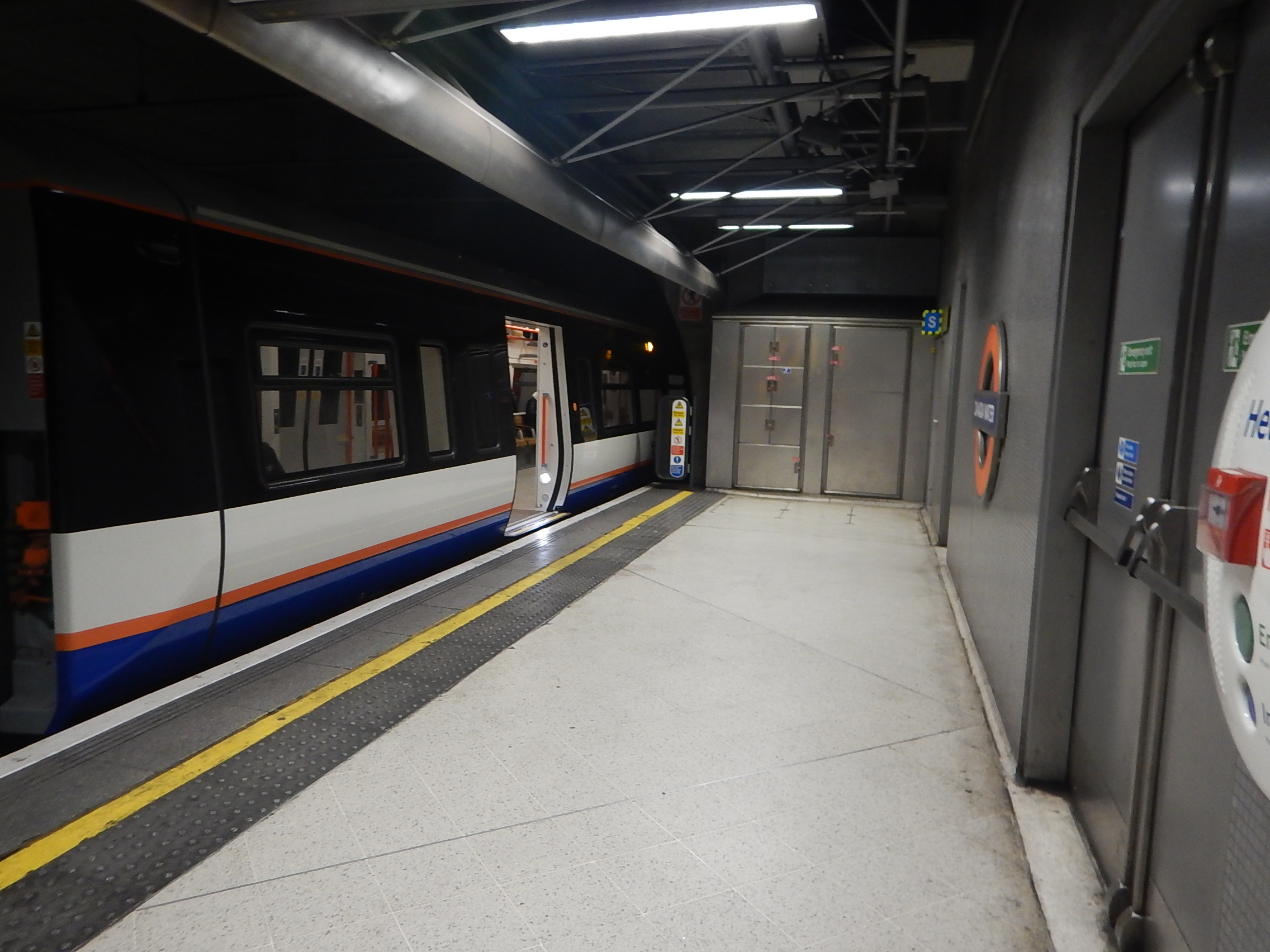
The less-than-perfect arrangement works very well.
- The walk-through nature of the trains means passengers can easily walk forward if required.
- The announcements are numerous and clear.
- Only Canada Water station, with its interchange to the Jubilee Line is a busy station.
But what probably makes the system work so well, is the fact that East Londoners are the World Champions at ducking and diving and they adjust their behaviour to the less-than-perfect arrangement.
The Length Of The Northern Platforms
Travelling home to Dalston Junction station in the last carriage, I got the impression, that all platforms are built to comfortably accept five-car trains.
It also appears that the two central bay platforms at Dalston Junction station were built for five-car trains.
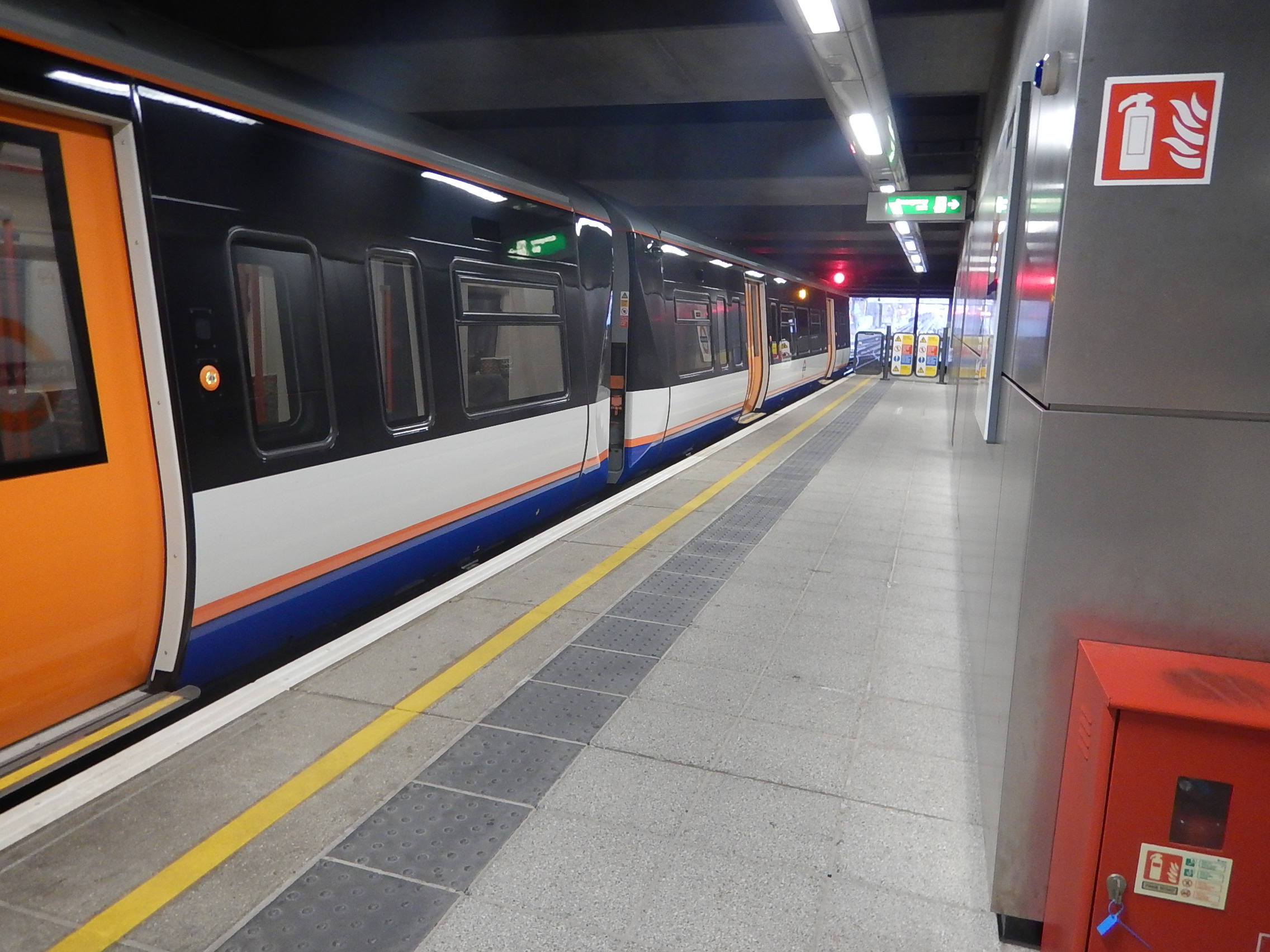
This picture shows Platform 2 at Dalston Junction station.
The Length Of The Southern Platforms
I have looked at nearly all the Southern platforms on all four Southern branches and there seems to be few if any platforms, that couldn’t take a six-car train. It should be noted that most platforms are shared with Southern services which are run by longer trains.
These pictures show Sydenham station.
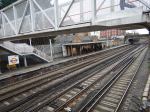
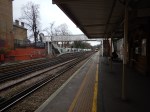
Platform lengths like these are typical of many stations.
Work would be needed at Platform 2 at Clapham Junction station.
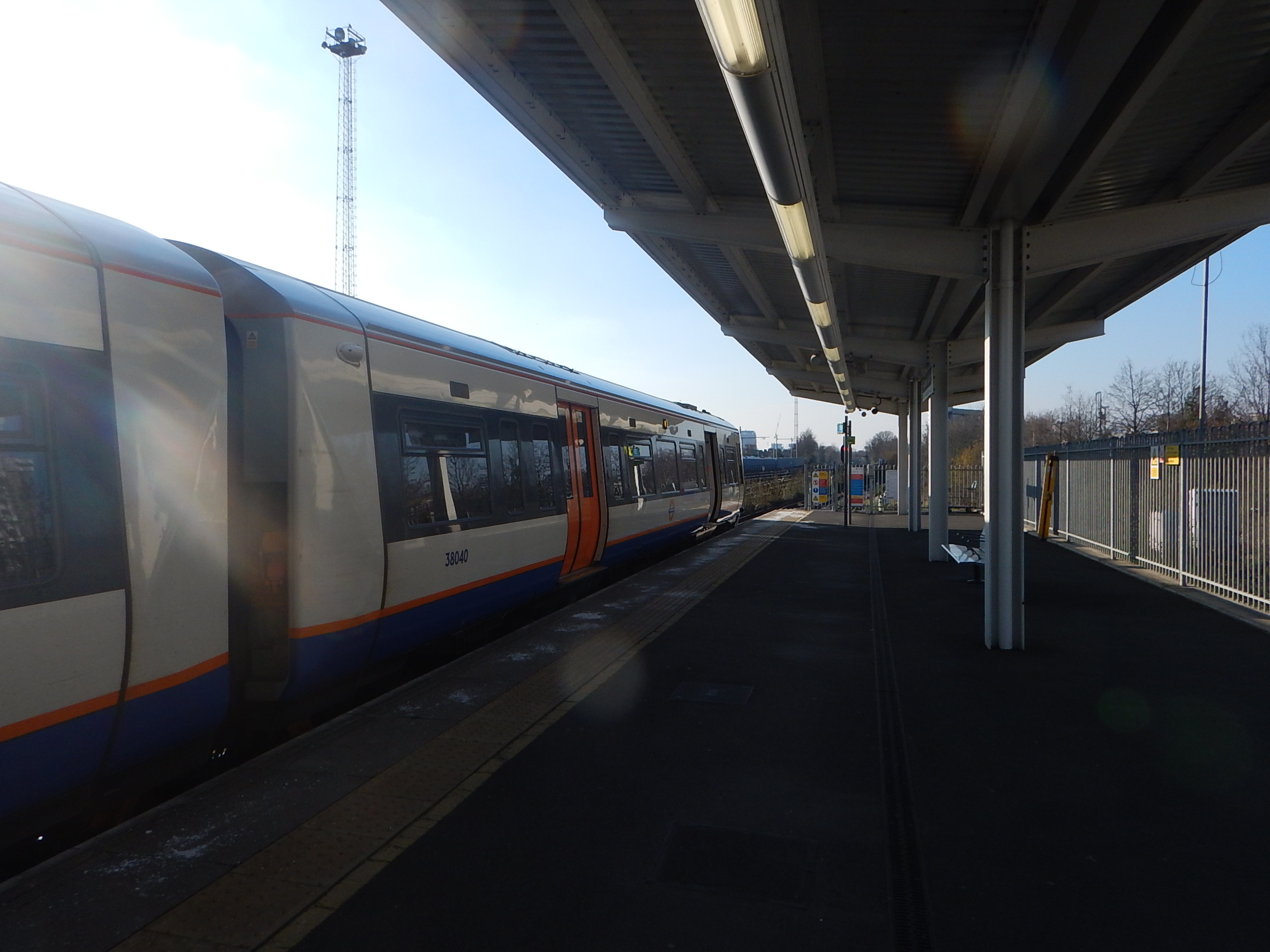
But there is space to extend the platform.
There are no problems at West Croydon station, where it seems all trains now use the bay Platform 1.

There appear to be no plans to increase services to West Croydon station from four tph, but turning the trains in the bay platform might make scheduling easier.
The Rebuilding Of Whitechapel Station
Whitechapel station is being rebuilt to provide an interchange between Crossrail, the District and Hammersmith & City Lines and the East London Line.
- The rebuilt East London Line platforms appear to be long enough for six-car trains.
- There will be two footbridges over the East London Line.
- There will be lifts and possibly escalators.
It will be a major high-capacity interchange.
The connection to Crossrail at Whitechapel station may actually take pressure from the Canada Water station.
Will passengers from the Northern section of the East London Line change at Whitechapel for Crossrail, if they are going to the West End or Canary Wharf, rather than using the Jubilee Line from Canada Water station.
As Crossrail will open up a large number of new routes, I believe, Whitechapel station will become one of the most important interchanges in East London.
East London Line Frequency Will Be Increased
This table shows Transport for London’s plas for the London Overground.
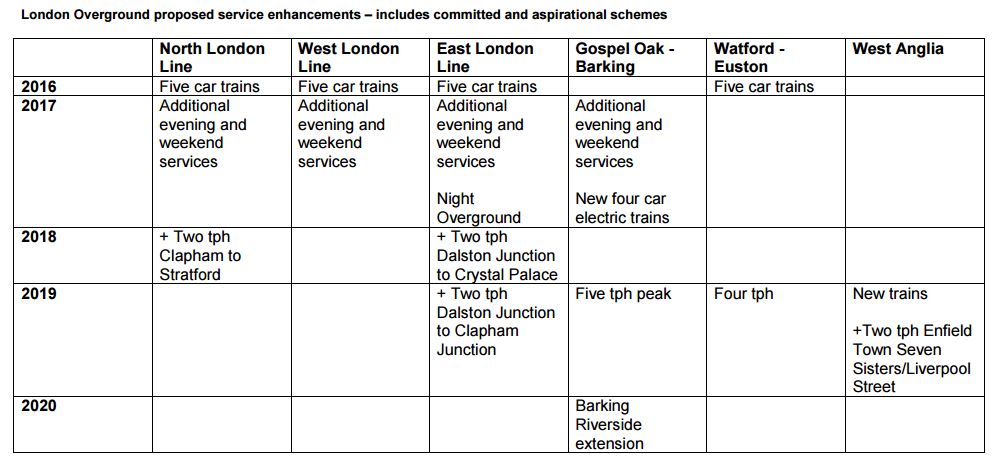
Note.
- In 2018, two extra trains per hour (tph) are planned to be run between Dalston Junction and Crystal Palace.
- In 2019, two extra tph are planned to be run between Dalston Junction and Clapham Junction.
This will mean that the frequency through the core of the East London Line will rise from 16 tph to 20 tph. This will be a train every three minutes.
It also means that the London Overground will be running ten tph between Whitechapel and Sydenham stations, with a call at New Cross Gate, which could become an important interchange.
Platforms Would Need To Be Lengthened
I think that, unless someone can come up with an innovative solution, that there will need to be some platform l;lengthening to accommodate six car trains on the East Londoin Line.
The tricky problem would be extending the platforms at Shadwell, Wapping, Rotherhithe and Canada Water stations.
Could Frequencies Be Increased?
After the increase of frequencies to Crystal Palace and Clapham Junction to four tph, there will be twenty tph, through the core of the East London Line.
With five-car trains, this would be a hundred cars per hour and with six-car trains, it would be 120 cars per hour.
Suppose another four tph, were to be squeezed through the core, then this would be 24 tph. With five-car trains, this would be 120 cars per hour.
There would be two main alternatives to increase the frequency.
- Run six tph on all the four routes.
- Add a new route, with a frequency of four tph.
Note.
- Twenty-four tph, is a frequency that is proposed for Crossrail and Thameslink using digital signalling.
- There will be one train every two and a half minutes.
- No major engineering work would be required at the stations with short platforms.
I very much feel, that increasing the frequency of trains, will be more affordable than using six-car trains.
The Problem Of Creating Six-Car Trains
Note these points about running trains through the core of the East London Line.
- Class 378 trains have an end door, so that passengers can be evacuated in the Thames Tunnel.
- Aventras don’t have end doors and would need to be updated.
- Five-car Class 378 trains can be replaced by Aventras on the North London Line and the Watford DC Line, to release more trains for the East London Line.
But the biggest problem, is probably that Bombardier don’t make Electrostars any more, and the factory ihas been turned over to Aventra production.
Conclusion
I will be very surprised if Network Rail’s original plan on six-car trains on the East London Line happens in the next few years.
Connecting The Bakerloo Line Extension At Lewisham To The North Kent And Bexleyheath Line
This map from carto.metro.free.fr shows the lines in the area of Lewisham station.
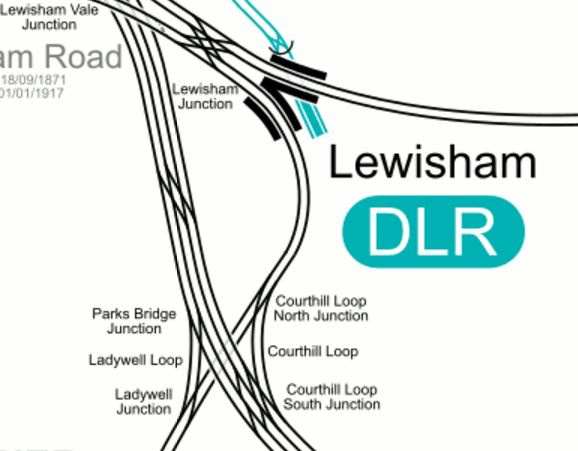
Note.
- The multi-track line going North-West to South-East is the South Eastern Main Line .
- The double-track line going South-West to North-East is the Hayes Line.
- The double-track going East are the North Kent & Bexleyheath Lines
- I think it is quite likely that the overrun tunnels for the Bakerloo Line Extension will be under the Hayes Line.
The North Kent & Bexleyheath platforms are as follows.
- Platform 3 is the Up platform
- Platform 4 is the Down platform
Services running on the lines include.
- Dartford to London via Platform 3
- Slade Green to London via Platform 3
- London to Dartford via Platform 4
- London to Slade Green via Platform 4
In Connecting The Bakerloo Line Extension At Lewisham To The Hayes Line, I showed that it would be reasonably easy to connect the overrun tunnels for the Bakerloo Line to the Hayes Line.
So could the Bakerloo Line Extension be connected to the North Kent and Bexleyheath Lines?
If the Lewisham Underground station was deep under the current station, it might be possible to create a junction, which would enable the Underground trains to go in the direction of both the Hayes and Bexleyheath Lines.
But having been on a train between Lewisham and Bexleyheath stations, it would appear that there is little space for the Bakerloo Line to emerge from the ground and join the surface railway.
These pictures show the viaduct and other structures that support Platforms 1 and 2 at Lewisham station.
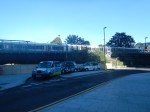
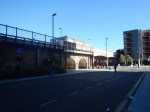
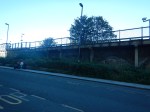
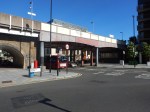
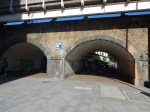
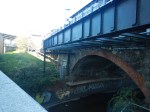
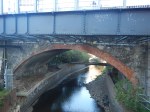
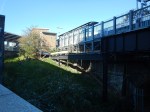
The pictures seem to confirm that linking to a line under Lewisham station would be extremely difficult and very expensive, and would require a long closure of the North Kent and Bexleyheath Lines through Lewsiham.
If this is the case, this must mean that the Hayes Line is the only place, where the Bakerloo Line can go.
The Truly Dreadful Platform-Train Access At Lewisham Station
These pictures show the truly dreadful platform-train access at Lewisham station.
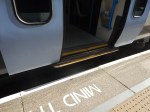
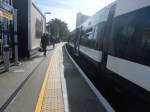
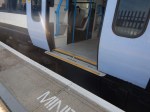
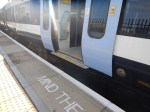
I should say there is even worse access at the front of platform 2.
I should say that Lewisham station has lifts, which are welcome. But it seems to me that if you’re putting in lifts, you should probably fix the station, so that someone in a wheelchair, should be able to wheel themselves on and off the train.
It’s all down to the long, curved platforms.
Surely, if they rebuild this station for the Bakerloo Line Extension, then these platforms will be consigned to the dustbin of history.
Abbey Wood Station – 7th October 2018
I took these pictures at Abbey Wood station.
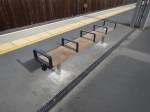
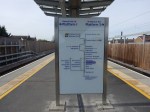
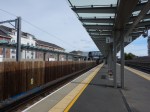
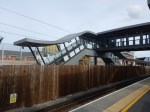
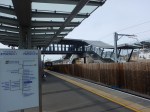
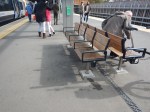
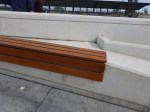
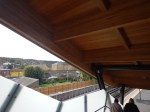
It is now nearing completion and there are some nice details.
- There are some elegant wood seats and other details.
- The signage is clear and an update on current London Underground designs.
- There are lots of stairs, escalators and lifts.
- It must also be the only station with a wooden safety fence between the tracks.
All it needs now is some Crossrail trains.
Let’s hope the other stations are as good.
 The Anonymous Widower