High-Speed Handbacks Could Save NR £250,000 A Week
The title of this post is the same as that, of this article on Rail Technology Magazine.
The article described how by using a more sophisticated tamping machine, Network Rail are able to hand the track back faster after maintenance.
Many businesses, as Network Rail do here, use outdated processes to do regular tasks.
Often by using an improved procedure, companies can save money.
In this instance, Network Rail are saving enough in a year to perhaps build a small station.
Can you be sure, you use the best processes in your business?
Government Must Commit To Investment In Rail Freight Connections To Ports
The title of this post, as the same as that, of this article in Rail Technology Magazine.
This is the first two paragraphs.
etter connections between English ports could boost the nation’s economy, a new study has shown.
The study of England’s port connectivity found that improved rail links could provide more effective freight journeys between key economic areas and ports, which would in turn boost productivity, provide lower costs and give access to international markets.
The study, as might be expected is comprehensive, and is this document on the Government web site.
If you need to know more about road and rail projects to the ports of England, it is a good place to start.
The Site Of The New Meridian Water Station – 25th April 2018
These pictures show the site of the new Meridian Water station.


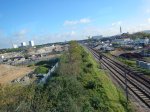
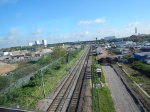
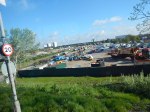
The site is substantial and the station will feature four platforms and a walking and cycling route over the West Anglia Main Line.
Northumberland Park Station – 25th April 2018
These pictures were taken of the rebuilding of Northumberland Park station.
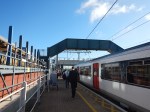
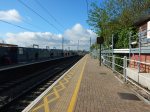
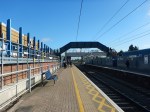
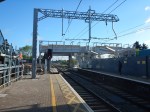
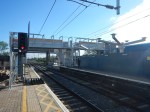
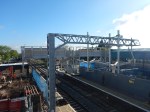

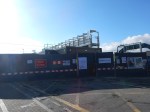
The light coloured bridge is one of the first elements of the new station, whereas the dark bridge is a temporary structure to allow passenger access during the works.
The STAR Track Connection At Lea Bridge Station – 25th April 2018
This picture taken from the end of the platform at Lea Bridge station, shows the new connection, that links the third track being built to the Lea Valley Lines though the station.
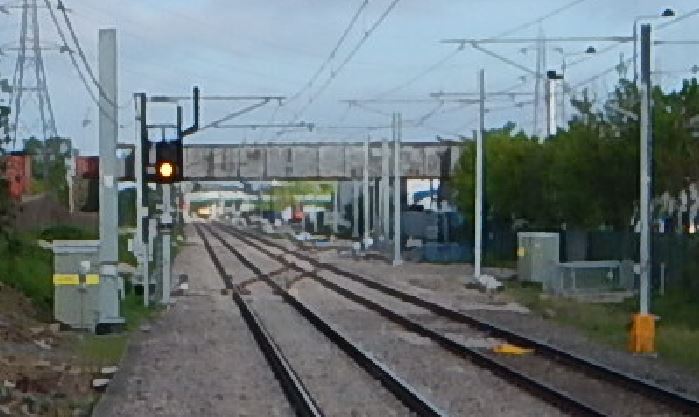
Note how trains going North will be able to join the third track and those coming South can join the track to Stratford.
These pictures were taken as I took a train North, a few minutes later.
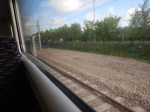
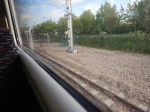
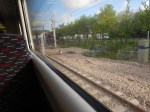
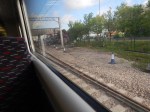
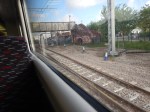
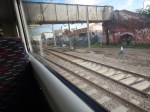
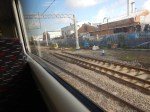
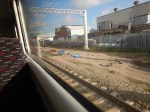
Note the track layout and that nothing is completed yet.
This map from carto.metro.free.fr shows the track layout at Lea Bridge station.
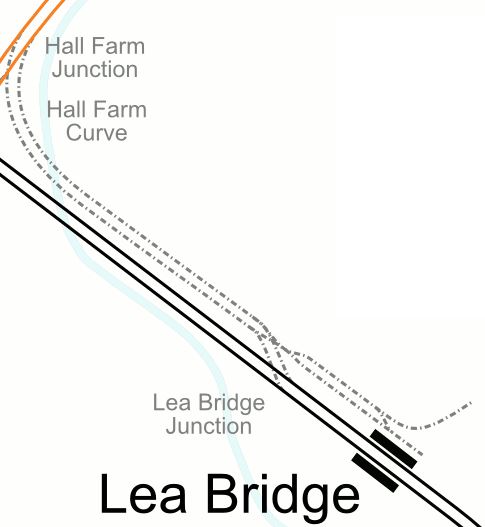
Note.
- The original track layout from the 1800s is shown dotted.
- The original crossover was a double one.
- Lea Bridge station used to have a third bay platform and space has been left for one.
- The two parallel tracks originally connected via the Hall Farm Curve to the Chingford Branch.
This Google Map shows the area to the East of where the Lea Valley Lines and the Chingford Branch cross.
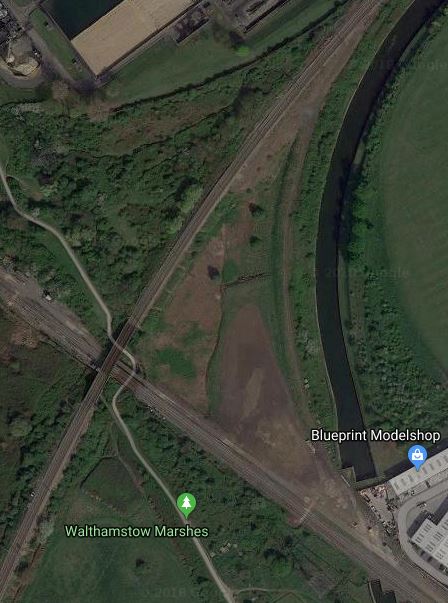
Adding in the curve at a later date would not appear to be compromised, by the current works.
50% Of All TfL Pay As You Go Journeys Are Now Made Using Contactless Payments.
The title of this post is the same as the title of this article on SmartRailWorld.
This is the first paragraph.
Londoners and visitors to the British capital have embraced the contactless way to pay, with more than 17 million pay as you go journeys on bus, Tube and rail services made a week using the technology according to the latest figures from Transport for London (TfL). This total equates to around half of all pay as you go journeys now being made using contactless payment cards or mobile devices.
The article goes on to say New York and Sydney are going to similar systems.
Can anybody tell me, why other large cities and conurbations in the UK, aren’t installing similar systems based on contactless payments?
Especially, as London ain’t seen nothing yet!
Hitachi Ships TransPennine Express’s First Class 802 From Japan
The title of this post is the same as that of this article on Global Rail News.
To my mind, the Japanese do some inefficient things when building trains.
- It could be sensible to build the first of each different sub-fleet in Japan and ship it to the UK by sea, but what puzzles me is that the body shells are all built and painted in Japan and then shipped half-way round the world.
- The shipping delay must make production difficult to plan and inefficient.
- I would have thought they would have built a body plant somewhere in Europe.
CAF may send their trains by ship, but that is only a short sea crossing and because the Spanish rail gauge they can’t tow them through the Channel Tunnel, as the other European manufacturers do.
Photos From The Disused Tunnels Now Helping The Bank Tube Station Upgrade
The title of this post is the same as that of this informing article on Ian Visits.
The title probably, says it all and Ian describes how London always seem to have a spare tunnel, where it is needed.
Thoughts On Trains Between Cardiff And Swansea
I decided to write this post, when, I read this article on Rail Magazine, which is entitled Cardiff-Swansea wires ‘not sensible’.
This is the first paragraph.
Electrifying the railway between Cardiff and Swansea was not a sensible thing to do, according to Secretary of State for Transport Chris Grayling.
Some would argue that Chris Grayling holds a controversial view!
The Current Route
Before, proposing anything, I’ll list what we have today.
The Tracks
I have flown my virtual helicopter along the route and nearly all the route is double track, with sections of triple and quadruple track in places.
This Google Map shows a typical section of the line.
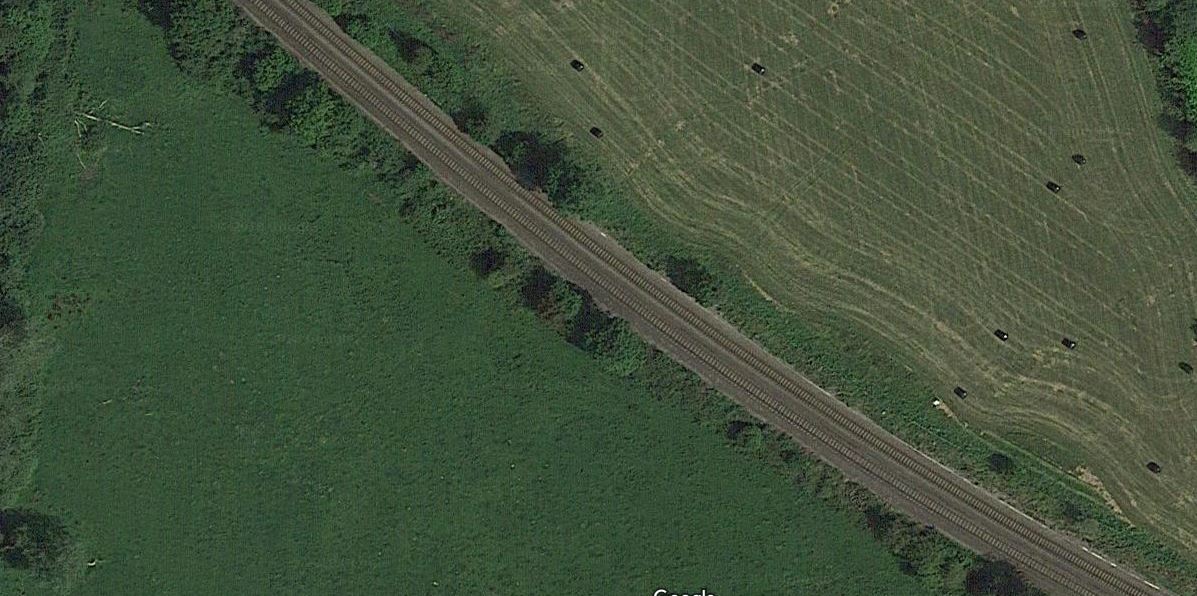
Note.
- There are two well-spaced tracks.
- The tracks are not straight, but gently curve.
- There appears to be a lot of green space on either side.
The line appears to be similar to this most of the way.
I may be wrong, but I don’t think much of the line would be that difficult to electrify, from an engineering point of view.
The signalling and operating speed are described under Infrastructure in the Wikipedia entry for the South Wales Main Line.
The signalling is modern and this is said about operating speed between Cardiff and Swansea.
90 mph (145 km/h) from Newport to east of Bridgend; 75 mph (120 km/h) from east of Bridgend to Swansea Loop North junction (with a small section of 100 mph (160 km/h) track through Pyle station); and 40 mph (65 km/h) from Swansea Loop North Junction to Swansea.
It is not a high speed line, although I suspect that things could be improved.
The Stations
These are the stations between Cardiff and Swansea.
- Pontyclun – Two platforms – 300,000 passengers – Reopened in 1992
- Llanharan – Two platforms – 200,000 passengers – Reopened in 2007
- Pencoed – Two platforms – 200,000 passengers – Reopened in 1992
- Bridgend – Two platforms – 1,500.00 passengers – Opened in 1850
- Pyle – Two platforms – 100,000 passengers – Opened in 1850
- Port Talbot Parkway – Two platforms – 500,000 passengers – Opened in 1850
- Baglan – Two platforms – 24,000 passengers – Opened in 1996
- Briton Ferry – Two platforms – 40,000 passengers – Reopened in 1994
- Neath – Two platforms – 800,000 passengers – Opened in 1850
- Skewen – Two platforms – 40,000 passengers – Reopened in 1994
- Llansamlet – Two platforms – 40,000 passengers – Opened in 1994
Note that the passenger figure is the number of passengers given for the past year, rounded to a sensible value.
It should also be noted, that not one of the stations has a layout that allows a fast train to bypass a slow one stopped in the station.
The Trains
Current trains on the route include.
- Class 150 train – 75 mph diesel multiple unit
- Class 158 train – 90 mph diesel multiple unit
- Class 175 train – 100 mph diesel multiple unit
- Class 800 train – 100 mph plus on diesel
Some parts of the route are also used by freight trains.
As much of the route has a operating speed of less than 100 mph, the operating speed of the two 100 mph trains is determined by the track, not the train.
The Services
There appears to be a fast service between Cardiff and Swansea.
- It runs with a frequency of three trains per hour (tph)
- Trains stop at Bridgend, Port Talbot Parkway and Neath.
- Two services are run by Great Western Railway and one by Arriva Trains Wales
- Timings are not clock-face by any means.
In an ideal world the frequency of this fast service would be four or more tph.
There is also a slow train, which appears to be once every two hours at the other stations.
It surely should be at least one tph.
Why are the services so limited?
Improving The Route
A new franchise for Wales will be announced and I wouldn’t be surprised to see improvements promised for the route between Cardiff and Swansea.
How could the capacity of the line be increased?
Raising The Operating Speed
I quoted this extract from Wikipedia, about operating speed between Cardiff and Swansea, earlier
90 mph (145 km/h) from Newport to east of Bridgend; 75 mph (120 km/h) from east of Bridgend to Swansea Loop North junction (with a small section of 100 mph (160 km/h) track through Pyle station); and 40 mph (65 km/h) from Swansea Loop North Junction to Swansea.
So except for around Pyle station, the operating speed is below and sometimes well below 100 mph.
Improving the operating speed to as high as possible will reduce the timings between Cardiff and Swansea.
Elimination Of Slower Trains
There is no point in raising the operating speed, if trains that cannot cruise at the improved speed are still running on the line.
Modern Trains With A Fast Dwell Time
Modern trains like Class 800 trains, Desiros and Aventras are designed to be able to stop from line speed, load and unload passengers and regain line speed as fast as possible.
Off the current trains working on the line, only Class 800 trains are in this category.
Step-Free Access Between Platform And Train
All stations between Cardiff and Swansea should be made step-free between platform and train.
This will help the trains keep to the timetable.
Allow Faster Trains To Overtake Slower Ones
Timetabling is probably made difficult, in that there is nowhere where a fast train can overtake a slower one.
Often this is done in a station, where whilst the slow train sits in the station, the fast train goes straight through.
Rebuilding Some Stations
It might be prudent to rebuild some stations, for better step-free access and allow trains to pass.
Are there any plans for new ones?
Electrification
None of these improvements need or affect any future electrification of the route.
But these improvements don’t need it!
In fact, it might be quite the reverse in that some of the improvements like improving the track may need to be done before electrification!
The Next Generation Of Bi-Mode Trains
In Bombardier Bi-Mode Aventra To Feature Battery Power, I discussed Bombardier’s proposed 125 mph bi-mode Aventra.
The information came from this article in Rail Magazine.
A few points from the article.
- Development has already started.
- Battery power could be used for Last-Mile applications.
- The bi-mode would have a maximum speed of 125 mph under both electric and diesel power.
- The trains will be built at Derby.
- Bombardier’s spokesman said that the ambience will be better, than other bi-modes.
If Bombardier are doing this, what are Alstom , CAF, Hitachi, Siemens and Stadler doing.
And I haven’t mentioned hydrogen power!
Conclusion
Put all this together and I’m sure this could be the reasoning behind Chris Grayling’s statement that electrifying between Cardiff and Swansea is not sensible.
I am coming round to the belief that it might be better spending the electrification money on improving the line between Cardiff and Swansea, so that something like the following is possible.
- Four fast tph between Cardiff and Swansea.
- Two slow tph between Cardiff and Port Talbot Parkway stopping at all stations.
- Two slow tph between Port Talbot Parkway and Swansea stopping at all stations.
Or whatever is needed.
Volunteers Transform Neglected Rail Station Gardens Into Welcoming Area
The title of this post, is the same as that of this article in the Westmoreland Gazette.
In my travels I come across many stations, where volunteers make a difference.
Kents Bank station can be added to that list.
Many more stations need volunteers to do some community gardening and other work.
 The Anonymous Widower