Express London-Amsterdam Eurostar Service Being Explored
The title of this post is the same as the title of this article on Global Rail News.
This is the first paragraph.
Nederlandse Spoorwegen (NS) has said it is in discussions with Eurostar to boost the number of journeys from Amsterdam to London in 2019.
The aim is to do the following.
- Speed up the call at Brussels.
- Increase services from two to three per day.
- Reduce journey times from four to three and a half hours.
All very worthy, but I think Amsterdam even in three and a half hours may be a bit far, as the time by air is probably quicke.
Exploring The Tyne And Wear Metro
The Tyne and Wear Metro is unique in the UK, in that it is a regional electric railway system, that is powered by 1500 VDC overhead electrification.
But what is not unique about the system is the affection shown by regular users. You get similar feelings on other local systems like these.
- Cardiff Valley Lines
- Docklands Light Railway
- Glasgow’s electric railways.
- Merseyrail‘s Northern and Wirral Lines
As they mature, other systems including the Manchester Metrolink, Midland Metro and the London Overground will be felt of by their passengers in a similar way.
My four examples and the Tyne and Wear Metro, have a lot more in common than just affection from their users.
- All were created in their own unique ways in an era not noted for railway innovation.
- Merseyrail has an unrivalled tunnel layout for a railway under a city.
- The Docklands Light Railway is automated with a Train Captain on each train.
- Glasgow’s Blue Trains were very-un-British at the time.
- Local interests were very much involved in creating the systems.
- The Tyne and Wear Metro was created for Driver Only Operation.
All of these lines are seeking to add more branches and replace, update and augment the rolling stock, much of which is forty years old.
Does the age of te trains show Central Government contempt for important local railway systems, which are the lifeblood of communities?
Manchester’s Missing Tunnel
The tunnels under Liverpool and Newcastle, were part of a three pronged plan by to improve local transport in the North.
- I remember from the 1960s, when I was at the University, the electric railway under the Mersey to Birkenhead and the Wirral. Modern it was not, but the innovative Loop and Link Project made it a lot better. Although, that project was never completed.
- Newcastle had had Tyneside Electrics from the 1900s. In the 1970s the old system became the core of the Metro, with the addition of a central tunnel.
The third plan was to bore the Picc-Vic tunnel under Manchester to link Manchester Piccadilly and Victoria stations.
According to Wikipedia, it would have had the following characteristics.
- Full-size twin-bore tunnels.
- 25 KVAC overhead electrification.
- Low-level stations at Piccadilly and Victoria.
- Three intermediate stations at Market Street, Albert Square and Princess Street
- Trains would have been similar to the Class 315 trains, which are still common in London.
It would have joined the suburban rail services together across the city.
How would Manchester have developed if this important tunnel had been built?
We will probably be able to partially answer this question, when the Ordsall Chord is fully operational, which will handle cross-Manchester long-distance and local trains.
It is my view that cancelling this tunnel was one of the great infrastructure mistakes of the period along with the cancellation of the Channel Tunnel and London’s Third Airport at Maplin. But then Harold Wilson believed everybody would have their own car and that railways were of the past and preferred to spend what little money the Government had on political projects, many of which were total failures.
We must protect ourselves from politicians, who have a political view that owes too much to the extreme left or right and be left to get on with our personal lives.
To my mind, it is no surprise that the cities in the UK with the best urban rail systems; London, Cardiff, Liverpool and Newcastle, have more local control. Now that Birmingham, Glasgow, Leeds and Manchester have greater local control, will we see improvement?
Exploring The Metro
There are several main assets and factors that make up a railway system.
- Tracks
- Tunnels and Bridges
- Electrification
- Stations
- Accessibility
- Trains
- Signalling
- Operating Method
- Ticketing
I shall now give my thoughts on these in detail.
Tracks
The branches of the Metro were all built for heavy rail trains and the Sunderland Branch even shares the tracks with Class 142, Class 180 and heavy freight trains.
This principle of building tracks for full-size trains, has been used on Merseyrail’s Northern and WirralLines, London’s Trameslink, Crossrail and East London Line and innumerable railways across the world.
Build a system for small-size trains and you paint yourself into a dead end. I doubt for instance, London will ever build another new Tube-size line across London.
As I explored the Matro, the tracks also seemed to be in generally good condition.
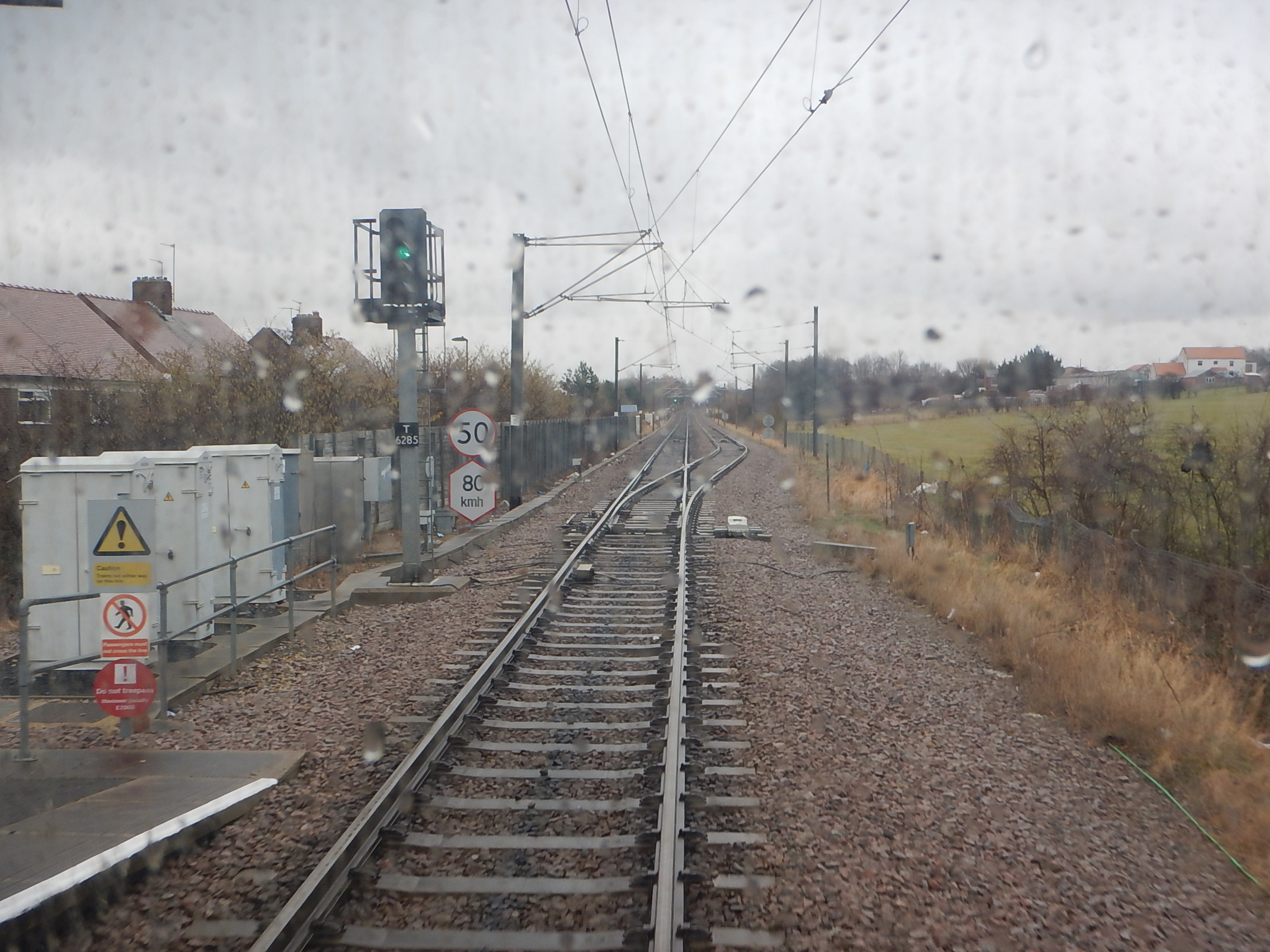
This picture taken at South Hylton station shows typical track in apparently good condition.
Tunnels And Bridges
Wikipedia has a section on the tunnels of the Metro. This is said.
The tunnels were constructed in the late 1970s, using mining techniques, and were constructed as single-track tubes with a diameter of 4.75 metres. The tunnels under Newcastle were mechanically bored through boulder clay and lined with cast iron or concrete segments. The tunnel under Gateshead, was bored through sandstone and excavated coal seams. Old coal mine workings, some of which dated from the Middle Ages had to be filled in before the tunnelling began.
This description of the Crossrail tunnels is on this page of their web site.
A network of new rail tunnels have been built by eight giant tunnel boring machines, to carry Crossrail’s trains eastbound and westbound. Each tunnel is 21 kilometres/13 miles long, 6.2 metres in diameter and up to 40 metres below ground.
The Crossrail tunnels have a walkway on either side, but they are only 1.25 metres larger in diameter than those of the Metro. So it would appear that there is not much difference in size of the important section in the middle, where the trains run.
It is worthwhile looking at the widths of various trains.
- Class 345 train (Crossrail) – 2.78 metres – See Weight And Dimensions Of A Class 345 Train
- Class 319 train (Thameslink) – 2.82 metres
- Class 700 train (Thameslink) – 2.80 metres
- Tyne and Wear Metro – 2.65 metres
The last three figures are from Wikipedia.
Look at these pictures of some of the tunnels and bridges on the Metro.


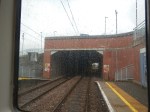
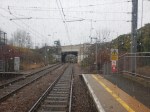
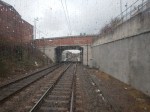
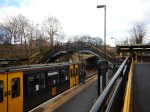
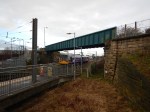
The weather could have been betterfor photography.
I rode on all the branches of the Metro and, I get the impression that all the bridges and tunnels seem to have been built with a generous clearance in both width and height.
I very much feel that when the Metro was built that unlike some other lines, it was well-built to a heavy rail standard.
I wouldn’t be surprised to be told, that a battery-powered train based on say an Electrostar like the Class 379 BEMU demonstrator, could pass through all of the Metro.
Electrification
The electrification is a unique 1500 VDC overhead system, which is the same as was used on the Woodhead Line, which closed to passenger trains in 1970 and to goods in 1981.
Could it be that the Metro got this voltage, rather than the 25 KVAC used on similar systems in London and Glasgow suburban routes, as British Rail and their contractors had 1500 VDC expertise available in the North and all their 25 KVAC expertise was employed elsewhere?
The bridges and tunnels seem to have been built with the ability to handle the higher and more common voltage.
1500 VDC may have also saved on the cost of the installation, as they had a lot of gantries and brackets from the Woodhead Line.
These pictures show the simplistic nature of some of the electrification.
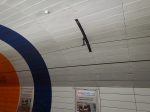
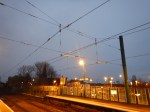
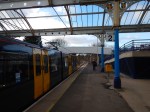
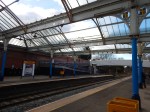
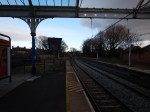
However, on the South Hylton Branch, which was built in the 2000s, it appears that better methods were used, as these pictures show.
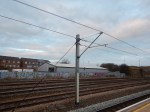

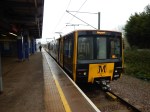
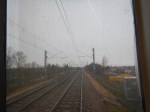
The gantries and supports are certainly better than many you see on the Lea Valley Lines.
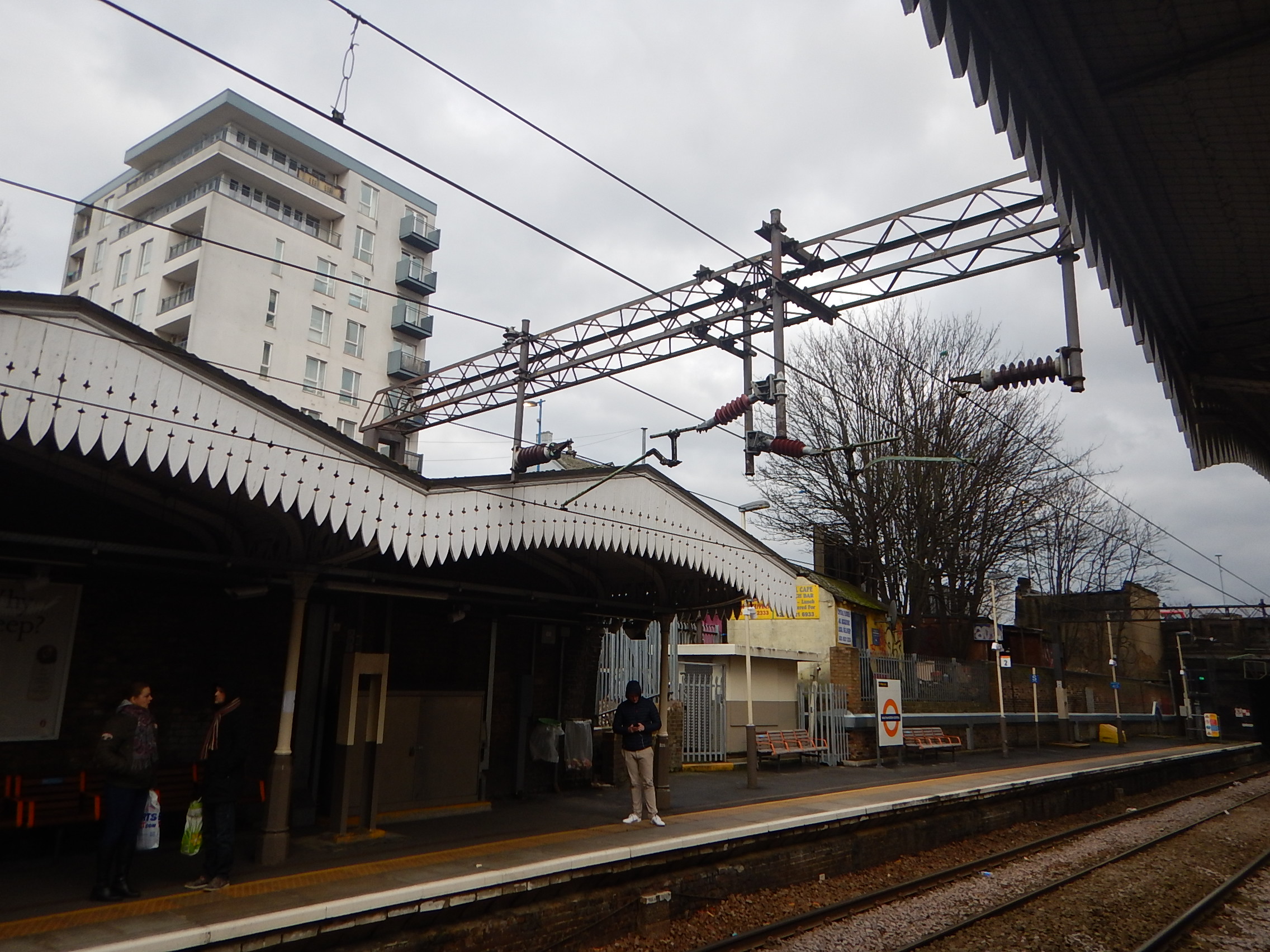
This picture shows 25 KVAC electrification at Walthamstow Central station.
Note the extra insulators to deal with the higher voltage.
Would it be possible and worthwhile to convert all of the Metro lines to 25 KVAC?
In theory this must be possible, but I think it is probably more important to first beef up the electrification gantries to the higher standard of the South Hylton Branch.
Consider.
- A driver told me, that electrification failures are not unknown.
- Trains running on 25 KVAC are more energy-efficient.
- Trains could be built that would be able to run on both 1500 VDC and 25 KVAC, that use the same pantograph for current collection and automatically adjust to the voltage received.
- Trains with batteries can be used on sections without electrification.
- Mixed voltage systems are possible, that would have 25 KVAC electrification on some sections of track and 1500 VDC on others.
- The passenger Health and Safety case would need to be established for the higher voltage.
The electrification could be designed holistically with any future trains to maximise reliability, electrical efficiency and operational flexibility, and minimise costs.
Obviously, during the changeover to new trains, all lines would need to be at 1500 VDC, so that the current rolling stock could be used as required.
Stations
These pictures show a selection of Metro stations.
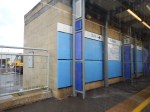
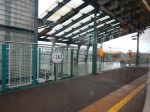
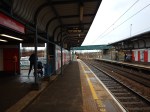
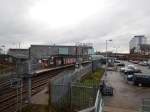
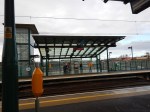
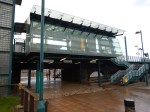
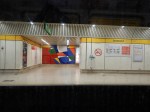
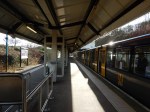
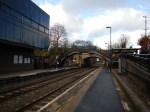
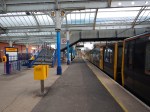
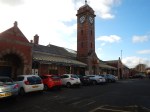
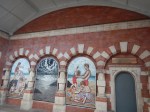
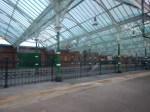

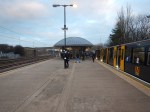
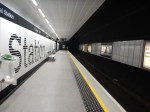
The stations appear to be in generally good condition and vary from the the basic to well-preserved Victorian stations like Tynemouth and Whitley Bay.
The platforms are generally of an adequate length, which except for some stations in tunnels seem to have been built to accept three of the current trains working together, which would be a formation 83.4 metres long.
This would be long enough to accept one of any number of four-car trains running on the UK rail network, which are usually eighty metres long. London Overground’s, new Class 710 trains will be this length.
Sunderland Station
Sunderland station, is an important station on the Metro.
I describe the station and its operation in The Rather Ordinary Sunderland Station.
Accessibility
Stations are step-free, but this is often by the use of ramps and a few more lifts woulds be welcome.
Access from platform to train is generally good, as these pictures show.
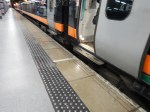

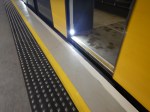
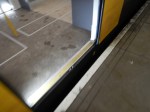
Note the picture of the access to a Grand Central Class 180 train.
I suspect that when Northern replace their Class 142 trains, with brand new Class 195 trains on the services between Middlesbrough and Newcastle, that the step-free access will be good.
I think a lot of credit is due to the original designers of the Metro, who thought about what they were doing and seem to have created a system that fitted heavy rail trains, Metro trains and users requiring step-free access.
Trains
There are several sets of electric trains in the country, that continue to defy their age and are a tribute to their builders, refurbishers and operating companies, by providing a quality service to passengers and other stakeholders
- Merseyrail’s Class 507 and Class 508 trains.
- The Class 315 trains of TfL Rail and the London Overground.
- The Piccadilly Line’s 1973 Stock trains.
- South Western Railway’s Class 455 trains.
- The trains of the Tyne and Wear Metro.
|These pictures show the trains for the Metro.
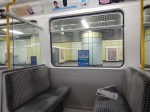
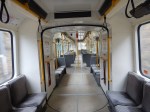
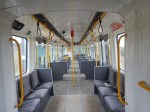
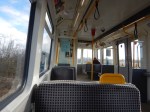
Note.
- The quality is not bad for nearly forty years of service.
- The lady in the last picture, sitting in the front of the train, watching the world go by.
- Standing is not difficult in the rush hour for this seventy-year-old stroke survivor.
- Information could be better.
- The Metro needs a new train wash.
Wikipedia says this about the Proposed New Fleet.
The proposed new fleet would consist of 84 trains to replace the existing 90 train fleet, as Nexus believe that the improved reliability of the newer trains would allow them to operate the same service levels with fewer trains. These are proposed to have longitudinal seating instead of the 2+2 bench seating arrangement of the present fleet, and a full width drivers cab instead of the small driving booth of the existing trains. The proposed new fleet is planned to have dual voltage capability, able to operate on the Metro’s existing 1.5 kV DC electrification system and also the 25 kV AC used on the national rail network, to allow greater flexibility. Battery technology is also being considered.
I’ll put my ideas at the end of this note.
Signalling
The Metro is unique in the UK, in that it uses the Karlsruhe model to mix Metro trains with heavy rail trains on the Southern branch to Sunderland and South Hylton.
If in the future modern signalling and trains are used on the Metro, an increasingly intricate set of routes could be designed.
Add in dual-voltage trains able to run on both the Metro’s 1500 VDC and the National network’s 25 KVAC and the possibilities will be even greater.
Operating Method
The trains are run in the same way as London Underground, with only a driver on the train, who does the driving and controls the doors.
Ticketing
As I always find outside London, ticketing is still in the Victorian era.
Will the Tyne and Wear Metro embrace a contactless card based on bank and credit cards?
Possible Future Expansion
Wikipedia gives a list of possible extensions under Proposed Extensions And Suggested Improvements.
These include.
Tyne Dock To East Boldon
Wikipedia says this.
Tyne Dock to East Boldon along a dismantled railway alignment through Whiteleas could easily be added, because two Metro lines are separated by only a short distance (1.61 miles). This would provide a service from South Shields to Sunderland via the Whiteleas area of South Shields.
If ever there was a route for a battery-powered train, this must be it.
Consider.
- The route is less than two miles.
- The route connects two electrified lines.
- You can see the disused track-bed on a Google Map.
- No electrification would be required.
- The battery would be charged between South Shields and Tyne Dock and East Boldon and Sunderland.
- Modern signalling would allow the route to be built as a single track if required, handling up to ten tph in both directions.
- Single platform stations could be built as required.
I can certainly understand, why Wikipedia mentioned battery trains.
Washington
Wikipedia says this.
Washington either via the disused Leamside line or a new route. Present planning may lead to the Leamside line being opened at least as far as Washington as a conventional rail line for passengers as well as freight, although this could be shared with Metro trains in the same way as the line from Pelaw Junction to Sunderland.
Washington station would only be a short run of less than ten miles along a reopened Leamside Line.
- If somebody else paid for 25 KVAC electrification of the Leamside Line, then dual-voltage trains could run the service.
- If not, they could use battery-power.
Either way, Washington would get a Metro service.
If as I believe, the new trains on the Metro will be main line trains, then what is the point of running heavy rail services to the town, as the Metro would be able to serve more places and with a change at Newcastle station, you could get a train virtually anywhere.
The possibility must also exist if the Leamside Line is developed as a diversion of the East Coast Main Line, then the Metro could go as far South as Durham.
Blyth And Ashington
Wikipedia says this about trains to Blyth and Ashington, on what is now regularly referred to as the Northumberland Line.
Blyth and Ashington, running on existing little-used freight lines. Northumberland Park station has been built to provide a link to a potential new rail service to these communities; if opened, it will not be a part of the Metro system.
Ashington is around fourteen miles from Northumberland Park station, which means that an return journey might be possible on battery-power.
In an article in the October 2017 Edition of Modern Railways, which is entitled Celling England By The Pound, Ian Walmsley says this in relation to trains running on the Uckfield Branch, which probably has a terrain not much different to the lines to Blyth and Ashington.
A modern EMU needs between 3 and 5 kWh per vehicle mile for this sort of service.
If the Metro trains could have a high energy efficiency, I think it would be reasonable to assume that 4 kWh per vehicle mile is attainable.
So a three car train, would need a battery of 14 x 2 x 3 x 4 = 336 kWh. That is not an unattainable figure for battery size.
Killingworth And Cramlington
Wikipedia says this.
A northward extension to Killingworth and Cramlington has been planned since the Metro was on the drawing board, but would require widening of the busy East Coast Main Line to four tracks, which would be expensive, and a new alignment involving street running.
Suppose the new Metro trains were modern trains, such as the latest offerings from Bombardier, CAF, Hitachi, Siemens, Stadler and others, that were able to do the following in addition to running on the Metro.
- Use 25 KVAC electrification.
- Operate at around or even over 100 mph.
- Execute fast stops at a station.
Would they be able to perhaps run a four tph Metro service along the East Coast Main Line to Cramlington station?
I suspect with modern signalling and a couple of passing loops on the East Coast Main Line, the answer is yes!
This may eliminate the need for street-running.
West End Of Newcastle
Wikipedia says this.
Extending the Metro to the West End of Newcastle would require new track, involving tunnelling and bridging in rough terrain; this would be very costly and is perhaps least likely to receive funding, though would probably have the highest potential ridership.
In this article in the Newcastle Chronicle, which is entitled What Could Happen To The Metro, this is said.
A rail extension out of Central Station along the original Newcastle to Carlisle line could head along Scotswood Road to serve Newcastle’s west, while a bridge could then connect the city to the Metrocentre. This would be integrated with the Metro system. Building developments in Gallowgate have greatly reduced any chance of extending the Metro west from St James’ Park.
The railway alignment still seems to be there in places.
It would be another extension that would use battery-powered trains on sections, that don’t have electrification.
Ryhope And Seaham
Wikipedia says this.
Ryhope and Seaham, a proposal drawn up by Tyne and Wear Passenger Authority to use the existing Durham coast line south of Sunderland.
Sunderland to Seaham is about six miles, so is definitely in range of battery trains.
But that is being timid!
Sunderland to Middlesbrough is probably about thirty miles and I believe it will be possible to do those sort of distances on battery power alone, in a few years. Provided that the train could be recharged at Middlesbrough.
What would a four or six tph service between Middlesbrough and Newcastle Airport via Hartlepool, Seaham, Sunderland, Gateshead and Newcastle, do for the area?
Conclusion About Possible Future Expansion
In this section on expanding the Metro network, it has surprised me how many of the extensions could be done with dual-voltage or battery-powered trains.
- Tyne Dock To East Boldon – Battery
- Washington – Battery
- Blyth And Ashington – Battery
- Killingworth And Cramlington – Dual-Voltage
- West End Of Newcastle – Battery
- Ryhope And Seaham – Battery
- Middlesbrough – Battery and Dual-Voltage
I think it shows how we must be careful not to underestimate tyhe power of battery trains. But then I’m one of the few people in the UK, outside of the residents of Harwich, who’s ridden a battery-powered four-car heavy rail train in normal service! Mickey Mouse, they are not!
New Trains
I’ll repeat what Wikipedia says this about the Proposed New Fleet.
The proposed new fleet would consist of 84 trains to replace the existing 90 train fleet, as Nexus believe that the improved reliability of the newer trains would allow them to operate the same service levels with fewer trains. These are proposed to have longitudinal seating instead of the 2+2 bench seating arrangement of the present fleet, and a full width drivers cab instead of the small driving booth of the existing trains. The proposed new fleet is planned to have dual voltage capability, able to operate on the Metro’s existing 1.5 kV DC electrification system and also the 25 kV AC used on the national rail network, to allow greater flexibility. Battery technology is also being considered.
I’ll now give my views on various topics.
Heavy Rail Train Or Lightweight Metro?
Will the trains be lightweight metro trains or variants of heavy rail trains like Aventras, Desiro Cities or A-trains to name just three of several?
The advantages of the heavy rail train are.
- It could run at 90 or even 100 mph on an electrified main line.
- It will meet crashworthiness standards for a main line.
- It would likely be a design with a lot in common with other UK train fleets.
- It could run into most railway stations.
- If it was shorter than about sixty metres it could use all current Metro stations without station rebuilding.
On the other hand the lightweight metro train would be lighter in weight and possibly more energy-efficient.
Walk-Through Design
Wikipedia says this about the seating layout.
These are proposed to have longitudinal seating instead of the 2+2 bench seating arrangement of the present fleet.
Longitudinal seating has been successfully used on London Overground’s Class 378 trains.
- This layout increases capacity at busy times.
- It allows passengers to distribute themselves along the train and get to the right position for a quick exit.
But the biggest advantage, is that when linked to selective door opening, it enables a longer train to be used successfully in stations with short platforms.
London Overground use this facility on their Class 378 trains to overcome platform length problems at a few stations on the East London Line.
But train design is evolving.
Bombardier have shown with the Class 345 train, that you can have both in the same train. So in a three-car train, you might have two identical driver cars with longitudinal seating and a middle car with 2+2 bench seating.
Bombardier are able to get away with this, as they are maximising the space inside the train. I wrote about it in Big On The Inside And The Same Size On The Outside.
These pictures show the inside of one of Crossrail’s Class 345 trains.
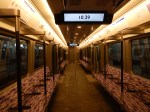
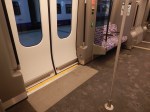
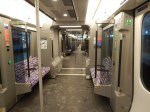

Whoever builds the new Metro trains, they’ll probably have similar interiors.
Train Length
A trend seems to be emerging, where new fleets of trains are the same length as the ones they replace, although they may have more carriages.
This has happened on Greater Anglia, Merseyrail and West Midlands Trains.
It probably makes sense, as it avoids expensive and disrupting platform lengthening.
Currently, the Metro trains work in pairs, which means a train length of 55.6 metres. As the standard UK train carriage size for suburban multiple units is often twenty metres, then if the platforms can accept them, three-car trains would be possible for the new trains.
Longer trains would be possible in most stations, except for some in the central tunnel, which appear to have platforms around sixty to seventy metres long.
So perhaps four-car trains would be possible for the new trains, that would use selective door opening at the short platforms of the stations in the central tunnels.
Because the trains are walk-through, passengers can position themselves accordingly, for the station, where they will leave the train.
London Overground have also shown that selective door opening and walk-through trains can be used to advantage, when trains are lengthened to increase capacity.
Dual-Voltage
Obviously, the trains will have the capability of running on both 1500 VDC and 25 KVAC overhead wires, as the extension to Killingworth And Cramlington would need the latter, for a start.
The interchange between the two different voltages can be very simple, due to some technology developed for the
German cousins of the Class 399 tram-train. A ceramic rod separates the two voltages and the pantograph just rides over. The train or tram-train, then determines the voltage and configures the electrical systems accordingly.
Batteries
These would appear to be key to several of the proposed extensions.
Batteries also enable other features.
- Movement in depots and sidings without electrification.
- Emergency power, when the main power fails.
- Handling regenerative braking.
- Remote train warm-up.
In a few years time, all trains with electric drive will have batteries, that are probably around 75-100 kWh.
Operating Speed
To work efficiently on the East Coast Main Line, 90 mph or even a 100 mph operating speed will be needed.
Note that Crossrail’s Class 345 trains, which will generally work routes very similar to the Metro, have a 90 mph operating speed.
These faster trains will result in an increased service.
Currently, trains between Newcastle Airport and South Hylton take 65 minutes with sixteen stops.
Modern trains have the following features.
- Minimised dwell times at stations.
- Smooth regenerative braking and fast acceleration.
- Driver Advisory Systems to improve train efficiency.
- Higher safe speeds in selected sections.
- Trains are designed for quick turnrounds at each end of the route.
In addition, train operators are organising station staff to minimise train delays.
Put it all together and I’m pretty certain, that this route could be done comfortably in under an hour.
So the same number of trains are able to do more trips in every hour.
Handling Tight Curves
Under Electrics, Wikipedia says this about the ability of the trains to handle tight curves.
Metro has a maximum speed of 80 km/h (50 mph), which it attains on rural stretches of line. The vehicles have a minimum curve radius of 50 m (55 yd), although there are no curves this tight except for the non-passenger chord between Manors and West Jesmond.
Could this chord be avoided by different operating procedures?
Serving Newcastle Station
Northern’s services from Newcastle station are.
- 1 tph – Northbound on the East Coast Main Line to Cramlington and Morpeth with services extended to Chathill at peak hours.
- 1 tph – Southbound along the Durham Coast Line to Middlesbrough calling at Heworth, Sunderland, Seaham, Hartlepool, Seaton Carew, Billingham, Stockton andThornaby, with an extension to James Cook University Hospital and Nunthorpe.
- 1 tph – Westbound on the Tyne Valley Line to Carlisle calling at MetroCentre, Prudhoe, Hexham, Haydon Bridge, Haltwhistle, Brampton and others at alternate hours.
- Westbound slow service on the Tyne Valley Line to Hexham calling at Dunston, MetroCentre, Blaydon, Wylam, Prudhoe, Stocksfield, Riding Mill, Corbridge and terminating at Hexham, with an extension to Carlisle at peak hours.
- 1 tph – Newcastle to Metro Centre calling at Dunston only during the day.
Pathetic is probably a suitable word.
When Greater Anglia have their new trains, services between Ipswich, Norwich, Colchester, Bury St. Edmunds, Lowestoft and Yarmouth, will be at least two tph and sometimes three and four on most routes.
Newcastle To Sunderland Via Sunderland
Newcastle, Sunderland and Middlesbrough surely need a four tph rail connection along the Durham Coast Line.
I believe that dual-voltage Metro trains with a battery capability could run between Middlesbrough and Newcastle at a frequency of four tph.
If they can’t, I’m certain that a suitable train could be procured.
If the new Metro trains are correctly-configured heavy-rail trains, then surely a go-anywhere express version can be built.
- Identical train bodies, cabs and traction systems to new Metro trains
- An interior geared to the needs of passengers.
- Four or five cars with selective door opening.
- Ability to run on Metro tracks using 1500 VDC overhead wires.
- Ability to run on 25 KVAC overhead wires.
- Batteries for regenerative braking, emergency power and distances up to two miles.
- Diesel or preferably hydrogen power pack.
- Sufficient range to keep going all day.
- 90-100 mph capability.
As the trains would have an identical cross-section to the new Metro trains, they could do any of the following at Newcastle.
- Terminate at Newcastle station.
- Go through Newcastle station to Metrocentre, Hexham, Carlisle, Morpeth or some other destination.
- Go through the tunnel of the Metro to Newcsastle Airport.
- Go through the tunnel of the Northumberland Park station to link to the North-East.
I believe that such a train could run as an express to link the whole conurbation from Middlesbrough to Morpeth together.
Newcastle To Carlisle Via Metrocentre and Hexham
The train that i just proposed would be ideal for this route.
I also believe that Metrocentre needs at least six tph connecting it to the centre of Newcastle and the Metro.
The proposed West End of Newcastle branch of the Metro looks to be a necessity, to provide some of this frequency.
What Is The Point Of Northern?
With the right trains, all of the local services in the Tyne-Wear-Tees area can be satisfied by a Metro running modern trains making the maximum use of modern technology.
This model already works in Merseyside, so why not in the North-East? And Manchester, Leeds and South Yorkshire!
A Tees Valley Metro
I have always been keen on the creation of a Tees Valley Metro. I wrote about it in The Creation Of The Tees Valley Metro.
Get the design of the trains on the Tyne and Wear Metro right and they could work any proposed Tees Valley Metro.
Conclusion
I think that Nexus will get some very interesting proposals for their new trains, which will open up a lot of possibilities to extend the network.
Are Transport for London Planning For The Future In The West?
Over a dozen Underground stations in West London have been earmarked for upgrading to step-free access.
I listed them in West London Stations To Be Made Step-Free.
There are various common properties.
- Boston Manor and Osterley stations are on the Heathrow branch of the Piccadilly Line, which when updated would make the branch seventy percent step-free.
- Hanger Lane and Northolt stations are on the West Ruislip branch of the Central Line, which when updated would make the branch seventy-one percent step-free.
- Ickenham, Ruislip, Sudbury Hill and Park Royal are on the Uxbridge branch of the Piccadilly Line, which when updated would make the branch sixty percent step-free.
- Hanger Lane and Park Royal stations are a valid out-of-station interchange.
- Sudbury Hill and Sudbury Hill Harrow are a valid out-of-station interchange.
- Ickenham and West Ruislip are a valid out-of-station interchange.
- Ealing Broadway and Old Oak Common are developing into major interchanges.
With Crossrail going through West London and due to be fully-open in a couple of years, transport in West London is certainly going to get better for all.
But other things will or possibly could happen.
New Trains On The Piccadilly Line
The Piccadilly Line is in some ways an odd one out of London Underground lines.
- Only 28 % of the line’s stations have an interchange with other lines or National Rail compared with 94 % for the Victoria Line.
- Only two of the major London terminals; Kings Cross and St. Pancras International, are served by the Piccadilly Line and very badly in truth!
- The line has no interchange with Crossrail.
- The line has a terminus at Heathrow.
- The line runs extensively in West London on old District Line tracks, so there are a lot of stations in the area, where platform-to-train access is bad.
The trains are also some of the oldest on the London Underground.
Under Future Upgrades in the Wikipedia entry for the line, this is said.
The intention is for the new trains to eventually operate on the Bakerloo, Central, Piccadilly and Waterloo & City lines. On current plans, resignalling work on the Piccadilly line will begin in 2019 and new trains should be in service by 2022.
Wikipedia also says this about the trains.
- The trains will be lightweight, low-energy and semi-articulated.
- The trains will have a battery capability to take them to the next station in case of power failure.
- The trains will have a low-floor. Will this be lower than current trains? Probably yes, as it would increase headroom.
- The trains will have an 11 % higher capacity than the existing trains.
- The trains could have air-conditioning.
I would add the following comments and pedictions.
- The trains will be designed for quicker exit and entry to the trains.
- The trains will shorten journey times.
- The trains will be wheelchair and buggy friendly.
- The batteries on the train will be used to handle regenerative braking.
- The trains will have air-conditioning, as passengers will demand it.
- A solution will be found, so that there is level platform-to-train access at all stations.
Point six will be difficult, but in my view this must be done to enable trains to spend as little time as possible, whilst calling at a station.
Perhaps trains will adjust their ride height as they approach a station, by adding and releasing air from the suspension.
If this level access can be achieved by a clever train design, the expense and disruption of rebuilding station platforms substantially, could be reduced.
Unfortunately, some Piccadilly Line platforms are also used by the larger S Stock trains, so any technological advantages must be made on the new Piccadilly Line trains.
Piccadilly Line To Ealing Broadway
Ealing Broadway station is being upgraded for Crossrail.
In the November 2017 Edition of Modern Railways, there is a Capital Connection supplement, which discusses London’s railways.
On Page 7 in a section about the sub-surface lines, this is said.
One possibility being discussed is that the Piccadilly should take over the District’s Ealing Broadway service. This would free up space on the South side of the inner-London circle for more City trains off the Wimbledon branch, one of the sub-surface network’s most-crowded routes.
On Page 15 in a section about the Mayor’s plans, this is said.
It is suggested Piccadilly Line services run to Ealing Broadway instead of the District Line, enabling increased frequencies on the latter’s Richmond and Wimbledon branches.
As the plan is mentioned twice, certainly the proposal is being thought about.
I discussed this in some detail in Is There Going To Be More Change At Ealing Broadway Station?
Distilling my thoughts from last year and what I’ve seen recently, I have the following thoughts, if the Piccadilly Line had a branch to Ealing Nroadway station.
- The Piccadilly Line would have a two-platform step-free terminus, capable of handling twelve trains per hour (tph)
- Increasing Piccadilly Line frequencies through the core, probably needs another high capacity terminal in the West.
- The Piccadilly Line would have an interchange with Crossrail and Great Western Railway for Heathrow, Oxford and Reading.
- In the later 2020s, when the Piccadilly and Central Lines are running the same new deep-level trains, Ealing Broadway would only handle one type of Underground train.
- As Ealing Broadway, Ealing Common and Acton Town stations would only handle the new deep-level Underground trains, platform-to-train access problems could be solved by lowering the platforms.
The current Piccadilly Line service in the West is as follows.
- Twelve tph to Heathrow
- Six tph to Rayner Lane station, with three tph continuing to Uxbridge.
- Three tph to Northfields
The new trains and signalling, must surely increase the core frequency from the current 21 tph to something approaching the 36 tph of the Victoria Line.
I suspect that twelve tph to Ealing Broadway would fit well, with both the needs of the Piccadilly Line and Crossrail’s frequency of twelve tph.
There are other problems to sort out, but Piccadilly Line trains to Ealing Broadway station could be an excellent plan.
Piccadilly Line To Heathrow
The Heathrow branch of the Piccadilly Line will be seventy percent step-free, after Boston Manor and Osterley stations are upgraded.
I think the time will come in the next few years to bite the bullet and do the following on the branch.
- Make all street-to-platform fully step-free.
- Lower the platforms to give level platform-to-train access to the new deep-level trains.
As this branch is Piccadilly Line-only, there should be few related problems.
Piccadilly Line To Rayners Lane and Uxbridge
The Uvbridge branch of the Piccadilly Line will be sixty percent step-free, after Ickenham, Ruislip, Sudbury Hill and Park Royal stations are upgraded.
As with the Heathrow branch, I think that the following should be done.
- Make all street-to-platform fully step-free.
- Lower the platforms to give level platform-to-train access tothe new deep-level trains.
The problem is between Rayners Lane and Uxbridge stations, where the branch is shared with the Metropolitan Line.
The following could be done.
- Put in extra tracks and platforms.
- Live with the current platforms and step down into a Piccadilly Line train.
- All Piccadilly Line trains could terminate at Rayners Lane and from Rayners Lane to Uxbridge is served by Metropolitan Line only
- As the platforms are long and all trains are walk-through, clever platform design with Harrington Humps could be a solution.
Only option 4 would be an affordable solution, that might be acceptable to all stakeholders.
Central Line To Uxbridge
In the Wikipedia entry for the Central Line, this is said.
The Central crosses over the Metropolitan and Piccadilly lines’ shared Uxbridge branch near West Ruislip depot, and a single track linking the two routes was laid in 1973. The London Borough of Hillingdon has lobbied TfL to divert some or all Central trains along this to Uxbridge, as West Ruislip station is located in a quiet suburb and Uxbridge is a much more densely populated regional centre. TfL has stated that the link will be impossible until the Metropolitan line’s signalling is upgraded in 2017.
This map from carto.metro.free.fr shows the lines around Ruislip Depot.
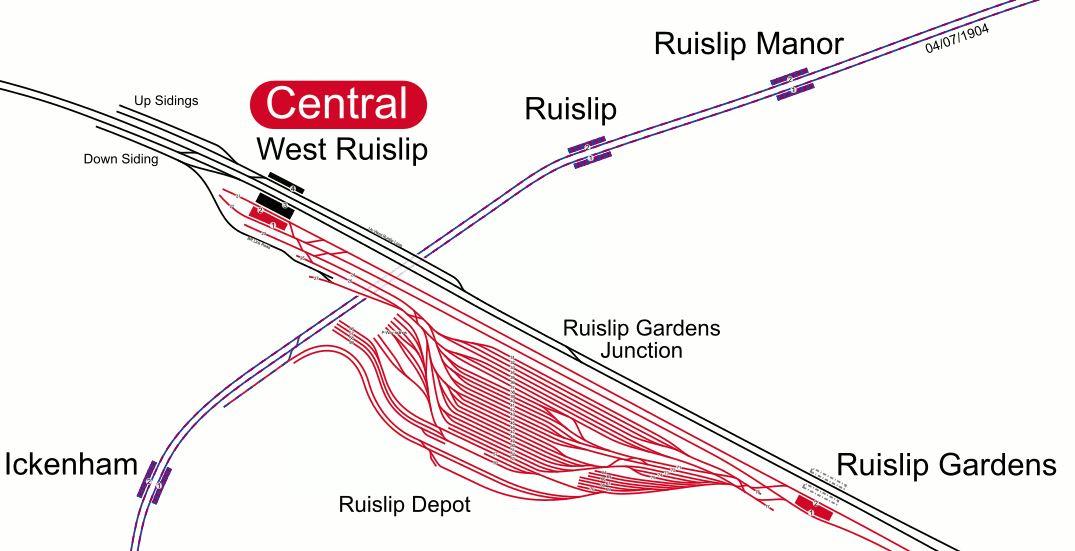
Note.
- The Central Line is shown in red.
- The track used by the Piccadilly and Metropolitan Lines is the bluey colour.
- The Chiltern Main Line is shown in black.
- Ickenham and Ruislip stations will soon have some measure of step-free access.
- Ickenham and West Ruislip stations are a valid out-of-station interchange, with a walk of 1.1 miles.
Would running Central Line trains to Uxbridge be feasible?
Uxbridge station has four platforms and currently has the following Off Peak services.
- Metropolitan – 8 tph to Aldgate
- Piccadilly – 3 tph to Cockfosters
With these frequencies in the morning Peak.
- Metropolitan – 6 tph to Aldgate
- Metropolitan – 4 tph to Baker Street
- Piccadilly – 6 tph to Cockfosters
West Ruislip has a 3 tph Off Peak service.
Uxbridge with four platforms can probably handle up to twenty-four tph with modern signalling, so there should be scope once the the new signalling is installed on the Metropolitan Line for changes to be made.
It may need new trains on both the Central and the Piccadilly Line, that can use the new signalling, before full advantage could be taken of running Central Line trains to Uxbridge.
But at some time in the future, it looks like the following would be possible on the West Ruislip branch of the Central Line.
- 4 tph to West Ruislip
- 4 tph to Uxbridge
That would be a very worthwhile service.
The Greenford Branch
The Greenford Branch is one of those lines in London and the South East, that have a low priority for the train operating companies.
Others include.
- Abbey Line
- Brentford Branch Line
- Bromley North Line
- Romford-Upminster Line
- Slough-Windsor & Eton Line
Twenty years ago, you would have included the North London and the Gospel Oak to Barking Lines. But look at those two now!
The Greenford Branch is typical of this sort of line.
- Single platform at each end.
- Two tph run by a single train.
- Elderly trains.
- No electrification
- No Sunday service
- More information.
- Virtually no marketing.
- Poor interchange at West Ealing station, although interchange at Greenford is excellent.
All of these lines could benefit from a common philosophy.
- Four tph where possible, to encourage Turn-Up-And-Go.
- A viable train use philosophy.
- Modern electric trains that attract passengers.
- Good interchange at the principal station or stations.
A plan for the Greenford Branch has yet to emerge.
However Crossrail will change everything.
- Up to twelve tph could stop at West Ealing station.
- West Ealing station will have full step-free access between the Greenford Branch, Crossrail and GWR services.
- Passengers might use the line with heavy bags to get to and from Heathrow.
- Management of West Ealing station may pass to Transport for London.
On a cold, wet day, passengers changing to the Greenford Branch will not want to wait half an hour for the next train to Greenford and the intermediate stations.
Increased passenger numbers and pressure for good service will require a four tph frequency on the Greenford branch.
- This will require two trains.
- Better customer service will be needed.
|As the two end stations could both be under Transport for London control, would it be sensible to pass management of the line to that organisation and run the line under the Overground banner?
But what trains could be used?
- As the line is not electrified and platforms can only handle two- or possibly three-car trains, London Overground’s standard four-car Class 710 trains would not be suitable.
- Class 172 trains could be used, but these are going to West Midlands Trains.
- Passengers might accept a modernised British Rail era diesel like a Class 150 train.
- There is also the Class 230 train, which West Midlands Trains will be using on the Marston Vale Line.
- Could Bombardier create a three-car Aventra with on board energy storage, that would be charged at either or both ends?
My money would be on one of the last two options.
- A standard electric train would require electrification of the branch.
- There would be servicing problems with a small diesel fleet.
- Class 230 trains have been designed for remote servicing, so three trains would work.
- The diesel trains and the Class 230 train would require little if no infrastructure changes.
- The branch is under three miles long, so a return trip is probably well within range of a battery train.
- A three-car Aventra with on board energy storage would have many applications in the UK.
- The Aventra with on board energy storage would require little if no infrastructure changes, except for some extra overhead wires to create a charging point at West Ealing.
London Overground will probably go for a surprising, but cost-effective solution.
Onward From Greenford
This map from carto.metro.free.fr shows the lines at Greenford station.
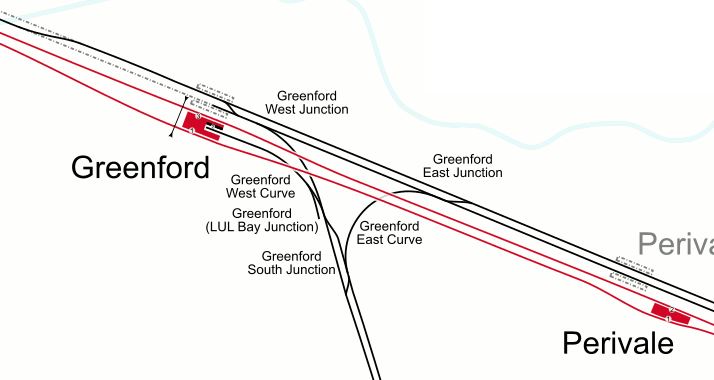
There must surely be possibilities to extend the current passenger service to the West.
- It would create a West Ealing to West Ruislip feeder service for Crossrail.
- Greenford station would need extra platforms on the Acton-Northolt Line.
- Train length would be less of a problem and four-car trains could probably be used.
It would fit well with restoring passenger services on the Acton-Northolt Line.
Old Oak Common To West Ruislip On The Acton-Northolt Line
Network Rail have plans to reinstate passenger services on the Acton-Northolt Line, so that Chiltern Railways can have an extra London terminal with a connection to Crossrail, High Speed 2 and the London Overground. Under Chiltern Main Line Connection, in the Wikipedia entry for Old Oak Common station, this is said.
Network Rail has proposed that the Chiltern Main Line should have a second terminal at Old Oak Common to increase capacity on the route as there is no room to expand the station at Marylebone. To do so, services would use the Acton–Northolt line (formerly the “New North Main Line”) and perhaps see Chiltern trains terminating here rather than Marylebone.
A summary report by Network Rail, which was released in 2017, forecast that a new London terminal will be needed by 2043 and proposed Old Oak Common for this role, with upgrading of the Acton-Northolt Line.
I doubt that I’ll see it, as I’ll be 96!
But it does seem a credible idea with questions to ask!
- Will the route be double- or single-track?
- Will there be express and/or Metro services?
- How many interchanges will there be with the Central Line?
- Will the route be used by Crossrail?
- Will the route be electrified?
I do think that there will be some very serious thinking going on.
A few thoughts on what could define what might ensue.
High Wycombe Station
High Wycombe station is a three platform station, with a lot of space between the tracks, as this Google Map shows.
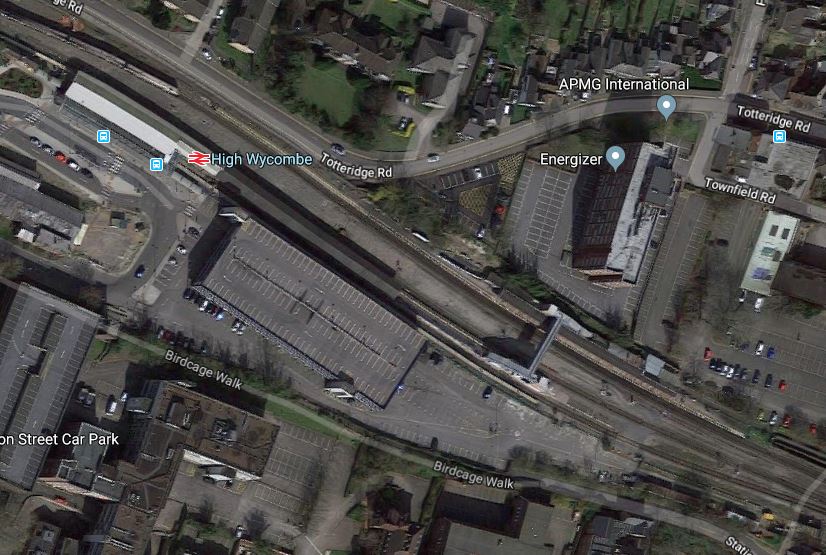
It would appear there is space for the station to be developed, as a terminus for more services from London.
The Chiltern Metro
According to Wikipedia, Chiltern Railways have ambition to create a Chiltern Metro. Wikipedia says this.
New Chiltern Metro Service that would operate 4+tph for Wembley Stadium, Sudbury & Harrow Road, Sudbury Hill Harrow, Northolt Park, South Ruislip and West Ruislip. This would require a reversing facility at West Ruislip, passing loops at Sudbury Hill Harrow, and a passing loop at Wembley Stadium (part of the old down fast line is in use as a central reversing siding, for stock movements and additionally for 8-car football shuttles to convey passengers to the stadium for events). This ‘Chiltern Metro’ service was not programmed into the last round of franchising agreements.
This sounds to be a good idea but it would need a dedicated platform at Marylebone and is there sufficient capacity on the Chiltern Main Line to accommodate the number of extra trains required to West Ruislip.
Crossrail
How Crossrail will affect London is totally unpredictable.
- Currently, the system is planned to run 24 tph between Heathrow, Paddington and Reading in the West and Abbey Wood and Shenfield in the East.
- Various sources show that Crossrail has been built for 30 tph.
- I wouldn’t be surprised to see the route move to a Thameslink or East London Line model, where two or four tph run to other destinations outside the core.
Ebbsfleet, Gravesend and Milton Keynes have been mentioned for expansion, but what about Basingstoke, Beaulieu, High Wycombe, Oxford and Southend?
Electrification
Three factors will be the main drivers if the Acton-Northolt Line is electrified for Network Rail’s proposed passenger services to Old Oak Common.
- Extension of Crossrail to High Wycombe would surely need the Acton-Northolt Line to be electrified and possibly double-tracked.
- The next generation of multi-mode trains will operate on a mixture of electric, diesel, hydrogen and battery power.
- The ambition of Chiltern Railways.
I think on balance, if the Acton-Northolt Line is reopened to passenger services, it will be electrified.
Space could be limited as this picture from Hangar Lane station shows.

But most problems should be possible to solve, by lowering track and rebuilding some bridges.
North Acton Station
North Action station could be updated in the following ways.
- Extra platforms for the Acton-Northolt Line.
- A connection to the North London Line.
- Over-site development.
- More spacious station buildings.
Note also that North Acton station could be a calling point on the West London Orbital Railway.
On the other hand, Old Oak Common station might handle a lot of these connections, so I suspect that if North Acton station has a connection, it will be led by the needs of property developers.
Park Royal Station
Park Royal station could be rebuilt with Hanger Lane station as an interchange between the Central and Piccadilly Lines, with extra platforms for the Acton-Northolt Line.
Again, property development will decide what happens.
Hanger Lane Station
This Google Map shows the location of Hanger Lane station in the middle of the Hanger Lane Gyratory.
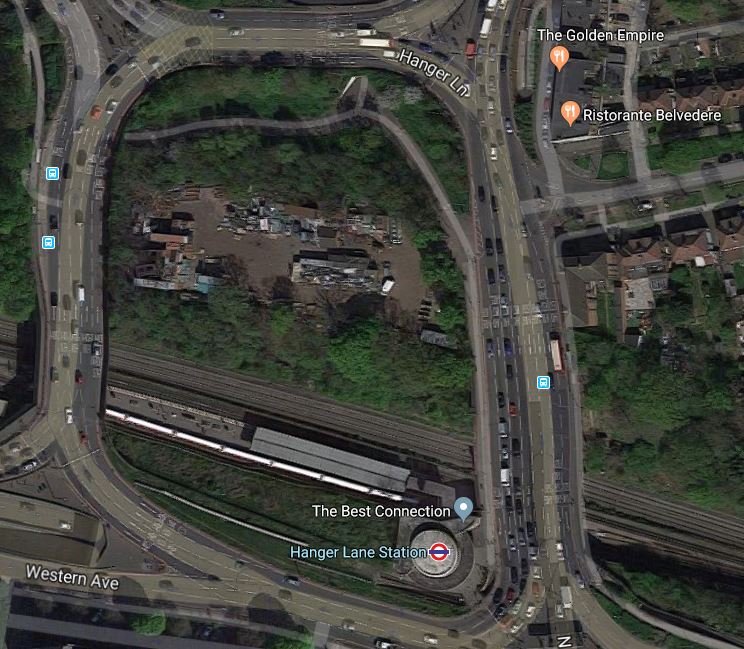
Note the following.
- The Central Line train in the Westbound platform.
- The double-track of the Acton-Northolt Line to the North of the Central Line station.
- Inside the ring of roads, there would appear to be a large site, that could be suitable for redevelopment, as perhaps offices or housing.
These pictures show the site in the middle of the roads.
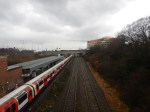




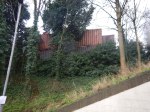
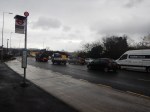
Note.
- To call the site a junk-yard would be a compliment.
- Hanger Lane station is going to be made step-free.
- A tunnel for HS2 will pass underneath., following the route of the Acton-Northolt Line.
- There are HS2 notices about. Are HS2 going to use the dump for a ventilation shaft for a tunnel underneath?
It would not be the most difficult design project in the world to make provision for platforms on the Acton-Northolt Line, to future-proof the station for Crossrail or any Chiltern service to Old Oak Common.
This is the sort of development that I like!
Imagine the following.
- A cluster of perhaps four very high residential and office towers, reaching above the pollution and noise of the traffic.
- A ring of trees could also shield the development from the traffic.
- The tracks of the Acton-Northolt Line could be slewed to take advantage of an island platform.
- Trains running at least four tph to Old Oak Common.
- Crossrail could continue across Central London.
- Trains could run to West Ruislip or High Wycombe in the West.
- London Underground running up to ten tph on the Central Line.
- Developers will integrate the station, the development and the required local services.
The possibilities are dramatic.
In the next decade or so, as vehicles get less polluting, developments like this will become more common.
Perivale Station
Perivale station is Grade II Listed with some of the worst steps I’ve seen on the London Underground.
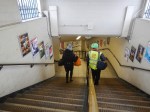


Extra platforms on the Acton-Northolt Line and a step-free station would be very difficult.
I doubt, there are many stations worse for step-free access in London!
Greenford Station
Greenford station is already step-free, but extra platforms on the Acton-Northolt Line, could be very difficult, due to the different track levels.
But Action-Northolt Line platforms with a step-free connection would give easy access to the Greenford Branch.
Northolt Station
Northolt station is being made step-free and could be extended with extra platforms on the Acton-Northolt Line.
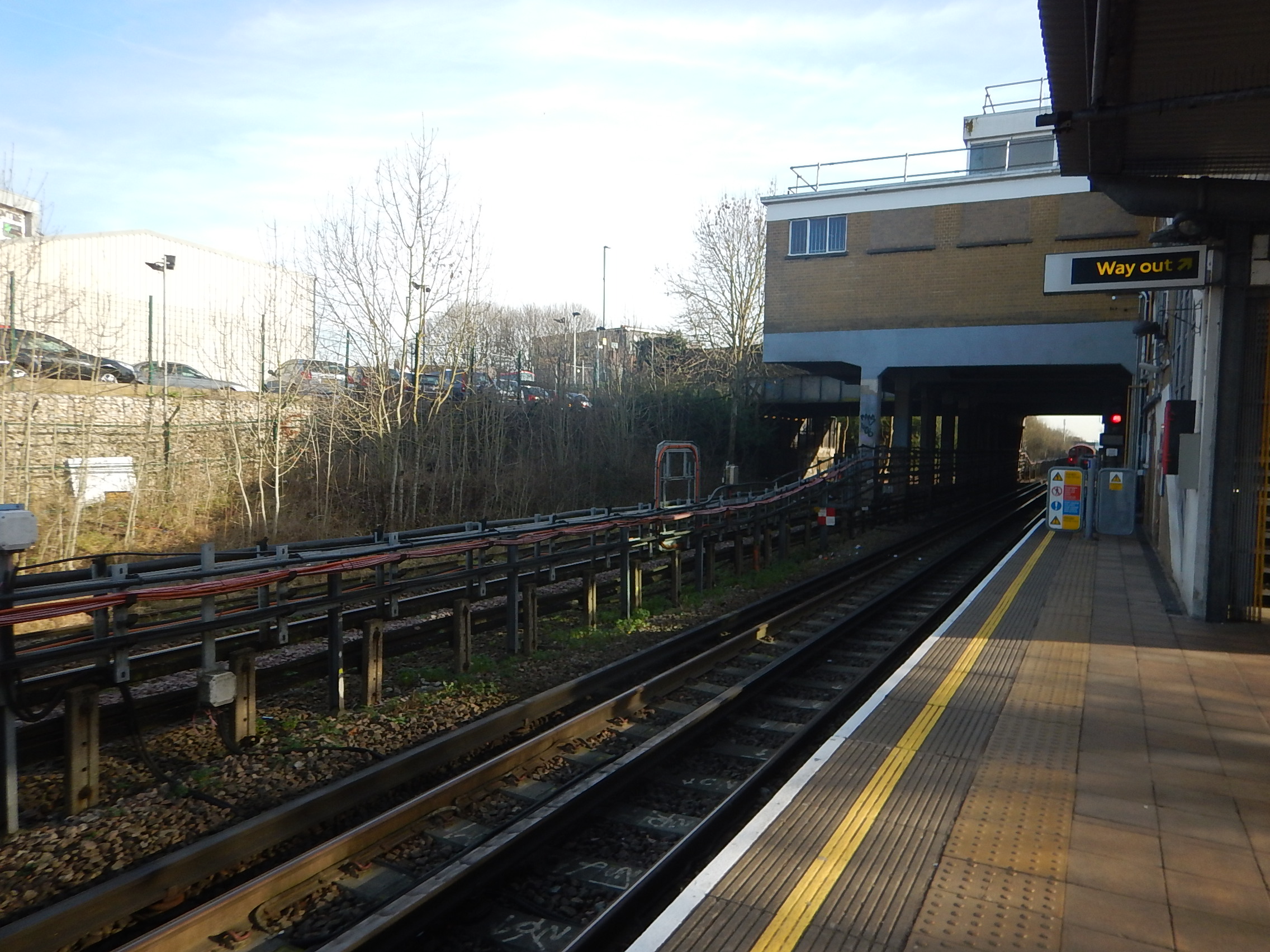
The picture was taken from the Central Line platform and shows the station building, which almost looks as if it was built to be extended to a platform on the Acton-Northolt Line, which is to the left of the electrified Central Line track.
South Ruislip Station
South Ruislip station already has platforms on both lines.
Ruislip Gardens Station
Ruislip Gardens station probably wouldn’t need a connection to the Chiltern Line.
West Ruislip Station
West Ruislip station already has platforms on both lines.
A Possible Heavy Rail Service Between Old Oak Common and West Ruislip
Consider.
- Central Line trains take seventeen minutes between North Acton and West Ruislip with six intermediate stops.
- So I think it likely that a modern train could travel from Old Oak Common to West Ruislip in about fifteen minutes, with perhaps stops at three or four stations like North Acton, Hanger Lane, Greenford, Northolt and South Ruislip.
- The Acton-Northolt Line is a mixture of single and double track. with some space for a second track.
- All stations except Old Oak Common could have step-free interchanges with the bCentral Line.
It could either be a service linked to Chiltern or Crossrail.
I can’t help feeling that eventually, this service will be part of Crossrail.
Conclusion
The railway changes that are happening will certainly allow a lot more development in West London.
Should This Be Done On More Building Projects?
Buckingham Group are building the new West Hampstead station on the North London Line.
This picture was taken of the architect’s layout drawing of the new station, that was fixed to the hoardings.
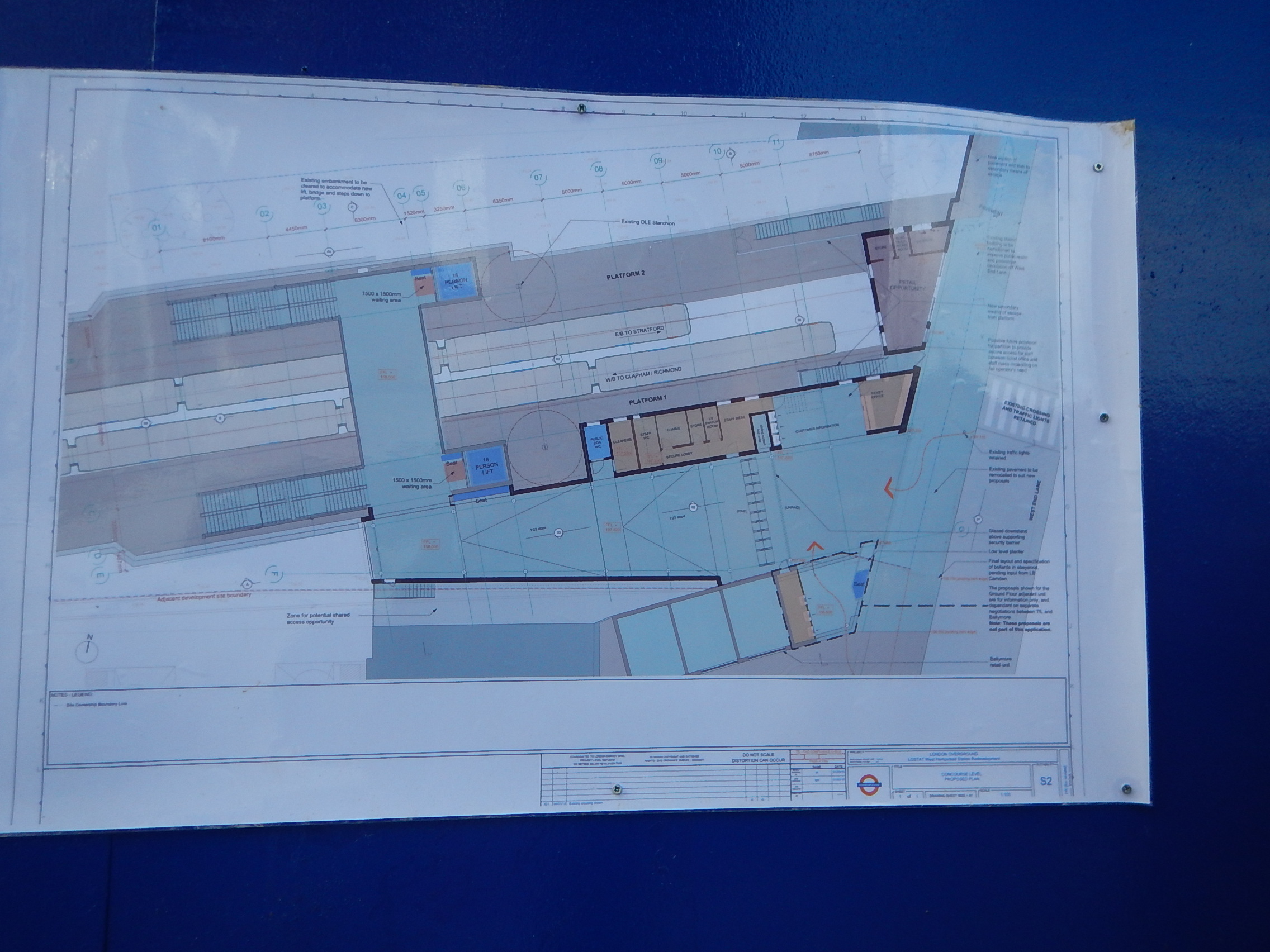
I wasn’t the only person giving it a good study.
I think it is a good way to inform the public.
Elizabeth Line Delivery To Top Original Forecasts On New Homes Created With Property Values Expected To Soar
The title of this post is the same as this article on City AM.
This is the first three paragraphs.
The number of homes and jobs created due to the development of the £14.8bn Elizabeth Line is set to greatly surpass expectations, according to a new report by commercial property agency GVA.
The research, commissioned by Crossrail, found that the impact of the new railway on the creation of new homes and impact on property value, is set to be significantly greater than GVA originally predicted in a 2012 report.
GVA expects 90,599 new homes along the route by 2021 – higher than the 57,000 new homes predicted in the previous report. GVA also expects a £10.6bn increase in property values within 1km of an Elizabeth Line station by 2021.
Although, there are lies, damned lies and forecasts from property consultants, the significance here, is that both surveys were done by the same company.
From personal experience, I know that London’s last big railway project, the Overground, had a similar beffect.
I think these and other rail developments will increase property development and values in the next few years.
- Birmingham electrification and new train fleet.
- Blackpool and North-West electrification.
- Edinburgh Glasgow Improvement Program
- Exeter local services expansion.
- Hasting’s HighSpeed services from St. Pancras
- Manchester Metrolink expansion.
- Merseyrail’s new train fleet.
- Midland Metro expansion.
- Ordsall Chord
- Southend Branch improvement and new trains.
- Thameslink
- Tyne and Wear Metro’s new train fleet
Before buying a house look at what is happening to the trains and trams.
Contractor Chosen For The Work On London Overground’s East London Line
The title of this post is the same as that of this article on Global Railway Review.
This is the first two paragraphs.
Transport for London (TfL) has announced the appointment of Cleshar Contract Services Limited to take over the maintenance work. The new contract is subject to 10 days standstill period and should commence on 1 April 2018.
The contract was given with the agreement that existing Carillion employees will be transferred over to Cleshar with terms and conditions protected. Until the handover date TfL will supply guarantees to support continued work and pay for the Carillion staff.
It seems good for the former Carillion employees, but who are Cleshar Contract Services Limited?
This page from the Cleshar web site describes the company structure, which was formed in 1992.
The unusual connection, I have with the company, is that they are based in one of Metier’s former offices alongside the North Circular Road.
So you can’t say they waste their money on flash premises.
Stadler Publish More Details On Greater Anglia’s Flirts
These pictures are on several web sites and show more details on how Stadler is creating Greater Anglia’s Class 745 trains.
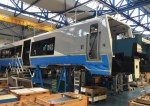


If you compare the first and third pictures, it would appear that the cab is a separate construction, probably made out of a variety of materials like steel, aluminium and glass reinforced plastic.
The body could be similar to that of a Bombardier Electrostar or Aventra and made of three aluminium sections welded together.
The cross-section seems simpler than that of an Aventra, which as this picture shows is double-skinned with ribs.
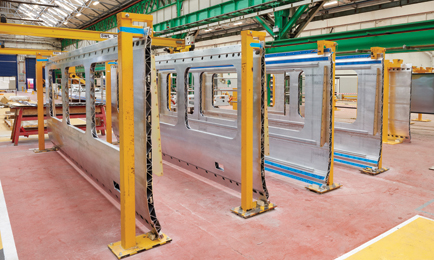
Are the sides and roof of Stadler Flirts extruded or fabricated?
But then Bombardier designed the Aventra bodies to be made in large numbers, close to the production line, whereas Stadler build the bodies in Hungary.
The Night Overground Roundel
The London Overground now has a night ropundel.
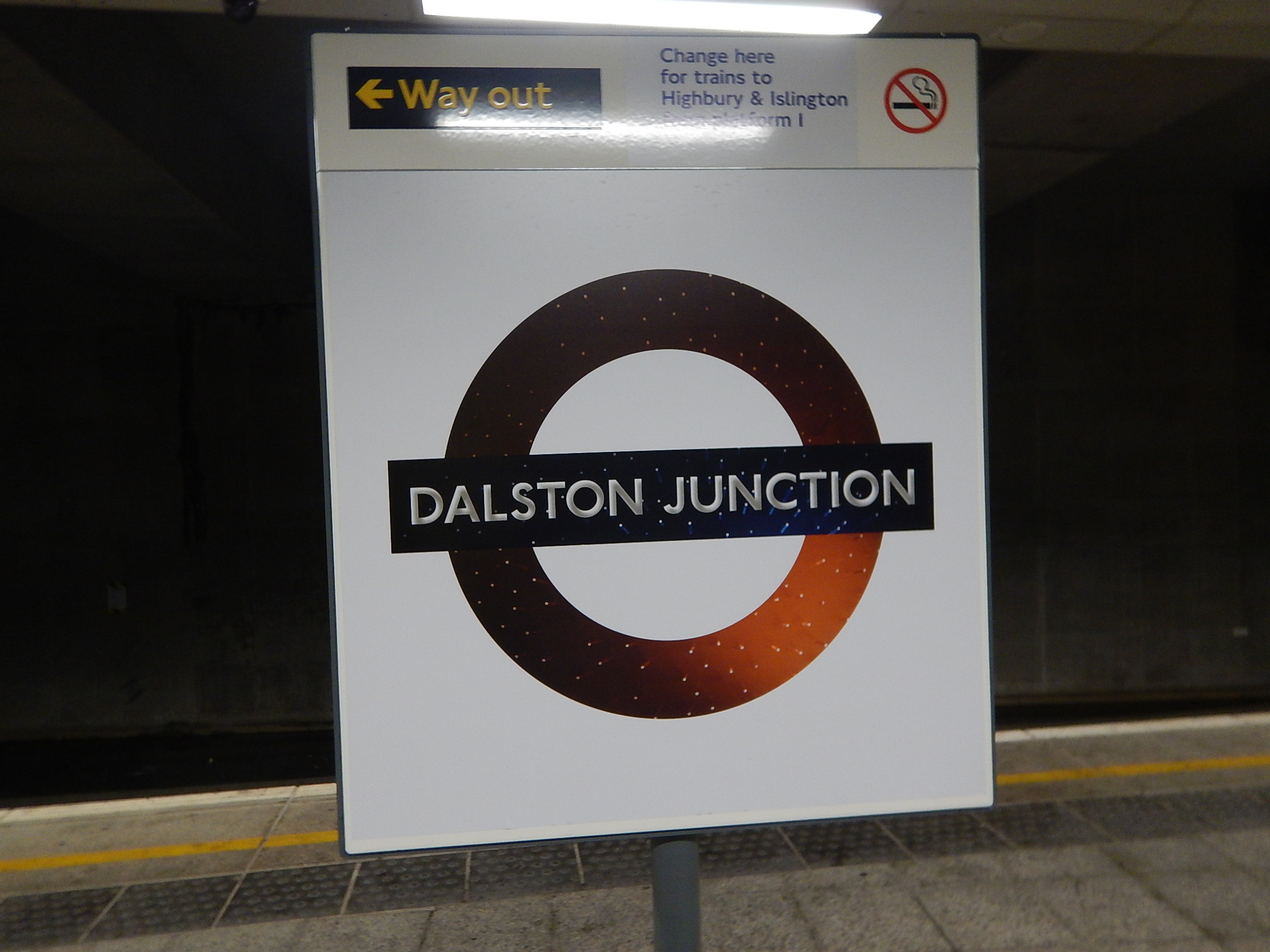
Note the stars!
London’s most famous symbol is being made to work harder.
Purple Roundels Are Coming
I took these pictures at Custom House station this morning.

The purple roundels for the Elizabeth Line are starting to appear.
New Trains For The Docklands Light Railway And The Tyne And Wear Metro
Transport for London and Nexus (The Tyne And Wear Passenger Transport Executive) are both asking for bids for new trains on the Docklands Light Railway and the Tyne and Wear Metro respectively.
Both systems are standard gauge light railways, but how do they compare to each other and to other trains running or soon to run in the UK?
Width and Height Of Cars
This table shows the width and height of various trains, that are currently in use on the UK network.
- Class 994 train (Tyne and Wear Metro) – 2.65 x 3.45 metres
- Docklands Light Railway – 2.65 x 3.51 metres
- Class 399 tram-train – 2.65 x 3.60 metres
- Class 319 train (1980s electric train) – 2.82 x 3.58 metres
- Class 508 train (Merseyrail) – 2.82 x 3.58 metres
- S Stock (London Underground) – 2.82 metres width
- Electrostar – 2.80 x 3.78 metres
- Class 345 train (Crossrail) – 2.78 metres width
Note.
- What surprised me was how similar the width and height of these vehicles are.
- The Class 345 train uses clever design to make the train as wide as possible inside.
Wikipedia says this about how Bombardier Electrostars were designed and built.
The Clubman/Turbostar/Electrostar platform is a modular design, which share the same basic design, bodyshell and core structure, and is optimised for speedy manufacture and easy maintenance. It consists of an underframe, which is created by seam-welding a number of aluminium alloy extrusions, upon which bodyside panels are mounted followed by a single piece roof, again made from extruded sections. The car ends (cabs) are made from glass-reinforced plastic and steel, and are huck-bolted onto the main car bodies. Underframe components are collected in ‘rafts’, which are bolted into slots on the underframe extrusion. The mostly aluminium alloy body gives light weight to help acceleration and energy efficiency.
From what I’ve seen in the media about the manufacture of Bombardier’s new Aventra, the manufacturing methods are similar but improved.
I would suspect that most modern trains are made in a similar way, with extensive use of lightweight aluminium extrusions for sides and roof.
Bombardier’s method of making the cabs of glass-reinforced plastic and steel, must also give the flexibility required to create an appropriate cab for different classes of trains. Currently, there are Aventras on other, that feature cabs without and with a gangway.
I suspect that Bombardier’s design team for the Aventra made sure that the design of the body could be adapted to produce a replacement train for the Tyne and Wear Metro or the Docklands Light Railway. After all, they built most of the current cars for the DLR!
This all leads me to the conclusion, that production of the bodies for the new vehicles for both routes will not be a problem. And not just for Bombardier! Stadler seem to have downsized a Flirt for Merseyrail.
Using an existing design, must also mean that equipment like seats, air-conditioning, doors and other fitments, just have to resized if needed.
Design Of The Cars
Bombardier have shown with the Aventra, that they can make cars in different lengths for different versions of the train. The Class 710 trains for the London Overground are being built as twenty metre long trains, whereas other variants have longer cars.
All Aventras ordered so far, appear to be walk-through between articulated cars.
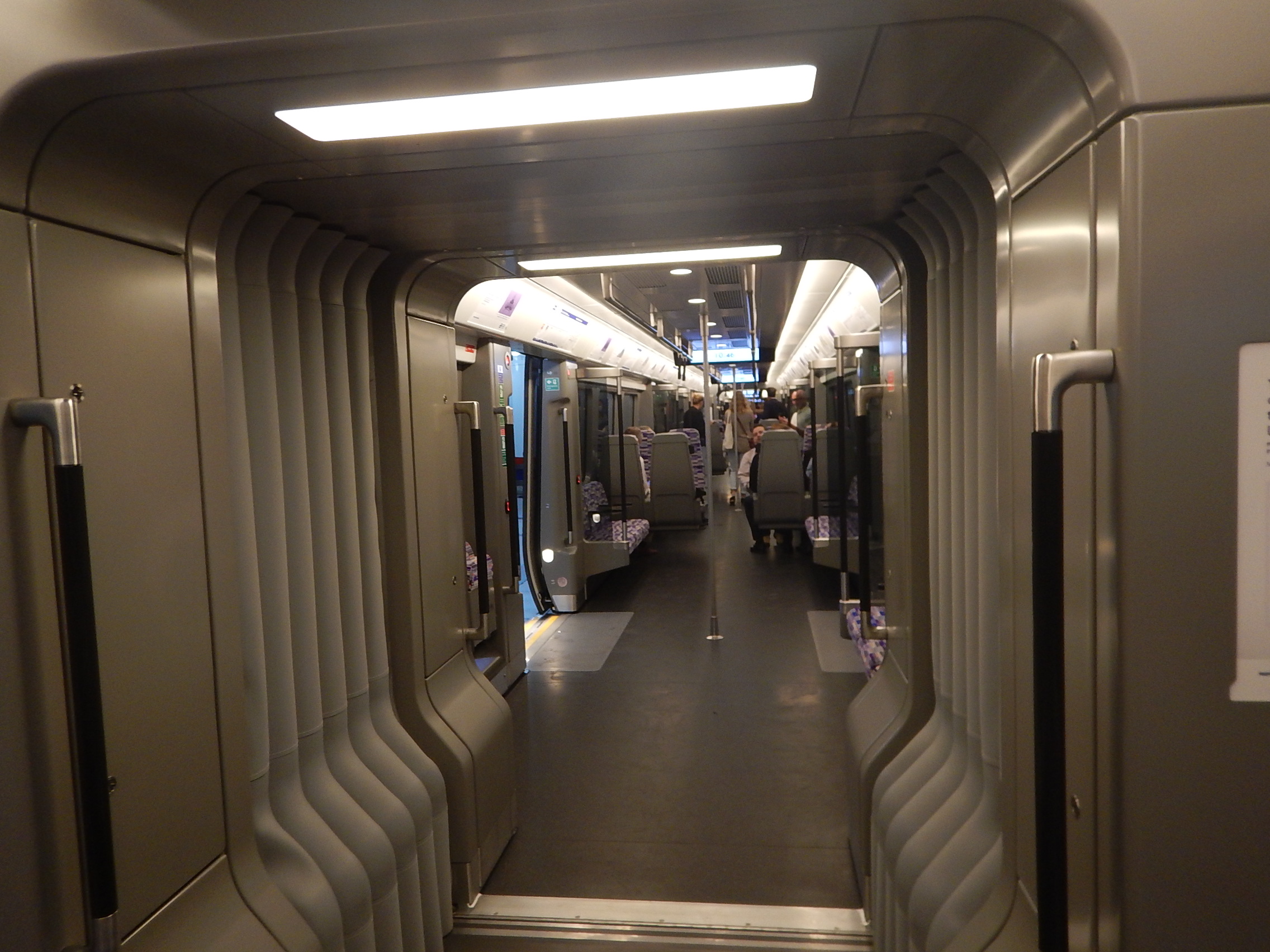
The picture shows the inside of one of Crossrail’s Class 345 trains.
So what can we ascertain about the design the new fleets for the Docklands Light Railway and the Tyne and Wear Metro?
Docklands Light Railway
Under Future Stock in the Wikipedia entry for the Docklands Light Railway Rolling Stock, this is said.
TfL is seeking to order 43, 87-metre-long (285 ft) trains, 33 of which will replace the 70 B90/92 trains currently in use, which are the oldest on the DLR. The remaining 10 would support capacity increases in the Royal Docks area. DLR services presently operate with two or three trains coupled together, but the new fleet will be fixed formation units with walk-through carriages equivalent to the length of three current trains. The aim is to issue an invitation to tender for the new fleet later this year, with contract award planned for summer 2018.
Note.
- The trains will be walk-through.
- The new train length quoted of 87 metres, doesn’t fit the length of three current trains, but it is close to the length of three current cars, so I suspect that is what is meant.
- In the early 2010s, the whole Docklands Light Railway was upgraded for three-car trains.
- The trains need the ability to handle tight curves.
It does appear that Bombardier and the other manufacturers could design a train for the Docklands Light Railway by adapting their current design.
Consider.
- To handle the tight curves, it would probably be a walk-through train with several articulated sections.
- The current trains running as a three-car unit are 84 metres long.
- Each of the current cars is 28 metres long.
- Each of the current cars is articulated in the middle. Thus a three-car train has six sections.
- The current cars have four double doors on either side. Thus a three-car train has twelve doors.
- The new trains will be 87 metres long.
It should be noted that Edinburgh has a similar problem of tight curves and gradients like the Docklands Light Railway. The city’s Urbos 3 trams are just forty metres long, but have seven articulated sections, with six doors on either side.
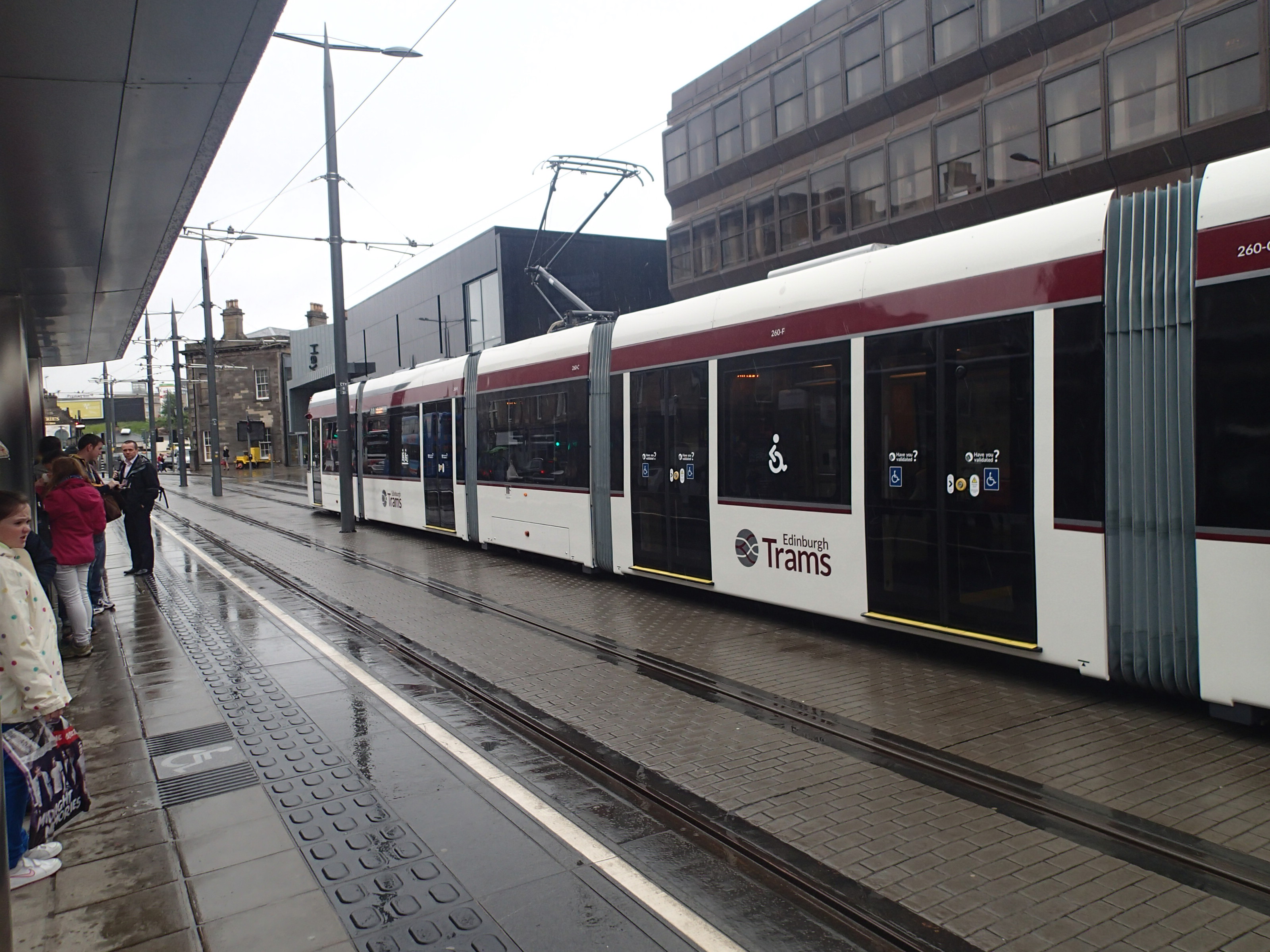
Note the short sections, which show what is possible in an articulated rail vehicle.
I suspect the following.
- As the current trains have six sections, this would be a starting point for a new design.
- Four or five sections would be a more affordable design.
- There will be an optimum number of sections to handle the curves and gradients.
- Does an articulated walk-through design need quite as many doors as current trains?
It looks like a good cost-effective design is possible.
Tyne And Wear Metro
Under Proposed New Fleet in the Wikipedia entry for Tyne and Wear Metro Rolling Stock this is said.
In November 2017, the Chancellor Philip Hammond announced that the government would provide £337 million towards the new fleet. The proposed new fleet would consist of 84 trains to replace the existing 90 train fleet, as Nexus believe that the improved reliability of the newer trains would allow them to operate the same service levels with fewer trains. These are proposed to have longitudinal seating instead of the 2+2 bench seating arrangement of the present fleet, and a full width drivers cab instead of the small driving booth of the existing trains. The proposed new fleet is planned to have dual voltage capability, able to operate on the Metro’s existing 1.5 kV DC electrification system and also the 25 kV AC used on the national rail network, to allow greater flexibility. Battery technology is also being considered.
Note.
- A dual-voltage capability will be required.
- Battery capability would be ideal for short movements and regenerative braking.
- In my view longitudinal seating needs a walk-though capability.
- Currently, trains are two-car units and generally work in pairs.
- Trains can work in formations of three and four units, but the ability is not used.
If trains generally work in pairs would it be more affordable to have four-car trains?
- Could they be adapted from proven lightweight main line rolling stock, by perhaps giving the trains a smaller cross-section?
- They would only have two instead of four cabs.
- They could be articulated, walk-through trains.
- Class 399 tram-trains have shown dual voltage through one pantograph is possible.
Using a certified main line train, that had been made smaller would surely mean that certification would be easier.
I believe, that a section of the Tyne and Wear Metro works using tram-train principles under the Karlsruhe model, which allows the current trains to share tracks with other rail services.
So the new trains would make it possible for the Metro to be expanded onto main line railways. If they were electrified using 25 KVAC. Freight lines, which might see a reopened passenger service, could be electrified using the current Metro 1,500 VDC system.
It strikes me thyat by getting the design of the rolling stock right, a lot of possibilities could open up for the Tyne and Wear Metro.
 The Anonymous Widower