Thoughts On A Hydrogen-Powered Bi-Mode High Speed Train
My stockbroker and pension fund manager keeps contacting me about hydrogen power. There seems to be a lot of money chasing few good investments.
What I find surprising is that two of the leading fuel cell companies are Canadian; Ballard and Hydrogenics, with one supplying Alstom with fuel cells for their hydrogen powered train.
Bombardier at Derby, who are another Canadian company, have been very quiet on hydrogen.
These are my thoughts.
The Aventra Is A Plug-And-Play Train
I believe that the control system on an Aventra looks at the train and determines what cars make up the train. Hitachi certainly do this with their A-trains like Class 800 trains and I suspect that the control systems of most modern trains can do it, as it allows trains to be lengthened and shortened as required.
Electric Multiple Units Have An Electrical Power Bus
I believe that most electric multiple units have an electrical power bus that connects all cars to the electrical supply from the pantograph or third rail shoes.
On a Btoitish Rail-era Class 319 train, which has DC traction motors, this is 750 VDC, but on modern trains, which generally have AC traction motors, it is probably something more appropriate.
The Design Trend In Electrical Multiple Units Is To Have More Powered Axles
Bombardier are certainly going this route with the new Class 345 trains for Crossrail.
I found this snippet on the Internet which gives the formation of the new Class 345 trains.
When operating as nine-car trains, the Class 345 trains will have two Driving Motor Standard Opens (DMSO), two Pantograph Motor Standard Opens (PMSO), four Motor Standard Opens (MSO) and one Trailer Standard Open (TSO). They will be formed as DMSO+PMSO+MSO+MSO+TSO+MSO+MSO+PMSO+DMSO.
So as both PMSO cars are there, I would assume that the current seven-car trains are two MSO cars or an MSO and a TSO car short of a full-train.
The power cars/total cars ratio will be as follow.
- Seven-car train – 0.86
- Nine-car train – 0.89
In The Formation Of A Class 707 Train, I showed that the ratio for Class 707 trains is just 0.40, whereas Greater Anglia’s siomilar five-car Class 720 train appears to have five cars with motors.
Could this increase in the number of powered axles mean the following?
- Better acceleration for the same electrical power.
- More, but smaller and lighter traction motors.
- Less wheel-slip in some rail conditions.
- Each axle could be controlled individually, to minimise wheel-slip, which leads to extra maintenance costs.
- Smoother regenerative braking, as effectively every axle is braked without the use of inefficient friction brakes.
- If batteries are used for regenerative braking, then one smaller battery can be fitted to each car with motors.
But the extra traction motors could cost more.
Only Bombardier seem to have gone all the way. Perhaps, they have found that modern manufacturing methods can produce more affordable traction motors.
One consequence of distributed power, is that each car will have a high electrical load, so there will be a need for a sophisticated electrical power bus going to every can on the train.
A Car With A Diesel-Powered Electricity Generator
I have ridden in the cab of a Class 43 locomotive. Admittedly, it was one that had been modified with a new diesel engine, I was surprised how quiet 2,250 hp can be, just a few feet away.
Obviously, the sound-proofing was of the highest quality.
This picture shows a Stadler train, which has a diesel-powered car in the middle of the train.
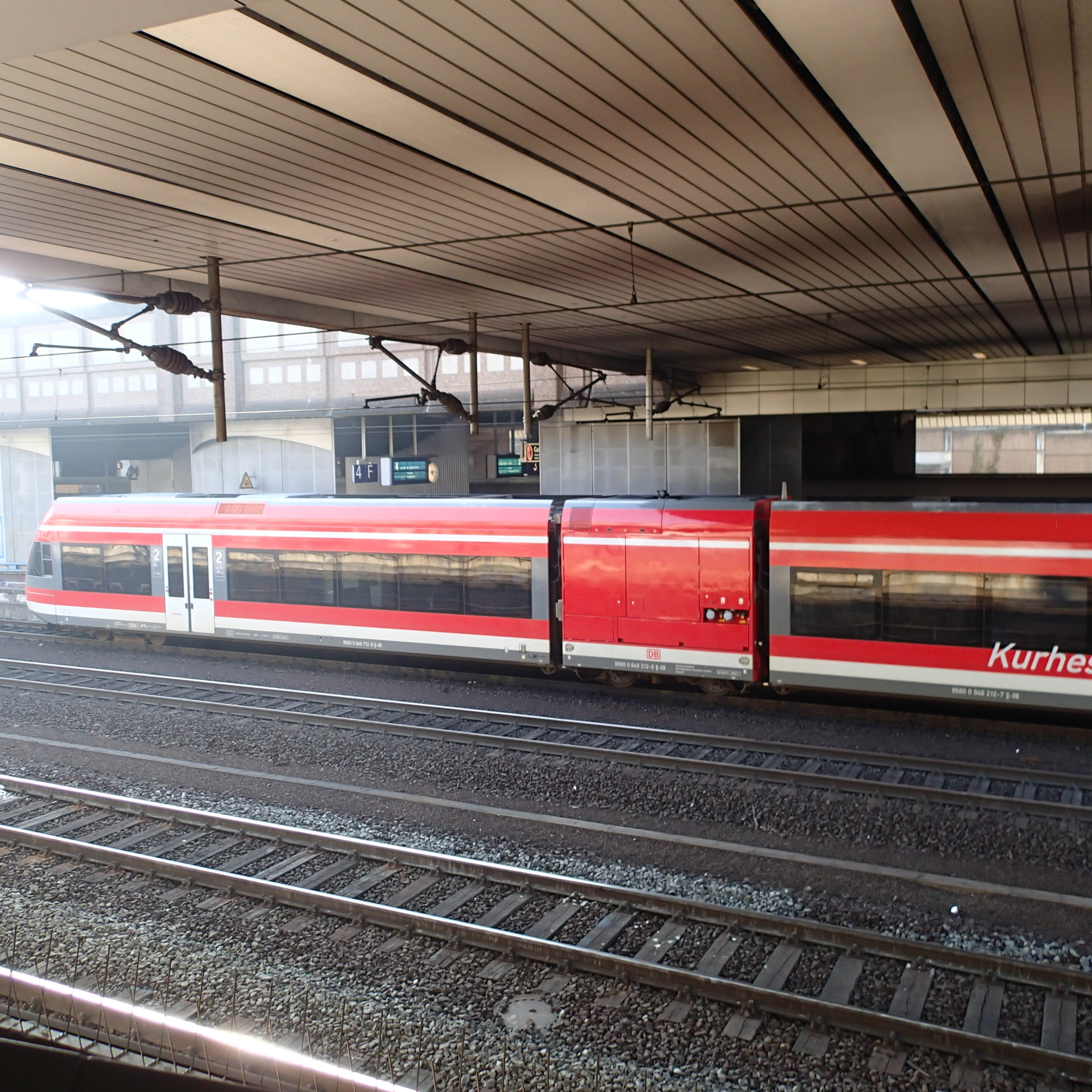
Greater Anglia’s new Class 755 trains will use this technique.
Intriguingly, British Rail designed the record-braking Class 442 train, with all the electrical equipment and traction motors in the middle car of a five-car set.
I suspect because of the design of an Aventra, Bombardier could put a diesel engine in one the middle cars to create a bi-mode Aventra.
Bombardier have said in this article on Christian Wolmar’s web site, that they are working on a 125 mph bi-mode Aventra.
In the Class 172 train, each car has a 360 kW diesel engine, so a five car 125 mph bi-mode train could need a substantial amount of power.
A Car With A Hydrogen-Powered Electricity Generator
In Alstom’s Coradia iLint, the hydrogen tanks and generators are mounted on the roof, thus taking advantage of the larger Continental loading gauge. Wikipedia says this about the train.
The Coradia iLint is a version of the Coradia Lint 54 powered by a hydrogen fuel cell. Announced at InnoTrans 2016, the new model will be the world’s first production hydrogen-powered trainset. The Coradia iLint will be able to reach 140 kilometres per hour (87 mph) and travel 600–800 kilometres (370–500 mi) on a full tank of hydrogen. The first Coradia iLint is expected to enter service in December 2017 on the Buxtehude-Bremervörde-Bremerhaven-Cuxhaven line in Lower Saxony, Germany.
In the UK, there isn’t the space, but I believe that a car could be built with a hydrogen tank and the appropriate size of hydrogen-powered electricity generator.
Bear in mind, that a hydrogen power system will be is a lot quieter and vibrate less, that a diesel one.
The Plug-and-Play nature of an Aventra or other modern trains, would mean that after the train software has been modified, it could detect that the train has a car with a hydrogen-powered electricity generator.
The car would deliver its electricity, when it is require, through the electrical bus.
The train’s computer system would control the generator, so that the level of power needed to move the train was available.
Batteries
Batteries are an integral part of Alstom’s Coradia iLint as this promotional video shows.
I believe that Bombardier make extensive use of batteries in the Aventra for regenerative braking, running for short distances without electrification and electrification failure.
Why Do I Think A Hydrogen-Powered High Speed Train Is Possible?
By High Speed Train, I mean one that can travel at 200 kph or 125 mph.
Most energy is needed to accelerate the train, not to maintain the high cruising speed.
So if you take a train running along a line with only a few stops, that is fairly level with no long climbs, there will be a minimal power requirement, except where accelerating from a stop.
Energy requirement can be reduced by the following.
- Design the line as straight as possible.
- Remove as many gradients as possible.
- Have separate tracks for stopping and high-speed traffic.
- Install a modern signalling system, so that trains run efficiently.
- Remove flat junctions and level crossings
- Have a very efficient train with low rolling resistance and good aerodynamics.
- Have as few stops as possible.
Network Rail seem to be improving the tracks all over the UK to this standard and Point 6 is satisfied by modern trains like Aventras.
Point 7 depends on getting the timetable right.
Adding all these factors together and you can see why I believe a hydrogen-powered High Speed Train is a possibility.
Development
The great advantage of developing a hydrogen-powered train, is that a lot of the initial testing can be done in a lab, as all you need to develop is a power module, that can fit in the train, that can generate the required number of kilowatts.
Independently, the train company would need to develop an electric train capable of 125 mph running.
Deployment
Hydrogen-powered High Speed Trains could run on several lines in the UK.
Midland Main Line
The Midland Main Line is the obvious line for a hydrogen-powered High Speed Train.
- A lot of the route is already capable of 125 mph running.
- Large sections are three or four tracks.,
- The Southern section from Bedford to St. Pancras is electrified, so hydrogen power would only be needed North of Bedford.
- The new East Midlands Franchise will streamline the intermediate stops.
- Parts of the line go through the World Heritage Site of the Derwent Valley and would be difficult to electrify. Quiet hydrogen-powered trains would be acceptable to all.
- Selective electrification could be applied at Derby, Leicester, Nottingham and Sheffield, to charge batteries and accelerate trains.
There is a lot of work going on =North of Bedford as far as Kettering and Corby.
- The Corby branch is being made double track.
- Bedford to Glendon Junction, where trains to Corby leave the Midland Main Line, will become four tracks.
- Tracks will be electrified to Kettering and Corby.
- 125 mph running will be possible as far as Glendon Junction and Corby.
Will the two fast lines be electrified between Kettering and Glendon Junction?
This would enable trains going North from Kettering to accelerate to 125 mph using the electrification, rather than hydrogen or battery power.
The electrification would catapult them the nearly thirty miles to Leicester at 125 mph, with speed maintained by using small amounts of hydrogen or battery power.
Coming South, the train would get to 125 mph leaving Leicester, either using a short length of electrification through the station or by use of the onboard power.
Small amounts of hydrogen or battery power would keep the train at 125 mph, until it could connect to the electrification at Glendon Junction.
I’m assuming that the signalling can keep the fast lines free of slow traffic. But even if they are slowed by a crossing train, regenerative braking using the battery will enable speed to be recovered quickly.
This article on Rail Technology Magazine is entitled DfT Deal Means East Midlands HS2 Station Could Open Early.
East Midlands Hub station would obviously be electrified for HS2 services from Birmingham and London.
So perhaps a few miles of electrification could be added to the Midland Main Line to get trains to operating speed, after a stop at the station.
In addition, could selective electrification be applied at other stations like Derby, East Midlands Parkway, Leicester, Nottingham and Sheffield.
It could be a bit like a game of 125 mph Pass-the-Parcel.
Trains could be at 125 mph for most of the way from St. Pancras to Sheffield, giving a journey time somewhere in the region of ninety minutes.
North Wales Coast Line
I’ve never travelled on the North Wales Coast Line.
- It is around ninety miles long.
- It has an operating speed of 90 mph
- As it’s a coastal line, I suspect that the route is fairly level.
- No-one would complain about the noise reduction of a hydrogen-powered train.
- Virgin’s Class 221 trains take about a hundred minutes from Holyhead to Chester with six stops.
It is a route, where a bi-mode train could probably save some minutes, as they could use the electrification South of Crewe.
Alstom have already set up a base in Widnes and are interested in demonstrating hydrogen trains between Chester and Liverpool via the Halton Curve when it reopens.
But a train with a slightly better performance to the Coradia iLint could be ideal for Liverpool to Chester and along the North Wales Coast.
Basingstoke To Exeter
The West Of England Line goes from Waterloo to Exeter and has the following characteristics.
- The Waterloo to Basingstoke section is forty-eight miles long and electrified.
- The Basingstoke to Exeter section is 124 miles long and not-electrified.
- The route is fairly level.
- The operating speed is 90 mph.
- The route is served by 90 mph Class 159 trains.
This is one of those lines, where a bi-mode train would be ideal.
The route might be suitable for a hydrogen-powered train.
Ashford To Southampton
Between Ashford and Southampton, there is only one section that is not electrified and that is the Marshlink Line, which is just 26 miles long.
Other Routes
I suspect there are other routes, but I do think gentle lines without too many gradients are probably the best lines for hydrogen-powered trains.
Other Trains
As Hitachi’s IEP and Stadler Flirts have similar electrical layouts and design, a similar technique involving hydrogen poower could probably be used.
Hydrogen Power – A Useful List
General
A Series Of Articles From The Guardian
Fuel Cell Mabufacturers
Trains
Manchester United By Ordsall Chord
The title of this post is the same as that of this article in Rail Engineer.
These two paragraphs introduce the article.
With the timetable change on 10 December, passengers were able to travel directly between Manchester’s Victoria and Oxford Road stations over the Ordsall Chord for the first time. Although initially there are only six trains a day each way over the chord, May 2018 will bring big changes with a major timetable recast for the North Western electrification and to make best use of the Ordsall Chord.
This will increase the train services over the chord to three trains an hour each way and provide a direct link between Piccadilly and Victoria station. These trains will be a mix of TransPennine Express and Northern Rail services from Manchester Airport to Leeds and beyond. Liverpool to Scarborough trains will be routed via Victoria instead of Piccadilly.
The words show thew complexity of the project to create the Ordsall Chord.
Some facts, history and points are given in the article.
- The chord will mean trains won’t have to reverse at Piccadilly so often.
- Platform space will be used more efficiently at Piccadilly.
- The frequency of trains between Deansgate and Piccadilly will be4 increased by three trains per hour.
- Platforms 13 and 14 will be improved by platform refurbishment and better staff organisation.
- Longer trains and digital signalling will improve capacity.
Read the article for full details.
After reading the article, I feel that by good old-fashioned operational research and squeezing improvements everywhere , that a significant increase in capacity can be created.
Scotland’s Gritter Tracker
Scotland’s Gritter Tracker was mentioned on BBC Breakfast.
So I had to point to it! Just click here!
Note the names!
Fosteritos
The Bilbao Metro was designed by Foster and Partners.
Under Design, Wikipedia says this about access to the Metro.
Access to the metro is provided by ‘fosteritos’, glass structures affectionately named after the architect who designed them, Norman Foster. These modern-looking tunnels stand attractive alongside the modern and innovative interior of the stations.
These pictures show some of the fosteritos.




Crossrail’s Tottenham Court Road station has two square glass structures over the entrances in front of Centre Point.
I wrote about the first in Tottenham Court Road Station Gains A Giant Fosterito. Here’s a picture taken soon after one opened.
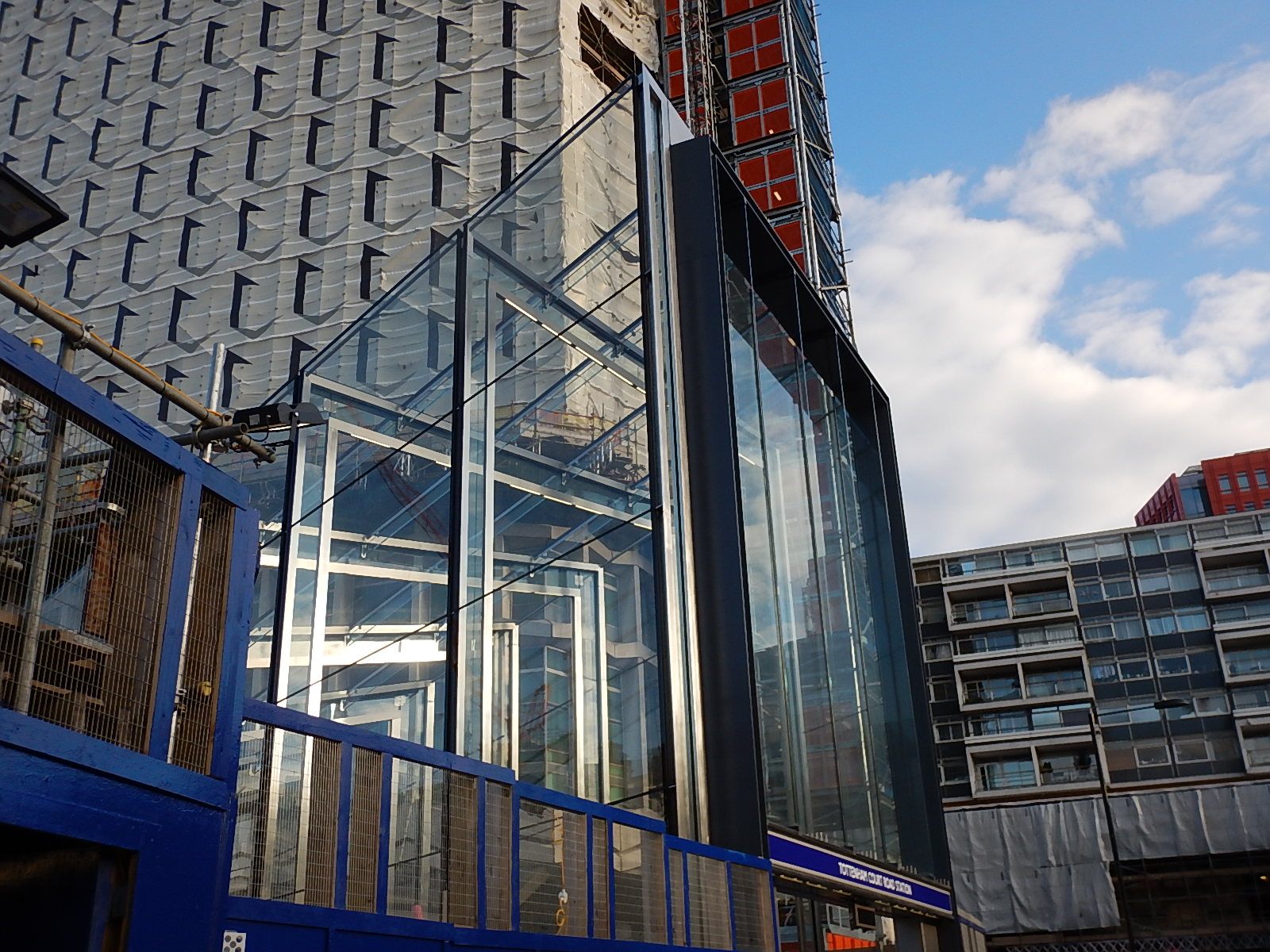
It is such a simple idea, I wonder why we don’t see more fosteritos all over the world.
TfL To Sell And Lease Back Elizabeth Line Fleet To Finance New Deep Tube Trains
The title of this post is the same as this article on Global Rail News.
Transport for London (TfL) is under financial pressure for various reasons and desperately wants to order new trains for the Piccadilly Line.
- The current 1973 Stock trains entered service in 1975.
- 87½ six-car trains were originally ordered.
- Train technology has moved on in over forty years.
- The new trains will be walk-through, lower-weight, energy efficient trains with air-conditioning and wi-fi.
- The trains may have batteries to handle regenerative braking and power failures.
When the 1967 Stock trains on the Victoria Line were replaced, the new fleet had a similar number of 2009 Stock trains.
So will TfL order 87½ trains again?
According to the November 2017 Edition of Modern Railways, this is proposed.
- Ordering a hundred trains.
- Installing new signalling.
- Increasing frequency from 24 to 33 trains per hour.
This would give a capacity increase of 60 %.
The five pre-qualiofied bidders were Alstom, Bombardier, CAF, Hitachi and Siemens. However since this was announced, the following has happened.
- Bombardier and Hitchi are submitting a joint bid.
- Alstom and Siemens have merged their rail transportation businesses.
As the order could lead to a total of 250 new trains, I suspect competition will be keen.
I can understand why, TfL are leasing the Crossrail trains to raise money for the purchase.
I would assume that TfL will lease the new Piccadilly Line trains, just like they lease the London Overground trains.
Some might think, that the trains should be purchased outright!
That means TfL would need to raise a lot of money up front.
- What also helps is that trains are an asset that last a long time, with many still being in peak condition at forty years old.
- So institutions with large amounts of cash assets like Pension Funds find trains a good place to use money to create an income for beneficiaries.
- Given that rolling stock and especially electric trains are good for the environment, it could be considered an ethical investment.
Various models are used by different transport authorities, with Merseyrail actually buying the trains and then leasing them to the train operating company.
First Train Tries Out New Northern Line Extension Track
The title of this post is the same as this article on IanVisits.
Ian says this.
The very first train has travelled on the extension of the Northern Line to Nine Elms and Battersea.
Two new junctions which will connect the extension to the existing Northern Line have now been completed, and the first train to travel over them was photographed on New Year’s Day.
As other reports say that more track will be installed, I wonder how far the train actually went!
How To Recycle A Station
Hanborough station on the Cotswold Line in Oxfordshire in being expanded.
Wikipedia says this, about theplans announced in 2016.
Plans were announced to increase services from Hanborough Station, by Great Western Railway. A launch event was held in Witney, at which GWR’s managing director Mark Hopwood said that the investment needed was £275 million. Double tracking would be reinstated between North Oxford and Long Hanborough and two disused platforms reopened. The local constituency MP and Prime Minister David Cameron told delegates at the meeting ” am utterly convinced of the necessity of investing in this line. I will do everything I can to give this vision a boost.”
This article on IanVisits, is entitled How Crossrail’s Legacy Could End Up In Rural Oxfordshire.
The article describes how the temporary station at Abbey Wood station, during Crossrail construction.
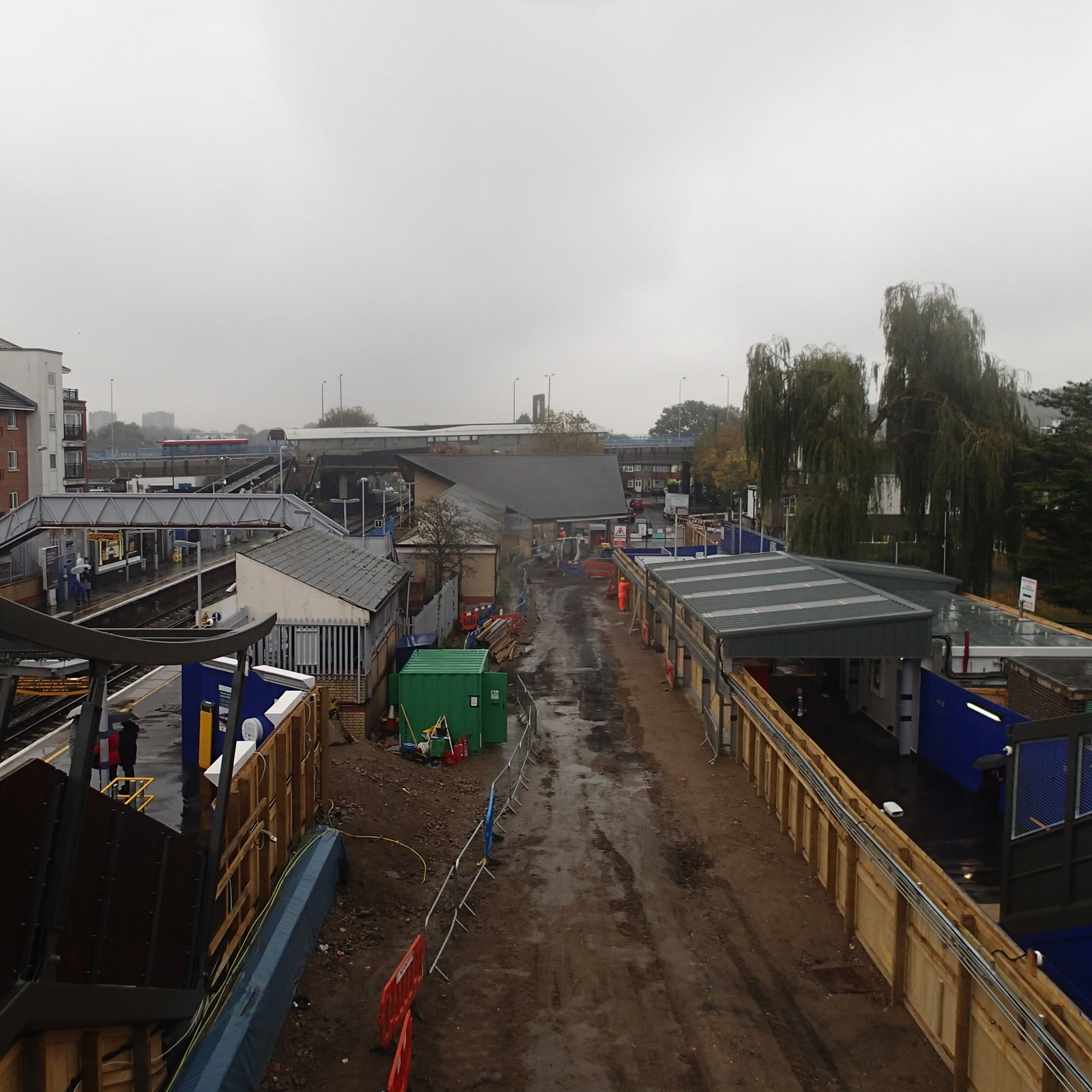
My picture comes from a post called Crossrail Build A Temporary Station.
The station buildings that could go to Hanborough are on the right behind the fence.
New Bridge In Tottenham Marks The Beginning Of Restoring A Line Lost During The Beeching Era
The title of this post says it all and is the same as this article on Rail Professional.
Some might argue that Beeching got it wrong!
My feelings though are the politicians and British Rail managers of the day generally didn’t have any vision about how the railways should be simplified to on the one hand save money and on the other perhaps create paths, cycleways and leisure facilities, for the good of everyone.
Harold Wilson’s view that everybody would have their own car and the railways were finished didn’t help either.
The Lea Valley was my childhood playground and I’d regularly cycle to the area. But unlike now, much was closed to the public.
This Google Map shows the location of the bridge.
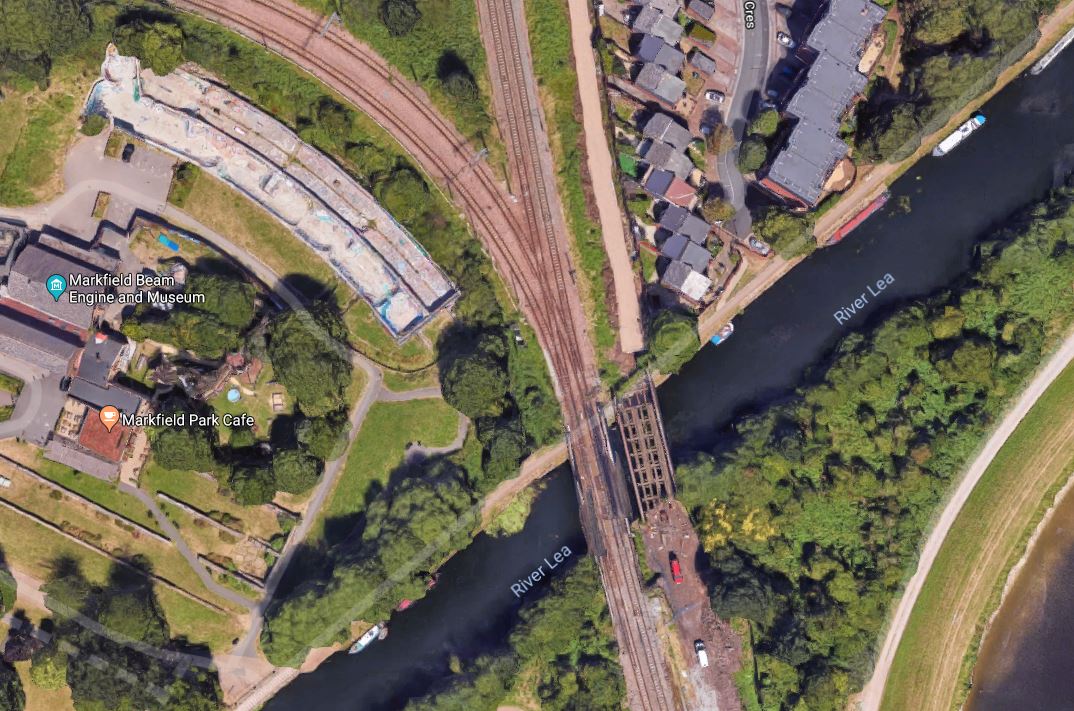
Note.
- The railway line is the West Anglia Mail Line, running South from Tottenham Hale stations.
- The bridge carrying the Easter pair of tracks is being replaced.
- Tottenham South Junction is North of the bridge and the line going West is the Tottenham South Curve, that links the West Anglia Main Line to the Gospel Oak to Barking Line.
- The Markfield Beam Engine is to the West.
- The Walthamstow Wetlands are to the East.
The area will get even more complicated in the future, when Crossrail 2 is built.
These are various pictures of the bridge site, taken on different dates
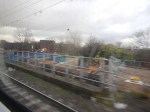
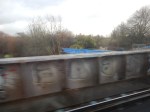
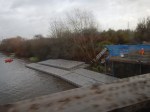
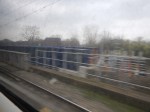
The bridge will be an important link in the development of the railways in the area.
Thameslink Trains Are Going Through London Bridge Station
This article on Rail Technology Magazine is entitled Thameslink Test trains Travel Through New London Bridge Platform For First Time.
This is said.
GTR’s first test passenger trains have made the trip through the new platform 5 at London Bridge following the completion of nearly three years of work.
The eight-carriage Class 700 RLU was the first passenger train to complete a journey over the new Bermondsey Dive-Under, as it came into London Bridge from New Cross Gate on New Year’s Day.
But they have increased their testing since.
This is a screen capture from Real Time Trains, showing Thameslink trains around 19:00 last night.
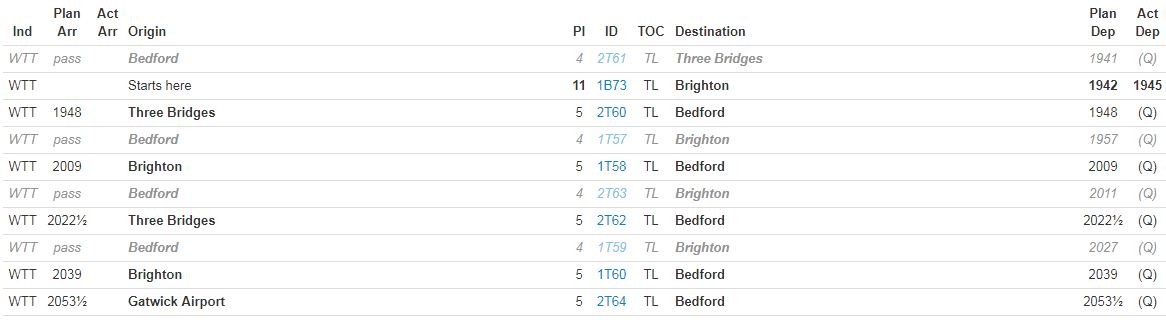
Note.
- Under the Platform column 4 and 5 are shown.
- Some trains appear to be stopping.
I’ve just checked this morning and it appears that Northbound trains are stopping in Platform 5 and Southbound services are going through Platform 4.
 The Anonymous Widower