Carlisle Station – 12th September 2017
The reconstruction of the roof of Carlisle station is coming on apace, as these pictures show.
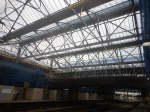



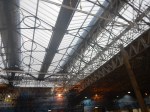
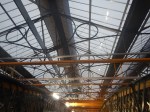
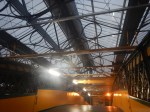
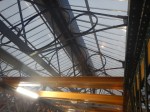
The roof was getting an immense soaking and there was an odd leak and a drumming sound, but it does seem that when everything is completed the station will be the interchange needed for the city.
A Trip To Romantic Paisley Canal Station
Paisley Canal station has the same ring to it, that I talked about in Now You Can Take A New Bus For London To Romantic Clapton Pond.
So I had to take a trip.
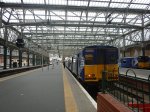
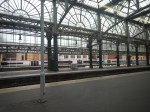

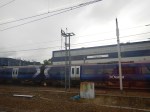
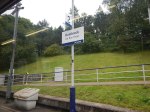
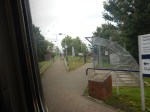

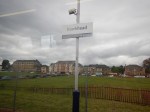

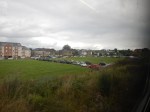
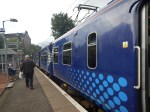

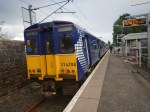
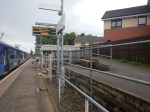
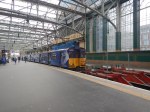
The Paisley Canal Line is very much a line of simple stations, many of which are just a single platform.
Judging by the amount of cars strewn around Hawkhead station, there would appear to be a need for Park-and-Ride station on the line.
The Class 314 Trains
This is a line, that would benefit from some replacement trains for the current Class 314 trains.
Like London’s Class 315 trains, the Class 314 trains are a reliable set of relics from the British Rail era. London’s 313 and 315 trains are all being replaced and I wonder if the new Class 385 trains will enable better stock to run on this line.
Currently, the 75 mph Class 314 trains take eighteen minutes with five stops from Glasgow Central and twenty-one minutes for the return.
As the service is half-hourly, the service requires two trains.
If the service were to be run by modern Class 385 or 380 trains, which are 100 mph trains with much shorter dwell times at stations, the trains would appear to spend a lot of time at Glasgow Central station waiting to return to Paisley Canal.
Unless of course, they are fast enough to do the return trip in under half-an-hour, which would enable the current service to be run with a single train.
Extension To Kilmalcolm
Under Future in the Wikipedia entry for the Paisley Canal Line, this is said.
The reopening of the section between Paisley Canal station and Kilmacolm has been proposed.
The distance is probably not more than a few miles and the length of the extended line would probably allow a modern train to do the round trip in an hour.
If this were the case, a half-hourly service could be performed by two Class 380 or 385 trains.
I also suspect, that should a Class 385 train with onboard energy storage be developed, that such a train might be able to run the service, using stored energy between Paisley Canal and Kilmalcolm stations.
If this were possible, then no extra electrification would be needed.
As the Paisley Canal Branch is single-track from Corkerhill station, would it be possible to build the extension as single-track?
A single-track extension without electrification would surely do wonders for the economics of the project.
Walking Between Glasgow Queen Street And Central Stations
I arranged my trip through Glasgow so that I arrived in Glasgow Queen Street station around lunchtime, so that I could have lunch at a restaurant on my way to Glasgow Central station.
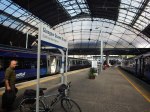
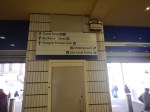





I took the side entrance to Queen Street station and walked to West Nile Street, where I had lunch in Gourmet Burger Kitchen.
From the restaurant, I continued down West Nile Street, before turning right for Glasgow Central station.
This Google Map shows the two stations and the area in between.
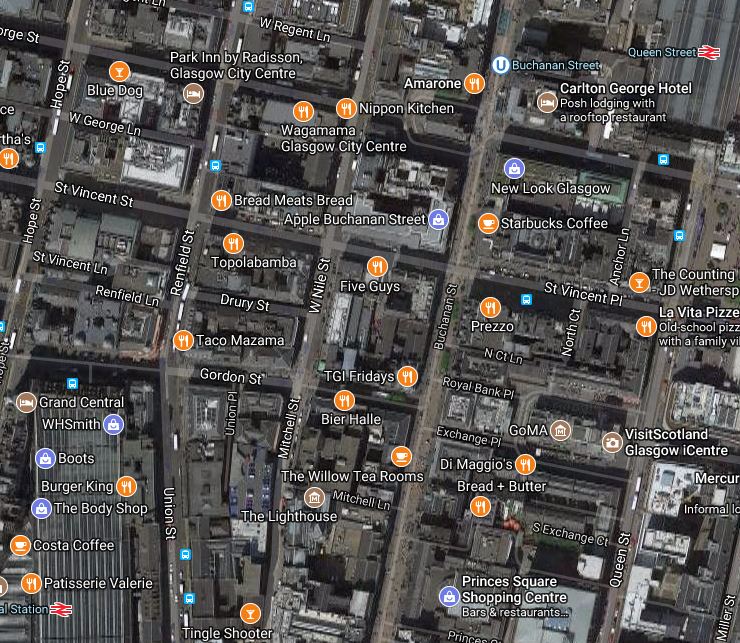
There’s probably a cafe or restaurant to suit everybody on the walking route.
Walking the way I did was slightly down hill and parts were in pedestrianised streets.
I know Glasgow’s two main stations fairly well, but there should be a signposted walking route.
Exploring The North Berwick Line
The service between Edinburgh and North Berwick stations is going to be one of the first to get the new Class 385 trains.
So I took a quick trip.



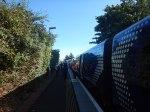

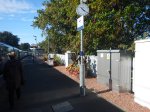
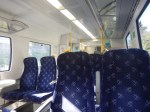


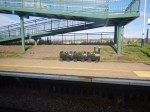
The North Berwick Line appears to be a well-maintained line with tidy, simple stations and copious car-parking.
North Berwick station shows how you can have a single-platform station handling two trains per hour (tph), where both are six cars.
The North Berwick Line is becoming increasingly busy and the six-car train I rode out of Edinburgh at ten in the morning was surprisingly busy.
New Class 385 Trains To North Berwick
The current Class 380 trains were built in 2009-2011, so why are the trains being replaced with Class 385 trains on this route?
Both trains have the following shared characteristics.
- 100 mph running.
- Three- or four-cars.
- Modern interiors.
- Ability to run in pairs with through gangways.
I think that the big difference is that the newer Hitachi trains will have wi-fi and possibly a 4G connection.
But other than that, the two trains would be interchangeable.
Glasgow To Edinburgh Services
There is also the fact that Abellio seem to be very expansive with the plans for their franchises in the UK.
As some of the North Berwick services start at Glasgow Central station, could it be that Scotrail are planning to use North Berwick as the terminal for a two tph Glasgow Central to Edinburgh via Motherwell service, in addition to all the other services going to Glasgow Queen Street station.
Effectively, by using North Berwick, they gain a much needed extra platform at Edinburgh.
ScotRail might have also decided that all Glasgow to Edinburgh services should be equipped with wi-fi and run by the new Hitachi trains.
Expansion Of Suburban Services East Of Edinburgh
Passenger numbers are rising at North Berwick station and last year there were over half a million passengers.
The single platform handling six-car Class 380 trains can probably handle several hundred passengers an hour.
But look at this Google Map of the station.

Is there enough car parking for this number of passengers?
When it is considered that with modern signalling, it might even be possible to inrease the frquency to North Berwick to three or even four tph, the platform would cope, but routes to the station probsbly wouldn’t.
There have been proposals to reopen a station at East Linton, a few miles away on the East Coast Main Line. In the Wikipedia entry for the station, this is said under The Future.
Proposals to reopen the station, along with the former station at Reston, have received the backing of John Lamont MSP, who has taken the case to the Scottish Parliament. A study published in 2013 proposed that East Linton and Reston stations be reopened. Since Abellio ScotRail took over the franchise in April 2015, they have now committed to reopening East Linton and Reston Stations as part of the local Berwick service by December 2016 but due to the shortage of rolling stock this will now commence in December 2018.
As now the extra trains are being delivered, a station at East Linton must be increasingly possible.
Would a rebuilt Reston station be used as a terminus?
This Google Map shows the village of Reston with the A1 and the East Coast Main Line.
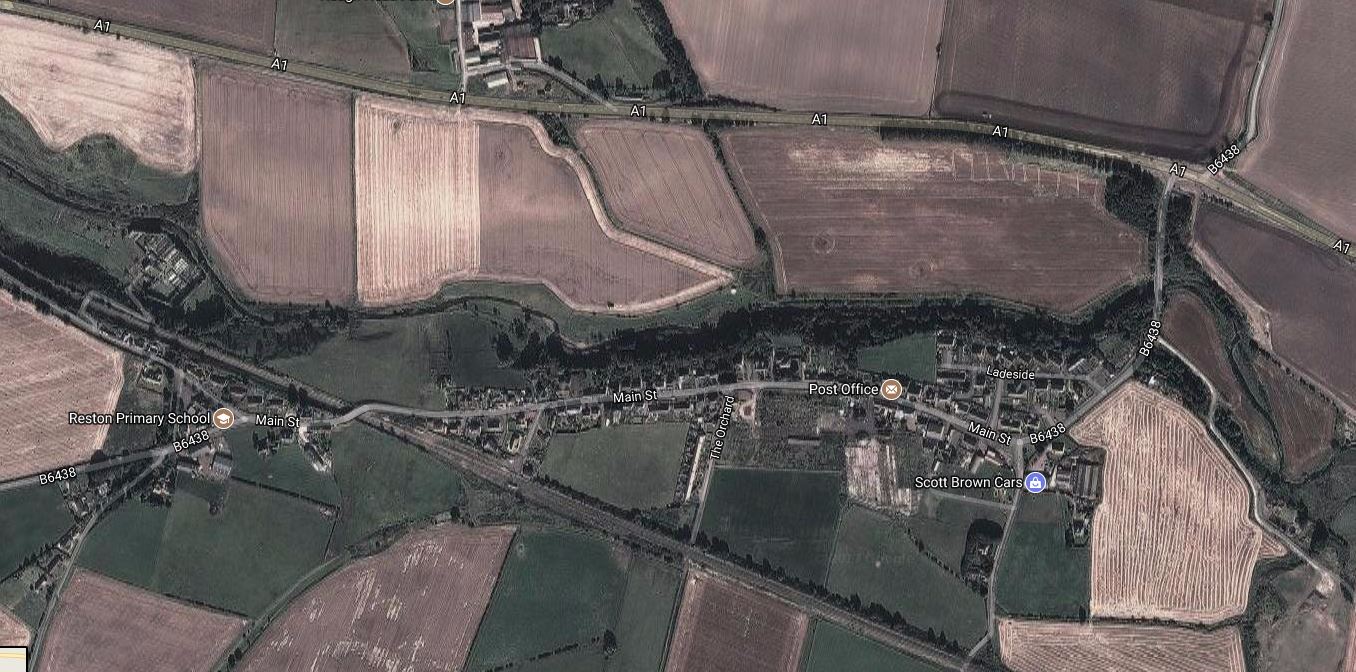
Could Reston station be rebuilt as a Park-and-Ride station with perhaps a bay platform for suburban services from Edinburgh?
Consider.
- Space doesn’t seem to be a problem.
- Drivers from the South and West might be tempted to abandon their cars and use the train.
- Reston could be a terminus for Glasgow to Edinburgh services.
Scotrail certainly have possibilities to develop an electric service between Edinburgh and Glasgow, that is a lot more than just a simple link between the two major cities.
Conclusion
The electrified Edinburgh to Glasgow service could develop into a fast and frequent Crossrail For Scotland.
From Glasgow To Carlisle In A Class 350 Train
TransPennine Express are replacing their Class 350 trains with new Class 397 trains.
So coming down from Glasgow to Carlisle, I took one of the Class 350 trains to see why they are being replaced.


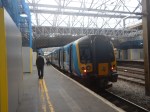
The train that I rode, had been spruced up with the new livery.
The new Class 397 train has the following advantages over the Class 350 train.
- It will be a 125 mph train rather than a 110 mph train.
- It will have power sockets, wi-fi and possibly 4G connectivity
- It will be five-cars instead of four-cars.
Will there be any other passenger features like a buffet?
Dunfermline
I’d never been to Dunfermline before, so my friend and I took a look round before returning to Edinburgh over the bridge.











It would certainly be worth another visit.
Dunfermline certainly needs an electrified rail line from Edinburgh, as I talked about in Running Electric Trains Across The Forth Bridge.
This Google Map shows the centre.
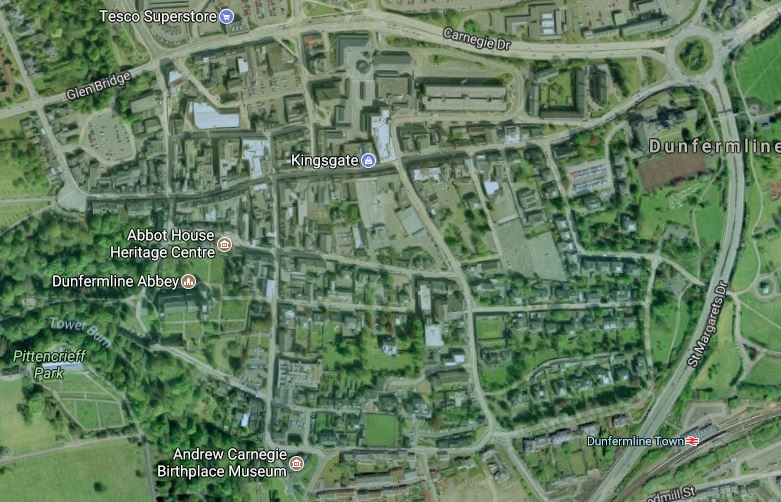
Note Dunfermline Town station in the South-East corner of the map.
Over The Queensferry Crossing
The Queensferry Crossing is Scotlan’s newest bridge over the Rover Forth.
I took these picture as we went North.
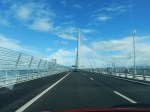


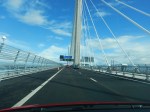
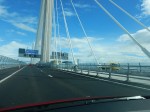




And these were taken coming South.




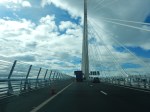


The one disappointment was that it was difficult to get pictures of the other bridges.
The Pressure For More Rail Electrification
Over the last few days, there have been several articles on the media pushing for more electrification.
This article in Rail Technology Magazine, which is entitled TfGM To Fight Corner For Full TransPennine Electrification.
This article in the Carlisle Times and Star, which is entitled Campaigners Urge Backtrack On Axed Electric Rail Projects.
This article in the Times, which is entitled New Oxford-Cambridge Rail Route Must Rely On Diesel Trains.
This article in the Nottingham Post, which is entitled Strong Condemnation Of Government Plan To Abandon Rail Electrification.
I feel that electric trains are the future, but like members of the current Government, I feel that we need an alternative approach to creating a modern railway network in the UK.
What Do Passengers Want?
Passengers in general want a comprehensive rail service, that is affordable, reliable, fast and frequent and gives them good comfort and service on trains and at their terminal stations.
What Do Train Operating Companies Want?
Train companies need and want to make profits.
Judging by the latest franchise awards to Northern, TransPennine Express, Greater Anglia, South Western Railway and West Midlands Trains, part of their philosophy to achieve this is to buy fleets of new trains to replace old ones, with the following characteristics.
- More carriages and increased capacity.
- Higher speed and performance.
- Power and USB points, wi-fi and 4G connectivity.
- Easier entrance and exit.
- Better facilities for persons of reduced mobility.
- Shorter dwell times at stations.
- Better driver assistance systems.
The best way to pay for these trains and make a profit is to fill them with happy passengers.
So Where Does Electrification Give Advantages?
In summarising what passengers and train companies want, I didn’t mention electrification, although electric trains do give advantages to both groups.
- It must be easy to fit electrical equipment into an electric train.
- Electric trains accelerate faster.
- Electric trains can be fitted with regenerative braking to save energy
Electrification is not needed in all cases as electricity for the train can be provided by diesel or hydrogen-powered generators or some form of onboard energy storage can be used.
Why Are So Many Elecification Schemes In The UK Over Budget And Late?
With my experience of writing Project Management software and talking about it with numerous Project Managers all over the world, I suspect the following about electrifying an existing railway in the UK.
- The drawings and documentation for some of the existing lines which go back well over a hundred years is questionable.
- Politicians put undue pressure to keep costs down and corners are cut.
- The scope of the project changes as it progresses.
- Those against the electrification have lots of routes to delay the project.
- We don’t have enough engineers or qualified personnel to do the work.
- Often work is on constricted sites and the locals get annoyed.
I’m coming to the conclusion, that electrification is one of the most difficult of projects.
I do feel though there is hope for the future judged on what happened at Waterloo during August.
The Future Of Road Transport
We are seeing more and more electric and hybrid vehicles on the roads and this article in the Guardian, says that Britain will ban the sale of all diesel and petrol cars by 2040.
For this to happen, there needs to be a vast improvement in the efficiency and size of energy storage systems.
A few years ago, if you’d fitted solar panels to your house, your neighbours would have laughed at you. Now they don’t as technology has improved the performance of solar panels, just like it will improve energy storage in the next few years.
What Will Improved Energy Storage Mean For Trains?
The first trains with onboard energy storage are starting to appear on the UK’s railways.
Class 800 trains – Intercity Express Programme
This document on the Hitachi Rail web site, which is entitled Development of Class 800/801 High-speed Rolling Stock for UK Intercity Express Programme.
The document provides this schematic of the traction system of a Class 800 train.

Note BC which is described as battery charger.
This is said in the text.
The system can select the appropriate power source from either the main transformer or the GUs. Also, the size and weight of the system were minimized by designing the power supply converter to be able to work with both power sources. To ensure that the Class 800 and 801 are able to adapt to future changes in operating practices, they both have the same traction system and the rolling stock can be operated as either class by simply adding or removing GUs. On the Class 800, which is intended to run on both electrified and non-electrified track, each traction system has its own GU. On the other hand, the Class 801 is designed only for electrified lines and has one or two GUs depending on the length of the trainset (one GU for trainsets of five to nine cars, two GUs for trainsets of 10 to 12 cars). These GUs supply emergency traction power and auxiliary power in the event of a power outage on the catenary, and as an auxiliary power supply on non-electrified lines where the Class 801 is in service and pulled by a locomotive. This allows the Class 801 to operate on lines it would otherwise not be able to use and provides a backup in the event of a catenary power outage or other problem on the ground systems as well as non-electrified routes in loco-hauled mode.
Note that GU refers to Generator Unit, which in these trains are diesel-powered.
This is all very comprehensive, but if you look at how the braking system of the trains work and if it uses regenerative braking, you won’t find anything on the web.
But note how the four traction motors in the diagram are connected to the system. When they are in braking mode, what happens to the electricity?
- It is returned to the overhead wires. Difficult when using GUs on lines without electrification.
- It is passed to resistors on the roof of the train and burnt off as heat.
- It is stored in some form of onboard energy storage, so it can be reused later.
I feel that Hitachi are using Option 3, as it would work in both modes of the train and would save a lot of energy.
Note that in the above extract from the Hitachi document, the company states that the electric Class 801 trains have at least one GU to provide auxiliary and traction power in the event of catenary failure.
It looks like the only difference between the Class 800 and Class 801 trains, is that the Class 800 trains have more GUs.
Could this explain why Hitachi seem to be doing all their testing with Class 800 trains, as the differences between the two trains are minimal?
If the Class 800 works, then the Class 801 will!
Hitachi are also testing the Class 802 trains, but then these are built in Italy, have more powerful engines and bigger fuel tanks.
Bombardier Aventras
Bombardier have been developing battery technology for some years and as I described in Is The Battery Electric Multiple Unit (BEMU) A Big Innovation In Train Design?, I rode in the prototype converted from a Class 379 train in February 2015.
I believe that the Class 345 trains are fitted with onboard energy storage for the following reasons.
- Onboard energy storage is the logical way to handle regenerative braking in tunnels.
- Onboard energy storage means that each train reuses its own braking energy and draws less current from the electrification.
- Onboard energy storage is the only way to move a train to a safe place, when the Russians or North Koreans hack the power suppky.
- Some of the features announced for Aventras, like remote wakeup as I discussed in Do Bombardier Aventras Have Remote Wake-Up?, need onboard energy storage.
- Bombardier have won awards for the technology.
Until Bombardier say otherwise, I’ll assume that Aventras like the Class 345 trains have onboard energy storage.
Overhead Power In Long Tunnels
It should also be noted that the overhead power supply in the Crossrail tunnels is a rail fed with power at both ends, as incidentally is the Severn Tunnel.
Could it be that money could have been saved on the electrification of these tunnels as all electric trains using them; IEPs and Aventras, can handle their own regenerative braking energy?
The Effect Of Large Onboard Energy Storage On Trains and Trams
There is a big difference between adding weight to a pneumatic-tyred vehicle like a car or truck, and adding weight to that of a steel-wheel-on-steel-rail vehicle like a train or tram.
With the former, the rolling resistance is increased, which means more power is needed to move the vehicle, but with the latter, surprisingly, the reverse is true.
This allows locomotives to pull iron ore, coal and stone trains carrying hundreds of tonnes.
So adding a heavy energy storage device under a train may not be as detrimental to performance as you may think.
I suspect Bombardier, Hitachi and others have determined the optimal size of storage device for their trains.
I believe the following, if an appropriately-sized online storage device is fitted to a train.
- It will be able to handle all the regenerative braking energy.
- It will give the train a range of up to fifty kilometres on stored energy.
Without doubt, all trains driven by electricity and having regenerative braking will use onboard energy storage.
This applies even if their main power source is not electricity, but perhaps diesel, hydrogen or extra-strong knicker elastic!
Discontinuous Electrification
Modern trains like Aventras and Hitachi Class 80x trains have another ability.
They can raise and lower their pantographs under GPS control, so that they only connect with the electrification, when it is there.
They can also do it at line speed.
This raises the possibility of discontinuous electrification, where the easy-to-electrify sections have wires and the difficult bits are run using either diesel, hydrogen or onboard storage power.
An example would be between Batley and Morley stations on the Huddersfield Line, between which is the Morley Tunnel.
- The tunnel is four kilometres long and hopefully could be electrified using a conductor rail in the tunnel roof.
- Morley station is hard by the Northern portal of the tunnel.
- The line from Morley to the electrification at Leeds doesn’t appear to have any serious bridges to replace and the double-track line has wide margins.
- Batley, Morley and Cottingley stations are all stations with platforms either side of the track and could probably have the gantries on the platform.
Would it be possible to electrify short sections of line like this and let the trains and the driver decide to use onboard or overhead power?
The TransPennine Route
I will look at the TransPennine route in detail.
Mainly Electrically-Driven Trains
Looking at the various trains on TransPennine routes, we see the following ways of driving the trains and locomotives.
- Class 156 trains – hydraulic
- Class 158 trains – hydraulic
- Class 170 trains – hydraulic
- Class 185 trains – hydraulic
- Class 195 trains – mechanical – six-speed epicyclic
- Class 220 trains – electric
- Class 221 trains – electric
- Class 802 trains – electric – bi-mode
- Class 66 locomotives – electric
- Class 68 locomotives – electric
- Class 88 locomotives – electric – bi-mode version of a Class 68 locomotive.
The last three trains and all the locomotives in this list are electrically driven, where on-board diesel engines generate electricity to power the train.
In addition the Class 802 trains and the Class 88 locomotives are bi-mode and can use electrification to power the trains directly, if it is available.
So a Liverpool to Newcastle service using Class 802 trains or Class 88 locomotives and Mark 5 carriages could use the overhead electrification on the following sections of track.
- From Liverpool to Stalybridge via Manchester Victoria
- Through Leeds
- On the East Coast Main Line
Electrifying between Leeds and the East Coast Main Line would seem to be a lot easier than that between Leeds and Manchester, so I suspect that there is some seriously difficulty that has prevented it being done already, as it would allow Kings Cross to Edinburgh services to stop at Leeds, if that was desired.
Improving The Current Service
Currently Liverpool Lime Street to Newcastle takes three hours and three minutes, with the following sectional times.
- Liverpool to Manchester Victoria – 39 minutes
- Manchester Victoria to Huddersfield – 30 minutes
- Huddersfield to Leeds – 22 minutes
- Leeds to York – 25 minutes
- York to Newcastle – 67 minutes
Some places to save times are apparent.
- Liverpool to Manchester Victoria could be speeded up by a couple of minutes, after the addition of the fourth track at Huyton.
- According to the time table, most dwell times are reasonable, but nine minutes is allowed at Manchester Victoria.
- Manchester Victoria to Stalybridge is being electrified.
- Virgin’s fastest trains take 56 minutes between York and Newcastle, so I would assume that a TransPennine Class 802 train could match this.
- If Leeds to York were to be electrified, I would think that the same percentage decrease in journey time could be expected, which would give a Leeds to York time of 21 minutes.
Could we see the following times on the route?
- Liverpool to Manchester Victoria – 30 minutes
- Manchester Victoria to Huddersfield – 28 minutes
- Huddersfield to Leeds – 22 minutes
- Leeds to York – 21 minutes
- York to Newcastle – 56 minutes
This gives a timing of 157 minutes, which is a saving of twenty-three minutes.
Is The Track Up To It?
Under Timings And Line Speeds in the Wikipedia entry for Liverpool and Manchester Lines, this is said.
As of 2016, the fastest journey times are around half an hour, which is little better than over a century earlier. The fastest recorded run was from Manchester Exchange to Liverpool Lime St in 30 minutes 46 seconds by a 1936 built Jubilee 5707 with 7 coaches. An 1882-built compound steam locomotive was timed on the same route in 38 minutes 18 seconds. Until 1968 trains from Liverpool to Manchester by all 3 routes were scheduled to take 40 minutes and often took less. The southern route via Warrington is now restricted to 85 mph and the northern route via Earlestown to 90 mph, with 75 mph over Chat Moss.
Work is under way to four-track the line between Huyton and Roby which is scheduled for completion in December 2017.
Surely, Twenty-First Century engineering can sort out Stephenson‘s problems of nearly two centuries ago!
If it’s like this between Liverpool and Manchester on a fully-electrified line, what’s it like between Manchester and Leeds?
I believe that modern engineering should be able to create a 100 mph route between Liverpool and Leeds.
Are The Other Trains Slowing The Expresses?
Northern run an assortment of trains between Liverpool and Leeds via Manchester Victoria.
Between Liverpool and Manchester Victoria are all the services timed for and run by 100 mph Class 319 trains, or do some of the assortment of 75 mph trains share the route? If it’s the latter then they will delay the expresses.
Between Manchester Victoria and Hudderfield, I’m sure that slower trains are on the route.
Help is at hand as Northern have ordered fifty-five Class 195 trains, which have a 100 mph capability.
Should Stalybridge To Leeds Be Electrified?
Only when slow trains have been eliminated and the track has been improved to allow 100 mph running between Liverpool and Leeds should we answer this question!
Using rough estimates, I feel we might see the following timings with a Class 802 train.
- Liverpool to Manchester Victoria – 26 minutes
- Manchester Victoria to Huddersfield – 21 minutes
- Huddersfield to Leeds – 16 minutes
- Leeds to York – 21 minutes
- York to Newcastle – 56 minutes
This gives a timing of 140 minutes, which is a saving of forty-three minutes on the current times.
Improving Leeds To Newcastle
The Class 802 trains are stated in Wikipedia as being capable of running at 140 mph with minor modifications.
How many minutes would this take off the journey, if this were to be possible?
Conclusion
There are a lot of things to do before the decision to electrify Stalybridge to Leeds is taken.
- Sort the track for at least 100 mph running.
- Remove all passenger trains not capable of 100 mph from the line.
- Perhaps add some passing loops.
- Electrify Leeds to Colton Junction.
- Remove all level crossings.
- Raise all bridges and other structures, so that electrification is possible.
- Get the planning permission for electrifying the sensitive areas.
Hopefully these actions in themselves would deliver a time of under forty minutes between Manchester and Leeds.
That would be a spoonful of sugar for the passengers and the train operating companies.
Any attempt to electrify without doing all of these actions before the decision to electrify is taken, will result in the sort of mess seen in some of the electrification schemes of the last few years.
The East West Rail Link
I will look at the East West Rail Link in detail.
Linking To Electrified Lines
The East West Rail Link joins or crosses the following electrified lines.
- The Great Western Main Line at Didcot
- The West Coast Main Line at Bletchley
- The Midland Main Line at Bedford
- The East Coast Main Line at Sandy
- The West Anglia Main Line at Cambridge
As connecting the National Grid to electrification is a major cost, if the line were to be electrified, then there are several places to connect at a cheaper cost.
Building For Electrification
The instructions from the Department for Transport seem to have stated the following.
- The line will be double track.
- The line will have an operating speed of at least 100 mph or possibly 125 mph.
- All bridges and structures, will be built to accommodate overhead electrification.
I wonder if the specification suggests preparing the margins of the route, so putting up overhead gantries wouldn’t be a case of digging and hitting important cables or pipes.
Electrification of new lines like the East London Line, Crossrail and the Hitchin Flyover seem to have proceeded much smoother than schemes like the Gospel Oak to Barking Line.
Trains For The East-West Rail Link
The proposed services include.
- Oxford to Bedford
- Bletchley to Bedford
- Oxford to Milton Keynes Central
- Aylesbury to Milton Keynes Central.
I have also seen suggestions that the trains terminate at Reading.
The trains will need the following.
- A 100 mph capability to make good use of the route.
- Ability to use overhead electrification to get to Bedford, Milton Keynes Central and Reading.
- Ability to use diesel to use the Chiltern routes to Aylesbury and Marylebone.
To meet all these requirements, it would appear bi-mode trains like a Class 800 train are needed.
Should The East-West Rail Link Be Electrified?
Consider.
- The trains chosen for the route will be bi-mode and so the line doesn’t need to be electrified.
- Freight trains using the route would be hauled by a diesel locomotive or possibly a bi-mode locomotive like a Class 88 locomotive.
However, if at a future date, all or part of the electrification were to be deemed needed, if the line had been built with electrification in mind, putting up the wires would be a lot easier than on the TransPennine route.
Conclusions
I have come to these conclusions from these two examples.
- The bi-mode route allows a lot of flexibility and means that electrification with all its problems can be done when it is really necessary.
- The bi-mode route, also means that passengers get the benefits of modern, faster and more frequent trains at an earlier date.
- Electrification of a new line is easier than electrifying an old Victorian one.
- All new or reopened lines should be built to allow electrification at a future date.
Don’t underestimate the ingenuity of railway engineers to make a more comprehensive railway powered by electricity possible.
Do Bombardier Aventras Have Remote Wake-Up?
Remote wake-up is detailed in this snippet from an article in the Derby Telegraph, which appears to have since been deleted.
Unlike today’s commuter trains, Aventra can shut down fully at night and can be “woken up” by remote control before the driver arrives for the first shift.
So could we see a train parked up at night in the sidings at the end of the line, after forming the last train from London? The train would then call home and report any problems, which would be sorted if needed, by perhaps a local or mobile servicing team. In the morning, the driver would turn up and find that the train was warm and ready to form the first train of the day up to London.
Since I found this in 2016, I’ve told several drivers and all had stories about cold trains in their least favourite places.
The Halton Curve: Small Piece Of Track, Big Rail Ambitions
The title of this post is the same as that of an article on the Rail Technology Magazine web site.
The Halton Curve will create a link between Liverpool and North Wales. This page on the Network Rail web site gives more details.
Work has started on the 1.5 miles of rail track, known as the ‘Halton Curve,’ that will unlock leisure and business opportunities between the Liverpool City Region, its airport, Cheshire and North Wales.
Vital upgrades to signalling and track will enable new services between Liverpool and Chester, serving Liverpool Lime Street, Liverpool South Parkway (for Liverpool John Lennon Airport) Runcorn, Frodsham and Helsby.
The existing line, which currently only runs a one-way passenger service once a week in the summer, will be upgraded to provide an hourly service in each direction from December 2018 with the potential for connections to North Wales in the future.
Restoring the Halton Curve is similar to a number of smaller projects that have been executed in the last few years, to improve connectivity and efficiency in the UK rail network.
- Allington Chord – A short section of track removed a bottleneck at Grantham on the East Coast Main Line.
- Bacon Factory Curve – A 1,415 metre link at Ipswich, that improves the operation of freight trains to and from the Port of Felixstowe and speeds up services on the Great Eastern Main Line.
- Hitchin Flyover – A flyover at Cambridge Junction on the East Coast Main Line, that cut delays to expresses on the East Coast Main Line.
- North Doncaster Chord – A flyover to take freight trains between Immingham and Drax over the East Coast Main Line.
- Todmorden Curve – Four hundred metres of reinstated railway, that now allows direct services between Burnley Manchester Road and Manchester Victoria stations.
Most seem to have been worthwhile. But look back a couple of decades and it was unlikely that some of these projects would ever be needed.
As the economy grows, freight moves from road to rail and more people travel a lot more by rail, it is very difficult to predict what will happen in the future. I feel we should address the following.
If we remove a railway line, we should not destroy the ability to reinstate the line. Rebuilding the Waverley Route and the Varsity Line would be a lot easier, if this rule had been followed.
Network Rail appear to have a tendency to kick smaller projects into the future. A simple example is the creation of a bay platform at Stevenage station to turn back services on the Hertford Loop Line which seems to have been pushed back until after the new Class 717 trains arrive.
 The Anonymous Widower