Old Uncle Tom Cobley And All Financing
This article from Railway Gazette is entitled Pension funds back Abellio East Anglia order for Stadler trainsets.
These details of the trains are given.
Stadler’s first major order for UK main line passenger rolling stock covers 58 Flirt UK trainsets to be built in Switzerland. There will be 10 12-car 25 kV 50 Hz inter-city EMUs for London – Norwich services with 628 standard and 80 first class seats plus a bistro, and 10 12-car EMUs for the London – Stansted Airport route with 710 standard class only seats. The 24 four-car and 14 three-car electro-diesel units for standard class only regional services will have the diesel engines in a mid-train power module car.
But the most interesting part of the article is about the financing of the trains.
Funding is being led by Rock Rail and SL Capital Partners, with additional co-investment equity provided by the GLIL infrastructure investment joint venture of the Greater Manchester Pension Fund and London Pensions Fund Authority. Debt was arranged by DC Advisory from Aviva, Sun Life, Barings Asset Management, Legal & General, Standard Life Investments and the European Investment Bank, which is providing a 28-year £60m loan using its European Fund for Strategic Investments guarantee for the first time in the UK.
A large number of reputable names seem to have their signatures on the deal.
I notice that the European Inveestment Bank is there, so they can’t be too bothered about Brexit.
Rail Replacement Trains
I was alerted by this blog post from Utterlee, that was entitled LONDON OVERGROUND GOES OFF THE RAILS.
It describes how because of engineering works, London Overground were routing North London Line services between Camden Road and Willesden Junction stations by way of South Hampstead, Kilburn High Road and Queen’s Park stations.
These pictures show my journey.
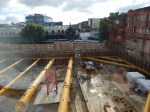
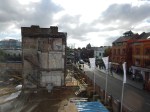
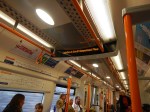
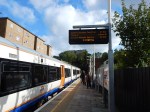
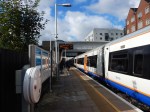
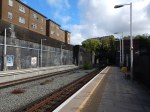
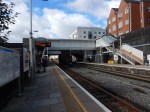
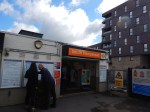
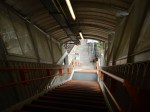
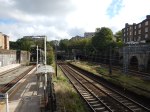
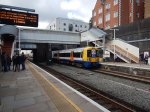
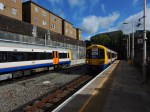


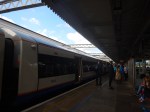
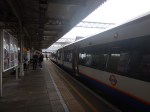
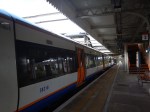
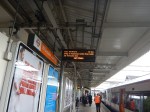
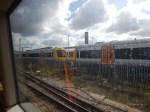
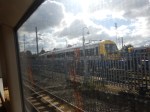
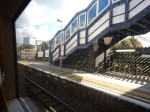
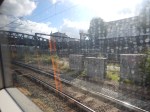
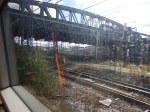
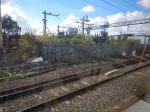
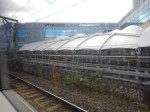



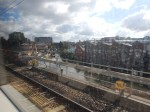

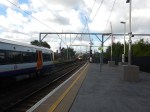
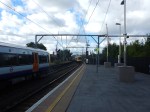
Well it makes a change from the dreaded rail replacement bus.
The Route
I took the train from Stratford to Willesden Junction, via the following stations.
- Hackney Wick
- Homerton
- Hackney Central
- Dalston Kingsland
- Canonbury
- Highbury and Islington
- Caledonian Road and Barnsbury
- Maiden Lane – Closed
- Camden Road
- Primrose Hill – Closed
- South Hampstead
- Kilburn High Road
- Queen’s Park
- Kensal Green
The route took eight minutes longer.
I think this was explained by having to wait to slot in with the Bakerloo Line trains at Queen’s Park and the wait of a minute or so, which the power was changed between voltages.
The Class 378 Trains
The Class 378 Trains obviously fit the route, as they run on all of it on a daily basis.
The station display and onboard announcements were correct and the five-car train I rode, fitted all the stations between Camden Road and Willesden Junctions.
The Bay Platform 2 At Willesden Junction
I wrote about this platform in Platform Action Has Finished At Willesden Junction.
Wikipedia says this about the platform.
Normally only the first and last NLL trains of the day, which start or terminate here, use the bay platform, though it is used for empty stock transfers between the depot and the North London and Gospel Oak to Barking lines.
This map from carto.metro.free.fr, shows the lines.
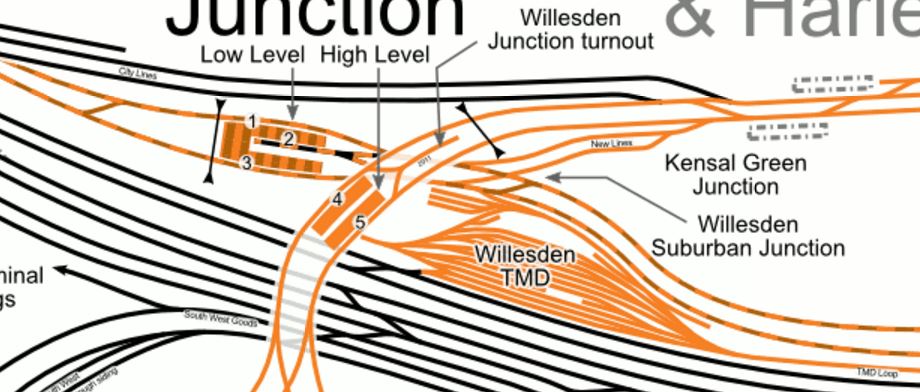
The Bay Platform At Willesden Junction
It looks like the platform can accept trains from the South and East.
It certainly reversed the train efficiently for its return journey.
As it gives a totally step-free access between both Northbound and Southbound services on the Bakerloo and Watford DC Lines, I’m certain that this platform wasn’t built solely to handle empty stock movements, early and late trains, and rail replacement trains.,
If you look at the map, the station can act as a terminus and reverse trains from the following directions.
- From the East on the North London Line in the Bay Platform 2
- From the South on the Watford DC Line in the Bay Platform 2
- From the West on the North London Line in the Willesden Junction Turnout
- From the South on the West London Line in the Willesden Junction Turnout
Because of the crossover to the North of the station, trains can even be reversed coming from the North on the Watford DC Lines.
I can’t believe that Transport for London haven’t got a cunning plan for the use of this convenient platform.
The Class 172 Trains
As the pictures show, all of the Class 172 trains for the Gospel Oak to Barking Line were parked at Willesden Depot.
I know, they’ll be used again from February 2017, but surely there is something more productive they could do in the meantime.
The Class 710 Trains
The Class 710 trains ordered for the Gospel Oak to Barking Line are actually Class 710/2, with a dual voltage capability. This is probably sensible, as it would mean they could go past Gospel Oak to Richmond or Clapham Junction, which has been suggested and the stations are firmly in third-rail territory.
London Overground have also ordered six Class 710/2 trains for the Watford DC Line. Wikipedia says this about the use of Class 710 trains on the Watford DC Line.
The intention is that the five-car Class 378 trains currently used on the Watford route will be cascaded back to the North London and East London Lines to allow for strengthened services.
I suspect that London Overground want a fleet with a consistent capability of dual voltage on all the cross-London Lines.
But will four-car trains on the Watford DC Line be sufficient capacity for the line, which currently has five-car services?
It is probably worth noting that South Hampstead and Kilburn High Road stations have lower passenger levels than say Hackney Central or Dalston Kingsland stations, so perhaps, a three tph four-car service will be sufficient.
Incidentally, as Euston to Watford Junction takes fifty minutes,it would need six trains to run a three tph service all day.
So it looks to me, that the base service through Kilburn High Road and South Hampstead stations will be three four-car trains per hour all day.
Could Stratford To Willesden Junction Via South Hampstead Be Made Permanent?
Last week, when I passed through Willesden Junction station, I noticed a Class 378 train was waiting in the Bay Platform 2.
Perhaps it was an empty stock movement or were London Underground doing a bit of route training for drivers in preparation for the weekend’s Rail Replacement Train.
There are various factors that will affect Transport for London’s thinking.
- The Watford DC Line means that paths and platforms at Euston station must be reserved for third-rail electric trains.
- Watford Junction station will be getting a direct connection to
- Euston station will be rebuilt for HS2.
- Crossrail and Thameslink will be fully open in 2019.
- Camden Town tube station will be rebuilt and extended, possibly with a better link to Camden Road station.
- Old Oak Common station will be built, as part a major infrastructure development and transport hub.
- A future Old Oak Common station could have connections to Central Line, Chiltern Line, Crossrail, HS2, North London Line, West Coast Main Line and West London Line.
- The low passenger numbers at Kilburn High Road and South Hampstead stations.
- Highbury and Islington station must be on an early list for updating to improve its terrible access to the low-level Victoria Line and Great Northern Metro.
- Camden Council would like to reopen Maiden Lane station.
- Primrose Hill station could be rebuilt with a decent walking route to Chalk Farm tube station.
- Four-tracking of the North London Line between Camden Road and Highbury and Islington stations could be possible.
- West Hampstead Interchange could be created to link the North London Line, Chiltern Line and Underground services.
- There is a need for more freight and passenger services across London.
- Electrification and an increase in capacity for the Gospel Oak to Barking Line will change travel patterns.
- Plans exist to run passenger services on the Dudding Hill Line.
I feel that we could be seeing a reorganisation of services across North London and probably there will be no better time
Stopping the Watford DC Line service to Euston might be a good idea for the operation and reconstruction of the crowded London terminus, but it would deprive passengers from Kilburn High Road and South Hampstead of their direct service to Euston.
But is a three trains per hour (tph) service to Euston worth keeping, if stopping it, eases the situation at Euston?
Perhaps if the following interchanges were built or improved, then passengers might accept the closure of the direct service to Euston.
- Primrose Hill station and Chalk Farm tube station.
- Camden Road station and Camden Town tube station.
- Maiden Lane station for everything at Kings Cross.
- Highbury and Islington station for Victoria Line and Great Northern Metro.
I think in an ideal world, the least amount of disruption and uncertainty will be caused by improving one or more of the stations named above and then seeing how the pattern of passenger journeys develop.
Consider.
- Transport for London had a lot of staff on the platforms and in the stations on Sunday, who were explaining what was happening to the trains.
- There could be arguments to reopen Primrose Hill station with a walking route to Chalk Farm tube station, as it would surely give an alternative route to avoid Camden Town station during that station’s rebuilding.
- There are probably freight capacity reasons for four-tracking between Highbury and Islington and Camden Road stations.
I think we could see a package of improvements such as.
- Step-free connection between the Overground and the Victoria Line and Great Northern Metro at Highbury and Islington station, using the closed entrance on the other side of Holloway Road.
- Reopening of Primrose Hill station
- Improved voltage changeover at Primrose Hill station.
- Reopening of Maiden Lane station.
- Enabling works for four-tracking between Highbury and Islington and Camden Road stations.
Organised professionally, I suspect that it could all be done with the minimum of disruption to existing services.
Could The North London Line Be Four-Tracked Between Camden Road And Highbury And Islington Stations?
I ask myself this question every time, I take a train across from between Camden Road Highbury and Islington stations.
This map from carto.metro.free.fr explains why.
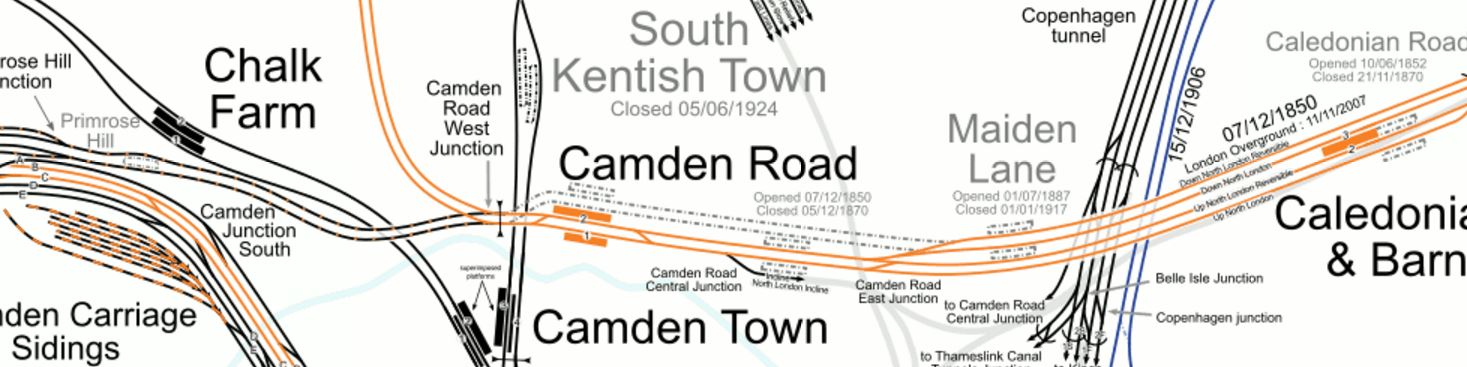
North London Line
Note the two extra tracks to the North of the North London Line, that have been closed. Some were closed in 1870, but the space looks from the train that there might be a possibility of reinstatement.
This Google Map shows the four-track section through the site of the former Maiden Lane station.

The Site Of Maiden Lane Station
Note.
- The four tracks of the North London Line at the top.
- The remains of the platforms at Maiden Lane station.
- The East Coast Main Line going down the right hand side pf the map.
- The Channel Tunnel Rail Link going across the bottom -right hand corner.
The single track in the space between the lines , which runs South-West to the North-East, is the North London Incline, which loops to the South of the North London Line and allows train to come down the East Coast Main Line and then go West along the North London Line.
I once took it in a sleeper between Edinburgh and Euston.
It was a journey that illustrates how all sorts of freight and passenger trains, get to use the North London Line.
Four tracks between Hackney and Willesden would certainly add to the capacity of the line and help get its unique mix of trains through this crowded part of London.
Consider.
- East of Camden Road station, there would need to be some reorganisation and new track.
- Highbury and Islington station would need reorganising.
- West of Camden Road station, as there is two routes to Willesden Junction, each of which has two tracks, there are four tracks already.
- New digital signalling will help.
Four tracks might not be created, but something will have to be done to create more capacity for freight trains from London Gateway and the Haven Ports to any part of the country West of London or the M1.
And of course, travellers will demand more passenger trains along the line.
Is Highbury and Islington Station The Key That Unlocks Everything?
Highbury and Islington station suffered a double whammy.
- On the 27th June 1944 it was hit by a V1 flying bomb.
- Much of the remains of the station was then demolished in the 1960s, to create an interchange for the Victoria Line.
Luckily the 1960s architects left the station building on the other side of Holloway Road more or less intact on the outside.
But things are happening at the station.
- The Northern City Line will become the Great Northern Metro with a minimum of twelve trains per hour (tph) between Moorgate and Alexandra Palace before splitting for Welwyn Garden City and the Hertford Loop Line.
- The Victoria Line will keep increasing the number of trains, it squeezes through the 1960s tunnels. One day, I wouldn’t be surprised to see 40 tph. Victoria is a generous lady!
- In Increased Frequencies On The East London Line, I wrote of up to 24 tph along the East London Line, with Automatic Train Control in the core section. This must surely bring more trains to Highbury and Islington.
- The North London Line will get extra trains cascaded from the Watford DC Line from 2018.
- The urban realm outside the station could be improved.
If all these trains and their passengers are going to be handled quickly and safely, then improvements must be made to the station.
This map from carto.metro.free.fr shows the lines at the station.
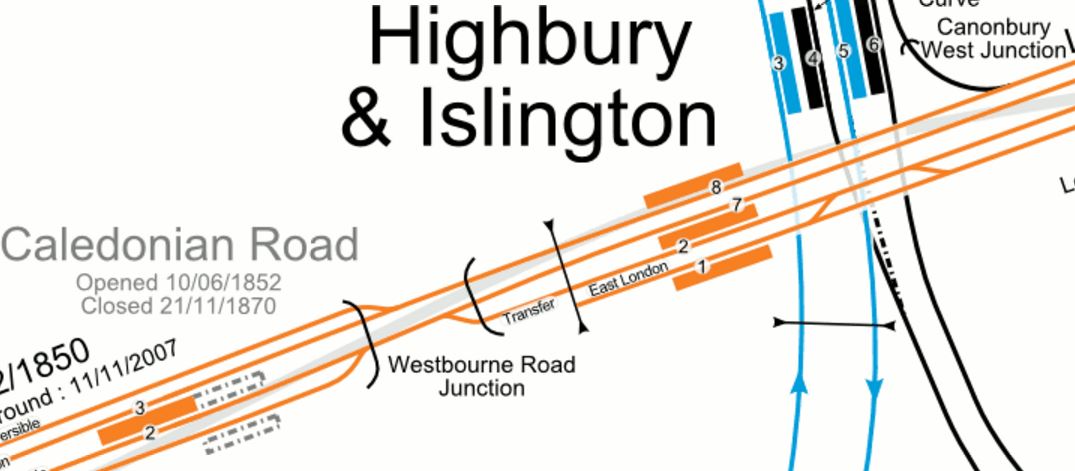
Highbury And Islington Station
The access to the Overground Lines at the station is easy, but with two just escalators and long passageways the access to the four deep-level platforms is terrible. It’s even worse if you’re disabled or have problems, as there is no lift.
I’ve not seen a 3-D image of the station, but a station-man told me, that he feels that lifts and possibly another bank of escalators could be installed in the second entrance on the other side of Holloway Road.
He might be wrong, but something drastic needs to be done to improve connectivity between the Overground and the deep-level lines.
The only thing that might get the station out of trouble in this matter, is the cross-platform interchange between the Victoria Line and the Great Northern Metro. This will ease passengers speedily to and from Moorgate and its hopefully comprehensive double-ended Crossrail station shared with Liverpool Street.
At present, two of the four lines through Highbury and Islington are bay platforms.
- Platform 1 would probably be left as it is, as going through would probably be difficult.
- However Platform 2 looks like it could accept through sevices, or serve as a terminus from services from either direction.
So will Highbury and Islington station be the key that unlocks everything?
It’ll certainly give passengers from stations like Camden Road, interesting travel options.
Possible New Routes
If you look at the combined North and East London Line system, that runs in a curve around North East London, it has termini; both in use and possible all along its length.
- At the Eastern and Southern ends you have Clapham Junction, Crystal Palace, New Cross, Stratford and West Croydon.
- Walthamstow and Chingford can be reached from Hackney Wick and Stratford.
- At the Northern end you have Watford Junction.
- At the Western ends you have Clapham Junction and Richmond.
- In the middle you have Highbury and Islington and Willesden Junction stations, that could probably turn trains from either direction.
It looks to me, that Transport for London have several options and all the statistics to create cross-London routes that passengers would use.
A Walk From Moorgate To Liverpool Street Station
This morning, I walked from Moorgate to Liverpool Street station, when it was quiet.
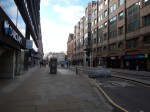
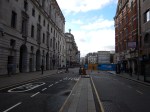
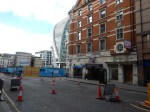
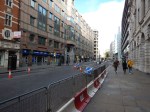


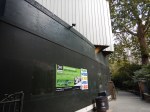

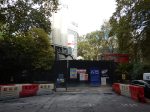
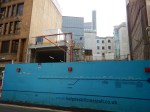

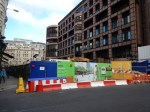
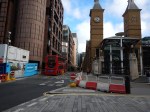

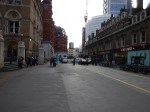

I took a route through Finsbury Circus, and was thus able to look at the various Crossrail works in the area.
These are some comments about the area, often based on this page on the Crossrail web site, which details the urban realm around Crossrail stations in the City of London.
Moorgate
Moorgate station will be much changed from the current station.
Reading the Crossrail web site, gives the impression that the majority of passengers will generally walk to the station from perhaps their office, a bus or a taxi. This is said.
- Reducing carriageway width in Moorgate and increasing footway space.
- Introduction of a central pedestrian median in Moorgate to improve crossing at a key pedestrian crossing point and improve accessibility for all users.
- A new pedestrianised public space will be created on Moorfields between New Union Street and London Wall, with access limited to emergency and service vehicles only.
- Moorfields south of Moor Place will act as a ‘secure zone’ outside the new station entrance in which vehicles access will be controlled via station controlled retractable bollards.
- Away from the raised carriageway areas regular kerb heights are retained in close proximity to the station entrance in Moorfields, Moorgate and Fore Street which allow for comfortable boarding of taxis via wheel chair ramps. The closest regular height kerbs to the station are located approximately 30m from the station entrance on Moorfields and Moorgate.
All is part of a wider plan in the City of London, which will probably result in a more pedestrian- and cyclist-friendly city.
Buses On Moorgate
Nothing is said about buses on Moorgate, which are important to me, as they stop at the end of my road, with Northbound and Southbound stops within a hundred metres of my house.
I have two main bus routes, that will take me to and from Moorgate; the 21 and the 141.
I can remember as a child the London trolleybuses, one of which was the 641, which was replaced by the 141 bus.
This link shows where the Balls Pond Road and Mildmay Park cross about sixty years ago and the present day, perhaps seventy metres from my house.
I find it very convenient.
Moorgate is served by four main bus routes; the 21, 43, 76 and 141, all of which except the 76 go between Bank and Old Street stations.
I don’t know how the buses will be reorganised after Crossrail, but I suspect that the current stops will be used initially and only changed, when a new pattern of use emerges.
Crossrail and the Moorgate rebuild could effect the buses in several ways.
- Many new passengers will get a bus to and from Moorgate.
- I would suspect that Crossrail could cut the number of private cars in the centre of London.
- The better walking route to Liverpool Street station in the dry, might mean more bus passengers.
- The improved Great Northern Metro might increase or reduce passengers using the buses at Moorgate.
- Moorgate’s taxi-friendly design, may mean the station get choked by back-cabs and Uber.
\the rebuilding of Bank and London Bridge stations will also have an effect.
I suspect Transport for London, suspect what is going to happen, but the reality will only be found, when all the new lines, stations and walking routes are open.
Finsbury Circus
Finsbury Circus is an oasis in the City and Crossrail will hand it back after completion, with a hopefully-tasteful ventilation shaft in the middle.
Black Redstarts
Black Redstarts are quite a rare bird in the UK, but it appears that London has a population.
A notice in Finsbury Circus Gardens gave more details.
The Central Line
The Central Line isn’t built deep under buildings in central London, but it goes under the roads. At Liverpool Street station, I get the impression that it ran between the station and the next door Broad Street station (now Broadgate), before going South under Old Broad Street and then curving to the West under Throgmorton Street to go to Bank station.
You can get an impression of the depth of the Central Line from the length of the escalators at Liverpool Street station.
This extract taken from the Wikipedia entry for the Central London Railway, which was the predecessor of the Central Line, describes the construction of the tunnels.
To minimise the risk of subsidence, the routing of the tunnels followed the roads on the surface and avoided passing under buildings. Usually the tunnels were bored side by side 60–110 feet (18–34 m) below the surface, but where a road was too narrow to allow this, the tunnels were aligned one above the other, so that a number of stations have platforms at different levels. To assist with the deceleration of trains arriving at stations and the acceleration of trains leaving, station tunnels were located at the tops of slight inclines.
So you have a stack of lines and tunnels at Liverpool Street station.
- Close to the surface is the Metropolitan and Circle Lines going across the front of the station, roughly East-West
- 18-34 metres down the Central Line runs perpendicularly to the sub-surface lines.
- Crossrail is the deepest line in an East-West direction.
Crossrail is also building a pedestrian walkway in an East-West direction, that goes under the Central Line and above the level of the Crossrail running tunnels.
Are Crossrail Developing A Philosophy For Linking With Other Lines?
I have now written some posts about rail lines that have strong connections to Crossrail.
- In The Great Northern Metro, I described how a Great Northern Metro was being developed that had a very strong connection to Crossrail at Moorgate.
- In Extending Crossrail To Gravesend, I showed how Crossrail was having multiple effects along the North Kent Line.
- In The Future At Shenfield Station, I reprinted some comments, which said that Shenfield will become an important interchange.
All are different solutions, individually designed for the interchange.
Crossrail At Reading
If you look at the Reading station page on the Crossrail web site, nothing of substance is said, except the obvious.
Reading station requires relatively little work to prepare for the new Elizabeth line service.
But then you’d expect that as Reading station was only reopened after a complete rebuild in 2014. If the station hadn’t been designed to accept Crossrail efficiently, it would have been a design disaster of the highest order.
If say you are travelling from Bristol and want to go to say Bond Street you will have two possible routes.
- Stay on the train to Paddington and change to Crossrail there.
- Change to Crossrail at Reading.
I would appear that the change at Paddington is a short walk and an escalator down, but I have read nothing about how you will change trains at Reading.
Will it be a walk across a platform at Reading or an escalator up to the bridge and then another one down?
Judging by the London Bridge experience, I suspect it’ll be the escalator route.
As you have two options for the interchange, I doubt it will take long for passengers to work out what is their best route. They would also have the option to change their mind en route.
Some of the biggest winners will be passengers between say Bristol and stations between Reading and London, as they will probably have a relaxed change at Reading, rather one in a busy Paddington.
Crossrail At Shenfield
A lot of the reasoning at Reading for long-distance passengers applies at Shenfield, as you can change at Shenfield, Stratford and Liverpool Street for many services.
Crossrail At Abbey Wood
Passengers to and from North Kent only have one station to interchange with Crossrail, unlike those from the East and West.
Some information says that it will be a cross platform interchange at Abbey Wood station, but it could be a double escalator transfer.
It should be clear next year, when Abbey Wood station, is more complete.
The High-Frequency Interchange
If you look at stations and the frequency of Crossrail trains to and from Central London in trains per hour (tph) you get.
- Abbey Wood – 12 tph in Peak, 8 tph in Off Peak
- Shenfield – 24 tph in Peak, 16 tph in Off Peak
- Paddington – 24 tph in Peak, 16 tph in Off Peak
- Shenfield – 12 tph in Peak, 8 tph in Off Peak
So certainly going into Central London, you probably won’t have long to wait for a train.
Coming out, you might develop a philosophy if you need to catch a specific train out of Paddington or Liverpool Street.
The tube-like frequency of Crossrail will be a great help to passengers.
Interchange Between Crossrail And The Central Line At Stratford
This double cross-platform interchange is working at Stratford, where the Shenfield Metro and the Central Line have shared a platform, as long as I can remember. It actually dates from 1946.
At present there are 6 tph on the Shenfield Metro and 24 tph on the Central Line.
Crossrail will introduce other high-frequency interchanges like this.
Interchange Between Crossrail And The Great Northern Metro
At Moorgate, the frequencies of the two lines will be.
- Crossrail – 24 tph in the Peak and 16 tph in the Off Peak
- Great Northern Metro – 14 tph in the Peak and 10 tph in the Off Peak
The longest time you are likely to wait in the Peak is about four minutes, with six minutes in the Off Peak.
Obviously, you’ll still have to walk between the two platforms and the first train that comes might be going to the wrong destination.
I think Irene’s Law, that works so well for the Underground, could work equally well for Crossrail and lines linked to it, like the Great Northern Metro.
Interchange Between Crossrail And The Victoria And Piccadilly Lines
There is no direct interchange between Crossrail and the Piccadilly and Victoria Lines.
But there is cross-platform interchange between the Great Northern Metro and the \Victoria Line at Highbury and Islington station.
So will passengers going between Crossrail and the Nortern reaches of the Victoria Line do the double change at Moorgate and Highbury and Islington stations? I think East Londoners with their honorary degrees in ducking and diving will!
And then to get on the Piccadilly Line going North, it’s just another cross-platform interchange at Finsbury Park.
It won’t be a route on the tube map, but I’ve just calculated that if you’re going from Oakwood to Heathrow Central, it’ll be twenty minutes quicker than taking a direct run on the Piccadilly Line.
Interchange Between Crossrail And The Northern Line
Crossrail has interchanges with both branches of the Northern Line.
- City Branch at Moorgate
- Charing Cross Branch at Tottenham Court Road
As both branches are 20 yph now and will only increase, the longest wait to chanmge to the Northern Line will be little more than three minutes.
Interchange Between Crossrail And Thameslink
Both lines have a frequency of 24 tph, where they meet at Farringdon station.
If the interchange is an easy one, this one must work with the minimum of delay.
Interchange Between Crossrail And The East London Line
At Whitechapel, the frequencies of the two lines will be.
- Crossrail – 24 tph in the Peak and 16 tph in the Off Peak
- East London Line – 20 tph from 2019 all day.
The longest time you are likely to wait is about four minutes.
As the interchange will be a couple of escalators, it will be an easy one.
Conclusions
I said this earlier.
All are different solutions, individually designed for the interchange.
But until proven otherwise, they would appear to be easy and fast.
One factor that seems to fall out, is that if you have an interchange between two high-frequency lines, the interchange can be easy and fast.
Interestingly, train services at stations served by Crossrail are slated to be increased.
- Abbey Wood is getting extra Thameslink services and possibly other services made possible by Thameslink’s unblocking of London Bridge.
- Liverpool Street is getting more services because of new trains on the London Overground.
- Liverpool Street, Shenfield and Stratford are getting more services because of the new Abellio franchise and a billion pound purchase of new trains.
- Moorgate is getting more services because of the creation of the Great Northern Metro.
- Paddington and Reading are getting more services, courtesy of the Great Western Electrification.
I don’t think we’ve seen the last of the positive affects of Crossrail.
Is Community Rail A Good Thing?
This article from the BBC is entitled TransWilts rail service made permanent by government.
It would certainly appear that the revived fifty kilometre service across Wiltshire has been a success.
The line may not be as spectacular as Settle-Carlisle, but like that famous line, Transwilts seems to show that Community Rail lines work.
A Station In Need Of Improvement
For some people, Hackney Wick station is an ideal place to start a visit to the Olympic Park.
But as these pictures show, it is not one of the best of London’s stations.


On the other hand, you can see in the first of the pictures, that work has started on a major station upgrade.
A guy in head-to-toe orange told me, that a new station will have emerged by February 2018.
In The Plans For A New Hackney Wick Station, I show a few pictures of what the station will look like.
Progress Through Walthamstow – 28th September 2016
These pictures show the Gospel Oak to Barking Line through Walthamstow.

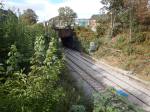
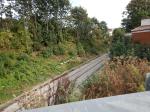
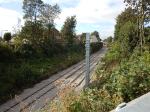
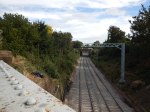
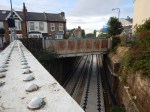


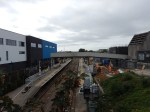
Note.
- It looks like both tracks have been mostly relaid.
- The slab track under Pretoria Avenue, where it was put in due to a sewer being beneath the bridge.
- There is also slab track at the other end of this section of line, but I suspect, it’s covered with ballast.
From what I could see at Blackhorse Road station, there doesn’t appear to be any foundations for lift towers or ramps to create step-free access to the Overground platforms. On Network Rail’s Access for All list of improvements. the improvements at Blackhorse Road station are listed as Future Planned for 2017/2018.
As the new Class 710 trains will start running in 2018, surely it would be good planning to at least do all the work needed on the Overground platforms now!
Or is there some rule, which says that when you make one line at a station step-free for all, you must do that for all lines?
It is interesting to look at this Google Map of the station.

The Victoria Line station is the square building to the North East of the obvious GOBlin station, with the space between the stations being just grass and some bushes.
In one of the pictures, there is a lot of work going on in this area.
Could it be, that there is a route to create a lift shaft from somewhere in this area, that goes both down to the Victoria Line and on the surface connects to the ticket hall and the bridge over the GOBlin?
It could also be work associated with a new chiller described in this article on the TfL web site., which is entitled Innovative new fan chiller to help customers beat the heat.
If you look inside the station, you’ll see that the escalators down to the Victoria Line platforms, start just to the West of the bridge over the Overground.
Without more information, it’s difficult to work out what is happening.
But it would surely be a good idea to do all the work at the same time and get the station step-free before the GOBlin starts running electric trains.
Vivarail In The Financial Times
There is an article about Vivarail’s Class 230 train in the Financial Times today.
I have a feeling that this is one of those projects, where the engineering will deliver, but the overall concept might initially not be a big seller.
I can think of one or two cars, for which that could be said.
I’m certainly looking forward to riding in the prototype that hopefully will be appearing between Coventry and Nuneaton before the end of the year.
It will be interesting to compare the experience with that of a D78 stock, that I rode a couple of weeks ago.
As any horseman will say. “Handsome is as handsome does!”
Escalators In Station Design
Over the last few months, I’ve been to three brand-new stations.
- Kirkstall Forge, which I nwrote about in Kirkstall Forge Station
- Lea Bridge, which I wrote about in The People Of London Welcome Lea Bridge Station
- London Bridge, which I wrote about in Details Of The New London Bridge Station
All are well-built stations with step-free access.
But I have to ask, if Kirkstall Forge and Lea Bridge would be better stations with a more favourable financial outlook, if they had escalators instead of stairs to the bridge.
Consider.
- London Transport used escalators extensively before the Second World War and few think that was wrong.
- Escalators must surely attract more paying passengers.
- If escalators are used could we see them paired with inclined lifts. to perhaps create more compact stations.
Quite frankly, Kirkstall Forge and Lea Bridge have boring layouts. I do think, we need more innovative station designs.
In some ways the most interesting station I’ve seen in the last few months is Welwyn Garden City, where the station is on the First Floor of a Shopping Centre. The main escalators and lifts are in the Shopping Centre with individual lifts and stairs to the platforms.
Improving Services To Cannon Street And Charing Cross Stations
Platform Changes At London Bridge Station
The Thameslink Programme will change the platform layout at London Bridge station considerably.
In 2012, the platform layout at London Bridge was as follows.
- Platform 1 – From Cannon Street
- Platform 2 – To/From Cannon Street
- Platform 3 – To Cannon Street
- Platform 4 – From Charing Cross
- Platform 5 – From Charing Cross and Bedford
- Platform 6 -To Charing Cross and Bedford
- There was also a through line to Charing Cross without a platform.
I can’t remember much about those days, except that the platforms were very crowded.
When London Bridge station and the Thameslink Programme is completed, the new platform layout will give opportunities to create new services through London Bridge to both; Cannon Street and Charing Cross stations.
The platform layout at London Bridge station will be as follows.
- Platform 1 – From Cannon Street
- Platform 2 – To/From Cannon Street
- Platform 3 – To Cannon Street
- Platform 4 – From Thameslink
- Platform 5 – To Thameslink
- Platform 6 – From Charing Cross
- Platform 7 – From Charing Cross
- Platform 8 – To Charing Cross
- Platform 9 – To Charing Cross
So, six through platforms and seven lines have been replaced by nine through platforms. This is a 50% increase in platforms and a 28% increase in tracks. The Borough Market Viaduct was the major engineering in creating the extra two tracks across the South Bank.
Other factors help capacity in the area include.
- The Bermondsey dive-under sorts out all the lines South of London Bridge station and will present trains to the right platforms at London Bridge. |Spaghetti Junction is so 1960s!
- Effectively, there are now three parallel and probably separate railway systems virtually from Bermondsey through London Bridge station, that split after the station; a pair of lines for Cannon Street, another pair for Thameslink and two pairs for Charing Cross.
- There has been a lot of work on track and signalling.
- The Tanners Hill Fly-Down has been built to improve capacity between London Bridge and Lewisham, which must help Cannon Street and Charing Cross services.
- The design of London Bridge station with its wide through platforms and more escalators than a science-fiction fantasy, could mean that passengers are there in time for their trains.
- The electrification changeover for Thameslink has been streamlined.
- The Class 700 trains must be better at changing voltages in the Thameslink tunnel.
All of these factoras must have positive affects on the capacity of the system.
I also think that one of the major benefits of the new layout, is what happens if something goes wrong.
If say a train breaks down on Thameslink at Blackfriars, because it is a separate railway, this doesn’t affect Cannon Street and Charing Cross services in the way it did before the new layout. There would still be the problems of fixing the train and what to do with those following behind, but the new design of London Bridge station means that passengers can be handled safely in all the space.
I’d love to see Network Rail’s thinking for handling all problems, but the design of London Bridge and its tracks could be one of those designs, that in a hundred years, engineers will look at and copy.
I can’t believe that the new layout won’t allow more trains to go to and from Cannon Street and Charing Cross, just as it allows more trains to go through the core Thameslink tunnels.
Thameslink is going from something like fifteen trains per hour (tph) to 24 tph or an increase of 60%. So what sort of increase will we see into Charing Cross and Cannon Street?
Services To Charing Cross
In 2012, Charing Cross to London Bridge was handled on three tracks between the two stations and three platforms at London Bridge. Two of the platforms were shared with Thameslink running 15 tph through them.
These three tracks and platforms have been replaced with four tracks, each with its own platform at London Bridge and possibly Waterloo East stations.
The tracks must have been fitted with a higher-capacity signalling system and an efficient track layout.
I am surprised that the four lines to and from Charing Cross share a platform at London Bridge with the other line going the same way.
Surely, it could be better if the Thameslink and Charing Cross services shared an island platform, when they were going in the same direction.
This would give a same-platform interchange between Thameslink and Charing Cross services, which the 2012 layout had.
I suspect that sharing is not possible, as it would mean that services would have to cross other lines to get there and the track doesn’t and can’t allow it.
But if the current service level of fourteen tph to and from Charing Cross station, can be achieved with just two platforms at London Bridge station as they are in the half-completed station, then there must be potential to increase the number of services to and from Waterloo East and Charing Cross, by a worthwhile margin.
Compared to some places in the UK, Charing Cross station already has an intense level of services to stations in South East London and beyond.
These are some example of trains out of Charing Cross between eleven and twelve in the morning.
- Abbey Wood – 2 trains
- Ashford International – 2 trains
- Dartford – 6 trains
- Gravesend – 4 trains
- Greenhithe – 4 trains
- Hayes – 4 trains
- Lewisham – 7 trains
- Orpington – 6 trains
- Rochester – 2 trains
- Sevenoaks – 8 trains
- Tonbridge – 6 trains
- Woolwich Arsenal – 2 trains
If this is increased, I can’t see any complaints from passengers, especially as most trains appear to have ten-cars or more.
I do think though that there will be a need to improve capacity, onward connections and walking routes at Waterloo East and Charing Cross stations.
I say more about these two stations in A Look At Charing Cross Station and Around Waterloo East Station.
It’s just that all these passengers will need somewhere to go.
Services To Cannon Street
Cannon Street station will be getting the same number of lines in 2018, as it did in 2012.
So I doubt, that the service will be any less intense, than it was in 2012.
Currently, in the Off Peak, there is a sixteen tph service, to and from Cannon Street station, which compares well with the current fourteen to and from Charing Cross station.
There is also going to be improvement at Cannon Street station with respect to onward connections and walking routes.
- Bank tube station is getting two new entrances, which are closer to Cannon Street.
- The connection between Cannon Street station and the Central Line will be improved with a travelator running North-South between the two Northern Line tracks at Bank station.
- The connection between Cannon Street station and the Northern Line will be improved with triple escalators directly down from Cannon Street, perhaps a hundred metres from Cannon Street station.
- The link to the District and Circle Lines is already excellent and those lines will be improved and get higher frequencies in the next few years.
- The City of London has ambitions to pedestrianise a lot of the area around Bank station.
Cannon Street station will certainly become one of London’s better-connected terminal stations.
There are more observations in Improvements At Bank Station.
Interchange At London Bridge Station
Effectively, London Bridge station has four sets of services.
- Those that terminate in the station.
- Through services on Thameslink
- Through service to and from Charing Cross station.
- Through service to and from Cannon Street station.
I’ll leave out the Underground, as the entrance to that hasn’t been fully opened yet!
All the current sets of services have their own set of platforms.
Interchange between the various services is a matter of taking an escalator down from the platform on which you arrive and then take another escalator up to your departure platform.
At present, they seem to be using the rebuilt through platforms flexibly as follows.
- Platform 7 – From Charing Cross
- Platform 8 – To/From Charing Cross
- Platform 9 – To Charing Cross
As trains out from Charing Cross seem to pass through London Bridge on either platform 7 and 8, there does seem to be a degree of flexibility in the track. But then there are no Thameslink services needing to be accommodated.
I do wonder if at some time in the future, they will arrange the lines at London Bridge, so that there is some cross platform interchanges. But I suspect that given the complex layout of the tracks, changes will only be limited.
So passengers will continue to go down and up the escalators. But they don’t seem to be complaining!
The Southeastern Metro
This map shows Southeastern Metro services, which are close to the London termini and fall within the Oystercard area.
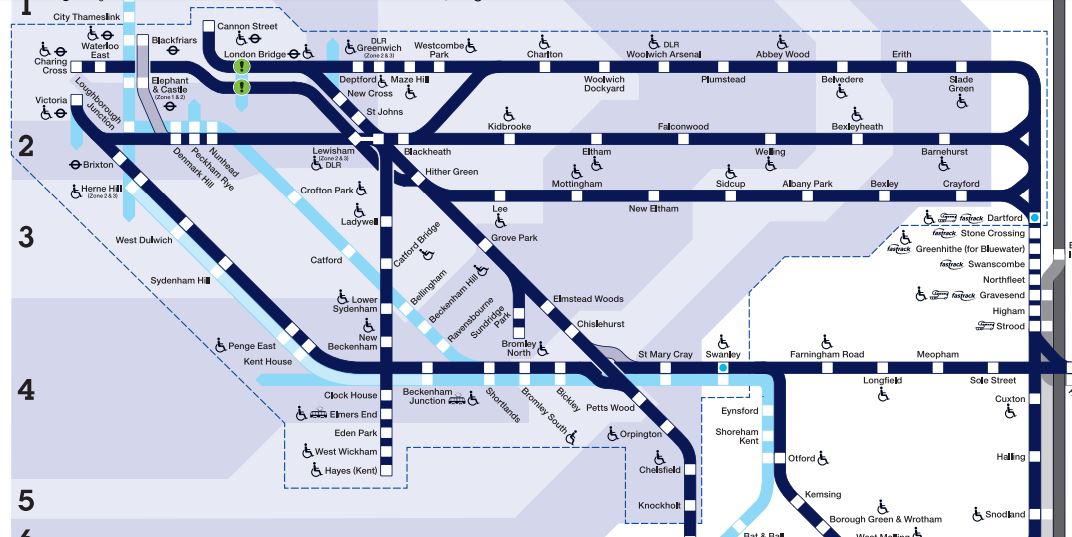
Southeastern Metro
If nothing else the map shows why Transport for London want to get control of Southeastern Metro services and paint them orange, as it is a ready made network that compliments the current Underground and Overground services.
The network has five Central London termini and stations; Cannon Street, Charing Cross, London Bridge, Victoria and Waterloo East.
It also connects to the following other lines.
- Several Underground Lines including the Bakerloo, both branches of the Northern Line, the District Line and and the Circle Line.
- The Overground at Denmark Hill, New Cross and Peckham Rye
- The Docklands Light Railway at Greenwich, Lewisham and Woolwich Arsenal.
- Tramlink at Elmers End.
- Crossrail at Abbey Wood.
- Thameslink at Dartford, Greenwich, London Bridge and Orpington.
In addition, many of the stations have step-free access..
These are the services from a selection of stations close to London.
- Dartford has six tph to Charing Cross and two tph to Cannon Street and Victoria.
- Greenwich has six tph to Cannon Street.
- Hayes has two tph to Charing Cross and Cannon Street.
- Lewisham has eight tph to Cannon Street, 4 tph to Charing Cross and 2 tph to \Victoria.
- Orpington has four tph to each of Cannon Street, Charing Cross and Victoria
- Woolwich Arsenal has six tph to Cannon Street and 2 tph to Charing Cross.
So in some ways it’s an all-places-to-all-terminals Metro.
Transport for London must look at the Southeastern Metro and have all sorts of ideas about how they could use the network to the benefit of London.
These are some Off Peak service levels.
- Sixteen tph between London Bridge and Cannon Street.
- Fourteen tph between London Bridge and Charing Cross.
- Ten tph between New Cross and Cannon Street.
- Eight tph between Orpington and London Bridge.
- Eight tph between Dartford and London Bridge
- Twelve tph between Lewisham and London Bridge.
Also consider.
- Would more services be possible after Thameslink is completed between London Bridge and Charing Cross.
- Could more use be made of an interchange at New Cross to get passengers to Canada Water for Canary Wharf and Witechapel for Crossrail?
- Could better use be made of Orpington station?
- Could Lewisham be improved?
- Will Brockley Lane station be rebuilt and a connection to the East London Line created?
- How would the area be affected by an extended Crossrail to Gravesend?
- How would New Cross cope with more than four tph on the East London Line?
I think that TfL could have lots of fun!
For instance, with a bit of reorganisation of services, it might be possible to create a ten tph or upwards set of lines across South London.
As an example Lewisham to Charing Cross via New Cross, London Bridge, Waterloo East could easily be ten tph.
No new trains, track or signalling would be needed, but the bottleneck of London Bridge must probably be removed before it is possible. And the Thameslink Programme is doing that!
Effects On The Jubilee Line
I don’t have any figures on passengers, but the section of Jubilee Line from London Bridge, will get a high-capacity by-pass on the surface.
But if we assume the current 14 tph on the rail line and 2019 frequency of 36 tph on the Jubilee Line, these are the numbers of carriages going between London Bridge and Charing Cross/Waterloo.
Heavy rail – 14 tph x 12 cars = 168
Jubilee Line – 36 tph x 7 cars = 252
Incidentally, the seats per hour figures are 10206 for Class 377 trains and 8424 for the S Stock on the Jubilee Line.
So will passengers choose to travel on the surface, thus freeing up capacity on the Jubilee Line?
Consider.
- Changing from say Thameslink after travelling up from Brighton to a Charing Cross service at London Bridge will be down and up two escalators and fully step-free.
- How many passengers will walk or take a bus to and from London Bridge to complete their journey?
- Some connections to the Underground at London Bridge require lots of walking.
- Going between London Bridge and Waterloo by a train rather than the Jubilee Line may well be a more pleasing experience.
- There are people like me, who prefer not to use a deep-level Underground Line, if there is an alternative.
Remember though that the the Charing Cross platforms at London Bridge are paired with 6/7 handling trains from Charing Cross and 8/9 trains the other way. Both pairs will share an island platform, escalators and a lift. So it may be quicker if you’re going to say Waterloo station, Trafalgar Square or Covent Garden to take a train.
Every so often, various plans are put forward as to what to do with the closed Jubilee Line platforms at Charing Cross. This is said about the platforms in Wikipedia.
As the Jubilee line platforms and track are still maintained by TfL for operation reasons, they can can also be used by film and television makers requiring a modern Underground station location. While still open they were used in the 1987 film The Fourth Protocol, and after closure in numerous productions, including different episodes of the television series Spooks.
I can envisage someone coming up with a plan, whereby these platforms are used as a second Southern terminus for the Jubilee Line. By 2019, it is intended that 36 tph will be running from North Greenwich to West Hampstead.
But there could be a problem, in that depending on what you read, there may not be enough trains for this increase in service.
But if, the uprated service between London Bridge and Charing Cross takes passengers from the Jubilee Line between London Bridge and Waterloo could the service be split into two?
- Most Jubilee Line trains would run as now and provide sufficient service between North Greenwich to West Hampstead.
- A small proportion of trains, perhaps 10 tph, would divert into the closed platforms at Charing Cross station.
It would give some advantages.
- There would be improved Underground connections at Charing Cross station.
- Trafalgar Square would gain another Underground Line.
- Charing Cross would have a two-stop link to Crossrail and the Central Line at Bond Street station.
Unlike most new station and interchange projects, the infrastructure is already there and maintained.
Consequences For Southern Crossrail
If everything works out with the Thameslink Programme and the rebuilding of London Bridge station, I can see no point to Southern Crossrail.
However, there idea of rebuilding Waterloo East station, is probably a good idea, to improve connectivity to the Underground and Waterloo station.
Waterloo East station could be handled a lot more passengers in the near future.
Conclusion
It looks to me, that Thameslink has been well-thought out and if the trains, track and signalling performs from London Bridge along the South Bank, as everybody hopes it should, we will see a world class Metro service across South-East London.
But I do feel that if the service along the South Bank is a quality one, then it will take passengers from the Jubilee Line and this line could be open for development.
 The Anonymous Widower