Newquay Station – 9/10th February 2024
These pictures show Newquay station.

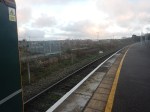


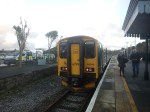
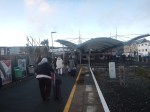



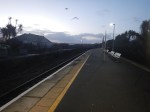

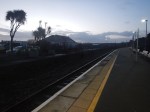

Note.
- It is a small one-platform station.
- It has a few facilities.
- It is located on the main street in the centre of the town.
This Google Map shows Newquay station.

Newquay station appears to have a very long platform.
- This page on Railway Data gives a length of 242 metres.
- It should accommodate a nine-car Class 802 train.
- The station is also close to the beach.
It looks to me that Newquay station is ready for a big surfing festival.
I have a few thoughts.
Adding A Second Platform
These pictures show the space alongside the current single track. At least for a five-car train.
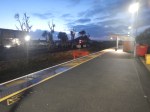
Note.
- I would expect that adding a second platform could be easily done by a competent and experienced construction company.
- There would need to be new track and a set of points, so that a train could use either platform.
- Signalling would be added, so both platforms could be used, either separately or at the same time.
I also expect that the Tregoss Loop would need to be commissioned before the second platform.
Adding Charging For Battery-Electric Trains
Consider.
In GWR Trialling Transformative Ultra-Rapid Charging Train Battery, I talked about the installation of the Vivarail/GWR Fast Charge system at West Ealing station.
In Decarbonising The Mid-Cornwall Metro, I talked about using the Vivarail/GWR Fast Charge system or hydrogen to decarbonise the Mid-Cornwall Metro.
This picture shows the Vivarail/GWR Fast Charge system at West Ealing station.
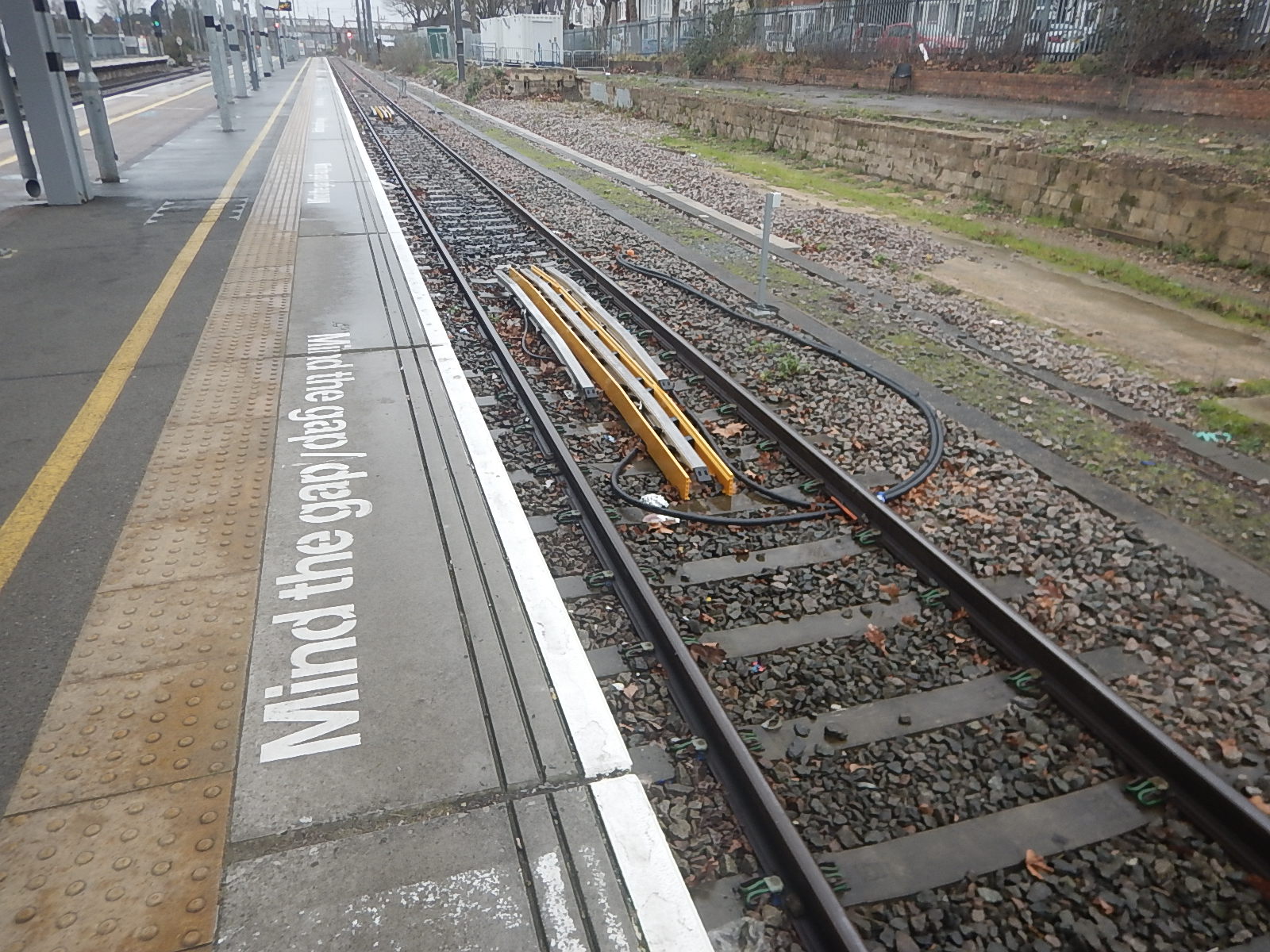
I feel there would be no problem fitting one of these in one or both of the platforms at Newquay.
But I do feel that the best way to decarbonise services to Newquay, would be to fully-electrify Par station with 25 KVAC overhead wires.
- Mid-Cornwall Metro services would charge their batteries using a pantograph, every time that they reversed in the station.
- Long distance battery-electric services through the station would top up their batteries during a stop at the station.
- Locomotives with batteries will be increasingly used on freight services and charging may be needed for the locomotives used from china clay trains.
Note.
- Par and Falmouth Docks is 30.8 miles.
- Par and Newquay is 20.8 miles.
- Par and Penzance is 44.8 miles
- Par and Plymouth is 34.7 miles.
- Par and Truro is 19 miles.
Par would appear to be a station, that could be easy to electrify and is conveniently placed in the heart of services through Cornwall.
Old Street Station – 12th February 2024
I took these pictures this morning, as my bus passed Old Street roundabout.

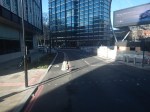
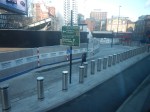






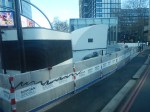






Nite that my first post showing the progress of the station was Old Street Station – 16th November 2020, which was three years and three months ago.
I See My First Modern 100 % Electric Truck
Where I live in Hackney, you see a lot of electric vans. Even the local deli has one.
But until yesterday, I don’t think I’ve seen a 100 % full-size electric truck, other than the famous Harrods delivery vans, which I can remember from the 1960s.
This was a sideview of the truck I saw.
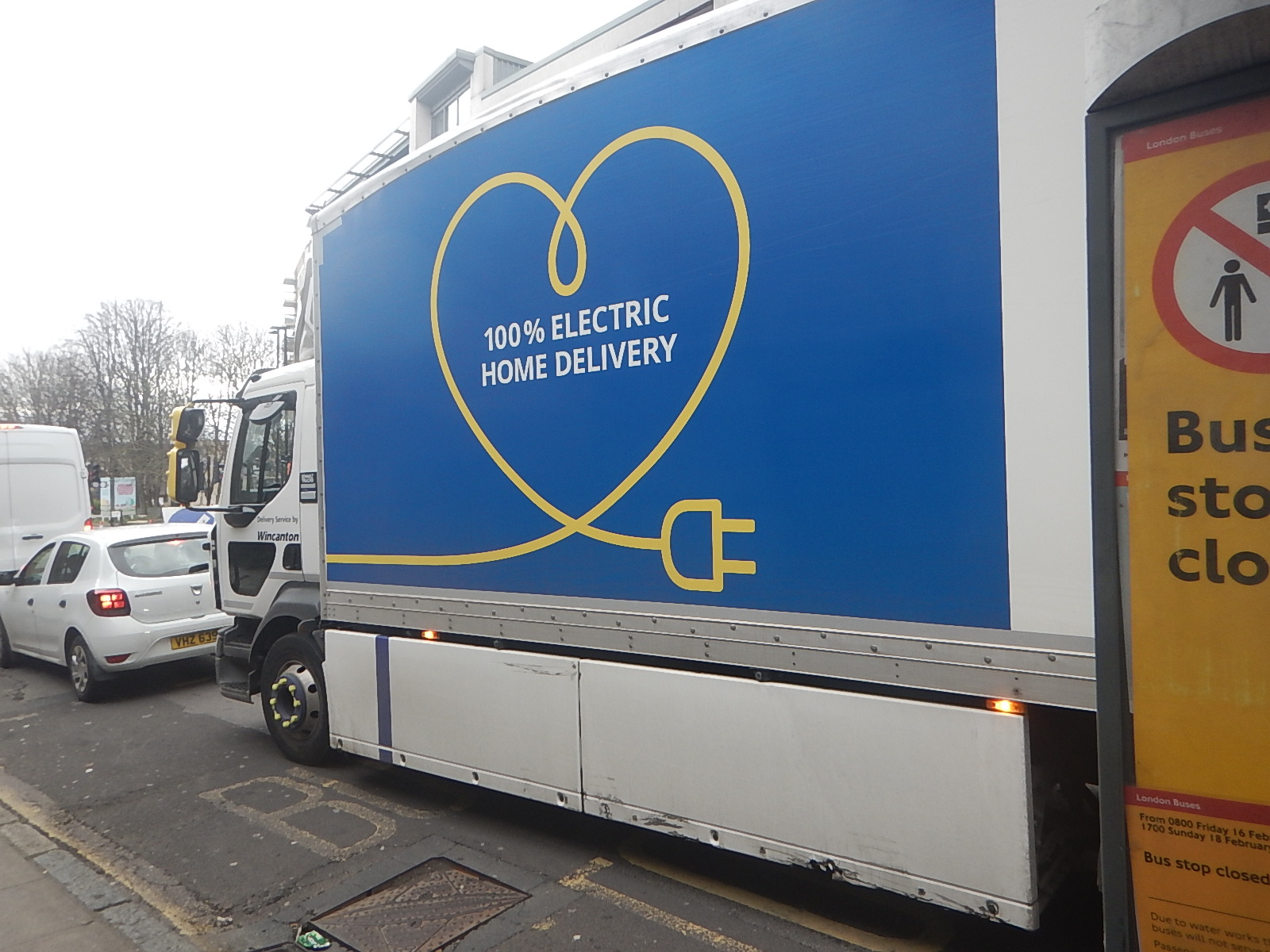
Sadly, because I was trying to catch a bus, in the roadworks I described in How Not To Organise A Piss-Up In A Brewery, I was unable to take any more pictures.
This press release from Wincanton is entitled Wincanton Announces Multimillion-Pound Investment In Electric Vehicles For IKEA.
These three paragraphs give the full story.
Wincanton, a leading supply chain partner for UK business, today announces that it has made a multimillion-pound investment in electric vehicle technology to provide home delivery services for IKEA.
The investment has seen Wincanton purchase 30 electric home delivery vehicles, comprising of 10 16-tonne trucks and 20 vans, to support IKEA’s goal of reaching 100% zero emission last mile deliveries by 2025.
The new fleet is expected to save Wincanton 1,000 tonnes of carbon emissions each year, across just over 10,000 journeys per annum. The vehicles, supplied by Renault Trucks and Ford, will carry deliveries to the homes of IKEA customers across Greater London and the Southeast of England from Spring 2023.
I do feel though, that we’d see more zero-carbon trucks, if London could get its act together with hydrogen.
How Not To Organise A Piss-Up In A Brewery
This afternoon, I wanted to get some lunch and buy my food for the weekend.
I live close to the junction of Southgate Road, Mildmay Park and the Balls Pond Road.
From the four bus stops there, I can get buses to the stopping centres of Angel, Dalston Kingsland, Hackney Central and Moorgate.
But not today, as all the bus stops had been closed!


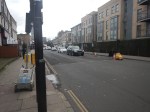
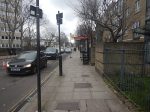
As my leg was playing up, there was no way, I could have walked to the next stop.
In the end I created a fuss and a kind driver let me on a 141 bus to get to Moorgate.
Coming back, I got another 141 bus, which got stuck in the traffic jam, that the part-closure of the junction was creating.

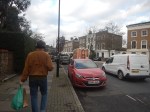
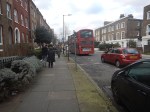
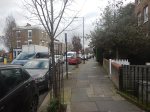
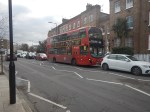
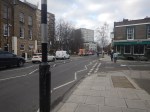





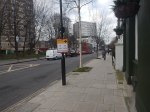


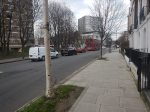

Note.
- The 141 bus took five minutes to pass through the junction.
- Luckily, the driver was sensible and he let a lot of us out.
- As I live South of the Balls Pond Road, it was very convenient.
Obviously, the driver knew more about customer service, that the idiots who organised this megashambles.
I have a few thoughts.
Where Was The Publicity?
I use the 141 bus most days and I didn’t see anything at the bus stops and didn’t get any leaflets through the door.
The Traffic Lights At Southgate And Balls Pond Roads Are Unreliable
They were even worse, when I moved here and Transport for London replaced them a few years ago.
But they seem to have got more unreliable.
Where is John Cleese to give them a good thrashing?
The Silvertown Tunnel Effect
Consider.
- I asked a regular delivery driver, what is the gossip about the Silvertown Tunnel and he felt that it will gum up East London.
- This is my feeling, as before my stroke, I had driven all over the East End trying to save time and knew it well.
- I also feel, that a lot of heavy traffic will end up on the Balls Pond Road, trying to get to and from the M1 and A1, especially, when the Dartford Crossing is closed.
I am fairly certain, that at certain times the junction at Southgate Road, Mildmay Park and the Balls Pond Road is going to get very congested.
The Non-Availability Of Taxis
One of the reasons, I chose to live where I do, is that I am just off the route which taxis use to go back to Liverpool Street station.
But the number of taxis in the area has decreased substantially in the last few years.
- Islington’s Low Traffic Neighbourhoods are scaring taxis away.
- Many drivers are giving up.
- Taxis are expensive.
Consequently, I rarely use a taxi. I never saw one today, when it was needed.
The Junction Is Busy For Pedestrians
Crossing the junction is dangerous, as cyclists only consider the lights optional.
If I’d had a pound for every time, I’d nearly been hit by a cyclist or car on this junction, I could pay for a year’s electricity.
Mildmay Park Station
The area used to have its own station at Mildmay Park about 120 metres to the North of the junction.
This Google Map shows the site of the station.
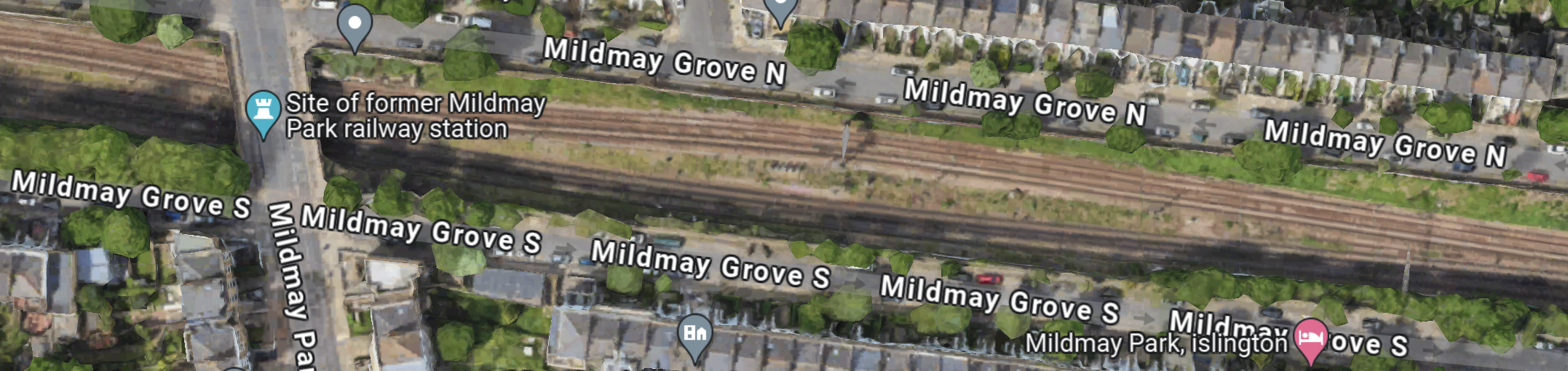
Note.
- The railway is the North London Line.
- Highbury & Islington station is to the West.
- Dalston Kingsland station is to the East.
Mildmay Park station is marked by the blue arrow on the bridge over the railway.
It would be a very handy Coming-Home station, as its downhill all the way, from the station to my house.
Conclusion
Reopening Mildmay Park station would be good for the price of my house, by I doubt that anything will be done.
What Will Khan Call The West London Orbital Railway?
The Mayor has the problem of what to call the West London Orbital Railway, which could likely be the next part of the Overground to be created.
As that area of London is closely associated with a former Mayor of London, it could possibly be called the Ken Line or the Livingstone Line.
But seeing that the Overground was thought up under Ken’s Mayoralty and it has greatly expanded, then perhaps it should be called the Beyond Our Ken Line.
But then it doesn’t go anywhere near the Balls Pond Road!
Decarbonising The Mid-Cornwall Metro
Although the Mid-Cornwall Metro will probably run initially using what diesel multiple units, after a year or so, the route will be converted to zero-carbon operation.
Newquay To Falmouth Docks
This map shows the Mid-Cornwall Metro.

These are current timings.
- By train can take almost three hours with changes at Par and Truro.
- By car should take 45 minutes to drive the 24.4 miles according to Google.
Note.
- The train timings are for a typical British Rail-era Diesel Multiple Unit on the branches and something smarter between Truro and Par.
- A Day Return ticket would cost £8.90 without a Railcard.
- If there was a through train, that meant you didn’t have to change trains, I estimate that the time could be as low as one hour and 35 minutes.
I feel that most travellers, who had access to a car, would use that to travel between Newquay and Truro.
Newquay To Falmouth Docks By Electric Train
I have ridden in three battery-electric trains.
- Class 379 train – Manningtree and Harwich in passenger service.
- Class 230 train – Vivarail demonstration
- Class 777 train- Liverpool Central and Headbolt Lane in passenger service.
Note.
- All were mouse-quiet.
- There was no detectable difference, when running on battery power in the trains.
It is my view that battery-electric trains are no second-class solution.
Consider.
- Newquay and Par is 20.8 miles.
- Falmouth Docks and Par is 30.8 miles.
- Newquay and Falmouth Docks is 51.6 miles.
- The maximum speed between Par and Newquay is around 30 mph
- The maximum speed between Par and Falmouth Docks is around 50-70 mph
- There are twelve intermediate stations.
- There is a reverse at Par station.
- Charging would be easy to install at Falmouth Docks, Newquay and Par.
- In Par Station – 10th February 2024, I suggested that Par station could be fully-electrified, so that expresses could have a Splash-and-Dash on their way to London and Penzance. If all platforms at Par were electrified the Mid-Cornwall Metro trains could charge from the electrification, as they reversed.
There are two main ways that the Mid-Cornwall Metro might operate.
- There would be chargers at Newquay and Falmouth Docks and trains would shuttle the 51.6 miles between the two stations.
- There would only be charging at Par and trains would after charging at Par go alternatively to Newquay and Falmouth Docks.
The first might need smaller batteries and the second would only need one charger.
Newquay To Falmouth Docks By Hydrogen-Powered Train
There is only one hydrogen-powered train in service and that is the Alstom Coradia iLint, which is running in Germany.

I feel it is very much an interim design, as Alstom has taken a diesel-mechanical Lint train and swapped the diesel for a hydrogen-powered electricity generator and an electric motor.
But Alstom are putting together a hydrogen-powered train based on an Aventra.
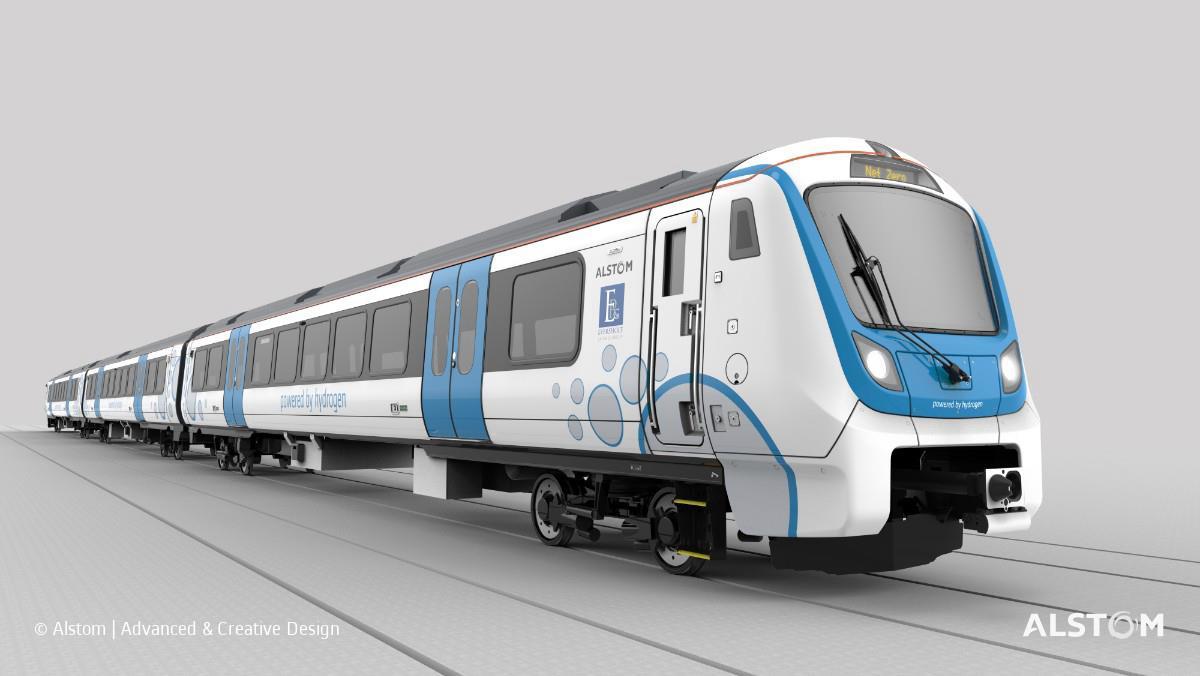
Note.
- The train is three cars.
- I would envisage performance of the hydrogen train would be very similar to that of a similar battery-electric train.
- I wouldn’t be surprised that refuelling of the train would not be a problem, as with all the china clay working nearby, there may well be developments to use hydrogen in the industry to decarbonise the mining.
The Mid-Cornwall Metro and Alstom’s Hydrogen Aventra could be ideal for each other.
Conclusion
I believe, that although the Mid-Cornwall Metro will start operation with diesel multiple units, it will be running in a zero-carbon mode within a few years.
Smart Train Lease Aims ‘To Make Renting Trains As Easy And Simple As Renting A Car’
The title of this post, is the same as that of this article on Railway Gazette International.
These four paragraphs outline the scheme.
Siemens Mobility has established a leasing subsidiary that would enable train operators to use its Mireo Smart battery, hydrogen and electric multiple-units without needing to make long-term investment commitments.
Smart Train Lease GmbH would make available at short notice multiple-units already approved for operation. These could be short or medium-term leases, with services such as maintenance available as part of the package. The aim is to provide operators with an economical way to quickly and flexibly expand their fleets and try out more sustainable traction technologies.
‘We want to make renting trains as easy and simple as renting a car, and thus help accelerate the mobility transition’, the leasing company’s CEO Benjamin Dobernecker explained on February 14.
Smart Train Lease will initially operate in Germany, although it plans to expand throughout Europe in the medium term.
I like this idea and I think it will work.
Metier Management Systems And Artemis
When four of us started Metier Management Systems in 1977 to sell our mini-computer-based project management system; Artemis, we generally rented or leased our systems, although we did sell some as the years progressed.
- For a fixed fee per month, a company got a project management computer and all the software.
- The fixed fee included installation, first line support, training and software updates.
- We could also supply extra training and project management consultancy at appropriate rates.
- The only extra costs to the client were the electricity to power the hardware and the paper to put in the printer.
- We also allowed clients to convert leases into outright sales.
This simple sales model appealed to a lot of our clients.
- The cost of the system was easy to budget.
- Many of our clients were happy with leasing or renting computer equipment.
- As the system was desk-sized, it easily fitted the average office.
But the leasing model was very advantageous to us.
- Most of our clients were large high-value quality organisations like big oil companies, nationalised industries and engineering consultancies.
- Our Finance Director and our Bank Manager at Lloyds Bank devised a plan, whereby we bundled a number of high-quality leases together and sold the bundle to Lloyds Bank’s leasing company.
The money we received gave us a healthy cash flow.
- The cash flow was then used to fund Research and Development and to finance more sales.
- If say someone like BP or Shell should phone up or send a fax, wanting a system immediately, we were generally able to fulfil their request.
I am sure that Siemens Mobility will be using a similar model.
They will aim to have trains in stock to fulfil clients needs.
So if Deutsche Bahn phone up saying have you got a three-car battery-electric train that works with 15 KVAC and has a range of 100 kilometres for next Monday, Siemens Mobility can generally say yes.
What helps is that the modular Mireo Smart multiple unit comes in battery, hydrogen and electric versions.
Extras could include full servicing a driver.
So Siemens Mobility will plug the train together and deliver it.
How Would Siemens Use The Leasing Model In Great Britain?
Consider.
- There are a lot of routes that need to be decarbonised in Great Britain.
- Many of these routes have electrification at one or both ends.
- Often these routes terminate in a bay platform.
- On most of these routes a two-, three-, four- or five-car train will be sufficient capacity.
- In the Desiro City, Siemens have a train, that is acceptable to Great Britain.
- If routes in Great Britain are to be electrified, they must be electrified with 25 KVAC overhead wires.
- Trains would be 100 mph, so they wouldn’t be limited as to routes.
- A Mireo-B has a range of between 80-100 kilometres or 49.7-74.6 miles.
I am sure Siemens Desiro City or its European equivalent; Mireo can be developed into a family of trains suitable for GB!
- The basic train would be two driving cars.
- Length would be increased by coupling trailer cars between the two driving cars.
- Hydrogen power would be in one of the trailers.
- Batteries would be under an appropriate number of cars.
Battery trains would be able to use a simple automatic charger, similar to the one, that I described in GWR Trialling Transformative Ultra-Rapid Charging Train Battery.
An Example – Mid-Cornwall Metro
This map shows the Mid-Cornwall Metro.
Consider.
- Newquay and Par is 20.8 miles.
- Falmouth Docks and Par is 30.8 miles.
- Newquay and Falmouth Docks is 51.6 miles.
- The maximum speed between Par and Newquay is around 30 mph
- The maximum speed between Par and Falmouth Docks is around 50-70 mph
- There are twelve intermediate stations.
- There is a reverse at Par station.
- Charging would be easy to install at Falmouth Docks, Newquay and Par.
- In Par Station – 10th February 2024, I suggested that Par station could be fully-electrified, so that expresses could have a Splash-and-Dash on their way to London and Penzance. If all platforms at Par were electrified the Mid-Cornwall Metro trains could charge from the electrification, as they reversed.
There are two main ways that the Mid-Cornwall Metro might operate.
- There would be chargers at Newquay and Falmouth Docks and trains would shuttle the 51.6 miles between the two stations.
- There would only be charging at Par and trains would after charging at Par go alternatively to Newquay and Falmouth Docks.
The first might need smaller batteries and the second would only need one charger.
An Example – Uckfield Branch
The Uckfield branch is in Southern England.
- It is not electrified between Hurst Green Junction and Uckfield, which is 24.7 miles.
- There are eight intermediate stations.
- The line can accommodate ten-car trains.
There is space at Uckfield station for a charger.

Charging would be at Uckfield station and North of Hurst Green Junction, where it will use the existing electrification.
Conclusions
This leasing/rental model will surely encourage train operators to replace diesels with appropriate zero-carbon alternatives on routes that need to be decarbonised.
Battery-Electric Power Rides The Rails
The title of this post, is the same as that of this article on Power Progress.
These two introductory paragraphs, outline the project.
In late October 2023, transportation solution provider Wabtec and its launch customer Roy Hill, an Australia-based iron ore mining company, celebrated the debut of the FLXdrive locomotive – a production model unit that Wabtec described as the “world’s first 100% battery-powered, heavy-haul locomotive for mainline service.”
The debut was the culmination of more than a decade of R&D that started at a time when battery technology and density were far more limited. Rogerio Mendonca, president, Freight Equipment, Wabtec, labeled the company’s earliest project as “more of a science pilot than anything else.”
I feel that this conversion of a diesel locomotive to a 7MWh battery-electric locomotive will be a significant milestone in freight haulage.
In the UK, we have 480 Class 66 locomotives.
Not all are used for heavy freight and you regularly see a single locomotive hauling a load that a lowered-powered battery electric locomotive could handle.
I suspect that if Roy Hill find this a capable locomotive, that we’ll see some Class 66 locomotives converted to battery-electric operation.
The article is well worth a full read.
 The Anonymous Widower