Expanding Manchester Piccadilly Station
This announcement on the Government web site is entitled Put HS3 at the heart of a High Speed North – Adonis.
This is an extract.
Recommendation six: Proposals for the redevelopment of Manchester Piccadilly station should be prepared jointly by TfN, Transport for Greater Manchester, Manchester City Council, Network Rail, DfT and HS2 Ltd.
These organisations should work to together to deliver:
a) Detailed plans for the new east-west platforms 15/16 to facilitate delivery early in Control Period 6 and unlock the development potential of the Mayfield site;
b) A masterplan for the longer-term development of Manchester Piccadilly station as a whole, incorporating capacity for HS2 services and options for the delivery and timing of platform capacity for HS3; and
c) Proposals for funding and financing the station redevelopment, including for private sector and local contributions.
I know Manchester Piccadilly station well and it has multiple space problems. These pictures illustrate some of the problems on the North side of the station.

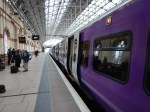


You have lots of short trains and long platforms, which means the following.
- Passengers have to walk long distances.
- There is confusion of which train to take with more than one in the platform.
- It must be a nightmare for train operators and their staff.
Surely some reorganisation could improve this mess, that was probably designed by Topsy.
On the South side of the station, there are two of the most crowded platforms in the UK. Platforms 13/14 need a serious sorting out.
Currently, services from Platform 13 seem to go to the following.
- Huddersfield
- Leeds
- Manchester Airport
- Norwich
- Scarborough
- Sheffield
- York
And from Platform 14 to the following.
- Blackpool
- Edinburgh
- Liverpool
- Southport
Most of the services seem to be provided by TransPennine Express and I think it is true to say, that when and if the Ordsall Chord is opened, there will be a sorting out of services on these two platforms.
But I do feel that the solution is Network Rail’s preferred one of adding platforms 15/16. They can’t be built soon enough, to ease the overcrowding.
This Google Map shows the layout of Manchester Piccadilly station.

Manchester Piccadilly Station
The current Platforms 13/14 are along the bottom of the station, connected to the main station by the two small bridges. I would assume that the two new platforms will go on the south side of 13/14.
Wikipedia gives more details of developments related to the Northern Hub and HS2.
It is going to be a tight fit to get all the lines and platforms into the area.
The more I look at the station, the more I tend to think that the Picc-Vic Tunnel might have been a good solution.
It makes me wonder if it would be more efficient for HS2 and HS3 to share a route through Manchester from the Airport to Victoria and on to Huddersfield and Leeds. It would need to be mainly in tunnel and could go right under the city with underground stations. I wrote about it in Rethinking HS2 And HS3.
Surely, if two high speed lines are to go through Manchester, they should share a route?
I have also received this image from a reader; Ben.
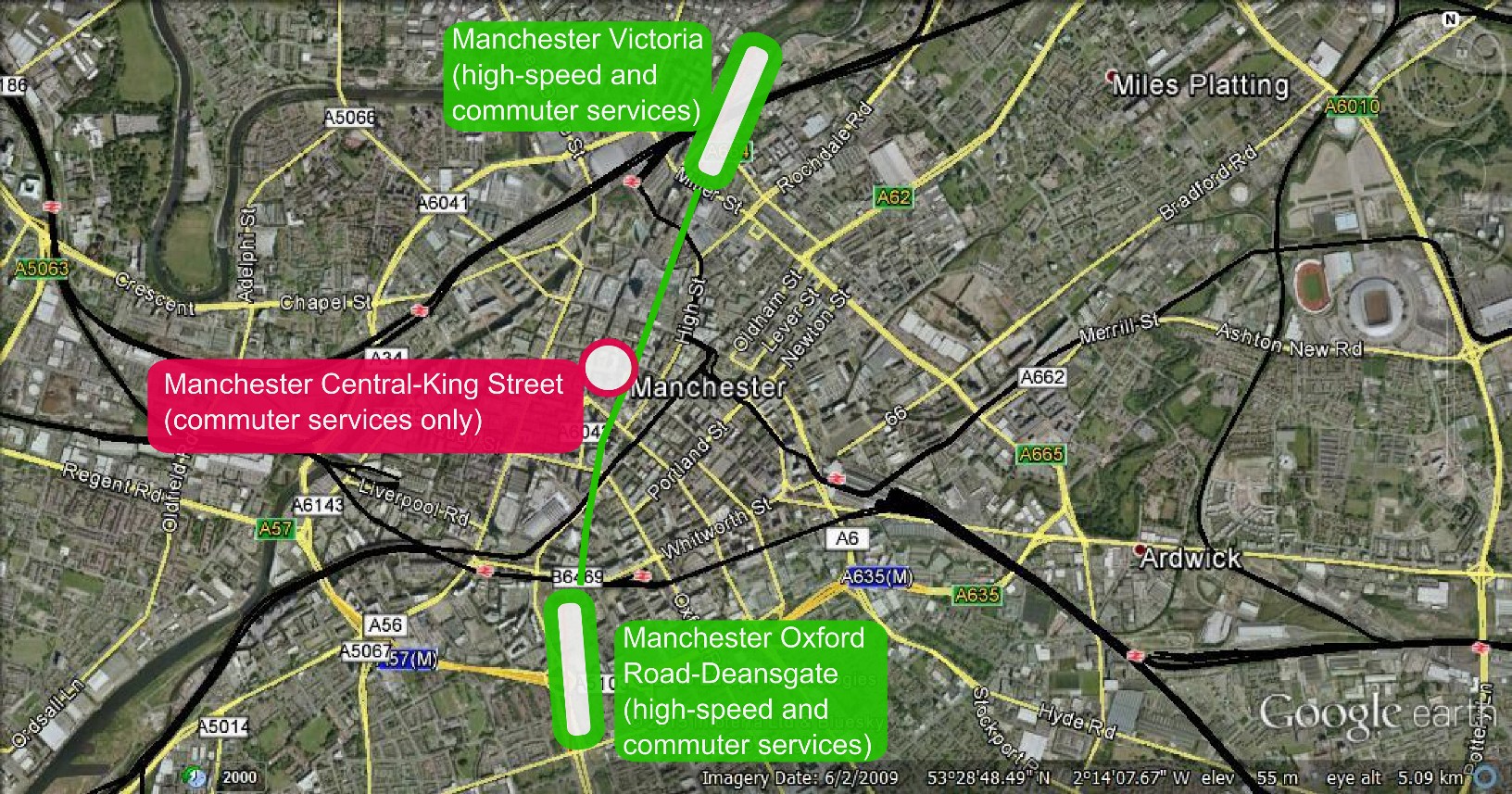
An Alternative Cross-Manchester Tunnel
Ben’s plan illustrates some advantages of a cross-city tunnel, which probably include.
- Less demolition at stations served by HS2.
- HS2 and HS3 could probably share platforms.
- Release of platforms at Piccadilly.
- A station in the centre of the city.
- Better links to the trams and local train services
- Ability to continue in tunnel towards Huddersfield and Leeds.
Remember that we’ve improved our tunnelling capability by a large amount in recent years.
Crossrail in London has also developed station designs and layouts, that could be used in Manchester.
- Massive double-ended stations to effectively serve two separate locations.
- Lines and station layouts to ease and encourage same platform interchange.
- Moving walkways and inclined lifts, where necessary to ease passenger movement.
- Island platforms to ease interchange between directions and branches, as at Whitechapel.
So could the most passenger friendly station, just called Manchester, be built under the city?
I don’t think that the current plans for Piccadilly, which are just so much conservative dross will be realised, as someone will come up with something much better. But then recommendation six encourages that!
High Speed North Barely Mentions Technology
The National Infrastructure Commission has published its report entitled High Speed North.
Technology and in particular new technology is hardly mentioned in the report.
This is the only mention with respect of improved technology in rail applications.
Ticketing, and in particular the absence of smart ticketing technology.
Design gets a few more mentions, but only one is meaningful.
It is very much a grey report produced by yesterday’s grey men.
The North has serious connectivity problems and it needs them to be solved now!
As I said in Adonis Promises Milk And Honey In The Future, But The North Needs Unblocking Now!, I can’t see much improvement until 2022.
All High Speed North does is confirm my suspicions of yesterday’s grey men conning the country out of fees.
To solve the North’s problems we must break out of the box! And how!
As an example of the report’s lack of ambition, the report says that Manchester Piccadilly station needs to add Platforms 15/16 in Control Period 6 or between 2019 and 2024.
That could be eight years and given the crowding you get on Platforms 13/14, those two extra platforms are needed now.
You need to do a lot better, Lord Adonis. But as a failed New Labour accolyte, we didn’t expect much more.
Adonis Promises Milk And Honey In The Future, But The North Needs Unblocking Now!
I don’t have much time for Lord Adonis, as I always think that unelected politicians who change sides are a bit like the Vicar of Bray.
And lets face it, he was part of Tony Blair’s gang of idiots, who felt that licking Dubya’s arse and making war in Afghanistan and Iraq was more important than creating proper transport links across the north.
But they were only following the lead set by Harold Wilson, when he cancelled the Picc-Vic Tunnel. Wikipedia says this about how the need for the tunnel has been and is being fulfilled.
In 1992, the Metrolink system opened and linked both stations via tram, negating the requirement for a direct rail connection to an extent. In 2011, the Ordsall Chord was announced; it is an overground railway scheme designed to directly link Manchester Piccadilly and Manchester Victoria in a comparable fashion to Picc-Vic.
Wouldn’t it have been better to dig the tunnel in the first place?
I heard Lord Haskins and Chris Hyomes from Railfuture on Wake Up To Money this morning and they were aggressive in demanding that something happen sooner rather than later.
After my last trip to Huddersfield and writing Welcome To Huddersfield, I can say, that the Class 185 trains are a sick joke inflicted on the North by Tony Blair as Prime Minister and Gordon Brown as Chancellor. The trains are both too short and to few in number.
And then we have Lord Adonis saying on BBC Breakfast, that the line needs to be electrified as soon as possible.
So how long will the misery of the TransPennine routes continue before the line is electrified? 2022 is mentioned!
In my view there are four solutions for acceptable trains across the Pennines.
- Introduce the first bi-mode Class 800 trains on the route.
- Introduce the first bi-mode Class 800 trains on the East Coast to release InterCity 125s for the route.
- Introduce some locomotive-hauled stock.
- Create Class 387 trains with an IPEMU capability, so they could use energy storage to bridge the electrification gaps.
One of these must be implemented before the end of this year.
The first two options are impossible, as the Class 800 trains won’t be ready for passenger service until 2017.
I also think that Option 3 would be unacceptable to passengers, but is probably impossible, as there are no modern diesel locomotives available and probably very few coaches in good condition.
So we’re left with the Class 387 IPEMUs.
- They are modern four car electric trains, with everything passengers expect. Only wi-fi is missing.
- The IPEMU technology was successfully demonstrated in early 2015 using a Class 379 train.
- I rode the demonstrator and was impressed for what that is worth!
- Bombardier have won awards for the technology.
- There are well upwards of twenty four-car trains available or being built, that could be modified.
- There are rumours that IPEMUs could be used on the Great Western.
- They can work in eight or twelve car trains, where platforms allow.
- They can travel for over fifty miles on battery power, after charging on electrified track. So Leeds to Manchester is no problem!
- Liverpool to Newcastle and Edinburgh via Leeds could be served by 110 mph electric trains.
Would a Northern Powerhouse built on battery trains be acceptable to politicians?
In my view, it will have to be, as Derby-built Bombardier Class 387 trains with an IPEMU capability are all we’ve got.
I shall be listening to George Osborne tomorrow!
China, Russia And The EU’s Intermarium Bloc
The title of this post is the title of this article on the euobserver web site.
It is an interesting read, which talks about how trade routes will develop between Europe, Russia and China.
Incidentally, I found it, because it talks about Rail Baltica, which I think is an important project that could bring benefits to the Baltic States.
Crossrail 2 Will Be Threaded Through This
The map from carto.metro.free.fr, shows all the lines around Kings Cross station.

Lines Around Kings Cross
It certainly isn’t the easiest place to connect Crossrail 2, which will call at Angel, King’s Cross St. Pancras and Euston stations into the system. From a map in this document, it would appear that Crossrail 2 runs across to the north of the Victoria and Northern Lines.
Thank Heaven for 3-D computer design systems!
Could We Just Double The Width Of The Digswell Viaduct?
The Digswell Viaduct and the associated double-track railway through Welwyn North station at its northern end, on the East Coast Main Line is probably one of the biggest bottlenecks on railways in the UK. Wikipedia says this about the Grade II* Listed viaduct.
The viaduct carries the East Coast Main Line, which has to narrow from four tracks to two to cross the viaduct, making it a bottleneck restraining capacity over this strategic transport route. This problem is exacerbated by Welwyn North railway station situated at the northern end of the viaduct, which blocks the line while trains are stationary and two tunnels to the north. Several ideas to overcome the limitations of the viaduct and station without damaging the viaduct’s essential historic character and rhythmic design are periodically discussed. The line was electrified in the 1970s.
Various plans have been put forward to remove the bottleneck cause by this masterpiece of Victorian engineering.
The Current Capacity
Network Rail have published this report, which is entitled The Capacity Of The Welwyn Viaduct. This is said about the capacity of the twin-track section.
The two track section between Woolmer Green Junction and Digswell contains both Welwyn Viaduct and Welwyn Tunnel and is approximately 2.5 miles in length.
In pure theoretical terms the capacity of the viaduct is dictated by the headway over the section.
There is a planning headway of 3 minutes over the two track section which therefore results in a theoretical maximum capacity of 20 trains per hour. To achieve this capacity would require a fully homogeneous service (for example same rolling stock and calling patterns) and 100% use of planning capacity.
The usable capacity is below the theoretical and is determined by the service specification which needs to use the capacity. The current and future specifications for the section require calls at Welwyn North Station which is on the two track section. This reduces the number of paths that can be achieved in a single hour over the viaduct. The usable capacity is also determined by the fast line capacity between Finsbury Park and Digswell and the difference in speed of rolling stock approaching the two track section which will determine whether trains can be flighted over the viaduct at 3 minute slots to achieve the theoretical capacity.
There is no defined permitted number of paths on the viaduct as the capacity available is a function of demand and therefore the type and number of services which need to use it.
Network Rail concludes that eighteen trains per hour is a theoretical maximum on the current track layout.
Reason For Removal Of The Bottleneck
Whether or not HS2 is built, the East Coast Main Line must be improved to handle the large and ever growing traffic between London and Leeds, Newcastle and Edinburgh.
If more of the line was four-track, it would make the train companies aim of a frequent four-hour service to Edinburgh achievable. It could be even faster, if a lot of the line could handle trains at one hundred and forty mph, rather than the current one hundred and twenty-five.
Proposed developments are detailed in Wikpedia.
One of the most important is removing the bottleneck at Welwyn.
One Problem Or Two?
I think that when outsiders look at this bottleneck, they see one problem, but I think it is fair to describe it as two.
- Welwyn North station and the tunnels to the North.
- The Digswell Viaduct itself
In my view both problems need their own solutions.
We shouldn’t also forget other smaller changes, that can take the pressure of the area.
- More and better use of an upgraded Hertford Loop Line.
- More precise and better timetabling of trains.
- As Thameslink beds down, we’ll see other improvements.
I also wonder, if a fully-electrified freight route could be created between Peterborough and London, through March, Ely and Cambridge, that used the extra capacity of a four-tracked West Anglia Main Line.
Welwyn North Station
In some ways the station is as big a bottleneck as the viaduct, as the two trains an hour that stop in the station, effectively block the line for a few minutes.
It is also one of those heritage problems, that Network Rail love so much. This is said in the Wikipedia entry for the station.
The station is a rare survival of architecture from the early days of the GNR and this is now recognised with listed building status. The main station building, the footbridge, the tunnel portal to the north and Welwyn Viaduct to the south are all Grade 2 listed.
So I doubt that modifying the station will be easy.
This Google Map shows the lines through the station.
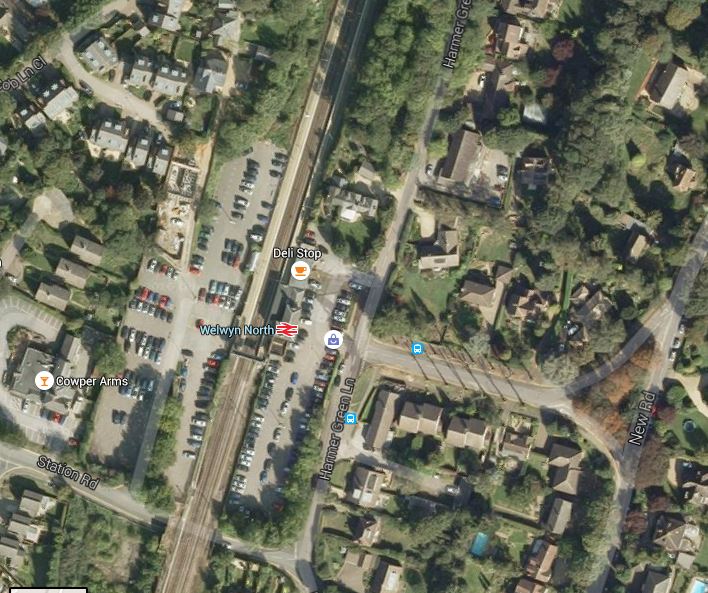
Welwyn North Station
These are some pictures of Welwyn North station taken on another day.


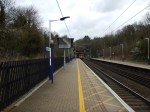


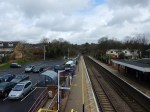
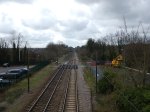


The images, probably shows another problem in that four-tracking the line through Welwyn North station would probably close the car parks.
The Digswell Viaduct
The Digswell Viaduct is an iconic structure and if the views of the viaduct and the valley it crosses were to be altered in any negative way, there would be a battle that would make the protests over HS2 look like a child’s tea party.
Around 1890, they had a similar capacity problem at the Stockport Viaduct, which was successfully widened from two tracks to four.
It is my view, that with major advances in structural engineering and construction methods, that widening the viaduct would be one of the better methods to improving the capacity through the area, without changing the look of the viaduct.
Intriguingly, if the East Coast Main Line was not already electrified, with the recent development of IPEMU-technology, I suspect now that Network Rail would think seriously about not electrifying the viaduct.
Trains would cross using their on-board energy storage, raising and lowering their pantographs appropriately.
Knebworth Station
This Google Map shows Knebworth station, a few miles to the North of Welwyn North.
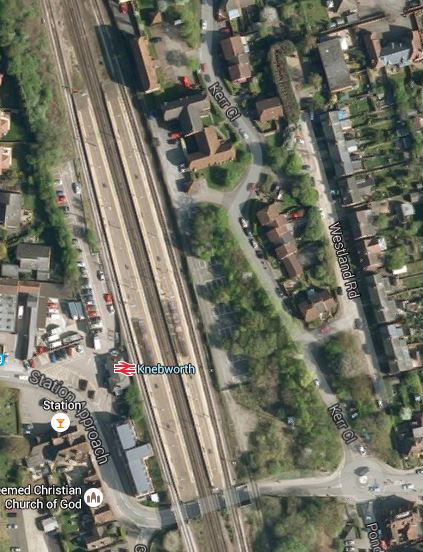
This station has four platforms arranged on two islands.
For comparison, this is an image of Welwyn North station to the same scale.
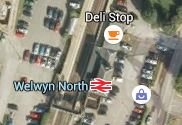
I think that four-tracking Welwyn North station will be a tight fit.
Comclusion
At some point, I feel that Network Rail will bite the bullet on four-tracking this section of line and the fight will be a big one.
Is HS2 At Risk Of Derailing?
There is an article in The Telegraph entitled HS2 at risk of derailing at top speeds, report finds.
I have read the article and the report by Professor Woodward at Heriot-Watt University is obviously, based on sound mathematics and enginering principles.
We have a problem with HS2, which is not unlike the problem with the new Hinckley Point nuclear power station.
There is a big need for extra capacity, but it will cost an awful lot of money.
In both projects too, there is a lot of opposition.
Professor Woodward’s research has one serious consequence, even if the high design speed of the line doesn’t make the trains derail.
It is that if you reduce the speed of the line, the economic case for HS2 is shot to pieces.
If you decide that there could be a safety problem with the embankments, you have to strengthen them and that ruins the economic case too.
If we look at Hinckley Point C nuclear power station, not building it, is not as serious as not building HS2.
We have several other ways to generate power and also lots of ways to save it. Also, the widely quoted strike price of £92.50/MWh would make a lot of other much cheaper schemes like tidal power viable.
But this doesn’t solve the problem of creating more capacity on the rail lines between north and south for both passengers and freight.
HS2 doesn’t carry freight, but hopefully, it will free up paths on traditional routes to the north, that could be used by freight trains.
If you think we don’t, travel between Euston and Glasgow on Virgin Trains and look at the passenger loading.
At present, Network Rail are carrying out various schemes to squeeze more capacity out of the current lines and it is hoped that in the short term, this will help.
But in some ways all it will do is create more demand for travel on the routes.
So at some time we’re going to have to build a new line, which will allow faster speeds than the current lines.
If you look at Phase 1 to the West Midlands, this will have the following effects.
- Extra capacity between London and the West Midlands.
- Journey times of around fifty minutes.
- Making Birmingham Airport, a viable one for those living in North London.
- Paths released for freight on the West Coast Main Line.
- Reorganisation of traditional services on the West Coast Main Line to serve more places.
In Phase 1, there would probably be no more than half-a-dozen trains in both directions on the southern section of HS2, south of Birmingham International station.
On the other hand, when Phase 2 to Manchester and Leeds opens there will be upwards of twenty trains per hour both wayson the same southern section.
I can understand, why those in the Chilterns are getting angry.
So to the protesters, Professor Woodward’s research could be manna from heaven.
For some time, my view has been that we need new tracks between London and the North via Birmingham, as even if all existing lines were upgraded, there wouldn’t be enough capacity.
I think we’re going to need some radical thinking.
For instance, suppose you made Birmingham International a hub, where the lines from the North met a line to London and one into Birmingham city centre.
This might help in the design of HS2 to the north of Birmingham, but that is not the area, where there is major opposition to the line. That is between Birmingham International and London, where land is limited and wherever you build it, you’ll annoy someone.
I suspect, a lot of people working on the project, sometimes feel like going and working elsewhere.
But whatever we do with HS2, we must improve the traditional routes.
- Electrify the Midland Main Line to Derby. Nottingham and Sheffield,
- Electrify the Chiltern Main Line to Birmingham.
- Electrify the routes across the Pennines from Preston and Liverpool to Hull, Leeds and Newcastle via Manchester.
- Sort out the Digswell Visduct on the East Coast Main Line.
- Improve speeds to as high as possible on all routes to the North.
The only trouble, is that the more we improve traditional routes, the more people will travel by train and the need for HS2 will become more urgent.
A Trip To Cardiff
Yesterday, I went to Cardiff to see Ipswich lose to Cardiff City.
These are some pictures I took on the way.
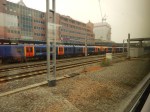

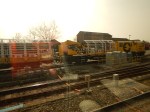
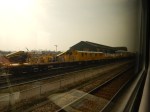
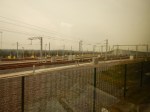


I think it is true to say that the electrification is being put up by snails and there seems to be little progress since I wrote Passing Didcot Power Station twelve months ago.
Note the following.
- Very little seems to be happening around Reading station, except the erection of a few masts.
- The cause of a lot of the trouble – the HOPS train at Swindon.
- The depot for the Class 800/801 trains at Filton Triangle.
- The extra platforms at Cardiff Central station.
- The work at Cardiff to create a new Central Square.
A lot of the work, that is this side of Bristol, is a total disaster.
Small Annoyances In Travel
I have some big things, that annoy me, but in my travels, I constantly come across small things that can be improved.
1. Beggars Selling Tissues
A complete pain and an annoyance to train companies too!
One day, an annoyed drunk, will tell one to get lost very forcibly!
2. Bi-Lingual Signs
If the Welsh want to have station signs in Welsh that’s for them to decide, but having everything in Welsh and English just clutters the station and makes doing simple things like finding toilets difficult.
3. Bus Information Outside London Is Mainly Useless
London’s bus maps and text Countdown system, sets a very high standard for bus information.
But why is it, that no area of the UK, or few in Europe for that matter, has a system that works as well for visitors?
4. Bus Pass Restriction In Other Countries Of The UK
Today, I was in Cardiff and had to buy a ticket. I had no small change, so I held everybody up and in the end a kind Welshman paid.
I believe that if all bus passes worked all over the UK, it would be a self-financing scheme, as more of us would travel to the other three countries and probably spend money which would generate VAT and other taxes.
Supposing too, we also allowed those from other countries over sixty-five or disabled to use buses for free. Would this encourage tourism and create revenue?
It certainly would be an experiment that would be worth trying.
5. Buses With Only One Door
All of London’s buses, except for the very smallest have two or more doors. It speeds loading and unloading, especially for those in wheelchairs or pushing buggies, so the buses go faster.
6. Cities And Towns With Two Disconnected Main Stations
Some cities and large towns have two main stations. Birmingham, Blackpool, Glasgow and Manchester come to mind.
If they can’t be connected by a proper rail connection, then at least there should be a ticketless way of getting between the stations.
Several times a year, I do journeys, where I have to go across Manchester between Victoria and Piccadilly stations. I have to buy a ticket on the tram, but if say I have a ticket from Euston to Burnley or Blackburn, the tram should be included.
It is not a system designed for the real needs of travellers.
7. East Croydon Station
East Croydon Station is the ideal changing point for journeys to Surrey and Sussex.
But despite the rail lines being in place, it is not easy to get there from East London. You use one of these routes.
- Bus or Bus/Tube to London Bridge station and then use Thameslink.
- Bus or Bus/Tube to Victoria station and then use a direct train.
- East London Line to West Croydon station and then a tram
The last method can’t be used coming north, as the trams don’t serve West Croydon when going west.
At present, you can take the East London Line to New Cross Gate or Norwood Junction stations and change, but this will be stopped, when the full Thameslink opens.
8. Ordsall Chord
I fear that due to the persistent opposition of one misguided and obstinate individual, that the Ordsall Chord will never be built.
9. Paddington Station
For those of us in East London, Paddington station is a very difficult station to get to. Unless you’re happy to crawl along the Hammersmith and City Line and walk a long way to your train.
10. Stations With No Information On How To Use Local Buses
Manchester Piccadilly station is particularly bad and in many cases you have to walk to Piccadilly Gardens to get the bus you need.
Some towns and cities like Sheffield have the main bus station by the train station.
If this is not possible, then at least have comprehensive information.
11, Stations Without A Marks & Spencer Simply Food
Paddington and Nottingham stations annoy me, as these two important stations don’t have a Marks & Spencer Simply Food store, which is the only one I trust for gluten-free sandwiches, snacks and ready meals.
12. Stations Without Ticket Machines
Most stations have them these days, but I’ve come across a couple recently which don’t.
They should also be as close to the platforms as possible, under a shelter from the weather.
13. Taxi Drivers That Are Incompetent
In London we’re spoilt as our black cab drivers know where they’re going and everything is on a meter.
I think because of this, all the mini-cabs seem to work to a very good standard of knowledge.
But I’ve had some very incompetent taxi drivers in parts of the UK! One was even a black cab!
14. Toilets That Need Money
I know that providing toilets is expensive and that there are other reasons to charge, but why can’t someone develop a toilet that can be entered using a contactless bank card.
15. Urban Area Ticketing
If I wasn’t old or infirm enough for my Freedom Pass, I could use any contactless bank card to pay my fare on all of London’s transport.
But why can’t I do this in places like Birmingham, Edinburgh, Glasgow, Leeds, Liverpool, Manchester and Newcastle?
Are these transport authorities worried that if passenger numbers rise like they have in London with contactless ticketing, that they couldn’t afford the extra buses, trains and trams?
Heathrow Express Class 332 Trains Are Back
On my trip to Cardiff today, I took this picture of a Class 332 train back running the Heathrow Express.
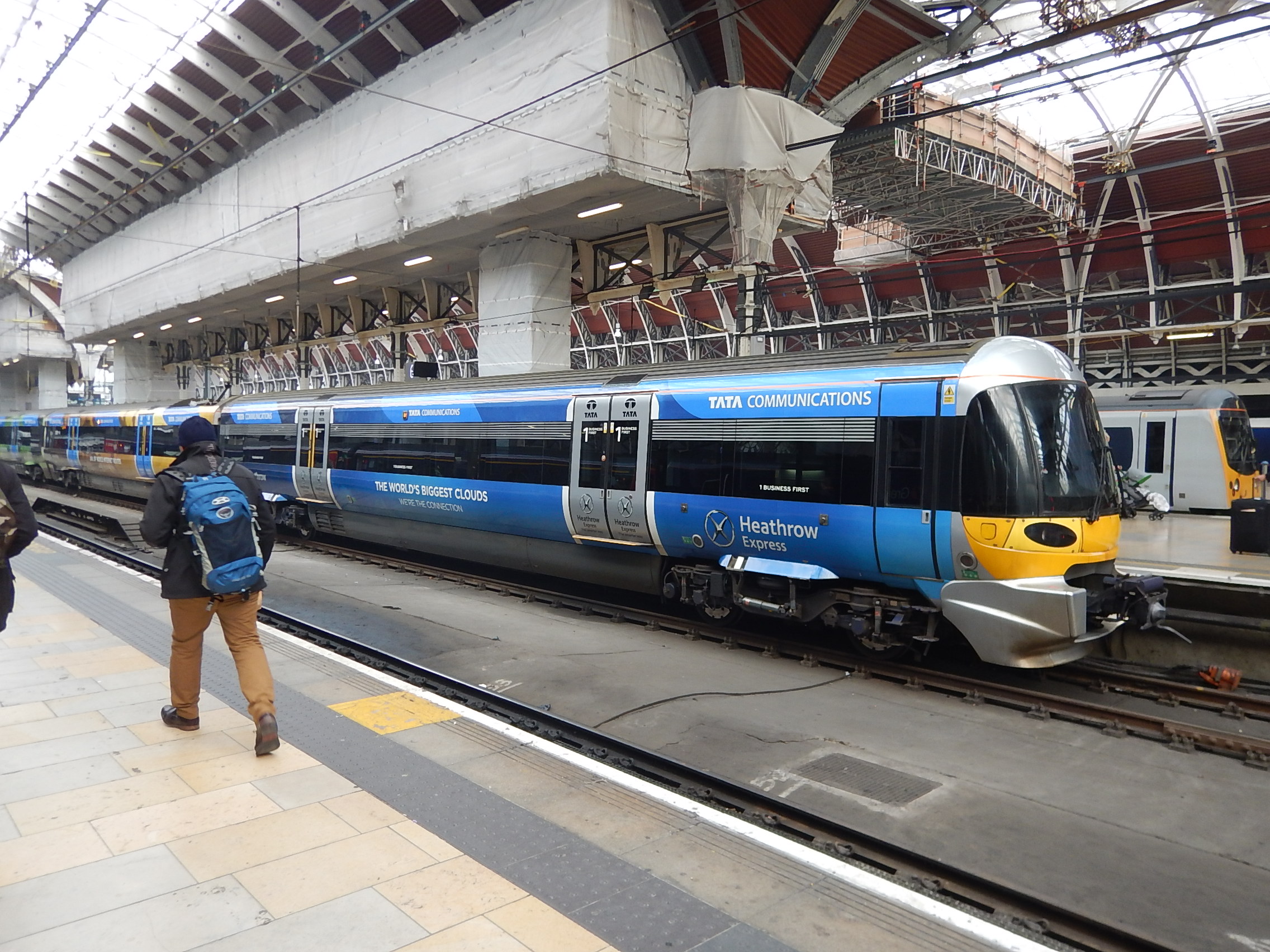
Heathrow Express Class 332 Trains Are Back
When I got home, I found this recent article on Rail News.
I still won’t be using them, as to get to Paddington is not easy from Dalston withiout using a taxi, as I did when going out.
On return, I needed to get some supper and as Marks and Spencer is closed at Paddington, I had to get the tube to Kings Cross to get the food I needed.
From there I got a taxi home.
It won’t be easy to get to Paddington until Crossrail opens and if it opens as planned, there will be no need for those of us in the East to use Heathrow Express.
 The Anonymous Widower