Do The Swedes Know Their Left From Their Right?
Why is it that if IKEA are going to drop somebody in it, then it’s me?
This morning the decorator came and painted the cupboard in my spare double bedroom. A month or two ago, I bought a set of Stolmen interior wardrobe fittings from IKEA. So this evening, I decided to put the two drawer cabinet together. As I always do, I cbecked that everything was there and the first part went together very well.

A Half Completed IKEA Stolmen Chest
In the picture you can see the frame of the chest and the two drawer fronts, ready to accept the sides and back.
But then I noticed the deliberate mistake that I’d missed when I checked the contents.
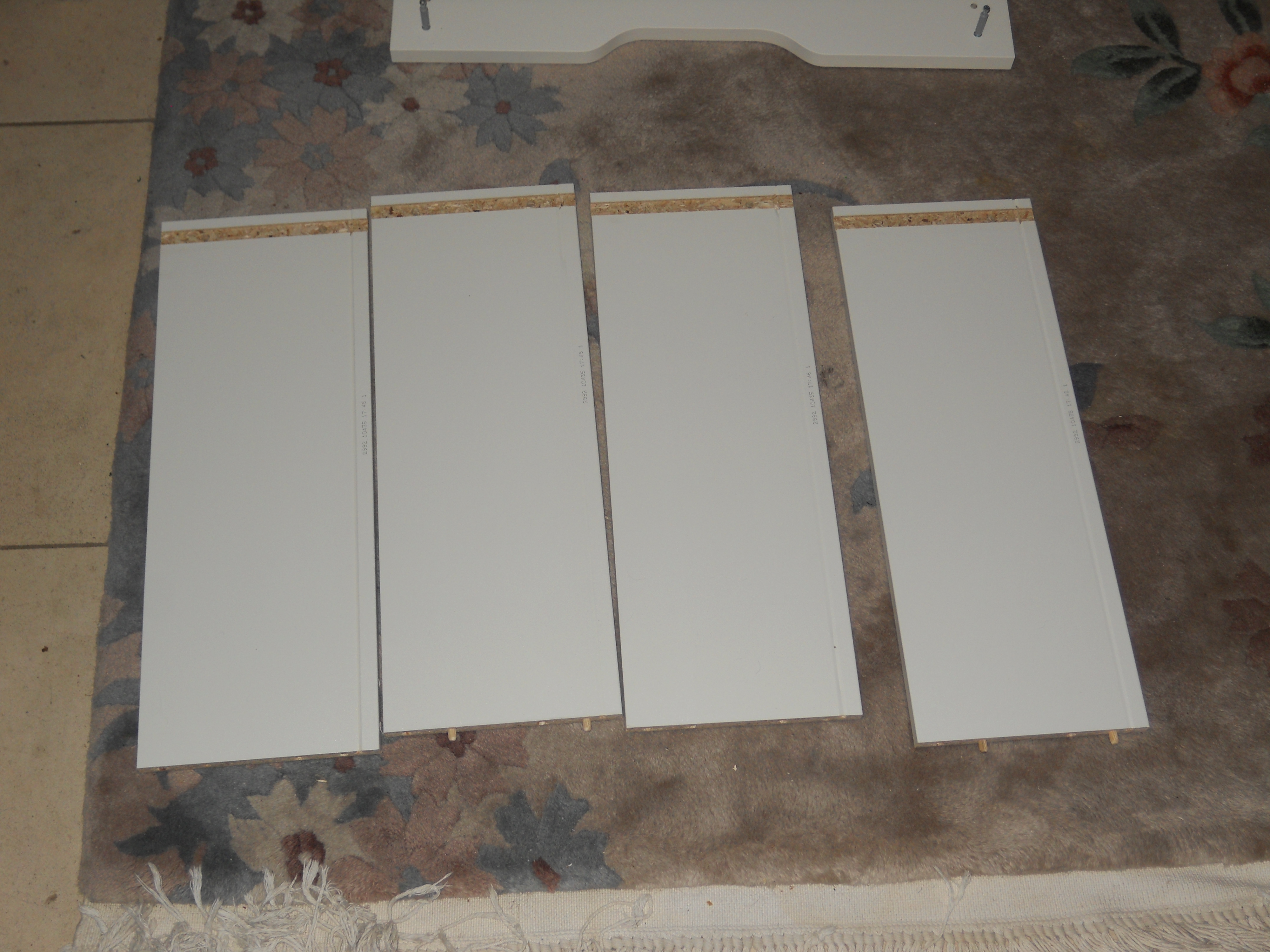
Four Identical Drawer Sides
The four drawer sides were all for the left, instead of two being left and two being right.
I have informed IKEA, but I might have a problem, as I’m probably outside of their return time, as I ordered this furniture in February. But surely one of the reasons you buy flat-pack furniture is that it is easier to store until you need it. I’ve also thrown all of the packaging away.
Is This The Real North-South Divide?
Sathnam Sanghera is one of my favourite columnists. He wrote a piece called, Not on the right track to get the UK moving, saying that it was training that the West Midlands needed and not trains.
In some ways I agree with him, but we actually need both. This bit from his piece stood out.
Nothing, not even the fact that some London bars charge £18 for a cocktail, shocks my fellow Midlanders more than the fact that I have never owned a car. Most families in my parents’ suburb seem to have two or three vehicles per household. Getting them to use a train instead is going to be more difficult than weaning them off pork scratchings.
I’ve come across this attitude before. I have even been accused of being a loser because I travel everywhere by public transport, by an idiot from Middlesborough.
I’m afraid that some parts of the rest of the country are going to have to do a lot of readjustment, when the oil runs out.
Using People to Heat Buildings
I like this story on the BBC web site.
I think I read somewhere that a person gives out about the same heat as a one bar electric fire.
We rarely collect it to make sure buildings are warm enough. But that amount of heat does explain why the Underground gets hot.
The Dragons Can’t Cook!
Or is it most likely won’t?
I watched them last night, when they rejected a lady who had developed a product called a Gloven.
It’s exactly what I need, to get round the problems of my gammy left hand, which responds badly to hot and cold.
I have a feeling that this is a product that will be a success, as it has so many niches, that haven’t been identified yet!
A Too Good Delivery System Causes Problems
This may seem a rather cntroversial title for a post, as most would envisage, that any delivery from a mail order site can’t be too good.
On Thursday, I ordered a new television from John Lewis. Incidentally, I had wanted to order it a few weeks ago, but they didn’t have the model I wanted in stock, so I asked them to e-mail me when it arrived in stock. That e-mail arrived on the Thursday and I ordered it there and then.
In the ordering process, I could have got it delivered on a specific day or morning for a charge, but let’s face it as I’d waited a few weeks, I thought that to wait for the normal five days wiouldn’t be a problem.
I then got an e-mail on the Saturday saying that John Lewis had dispatched it and giving me a link to the delivery company. On checking with them, I found it was going to be delivered on the Saturday. So as I reasoned that van drivers stop work at midday on Saturday (Don’t they?), I decided to stay in and wait. Even though the web ste clearly stated that if I wasn’t in, I could arrange a redelivery on line.
I almost gave up, as I wanted to get my paper and some shopping. But the parcel turned up just before one!
In other words they got the parcel on the day they said they would, but I wouldn’t have minded waiting a few days. But then when did you get a five day delivery in forty-eight hours?
Actually, we might be back to the ASAP scheduling problem, I highlighted in the post on NHS waiting times. Take say the problem of ordering goods, just before you go away for a holiday. You might like to delay them until after you return. With John Lewis you can specify a delivery date, but perhaps you might like to specify a not before date, or say a day of the week.
I think we’ll see increasingly sophisticated on-line delivery systems and that will be better for the consumer and more efficient. and hence more profitable, for the shops and the delivery companies.
Hackney WickED
It was the Hackney WickED Festival this weekend and I went to see some of the artists, who were having an Open Studios in the area.
It was well worth it.
Afterwards I walked past the locks at Old Ford.

Old Ford Locks
And then under the Northern Outfall Sewer on a newly restored towpath on to the Olympic Park.

Sunday on the Greenway
It was good to see so many people about on the Greenway.
Amazingly, the blackberries were out and people were picking and eating them.
Olympic Tat
I want to get some Olympic towels for my guests. Especially, as some have a rather cynical view of the Games.
As I was going to john Lewis, I had a look in their official Olympic Shop. The towels were twice the price of the ones I use from John Lewis and not at all good.
But then very little of what was on offer seemed to be worth buying.
What Would Mary Whitehouse Have Thought?
Twice in the last week, I’ve seen or heard of risque cabaret in unusual places.
On Tuesday, we were informed on our trip to the entrance of the Thames Tunnel, that dancers had performed the can-can in the space.
Then on Friday at the Zoo was what they called a Twisted Cabaret, which included a compere, singers, a burlesque dancer and a fire-eater.
Is this all a taste of what we will be seeing in 2012, with the Olympics and the Queen’s Diamond Jubilee?
The New Penguin Beach
I said in an earlier post that one exhibit was very crowded and that was the new Penguin Beach.
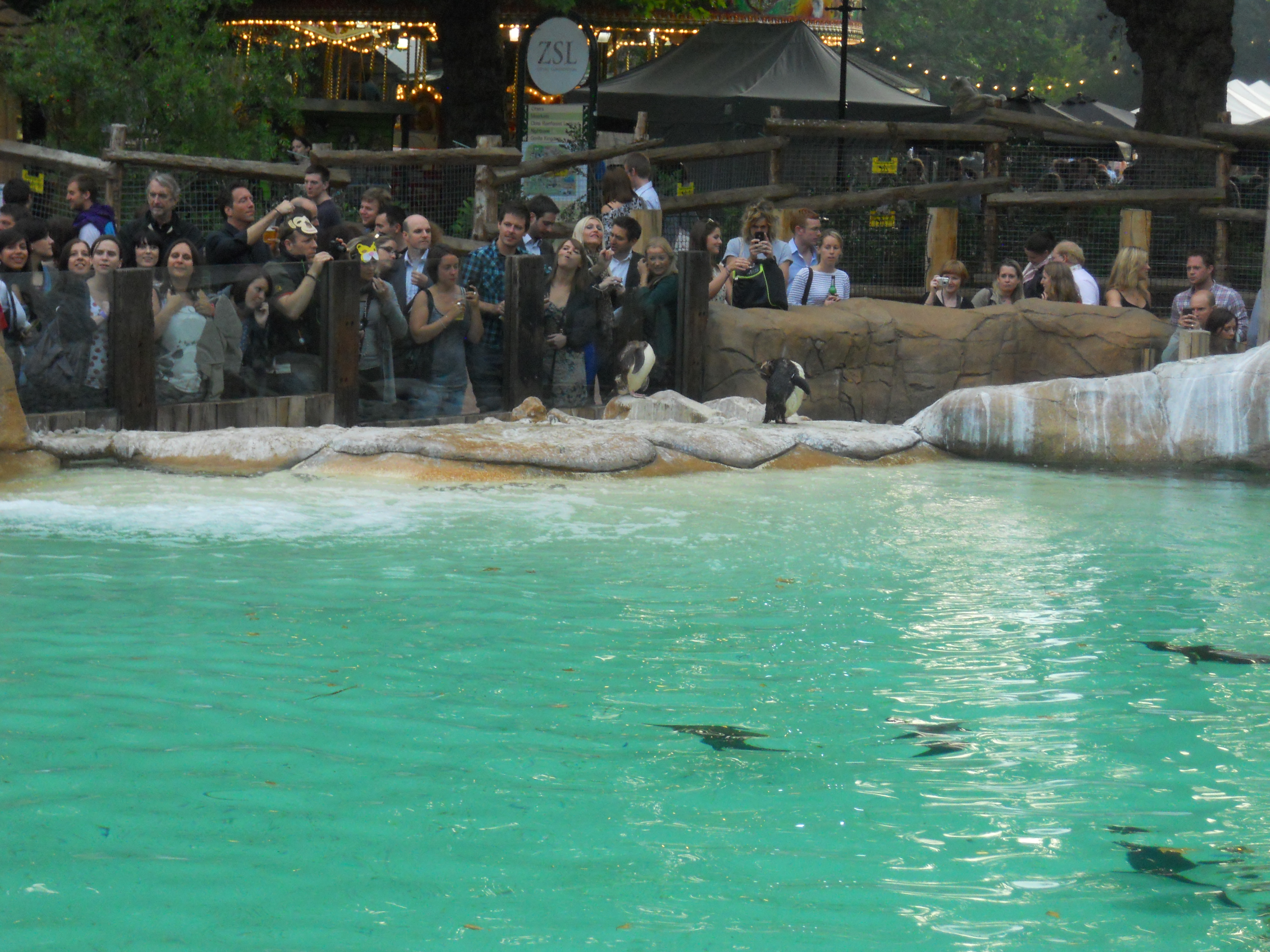
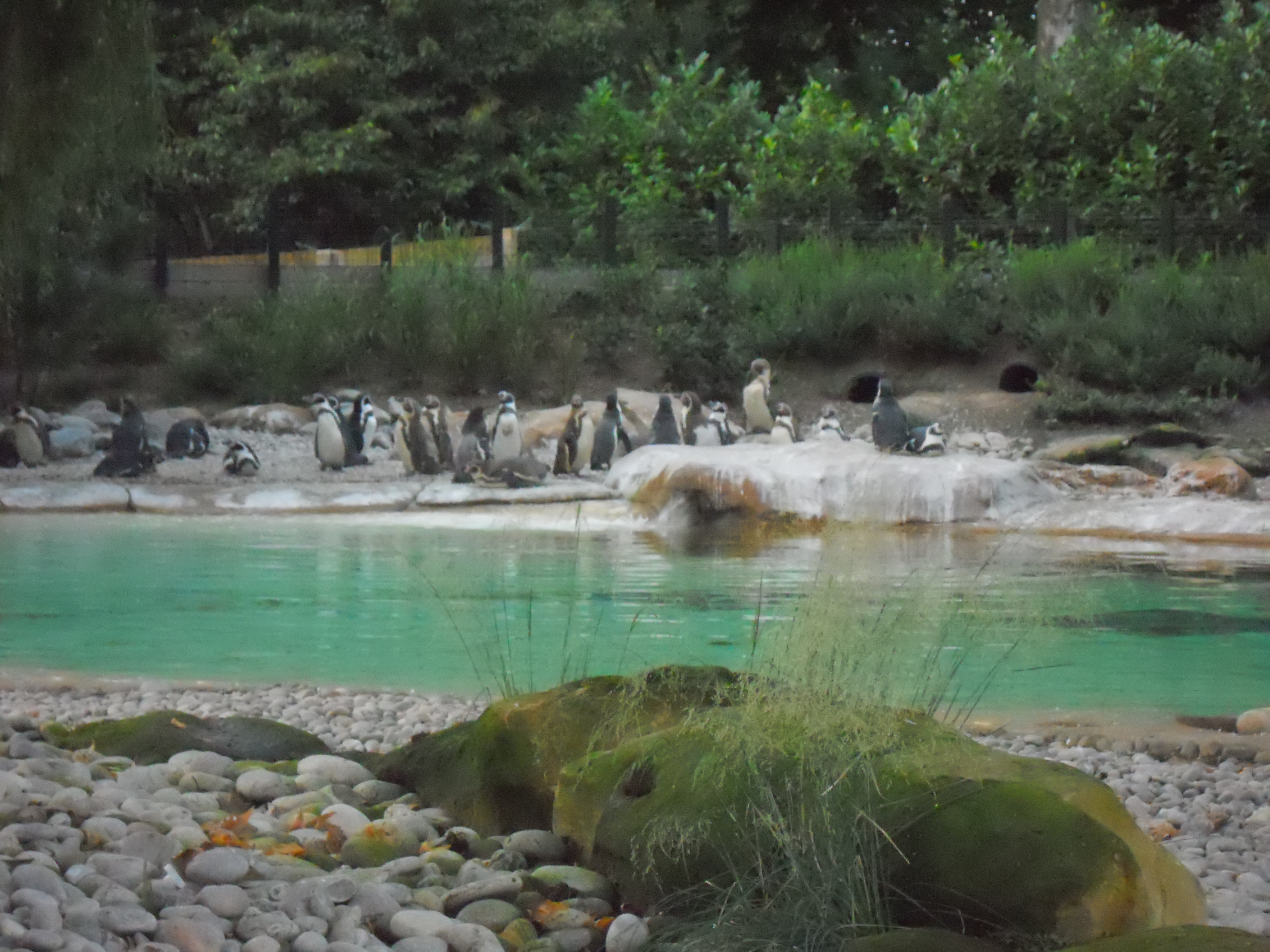


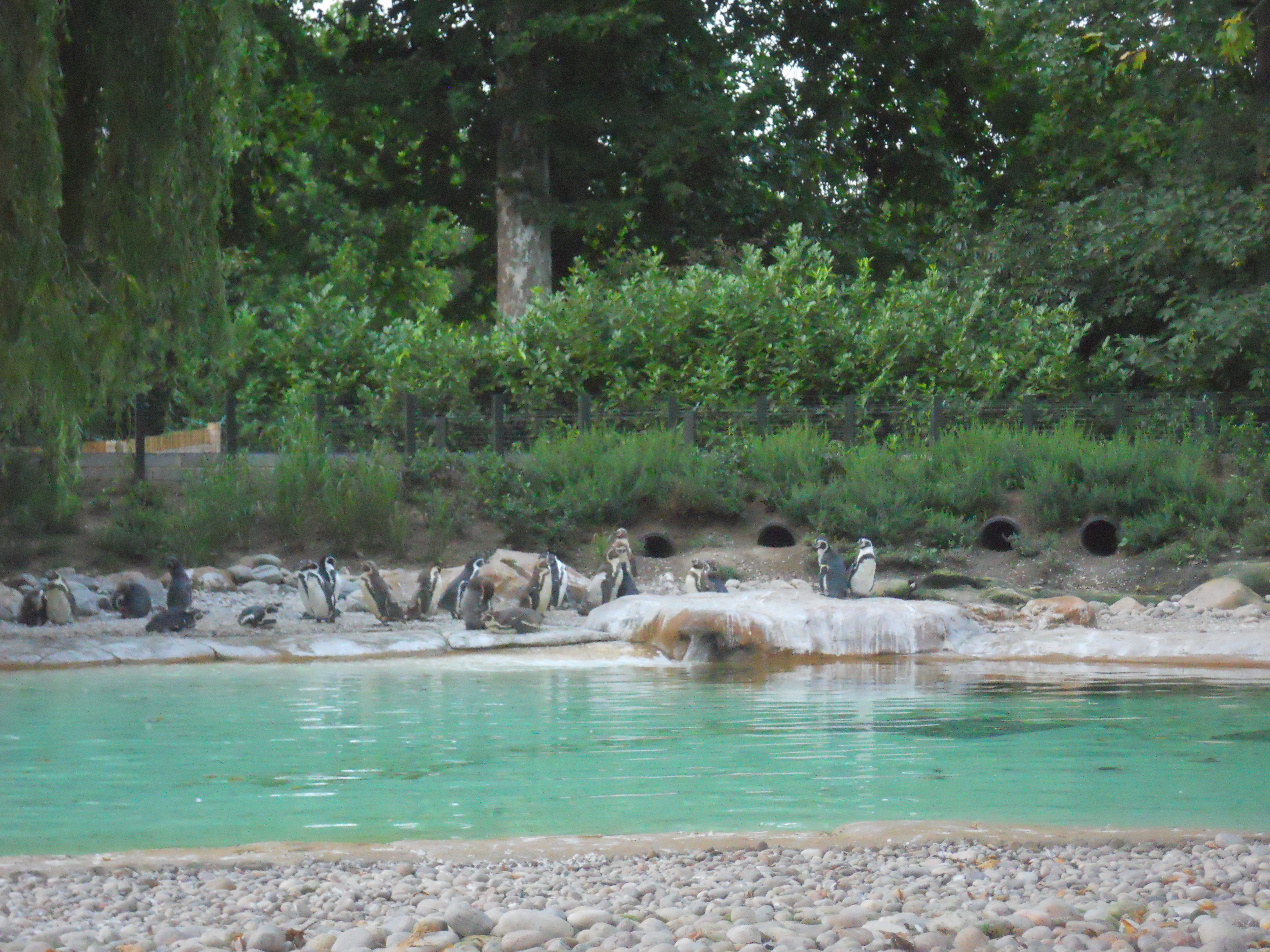

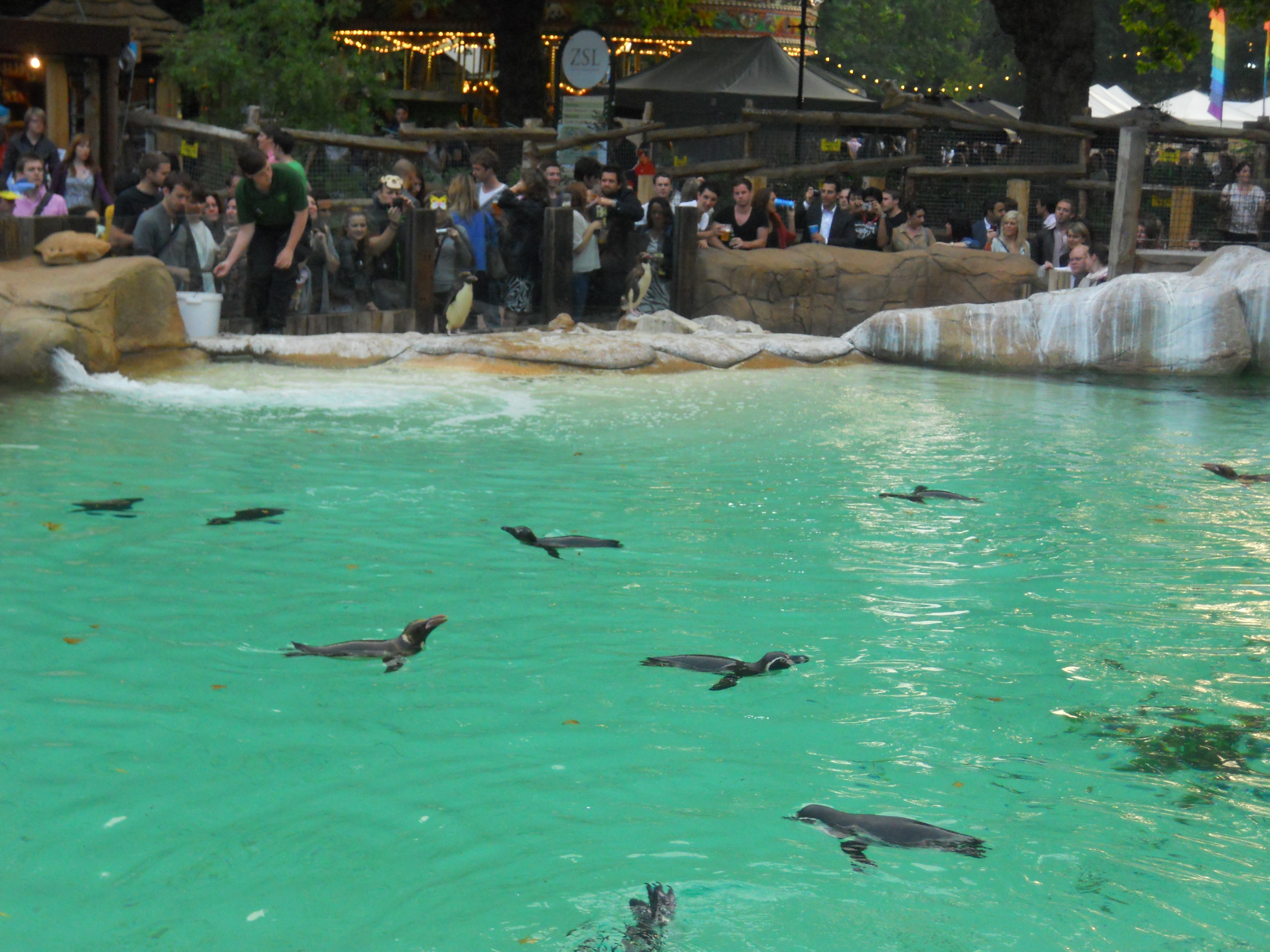
I chatted to a keeper for some time and she said that at the moment they have 67 penguins of four species on the beach. they are expecting this number to grow to about 200, mainly by breeding more in the centre of London.
The Architecture of London Zoo
London Zoo has a large collection of the capital’s finest buildings. There is a list here on their web site.
Many were designed by Decimus Burton in the nineteenth century and it a testament to his good design, that some of the original buildings like the Giraffe House, have been able to be brought up to modern welfare standards.
But some like the penguin pool designed in the 1930s by Berthold Lubetkin are never going to be suitable for animals again.
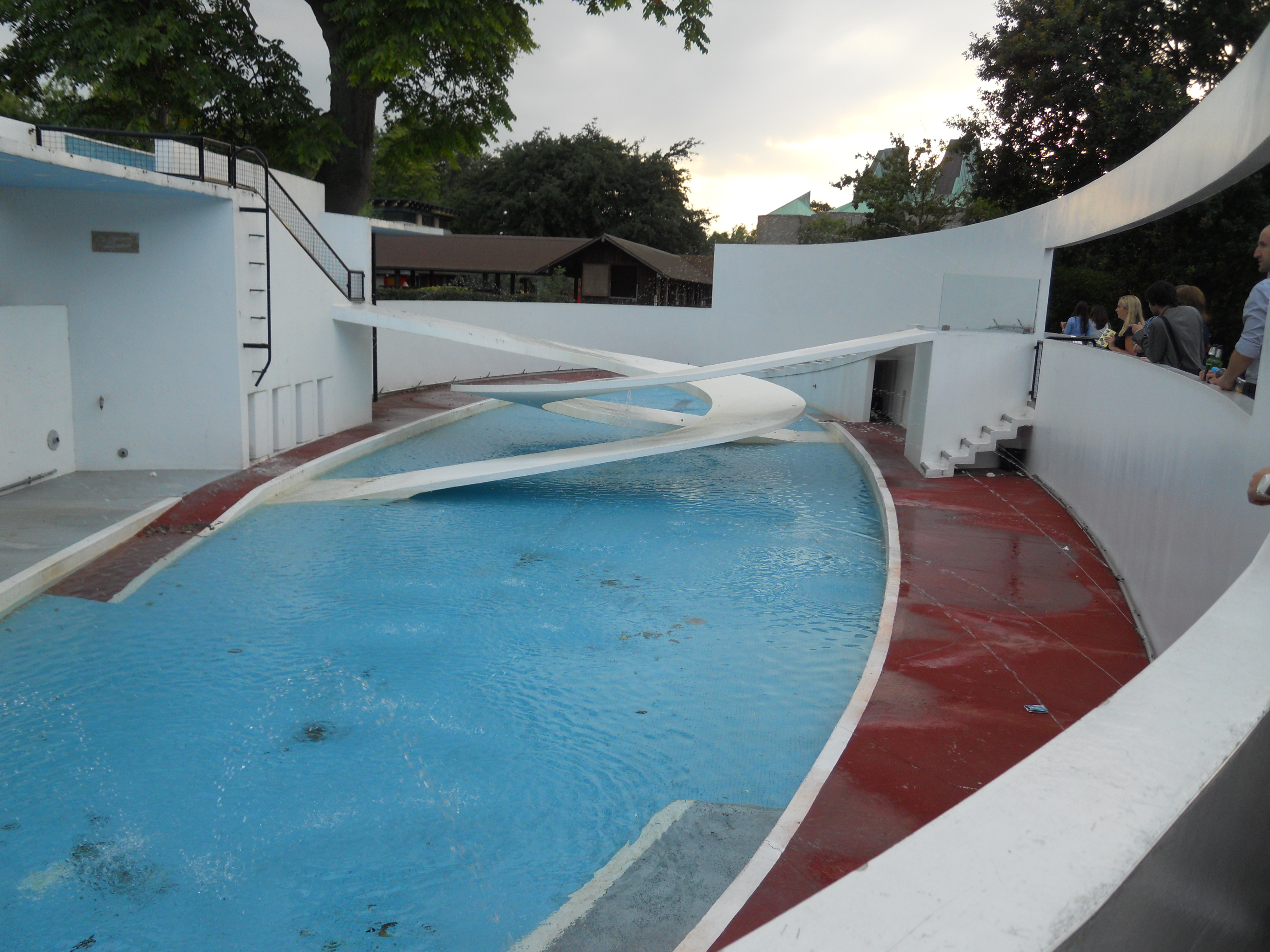
Penguin Pool, London Zoo
I would think it is a big problem for the Zoo as it takes up valuable space and because it is a Grade One Listed building, it can’t be knocked down or substantially modified. Someone said to me last night, that they can’t even modify the words Penguin Pool on the side.
As a child I always thought that the penguin pool was rather stark and that the only thing that gave it life was the penguins, who seemed rather lost in the place.
It’s all such a pity really.
I think if the penguin pool were a house designed by Lubetkin, one of two things would have happened; someone would have spent a fortune and made it into a very nice house or it would have just decayed to a pile of broken concrete.
All credit to the London Zoo for preserving it, but I suspect sometimes they wish a stray bomb from the Second World War had destroyed it. The Zoo asctually suffered quite a bit of damage, as this report tells. I like this piece, which was taken from The Times of the 15th November, 1940.
The Zoo in fact is a microcosm of London. Hitler’s bombs cause a certain amount of damage to it, and a considerable amount of inconvenience; but they have not destroyed the morale or the routine of its inhabitants, animal or human, and it continues to function with a very respectable degree of efficiency.
It may have been blatant propaganda to keep up Londoners morale, but perhaps it does explain why many Londoners look on their zoo with affection.

