Building Under The Wires At Barking Riverside
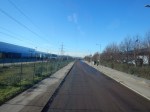
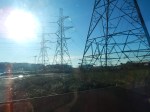
I went to Barking Riverside yesterday, where they are building over 10,000 housing units and took these pictures where the EL1 buses from Barking station turn round.
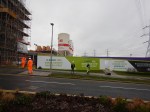




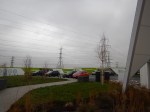
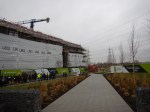
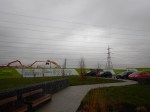
As the pictures show, there are a lot of high voltage cables running over the site.
The East London Transit
The EL1, EL2 and EL3 buses of the East London Transit connect the area to Barking station.
When I last came to this area, the buses weren’t to the high standard of New Routemasters.
New Hitachi Rolling Stock Unveiled by Hull Trains As Part Of £60m Investment
The title of this post is the same as that of this article on Rail Technology Magazine.
Five new Class 802 trains will replace Hull Train‘s current fleet of four Class 180 trains and an InterCity 125.
Currently, the InterCity 125 runs the service between Kings Cross and Beverley stations, whilst three Class 180 trains are needed to run the six round trips between Kings Cross and Hull stations.
So Hull Trains have a spare train, that can be in maintenance.
With five new Class 802 trains, replacing the current fleet, four will be needed for the current service, thus leaving a spare train.
The new trains will give various advantages.
- The Class new 802 trains have a top speed of 140 mph, whereas the current Class 180 trains can only do 125 mph.
- The Class 802 trains have an increase of thirteen percent in seating capacity.
- They will obviously have a better interior, with everything passengers expect.
In a few years time, the extra speed may offer a big advantage.
The Southern part of the East Coast Main Line is being upgraded to allow 140 mph running, which would probably save around ten minutes on a journey between Kings Cross and Hull stations.
Could this time-saving mean, that extra services between Kings Cross and Hull stations are possible?
If 140 mph running allowed a round trip in under five hours, I have a feeling this could mean over ten trains per day in each direction, if there are enough paths available.
But flights of Class 800 trains and Class 802 trains running at 140 mph might just do it.
Conclusion
What would ten trains per day between Kings Cross and Hull, do for the economy of Hull?
The East Coast Main Line might not have the 250 mph operating speed of High Speed Two, but 140 mph isn’t that slow.
Storage At Scale Competition
The title of this post is the same as that of this press release from the Department of Business, Energy & Industrial Strategy.
This is the details of the competition.
Innovative large-scale energy storage will play an important role in decarbonising industry, power, heat and transport.
This competition is looking for innovative, replicable solutions which could provide a market competitive alternative to conventional commercial large scale energy storage technologies, for example pumped-hydro or batteries (such as lithium ion, lead acid or sodium-sulphur).
A range of electrical energy storage technologies are within scope, with a target minimum output power of 30 MW or minimum capacity of 50 MWh. Power-to-X technologies (e.g. power-to-gas) with a target minimum input power of 5 MW are also in scope.
Up to £20 million will be available from 2019 to 2021. The competition will support up to 3 demonstration projects with build completion by March 2021 and operational testing to be completed December 2021.
Projects should be at a technology readiness level of 6 or above, which could result in lower capital or operating costs to the traditional storage technologies, or improved capacity, sustainability and response rates at a comparable cost.
A few thoughts.
The Minimum Output Power
A minimum output of 30 MW is specified.
To put this in context, the pumped-storage Dinorwig Power Station, has a maximum power output of 1,800 MW.
The Minimum Capacity
A minimum capacity of 50 MWh is specified.
Dinorwig has a capacity of 9.1 GWh
Power-to-X Technologies
As Power-to-gas is mentioned, I would feel that this refers to a process like electrolysis, where electricity is perhaps converted into hydrogen, which can be stored and then converted back to electricity using fuel cells or combustion and a steam turbine.
Conclusion
The competition looks to me to be a good idea.
Let’s hope it produces something worthwhile.
How UK Carbon Emissions Tumbled
The title of this post is the same as that of this article on I News.
This is the first paragraph.
Amid the doom and gloom, there is thankfully one piece of good news today. The amount of carbon dioxide the UK pumps into the atmosphere through its power generators, car exhausts, wood burners and industry has dived by 38 per cent since 1990. A statistic that’s even more impressive when you consider the population has grown by nearly 10 million during that period.
So how has this happened?
- The reduction in the number of coal-fired power stations.
- We are using less energy, because of more efficient electrical equipment and devices.
- There is less heavy engineering.
Let’s hope this downward trend continues.
Nissan And Jaguar Land Rover Are Paying The Price Of Backing Diesel
Politicians and unions are blaming Brexit for production cuts at Nissan and Jaguar Land Rover, but this problem has been on the cards for some time, due to our increasing reliance on diesel power.
The technology is now there for more electric cars and it is criminal that the Government hasn’t done enough to encourage their use.
- We need more ultra-low emission zones, as London is introducing.
- All parking spaces and garages on new housing must have charging points.
- All city buses should be low emission.
- All taxis and private hire vehicles should be low emission.
- We need better connected railways with a lot more stations and some new lines.
So what have the politicians been doing in the last few years. Spending time arguing about the irrelevance of Brexit.
Talk about fiddling, while Rome burned!
Checking On The Barking Riverside Extension Of The Gospel Oak To Barking Line
I took these pictures, when I went between Barking and Dagenham Dock stations on the top deck of an EL2 bus.

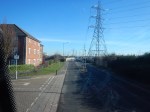

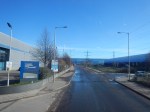
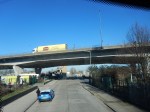
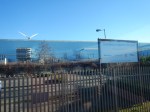
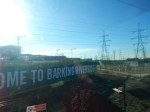
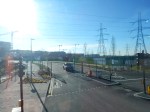
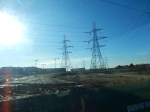
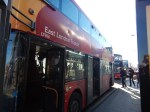
It looks to me, that this will be the easiest and least stressful way to observe the Barking Riverside Exctension, as it is being built.
As the pictures show, the route is run using New Routemaster buses, so on a good day, with a clean bus, the pictures should be good.
New Lifts At Finsbury Park Station
As I passed through Finsbury Park station, I took these pictures of the new lifts to the Piccadilly and Victoria Lines.
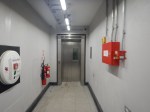
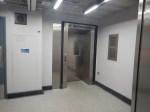


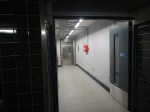
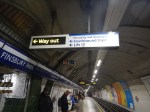
These lifts are particularly needed as there are no escalators between the Underground and the surface and you have to use spiral staircases.
This access is probably one of the worst design crimes on the Victoria Line, which was built on the cheap in the 1960s.
Notice that some of the signage is not complete and finding the lifts isn’t as easy, as it should be.
But then the installation is not fully finished.
Should High Speed Two Use Contactless Ticketing?
Ask Londoners what they think of contactless ticketing and the views, will generally be positive.
Londoners are also increasingly travelling with their credit and debit cards instead of London’s Oyster Card.
Other city’s like New York, are also going London’s way and are basing ticketing around bank cards.
High Speed Two’s Phase One Network
IWhen Phase One hopefully opens in 2025, according to this section in Wikipedia, this could be the service pattern in trains per hour (tph)
- 3 tph – Birmingham Curzon Street calling at Old Oak Common (OOC) and Birmingham Interchange
- 3 tph – Birmingham Interchange calling at OOC
- 2 tph – Liverpool Lime Steet calling at OOC, Stafford (1tph), Crewe (1tph) and Runcorn
- 3 tph – Manchester Piccadilly calling at OOC, Wilmslow (1tph) amd Stockport
- 1 tph – Preston calling at OOC, Crewe, Warrington Bank Quay and Wigan North Western
- 1 tph – Glasgow calling at OOC and Preston
This is a very simple network and consists of the following stations.
- 3 tph – Birmingham Curzon Street
- 5 tph – Birmingham Interchange
- 2 tph – Crewe
- 2 tph – Liverpool Lime Street
- 3 – tph – Manchester Piccadilly
- 13 tph – Old Oak Common
- 2 tph – Preston
- 2 tph – Runcorn
- 1 tph – Stafford
- 3 tph – Stockport
- 1 tph – Warrington Bank Quay
- 1 tph – Wigan North Western
- 1 tph – Wilmslow
This is just thirteen stations..
Fitting these large and medium-sized stations with ticket barriers able to accept all forms of ticketing, that can handle hundreds of passengers is the sort of operation, that Transport for London has been doing for years.
High Speed Two’s Phase Two Stations
After completion of Phase Two, these stations will be added to the High Speed Two Network.
- Carlisle
- Carstairs
- Chesterfield
- East Midlands Parkway
- Edinburgh
- Edinburgh Haymarket
- Leeds
- Manchester Airport
- Newcastle
- Sheffield
- York
This is another eleven stations.
Fares On High Speed Two
Wikipedia has a Section called Fares in their entry for High Speed Two.
This is said.
There has been no announcement about how HS2 tickets will be priced, although the government said that it would “assume a fares structure in line with that of the existing railway” and that HS2 should attract sufficient passengers to not have to charge premium fares. Paul Chapman, in charge of HS2’s public relations strategy, suggested that there could be last minute tickets sold at discount rates. He said, “when you have got a train departing on a regular basis, maybe every five or ten minutes, in that last half hour before the train leaves and you have got empty seats…you can start selling tickets for £5 and £10 at a standby rate.
I also have my views.
Capacity
I will look at current and future capacity to Birmingham, Liverpool and Manchester
Note the following capacities of the various trains.
- Class 390/0 – 9 cars – 469 seats
- Class 390/1 – 11 cars 589 seats
- High Speed Two – 1000 seats.
I am not making any class distinction.
Capacity To Birmingham
Currently, Virgin run three tph to Birmingham, which if they were all eleven car trains, which they aren’t would be a capacity of 1,767 seats per hour.
Phase One of High Speed Two will have six tph to the two Birmingham stations, which would be a capacity of 6,000 seats per hour.
This will be an increase in capacity of over three times.
Capacity to Liverpool
Currently, Virgin run one tph to Liverpool, which if it is an eleven car train, this would be a capacity of 589 seats per hour.
Phase One of High Speed Two will have two tph to Liverpool, which would be a capacity of 2,000 seats per hour.
This will be an increase in capacity of over three times.
Capacity to Manchester
Currently, Virgin run three tph to Manchester, which if they were all eleven car trains, it would be a capacity of 1,767 seats per hour.
Phase One of High Speed Two will have three tph to Manchester, which would be a capacity of 3,000 seats per hour.
This will be an increase in capacity of nearly twice.
Is Manchester Missing Out?
Mancunians will probably say they are being short-changed as their capacity increase is less than Birmingham and Liverpool.
But it should also be noted that Preston will have a High Speed Two service of two tph from London and Warrington Bank Quay and Wigan North Western, will each have one tph.
So travellers will be able to use High Speed Two without going to Manchester Piccadilly.
Fares And Ticketing
If I want to buy an Off Peak Return ticket on Virgin between Euston and Birmingham for a few days in the future, it will cost me £56.70 without a railcard.
Off Peak Returns to Liverpool and Manchester are £89.60 without a railcard.
Paper And E-Tickets
The current ticketing systems will probably still be available and just as you do with airlines, you will probably be able to buy tickets over the Internet and douwnload to your phone or print a paper ticket.
Contactless Cards
I would think, that it would be very likely that an Off Peak Single ticket to Birmingham will be under the contactless payment limit.
We don’t know how contactless is going to advance in the next few years, but, I suspect certain companies will be allowed a higher limit, if they take some of the risk.
I also think systems will get more sophisticated, so your bank might allow a railcard to be associated with your bank card.
This would reduce your Liverpool/Manchester fare to £59.15, which means each way is under the current contatless limit.
The longest Off Peak Return journey from Euston to Glasgow is only £98.00 with a raiicard.
Given these current ticket prices, I believe that contactless ticketing could be used to sell tickets on High Speed Two.
What Advantages Would Contactless Tickets Have For Passengers?
Convenience would be at a high level. You would do the following.
- Turn up at the gate, where a display might say, that the current Single fare to Birmingham is £20 and the train leaves at 10:20.
- Touch in at the gate.
- Go through the gate, after your bank card had been checked.
- Get on the train and find your seat.
- Travel to Birmingham
- Get off the train.
- Touch out at the gate.
- Go through the gate, after your bank card has been successfully debited with the fare.
What could be simpler?
Earlier, I indicated that Wikipedia says that standby fares will be available.
But imagine, if High Speed Two’s computer, adjusted the fares, so that the trains attracted a high level of passengers. Ryanair and EasyJet have been doing something similar for years.
So I think, that if High Speed Two get this right, they will do that difficult trick of making money and giving passengers low prices.
But the biggest advantages for passengers, is that they won’t have to plan their journeys in advance.
So supposing you work for a software company and one of the company’s clients in Birmingham, needs an urgent visit.
You can just go and know you’ll get the cheapest fare.
What Advantages Would Contactless Tickets Have For High Speed Two?
Contactless ticketing is so much more affordable than using paper or e-tickets.
IIt should also attract more passengers to use the train.
Conclusion
There are winners all round.
p
A Telling Statement From Andrew Marr
On his program this morning, Abdrew Marr has just said that they try every week to get Donald Tusk and Michel Barnier on the program.
Every week, they get a negative answer.
 The Anonymous Widower