Deep Insights Into Crossrail
London Reconnections is a web site, that often gives deep insights into rail projects in the London area.
Recently, they have published two articles about Crossrail.
I have read every word of both articles and feel that, the Project Management on Crossrail has been severely lacking.
If I go back to the days of Artemis, Project Managers were always using our innovative graphics to communicate all of the details of project costs and status to managers and stakeholders.
I can remember in one case, we were the bringers of terrible news about costs to a major company. One of our project managers had distilled a very large project to a series of graphics on a single sheet of A3 paper, so senior management couldn’t avoid our message.
Today, the company would probably shoot the messenger, but we went on to sell the company over a dozen systems.
I know nothing of modern Project Management systems, but surely they are more capable than Artemis, which was largely written by myself and others in the 1980s.
Network Rail And Project Management
This article on the Railway Gazette is entitled UK Railway News Round-Up.
This is a paragraph.
Network Rail has awarded The Knowledge Academy Ltd a framework contract to provide project management courses for its employees.
Have Network Rail finally accepted, that they have a project management problem?
How Will Class 710 Trains Access Willesden TMD?
This map from carto.metro.free.fr shows the track layout around Willesden TMD, where the Class 710 trains for the Gospel Oak to Barking Line (GOBLIN) will be stabled.
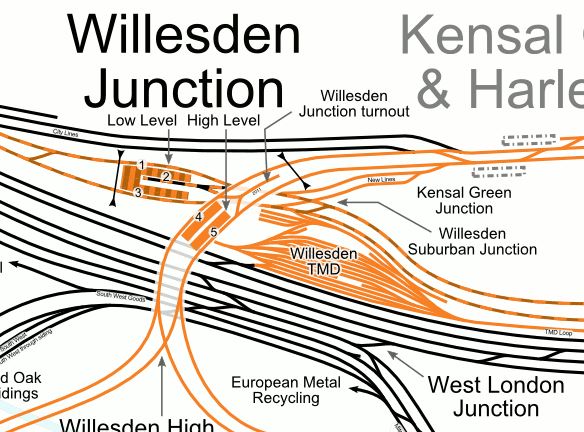
Note the following lines around Willesden TMD.
North London Line
The North London Line goes through platforms 4 and 5 at Willesden Junction station.
South of the station it splits, with the North London Line continuing to Richmond and the West London Line going to Clapham Junction.
North of the station the line continues to the East and at Gospel Oak station, the GOBLIN branches away.
The Bakerloo Line And Watford DC Line
The shared tracks of the Bakerloo Line and the Watford DC Line, which are shown in black/orange go through platforms 1 and 3 at Willesden Junction station.
To the East the tracks go towards Euston and to the West, they go towards Watford.
There is also a bay platform 2 in Willesden Junction station, which is shown in these pictures.

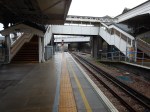
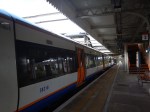
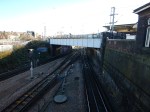
Note that is long enough to take a five-car Class 378 train and that it is also electrified with London Underground’s four-rail electrification.
Platform 2 To The North London Line to the East
Two tracks give a direct route from Platform 2 at Willesden Junction station to the Eastbound North London Line. greatkingrat says they are labelled “New Lines”
Looking from the train this morning, I don’t think this pair of tracks is electrified, so it doesn’t allow Platform 2 to be used to turn electric trains running on the North London Line.
I have seen Platform 2 used as a terminus, but the trains must use the electrified route via Primrose Hill.
After greatkingrat’s comment, I went back and had a second look.
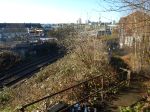
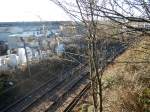
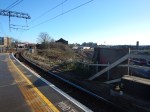
Note.
25 KVAC overhead electrification can be seen at the North London Line end of the tracks.
There is 750 VDC third-rail electrification at the Willesden
This Google Map shows, where the connecting tracks join the Bakerloo/Watford DC Line.
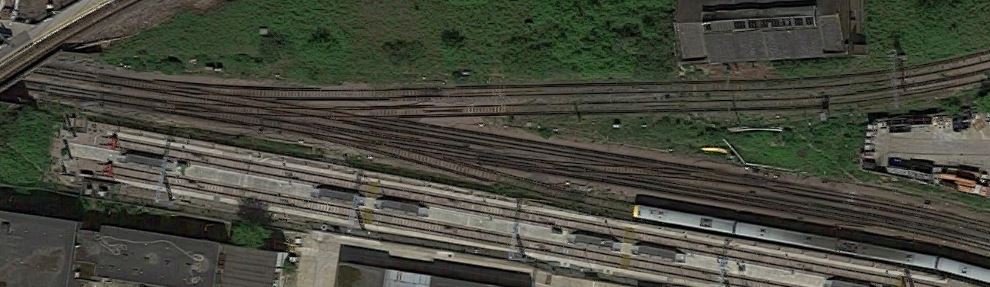
It does appear that the third-rail and a couple of gantries are visible.
- Trains leaving Platform 2 should be able to use third-rail electrification until they are under the overhead wires, when they would change over.
- Trains arriving at Platform 2 would use overhead wires, as far as they could and then swap to third-rail.
If this route is to be used by new Class 710 trains, I’m sure it will get more than adequate testing.
Entering Or Leaving Willesden TMD
I am not sure, how Class 378 trains working the Watford DC Line service transfer to and from Willesden TMD, but it does appear there are some convenient crossovers.
I have looked at Real Time Trains and early in the morning of the 9th of January, these trains called at Platform 2 at Willesden Junction station, that originated at Willesden TMD.
- 05:02 – Willesden TMD to Barking
- 05:15 – Willesden TMD to Upper Holloway
- 05:23 – Willesden TMD to Stratford via Primrose Hill
- 05:56 – Willesden TMD to Kensal Green
- 06:17 – Willesden TMD to Euston
There were also other services, which appeared to be going between Euston and Stratford.
It looks to me that trains were being positioned to start service and that the bay platform 2 at Willesden Junction station is used to reverse trains, coming out of the depot.
It also appears that some trains use the electrified route to the East via Primrose Hill.
The 05:02 and 05:15 are Class 172 trains going to the GOBLIN, and as they are diesel trains, they use the pair of direct tracks, that connect to Platform 2.
How Will Class 710 Trains Go Between the GOBLIN And Willesden TMD?
As the Class 710 trains will be dual voltage trains, they should be able to take the direct route, which has both types of electrification and requires a change at some point.
They can also take a roundabout route possibly via Primrose Hill and using Platform 2 at Willesden Junction station to access the depot.
But I suspect Class 710 trains will have battery power.
This would enable them to take the same short cut, but without using the electrification, between Platform 2 and the North London Line, that the Class 172 trains use currently.
Dual-voltage Class 378 trains should be able to use the short route.
Conclusion
Fitting batteries to Class 710 trains, would make their operation on the GOBLIN, a lot easier, as they could use the batteries to get in and out of Willesden TMD.
Could it be that the software that handles power and charges and uses the batteries, is the unreliable software?
This article on Rail Magazine is entitled Gospel Oak-Barking Fleet Plan Remains Unclear.
This is a paragraph.
London Overground was due to put new Bombardier Class 710 electric multiple units into traffic on the route from March 2018, with a full rollout by May. However, problems with the Train Control Management System (TCMS) has so far prevented this.
I also think that for a train to work the GOBLIN and be stabled at Willesden TMD, it must be a dual-voltage train or have a capability to run on batteries.
Class 710 Trains And Software Problems
There is a lot of chatter in various web sites and publications, and from some London Overground employees, that the late arrival of the Class 710 trains, is down to bugs in the train software.
I have heard or read phrases like “computers-on-wheels” and “thirteenth software upgrade”, which surely doesn’t bode well.
I am reminded of something said, by a Senior Maager of a Computer Company at a conference in the 1960s.
If it takes, one man a year to write a program, then it will take two men, two years and two hundred and fifty-six men, two hundred and fifty-six years.
I have written a lot of software and generally my work was accepted as good. Or at least, no-one ever told me anything I wrote was rubbish!
My guess is that Bombardier have used too many programmers and many are too far from Derby.
A Visualisation Of An Alstom Breeze Hydrogen-Powered Train
I have found a visualisation of an Alstom Breeze hydrogen-powered train on Twitter.
Brexit Was An Easy Sell
How many times, have you heard a smooth salesman give you a line of patter to try to sell you something?
In some cases, they have presented you with say a car, bicycle or washing machine, which is all you need with a feasible story.
So you have bought it, because you couldn’t see any risk and it did what you need.
In most cases you haven’t regretted the purchase as it was a well-made good product.
If you asked a good salesman to sell Brexit, he could come up with all sorts of positive reasons, why you should vote for it.
On the other hand, a good salesman selling Remain, would have only given you negatives and doom and gloom.
When did anybody sell you anything, based on its negative qualities?
In my view, David Cameron’s referendum was skewed in favour of Brexit, as selling a negative to millions of people is not a feasible proposition.
The New Track Through Tottenham Hale Station Looks Complete
I took these pictures of the third track through Tottenham Hale station yesterday.

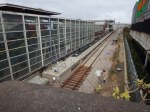
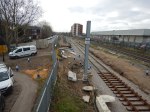
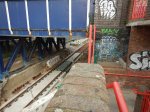
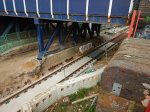
It appears to be substantially complete, although there is no catenary under Ferry Lane bridge.
Two days later, there was an engineering train on the new track.
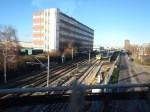


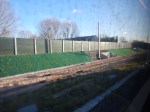
The project does appear to be progressing.
How Did We Get Here?
As a 71-year-old, enjoying a comfortable retirement, who voted Remain, I’m watching UK politics from behind the sofa.
There appears to be no statesman or stateswoman to lead us out of this mess.
Hydrogen For Hydrogen-Powered Trains And Other Vehicles
I have received e-mails worrying about how hydrogen-powered trains and other vehicles, like buses and trucks, will get the fuel they need.
Production Of Hydrogen
There are two major methods of producing large quantities of hydrogen.
Steam Reforming Of Natural Gas
Steam reforming is used to convert natural gas into hydrogen by using high temperature and pressure steam in the presence of a nickel catalyst.
This section in Wikipedia is entitled Industrial Reforming, says this.
Steam reforming of natural gas is the most common method of producing commercial bulk hydrogen at about 95% of the world production of 500 billion m3 in 1998. Hydrogen is used in the industrial synthesis of ammonia and other chemicals. At high temperatures (700 – 1100 °C) and in the presence of a metal-based catalyst (nickel), steam reacts with methane to yield carbon monoxide and hydrogen.
It gives this chemical equation for the reaction.
CH4 + H2O ⇌ CO + 3 H2
I have two questions about steam reforming.
- How much fossil fuel energy is needed to create the high temperatures and pressures to make the process work?
- What happens to the carbon monoxide (CO)? Is it burnt to provide heat, thus producing more carbon dioxide (CO2)?
I therefor question the use of steam reforming to produce hydrogen for vehicles, especially, as a system might be required to be installed in a train, bus or freight depot.
The only time, where steam reforming could be used, is where an existing refinery producing large quantities of hydrogen by the process is close TO the point of use.
Electrolysis Of Water Or Brine
It is fifty years, since I worked in the chlorine-cell rooms of ICI’s Castner-Kellner chemical complex at Runcorn.
The process used was the Castner-Kellner Process and this is the first paragraph of the Wikipedia entry.
The Castner–Kellner process is a method of electrolysis on an aqueous alkali chloride solution (usually sodium chloride solution) to produce the corresponding alkali hydroxide, invented by American Hamilton Castner and Austrian Karl Kellner in the 1890s.
Brine from Cheshire’s extensive salt deposits is electrolysed using a graphite anode and a mercury cathode to produce chlorine, hydrogen, sodium hydroxide and sodium metal.
Large amounts of electricity are needed, but the biggest problem is the poisonous mercury used in the process.
My work incidentally concerned measuring the mercury in the air of the plant.
Since the 1960s, the technology has moved on, and ICI’s successor INEOS, still produces large quantities of chlorine at Runcorn using electrolysis.
More environmentally-friendly processes such as membrane cell electrolysis are now available, which produce chlorine, hydrogen and sodium hydroxide.
In the 1960s, the production of chlorine and hydrogen was a 24/7 process and I would suspect that INEOS have a good deal to use electricity from wind and other sources in the middle of the night.
The Future Of Hydrogen
Hydrogen is a clean fuel, that when it burns to produce heat or is used in a fuel cell to produce electricity, only produces steam or water.
There is also a lot of research going into hydrogen fuel-cells, hydrogen storage and batteries, and some of this will lead to innovative use of hydrogen as a fuel.
As an example, there is a growing market for fuel-cell forklifts. The first one was built in 1960, so fifty years from idea to fulfilment seems about right.
How many other applications of hydrogen will be commonplace in ten years?
- City buses
- Local delivery vans for companies like Royal Mail and UPS.
- Taxis
- Refuse trucks
I also think, some surprising applications will emerge driven by the need to clean up the air in polluted cities.
Ideally, these applications will need a hydrogen filling station at the depot.
Modern electrolysis technologies should lead to the development of simple cells, for the electrolysis of water to produce hydrogen and oxygen.
Powered by renewable energy sources or nuclear, this technology could be used to create zero-carbon hydrogen at the point of use.
Diesel Or Hydrogen?
The diesel engine in a New Routemaster bus is a Cummins diesel with these characteristics.
- 4.5 litre
- 138 kW
- 400 Kg
So how much would a 150 kW fuel-cell weigh?
A Ballard FCveloCity-HD, which is capable of producing 100 kW, weighs around 300 Kg.
I feel that as hydrogen and battery technology improves, that more and more city vehicles will be hydrogen-powered.
Hyundai Launch A Hydrogen-Powered Truck
This page on the Hyundai web site is entitled Hyundai Motor Presents First Look At Truck With Fuel Cell Powertrain.
It will be launched this year and looks impressive. Other articles say they have tied up with a Swiss fuel-cell manufacturer called H2 Power and aim to sell a thousand hydrogen-powered trucks in Switzerland.
 The Anonymous Widower