Retrofitted Hydrogen Fuel Cell EMU Concept Presented
The title of this post is the same as that of this article on Global Rail News, that was published in April 2014.
This is the first two paragraphs.
The possibility of retro-fitting diesel multiple units (DMUs) to run on hydrogen fuel cell technology has been put to the test as part of an RSSB and Network Rail-funded innovation research programme.
Fuel Cell Systems, which has worked alongside the University of Birmingham and Hitachi Rail Europe, says the six-month study has demonstrated the feasibility of installing hydrogen fuel cell technology on DMUs as an alternative to electrification.
It strikes me that some serious people are involved in this project.
The report on the project was published in June 2016 and it is stored here on the University pf Birmingham web site.
A Very Smart Class 319 Train
On my trip to Bricket Wood station yesterday, I travelled from Watford Junction station in a very smart Class 319 train.
These pictures show the train.
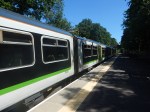
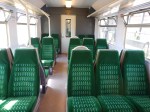
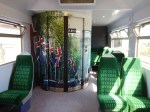
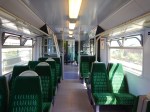
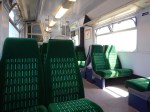
It certainly shows how Mark 3-based stock has the ability to scrub up well!
West Midlands Trains have nine of these Class 319 trains, which are mainly used for peak hour services on the West Coast Main Line.
One gets used on the Abbey Line.
The current arrangement probably works reasonably well from the train operators point of view.
However, passengers probably need a regular half-hourly service, which would need two trains and a passing loop at Bricket Wood station.
These trains are going to be replaced with new five-car Class 730 trains in 2020-21.
Will these new trains be used on the Abbey Line?
If the passing loop is installed at Bricket Wood, then two trains might be able to provide a half-hourly service. Although, having seen Bricket Wood station yesterday, a passing loop with electrification and a second platform would be a more expensive .option.
I discuss the various options in Could Modern Technology And Developments Improve the Abbey Line?.
Bricket Wood Station – 25th June 2018
These pictures show Bricket Wood station on the Abbey Line.
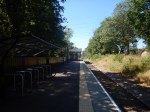
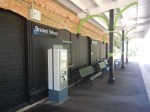

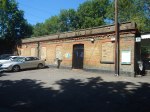
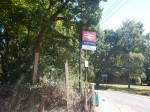
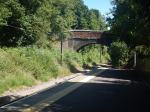
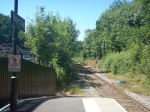
It was a tidy clean station served by a very smart Class 319 train.
Wikipedia says the following about the future of the station.
Installation of Oyster card readers on the stations along the branch is a possibility, although there are other ticketing options too.
Restoration of the crossing loop is being considered by the local authorities and Network Rail, which would facilitate trains running every 30 minutes.
Both actions would appear to be sensible. In Could Modern Technology And Developments Improve the Abbey Line?, I discuss how by using trains with batteries and a loop without electrification, may be an alternative way to install a passing loop.
I suspect that the station is long enough for a six-car train.
£100m Rail Test Complex Plans For Neath Valley
The title of this post, is the same as that of this article on the BBC.
This is the first three paragraphs.
Plans for a £100m rail testing complex to work on next generation train technology have been revealed in south Wales.
It is at an early stage but it could be built on the site of a mothballed opencast mine in Neath Port Talbot.
The preferred option would be to site it at the mothballed opencast mine at Nant Helen near the border with Powys and at the coal washery site next door at Onllwyn, which is still operational.
This Google Map shows the massive open-cast mine near the village of Onllwyn.
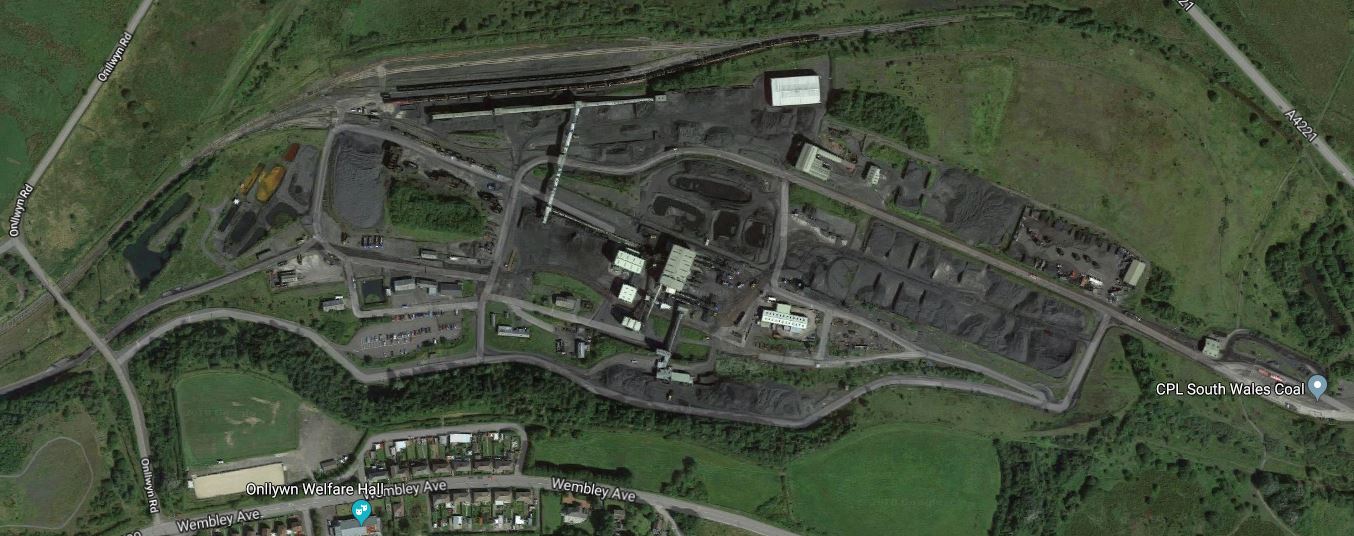
Note the rail connection at the Northern side of the mine.
Onllwyn has a Wikipedia entry, which says this.
With over 200 years of coal mining behind it, the parish was once home to five pits that employed hundreds of men. Now all that remains is a coal washery and coal processing plant. On the route of the former Neath and Brecon Railway, a freight only routes exists to the coal washery from the South Wales Main Line at Neath.
So at least it’s swapping an old industry, with one that could have a very sparking future.
As I said in Talgo Explores Options For Building UK Test Track.
So perhaps we do need another convenient test track!
The site would be even more convenient, if the South Wales Main Line were to be electrified, through Neath to Swansea.
Could Modern Technology And Developments Improve the Abbey Line?
The Abbey Line runs between Watford Junction and St. Albans Abbey stations.
It has a few problems.
Frequency
The track layout means that trains generally run every forty-five minutes, which is not very passenger friendly.
The line needs at least a half-hourly service and it would appear from Wikipedia and other sources, that this could be achieved by re-instating the passing loop at Bricket Wood station.
Elderly Trains
West Midlands Trains have promised new trains for the line, to replace the current Class 319 train.
Although, these Class 319 trains are much better than their arge, as I said in A Very Smart Class 319 Train.
As West Midlands Trains, use these trains for services on the West Coast Main Line, it probably helps with staffing and maintenance.
But these trains are being replaced by five-car Class 730 trains. Will the shittle train be replaced by another Aventra?
Reliability
Search the Internet for “Abbey Line St. Albans” and you find news stories with headlines like these.
- No Abbey Flyer Trains Between St. Albans And Watford
- Abbey Line Breaks Down Again
- St. Albans Abbey Flyer Users Fund Raising To Improve Train Line
- No Trains On St Albans Abbey Flyer Line After Fault With Shut
It would appear that the Abbey Line has a reliability problem.
A Simple Solution
The simplest possible solution to improve the line with a half-hourly service would be as follows.
- Reinstate the passing loop at Bricket Wood station.
- Acquire a fleet of three Class 730 trains of an appropriate length.
This Google Map shows Bricket Wood station.
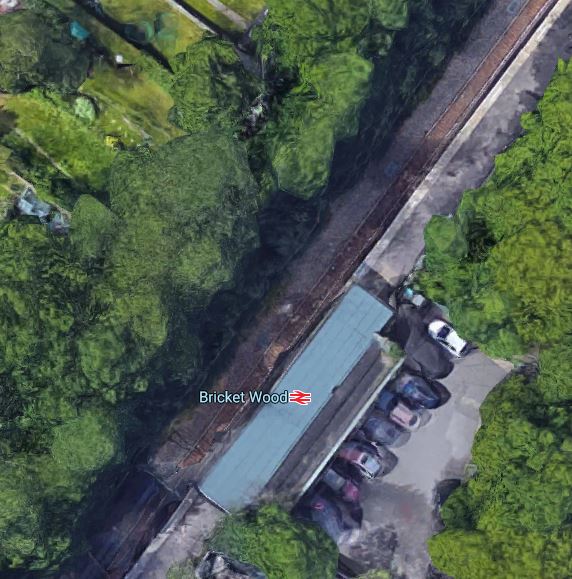
Note the single platform with a single track.
There would appear to be plenty of space for a passing loop on the opposite side to the platform..
The Class 730 trains are Bombardier Aventras and I believe strongly, that all Aventras have batteries. So surely this is just the place to be innovative, with the use of battery technology?
The loop would be built without electrification and the track layout would be such that two trains could easily pass using battery power. Pantographs would be raised and lowered as required.
Suppose the loop started in the middle of the platform and perhaps extended for two hundred metres in the Watford direction..
- The two trains would arrive at the station, with one on each side of the entry to the loop.
- The Watford-bound train, would switch to battery power in the station and use the loop to pass the other train to continue towards Watford.
- The Watford-bound train could either switch back to overhead power as soon as it regained the electrified track or wait until it is safely in the next station.
- When the line is clear, the St. Albans-bound train would continue on its way, using overhead power.
It might also be possible for trains to go towards St. Albans using the overhead power and towards Watford on battery power, with all changeovers of power source taking place at the terminal stations, where turn-round time will be several minutes.
These are some pictures of Bricket Wood station.
My only worry is that the platforms may only be big enough for six-car trains.
Perhaps, to avoid lengthening the platforms at Bricket Wood station, two three-car Class 730 trains could be used?
Use of the five-car trains would probably require electrification of the loop, a second platform and a footbridge, which would be a much more expensive solution.
A Class 769 Train Solution
The Class 769 train is a bi-mode version of the Class 319 train. So could these work the simple passing loop without electrification?
At four-cars, they may be short enough to work the route without building a second platform at Bricket Wood station.
But the solution would probably need the current platform to be extended to accommodate two trains.
They would use diesel power to go through the passing loop.
Passengers would effectively get a twice as frequent service, using similar trains to the current ones.
A Class 230 Train Solution
As West Midlands Trains are also using Class 230 trains on the Marston Vale Line, which can work on electric, diesel and battery power, I can’t see any reason, why these trains couldn’t be used on the Abbey Line.
They would use diesel or battery power to navigate the loop without electrification.
These trains are affordable, short in length and are designed for remote servicing, but is capacity and speed sufficient?
A Tram-Train Solution
The same Stadler tram-trains with batteries, that are being used on the South Wales Metro could also be used on the Abbey Line.
They would operate as trains, in the same ways as the Aventras, using batteries to navigate a passing loop without electrification.
This solution would have the disadvantage of West Midlands Trains introducing another type of train, but the tram-trains could go walkabout in Watford and/or St. Albans at the two ends of the route.
Under Past Proposals in the Wikipedia entry for the Abbey Line, this is said about a possible conversion to light rail.
In October 2009 Secretary of State for Transport Lord Adonis announced a plan to increase frequency on the line by allowing Hertfordshire County Council to lease the line from Network Rail and converting it to light rail from 2011. It was hoped that this would be possible for the same amount of subsidy the line received, as the new infrastructure required, such as a passing loop would be cheaper for light rail than heavy rail. Longer-term proposals envisaged extensions into Watford town centre via Clarendon Road and High Street, and St Albans city centre, possibly as far as St Albans City railway station, and possible re-instatement of the line to Hatfield.
This Google Map shows Watford Junction station
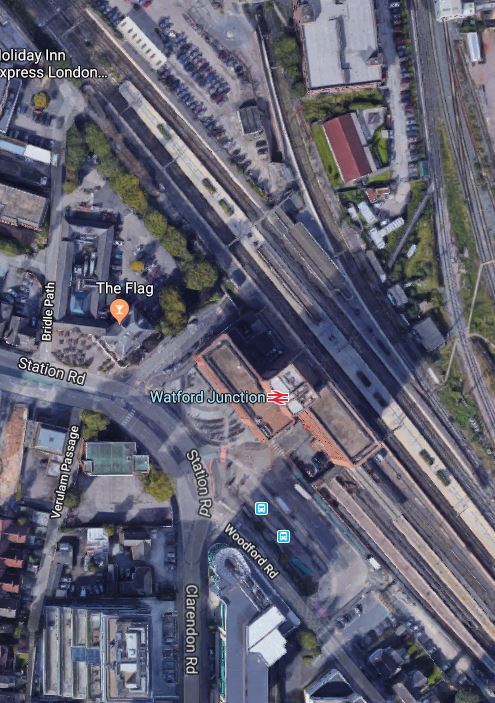
Note.
- The Abbey Line leaves the map in the North East corner.
- Clarendon Road runs South from the middle of the map.
I think it would be possible to build a bridge to take the trams over the railway.
There could even be a high-level platform for the tram-trains above the station with connections to the current heavy rail platforms.
What I have outlined here, is a classic use of a tram-train to allow trains on a heavy rail route, to extend to a town or city centre, by operating as trams.
Could Thr Abbey Line Be Linked To The Troubled Croxley Rail Link?
This map from carto.metro.free.fr shows the lines at Watford Junction.
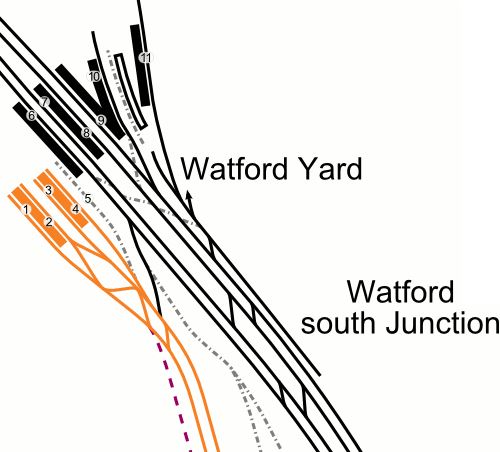
Note.
- The Abbey Line goes North from Platform 11.
- The lines shown in orange are the Watford DC Line of the London Overground, that go to London via Watford High Street station.
- The dotted purple line is the proposed route of the Croxley Rail Link.
I can’t find any references on the Internet to the possibility of a connection between the Abbey Line and the Croxley Rail Link.
I doubt that Metropolitan Line trains could go to St. Albans.
- They are too long at 133 metres.
- Extensive modifications to the track and platforms would be needed.
- They lack the batteries to navigate the proposed passing loop.
But Stadler’s tram-trains might be able to go to Croxley station.
- They are under forty metres long.
- They weigh under seventy tonnes, which could help in the bridge design.
- They could work the Abbey Line using the overhead power.
- Batteries would enable using the proposed passing loop at Bricket Wood station.
- I’m sure that Stadler’s innovative engineers could make their tram-trains run on third and London Underground rail electrification.
- Battery power could be used on some of the route between Watford High Street and Croxley stations.
I’m sure that after sorting out Cardiff Bay, Stadler’s engineers will welcome the challenge of Watford Junction.
Developments At Watford Junction Station
Over the last few years, there have been various plans about improving train services through Watford Junction station.
- It has been proposed that Crossrail is extended through the station.
- The Bakerloo Line will be extended and it has been proposed that it terminate at Watford Junction.
- West Midlands Trains will add extra services.
- How will HS2 affect services on the West Coast Main Line?
In addition there are plans for more car parking and other developments at the station.
It strkes me that there is a possibility that an innovative architect will come up with a striking scheme, that could enable bridges for trams across the West Coast Main Line.
Conclusion
There are various possibilities to improve the Abbey Line, brought about by recent innovations in the use of batteries on trains and tram-trains.
In all cases, the line gets a half-hourly frequency from new trains.
On the other hand, as with the Croxley Rail Link, there seems to be a lot of ideas and plans in Watford, but no real leadership to get anything built at an affordable cost!
Brightline Hopes To Extend Fast-Train Service To Tampa
The title of this post is the same as that of this article in MyPalmBeachPost.
Brightline certainly seems to be ambitious.
This is the second paragraph.
Gov. Rick Scott said Friday that, in response to “an unsolicited proposal” from Brightline, the Florida Department of Transportation will seek bids from private companies interested in running high-speed trains from Orlando to Tampa.
I don’t know Florida, but it does seem to me, that Brightline is aiming to cover most of the state.
Better Phone Battery Invented By Accident
The title of this post, is the same as that as an article in today’s copy of The Times.
Discussing phone batteries this is said.
Now researchers think they may have found a remedy – a new form of carbon that could double lithium battery capacity, increase the number of charging cycles and significantly reduce the risk of explosion.
Reading the article, it could be that the researchers at Lancaster University may have found the Holy Grail of battery technology.
The Times even gives OSPC-1, as they’ve called the carbon., a leading article.
There’s more on OSPC-1 in this news item on the Lancaster University web site, which is entitled New Carbon Could Signal Step-Change For The World’s Most Popular Batteries.
The East London Line In 2030
The East London Line was opened in May 2010 using pieces of redundant infrastructure in the East of London.
- The East London Branch of the Metropolitan Line.
- The Thames Tunnel, built by the Brunels.
- The viaduct of the North London Line to its historic terminal at Broad Street station.
Modern additions were added.
- A massive bow-spring bridge over Shoreditch High Street.
- A tunnel under Dalston High Street.
- A flyover North of New Cross Gate station.
- New stations at Dalston Junction, Haggerston, Hoxton and Shoreditch High Street.
- New signalling.
A new fleet of Class 378 trains were purchased and services began between two Northern and four Southern destinations, at a frequency of four trains per hour (tph).
Looking back just over eight years later, the line has been an overwhelming success.
East London Line Capacity
The proof of this success surely is shown in the increasing capacity of the line since 2010.
The Class 378 trains have got longer.
- In 2010, they started at just three cars.
- They were soon extended to four cars.
- In 2016, all trains became five cars.
The trains could go to six cars, but there are platform length issues, that make five cars the current limit.
On the other hand, selective door opening could be used, which works so well with walk-through trains.
Now, Transport for London are going to increase frequencies on the line.
- In 2018, an additional two tph will run between Dalston Junction and Crystal Palace stations.
- In 2019, an additional two tph will run between Dalston Junction and Clapham Junction stations.
This would give twenty tph between Dalston Junction and Surrey Quays stations.
Given that Crossrail and Thameslink will handle twenty-four tph in their central tunnels, I suspect that to have the same frequency on the East London Line would not be impossible.
Developments That Will Happen
These developments will happen, that will affect the East London Line.
Crossrail
The Whitechapel station interchange with Crossrail will become the Jewel in the East, as it will give access to Canary Wharf, the West End, Stratford, Liverpool Street, Paddington and Heathrow to all those (like me!), who live along the East London Line.
As both lines will have train frequencies of at least twenty tph, you should never wait more than a few minutes for your train.
I can see, the number of passengers changing between Crossrail and the East London Line being very high.
- For many travellers it will be their quickest way to Crossrail.
- The Class 378 trains are more passenger-friendly than Thameslink’s Class 700 trains, which are best avoided, by those with sensitive posteriors.
- Whitechapel station gives access to both the Eastern branches of Crossrail.
- All East London Line services call at Whitechapel.
My scheduling experience says that the frequency of trains on Crossrail and the East London Line should be the same, to smooth travellers passage through the station.
So expect Crossrail to eventually push the East London Line to twenty-four tph.
Increased Frequencies On The Underground
The Sub-Surface Lines of the London Underground are being re-signalled, which will mean more capacity, where the District and Metropolitan Lines interchange with the East London Line at Whitechapel station.
There could also be improvements on the Jubilee Line, where it meets the East London Line at Canada Water station.
I doubt we’ll see more improvement to the Victoria Line, as you can only extract blood from a stone for a limited period.
It is also probably true, that Dear Old Vicky needs some relief.
New South Eastern Franchise
The new South Eastern Franchise will be awarded in August 2018, with the new incumbent taking over in December 2018.
The current Southeastern services have little interaction with East London Line services, except at New Cross station, where the following services call.
- Southeastern – Northbound – Eight tph to Cannon Street via London Bridge.
- Southeastern – Southbound – Eight tph to Lewisham via St. John’s.
- Overground – Four tph to and from Dalston Junction.
New Cross is a good interchange for travelling to and from South East London and I suspect the new franchise will only make it more useful.
New Trains On The Northern City Line
The Northern City Line has been ignored for decades and in my view it is a disgrace with elderly Class 313 trains, dirty, dark and dingy stations and unmotivated staff, who seem abandoned by their employers.
If ever there is a line that should join the Overground, it is this one!
At least, the line is getting new Class 717 trains, which will bring the following.
- Modern trains with wi-fi and hopefully comfortable seats.
- Increased capacity.
- Up to twelve tph between Moorgate and Alexandra Palace stations via Highbury & Islington and Finsbury Park stations.
- More passengers to the East London Line at Highbury & Islington station.
- A direct cross-platform and step-free link for the Victoria Line to Crossrail.
Planners do not seem to have realised the effects these new trains will cause in North London and at Highbury & Islington station in particular.
North London Line Improvements
In the next few years, there will be improvements on the North London Line.
- Increased frequencies to Clapham Junction station have already happened.
- West Hampstead station is being rebuilt.
- New Class 710 trains will reinforce the current Class 378 trains.
- Two new stations will be added in the Old Oak Common area; Old Oak Common Lane and Hythe Road
- Old Oak Common Lane station will connect to Crossrail and High Speed 2, when that line opens in 2026.
All these improvements will bring more passengers to the East London Line and put more pressure on Highbury & Islington station.
Property Development Along The East London Line
Only two stations on the East London Line; Dalston Junction and Shoreditch High Street, were designed to have development on top.
Dalston Junction station has now been virtually fully developed and only now are tower blocks starting to grow around and on top of Shoreditch High Street station.
The City of London will also expand to the East, which will mean more offices and housing clustered around stations like Whitechapel, Shadwell and Canada Water.
Property developent will greatly increase the ridership of the East London Line.
Rebuilding Of Highbury & Islington Station
Many travellers in East London, use the Overground to get to Highbury & Islington station for access to the Underground.
The below ground section of this station needs substantial improvement with a second entrance, more escalators and lifts.
Plans get talked about, but nothing happens.
I believe that the new Class 717 trains on the Northern City Line could be the straw that breaks the camel’s back, as they will bring more travellers to the station.
But on the other hand the existing cross-platform interchange with the Victoria Line, might mean that less travellers need to go to and from the surface.
I have this feeling, that a rebuilt Highbury & Islington station will happen before 2030 and would attract more travellers to the East London Line.
Developments That Could Happen
These developments could happen, that will affect the East London Line.
Bakerloo Line Extension To Lewisham
I believe extending the Bakerloo Line to Lewisham station is more likely to happen than Crossrail 2 and if it was built it would connect to the East London Line at New Cross Gate station.
This map shows the extension.
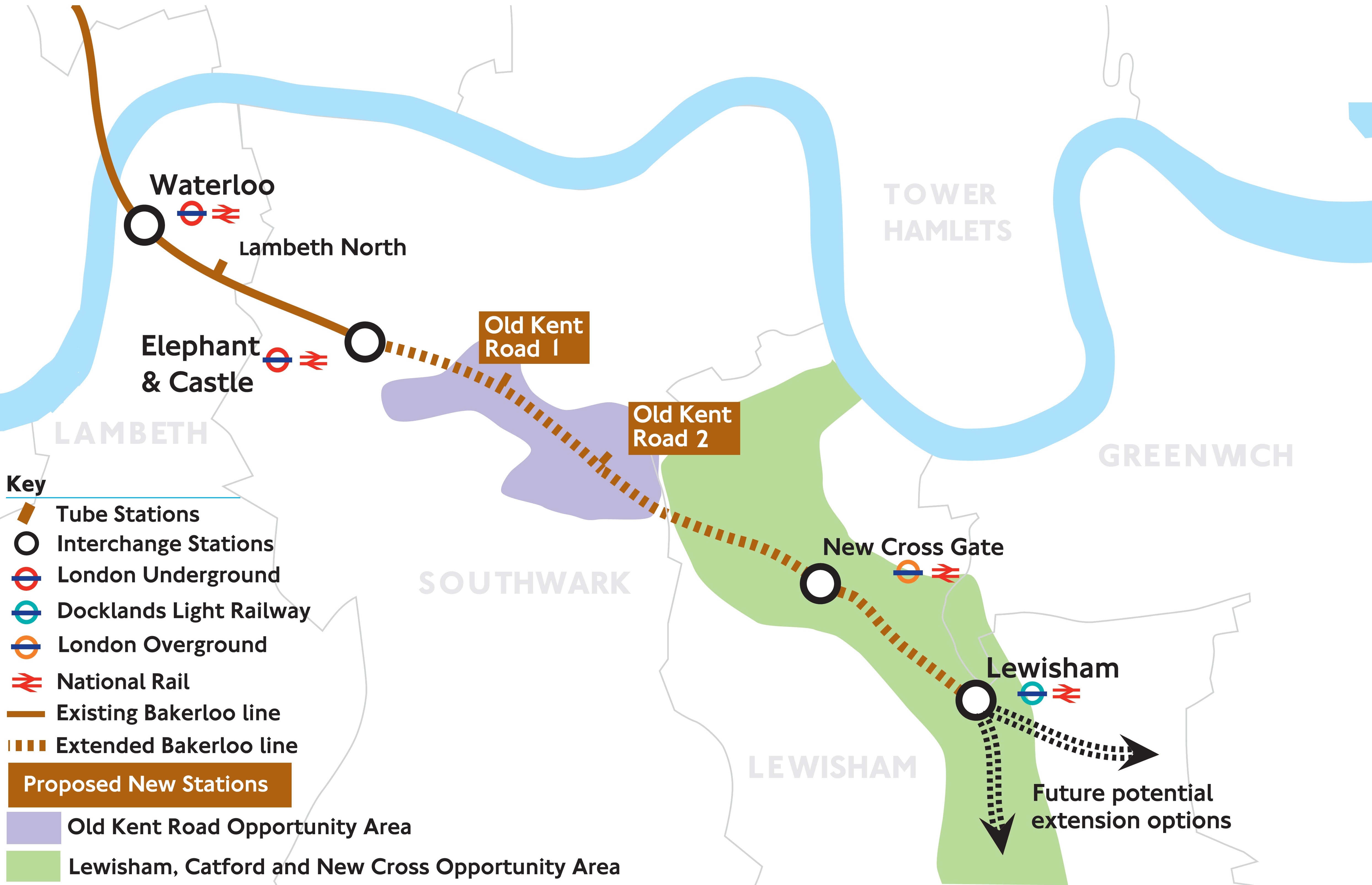
I believe that the East London Line and the extended Bakerloo Line will complement each other.
- The Bakerloo Line will probably have at least twenty tph between Queen’s Park and Lewisham stations via Waterloo, Oxford Circus and Baker Street stations.
- The East London Line will have at least six tph between Highbury & Islington and Crystal Palace stations and four tph between Highbury & Islington and West Croydon stations.
- New Cross Gate is currently a step-free station, so I suspect it will be a very smooth interchange.
Connections between South East and the whole of North London will be substantially improved.
Brockley Interchange
It has been suggested that Brockley station be connected to the line between Nunhead and Lewisham stations, which crosses over the station.
Wikipedia says this about the connection.
At the London end the line is crossed by the Nunhead to Lewisham line. At this location adjacent to Brockley station was sited Brockley Lane station which closed in 1917 with the original London, Chatham and Dover Railway branch to Greenwich Park. The connection of that line to Lewisham is a later development. The possibility of opening platforms on this line with direct access to Victoria Station and the Bexleyheath Line to Dartford has often been suggested but is currently low on TfL’s priorities.
In some ways the Bakerloo Line extension to Lewisham does a similar job in connecting the East London Line to Lewisham, but at a much higher frequency.
Another problem with the Brockley Interchange is that there are only two tph between Victoria and Lewisham, that pass over Brockley station and does the capacity at Lewisham station exist to allow this to be increased to a viable frequency, that would make building Brockley Interchange an interchange worth building?
Crossrail 2
Will Crossrail 2 be built or even started before 2030?
I personally doubt it, unless Brexit is an unqualified success and the project is privately-funded.
There are also other projects that might lower the need for Crossrail 2 and allow it to be delayed to beyond 2030.
Extension Of East London Line Services Along The North London Line
I can remember reports, when the London Overground was created, that suggested that some East London Line services, might be extended to the West, possibly to Willesden Junction station.
I think there are two major problems.
- Trains going West from Highbury & Islington station from the East London Line could stop in Platform 1 or 2 and go straight through on their way to Clendonian Road & Barnsbury station. But those going the other way would probably need to cross tracks on flat junctions!
- Where is the suitable bay platform to turn the trains?
On the other hand, many passengers would find it useful, as it would avoid a change at Highbury & Islington station.
Penge Interchange
I discuss the possible Penge Interchnge station in Penge Interchange.
Note that the Penge Interchange offers four tph to and from Victoria, whereas the Brockley Interchange only offers a measly two tph.
Shoreditch High Street Connection To The Central Line
The Central Line passes directly underneath Shoreditch High Street station, as this map from carto.metro.free.fr shows.
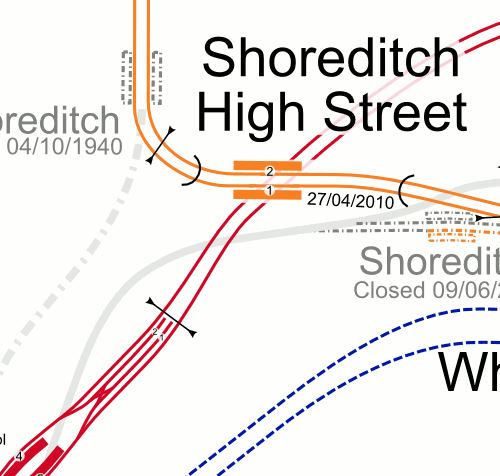
Note the reversing sidings at Liverpool Street station in the South-West corner of the map.
Wikipedia says this about the possibility of creating an interchange.
There have also been discussions of creating an interchange with the Central line between Liverpool Street and Bethnal Green which runs almost underneath the station. However, this would not be able to happen until after the Crossrail 1 project is complete, due to extreme crowding on the Central line during peak hours.
Consider.
- Liverpool Street to Bethnal Green is one of the longest stretches on the Underground without a station.
- There is a lot of residential and housing developments, being proposed for around Shoreditch High Street station.
- Large numbers of passengers use the East London Line to get to Highbury & Islington station for the Underground. Would a Shoreditch High Street connection take the pressure off?
- It could give East London Line travellers, a single-change connection to Liverpool Street, Bank, St. Paul’s, Chancery Lane and Holborn stations.
For construction and operational reasons, the decision to create this connection will not be taken until Crossrail is fully open.
I suspect passenger statistics will play a large part in the decision.
Southeastern Connections
Southeastern has three main terminals in London.
- Cannon Street – Jubilee and Northern Lines
- Charing Cross – Circle and |District Lines
- Victoria – Circle, District and Victoria Lines.
But they also serve other stations in South London with good connections.
- Abbey Wood – Crossrail
- Greenwich -DLR
- Lewisham – DLR and possibly Bakerloo Line
- London Bridge – Jubilee and Northern Lines and Thameslink
- New Cross – East London Line
- Woolwich Arsenal – DLR
The rebuilding of London Bridge station has probably improved connectivity, but are further improvements needed?
Two of the possible improvements to the East London Line; the Brockley and Penge Interchanges will connect current Southeastern services to and from Victoria to the East London Line.
Would the new South Eastern franchise like a connection to the East London Line?
- ,Passengers to and from East London surely have have an easier route, than going to Victoria and then using the Underground!
- Passenger numbers at Victoria might be marginally reduced
- Both new interchanges would give a route to Crossrail at Whitechapel, which is not an easy connection to and from Victoria.
- I have looked at timings and it appears that the Whitechapel route is perhaps five minutes slower to the West End or Paddington, but perhaps a dozen minutes faster to the Northern part of the City of London.
It is my view, that if Penge Interchange is built, then Brockley Interchange could be forgotten.
Thameslink Improvements
With all the money spent on Thameslink, it is likely that Network will want to maximise their investment by running as many trains as possible on the route.
Currently, the plan is for twenty-four trains an hour through the central tunnel, which then split as follows.
- Eight tph via Elephant & Castle
- Sixteen tph via London Bridge of which twelve tph continue to East Croydon.
It would also appear that there are another five tph between London Bridge and East Croydon, but only one tph runs on the fast lines.
So there would appear to be plenty of capacity between London Bridge and East Croydon stations, even if the central tunnel frequency on Thameslink were to be upgraded to thirty tph.
I think we might see a bit of sorting out of Thameslink to minimise some of the problems, that became evident after the May 2018 timetable change.
A problem I have, which I share with the millions in East London, is that it is difficult to get to Gatwick Airport, as there is no common station between the East London Line and Thameslink.
- If the Penge Interchange is built, should Thameslink trains stop at the station?
- When the Bakerloo Line is extended to New Cross Gate station, should Thameslink trains stop at the station?
- Should all slow trains on the line be run by the London Overground?
- Should all fast trains on the line be run by Thameslink?
Thameslink could be so much more useful.
West Croydon Or East Croydon
From a personal point of view, when I go to Croydon, I want to get to East Croydon station, as I’m usually taking a train to the South Coast or Gatwick Airport.
- Inevitably, I end up taking a tram from West Croydon to East Croydon station.
- Ging the other way is more difficult, as I inevitably get lost trying to find West Croydon station.
- Although, there are now some trams at East Croydon only going to West Croydon.
- Trains to the North of Penge West station, never seem to be very full.
- East Croydon station is more important than West Croydon station.
So would it be better if the East London Line trains went to East Croydon?
The problem is that there is no space in East Croydon station.
Perhaps two new platforms could handle both East London and West London Line services.
West London Line services should also be run by the London Overground, as was proposed by Chris Gibb, as I wrote about in Gibb Report – East Croydon – Milton Keynes Route Should Be Transferred To London Overground.
I would do the following.
- Sort out Victoria and Thameslink services at East Croydon station, so that all Northbound and Southbound services used a separate pair of platforms, with one platform face for Thameslink and the other for Victoria services.
- If possible, move services like London Bridge to Uckfield to Thameslink.
- Put a pair of terminal platforms under the Thameslink and Victoria services platforms, connected to these platforms by escalators and lifts.
- Most of the tunneling would be under railway property North of East Croydon station.
- These platforms could probably handle up to six trains per hour (tph) each.
- It would be possible to run six tph between Highbury and Islington and East Croydon stations.
- The West London Line could have a highly desirable four tph to the mega-station at Old Oak Common.
- It might even be possible to use the platforms for service recovery on Thameslink.
- It could release the pressure on the difficult Windmill Bridge Junction, which is a bit of a bottleneck.
It would be costly, but planned properly, I believe it could be created without any major disruption to the existing East Croydon station.
It would create a simple one-change link between Gatwick Airport, Brighton and other South Coast destinations to the following.
- Through services to London Bridge, St. Pancras and Victoria.
- East London Line services to East London and Whitechapel for Crossrail for the City, Central London and Shenfield.
- West London Line services to West London and Old Oak Common for High Speed 2, West Coast Main Line and Crossrail for Heathrow and Reading.
Capacity at East Croydon would probably be increased.
Conclusion
The East London Line will get better and better.
 The Anonymous Widower