Photos From The Disused Tunnels Now Helping The Bank Tube Station Upgrade
The title of this post is the same as that of this informing article on Ian Visits.
The title probably, says it all and Ian describes how London always seem to have a spare tunnel, where it is needed.
Thoughts On Trains Between Cardiff And Swansea
I decided to write this post, when, I read this article on Rail Magazine, which is entitled Cardiff-Swansea wires ‘not sensible’.
This is the first paragraph.
Electrifying the railway between Cardiff and Swansea was not a sensible thing to do, according to Secretary of State for Transport Chris Grayling.
Some would argue that Chris Grayling holds a controversial view!
The Current Route
Before, proposing anything, I’ll list what we have today.
The Tracks
I have flown my virtual helicopter along the route and nearly all the route is double track, with sections of triple and quadruple track in places.
This Google Map shows a typical section of the line.
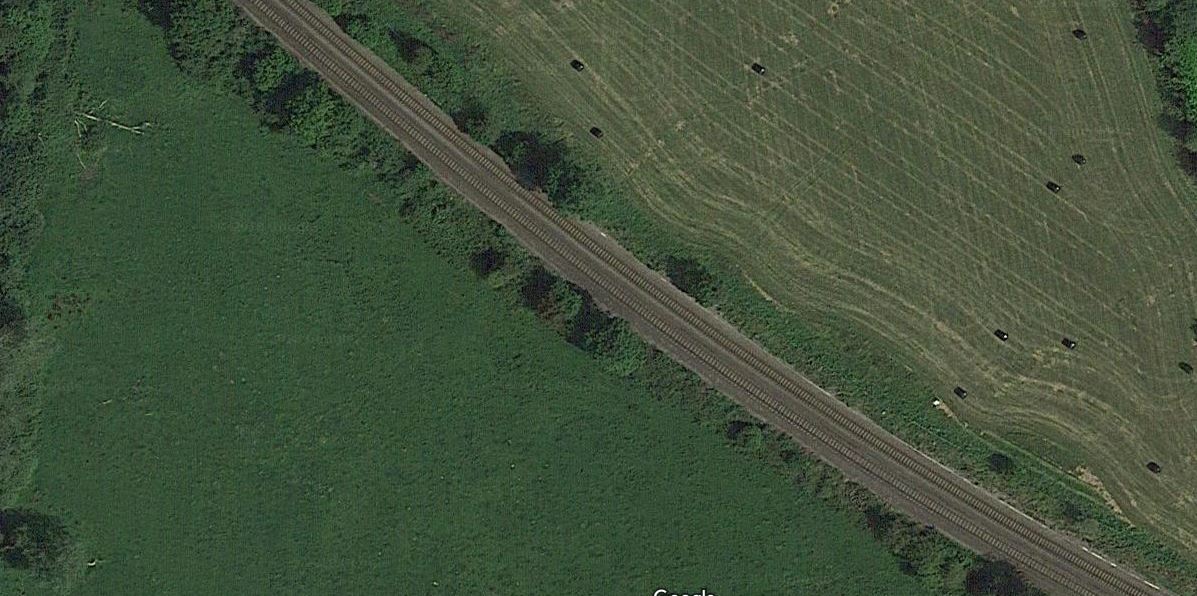
Note.
- There are two well-spaced tracks.
- The tracks are not straight, but gently curve.
- There appears to be a lot of green space on either side.
The line appears to be similar to this most of the way.
I may be wrong, but I don’t think much of the line would be that difficult to electrify, from an engineering point of view.
The signalling and operating speed are described under Infrastructure in the Wikipedia entry for the South Wales Main Line.
The signalling is modern and this is said about operating speed between Cardiff and Swansea.
90 mph (145 km/h) from Newport to east of Bridgend; 75 mph (120 km/h) from east of Bridgend to Swansea Loop North junction (with a small section of 100 mph (160 km/h) track through Pyle station); and 40 mph (65 km/h) from Swansea Loop North Junction to Swansea.
It is not a high speed line, although I suspect that things could be improved.
The Stations
These are the stations between Cardiff and Swansea.
- Pontyclun – Two platforms – 300,000 passengers – Reopened in 1992
- Llanharan – Two platforms – 200,000 passengers – Reopened in 2007
- Pencoed – Two platforms – 200,000 passengers – Reopened in 1992
- Bridgend – Two platforms – 1,500.00 passengers – Opened in 1850
- Pyle – Two platforms – 100,000 passengers – Opened in 1850
- Port Talbot Parkway – Two platforms – 500,000 passengers – Opened in 1850
- Baglan – Two platforms – 24,000 passengers – Opened in 1996
- Briton Ferry – Two platforms – 40,000 passengers – Reopened in 1994
- Neath – Two platforms – 800,000 passengers – Opened in 1850
- Skewen – Two platforms – 40,000 passengers – Reopened in 1994
- Llansamlet – Two platforms – 40,000 passengers – Opened in 1994
Note that the passenger figure is the number of passengers given for the past year, rounded to a sensible value.
It should also be noted, that not one of the stations has a layout that allows a fast train to bypass a slow one stopped in the station.
The Trains
Current trains on the route include.
- Class 150 train – 75 mph diesel multiple unit
- Class 158 train – 90 mph diesel multiple unit
- Class 175 train – 100 mph diesel multiple unit
- Class 800 train – 100 mph plus on diesel
Some parts of the route are also used by freight trains.
As much of the route has a operating speed of less than 100 mph, the operating speed of the two 100 mph trains is determined by the track, not the train.
The Services
There appears to be a fast service between Cardiff and Swansea.
- It runs with a frequency of three trains per hour (tph)
- Trains stop at Bridgend, Port Talbot Parkway and Neath.
- Two services are run by Great Western Railway and one by Arriva Trains Wales
- Timings are not clock-face by any means.
In an ideal world the frequency of this fast service would be four or more tph.
There is also a slow train, which appears to be once every two hours at the other stations.
It surely should be at least one tph.
Why are the services so limited?
Improving The Route
A new franchise for Wales will be announced and I wouldn’t be surprised to see improvements promised for the route between Cardiff and Swansea.
How could the capacity of the line be increased?
Raising The Operating Speed
I quoted this extract from Wikipedia, about operating speed between Cardiff and Swansea, earlier
90 mph (145 km/h) from Newport to east of Bridgend; 75 mph (120 km/h) from east of Bridgend to Swansea Loop North junction (with a small section of 100 mph (160 km/h) track through Pyle station); and 40 mph (65 km/h) from Swansea Loop North Junction to Swansea.
So except for around Pyle station, the operating speed is below and sometimes well below 100 mph.
Improving the operating speed to as high as possible will reduce the timings between Cardiff and Swansea.
Elimination Of Slower Trains
There is no point in raising the operating speed, if trains that cannot cruise at the improved speed are still running on the line.
Modern Trains With A Fast Dwell Time
Modern trains like Class 800 trains, Desiros and Aventras are designed to be able to stop from line speed, load and unload passengers and regain line speed as fast as possible.
Off the current trains working on the line, only Class 800 trains are in this category.
Step-Free Access Between Platform And Train
All stations between Cardiff and Swansea should be made step-free between platform and train.
This will help the trains keep to the timetable.
Allow Faster Trains To Overtake Slower Ones
Timetabling is probably made difficult, in that there is nowhere where a fast train can overtake a slower one.
Often this is done in a station, where whilst the slow train sits in the station, the fast train goes straight through.
Rebuilding Some Stations
It might be prudent to rebuild some stations, for better step-free access and allow trains to pass.
Are there any plans for new ones?
Electrification
None of these improvements need or affect any future electrification of the route.
But these improvements don’t need it!
In fact, it might be quite the reverse in that some of the improvements like improving the track may need to be done before electrification!
The Next Generation Of Bi-Mode Trains
In Bombardier Bi-Mode Aventra To Feature Battery Power, I discussed Bombardier’s proposed 125 mph bi-mode Aventra.
The information came from this article in Rail Magazine.
A few points from the article.
- Development has already started.
- Battery power could be used for Last-Mile applications.
- The bi-mode would have a maximum speed of 125 mph under both electric and diesel power.
- The trains will be built at Derby.
- Bombardier’s spokesman said that the ambience will be better, than other bi-modes.
If Bombardier are doing this, what are Alstom , CAF, Hitachi, Siemens and Stadler doing.
And I haven’t mentioned hydrogen power!
Conclusion
Put all this together and I’m sure this could be the reasoning behind Chris Grayling’s statement that electrifying between Cardiff and Swansea is not sensible.
I am coming round to the belief that it might be better spending the electrification money on improving the line between Cardiff and Swansea, so that something like the following is possible.
- Four fast tph between Cardiff and Swansea.
- Two slow tph between Cardiff and Port Talbot Parkway stopping at all stations.
- Two slow tph between Port Talbot Parkway and Swansea stopping at all stations.
Or whatever is needed.
Volunteers Transform Neglected Rail Station Gardens Into Welcoming Area
The title of this post, is the same as that of this article in the Westmoreland Gazette.
In my travels I come across many stations, where volunteers make a difference.
Kents Bank station can be added to that list.
Many more stations need volunteers to do some community gardening and other work.
Could A Three-Car Class 769 Train Be Created?
Some of the applications for bi-mode Class 769 trains on the UK rail network are on routes, where there is a short limit to train length.
Three cars might be a maximum on some routes, so a three-car Class 769 train might be a product with a future.
The formation of a Class 769 train, based on a Class 319/4 train would appear to be.
- DTOC – Driver Trailer Car with Diesel Generator
- PMOS – Pantograph Motor Car
- TOSL – Trailer Car With Universal Access Toilet
- DTOS – Driver Trailer Car with Diesel Generator
Note the train has only one powered-car and three trailer cars.
Could the TOSL car be removed to create a three-car Class 769 train?
In the Wikipedia entry for Class 319 trains, this is said.
Class 321 passenger units and Class 325 postal units were developed from the Class 319 design, using similar traction equipment and the same steel body design, with revised cab designs.
Four-car Class 321 trains have been turned into three-car Class 320 trains, in the past. The Wikipedia entry for the Class 320 train, says this.
The Class 320 is effectively a three-car derivative of the Class 321 units found in and around London and Yorkshire.
Scotrail‘s seven Class 320/4 trains were converted from ex-London Midland Class 321/4 trains in 2015/16. The conversion was done at Wabtec, who are doing work on the creation of the Class 769 trains.
Conclusion
I’m pretty certain, the TOSL car can be removed from a Class 769 train, to create a three-car version, just as it has been in a vaguely-similar four-car Class 321 train to create a three-car Class 320 train.
There are other conclusions.
- Four-car Class 321 Flex bi-mode trains must be possible.
- Three-car Class 320 Flex bi-mode trains must be possible.
As there will be a large number of Class 321 trains from Greater Anglia, going off lease in the next few years, the UK could be overflowing with quality bi-mode trains, based on the Class 769 train design.
Should The Blackpool South Branch Be Electrified?
I can find nothing on the Internet, which states whether the branch line between Kirkham and Wesham and Blackpool South stations will or won’t be electrified.
However, I did get create this Google Map of Kirkham West Junction, where the lines to the two Blackpool stations divide.
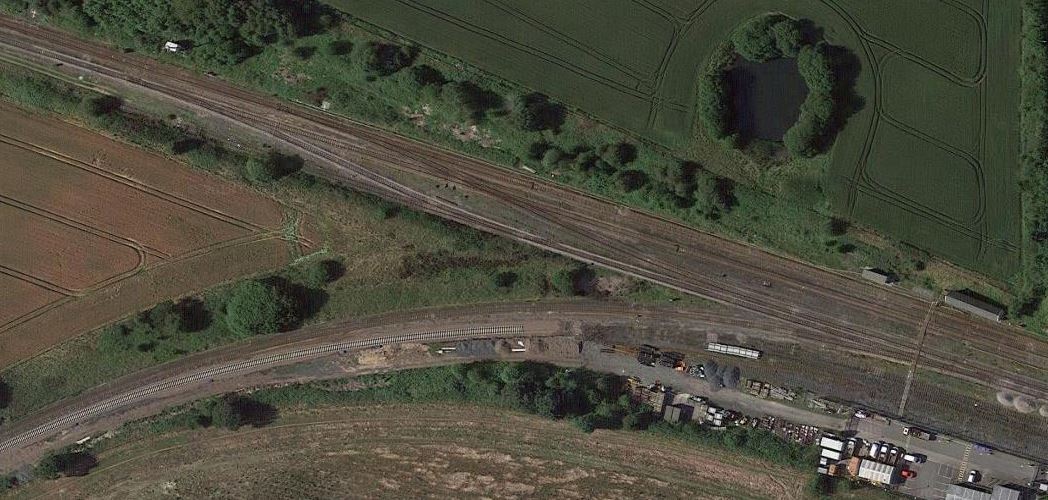
Note.
- Kirkham and Wesham station is to the East.
- Blackpool North station is to the North-West.
- Blackpool South station is to the South-West.
This image was captured during the recent construction phase on the Blackpool Branch Lines.
As my train to Blackpool North on Monday afternoon passed the junction I took these pictures.
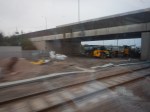

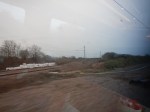
It looks to me, that the contractors are doing the following.
- Improving the junction.
- Laying some new track at the start of the branch line.
- I also think, that the junction is being electrified.
The electrification could be for the following reasons.
- It is the start of electrification of the branch.
- Network Rail are providing an electrified turn-back facility at Krkham and Wesham station.
- It could also be sensible future-proofing to make sure the branch can be electrified easily in the future.
If the branch is going to be worked by Class 769 trains or other bi-mode or battery powered trains, then I believe the work becomes clearer.
- Trains from Blackpool South would have an electrified place, where they can change to electrical power and wait until the main lines are clear before crossing over to the Preston-bound track.
- Trains to Blackpool South would be able to wait in Kirkham and Wesham station, until the line to Blackpool South was clear.
- Trains to Blackpool South could of course start their journey, as soon as the train from Blackpool South is waiting to cross over, using the new track, that is visible in my pictures.
The works will also create a very safe junction at Kirkham West.
The Blackpool South Branch
The branch line has the following characteristics.
- It is single-track.
- There are single platform stations at Moss Side, Lytham, Ansdell and Fairhaven, St. Annes-on-the=Sea, Squires Gate, Blackpool Pleasure Beach and Blackpool South.
- All of the Blackpool Branch Lines are being reresignalled
- There is one dreadful Class 142 train per hour (tph) between Preston and Blackpool South.
- The train service doesn’t run on Winter Sundays.
- Trains take between thirty and forty minutes to travel between Preston and Blackpool South.
But there are other issues that should be considered.
Football At Bloomfield Road
If you are going to football at Bloomfield Road, as I have several times, Blackpool South is the closest station.
Blackpool Pleasure Beach
Blackpool Pleasure Beach has its own station, but there are reports on the Internet, that the walk between the station and the theme park needs to be improved.
An Increase In Capacty And Frequency
I once travelled between Colne and Blackpool South stations on a beautiful sunny day in early September.
- Northern had laid on a pair of Pacers, working as a four-car train.
- They were packed with families going for a day on the coast.
The conductor told me this often happens, when the weather is good.
When I passed through Preston station earlier in the week, I might have seen a notice, saying that the service between Colne and Blackpool South will run all week.
Passing Loops
There is no passing loop on the branch, so it makes it very difficult to run a more passenger-friendly two tph.
Until, the works at Kirkham West Junction are complete we probably won’t know if the junction is being designed, so that a train entering the branch could wait safely for a train to emerge from the branch.
But this would be more for reliable operations, than increasing frequency of trains.
The Open Championship At Royal Lytham And St. Annes
Ansdell and Fairhaven station is nearest to the course at Royal Lytham.
- The Open Championship is a very important event on the golfing calendar.
- Other important golfing events are also held on the course
- Royal Lytham and St.Annes, last held the Open in 2012 and 2001. So it might come back to Royal Lytham in the mid-2020s.
Ansdell and Fairhaven station used to have two platforms, as described in Wikipedia.
The station was set out as an island platform with tracks on both faces until the singling of the line in the 1980s. Trains now only use the southern face. A disabled access ramp now covers the northern part of the station.
So could a rebuild of the station do the following?
- Restore two platforms on an island at the station.
- Put in full disabled access.
- Create a passing loop.
- Lomger platforms might be a good idea.
This Google Map shows the station.
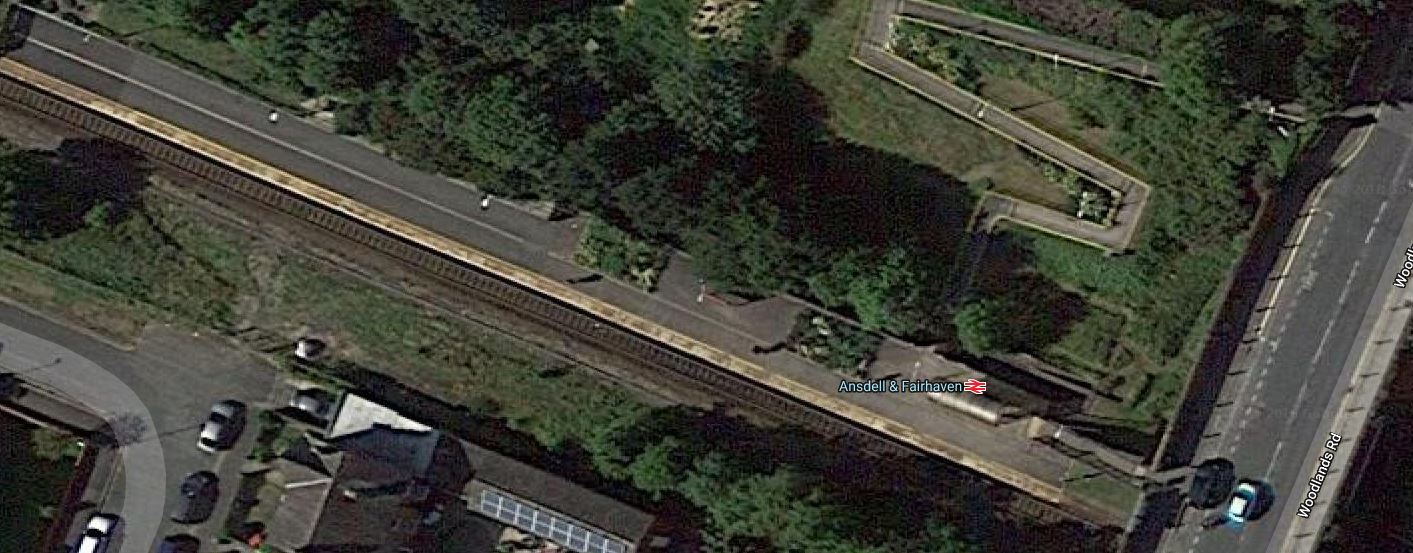
Note.
- The disabled ramp winding away.
- The platform is probably about a hundred metres long.
- It would appear that there is space at the far end to extend the platform.
I suspect that an ambitious architect with vision, could design a station that met all objectives.
Rebuildng Of The Railway Between Skipton And Colne
The link between Skipton and Colne stations is promoted by SELRAP and has now been backed by the Government and large businesses like Drax, who say it would improve efficiency of biomass deliveries.
This map from Wikipedia shows the route.
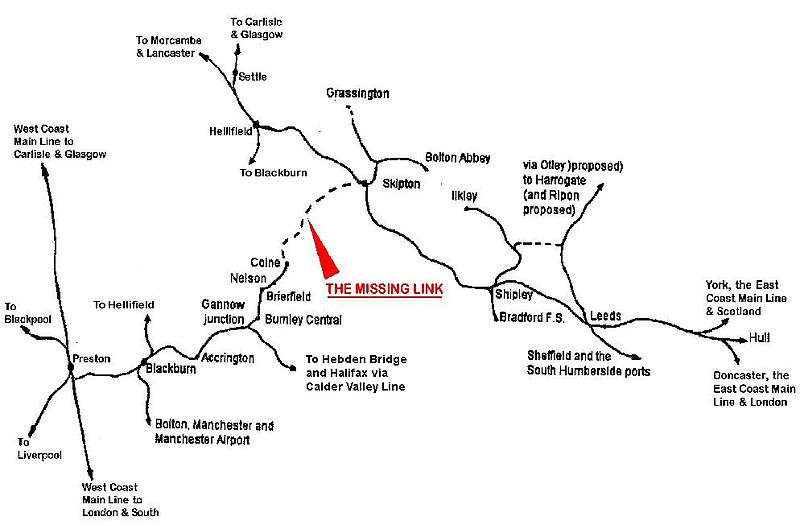
Note that if the missing link is built, it does the following
- Creates another much-needed route across the Pennines
- Creates a second route between Leeds and Blackpool
- Encourages visitors to the area.
- Creates an easy link between Lancashire and the Settle and Carlisle Line.
- Creates an alternative and faster freight route across the Pennines.
It could even become an iconic route famed for the scenery.
I feel that if this missing link were to be reinstated, it would be very well-used by passengers.
This increase in passengers would surely increase traffic between Colne and Blackpool South stations, means more pressure for two tph.
How Fast Could A Train Go Between Kirkham & Wesham and Blackpool South Stations?
Currently, the Class 142 trains take around 27-29 minutes to do the journey six intermediate stops.
Trains like a Class 769 train have improved performance.
- They are being converted from Class 319 trains, that were built for high frequency commuter services.
- The trains have two double-doors on each side of each of the four carriages.
- Seat layout diagrams show the possibility of wide aisles and a lot of 2+2 seating.
- They are faster, as the Class 142 trains have an operating speed of 75 mph and this article on Rail Magazine, says that the Class 769 trains can do 91-92 mph on diesel.
- They have better acceleration and braking.
- They can probably carry out stops much faster.
Newer trains built in the last couple of years will be even better.
Other factors will also speed up the service.
- Level access between train and platform at all stations.
- Relaying the track to allow higher operational speeds.
- Modern signalling.
- High-quality train driving and operation.
I am sure that the the time for a train to go from Kirkham and Wesham to Blackpool South and back will be substantially reduced.
But is it possible to do the trip in under thirty minutes, so that two tph will be possible?
Could Two Tph Be Run Between Preston and Blackpool South Without Electrification?
I believe that the Class 769 trains could be fast enough to run a two tph service on the Blackpool South branch, when passenger numbers say it is needed and track and station improvements have been completed.
An express shuttle could be provided for big events at Royal Lytham.
- It would run between Preston and Blackpool South stations.
- It would stop at Kirkham and Wesham and Ansdell and Fairhaven
- The platforms at Ansdell and Fairhaven and Blackpool South stations were to be lengthened to accept two Class 769 trains working as an eight-car train.
Network Rail would only need to lengthen two platforms and increase the operating speed of the line.
Effectively, by replacing a 1980s scrapyard special with a refurbished train of the same vintage and improving the track, the capacity of the Blackpool South Branch can be increased.
If some platforms were to be lengthened, it should be possible to run eight-car trains for events like the Open Championship at Royal Lytham.
Who needs electrification?
The Blackpool South Branch certainly doesn’t!
I
Tendering Begins For German Hydrogen Train Order
The title of this post is the same as that of this article in the International Railway Journal.
This is the first paragraph.
Rhine-Main Vehicle Management (Fahma), a subsidiary of Rhine-Main Transport Authority (RMV), published a tender notice in the Official Journal of the European Union on April 20 for a contract to supply a fleet of hydrogen fuel cell multiple units for regional services on non-electrified lines in the Taunus area of Hessen.
But then the Germans seem to be much easier to use gases of various types to solve problems, than other countries.
I’ve spoken about hydrogen trains to people in Germany and the UK and the Germans are more enthusiastic, whereas the Brits just question hydrogen’s ability to catch fire.
Perhaps, Gemans teach chemistry better?
Who knows? But the orders for hydrogen trains keep coming.
Barratt To Pay For Fire Safety Cladding Upgrade On Croydon Block
The title of this post is the same of that on this article on ITV.com.
This is the first couple of paragrphs.
Developers of a high-rise block that failed fire safety tests will pay for safety measures estimated to run into the millions of pounds, including replacing its Grenfell-style cladding, the Government has said.
Barratt Developments has said it will pay for backdated and future fire safety costs to make the Citiscape housing complex in Croydon, south London, safe, the Ministry of Housing, Communities and Local Government said.
The ITV article has a video report.
I feel that they are in a difficult place, as their architects probably thought the cladding was safe to use. So I don’t think there has been too much malfeasance on the part of Barratt.
But to hold up their hand and say we’ll fix it, probably means everyone will be a winner.
- Barratt get to fix the block for the cost of two or three of their more expensive houses.
- If Barratt get an agreement on the deal, they should avoid complex and expensive legal wrangles.
- Replacing the cladding now, will probably be a lot easier on a new building, that was probably built to a high standard in the last couple of years.
- The Government should be pleased as there appears that the hand of Sajid Javid has applied some pressure.
- Croydon Council should be pleased, as it is unlikely many owners will need to be moved to emeergency accommodation.
- Hopefully, the owners will be pleased, as it appears they should get the value of their properties back.
The ITV article quotes a Barratt’s spokesman as saying.
Following the recent ruling that the costs for necessary recladding at Citiscape will fall on the individual apartment owners, many of whom were originally Barratt customers when it was built in 2002, we have decided that we will pay for the work. “Citiscape was built in line with all building regulations in place at the time of construction. While we don’t own the building or have any liability for the cladding, we are committed to putting our customers first. “The important thing now is ensuring that owners and residents have peace of mind.
I suppose Barratt could be accused of spinning a good line, but it is all good publicity for the houses they are building.
Whether other developers, who used the same cladding, as that involved in the tragedy of Grenfell, will follow Barratt’s example is another manner!
OVO Energy Drops 4 Product Bombshells, Including New Vehicle-to-Grid Charger
The title of this post, is the same as that of this article on Clean Technica.
This is the first paragraph.
n London yesterday, OVO Energy took to the stage and dropped not one new product but four product bombshells that are aimed at creating a new energy ecosystem that is accessible to residential energy consumers.
The products are.
- A Vehicle-to-Grid Charger for the Masses
- 7kW Smart Charger
- One Ring To Rule Them All
- Residential Energy Stoage
The article discusses them in detail.
If I still drove, I’d be very interested in the vehicle-to-grid charger, as I’d fit one in my garage.
The amount of car use, I would have would probably be fairly minimal, so most of the time the car would be sitting in the garage, acting as a storage battery for the National Grid.
Suppose ten million homes in the UK, had a vehicle-to-grid charger and an electric car with a 30 kWh battery. that would be 300 MWh of energy storage, which would be ideal for storing wind energy generated at night.
Nineteen Tri-Mode Flex Class 769s For GWR
The title of this post is the same as that of this article on Rail Magazine.
This brings the number of Class 319 trains to be converted to Class 769 trains, to thirty five.
- These trains for Great Western Railway (GWR) will be tri-mode trains and able to operate on 25 KVAC overhead and 750 VDC third rail electrification and diesel power.
- The Rail Magazine article, says they will support the introduction of refurbished Class 387 trains on Heathrow Express and on services from Reading to Gatwick and Oxford.
- The trains would release diesel Class 165 trains and Class 166 trains to be refurbished and improve services in the Bristol area.
Although, there appears to have been so sighting of a Class 769 train on the UK network, the trains must have shown up well in testing, as no-one would order nineteen trains, that didn’t meet the specification.
According to the Future section in the Wikipedia entry for the Class 319 trains, there are forty-five of the trains sitting in sidings off lease.
So there won’t be a shortage of trains to modify.
Good Design Always Wins!
I do find this story rather heartwarming.
When the Advanced Passenger Train project fell well behind schedule, Terry Miller and his team at Derby, came up with a short-term proposal for a High Speed Diesel Train, which when launched in 1975 was known as the InterCity 125.
Forty years later most of these iconic trains are still in service
But that wasn’t the end of the story.
The design of the Mark 3 carriages of the InterCity 125, was used by British Rail to build large numbers of less iconic electric and diesel multiple units, of which the Class 319 train was just one of seventeen classes of train based on the Mark 3.
The legacy of Terry Miller and his team is echoing down the years.
The Class 769 train is one of the ultimate echos.
How Will GWR Deploy The Class 769 Trains?
Nineteen trains is a substantial order and train companies don’t buy trains to stick them in sidings, so how will they be used?
Before answering the question, I’ll put in a few facts.
- According to Porterbrook’s brochure, Class 387 trains are four twenty metre coaches.
- According to Wikipedia, Class 319 trains are four twenty metre coaches.
- Both trains can be configured to work on 25 KVAC overhead of 750 VDC third-rail electrification.
- Porterbrook’s brochure says that Class 387 trains have a lot of modern features like, information systems for driver and passengers, air conditioning and passenger counting. The brochure also says that Class 387 trains will be ERTMS-ready.
I wouldn’t be surprised to see the Class 769 trains given a quality refurbishment, very much in excess of that Northern have given to their Class 319 trains.
Remember, that GWR must have massive experience about improving Mark 3 carriages from forty years of work with InterCity 125 trains.
GWR were also behind the superb refurbishment of a Class 150 train, that I wrote about in What Train Is This?. So they have form!
The quality must be in excess of that of the Class 165 and Class 166 trains, that they will often replace. And those two classes are not crap, just diesel, too slow for some routes and often lacking in capacity.
In Could A Three-Car Class 769 Train Be Created?, I showed that if a three-car Class 769 train is needed, that this is possible. But it would lose about sixty seats and the universal access toilet, if it follows a similar route as converting a four-car Class 321 train to a three-car Class 320 train.
Covering For Class 387 Trains Going To Heathrow Express
This page on the First Group web site, is the original press release about the procurement.
This is said.
Initially, the fleet will support the introduction of refreshed trains on Heathrow Express services, but will be predominantly be used on routes between Reading and Gatwick, and Reading and Oxford, where the train’s tri-mode can be used to its fullest. However, the tri-mode nature of the train will give GWR maximum flexibility to use them in other areas of the network should they be required.
The purchase of nineteen trains will surely be enough to cater for the loss of Class 387 units to Heathrow Express duties to replace the Class 332 trains.
I wrote about this in GWR Announces Plans To Replace Class 332s As It Takes Over Heathrow Express Service.
I estimated that if each Heathrow Express train eventually becomes two Class 387 trains working together as opposed to the current pair of Class 332 trains, that fourteen Class 387 trains will be needed for Heathrow Express.
Consider.
- GWR have forty-five Class 387 trains in their fleet.
- If Heathrow Express needed to be be worked by twelve-car trains, this would increase the number needed to twenty-one. That would still leave GWR with twenty-four trains for other services.
- There are plans for Southern and Western access to Heathrow, which could mean a need for more Class 387 trains for Heathrow Express .
- c2c could release their six Class 387 trains in the early 2020s, when their new Aventras arrive.
- Great Northern might be persuaded to release some of their twenty-five Class 387 trains.
It certainly looks, that all possibilities are covered for Heathrow, who are probably paying a substantial fee to GWR to run the service.
Reading And Oxford
The First Group press release mentions that Class 769 trains could be running between Reading and Oxford stations.
So does this mean that the current two trains per hour (tph) service between Paddington and Didcot Parkway station will be extended to Oxford and run by Class 769 trains?
Consider.
- A new South-facing bay platform is planned at Oxford station, that could be sized for a trio of Class 769 trains.
- All services between Paddington and Oxford will become electric or bi-mode.
- Class 387 and Class 769 trains are based on twenty metres carriages, so there should be no platform issues.
- A number of Class 387 trains would be released for modification.
- Several Class 165 and Class 166 trains will be released on other parts of the GWR network.
The only problem I see is that some passengers may complain about losing the Class 387 trains, with their comfortable seats and tables..
GWR must get the interior of the Class 769 trains spot-on!
Reading And Bedwyn
This is another route, where Class 769 trains could be used to advantage.
The turnback siding at Bedwyn station would need modification to incoporate a bi-mode Class 800 train, but a Class 769 train would fit the existing infrastructure.
Reading And Gatwick
If ever the Victorians designed a route that would be ideal for a tri-mode train it is GWR’s service between Reading and Gatwick Airport.
- It has sections with 750 VDC third-rail electrification.
- At Reading, it could be extended using the 25 KVAC electrification along the Great Western Main Line to perhaps Oxford.
- Currently, the service is run by Class 165 trains.
Could a way be found to take the trains into Heathrow as an alternative Western terminal, when the Southern and Western rail routes to the Airport are built?
This route has needed a bi-mode train for decades.
Cardiff to The South Coast via Bristol, Bath, Salisburu and Southampton
This over three hour route is currently run by Class 156 trains.
Consider.
- This route has significant overcrowding according to Wikipedia and my personal experience
- Cardiff to Bath should eventually be electrified with 25 KVAC overhead wires.
- Brighton to Southampton is electrified with 750 VDC third rail.
- GWR run this route and have Class 800 trains.
- Running at over 100 mph is only possible in a few places.
- Dual voltage Class 800 trains must be possible, but at five-cars, they may be too long for some stations.
To run this route efficiently, GWR would need an appropriate number of dual voltage bi-mode trains.
GWR will soon have two trains that could handle the route; Class 800 trains or Class 769 trains.
I suspect that the Class 769 train would be most suitable, especially as at busy times like the summer, they could run eight-car trains.
Transwilts
Transwilts is a Community-run rail service in Wiltshire. This page on the Transwilts web site, shows the rail routes in their area.
Currently, most local services seem to be run by two-car Class 150 and one-car Class 153 trains, so when passenger numbers increase, larger trains including Class 679 trains may be used.
I was in this area once a few days before the Glastonbury Festival. You couldn’t have squeezed ia chihuahua onto the train!
Slough And Windsor And Eton Central
Class 769 trains could work this short branch line. But they might be need to use a three-car version.
Henlry Branch Line
The Henley Branch Line has the following characteristics.
- The branch is not electrified.
- The branch is only single track.
- There is a single-track bridge over the Thames.
- Most services are shuttles between Henley-on-Thames and Twyford stations.
- In the Peak and during the Henley Regatta direct trains operate to and from Paddington.
- Crossrail will call at Twyford with a frequency of four tph between London and Reading.
I have just flown my virtual helicopter along the line and it looks like there is insufficient space to create a complete double track railway, that could work at a very high frequency.
But there is space to add a passing loop or loops, that would allow a four tph frequency on the branch to match Crossrail.
Class 769 trains would be able to work the updated branch using their onboard diesel generators.
- Modern signalling would probably be needed to be installed on the branch, as it will certainly be on the trains, as they work between Paddington and Reading.
- Selective door opening or platform extensions will be needed at intermediate stations, so that two Class 769 trains working as an eight-car train could use the branch.
- Trains could either run as shuttles or direct to Paddington.
In my view, there is a simple solution in there, which is much better than mine.
But the residents of and visitors to Henley will get the quality service they desire.
- Comfortable, air-cooled trains with wi-fi.
- Four tph with a change at Twyford to Crossrail.
- Direct electric trains in the Peak and during the Henley Regatta.
Maidenhead And Marlow
The Marlow Branch Line must be a particular problem for GWR.
- The line is single track.
- There is no electrification.
- The one tph shuttle trains between Marlow and Maidenhead take around 20-25 minutes, with a reverse at Bourne End station.
This extract from the Wikipedia entry for Bourne End station described the Services.
Bourne End is a terminus but effectively acts as a through station, with the driver having to change ends to continue to the next station. During peak hours service frequency is increased by having two trains work the line, each using Bourne End as the terminus: one runs Marlow – Bourne End and one Maidenhead – Bourne End, with passengers changing trains at Bourne End. Four trains per weekday operate between Bourne End and Paddington in the morning peak and coming back in the evening peak.
This Google Map illustrates the problem at Bourne End station.
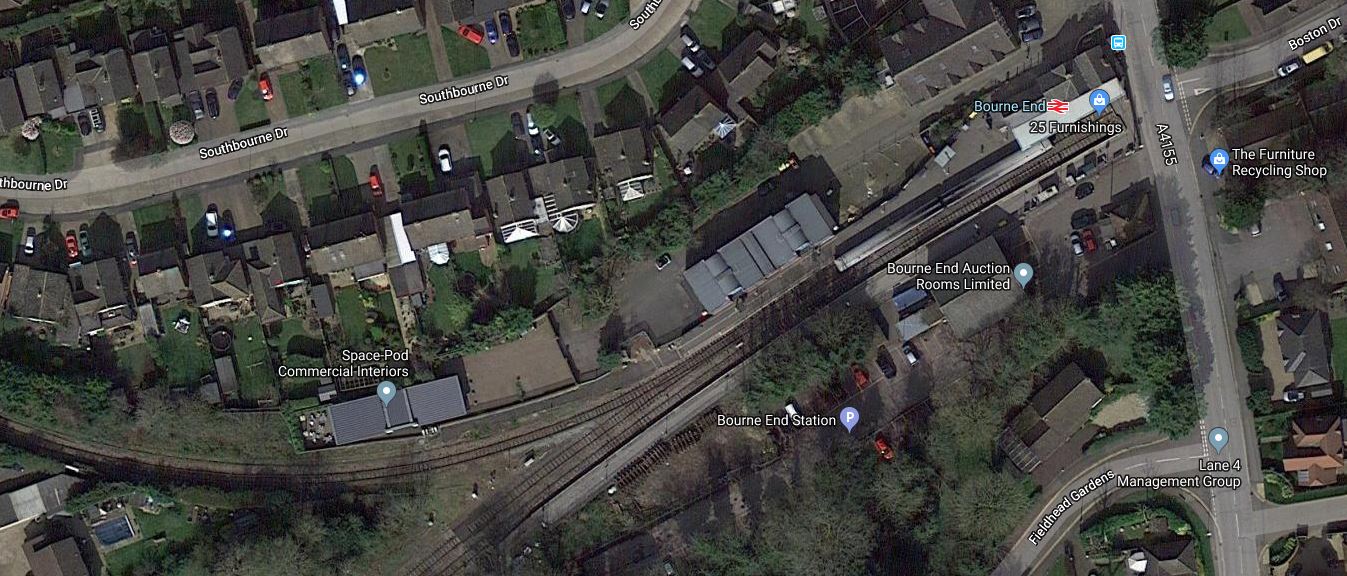
Note.
- The line to Marlow curves out of the Western side of the map.
- The double-track to Maidenhead goes in a South-Westerly direction out of the Southern side of the map.
- The Class 165 or Class 166 train in Platform 1 of the station is formed of two twenty-three metre carriages, so it’s forty-six metres long.
- Platform 1, is connected to both Marlow and Maidenhead, whereas Platform 2, is only connected to Maidenhead.
- A four-car Class 769 train is eighty metres long, with a three-car Class 769 at just sixty metres.
Just looking at the geography, I have my doubts that the existing track and platform layout at Bourne End could handle the reversing of a four-car Class 769 train. It’s might be too long to clear the junction, so would be unable to reverse and take the other route.
But I suspect with a bit of innovation, this might be possible.
Track realignment is the obvious possibility.
The other possibility would be to use a three-car Class 769 train, which is just fourteen metres longer than the current trains.
Four-car Class 769 trains could also be used for a direct service between Bourne End and Paddington in the Peak.
Greenford Branch Line
In Could Three-Car Aventras Run Services On The Greenford Branch?, I tried to answer the question in the title.
This was my conclusion.
Three-car Aventras could provide a good service on the Greenford Branch Line, but there are issues and it may be more complicated than anyone thinks to run a service, that is acceptable to passengers.
I was assuming three-car Aventras with batteries, but three-car Class 769 trains, which carry much more energy in their diesel tanks, might do it.
Conclusion
Nineteen Class 769 trains will find a lot of work to do.
I also feel that three-car trains will also be needed for routes like the Green and Marlow branches.
Report: Gravity-Based Energy Storage Could Prove Cheaper Than Batteries
The title of this post, is the same as this article on Business Green.
This is said.
Storing energy by suspending weights in disused mine shafts could be cheaper than batteries for balancing the grid, new research has found.
According to a report by analysts at Imperial College London and seen by BusinessGreen, gravity-fed energy storage systems can provide frequency response at a cost cheaper than most other storage solutions.
This was the conclusions of the Imperial College report.
According to the paper, gravity-fed storage providing frequency response costs $141 per kW, compared to $154 for a lithium-ion battery, $187 for lead acid batteries and $312 for flywheel.
Despite its high upfront cost, the paper argued that unlike battery-based storage systems, gravity-fed solutions have a long lifespan of more than 50 years and aren’t subject to degradation. This means they could cycle several times a day – allowing them to ‘stack revenues’ from different sources.
I always puzzle why this idea hasn’t been seriously tried before.
 The Anonymous Widower