Do We Make The Assets Sweat At Crystal Palace Station?
Crystal Palace station is of a high standard, but given the amount of money spent, do we make the assets sweat?
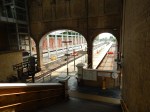
These pictures show the station.


This is a Google Map of the station.
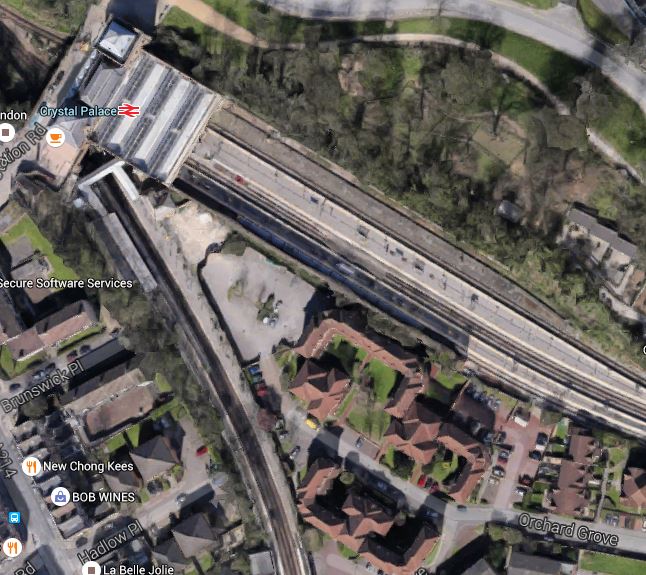
Crystal Palace Station
And this map from carto.metro.free.fr shows the platform and line layout.

Crystal Palace Platforms And Lines
Note.Platform 3, which is one of the terminating platforms for East London Line services is next to Platform 2, which is the platform for Beckenham Junction, West Croydon and Sutton.
- Unfortunately, the space between seems to have been used for new and expensive housing.
- At present most, if not all East London Line services seem to terminate in Platform 5 not Platform 3.
- Platform 3 would appear to have better walking connections to the two North-bound platforms 1 and 4.
So is this making the best use of the station?
In Increased Frequencies On The East London Line, I stated that from 2018, there will be two additional trains from Dalston Junction to Crystal Palace.
This will make 6 tph in total.
Let’s hope that these extra trains will connect to onward trains.
It would be so nice to go to Platform 3 at Crystal Palace every ten minutes, just walk across to Platform 2 and get a train a few minutes later to Beckenham Junction or even Bromley South and/or Orpington. In an ideal world, that would be followed a couple of minutes later by a train to West Croydon, Waddon, the new Bebbington station, Wallington and Sutton.
At the present time, only two tph from Dalston Junction give a reasonable connection, but you wait around fifteen minutes.
One point that the maps clear up, is that there would appear to be little space for a tram platform.
Was this why the proposal was dropped?
But if the frequency of trains between Crystal Palace and Beckenham Junction could be six tph, would a tram link be needed?
At present they are just 2 tph. But surely, once Thameslink is complete and there are more paths available to London Bridge, I’m certain that the frequency could be increased.
It needs to be at least 4 tph.
From Balham To West Croydon
This series of pictures show the first part of a journey I took to get to Leatherhead station from Balham station.



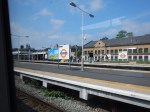


Note.
- The Victoria end of the Brighton Main Line going South from Balham.
- The simple nature of some stations like West Norwood and Gipsy Hill.
- Sainsburys 5p orange bags are everywhere. All others are crap!
- Bromley Junction and how the route crosses the London Bridge end of the Brighton Main Line to the North of Norwood Junction station.
This map from carto.metro.free.fr shows the route from Balham to Norwood Junction (Just off map!) via Streatham Hill, West Norwood, Gypsy Hill and Crystal Palace.
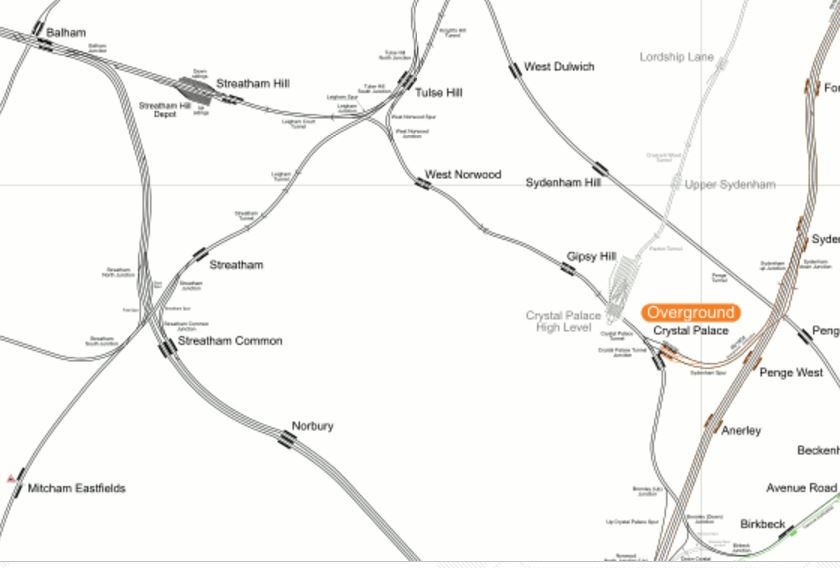
Balham To Norwood Junction
Note how the Brighton Main Line goes South from Balham via Streatham Common and Norbury.
There certainly seems to be a lot of space for more development of the railway and/or housing.
Sutton Station
Sutton Station is one of the stations on a proposed South London Outer Orbital
These are pictures I took of the station and the town as I passed through.
Sutton is one of those stations, that will see a dramatic improvement in services in the next few years.
- Thameslink will get newer higher-capacity Class 700 trains.
- The Tramlink may finally reach the town. I wrote about this and a further extension in Why The London Tramlink Should Be Extended To The Royal Marsden Hospital.
Given all the development around the station, more services will be desperately needed.
Sutton will develop into a major hub station like Wimbledon, but with not anywhere near as many services as East Croydon.
A South London Orbital Route should call at Sutton to tap into the stations excellent connectivity.
Cheam Station
Cheam Station is one of the stations on the route a proposed South London Outer Orbital, although I doubt the limited-stop service would call.
I took these pictures as we passed through.
It is a curious station, quite unlike any others you see on the electrified lines South of the Thames. The layout is explained in the History section in the Wikipedia entry.
The station is almost 16 miles (26 km) from London Bridge station. Over the years Cheam station expanded, and was rebuilt and the rail bed widened in preparation for the installation of AC overhead electric services, which would have included the building of an additional central platform island. Due to the outbreak of the First World War, the full planned expansion was cancelled and was never completed. Nevertheless, the through lines were still in place until the late 1970s when the Bognor Regis and Portsmouth express services were withdrawn from the Sutton and Dorking route to serve an expanding Gatwick Airport. The wide space between the tracks still remains and shows where the fast lines had been laid prior their removal. The brick main buildings are on the down side of the station.
How different would trains be South from London, if the electrification was overhead?
Leatherhead Station
Leatherhead Station is one of the stations on a proposed South London Outer Orbital
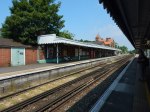
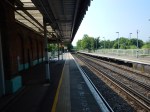
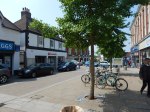
These are pictures of the station, with a couple of the town.

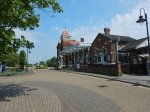
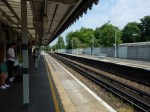
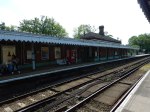
Note.
- It is not the best equipped station with respect to refreshments.
- There is rather a pleasant park between the station and the town centre.
- Trains go to Victoria, Waterloo, Dorking and Guildford.
- My Zone 6 to Leatherhead ticket with a Senior Railcard cost just £2.65.
There are probably many worse stations and towns to meet a friend or relative for lunch. At Leatherhead on a nice day, you could have a picnic, if you brought everything on the train.
A New South London Orbital Rail Route
In the June 2016 Edition of Modern Railways in an article is entitled Turning South London Orange.
One of the proposals is to create new orbital route across South London.
The route is proposed to go through these stations, after starting at Woking.
- Guildford
- Horsley
- Leatherhead
- Epsom
- Sutton
- Wallington
- West Croydon
- Norwood Junction
- Beckenham Junction
- Bromley South
- St. Mary Cray
- Swanley
After Swanley, two of the proposed four trains per hour (tph) would go to the Medway stations, with the other two going to Maidstone East.
What Does The Route Do For Me?
From, where I live at the Northern end of the East London Line, this might seem a proposal with not much benefit to North Londoners.
But the link to the proposed route at Norwood Junction and West Croydon stations could prove very valuable.
- Getting to London terminals for the South like Victoria, Waterloo and Charing Cross, is not an easy journey, especially in busy times.
- Thameslink is promising to remove the one-change-route via New Cross Gate to get to East Croydon and Gatwick.
- Getting to Kent is particularly difficult, unless you use High Speed 1 from Stratford.
Crossrail 2 will help matters in a few years, but more needs to be done.
As an example of the difficulties we face in Hackney, today, I want to go to New Malden to take some pictures for A Very Bad Level Crossing Problem.
- Angel station is on the wrong branch of the Northern Line to get to Waterloo.
- I could take a 76 bus to Waterloo.
- I could take an East London Line train to Clapham Junction.
- I could take a Victoria Line train to Vauxhall.
- I could take a bus to Bank and get the Drain to Waterloo.
In the end i took the bus to Bank for the Drain.
You can see why Crossrail 2 is important for Hackney, Haringey, Tower Hamlets and Waltham Forest.
The new route may not help me today, but for many other journeys that need to be done from North East London, it creates an important by-pass of the inaccessible South London termini.
Two planned improvements will help this appalling connectivity in the next couple of years.
- |Crossrail will open up Kent from Abbey Wood. But why doesn’t it connect to Ebbsfleet International?
- Increased frequencies on the East London Line will increase services to Clapham Junction to 6 tph.
But there will be no major improvement until Crossrail 2 opens.
So Is The New South Orbital Route Feasible?
The Modern Railways article says this.
The major infrastructure addition would be a 3.2 km tunnel running northwards from Norwood Junction to Kent House, west of Beckenham Junction.
This map from carto.metro.free.fr shows the stations on and around the proposed route of the tunnel.
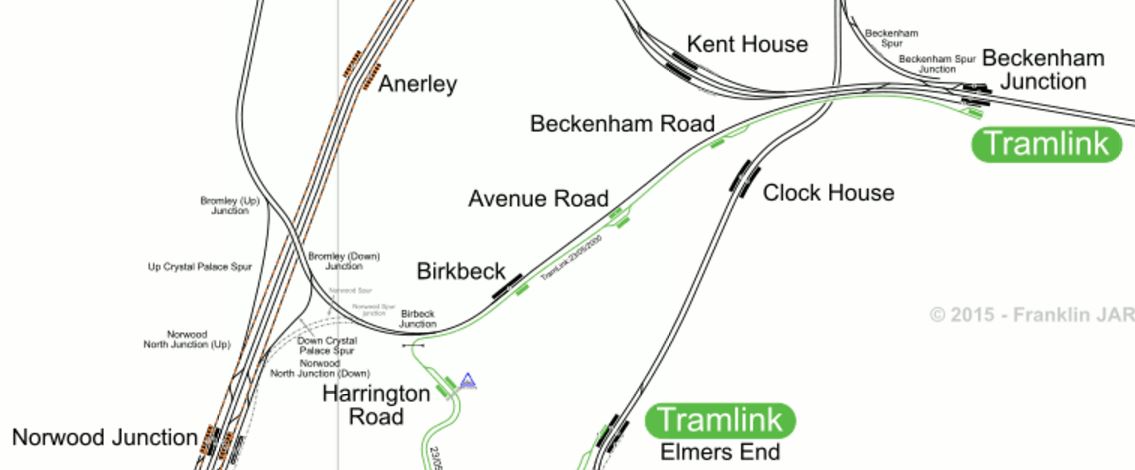
Norwood Junction To Kent House
I would assume that the tunnel would be double-track to accommodate the four tph, that are proposed for the route and its turn-up-and-go service.
This Google Map shows the same area.
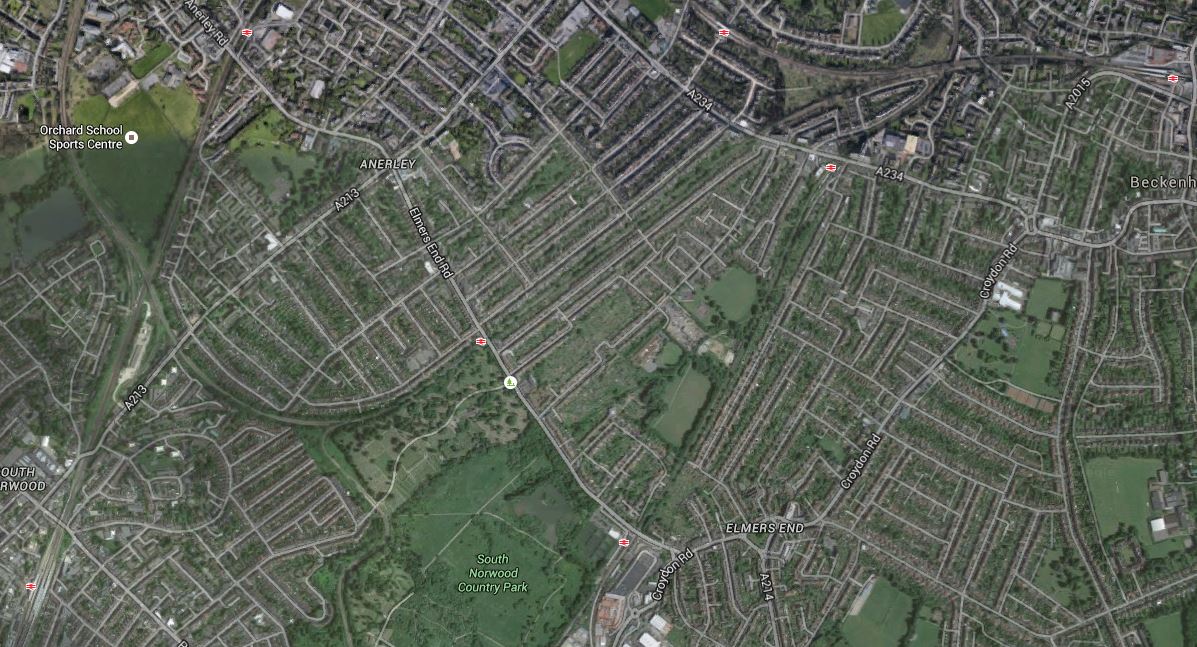
Norwood Junction To Beckenham Junction
Norwood Junction station is in the South-West corner of the map, with Beckenham Junction station in the North-East.
A friend of mine lives in the area and I wonder what he and his wife think of a tunnel under their house!
It may be possible to dig the tunnel in an affordable way, but I suspect another route could be used to bridge the gap between Norwood Junction and Beckenham Junction stations.
I don’t think that four trains per hour in both directions could be squeezed through the single-track section through Birkbeck station, but if they could it would avoid building the expensive tunnel.
There is always the option of splitting the service, as has been proposed for services across Suffolk, that I wrote about in Better East-West Train Services Across Suffolk. In that concept you have an island platform, where the trains meet and passengers just walk across to continue their journey. If say, Norwood Junction were to be used as the station for the split, then the Western service would go between Woking and Norwood Junction and the Eastern service between Norwood Junction and Swanley.
It’ll be interesting to see if the Newmarket scheme is ever built and if it is, how passengers react to it. If it comes over as a success, I think we’ll be seeing more innovative layouts to create new services from existing infrastructure with nothing more than minimal changes.
The Aim Of The Service
The Modern Railways article also says this.
The aim would be to provide a limited stop ‘turn up and go’ service that is competitive with the car, with train interiors designed to a comparable standard of comfort with more seats and Wi-Fi, rather than being of the metro-style used closer to the centre of the capital.
That I like! Sounds like the author is talking Class 387 trains with Wi-fi!
Thoughts On Stations Served
I’m giving each station their own separate posts.
West Croydon
Norwood Junction
Note that I’ve also included some lesser stations for completeness.
Conclusions
The conclusions are best put together for the various sections and features of the line.
Conclusions In The East
Swanley station with its four long platforms arranged in two islands is the key to the East.
Two tph to and from each of the Medway Towns and Maidstone East would give a turn-up-and-go service across the South of London through Bromley, Croydon, Sutton and Epsom.
But given that the station currently has the following services.
- 2 tph West Hampstead Thameslink to Sevenoaks
- 1 tph Victoria to Dover Priory
- 1 tph Victoria to Canterbury West
- 1 tph Victoria to Ashford International
It wouldn’t take a lot of imagination to see Swanley as a major interchange, providing 4 tph services to a whole range of destinations across London and in East Kent.
Sadly, at the moment Ebbsfleet International for Continental trains isn’t possible, but Ashford International is.
I feel that.
- Continental services will increase in importance, over the next few years.
- St. Pancras International will run out of capacity,
- Some Continental services will terminate at Ebbsfleet International.
Which leads me to feel that getting from Victoria and across South London quickly to Ebbsfleet International will be increasingly important.
A direct Swanley to Ebbsfleet link would be ideal.
But as I showed in Rochester Station, that problem could be solved by an enlarged Crossrail.
A Very Bad Level Crossing Problem
I have a Google Alert for “Crossrail” and it picked up this article in This is London, which is entitled How Should This New Malden Level Crossing Be Redeveloped When Crossrail 2 Arrives?. This is said.
Residents are being invited to put forward their views on a New Malden level crossing that could be closed by the arrival of Crossrail 2.
Kingston’s Liberal Democrats are asking residents to come forward with suggestions of how to redevelop the Elm Road level crossing, with the party asking how nearby Dickerage Road and New Malden High Street could cope with the extra traffic.
Possible outcomes according to the party’s consultation could include building of bridge or closing the crossing all together.
To get a better feel, this is a Google Map of the crossing.
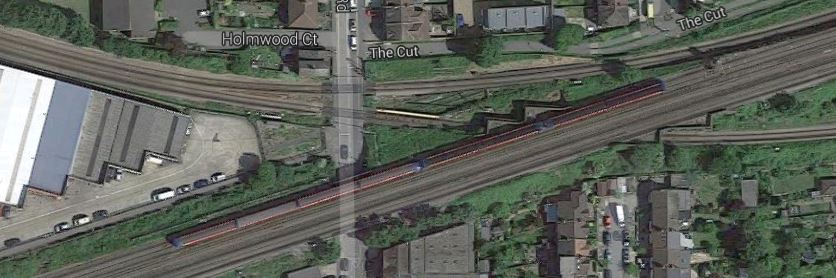
Elm Road Level Crossing
Note.
- New Malden station is to the East, Berrylands station is to the West and Norbiton station is to the North-West.
- New Malden and Berrylands station are on the busy South Western Main Line.
- Crossrail 2 trains will serve all three stations.
- The level crossing is only on the line to Norbiton.
This map from carto.metro.free.fr shows the lines in the area.

Lines Around New Malden
Note the other level crossing North of Motspur Park station.
I believe that these maps, show that something must be done, as obviously there probably shouldn’t be any level crossings on a Crossrail route.
There are also other level crossings on the Crossrail 2 route, at or near these stations.
- Brimsdown – Before Crossrail 2
- Enfield Lock – Before Crossrail 2
- Hampton Court
- Motspur Park
- Northumberland Park – Before Crossrail 2
A quick look and my local knowledge of the crossings in the North, make me feel, that none is as difficult as the crossing near New Malden station.
I went to New Malden station and walked to the crossing.


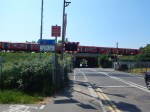
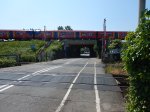
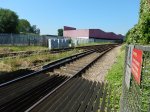

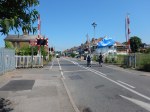
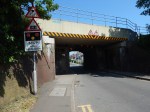
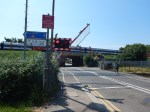
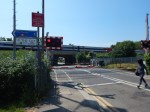
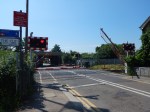
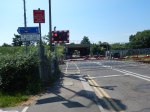
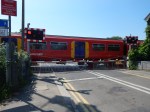
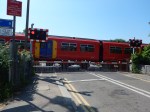
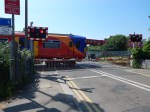
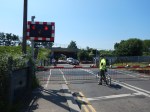
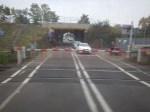
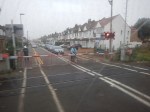
in some ways at eleven in the morning, the crossing wasn’t that busy. A lot of the traffic was on foot.
At the present time, in the off peak there are six trains an hour going through Norbiton station, to or from the New Malden direction, so this must mean that the barriers go down six times or four if the two trains to Norbiton cross at the level crossing.
Crossrail 2 will mean that the barriers will be down longer in each hour.
- Crossrail’s Class 345 trains are two hundred metres long, so if Crossrail 2 uses the same trains, these will be longer than the current eight-car trains of a hundred and sixty metres.
- Crossrail 2 will probably run at a higher frequency.
So something may have to be done.
As the number of pedestrians, buggy-pushers, runners and cyclists will increase, I think that all solutions would accommodate a bridge or subway, for non-vehicular users.
It might even be possible to dig a shallow subway, with both steps and ramps, under the two tracks of the branch, as has been done at Brimsdown station.
The overall solution depends on how much traffic uses the level crossing.
But as there appears to be no industrial premises, that generate lots of truck traffic nearby, I wonder if the best solution for road traffic, is to keep the road crossing as it is. Perhaps with the addition of improved barriers, displays and warnings.
- Building a bridge or a tunnel would be a very difficult and disruptive exercise.
- A bridge would be very expensive, as it would have to go over the main line as well.
- Still having a crossing would give access for the emergency services, even if they had to wait two or three minutes.
- This would also mean that someone pushing a wheelchair or a heavy buggy could cross on the level, perhaps after a wait.
I’m sure that the solution to this level crossing will not be one that requires massive expenditure, as after a proper survey, engineers will probably come up with a simple, safe and affordable solution.
Taking A Train From Platform 1 At West Croydon Station
Platform 1 is the bay platform at West Croydon station. I used it today to get back to London Bridge.
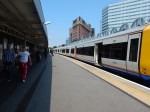
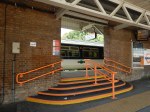
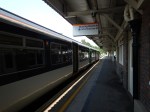
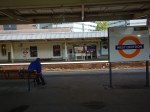
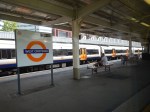
I think it was an eight-car Class 455 train, which the platform accepted easily.
This Google Map shows the station.
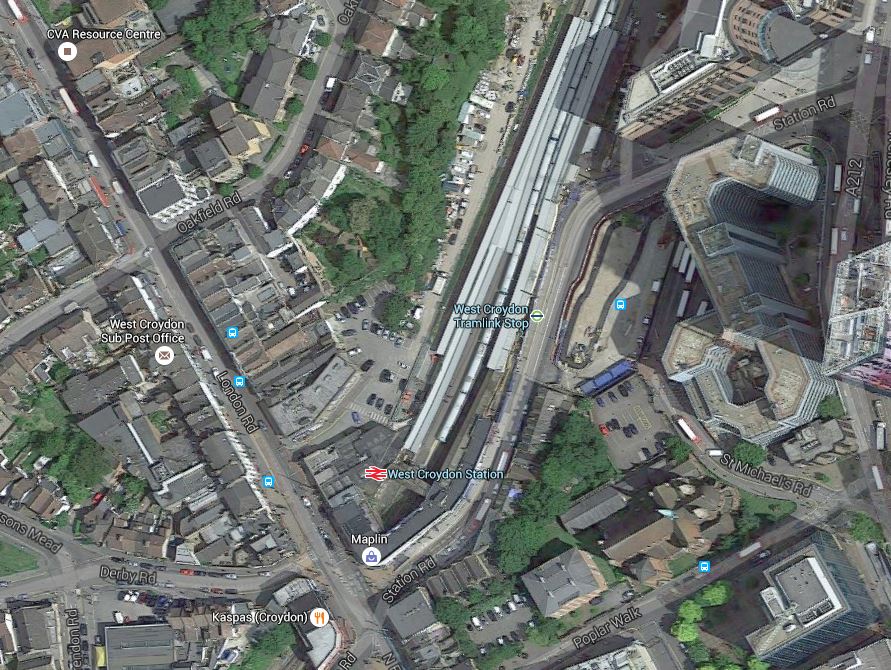
West Croydon Station
It would appear that if the station is ever redeveloped, there may be space beyond platform 1 for an extra platform.
A Clever Idea From IKEA
When I was in the kitchen showrooms in IKEA at Tottenham, I noticed that their corner cupboards didn’t have any lights. And we all know that things get lost in corner cupboards.
I have a feeling that our last two designer kitchens didn’t have corner cupboards because lighting them was difficult.
I thought that I’d be able to use IKEA’S OMLOPP LED spotlights, but wiring them can be tricky.
Then I found some IKEA STRIBERG LED strips, so I took one home.
Reading the instructions, when I got home, it appeared they were for wardrobes. But after a bit of experimenting, I found they worked in my corner cupboard. These pictures show it working.
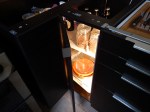

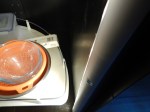
Note that there are two things left to do.
- The door hinges need to be adjusted to get it straight.
- A hole needs to be drilled in the back of the cupboard to pass the wire through.
But it certainly works well!
Note.
- There is no wiring to do, as it just plugs together and into a 13 amp socket.
- Multiple units can be daisy-chained.
- It comes in various lengths with the 67 cm. version being ideal here.
In my view, it is much easier to install than OMLOPP.
Bermondsey Dive-Under – 5th June 2016
These pictures were taken ass I came into London Bridge today.

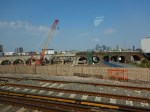
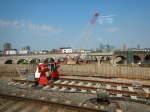
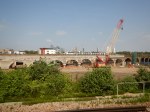

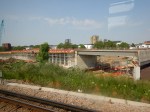

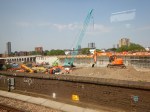
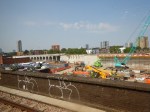
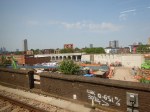


If you compare these pictures with those in Bermondsey Dive-Under – 10th April 2016, there would appear to have been a lot of progress.
It really is becoming an impressive structure, blending the best examples of brick, concrete and steel from the best part of two centuries.
 The Anonymous Widower