Infuriating IKEA
In Sorting Out IKEA, I said this.
Ever since Summer 2015, I’ve been unable to purchase anything on-line from IKEA. It is very difficult trying to build a kitchen in phases to have to go to the store to buy or order everything. Especially, when you can’t drive. I am lucky, that I can get a 341 bus to IKEA from about two hundred metres away and can even catch a bus from closer, that uses the same stop as the 341 at Manor House station. So it might take about an hour, but it’s not an arduous journey.
I think that the reason for non-delivery, is that that don’t like my home address, as they use a system that checks it against a list of ones with a large number of problems in the past. These were long before I bought the house.
Things have not changed, and I still can’t buy anything on-line, despite having high credit scores that show no problems.
As I need one cabinet to fill a space, I went to the store at Tottenham to buy one.
But you can’t pick it up, as it has to be delivered. So I ordered it in the store and then had to walk miles to get out to pay for it.
How was my shopping experience? Unnecessary and f**king awful, would be the best description.
I now have something small to buy and I shall have to repeat the process for something that I can hold in one hand.
The Steptoe Solution
My kitchen is coming on, albeit slowly because of Infuriating IKEA.
These pictures show the current state.
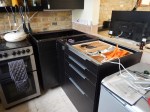
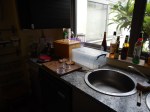
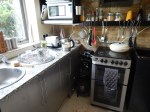
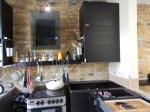
I’m building up to the big finish, where the side by the window gets ripped out and replaced by new units.
Will we find some more of Jerry’s Wonderful Wiring.
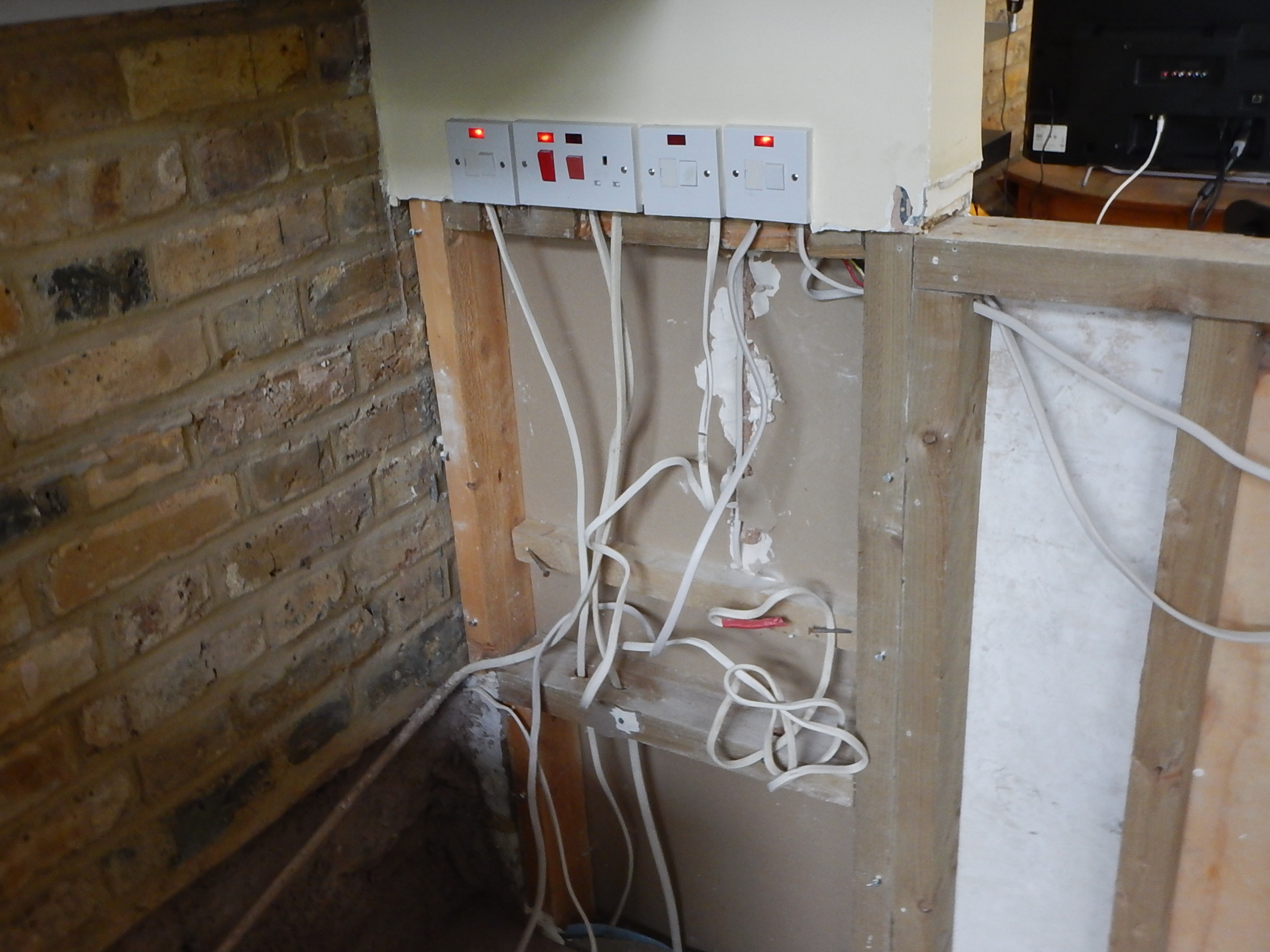
Jerry’s Wonderful Wiring
Or even worse, as there is plumbing and water involved.
So I can’t guarantee that, we’ll be able to plan how long the shut-down of my water and washing-up facilities will be.
On the other side of the kitchen, a wall had to be rebuilt, so I suspect that getting the wiring and the plumbing correct to accept the new units will probably take a couple of days.
I haven’t got another big sink upstairs, but I do have a very small one in my bedroom, where I could wash plates and put them in the shower to dry.
As to washing saucepans and other larger utensils, it will be a Steptoe Solution, as used by Harold to wash his clothes, when he had a bath.
Why I Support Cancer Research UK
In yesterday’s post; There’s More To Liverpool Than Football And The Beatles, I talked about how researchers at Liverpool University had developed a better prostate cancer treatment. I posted this from an An article in The Guardian.
The ESPAC trials, which began publishing findings in 2004, showed that chemotherapy with gemcitabine brings five-year survival up to 15-17%, doubling the rate of survival with surgery alone. The latest research, presented at theAmerican Society of Clinical Oncology meeting in Chicago, showed the two-drug combination nearly doubles the survival rate again to 29%.
It showed, said Neoptolemos, that chemotherapy does work in pancreatic cancer, even though most attention in cancer research is now focused onimmunotherapy, and precision or targeted medicine.
But the trial would not have happened without funding from the charity CancerResearch UK (CRUK), because both drugs are old and off-patent, meaning they can be made by any generic drug manufacturer and are consequently cheap. Drug companies would not foot the bill for such a trial because the profits to be made are small.
“This is an academic-led presentation,” said Neoptolemos. “This shows the enormous value of CRUK. Without them, none of this would have happened. There is a lot of pressure [on doctors] to do drug company trials because you get £2,000 to £3,000 a patient. For something like this, you don’t get anything. It has been quite tough to do.”
That is a very strong endorsement of Cancer Research UK.
Today, there is this story on the BBC web site, which is entitled Bowel cancer: Stents ‘may prevent need for colostomy bags’. This is said.
Bowel cancer patients may avoid the need for colostomy bags if they are first treated by having an expandable tube inserted at the site of their blockage, cancer doctors have said.
The new approach, presented at the world’s biggest cancer conference, showed that the tube, or stent, cut the risk of complications from surgery.
The trial took place at Central Manchester University Hospitals! And who funded the trial? Cancer Research UK!
So I shall keep supporting the work of Cancer Research UK!
Using Lea Bridge Station For A Purpose
After going to IKEA, as I often do, when I only have one blue bag, I caught the first bus that appeared of either a 192 to Tottenham Hale station or a 341 to the area of Hackney, where I live.

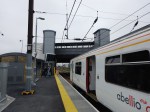

It was a 192 and I took it, now that I have four trains to choose from at Tottenham Hale station.
- A train to Liverpool Street via Hackney Downs.
- A train to Stratford via the Lea Bridge station.
- A direct Liverpool Street train.
- A Victoria Line train.
The first two would be the most preferable, as a bus can take me to fifty metres from my home from either Hackney Downs or Lea Bridge stations.
I could also take a 76 bus to Dalston Junction station. That bus is not as slow as the 341, which gives you a mystery tour of a lot of Haringey and tends to get stuck in the traffic of Tottenham High Road.
As I walked into the station, the first train was announced as a Stratford train via Lea Bridge and by running across the bridge, I was able to get on a fairly crowded train.
Five minutes later and I was on the platform at Lea Bridge station.
After a walk of about a hundred metres with no bridges, two steps and two light-controlled crossing, I was at the bus stop. But I’d just missed the 56 bus, that takes me directly home. So I took the first bus that arrived to Clapton Pond, where I got on one of the frequent 38 buses to my house.
It may seem complicated compared to taking the Victoria Line to Highbury and Islington station, but that station is a 1960s monstrosity, built when the disable didn’t go out or even exist. Walking routes in the long tunnels and bus access at Highbury and Islington is not good either.
But Lea Bridge station is already proving its worth. Several people on the train had used the new station and a young lady at the station said she used the station a lot.
But the station needs more trains and two trains per hour is not enough, especially when Angel Road station is upgraded.
I have a feeling that the forecast traffic through this station will be in the same class as those for the Borders Railway.
There’s More To Liverpool Than Football And The Beatles!
This morning, this story on the BBC web site entitled ‘Major Win’ In Pancreatic Cancer Fight is one of the top stories. This is said.
A new combination of chemotherapy drugs should become the main therapy for pancreatic cancer, say UK researchers.
The disease is so hard to treat that survival rates have barely changed for decades.
But data, presented at the world’s biggest cancer conference, showed long-term survival could be increased from 16% to 29%.
The findings have been described as a “major win”, “incredibly exciting” and as offering new hope to patients.
I must admit that I feel a touch of pride, as the study was led by Professor John Neoptolemos at Liverpool University, which was where my late wife and I met when we were both students at the University.
But I also feel a touch of relief for others, who might get this awful cancer in the future, as now they may stand a better chance of survival, than did our youngest son; George, who survived just a few months after diagnosis.
I also raised a small sum of money for the research by visiting all 92 English and Welsh football clubs in alphabetical order by public transport. The main funding for the research included Cancer Research UK and I think some EU money!
The BBC story also says this.
The trial on 732 patients – in hospitals in the UK, Sweden, France and Germany – compared the standard chemotherapy drug gemcitabine against a combination of gemcitabine and capecitabine.
I’ve looked up the two drugs mentioned and both are on the WHO Model List of Essential Medicines, which are the most important drugs needed in a basic health system.
An article in The Guardian is also illuminating. This is said.
The ESPAC trials, which began publishing findings in 2004, showed that chemotherapy with gemcitabine brings five-year survival up to 15-17%, doubling the rate of survival with surgery alone. The latest research, presented at the American Society of Clinical Oncology meeting in Chicago, showed the two-drug combination nearly doubles the survival rate again to 29%.
It showed, said Neoptolemos, that chemotherapy does work in pancreatic cancer, even though most attention in cancer research is now focused on immunotherapy, and precision or targeted medicine.
But the trial would not have happened without funding from the charity CancerResearch UK (CRUK), because both drugs are old and off-patent, meaning they can be made by any generic drug manufacturer and are consequently cheap. Drug companies would not foot the bill for such a trial because the profits to be made are small.
“This is an academic-led presentation,” said Neoptolemos. “This shows the enormous value of CRUK. Without them, none of this would have happened. There is a lot of pressure [on doctors] to do drug company trials because you get £2,000 to £3,000 a patient. For something like this, you don’t get anything. It has been quite tough to do.”
So this is not some elite drug for the rich, famous and powerful, but one that might even be applied everywhere.
I must admit, that I’ve shed the odd tear this morning!
Thoughts On My Vitamin D Deficiency
I’m now convinced that the cause of my bad springs and substantial absences from school as a child, and periods of bad health since, is due to a periodic vitamin D deficiency.
I suffer from several of the same symptoms as my father, who was most likely the parent from whom I inherited coeliac disease.
As a child, I didn’t go out in the son much, as I think I found it a bit painful and I burned. My father was the same in those days and was very much a man for his garage or shed. He only ventured out to smoke his pipe.
The problems dropped, when I went to Liverpool University and met my future wife. But then she would drag me out into the sun for a walk, with great regularity.
When I was diagnosed as a coeliac, I thought this would be the end of it all. And it did get a bit better, with the bonus that I could now sunbathe without burning. I also stopped being bitten by mossies.
Since the death of my wife, my stroke and moving to London, the bad springs and a lot of the other symptoms have returned.
But no-one could say the weather in London and it seems much of North and Central Europe has been very sunny over the last few years.
I even took a holiday in Croatia for some sun, but in My Home Run From Dubrobnik, I saw probably a day and a half of sun at most!
I’m now on vitamin D3 tablets and they appear to help.
But I think, what I need is a good scientific book on vitamin D, how it is absorbed by the body and what it actually does.
So much of what I get told seems to only have vague science behind it!
If I could find a top class University, where they were doing serious research into vitamin D, I’d go halfway round the world to talk to them.
Farewell To The Old Gospel Oak To Barking Line
Today is the last day, that you can ride the Gospel Oak to Barking Line to the East of South Tottenham station, until after the wires are erected in a few months time.
So I took some pictures.
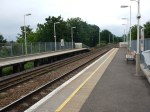
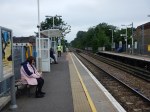
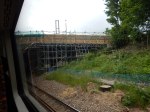
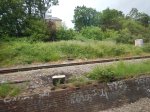


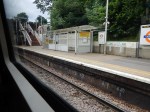

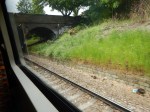
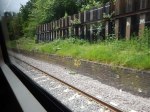


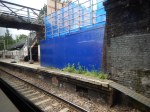

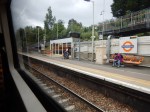
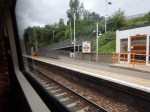

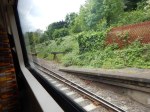
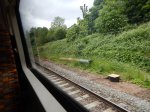
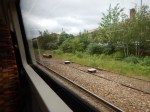
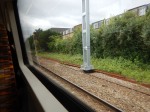
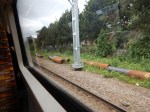
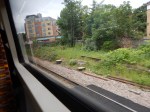

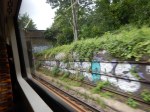


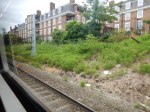

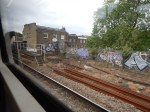

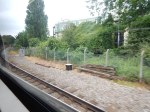

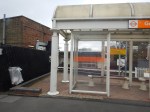
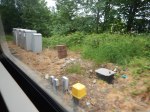
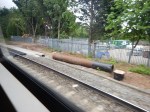
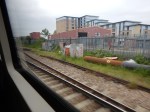
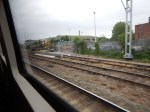
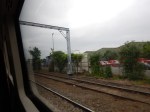
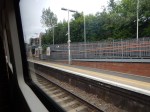


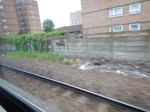
I must say I have not been impressed with progress so far.
- It looks like a large proportion of the piles are in the ground.
- If the piles are in the ground securely, why aren’t more masts erected?
- There would appear to be no start on clearing the platform extensions.
- Only in one place did I see a work-site.
- I didn’t see anyone actually working.
- There is masses of litter
- There’s no sign of how the stations will be electrified.
With my limited experience of looking at large projects that are in trouble, this project has the air of something not being up to scratch.
What has really puzzled me about this project, is that the information coming from Network Rail and especially TfL, has not been up to the usual standard.
The Longer Overground Platfortms At Whitechapel Station Are Now Visible
This picture shows the Northern end of the Overground platforms at Whitechapel station.
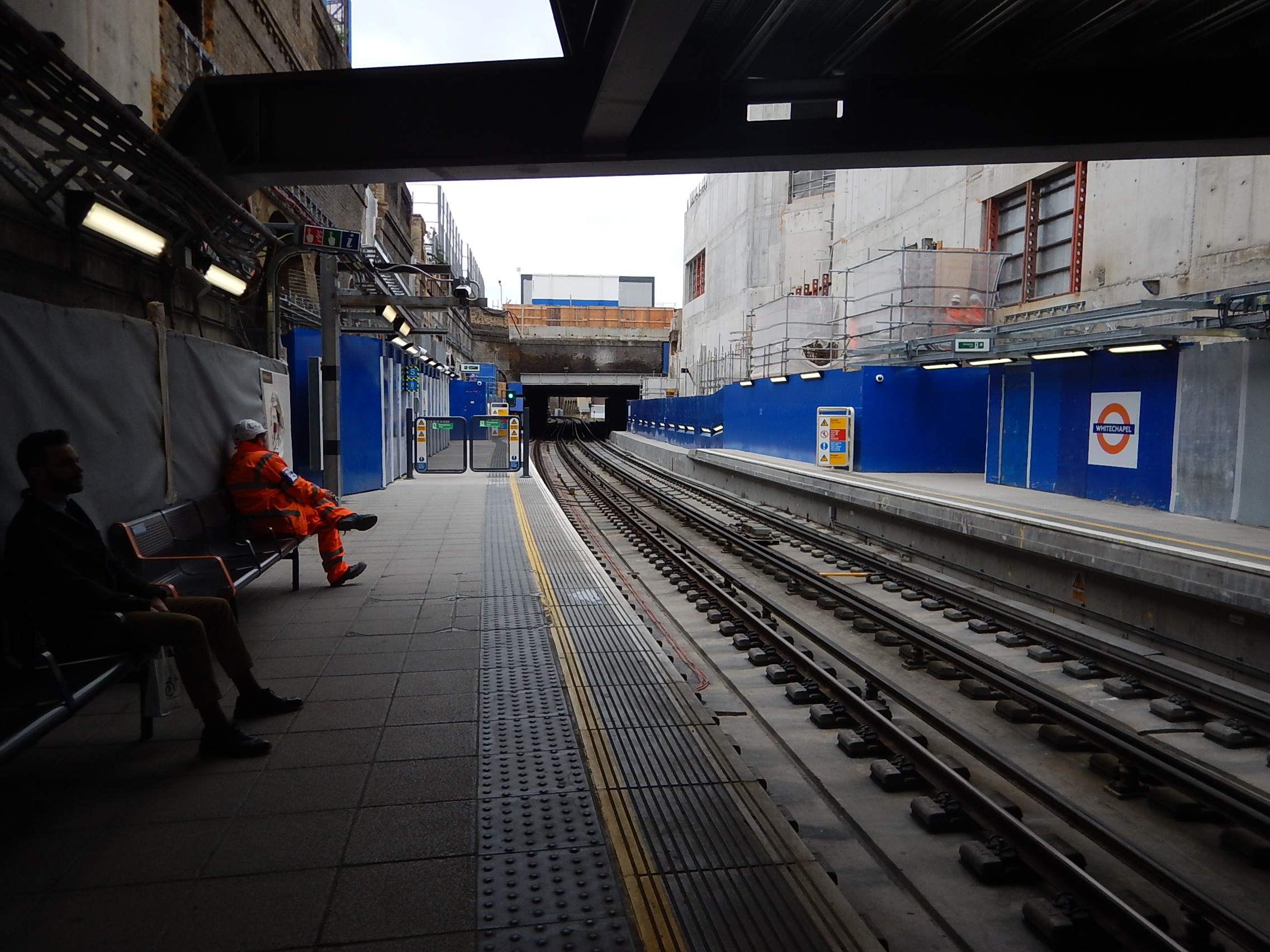
Overground Platforms At Whitechapel Station
It would appear that they have grown enough extra platform length to accommodate all five cars, once some finishing work is completed.
It has been said that after Crossrail opens, these platforms will be at full size!
Have You Heard about…the New European Transport Strategy?
That is the title of an article in Georgia Today, which gives a solid overview of the strategy. This is the first two paragraphs of the article.
In 2013, the European Commission, in a EUR 250 billion European strategy which gives priority to the creation of an integrated transport network and seeks to level the imbalance between the Member States of the European Union, proposed the creation of international transport corridors, bringing together Western and Central Eastern Europe. In order to overcome traffic imbalance in the EU, nine multimodal corridors will be created, each of which has to combine at least three types of transport and connect three states.
The new infrastructure policy will unite 28 EU states under trans-European transport network (TEN-T). Nine transport corridors will be provided: Baltic – Adriatic Sea, North Sea – Baltic, the Mediterranean Corridor, Middle Eastern Corridor, Scandinavia – the Mediterranean Sea, the Rhine – Alps, the Atlantic Corridor, the North Sea – the Mediterranean Sea, and the Rhine – Danube. They will be grouped into three general areas of “East – West”, “North – South” and “Diagonal” corridors. The project is scheduled for completion in 2030. The transport corridors will receive priority funding to connect the east and west of the European Union. To finance the first phase of the project, EUR 26 billion was allocated.
I suppose that the Brexiters will say, that all it will do is bring more migrants to the UK.
But, think of the news a couple of days ago, when the Swiss opened the Gotthard Base Tunnel as is reported in this article on the BBC. This tunnel will have passenger trains, but one of it’s main purposes, is to get trucks from the roads through Switzerland, by moving a million tonnes of freight a year onto the trains. The tunnel removes a bottleneck on the Rotterdam-Basel-Genoa corridor, which has been named the Blue Banana by a group of French geographers.
This is the introduction to the Wikipedia entry.
The Blue Banana (French: banane bleue, also known as the European Megalopolis or the Manchester–Milan Axis) is a discontinuous corridor of urbanisation in Western Europe, with a population of around 111 million. The concept was developed in 1989 by RECLUS, a group of French geographers managed by Roger Brunet.
It stretches approximately from North West England across Greater London to the Benelux states and along the German Rhineland, Southern Germany and Switzerland to Northern Italy in the south.
Since when have Greater London and Manchester been in mainland Europe?
I also didn’t realise that I lived in a megalopis of 111 million people.
We are doing our bit to create the freight rail corridor from Manchester to Milan, by improving rail routes between the Channel Tunnel and up the spine of the country to Manchester and eventually to Scotland.
This must bring benefits to the UK in terms of freight and trade.
- At the Northern end of the route, Liverpool is creating one of the largest container ports in the world.
- Our car factories can export direct to Europe using massive trains, as I wrote about in What A Lot Of Minis!
- British Steel’s renowned long products from Scunthorpe can’t be exported easily other than by train.
- Mediterranean produce can be delivered fresher to the UK.
- Scottish food and drink will have fast access to the heart of Europe.
And these are just five small examples.
One fifty kilometre tunnel in Switzerland has just made trade for the UK, easier.
Some of the other transport corridors will greatly help Eastern Europe, of which some parts need all the help they can get. The article says this about Rail Baltica.
There is a priority project in the railroad Rail Baltica. The Trans-European railway Rail Baltica, linking Helsinki – Tallinn – Riga – Kaunas – Warsaw and continuing on to Berlin, is to be developed within the territories of the co-operating EU Member States. Rail Baltica will support the wider EU goals of parity of access to services and infrastructure of EU Member States and development of sustainable modes of transportation, improved balance and interoperability between different means of transportation, and the establishment of links with the rest of the EU rail network. Even as far back as the 1990s it was in the works to build an underwater railway tunnel between Tallinn and Helsinki, but the project was delayed due to financial constraints. This corridor also involves the development of river waterways and canals (Belgium, Germany, the Netherlands), as well as ferry traffic (between Finland and Estonia). The project cost is estimated at over EUR 3.6 billion, including 50% from the EU budget (program TEN-T), and 50% from the budget of the project participants. In the Baltic countries there is no such means, and there are discussions about the feasibility of building a high-speed road which will pass by numerous settlements.
I feel very strongly, that good rail and road links through an area, improve its prosperity. If we look at that small project of the Borders Railway, can anybody deny that it has been a success and that it has helped to enhance the place of the Scottish Borders on the UK Tourist Map.
As I write this Radio 5 Live is hosting a discussion on Brexit from Cardiff. Some of the issued raisded include steel and agriculture.
The Welsh may not like it, but an electrified Great Western for freight and passengers, will make South Wales fully part of the Blue Banana, which can only be positive for the Principality.
The Longest Underwater Electrification In The UK Since The Channel Tunnel
It may only be a tunnel seven kilometres long and a lot shorter than the Channel Tunnel, but the Severn Tunnel has two tracks, which both have to be electrified, so that the Great Western Railway can run electric trains to and from South Wales.
But the Severn Tunnel was built between 1873 and 1886 and it posed various problems during its construction with water ingress and since with operation because of its length, profile and the pumping of constant water. There is a section in Wikipedia, which is called General, which gives more details.
The Severn Tunnel is probably one of those places, sane engineers wouldn’t want to electrify a railway.
So I was interested to read this article in Rail Engineer, which is entitled Preparing For Severn Tunnel Electrification. The article gives this overview of the project.
The electrification project now moves on to probably one of its biggest challenges: the electrification of the 7.012km long Severn Tunnel. The tunnel will be closed to trains between 12 September and 21 October for the work. It is referred to as the “Severn Tunnel Autumn Disruption” or STAD for short and, just to make it a bit more interesting, included in the STAD are the Patchway Tunnels –1.139km Old (Down); 0.057Km Short (Down); 1.609Km New (Up).
Some facts about the tunnel and the work already done.
- More than 76.4 million bricks were used in the construction.
- Between 10 and 20 million gallons of water have had to be extracted every day to prevent flooding.
- There is also a ventilation shaft through which 80,000 cubic feet of fresh air can be forced into the tunnel each minute by means of an eight- metre diameter fan at the top.
- The contractors first had to scarify 2,500 square metres of tunnel lining to remove more than 35 tonnes of soot.
It is not a small job. But at least the tunnel was in better condition than expected.
The article gives a deep insight into how the Severn Tunnel electrification is a collaboration between several major contractors, who are installing a Swiss system from Furrer + Frey called Rigid Overhead Conductor Rail System in the roof of the tunnel. The ROCS system uses a rigid aluminium rail supported on appropriately designed fittings fixed to the roof of the tunnel. There is more on the ROCS system in this article in Rail Technology Magazine.
To makes things more difficult, the engineers have only got thirty-nine days to do the work.
And if it all goes wrong, there are two sets of politicians who will get very angry!
 The Anonymous Widower