Leicester City Centre
This Google Map shows the relationship between Leicester station and the City Centre.
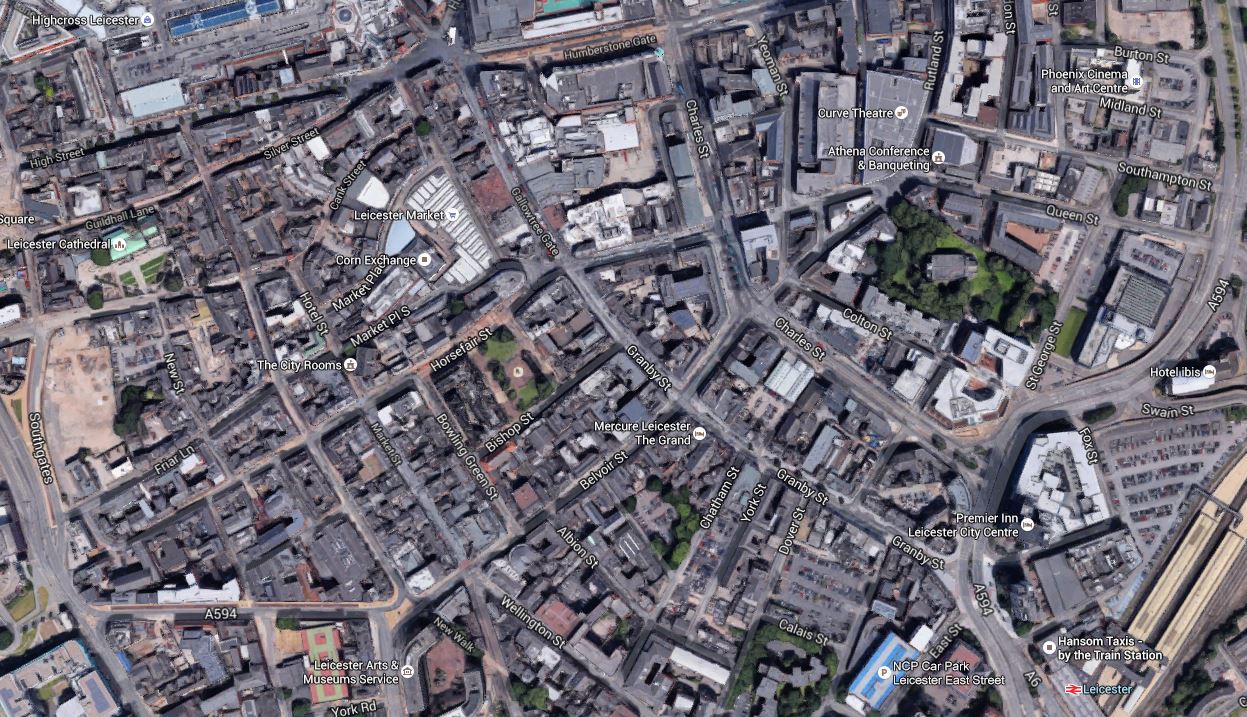
Leicester Station And The City Centre
The station is in the South-East corner and the big High Cross Shopping Centre and the cathedral are in the North-West corner.
Leicester City’s stadium is off the map to the South-West.
I could just about walk it to the Shopping Centre from the station, but it was at the limit of my range with the faciitis in my right foot.
I took these pictures as I walked between the station and the centre.
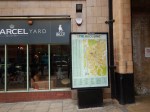
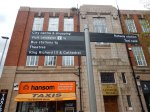






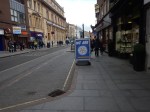











If there was a city, that needs a people mover of some sort between the two locations, it is Leicester.
All European cities would run a tram and with the latest technological developments, the tram would now be battery powered as in Seville and soon to be seen in Birmingham. On such a short distance, it doesn’t even have to have rails, but could be a rubber-tyred, double-ended articulated bus. I once saw a concept like this is in a Wrightbus presentation.
I made one big mistake on my visit to Leicester.
I was intending to go to the cathedral and have some lunch, which I did in Carluccio’s in the High Cross Shopping Centre.
As I was hungry, I had the lunch first and found that the shopping centre has been designed, so you have to go back through it to get anywhere.
As I didn’t want to buy anything except lunch, that would have been a pointless exercise.
So after wasting twenty minutes walking in the wrong way, I was running too late to visit the cathedral.
So on your visit to Leicester visit the cathedral first and if you’re in a hurry and want something to eat afterwards, don’t go in the shopping centre.
A properly-designed people mover going from the station to the pedestriansed central are and on to the cathedral would not only solve my problem, but it would surely attract a lot more visitors to the city to visit the cathedral and Kind Richard.
The one thing that a people-mover in Leicester, doesn’t have to be, is a fully-fledged tram with overhead wires. That is so nineteenth century for short routes in city centres.
Get it right in Leicester and I can think of several other towns and cities, that could use such a system.
Great Western Railway’s New Train
Great Western Railway have a new train.

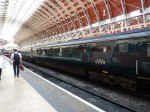


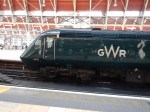


Certainly, as they always do, this InterCity 125 has scrubbed up well!
West Ealing Station – 4th May 2016
I took these pictures today, as I went past the bay platform at West Ealing station.
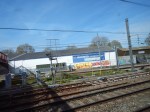
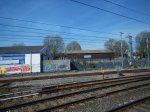
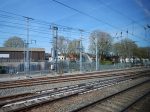


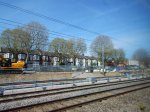
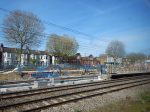
The details of what will happen here have not emerged yet.
I think it is pretty certain that the following will or could happen.
- Responsibility for the Greenford Branch will pass to TfL and/or London Overground
- The Greenford Branch will be served by a shuttle from the bay platform at West Ealing station.
- The Greenford Branch will lose its direct service to Paddington.
- The frequency on the branch will increase from two to four trains per house.
- It is unlikely, that the branch will be electrified.
- Although electrifying the bay platform would seem to be easy, if you look at the pictures.
The line will need to be run by either diesel multiple units or some form of IPEMU, that could be charged in the bay platform at West Ealing station.
As the journey between Greenford and West Ealing takes ten minutes, so two trains would be needed for a four trains per hour service.
Network Rail’s Mobile Maintenance Train
I wrote about this train in How To Work Outdoors.
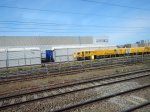
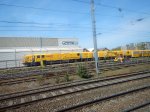

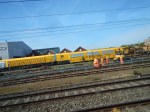
It was parked outside the Plasser depot in West Ealing.
Eurostar Is Testing To Amsterdam
This article in Global Rail News is entitled Velaro Under Test In The Netherlands. This is the first two paragraphs.
NS and Siemens have completed the first tests of Eurostar’s new e320 train on the Dutch rail network.
Eurostar plans to launch direct services between Amsterdam Central and London St Pancras in 2017 and has now begun testing its new fleet on the Dutch HSL-Zuid.
It would appear that St. Pancras to Amsterdam will take about four hours.
I suspect they still got a few details to sort out.
- Immigration control, as the UK is not in Schengen.
- The Dutch signalling system.
- The unusual Dutch train voltage of 1,500 VDC, as opposed to the British, French and HSL-Zuid of 25 KVAC.
- To complicate matters the Germans use 15 KVAC and drive on the right.
It’s a pity for many, that HSL-Zuid was built deliberately to avoid calling at Den Haag.
Demolition Has Started For The New Platforms At Oxford Station
Demolition has finally started of the old parcels office at Oxford station to create the two platforms for the Chiltern service to the station.


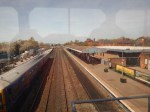

I can’t see this being a large project, as hopefully, it will just be creating the platforms and making sure there are shelters and the other platform details.
Wikipedia says this about the two new platforms.
The scheme also includes two new platforms at Oxford station, to be built on the site of the disused parcels depot. The new platforms will initially be five carriages in length, but provision will be made for them to be extended southwards to eight carriages.
Will they be in Chiltern’s or Great Western Railway’s house style?
As Chiltern Railways coaches are in sets of six, will these platforms be built initially to handle eight coaches? It would seem to be prudent!
Also according to this section in Wikipedia, services will start in December 2016.
Slow Progress On Electrification To Oxford
A few piles have started to appear on the line between Didcot and Oxford.





But a guy on the station, said Oxford won’t be electrified soon.
Main Line Electrification Between Reading And Didcot
I took these pictures of the electrification on the main lines between Reading and Didcot.
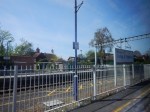
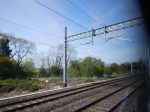


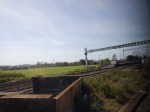

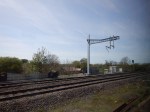
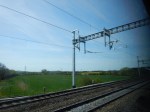
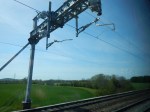
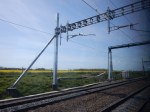


All the masts seem to be erected, but there is stil quite a lot of wires to add.
The Victorian Methods Worked
In Victorian Construction Methods, I noted how the Crossrail contractors, were throwing men and traditional methods into getting Hayes and Harlington station ready for the start of a Hayes Shuttle on the 16th of May.
These pictures, which I took today, would appear that they have made substantial progress.


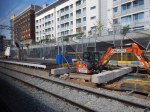
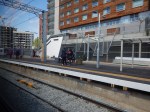
Intriguingly, when I looked at the time-table a few days ago, I think it changed on the 16th of May. Now only one service has been moved backward by two minutes.
It would appear that perhaps Great Western Railway haven’t finalised the time-table yet. Perhaps they haven’t obtained the required trains yet!
Two Beautiful Seats At West Acton Station
This seat forms the waiting area at West Acton station on the Central Line.
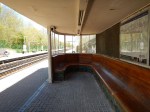



With the rounded window, it must be one of the most beautiful platform shelters on any rail station.
Note the picture of the second one on the other track.
Wikipedia says this about the design of the station.
The current station, replacing the original building, was designed by the Great Western Railway, on behalf of London Transport as part of the LPTB’s 1935-40 New Works Programme improvements and extensions to the Central line, by the GWR’s architect Brian Lewis and was completed by November 1940.
So it was actually designed by the Great Western Railway.
 The Anonymous Widower